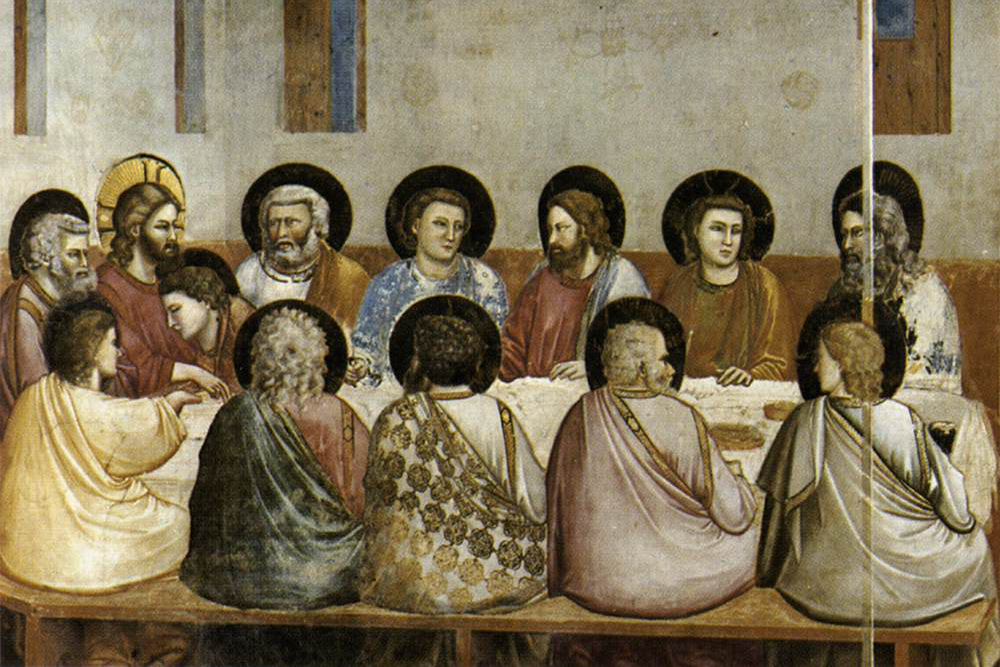

There Was a Man Who Had Two Sons – A Homily for the 4th Sunday of Lent

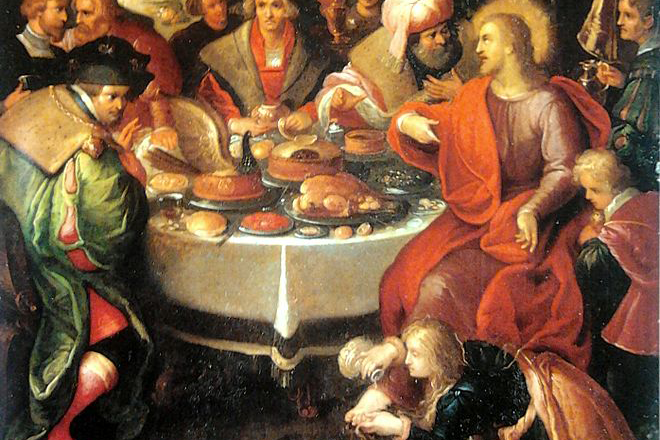
3.5Today’s Gospel is about a man who had two sons, both of whom forsook him and refused to relive in relationship with him. Although the sons seem to have very different personalities (one outwardly rebellious, the other outwardly obedient) they actually have similar internal struggles. In effect, neither one of them really wants a relationship with the father. Both prefer what their father has or can give them to their father himself.

In the end, one son repents and finds his way to the father’s heart. We are not so sure what happens to the second son because the story ends before that detail is supplied. Why did it end without telling us what happened? Because the story is really about you and me; it is we who must finish the story. The question we must answer is this: What do I really want: the consolation of God, or the God of all consolation? Do I want the gifts of God, or the giver of every good and perfect gift?

Let’s look at this Gospel in four parts.

I. Renegade Son – Most of us are quite familiar with today’s Gospel (the Parable of the Prodigal Son). In this story, most of us focus on the younger (and obviously sinful) son rather than the older one. This is interesting because it would seem that the Lord Jesus has His focus on the older son (the parable is addressed to the scribes and Pharisees, who see themselves as obedient). Nevertheless, let’s observe three things about this renegade son, also known as the Prodigal Son.

A. Corruption – This is an angry young man, alienated from his father. He wishes to possess what his father has, yet wants nothing to do with his father. In effect, he tells his father to drop dead. Yes, in effect he says, “Old man, you’re not dying fast enough. I want my inheritance now; I want to be done with you and cash in what is coming to me right now.”

His effrontery is even more astonishing given where and when it happened. Today we live in times when reverence for parents and elders is tragically lacking. But if our times are extreme in the one direction, ancient times in the Middle East were at the opposite extreme. In telling this parable as He does, Jesus shocks His listeners, who lived in a culture where no son would dream of speaking to his father in this way. Indeed, a son could be killed by his father for such insolence! Even to this day, so-called “honor killings” still occur in many parts of the Middle East. If a child brings dishonor to the family, it is not unheard of for the father to kill him or her. And while most governments forbid these practices, in many cultures people will look the other way and governments will seldom prosecute in such cases.

Thus, Jesus must have shocked his listeners with such a parable. Here was a son who did something so bold and daring as to be practically unthinkable. He was as insolent as he was insensitive, ungrateful, and wicked.

So hateful is this son that he has to go to a distant land to live. For even if his father does not kill him, his neighbors would surely set upon him and have him stoned for such insolence.

Even more astonishing than the son’s behavior, however, is the fact that father actually gives him his inheritance and allows him to leave.

This is Jesus’ veiled description of the patience and mercy of our Father, who endures even worse insolence from us, His often ungrateful children. We demand His gifts and grasp them with ingratitude; we want what God has, but do not want Him.

B. Consequences – The text says that the renegade son sets off “to a distant country.” It is always in a distant country that we dwell apart from God. The consequences of his action are great indeed.

This parable does not make light of sin. The Lord Jesus describes well a young man who chooses to live apart from God and in sinful rebellion. The result is that this renegade son lives in anguish and depravity. Once he runs out of money, he has no friends, no family, and no experience of his father.

So low is he that ends up looking up to pigs! So awful is his state that he becomes hungry for the disgusting mash that pigs eat. Yes, he is lower than an unclean animal—the most unclean animal that Jews can imagine—a swine.

Sin debases the human person and if its effects are not avoided, it orients us increasingly toward depravity. What was once unthinkable too easily becomes a common occurrence.

St. Augustine wrote of sin’s hold on individuals in his Confessions: “For of a forward will, was a lust made; and a lust served, became custom; and custom not resisted, became necessity. By which links, as it were, joined together (whence I called it a chain) a hard bondage held me enthralled” (Confessions, 8.5.10).

The renegade son is locked in to the consequences of his sinful choices. He is debased, debauched, and nearly dead.

C. Conversion – In an almost miraculous turn of events, the text says that he comes to his senses at last. Too many, especially today, suffer a darkened intellect due to the debasing effects of their sin; it would seem that no matter how debased, confused, and even enslaved they become, they still do not come to their senses, for their senseless minds have become darkened (cf Romans 1:21).

But thanks be to God, the renegade son does come to his senses and he says, I shall arise and go to my father! In this passage, the Greek text uses the word anistemi, here translated as “arise”—the same word used to describe the resurrection of Jesus. The young man’s father will later joyfully describe him as having been dead but then coming back to life.

St. Paul reminds us that we were dead in our sins, but God made us alive in Christ (cf Col 2:13). Thanks be to God for His mercy and for the conversion that He alone can effect in all of us, His renegade children, who ourselves have been debased, debauched, and dead in our sins. The conversion of this renegade son, we pray, is also our conversion, our rising and going back to the Father.

II. Rejoicing Father – The astonishment in this parable is only just beginning, for Jesus goes on to describe a father who is so merciful as to be shocking. He ascribes to the father things that no ancient father would ever do. And as He describes this ancient father, so filled with love and mercy that he casts aside personal dignity, we must remember that Jesus is saying, “This is what my Father is like.”

As the parable continues to unfold, we hear that the father sees the son while he’s still a long way off. This tells us that he was looking for his son, praying and hoping for his return.

In a human being such mercy is rare. The average person who is hurt and has his dignity scorned becomes resentful and avoidant, saying, “Never darken my door again!”

But how shockingly different this father is, lovingly and longingly waiting for the day when his son will appear on the horizon, looking for him day after day.

The text next tells us that when he saw his son, the father ran out to meet him, something no ancient nobleman would ever do. Running was a sign of being in flight or of being a slave on some errand. Further, in order to run, the ancients (who wore long garments) had to bare their legs—a disgraceful thing for nobility. Only common workers and slaves had their legs exposed.

Thus, here is the portrait of a father willing to debase himself in order to run and greet his returning son. When I take one step God takes two or more; he comes running to me!

In the parable, the robe and the ring that the father puts on his son are signs of family belonging or restoration. This is the full restoration of a young man who was willing to live as a slave in his own father’s house. But the father will have none of it. “You are my son! And my Son you have always been, whatever your sins. They are forgotten. You are my beloved son!”

What kind of Father is this? No earthly father would behave this way. This is the heavenly Father. Jesus is saying, “This is what my Father is like!”

III. Resentful Son – Now we turn our attention to the older brother. His sinfulness is more subtle. Outwardly, he follows his father’s rules; he does not sin in overt ways. His sins are more hidden.

Unlike his prodigal brother, he has never openly rejected his father. But inwardly, as we shall see, he is not so different.

Like his younger brother, the older son wants his father’s goods, not his father himself. To understand the subtlety of his struggle, let’s look at some of the details of the story. Notice the following fundamental issues with the resentful son:

  1. Distant – It is interesting that the last person to find out about the feast (and the reason for it) is the older son. This is the description of a son who is far away from his father, who is unaware of the happenings in his father’s life.

Off on some far-flung part of the property, he is going about his duties, which he seems to fulfill adequately. But we also get the feeling that there is a sense of distance between father and son.

Did this son not know that his father worried about his younger brother and was looking for him each day? It seems not! Even the lowly slaves in the household are drawn into the preparations for this great feast celebrating the return of the renegade son. It appears that the older son is the only one in the whole area who knows nothing about it. Even more telling is that he is unaware of his father’s joy at the return of his brother.

Yes, the resentful son is distant, a thousand miles away from the heart of his father.

  1. Disaffected – When this resentful son learns of the feast and the reason for it, he becomes sullen, angry, and resentful. He is disaffected. He stays away from the feast and refuses to enter.

So bitter is his resentment that his father will soon hear of it and come out to plead with him. Yes, this is a bitter, angry, and disaffected son.

But, dear reader, do not scorn him, for too easily we are he. Too easily, we die the death of a thousand cuts as we see sinners finding mercy. Too quickly do we become envious when others are blessed.

  1. Disconsolate – The father emerges from the feast to plead with his son to come in! Again, such a thing would be unheard of in the ancient world! Every father in those times would have commanded his son to come in to the feast and would expect to be obeyed immediately.

But this father is different, for he represents the heavenly Father, rooted in love more than in prerogatives and privileges. He has already demonstrated his love for his renegade son and now he does so for his resentful son.

The fact is, he loves both of his sons. Yes, the heavenly Father loves you and He loves me.

Tragically, the resentful son is unmoved by this demonstration of love. He remains disconsolate and must be confronted in his resentful anger.

  1. Disrespectful – Now we see the ugly side of the apparently obedient son. He does not really love or respect his father; he doesn’t really know him at all. He disrespects him to his face. He speaks of him as a slave master saying, “I have slaved for you … I have never disobeyed any one of your orders.”

Orders? I have slaved for you? Where is his love for his father? He does not see himself as a son but as an unwilling slave, one who follows orders only because he has to. In effect, he calls his father (to his face) a slave master, a despot.

Further, he accuses his father of injustice. Somehow he views the mercy his father showed to his brother as evidence of a lack of due mercy shown to himself. He considers his father unreasonable, unjust—even despicable. How dare his father show mercy to someone that he, the “obedient” son, does not think deserves it!

In calling his father an unjust slave owner and taskmaster, the son disrespects him to his face. But the father stays in the conversation, pleading with his son to reconsider.

  1. Disordered – Among the older son’s complaints is that his father never even gave him a kid goat to celebrate with his friends. But the goal in life is not to celebrate with friends; the goal is to celebrate with our heavenly Father.

Note how similar the two sons actually are. At one point the renegade son saw his father only in terms of what his father could give him; his father was only valuable to him in terms of the “stuff” he could get from him. And despite all his obedience, the older son—the resentful one—has the same problem. He seems to value only what his father can give him. It is not his father he really loves or even knows. It is the “stuff” that really interests him. He is concerned only what his father can give him.

In this way, the resentful son is disordered. He misses the whole point, which is not the “things” of his father but the relationship with his father. This is the point, the goal in life: to live with the Father forever in a relationship of love.

But again, be very careful before you condemn the resentful son. Too easily, we are he. It is so easy for us to want the good things of God but not God Himself. We want God’s blessings and benefits, but not His beloved self. We want the gifts of God, but not the God who is the giver of every good and perfect gift.

Yes, the disorder of this resentful son is too easily our disorder. There is something about our flesh that wants God to rain down blessings, yet once we have received them we want to run away and keep our distance from God. Relationships are complicated and dynamic. Our flesh prefers trinkets. We prefer to receive gifts on our own terms. Our flesh says, “Give me the priceless pearls, but begone with the powerful person who gives them!”

IV. Response – The father is outside pleading with his resentful son to enter the feast. And then, abruptly, Jesus ends the parable. Yes, the story ends! Does the resentful son go into the party or not? Why is the story left unfinished?

Simply put, it’s because you and I must finish the story. For we are so easily the resentful son.

Right now, the heavenly Father is pleading with you and me to enter the feast. Too easily we can brood and say that we have our reasons for not wanting to go into the feast. After all, that renegade son is in there. My enemy is in there. If Heaven involves meeting our enemy and celebrating with him, then too easily does our flesh say, “I’ll have nothing to do with it!”

Here is the great drama: will we enter the real Heaven? For the real Heaven is not merely a heaven of our own making, a heaven of our own parameters. Heaven is not a “members only” place.

Am I willing to enter on God’s terms? Or will I resentfully stand outside, demanding that Heaven be on my terms? Further, do I see Heaven as being with the Father, or is Heaven merely having the “stuff” I want?

The heart of Heaven is to be with the Father, to be with the Trinity. The danger with so many, even the religiously observant, is becoming the resentful son. The Father is pleading, pleading with us to enter the feast, pleading with us to set aside our prejudices and notions of exclusivity.

To the resentful son who said, “this son of yours …,” the father says, “your brother was lost and is found, was dead, and has come back to life.”

The Father is pleading for us to enter the feast—not some made-up feast where we choose the attendees—but the real, actual feast of Heaven, where some surprising people may be in attendance.

Will you enter the feast? The Father is pleading with you. He is saying, “Come in before it’s finally time to rise and close the door.” How will you answer Him? What is your response?

This parable is unfinished; you and I must finish it. What is your response to the Father’s pleading? Answer him!

Just for fun, here is a “retelling” of the parable in the “key” of F:

Feeling footloose and frisky, a feather-brained fellow forced his fond father to fork over the farthings and flew to foreign fields and frittered his fortune, feasting fabulously with faithless friends.

Fleeced by his fellows, fallen by fornication, and facing famine, he found himself a feed-flinger in a filthy farmyard. Fairly famishing, he fain would have filled his frame with foraged food from fodder fragments. “Fooey! My father’s flunkies fare finer,” the frazzled fugitive forlornly fumbled, frankly facing facts. Frustrated by failure and filled with foreboding, he fled forthwith to his family. Falling at his father’s feet, he forlornly fumbled, “Father, I’ve flunked and fruitlessly forfeited family favor!”

The farsighted father, forestalling further flinching, frantically flagged the flunkies to fetch a fatling from the flock and fix a feast.

The fugitive’s fault-finding brother frowned on fickle forgiveness of former folderol. But the faithful father figured, “Filial fidelity is fine, but the fugitive is found! What forbids fervent festivity? Let flags be unfurled. Let fanfares flare.”

And the father’s forgiveness formed the foundation for the former fugitive’s future faith and fortitude.

Mercy and Patience Now, but Sooner or Later Judgment Must Come – A Homily for the Third Sunday of Lent

2.27blogThere’s an old Johnny Cash song (God’s Gonna Cut You Down) that is rooted in today’s Gospel:

You can run on for a long time … Sooner or later God’ll cut you down … Go tell that long tongue liar, Go and tell that midnight rider, Tell the rambler, the gambler, the backbiter, Tell ’em that God’s gonna cut ’em down.

These verses go directly to the end point (judgment), but there is more to the story. First there is mercy offered, and then patience; finally in the end there is judgment.

Many today are either dismissive of judgment entirely, or they believe that judgment will result in instant entrance to glory.

Today’s gospel contains a necessary balance. It speaks of God’s patience and care now, but also of the day of reckoning, the Day of Judgment. On that day, our “case” will be adjudicated by God; the decision is final; there is no turning back.

Let’s look at this Gospel in two main parts:

I. The Proclamation of the Problem – The Gospel opens with the following lines:

Some people told Jesus about the Galileans whose blood Pilate had mingled with the blood of their sacrifices. Jesus said to them in reply, “Do you think that because these Galileans suffered in this way they were greater sinners than all other Galileans? By no means! But I tell you, if you do not repent, you will all perish as they did! Or those eighteen people who were killed when the tower at Siloam fell on them—do you think they were more guilty than everyone else who lived in Jerusalem? By no means! But I tell you, if you do not repent, you will all perish as they did!

What Jesus is saying is that is so easy for us to focus on the sins of others and fail to discern our own need for repentance and mercy. Before God we are all beggars; all of us have sinned and fallen short of the glory of God (cf Romans 3:23). Every one of us is in need of boatloads of grace and mercy. And while we may rightly distinguish that there is a difference here on earth between the sanctity of a Mother Theresa and the wretchedness of a Hitler, before God we all fall far short of His glory and holiness; we are all beggars.

Sin surely does affect the lives of others and we are not asked to be blind to that. It is important to learn from the example of others, both good and bad. The point is to learn! We miss the point if all we do when we see someone suffer the effects of sin is to say, “My, my, God don’t like ugly!” What about the ugly in us? What about our own sin?

And so to our all-too-eager question, “What about them, Lord?” Jesus replies, “What about you? Stay in your own lane; work on your own issues and leave their final fate to me. Punishment doesn’t just come to others; if you don’t watch out it will come to you as well.” And just to make sure we get it the Lord adds, “[And] I tell you, if you do not repent, you will all perish as they did!”

In effect, the Lord tells us to get serious about our sin and about what it can do to us. The most serious problem in life is not the fact that we die or the manner of our death. The most serious problem we face is not Pilate or any political misfortune; it is not falling towers or any physical threat. It is not financial setback, or suffering, or losing our job, or losing our possessions. The most serious problem we face is our sin.

Now we don’t think like this. We minimize the maximum and maximize the minimum. We get all worked up about lesser things while often completely ignoring greater things. We are forever worrying about passing things like health and money, but give little heed to the things of eternity and to getting ready to meet God. Let our physical health be threatened we are instantly on our knees begging God for deliverance. But let our sins pile up and sinful drives be eating at our very soul and we take little notice. We don’t seem to care about being delivered from things that are far more serious than mere cancer.

The Lord says, If your right hand causes you to sin cut it off and throw it away. It is better to lose one of your members than to have your whole body cast into hell (Matt 5:30). Pay attention, the Lord is saying that it is more serious to sin than to lose your right hand!

Again, we don’t think like this. I think that if I were to lose my right hand today I would lament this day for the rest of my life. The very thought of losing my hand gives me stabbing grief. Why don’t we think of our sin this way? Do you see how obtuse we are? Do you see how distorted our priorities are?

One day the Lord looked at a paralyzed man and decided to cure his most serious problem. He said to the quadriplegic, “Your sins are forgiven.” Could the man’s sins have been more serious than his paralysis? Yes!

And thus the Lord warns us that we ought to be more serious about our sins lest we perish, not merely losing our earthly life but our eternal life. The very fact that the solution to our problem required the death of the Son of God indicates that we are evidently in far worse shape than we think. Without our repentance and the magnificent mercy of God, something far worse than having a tower fall on us, or our enemies kill us might happen. Elsewhere in Scripture the Lord says, I tell you, my friends, do not be afraid of those who kill the body and after that can do no more. But I will show you whom you should fear: Fear him who, after the killing of the body, has power to throw you into hell. Yes, I tell you, fear him (Lk 12:4-5). The Lord is not counseling here a cringing and avoidant fear, but rather a respectful fear such that we are serious about judgment day and realize that the result on that day will be eternal, unlike the passing quality of any earthly encounter.

Having portrayed the problem and underscored its seriousness, the Lord then reminds us that He is willing to help us, with His grace and mercy, to get ready. He sets forth a process in which we must cooperate, for the Day of Judgment will surely come. Let’s look at the process. 

II. The Portrayal of the Process – The Lord tells a parable that sets forth the process in which we are currently engaged: a process of patience and mercy that leads ultimately to the finality of judgment. Note the following steps:

1. ASSESSMENT There was once a person who had a fig tree planted in his orchard and when he came in search of fruit on it and found none said to the gardener, “For three years now I have come in search of fruit on this tree and have found none. So cut it down. Why should it exhaust the soil?

Faith is a fruit-bearing tree. It is to bear the fruits of love, justice, and the keeping of the commandments. The Lord looks for these fruits and often, through our conscience and by His Word, assesses if such fruits are present.

Many claim to have faith; they claim to be fruitful in what the Lord seeks. But as owner of the field, it is He who sets the terms. We are not the judge in our own case. It is the Lord’s ongoing work to assess our progress and fruitfulness. He determines whether the necessary fruits are present.

Yet many today claim the right to assess their own status. They make bold proclamations that God would not “dare” to find them to be lacking in anything substantial. In presumption, many declare themselves to be safe, fruitful, and righteous.

But this is not for us to say. In the parable it is the owner, the Lord, who makes the assessment. And note that in this parable he proposes that something significant is lacking.

And yet some interlocutor, here called the gardener but let’s call her the Church, asks for mercy and time. And as we shall see such mercy and time is granted, along with necessary supplies (grace) to help accomplish what is sought, namely the fruit of faith. This leads us to stage two in the process.

2. ASSISTANCE The text goes on to describe the prayers and requests of the gardener (in this case Mother Church): Sir leave it for this year also. I shall cultivate the ground around it and fertilize it. It may bear fruit in the future.

The Lord, the owner of the garden, not only grants the request but will also be the one to supply the necessary help to draw forth the fruits patiently awaited.

Indeed, the Lord sends us help and graces in so many ways:

  1. He speaks in our conscience. He has written His law in our heart.
  2. He gave us the law.
  3. He sent us prophets.
  4. He punishes our wrongdoings in order to bring us to repentance.

Before I was afflicted I strayed. But now I have kept your word (Ps 119:67).

But God disciplines us for our good, that we may share his holiness. For the moment all discipline seems painful rather than pleasant; later it yields the peaceful fruit of righteousness to those who have been trained by it (Heb 12:10).

  1. He sent us His Son,
  2. Who established the Church,
  3. and gave us grace and the Sacraments.
  4. It was he who gave some to be apostles, some to be prophets, some to be evangelists, and some to be pastors and teachers, to prepare God’s people for works of service, so that the body of Christ may be built up until we all reach unity in the faith and in the knowledge of the Son of God and become mature, attaining to the whole measure of the fullness of Christ. [That we be] no longer be infants, tossed back and forth by the waves, and blown here and there by every wind of teaching and by the cunning and craftiness of men in their deceitful scheming. Instead, speaking the truth in love, in all things grow up into him who is the Head, that is, Christ (Eph 4: 11-17).

Do you see how much God has done for us? He has graced us in every way. He has entrusted to the Church, in answer to her pleas, every necessary grace to bear fruit. And now He patiently awaits. He looks to return again to seek the fruits that are necessary for those who claim to have saving faith, fruits that are necessary to be able to endure the day of His coming, fruits that are necessary for us to have the holiness without which no one will see the Lord (Heb 12:14). Indeed we cannot see or endure His presence without the fruit of holiness by His grace. For as Scripture says, Who may ascend the mountain of the Lord? Or Who may stand in his holy place? Only he who has clean hands and a pure heart (Ps 24:3-4). Only God can accomplish this. But He who made us without us will not save us without us. Thus we must, by His grace, renounce our sin and accept His grace.

3. ACCEPTANCE – The parable ends very simply with this line:  If not you can cut it down.

I’ve chosen to use the word “acceptance” carefully. Judgment is not so much God’s decision as it His acceptance of our decision to bear fruit or to refuse to do so; to accept or refuse His offer of the fruits of faith such as chastity, mercy, forgiveness, reconciliation, love of the poor, and appreciation of the truth.

The Day of Judgment amounts to the day on which God accepts our final choice. It is not so much the passing of sentence as it is the final recognition of the absolute choice that we have made. On this day it is no longer possible for us to change. What we are remains fixed forever.

As we get older we notice that it is harder and harder to change. We are like concrete that sets, becoming ever harder. We are like pottery, which begins moist and malleable but whose shape is forever fixed when subjected to the fire.

And thus the Lord teaches us to be serious about sin and about the Day of Judgment. For now there is mercy and every grace available to us (thank you, Jesus!). But there comes a day when our decision is finally accepted and forever fixed.

The Gospel today teaches beautifully of God’s patience, but also of our need for mercy (we are all beggars before God). It warns us that our decision will finally be accepted. Yes, there is a Day of Judgment and it closes in on us all.

Talking about how often we sang Kumbaya My Lord will not suffice.

In today’s second reading, St. Paul warns us against presumption and trying to serve as judge in our own case:

Our ancestors were all under the cloud and all passed through the sea, and all of them were baptized into Moses in the cloud and in the sea. All ate the same spiritual food, and all drank the same spiritual drink, for they drank from a spiritual rock that followed them, and the rock was the Christ. Yet God was not pleased with most of them, for they were struck down in the desert. These things happened as examples for us, so that we might not desire evil things, as they did. Do not grumble as some of them did, and suffered death by the destroyer. These things happened to them as an example, and they have been written down as a warning to us, upon whom the end of the ages has come. Therefore, whoever thinks he is standing secure should take care not to fall (1 Cor 10:1:ff).

For now there is mercy! But there comes a day of ratification, of judgment, a day when the question is asked and the final answer supplied, not so much by God as by us.

“Be careful,” your flesh says, “No worries.” But the Lord says, “Repent!”

Here are more of the lyrics from the Johnny Cash song God’s Gonna Cut You Down:

You can run on for a long time
Run on for a long time
Sooner or later God’ll cut you down

Well, you may throw your rock and hide your hand
and hide your hand
Workin’ in the dark against your fellow man
But as sure as God made black and white
What’s down in the dark will be brought to the light.

You can run on for a long time
Run on for a long time
Sooner or later God’ll cut you down

Go tell that long tongue liar
Go and tell that midnight rider
Tell the rambler, the gambler, the backbiter
Tell ‘em that God’s gonna cut you down

The Cross is a Fruit-Bearing Tree – A Homily for the Second Sunday of Lent

TransfigurationThe second Sunday of Lent always features the Transfiguration. The first reason for this is that the trek up Mt. Tabor was one of the stops Jesus Himself made with Peter, James, and John on His final journey to Jerusalem. It is commonly held that Jesus did this to prepare His apostles for the difficult days ahead. There’s a line from an old spiritual that says, “Sometimes I’m up, sometimes I’m down, sometimes I’m almost to the ground … but see what the end shall be.” And this is what the Lord is doing here: He is showing us what the end shall be. There is a cross to get through, but there is glory on the other side.

There also seems a purpose in placing this account here in that it helps describe the pattern of the Christian life, which is the Paschal mystery. For we are always dying and rising with Christ in repeated cycles as we journey to an eternal Easter (cf 2 Cor4:10). This gospel passage shows forth the pattern of the cross in the climb, the rising, and in the glory of the mountaintop; then it is back down the mountain again, only to climb another one (Golgotha) and through it find another glory (Easter Sunday). Yes, this is the pattern of the Christian life: the Paschal mystery. Let’s look a little closer at three aspects of today’s gospel passage.

I. The Purpose of Trials – The text says, Jesus took Peter, John, and James and went up the mountain to pray. We often pass over the fact that they had to climb the mountain, and the climb was no easy task. Anyone who has been to Mt. Tabor knows just what a high mountain it is. The climb to the top is almost 2000 feet, and steep as well. It would have taken the better part of a day and probably had its dangers. Looking down from the top is like looking from an airplane window out on the Jezreel Valley (a.k.a. Megiddo or Armageddon).

So here is a symbol of the cross and of struggle. The climb was up the rough side of the mountain; it was exhausting, difficult, and tested their strength.

I have it on the best of authority that as they climbed they were singing gospel songs like these: “I’m comin’ up on the rough side of the mountain, and I’m doin’ my best to carry on!” and “My soul looks back and wonders how I got over!” and “We are climbing Jacob’s ladder, every round goes higher, higher.”

This climb is reminiscent of our life. We have often had to climb, to endure, and to have our strength tested. Perhaps it was the climb of earning a college degree. Perhaps it was the climb of raising children, or building a career. What do you have that you really value that did not come at the price of a steep climb, of effort, and of struggle?

Most of us know that though the climb is difficult there is glory at the top if we but persevere. Life’s difficulties are often the prelude to success and greater strength.

Though we might wish that life had no struggles, it would seem that the Lord intends a climb for us. For the cross alone leads to true glory. Where would we be without some of the crosses in our life? Let’s ponder some of the purposes of problems in our life.

1. God uses problems to DIRECT us. Sometimes God must light a fire under you to get you moving. Problems often point us in a new directions and motivate us to change. Is God trying to get your attention? Sometimes it takes a painful situation to make us change our ways. Proverbs 20:30 says, Blows and wounds cleanse away evil, and beatings purge the inner most being. An old gospel song speaks of the need for suffering to keep us focused on God: “Now the way may not be too easy. But you never said it would be. ‘Cause when our way gets a little too easy, you know we tend to stray from thee.” It’s sad but true: God sometimes needs to use problems to direct our steps toward Him.

2. God uses problems to INSPECT us. People are like tea bags; if you want to know what’s inside them just drop them into hot water! Has God ever tested your faith with a problem? What do problems reveal about you? Our problems have a way of helping to see what we’re really made of. Through trials, I have discovered many strengths I never knew I had. There is a test in every testimony. Trials have a way of purifying and strengthening our faith as well as inspecting it to see whether it is really genuine. 1 Peter 1:6 says, In this you greatly rejoice, though now for a little while you may have had to suffer grief in all kinds of trials. These trials are only to test your faith, to see whether or not it is strong and pure.

3. God uses problems to CORRECT us. Some lessons we seem to learn only through pain and failure. It’s likely that when you were a child your parents told you not to touch the hot stove. But you probably really learned by being burned. Sometimes we only realize the value of something (health, money, a relationship) by losing it. Scripture says. It was good for me to be afflicted so that I might learn your decrees (Psalm 119:71-72), and Before I was afflicted, I strayed. But now I keep you word (Psalm 119:67).

4. God uses problems to PROTECT us. A problem can be a blessing in disguise if it prevents you from being harmed by something more serious. A man was fired for refusing to do something unethical that his boss had asked him to do. His unemployment was a problem for him and his family, but it saved him from being sent to prison a year later when management’s actions were discovered. In Genesis 50:20 Joseph says to his brothers, You intended to harm me, but God intended it for good to accomplish what is now being done, the saving of many lives.

5. God uses problems to PERFECT us. Problems, when responded to correctly, are character-building. God is far more interested in your character than your comfort. Romans 5:3 says, We can rejoice, too, when we run into problems and trials, for we know that they are good for us they help us learn to be patient. And patience develops strength of character in us and helps us trust God more each time we use it until finally our hope and faith are strong and steady. And 1 Peter 1:7 says, You are being tested as fire tests gold and purifies it and your faith is far more precious to God than mere gold; so if your faith remains strong after being tried in the fiery trials, it will bring you much praise and glory and honor on the day of his return.

So the climb symbolizes the cross, but after the cross comes the glory.

II. The Productiveness of Trials – The text says, While he was praying his face changed in appearance and his clothing became dazzling white. And behold, two men were conversing with him, Moses and Elijah, who appeared in glory and spoke of his exodus that he was going to accomplish in Jerusalem. Peter and his companions had been overcome by sleep, but becoming fully awake, they saw his glory and the two men standing with him. As they were about to part from him, Peter said to Jesus, “Master, it is good that we are here; let us make three tents, one for you, one for Moses, and one for Elijah.” But he did not know what he was saying. While he was still speaking, a cloud came and cast a shadow over them, and they became frightened when they entered the cloud. Then from the cloud came a voice that said, “This is my chosen Son; listen to him.”

All the climbing has paid off. Now comes the fruit of all that hard work! The Lord gives them a glimpse of glory! They get to see the glory that Jesus has always had with the Father. He is dazzlingly bright. A similar vision from the Book of Revelation gives us more detail:

I turned around to see the voice that was speaking to me. And when I turned I saw seven golden lampstands, and among the lampstands was someone like a son of man, dressed in a robe reaching down to his feet and with a golden sash around his chest. The hair on his head was white like wool, as white as snow, and his eyes were like blazing fire. His feet were like bronze glowing in a furnace, and his voice was like the sound of rushing waters. In his right hand he held seven stars … His face was like the sun shining in all its brilliance. When I saw him, I fell at his feet as though dead. Then he placed his right hand on me and said, “Do not be afraid. I am the First and the Last. I am the Living One; I was dead, and now look, I am alive for ever and ever! And I hold the keys of death and Hades” (Rev 1:12-17).

Yes, all the climbing has paid off. Now comes the glory, the life, the reward for endurance and struggle. Are you enjoying any of the fruits of your crosses now? If we carried our crosses in faith, they have made us stronger and more confident. Some of us have discovered gifts, abilities, and endurance we never knew we had. Our crosses have brought us life!

  1. The other night I went over to the church and played the pipe organ. It was most enjoyable, but it was the fruit of years of hard work.
  2. Not only have my own crosses brought me life, but the crosses of others have done the same for me. I live and work in buildings that others scrimped, saved, labored to be able to erect. I have a faith that martyrs died to hand on to me and that missionaries journeyed long distances to proclaim. See, trials do produce; enjoy it!
  3. Paul says that this momentary affliction is producing for us a weight of glory beyond all compare (2 Cor 4:14). And in Romans he says, For I consider that the sufferings of this present time are not worth comparing with the glory that is to be revealed to us (Rom 8:18).
  4. An old gospel song says, “By and by, when the morning comes, and all the saints of God are gathered home, we’ll tell the story, of how we’ve overcome. And we’ll understand it better, by and by.”

So the glory comes after the climb. This is the life that comes from the cross. This is the Paschal mystery: Always carrying about in our selves the dying of Christ so also that [the rising of Christ] the life of Christ may be manifest in us (2 Cor 4:10).

III. The Pattern of Trials – The text says, After the voice had spoken, Jesus was found alone. They fell silent and did not at that time tell anyone what they had seen.

Notice that although Peter wants to stay, Jesus makes it clear that they must go down the mountain and then walk a very dark valley to another hill: Golgotha. For now, the pattern must repeat. The cross has led to glory but more crosses are needed before final glory. An old spiritual says, “We are climbing Jacob’s ladder … every round goes higher, higher, soldiers of the cross!”

Yes, this is our life: Always carrying about in our selves the dying of Christ so also that [the rising of Christ] the life of Christ may be manifest in us (2 Cor 4:10).

There are difficult days ahead for Jesus and the apostles, but the crosses lead to a final and lasting glory. This is our life, too: The Paschal mystery, the pattern and rhythm of our life.

This Homily was recorded and is available in mp3 format here: http://frpope.com/audio/2%20Lent%20A%202011.mp3.

Here is a rendition of the song We Are Climbing Jacob’s Ladder. The lyrics say that “every round goes higher, higher!” One can picture a spiral staircase as each round is pitched higher and higher musically. For this is the pattern of our life: we die with Christ so as to live with Him. And each time we come back around to the cross, or back around to glory, we are one round higher and one level closer to final glory.


But at Your Command I Will Lower the Nets – A Homily for the 5th Sunday of the Year

2.6blogToday’s gospel describes the call of Simon Peter. It is a call that takes place in several stages. And while it is presented in a compact time frame, for most of us it takes place over a longer period, as the Lord works to deepen our faith and heighten our call. The upshot of today’s gospel is that Peter’s faith is strengthened by his obedience to the Lord’s command.

Let’s see how the Lord grows Peter’s faith.

I. The Help that isn’t Hard – The text says, While the crowd was pressing in on Jesus and listening to the word of God, he was standing by the Lake of Gennesaret. He saw two boats there alongside the lake; the fishermen had disembarked and were washing their nets. Getting into one of the boats, the one belonging to Simon, he asked him to put out a short distance from the shore. Then he sat down and taught the crowds from the boat.

It may astonish us, but God seeks our help. What did Peter have? He had a boat at the ready and, as we shall see, a tender heart. What do you have? All of us have talents, gifts, access, availability, special aspects to our personality, and so forth that God can and wants to use. And the way the Lord has set things up, He “needs” our help. God, who made us without our help, will not save us without our help. Call this what you will: cooperative grace, collaborative grace, or my personal favorite, responsible grace; but God seeks to engage us in our own salvation and in the salvation of others. God wants our help.

The main point here in terms of Peter’s progression in the faith is that this initial request (to put out from shore) is just a small thing; it’s not hard for Peter to do. It is a small way for him to learn the obedience of faith.

This is where the Lord begins, with both Peter and us. He trains us in greater obedience by means of smaller things. Don’t overlook the small, daily acts obedience to the Lord. Through them the Lord trains and equips us for great things. If the Lord can trust us in small matters, He can and will trust us with greater things.

But soon enough, as we shall see, the Lord deepens Peter’s faith and heightens the call.

II. The Hesitation that must be Healed – The text says, After he had finished speaking, he said to Simon, “Put out into deep water and lower your nets for a catch.” Simon said in reply, “Master, we have worked hard all night and have caught nothing, but at your command I will lower the nets”

Peter is willing to do something routine for the Lord. After all, how much does it take to let the Lord use your boat for a little while? But now the Lord invites Peter to go a little deeper, to “put out into deep water.” For a moment Peter hesitates. He is tired and, frankly, discouraged. So much work and so little to show for it.  There was probably some doubt in Peter’s heart and a hint of sarcasm in his voice, because later he repents and calls himself a sinful man. Yes, here is a hesitation that must be healed if Peter is ever to see his blessings and reach his destiny.

And so, too, for some of us. Perhaps we’ve heard the Lord calling us to some task, but hesitated because we were tired or discouraged. It’s one thing to come to Church and say a few prayers. But please, Lord, don’t ask anything more of me.

Perhaps we are fearful. Deep waters bring greater threats. As the water gets deeper the stakes get higher. But somehow we have to step out in faith, get out of our comfort zone, and head for deeper waters. Like Peter, we can hesitate and think of all sorts of reasons why what the Lord asks of us is not a good idea.

How is Peter healed of his hesitation? In a very interesting and countercultural way, Peter is healed by the obedience of faith; that is the central point of today’s gospel.

Yes, Peter’s healing is caught up in his acknowledgement that the Lord commands it. Peter says, But, at your command I will lower the nets. It is intriguing that Peter finds strength and consolation in the Lord’s command. Paradoxically, there is something freeing about being under authority.

We live in a culture that tends to regard authority with cynicism and even rewards some degree of rebellion. Further, our flesh tends to bristle at being under authority. But again, there is something freeing about being under authority.

As a Christian, I derive a lot of serenity and courage when it becomes clear to me that the Lord commands something of me. While the world may balk at the demands of the moral life and find much of it too difficult or demanding, I find that it is often enough for me to know that the Lord both teaches and commands it. This gives me both serenity and confidence. Even if some aspect of my flesh may hesitate, knowing that my Lord and His lawful representatives (my Bishop and the Magisterium) command something, frees me and gives me the courage to understand that I am doing God’s will. Any natural hesitancy I might have is often quickly dispatched when I realize that I am being commanded by the Lord.

On a given Sunday morning, a person might hesitate to go to Mass, preferring to sleep in, or perhaps finding it difficult somehow. But knowing that it is commanded in the Third Commandment helps him to overcome his hesitancy. The same is true for the rest of the moral Law and also certain vocational matters and actions required of the Christian, not under a general command but under a specific call from the Lord.

In this way of obedience the Lord draws Peter to deeper waters. Peter’s hesitation must be healed if he is to see his faith deepen and his call heighten.

III. The Harvest that is Hauled – The text says, When they had done this, they caught a great number of fish and their nets were tearing. They signaled to their partners in the other boat to come to help them. They came and filled both boats so that the boats were in danger of sinking.

In this matter the Lord grants Peter a great grace: enjoying the fruits of obedience in a very immediate way. In other cases the harvest is not so immediate but this much is always true: it is promised and it will come, whether today or years from now!

The Lord says elsewhere, using a more terrestrial image: the harvest is plentiful (Mat 9:37). What the Lord is doing here is giving Peter (and us) an audio-visual aid. Obviously the harvest that the Lord heralded was not about fish; it was about human beings. Indeed, the harvest is plentiful! Consider all the people whom the Lord has touched after these humble beginnings in a backwater of Israel. Not only are there the 1.2 billion Catholics in the world today, but there are countless others who lived before us, and many (only God knows how many) who will come after us. Yes, it is a bountiful harvest.

Some days and times are better for fishing or harvesting than others. St. Paul speaks of the gospel as being “in season and out of season” (2 Tim 4:2). But even in those times that the Lord designates for pruning, or for the field to lie fallow, He is only preparing for future growth. For He says, “the harvest is plentiful” and His Word prevails.

In the West it seems that the seasons have turned against us. But we must remember that even in winter the farmer must stay busy preparing the soil, removing the rocks, and laying down fertilizer.

Yes, the Lord is heralding a harvest and we must work, no matter the season. Even if we do not see the full harvest, the Lord will, and so will others. Jesus says elsewhere, Thus the saying “One sows and another reaps” is true. I sent you to reap what you have not worked for. Others have done the hard work, and you have reaped the benefits of their labor (John 4:37).

The bottom line is, just do your work. Obey what the Lord commands and know that a harvest is heralded and will be hauled in. The nets will be strained and the boats heavily weighed down. The harvest will come and it will come with abundance. Just keep working and obeying what He commands.

IV. The Humility that Heightens – The text says, When Simon Peter saw this, he fell at the knees of Jesus and said, “Depart from me, Lord, for I am a sinful man.” For astonishment at the catch of fish they had made seized him and all those with him, and likewise James and John, the sons of Zebedee, who were partners of Simon. Jesus said to Simon, “Do not be afraid; from now on you will be catching men.” When they brought their boats to the shore, they left everything and followed him.

In falling to his knees, Peter is about to raised higher by the Lord. Peter realizes that his hesitation and doubt has been sinful, and that had he persisted and not obeyed the Lord, he would have blocked his blessings.

Notice that Peter is not described as having a cringing and devastated humility, but rather a healthy humility.

Healthy humility raises us; it does not cast us down. Bowing in healthy humility heightens our status; it does not crush us. The Lord, having led Peter to a healthy obedience and humility, in effect tells him, “Come up higher. Your concern now will not be fish, but rather the care of human souls who are precious to me. You will be my co-worker in a far more important enterprise.” Yes, healthy humility raises us.

And thus Peter’s humility is a productive one. It is the godly sorrow of which St. Paul writes,

Even if I caused you sorrow by my letter, I do not regret it. Though I did regret it—I see that my letter hurt you, but only for a little while—yet now I am happy, not because you were made sorry, but because your sorrow led you to repentance. For you became sorrowful as God intended and so were not harmed in any way by us. Godly sorrow brings repentance that leads to salvation and leaves no regret, but worldly sorrow brings death. See what this godly sorrow has produced in you: what earnestness, what eagerness to clear yourselves, what indignation, what alarm, what longing, what concern, what readiness to see justice done (2 Cor 7:8-11).

Peter’s humility is productive because it is godly. It is a humility and sorrow that equips him for greater duties, duties no longer related fish but to human souls.

How different this is from mere shame (which Paul calls worldly sorrow)! Shame usually locks us into unhealthy, paralyzing self-loathing. Godly sorrow increases our zeal to do God’s will and thereby equips, empowers, and enables us when God calls.

And the Lord does call. Peter, through obedience and humility, is now ready to leave everything and follow Jesus. The Lord has led him to this point in stages. It began with a request for help that wasn’t hard, a small obedience. But then the Lord called him deeper, to a more difficult obedience. Peter needed to have his hesitation healed. Experiencing this healing, he hauled in a harvest that illustrated what his lack of faith and obedience might have cost him. It humbled him but also heightened him. Having his faith deepened in Jesus, Peter is now ready to follow the Lord. It is always better to walk in humility and obedience than in pride!

In all of this, don’t miss the key, the golden chord: At your command, I will lower the nets. Faith is rooted in obedience and humility. That is the key to our growth as disciples.

St. Peter is still a rookie, but his first season holds great promise. We will see that he will not go without his injuries, but in the end he, too, will be the rock (in Christ) who is ready to roll.

A “Rule of Life” for Prophets – A Homily for the 4th Sunday of the Year

blog.1.30.16Prophets are those who speak for God. They Love God and His people; they speak the (often painful) truth of God to His people. They do so not to win an argument, but because of their love and conviction that only the undiluted truth of God can save us in the end.

People-pleasing and other forms of human respect cannot supplant reverence for God and His truth. Prophets are willing to endure pain and suffering in order to proclaim God’s truth to an often-unappreciative segment of God’s people. But out of love for God and His people they press on to proclaim His truth willingly, even knowing that they may face death for their personal, persistent, and prophetic proclamation.

Today’s readings set forth a kind of “rule for life” for prophets. And we, who are baptized into the order of the prophet, do well to listen to the teachings of these readings. Let us examine them in three stages.

I. The Call that is Declared – The text says, In the first reading God says to Jeremiah (and to us): The word of the LORD came to me, saying: Before I formed you in the womb I knew you, before you were born I dedicated you, a prophet to the nations I appointed you. But do you gird your loins; stand up and tell them all that I command you.

We ought to note four things about our call as prophets.

1. The Prevenient nature of our Call – The word “prevenient” is an adjective describing something that comes before, something that is anticipatory. God has not chosen us on a whim, as if to say, “I suppose you’ll do.” Before He made us, He considered our call and then equipped, empowered, and enabled us for our work.

God tells Jeremiah (and us) that He knew, loved, and cherished us long before He ever made us. And thus He made us in a way that prepared and equipped us for the very work of being a prophets.

“How?” you ask. The answer to that is as variable as is each person. There is no one who can proclaim God or announce the kingdom the way you can. Perhaps He has especially equipped you to evangelize certain individuals whom no one else can reach. Just know this: God thought a long time about you and prepared you in very specific and thoughtful ways. Whatever you need has “come before,” is “prevenient.”

2. The Purview of our Call – The text tells Jeremiah (and us) that we are appointed unto the nations. Now Jeremiah himself did not journey beyond Israel. But since then, the Word of the Lord uttered through him has reached every nation.

Never doubt the influence you can exert by the grace of God. Even in and through reaching one person you can change the destiny of many. Stay in your lane and do your work, but remember that God can accomplish through you more than you ask or imagine. By His grace, your influence can reach the nations.

3. The Preparation of our Call – The Lord tells Jeremiah (and us) to “gird our loins.” This is an ancient way of saying, “roll up your sleeves.” In other words, prepare to work by assembling what you need and being ready to expend effort.

For us this surely means daily prayer, weekly Eucharist, and frequent confession. It means prayerfully reading God’s Word and the teaching of the Church. It means keeping fellowship with the Church and with fellow believers. All of this equips, empowers, and enables us for the work God has called us to do: being prophets.

Beyond this there may be other specific gifts God calls us to develop: music, a second language, healing, preaching, or administration. God will show you what those gifts are and help you to grow the talents you have received.

In all this you “roll up your sleeves” for the work God has given you (and prepared you for) so that you will be an ever more effective prophet.

4. The Prescription of our Call – The text says, “[T]ell them all that I command you.” In other words, leave nothing out; proclaim the whole counsel of God. Don’t just proclaim what appeals to you or jibes with your politics and worldview. Don’t just say what is popular or agrees with currently worldly thinking. Tell them the whole message, in season or out of season.

II. The Courage that is Demanded – The text says Be not crushed on their account, as though I would leave you crushed before them; for it is I this day who have made you a fortified city, a pillar of iron, a wall of brass, against the whole land: against Judah’s kings and princes, against its priests and people.

And here note three qualities of a prophet:

Strong – A prophet needs to be strong, for people are stubborn and hesitant to change. Indeed, we are collectively a stiff-necked people; we have necks of iron and foreheads of brass. We are thick-headed, willful, and obdurate. A prophet must be willing to endure a lot to move the ball even a few inches. If you don’t think we’re a hard case, look at the cross and see what it took to save us. Prophets need strength and persistence.

Supporting – The prophet is called “a pillar of iron.”  That is, he is to lend support to a crumbling nation and culture. Whether our culture likes to admit it or not, it is crumbling and collapsing. If it is to stand any chance at all, we must be willing to be pillars of iron, calling this culture back to modesty, decency, chastity, self-control, maturity, obedience to God, and generosity to the poor. Otherwise, everything is destined for ruin.

Sadly, the Church has often had to pick up the shattered pieces of fallen cultures, nations, and eras that refused to repent. But this is what prophets must do: they must be pillars of iron when cultures go weak and soft, or crumble under the weight of pride, sin, and unrepentance.

And failing that, we must become, by God’s grace, the new foundation and pillar of what rises from the ashes. All of this takes great courage.

Sanctifying – Jeremiah is told that the priests, kings, and princes have all been corrupted and that he must speak the truth to them and summon them to repentance.

This is the hardest work of the prophet: to call those who most benefit from the current status quo to change and repentance. This is hard not only because they are at the top” of the current system, but it is also because, to one degree or another, they are owed respect and obedience as lawful superiors.

Finding the balance between respecting authority figures and summoning them to repentance is not easy and only God can really pull it off. Nevertheless, speaking the truth to powerful people is the unenviable lot of the prophet.

Well, fellow prophets, all of this refers to you and me. I would only urge prayer here. Bishop-bashing and ridiculing political leaders is not the solution. But neither is quiet acquiescence when those in authority need to hear a call from the Lord. Lots of prayer and a general tone of respect will surely lead the way. Practice clarity with charity, and light with love.

III. The Conclusion that is Determined – The text says, They will fight against you but not prevail over you, for I am with you to deliver you, says the LORD.

In the end, the truth will out. The Light wins; He always wins. Every night gives way to day, when the light scatters the darkness. Darkness has its hour, but truth has eternity. Good Friday only points to Easter Sunday, when death is cast off like a garment. In the end, every true prophet is on the winning team. While he may face jail, laughter, ridicule, persecution, setbacks, and trials, what every true prophet announces will come to pass. History bears this out and it will be made definitively manifest on the Last Day. The darkness cannot prevail; it always gives way to the light.

The conclusion for the prophet, the Church, the Gospel, and the Lord is total victory. It cannot be any other way. God has spoken it and He will do it.

The Lord Jesus shows us this in today’s Gospel, even if only in a small way. The text says, They rose up, drove him out of the town, and led him to the brow of the hill on which their town had been built, to hurl him down headlong. But Jesus passed through the midst of them and went away.

This is a preview of Easter: just when Satan is running his victory lap, the Lord casts off death and stands as Light in the shadow of the Cross. Satan loses; Jesus wins. That is the conclusion.

So get on the winning team. Pay little heed to the current struggle; it cannot last or win. Jesus has already won.

Biblical Basics about Mother Mary – A Homily for the Second Sunday of the Year

wedding-feastIn the gospel today of the wedding feast at Cana, there is a theological portrait of both Mother Mary and of prayer. Let’s look at the Gospel along five lines:

I. The place that Mary has – The text says, There was a wedding at Cana in Galilee and the mother of Jesus was there. Jesus and his disciples were also invited to the wedding.

A fascinating thing about these opening verses is that Mary almost seems to dominate the scene; the presence of Jesus is mentioned secondarily. St. Thomas Aquinas notes that at Cana, Mary acts as the “go-between” in arranging a mystical marriage (Commentary on John, 98; and 2, 1, n.336, 338, and 343, 151-152). Once the marriage is arranged she steps back; her final words to us are, “Do whatever he tells you.”

How many of us has Mary helped to find her Son and to find our place at the wedding feast of the Lamb? I know that it was Mary who drew me back to her Son when I had strayed.

II. The prayer that Mary makes – The text says, When the wine ran short, the mother of Jesus said to him, “They have no wine.

Notice another central role that Mary has: intercessor. She is praying for others to her Son. There are three qualities to her prayer:

Discernment – She notices the problem, probably even before the groom and bride do. Indeed, mothers often notice the needs of their children before they do. But why didn’t Jesus notice? Perhaps He did; surely, as God, He knew. But He waits for us to ask. Yes, God waits for us; He expects us to ask. In part this is respect; not all of us are ready to receive all of His gifts. This expectation that we ask is also rooted in God’s teaching that we must learn to depend on Him and to take our many needs to Him. The Book of James says, You have not because You ask not (James 4:2).

Diligence – Simply put, Mary actually prays. Rather than merely fret and be anxious, she goes directly to her Son out of love for the couple (us) and trust in her Son. She sees the need and gets right to the work of praying, of beseeching her Son.

Deference – She does not tell Jesus what to do, says simply notes the need: “They have no wine.” Mary is not directive, as if to say, “Here is my solution for this problem. Follow my plans exactly. Just sign here at the bottom of my plan for action.” Rather, she simply observes the problem and places it before her Son in confidence. He knows what to do and will decide the best way to handle things.

In this way Mary models prayer for us. What wine are you lacking now? What wine do your children and grandchildren lack? Do you notice your needs and the needs of others and consistently pray? Or must things get critical for you to notice or pray? And when you pray do you go to the Lord with trust or with your own agenda?

So the Scriptures teach that Mary is the quintessential woman of prayer, a paragon of prayer. Not only does she intercede for us, she teaches us how to pray. 

III. The portrait of Mary – The text says, Woman, how does this concern of yours affect me? My hour has not yet come. His mother said to the servers, “Do whatever he tells you.” Notice three things about this brief dialogue:

The title of Mary Jesus calls her “woman.” In Jewish culture this was a respectful way for a man to address a woman, but it was unheard of for a son to address his mother that way.

Hence this text stands out as unusual and signals that Jesus is speaking at a deeper level. In the Johannine texts Jesus always calls his Mother, “Woman.” This is in fulfillment of Genesis 3:15, which says, I will put enmity between you and the woman, and between your seed and her seed; he shall crush your head, while you strike at his heel. And thus Jesus is saying that Mary is this woman who was prophesied.

Far from being disrespectful to Mary, Jesus is actually exalting her by saying that she is the woman who was prophesied; she is the woman from whose “seed” comes forth the Son destined to destroy the power of Satan.

In this sense Mary is also the new Eve. For Jesus also calls her “Woman” at the foot of the Cross; He is the new Adam, Mary is the new Eve, and the tree is the Cross. And thus, just as humans got into trouble by a man, a woman, and a tree, so now we get out of trouble through the same path. Adam’s no is reversed by Jesus, who saves us by his yes. Eve’s no is reversed by Mary’s yes.

The tenacity of Mary – In Greek, Jesus’ words to his mother are, τί ἐμοὶ καὶ σοί, γύναι – ti emoi kai soi, gunai (What to me and to thee, Woman?). When this phrase appears elsewhere in the Scriptures (e.g., Gen 23:15; 1 Kings 19:20) it usually indicates some kind of tension between the interlocutors. On the surface, it would seem that Jesus is expressing resistance to the fact that His mother striving to involve Him in this matter. What makes this interpretation odd, though, is that Mary doesn’t seem to interpret Jesus’ response as resistance.

Perhaps there was something in the tone of voice that Jesus used, or perhaps there was a look between them that resolved the tension, and evoked Jesus’ sympathy for the situation. Whatever the case, Mary stays in the conversation with Jesus and overcomes whatever tension or resistance existed. In this we surely see her tenacity.

This tenacity comports well with the tenacity she showed at other times. Though startled by the presence of the angel Gabriel, she engaged him in a respectful but pointed conversation in which she sought greater detail. Mary also hastened to visit her cousin Elizabeth, and in the dialogue that followed she proclaimed a Magnificat that was anything but a shy and retiring prayer. She joyfully acknowledged the Lord’s power in her life, and all but proclaimed a revolutionary new world order.

To be tenacious means to hold fast in spite of obstacles or discouragements. However we interpret Jesus’ initial resistance to Mary’s concern, it is clear that Mother Mary does not give up; she expects the Lord to answer her favorably. This is made clear by her confident departure from the conversation, when she turns to the stewards with the instruction, “Do whatever he tells you.”

The trust of Mary – She simply departs, telling the stewards, “Do whatever he tells you.” She does not hover. She does not come back and check on the progress of things. She does not seek to control or manipulate the outcome. She simply departs and leaves it all to Jesus.

IV. The power of Mary’s prayer – Whatever his initial concerns regarding Mary’s request, Jesus goes to work. Now there were six stone water jars there for Jewish ceremonial washings, each holding twenty to thirty gallons. Jesus told them, “Fill the jars with water.” So they filled them to the brim. Then he told them, “Draw some out now and take it to the headwaiter.” So they took it.  And when the headwaiter tasted the water that had become wine, without knowing where it came from—although the servers who had drawn the water knew—the headwaiter called the bridegroom and said to him, “Everyone serves good wine first, and then when people have drunk freely, an inferior one; but you have kept the good wine until now.”

If we do the math, we may confidently presume that Jesus produced almost 150 gallons of the best wine. Mary’s prayer and tenacity produced abundant results.

Sometimes the Lord tells us to wait so that He can grant further abundance. Scripture says, But they who wait for the LORD shall renew their strength; they shall mount up with wings like eagles; they shall run and not be weary; they shall walk and not faint (Isaiah 40:31).

The Catholic tradition of turning to Mary and regarding her as a special intercessor with particular power is rooted in this passage. But Mary is not merely an intercessor for us; she is also a model for us. Following her example, we should persevere in prayer and go to the Lord with confident expectation of His abundant response. The effectual fervent prayer of a righteous man availeth much (James 5:16).

V. The product of Mary’s prayer – The text says, Jesus did this as the beginning of his signs at Cana in Galilee and so revealed his glory and his disciples began to believe in him.

At the conclusion of this gospel is the significant result that many began to believe in the Lord on account of this miracle. This is Mary’s essential role with reference to Jesus, that she should lead many souls to a deeper union with her Son. And having done so, she leaves us with this instruction, “Do whatever he tells you.”

Mary’s role is to hold up Christ for us to see, as she did at Bethlehem for the shepherds (and later the Wise Men) and as she did for Simeon and Anna at the Temple. Her role is to point to His glory as she does here at Cana. And ultimately her role is to hold His body in her arms at the foot of the cross after He is taken down.

As a mother, Mary has a special role in the beginnings of our faith, in the infancy and childhood of our faith. The text says that many “began to believe.” In Greek grammar, this phrase is an example of an inceptive aorist, often used to stress the beginning of an action or the entrance into a state. Thus Mary has a special role in helping to initiate our faith, in helping (by God’s grace) to birth Christ in us. As St. Thomas Aquinas say, she is the “go-between,” the great matchmaker in the mystical marriage of Christ and the soul. Having done that her final words are, “Do whatever he tells you.” And while she may draw back a bit, she continues to pray for us.

Here, then, are some biblical basics about Mother Mary, from this gospel of the wedding feast at Cana.

God’s Plan for Marriage and Family – A Homily for the Feast of the Holy Family

Holy-Family-blogHere in the middle of the Christmas Octave, the Church bids us to celebrate the Feast of the Holy Family. On the old calendar, the feast of the Holy Family fell on the Sunday after Epiphany, which makes some sense. For it is a bit odd with the new calendar to read a gospel portraying Jesus at twelve years of age when we celebrated His birth just a few days ago. And then next week, on the Feast of Epiphany, we revert back to a gospel in which He is an infant.

Nevertheless, here we are. Perhaps it is a good time to reflect on family life. For at Christmas time, immediate and extended family often gather together. On this feast of the Holy Family, let us consider three things: the structure of the family, the struggles of the family, and our strategy for the family.

I. Structure – All through the readings for today’s Mass, we are instructed on the basic form or structure of the family.

  1. God sets a father in honor over his children; a mother’s authority he confirms over her sons (Sirach 3:2).
  2. May your wife be like a fruitful vine, in the recesses of your home; your children like olive plants, around your table (Psalm 128:3).
  3. Wives, be subordinate to your husbands, as is proper in the Lord. Husbands, love your wives, and avoid any bitterness toward them. Children, obey your parents in everything, for this is pleasing to the Lord. Fathers, do not provoke your children, so that they may not become discouraged (Colossians 3:20–21).
  4. Each year, Jesus’ parents went to Jerusalem for the feast of Passover … Your father and I have been looking for you with great anxiety (Luke 2:45, 51,).
  5. And he was obedient to them … And Jesus advanced in age and wisdom and favor before God and man (Luke 2:51–52).

And thus we see the basic structure of the family:

  1. A father in honor over his children
  2. A wife and mother, supportive of her husband and his authority.
  3. A mother, having authority over her children, supported, loved, and encouraged by her husband and obeyed by her children
  4. Children who both honor and obey their parents
  5. Fathers, and by extension mothers, who instruct and admonish their children, not in a way that badgers or discourages them, but in a way that encourages them and builds them up.
  6. A family structure that helps children to advance in age, wisdom, and favor before God and man

This, then, is God’s basic teaching on family and marriage. This is the basic structure that God sets for the family: a man who loves his wife; a woman who loves her husband; and children conceived within their stable, lasting, and faithful union of mutual support and love, and raised in the holy fear of the Lord.

Add to this the principal description of the book of Genesis, which describes how God sets forth marriage: A man shall leave his father and mother, cling to his wife, and the two of them shall become one flesh (Genesis 2:24). And to this first couple God gives the mandate, Be fruitful and multiply (Genesis 1:22).

And thus the Bible sets forth the basic structure for the family: a father, a mother, and children, all of whom are reverential and who support one another in their various roles and duties.

Note how the structure of the family take its basic form in terms of its essential fruit: the procreation and rearing of children. Why should marriage be a stable and lasting union? Why is Adam told to cling to his wife, to form a stable and lasting union with her?

Because this is what is best for children! Children both need and deserve the stable and lasting union of a father and a mother, as well as the complementary influence of the two different sexes. This is the best atmosphere in which to raise and form children. Hence, the family structure of a father and a mother, a male and a female parent, flows from what is best for children. The structure of the family, as set forth by God, is rooted in what is best for children. This is what is sensible. And it is what is best, both sociologically and psychologically, for the proper development of children.

Even without considering the Bible, it makes intuitive sense that a child should have both a father and a mother, a male and a female influence. There are things that a father, a male, can better teach and model for a child than can a mother, a female. And there are things that a mother, a female, can better teach and model for a child than can a father, a male.

This much is clear before we even open the Bible. Both male and female influences are essential for the proper psychological and sociological development of a child. Clearly, then, God’s biblical mandate, that marriage should include both a father and a mother, is not without basis in simple human reason and common sense.

To intentionally deprive a child of this context is both unjust to the child and unwise. Hence, we see that the basic structure for marriage takes its shape from what is best for children. Both God and nature provide for a father and a mother, a male and a female, to conceive and raise a child.

It also makes sense based on simple human reasoning that the relationship should be stable, something upon which children can depend from day to day, month to month, and year to year throughout their formative years.

This, then, is the proper structure for marriage. It is set forth both by God and human reason.

II. Struggles – And yet what should be obvious to us as a culture seems to be strangely absent in the minds of many. Let us be clear: sin clouds judgment, making many think that what is sinful and improper is in fact good and acceptable. It is not. In our current culture we gravely sin against God and against our children through consistent misconduct and by the refusal to accept what is obviously true. The words of St. Paul are fulfilled in our modern times: their senseless minds were darkened, and they became vain and foolish in their reasoning (Rom 1:21).

It is clear today that the family is in grave crisis. It is also clear that it is the children who suffer the most. Our modern age in the Western world displays a mentality that is both deeply flawed and gravely harmful to children.

Marriage and family are in great crisis due to the willful, sinful behavior of the vast majority of adults in our culture in the areas of sexuality, marriage, and family life. The rebellion of adults against God’s plan has caused endless grief and hardship, and has created a culture that is poisonous to the proper raising and blessing of children.

Children have much to suffer in this world of our collective making. And while not all of us are equally guilty of contributing to their suffering, none of us is entirely innocent either, if for no other reason than our silence.

Consider that most children today are not born into the stable and lasting family unit they justly deserve, with a father and mother committed to each other till death do them part.

The problems begin with fornication, which is rampant in our culture today. And while most do not think of this as a sin of injustice, it is. This is so primarily because of what it does to children.

The fact is that many children today are conceived out of fornication. Tragically, most children who are thus conceived are outright murdered by abortion. Approximately 85% of abortions are performed on unmarried women. Despite all the claims that contraception makes every baby a “wanted” baby, nothing could be further from the truth. With the increased availability of contraception, abortion has skyrocketed. This is because the problem is not fertility; it is lust, promiscuity, fornication, and adultery. Contraception fuels these problems by further enabling them. The promises associated with contraception are lies; contraception does the opposite of what it promises.

Thus fornication and the contraceptive mentality (founded on lies) cause grave harm to children, beginning with abortion in huge numbers. And the children conceived of fornication who do manage to survive until birth are often subjected to the injustice of being born into irregular situations (e.g., households headed by single parents).

Add to this dismal picture the large number of divorced families. Make no mistake, these shredded families cause great hardship and pain for children. Children are shuttled back and forth between different households each week; they have to meet Daddy’s new girlfriend or Mommy’s new boyfriend; they endure all sorts of other family chaos. Blended families also dramatically increase the likelihood of sexual and emotional abuse because purely legal relationships seldom have the built-in protections of natural relationships.

All of this misbehavior, individual and cultural, harms children. Not being raised by parents in a traditional marriage dramatically increases a child’s likelihood of suffering many other social ills, starting with poverty.

The chief cause of poverty in this country is single motherhood/absent fatherhood.
71% of poor families are not married.
Children of single parent homes are two times more likely to be arrested for juvenile crime,
two times more likely be treated for emotional and behavioral problems,
twice as likely to be suspended or expelled from school,
33% more likely to drop out of school,
three times more likely to end up in jail by age 30,
50% more likely to live in poverty as adults,
and twice as likely to have a child outside of marriage themselves
[Getting the Marriage Conversation Right, by William B. May].

Added to the burdens that children experience is the new trend of same-sex adoption. Never mind that it is best for the psychological development of a child to have both a father and a mother, a male and a female influence. No, what is best for children must be sacrificed on the altar of political correctness. Same-sex couples seeking to adopt must now be given equal consideration under the law (in many states) to heterosexual couples. It is the adults and their rights that seem to matter most here; what is best for children is quite secondary.

These, then, are our struggles. Our families are in grave crisis; most children in our culture today are not raised in the stable and committed homes they deserve. And let us be even more clear: to intentionally deprive children of this sort of home by raising them outside of marriage or in same sex unions is sinful, wrong, and an injustice.

Let us also be clear that it is not possible to personally judge every case of a broken family. The modern world has experienced a cultural tsunami and many have been influenced by lies and false promises. If you are divorced, it may be the case that you tried to save your marriage but that your spouse was unwilling. Perhaps in a moment of weakness, or before your conversion to Christ, you fell and bore children outside of marriage but since then have done your best to raise them well.

In the end, though, children in our culture have had much to suffer on account of adult misbehavior. We need to repent and to beg God’s grace and mercy for our grave sins of commission, omission, and silence. We have set forth a bitter world for our children to inherit.

III. Strategy – So what are we to do? Preach the Word! Whatever the sins of those of us in this present generation (and there are many), we must be prepared to unambiguously re-propose the wisdom of God’s Word to our children, grandchildren, and great-grandchildren. Even if we have fallen short, we cannot hesitate to announce God’s plan for sexuality, marriage, and family.

Our strategic proclamation must include these key elements:

  1. No sex before or outside of marriage, ever, or under any circumstances. Sexual intercourse is designed for procreation, the production of children, and there is no legitimate use of it except within marriage.
  2. Children deserve and have the right to expect two parents, a father and mother, committed to each other till death do them part. Anything short of this is a grave injustice to children and a mortal sin before God.
  3. Gay unions, or single mothers and fathers, are not acceptable alternatives to biblical marriage. To intentionally subject children to this for the sake of “political correctness” does them a grave injustice.
  4. Marriage is about what is best for children, not adults.
  5. Married couples must learn to work out their differences (as was done in the past) and not resort to divorce, which offends God (cf Malachi 2:16).
  6. The needs of children far outweigh the preferences and needs of adults.

Whatever the personal failings of any of us in this present evil age (cf Gal 1:4), our strategy must be to preach the undiluted plan of God for sexuality, marriage, and family to our children, grandchildren, and great-grandchildren.

Back to the Bible! Back to the plan of God! Away with modern experiments and unbiblical schemes! God has given us a plan. And we, thinking we had better ideas, have caused great sorrow and hardship for our descendants. We have acted unjustly. We have murdered or children through abortion. By sowing in the wind we have caused those who have survived our misbehavior to inherit the whirlwind. It is time to repent and to help our heirs to rejoice in chastity, marriage, and the biblical family. Otherwise we are doomed to perish.

God’s plan must be our strategy in escaping from our struggles. We must get back to God’s structure for our families.

This song says, “So, humbly I come to you and say. As I sound aloud the warfare of today. Hear me, I pray. What about the children?”

Five Steps to Better Mental Health – A Homily for the Third Sunday of Advent

In modern times, we tend to link our notions of happiness and inner well-being to external circumstances and happenstance. And so we think that happiness will be found when the things of this world are arranged in the way we like. If we can just get enough money and creature comforts, we think we’ll be happy and have a better sense of mental well-being.

Yet many people can endure difficult external circumstances while remaining inwardly content, happy, and optimistic. Further, many who have much are still not content and are plagued by great mental anguish, anxiety, and unhappiness. Ultimately, happiness is not about happenstance or circumstances; it is an “inside job.”

St. Paul wrote,

For I have learned to be content whatever the circumstances. I know what it is to be in need, and I know what it is to have plenty. I have learned the secret of being content in any and every situation, whether well fed or hungry, whether living in plenty or in want (Phil 4:11-12).

It is interesting to note that Paul wrote these words, as well as those of today’s second reading, from his jail cell! So it’s not a bunch of slogans.

In today’s second reading, Paul tells us the “secret” to his contentedness, to joy and mental well-being regardless of the circumstances. He gives us a plan that (if we work it) will set the stage for a deeper inner peace, a sense of mental well-being and contentedness that is not easily affected by external circumstances. Let’s review what St. Paul has to say as a kind of “five-point plan.” (I am indebted to Rev. Adrian Rogers for the alliterative list, though the substance is my own reflection.)

Here is the text of St. Paul’s “five-point plan” for better mental health:

Rejoice in the Lord always. I will say it again: Rejoice! Let your moderateness be evident to all. The Lord is near. Do not be anxious about anything, but in everything, by prayer and petition, with thanksgiving, present your requests to God. And the peace of God, which transcends all understanding, will guard your hearts and your minds in Christ Jesus. [Finally, brothers, whatever is true, whatever is noble, whatever is right, whatever is pure, whatever is lovely, whatever is admirable—if anything is excellent or praiseworthy—think about such things. Whatever you have learned or received or heard from me, or seen in me—put it into practice. And the God of peace will be with you] (Phil 4:4-9).

Note that the final two sentences (shown above enclosed in square brackets) are not included in today’s liturgical proclamation, but it seems like a good idea to include it in these reflections, so I do.

Step I. Rejoice in the Presence of the Lord Rejoice in the Lord always. I will say it again: Rejoice! Let your moderateness be evident to all. The Lord is near.

Of supreme importance in the Christian life is requesting, receiving, and cultivating the gift of the presence of the Lord. We are too easily turned inward and forgetful of God’s presence. To become more consciously and stably aware of God’s presence is to be filled with joy and peace.

As an aside, note that the text mentions joy (χαίρω – Chairoo) but it also mentions moderateness. The Greek word used is ἐπιεικὲς (epieikes) which means to be gentle, mild, forbearing, fair, reasonable, or moderate. Epieíkeia relaxes unnecessary strictness in favor of gentleness whenever possible. Such an attitude is common when one is joyful and unafraid. By contrast, an unbending and unyielding attitude often bespeaks fear.

There are of course times when one should not easily give way. But often there is room for some leeway and the assumption of good will. A serene mind and spirit, which are gifts of the presence of God, can often allow for this; there is an increasing ability to allow things to unfold rather than to insist on controlling and manipulating conversations and outcomes and to win on every point.

The central point is that as we become more aware of God’s presence, and thus more serene and less conflicted within, we no longer need to shout others down or to win all the time. We can insist on what is true, but can express ourselves more moderately and calmly. We are able to stay in the conversation, content to sow seeds rather than insisting on reaping every harvest of victory.

Cultivating a joyful sense of the presence of God, and seeing the serenity and moderateness that are its fruits, is a first step toward, and a sure sign of, better mental health and greater contentment.

Step II. Rely on the Power of the LordDo not be anxious about anything, but in everything, by prayer and petition … present your requests to God.

There are very few things as destructive to our mental health as worry. Worry is like sand in a machine. Not only does it hinder the workings of the machine, it damages it. But simply being told not to worry isn’t very helpful. St. Paul is not simply saying, “Don’t worry.”

Paul has already laid groundwork for the diminishment of worry by telling us to cultivate a sense of the presence of God. When I was a little boy, my father left for the Vietnam War. During the year he was away, I spent many anxious nights worrying about a lot of things. But as soon as my father returned, my fears went away. Daddy was home and everything was all right.

To the degree that we really experience that God is near, many of our fears subside. My own experience is that as my awareness of God’s presence has grown, my anxieties have significantly diminished.

Paul also says that the power of God is only a prayer away. Here, too, I (and many others) can testify that God has a way of working things out. However, He may not always come when you want Him or handle things exactly as you want. When I look back and reflect on my life, I can truly say that God has always made a way for me. None of my struggles and disappointments have ever destroyed me; if anything, they strengthened me.

Whatever it is, take it to the Lord in prayer. Ponder deeply how He has delivered you in the past, has made a way out of no way, and has drawn straight with crooked lines.

Let the Holy Spirit anoint your memory to make you aware of God’s saving power in your life and recall how God has delivered you. These memories should give us serenity when we consider that prayer is both effective and an ever-present source of power.

Antidote – So much worry, which is a kind of mental illness, dissipates when we experience that God is present and that His power is only one prayer away.

So the second step to greater mental health is knowing by experience that God can and will make a way.

Step III. Remember the Provision of the Lord … with thanksgiving …

Thanksgiving is a way of disciplining the mind to count our blessings. Why is this important? Because too easily we become negative. Every day billions of things go right while only a handful go wrong. But what do we tend to focus on? You bet: the few things that go wrong! This is a form of mental illness that feeds our anxiety and comes from our fallen nature.

Gratitude disciplines our mind to count our blessings. As we do this, we begin to become men and women of hope and confidence. Why? Because what you feed, grows. If you feed the negative, it will grow; if you feed the positive, it will grow. God richly blesses us every day if we will but open our eyes to see it.

Step three is disciplining our fallen mind to see the wider reality of our rich blessings. This heals us and gives us great peace and a serene mind.

Step IV. Rest in the Peace of the Lord And the peace of God, which transcends all understanding, will guard your hearts and your minds in Christ Jesus.

As we begin to undertake these steps, our mental outlook and health improve. Gradually, serenity becomes a deeper and more stable reality for us. The text here says that this serenity will not only be present, it will “guard” (or as some translations say, “keep”) our hearts and minds in Christ Jesus. In other words, as this serenity grows it screens out the negativity of this world and the demons of discouragement. Having this peace allows us to see the Lord, and seeing the Lord deepens that peace … and the cycle grows and continues!

It has been my experience that the profound anxiety and anger that beset my early years has not only gone away, but is unlikely to return given the serenity I now increasingly enjoy. I am guarded and protected increasingly by the serenity God gives.

Step V. Reflect on the Plan of the Lord Finally, brothers, whatever is true, whatever is noble, whatever is right, whatever is pure, whatever is lovely, whatever is admirable—if anything is excellent or praiseworthy—think about such things. Whatever you have learned or received or heard from me, or seen in me—put it into practice.

Maintenance plan – As this serenity, this sense of well-being, comes to us, St. Paul finally advises a kind of maintenance plan wherein we intentionally and actively focus our thoughts and attention on what is godly, true, good, and beautiful.

What you feed, grows – While it may be true that we need to stay informed about the news of the world, beware a steady diet of the 24/7 news cycle. The media tend to focus on the bad news, on what is controversial and/or adversarial. If it bleeds, it leads. Too much of that and you’re unsettled before you know it. Limit your portions of this and focus on the greater, better, and lasting things of God. Ponder His plan, His truth, His glory, and His priorities.

And old song says, “More about Jesus would I know, more of his saving mercy show, more of his saving fullness see, more of his love who died for me.”

Yes, more about Jesus, less about this world. How can we expect to maintain our mental health and serenity on a steady dose of insanity, stinking thinking, wrongful priorities, endless adversity, darkness, chaos, and foolishness?

Do you want peace? Reflect on the Lord’s plan for you.

So, then, here are five steps to better mental health. It all begins with the practice of the presence of the Lord, calling on His power and being grateful for His providence, savoring His peace (which inevitably comes), and turning our attention more to the things of God and less to the things of this world.

Here’s to good mental health for us all! In times like these, we need to balance our sorrow with rejoicing in God’s ability to draw good from even the worst of circumstances.