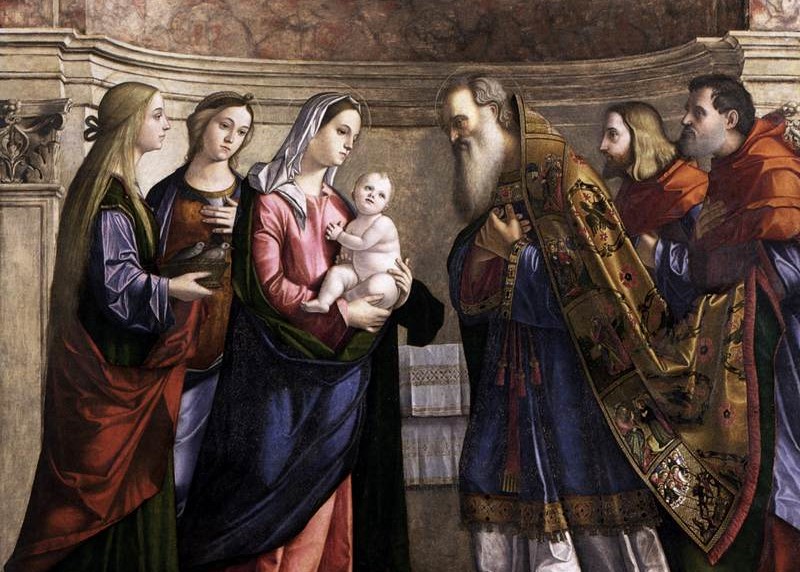
Lessons in Humility from The First Christmas – A Homily For Christmas

Feature-122413The Christmas Gospel from Luke provides us with many teachings. One thing that surely stands out, however, is the permeating theme of humility. Throughout the account, God confounds our prideful expectations and insists on being found in the lowest of places.

The newborn Christ is not found where we expect Him to be nor does His birth conform to any script we would design. Right from the start, He gives us many lessons in humility and begins His saving work of healing our wound of pride. Let’s look at these lessons in four stages.

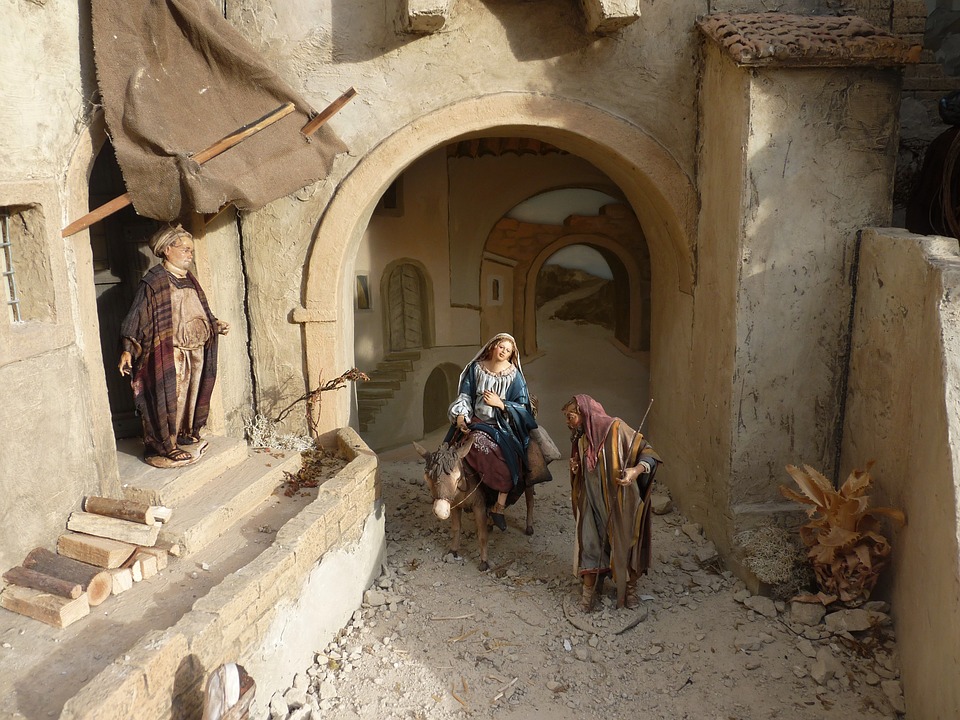
I. The Procession to the Place In those days, a decree went out from Caesar Augustus that the whole world should be enrolled. This was the first enrollment, when Quirinius was governor of Syria. So, all went to be enrolled, each to his own town. And Joseph too went up from Galilee from the town of Nazareth to Judea, to the city of David that is called Bethlehem, because he was of the house and family of David, to be enrolled with Mary, his betrothed, who was with child.

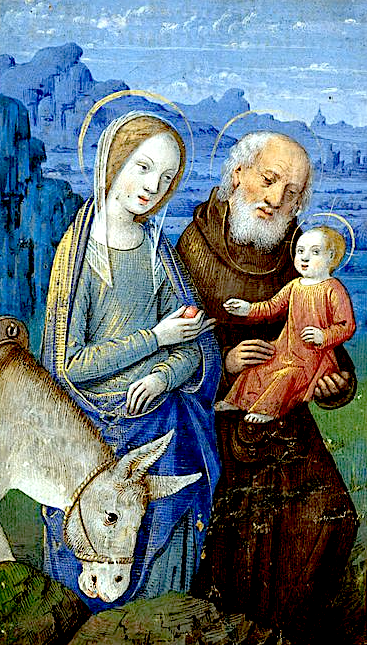
There is a sort of “cast of thousands” that leads Mary, Joseph, and Jesus to be in Bethlehem. The distant Caesar Augustus sends out a decree affecting millions. He wants a census taken in order to update his tax rolls. He also likely wants to measure his power and may have military deployments and a draft in mind. Soon enough, dozens of governors deploy thousands of troops to enforce the edict. Even in the small town of Nazareth, a town of barely 300 people, Roman troops enforce the decree. Mary is nine months pregnant, but there will be no exceptions.

For many of us, this offends our sense of what should justly happen. Jesus, who is Lord and Savior, should be born in comfort; Mary should be surrounded by loving family and in the care of midwives.

The first lesson in humility is our surprise and even indignation at the events surrounding Jesus’ birth.

God, however, is neither surprised nor stymied. All this fits into His plan to get Jesus, Mary, Joseph, and all of us to the place of blessing. Whatever evil the Emperor intends, God intends it for good (see Genesis 50:20). The Messiah, it was prophesied, would be called a Nazarene (Matt 2:23), be born in Bethlehem (Micah 5:2), and die in Jerusalem (Lk 13:33). God is setting things in place for the blessing.

And here is the second lesson in humility: Your life is not just about you. You and I are part of something far larger. Just as millions were set on the move at the birth of Christ, so you and I are part of the larger plan and providence of God involving billions of people now living, countless others who have lived, and still others who will live in the future. God sees the bigger picture, yet not one detail is lost to Him. Humility! God has more in mind than our comfort and personal agendas. We are part of something bigger as well.

The third lesson in humility is that God must get us to certain places in order to bless us. And they may be strange places, ones we would not choose. Getting us there may involve hardship for us: disappointment that our own plans have not come through, and the painful loss of places, things, and people we love. Yes, God has blessings waiting for us in strange places, involving circumstances we never imagined.

For Joseph and Mary, the procession to the place called Bethlehem involved hardship. But this procession is necessary for them and for us. Bethlehem was where the blessing would be found—there and no other place. And the same is true for us in so many ways.

God has been good to me and blessed me in ways and in places I never expected or planned. God must get us to certain places in order to bless us. I am and have been blessed; I am a witness.

Don’t miss the procession to the place that opens this Gospel. It is a paradigm for our lives. Where is your Bethlehem? Where does God need to get you in order to unlock your blessings? Are you humble and teachable enough to go there?

Remain humble and don’t quickly despair when the surprises and vicissitudes of life emerge. God may be up to something. He can make a way out of no way and write straight with crooked lines.

II. The Paradox of His PovertyWhile they were there, the time came for her to have her child, and she gave birth to her firstborn son. She wrapped him in swaddling clothes and laid him in a manger, because there was no room for them in the inn.

Don’t miss the poverty that is manifest here—it is a chosen poverty. St. John Chrysostom said,

Surely if [the Lord] had so willed it, He might have come moving the heavens, making the earth to shake, and shooting forth His thunderbolts; but such was not the way of His going forth; His desire was not to destroy, but to save… And, to trample upon human pride from its very birth, therefore He is not only man, but a poor man, and has chosen a poor mother, who had not even a cradle where she might lay her new born Child; as it follows, and she laid him in the manger (Quoted in the Catena Aurea – Lection 2 ad Luc 2:6).

The paradox of poverty is the fourth lesson in humility! We who are worldly think that poverty is the worst thing, but it is not—pride is the worst thing. And thus the Lord teaches us from the start that greatness and blessings are not found merely in what is high, mighty, pleasant, or pleasing. Blessings are often found in unusual ways and under unexpected circumstances.

The greatest blessing ever bestowed is not found in a palace, or in Bloomindales, or on beachfront property; He is not even found in a cheap Bethlehem inn. He is found in a lowly manger underneath an inn. It is poor and smelly and He rests in a feeding trough. But there He is, in the least expected place, the lowest imaginable circumstances. In this way He confounds our pride and our values.

Are we humble enough to admit this and to stop being so resentful and crestfallen when things don’t measure up exactly to our standards?

He chooses this poverty. Whatever its unpleasant realities, poverty brings a sort of freedom if it is embraced. The poor have less to lose and thus the world has less of a hold on them. What does a poor man have to lose by leaving everything and following Jesus? Wealth has many spiritual risks. It is hard for the rich to inherit the Kingdom of Heaven. Wealth is too easily distracting and enslaving. And even knowing all this, we still want it. In choosing poverty, Jesus confounds our pride, greed, lust, and gluttony.

The Lord does not just confound us; He also chooses this to bless us. St. Paul said,

For you know the grace of our Lord Jesus Christ, that though he was rich, yet for your sake he became poor, so that by his poverty you might become rich (2 Cor 8:9).

He also said,

Christ Jesus, though he was in the form of God, did not count equality with God a thing to be clung to, but emptied himself, taking the form of a servant, being born in the likeness of men. And being found in human form he humbled himself and became obedient unto death, even death on a cross (Phil 2:5).

Bede, the 7th century Church Father, wrote,

He who sits at His Father’s right hand, finds no room in an inn, that He might prepare for us in His Father’s house many mansions; He is born not in His Father’s house, but [under] an inn and by the way side, because through the mystery of the incarnation He was made the way [for us back to our Father’s House] [Catena, Ibidem].

Thank you, Jesus, for the paradoxical perfection of your poverty. Through it you confound our human ways and bless us more richly than we could ever expect! Thank for this lesson in humility.

III. Proclamation to the People Now there were shepherds in that region living in the fields and keeping the night watch over their flock. The angel of the Lord appeared to them and the glory of the Lord shone around them, and they were struck with great fear. The angel said to them, “Do not be afraid; for behold, I proclaim to you good news of great joy that will be for all the people. For today in the city of David a savior has been born for you who is Christ and Lord. And this will be a sign for you: you will find an infant wrapped in swaddling clothes and lying in a manger.”

The fifth lesson in humility throws into question our overemphasis on politics and worldly power. This section of the nativity narrative serves to strongly remind us that our salvation is not to be found in the statehouse, the courthouse, or the White House. We are not to put our trust in princes. Our salvation is in Jesus, only in Jesus. Are we humble enough to admit this and stop exalting worldly power?

Note that in this Gospel, lots of “emperor words” are used to describe this newborn infant, Jesus. Yet here He is in a lowly manger!

Emperors had heralds that preceded their arrival and summoned their subjects. The infant Jesus has the angel of the Lord to announce Him. Later, this heralding angel will be joined by a “host” of angels. The Emperor Augustus has his Legions, but Jesus has His myriad angels.

The angel also uses words appropriate for an emperor. He says, “I proclaim to you good news of great joy that will be for all the people.” This is how the declarations of emperors began. The Greek text makes this even clearer: the angel uses the word εὐαγγελίζομαι (evaggelizomai), which means “I evangelize you,” “I announce good or life changing news.” This word for “evangelize” was associated especially with an edict or announcement from the Emperor. But what the emperors questionably claimed for their edicts is really true with Jesus!

The emperors also claimed the titles “savior” and “lord.” The angel calls Jesus Savior (σωτὴρ – Soter) and Lord (κύριος – Kyrios), and He alone deserves these titles.

Here is the irony that we must humbly accept: this true Lord and Savior, this God of Armies with plenary authority, is not in some palace drinking from goblets and being fanned by slaves. He is lying in a lowly feed box, attended to by animals.

It is a divine comedy. One can almost imagine the shepherds wrinkling their noses or scratching their heads as they hear this great announcement of a King, Savior, Lord and Messiah, and then hearing that He is to be found in a stable, lying in a feeding trough. Perhaps one shepherd said to the other, “Did that angel say ‘manger’?” And another replying, “Yup, a feeding trough.”

It’s a bit anticlimactic! But thank the Lord, they humbly accept the procession that they must now make to the place of true blessing. It is an unexpected place to be sure, but that is where He is to be found. He is King and Lord to be sure, but He is humble and comes to serve and to save. He will wash the feet of the worst sinners and die for the love of them.

Humility!

IV. Praise that is Perfect And suddenly there was a multitude of the heavenly host with the angel, praising God and saying: “Glory to God in the highest and on earth peace to those on whom his favor rests.”

Note the praises of the angels! Who or what could ever match them? They are a multitude. They are perfected in their glory and acclaim God’s praises more gloriously than any human choir could ever hope to do.

Yet even here there is a humility to consider. For the Lord has taken a human nature to Himself, not an angelic one. In the order of creation, angels are far higher and more noble than we are. Their mere appearance overwhelms us and strikes fear in us. Yet to none of these did God ever say, “You are my Son. This day I have begotten you” (See Hebrews 1:5).

God humbly takes up our human nature and bestows on us an astonishing dignity that comes only from Him. It is due to His choice, not our merits. And though the angels can surely praise the Lord in far more glorious way than we, they cannot say, “One of us is God.”

And glorious though the angel’s praise is, there is a perfect praise that only we can give to God. It was beautifully expressed by the poet Christina Rossetti:

Angels and Archangels may have gathered there.
Cherubim and Seraphim thronged the air.
But only his mother in her maiden bliss
could worship the beloved with a kiss.

And thus, our final lesson in humility is to accept that it is our lowliness which the Lord embraced. We have no glory to give that is even close to what the Lord deserves, but a simple kiss will do, a simple act of love. It is our lowly and sinful hearts that the Lord seeks, so as to heal and exalt them. Our palaces, honors, and titles are of no interest or value to Him. It is our humility that pleases Him most, and He desires to meet us there.

Humility!

Crisis At Christmas – A Homily for the 4th Sunday of Advent

j-and-m-and-jToday’s Gospel gives us some background for the Christmas feast that we need to take to heart. It speaks to us of a crisis at Christmas.

We tend to sentimentalize the Christmas story as we think of the baby Jesus in the manger. It is not absolutely wrong to be sentimental, but we must also be prayerfully sober about how difficult that first Christmas was, and about the heroic virtue required of Mary and Joseph in order to cooperate with God in making it come to pass.

Let’s look at this Gospel in three stages: distress, direction, and decision.

  1. DISTRESS This is how the birth of Jesus Christ came about. When his mother Mary was betrothed to Joseph, but before they lived together, she was found with child through the Holy Spirit. Joseph her husband, since he was a righteous man, yet unwilling to expose her to shame, decided to divorce her quietly.

The marriage is off. When we read that Mary was found to be with child before she and Joseph were together, we need to understand how devastating and dangerous this situation was. Pregnancy in this circumstance  brought forth a real crisis for both families involved in Joseph and Mary’s marriage plans. Quite simply, it put all plans for the continuation of the marriage permanently off.

Why is this? We read that Joseph was a “righteous man.” To our ears this like saying that he was a “good man.” Most of the Fathers of the Church interpreted “righteous” here to refer to Joseph’s gracious character and virtue where he steps back from a sacred situation. And we surely suppose all this of him. More recent biblical scholarship includes the idea that it meant Joseph was also an “observer of the Law.” He would thus do what the Law prescribed. This explains his decision to divorce Mary because of her apparent lack of virginity prior to their coming together in the  marriage. Here is an example of the Mosaic Law in reference to such a matter:

But if the tokens of virginity were not found in the young woman, then they shall bring out the young woman to the door of her father’s house, and the men of her city shall stone her to death with stones, because she has wrought folly in Israel by playing the harlot in her father’s house; so you shall purge the evil from the midst of you (Deut 22:20-21).

While this seems quite extreme to us, we can also recognize how far we have gone in the other direction in modern times, making light of promiscuity. I doubt that anyone would argue that we should stone such a woman today, and rightly so, but this was the landscape in Joseph’s time.

What about stoning? It would seem that Jews of the first century had varying interpretations about whether stoning was required or whether it was simply permitted (cf John 8). As a virtuous and patient man, Joseph looks for and senses some freedom in not “exposing” Mary to the full effects of the Law (stoning). But it does not seem he can find a way that he can take her into his home. Thus, as a “righteous man” (i.e., follower of the Law) he decides that divorce is required even if stoning is not.

This leads us to two important reflections, one about Mary and one about Joseph.

Mary – We can see into what a difficult and dangerous position her yes (her fiat) to the angel placed her. She risked her very life by being found with child outside the normal marital act with her husband. We know that it is by the Holy Spirit she conceives, but her family and Joseph and his family do not yet, or at least cannot verify it. And even if Mary explained exactly how she conceived, do you think you would accept such a story? Mary’s fiat placed her in real danger. It is a great testimony to her faith and trust in God that she said yes to His plans.

Joseph – We can also see the kind of pressure he would be under to do what the Law and custom required. There is no mention of Joseph’s feelings at this point, but we can assume that when Mary was found to be with child prior to their being together in marriage, the social pressure on him to be legally freed from Mary were strong, regardless of his feeling or plans.

  1. DIRECTION Such was his intention [to divorce] when, behold, the angel of the Lord appeared to him in a dream and said, “Joseph, son of David, do not be afraid to take Mary your wife into your home. For it is through the Holy Spirit that this child has been conceived in her. She will bear a son and you are to name him Jesus, because he will save his people from their sins.”

Be not afraid. The principal exhortation of the angel was that Joseph “not be afraid” to take Mary as his wife. This exhortation is powerful because fear was a very big factor. Joseph had much to fear in taking Mary. Some of the Fathers of the Church believed that what the angel meant was that Joseph should not fear God’s wrath, since he would not actually be taking an adulterer or fornicator into his home. Others think that the angel meant that Joseph should not fear taking God’s chosen instrument (Mary) as his wife.

One can also imagine some other fears that needed to be allayed by the angel. For example, Joseph could easily be rejected by his family for taking Mary in. The community could likewise shun him, and as a businessman, Joseph needed a good reputation to be able to ply his trade. All of these threats loom if Joseph “brings evil” into his house rather than purging the (apparent) evil from the midst of his house. But the angel directs him not to fear; this will take courageous faith.

The angel’s explanation is unusual to say the least. What does it mean to conceive by the Holy Spirit? It’s not exactly a common occurrence! Would his family buy such an explanation? What about the others in the small town of Nazareth? Yes, people were more spiritual in those days, but it all seems so unusual!

Further, Joseph hears all this in a dream. We all know what dreams can be like. They can seem so real at the time, but when we are fully awake we wonder if what we experienced was real at all. Joseph has to trust that what he was told is real, and that he should not be afraid because God has given him direction. As is often the case with things spiritual, we have to carefully discern and walk by faith, not by fleshly sight and certitude. Joseph has a decision to make.

  1. DECISION When Joseph awoke, he did as the angel of the Lord had commanded him and took his wife into his home.

We can see the strong faith of Joseph and the kind of trust he had to put in God. He had been told not to be afraid, to rebuke fear. Manfully, Joseph does this. He makes the decision to obey God whatever the cost. We are given no information about how his family and others in the town reacted. However, the fact that the Holy family later settles back in Nazareth indicates that God did come through on His promise that Joseph need not be afraid.

Heroes of Faith! Recognize the crisis of that first Christmas and the powerful faith of Joseph and Mary. Their reputations were on the line, if not their very lives. They had great sacrifices to make in the wondrous incarnation of our Lord. Quite simply, Mary and Joseph are great heroes of the faith. For neither of them was their “yes” easy. It is often hard to obey God rather than men. Praise God that they made their decision and obeyed.

Mary and Joseph’s difficulties were not yet over. There was a badly timed census, which required a journey to Bethlehem in the ninth month of Mary’s pregnancy. Imagine walking 70 miles through mountainous terrain in such a condition! There may or may not have been a donkey, but I doubt that riding a donkey in the ninth month of pregnancy is all that comfortable either. And then there was no room in the inn; Jesus had to be born in a smelly stable. Shortly thereafter they had to flee through the desert to Egypt because Herod sought to kill Jesus.

Jesus is found in a real Christmas, not a “Hallmark” one. The crisis of the first Christmas prefigures the passion. This where Jesus is found: in the crisis of the first Christmas. You may wish for the perfect Christmas, but there is no perfect Christmas. Jesus will find you where you are, in real life, in the imperfect Christmas, where loved ones have passed away and there is grief, where a job has been lost and there is anxiety, where health is poor and there is stress, where families are experiencing strife. That’s where Jesus will be found, in your real Christmas. A Christmas of joy, yes, but also of imperfections, even crises. He is there waiting for you to find Him, in the real Christmas of your life.

This is an old African-American spiritual that reflects on the fact that true discipleship isn’t always easy. Joseph and Mary surely experience and exemplify what these words express.

I tol’ Jesus it would be all right
If He changed my name

Jesus tol’ me I would have to live humble
If He changed mah name

Jesus tol’ me that the world would be ‘gainst me
If He changed mah name

But I tol’ Jesus it would be all right
If He changed mah name

Sermon Lengths Should Vary

A recent analysis by the Pew Research Center shows the rather unsurprising fact that sermons at Catholic masses are much shorter than those at Protestant and Evangelical services. The Catholic News Agency reports:

An analysis of nearly 50,000 sermons, given across a variety of Christian denominations during the months of April and May this year, found that the median length of a sermon was 37 minutes, but for Catholic priests, the average length was just 14 minutes.

Pew found that historically black Protestant sermons had the longest median length of 54 minutes, while mainline Protestant sermons were an average of 25 minutes long, with evangelical churches falling in between at 39 minute [sic] per sermon (CNA).

Catholic clergy are generally considered to be poorer preachers than their Protestant counterparts, and I would argue that the shorter sermon length has something to do with that. The expectation that a sermon be brief, about twelve minutes, affects what is said and how it is said. It also makes a number of forms of preaching, some of them among the most satisfying for the congregation, impossible.

Some years ago, a brother priest asked one of his parishioners who had left for a large Protestant denomination why he had done so. “They teach the Word,” was the man’s answer. We can certainly lament that the man would not have left the faith had he understood the True Presence of Christ in the Eucharist, but people also have a hunger for God’s Word effectively taught and presented. For this reason, a good sermon deeply rooted in a biblical text is very satisfying. Long before I was ordained a priest, I listened to recordings of Protestant preachers like Adrian Rogers and Tony Evans. I marveled at how these men could take a text and teach from it line by line, creatively applying it to life. Even if I did not agree with every point they made or thought that they missed something that a Catholic would see, they saw the text as full of meaning and served up rich spiritual fare for their listeners.

Archbishop Fulton Sheen had this ability, too. He’d find a crucial point most others would miss and develop it beautifully. I remember once he noted that the disciples had forgotten to bring bread with them on the boat and emphasized the detail in the text that said, “They had only one loaf with them in the boat.” With the authority that only Sheen could command he proceeded to say, “And the loaf was Christ, who alone is our necessary Bread.” From this insightful teaching he went on to develop four aspects of it.

This sort of teaching and preaching takes time. I would argue that the relative inferiority of Catholic preaching isn’t just that Catholic clergy are poorly trained; it is also the limited time tolerated by the faithful. With such an abbreviated length, Catholic sermons tend to present a single principle drawn from the readings without being able to fully develop it. Good biblically based preaching usually involves going through a passage in the following steps: read it, analyze it, organize it, illustrate it, and then apply it. This sort of preaching isn’t likely to happen in a twelve-minute homily.

I also am told by many Catholics that priests need to teach more from the pulpit. There is a very long list of topics that they want to hear preached about more. I would argue that this also requires more than a mere twelve minutes.

I do not say that every member of the clergy should preach longer. Some simply don’t have the skill to do so. Others are in situations were a longer sermon is not possible due to the overall Mass schedule. There are also going to be ethnic/racial differences that factor in. So, neither do I argue that longer sermons teaching in depth out of a biblical text should be used in all situations. However, I do argue that if they want the “better” sermons of the denominations noted for excellent preaching, more Catholics might want to consider tolerating a longer sermon, at least at certain Masses.

I have spent most of my priesthood in predominantly African-American parishes. In such congregations, longer sermons are assumed. The people have high expectations of the sermon; they also interact with the preacher through encouraging interjections such as “Amen” and “All right now.” In these settings I routinely preach about thirty minutes; it is a great luxury. This permits me to preach through a biblical text examining its stages or exploring several aspects of the teaching it sets forth. Most of you who read my Sunday sermons posted here or listen to them online know this. One sermon might cover four aspects of discipleship derived from a Gospel pericope. Another might explore the stages of faith the man born blind goes through in the Gospel of John. Most of my parishioners would be surprised if I gave a ten-minute sermon, wondering what had happened. Once when I gave a short sermon a woman playfully rebuked me, saying, “Father, you left too much fruit in the tree this morning. We need a better harvest next week.”

Some Catholics have told me that they think long sermons are a mistake no matter who is in the pulpit because the purpose of the Mass is not to be a glorified bible study; it is an act of worship. Perhaps, but isn’t the Lord being worshipped when the faithful are attending to His proclaimed and preached Word with devotion?

Over the years, I have found that people have pretty strong opinions about sermons, both length and content. I suppose the best way for me to end this piece is by saying that perhaps we can all make a little room for one another in the Church. Some priests preach longer and are good at it. Some are not and better off keeping the sermon short and to the point. Other priests preach brilliant, memorable homilies that are quite brief. Vive la différence! Even in my own parish, not every liturgy is the same: our 11:00 AM Mass runs well over an hour, while our 7:00 PM Mass is no longer than forty-five minutes. Hence, in my own sermons, both content and length vary.

The one thing that is most clear to me is that rigid declarations that no sermon should be longer than a certain number of minutes (8, 10, 12, or whatever) are disrespectful of legitimate differences across cultures, liturgical traditions, and even personal temperaments. Pastors and congregations can and should work out their own situations and provide variety even there. Live and let live.

This sermon clip shows that, when I have to, I can preach in under four minutes. This was a half-hour TV Mass and only four minutes for the sermon is allotted. I certainly don’t consider it one of my better efforts and would liked to have developed the possibility that St. John did have supernatural grace. But all that one can do in so brief a moment is to throw out a few thoughts and exit gracefully. In my written online sermon I developed, in three stages, going from the imperfect gift we merely want to the perfect gift that God is actually offering.  In my recorded parish homily, given the generous time allotted in that setting I was able to sample well from the Prophets as well as the Gospel text itself. 

The Perfect Gift: A Homily for the 3rd Sunday of Advent.

What is the perfect gift? We tend to answer this question more in terms of what we want, but today’s Gospel teaches us that the perfect gift is what God is offering. One of the goals of the spiritual journey is to come to value, more than our latest desire, more than our perceived need—more than all else—what God offers.

In reviewing today’s Gospel, I am going to take a stance regarding St. John the Baptist that I realize is not without controversy. The Gospel opens with John (who is in prison) sending his disciples to Jesus with a strange question: “Are you he who is to come, or should we look for another?” This is a strange question coming from the one who pointed Jesus out and spoke so powerfully of Him!

Many of the Fathers of the Church (e.g., John Chrysostom, Gregory the Great, Theodore of Mopsuestia) interpreted John’s question as a rhetorical one, designed to teach his reluctant disciples to follow Jesus.

I, however, would like to present a different interpretation: that John’s question is a sincere one, and manifests some puzzlement—even discouragement.

While some will take offense no matter how many disclaimers I provide, I still insist that I mean no impiety in my interpretation. It is a common biblical stance that even the greatest scriptural heroes are presented in very human terms. Abraham, Jacob, Moses, David, the judges and prophets, on down to the Apostles are all depicted as humans who are imperfect from the start, who struggle to understand and have perfect faith. Some of them committed great sins—even including murder. One of the most powerful themes of the Bible is that God is able to work with imperfect, struggling human beings and draw them to great sanctity and great accomplishments.

And thus out of regard for that biblical tradition, I take today’s Gospel at what seems to me to be face value. If St. John is merely asking a rhetorical question, it seems odd that Jesus would not be aware of that. Instead, Jesus sends an answer back to John, asking him not to be scandalized (shocked) by the manner in which He goes about fulfilling Messianic texts.

I am not claiming that St. John is sinning or has failing faith; only that he, like all the prophets and patriarchs (and us), must sometimes struggle to understand God’s ways. Even Mother Mary, when Jesus was twelve and said that He must be in His Father’s house, did not understand what He was saying and had to ponder these things in her heart (cfLuke 2:50-51).

Today’s Gospel is best seen in three stages, as John the Baptist is encouraged to make a journey from puzzlement, through purification, to perfection; a journey to understand that the perfect is gift is not one of our own imagining but of God’s true offer. It is a Gospel that encourages us to find and appreciate the perfect gift.


Puzzlement When John the Baptist heard in prison of the works of the Christ, he sent his disciples to Jesus with this question, “Are you the one who is to come, or should we look for another?”

This is a strange question given what St. John had already done!With delight, John had pointed out Christ as He approached, saying, Behold, the Lamb of God(John 1:29). With humble hesitation, John had baptized the One who would change everything. He encouraged his disciples to follow after the One who was mightier than he. So why this unusual question?

Is John puzzled? Is he discouraged?It’s hard to say. Some argue that John doesn’t really mean the question seriously; he is just encouraging his disciples to ask it. But that had not been John’s approach in the past.

So perhaps John is puzzled or even struggling to understand.Consider that John had been looking for a Messiah who would root out injustice, crush the wicked, destroy the oppressors, and exalt the poor and the oppressed. Recall his words from last Sunday’s Gospel:

Even now the axe is laid to the root of the trees; every tree therefore that does not bear good fruit is cut down and thrown into the fire. “I baptize you with water for repentance, but he who is coming after me is mightier than I, whose sandals I am not worthy to carry; he will baptize you with the Holy Spirit and with fire. His winnowing fork is in his hand, and he will clear his threshing floor and gather his wheat into the granary, but the chaff he will burn with unquenchable fire(Mat 3:10-12).

John is now in prison, relegated there by a tyrant, an oppressor—the very sort of man John was sure that the Messiah would cut downand cast into the fire. Where was the hoped-for deliverance? Where was the exaltation of the lowly and the casting down of the mighty? Where was the axe being laid to the root of the tree? Jesus was not doing this sort of thing at all. Although He had some confrontations with religious leaders, His main work seems to have been healing the sick and summoning average people to repentance and faith.

So perhaps John’s question is genuine and he is puzzled or discouraged. The very one who had announced Jesus and pointed Him out when He came, sends his disciples to Jesus with a question: Are you he who is to come, or should we look for another?

John was not wholly off-base in his expectation of a Messiah coming in wrath. There are many texts that spoke of it. Here are a few:

        • Wail, for the day of the LORD is near; as destruction from the Almighty it will come. … Behold, the day of the LORD comes, cruel, with wrath and fierce anger, to make the earth a desolation and to destroy its sinners from it! … I will punish the world for its evil, and the wicked for their iniquity; I will put an end to the pride of the arrogant, and lay low the haughtiness of the ruthless. Therefore, I will make the heavens tremble, and the earth will be shaken out of its place, at the wrath of the LORD of hosts in the day of his fierce anger(Is 13:6-10).
        • Who can stand before his indignation? Who can endure the heat of his anger? His wrath is poured out like fire, and the rocks are broken asunder by him(Nahum 1:6).
        • But who can endure the day of his coming, and who can stand when he appears? (Mal 3:2)

John had worked hard calling people to repentance in order to get them ready for the great and terrible dayof the Lord. John’s puzzlement is thus understandable; Jesus goes about healing and preaching, and instead of slaying the wicked, endures scorn and ridicule from those in power.

The perfect gift for John would be to see all injustice rooted out, to see the threshing floor cleared and the distinction between the wheat and the chaff made obvious, to see the wicked burned with fire and the righteous shine like the firmament. Like many of the prophets, John sensed that the perfect gift was this: let judgment run down as waters and righteousness as a mighty stream(Amos 5:24).

Of itself this is a good and biblical vision that will one day be accomplished. But at this point is it the perfect gift? Is it the gift that Jesus wants to offer? What is the perfect gift?

Purification Jesus gives an answer to John’s disciples that draws from a different tradition of Messiah texts than those John had emphasized. The Old Testament texts that spoke of the Messiah were complicated and at times hard to interpret. While some texts spoke of His wrath toward the wicked and unjust, others spoke of His healing and mercy.

The differences in the description of the Messiah had a lot to do with the context, the audience, and also the possibility that the Messiah’s ministry might be accomplished in stages. Hence, while John the Baptist was not wrong in his application of the wrathful and vindicating texts to the Messiah, the New Testament tradition came to understand such texts more in terms of the Messiah’s second coming than his first.

Jesus thus gives the following answer to those sent by John:

Go and tell John what you hear and see: the blind regain their sight, the lame walk, lepers are cleansed, the deaf hear, the dead are raised, and the poor have the good news proclaimed to them.

In this answer, Jesus stitches together many quotesand prophecies about the Messiah, mostly from Isaiah. For example, consider the following:

        • In that day the deaf shall hear the words of a book, and out of their gloom and darkness the eyes of the blind shall see. The meek shall obtain fresh joy in the LORD, and the poor among men shall exult in the Holy One of Israel(Isaiah 29:18-19).
        • The Spirit of the Lord GOD is upon me, because the LORD has anointed me to bring good tidings to the afflicted; he has sent me to bind up the brokenhearted, to proclaim liberty to the captives, and the opening of the prison to those who are bound; to proclaim the year of the Lord’s favor, and the day of vengeance of our God; to comfort all who mourn(Is 61:1-3).
        • The dead shall live, their bodies shall rise. O dwellers in the dust, awake and sing for joy! For thy dew is a dew of light, and on the land of the shades thou wilt let it fall(Is 26:19).
        • Then the eyes of the blind shall be opened, and the ears of the deaf unstopped; then shall the lame man leap like a hart, and the tongue of the dumb sing for joy(Is 35:5-6).

There is a need to purify our sense of what is best for God to do, to come to a better appreciation of the perfect gift.

To those who are disappointed in His lack of wrathful vengeance, Jesus says something quite remarkable: And blessed is the one who takes no offense at me.

Many of us have been hurt by others or have been deeply troubled by the fact that the wicked seem to prosper while the just struggle.When will God act? Why doesn’t He do something? It is very easy for us to be puzzled, discouraged, or even offended by God’s seeming inaction.

To all this Jesus simply says, And blessed is the one who takes no offense at me.

It is essential to accept Jesus’ teaching in order to have our sense of the perfect gift purified.Rejoicing in any other gifts than grace and mercy is very dangerous. Hoping for a wrathful punishment to be inflicted on the proud and all sinful oppressors, or wishing this upon individuals or even whole segments of the world, is very dangerous. The last time I checked, all of us are sinners.

Here, then, is the necessary purification in our thinking: God’s greatest gift is not the crushing of our enemies; it is His Son, Jesus.Heis the Perfect Gift.

Further, it is not Jesus’ wrath that is His greatest gift; it is His grace and mercy. Thatis the perfect gift from the Perfect Gift.Without Jesus and a whole lot of His grace and mercy, we don’t stand a chance.

Even John the Baptist,of whom Christ said, among those born of women there has been none greater than John the Baptist—even he needs lots of grace and mercy.

Perfection – And thus we see that the perfect gift is the grace and mercy of Jesus. It is not the destruction of our enemies. It is not a sudden, swift ushering in of justice before God’s chosen time. The perfect gift is the grace and mercy of Jesus, which all of us without exception desperately need.

In order to emphasize the absolute necessity of grace and mercy, and the perfect gift that they are, Jesus turns to the crowds and speaks of St. John the Baptist:

Jesus began to speak to the crowds about John, “What did you go out to the desert to see? A reed swayed by the wind? Then what did you go out to see? Someone dressed in fine clothing? Those who wear fine clothing are in royal palaces. Then why did you go out? To see a prophet? Yes, I tell you, and more than a prophet. This is the one about whom it is written: Behold, I am sending my messenger ahead of you; he will prepare your way before you. Amen, I say to you, among those born of women there has been none greater than John the Baptist.”

And thus St. John the Baptist is the best that this world has produced. But pay attention to what the Lord says next:

Yet the least in the kingdom of heaven is greater than he.

Do you see what grace and mercy can do?Do you see that they surpass any worldly excellence? The world can produce only human, worldly excellence. Grace and mercy produce heavenly excellence and make us like unto God. Without these gifts of God, we don’t stand a chance. John the Baptist needed grace and mercy; Mother Teresa needed grace and mercy. Grace and mercy are perfect and necessary gifts.

One day the perfect justice of God that we all seek will roll in. But unless and untilyou receive the perfect gift of grace and mercy through Jesus, you will not be able to endure the perfect justice of God. So until that time, it has pleased God to offer us the perfect gift of His Son, who by His grace and mercy will prepare us for that day.

If you are looking for the perfect gift this Christmas, look to Jesus.He alone can bestow the grace and mercy that we so desperately need. If even the holy St. John the Baptist was in need, how much more so you and I? Grace and mercy far exceed anything we can ask for or imagine.

Do you want to give the perfect gift to others?Then bring them to Jesus; bring them to Mass. Jesus awaits us in prayer, in the liturgy, in His Word proclaimed, and in the sacraments. Jesus is the perfect gift. The destruction of sinners is not the perfect gift; their conversion and salvation is.

Find the perfect gift this Christmas; find Jesus. Give the perfect gift this Christmas; give Jesus. Give Jesus the perfect gift this Christmas; give Him the give of your very self—the perfect gift.

Standing in Need of Prayer – A Homily for the 30th Sunday of the Year

There’s an old saying that goes, “Faults in others I can see, but praise the Lord, there’s none in me.” One is snared in sin by the very act of claiming to have no sin! In fact, it’s the biggest sin of all: pride.

In the Sunday Gospel, the Lord illustrates this through the parable about two men who go to the temple to pray. One man commits the sin of pride and leaves unjustified. The other, though a great sinner, receives the gift of justification through his humility. Let’s look at what the Lord teaches us.

Prideful Premise Jesus addressed this parable to those who were convinced of their own righteousness. When it comes to parables, it’s easy to gloss over the introductory statement, which often tells us what prompted Jesus to tell the parable. Many people simply see this parable as being about arrogance, but there is more to it than that.

Jesus is addressing the parable to those who are convinced of their own righteousness. They are under the illusion that they are capable of justifying and saving themselves. They think that they can have their own righteousness and that it will be enough to save them.

However, there is no saving righteousness apart from Christ’s righteousness. I do not care how many spiritual pushups you do, how many good works you perform, or how many commandments you keep; it will never be enough for you to earn Heaven. On your own you are not holy enough to enter Heaven or to save yourself. Scripture says, One cannot redeem himself, pay to God a ransom. Too high the price to redeem a life; he would never have enough (Psalm 49:8-9).

Only Christ and His righteousness can ever close the gap, can ever get you to Heaven. Even if we do have good works, they are not our gift to God—they are His gift to us. We cannot boast of them because they are His. Scripture says, For by grace you have been saved through faith, and this is not from you; it is the gift of God; it is not from works, so no one may boast. For we are his handiwork, created in Christ Jesus for the good works that God has prepared in advance, that we should walk in them (Eph 2:8-10).

The Pharisee in this parable has a prideful premise: he is convinced of his own righteousness. Notice that he uses the word “I” four times in his brief prayer.

        • I thank you
        • I am not like the rest of humanity—greedy, dishonest, adulterous
        • I fast
        • I pay tithes

It is also interesting that the Lord indicates that the Pharisee “spoke this prayer to himself.” Some think that this merely means that he did not say the prayer out loud. Others suspect that there is a double meaning, if you will. In effect, the Lord is saying that the Pharisee’s prayer is so self-centered, so devoid of any true appreciation of God, that it is actually spoken only to himself. He is congratulating himself more than he is praying to God, and his “thank you” is purely perfunctory; it is more for his own prideful self-adulation. He is speaking to himself, all right. He is so prideful that even God can’t even hear him!

We see here a prideful premise on the part of the Pharisee, who sees his righteousness as his own, as something that he has achieved. He is badly mistaken.

Problematic Perspective … and despised everyone else. He looks on others with contempt, perceiving them as beneath him. Notice that the Pharisee is glad to report that he is not like the rest of humanity.

Not only is his remark foolish, it is also impertinent. One will not get to Heaven merely by being a little better than someone else. No indeed, being better than a tax collector, prostitute, drug dealer, or dishonest businessman is not the standard we must meet. The standard we must meet is Jesus. He is the standard. Jesus said, Be perfect, therefore, as your heavenly Father is perfect (Matt 5:48). Now, somebody say, “Lord, have mercy!” It is dangerous (and a waste of time) to compare oneself with others because it misses the point entirely.

The point is that we are to compare ourselves to Jesus and be conformed to Him by the work of His grace. Any honest comparison of ourselves to Jesus should make us fall to our knees and cry out for grace and mercy, because it is the only way we stand a chance.

It is so silly—laughable, really—to compare ourselves to others. What a pointless pursuit! What a fool’s errand! What a waste of time! God is very holy, and we need to leave behind the problematic perspective of looking down on others and trying to be just a little better than some other poor (fellow) sinner.

There’s a lot of talk today about being “basically a nice person,” but being nice isn’t how we get to Heaven. We get to Heaven by being like Jesus. The goal in life isn’t to be nice; the goal is to be made holy. We need to set aside all the tepid and merely humanistic notions of righteousness and come to understand how radical the call to holiness is and how unattainable it is by human effort. Looking to be average, or a little better than others, is a problematic perspective. It has to go; it must be replaced by the Jesus standard.

Let’s put it in terms of something we all can understand: money. Let’s say that you and I are on our way to Heaven; you have $50, while I have $500. Now I might laugh at you and feel superior to you. I might ridicule you and say, “I have ten times as much as you do!” But then we get to Heaven and find out the cost to enter is $70 trillion. Oops. Looks like we’re both going to need a lot of mercy and grace to get in the door. In the end, we are both in the same boat; we’re woefully short. All my boasting was a waste of time and quite silly, to boot. We have a task so enormous and unattainable that we simply have to let God grant it and accomplish it for us.

Prescribed Practice But the tax collector stood off at a distance and would not even raise his eyes to heaven but beat his breast and prayed, “O God, be merciful to me a sinner.” Given everything we have reflected on, we can only bow our head and cry from the heart, “Lord, have mercy!” Deep humility coupled with lively hope is the only answer.

Being humble isn’t something we can do on our own. We have to ask God for a humble and contrite heart. Without this gift we will never be saved. In our flesh, we are just too proud and egotistical. God needs to give us a new heart, a new mind. Notice that the tax collector in today’s parable did three things; we should do them as well:

Realize your distancehe stood off at a distance. The tax collector realizes that he is a long way from the goal. He knows how holy God is and how distant he himself is. Let’s be clear: the image of a tax collector is shocking. Such men did not get their posts by being “nice guys.” They were often ruthless thugs who didn’t hesitate to use fear and extortion. But his recognition of his distance is already a grace and a mercy. God is already granting the humility by which he stands a chance.

Recognize your disabilityhe would not even raise his eyes to heaven. Scripture says, No one can see on God and live (Ex 33:20). We are not ready to look on the face of God in all its glory. That is evidenced by the fact that we are still here on earth. Scripture also says, “Blessed are the pure of heart for they shall see God” (Matt 5:8). This tax collector recognizes his disability, his inability to look on the face of God, for his heart is not yet pure enough. In humility, he looks down. His recognition of his disability is already a grace and a mercy. God is already granting him the humility by which he stands a chance.

Request your deliverancehe beat his breast and prayed, “O God, be merciful to me, a sinner.” Notice that the tax collector’s humility is steeped in hope. He cannot save himself, but God can. He cannot have a saving righteousness of his own, but Jesus does. This tax collector summons those twins called grace and mercy. In this man’s humility, a grace given him by God, he stands a chance. For by this humility, he invokes Jesus Christ, who alone can make him righteous and save him. Scripture says, The humble, contrite heart the Lord will not spurn (Ps 51:17). Jesus says, whoever humbles himself will be exalted.

Beware of pride, our worst enemy. Beg for the gift of humility, for only with it do we even stand a chance.

I have it on the best of authority that as he left the temple, the tax collector sang this spiritual: “It’s Me, Oh Lord, Standing in the Need of Prayer.” In the video below it is sung by a German choir, which explains their unusual pronunciation of the word “prayer.” I can’t complain, though; I don’t pronounce Geschwindigkeitsbegrenzung (speed limit) very well either!

Cross-posted at the Catholic Standard: Standing in Need of Prayer – A Homily for the 30th Sunday of the Year

The Practices of Prayer

This Sunday’s readings speak to us of the power of persistent prayer. The first reading (Exodus 17:8-13) in particular depicts prayer quite powerfully. In it, we can discern six fundamental teachings on prayer.

I. The Problem for PrayerIn those days, Amalek came and waged war against Israel. None of us like problems, but one good thing about them is that they help to keep us praying. Israel was at war and her enemies were strong; it was time to pray.

The Gospel concerns a widow who is troubled about something, and this problem keeps her coming back to the judge. Sometimes God allows us to have problems in order to keep us praying. Problems also keep us humble and remind us of our need for God and others.

Problems aren’t the only reason we pray, but they are one important motivator. It shouldn’t be necessary for us to have problems, but they certainly have a way of summoning us to prayer.

II. The Priority of PrayerMoses, therefore, said to Joshua, “Pick out certain men, and tomorrow go out and engage Amalek in battle. I will be standing on top of the hill with the staff of God in my hand.” So Joshua did as Moses told him: he engaged Amalek in battle after Moses had climbed to the top of the hill with Aaron and Hur.

Notice that Joshua and the army did not go forth until after Moses took up his position of prayer. Prayer ought to precede any major decision or action.

We often rush into things without praying. We should begin each day with prayer. Important decisions should also elicit prayer from us. Prayer needs to come first; it has priority.

Too many people use prayer as a kind of rear-guard action through which they ask God to clean up the mess they’ve made. We end up doing a lot of things we shouldn’t because we didn’t pray first. We also end up doing a lot of things poorly that prayer might have clarified or enriched.

Prayer isn’t just about asking for this or that specific thing. It involves an ongoing relationship with God, through which we gradually receive a new mind and heart, and our vision and priorities are clarified and purified. The new mind and heart that we receive through prayer and the study of our faith are an essential part of the prayer that precedes decisions and actions.

III. The Power of PrayerAs long as Moses kept his hands raised up, Israel had the better of the fight, but when he let his hands rest, Amalek had the better of the fight.

As long as Moses prayed, Israel got the better of the battle, but when fatigue caused his prayer to diminish, Israel began to lose.

Prayer changes things. Here in this world, we may never fully know how our prayers helped to change history, but I am sure that one of the joys of Heaven will be to see what a difference our prayers—even the distracted and poor ones—made. In Heaven, we’ll tell stories of prayer’s power and will be able to appreciate the difference it made for us and for others. For now, much of this is hidden from our eyes, but one day, we’ll see with a glorious vision what prayer accomplished.

I suppose, too, that one of the pains of purgatory might be seeing the negative effects of our failure to pray and realizing that it was only God’s mercy that counteracted our laziness.

In this passage, Moses struggles to pray—so do we. Remembering prayer’s power is an important motivator to keep us on our knees and at our beads.

IV. The Partnership of PrayerMoses’ hands, however, grew tired; so they put a rock in place for him to sit on. Meanwhile Aaron and Hur supported his hands, one on one side and one on the other.

Moses knew that because of his fatigue he needed the assistance of Aaron and Hur. They all prayed together and, once again, Israel was strengthened and regained the upper hand.

Prayer is not supposed to be merely a solitary experience. While personal prayer is important, so is communal and group prayer. The Lord said, Where two or three are gathered in my name, there am I in the midst of them (Matt 18:20). He also said, Again, I tell you that if two of you on earth agree about anything you ask for, it will be done for you by my Father in heaven (Matt 18:19).

We are taught to gather in prayer liturgically and also to find partners for prayer. Because prayer is so essential and we are individually so weak, we ought not to have it all depend on us. We need our own Aaron and Hur to support us in prayer and to help make up for our weakness.

Do you have some friends who help you, not only to pray but also to walk uprightly? Scripture says, Woe to the solitary man! For if he should fall, he has no one to lift him up. … where a lone man may be overcome, two together can resist. A three-ply cord is not easily broken (Ecclesiastes 4:10,12).

Do not pray or journey alone. Find some spiritual friends to accompany you.

V. The Persistence of Prayerso that [Moses] hands remained steady till sunset.

With Aaron and Hur to help him, Moses prayed right through until sunset. They prayed right up to the endso must we. There is a mystery as to why God sometimes makes us wait, but we must continue to pray anyway. We may get frustrated, fatigued, or disheartened by the delay, but we must pray on. Like Moses, we should get friends to help us, be we must not stop praying.

Be like the woman in the Gospel, who just kept returning to that judge until he rendered justice for her. I have brought people back into the Church long after the spouse or parent who prayed for them died.

VI. The Product of PrayerAnd Joshua mowed down Amalek and his people with the edge of the sword.

The text says that the enemies of Israel were utterly defeated. This shows the powerful result of persistent prayer.

We may not fully see the results of our prayer on this side of the veil, but on glory’s side we one day will. We may not need God to mow down a foreign enemy for us, but how about enemies like fear, poverty, illness, and sin? Yes, we have enemies, and God answers prayers. Pray and then wait patiently for the product of prayer.

There you have it, six practices and teachings on prayer.

Cross-posted at the Catholic Standard: The Practices of Prayer

How to Give God Perfect Thanks – A Homily for the 28th Sunday of the Year

One of the great human inadequacies is our inability to give proper and adequate thanks to God. Perhaps the biggest problem is that we don’t even realize the vast majority of what He does for us; it is hidden from our eyes.

A further problem is that in our fallen condition we seem to be wired to magnify our problems and minimize or discount the enormous blessings of each moment. God sustains every fiber of our being and every atom of creation. God’s blessings are countless and yet we get angry if our iPhone malfunctions or if a few of His myriad blessings are withdrawn.

An old gospel song says it well:

 I’ve got so much to thank God for; So many wonderful blessings and so many open doors. A brand new mercy along with each new day. That’s why I praise You and for this I give You praise. For waking me up this morning, For starting me on my way, For letting me see the sunshine, of a brand new day. That’s why I praise You and for this I give You praise. So many times You´ve met my needs, So many times You rescued me. That’s why I praise You.

For every mountain You brought me over, For every trial you’ve seen me through, For every blessing, For this I give You praise.

 Fundamental Question – The question at the heart of this Sunday’s Gospel is best expressed in the Book of Psalms: What return shall I make to the Lord for all the good he has done for me? The same psalm goes on to answer the question in this way: The cup of salvation I will take up and call on the name of the Lord (Psalm 116:12).

The Mass is signified – Indeed, how can I possibly thank the Lord for all the good He has done for me? Notice that the psalm points to the Eucharist in saying, The cup of salvation I will take up …. As you know, the word Eucharist is a Greek word meaning “thanksgiving.” We cannot thank God our Father adequately, but Jesus can. In every Mass, we join our meager thanksgiving to His perfect one. At every Mass, Jesus takes up the cup of salvation through the priest and shows it to us. This is the perfect and superabundant thanks to the Father that only Jesus can offer. In every Mass, Jesus joins us to His perfect sacrifice of thanks. That is how we give thanks in a way commensurate with the manifold blessings we have received.

Hidden Mass – The Gospel for this day makes the point that the Mass is the perfect offering of thanks to the Father in a remarkable and almost hidden way. But for Catholics, it is right there for us to see if we have eyes to see it. The Gospel contains all the essential elements of Holy Mass. It is about giving thanks and reminds us once again that it is the Mass that is the perfect thanksgiving, the perfect “Eucharist.”

Let’s look and see how it is a Mass:

1.  Gathering – Ten lepers (symbolizing us) have gathered and Jesus comes near as He passes on His way. We do this in every Mass: we gather and the Lord draws near. In the person of the priest, who is the sacrament, the sign of His presence, Jesus walks the aisle of our church just as He walked those ancient roads.

2.  Kyrie – The lepers cry out for mercy, just as we do at every Mass. Lord, have mercy! Jesus, Master, have pity on us!

3.  Liturgy of the Word – Jesus quotes Scripture and then applies it to their lives, just as He does for us at every Mass. (In saying, “Go show yourselves to the priests,” Jesus is referencing Leviticus 13, which gives detailed instructions on how the priests of old were to diagnose leprosy or its having been cured.) Yes, this is what we do at every Mass: we listen to the Lord Jesus, through the priest or deacon, proclaiming God’s Word and then applying it to our lives.

4.  Liturgy of the Eucharist – The Gospel relates that one of them fell at the feet of Jesus and thanked him. This is what we do during the Eucharistic prayer: we kneel and thank Jesus, and along with Him, give thanks to the Father. As we have noted, the word “Eucharist” comes from the Greek and means “thanksgiving.” Here is the perfect thanks rendered to the Father. Those who claim that they can stay home and give adequate thanks to God should be rebuked for being prideful. Only Jesus can give perfect thanks to the Father, and we can only give adequate thanks by following Jesus’ command to “Do this in memory of me.” We have to be at Mass.

5.  Ite, missa est – Finally, Jesus sends the thankful leper on his way, saying, Stand up and go; your faith has saved you. We, too, are sent forth by Jesus at the end of every Mass, when He speaks through the priest or deacon: “The Mass is ended, go in peace.”

So, there it is. Within this Gospel, which very clearly instructs us to give thanks to God, is the very structure of the Mass. If you want to give proper thanks to God, the right place to do it is at Mass. Only at Mass is perfect and proper thanks given to God.

It was all prefigured in the psalm long ago: What return shall I make to the Lord for all the good he has done for me? The cup of salvation I will take up and call on the name of the Lord (Psalm 116:12). Yes, it is the very cup of salvation, the chalice containing Christ’s blood, that is held up at every Mass. It is the perfect sacrifice of thanks. It is the prescribed sacrifice of praise. It is the proper sacrifice of praise.

https://youtu.be/RZ1IpqlOWpE

Cross-posted at the Catholic Standard: How to Give God Perfect Thanks A Homily for the 28th Sunday of the Year

Five Fundamentals for a Firm Faith – A Homily for the 27th Sunday of the Year

The readings for this Sunday’s Mass richly describe some essential qualities of faith. There are five fundamentals that can be seen:

Wanting The apostles said to the Lord, “Increase our faith” (Luke 17:5-6).

There’s an old saying that what you want, you get. Many doubt this, thinking that they have wanted many things that they did not get. The reason for this, however, is usually because they didn’t want it enough. When we really want something (provided it is not an impossibility) we usually get it, because we have a passion for it and work at it.

Many people who say that they don’t have time to pray or to go to Mass still find time to golf and watch TV television. They find the time because they want to do these things. They don’t find time to pray or to go to Mass because they do not want to do these things enough.

When the apostles ask the Lord to increase their faith, they are asking for a deeper desire to know Him. Too often we miss a step in our prayer. We might ask the Lord to help us to pray when we really should be asking Him to give us the desire to pray. When we want to pray, we will pray. When we want to be holy, we will naturally strive for holy practices. It is about what we truly desire. Ask the Lord to help you want Him and His kingdom. Ask the Lord for a new heart that has proper wants and desires. Ask the Lord for a new mind that has the proper priorities and prefers to think about what is good, true, and beautiful. What you want, you get.

Waiting – The first reading speaks of our need to wait for the Lord’s action: How long, O LORD? I cry for help, but you do not listen! I cry out to you, “Violence!” but you do not intervene. Why do you let me see ruin; why must I look at misery? Destruction and violence are before me; there is strife, and clamorous discord. … Then the LORD answered me and said, Write down the vision clearly upon the tablets, so that one can read it readily. For the vision still has its time, presses on to fulfillment, and will not disappoint; if it delays, wait for it, it will surely come, it will not be late. The rash one has no integrity (Hab 1:2-3; 2:2-4).

Waiting is one of the great mysteries of the Christian life. It is not always clear why God makes us wait. Perhaps He is trying to strengthen our faith. Perhaps He is helping us to clarify or confirm our desires. Scripture consistently tells us that we must learn to wait for the Lord and that there are blessings for those of us who do. Here are some examples:

        • Fret not yourself; it tends only to evil … those who wait for the LORD shall possess the land (Ps 37:8).
        • Those who wait for me shall not be put to shame (Is 49:23).
        • The LORD is good to those who wait for him, to the soul that seeks him. It is good that one should wait quietly for the salvation of the LORD (Lam 3:25).
        • But they who wait for the LORD shall renew their strength, they shall mount up with wings like eagles, they shall run and not be weary, they shall walk and not faint (Is 40:31).

Waiting is a fundamental of firm faith. Gospel music is replete with waiting themes. One song says, “You can’t hurry God, you just have to wait, trust, and never doubt him, no matter how long it takes. He may not come when you want him but he’s always right on time.” Another song says, “Weeping may endure for a night, but joy will come with the morning light.” Other songs counsel that we must hold on and hold out:

        • “I promised the Lord that I would hold out, he said he’d meet me in Galilee.”
        • “Hold on just a little while longer, everything’s gonna be all right.”
        • “Keep your hand on the plow. Hold on!”
        • “Lord help me to hold out until my change comes!”

The reading from Habakkuk above warns that the rash man has no integrity. That is another way of saying that waiting is integral to the Christian life; it is a fundamental of faith. To have integrity means to have all the necessary parts that make up the whole. To lack patience, then, is to lack integrity, to lack a fundamental of the Christian faith.

Withstanding – The second reading counsels us, God did not give us a spirit of cowardice but rather of power and love and self-control. So do not be ashamed of your testimony to our Lord, nor of me, a prisoner for his sake; but bear your share of hardship for the gospel with the strength that comes from God (2 Tim 1:6-8).

This passage tells us that life has difficulties and challenges. Becoming a Christian does not necessarily make things easier. In fact, things often get harder, because we must endure the hatred and ridicule of the world. A fundamental of the Christian Faith is that being able to withstand such trials with courage.

Notice that this courage, power, and love come from God, not from us. Hence, it is grace that is being described here. This is not a moral slogan. Withstanding means that God is “standing with” us, and we with Him. Such withstanding is only possible by the relationship with God that comes by faith. In this way, we discover the power, the capacity, to withstand, to live the Christian faith courageously in a hostile world.

Working – The Gospel teaches, Who among you would say to your servant who has just come in from plowing or tending sheep in the field, “Come here immediately and take your place at table”? Would he not rather say to him, “Prepare something for me to eat. Put on your apron and wait on me while I eat and drink. You may eat and drink when I am finished”? Is he grateful to that servant because he did what was commanded? So should it be with you. When you have done all you have been commanded, say, “We are unprofitable servants; we have done what we were obliged to do” (Luke 17:6-10).

This teaching of the Lord’s can irritate us and even seem hurtful if we misunderstand grace and seek to understand this text by the flesh. Our flesh is self-centered and thinks we deserve praise and good things from God in return for the good things we do. The flesh expects—even demands—rewards, but God can never be indebted to us, never. Our good works are not our gift to God; they are His gift to us.

All our works of charity and faith, for which our flesh wants credit, are God’s work and His gift. This is made clear in this passage from the Letter to the Ephesians:

For by grace you have been saved through faith; and this is not your own doing, it is the gift of God– not because of works, lest any man should boast. For we are his workmanship, created in Christ Jesus for good works, which God prepared beforehand, that we should walk in them (Eph 2:8-10).

If I think that I did something deserving of praise and reward, I am thinking in terms of the flesh, not the Spirit. When I have done something good all I can really do is to say, “Thank you” to God. His grace alone permitted me to do it. God may speak elsewhere of rewarding us, but that is His business. He is not indebted to us in any way. When we have done everything we ought, our one disposition should be gratitude. We are useless servants in the sense that we can do nothing without God’s grace. We can only do what He enables us to do.

That said, it is clear that work is a pillar of faith. The text from today’s Gospel and the text from Ephesians above both make clear that work is something God has for us. So faith by itself, if it has no works, is dead (James 2:17). Likewise, Jesus says, “It was not you who chose me. It was I who chose you that you should go and bear fruit that will last” (Jn 15:16). Yes, work is a fundamental of faith.

Winning – We conclude with a reference back to the first reading: For the vision still has its time, it presses on to fulfillment and it will not disappoint. If it delays, wait for it, it will surely come, it will not be late (Hab 2:3).

See what the end shall be! It is true that we must want, wait, withstand, and work, but we do not do so for no reason. We have a cross to carry, but if we carry it with the Lord, we carry it to glory. There is an old gospel song with these lyrics:

Harder yet may be the fight, Right may often yield to might, Wickedness awhile may reign, Satan’s cause may seem to gain, There is a God that rules above, With hand of power and heart of love, If I am right, He’ll fight my battle, I shall have peace some day. I do not know how long ’twill be, nor what the future holds for me. But this I know, if Jesus leads me, I shall get home someday.

This is just what Habakkuk describes: we will win with Jesus. He describes a victory that is

        • Future – the vision still has its time; it presses on to fulfillment
        • Fantastic – it will not disappoint
        • Firm – it will surely come
        • Fixed – it will not be late

For all those who walk with Jesus on the way of the cross, there is victory ahead. Even here in this life we already enjoy the fruits of crosses past. Our withstanding in the past has given us strength for today. Our waiting in the past has had its fulfillment and provides the hope that our current waiting will also be fruitful. Our past work, by God’s grace, has already granted benefits to us and to others.

These are but a small foretaste of a greater glory to come, the glory that waits for us in Heaven. Yes, if we want, wait, withstand, and work, we will win! I promise it to you in the Lord Jesus Christ.

Cross-posted at the Catholic Standard: Five Fundamentals for a Firm Faith – A Homily for the 27th Sunday of the Year