A Recipe for Readiness – A Homily for the First Sunday of Advent

As we begin the Advent Season, we are immediately drawn into its principal theme of preparation and readiness for the coming of the Lord. His first coming has already been fulfilled at Bethlehem, and while we should prepare spiritually for the coming Christmas Feast, these first weeks of Advent bid us to focus even more on His second coming in glory.

As the curtains draw back on the opening scene of Advent, we are warned by the Lord that He will come on the clouds with great power and glory and that we must be prepared. He says, “Beware … Be vigilant at all times and pray that you have the strength to escape the tribulations that are imminent and to stand before the Son of Man.”

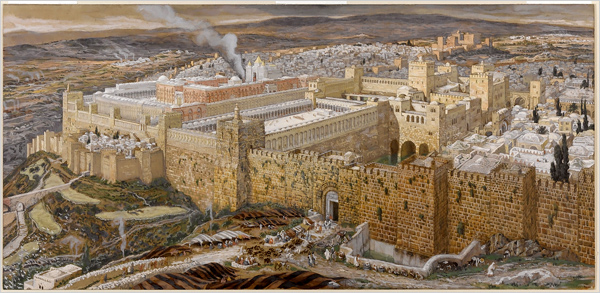
Today’s Gospel is taken from the Mt. Olivet discourse. The historical context in which the Lord was speaking was not the end of the world, but the destruction of the Temple and Jerusalem. For those ancient Jews, however, it was the end of the world as they knew it. The destruction of Ancient Jerusalem is also symbolic of the end of the world. The world will end for us either by our own death or by His coming to us in the second coming. Either way, the message is the same: Be ready!

With that in mind we do well to study this Gospel and heed its message, set forth in two stages.

DOUBLE VISION – The Gospel opens with a description of tribulations that are about to come on the land and two different reactions to it.

There will be signs in the sun, the moon, and the stars, and on earth nations will be in dismay, perplexed by the roaring of the sea and the waves. People will die of fright in anticipation of what is coming upon the world, for the powers of the heavens will be shaken. And then they will see the Son of Man coming in a cloud with power and great glory. But when these signs begin to happen, stand erect and raise your heads because your redemption is at hand.

Many will be frightened, shocked, bewildered, and dismayed when fixed points in this world such as the sun, moon, stars, and sea are shaken,

There is a second reaction that is prescribed:

But when these signs begin to happen, stand erect and raise your heads because your redemption is at hand.

Yes, it is a very different reaction, one of expectant joy and serene confidence. So, we see here a kind of double vision.

  • Some cry out with fear and say, “He is wrathful!” Others with faith say, “He is wonderful!”
  • To some He is frightening, to others He is fabulous.
  • To some these events are awful, to others they are awe-inspiring.
  • Some shout, “Horror on every side!” others sing, “Hallelujah to the King of Kings!

In order for us to celebrate on that day when the Lord shall come, there are prerequisites that must be met. That leads us to the next stage of this Gospel.

DIRECTIVE The Lord goes on to instruct us in how to be ready for the great and terrible day of the Lord:

Beware that your hearts do not become drowsy from carousing and drunkenness and the anxieties of daily life, and that day catch you by surprise like a trap. For that day will assault everyone who lives on the face of the earth. Be vigilant at all times and pray that you have the strength to escape the tribulations that are imminent and to stand before the Son of Man.

Notice that the Lord announces the effect (drowsiness) and then the causes (carousing, drunkenness, and anxieties of daily life). This is typical of ancient practice. In modern times, however, it is more common to speak of the causes and then describe the effects. Hence, we will proceed with our study in a slightly different order than that in which it was presented.

Cause 1: DEBAUCHERY The Lord warns of the problem of “carousing.” The Greek word used is κραιπάλῃ (kraipale), meaning most literally the giddiness and headache caused by drinking wine to excess. More generally it means the excessive indulgence of our passions or living life to excess. Other translators render the Greek word as “dissipation,” referring to the general squandering and loss of resources resulting from excessive indulgence.

We, of course, live in times that make it easy to (over)satisfy our every need. At the market there is not merely bread, there are fifty different types of bread. Our oversupply and overindulgence are literally reflected in our bodies: obesity, high blood pressure, diabetes, high cholesterol, and heart disease plague us.

It is not just food that is excessive; it is everything. We are excessively busy with the nonessentials of life. There are innumerable ways to occupy our minds. Our minds are so overstimulated that we cannot hear that “still, small voice.” Most people have a very short attention span due to this overstimulation. All day long the noise from the radio, mp3 player, TV, DVD player, CD player, PC, iPad, and cell phone compete for our attention. It jams our mind and breaks our union with Christ and even with our very self. Then there are the 24-hour news channels generating hype about even ordinary events: “Breaking news!” Our e-mail is flooded with junk mail and spam, offering false hopes and products and services we don’t really need. There are endless money-making schemes, lotteries, and sweepstakes. And oh, the sales: Black Friday, Cyber Monday, pre-holiday, post-holiday! It makes me think of the carnival hucksters calling, “Step right up!” It is worse than that, though, because it seems we cannot get away from it.

We spend, spend, spend and then borrow, borrow, borrow to support our spending. We need two incomes and 60-hour work weeks so that we can afford our lifestyle. Once we have acquired “the goods,” we’re never there to enjoy them. We sacrifice family on the altar of pleasure. We have an excess of everything except children, because they cost money and thus impede our ability to consume.

Even our recreation is excessive. Our weekends and vacations often leave us exhausted, disquieted, and unprepared for the coming week. A simple, quiet weekend, spent reflecting on God’s wonders or spending time at home with family? No way! It’s off to watch the myriad activities of our overscheduled children. The weekends meant for rest instead feature distinctly unrestful activities such as shopping, dancing in loud bars, watching football games, and drinking.

Yes, it’s all excess. It weighs us down, wearies us, costs a lot of time and money, and isn’t really all that satisfying anyway. It is dissipation. In the end, we are left with something like that headache and hung-over feeling of which the Greek word kraipale speaks. Up goes the cry anyway: “One more round!” Excess, dissipation, carousing; more, more, more!

Cause 2: DIVISIONS The Lord warns of the “anxieties” of daily life. The Greek word used is μερίμναις (merimnais), meaning more literally “a part separated from the whole,” “that which divides and fractures a person into parts.” The human person, overwhelmed with excess, becomes incapable of distinguishing the urgent from the important, the merely pleasurable from the productive. On account of our overstimulation, our excess, we are pulled in many different directions. We can’t decide; our loyalties are divided and conflicting. We are endlessly distracted by a thousand contrary drives and concerns.

Anxiety is the condition of being overwhelmed and divided by many and contrary drives, demands, and priorities. Anxiety freezes and perplexes us. There is too much at stake and no central governing principle to direct our decisions. All of this overwhelms us and clouds our mind and heart. We are anxious about many things and cannot determine the “one thing necessary” that will order all of the details (cf Luke 10:42). The Lord lists anxiety as among those things that destroy our readiness to stand before Him with joy.

Cause 3: DRUNKENNESS Here the Greek word used is straightforward: μέθῃ (methe), meaning drunk on wine. Why do we drink? We drink to medicate our anxiety. Overwhelmed by the excess that leads to anxiety (inner division and conflict) we drink to medicate our sense of being overwhelmed. Something has to soothe us. Instead of slowing down and seeking God, we drink. We anesthetize our mind. Alcohol is not the only thing we use. We use things, people, power, sex, entertainment, diversions, and distractions; all to soothe our tense, anxious mind.

This, of course, only deepens the central problem. All these things only add to the very problem that has disturbed us in the first place: the kraipale that is excess and dissipation. The solution is to get clear about our priorities, to seek God and allow Him to order our life. Instead of seeking a clear mind, however, we do the opposite and tune out. A little wine is a gift from God (cf Psalm 104:15) to cheer our hearts, but with excess, we go beyond cheer to dull our mind.

To be sober is to have a clear mind, one that knows and is in touch with reality and final ends. To be sober is to be alert, honest, and reasonable; to act in a way that bespeaks thoughtful and deliberate movement toward a rational and worthy goal. The sober person acts consciously and with purpose toward a unifying goal: being with God. St. Paul says, But this one thing I do: Forgetting what is behind and straining toward what is ahead, I press on toward the goal to win the prize for which God has called me heavenward in Christ Jesus (Phil 3:13-14).

Lacking the one unifying thing, torn apart within, and anxious on account of our excesses, we dull our mind with alcohol. The Lord calls us to clarity, but we retreat into insobriety. We are, in effect, “hung over” from indulging in the excesses of this world and then “medicating” the resulting inner divisions. Our minds go dull and we tune out.

The Effect: DROWSINESS The Lord says, Beware that your hearts do not become drowsy. The Greek word used here is βαρηθῶσιν (barethosin), meaning “burdened, heavily laden, overcome, or weighted down.” Thus, we see that the effect that all the above things have is to weigh us down, to burden our heart. Laden with excess, divided by contrary demands, and medicating the stress with insobriety, our heart becomes tired and burdened. Our heart is no longer inflamed and animated with love. It has become weary, distracted, bored, and tired of holy things and of the Lord. Instead of being watchful in prayer, our heart sleeps on, weighed down in sin, excess, division, and insobriety. It no longer keeps watch for the Lord, whom it is called to love.

Yes, the world, and our sinful preoccupation with it weighs our hearts down. It captures our love and attention and we become drowsy toward spiritual things.

In the garden, the Lord asked the apostles to pray, but they had spent their energy that evening arguing with Jesus and debating among themselves about who was greatest. Divided within, they wanted Jesus, but they also wanted the world and its fame and power. Struck by the conflict and tension that Jesus’ words about suffering and dying brought, they were divided and anxious. So, they medicated themselves and tuned out. They likely had more than a few drinks of wine that night. Weighed down and exhausted by worldly preoccupations and priorities, their burdened hearts were too drowsy to pray; and so they slept. (Satan, however, did not sleep that night.)

Consider the words of Jesus to the Church at Ephesus: You have forsaken your first love. Remember the height from which you have fallen! Repent and do the things you did at first. If you do not repent, I will come to you and remove your lampstand from its place (Rev 2:5-6). Jesus also warns, Because of the increase of wickedness, the love of most will grow cold (Mat 24:12). Yes, sinful indulgence divides and stresses us. Because it is too much, we tune out and dull our mind; thus, our heart grows cold, burdened, and heavy with sin. Heavy and weary, our heart goes to sleep, and we lose our first love. Jesus described the pattern: Beware that your hearts do not become drowsy from carousing and drunkenness and the anxieties of daily life, and that day catch you by surprise like a trap. This is the cycle.

What to do about this awful cycle?

The Directive: DUE DILIGENCE The Lord says, Be vigilant at all times and pray that you have the strength to escape the tribulations that are imminent and to stand before the Son of Man.

The Lord does not describe this terrible cycle of debauchery (excess), division (anxiety), drunkenness (self-medication), and drowsiness (heavy hearts) merely to define the problem. Having diagnosed our condition, He prescribes the remedy of prayerful vigilance.

To be vigilantly prayerful is to be in living, conscious contact with God. It is to have our heart and mind focused on the one thing necessary (cf Luke 10:42), and thus to have our life ordered. With this order properly established, our excesses fall away, and the many associated anxieties and divisions depart. Once they are gone, we no longer need to medicate and soothe our anxious mind. This lightens our heart; its heaviness goes away. It is free to love and desire with well-ordered love.

Once we have set our sights on God through vigilant prayer, everything else in our life becomes ordered. Then, when Christ comes, He will not disrupt our world but confirm what we are already used to: Jesus Christ as the center and meaning of our life.

Through prayerful vigilance we can stand erect and raise [our] head because [our] redemption is at hand. Why? Because we are used to seeing Him and experiencing His authority. He thus comes not to destroy and usurp our disordered life, but to confirm and fulfill what has always been true for us: that Jesus is the center of our life.

The Word of the Lord Remains Forever! A Homily for the 33rd Sunday of the Year

As winter approaches and the end of the liturgical year draws near, we ponder the passing quality of this world and the fading of its glories. Jesus’ words in today’s Gospel reading must surely have shocked, even horrified, His apostles. Let’s look at His stunning words and seek to apply them in our own life.

In today’s Gospel, Jesus is at the top of the Mount of Olives with His apostles. From this vantage point, they look across the Kidron Valley to the magnificent Temple and all of Jerusalem spread out before them. The apostles marvel at the glorious beauty of the Temple. Its large, perfectly-carved, white, gilded, ashlar stones gleam like the sun. Indeed, it was one of the wonders of the ancient world, so beautiful and majestic.

Jesus challenges their admiration. He shocks them with the admonition that all the glory they see is soon to be destroyed, that not one stone will be left on another, that it will all be thrown down (Mk 13:2). Shocked, the apostles ask Him when this will happen and what signs will precede this awful event.

Jesus teaches them that all the glory they see is about to be taken away. The Temple, with all its rituals, its liturgical cycles, and its endless slaughter of animals in sacrifice for sin, is about to be replaced. These ancient rituals merely pointed to Jesus and all that He would do. Jesus is now the Temple; He is also the Lamb Sacrifice. All that the Temple pointed to is fulfilled in Jesus. Thus, the Temple is at an end. Jesus is ushering in a New Covenant. Sure enough, 40 years later (in A.D. 70), the Roman Army, after having surrounded Jerusalem for a period of 3 ½ months, breached the walls, poured into the city, and destroyed the Temple and all of Jerusalem. In this epic battle, according to Josephus, 1.2 million Jewish people lost their lives. As Jesus prophesied, not one stone was left on another. According to Josephus, so complete was the destruction of Jerusalem, that when the Romans had finished their work it was not clear that the city had ever existed.

In 2000 years, despite several attempts, the Jewish Temple has never been rebuilt. Everything Jesus predicted came to pass. This is the historical place and context of today’s Gospel.

What does this mean for us, some 2000 years later? Let’s consider three basic themes.

1. The Perspective of Passing – Toward the end of the Gospel passage, the Lord says, Heaven and earth will pass away, but my words will not pass away. Note the definitiveness of this statement: this world will pass away. All of the things that impress us: the might of the powerful, the influence of the popular, the glory of all the glitterati—all of this will pass away.

Indeed, even now it is passing away, its destruction is at hand. Scripture says,

        • The world in its present form is passing away (1 Cor 7:31).
        • We have here, no lasting city (Heb 13:14).
        • Put not your trust in princes, in mortal men in whom there is no hope. Take their breath, they return to clay, and their plans that day come to nothing (Psalm 146:3-4).

Yes, all of the glory, even what seems beautiful and fair, is passing away. Don’t be so impressed by this world’s offerings. All of it—no matter how powerful, influential, or sturdy it may seem—is slated for destruction. It is already passing away.

Painful though this perspective may be, it is important and healing. It brings with it a strong kind of serenity. Like every truth, the truth that all things are passing sets us free.  We are reminded not to set down too many roots here so that we are not resentful when this world passes away.

2. The Permanence Proclaimed – The Lord tells us that His words will not pass away. Although the world will pass away, the truth and the Word of God will remain forever.

Too many people root their lives in passing things. The challenge for us is to root our lives in the Word of God, which remains forever. Worldly glories, power, access, and wealth—all these things fade and disappear, but God’s wisdom and His plan remain forever.

Consider, for a moment, the Church. The Lord has said that the forces of Hell would strive to prevail, overpower, and destroy the Church, but He promised that such attempts would never be successful (Matt 16:18). The Church is indefectible, by God’s Word, by His promise. No weapons, no war waged against the Church, will prevail.

In all of this the Lord has been proven correct. The Church has seen the Roman Empire, the Carolingian Empire, the British Empire, the Soviet Socialist Republic, and many others rise to power only to fade and disappear. Heresies and all sorts of foolishness have come and gone, and here we still are proclaiming the eternal Gospel, the Word of the Lord. Though the world will pass away, the Word of the Lord will remain forever!

3. The Priority Prescribed – If this world as we know it is passing away, and the Lord, His Kingdom, His Church, and His Word will remain forever, what should be our priority? The Lord says, in effect, that we know very well what our priority should be, but we willfully ignore it.

Learn a lesson from the fig tree. When its branch becomes tender and sprouts leaves, you know that summer is near. In the same way, when you see these things happening, know that he is near, at the gates (Matt 24:32-33).

Yes, we know very well that the Day of Judgment is coming. Too easily, though, we dream on and do not follow the prescribed priority. Wealth, fame, and glory are all uncertain and  passing, but death, judgment, Heaven, and Hell are certain and remain forever. We too easy fiddle on with things that are uncertain and passing while neglecting what is certain and eternal. Ridiculous!

It would be foolish to book passage on a sinking ship. Similarly, it is imprudent to make this world and its demands our fundamental priority. It is wise to set our sights on, and lay hold of, the Kingdom that lasts forever. It is sad that so many spend people their time “rearranging the deck chairs on the Titanic” of this world. 

What are our priorities? Frankly, most of our priorities are not things that matter to God. Even if we attain the passing things for which we strive, they will all ultimately slip through our fingers. We obsess over passing things like our physical health while neglecting enduring things like our spiritual health. We should care for our bodies, but even more should we care for our souls. If we would expend as much effort looking for a time and place to pray as we do searching for a restaurant for dinner, we would be spiritual heavyweights rather than physically overweight.

In today’s Gospel the Lord stands before the Temple: an impressive building, a symbol of power and of worldly glories. Impressed by it though the Apostles are, the Lord is not impressed with passing things. He counsels us to get our priorities straight and to focus on things that last: His Word, which never passes away, and our ultimate destiny, where we will spend eternity.

We find time for everything else, why not for prayer, Scripture, fellowship in the Church, and the sacraments?

What are your priorities? Be honest, now, be honest.


The Paradox of Poverty – A Homily for the 32nd Sunday of the Year

The first reading in today’s Mass (1 Kings 17:10-16) speaks to us of the paradox of poverty: it is our poverty, our neediness, that provides a doorway for God to bless us with true riches. Our emptiness provides room for God to go to work.

In our worldly riches, we feel we have “too much to lose”; the Gospel just seems too demanding. In our poverty, emptiness, and detachment from this world, however, there is a strange and unexpected freedom that makes it easier to step out in faith—and stepping out in faith is the only thing that can save us.

Yes, poverty brings freedom. You can’t steal from someone who has nothing, and you can’t kill someone who has already died to this world.

Are you poor enough to be free? There’s a strange blessing in poverty. Let’s look at the first reading to see how poverty can usher in strange blessings.

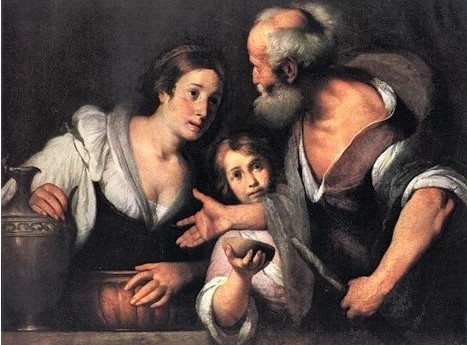
The Desire Portrayed In the first reading, the prophet Elijah encounters a widow at the entrance of the city of Zarephath, a name that means “refining fire.” In those days, Elijah the prophet went to Zarephath. As he arrived at the entrance of the city, a widow was gathering sticks there; he called out to her.

Both Elijah and the widow are hungry and thirsty, for there is famine in the land. As God’s prophet, Elijah speaks not only for himself but for God when he asks the poor woman to share her meager food with him. God has a desire, a hunger, for us. The woman also has desires, but hers need to be purified in this place of “refining fire.”

The widow’s hunger for earthly food is a symbol for a deeper hunger: a hunger for communion with God. At some point our hunger must meet God’s hunger—that point we call Holy Communion. It is a place where our hunger for God and His for us meet, and we find serenity. Every other hunger merely points to this hunger, and every other “food” is but a cruel, temporary morsel until this deepest hunger is satisfied.

Thus, two people meet at a place called “refining fire.” It is desire that has drawn them, a desire that is ultimately satisfied only in God.

The Dimensions of Poverty – The woman articulates her poverty in responding to Elijah’s request: Please bring me a small cupful of water to drink.” She left to get it, and he called out after her, “Please bring along a bit of bread.” She answered, “As the LORD, your God, lives, I have nothing baked; there is only a handful of flour in my jar and a little oil in my jug. Just now I was collecting a couple of sticks, to go in and prepare something for myself and my son; when we have eaten it, we shall die.

We may wonder why God allows poverty and suffering. The quick answer is that it is because there is such grave risk in riches and comfort. The Lord is well aware of how hard it is for the wealthy and comfortable to enter the Kingdom of God. In riches we trust in ourselves, but in poverty we can only trust in God; it is only through trusting faith that we can ever be saved.

There is a kind of freedom in poverty. The poor have less to lose.

They can operate in wider dimensions and have a kind of freedom that the wealthy often lack.

Not only is it hard to steal from a poor man, but it also takes little to enrich him. A man who has lived in a great palace may be discouraged with a humble domicile, while a poor one may be satisfied with a single small room to call his own. A hungry man may appreciate mere scraps of food, while one who is already satiated may need caviar to feel grateful. The rich miss many of life’s little blessings and may suffer from boredom, whereas the poor delight in even small pleasures. The rich man’s world gets ever smaller and less satisfying; the poor are more likely to truly appreciate even the humblest things.

Here again is the paradox of poverty, wherein less is more, gratitude is easier to find, and losses are less painful. As we shall see, it is the widow’s poverty that opens her to lasting blessings. Having little to lose, she is free enough to accept the next stage of our story.

The Demand that is Prescribed – God’s prophet, Elijah, summons her to trusting faith: “Do not be afraid. Go and do as you propose. But first make me a little cake and bring it to me. Then you can prepare something for yourself and your son. For the LORD, the God of Israel, says, ‘The jar of flour shall not go empty, nor the jug of oil run dry, until the day when the LORD sends rain upon the earth.’”

Elijah tells her not to be afraid to share. In effect, he teaches her that the Lord will not be outdone in generosity. On a human level, Elijah’s request seems almost cruel, but from a spiritual perspective he is summoning her to the faith that alone can truly save her.

Note that although she is afraid, her fear is easily overcome. Why? Because she has little to lose. So many of our fears are rooted in the fear of loss. The more we have, the more we have to be anxious about. In recent decades we have grown increasingly wealthy yet seem to have more problems. What are our chief problems? Fear and anxiety about the loss, maintenance, and protection of all our “stuff.” Scripture says, The sleep of a laborer is sweet, whether he eats little or much, but the abundance of a rich man permits him no sleep (Eccl 5:12). This is so true! The wealthier we have become the more we’ve been spending on psychotherapy and psychotropic drugs. We are anxious about so many things; insomnia and stress are common today.

We have too much stuff, too much to lose. Most of us, hearing Elijah’s request, would call him crazy or cruel or both. This woman is free enough to take him up on his offer. How about us?

We, too, must come to realize that looking merely to our own self-interest will only feed us for a day. Only in openness to God and others can we procure a superabundant food, that which will draw us to life eternal.

The Deliverance Produced – Having little to lose, the woman trusts in God’s word through Elijah and shares her food. She was able to eat for a year, and he and her son as well; the jar of flour did not go empty, nor the jug of oil run dry, as the LORD had foretold through Elijah.

If we learn to trust God, we come to discover that He never fails. Of course, this takes faith, and faith involves risk. This is where poverty can have its advantages. The widow takes the risk and shares what little she has. For her, the risk is immediate, but ultimately it is a lesser risk because she has so little to lose.

So, the woman is free enough to risk it all. Her only gamble is trusting God, and God does not fail. Scripture says,

  • Cast your bread upon the waters, for you will find it after many days (Eccles 11:1).
  • Give, and it will be given to you. A good measure, pressed down, shaken together and running over, will be poured into your lap. For with the measure you use, it will be measured to you. (Luke 6:38).
  • And if anyone gives even a cup of cold water to one of these little ones because he is my disciple, I tell you the truth, he will certainly not lose his reward (Matt 10:42).
  • Whoever sows sparingly will also reap sparingly, and whoever sows generously will also reap generously (2 Cor 9:6).
  • Give generously to him and do so without a grudging heart; then because of this the LORD your God will bless you in all your work and in everything you put your hand to (Deut 15:10).
  • He who is kind to the poor lends to the LORD, and he will reward him for what he has done (Prov 19:17).
  • A generous man will himself be blessed, for he shares his food with the poor (Prov 22:9).
  • He who gives to the poor will lack nothing, but he who closes his eyes to them receives many curses (Prov 28:27).

Do you believe all this? Or are these just slogans for others? Well, you never know until you try. If you don’t think you can try, maybe you have too much to lose.

Consider this woman who was poor enough to be free and free enough to try the Lord—and God did not fail. He never fails. I am a witness, how about you?

The Whole Law, Standing on One Foot – A Homily for the 31st Sunday of the Year

Pharisees Question Jesus, by J. Tissot (1886-94)

Hillel the Elder, sometimes referred to as Rabbi Hillel, was a Jewish religious leader who lived shortly before Jesus’ time. There is a famous story told of him in which he was challenged by a potential convert to teach him the entire Torah while “standing on one foot.” In other words, can you distill the essence and present it succinctly?

That same theme may be behind the question that is raised today by the scholar of law, who asks, “Which is the first of all the commandments?”

In answering while “standing on foot,” Jesus recites the traditional Jewish Shema:

שְׁמַע יִשְׂרָאֵל יְהוָה אֱלֹהֵינוּ יְהוָה אֶחָד.
Šĕmaʿ Yisĕrāʾel Ădōnāy Ĕlōhênû Ădōnāy eḥād.

Hear, O Israel, The Lord our God is Lord alone!

The fuller text Jesus cites is from Deuteronomy:

Hear, O Israel! The Lord our God is Lord alone! You shall love the Lord your God with all your heart, with all your soul, with all your mind, and with all your strength. Take to heart these words which I enjoin on you today (Deut 6:4-6).

Jesus then adds, also in common Rabbinic tradition, The second is like it: You shall love your neighbor as yourself. The whole law and the prophets depend on these two commandments.

Do not miss the point that the discussion of the greatest “law” centers on the word “love.” Most of us miss this connection between the law and love.

Particularly in Western culture, we tend to put love and law just about as far apart from each other as any two things can be. For us, the law is about police officers and courtrooms, about forcing people to do things under threat of some penalty. Love, on the other hand, is about doing things willingly, because we want to rather than because we have to.

Note too, this is no mere sentimental love. It involves the heart but also the mind and will. In the verses that follow the Shema we read:

And you shall teach them diligently to your children and speak of them when you sit at home and when you walk along the road, when you lie down and when you get up. Tie them as reminders on your hands and bind them on your foreheads. Write them on the doorposts of your houses and on your gates. (Deut 6:7-9)

In other words, these teachings and precepts of the Lord are to be taken seriously and insisted upon. Parents are to drill them into their children. There is to be no forgetful moment when it comes to the Lord’s teachings. We are to observe them sleeping, walking, standing still; all the time! Love is like this. It thinks constantly of the beloved and what will please!

St Augustine is sometimes misquoted as saying “Love God and then do what you will.” This is inaccurate. A better translation says, “Love God and, what you will, do.” In other words, when we love our will is conformed to the beloved. We love what they love and who they love.

Consider that a man who really loves his wife does not need a law to tell him that he may not physically or verbally abuse her but rather must support, protect, and encourage her. Nevertheless, though he may not need the existence of the law in writing, he is in fact following the law of love when he observes these and other norms. There is a language of love, a law of love, an outworking of love’s works and fruits. In the end, love does what love is, and love is supportive, enthusiastic, even extravagant in keeping its own norms and laws. Love does what love is.

Thus, when asked about the law the Lord just says that we should love. Yes, love God passionately, with your whole heart, soul, and strength. As you do this, you will love what and whom He loves, for this is the natural fruit of love. The more one loves God, the more one begins to love His laws, His vision, what He values. Yes, all the commandments flow from loving God. Real love has its roots; it has its laws, methods, and modes.

Here, then, is the whole law, standing on one foot: love God. Let His love permeate you completely and every other commandment will implicitly flow from this love.

When we love God, we stop asking unloving questions like these:

Do I have to pray? For how long?
Do I have to go to confession? How often?
Do I have to go to Mass? How often? Where can I find the shortest and most convenient one?
Do I have to read God’s Word?
Do I have to make God’s teachings the priority of my life, overruling all else?
Do I need to honor and care for my parents?
Do I need to respect lawful authority and contribute to the common good?
Do I need to respect life from conception to natural death?
Do I need to work to cherish and safeguard the lives of others?
Do I need to live chastely, reverencing the gift of sexuality that is at the heart of human life and family?

Love does not ask whether we must respect each other enough to speak the truth in love, to be men and women of our word. It does not wonder whether it is acceptable to steal from others or to fail to give them what is justly due. It does not wonder whether we should be generous to the poor rather than greedy, or whether to be appreciative and satisfied rather than covetous.

No, love does not ask questions like these, for it already knows the answer; it lives the answer.

Love is the law, standing on one foot, and all the rest is commentary.

God is merciful and does supply the commentary: in His Scriptures and in the vast Tradition of the Church. Praise God for it all.

The saints say, “If God wants it then I want it. If God doesn’t want it then I don’t want it.” Is that the way most of us talk? Is that the way most of us talk? Many of us are heard to say, “How come I can’t have it? It’s not so bad; everyone else has it.” That doesn’t really sound like lovers talking does it? Somehow the saints knew the law of God and could say it standing on one foot. How about us?

All the commentary is nice, and surely needed, but don’t miss the point: You shall love the Lord your God with all your heart, with all your soul, with all your mind, and with all your strength, and your neighbor as yourself.

Love is the law, and the law is to love.

https://youtu.be/9E5e1TpEqb4

A Man Who Saw by Hearing – A Meditation on the Gospel of the 30th Sunday of the Year

In today’s gospel there is a very familiar story of the healing of the blind man Bartimaeus. As with any familiar story, the danger is that we, upon hearing its opening lines say, “Oh that story,” and we just sort of tune out. But there are many things in the details of the story that we can easily miss. Ultimately the story of Bartimaeus is also our story, for we too must let the Lord heal our blindness and give us sight. One paradox of this gospel that we shall note, is that the man receives his sight as the result of hearing.

Let’s look at this gospel in 6 stages.

Stage I–Perception of the Problem–the text says, As Jesus was leaving Jericho with his disciples, and a sizable crowd, Bartimaeus, a blind man sat by the roadside begging.

Bartimaeus has many troubles, he is blind, and he is poor. But although he is physically blind, he is not spiritually blind. For he knows he has troubles, he knows he is blind. And to know our troubles, to be in touch with our neediness, is an important spiritual insight that many lack.

It is possible for some to feel self-satisfied and to be unaware of how blind, pitiable, poor and naked they really are before God (cf Rev 3:17). Indeed, so poor and so needy that we depend on God for every beat of our heart. But some who are spiritually blind, lose this insight in becoming proud. They fail to ask for help from the Lord,  they fail to ask for grace. Jesus once said to the Pharisees Jesus said, “If you were blind, you would not be guilty of sin; but since you claim you can see, your guilt remains.” (John 9:41)  In other words, physical blindness is not their problem, spiritual blindness is. And because they think themselves righteous on their own power, they do not need God nor do they truly seek him. Only humility and a true “vision” and experience of one’s poverty can help us to call out as we should.

But our blind man knows that he is blind and so he calls for help. As we shall see, however, his cries for help need some direction, a need to be properly specified and directed.

So we begin by simply noting this man is blind, but still, he has spiritual insight.

Do we have this? Do we really understand how blind we are? We struggle to see God, we struggle to see and understand ourselves, we struggle to see others with compassion and understanding. Indeed, God is more present to us than anything in this world. Yet, we see all the things of this world, and still struggle to see God. Neither do we see our own dignity, or the dignity and the gift of others,  yes, even the dignity of our enemies. We do not see or understand how things work together, and we struggle to see and find meaning in the events of our day. We are also blind to our sin, and we seldom understand what harm our sin actually does.

Yes, we have a great deal of blindness, we do struggle to see. But perhaps our worst blindness is it we do not even consider how blind we are. But too easily, like the Pharisees we go on thinking that we know a few things, and that therefore we know many things.

Consider the humility of the blind man, who knows he is blind who knows he needs help, and grace, and mercy. It is a humility that opens the door. Stage one in our journey must be the perception of the problem.

Stage II–the Proclamation that is Prescribed. – The text says  On being told it was Jesus of Nazareth who was passing by, he began to cry out and say “Jesus son of David have pity on me.”

Note the subtle but important transition here. Up until this point he was calling upon anyone, who happened to pass by, for help. But no mere passerby, nor anyone in this world, can ultimately help him with his real problem.

It is the same with us. Though we may turn to science, or medicine, philosophy, economics or politics, none of these can really help us. At best they can specify what is wrong, give us temporary medicines, passing comforts, etc. But all their solutions will be rooted in this world, which is passing away.

True vision can only be granted by the Lord, who opens for us a vision of glory, and who alone can draw safely to that place where joys will never end and visions never cease.

The blind man is told of the presence of Jesus. And hearing this, he directs his cry away from any mere passerby to the Lord who alone can heal him: Jesus, son of David, have pity on me! The world, and passersby can get him money, perhaps a meal, but only Jesus can give him meaning, the true vision that he really needs to see.

And do not miss this point that’s seeing comes paradoxically through hearing. For faith comes by hearing, and hearing from the word of God (cf Rom 10:17). It is a truth that faith is about hearing, not seeing. For most frequently, we doubt what we see. Even if our eyes see marvels, we think, “They have a way of doing that.” No, the eye is never satisfied with seeing (cf Eccl. 1:8). Faith comes by hearing, and faith is obedience to what is heard. We walk by faith, by an inner seeing, not by physical sight.

Thus, it is by hearing that the blind man will come to see Jesus who can help them to see. He hears from others that Jesus is passing by, and he takes up the proclamation that is prescribed, “Jesus, son of David, have pity on me!”

Stage III–the Perseverance that Produces–the text says, And they rebuked him, telling him to be silent. Yet he kept calling all the more, “Son of David, have pity on me!” Jesus stopped and said, “call him.” So they called the blind man saying to him, “Take courage; get up. Jesus is calling you.

Is it true fact, that those of us who seek to put our trust in the Lord, and call on him, will often experience rebuke, hostility, and ridicule from the world. Note that the blind man ignores all of this. And so should we. He has heard the Name above all names, who alone in heaven and earth can save, and he calls upon him.

Yes, Jesus does delay, he does not answer him right away. But the blind man persevered, calling out all the more, and eventually, Jesus stopped and said, “Call him.”

Why does God delay? This is a very deep mystery, but it is clear that one of the effects of his delay would seem to be to test our faith and strengthen it. In the end, it is not an incantation that saves us, but faith. Simply shouting, “In the name of Jesus!” Is not enough. The Name of Jesus is not some incantation like, “Open sesame.” Rather, it is an announcement of faith, and faith is more than words. Ultimately, it is not words alone that save us, but the faith that must underlie those words, “Jesus! Save me”

Stage IV–the Priority that is Presented–the text says, He threw aside his cloak, sprang up, and came to Jesus.

Do not miss this important detail. His cloak was probably the most valuable thing he owned. In that climate, a very arid climate, it gets cool in the evening after sunset. The temperature drops rapidly. So critical was the cloak, that Scripture forbade the taking of a cloak as collateral for a loan:  If a man is poor, do not go to sleep with his pledge in your possession. Return his cloak to him by sunset so that he may sleep in it. (Deut 24:12-13)

But note, this man cast aside his cloak, and leaving it behind, he went to Jesus. Thus, he leaves behind perhaps the most valuable and necessary thing for his survival in this world. To miss a meal, might be inconvenient but it would not kill him. But to sleep one night, a cold night, without his cloak might well end his life through hypothermia. But leaving everything, he runs to the Lord.

What of us? What are we willing to leave behind to find Christ? An old gospel song says, I’d rather have Jesus than silver and gold. Another old hymn says, There’s nothing between my soul in the Savior. Is there? Are you willing to leave it behind?? Are you and I free enough to do so?

Stage V–The Permission that is Procured–the text says, Jesus said to him in reply, “What do you want me to do for you?” The blind man replied to him, Master, I want to see!

Why does Jesus asked this question? Can he not see what a blind man needs? Perhaps.

But honestly, healing takes courage. The fact is, in life, most seek mere relief. True healing takes courage because it brings change, and new demands. If the blind man is healed, it would no longer be acceptable that he should sit and beg. Having been healed, more will be expected of him. His life will be irrevocably changed.

Yes, to be healed requires courage. Many of us wonder, of the Lord’s delay in answering our prayers. Perhaps a question from last week’s gospel is applicable as we cry to the Lord: Do you have any idea what you are asking?” Often we do not.

Truth be told, most of us want relief more than healing. There is a big difference. The Lord is in the healing business, but most of us just want relief. Do not miss what the Lord says here. In effect, he says to the blind man, and to us, “Are you really sure you want healing?” The Lord respects us, and our freedom. He wants our consent before he goes to work. And often, though many of us think we want healing, we don’t really know what we are asking.

The Lord waits, until a request makes real sense. He knows that most of us are not always ready for what he really offers. He asks, and when our yes becomes definitive, he goes to work.

Stage VI – The Path that is Pursued–the text says, Jesus told him, “Go your way; your faith has saved you.” Immediately he received his sight and followed Jesus on the way.

As we have already seen, true healing brings forth radical change. And now man who sat by the road begging, sees, but is also up and walking about. And what is he doing? He is  following Jesus. For faith has saved him, and faith not only gives sight, but summons us to obedience, an obedience that has us walk in the path of the Lord.

You see, (pardon the pun), faith is more than an offer of relief. True faith instills real change. A change in direction, a change in the way we walk.

And thus this gospel speaks to us of a man who was blind. And paradoxically he received his faith by hearing. For he heard of Jesus and called on him. Yes, his sight came from his hearing. And faith grants to vision by hearing. True vision, is to see Christ, and having seen him by hearing, to follow after him.

I have it on the best authority that as he followed Jesus up the road, he sang this song:

No Cross, No Crown – A Homily for the the 29th Sunday of the Year

In the Sunday Gospel, the Lord Jesus speaks of crosses and crowns. The apostles have only crowns in mind, but Jesus knows the price of the crown. So, He must teach them and us that crowns—the things we value most—come only through the cross.

It may help to review the context of this Gospel. Jesus is making His final journey to Jerusalem. He is on his way to the cross and has already announced this to His disciples on two occasions. Throughout Jesus’ final journey, the apostles prove unwilling and/or incapable of grasping what He is trying to teach them.

This Sunday’s Gospel is a perfect illustration of a common biblical theme that I refer to as the inept response. It is a common situation in the Gospels wherein Jesus presents a profound teaching, yet within a matter of verses or sometimes even just a few words, the apostles demonstrate that they have absolutely no understanding of what He has just told them.

You may recall that in the Gospel readings for the previous two Sundays, the Lord gave critically important teachings. Two weeks ago, he stood a young child in their midst and spoke of the child as being truly great. He also warned that we must be able to receive the Kingdom of God like a little child. Last week, He warned of the pernicious effects of wealth and spoke about how hard it is for the rich to enter the Kingdom of Heaven.

Despite these recent teachings, this Sunday’s Gospel opens with James and John (and later all the apostles) wishing honors upon themselves. They want seats at the head of the table, high offices in the Kingdom, which they still conceive of in worldly terms. Never mind that Jesus has taught them that the place of honor is not at the head or even the foot of the table; the honor is upon those who serve those at the table.

The apostles (and we) just don’t understand, no matter how clear Jesus is or how often He repeats Himself.

Let’s look at today’s Gospel in three stages.

Misplaced Priorities – The Gospel begins in this way: James and John, the sons of Zebedee, came to Jesus and said to him, “Teacher, we want you to do for us whatever we ask of you.” He replied, “What do you wish me to do for you?” They answered him, “Grant that in your glory we may sit one at your right and the other at your left.”

James and John ask an inept question and even demand to sit in places of honor. This is a misplaced priority. Their understanding of the place of honor is worldly. Further, they want to move to the head of the table. They want the Lord to grant them this honor. Even in a worldly way of thinking, places of honor must usually be earned. Although some people are born into royalty, most attain leadership and honors only after years of effort. Thus, even from a worldly point of view, James and John are being overly bold, exhibiting little understanding that prior to honors comes labor, comes the earning of those honors. They want the crown without the cross.

Major Price – The Lord Jesus replies to them, “You do not know what you are asking! Can you drink the cup that I drink or be baptized with the baptism with which I am baptized?”

Was Jesus astonished, amused, or saddened? It is not easy to say, but clearly James and John had absolutely no idea what they were asking—and neither do we. Too often we want blessings, honors, or seats in high places, but give little thought to the crosses that are necessary to get there and to stay there.

Those who finally attain leadership often understand what a cross it is. It can be lonely. There are many pressures and long hours of toil. True leadership has its benefits, but it is hard. Most leaders know also the sting of criticism.

There is an old joke among bishops that goes something like this: “When a man becomes a bishop, two things are certain: he will never again have a bad meal, and he will never again hear the truth.” Leaders in many other walks of life can relate to this.

The Lord Jesus wonders whether James and John have any idea what they are really asking. His question is also poignant, for He has been trying to teach them of the passion, the pain, the crucifixion that awaits Him, and which even He, the Lord of glory, must endure before entering into His glory. No, they do not know what they are asking; they just don’t get it.

This must make the Lord very sad. Sometimes we underestimate the suffering Jesus endured long before the garden of Gethsemane that fateful night, when His passion began in earnest. Prior to that evening, the Lord endured a kind of death by a thousand cuts: enemies trying to trap Him, crowds wanting medical miracles but no true healing, strident and judgmental religious leaders, and disciples who walked away from Him as he taught about the Eucharist. Even the Twelve, to whom He looked for friendship, seemed completely disconnected from what He was trying to teach them. He also knew that one of them would betray Him, another would deny Him, and all but one would abandon Him, never making it to the foot of the cross. Oh, the grief that they gave the Lord!

Oh, the grief that we continue to offer up! How we continue to offend His external glory and be difficult cases for Him! How easy it is for us to be hardheaded and stubborn, to have necks of iron and foreheads of brass! No, we should not be so quick to scorn the apostles because we do the same things.

The Lord can only remind them and us of the monumental price, the true cost. No cross, no crown! Ultimately, Heaven costs everything, for we must leave this world behind to reach it. The Easter Sunday of glory, whether in this world or in the world to come, is accessed only by a journey through Good Friday.

It is a major price, but it is one that James and John seem to dismiss. They simply state, categorically, that they are able to drink the cup that the Lord drinks and to be baptized into His death. They have no idea what they’re talking about, however, and neither do most of us.

Medicinal Prescription – The text continues, They said to him, “We can.” Jesus said to them, “The cup that I drink, you will drink, and with the baptism with which I am baptized, you will be baptized; but to sit at my right or at my left is not mine to give but is for those for whom it has been prepared.” When the ten heard this, they became indignant at James and John. Jesus summoned them and said to them, “You know that those who are recognized as rulers over the Gentiles lord it over them, and their great ones make their authority over them felt. But it shall not be so among you. Rather, whoever wishes to be great among you will be your servant; whoever wishes to be first among you will be the slave of all. For the Son of Man did not come to be served but to serve and to give his life as a ransom for many.”

Thus, the other apostles join in the inept response by becoming indignant that James and John are trying to get special dibs on the seats of honor. Their indignity simply shows that they also have no idea what the Lord is talking about.

The Lord tries to bring the big picture of the cross down to earth. He tries to make it plain, saying that the greatest in the kingdom is the servant of all, indeed the slave of all. It is not those who sit at the head of the table, the foot of the table, or any place at the table at all who are the greatest; the greatest are those who serve at the table.

Do they understand? Probably not, but neither do we. It takes most of us a lifetime before we finally get it through our thick skulls that the point in life is not to have the corner office with the view. We have everything upside down, backwards. We are not rich in what matters to God. We think of bank accounts, prestigious addresses, the square footage of our houses, high salaries, and impressive titles—not service.

We may be on our death beds before we finally realize that the greatest people in our lives are those with the ministry of care, those who feed us, those who change our bandages and give us basic care.

Like the apostles, we can be so foolish. At our final judgment, God will not care about the square footage of our house, our titles, or our worldly honors. What will capture His attention is the times when we served, when we gave a cup of cold water to the thirsty or food to the hungry, when we instructed the ignorant, when we prayed for the dying, when we cared for the needs of the poor. He will look for the calluses and the wounds of our service. He will listen for our proclamation of His Kingdom. He will tell us that what we did for the least of our brothers, we did for Him.

Don’t miss the point: there is no crown without the cross. In the Kingdom, honors and crowns are reserved for those who serve, who take up the cross of washing the feet of others, of going to the lowest of places.

In the Gospel this Sunday, the Lord speaks of crosses and crowns—in that specific order. We will not, we cannot, gain any crown in His Kingdom without being baptized into His death, into His cross, into the humble servitude of dying for others in loving service.


What Does Heaven Cost? A Homily for the 28th Sunday of the Year

The Sunday Gospel invites us to wrestle with these fundamental, essential, focal questions: “What does Heaven cost?” and “Am I willing to pay it?”

I. Problematic Pondering – A rich man asks Jesus, Good teacher, what must I do to inherit eternal life?

Though his question is a good one, it is problematic because he couches it in terms of his own personal power and achievement. He wonders what he himself must do to attain eternal life.

The problem is that none of us has the holiness, the spiritual wealth, or the power to attain Heaven based merely on what we do. The kind of righteousness we need can come only from God. The misguided question of the rich man betrays two common misunderstandings that people bring to the question of salvation and the need for redemption.

The first misunderstanding comes about because we underestimate the seriousness of our condition. We tend to think that we’re basically in good shape. Perhaps we have a few flaws, but fundamentally we mean well and are decent. We suspect that a few sacraments, occasional prayers, and some spiritual “push-ups” will be sufficient. Any look to the crucifix should belie these notions. If it took the horrible death of the Son of God to rescue us, then our condition must be worse than we, with our darkened intellect, imagine.

Jesus related a parable of a man who owed a huge debt—10,000 talents (cf Mt 18:24). This was an amount so large as to be almost unimaginable. No one with such a debt is going to be able to repay it merely by working a little overtime or picking up an additional part-time job. The point is that we humans are in deep trouble and have absolutely no ability to rescue ourselves.

A second misunderstanding comes about because we tend to intellectualize and minimize what the law of God requires. We ask, “What must I do?” rather than “What must I become?” This bespeaks a law-based approach that seeks a manageable list of things to do in order to be saved rather than an open-ended relationship with God. “Okay, so I’m not supposed to kill anyone. No problem, I don’t like the sight of blood anyway. I’ve got this commandment down!” This thinking minimizes the commandment and what it asks of us.

These two misunderstandings seem to undergird the problematic nature of the rich man’s question. In order to engage the man further, Jesus in effect plays along with the premise; this leads us to the second point.

II. Playful Prescription – Jesus decides to follow up on the man’s premise, saying to him, You know the commandments: You shall not kill; you shall not commit adultery; you shall not steal; you shall not bear false witness; you shall not defraud; honor your father and your mother.

Jesus is being playful here in that He continues with the flawed premise of the man: that he can attain to Heaven by something he does.

It is interesting to ponder why Jesus quotes only the Second Table of the Law, the part pertaining to love of neighbor, omitting reference to the First Table of the Law, the commandments pertaining to love of God. Perhaps it is because the Lord recognizes that the man does love Him, for he is seeking the Kingdom of Heaven and asking how to enter into it. Therefore, the Lord focuses on the Second Table of the Law, which is in evidence in this man’s life, at least in this interaction. Further, as Scripture says elsewhere, How can you say you love God whom you do not see, if you do not love your neighbor whom you do see? (1 John 4:20) Hence, the Second Table of the Law fleshes out the First Table of the Law.

The Lord is not affirming here that the keeping of the commandments can save us or justify us. Even if we consider ourselves blameless, Scripture says, the just man sins seven times a day (Prov 24:16). We can affirm with Isaiah that, I am a man of unclean lips, and I live among a people of unclean lips (Is 6:5), and we must say with St. Paul, I do not nullify the grace of God, for if righteousness comes through the Law, then Christ died for no purpose (Gal 2:21).

While the law gives us a necessary and clear frame of reference for what pleases God, its summons Be holy, for I the Lord your God am holy (Lev 19:22) is not attainable through mere human effort unaided by grace. Jesus makes it clear that when God says, Be holy, He does not have in mind mere human holiness, for Jesus says, Be perfect, as your Heavenly Father is perfect (Matthew 5:48).

Thus, Jesus is drawing out the man’s problematic premise, but as we next see, the rich man doesn’t take the hint.

III. Perceived Perfection – Strangely—and humorously to our mind—the man boldly says, Teacher, all of these I have observed from my youth.

Notice that the man’s perfection is perceivedsimply noting it in himself does not mean that he actually has it in himself. Having heard Jesus quote the Second Table of the Law, he announces that he has observed all of these from his youth.

To be fair, his self-analysis was not uncommon for a Jewish man of his time. The Jewish people had a great reverence for the law, a beautiful thing in itself, but they tended to understand it in a fairly legalistic and perfunctory way.

For example, in a conversation with Jesus, a scribe of the law asks Him, And who is my neighbor? (Luke 10:29) It’s as if he is saying, “If I have to love my neighbor—and I acknowledge my duty to do so—how can I define ‘neighbor’ in such a way that this is manageable?” In other words, I recognize that I have limits. If justice comes to the law, then the law must have limits, defined in such a way that the keeping of the law remains within my power.

Jesus sets aside such thinking in the Sermon on the Mount (Matt 5-7), in which He calls for the law to be observed not in a minimalistic sense but in a way that fills it to the fullest. Jesus says that it is not enough not to kill; we must also reject anything that ultimately leads to killing or to wishing people were dead. The commandment not to kill requires not only that we not take life, but also that we banish from our heart and mind, by God’s grace, hateful anger, retribution, and revenge. The commandment not to commit adultery requires not merely that we avoid breaking the marital vows, but also that we banish from our heart and mind, by God’s grace, any lustful, impure, and unrighteous sexual thoughts.

Hence, the commandments and precepts of the law cannot, and should not, be understood in a minimalistic way. Jesus sets aside the usual manner of the people of His day: reducing the law to something manageable and then declaring that they have kept it. God seeks more than perfunctory observance. His grace desires to accomplish within us wholehearted observance. We need grace in order to be saved, in order to qualify for anything that God calls holy.

So, Jesus sets aside the rich man’s claims of righteousness and is now is ready to address the question, “What does Heaven cost?”

IV.  Pricey Prescription – What does Heaven cost? Everything! Jesus, looking at the man with love, says to him, You are lacking in one thing. Go, sell what you have, and give to the poor and you will have treasure in heaven; then come, follow me.

Ultimately, the cost of Heaven is leaving this world and everything in it to go and possess God and Heaven. To have Heaven we must set aside this world, not only its life but its pomp, ephemeral glories, and passing pleasures. If you want Heaven you’ve got to leave here!

Although we know this, we often live in a way that seeks to postpone the inevitable and to ignore the joke that this world is ultimately playing on us. The world says, “You can have it all!” Yes, you can, but then you die and lose everything. We like to postpone facing that fact, pretending that perhaps it ain’t necessarily so. We’re like the gambler who goes to the casino thinking he will be the exception to the general rule that the house always wins. You can’t cheat life; whatever we have when we die, whatever we claim to have won, we lose.

In the end, there is only one way to attain the things of lasting value. Only what you do for Christ will last. The Lord says, Store up for yourselves treasure in heaven, that neither rust nor moths can corrode, nor thieves break in and steal (Lk 12:33).

The Lord says that being generous to the needy and poor is a way of storing up treasure in Heaven. Sadly, most of us don’t believe that, thinking that clinging to our “treasure” here is a way of keeping it. It isn’t. Whatever we have here is slipping through our fingers like so much sand. The only way to keep it unto life eternal is to give it away to the needy and poor and to allow it to advance the Kingdom of Heaven and its values.

Otherwise, wealth is not only not helpful it is actually harmful. There are many texts in the Scriptures that speak of the danger and the harm of wealth, how it compromises our souls and endangers our salvation:

  • Jesus looked around and said to his disciples, “How hard it is for the rich to enter the kingdom of God!” The disciples were amazed at his words. But Jesus said again, “Children, how hard it is to enter the kingdom of God! It is easier for a camel to go through the eye of a needle than for a rich man to enter the kingdom of God(Mk 10:23-25).
  • For we brought nothing into the world, and we cannot take anything out of the world;  but if we have food and clothing, with these we shall be content. But those who desire to be rich fall into temptation, into a snare, into many senseless and hurtful desires that plunge men into ruin and destruction. For the love of money is the root of all evils; it is through this craving that some have wandered away from the faith and pierced their hearts with many pangs (1 Tim 6:7ff).
  • No servant can serve two masters. Either he will hate the one and love the other, or he will be devoted to the one and despise the other. You cannot serve both God and money (Luke 16:13).
  • But woe to you who are rich, for you have already received your comfort. Woe to you who are well fed now, for you will go hungry. Woe to you who laugh now, for you will mourn and weep (Luke 6:24-25).
  • But many that are first will be last, and the last first (Mat 19:30).
  • Listen, my beloved brethren. Has not God chosen those who are poor in the world to be rich in faith and heirs of the kingdom which he has promised to those who love him? (James 2:5).

While the Lord’s claim that Heaven costs everything bewilders us, we cannot fail to see its truth and that the world’s claims on us are rooted in a lie, in false declarations that we can be secure in the passing glories of the world. You can have the passing glories of the world, but then you die—end of glory. Because we like the lie, we entertain it. In the end, though, we give everything back because it was never ours to begin with, it only seemed that way.

How foolish we are, how blind! Speaking of blindness, note that the Lord looked at the man with love, yet the man went away sad. That look of love from the Lord never reached his soul. If it had, the result would surely have been different.

V. Powerful Possibility – So shocking is this teaching that even the apostles, who had in fact left everything to follow the Lord, are shocked by it. They see and are in touch with the depth of this wound in the human heart, the depth of our delusion that the world and its goods can satisfy us. They see and know how strong and numerous are the hooks that this world has in us. Thus, they cry out, Then who can be saved? Jesus responds, For man it is impossible, but not for God. All things are possible for God.

In the end, salvation must be God’s work. He alone can take these tortured hearts of ours, so rooted in passing things, and make them willing to forsake all things for the Kingdom of Heaven.  Only God can take our disordered love and direct it to its proper end: the love rooted in God and the things awaiting us in Heaven. Only God can remove our obsession with the Titanic and place us squarely in the Noah’s Ark that is the Church, the Barque of Peter.

Yes, God can give us a new heart, a properly ordered heart, a heart that desires first and foremost God’s love, a heart that can say, “I gratefully receive what you give me, Lord, and I covet nothing more. Thank you, Lord. It is enough. You, O Lord, are enough.”

Don’t miss the look of love that Jesus gave the young man, the look that He gives you. In the end, only a greater love, God’s love received, can replace the disordered love we have for this world.

St. Augustine wrote,

Such, O my soul, are the miseries that attend on riches. They are gained with toil and kept with fear. They are enjoyed with danger and lost with grief. It is hard to be saved if we have them; and impossible if we love them; and scarcely can we have them, but that we shall love them inordinately. Teach us, O Lord, this difficult lesson: to manage conscientiously the goods we possess and not covetously desire more than you give to us (Letter 203).

I prayed, and prudence was given me;
I pleaded, and the spirit of wisdom came to me.
I preferred her to scepter and throne,
and deemed riches nothing in comparison with her,
nor did I liken any priceless gem to her;
because all gold, in view of her, is a little sand,
and before her, silver is to be accounted mire.
Beyond health and comeliness I loved her,
and I chose to have her rather than the light,
because the splendor of her never yields to sleep.
Yet all good things together came to me in her company,
and countless riches at her hands
(Wisdom 7:7-1).

https://youtu.be/u62uYEssk7o/p>

Marriage Is a Miracle! A Homily for the 27th Sunday of the Year

Both today’s first reading and the Gospel speak to us of the miracle of marriage. If your marriage is working even reasonably well, it is a miracle! We live in an age that is poisonous to marriage. Many people look for marriage to be ideal, and if there is any ordeal, they want a new deal. Our culture says, if it doesn’t work out, bail out. Marriages are also a miracle because they are, ultimately, a work of God.

Today’s readings bring before us some fundamental teachings on marriage. Let’s look at today’s Gospel in five stages.

I. Rejection – The Gospel opens with the Pharisees approaching Jesus and asking, somewhat rhetorically, “Is it lawful for a husband to divorce his wife?” Jesus, aware of their hypocrisy (they do not really want an answer from Him on which to base their lives), asks them in return, “What did Moses command you?” They gleefully respond, in essence, that Moses permitted a husband to divorce his wife as long as he “filled out the paperwork,” if you will.

Jesus will have none of it, telling them that Moses only permitted this regrettable thing called “divorce” because of their hardened hearts.

Among the rabbis of Jesus’ time, there was the belief that this seemingly lax provision permitting divorce resulted because Moses had reasoned that if he were to say to the men of his day that marriage was until death then some of them might very well have arranged for the death of their wives. So, in order to prevent homicide, Moses permitted the lesser evil of divorce. It was still an evil, however. God Himself says in the Book of Malachi,

And this again you do. You cover the Lord’s altar with tears, with weeping and groaning because he no longer regards the offering … You ask, “Why does he not?” Because the Lord is witness to the covenant between you and the wife of your youth, to whom you have been faithless, though she is your companion and your wife by covenant. Has not the one God made and sustained for us the spirit of life? And what does he desire? Godly offspring. So, take heed to yourselves, and let none be faithless to the wife of his youth. For I hate divorce, says the Lord, the God of Israel, and covering one’s garment with violence, says the Lord of hosts. Yes … take heed to yourselves, and do not be faithless” (Malachi 2:13–16).

Thus, in the opening lines of today’s Gospel, Jesus highlights how the Pharisees and many other men of His time have rejected God’s fundamental teaching on marriage. Jesus is about to reiterate that teaching. For now, though, just note that the rejection evidenced in the question of the Pharisees is one that Jesus ascribes to hearts that have become hardened by sin, lack of forgiveness, and refusal to accept God’s plan.

God hates divorce not only because it intrinsically rejects what He has set forth but also because it is symptomatic of human hardness and sinfulness.

II. Restoration – Jesus, having encountered their hardened hearts, announces a restoration, a return to God’s original plan for marriage. The Lord quotes the Book of Genesis, saying,

But from the beginning of creation God made them male and female. And for this reason a man shall leave his father and mother, and be joined to his wife, and the two shall become one flesh. So they are no longer two, but one flesh. Therefore, what God has joined together, no human being must separate.

Note that Jesus begins with the phrase, “but from the beginning of creation.” In other words, anything that may have happened in the aftermath of Original Sin, any compromises or arrangements that have emerged during the reign of sin, are now to be done away with in the reign of grace that will come as the result of Jesus’ saving death and resurrection.

On account of the grace that will be bestowed, we are now able, and expected, to return to God’s original plan for marriage: one man and one woman in a lifelong, stable relationship that is fruitful, bringing forth godly children for God and His kingdom. This is God’s plan, a plan that has no room for divorce, contraception, or anything other than fruitful, faithful, stable love.

In today’s Western culture there have been many attempts to redefine God’s original and perfect plan for marriage, substituting something erroneous, something humanly defined. While current attempts to redefine marriage to include same-sex unions are a particularly egregious example, they are not the first or only way in which God’s plan for marriage has been attacked.

The attempts began in the 1950s, when divorce began to occur among Hollywood celebrities (e.g., Ingrid Bergman). Many Americans, who seem to love and admire their Hollywood stars, began to justify divorce. “Don’t people deserve to be happy?” became the refrain. In this way marriage, which up to that point had as its essential focus what was best for children, began subtly but clearly to be centered on what was best for adults. The happiness of the adults began to take precedence over well-being of the children in the mind of most people.

During the 1950s and 1960s pressure began to build to make divorce easier. Until the late 1960s, divorces had been legally difficult to obtain in America; wealthier people often traveled to Mexico to secure them. In 1969, California Governor Ronald Reagan signed the first “no-fault” divorce law, making divorces fairly easy to obtain. Within ten years most states had similar laws. As a result, divorce rates skyrocketed.

This was the first redefinition of marriage. No longer was a man to leave his father and mother and “cling to his wife.” Now, at the first sign of trouble, men and women could just renege on their marriage vows, in direct contradiction to God’s plan. Thus, we engaged in what amounts to a redefinition of marriage.

The second redefinition of marriage occurred when the contraceptive mentality seized America. It began in the late 1950s and continues to this day. Though God said to the first couple, Be fruitful and multiply, fill the earth … (Genesis 1:28), children have become more a way of “accessorizing” a marriage than an integral part and an expected fruit. Children are no longer seen as an essential purpose of marriage, but only an optional outcome based on the wishes of the adults. This directly contradicts God’s instruction to “be fruitful and multiply.”

The third redefinition of marriage—the current rage—is the attempt to extend it to include same-sex unions. The absurdity of this proposal flows from the sinful conclusions of the first two redefinitions, which in effect state that marriage is simply about two adults being happy and doing whatever pleases them.

If that is truly the case, then there seems little basis to protest same-sex couples getting “married,” or, frankly, any number of adults in any combination of sexes, getting “married.” (Polygamy and/or polyandry are surely coming next.)

The heterosexual community has misbehaved for over fifty year now, redefining essential aspects of marriage. The latest absurdity—and it is an absurdity—of gay “marriage” flows from this flawed and sinful redefinition. We have sown the wind; now we are reaping the whirlwind.

In the end, Jesus will have none of this. He rejects the attempts of the men of His time to redefine marriage. Through His Church, His living voice in the world today, He also rejects the sinful and absurd redefinitions that our culture proposes, be it divorce, contraception, or homosexual “marriage.”

God has set forth that a man should leave his father and mother and cling to his wife, and that the two of them become one flesh. In making a suitable partner for Adam, God created Eve, not Steve; hence homosexual unions are excluded. A man is not a suitable partner for a man; a woman is not a suitable partner for a woman. Further, in making a suitable partner for Adam, God did not make Eve and Ellen and Jane and Sue and Beth. Hence, polygamy, though mentioned and tolerated for a time in the Bible (but always a source of trouble) is also not part of God’s plan.

God intends one man, for one woman, in a relationship of clinging; that is, in a stable relationship that bears the fruit of godly offspring.

This is the Lord’s plan; Jesus does not entertain any notion from the people of His day that will alter or compromise the original design for marriage. He thus announces a restoration of God’s original plan for marriage, as set forth in the book of Genesis.

III. Reality – As is true today, Jesus’ reassertion of traditional, biblical marriage was met with controversy. In Matthew’s account, many of the disciples react with disdain, saying, If that is a case of a man and his wife, it is better never to marry (Matt 19:10).

In today’s Gospel we see that the disciples are somewhat troubled by what Jesus says and ask Him about it again later. Jesus does not back down; He even intensifies His language, saying, Whoever divorces his wife and marries another commits adultery against her; and if she divorces her husband and marries another, she commits adultery.

There will be no apology from Jesus: divorce/remarriage is adultery. There may have been some in Jesus’ time (and today) who would hold up their divorce papers and say that they have a divorce decree. Jesus implies that He is not impressed with some papers signed by a human judge and is not bound by the decision of some secular authority. What God has joined together, no man must separate. Jesus once again establishes that once God has joined a couple in Holy Matrimony, the bond which God has effected is to be respected by all, including the couple.

Marriage has a reality beyond what mere humans bring to it or say of it. Marriage is a work of God; it has a reality and an existence that flows from God’s work, not man’s. All of our attempts to redefine, obfuscate, or alter marriage as God has set it forth are sinful and not recognized by God.

IV. Reemphasis – Now comes an interesting twist, which includes a reminder of one of the most essential purposes of marriage:

And people were bringing their little children to Jesus that he might touch them, but the disciples rebuked them. When Jesus saw this, he became indignant and said to them, “Let the children come to me; do not hinder them, for the kingdom of God belongs to such as these.”

This is not a new element to the story; neither have we gone into a separate pericope. Rather, Jesus’ remarks about children remind us of the essential reason that marriage is structured the way it is. Why should marriage be between two heterosexuals? Why should it be stable? Why should it include a father and a mother rather than two fathers, or two mothers, or just a mother, or just a father?

The fundamental answer is that the essential work of marriage is to procreate and then raise those children. Because children are marriage’s most fundamental fruit, it makes sense that marriage should be structured based on what is best for them. The fact is, children are best raised in a stable, lasting environment in which their parents have committed to each other in mutual support and partnership in raising them. Further, it makes sense psychologically that a child should receive influence from both father and mother, the male parent and the female parent. There are things that a father can teach a child that a mother cannot; there are things that a mother can teach a child that a father cannot. Psycho-social development is best achieved in the environment that God and nature have set forth: every child growing up with both a father and a mother, a male and a female influence.

Anything else amounts to something that is less than ideal. To the degree that we intentionally impose the less-than-ideal on children, we are guilty of doing them an injustice. Bringing children into the world prior to marriage or apart from it, such that they will be raised in a single-parent home, is an injustice. It is even more unjust that children conceived under these promiscuous circumstances are far more likely to be aborted.

This preference for stable, lasting, heterosexual unions clearly excludes homosexual ones. Same-sex “parents” are far from ideal for a child. To raise children in such circumstances intentionally is an injustice, for it is to subject them to that which is unnatural and far from ideal.

Catholics have every obligation both to uphold and insist upon traditional marriage as what is right and just, not only because it is God’s plan, but because it is clearly what is best for children. Marriage is fundamentally about children. It is not simply religious sensibility that should lead us to this position; it is a position deeply rooted in natural law, common sense, and what is best for children.

Traditional marriage should be encouraged in every way. Becoming “fuzzier” about what marriage is, or “defining it down” does not help our culture to esteem traditional marriage. Traditional marriage has pride of place because it is focused on raising the next generation and is critical to the essential functioning of our society.

There is much talk today about the rights of people to do as they please. So-called gay “marriage” is presented within this framework. Sadly, many who discuss rights only refer to the rights of adults; they seem to care much less about what is best for children. What is good and right for children needs to have a much higher priority in our culture today than it currently does.

Jesus reemphasizes the teaching on marriage by pointing to the young children before them and telling the disciples not to hinder the children. One of the clearest ways we hinder children from finding their way to God and His kingdom is with our own bad behavior: promiscuous sexual acts (endangering children through abortion or single-parent households), divorce (placing children in divided situations and saddling them with confused loyalties), and insistence on adult rights taking precedence over what is best for children. To emphasize all of this bad behavior, Jesus points out the young children and says, “Do not hinder them.” Our bad behavior does hinder them.

V. Reassurance – To be sure, this teaching about marriage is to some degree “heavy weather.” Indeed, many in our culture have tried, and failed, to attain to the vision of marriage that the Lord teaches. There are complicated reasons, too many to note here, that so many people struggle to live this teaching today.

Whatever our own failures have been, we need to go to the Lord with a childlike trust, a trust that cries out for help. Jesus says at the conclusion of today’s Gospel, Amen, I say to you, whoever does not accept the kingdom of God like a child will not enter it.

Children often feel overwhelmed, and when they do they run to their parents for help. It is in this spirit that the Lord asks us to receive this teaching. Indeed, many may well have to run to God and say “Abba, God, I don’t know how to live this teaching. My marriage is in ruins, and I don’t know how to save it. I’ve tried, but my spouse is unwilling. I can’t go back and undo what I did years ago.”

Note how the Lord embraces the child in this Gospel. He is willing to embrace us as well, in our failures and our difficulties. If we have failed, we should be like a young child and run to the Father. What we should avoid most is being relentlessly adult-like, digging in our heels and saying, “God is unreasonable; the Gospel is unreasonable!”

In the end, only God can accomplish strong marriages and strong families for us. We must run to Him as Father and seek His help. Even if one has failed in his/her marriage, one must still impart to the next generation what God teaches.

God’s plan remains His plan for everyone, no matter our personal failings. We have every obligation to run to Him, trust Him, and ask for His help. Even in the midst of our own personal failures, we can and must announce and celebrate the truth to others. In the end, God does not give us His teaching in order to burden us or to accuse us but rather to bless us. We must be assured of His mercy and His ability to write straight, even with the crooked lines of our lives.

If we in this generation have failed, and many of us have failed, we must still announce God’s plan for marriage to the next generation. We must not cease to hand on God’s perfect plan.