How remarkable is it that one man could affect the world so much that our entire calendar system is based on his life and ministry?
What is today’s date?
Once, a man who said that he did not believe in Jesus challenged me. Understand, he was not someone struggling with his faith. Rather, he was obstinate in his disbelief and openly hostile to mine. After listening to his faulty arguments about the non-existence of Christ, I casually asked him for the day’s date. When he responded, I pointed out that his response was based on the life, death and resurrection of a man that supposedly did not exist.
No one else in human history can claim influence over the direction of the world like Christ. No monarch, president or billionaire will ever again change the world to the point that our entire calendar system would be based on his or her life.
Jesus Christ is Lord!
Only a truly divine being could do such a thing. Even without faith in Him, the life of Jesus has touched anyone who has dated a check, booked an airline or hotel reservation, disclosed his or her own birthday or simply answered the question, “What is today’s date?”
2010 AD
In recent years, some have tried to diminish this undeniable fact. For example, some historians have abandoned the designation “A.D.” or “Anno Domini”, which means “Year of our Lord” in favor of the secular “C.E.” which means “Christian Era.” Or “B.C.” or “Before Christ” is replaced with “B.C.E.” or “Before the Christian Era.” Despite these efforts at secularization, our calendar system is STILL based on the life of Our Lord and Savior, Jesus Christ. A rose by any other name is still a rose. So, as we celebrate the New Year, think about the fact that this is may be the one day everyone in the world expresses a belief in Christ, whether they like it or not.
We know well that Holy Innocents continue to be killed in our world through abortion. The Feast of the Holy Innocents is an often over-looked feast on the Church’s Calendar coming is the busy week of the Christmas Octave. And yet there is something very astonishing and even dangerous to consider on this feast.
I’ll explain what I mean by dangerous in a moment. But for now consider some biblical facts with me.
When God was drawing close to liberating his chosen people from slavery in Egypt there occurred the order to murder of the all the baby boys among the Hebrews. It is almost as though Satan sensed that God was up to something good and Satan raged through Pharaoh in murderous anger and fear. Thankfully the actual numbers were reduced since the Egyptian midwives engaged in civil disobedience, refusing to allow the practice to continue.
At the time of Jesus, when God was preparing to liberate his People from sin, there also occured the murder of innocent baby boys. Here too it was almost as though the Devil sensed that God was up to something good and he once again raged, this time through Herod in murderous anger and fear. Thankfully too this infanticide also ended at some point.
Notice the pattern. When God prepared a great liberation the Devil went after the babies. In our time, on a scale as never before, the Devil is going after our babies in murderous anger and fear. What is he afraid of? Is God planning something big in the near future? Is there a great liberation at hand? Is there a great advancement of evangelization and conversion in the offing? We can only speculate. But patterns are patterns and Scripture has a way of repeating its patterns and echoing down through the centuries.
Why is this a dangerous reflection? Because I want to make it clear that abortion, the killing of the innocents in our age, is NOT and never can be considered something good, or a “positive sign.” Such a speculation as this might cause some to wrongly conclude that abortion is part of God’s plan or something we should see “positively.” We should not. It must be fought. It is of Satan. I want to conclude by reminding you that the great liberation that followed the past infanticides did not occur until AFTER those murderous rages were stopped. Hence, to follow the pattern established in Scripture and to see a potentially great and liberating act of God we must first see an end to the slaughter. Work and pray to end abortion. May the Holy Innocents pray for us!
I put the following video together to honor these young martyrs. The musical setting is by Michael Haydn of the hymn for the Feast of the Holy Innocents: Salvete Flores Martyrum – It is from his Vesperae In F for Equal Voices, Soli and Orchestra. The singers are the The Group singing is Collegium Instrumentale Brugense. This music is available at iTunes. The Latin text of this ancient hymn is quite beautiful. I produce here the Latin text followed by a fairly literal translation. I would like to call your attention to the second verse and a very charming detail. That verse described these young, two year old martyrs and holding palm branches (the symbol of martyrdom) but as they hold them they play with them, in the way a young child will often fiddle with palm branches in Church. Beautiful and so very human!
Salvete flores martyrum, – Hail Martyr Flowers quos lucis ipso in limine – On the very threshold of the dawn (of life) Christi insecutor sustulit – Christ’s persecutor destroyed (you) ceu turbo nascentes rosas. – like the whirlwind does the budding roses.
Vos prima Christi victima, – You Christ’s firstfruits grex immolatorum tener, – A flock of tender sacrificial victims aram sub ipsam simplices – right up by the very altar palma et coronis luditis. – now play with your palms and crowns
Iesu, tibi sit gloria, – Jesus to you be glory qui natus es de Virgine, – who were born of the Virgin cum Patre et almo Spiritu, – with the Father and loving Spirit in sempiterna saecula. Amen. – unto to eternal ages. Amen.
One of the most significant losses in the modern era has been the loss of the Biblical narrative in the hearts and minds of most people. Scripture is the story of the human family told by God himself. In story form He tells us how we were made and why. What happened so that things are the way they are today. Why do we have infinite longing in a finite world? Why do we struggle with sin so much? How can we be rescued from sin and death and find our hearts true satisfaction? The Biblical narrative answers these sorts of questions and more. The Biblical story or narrative, mediates reality to us in a memorable way. God, like any good Father tells us our story and asks us to tell our own children. To know our story is to understand ourselves in relation to God, the world and others.
And what a story it is! It has more of passion, conflict and drama than any great epic. It is the “greatest story ever told” but most people have lost its details and no longer know the story. Hence they are detached from the reality that the story mediates. Many are adrift in a world of little meaning, or competing “meanings” with no way to sort it all out. They have few explanations as to the most basic questions of the meaning of life, the meaning of suffering, our ultimate destiny and so forth. Without the story, life looses its meaning.
To illustrate the loss of the narrative, I was talking to Catholic seventh graders a couple of years ago and I made reference to Adam and Eve. As our discussion progressed it became evident to me that they did not really know who Adam and Eve were. They had heard the names before but couldn’t say who they really were or what they had done. About the most erudite statement that came from one of the students was from a young man in the second row who said, “Aren’t they in the Bible or something?” No other specifics emerged from the discussion. I resolved that day to scrap our compartmentalized religious programs and switch every grade level to a “back to basics” program that emphasized the Biblical narrative.
How has this loss of the narrative happened? Some argue that the Church stopped telling the story. Poor preaching, poor catechesis and pretty soon no one knows the story any more. I do not doubt there is substance to this explanation. But the explanation is still too general for it hardly seems likely that “the Church” just decided one day to stop telling the story. What seems more specifically to have happened is that we stopped telling the story effectively. And what I would like to argue is that we lost touch with the “plot” of sacred Scripture and because of this we were no longer able to tell the story in a compelling and interesting way.
What then is a plot? The plot in a story in the focal point to which all the events and characters relate. It is like the center point of a wheel around which everything else revolves. Now a plot, if it is to be successful, always involves some sort of conflict or negative development that must be resolved. This is what holds our interest as the question emerges, “How will this problem be resolved?!” If, in scene one of story, everything is just fine, and scene two everything is fine and in scene three still fine, people start tuning out. It is the conflict or negative development that renders the plot interesting. Plots usually have five stages:
Exposition – where we are introduced to the main characters and elements of the Story
Conflict – where the negative development occurs that must be resolved
Climax – where the conflict reaches its highest point and the tension is greatest. Here there is often an epic battle, or experience of the conflict. And here the conflict is resolved usually by an heroic figure or striking event.
Falling action – Here is shown the result of the climax, and its effects on the characters, setting, and proceeding events.
Resolution – The Conflict having been resolved, this last stage of the story shows either a return to normality for the characters or an attainment of an even higher state for our characters than the situation than existed before the conflict. This results in a sense of catharsis (or release of tension and anxiety) for the reader.
What then is the plot of sacred scripture? Simply this:
Exposition – God created Man as an act of love and made him to live in union with his God. In the beginning Adam and Eve accepted this love and experienced a garden paradise. The heart of their happiness was to know the Lord and walk with Him in a loving and trusting relationship.
Conflict – But man, tempted by the devil, let his trust in his creator die in his heart and he willfully rejected the God who given him everything by listening to an evil tempter who had given him nothing. Adam rebelled against God and refused to be under his loving authority and care. The led to a complete unraveling of everything. Paradise vanished, Adam and Eve experienced a deep and personal disintegration of their inmost being. Confused, ashamed, angry, accusatory and embarrassed they withdraw into hiding and cover up. They can no longer tolerate the presence and glory of the God who still loved them and must live apart from Him. God makes an initial promise to one day bring healing but when is not clear. So here is the initial conflict or negative development that defines the plot and rivets our attention. How will this tragic development be resolved? Will Adam and Eve turn back to God? Will they ever be able to experience peace in his presence again? How will Adam and Eve ever recover from the self inflicted wounds they have? A great love story between humanity and God has gone very sour. Will our lovers ever reunite? Will paradise reopen again? When will God act? How?
Climax – In continually rising action things go from bad to worse: Adam and Eve’s rebelliousness is passed on to their children as Cain kills Abel. Wickedness multiplies so rapidly that God must take action, first confusing the languages of Man and humbling him at Babel, then practically starting all over again with the flood. In a sudden development in the plot God chooses the family of Abram and his descendants to set the initial stage for a final conflict with his opponent the devil and to restore Man. Through a series of covenants and actions God prepares a people to receive the great Savior who will resolve this terrible problem. But God must take this chosen people through a series of shocking and powerful purifications so that at least some can be humble enough to receive the cure and be healed. God purifies them through slavery in Egypt, a terrifying but glorious freedom ride through the desert, the giving of the Law, the settlement in a Promised Land. But they are STILL rebellious and more and escalating purifications are necessary: an invasion by Assyrians, then by Babylonians, then exile, then return to their land. All through God sent prophets to rebuke and console. The conflicts and waiting have been continuously escalating. Then at last our savior steps on the scene! our God hero, wonderful counselor Father forever and Prince of Peace (Is 9:6). He is named Jesus for he would save his people from their sins! (Matt 1:21) In a crucial and epic battle between God and the devil, Jesus mounts a cross and defeats the devil at his own game. By dying he destroys death! The climax is now reached. The devil seems victorious but on the third day our Savior and God Hero Jesus casts off death like a garment. Ascending forty days later he reopens the gates of paradise.
Falling Action– Now that the epic battle is won, Jesus sends out Apostles to announce the Good News of His victory over sin and death. His apostles go forth with the message that the long reign of sin is over and that, through grace it is increasingly possible to live a transformed life, a life no longer dominated by sin, anger, resentment, fear, bitterness, greed, lust, hatred and the like but rather a life dominated by love, mercy, joy, serenity, confidence, holiness, chastity, self control and more. A new world has been opened. Up ahead lie open the gates of paradise.
Resolution – God has resolved the terrible consequences of the rebellion of Adam and Eve just as he promised. But things do not merely return to normal, they return to supernormal for the paradise that God now offers is not an earthly one, it is a heavenly one. It’s happiness is not merely natural, it is supernatural. And we the reader experience the catharsis of knowing that God is faithful and he has saved us from this present evil age.
But the plot has been lost by many – What a story and what a ride. But notice that the plot hinges on a key and negative development: SIN. Without that development there is no plot. And here is where the Church lost the ability to hand on the narrative: we lost the plot, and in particular the negative development that is necessary for a plot and makes it interesting. About fifty years ago there seems to have been a conscious effort to move away from talking vigorously about sin. It was said that we should be more “positive” and that “honey attracted more bees than vinegar.” Crosses (too negative) were removed from Churches and replaced with “resurrection Jesus.” Thinking our numbers would increase by a kinder, gentler Church we set aside the key element of the plot. Suddenly our narrative no longer made a lot sense. Everything is basically OK, everyone is really fine, just about everyone will go to heaven. And all along we thought we would be more relevant and inviting to people. In end all we had to say was “God loves you.”
But increasingly we have become irrelevant. If I’m really OK why go to Church, why receive sacraments, why pray, why call on God at all? If I’m fine, who needs a savior? Who needs Jesus, God or religion? And then comes the most obvious critique: “Church is boring” and “The Bible is boring!” Well sure, every story without a well developed plot IS boring. In fact, if it is poorly developed enough I might just stop reading the story or walk outof the movie. And that is just what people have done. Only 27% of Catholics go to Church anymore. To over 70% our story is irrelevant and uncompelling. Why? Collectively we jettisoned the “negative development” that makes the plot. Without a rich understanding of sin, salvation makes little sense.
Regarding the story, most people no longer “get it” because the whole point has been lost. People no longer remember a story that makes little sense to them. And so it is that I found myself in a class of Catholic seventh graders who had never heard of Adam and Eve. It’s time to rediscover the central element of the “plot” of Sacred Scripture, sin. It’s time to speak of it, creatively, in a compelling way. In so doing we will once again set forth a plot that is compelling and interesting and help people rediscover the greatest story ever told.
Here is a very creative muscial telling of “the Story”
I would like to continue the theme of yesterday’s blog which is “wonder and awe.” Too often we simply refuse to see God’s glory on display all around us.
In the animal world I have always marvelled to see a majestic horse run, or a cheetah reach speeds of almost forty miles an hour. I could never be a hunter, for I marvel at the life in every creature. A deer or majestic stag could never draw fire from me. I respect their glory too much. I do not mean to say that hunting should cease, I am only going to say I could never do it (unless I suppose I was starving). Some one said, “Well you eat meat and an animal had to die for that.” I know but I cannot bear to think of it.
For me, sentient life is too mysterious, too wonderful for me ever to personally end it. I remember once running over a possum and being sad for days. I understand that there is a circle of life and death but just don’t ask me to pull the trigger. Life is mysterious and wonderful.
I have immensely enjoyed the pets which have been my life, Prince, the majestic dalmatian dog of my youth, Little Missy the stray who adopted us in college years, Molly, the unflappable border collie who stole our hearts, Tupac (yes, Tupac) the Chartreuse Blue Cat who became the rectory clown at my last parish. And now my current pet, Daniel, a Blue (i.e. gray) cat who is my “kidda.” I have deeply grieved the loss of every pet as I had to bring them to the vet for that “last time.”
Each of my pets was a great gift from God and I was able to marvel in some aspect of God’s glory. And, might I say, in God’s humor. If your will to see it, pets can be hilarious. My dalmatian Dog could actually smile. Collies and Dalmatians can do that. My cat Tupac would often sleep flat on his back with all four legs spread apart! What a clown!
I want to show you two videos that show the glorious humor that animals can bring. The first one is of the amazing Bird, “Snowball” who can dance. And I really mean it, The bird can dance, you’ll be amazed. The second video is of the crazy antics of house cats, what a bunch of clowns! And as you watch be sure to thank God who provides such a rich harvest of glory and humor for us. Thank you Lord!
Well I guess I am not surprised to learn that as land values continue to rise, space for cemeteries gets scarce! I have seen more and more mausoleums be built at the local cemeteries and they are getting taller as the years go on. But the picture to the right really takes the concept to new levels! The picture is The Memorial Necrópole Ecumênica III, a vertical cemetery in Santos, Brazil. It is the world’s tallest cemetery, with burial spaces on 32 floors. There’s also a restaurant, chapel, lagoon and peacock garden. It has become one of the most popular tourist attractions in Santos.
I don’t know what to say really. There is nothing wrong with the concept insofar as Catholic teaching goes and perhaps it is a better or more efficient use of land than our current American approach. It just takes some getting used to. I might have some concerns too in the event of an earthquake or the like. Also, will the building be maintained well once it is full? But that is a problem even with traditional cemeteries. Here in DC we have had several non-Catholic cemeteries that were full and then went into terrible disrepair (eg. Woodlawn, Congressional and Rock Creek) requiring the local community to come to the rescue. Once a cemetery fills and no longer has an income stream it tends to be neglected. Recent laws require cemeteries to establish an endowment to provide for perpetual care. Hopefully that is the case here.
While we are on the topic, a few random thoughts on Christian burial and cemeteries to offer:
Regular visits to cemeteries have declined in recent years. As the practice of praying for the repose of the dead has fallen (shame on us) there are also fewer visits to gravesides. It is true many are busy but such visits provide us a way to honor those who have preceded us in death and gives us a context in which to pray for them and remember our own mortality.
When I go to cemeteries I experience a strange kind of peace. As I look about and see all the head stones it occurs to me that all these people had struggles like me. They had worries, joys, successes and failures, gains and losses. Perhaps like me they got all worked up about things from time to time. But all that is over now. If they were faithful they have gone on to God, perhaps by way of purgatory. Nothing here remains for long. We all return to the dust and our soul flies away. Cemeteries give me a kind of perspective that brings peace. An old spiritual says “Soon I will be done with the troubles of the world, goin’ home to live with God”
The Church does not encourage but does permit cremation. I am seeing more of it in recent years. But a concern has also arisen as this practice increases. It seems to me that not all families are arranging for immediate burial of the ashes. Too often long periods of time elapse after the funeral but before interment of the ashes. On a few occasions I have had to call the family and gently remind them of the requirement for proper burial or repose in a mausoleum. When there is a body, burial is soon for obvious reasons. But ashes don’t present the same urgency to many. So the funeral Mass comes and goes and the family says they have arranged burial at a later time. But the phone does not ring and I get busy and forget. Let’s be clear, the fireplace mantle is NOT an appropriate place to retain ashes. Proper burial or placement in a cemetery is required and essential. Neither is it ever appropriate to scatter ashes. No matter how meaningful this may seem, human remains are not to be scattered.
Catholic Cemeteries are preferred for the burial of Catholics because the ground is consecrated. It is true that a priest can bless a grave in any non-Catholic cemetery. But the consecrated ground of a Catholic cemetery is special. Further, the Catholic practice of regular prayers for the dead are properly observed in Catholic cemeteries. Each year on the feast of Our Lady of Sorrows (Sept. 15) and also on Memorial Day masses are offered at Catholic cemeteries. Other devotions, such as stations of the cross and rosary processions are also offered and all the dead buried there benefit from the help of these regular prayers. Catholic Cemeteries are special places for Catholics.
Remember to pray for the dead. Prepare also for your own death by regular recourse to confession, Holy Communion every Sunday, daily prayer, daily scripture, repent of your sins and pray to be delivered from a death sudden and unprepared. Requiescant in Pace (May they rest in peace).
Today is the feast of St. John of the Cross, a 16th century Spainard, who with Teresa of Avila reformed the Carmelite community. Teresa and John were a powerhouse of a friendship–exlporing the depths of the spiritual life and discovering the rich Catholic expression of contemplative prayer. Like many close firendships, Teresa and John were very different in personality. Teresa was extroverted, funny, and engaging, John was serious and introspective, to the point that Teresa reports, she had to tell him to “lighten up!”
The Dark Night of the Soul
John’s contribution to the spiritual life is the exploration of what we call the “dark night.” Many of us know well the expereince of coming to know God through recognizing his presence in our lives, experiencing moments of grace and knowing they are gifts from God. There is another way we deepen our faith, a way that is part of our maturing in faith and giving ourselves fully over to God’s love–it is the experience of absence. At times we feel the absence of God, we feel abandoned, like Job, we feel that we are being tormented and though crying out to God we hear nothing. Do we believe that indeed God has abandon us or failed us, or do we go on trusting that God is present and that all will be made well in God’s time? John helps us to navigate our way through the dark nights when all seems empty, only to experience a deeper union with our Lord.
The poetry of music and art
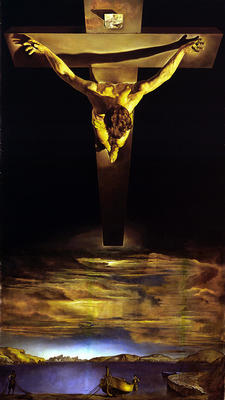
Loreena McKennit takes John of the Cross’s famous poem The Dark Night and sets it to the artwork of another famous Catholic, Salvator Dali. it is here for you to enjoy.
–
From today’s Morning Prayer, we pray in thanksgiving for all those who are learned and are as radiant as the sky in all its beauty; those who instruct the people in goodness and who will shine like stars for all eternity.
I am a huge fan of Christmas lights. I love the warmth they bring to cold, dark afternoons and evenings. Putting lights on the tree in my front yard is usually how I begin decorating for Christmas (alas the picture is not my tree!).
I came across a reflection today from Pope Benedict XVI that captures perfectly how appropriate lights are as Christmas decorations. In a General Audience, Pope Benedict said, “Let us remember…as we look at the streets and squares of the cities decorated with dazzling lights, that these lights refer us to another light, invisible to the eyes, but not to the heart.”
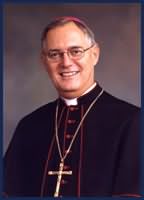
In the video below, Bishop Thomas Tobin speaks well enough for himself on the decision to advise Congressman Patrick Kennedy not to receive Holy Communion. My remarks are thus brief. I want only to call your attention to a powerful reminder given by Bishop Tobin. About mid way through the interview he states simply but clearly that if a person’s career, job or position conflicts with their faith they should leave that career, job or position. In a world that esteems such things above almost anything else, this is an earth-shaking summons: faith is more important than any worldly blessing. This insistence comports well with what Jesus says clearly in Scripture:
No one can serve two masters. Either he will hate the one and love the other, or he will be devoted to the one and despise the other. You cannot serve both God and Money. (Matt 6:24)
Anyone who loves his father or mother more than me is not worthy of me; anyone who loves his son or daughter more than me is not worthy of me; and anyone who does not take his cross and follow me is not worthy of me. Whoever finds his life will lose it, and whoever loses his life for my sake will find it. (Matt 10:37-39)
Life in this world and faith are often in conflict and difficult choices are required of us. If Mr. Kennedy asserts (wrongly I think) that he cannot reconcile his faith in the matter of abortion to public policy, then he should choose his faith and leave the Congress. What is he first? A congressman or a Christian? It seems clear enough to me that he could remain a congressman if he simply refused to promote abortion rights and fund them. But since he (not the Church) says that as congressman he CANNOT vote pro-life, then Bishop Tobin, accepting the conflict that Kennedy insists he has, has invited him to choose.