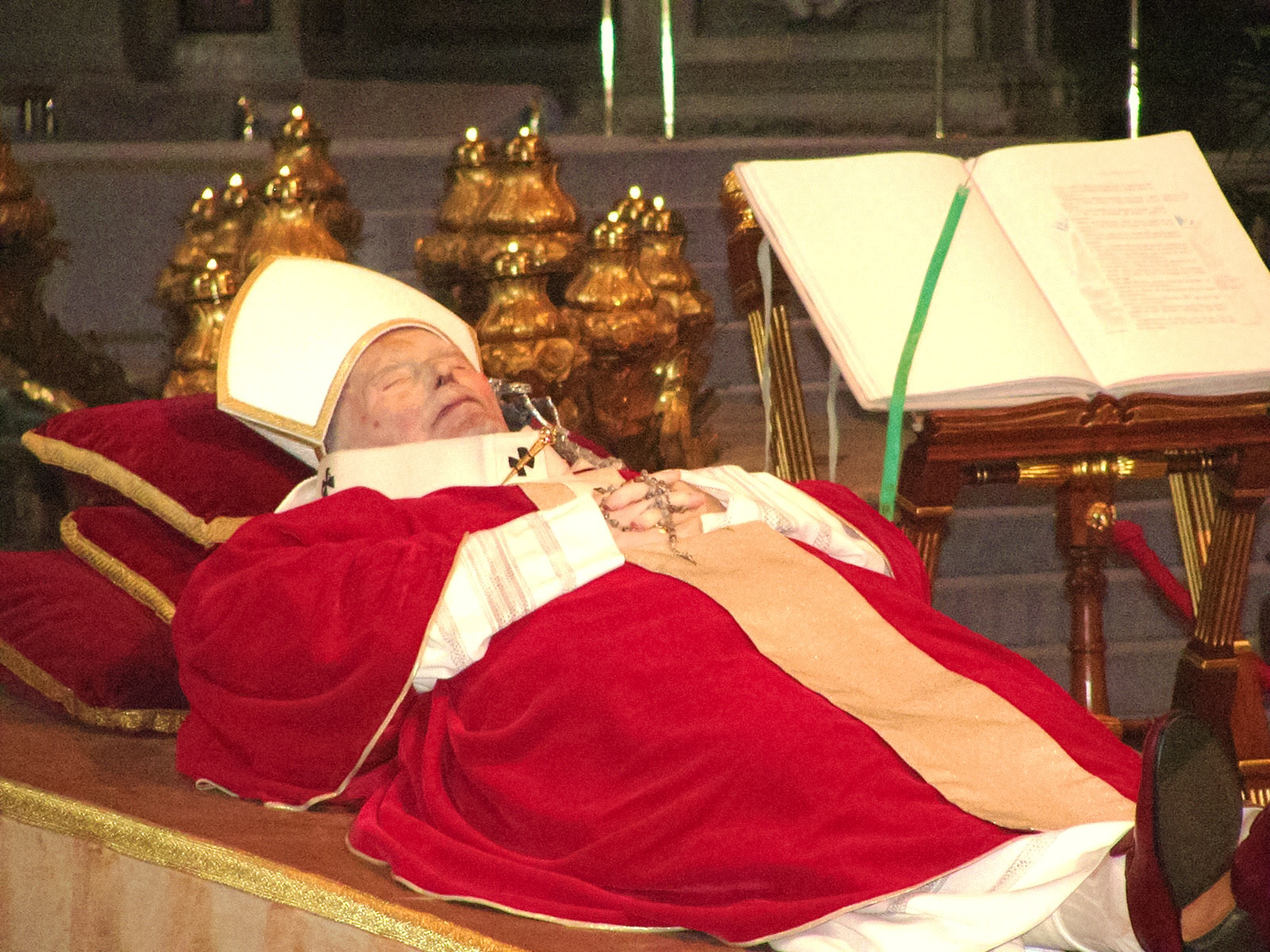
Pondering Judgment, One of the Four Last Things

This is the fourth in a series of articles on the Four Last Things: Death, Judgment, Heaven and Hell.
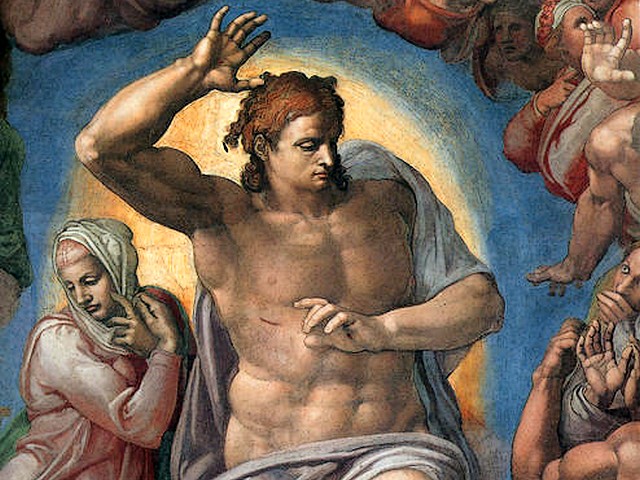
We turn our attention now to the judgment that awaits us all. Scripture speaks in the Book of Hebrews speaks rather plainly to this day for us all:

It is appointed for us to die once, and after that to face judgment (Heb 9:27).

For we must all appear before the judgment seat of Christ, so that each one may receive what is due for what he has done in the body, whether good or evil (2 Cor 5:10).

Furthermore, the Father judges no one, but has assigned all judgment to the Son, so that all may honor the Son just as they honor the Father (Jn 5:22-23).

The Gospel of Luke emphasizes the reverence we should have for Jesus and for His role as our judge:

But I will show you whom you should fear: Fear the One who, after you have been killed, has power to throw you into hell. Yes, I tell you, fear Him (Lk 12:5).

There is a distinction to be made between our personal judgment and the general judgment of the whole world (e.g., Matt 24:31ff). In the general judgment, God’s truth and justice will be made manifest; all those who have loved evil will be seen by all for who and what they were. Further, every evil and foolish philosophy will be seen for the darkness it is. Today I will not be discussing this general judgment, but rather our personal judgment.

We need to attend to our own judgment and prepare for it by seeking God and His grace so as to be ready. St. Paul entrusts us to Jesus, who alone can save us from the coming wrath (see 1 Thess 3:13).

Indeed, Jesus was quite urgent and persistent in warning us of the judgment that is coming upon us. He did this in many ways, but most urgently in the parables.

In the posts over the next few days, we will be examining our certain and coming judgment. We will look at Jesus’ consistent warnings to prepare for our judgment. We will reflect on our tendency to be inattentive to our day of judgment. We will then ponder a way to prepare. Finally, we will consider how we can tip the scales of judgment toward mercy.

Today, let’s begin by pondering the text of the Dies Irae, which sets forth the biblical themes of our judgment as well as a plea for mercy. The context in this case is the general judgment, but its themes also apply in many ways to our personal judgment:

The hymn opens by referring to God’s “wrath.”  (I’ve written more on wrath here.) Wrath is a term used to describe the complete incompatibility of sin in the presence of the All Holy One, a sinner brought into the Lord’s presence. We have every reason to be sober that the awesome holiness of God will disclose all that is in need of purification. The hymn begins as follows:

Day of wrath and doom impending,
Heaven and earth in ashes ending,
David’s words with Sibyl’s blending.

No one can treat this moment lightly: all are summoned to holy fear. At the sound of the trumpet, the bodies of the dead will come forth from their tombs and all of creation will answer to Jesus, the Judge and Lord of all:

Oh what fear man’s bosom rendeth,
When from heaven the judge descendeth,
On whose sentence all dependeth.

Wondrous sound the trumpet flingeth,
Through earth’s sepulchers it ringeth,
All before the throne it bringeth.

Death is struck and nature quaking,
All creation is awaking,
To its judge an answer making.

Lo the book exactly worded,
Wherein all hath been recorded,
Thence shall judgement be awarded.

When the Judge his seat attaineth,
And each hidden deed arraigneth,
Nothing unavenged remaineth.

Judgment shall be according to our deeds, whatever is written in the Book (Rev 20:12; Romans 2:6). Ah, but also in God’s Word is the hope for mercy. And so our hymn turns to pondering the need for mercy and appealing to God for it. The hope for mercy is based on the grace of God, His mercy, His incarnation, His seeking love, His passion and death, and the forgiveness He showed to Mary Magdalene and the good thief crucified on His right.

What shall I, frail man, be pleading?
Who for me be interceding
When the just are mercy needing?

King of majesty tremendous,
Who does free salvation send us,
Font of pity then befriend us.

Think kind Jesus, my salvation,
Caused thy wondrous incarnation.
Leave me not to reprobation.

Faint and weary thou hast sought me,
On the cross of suffering bought me.
Shall such grace be vainly brought me?

Righteous judge for sin’s pollution,
Grant thy gift of absolution,
Before the day of retribution.

Guilty now I pour my moaning,
All my shame and anguish owning.
Spare, O God my suppliant groaning.

Through the sinful Mary shriven,
Through the dying thief forgiven,
Thou to me a hope has given.

Yes, there is a basis for hope! God is rich in mercy. Pondering the Day of Judgment is salutary because now we can call on that mercy. In the end, it is only grace and mercy that can see us through that day. So the hymn calls on the Lord, who said, No one who calls on me will I ever reject (Jn 6:37).

Worthless are my tears and sighing.
Yet good Lord in grace complying,
Rescue me from fire undying.

With thy sheep a place provide me.
From the goats afar divide me,
To thy right hand do thou guide me.

When the wicked are confounded,
Doomed to flames of woe unbounded.
Call me with thy saints surrounded.

Lo I kneel with heart-submission.
See like ashes my contrition.
Help me in my last condition.

Now comes the great summation: Judgment Day is surely coming. Grant me, O Lord, your grace to be ready:

Lo, that day of tears and mourning,
from the dust of earth returning.

Man for judgement must prepare him,
Spare O God, in mercy spare him.

Sweet Jesus Lord most blest,
Grant the dead eternal rest.

And Death Is Gain: A Reflection on the Proper Christian Sense of Death

This is the third in a series of articles on the Four Last Things: Death, Judgment, Heaven, and Hell.

Yesterday we pondered the fear of death and some understandable reasons for it, but we also considered how a lack of lively faith can lead to a fear of death that is unchristian. As St. Paul admonishes regarding death,

We do not want you to … grieve as others do who have no hope. For since we believe that Jesus died and rose again, even so, through Jesus, God will bring with him those who have fallen asleep (1 Thess 4:13-14).

How do you see death? Do you long to one day depart this life and go home to God? St. Paul wrote to the Philippians of his longing to leave this world. He was not suicidal; he just wanted to be with God:

Christ will be magnified in my body, whether by life or by death. For to me life is Christ, and death is gain. If I go on living in the flesh, that means fruitful labor for me. And I do not know which I shall choose. I am caught between the two. I long to depart this life and be with Christ, for that is far better. Yet that I remain in the flesh is more necessary for your benefit (Phil 1:20-23).

I am struck by the fact that almost no one speaks publicly of their longing to depart this life and be with God. I suspect that it is because we live very comfortably, at least in the affluent West. Many of the daily hardships with which even our most recent ancestors struggled have been minimized or even eliminated. I suppose that when the struggles of this life are minimized, fewer people long to leave it and go to Heaven. They set their sights, hopes, and prayers on having things be better here. “God, please give me better health, a better marriage, more money, a promotion at work.” In other words, “Make this world an even better place for me and I’ll be perfectly content to stay right here.”

Longing to be with God was more evident in the older prayers, many of which were written just a few generations ago. Consider, for example, the well-known Salve Regina and note (especially in the words I have highlighted in bold) this longing.

Hail, Holy Queen, Mother of Mercy, our life, our sweetness, and our hope. To thee do we cry, poor banished children of Eve. To thee do we send up our sighs, mourning, and weeping in this valley of tears. Turn then, most gracious advocate, thine eyes of mercy towards us, and after this our exile, show unto us the blessed fruit of thy womb, Jesus. O clement, O loving, O sweet Virgin Mary.

This prayer acknowledges in a realistic and sober way that life here can be very difficult. Rather than ask for deliverance from all of it—for this world is an exile, after all—it simply expresses a longing to go to Heaven and be worthy to see Jesus. It is this longing that I sense is somewhat absent in our modern world, even among regular churchgoers.

When was the last time you meditated on Heaven? When was the last time you heard a sermon on Heaven? I understand that we all have a natural fear of and aversion to dying, but a Christian should have a deepening thirst for God that begins to erode this. St. Francis praised God for sister bodily death, which no one can escape (Canticum Fratris Solis). And why not praise God for death? It is what ultimately brings us home.

In regard to death as gain, St. Ambrose had this to say in a meditation on the occasion of his brother’s death:

Death was not part of nature; it became part of nature. God did not decree death from the beginning; he prescribed it as a remedy. Human life was condemned because of sin to unremitting labor and unbearable sorrow and so began to experience the burden of wretchedness. There had to be a limit to its evils; death had to restore what life had forfeited. Without the assistance of grace, immortality is more of a burden than a blessing.

We see that death is gain, life is loss. Paul says: For me life is Christ, and death a gain. What does “Christ” mean but to die in the body, and receive the breath of life? Let us then die with Christ, to live with Christ.

We should have a daily familiarity with death, a daily desire for death. By this kind of detachment our soul must learn to free itself from the desires of the body. It must soar above earthly lusts to a place where they cannot come near, to hold it fast. It must take on the likeness of death, to avoid the punishment of death.

The law of our fallen nature is at war with the law of our reason and subjects the law of reason to the law of error. What is the remedy? Who will set me free from this body of death? The grace of God, through Jesus Christ, our Lord (taken from a book by St. Ambrose, bishop, on the death of his brother, Satyrus (Lib. 2, 40. 41. 46. 47. 132. 133)).

As for me, I will say it: I long to leave this world one day and go home to be with God. I am not suicidal and I love what I do here, but I can’t wait to be with Him. I don’t mind getting older because it means I’m that much closer to home. In our youth-centered culture, people (women, especially) are encouraged to be anxious about getting older. When I hit forty, I said, “Hallelujah, I’m closer to home.” Now at 56, I rejoice even more. I’m glad to be getting older. God has made me wiser and He is preparing me to meet Him. I can’t wait!

Even a necessary stopover in Purgatory cannot eclipse the joy of the day we die. There will surely be the suffering that precedes our death. But deep in our hearts, if we are believers, must ring forth the word, “Soon!” An old spiritual says, “Soon I will be done with the troubles of this world, going home to live with God.”

So I ask you again: How do you see death? Do you long for Heaven? Do you long to depart this world and be with God? I know you want to finish raising your children first, but do you rejoice as the years tick by and the goal becomes closer? A prayer in the Roman Missal says,

O God, who makes the minds of the faithful to be of one accord, grant to your people to love what you command and to desire what you promise, that, among the changes of this world, our hearts may there be fixed where true joys are (Collect, 21st Sunday of the Year).

I close with some words from Psalm 27:

One thing I ask from the LORD, this only do I seek: that I may dwell in the house of the LORD all the days of my life, to gaze on the beauty of the LORD … My heart says of you, “Seek his face!” Your face, LORD, I will seek. Do not hide your face from me (Psalm, 27:4, 8-9).

As you listen to this spiritual, think about the harsh conditions endured by the slaves who wrote it:

On the Fear of Death

This is the second in a series of articles on the Four Last Things: Death, Judgment, Heaven, and Hell.

For the faithful, the day we die is the greatest day of our life on this earth. Even if some final purifications await us, the beatific vision for which we long lies just ahead; our exile in this valley of tears is ended.

Is calling the day we die the greatest day of our life too strong a statement? I have seen some fellow Christians wince at this statement. In this age of emphasis on worldly comforts, medicine, and the secular, we rarely speak of Heaven—or Hell for that matter. I wonder if we have lost some of our longing for Heaven and cling too strongly to the trinkets of this life.

At the funeral of a relative several years ago, I was approached by a friend of the family. She was an unbeliever, a self-described secular humanist, and she made the following comment to me: “Perhaps there is Heaven for the faithful who believe that there is life after death, and perhaps, then, for them the day they die is the greatest day of their life, but I do not observe that Christians live as if they believe this. It seems to me that they are as anxious as anyone else about dying and earnestly seek to avoid death just as much as anyone else.”

It was a very interesting observation, one that I found mildly embarrassing even though I quickly thought of some legitimate explanations. Even after giving her some of those explanations, some of the embarrassment lingered as to the kind of witness we Christians sometimes fail to give to our most fundamental values. Based on her remark—and I’ve heard it before—most of us Christians don’t manifest a very ardent longing for Heaven.

There are, of course, some legitimate reasons that we do not rush towards death; there are also some less legitimate ones. Here are some legitimate and understandable reasons that we may draw back from dying and may not at first think of the day we die as the greatest day of our life:

  1. There is a natural fear of dying that is part of our physical makeup and, it would seem, hard-wired into our psyche as well. Every sentient being on this planet, man or animal, has a strong instinct for survival. Without this instinct, strongly tied to both hunger and sexual desire, we might not only die as individuals but as a species. It also drives us to look to the future, as we work to ensure the survival, even thriving, of our children and those who will come after us. It is a basic human instinct that we ought not to expect to disappear, because it has necessary and useful aspects.
  2. We would like to finish certain important things before we die. It makes sense, for example, that parents would like to see their children well into adulthood. Parents rightly see their existence in this world as critical to their children. Hence, we cling to our life here not just for our own sake, but because others depend upon us.
  3. The Christian is called to love life at every stage. Most of us realize that we are called to love and appreciate what we have here, for it is the gift of God. To so utterly despise this world that we wish only to leave it manifests a strange sort of ingratitude. It also shows a lack of understanding that life here prepares us for the fuller life that is to come. I remember that at a low point in my own life, afflicted with anxiety and depression, I asked the Lord to please end my life quickly and take me home out of this misery. Without hearing words, I felt the Lord’s silent rebuke: “Until you learn to love the life you have now, you will not love eternal life. If you can’t learn to appreciate the glory of the gifts of this life, then you will not and cannot embrace the fullness of eternal life.” Indeed, I was seeing eternal life merely in terms of relief or escape from this life, rather than as the full blossoming of a life that has been healed and made whole. We don’t embrace life by trying to escape from it. A healthy Christian attitude is to love life as we have it now, even as we yearn and strive for a life that we do not yet fully comprehend: a life that eye has not seen nor ear heard, what God has prepared for those who love Him.
  4. We seek to set our life in order to some degree before we face judgment. While it is true that we can procrastinate, there is a proper sense of wanting time to make amends and to prepare to meet God.
  5. We fear the experience of dying. Dying is something none of us has ever done before and we naturally tend to fear the unknown. Further, most of us realize that the dying process likely involves some degree of agony. Instinctively and understandably, we draw back from such things.

Even Jesus, in His human nature, recoiled at the thought of the agony before Him—so much so that He sweat blood and asked that the cup of suffering be taken from Him if possible. Manfully, though, He embraced His Father’s will, and our benefit rather than His own. Still, in His humanity, He did recoil at the suffering soon to befall Him.

Despite this hesitancy to meet death, for a faithful Christian the day we die is the greatest day of our life. While we ought to regard the day of our judgment with sober reverence, we should go with joyful hope to the Lord, who loves us and for whom we have longed. That day of judgment, awesome though it is, will for the future saint disclose only that which needs final healing in purgation, not that which merits damnation.

We don’t hear much longing for our last day on this earth or for God and Heaven. Instead, we hear fretting about how we’re getting older. We’re anxious about our health, even the natural effects of aging. And there are such grim looks as death approaches! Where is the joy one might expect? Does our faith really make a difference for us or are we like those who have no hope? Older prayers referred to life in this world as an exile and expressed a longing for God and Heaven, but few of today’s prayers or sermons speak this way.

Here are some of the not-so-legitimate reasons that we may draw back from dying:

  1. We live comfortably. While comfort is not the same as happiness, it is very appealing. It is also very deceiving, seductive, and addictive. It is deceiving because it tends to make us think that this world can be our paradise. It is seductive because it draws and shifts us our focus away from the God of comforts to the comforts of God. We would rather have the gift than the Giver. It is addictive because we can’t ever seem to get enough of it; we seem to spend our whole life working toward gaining more and more comforts. We become preoccupied by achieving rather than working toward our truest happiness, which is to be with God in Heaven.
  2. Comfort leads to worldliness. Here, worldliness means focusing on making the world more comfortable, while allowing notions of God and Heaven to recede into the background. Even the so-called spiritual life of many Christians is almost wholly devoted to prayers asking to make this world a better place: Improve my health; fix my finances; grant me that promotion. While it is not wrong to pray about such things, the cumulative effect, combined with our silence on more spiritual and eternal things, gives the impression that we are saying to God, “Make this world a better place and I’ll just be happy to stay here forever.” What a total loss! This world is not the point. It is not the goal, Heaven is. Being with God forever is the goal.
  3. Worldliness makes Heaven and being with God seem more abstract and less desirable. With this magnificent comfort that leads to worldly preoccupation, longing for Heaven and going to be with God recedes into the background. Today, few speak of Heaven or even long for it. They’d rather have that new cell phone or the cable upgrade with the sports package. Some say that they never hear about Hell in sermons, and in many parishes (though not in mine, thank you), regrettably, that is the case. They almost never hear about Heaven, either (except in some cheesy funeral moments that miss the target altogether and make Heaven seem trivial rather than a glorious gift to be sought). Heaven just isn’t on most people’s radar, except as a vague abstraction for some far off time—certainly not now.

This perfect storm of comfort and worldliness leads to slothful aversion to heavenly gifts. That may be why, when I say that the day we die is the greatest day of our life, or that I’m glad to be getting older because I’m getting closer to the time when I can go home to God, or that I can’t wait to meet Him, people look at me strangely and seem to wonder whether I need therapy.

No, I don’t need therapy—at least not for this. I’m simply verbalizing the ultimate longing of every human heart. Addiction to comfort has deceived and seduced us such that we are no longer in touch with our heart’s greatest longing; we cling to passing things. I would argue (as did my family friend) that we seem little different from those who have no hope. We no longer witness to a joyful journey to God that says, “I’m closer to home. Soon and very soon I am going to see the King. Soon I will be done with the troubles of this world. I’m going home to be with God!”

There are legitimate, understandable reasons for being averse to dying, but how about even a glimmer of excitement from the faithful as we see that our journey is coming to an end? St. Paul wrote the following to the Thessalonians regarding death: We do not want you to be like those who have no hope (1 Thess 4:13). Do we witness to the glory of going to be with God or not? On the whole, it would seem that we do not.

The video below features a rendition of the hymn “For All the Saints Who from Their Labors Rest.” Here is a brief passage from the lyrics:

The golden evening brightens in the West,
Soon, soon, to faithful warriors cometh rest.
Sweet is the calm of Paradise most blest. Alleluia!

The Mystery of Life and Death

This is the first in a series of articles on the Four Last Things: Death, Judgment, Heaven, and Hell.

Note: I wrote this post prior to the terrible shooting that occurred Sunday in Texas. Once again we are confronted with terrible violence and the specter of sudden death. Please offer your prayers for those who have died and their families.

As we begin here a series on the Four Last Things, a shooting like this confronts us not only with the death and life, but also the mystery of iniquity. In reading this, I hope you will keep in mind that my remarks here speak of death that awaits us all at a time and in a manner not of our own control. Please also remember this post was not written as a response to the Texas shooting and I do not propose it as an explanation, or commentary on that terrible shooting. Rather it is a commentary on the deep mystery of life and of death.

*     *     *

You are going to die and you don’t get to say when or how. I say this at every funeral, both to those present and to myself. This solemn reminder is hard to process. It is one thing to assent to this obvious truth intellectually, but it is another thing to internalize it in our depths and really know what it means.

What is death? Some speak of heartbeats that stop or brain waves that cease, but that is not what death is. The cessation of vital indicators is the effect of death, not death itself.

Part of the mystery of death is that it is presupposed by another equally deep and mysterious question: What is life? Some say that life is organized energy, but this answer also misses the mark. It describes what life does, not what it is.

The force we call life is mysterious. We see its effects. We know when it is present and when it is gone, but we do not know exactly what it is. Just because we have a word for something doesn’t mean we understand it. Similarly, death is mysterious. I have been at the bedside of parishioners and my own loved ones at the moment of death and I cannot adequately articulate how strangely baffling it is. There is labored breathing; sometimes there are nervous twitches. Occasionally some words are spoken. Then, suddenly, there is a great stillness. The mysterious force that we call life has departed; the soul, the animating principle of living things, is gone.

I remember looking at my sister, my father, and my mother as each lay in the casket. They were there and yet they were not. When I looked at my mother, she seemed alive; I fully expected her to look at me and tell me to comb my hair or that she loved me—but she was not there. Her body had lost that mysterious spark and force we call life. Her soul had departed.

Looking at my father’s still body in the hospital room where he died was overwhelming. He had been a giant in my life. He still looms large in my memory; his voice rings in my soul. But there he was lying still in that hospital bed—and yet he was not there. Something deeply mysterious had happened. The hidden, mysterious life force of his soul was gone even though there seemed to have been no change in the appearance of his body.

Sadly, I have had to have several of my pets put down over the years. In those cases, too, the mystery of life and death is evident. An animal is alive one moment and then suddenly grows still. Even with plants and trees, I have seen them healthy and green only to be astonished when they die. What happened? The life is gone; a mysterious, organizing principle and force has departed—but what it is we do not know. We do not see death, only its effects.

I am overwhelmed in the face of death, at the mystery of it and the mystery of what has departed: life, a force that cannot be seen or measured, that does not tip the scales of scientists or involve our senses but that is nonetheless very real.

Especially in its inception, life is mysterious. Consider an acorn. In appearance, it is not so different from a small stone. Yet if you were to put both in the soil, the stone would sit there forever and do nothing; the acorn, though has a mysterious spark, a life force in or around it that springs forth to become a mighty oak. What is that spark? Where is it? An acorn has it but a stone does not. Why? Only God really knows.

It was my father who first taught me of the mystery of life. When I was a child, he told me that one of the deepest experiences of his life had occurred when he was about my age:

It had suddenly occurred to him, coming into his mind like a bolt out of the blue, that he existed. He cried out, “I exist!” and then grew silent in astonishment.

He said that ever since that moment he had never ceased to be amazed and awed at the mysterious fact of his existence. Indeed, it is an awesome mystery. Why do I exist? Why do you exist? Why is there anything at all?

As my Father grew silent in amazement, so must I. I have already said too much. The word mystery comes from the Greek muein, meaning to shut the mouth or close the eyes. As we begin a meditation on the four Last Things, (death, judgment, Heaven, and Hell), ponder with awe and reverential silence the great mystery of life and death.

Tomorrow I will discuss some of the more practical aspects of death.