
Natural Law is Not New

The Natural Law Tradition of the Catholic Church is often criticised by some Protestants and more often by secularists. Some think of it as merely an invention of the scholastic period. Others (esp. some of the Protestants) think we should limit our discourse to the Scriptures alone. But Catholicism has always seen God’s revelation in broader terms that Scripture alone. To be sure, Scripture along with Sacred Tradition is revelation it is clearest manifestation. But creation too is revelation from God and speaks to his will and to his attributes.

Natural Law, far from being an invention of the Middle Ages is enshrined in Scripture. We find it in the Wisdom Tradition of the Scriptures and also in the New Testament. Most clearly, St. Paul points to it in the Letter to the Romans:

What may be known about God is plain to [the Gentiles],  because God has made it plain to them. For since the creation of the world God’s invisible qualities—his eternal power and divine nature—have been clearly seen, being understood from what has been made, so that men are without excuse. (Rom 1:19-20)

Notice that St. Paul does not speak of murky sort of revelation vaguely noticeable in creation but rather a revelation that can be “clearly seen.” Paul does not call this revelation “natural law” (that designation would come later) but what we now call Natural Law is what Paul is speaking of here.

Further, the concept of “Logos” present in the prologue to St. John’s Gospel also enshrines Natural Law premises. The ancient Jews, particularly those who collected the Wisdom Tradition in the Scriptures (Books such as Wisdom, Sirach, Ecclesiastes, Proverbs etc.) understood that the created world has a Logike (a kind of Logic) based on the fact that God made it through his Logos (Word). When God spoke creation into existence through his Word (Logos) his Logos sets things forth with a Logike(logic) that is discernible and could be studied to make one wise in the ways (the logic) of God. We have come to call this scriptural teaching, Natural Law. In effect we can discern a logic of rationality to what God has made and come to know of God and his will for us.

As a final example of the antiquity of Natural Law in the I would like to share excerpts from one of the Church Fathers, Athanasius who teaches on in his great work, “Against the Arians.” In this excerpt Athanasius uses the term “Wisdom” but the teaching, as you shall see is the same as the Logos tradition and what we have come to call “Natural Law.”  Here are excerpts:

An impress of Wisdom has been created in us and in all his works. Therefore, the true Wisdom which shaped the world claims for himself all that bears his image…Wisdom himself is not created, because he is the Creator, but by reason of the created image of himself found in his works, he speaks [of himself] as if he were a creature, and he says: The Lord created me in his works, when his purpose first unfolded.   The likeness of Wisdom has been stamped upon creatures in order that the world may recognise in it the Word who was its maker and through the Word come to know the Father. This is Paul’s teaching: What can be known about God is clear to them, for God has shown it to them. Ever since the creation of the world his invisible nature has been there for the mind to perceive in things that have been made….So there is a wisdom in created things, as the son of Sirach too bears witness: The Lord has poured it out upon all his works, to be with men as his gift, and with wisdom he has abundantly equipped those who love him….and in the light of this wisdom the heavens declare the glory of God, and the firmament proclaims the work of his hands. –  Discourse “Against the Arians” by St Athanasius

Hence we see a valuable and very ancient pearl in what we have come to call Natural Law. In these secular times the testimony of Natural Tradition gives us something of a basis to address a world that rejects the authority of Scripture. The use of Scripture may still be best in the circle of believers, (though even there the testimony of Natural Law should not be overlooked), but Natural Law can provide a possible basis for discussion with non-believers. Even here, there are challenges today. In an age as “skeptical” as ours the plain testimony of “reality” is not so plain to some who radically doubt that we can or should derive moral norms from things that appear in creation. Still Natural Law at least provides some navigating points for a discussion with most non-believers.

One of the glories of the Catholic Church is our rich appeal to several sources for truth. Scripture surely ranks first but Sacred Tradition supplies us additional revelation in addition an interpretive key for the Scriptures. Further, Natural Law, attested to in the Scriptures also supplies a witness to the truth about God and it reveals his glory. This is the broad and beautiful foundation upon which the Catholic faith rests.

The following video sets forth the challenges that a radical skepticism poses and illustrates why the Natural Law is a precious gift to be recovered and respected.

I’m in the Holy Land this week until November 8th. I have scheduled blogs that will appear each day while I’m away so stay tuned! My participation in the comments however may be a little light since my time with the internet will be sporadic. Comments will be moderated by someone else on the team and I’ll participate when I can. – Msgr Pope.
Five Hard Truths That Will Set You Free

Some years ago I read an essay by  the Franciscan Theologian Richard Rohr. I will say that I do not share a lot of agreement with Richard Rohr (no need to detail that here) but I found this particular essay compelling. I do not recall the exact title of that essay but in my mind the title “Five Hard Truths that Will Set You Free” seems the best title.  The following  five truths from that essay are indeed hard truths. They tend to rock our world and stab at the heart of some of our most cherished modern notions. But if they can be accepted for the truth they convey they bring great peace. We live is a rather self-absorbed, self-pre-occupied time and these five truths are not only good medicine for that but they also help us to have more realistic expectations as we live in an imperfect and limited world. Study these truths well. If they irritate you a bit, good, they’re supposed to. They are meant to provoke thought and reassessment. The principles are Richard Rohr’s the comments are mine.

  1. Life is hard –We live in rather comfortable times. These are times of convenience and central air conditioning. Medicine has removed a lot of pain and suffering and consumer goods are in abundance and variety. Entertainment comes in many varieties and is often inexpensive. Hard labor is something few of us know, obesity is common due to over abundance. Because of all these creature comforts we have tended to expect that life should always be peachy. We are rather outraged at suffering, inconvenience and delay. Our ancestors lived lives that were far more brutal and short and they often spoke of life as a “vale of tears” and understood that suffering was just a part of life. But when we suffer we start to think in terms of lawsuits. Suffering seems obnoxious to us, hard work, unreasonable! We are often easily angered and flung into anxiety at the mere threat of suffering. This principle reminds us that suffering and difficulty are part of life, something that should be expected. Accepting suffering does not mean we have to like it. But acceptance of the fact that life can be hard at times means we get less angry and anxious when it does come. We do not lose serenity. Accepting that suffering is inevitable brings a strange sort of peace. We are freed from unrealistic expectations that merely breed resentments. We also become more grateful for the joys we do experience. Accepting that life can be hard is a truth that sets us free.
  2. Your life is not about you– If you want to make God laugh tell Him your plans. We often like to think that we should just be able to do what ever pleases us and maximizes our “self-actualization.” However, we do not decide alone what course our life will take. In this age of “nobody tells me what to do” it is important to be reminded that our true happiness comes not from getting what we want but what God wants. Our destiny isn’t to follow our star but to follow God. True peace comes from careful discernment of God’s will for us. It is sad how few people today ever really speak with God about important things like careers, entering into a marriage, pondering a large project. We just go off and do what we please and expect God to bail us out if it doesn’t go well. You and I do not exist merely for our own whims, we have a place in God’s plan. Our serenity is greater when we prayerfully discern that place and humbly seek God’s will. Accepting the fact that we are not merely masters of our own destiny and captains of our own ship gives us greater peace and usually saves us a lot of mileage. Humbly accepting the truth that my life is not simply about me and what I want is a truth that sets me free. This is true because we often don’t get what we want. If we can allow life to unfold more and not demand that everything be simply what I want I am  more serene and free.
  3. You are not in control– Control is something of an illusion. You and I may have plans for tomorrow but there are many things between now and tomorrow over which I have no control. For example, I cannot even control or guarantee the next beat of my heart. Hence I may think I have tomorrow under control but tomorrow is not promised and may never come. Because we think we control a few things we think we can control many things. Not really. Our attempts to control and manipulate outcomes are comical if not hurtful. Thinking that we can control many things leads us to think that we must control them. This in turn leads to great anxiety and often anger. We usually think that if we are in control we will be less anxious. This is not true, we are more anxious. The more we think we can control the more we try to control and thus the greater our burdens and anxiety. In the end we get angry because we discover that there many things and people we cannot control after all. This causes frustration and fear. We would be freer and less anxious if we would simply accept the fact that there are many things, most things, over which I have no control. Our expectation of everything being under control is unrealistic. Life comes at you fast and brooding over unpredictable things and uncontrollable matters is bondage. Simply accepting that I am often not in control is freeing.
  4. You are not that important– Uh Oh! Now this one hurts. I thought the whole world should revolve around me. I thought it was only my feelings that mattered and my well- being that was important. Truth be told, we are loved by God in a very particular way but that does not over rule the fact that I must often yield to others who are also loved by God in a very special way. The truth is sometimes that other people are more important than me. I might even be called on to give my life so that others may live. I must often yield to others whose needs are more crucial than mine. The world doesn’t exist just for me and what I want. There is great peace and freedom in coming to accept this. We are often made so anxious if we are not recognized and others are or if our feelings and preferences are not everyone’s priority. Accepting the truth that I am not that important allows us to relax and enjoy caring about other people and celebrating their importance too.
  5. You are going to die. – Oh man, that’s cold. Yes, it is a hard truth but it is very freeing. We get all worked up about what this world dishes out. But talk a walk in a cemetery. Those folks were all worked up too. Now their struggles are over and, if they were faithful they are with God. Trouble don’t last always. This truth also helps us to do the most important thing: get ready to meet God. So many people spend their lives clowning around and goofing off. Yet our most urgent priority is to prepare to meet God. In the end, this is freeing because we are loosed from the many, excessive and contrary demands of the world and we concentrate on doing the one thing necessary. Our life simplifies and we don’t take this world too seriously, it is passing away. There is peace and freedom in coming to accept this.

So there you have them. Five hard truths that will set you free. Think about them. Memorize them too and pull them out when life comes at you fast and hard with it’s agenda of control, self importance and empty promises of perfect comfort here on earth. A simple, sober, humble and focused life brings great serenity.

I’m in the Holy Land this week until November 8th. I have scheduled blogs that will appear each day while I’m away so stay tuned! My participation in the comments however may be a little light since my time with the internet will be sporadic. Comments will be moderated by someone else on the team and I’ll participate when I can. – Msgr Pope.

Dumb Luck or Design?

I just read in the news an interesting story. It seems that a tornado recently went through junk yard. As you can imagine there was a horrible amount of junk whirling around in the air. But here’s where the story really gets interesting. It seems that the tornado swirled that junk together just right because as the wind died down all those banana peals, cans, broken pieces of pottery, stuffing from old mattresses springs, car parts etc all swirled together into a fully functioning 747 jumbo jet airliner with a filled fuel tank and fully equipped cockpit. There was even a logo emblazoned on the tail fin: “Tall Tales Airlines.”

“Ah,” you say, ” The story’s touching but it sounds like a lie!” And sure enough it is a tall tale. But how different is it really from what some atheists, and also certain evolutionists want us to believe about creation? I say some evolutionists because there are some forms of evolution that a Catholic may accept. For example a mitigated form of evolution that holds that things have evolved but God has guided the process. But what most atheists and evolutionists want you to believe is that evolution, in fact everything that happened after the big bang is a chance happening. that evolution is blind, nothing guides it. It just happened by accident, a chance coming together of certain forces and processes that has produced everything we see including ourselves. Again, they insist that the process is blind, it is guided by no outside intelligence. It all just happened on its own. Now if you believe that, then I have a 747 to sell you.

Now this world, even our own bodies are far more complex than a 747 Jumbo liner. And just as a mindless tornado can’t likely whip out a fully functioning 747  neither would a mindless explosion produce a fully functioning and orderly universe or even a fully functioning human person. The existence of these orderly and complex systems surely bespeaks an intelligent designer. If you landed on a planet in some distant galaxy and found in the sand a functioning watch it is not “unscientific” to conclude that some one with intelligence designed and made this for a purpose. You may not see any life on the planet now, but at some point there was intelligent life either living here or that visited here. But the point is that you would be on good scientific grounds to conclude that the watch pointed to an intelligent designer. Now I know that Science can’t formally call this designer “God.” We who believe do that. But science is on reasonable ground within its own discipline to conclude that an intelligence, a designer is indicated by the evidence. The stubborn refusal by many to do this seems more ideological than scientific. And they hold it with the kind of “religious” zeal they claim to be above. They call us the fanatics but I wonder who really is more fanatical.  Who really is ignoring the evidence here?  To a large extent I think that it takes more “faith” to “believe” that all this happened by chance or due to blind evolution than simply to believe that an intelligent designer set all this forth.

I’d like to give two examples from creation to illustrate just how intricate and multi-layered creation is and then pose the ask the question “Dumb Luck or Design?”

MAGNIFICENCE OF LIFE– Consider the awesomeness of the human body. Its chemistry is just as extraordinarily well tuned as is the physics of the cosmos. Our world on both sides of the divide that separates life from lifelessness is filled with wonder. Each human cell has a double helix library of three billion base pairs providing fifty thousand genes. These three billion base pairs and fifty thousand genes somehow engineer 100 trillion neural connections in the brain—-enough points of information to store all the data and information contained in a fifty-million-volume encyclopedia. And then after that, these fifty thousand genes set forth a million fibers in the optic nerves, retinae having ten million pixels per centimeter, some ten billion in all, ten thousand taste buds, ten million nerve endings for smell, cells that exude a chemical come-on to lure an embryo’s lengthening neurons from spinal cord to target cell, each one of the millions of target cells attracting the proper nerve from the particular needed function. And all this three-dimensional structure arises somehow from the linear, one-dimensional information contained along the DNA helix. Dumb Luck or Design?

RARE EARTH ! The earth on which we live and which, by God’s grace sustains our life is surely miraculous. Consider the following facts. The life support system we call the solar system has just the correct distribution of large and medium sized planets to have swept clean most of the space through which Earth must travel. There are thus few asteroids anywhere near our path! Further, large gas giants like Jupiter and Saturn, “catch” comets in their gravitational fields and keep these comets from targeting earth. Our star, the Sun, is just the right size to consume its supply of hydrogen and produce energy at a rate that provided the time and conditions for life to form. Our orbit through space, at 93 million miles from the Sun, departs from a true circle by only 3 percent. Were it as elliptical as is the orbit of Mars, the next planet out, we would alternate between baking when closer to the Sun and freezing when distant. Earth contains just enough internal radioactivity to maintain its iron core in a molten state. This produces the magnetic umbrella that deflects an otherwise lethal dose of solar radiation. The volcanic activity driven by this internal heating is just adequate to have released previously stored subterranean waters into our biosphere, making them available for life processes, but not so much volcanism as to shroud our planet in dust. Earth’s gravity is strong enough to hold the needed gases of our atmosphere but weak enough to allow lighter noxious gases to escape into space. All this is balanced at just the correct distance from our star so that our biosphere is warm enough to maintain water in its liquid, life-supporting, state, but not so warm that it evaporates away into space. A just-right Earth with just the needed gravity, radioactivity, magnetic field, and volcanic activity to support life is located at just the correct distance from the Sun to nurture the inception and development of life…all the ingredients come together in just the way. Dumb Luck or Design?

Death to Doomsday!

I guess I’ve grown a bit weary about all the Doomsday stuff that seems to dominates certain channels on cable. In particular I refer to the Science Channel, the History Channel, and National Geographic Channel. At one time I found those channels very valuable in the informational programming they provided. But, about a year ago I just stopped watching them because it seemed to me that they had gone over to an all doomsday all the time line up. Flip to one of them and you’ll inevitably find a program about the asteroid that is overdue to flatten our world and snuff out life as we know it. If not that its the comet that is also overdue. If it is not that it would seem that Yellowstone National Park is actually a giant caldera and every now and then it blows up and devastates everything in sight plunging the planet into a volcanic winter. Did I mention that it is overdue to blow up? There is also a major landslide that is likely to occur on the African coastline and when it lets loose it will send a Tsunami 80 feet high that will devastate  the whole east coast of the USA. Did I mention it is overdue to let loose? And then there is Global Warming which, even if it is true doesn’t seem to be a disaster, (the planet has been a lot warmer in the past and we’ve survived). But according to the presentations we are headed for catastrophe. Did I mention that this catastrophe is imminent?

Other shows are now appearing on these channels that warn of the year 2012. Apparently a Mayan calendar  runs out on Dec 21, 2012 and this will usher in a great destruction of the world as we know it. You can read of this latest silliness here: 2012!  The site even has a ticking clock so you can remember to pack your bags. Expect this silliness to increase to hideous levels as Christmas 2012 draws nearer. Some are now backing off and just saying the world will transition to some new stage rather than be destroyed. Did I mention that 2012 is imminent?

Finally, these same channels also feature Nostradamus specualtors who claim his prophecies are “running out” There is also a list of Popes that an Irish priest named Malachy put togther many centuries ago. Well guess what,  we’re at the last (or the second to last Pope) on the list and then it runs out! Doomsday follows. Did I mention that Pope Benedict is 82?

So after a steady diet of this stuff on those channels I largely tuned out. But I remain puzzled as to our fascination with doomsday scenarios. Apparently this stuff sells because these channels put it out in large doses. They may have lost me for a viewer but obviously they’ve gained others who eat the stuff up.

So what’s this reflection doing on a Catholic blog? Well, cultural observations are part of what this blog is about. Doomsday is a major preoccupation and fascination with this culture of ours and I’d like to make a few observations of how this interacts with faith.

  • When the Church cast something off the world usually picks it up – Some years ago it was common in most Churches to hear of the day of judgment and the second coming of Chirst. That day would be a day of fiery  judgement when the wicked would render an account and the just be gathered in. The basic message was, “better get ready! Repent now.” But some decades ago such sermons ceased. They were replaced by the “Jesus loves you” sermons and endless reassurances all that fire and brimstone stuff was not for us. True enough, Jesus loves us, but the same Gospels that tell us that also speak of judgement. (More on that in another blog). But with the Church (inappropriately) casting  this fiery preaching aside the world seems to have taken up the theme. So the evidence seems to be that people “need” this sort of  doomsday talk at least from time to time. It seems necessary to our psyche that powerful reminders of death and judgment be present, perhaps to prepare us for what is inevitably in our future: death and judgment.
  • Kooky! Now this doesn’t change the fact that there is a kooky side to all this when it is taken too far. We are all familiar with the crazy guy on the street corner waving a Bible and warning of the end. His message is not untrue but HE seems a bit unbalanced, doesn’t look to have bathed or shaved in a long time etc.  And then there is rather odd little “Left Behind” series wherein the authors attempt a literal interpretation of the Book of Revelation which comes off as a bit silly and contrived in places.
  • So what then is the conclusion? The Church has a duty to preach eschatology (end times theology). Her preaching of this important subject should be sober but clear. The world as we know it is passing away. Tomorrow is not promised to any of us, either as individuals or collectively. We ought to live reverently and be prepared to meet Christ who may come at an hour that we least expect. We should be serious about our spiritual life and setting our house in order. Wild speculations are not called for however since Christ was plain when he said we would know neither the day nor the hour. Consistent readiness is what is called for. But what happens when the Church fails in her duty to speak to this expectancy in the human soul? Well, what happens is all the kooky and crazy stuff above. Without solid and well balanced preaching about eschatology the world descends into a frenzied speculation like we see on the channels I mentioned and in some of the more bizarre end times stuff out on the fringes of fundamentalism. That people are hungry for eschatological (end times) data seems clear and part of the human psyche. This hunger was probably put there by God. But if we are not fed the true food of children we run off to junk food and silly speculations. In mid November through Advent the Church’s lectionary turns to eschatology. I will acquit my duty to teach the solid food of Church teaching on this blog during that time.

Who knows? maybe I will get hit by an asteroid. I might also get hit by a bus. Point is,  be ready. Tomorrow is not promised. Give your life to God, entrust yourself to his care and be not anxious. Death to doomsday! Become alive in Christ and death will have no power over you!

Pondering Pithy Sayings

I have a love/hate relationship with slogans, philosophies of life, and pithy sayings. At one level I like the way they make me think. They sort of reduce all the complicated ways we think of things to a simple thought or insight. It’s good for a moment to cut through all the noise and consider “just one thing.” But that’s also my problem with these things. In reducing everything to one thing we lose the essential nuances and the sophistication that accept that not everything fits into a nice little saying.

For example, consider the saying “All things in moderation!” Well yes, moderation is a good thing most of the time. But there is also a time to throw moderation to the winds and become passionate about things. There is a time to fight (or celebrate) with gusto. Maybe its a fight for justice, or maybe we’re called to sell everything for the “pearl of great price.” So all right, “All things in moderation,… including moderation!” Anyway I hope you get the point about sayings and slogans: enjoy with caution and careful consideration.

The following video contains a very good collection of “philosophies of life.” Many of them I have never seen before and some of them are quite good. But remember, like analogies, many of the things said in them are as untrue as they are true. Consider them as a way to make you think: what is true about this saying? What is untrue? What distinctions are necessary, especially for a Christian? So think. But don’t think so hard that you fail to enjoy. Take what you like, take what is true and leave the rest.

Some of God’s Gifts Come in Strange Packages

My mother loved to put gifts in strange packages. One Christmas I eagerly tore off the wrapping of a fairly  heavy package (heavy packages usually meant something good!). To my disappointment I discovered that it was a box of Glad Trash Bags. Well, I guess I could use this but I was disappointed to say the least. She knew I was disappointed but smiled and said, “Open the box!”  I noticed a little of the package had already been slightly opened and yet I said, “Mom why open this now, I’ll use them later.” “Open it,” she said. So did and inside was a check for $100.  Over the years she often found strange packages to hide gifts, an old shoe box, a box of No. 2 Pencils, a package of underwear. “Gee thanks, Mom.”  “Open it!” And there were two $50 bills. So I learned that sometimes good gifts come in strange packages.

God is that way too. Some of God’s gifts come in strange packages. Hidden within some of the crosses we’ve been asked to carry are some precious treasures. Maybe we learned that we were stronger than we thought. Maybe our weakness taught us to trust and ask for help. Maybe the loss of a job opened new doors and launched new vistas. Maybe a troublesome person taught us patience and humility. Maybe an enemy helped us to see something in us that needed to change. Maybe injustice taught us to fight for what was right and that we were not truly alive until we found something for which we were willing to die. The cross is a paradox, a gift in a strange package.

I suppose we’ve all thought of the ideal circumstances we’d like to live in. Surely there would be reasonable affluence, comfort and beauty. It was no different as a priest. I wanted a beautiful Church, no debt, in a “nice” neighborhood etc. And yet my first assignment as pastor took me to the poorest neighborhood in the city with the highest crime rate. I remember the first day I went to look the place over. I drove onto the parking lot and there was a car on fire. I looked around and people were walking up and down the sidewalks as if nothing were amiss. I ran to the rectory door quite anxious. When the door opened I nervously pointed to the burning car and the staff person within said, “Oh, not again! OK come on in I guess I’ll go ahead and call the fire department.” In order to enter I had to pass through two sets of bars.  Ah but I loved my time at St. Thomas More Parish. It was a wonderful Parish, wonderful people, wonderful experiences. And I cried copious tears seven years later when I was asked to take another assignment (where I am also quite happy). But you never know as you open the strange packages God gives you what gifts are within. God can make a way out of no way and write straight with crooked lines. That burning car on a church parking lot was really for me like the burning bush that Moses saw on the mountain assuring him (me) of God’s blessings. It didn’t seem so at the time but years later I understood: Some of God’s greatest blessings come in strange packages.

This video prompted the reflection above. When I saw it I didn’t expect to be too impressed. It was just supposed to be a kid playing an accordion. I didn’t expect much, just the usual reedy sound and some missed notes. I had no idea what I was about to see. I NEVER knew an accordion could be made to sound like this nor did I expect to see such virtuosity. This young man has extraordinary talent. One of Vivaldi’s Four Seasons, the Presto from “Summer”  on accordion! yes, an accordion! Sometimes gifts come in strange packages!

A Letter from the Archbishop

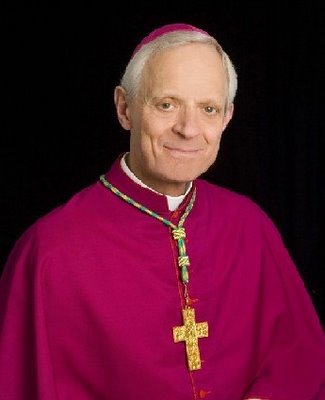
0508-db07e6a126cf Today, in conjunction with the response of the Archdiocese in opposition to Same-Sex Marriage Archbishop Wuerl also issued a Pastoral Message for Homosexual Catholics in the Archdiocese of Washington. You can read the whole message by clicking on the title highlighted in color in the previous sentence. Here are a few excerpts:

Of the many teachings of the Catholic Church, perhaps some of the most challenging for Catholics in today’s culture involve human sexuality, including homosexuality. Modern cultural pressures and assumptions are often at odds with the teachings of Christ handed down through the centuries. For some parishioners the issues are deeply personal. Living out the Church’s teaching can be a difficult challenge. Yet, no one needs to do this separated from the grace and love of the Church.

It is important to affirm that the Catholic Church is and always will be welcoming of any person who seeks who seeks a deeper relationship with Jesus Christ….The Catechism of the Catholic Church  upholds the human dignity of every person and condemns any form of unjust discrimination (2358).

After setting forth the Scriptural foundations of Catholic teaching and our opposition to same-sex marriage the Archbishop goes on to express his pastoral concern and prayers.

Street Cred on Healthcare

So many voices, so much disagreement, so many dollar signs, it’s pretty hard to stay engaged in the healthcare debate, yet we know it is really important—that it will make a difference in the lives of the people we love. You may be trying to figure out what questions are most important and what answers can be trusted.  I suggest you turn to the Catholic Church for answers—we are one of the largest health care providers in the United States

Street Cred

 We are a credible voice and a significant player in the debate. Where does our experience come from?

–624 Catholic Hospitals

–499 Catholic Long-Term Care Nursing facilities

–164 Home Health Associations

–41 Hospice Organizations

 In our facilities and through our healthcare professionals we have responded to:

–More than 16.9 million emergency room visits

— More than 92.7 million outpatient visits

— 5,542,314 admissions

 As an institution we are involved in all aspects of healthcare. As an employer we pay salaries and providing coverage. As a provider we stretch resources to meet needs. As a servant of the Gospel we respond to all those who come through our doors, always protecting the dignity of human life in all of its stages.

 Stay Informed and get involved – Make a difference!

 It’s important we participate in the debate and let our voice be heard.  It is an example where the voice of the Church has so much to offer the world—to be messengers of good news. To stay engaged in the debate, bookmark http://www.usccb.org.  (the U.S. Catholic Bishops’ website) and http://www.mdcathcon.org/(The Maryland Catholic Conference). Both of these organizations have professional lobbyists who follow the debate, read the fine print of the legislation, and reflect on it in light of the great tradition of Catholic social teaching. They are working hard to ensure that the healthcare reform legislation reflects a truly universal health policy with respect for human life and dignity providing access for all with a special concern for the poor and inclusion of legal immigrants. They advocate for the pursuit of the common good and preserving pluralism which includes freedom of conscience and variety of options restraining costs and applying them equitably across the spectrum of payers

If you think about it, from the time of Christ, it has been the mission of the Church to share in the healing ministry of Jesus, in a spiritual way through the sacraments and in a temporal way through active participation in healthcare, we bring to the table 2,000 years of healing the spirit, mind and body.

You can make a difference.  Click on and get involved.