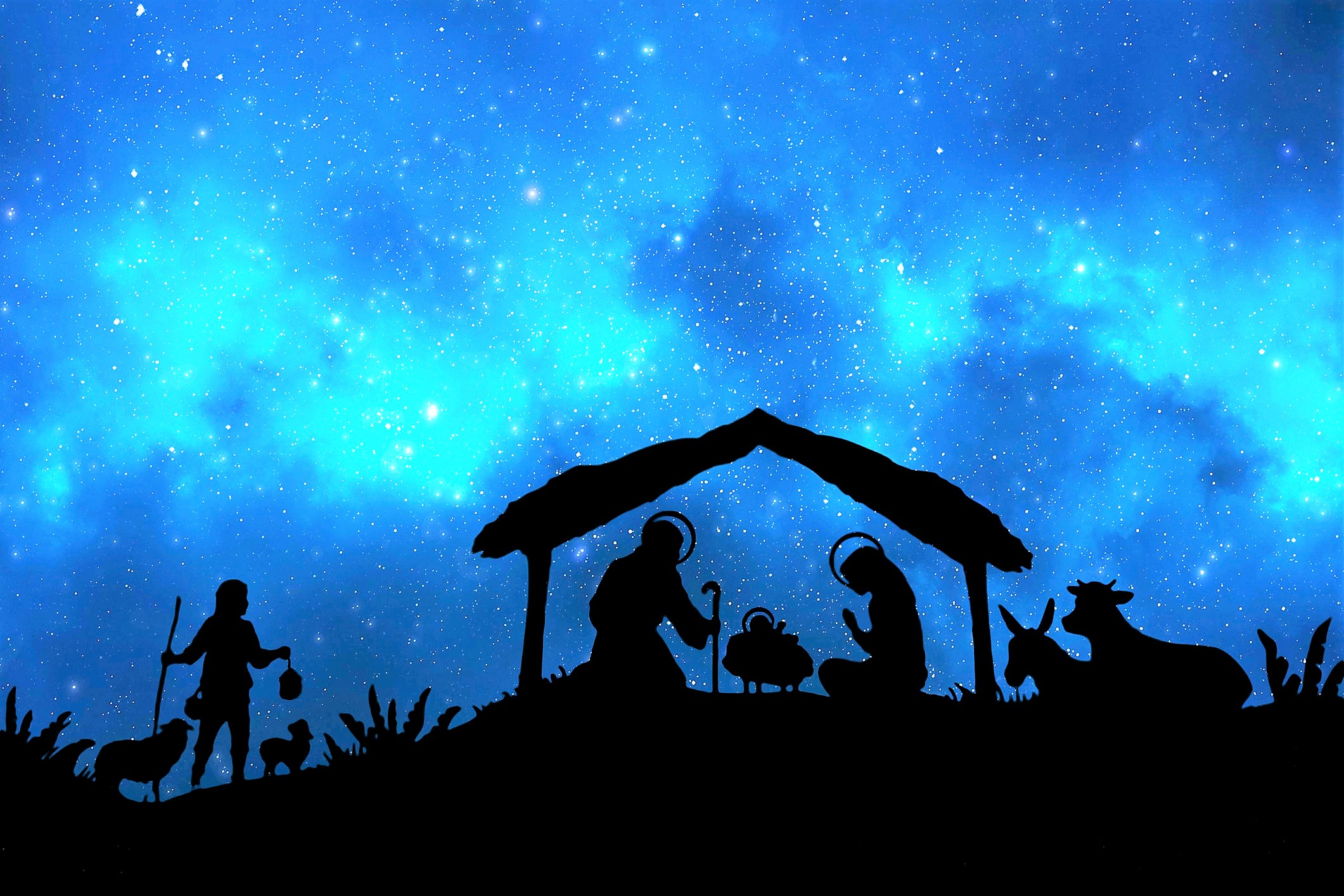
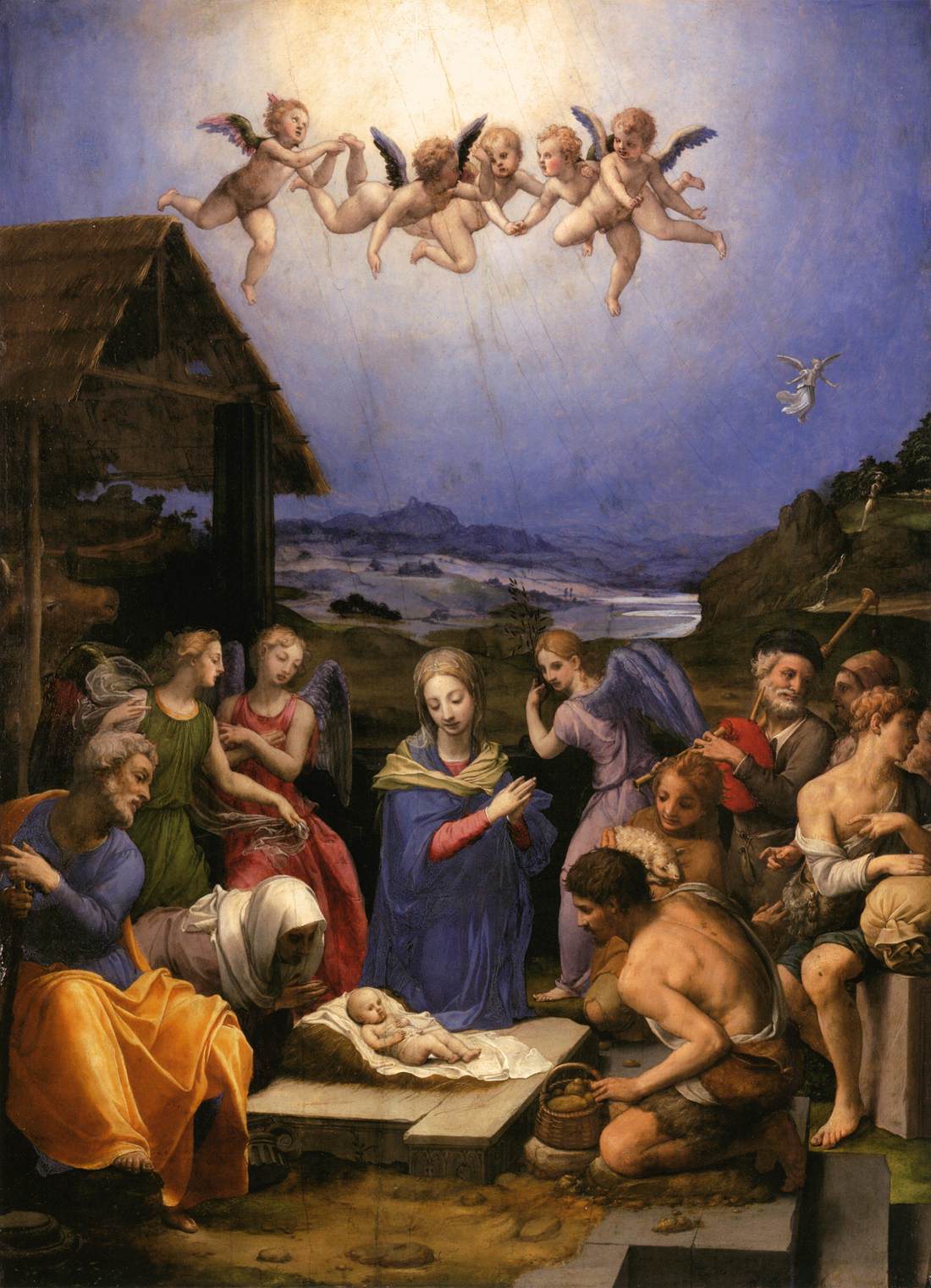
O Holy night! Yes, a silent night! And it came upon a midnight clear! Christmas, it would seem, is a festival of the middle of the night. Jesus is born when it is dark, dark midnight. We are sure of it. And why shouldn’t we be?
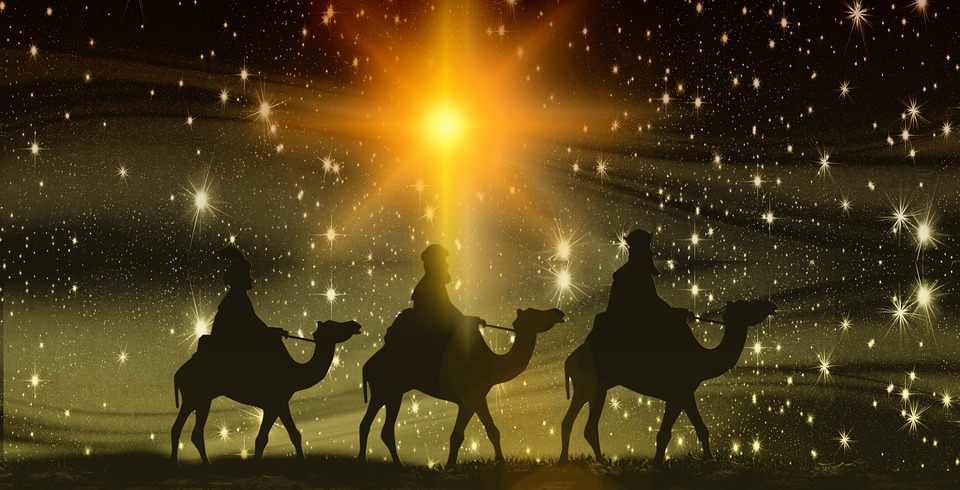
Even though we are not told the exact hour of His birth, we are sure it must have been at night. Scripture does say that the Shepherds who heard the glad tidings were keeping watch over their flock “by night” (cf Luke 2:9). Further, the Magi sought Him by the light of a star, and stars are seen at night, deep midnight. None of this is evidence that Jesus was born at 12:00 midnight but it sets our clocks for night, deep midnight.
Add to this the fact that Christmas is celebrated at the winter solstice, the very darkest time of the year in the northern hemisphere. More specifically, Christmas comes when light is just beginning its subtle return. The darkest and shortest days of the year occur around December 21st and 22nd. But by December 23rd and 24th we notice a definite but subtle trend: the days are getting longer; the light is returning! It’s time to celebrate the return of the light. It’s going to be all right!
How fitting it is to celebrate the birth of Jesus, the true Light of the World, in deep and dark December. Jesus our light kindles a fire that never dies away. Indeed, in the dark hours of December, we notice a trend: the light is returning; the darkness is abating; the days are beginning to grow longer. It is subtle right now, but it will grow. And with the return of light, we celebrate our True Light: Jesus.
But light is best appreciated in contrast. We appreciate most the glory of light when the darkness assails us. There’s just something about Christmas Eve. As the time approaches through December and the darkness grows, we light lights. Yes, all through December we light Advent candles, more candles as it grows darker. Even the secular among us string up lights, in malls, on their houses, in their workplace. It’s as if to say, the darkness cannot win; the light conquers!
Lights show their true glory when contrasted with darkness. Who sees the stars in the middle of the day? Who appreciates the full beauty of light until he has experienced darkness? Yes, Christmas is a feast of the light. We confront the darkness of December and declare to it, “Your deepest days are over. The light is returning.” And we of faith say to a world in ever deeper darkness, “Your darkness cannot prevail. It will be overcome and replaced.” For although darkness has its season, it is always conquered by the light.
An atheist recently scoffed at me in the comments of this blog that our day is over; the world has rejected faith. Sorry, dear atheist friend, the light always wins. On December 22nd, the darkness begins to recede and the light begins to return. The light returns subtly at first, but it always does; the darkness cannot last.
Light has a way of simply replacing the darkness. In three months the equinox occurs and in six months the summer solstice, when we have the most light. Then the darkness will once again seek to conquer. But it always loses! The light will return. Jesus is always born at the hour of darkness’ greatest moment. Just when the darkness is celebrating most, its hour is over; the light dawns again.
We celebrate after sundown on December 24th, in accordance with a tradition going back to Jewish times (feasts begin at sundown the night before). Christmas morning is almost an afterthought. Most pastors know that the majority of their people come to Mass the “night before.” In a deep and dark December, a light comes forth. A star shines in the heavens.
We gather together in and on a dark night. We smile. We are moved by the cry of a small infant, by whose voice the heavens were made.
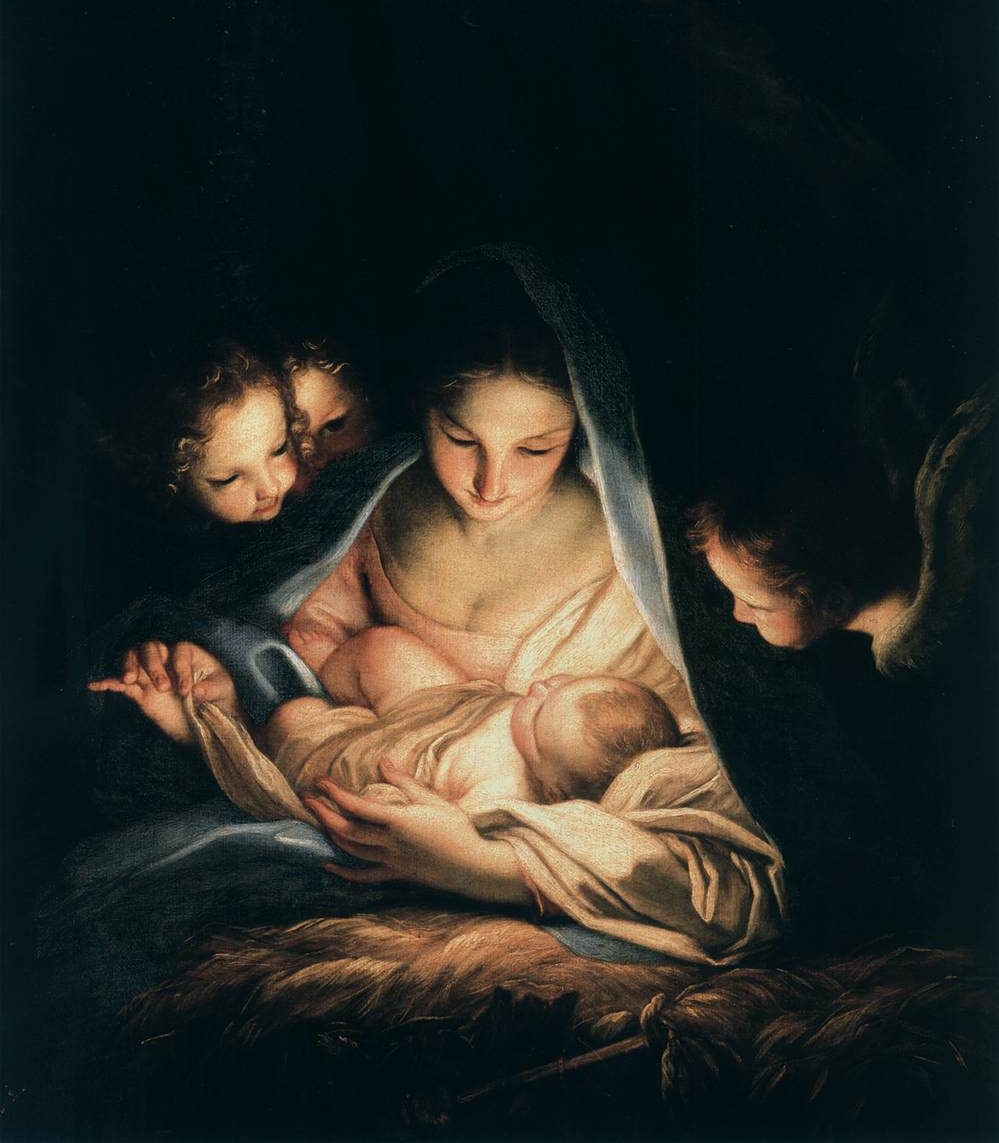
His little cry lights up the night. The darkness must go; the light has come; day is at hand.
We celebrate at night so as to bid farewell to the darkness. It cannot prevail. It is destined to be scattered by a Light far more powerful than it is, a Light it must obey, a Light that overwhelms and replaces it. Farewell to darkness; the Light of the World has come!
Jesus is the Light of the World.
The video below is a celebration of light. As a Christmas gift to myself I took the afternoon of December 22nd (the darkest day of the year) off so that I could photograph the triumph of light over darkness. I went to a mausoleum, a place where thousands are buried in the walls. But also in those walls are windows, glorious windows where light breaks through and Christ shines forth. Some of the most beautiful stained glass in the city of Washington, D.C. resides in that place of death and darkness. The light breaks through and it speaks of Christ.
This video shows only some of those stained glass windows (I am putting together a video of other windows to be shown later). The text of the music in this video is from Taizé, and it says, Christe lux mundi, qui sequitur te, habebit lumen vitae, lumen vitae (Christ, Light of the World, who follows you has the light of life, the light of life).
As you view this video depicting the Life of Christ, ponder that although stained glass begins as opaque sand, when subjected to and purified by fire it radiates the glory of the light which can now shine through it. So it is for us. Born in darkness but purified by Christ and the fire of the Spirit, we begin to radiate His many splendored Light shining through us to a dark world.
Many are shocked to walk into daily Mass on December 26 and instead of hearing more of the “Baby Jesus” we are confronted with Martyrdom, “The Feast of Stephen” is ancient on the Church’s calendar. More ancient than the Christmas cycle and hence it was not removed to another time.
Bu the martyrdom does not stop there. We are in the midst of the Christmas Octave, an Octave filled with blood as we shall see.
What is an Octave? But first, there may be some of you who wonder what is meant by and “Octave.” An Octave is a period of eight days wherein a feast of the Church is celebrated for that whole period as though it were all the same day. In the modern liturgical calendar we only observe two octaves explicitly: Christmas and Easter.
During the week following Christmas many of the prayers speak of each day as though it were still Christmas. For example some of the prayers and antiphons say, “Today is born our savior, Christ the Lord.” A purist might say, but it is NOT today that he is born, it was back on Saturday the 25th that he was born. But, in certain sense this IS still Christmas day. Christmas Day is one long day of eight days from Saturday the 25th to Saturday January 1st.
It is the same with Easter where for one whole week we announce: “This is the day the Lord has made…”
Why eight days? Some say it is a reference to the eighth day on which Christ rose. I know, you thought it was the third day. But it was also the eighth day! For God made the world in seven days, resting on the seventh (Sabbath or Saturday). But Christ rose on the 8th day (Sunday). So resurrection morning is both the third day AND the eighth day! Others say the practice of the octave goes to Jewish times where some of the feasts (e.g. Dedication and Tabernacles (Booths)) were celebrated over 8 days.
In the old calendar there were more Octaves such as: Epiphany, Pentecost, All Saints, Immaculate Conception, Ascension Sacred Heart and others). Not all of these were privileged Octaves in which no other feasts could be celebrated. Easter and Pentecost were really the only two that blocked out all other feasts entirely. Others, like the Christmas Octave, allowed the celebration of other feasts but still referred to the feast of the octave as well.
So here we are in the Christmas Octave and, in a strong sense it is thus still Christmas Day. TODAY is born our savior Christ the Lord. This feast is so important that we stretch its observance a completed week and into the eighth day.
Bloody Octave – But one of the striking things about the Christmas octave is its bloodiness. It is one of the bloodiest weeks of the Church’s years. Thus, on December 26th, when we have hardly digested our Christmas dinner, we celebrate the Feast of St. Stephen, the Martyr who was stoned to death. On December 28th we celebrate the Feast of the Holy Innocents, the young and infant boys who were murdered by Herod seeking to kill Christ. On December 29th we celebrate the feast of St. Thomas Becket who was murdered in Canterbury Cathedral. Even St. (King) Wenceslaus of whom we happily sing “on the Feast of Stephen” was brutally killed by his brother.
Why all this blood, why this martyrdom? It is almost as though the red poinsettias that we put out in festive Christmas spirit look back to us in testimony. For it is clear that Jesus came to this world, ultimately to die. His crib (likely of wood) in which he was laid, arms and feet bound by swaddling clothes, points inevitably to the wood of his cross where, once again, his arms and legs were bound by nails and, after dying, he was wrapped tightly in a linen shroud.
The blood of the Christmas octave also reminds us that many of us too will share in Christ’s lot. This world hated Christ and had “no room for him.” Neither does this world have room for true Christians and the blood of martyrs stretches down through the centuries in testimony to the world’s hatred for authentic disciples of Christ and the truth they propose.
From this bloody octave the words of Christ ring out: If you belonged to the world, it would love you as its own. As it is, you do not belong to the world, but I have chosen you out of the world. That is why the world hates you (Jn 15:19). The martyrs of the Christmas Octave say, Amen.
And even St. John the Apostle, whose feast also occurs in the Octave (Dec 27), also says Amen. For, though he did not suffer martyrdom he proclaimed his Amen also from his prison cell on Patmos: I, John, your brother and companion in the suffering and kingdom and patient endurance that are ours in Jesus, was on the island of Patmos because of the word of God and the testimony of Jesus (Rev 1:9).
Victory – But all these martyrs and sufferers (St. Stephen, St. John, the Holy Innocents, St. Thomas Becket, and St Wenceslaus) proclaim too the victory that is theirs with Jesus Christ who also said, In the world ye shall have tribulation: but be of good cheer; I have overcome the world (Jn 16:33). And again, Do not be afraid of what you are about to suffer. I tell you, the devil will put some of you in prison to test you, and you will suffer persecution for ten days. Be faithful, even to the point of death, and I will give you life as your victor’s crown. (Rev 2:10) Yes, Lord, the Spirit and the Bride say, Amen.
Did I wish you a merry Christmas?
The fourth verse of this carol says,
Myrrh is mine; its bitter perfume Breathes a life of gathering gloom;— Sorrowing, sighing, Bleeding, dying, Sealed in the stone-cold tomb.
The Christmas Gospel from Luke provides us with many teachings. One thing that surely stands out, however, is the permeating theme of humility. Throughout the account, God confounds our prideful expectations and insists on being found in the lowest of places.
The newborn Christ is not found where we expect Him to be nor does His birth conform to any script we would design. Right from the start, He gives us many lessons in humility and begins His saving work of healing our wound of pride. Let’s look at these lessons in four stages.
I. The Procession to the Place – In those days, a decree went out from Caesar Augustus that the whole world should be enrolled. This was the first enrollment, when Quirinius was governor of Syria. So, all went to be enrolled, each to his own town. And Joseph too went up from Galilee from the town of Nazareth to Judea, to the city of David that is called Bethlehem, because he was of the house and family of David, to be enrolled with Mary, his betrothed, who was with child.
There is a sort of “cast of thousands” that leads Mary, Joseph, and Jesus to be in Bethlehem. The distant Caesar Augustus sends out a decree affecting millions. He wants a census taken in order to update his tax rolls. He also likely wants to measure his power and may have military deployments and a draft in mind. Soon enough, dozens of governors deploy thousands of troops to enforce the edict. Even in the small town of Nazareth, a town of barely 300 people, Roman troops enforce the decree. Mary is nine months pregnant, but there will be no exceptions.
For many of us, this offends our sense of what should justly happen. Jesus, who is Lord and Savior, should be born in comfort; Mary should be surrounded by loving family and in the care of midwives.
The first lesson in humility is our surprise and even indignation at the events surrounding Jesus’ birth.
God, however, is neither surprised nor stymied. All this fits into His plan to get Jesus, Mary, Joseph, and all of us to the place of blessing. Whatever evil the Emperor intends, God intends it for good (see Genesis 50:20). The Messiah, it was prophesied, would be called a Nazarene (Matt 2:23), be born in Bethlehem (Micah 5:2), and die in Jerusalem (Lk 13:33). God is setting things in place for the blessing.
And here is the second lesson in humility: Your life is not just about you. You and I are part of something far larger. Just as millions were set on the move at the birth of Christ, so you and I are part of the larger plan and providence of God involving billions of people now living, countless others who have lived, and still others who will live in the future. God sees the bigger picture, yet not one detail is lost to Him. Humility! God has more in mind than our comfort and personal agendas. We are part of something bigger as well.
The third lesson in humility is that God must get us to certain places in order to bless us. And they may be strange places, ones we would not choose. Getting us there may involve hardship for us: disappointment that our own plans have not come through, and the painful loss of places, things, and people we love. Yes, God has blessings waiting for us in strange places, involving circumstances we never imagined.
For Joseph and Mary, the procession to the place called Bethlehem involved hardship. But this procession is necessary for them and for us. Bethlehem was where the blessing would be found—there and no other place. And the same is true for us in so many ways.
God has been good to me and blessed me in ways and in places I never expected or planned. God must get us to certain places in order to bless us. I am and have been blessed; I am a witness.
Don’t miss the procession to the place that opens this Gospel. It is a paradigm for our lives. Where is your Bethlehem? Where does God need to get you in order to unlock your blessings? Are you humble and teachable enough to go there?
Remain humble and don’t quickly despair when the surprises and vicissitudes of life emerge. God may be up to something. He can make a way out of no way and write straight with crooked lines.
II. The Paradox of His Poverty – While they were there, the time came for her to have her child, and she gave birth to her firstborn son. She wrapped him in swaddling clothes and laid him in a manger, because there was no room for them in the inn.
Don’t miss the poverty that is manifest here—it is a chosen poverty. St. John Chrysostom said,
Surely if [the Lord] had so willed it, He might have come moving the heavens, making the earth to shake, and shooting forth His thunderbolts; but such was not the way of His going forth; His desire was not to destroy, but to save… And, to trample upon human pride from its very birth, therefore He is not only man, but a poor man, and has chosen a poor mother, who had not even a cradle where she might lay her new born Child; as it follows, and she laid him in the manger (Quoted in the Catena Aurea – Lection 2 ad Luc 2:6).
The paradox of poverty is the fourth lesson in humility! We who are worldly think that poverty is the worst thing, but it is not—pride is the worst thing. And thus the Lord teaches us from the start that greatness and blessings are not found merely in what is high, mighty, pleasant, or pleasing. Blessings are often found in unusual ways and under unexpected circumstances.
The greatest blessing ever bestowed is not found in a palace, or in Bloomindales, or on beachfront property; He is not even found in a cheap Bethlehem inn. He is found in a lowly manger underneath an inn. It is poor and smelly and He rests in a feeding trough. But there He is, in the least expected place, the lowest imaginable circumstances. In this way He confounds our pride and our values.
Are we humble enough to admit this and to stop being so resentful and crestfallen when things don’t measure up exactly to our standards?
He chooses this poverty. Whatever its unpleasant realities, poverty brings a sort of freedom if it is embraced. The poor have less to lose and thus the world has less of a hold on them. What does a poor man have to lose by leaving everything and following Jesus? Wealth has many spiritual risks. It is hard for the rich to inherit the Kingdom of Heaven. Wealth is too easily distracting and enslaving. And even knowing all this, we still want it. In choosing poverty, Jesus confounds our pride, greed, lust, and gluttony.
The Lord does not just confound us; He also chooses this to bless us. St. Paul said,
For you know the grace of our Lord Jesus Christ, that though he was rich, yet for your sake he became poor, so that by his poverty you might become rich (2 Cor 8:9).
He also said,
Christ Jesus, though he was in the form of God, did not count equality with God a thing to be clung to, but emptied himself, taking the form of a servant, being born in the likeness of men. And being found in human form he humbled himself and became obedient unto death, even death on a cross (Phil 2:5).
Bede, the 7th century Church Father, wrote,
He who sits at His Father’s right hand, finds no room in an inn, that He might prepare for us in His Father’s house many mansions; He is born not in His Father’s house, but [under] an inn and by the way side, because through the mystery of the incarnation He was made the way [for us back to our Father’s House] [Catena, Ibidem].
Thank you, Jesus, for the paradoxical perfection of your poverty. Through it you confound our human ways and bless us more richly than we could ever expect! Thank for this lesson in humility.
III. Proclamation to the People –Now there were shepherds in that region living in the fields and keeping the night watch over their flock. The angel of the Lord appeared to them and the glory of the Lord shone around them, and they were struck with great fear. The angel said to them, “Do not be afraid; for behold, I proclaim to you good news of great joy that will be for all the people. For today in the city of David a savior has been born for you who is Christ and Lord. And this will be a sign for you: you will find an infant wrapped in swaddling clothes and lying in a manger.”
The fifth lesson in humility throws into question our overemphasis on politics and worldly power. This section of the nativity narrative serves to strongly remind us that our salvation is not to be found in the statehouse, the courthouse, or the White House. We are not to put our trust in princes. Our salvation is in Jesus, only in Jesus. Are we humble enough to admit this and stop exalting worldly power?
Note that in this Gospel, lots of “emperor words” are used to describe this newborn infant, Jesus. Yet here He is in a lowly manger!
Emperors had heralds that preceded their arrival and summoned their subjects. The infant Jesus has the angel of the Lord to announce Him. Later, this heralding angel will be joined by a “host” of angels. The Emperor Augustus has his Legions, but Jesus has His myriad angels.
The angel also uses words appropriate for an emperor. He says, “I proclaim to you good news of great joy that will be for all the people.” This is how the declarations of emperors began. The Greek text makes this even clearer: the angel uses the word εὐαγγελίζομαι (evaggelizomai), which means “I evangelize you,” “I announce good or life changing news.” This word for “evangelize” was associated especially with an edict or announcement from the Emperor. But what the emperors questionably claimed for their edicts is really true with Jesus!
The emperors also claimed the titles “savior” and “lord.” The angel calls Jesus Savior (σωτὴρ – Soter) and Lord (κύριος – Kyrios), and He alone deserves these titles.
Here is the irony that we must humbly accept: this true Lord and Savior, this God of Armies with plenary authority, is not in some palace drinking from goblets and being fanned by slaves. He is lying in a lowly feed box, attended to by animals.
It is a divine comedy. One can almost imagine the shepherds wrinkling their noses or scratching their heads as they hear this great announcement of a King, Savior, Lord and Messiah, and then hearing that He is to be found in a stable, lying in a feeding trough. Perhaps one shepherd said to the other, “Did that angel say ‘manger’?” And another replying, “Yup, a feeding trough.”
It’s a bit anticlimactic! But thank the Lord, they humbly accept the procession that they must now make to the place of true blessing. It is an unexpected place to be sure, but that is where He is to be found. He is King and Lord to be sure, but He is humble and comes to serve and to save. He will wash the feet of the worst sinners and die for the love of them.
Humility!
IV. Praise that is Perfect–And suddenly there was a multitude of the heavenly host with the angel, praising God and saying: “Glory to God in the highest and on earth peace to those on whom his favor rests.”
Note the praises of the angels! Who or what could ever match them? They are a multitude. They are perfected in their glory and acclaim God’s praises more gloriously than any human choir could ever hope to do.
Yet even here there is a humility to consider. For the Lord has taken a human nature to Himself, not an angelic one. In the order of creation, angels are far higher and more noble than we are. Their mere appearance overwhelms us and strikes fear in us. Yet to none of these did God ever say, “You are my Son. This day I have begotten you” (See Hebrews 1:5).
God humbly takes up our human nature and bestows on us an astonishing dignity that comes only from Him. It is due to His choice, not our merits. And though the angels can surely praise the Lord in far more glorious way than we, they cannot say, “One of us is God.”
And glorious though the angel’s praise is, there is a perfect praise that only we can give to God. It was beautifully expressed by the poet Christina Rossetti:
Angels and Archangels may have gathered there. Cherubim and Seraphim thronged the air. But only his mother in her maiden bliss could worship the beloved with a kiss.
And thus, our final lesson in humility is to accept that it is our lowliness which the Lord embraced. We have no glory to give that is even close to what the Lord deserves, but a simple kiss will do, a simple act of love. It is our lowly and sinful hearts that the Lord seeks, so as to heal and exalt them. Our palaces, honors, and titles are of no interest or value to Him. It is our humility that pleases Him most, and He desires to meet us there.
Jesus said many paradoxical things. For example: Whoever finds his life will lose it, and whoever loses his life for my sake will find it (Mat 10:39). For whoever wants to save his life will lose it, but whoever loses his life for me will find it (Mat 16:25).
The basic rule of life the Lord announces is that when we want something too much, or very insistently on our own terms, we can never possess it. Rather, it possesses us. Only when we let go of our obsessions are we free to enjoy the true gift the Lord is offering. Indeed, many of our insistent and worldly expectations become the cause of our resentments. Some of God’s greatest gifts come to us in unexpected ways.
C.S. Lewis wrote,
Nothing in you that has not died will ever be raised from the dead …. Even in social life you will never make a good impression on other people until you stop thinking about what sort of impression you are making …. Give up yourself and you will find your real self … [but] [y]our real self will not come as long as you are looking for it. It will come when you are looking for Christ (Mere Christianity Book 4, Ch. 11).
At Christmas we often think of gifts, what to give and what we will receive; but this misses the truest point of Christmas, which is to look upon our Savior, Messiah, and Lord. He became flesh to show us our truer self. In thinking of Him and looking to Him, we find our truest self. The truer self we find, though, may be very different from some of our grander, worldly notions. Indeed, those self-delusions must be lost, pruned away; they must die for our true self to be found.
We have to stoop low to find Christ; we must seek Him humbly, and look for Him in humble places. He is found in Bethlehem, a tiny village in the shadow of the great Jerusalem. Even there He is in no comfortable dwelling, but out in back, down at the lowest end, in a cave behind a house, a place where animals are kept. Having descended into that cave, we must stoop still further, peering down close to the ground into a manger, a feeding trough. There we see Him.
Yes, there He is, devoid of earthly glories but with heavenly light shining through Him! Seeing Him, we see ourselves. Having descended, dying to earthly notions of life, having “lost” our life, we find it; and we see our own truest glory on the beautiful face of Christ.
Scripture says,For God, who said, “Let light shine out of darkness,” made His light shine in our hearts to give us the light of the knowledge of the glory of God in the face of Jesus Christ. (2 Cor 4:6) And we, who with unveiled faces reflect the glory of the Lord, are being transformed into His image with intensifying glory, which comes from the Lord, who is the Spirit (2 Cor 3:18).
Here is the perfect gift, that we should decrease and He should increase; that dying to our own glories and shedding the masks we like to wear we can now reflect His glories.
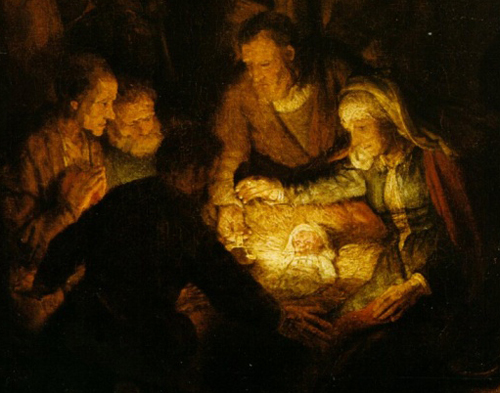
Perhaps a picture will help. For this, we turn to the master of light and darkness in painting: Rembrandt. In his “Adoration of the Shepherds” (above right) see how Christ is the true source of light. His light is reflected on the faces of those around Him. This is our greatest glory and our perfect gift, to reflect the glory of the Lord with faces unveiled. To reflect this glory, the shepherds had to journey through the darkness, stoop down low, and die to their expectations of where a King should be born. In the darkness they see Him and they reflect His glory with unveiled faces. The greatest gift, the perfect gift of Christmas, is pictured here. They reflect not their glories, but His.
May the perfect gift of Christmas be yours, be mine, be ours.
As the end of Advent approaches, the Office of Readings features some final admonitions from the Book of the Prophet Isaiah. On the one hand they console; on the other, they challenge us to remain firm.
Isaiah addressed a people in exile who still awaited the first coming of the Lord. Today, these texts speak to us in difficult times when, exiled from Heaven, we await His magnificent Second Coming.
Let’s look at these admonitions from the Lord (Isaiah 46:3-13), which were addressed to three different groups in ancient Israel. However, let’s apply them to three groups in our own times: the faithful remnant, the foolish rebels, and the fainthearted at risk.
To the Faithful Remnant – Hear me, O house of Jacob, all who remain of the house of Israel, my burden since your birth, whom I have carried from your infancy. Even to your old age I am the same, even when your hair is gray I will bear you; It is I who have done this, I who will continue, and I who will carry you to safety.
This is directed to the devoted, to the remnant, to those who remain after the cultural revolution in our times, to those sometimes discouraged and sorrowful over the infidelity of loved ones and of the world around them. To these (often the elderly among us who remember a more faithful even if imperfect time) the Lord first speaks.
In effect, He says, Blessed are those who mourn, for they shall be comforted. Who are the mournful? They are those who see the awful state of God’s people: not glorifying the Lord in their lives, not knowing why they were made, spending themselves on what neither matters nor satisfies. Yes, those who mourn shall be strengthened, and, as their sorrow has motivated them to pray and work for the kingdom, they shall be borne to safety.
Such as these, the faithful remnant, should never forget that God has carried them from the beginning, even in the strength of their prime. Now, reduced by age, they are still carried by the Lord. He has never forgotten them and will carry them to safety; their faith in difficult times will be rewarded.
To The Foolish Rebels – Remember this and bear it well in mind, you rebels; remember the former things, those long ago: I am God, there is no other; I am God, there is none like me. Whom would you compare me with, as an equal, or match me against, as though we were alike? There are those who pour out gold from a purse and weigh out silver on the scales; Then they hire a goldsmith to make it into a god before which they fall down in worship. They lift it to their shoulders to carry; when they set it in place again, it stays, and does not move from the spot. Although they cry out to it, it cannot answer; it delivers no one from distress.
The word “rebel” is from the Latinre (again) + bellum (war). In this context it refers to those who are forever at war with God and His plan for their lives. They foolishly forget His saving deeds. They imagine vain things: that there are other gods or entities that could save them. Even more foolishly, they craft other “gods” that they have to lift upon their shoulders to carry.
Many in our day act in the same way: always at war with God, His Church, and His plan. As G.K. Chesterton once noted, when people stop believing in God, it is not that they will believe in nothing but that they will believe in anything. Chesterton also wrote that when we break God’s big laws, we don’t get liberty; we get small laws. We transfer our trust away from God to false, crafted gods like government, or science, or the market. We hope that they will carry us, but we end up carrying the weight of these gods on our own shoulders. We carry this weight in the form of taxes, debt, and anxiety about everything in our health or environment (demanded by the increasingly politicized scientific and medical communities).
Science, the market, and government are not intrinsically evil, but they are not gods, either. They cannot deliver us from ourselves; only God can do that. To the many who rebelliously and foolishly persist with their “non-gods,” He says, “I am God; there is no other.”
To the Fainthearted at Risk – Listen to me, you fainthearted, you who seem far from the victory of justice: I am bringing on my justice, it is not far off, my salvation shall not tarry; I will put salvation within Zion, and give to Israel my glory. At the beginning I foretell the outcome; in advance, things not yet done. I say that my plan shall stand, I accomplish my every purpose. I call from the east a bird of prey, from a distant land, one to carry out my plan. Yes, I have spoken, I will accomplish it; I have planned it, and I will do it.
Among the faithful there are some who are at risk, who are nearly ready to give up. God encourages them, but also warns that His plan will stand whether or not they endure. Thus there is an implicit warning from Jesus here (and an explicit warning elsewhere) that we must persevere. Jesus says that because lawlessness is increased, most people’s love will grow cold. But the one who endures to the end, he will be saved (Matt 24:12-13).
St. Augustine wrote,[God has] devised a plan, a great and wonderful plan … All this had therefore to be prophesied, foretold, and impressed on us as an event in the future, in order that we might wait for it in faith, and not find it as a sudden and dreadful reality (From a discourse on the psalms by Saint Augustine, bishop (In ps. 109, 1-3: CCL 40, 1601-1603)).
God’s plan will stand whether or not we do. We must stand as well, even when we want to faint or fall back. Our love must not grow cold nor our strength fail. God has triumphed and Satan has lost. We must choose with whom we will stand.
The evidence of the present age does not seem to show this, but as Scripture reminds us,
Therefore, we do not lose heart … So we fix our eyes not on what is seen, but on what is unseen, since what is seen is temporary, but what is unseen is eternal (2 Cor 4:16-17).
For all that is in the world, the lust of the flesh and the lust of the eyes and the boastful pride of life, is not from the Father, but is from the world. The world is passing away, and also its lusts; but the one who does the will of God lives forever (1 Jn 2:16-17).
Here, then, are some final instructions from the Lord this Advent, instructions for us who wait for Him: be faithful; the plan will come to pass. Do not be a foolish rebel, nor one of the at-risk fainthearted. Rather, be part of the faithful remnant. St. Paul says, Isaiah cries out concerning Israel: “Though the number of the Israelites be like the sand by the sea, only the remnant will be saved” (Romans 9:27).
The song performed in the clip below is entitled “Lord Help Me to Hold Out.”
Today’s Gospel gives us some background for the Christmas feast that we need to take to heart. It speaks to us of a crisis at Christmas.
We tend to sentimentalize the Christmas story as we think of the baby Jesus in the manger. It is not absolutely wrong to be sentimental, but we must also be prayerfully sober about how difficult that first Christmas was, and about the heroic virtue required of Mary and Joseph in order to cooperate with God in making it come to pass.
Let’s look at this Gospel in three stages: distress, direction, and decision.
DISTRESS –This is how the birth of Jesus Christ came about. When his mother Mary was betrothed to Joseph, but before they lived together, she was found with child through the Holy Spirit. Joseph her husband, since he was a righteous man, yet unwilling to expose her to shame, decided to divorce her quietly.
The marriage is off. When we read that Mary was found to be with child before she and Joseph were together, we need to understand how devastating and dangerous this situation was. Pregnancy in this circumstance brought forth a real crisis for both families involved in Joseph and Mary’s marriage plans. Quite simply, it put all plans for the continuation of the marriage permanently off.
Why is this? We read that Joseph was a “righteous man.” To our ears this like saying that he was a “good man.” Most of the Fathers of the Church interpreted “righteous” here to refer to Joseph’s gracious character and virtue where he steps back from a sacred situation. And we surely suppose all this of him. More recent biblical scholarship includes the idea that it meant Joseph was also an “observer of the Law.” He would thus do what the Law prescribed. This explains his decision to divorce Mary because of her apparent lack of virginity prior to their coming together in the marriage. Here is an example of the Mosaic Law in reference to such a matter:
But if the tokens of virginity were not found in the young woman, then they shall bring out the young woman to the door of her father’s house, and the men of her city shall stone her to death with stones, because she has wrought folly in Israel by playing the harlot in her father’s house; so you shall purge the evil from the midst of you (Deut 22:20-21).
While this seems quite extreme to us, we can also recognize how far we have gone in the other direction in modern times, making light of promiscuity. I doubt that anyone would argue that we should stone such a woman today, and rightly so, but this was the landscape in Joseph’s time.
What about stoning? It would seem that Jews of the first century had varying interpretations about whether stoning was required or whether it was simply permitted (cf John 8). As a virtuous and patient man, Joseph looks for and senses some freedom in not “exposing” Mary to the full effects of the Law (stoning). But it does not seem he can find a way that he can take her into his home. Thus, as a “righteous man” (i.e., follower of the Law) he decides that divorce is required even if stoning is not.
This leads us to two important reflections, one about Mary and one about Joseph.
Mary – We can see into what a difficult and dangerous position her yes (her fiat) to the angel placed her. She risked her very life by being found with child outside the normal marital act with her husband. We know that it is by the Holy Spirit she conceives, but her family and Joseph and his family do not yet, or at least cannot verify it. And even if Mary explained exactly how she conceived, do you think you would accept such a story? Mary’s fiat placed her in real danger. It is a great testimony to her faith and trust in God that she said yes to His plans.
Joseph – We can also see the kind of pressure he would be under to do what the Law and custom required. There is no mention of Joseph’s feelings at this point, but we can assume that when Mary was found to be with child prior to their being together in marriage, the social pressure on him to be legally freed from Mary were strong, regardless of his feeling or plans.
DIRECTION –Such was his intention [to divorce] when, behold, the angel of the Lord appeared to him in a dream and said, “Joseph, son of David, do not be afraid to take Mary your wife into your home. For it is through the Holy Spirit that this child has been conceived in her. She will bear a son and you are to name him Jesus, because he will save his people from their sins.”
Be not afraid. The principal exhortation of the angel was that Joseph “not be afraid” to take Mary as his wife. This exhortation is powerful because fear was a very big factor. Joseph had much to fear in taking Mary. Some of the Fathers of the Church believed that what the angel meant was that Joseph should not fear God’s wrath, since he would not actually be taking an adulterer or fornicator into his home. Others think that the angel meant that Joseph should not fear taking God’s chosen instrument (Mary) as his wife.
One can also imagine some other fears that needed to be allayed by the angel. For example, Joseph could easily be rejected by his family for taking Mary in. The community could likewise shun him, and as a businessman, Joseph needed a good reputation to be able to ply his trade. All of these threats loom if Joseph “brings evil” into his house rather than purging the (apparent) evil from the midst of his house. But the angel directs him not to fear; this will take courageous faith.
The angel’s explanation is unusual to say the least. What does it mean to conceive by the Holy Spirit? It’s not exactly a common occurrence! Would his family buy such an explanation? What about the others in the small town of Nazareth? Yes, people were more spiritual in those days, but it all seems so unusual!
Further, Joseph hears all this in a dream. We all know what dreams can be like. They can seem so real at the time, but when we are fully awake we wonder if what we experienced was real at all. Joseph has to trust that what he was told is real, and that he should not be afraid because God has given him direction. As is often the case with things spiritual, we have to carefully discern and walk by faith, not by fleshly sight and certitude. Joseph has a decision to make.
DECISION –When Joseph awoke, he did as the angel of the Lord had commanded him and took his wife into his home.
We can see the strong faith of Joseph and the kind of trust he had to put in God. He had been told not to be afraid, to rebuke fear. Manfully, Joseph does this. He makes the decision to obey God whatever the cost. We are given no information about how his family and others in the town reacted. However, the fact that the Holy family later settles back in Nazareth indicates that God did come through on His promise that Joseph need not be afraid.
Heroes of Faith! Recognize the crisis of that first Christmas and the powerful faith of Joseph and Mary. Their reputations were on the line, if not their very lives. They had great sacrifices to make in the wondrous incarnation of our Lord. Quite simply, Mary and Joseph are great heroes of the faith. For neither of them was their “yes” easy. It is often hard to obey God rather than men. Praise God that they made their decision and obeyed.
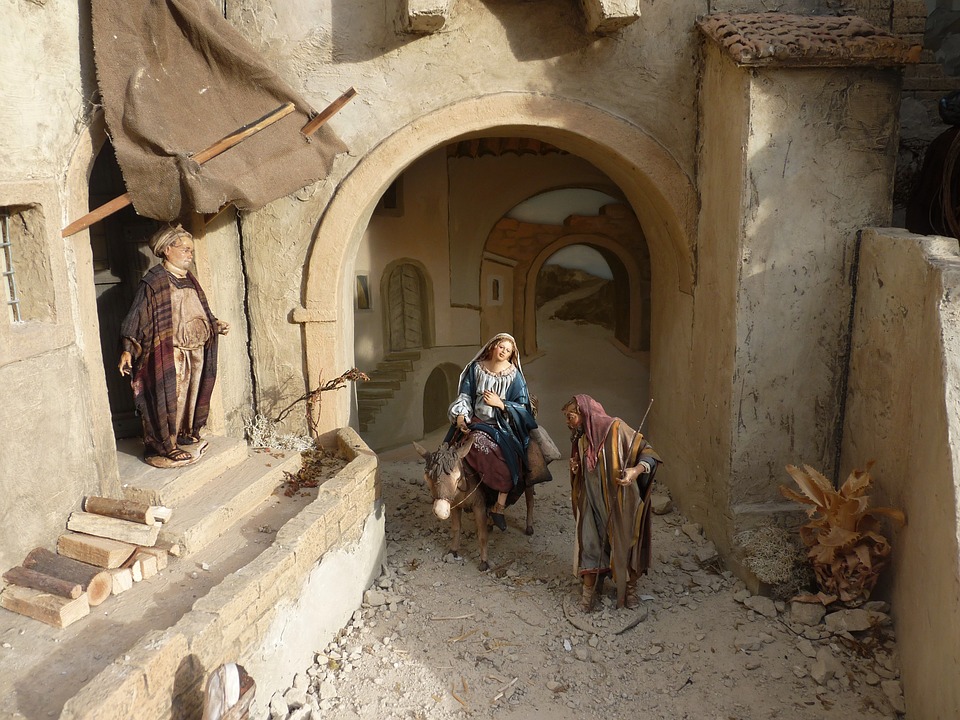
Mary and Joseph’s difficulties were not yet over. There was a badly timed census, which required a journey to Bethlehem in the ninth month of Mary’s pregnancy. Imagine walking 70 miles through mountainous terrain in such a condition! There may or may not have been a donkey, but I doubt that riding a donkey in the ninth month of pregnancy is all that comfortable either. And then there was no room in the inn; Jesus had to be born in a smelly stable. Shortly thereafter they had to flee through the desert to Egypt because Herod sought to kill Jesus.
Jesus is found in a real Christmas, not a “Hallmark” one. The crisis of the first Christmas prefigures the passion. This where Jesus is found: in the crisis of the first Christmas. You may wish for the perfect Christmas, but there is no perfect Christmas. Jesus will find you where you are, in real life, in the imperfect Christmas, where loved ones have passed away and there is grief, where a job has been lost and there is anxiety, where health is poor and there is stress, where families are experiencing strife. That’s where Jesus will be found, in your real Christmas. A Christmas of joy, yes, but also of imperfections, even crises. He is there waiting for you to find Him, in the real Christmas of your life.
This is an old African-American spiritual that reflects on the fact that true discipleship isn’t always easy. Joseph and Mary surely experience and exemplify what these words express.
I tol’ Jesus it would be all right
If He changed my name
Jesus tol’ me I would have to live humble
If He changed mah name
Jesus tol’ me that the world would be ‘gainst me
If He changed mah name
But I tol’ Jesus it would be all right
If He changed mah name
Most of us struggle with one of more of our passions: anger, love, sorrow, desire for food or drink, desire for sexual intimacy, desire for possessions, desire for popularity, and so forth. None of these is inherently wrong; indeed, they are good as they come from the hand of God. They become sinful when focused on the wrong object or when they become excessive. The key is to learn to master them through moderation/self-control and by focusing them on the purpose for which they are intended.
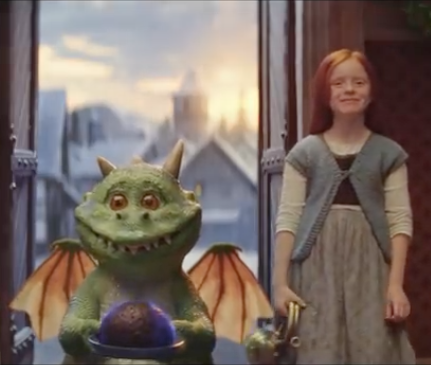
This year’s John Lewis Christmas commercial features a young fire-breathing dragon who, though not fierce, has an ability that he cannot seem to control. He must learn to use it only at the proper time and for good purposes. Allow his ability to breathe fire to represent a passion (e.g., anger, love). Observe the damage caused when this passion is uncontrolled or focused on the wrong things, but also observe the blessing brought when the young dragon learns to master it and use it for a good purpose.
When it comes to our struggle in personal prayer there are some things that we need to unlearn. For too many, private prayer is often a formal, even stuffy affair, that drips of boredom and unnecessary formality and has lots of rules. Perhaps we learned some of our lessons too well.
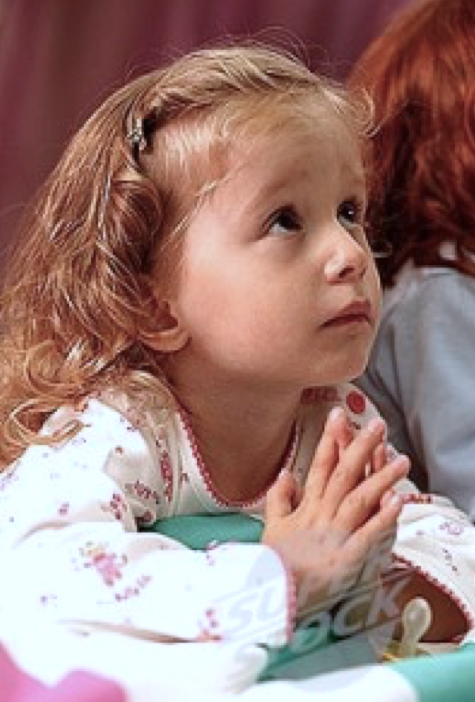
And yet many of the youngest children have not learned these lessons, and they seem to pray with great ease. They are unassuming and will say almost anything to God. It is true that children may have a lot learn about public and liturgical prayer, but when it comes to personal and private prayer they have much to teach us.
Perhaps a parable is in order:
A young girl received her First Holy Communion and, when she returned to her pew, she was noticed by her parents to be in rather deep prayer. After Mass they asked her, “What were you praying about after your First Communion?” “Well,” she said, “I prayed for mommy and daddy, and my (dumb) brother too! And then I sang Jesus a song, and told him a ghost story.”
So informal, so conversational, so unassuming, so real.And yet, it is the way many little children pray.
But over the years it seems we drift away from this honest simplicityand layer on lots of “shoulds and oughts.” Perhaps we over learn, or over apply, some of the lessons we learn about human interactions. I remember as a child that a neighbor woman took up a “goofy hair style.” And so I said to my mother in a voice that might be overheard, “Mom, why does that lady have Goofy hair?” “Shhhh….” she said, “Don’t say that, you might hurt her feelings.” She later admitted to me that the hair WAS goofy, but explained that there are many things we shouldn’t say. We should keep certain things to our self.
This sort of lesson is an important one to learn and has its place. But like any lesson it can be over applied. The fact is that many today remain silent when they should speak out by way of fraternal correction. There are times when we need to be honest and clear. So too in our personal prayer with God.
Early in my priesthood a woman came to me and spoke quite frankly and vividly about her anger and disappointment with God who had made her suffer loss. “Have you talked to God about this?” I asked. “Oh no! Father,” she said with her hands in the air, “I can’t talk to God like that.” And she smiled as these words left her mouth because she knew they were silly. I smiled too and said, “He already knows doesn’t he….So you know what your prayer needs to be about. Now talk to him just like you talked to me.”
The Book of Psalms is the prayerbook that God entrusted to Israel. In it is enshrined every human emotion,thought and experience. There is joy, exultation, praise and serenity. But there is also anger, fear, disappointment and even hatred. It’s all in God’s “official prayer book.” And thus God teaches that the whole range of experience, thought and emotion is the stuff of prayer. It is precisely these things that God wants to engage us on.
Little children seem to know this instinctively.They pray about what is going on, what interests them, and they do so plainly and without a lot of formality. Even the bad stuff is out there.
I have a brief but clear memory of my prayer life as a little child. I must have been about 5 or 6 and there was a Sacred Heart statue on the dresser. I would see that statue and start talking to God in the freest way, and God would speak to me, simply and in a way a child could understand. But it was very real. And then the memory shuts off. It is just a small window into my early childhood, one of the few, and it was filled with God.
Since my late 20s I have striven to find my way back to that simple and profound experience of the presence of God in prayer. So simple, yet so real. Somewhere along the line it faded. Perhaps I had over learned the lesson that there are just things you’re not supposed to say and the conversation became strained and unreal and ultimately assumed the “irrelevance” that many today claim of their prayers.
I have made a lot of progress in journey back by unlearning some of the rules I applied.Hearing little children pray has been a great help. It is the littlest ones really who seem to live in that enchanted world of the presence of God. By 5th grade it is fading fast and by 7th grade the flesh has fully manifested and a kind of spiritual dullness seems to overtake most middle school kids. But wow, can little kids pray. The Book of Psalms says exore infantium…from the mouth of infants and little children you have perfected praise O Lord unto the exasperation of your enemies. (Psalm 8:2).
Do a little unlearning where required in the prayer department.Though we need to teach kids about the liturgical and public prayer which has its necessary rules, they have much to show us in terms of private prayer; a prayer that is personal, unassuming, about real things and spoken with childlike simplicity and trust. Amen I say to you, unless you receive the kingdom of God like a little child you shall not enter it. (Mark 10:15)
A teacher collected these prayers from her young students and insists that all these prayers are real, actually written by children. Enjoy the unassuming and direct, yet respectful approach to God. The teach asked the children to begin all their prayers, “Dear God…”

 O Holy night! Yes, a silent night! And it came upon a midnight clear! Christmas, it would seem, is a festival of the middle of the night. Jesus is born when it is dark, dark midnight. We are sure of it. And why shouldn’t we be?
 His little cry lights up the night. The darkness must go; the light has come; day is at hand.