This past Sunday will go down in my memory as among the most blest and surprising. Here we are in the middle of a plague but God still reigns and the love and hunger of the people of God is alive.
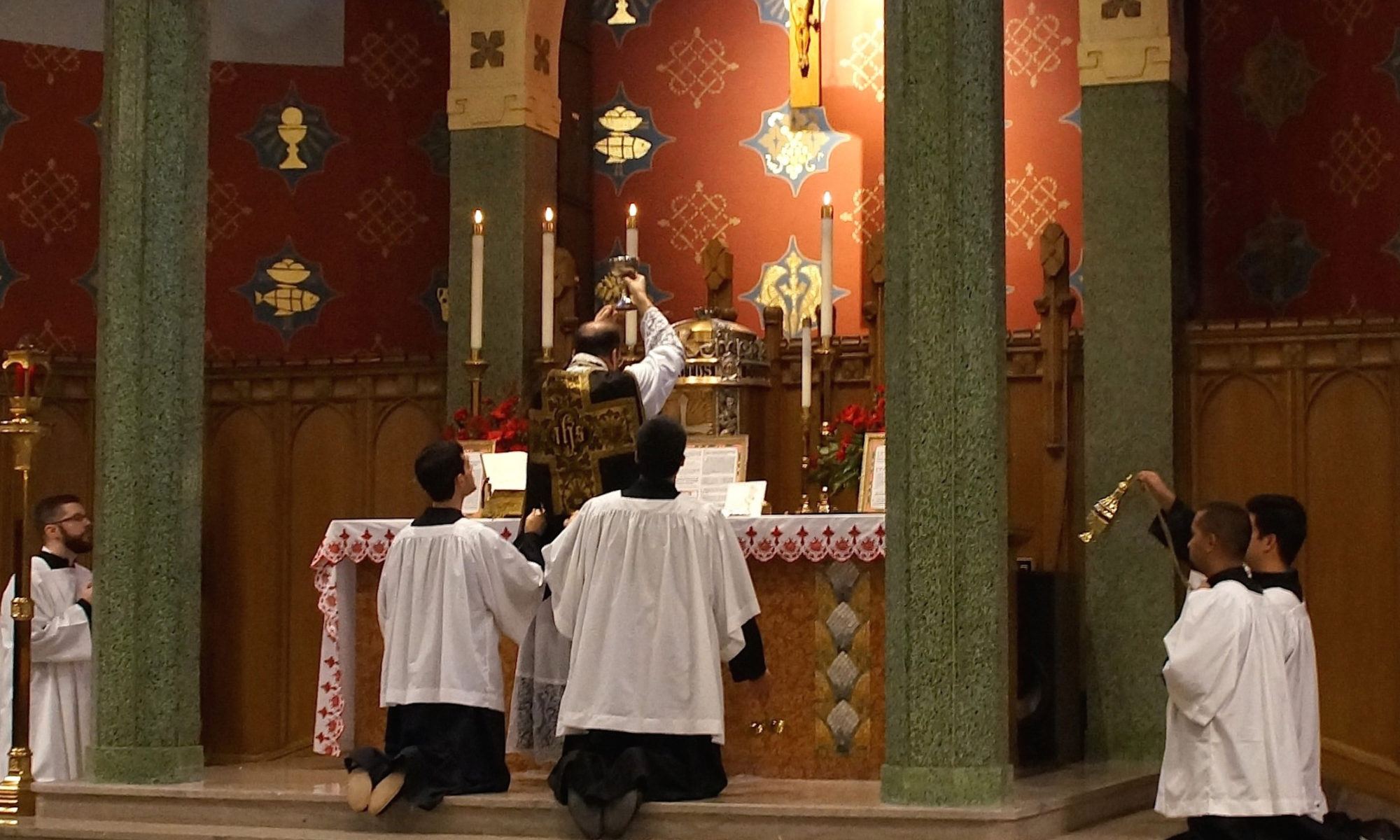
The morning started quietly with confessions in the Church followed by a private Mass celebrated and sung solemnly with the three seminarians who are staying here. They are good men and have been a great support to me in times like these, and all of our liturgies are reverently and meticulously celebrated.
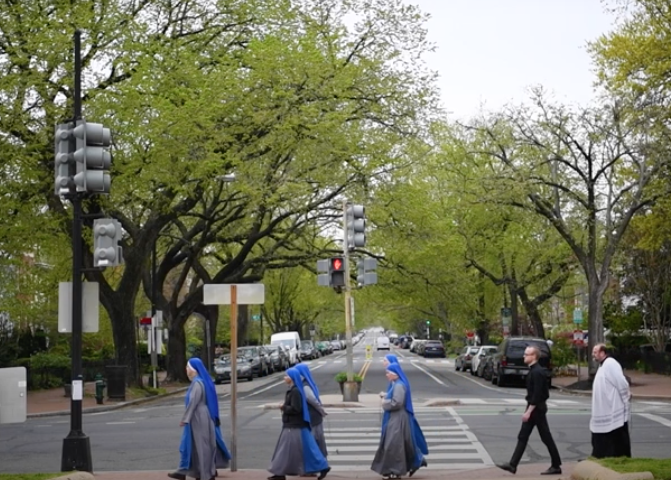
By 11:00 AM the Sisters from our Convent joined us in the courtyard for a small May Procession: six sisters, three seminarians and I processed around Lincoln Park here in the neighborhood carrying our Lady in Procession. We returned to the courtyard next to the church and there crowned the large statue of our Lady with flowers. She looks so beautiful with her crown!
So the day was already rich with blessings. But at 2:00pm there came yet another amazing blessing and great delight. I had been asked to come outside the rectory, having been told that a small group wanted to make a presentation to me. I had no idea what it could be and so I went forth quite curious. The video below shows what unfolded. It was a road-rally of almost 120 cars filled with parishioners honking and waving as they went by!
I cannot begin to tell you how moved I was. God’s people are so good! It is the greatest gift I could imagine. All I could do was smile and wave back. But I think my tears said more than I can ever express in words.
To my parishioners I want to say, I love you, I miss you and am grateful for the gift you gave to me, to the sisters and staff. And the gift you gave was the gift of your very self. I long to be reunited and I don’t think we’ll ever be able to see our Sunday gatherings as ordinary again. The Sunday Mass and Our Lord in the Eucharist have formed us and knitted us together all these years, it is the most precious gift we have. We are members of Christ, but we are also members of one another, and that was so beautifully evident last Sunday.
I thank you again for this precious gift. I will never forget the joy of that moment and, following the Blessed Mother’s example, I will treasure and ponder it in my heart.
I know that some of you have already seen the video on Facebook. But if not, here you go:
Although we are well into the Easter season, my mind harkens back to an event on Good Friday that has often puzzled me. What turned the crowd against Jesus? Recall that just six days earlier, on Palm Sunday, the crowds praised Him, acclaimed Him Son of David, and spoke of Him as a king and messiah. By the morning of Good Friday, though, they were calling for Him to be crucified. What turned them against Him?
My usual explanation was to suppose that the Temple leaders hired a crowd of ruffians and coached them on what to say. In other words, I conjectured that these were not the same people who welcomed Jesus on Palm Sunday but rather a carefully selected group assembled on the plaza in front of the governor’s residence (the Praetorium). While it may be true that the Temple leaders coached them, it still raises the question, how were they able to find so many people willing to turn against a man so widely admired and appreciated by the ordinary faithful?
Fr. Antonin-Gilbert Sertillanges gave a thoughtful and insightful analysis of this event and of the crowd’s motivation in his book What Jesus Saw from the Cross. Let us consider Fr. Sertillanges’ explanation of the mood of the crowd. (Note that he does notdiscount that many in the crowd may well have hailed Jesus as Messiah on Palm Sunday.)
At the beginning of his sacred ministry … Jesus had aroused intense enthusiasm …. [But now] what is the grievance? That the leaders of the Jews should have hated Jesus is perhaps intelligible, but the enmity of the crowd is most mysterious. It is only at the last moment that it becomes manifest, and then only under the stimulus of encouragement from the priests (pp. 157-158).
So, Fr. Sertillanges has pondered the mysterious shift in mood of the crowd. And while he notes that there was some stimulus from the Temple leaders, he does not presume that those leaders had gathered the crowd.
[On that Good Friday] morning the crowd assembled for reasons of its own. They have a right to have a prisoner released to them on this day and they are coming to claim that right. Perhaps they are thinking of Barabbas, perhaps of Jesus, who is just at this moment appearing before the tribunal. … Pilate [however] irritates them twice by referring jocularly to [Jesus] as “their king.” [And thus, Jesus now] arouses their division more than their pity: a messiah in chains before a Roman governor? This seems to be the kernel of the matter in the eyes of these Israelites, who were enthusiastic [on Palm Sunday], a few moments ago were in doubt, and now are suddenly hostile and furious (p. 158).
Now Father moves to the psychological shift that takes place:
Mobs do not like to be disillusioned; and the man who disappoints them may pass in a moment from the rank of a national hero to nothing, and even to less than nothing. … Think what a disillusionment it is for the Jews to see Jesus in this [scourged] condition before Pilate. … This is the Pauline “scandal of the cross” (p. 159).
From disappointment they pass to spite, from spite to anger, and under the ceaseless encouragement of their iniquitous leaders they are easily roused to exasperation. The word crosshas been spoken; it is taken up and repeated. … The taste of blood now begins to intoxicate the mob; a thrill of cruelty runs through them all. To any further questions or objections, the maddened crowd has only one reply, given with increasing violence: “Crucify him! Crucify him!” (pp. 159-160)
[And thus, Jesus departs the Preatorium] carrying all his blessings with him. As he processes along the way … the cruel gaiety of this day has gone to everybody’s head. Every savage instinct latent in the heart of man was awake; souls froth over with rage in this anticipatory delegation of those in every generation who would hate and oppose Christ vented itself in the cry of Satanic joy (p. 161).
Going even deeper into the cause of their disillusionment, Fr. Sertillanges ponders:
And yet, [at a deeper spiritual level] the problem still remains: how did this transformation which we have described become possible?
The mystics tell us that a great moral lapse is always preceded by hidden causes. [Some have noted that] the Jewish masses at that time were prone to mystical curiosity and superstitious practices. The success that Jesus achieved among the masses was due to the [messianic] interests of the moment and the enthusiasm aroused by his miracles, the fascination of his discourse, and to the sardonic satisfaction of hearing their leaders criticized and of seeing them defied …. [This explains their attraction to Jesus] more than a fully convinced adherence to Jesus and his teaching (pp. 161-162).
The people had become dazzled, not convinced, and their carnal expectations were disappointed. Jesus as a political Messiah … Casting off the Roman yoke, the abolition of taxes and the return of the Jews of the dispersal, this is what would have won them over. But the aims and the doctrines of the Savior were not of this kind; and this is the reason why, as soon as they see their selfish hopes disappointed, the crowd turned against him. Their favor becomes hostility (p. 162).
This is quite a rich examination of the puzzling shift in the mood of the crowd.To Father’s reflection I can only add that St. Paul calls the cross a stumbling block to Jews because Deuteronomy (21:23) says, “Cursed is everyone who hangs on a tree.” As they beheld Jesus horribly scourged, a prelude to crucifixion, they judge Him cursed by God and bitterly dismissed the idea that He could be the Messiah they hoped for.
There much to ponder in Fr. A.G. Sertillanges’ What Jesus Saw from the Cross. It is rich in history and spirituality and I highly recommend it for your reading.
It is worthwhile to look back at a text that was read on Saturday (Saturday of the Octave of Easter). It is from Acts and sets forth a picture of courage and holy boldness that is too little evident in many Catholics. Let’s look at the passage, which takes place just after the healing of the paralyzed man at the gate called beautiful. And then let’s reflect on four qualities that the Apostles Peter and John manifest.
Now when [the Sanhedrin] saw the boldness of Peter and John, and perceived that they were uneducated, common men, they were astonished. And they recognized that they had been with Jesus. But seeing the man who was healed standing beside them, they had nothing to say in opposition. But when they had commanded them to leave the council, they conferred with one another, saying, “What shall we do with these men? For that a notable sign has been performed through them is evident to all the inhabitants of Jerusalem, and we cannot deny it. But in order that it may spread no further among the people, let us warn them to speak no more to anyone in this name.” So they called them and charged them not to speak or teach at all in the name of Jesus. But Peter and John answered them, “Whether it is right in the sight of God to listen to you rather than to God, you must judge, for we cannot but speak of what we have seen and heard.” And when they had further threatened them, they let them go, finding no way to punish them, because of the people, for all were praising God for what had happened (Acts 4:13-21).
Their Authority – The text opens with a reference to the “boldness” of Peter and John to the fact that the religious authorities are “astonished.” How could such uneducated and common men speak and act this way?
The Greek word translated here as “boldness” is Παρρησία (parresía or parrhēsía) from pás, “all” + rhēsis, meaning “a proverb or statement quoted with resolve.” In other words, parresía means to speak with confidence and exhibit strong resolve; it means to speak plainly, publicly, or effectively. It is from the root rhēsis that the term rhetoric comes. Rhetoric is the art of effective or persuasive speaking and in its more technical sense usually requires training in logic and poise.
Thus, the boldness described in this passage shows the transformation that that the resurrection and Pentecost have effected. Prior to Pentecost, the Apostles, though often zealous and willing to make sacrifices to follow Jesus, were also slow to understand and often confused. Beginning with Easter Sunday (e.g., Luke 24:32,45) and most likely throughout the forty days before ascending, the Lord instructed and formed the Apostles in the Gospel. It would take Pentecost, however, to fully quicken their minds and confirm their hearts. Jesus had said, I still have much to tell you, but you cannot yet bear to hear it. However, when the Spirit of truth comes, He will guide you into all truth (Jn 16:12-13). Elsewhere, He added, All this I have spoken to you while I am still with you. But the Advocate, the Holy Spirit, whom the Father will send in My name, will teach you all things and will remind you of everything I have told you (John 14:25-26).
Prior to Pentecost, the Apostles and disciples gathered in fear, behind locked doors. Afterwards, though, they go about with the boldness described here. The religious leaders are “astonished” and marvel that such common and unlearned men can have such a sweeping command of their topic, and such serene courage. Peter and John have healed a man who had been lame for forty years, a man they knew was lame and had seen in the temple. The religious leaders cannot explain it; further, the usual threats do not seem to have the desired effect on them.
Yes, Peter and John are bold, confident, and unafraid.They are manifesting the gift that the Lord promised when he said,On account of My name, they will deliver you to the synagogues and prisons, and they will bring you before kings and governors. This will be your opportunity to serve as witnesses. So make up your mind not to worry beforehand how to defend yourselves. For I will give you speech and wisdom that none of your adversaries will be able to resist or contradict (Luke 21:12-15).
Such a change in these men, especially Peter! It is clear that the Lord has gifted them just as He promised. Their boldness is God’s grace. May that grace reach Church leaders today, both clergy and lay. Holy boldness such as this is needed more than ever.
Their Association – The text says that the Sanhedrin recognized that they had been with Jesus. What a magnificent line. While this may have meant they recalled that these men had accompanied Jesus, for the reader the expression has far more depth. Peter and John, by their transformed lives, are manifesting that they have been with Jesus. They are showing forth the fruit of a life-changing, transformative relationship with Jesus Christ. Yes, these men have been with Jesus; it is obvious!
How about you and me? Would someone be able to look at us and conclude that we have been with Jesus? Is this not a description of what should be the normal Christian life? Is your association with Jesus Christ obvious to others? It ought to be.
It is, of course, a sad reality that most Christians are content to hide out or to blend in with the culture. They are undercover Christians, secret-agent saints, and frozen chosen. There’s no real fire to attract attention, no bold proclamations or visible signs of spiritual life. Few would ever conclude that they had been with Jesus.
Where are we on the light spectrum? Is the Light of Christ in us visible (Mat 5:14)? Do we bear the brand marks of Jesus (Gal 6:17)? Do we love our enemies (Mat 5:44)? Do we shine like the stars in the midst of a twisted and depraved generation (Phil 2:15)?
Their Arresting Ability – Although Saints Peter and John have been arrested, they have, in effect, turned the tables and arrested the Sanhedrin. As remarked above, Peter and John do not seem cowed by the usual threats and their arguments are not easily set aside, for they speak with sincerity and authority. Further, the crowds are amazed and the leaders themselves cannot explain how a man, known by them to have been lame for forty years, now walks and even dances!
They don’t really know what to do. They are arrested by the winsome and courageous witness before them.
True holiness can have this effect, at least in certain conditions. St. Teresa of Calcutta was like this. Though many did not share her faith, even enemies of the faith admired her. This was not because she was a people pleaser; in fact, just the opposite. She had a boldness to scold even the most powerful, but a love that could not be denied. Her reflection of the glory of Christ arrested one and all.
This is perhaps one of the rarest gifts of all, yet still one to seek, so that at least some in every age have a holiness and a goodness that is arresting in its purity.
Their Assertiveness – To be appropriately assertive is to get one’s needs met without trampling others. And what is the greatest need of any saint? To proclaim Christ and Him crucified and risen. Thus, when Peter and John are warned to stop proclaiming the name of Jesus, they assert their need and right to continue doing so. However, they do so without disrespecting the leaders before them. They do not shout, “We won’t listen to you!” They do not personally disrespect them at all. Rather, they commend themselves to the conscience of these leaders as a way of respectfully declining a command they cannot follow:
Whether it is right in the sight of God to listen to you rather than to God, you must judge, for we cannot but speak of what we have seen and heard.
In other words, they say, “Brothers, Elders, would you not agree that a man must obey God before obeying any man? Do what you must do. Make your judgments. But we must obey the Lord and speak of Jesus until our last breath.”
They are respectful but clear. They assert themselves and their mission but do not attack and trample the reputations or lawful authority of those in the community or state. They cannot cooperate in an evil directive, but they do not attack or stage an attempted overthrow of power. They stand before their opponents and look them in the eye. They will not flee or yield to fear, but neither will they become like them in arrogance and unrighteous demands.
This is a good model for us who are entering into increasingly difficult days, in which the pressures made upon us by the culture and the government may require that we refuse to cooperate with evil demands. Our goal is not to humiliate and overcome our opponents, but to convert them; and if not them then the culture around us. As St. Paul says, We do not use deception, neither do we distort the word of God. On the contrary, by setting forth the truth plainly we commend ourselves to everyone’s conscience in the sight of God (2 Cor 4:2).
So here is a model for us and a set of challenges. We are to manifest a bold and sincere confidence in the Gospel we proclaim, because we have met Jesus and are being transformed into His likeness. Indeed, we should ask and strive for that rare holiness that is arresting in its purity but also assertively announces Christ Jesus without compromise or hypocrisy.
This homily is in video form below if you prefer to watch it.
The Fourth Sunday of Easter is traditionally called Good Shepherd Sunday, for the readings focus on how our risen Lord Jesus is our shepherd, who leads us to eternal life. Of course the flip side is that we are sheep. We sometimes miss the humor of the Lord calling us sheep. He could have said we are strong and swift as horses, beautiful as gazelles, or brave as lions; instead, He said we are like sheep. I guess I’ve been called worse, but it’s a little humbling and embarrassing, really. Yet sheep are worthwhile animals and they have a certain quality that makes them pretty smart. Are you smarter than a sheep? Well, let’s look and see how we stack up as we look at this Gospel in three stages.
I. The Situation of the Sheep – In this Gospel the Lord is speaking to Pharisees and almost trying to reassure them that He is not like other false shepherds, false messiahs who have led many astray. Jesus says, Amen, amen, I say to you, whoever does not enter a sheepfold through the gate but climbs over elsewhere is a thief and a robber. … All who came before me are thieves and robbers, but the sheep did not listen to them … A thief comes only to steal and slaughter and destroy.
The times in which Jesus lived were ones of social unrest and political turmoil. There were heightened expectations of a coming messiah who would liberate Israel from its Roman and Herodian oppressors. Given the climate of the times, most had emphasized the role of the messiah as a political and economic liberator who would come and wage war and victoriously reestablish the Davidic Monarchy in all its worldly glory.
Josephus, a Jewish historian of the time, may have exaggerated (but only a little) when he spoke of 10,000 insurrections in the years leading up to the Jewish War with the Romans (66 – 70 A.D.). Even as early as Jesus’ lifetime there had been conflicts and bloody uprisings led by numerous false messiahs. It is most likely these whom Jesus refers to as thieves and robbers. It is also likely why Jesus resisted being called Messiah except in very specific circumstances (Matt 16:16,20; Mk 8:30; Mk 14:62).
Jesus also warned that after He ascended, false messiahs would continue to plague the land:
For false Christs and false prophets will appear and perform great signs and miracles to deceive even the elect—if that were possible. See, I have told you ahead of time. “So if anyone tells you, ‘There he is, out in the desert,’ do not go out; or, ‘Here he is, in the inner rooms,’ do not believe it’” (Matt 24:24-26).
Ultimately these false Christs did arise and mislead many; the results were horrible. Josephus wrote that 1.2 million Jewish people lost their lives in the Jewish War with the Romans.
So this is the situation of the sheep. Jesus speaks of the dangers of false saviors, unambiguously denouncing them as thieves and robbers. We, too, are in a world in which erroneous philosophies and false messiahs seek to claim our loyalties and engage us in error.
Perhaps it is the false claims of materialism, which says the right combination of wealth and power can bring meaning and happiness. Sadly, many of the “prosperity Gospel” preachers compound this by their silence about the cross and sin.
Perhaps it is the error of secularism, which exalts the State and the culture, putting their importance above God. Many in the Church and in the Protestant denominations (both clergy and lay) follow false shepherds and call others to do so. They seek to more closely align their faith with politics, instead of their politics with faith; they show more allegiance to the “party” than to the Faith; they do not prophetically address the errors associated with their political point of view; they see their political leaders as shepherds than they do their bishops or priests. Many also follow the false shepherds of culture, looking to them for moral leadership rather than to God, the Scriptures, or the Church. If Miley Cyrus says it, it must be so, but if the Church says something, there are protests and anger. Yes, false messiahs are all around us in the secular culture. Sadly, many Catholics and Christians follow them like sheep to the slaughter.
Perhaps it is the arrogance of modern times, which claims a special enlightenment over previous eras (such as the biblical era), which were “less enlightened and tolerant.” Here, too, many false shepherds in the clothing of trendy preachers and theologians have sought to engage God’s people in this sort of arrogance: that we moderns have “come of age” and may safely ignore the wisdom of the past in the Scriptures and sacred Tradition.
Perhaps it is the promiscuity of this age, which claims sexual liberty for itself but never counts the cost in broken lives, broken families, STDs, AIDS, high divorce rates, teenage pregnancy, abortion, and so on. Sadly, many so-called preachers and supposedly Christian denominations now bless homosexual unions and ordain clergy who are practicing the homosexual “lifestyle.” Many also support abortion and contraception, while saying little or nothing about premarital sex.
Yes, the sheep are still afflicted; false philosophies and messiahs abound. Jesus calls them thieves and marauders (robbers) because they want to steal from us what the Lord has given and harm us by leading us astray. Their wish is ultimately to slaughter and destroy.
Do not be misled by the soft focus of these wolves in sheep’s clothing, with their message of “tolerance” and humanitarian concern. A simple look at the death toll in the 20th century from such ideologies shows the wolf lurking behind these foolish and evil trends that have misled the flock.
As to these false shepherds, remember that not one of them ever died for you; only Jesus did that.
II. The Shepherd and His Sheep – Having rejected false shepherds, Jesus now goes on to describe Himself as the true Shepherd:
But whoever enters through the gate is the shepherd of the sheep. The gatekeeper opens it for him, and the sheep hear his voice, as the shepherd calls his own sheep by name and leads them out. When he has driven out all his own, he walks ahead of them, and the sheep follow him, because they recognize his voice. But they will not follow a stranger; they will run away from him, because they do not recognize the voice of strangers.
This passage tells us not only of the true Shepherd, but also his true sheep. The true Shepherd is sent by the Father, who is the gatekeeper and has opened the way for the Son and true Shepherd. The Father has confirmed the Son by signs and wonders and by the fulfillment of prophesies in abundance.
Of the true sheep, the Lord says that they not only recognize His voice, but also that they will run from a stranger because they do not recognize his voice.
In shepherding areas, flocks belonging to different shepherds are often brought together in fenced-off areas for the night, especially during the cooler months. One may wonder how shepherds can tell which sheep belong to which shepherd. Ultimately the sheep sort themselves out. In the morning a shepherd will go to the gate and summon his sheep with a chant-like like call. Those that recognize his voice will run to him; those that do not will recoil in fear. Now that’s pretty smart, actually. Sheep may not know how to go to the moon and back, but they do know their master’s voice.
So the question for each of us is this: are you smarter than a sheep? Sheep have the remarkable ability to know their master’s voice and instinctively fear any other voice, fleeing from it.
In this way, it would seem that sheep are smarter than most of us are! We do not flee voices contrary to Christ; instead, we draw close and say, “Tell me more.” In fact, we spend a lot of time and money to listen to other voices. We spend buy big televisions so that the enemy’s voice can influence us and our children. We spend a lot of time watching television, listening to the radio, and surfing the Internet. We are drawn so easily to the enemy’s voice.
Not only do we not flee it, we feast on it. Instead of rebuking it, we rebuke the voice of God. We put His Word on trial instead of putting the world on trial.
The goal for us is to be more wary, like sheep, to recognize only one voice, that of the Lord speaking though His Church, fleeing every other voice.
III. The Salvation of the Sheep– The text says, Amen, amen, I say to you, I am the gate for the sheep. I am the gate. Whoever enters through me will be saved, and will come in and go out and find pasture. … I came so that they might have life and have it more abundantly.
Here, then, is the description of the Christian life: acceptance, access, and abundance.
Acceptance– The text says that we must enter through the gate, and the gate is Christ. We are invited to accept the offer of being baptized into Christ Jesus. In today’s first reading from Acts, Peter and the other apostles are asked by the repentant and chastened crowd, “What are we to do, my brothers?” Peter said to them, “Repent and be baptized, every one of you, in the name of Jesus Christ for the forgiveness of your sins; and you will receive the gift of the Holy Spirit …. “Save yourselves from this corrupt generation.” Those who accepted his message were baptized, and about three thousand persons were added that day. Yes, we are invited to enter through the gate, to be baptized into Christ Jesus. He is the gate and the way to the Father.
Access – In accepting baptism, we enter through the gate and have access to the wide, green pastures. Jesus describes this entry as “being saved.” Most of us tend to think of salvation rather abstractly, as if it is the result of a legal process through which one goes from being guilty to having the charges dismissed. That, however, is only a very partial understanding of salvation. The Greek word σωθήσεται (sothesetai) more fully means to be safe, rescued, delivered out of danger and into safety. In the New Testament it is used principally of God rescuing believers from the penalty and power of sin—bringing them into his into His safety and grace. Being saved is much more than changing legal categories; it is new life! It is power over sin; it is being kept from the poison of sin and its terrible enslaving effects. Salvation is also related to the concept of health (salus = health and well being). For the believer who accepts Christ’s offer, there is access to the protected pasture; there is supply or provision of grazing land as well. The Lord feeds His faithful and brings them strength. Yes, there is access to God’s many gifts.
Abundance – The Lord concludes by saying that He came so that we might have life more abundantly. This is the fundamental purpose of all he did. Abundant life is really what is meant by eternal life. Eternal does not refer merely to the length of life, but even more so its fullness. And while we will not enjoy this fully until Heaven, it does begin now. We, through Christ our good shepherd, gradually become more fully alive. I am nearly sixty years old and my body in some physical sense is less alive, but my soul is more alive than ever! I have more joy, more confidence, more peace, and more contentment. There are many sins with which I now struggle less. I have a greater capacity to love and to forgive. The Lord has granted this by giving me access to His grace and His pasture, and feeding me there. I am more abundantly alive today than I ever was in my twenties. Yes, the Lord came that we might have life more abundantly; I am a witness of this. Eternal life has already begun in me and is growing day by day.
So, are you smarter than a sheep? If you are, then run to Jesus. Flee every other voice. Enter the sheepfold and let Him give you life.
I have met a good number of people who at one time said that they would never become Catholic yet now are; some are lay leaders in the Church and some are even priests! I have met other people who at one time said that they would never believe in God, yield to any religious instruction, or confess to “any man,” yet now they do (and teach others to do the same).
Growing up I never thought that I’d become a priest; the thought just never occurred to me. And if you told me in those days that Iwould one day be a priest, I would have laughed. But here I am, more than 30 years a priest and quite happy, thank you very much.
“Never say never.” It’s one of those wonderful phrases in which you break the rule in the very act of announcing it. God must laugh when we tell him our plans, and especially when we say, “Never.”
Pray God, though, that we never say that final “No” to Him, and that we never leave our sacred duties. May we seldom say never, but when we do, may it be when it matters.
In the Office of Readings this week, we examine some of the more terrifying passages from the Book of Revelation, related to the seven trumpets, seals, and bowls of wrath. There is also a reference to the underreported “seven thunders,” reminding us that there are some things that are not for us to know.
Then I saw another mighty angel coming down from heaven. He was robed in a cloud, with a rainbow above his head; his face was like the sun, and his legs were like fiery pillars. He was holding a little scroll, which lay open in his hand. He planted his right foot on the sea and his left foot on the land, and he gave a loud shout like the roar of a lion. When he shouted, the voices of the seven thunders spoke. And when the seven thunders spoke, I was about to write; but I heard a voice from heaven say, “Seal up what the seven thunders have said and do not write it down” (Rev 10:1-4).
A similar passage occurs in the Book of Daniel. Having had certain things revealed to him, Daniel is told,
But thou, O Daniel, shut up the words and seal the book, even to the time of the end (Dan 12:4).
To the Apostles, who pined for knowledge of the last things, Jesus said,
It is not for you to know the times or the seasons, which the Father hath put in his own power (Acts 1:7).
In all of these texts we are reminded that there are some things—even many things (seven is a number indicating fullness)—that are not for us to know. This is a warning against sinful curiosity and a solemn reminder that not all of God’s purposes or plans are revealed to us.
Several reasons come to mind for this silence and for the command to seal up the revelation of the seven thunders:
It is an instruction against arrogance and sinful curiosity. Especially today, people seem to think that they have right to know just about anything. The press speaks of the people’s “right to know.” And while this may be true about the affairs of government, it is not true about people’s private lives, and it is surely not true about all the mysteries of God. There are just some things that we have no right to know, that are none of our business. Much of our prying is a mere pretext for gossip and for the opportunity to see others’ failures and faults. It is probably not an exaggeration to say that more than half of what we talk about all day long is none of our business.
It is a rebuke of our misuse of knowledge. Sadly, especially in the “information age,” we speak of knowledge as power. We seek to know in order to control, rather than to repent and conform to the truth. We think that we should be able to do anything that we know how to do. Even more reason, then, that God should withhold from us the knowledge of many things; we’ve confused knowledge with wisdom and have used our knowledge as an excuse to abuse power, to kill with nuclear might, and to pervert the glory of human life with “reproductive technology.” Knowledge abused in this way is not wisdom; it is foolishness and is a path to grave evils.
It is to spare us from the effects of knowing things that we cannot handle. The very fact that the Revelation text above describes this knowledge as “seven thunders” indicates that these hidden utterances are of fearful weightiness. Seven is a number that refers to the fullness of something, so these are loud and devastating thunders. God, in His mercy to us, does not reveal all the fearsome terrors that will come upon this sinful world, which cannot endure the glorious and fiery presence of His justice. Too much for this world are the arrows of His quiver, which are never exhausted. Besides the terrors already foretold in Scripture, the seven thunders may well conceal others that are unutterable and too horrifying for the world to endure. Ours is a world that is incapable of enduring His holiness or of standing when He shall appear.
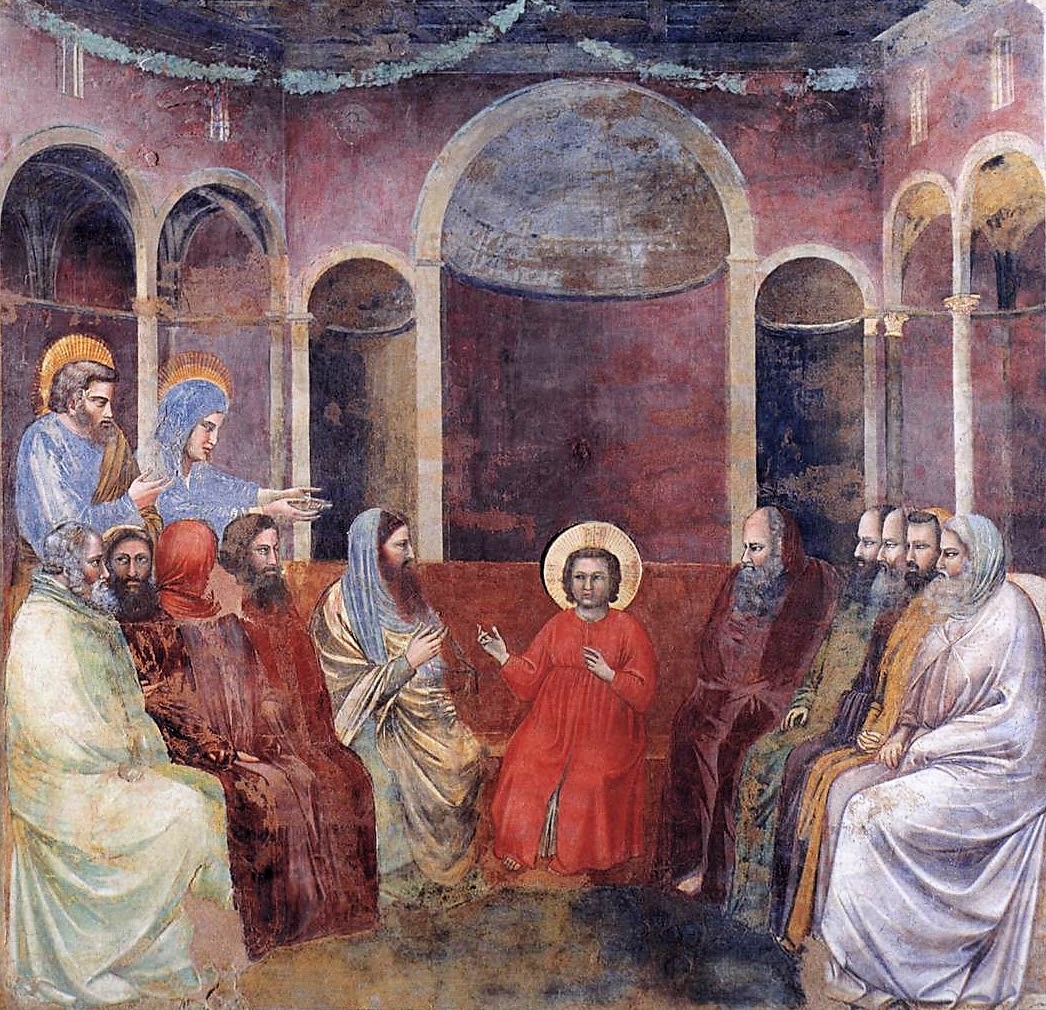
What, then, is to be our stance in light of the many things too great for us to know and that God mercifully conceals from us? We should have the humility of a child, who knows what he does not know but is content that his father knows.
O Lord, my heart is not proud nor haughty my eyes. I have not gone after things too great nor marvels beyond me.
Truly I have set my soul in silence and peace. Like a weaned child on its mother’s lap, even so is my soul.
O Israel, hope in the Lord both now and forever (Psalm 131).
Yes, like humble children we should seek to learn, realizing that there are many things that are beyond us, that are too great for us. We should seek to learn, but in a humility that is reverence for the truth, a humility that realizes that we are but little children, not lords and masters.
Scripture says, Beyond these created wonders many things lie hid. Only a few of God’s works have we seen (Sirach 43:34).
Thank you, Lord, for what you have taught us and revealed to us. Thank you, too, for what you have mercifully kept hidden because it is too much for us to know. Thank you, Lord. Help us learn and keep us humble, like little children.
There is an engaging image of the Church contained in a passage from last week’s Office of Readings. It is instructive because it speaks not only of themselves but of the power that makes them.
It is appropriate that we should receive the body of Christ in the form of bread, because, as there are many grains of wheat in the flour from which bread is made by mixing it with water and baking it with fire, so also we know that many members make up the one body of Christ which is brought to maturity by the fire of the Holy Spirit ….
Similarly, the wine of Christ’s blood, drawn from the many grapes of the vineyard that he had planted, is extracted in the wine-press of the cross. When men receive it with believing hearts, like capacious wineskins, it ferments within them by its own power(From a sermon by Saint Gaudentius of Brescia, bishop, Tract 2 CSEL 68, 30-32).
Most of us are familiar with the image of bread as the coming together of many individual grains. The ancient Eucharistic hymn from the Didache, as reworked a bit in the modern hymn “Father We Thank Thee,” contains these lyrics:
As grain, once scattered on the hillsides,
was in this broken bread made one,
so from all lands Thy Church be gathered
into Thy kingdom by Thy Son.
This is certainly a powerful image, however, grains brought together are still just a pile of flour. It takes water to truly unite them into a batch of dough. For us, the water that must unite us is the water of our Baptism. Thus, Gaudentius says, bread is made [first]by mixing it with water.In our Baptism we are made members of the Body of Christ by dying with Him and rising to new life. It is, then, and first of all, the water of Baptism that unites us.
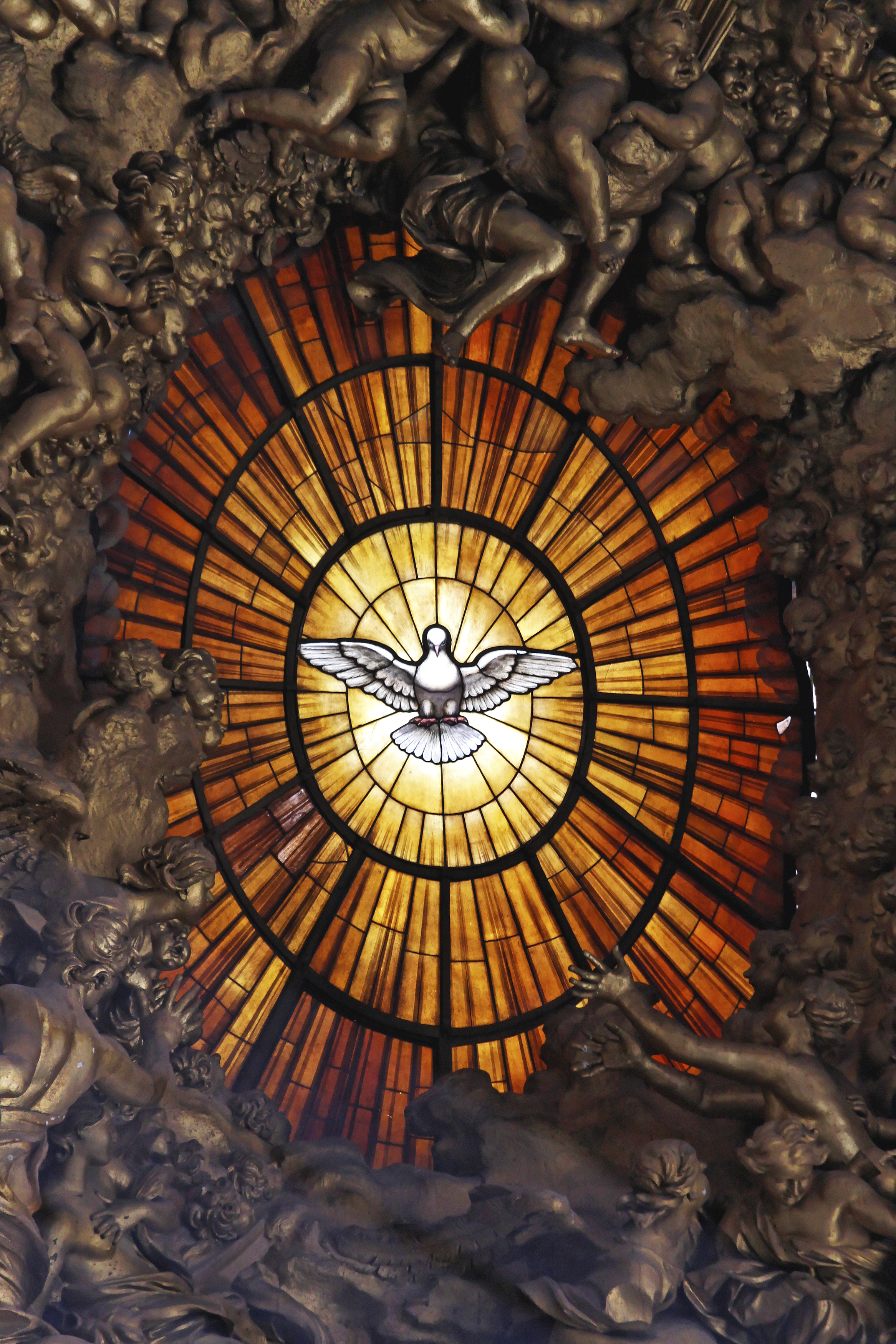
However, bread is incomplete until it is baked, until it is subject to the fire. Thus, Gaudentius teaches more fully, bread is made by mixing it with water and baking it with fire … [and thus] the one body of Christ is brought to maturity by the fire of the Holy Spirit …. We know how the Lord gathered His disciples and apostles, uniting them to Himself, but we also know how weak and confused they often were until the coming of the Holy Spirit like wind and tongues of fire. It was the Fire of the Holy Spirit at Pentecost that quickened them, that matured them.
I am aware that many like to speak of Pentecost as the birthday of the Church, a saying that goes back to the Fathers of the Church. A birthday, however, brings thoughts of infancy and immaturity. I prefer, therefore, to see Pentecost more as a commencement or graduation of the Church, fully instructed and now brought to maturity by the Fire of the Holy Spirit.
Speaking also to the Blood of Christ transubstantiated from the “blood” of many grapes, St. Gaudentius reminds us of the source of the power that unites those many grapes: they are extracted in the wine-press of the cross. It is from this wine that He makes His Blood, this fourth cup of the Passover meal, this wine that He would not taste again until He drank it with the apostles anew in the Kingdom of His Father (cfMatt 26:29).
Consider well, then, fellow Catholics, the font that unites us, the Fire who matures us, and the power of the cross that brings forth the chalice of salvation.
The Prayer for Divine Mercy Sunday says all of this beautifully:
God of everlasting mercy,
who in the very recurrence of the paschal feast,
kindle the faith of the people you have made your own,
increase, we pray, the grace you have bestowed,
that all may grasp and rightly understand
in what font they have been washed,
by whose Spirit they have been reborn,
by whose Blood they have been redeemed.
Through our Lord Jesus Christ, your Son,
who lives and reigns with you in the unity of the Holy Spirit,
one God, for ever and ever. Amen.
N.B. There is a video version of this homily below
In today’s Gospel we encounter two discouraged and broken men making their way to Emmaus. The text describes them as “downcast.” That is to say, their eyes are cast on the ground, their heads are hung low. Their Lord and Messiah has been killed, the one they had thought would finally liberate Israel. Some women had claimed that He was alive, but these disciples have discredited those reports and are now leaving Jerusalem. It is late in the afternoon and the sun is sinking low.
They are also moving in the wrong direction, West, away from Jerusalem, away form the resurrection. They have their backs to the Lord, rising in the East.
The men cannot see or understand God’s plan. They cannot “see” that He must be alive, just as they were told. They are quite blind as to the glorious things that happened hours before. In this, they are much like us, who also struggle to see and understand that we have already won the victory. Too easily our eyes are cast downward in depression rather than upward in faith.
How will the Lord give them vision? How will He reorient them, turn them in the right direction? How will He enable them to see His risen glory? How will He encourage them to look up from their downward focus and behold new life?
If you are prepared to “see” it, the Lord will celebrate Holy Mass with them. In the context of a sacred meal we call the Mass, He will open their eyes and they will recognize Him; they will see glory and new life.
Note that the entire gospel, not just the last part, is in the form of a Mass. There is a gathering, a penitential rite, a Liturgy of the Word, intercessory prayers, a Liturgy of the Eucharist, and an ite missa est. In this manner of a whole Mass, they have their eyes opened to Him and to glory. They will fulfill the psalm that says, Taste, and see, the goodness of the Lord (Psalm 34:8).
Let’s examine this Mass, which opens their eyes, and ponder how we also taste and see in every Mass.
Stage One: Gathering Rite – The curtain rises on this Mass with two disciples having gathered together on a journey: Now that very day two of them were going to a village seven miles from Jerusalem called Emmaus (Lk 24:13). We have already discussed above that they are in the midst of a serious struggle and are downcast. We only know one of them by name, Cleopas. Who is the other? If you are prepared to accept it, the other is you. So, they have gathered. This is what we do as the preliminary act of every Mass. We who are pilgrims on a journey come together on our journey.
It so happens for these two disciples that Jesus joins them:And it happened that while they were conversing and debating, Jesus himself drew near and walked with them (Luke 24:15). The text goes on to tell us that they did not recognize Jesus yet.
The Lord walks with us, too. It is essential to acknowledge by faith that when we gather together at Mass the Lord Jesus is with us. Scripture says, For where two or three are gathered in my name, there am I among them (Matt 18:20). For many of us, too, although Jesus is present we do not recognize Him. Yet he is no less among us than He was present to these two disciples who fail to recognize Him.
Liturgically, we acknowledge the presence of the Lord at the beginning of the Mass in two ways. First, as the priest processes down the aisle the congregation sings a hymn of praise. It is not “Fr. Jones” they praise; it is Jesus, whom “Fr. Jones” represents. Once at the chair the celebrant (who is really Christ) says, “The Lord be with you.” In so doing He announces the presence of Christ among us promised by the Scriptures.
The Mass has now begun and our two disciples are gathered; the Lord is with them. So, too, for us at every Mass. The two disciples still struggle to see the Lord, to experience new life, and to realize that the victory has already been won. So, too, do some of us who gather for Mass. The fact that these disciples are gathered is already the beginning of the solution. Mass has begun. Help is on the way!
Stage Two: Penitential Rite – The two disciples seem troubled and the Lord inquires of them the source of their distress: What are you discussing as you walk along? (Lk 24:17). In effect, the Lord invites them to speak with Him about what is troubling them. It may also be a gentle rebuke from the Lord that the two of them are walking away from Jerusalem, away from the site of the resurrection.
Clearly their sorrow and distress are governing their behavior. Even though they have already heard evidence of Jesus’ resurrection (cf 24:22-24), they seem hopeless and have turned away from this good news.
Thus the Lord engages them in a kind of gentle penitential rite, engages them about their negativity.
So, too, for us at Mass. The penitential rite is a moment when the celebrant (who is really Christ) invites us to lay down our burdens and sins before the Lord, who alone can heal us. We, too, often enter the presence of God looking downcast and carrying many burdens and sins. Like these disciples, we may be walking in the wrong direction. In effect, the Lord says to us, “What are thinking about and doing as you walk along? Where are you going with your life?”
The Lord asks them to articulate their struggles. This calling to mind of struggles, for them that day and for us in the penitential rite, is a first step to healing and recovery of sight.
Again, we see in this story about the two disciples on the road to Emmaus, the Mass that is so familiar to us.
Stage Three: Liturgy of the Word – In response to their concerns and struggles, the Lord breaks open the Word of God, the Scriptures: Then beginning with Moses and all the prophets, he interpreted to them what referred to him in all the scriptures (Luke 24:27).
Not only does the Lord refer to Scripture, He interprets it for them. Hence the Word is not merely read; there is a homily, an explanation and application of the Scripture to the men’s struggles. The homily must have been a good one, too, for the disciples later remark, Were not our hearts burning (within us) while he spoke to us on the way and opened the scriptures to us? (Luke 24:32)
So, too, for us at Mass. Whatever struggles we may have brought, the Lord bids us to listen to His Word as the Scriptures are proclaimed. Then the homilist (who is really Christ) interprets and applies the Word to our life. Although the Lord works through a weak human agent (the priest or deacon), He can write straight with crooked lines. As long as the homilist is orthodox, it is Christ who speaks. Pray for your homilist to be an obedient and useful instrument for Christ at the homily moment.
Notice, too, that although the disciples do not yet fully see, their downcast attitude is gone; their hearts are now on fire. Pray God, that it will be so for us who come to Mass each week and hear from God that the victory is already ours in Christ Jesus. God reminds us, through Scripture passages that repeat every three years, that although the cross is part of our life, the resurrection surely is, too. We are carrying our crosses to an eternal Easter victory. If we are faithful to listening to God’s Word, hope and joy build within our hearts and we come, through being transformed by Christ in the Liturgy, to be men and women of hope and confidence.
Stage Four: Intercessory Prayers – After the homily, we usually make prayers and requests of Christ. We do this based on the hope, provided by His Word, that He lives, loves us, and is able. So it is that we also see these two disciples request of Christ, Stay with us, for it is nearly evening and the day is almost over (Luke 24:29).
Is this not what we are doing when we say, in so many words, “Stay with us, Lord, for it is sometimes dark in our lives and the shadows are growing long. Stay with us, Lord, and with those we love, so that we will not be alone in the dark. In our darkest hours, be to us a light, O Lord, a light that never fades away”?
Indeed, it is already getting brighter, for we are already more than halfway through the Mass!
Stage Five: Liturgy of the Eucharist – Christ does stay with them. Then come the lines that no Catholic could miss: And it happened that, while he was with them at table, he took bread, said the blessing, broke it, and gave it to them (Luke 24:30). Yes, it is the Mass to be sure. All the basic actions of the Eucharist are there: He took, blessed, broke, and gave. They are the same actions that took place at the Last Supper and that we repeat at every Mass. Later, the two disciples refer back to this moment as the breaking of the bread (Luke 24:35), a clear biblical reference to the Holy Eucharist.
The words of Mass immediately come to mind: “While they were at supper, He took the bread and gave you thanks and praise. He broke the bread, gave it to His disciples, and said, “Take this all of you and eat it. This is my Body, which will be given up for you.”
A fascinating thing then occurs: With that their eyes were opened and they recognized him, but he vanished from their sight (Luke 24:31).
It is the very act of consecration that opens their eyes. Is this not what Holy Communion is to do for us? Are we not to learn to recognize Christ by the very mysteries we celebrate? Are we not to “taste and see”?
The liturgy and the sacraments are not mere rituals; they are encounters with Jesus Christ. Through our repeated celebration of the holy mysteries, our eyes are increasingly opened, if we are faithful. We learn to see and hear Christ in the liturgy, to experience his ministry to us.
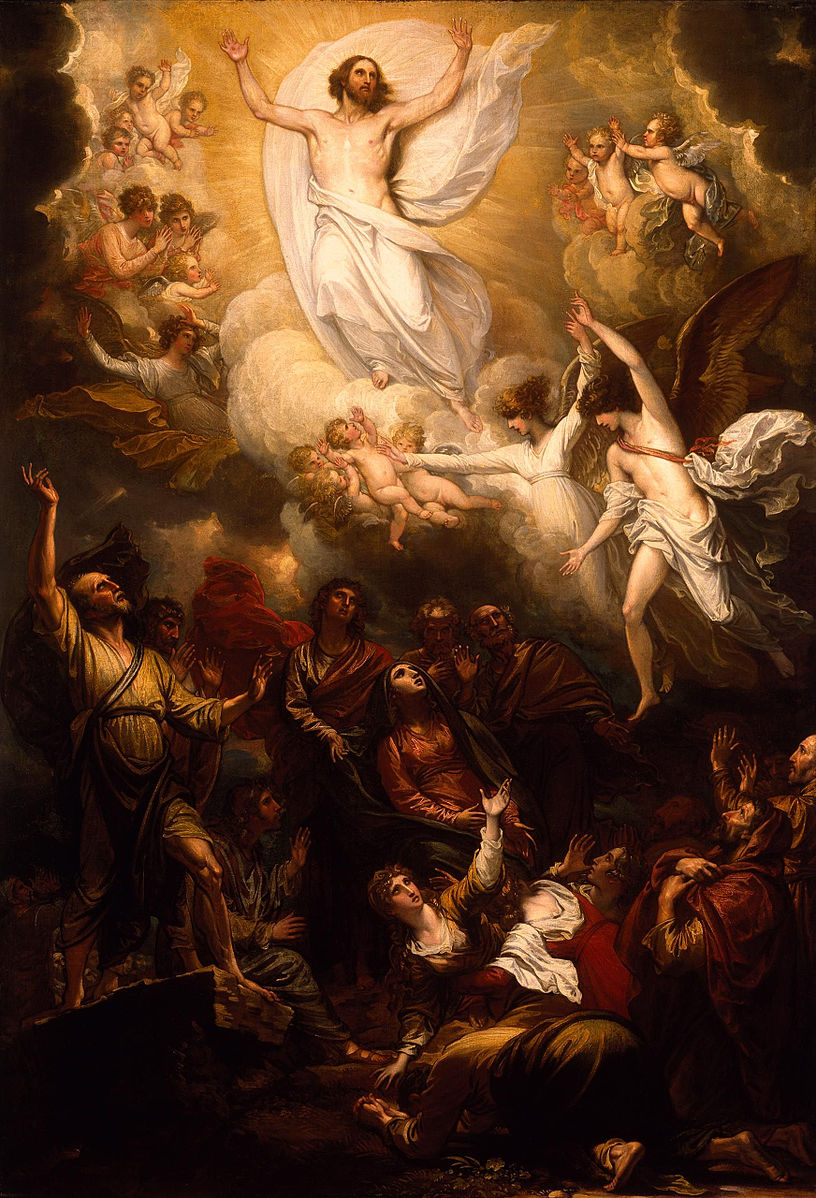
The fact that Jesus vanishes from their sight teaches us that He is no longer seen with the eyes of the flesh, but with the eyes of faith and the eyes of the heart. Although He is gone from our earthly, fleshly, carnal sight, He is now to be seen in the sacrament of the altar and experienced in the Liturgy and in other sacraments. The Mass has reached its pinnacle for these two disciples and for us. They have tasted and now they see.
Consider these two men who began this Gospel quite downcast. Their hearts are on fire and they now see. The Lord has celebrated Mass in order to get them to this point. So, too, for us: the Lord celebrates Mass in order to set our hearts on fire and open our eyes to glory. We need to taste in order to see.
I sought the Lord, and he answered me; he delivered me from all my fears. Those who look to him are radiant; their faces are never covered with shame. This poor man called, and the Lord heard him; he saved him out of all his troubles. … Taste and see that the Lord is good; blessed is the man who takes refuge in him (Psalm 34:4-8).
Yes, blessed are we if we faithfully taste in order to see, every Sunday at Mass.
Stage Six: Ite Missa Est– Not able to contain their joy or hide their experience, the two disciples run seven miles back to Jerusalem to tell their brethren what has happened and how they encountered Jesus in the breaking of the bread. They want to, they must speak of the Christ they have encountered, what He said and what He did.
Note that this liturgy has reoriented them. They are now heading back east, toward the Risen Son.
How about us? At the end of every Mass, the priest or deacon says, “The Mass is ended. Go in peace.” This does not mean, “We’re done, go home and have nice day.” It means, “Go into the world and bring the Christ you have received to others. Tell them what you have seen and heard here, what you have experienced. Share with others the joy and hope that this Liturgy gives.”
Have you ever noticed that part of the word “mission” is in the word “dismissal”? You are being commissioned, sent on a mission to announce Christ to others.
Finally, the Lucan text says of these two disciples, So they set out at once and returned to Jerusalem where they found gathered together the eleven and those with them … Then the two recounted what had taken place on the way and how he was made known to them in the breaking of the bread (Lk 24:33,35). How about us? Does our Mass finish that well, that enthusiastically? Can you tell others that you have come to Christ in “the breaking of the bread,” in the Mass?
Jesus has used the Mass to drawn them from gloom to glory, from downcast to delighted, from darkness to light. It was the Mass. Do you “see” it there? It is the Mass. What else could it be?