The Gospel for Thursday of the 29th Week of the Year speaks of a great cosmic battle taking place all around us. In it, Jesus speaks of His mission to engage our ancient foe and to gather God’s elect back from the enslaving clutches of Satan, who was a murderer and a liar from the beginning (cf John 8:44).
Jesus is approaching Jerusalem for the final time and describes the battle that is about to unfold. It is a battle He wins at the cross and with His resurrection, but it is one whose parameters extend across time to our own era.
Let’s consider Jesus’ description of the cosmic battle and of His mission as the great Shepherd of the sheep and the Lord of armies.
A Passion to Purify – Jesus begins by saying, I have come to set the earth on fire, and how I wish it were already blazing!
Fire is both powerful and transformative. It gives warmth and makes food palatable, but it also consumes and destroys. Nothing goes away from fire unchanged!
The Lord has come to purify us by the fiery power of His love, His grace, and His Word. He has a passion to set things right.
Purification is seldom easy or painless, though, hence the image of fire. In this great cosmic battle, fire must be cast upon the earth not only to purify but to distinguish. There are things that will be made pure but only if other things are burned away and reduced to ashes.
This image of fire is important because many people today have reduced faith to seeking enrichment and blessings. Faith surely supplies these, but it also demands that we take up our cross and follow Christ without compromise. Many if not most enrichment and blessings come through the fiery purification of God’s grace, which burns away sin and purifies us of our adulterous relationship with this world. Fire incites, demands, and causes change—and change is never easy.
Therefore, Jesus announces the fire by which He will judge and purify this earth and all on it, rescuing us from the power of the evil one.
This is no campfire around which we sit singing songs. Jesus describes it as a blaze that must set the whole world on fire!
How do you get ready for fire? By letting the Lord set you on fire! John the Baptist promised of the Lord, He will baptize you with the Holy Spirit and fire (Matt 3:11). Indeed, the Lord sent forth His Spirit on the early Church as tongues of fire (cf Acts 2:3) to bring them up to the temperature of glory and to prepare them for the coming judgment of the world by fire.
The battle is engaged. Choose sides. If you think you can remain neutral or stand on some middle ground, I’ve got news for you about which side you’re really on. No third way is given. You’re either on the ark or you’re not. You’re either letting the fire purify you or you’re being reduced to ashes. You’re either on fire by God’s grace (and thereby ready for the coming judgment of the world by fire) or you’re not. The choice is yours. Jesus is passionate to set things right. He has come to cast fire upon the earth.
A Painful Path – The text says, There is a baptism with which I must be baptized, and how great is my anguish until it is accomplished!
The Lord does not come among us merely come to get us out of trouble but to get into trouble with us. Though sinless, Jesus takes upon Himself the full weight of human sinfulness and manfully carries it to the cross. He accepts a “baptism” in His own blood on our behalf.
In waging war on our behalf against the evil one, Jesus does not sit in some comfortable headquarters behind the front lines; He goes out “on point,” taking the hill of Calvary and leading us over the top to the resurrection glory. He endures every blow, every hardship on our behalf.
Through His wounds we are healed by being baptized in the very blood and water He shed in the great cosmic war.
It is a painful path He trod, and He speaks of His anguish in doing it, but having won the victory He now turns to us and invites us to follow Him through the cross to glory.
The choice to follow is ours. In this sense the cosmic battle continues, as Jesus describes in the verses that follow.
A Piercing Purgation – In words that are nothing less than shocking, the Lord says, Do you think that I have come to establish peace on the earth? No, I tell you, but rather division. From now on a household of five will be divided, three against two and two against three; a father will be divided against his son and a son against his father, a mother against her daughter and a daughter against her mother, a mother-in-law against her daughter-in-law and a daughter-in-law against her mother-in-law.
The words shock but they speak a truth that sets aside worldly notions of compromise and coexistence with evil. For there to be true peace, holiness, and victory over Satan, there must be distinction not equivocation, clarity not compromise. Fire and water do not mix; you can hear the conflict when they come together: hissing, popping, searing, and steaming. One must win; the other must lose. Compromise and coexistence are not possible.
The Lord said (in Matthew 10:34) that He came not for peace but for the sword. In this there is a kind of analogy to a surgeon’s scalpel. The surgeon must wield this “sword” to separate out healthy flesh from that which is diseased. Coexistence is not possible; the diseased flesh must go. The moment one talks of “coexisting” with cancer, the disease wins. Were a doctor to take this stance he would be guilty of malpractice. When there is cancer, the battle must be engaged.
Thus, in this great cosmic battle, the Lord cannot and will not tolerate a false peace based on compromise or an accepting coexistence. He has come to wield a sword, to divide. Many moderns do not like it, but Scripture is clear: there are wheat and tares, sheep and goats, those on the Lord’s right and those on His left, the just and wicked, the lowly and the proud, the narrow road to salvation and the wide road to damnation.
These distinctions, these divisions, extend into our very families, into our most intimate relationships. This is the battle. There are two armies, two camps. No third way is given. Jesus says elsewhere, Whoever is not with me is against me, and whoever does not gather with me scatters (Matt 12:30).
About all this we must be sober and must work for our own salvation and the salvation of all, for while there may not be a season of mercy and patience now, the time is short for us all. The distinction between good and evil, righteousness and sin, will be definitive and the sword must be wielded.
Thus, the Lord speaks to us of a cosmic battle in the valley of decision (cf Joel 3). Jesus has won, and it is time to choose sides. Even if our own family members reject us, we must choose the Lord. The cosmic battle is engaged. The fire is cast, and the sword of the Spirit and God’s Word is being wielded. The Lord has come to divide the good from the wicked, the sheep from the goats. Judgment begins now, with the house of God. Scripture says,
For it is time for judgment to begin with God’s household; and if it begins with us, what will the outcome be for those who do not obey the gospel of God? (1 Peter 4:17)
If this be the case, how do we choose sides, practically speaking? And having chosen sides, how do we join the fight with the Lord in the cosmic battle?
One of the more interesting and surprising images the Lord used for Himself was “thief.” There is a reference to this in the first reading for this Wednesday of the 29th week of the year. I’ll comment more on that passage in a moment, but first here are some other texts in which He used this imagery:
But understand this: If the owner of the house had known at what time of night the thief was coming, he would have kept watch and would not have let his house be broken into. So you also must be ready, because the Son of Man will come at an hour when you do not expect him (Matt 24:33; Lk 12:39).
Remember, then, what you received and heard. Keep it, and repent. If you will not wake up, I will come like a thief, and you will not know at what hour I will come against you (Rev 3:3).
“Behold, I am coming like a thief! Blessed is the one who stays awake, keeping his garments on, that he may not go about naked and be seen exposed” (Rev 16:15).
St. Peter also used the image of a thief, but perhaps out of reverence for Christ, applied it more to the Day of Judgment.
But the day of the Lord will come like a thief, and then the heavens will pass away with a roar, and the heavenly bodies will be burned up and dissolved, and the earth and the works that are done on it will be exposed. (2 Peter 3:10).
In today’s first reading, which we will discuss in more detail, St. Paul used a similar image.
Now, brothers and sisters, about times and dates we do not need to write to you, for you know very well that the day of the Lord will come like a thief in the night. While people are saying, “Peace and safety,” destruction will come on them suddenly, as labor pains on a pregnant woman, and they will not escape. But you, brothers and sisters, are not in darkness so that this day should surprise you like a thief … let us be sober, putting on faith and love as a breastplate, and the hope of salvation as a helmet. For God did not appoint us to suffer wrath but to receive salvation through our Lord Jesus Christ (1 Thess 5:1-4; 8-9).
It is provocative and even shocking that Lord would compare Himself to a thief. Let’s consider some of the implications.
1. By this image the Lord turns the tables. Thievery suggests unjust possession. In this sense, the Lord is clearly not a thief; He is using a simile. He says that He is like a thief, not that He is a thief. Indeed, how can the owner of all things unjustly possess what is already His?
The impact and indictment of the reference is on us, not on the Lord. That He would seem to any of us to be like a thief is indicative of our injustice, not His. Too easily we forget that the things we call our own are God’s and God’s alone. We are stewards, not owners. When the Lord comes to take what is rightfully His—and has always been—we should be grateful to hand it back with interest (see the Parable of the Talents). To those who have forgotten that they are mere stewards, the Lord will seem to come to steal from them. They will see His coming as threatening because He will put an end to their schemes and worldly wealth.
Because they wrongly see these things as theirs, they will see Him as a thief—or worse, a robber. In the Parable of the Vineyard (Matthew 21:30ff) the Lord says that they will beat His prophets and even kill His Son. The injustice and crime is theirs. God cannot steal what He already owns. The vineyard was His and He rightly sought His portion. Murderously, they sought to withhold what they thought was theirs but in fact was not.
The Lord’s ways are justice and truth. God will take back all that is His. We will pay for what we have stolen through greed, injustice, selfishness, lust, and gluttony. To some who forget that He is the true owner of the vineyard, He may appear to be like a thief, but it is really we who are thieves. We will cry “Thief!” but the Lord will simply reply, “You are the man; it is you who have said it” (see 2 Sam 12:7; Matt 26:64).
2. By this image the Lord speaks to the hidden quality of His presence to some. In using the image of a thief (Κλέπτης (kleptes) in Greek) the Lord speaks of a stealthy, hidden presence. Thieves do their work in hiding or when we are unaware. A robber, on the other hand, confronts you, taking what he wants with violence while you can only watch helplessly.
The word thief here is indicative of the Lord’s hidden presence. The Lord is not a thief, but He seems like one to those who are forgetful of His presence. Don’t fool yourself, thinking that He is not in the house of your life; He sees and knows everything.
3. By this image the Lord puts to the lie the illusion of our own hiddenness. Thieves work in hiding. Many people who sin and misuse what the Lord owns often forget that to God, nothing is hidden. Thus they meet the definition of a thief because they attempt to take or misuse secretly what is not theirs to begin with.
God may seem hidden and distant, but He is not. He sees everything, knows everything, and is reckoning everything. Every “hidden” deed of ours is written in the book. An ancient hymn says,
Lo the Book exactly worded Wherein all has been recorded Thence shall judgment be awarded.
When the Judge his seat attaineth And each hidden deed arraigneth Nothing unavenged remaineth (Dies Irae).
God is watching and He is closer to you than you are to yourself.
4. By this image the Lord exhorts us to remember and to be ready. A recent break-in at my rectory motivated me and the staff to become more careful and vigilant. But why should the loss of passing goods cause us more concern than the certain arrival of the Lord, the true owner of all things? Although He may seem to come like a thief, He is not a thief. The real questions I should be asking myself are these: Am I a thief? Have I used what God owns in ways that are against His will or that displease Him? If so, He will come when I least expect it and take what I wrongfully think is mine. I may think Him a thief, but He is not. As true owner, He cannot unjustly possess what is already His.
We had better think about this now because the Lord is already in the house and His presence will be disclosed at any moment. Are you ready? Are you watching? Be vigilant. The Judge stands at the gate, but He has the key, not you.
Is He a thief? No. Are you a thief? Am I?
Epilogue: There came a moment in Jesus’ life when He was praying in the Garden of Gethsemane and Judas, who was a thief (see John 12:6), led a band of brigands to arrest Him. Stepping forward, Jesus turned the tables on them and said, “Have you come out as against a robber, with swords and clubs to capture me?” (Mk 14:48) Yes, He turned the tables on them and on the temple leaders who sponsored them. They saw Jesus as a usurper, as one who came to steal their priesthood and leadership. He was no thief, no robber. He was the great High Priest, the One who came to fulfill everything that they were supposed to be preaching. It was they who sought to kill him and unjustly possess the vineyard for themselves. To thieves, robbers, and murderers, Jesus was like a thief, but He was not. They were thieves—and even worse, robbers and murderers.
When Jesus says that He may be coming like a thief, be careful; He may be holding up a mirror to you!
Disclaimer:In a heated political time of a nearing election I find it necessary to say that this post is not a commentary on the current election or the candidates. I wrote this post some time ago and it has been sitting in my draft folder, long-forgotten. It is not about the current moment, it is about human patterns that transcend this or that time.
Over the years, in meeting especially with teenagers in Sunday School, I have used an old Jim Croce song to instruct them that worldly norms, and worldly leaders come and go. What is “hip” and cool today is considered silly and out of date tomorrow. My advice to them was to stay close to the Scriptures and teachings of the Church which are time-tested and do not change. I have often warned the young people not to admire those in the culture who exult fornication, disrespect for women, homosexual acts and all sorts of violence and evil in music and movies. A line from psalm 37 comes to mind:
I have seen the wicked triumphant, towering like a cedar of Lebanon. I passed by again; and he was gone. I searched; he was nowhere to be found. (Psalm 37:35-36).
To the young people and to all of us, comes this admonition from the same psalm:
Do not fret because of the wicked; do not envy those who do evil, for they wither quickly like grass and fade like the green of the fields. (Psalm 37:1-2)
In the lyrics to the Jim Croce song that follows, there is described a man named Jim who is the uncontested towering leader and king of 42nd Street. He’s a pool hustler, among other things, and drives a “drop-top” Cadillac. But one day he hustles the wrong guy, a man named Willie McCoy, (also known as “Slim.”) who comes to settle accounts. Big Jim is taken out. Meet the new King of 42nd Street: Slim!
Here are the lyrics to the song and its story.
Uptown got it’s hustlers
The bowery got it’s bums
42nd street got big Jim walker
He’s a pool shootin’ son of a gun
Yeah, he big and dumb as a man can come
But he stronger than a country hoss
And when the bad folks all get together at night
You know they all call big Jim boss, just because
And they say
You don’t tug on superman’s cape
You don’t spit into the wind
You don’t pull the mask off that old lone ranger
And you don’t mess around with Jim
Well outta south Alabama came a country boy
He say I’m lookin’ for a man named Jim
I am a pool shootin’ boy
My name is Willie McCoy
But down home they call me Slim
Yeah I’m lookin’ for the king of 42nd street
He drivin’ a drop-top Cadillac
Last week he took all my money
And it may sound funny
But I come to get my money back!
And everybody say “Jack don’t you know
You don’t tug on superman’s cape
You don’t spit into the wind
You don’t pull the mask off that old lone ranger
And you don’t mess around with Jim
Well a hush fell over the pool room
Jimmy come boppin’ in off the street
And when the cuttin’ were done
The only part that wasn’t bloody
Was the soles of the big man’s feet
Yeah he were cut in in bout a hundred places
And he were shot in a couple more
And you better believe
They sung a different kind of story
When big Jim hit the floor.
Now they say
You don’t tug on superman’s cape
You don’t spit into the wind
You don’t pull the mask off that old lone ranger
And you don’t mess around with Slim!
Yeah, big Jim got his hat
Find out where it’s at
And it’s not hustlin’ people strange to you
Even if you do got a two piece custom-made pool cue
Yeah you don’t tug on superman’s cape
You don’t spit into the wind
You don’t pull the mask off the old lone ranger
And you don’t mess around with Slim!
And thus we see that Jim gives way to Slim; there’s a new king of 42nd street (for now). We might wish that some good king replaced a bad one, but that’s only one way change comes. Sometimes Satan turns on his own. Perhaps they are no longer useful to him, or perhaps he’s got them so “in the bag” that he no longer needs to hold them with worldly gains and glory. But the point remains, the wicked and the worldly cannot stand their ground for long. The world is often a series of one bad idea or personality after another. They come and go, but the Gospel remains.
Yes! The Gospel remains. And it’s true for more than just individuals. In a wider sense, leaders, movements, trends and even nations, cultures and States, come and go over time. In the past 2,000 years the Church, which perdures, has seen empires come and go, nations rise and fall. In addition, philosophies, conflicts, movements, heresies and whatever else you can imagine emerge, have their influence, and ultimately fail as impractical or destructive. And here we are, the Church, still proclaiming the same Gospel that Christ delivered to us.
It doesn’t matter how big and bad, how well-funded and influential, what is wicked cannot forever endure. This too shall pass. There is only one Noah’s Ark in the flood waters of change and the vicissitudes of this world and that is the Church. In spite of the creaking boards of our weaknesses and the stench our sins, the Church perdures. This is not by our accomplishment that we should glory in it. This is the promise and work of Christ who said, The heavens and earth may pass away, but my words will never pass away. (Mat 24:35).
There are only two teams on the field; there are no sidelines or people permitted in the stands. Choose sides. But here’s the awesome thing: we already know that Team Jesus is going to win no matter how flashy and cool the uniforms and tactics of the other team are. Choose well and forget the glamor of evil, for:
I have seen the wicked triumphant, towering like a cedar of Lebanon. I passed by again; and he was gone. I searched; he was nowhere to be found. (Psalm 37:35-36).
The Gospel for Sunday contains lots of interesting juxtapositions: hatred for Jesus but grudging respect, real questions vs. rhetorical ones, politics and faith, duties to Caesar and duties to God. The word “juxtaposition” comes from the Latin juxta, meaning “near” and positio, meaning “place” or “position”. Juxtaposition is the placing of two things near to each other, usually in order to see how they are similar yet different. Most often the differences are emphasized more than the similarities.
Let’s look at the juxtapositions in today’s Gospel, concentrating most of our attention on our duties to God as compared to our duties to “Caesar.”
I. The Plotting of the Peculiar Partners – The Gospel begins by describing an extremely unlikely set of “bedfellows.” The text says, The Pharisees went off and plotted how they might entrap Jesus in speech. They sent their disciples to him, with the Herodians. A very unlikely set of allies indeed. The Pharisees hated the Herodians. It was a combination of political and racial hatred, just about as poisonous as you could get in the ancient world, yet they both agreed that this Jesus fellow had to go.
Here is an important teaching: if you’re going to be a true Christian, the world will hate you. Too many Christians think that some segment of the world will agree to live in peace with us and so we strive to forge allegiances with it. In the modern American milieu, some think that the Republicans or the Democrats are natural allies, but we really don’t fit well into either party nor any worldly “club.”
Catholicism is an “equal-opportunity offender” in its unabridged form. Issue by issue We may appeal to one political party or another on a particular issue, but on the whole we’re a nuisance: we’re pro-life, traditional family values, immigrants’ rights, and affordable housing. We both please and annoy, which is another way of saying we don’t fit neatly into the world’s categories; everyone has some reason to hate us.
Welcome to Jesus’ world, in which groups who seemed to agree on nothing were aligned when it came to hating Jesus.
II. The Praise that is actually a Perilous Provocation – In their opening remarks to Jesus, His enemies give Him grudging respect. They do so not to praise Him, however, but rather to provoke Him. They say, Teacher, we know that you are a truthful man and that you teach the way of God in accordance with the truth. And you are not concerned with anyone’s opinion, for you do not regard a person’s status. Tell us, then, what is your opinion … Is it lawful to pay the census tax to Caesar or not?
The praise is largely a pretext that is used to provoke. In effect, they think they can they can force a definition on Jesus: “You’re ‘the Man.’ You’re the prophet. You’re the only one around here who tells the truth no matter what.” Now none of these things are false and they bespeak a grudging respect for Jesus.
However, they are only using this to draw Jesus into a worldly debate that is well “below his pay grade.” They want Jesus to take sides in a silly human debate over politics and worldly power. They want him to get arrested and killed over something that is not worth dying for.
Prophets die for the truth revealed by God not for who the “big cheese” should be in human affairs. They want Jesus to opine as if He were some sort of talking head on TV rather than the prophet and Lord that He is. A question of this sort is not worthy of Jesus’ attention. Ask this of the local senator or mayor but leave God out of human political distinctions and camps; do not expect Him to take sides. He is beyond our distinctions and will not be confined by party lines, national boundaries, or political philosophies.
We may well contend that certain systems of government better reflect the Kingdom than others, but in the end, God cannot be reduced to being a Republican, a Democrat, or for that matter an American. He is God and He transcends our endless debates and camps. He is not a talking head; He is God.
Generally speaking, rhetorical questions are statements or arguments posed in the form of a question. If I say to you, “Are you crazy?” I’m not really looking for an answer; I’m making statement that I think you are crazy. This is what takes place in today’s Gospel. The questioners already have their own opinions and aren’t change their minds no matter how Jesus answers. They don’t really want an answer; they want something to use against Him.
If Jesus says, “Yes, pay the taxes,” it will make Him unpopular with the crowds. If He says “No, don’t pay the taxes,” He will be arrested and likely executed.
In the end, Jesus calls them what they are: hypocrites, a Greek word meaning “actor.” And that is what they are. This whole thing is an act. This is not about discovering the truth; it is about setting a trap.
But Jesus will have none of it. He will not be reduced to human distinctions and categories. The truth He proclaims transcends the passing political order and any human power struggles. He will not be drawn into choosing sides. Rather, He will apply the rule of truth evenly to all.
Jesus is reality in the face of rhetoric, perfection in the face of politics, divinity in the face of division.
III. The Protesting of their Pretext and Pretense – Knowing their malice, Jesus said, “Why are you testing me, you hypocrites?” Not everyone who engages us is truly looking for an answer or for the truth. We cannot always know things, but Jesus surely could. Often, when engaged in a discussion about the truth of the Gospel, one discovers that authentic dialogue is not actually taking place. In that case it is permissible to merely proclaim the truth firmly, clearly, and with due charity, and then end the conversation. Jesus called them on their pretense and authoritatively announced the principle with the goal of ending the conversation and sending them away to think.
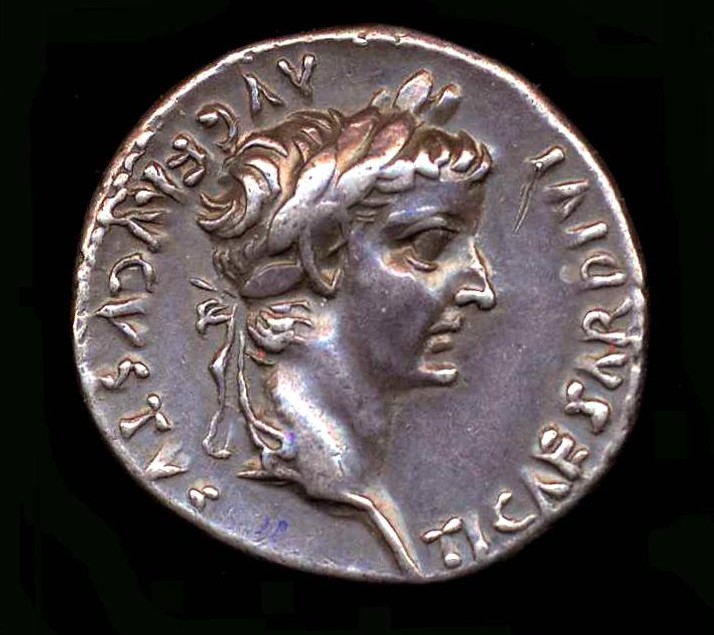
IV. The Pointed Proclamation of the Principle – Jesus says, simply, and in a way that transcends worldly “all-or-nothing” scenarios, Then repay to Caesar what belongs to Caesar and to God what belongs to God.
Such an answer elicits in us a desire for elaboration, but in our demands for more detail, we too often seek to conceal the fact that we really know the answer. We also betray the need of the flesh to specify everything so as to control and limit its impact.
If we really need a list, we might include some of the following things we ought to do in order “repay” to Caesar:
1. Obey all just laws. 2. Pay legally assessed taxes. 3. Pray for our country and its leaders. 4. Participate in the common defense based on our abilities and state in life. 5. Take an active and informed role in the political process. 6. Engage in movements for necessary reform. 7. Contribute to the common good through work (domestic or market-based) and through the sharing of our abilities and talents with others. 8. Maintain strong family ties and raise disciplined children who are well-prepared to contribute to the common good and to the good order of society. 9. Encourage patriotic love of our country. 10. Strive for unity and love rooted in Truth.
Here are some things we might include in a list of what we owe to God:
1. Adoration, love, and gratitude 2. Obedience to His Word and His Law 3. Worship 4. Repentance 5. Support of His Church by attendance at sacred worship, financial support, and sharing of our gifts and talents 6. Proclamation of his Word both verbally and by witness 7. Devoted reception of the sacraments 8. Raising our children in His truth and in reverence of Him 9. Evangelization (making disciples) 10. Preparing for death and judgment through a holy and reverent sojourn in this world.
A glance at these lists reveals that there is some overlap. One would expect this with God because He defies our human categories and distinctions. In the overlap, we see a setting forth of the great commandment of Love: that we should love the Lord our God with all our soul, strength, and mind, and our neighbor as our self (e.g., Matt 22:37). For while God is not Caesar and Caesar is not God, love unites both categories.
To love our country is to love our neighbor. To work for, support, and be involved in the common good is to love our neighbor. And to love our neighbor, whom we see, is to begin to love God, whom we do not see. Further, to seek to reform our land, secure justice, and ensure unity rooted in truth is to help usher in the Kingdom of God. To be rooted in God’s law, walk in His truth, and raise our children as strong and disciplined disciples of the Lord is to bless this country. To obey God and to walk in sobriety, love, and self-discipline is not only to render to God but also to be a good citizen.
However, it must be clear that God is and must be our supreme love. Jesus is not setting forth an equivalence here. This world is often at odds with God and thus we who would be His disciples must accept the fact that we will often be seen by this world as though we are aliens from another planet. Neither Jesus nor we should expect to fit precisely into any worldly category or club. We will be an equal-opportunity irritant to any large group. If we are going to be faithful Catholics then we must expect to be outsiders, outliers, and outcasts.
Rendering to God comes first. Too many people today, however, are more passionate about their politics than their faith. They tuck their faith underneath their politics and worldview. They are more inclined to agree with their party than with the Church or even the Scriptures. If you point that out, though, they’re likely to accuse you of violating the separation of Church and State (a phrase that does not appear in the Constitution, by the way) or tell you that unless something is infallibly defined (as they determine it) they are free to ignore the teaching of the bishops, the Pope, and/or the Catechism.
Here is the question we must ask ourselves: Do we really put God first? Is His Word really the foundation of our thoughts and views or are we just playing games? Loving this world and working for the common good are not at odds with our love for God, but submitting to worldly categories and human divisions and permitting them to drive our views is most often opposed to God, who will not simply be conformed to human political movements.
God has set forth the Catholic Church to speak for Him but He has not anointed any political movement or worldly organization to do so. No Catholic should surrender to artificial and passing distinctions or to organizations. No Catholic should permit worldly allegiances to trump what Scripture and the Church clearly proclaim. Sadly, today many seem far more willing to render to some version of “Caesar” than to render obedience and allegiance to God and to the Church, which speaks for Him. The Church is an object of faith; a political party is not. Render to God what is God’s.
This song in the video below says that God and God alone is fit to take the universe’s throne.
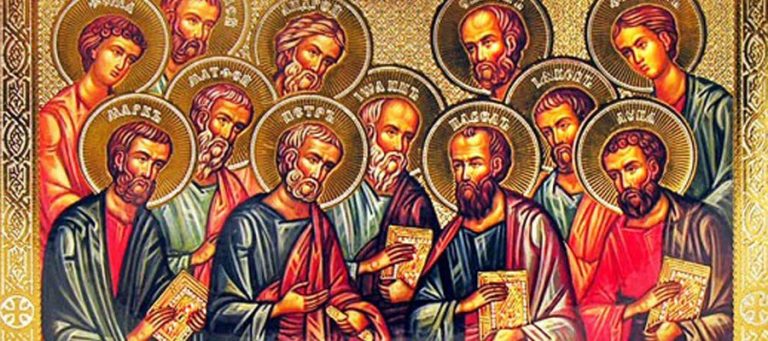
If asked “How do you know that Jesus Christ rose from the dead?” most would answer, “Because it says so in the Bible.” While this is true, there is a much better answer: “We know that Jesus is risen from the dead because the Apostles said so.” They were eyewitnesses. Jesus Himself attested to this when He said,
Thus it is written: The Christ will suffer and rise from the dead on the third day, and in His name repentance and forgiveness of sins will be proclaimed to all nations, beginning in Jerusalem. You are witnesses of these things (Luke 24:46-48).
And we read in Acts:
But you will receive power when the Holy Spirit comes upon you, and you will be My witnesses in Jerusalem, and in all Judea and Samaria, and to the ends of the earth. (Acts 1:8).
The Apostles also said of themselves,
We are witnesses of these things, and so is the Holy Spirit, whom God has given to those who obey Him (Acts 5:32).
And again, from Acts,
God raised Him up on the third day and caused Him to be seen—not by all the people, but by the witnesses God had chosen beforehand, by us who ate and drank with Him after He rose from the dead. He commanded us to preach to the people and to testify that He is the One appointed by God to judge the living and the dead … (Acts 10:40-42).
So, it is the eyewitness testimony of the Apostles on which our faith in the Resurrection of Jesus Christ is founded. Surely, too, the Holy Spirit assists us who have Faith to assent and cling to this truth.
Some may ask, “How can we know that what the Apostles, and later wrote, is true? What if they made the whole thing up or were delusional? What if, by Resurrection, they merely meant that Jesus lived on in their hearts and in their memory?”
The best reply to such questions was given by St. John Chrysostom and was read by clergy and religious recently in the Breviary:
How could twelve uneducated men, who lived on lakes and rivers and wastelands, get the idea for such an immense enterprise [of spreading the Gospel worldwide]? How could men who perhaps had never been in a city or a public square think of setting out to do battle with the whole world? That they were fearful, timid men, the evangelist makes clear; he did not reject the fact or try to hide their weaknesses. Indeed, he turned these into a proof of the truth. What did he say of them? That when Christ was arrested, they fled, despite all the miracles they had seen, while he who was leader of the others denied him!
How then account for the fact that these men, who in Christ’s lifetime could not stand up to the attacks by the Jews, now set forth to do battle with the whole world if Christ was dead – if, as you claim, Christ did not rise and speak to them and rouse their courage? Did they perhaps say to themselves: “What is this? He could not save himself but now he will protect us? He did not help himself when he was alive, but now that he is dead he will extend a helping hand to us? In his lifetime he brought no nation under his banner, but by uttering his name we will win over the whole world?” Would it not be wholly irrational even to think such thoughts, much less to act upon them?
It is evident, then, that if they had not seen him risen and had proof of his power, they would not have risked so much (Hom. 4,3.4: PG 61,34-36).
Indeed, and not only did they risk so much, they suffered so much! Every one of them except perhaps John died as a martyr. I highly doubt that they would done this for a lie they had concocted or for some vague notion that Jesus lived on in some way in their hearts. Clearly, they were so convicted and moved by the Resurrection that their lives were profoundly changed. In modern slang, “It really rocked their world!” St. Paul, too, saw Christ not only risen but ascended and at the Father’s right hand. He was never the same and devoted his life to the relentless proclamation of the Gospel in spite of beatings, stoning, imprisonments, shipwrecks, and finally martyrdom. Who would do such a thing for a made-up story or a vague hope? The evidence is clear from the response of their lives that the Resurrection was something both real and profoundly animating. They could not help but speak of what they saw and heard:
That which was from the beginning, which we have heard, which we have seen with our own eyes, which we have gazed upon and touched with our own hands—this is the Word of life. And this is the life that was revealed; we have seen it and testified to it, and we proclaim to you the eternal life that was with the Father and was revealed to us. We proclaim to you what we have seen and heard (1 John 1:1-3).
As for the charge of delusion, it may be possible for one man to be delusional, maybe even two, but twelve men collectively having the same delusion? To believe this would take more faith than simply to believe they were telling the truth. Recall that Thomas at first disbelieved the other Apostles, perhaps thinking them to be lying or even crazy. But then he, too, saw the Risen Lord and was forever changed. He traveled to far off-India to preach Christ and ultimately died for the truth he proclaimed.
It was not a lie nor a fanciful hope nor a delusion—only the actual occurrence of the Resurrection can adequately explain the heroics and tenacity of the Apostles in going forth to proclaim the truth. The Apostles are trustworthy eyewitnesses. Christ is risen indeed!
The first reading for this Wednesday of the 27th Week of the Year, from Galatians, speaks to sins that exclude one from the Kingdom of Heaven. If one dies unrepentant from committing any of these sins, one cannot go to Heaven but rather must be excluded in Hell. It is an important reminder to pay heed to the toll that sin takes on our heart, our character, and ultimately our destiny.
One of the great deceptions of our time is the notion that serious sin is only a remote possibility for most people and that such sins are only committed by truly wicked people. Too many people assess their moral standing with unhelpful platitudes such as these: “I’m basically a good person,” or “Well, I haven’t murdered anybody.”
We must be more serious and mature in our discernment. Of course, God does not leave us in such a fog of uncertainty. His Word is quite clear in specifying some of the more serious sins so that we can humbly recognize our tendency to do these very things. Note that stating that a particular sin excludes one from the Kingdom of Heaven is the biblical way of saying that it is a mortal sin.
Simply listing mortal sins is not sufficient because there are important factors affecting culpability. For example, some of the sins listed below (e.g., lying) can admit of lighter matter (one might tell a lie to avoid hurting someone’s feeling). Lies can also be devastating, robbing people of their good name or depriving people of necessary information. Some of the sins listed can result from a compulsions or addictions that erode the freedom necessary to be guilty of mortal sin. Hence, a sin that is of itself serious in nature might be venial if the person were acting under some compulsion. This does not mean that it is not a sin at all, just that it may not be fully mortal in its effects.
Nevertheless, the Lord, in love, wants to warn us urgently of the sins that can most commonly exclude us from Heaven. In reading from the lists that follow, avoid adopting a legalistic mentality. Take them to heart and allow them to become part of your daily moral reflection. The Lord warns us in love that sin is a serious matter. Even smaller sins, unattended to, begin to grow like a cancer and can ultimately kill us spiritually.
Be serious about them. Do not buy into the deception that sin is a trivial matter. God loves us, and because He loves us He warns us that unrepentant sin is serious and can rob our hearts of the desire for Him, for Heaven, and for the good things awaiting us there.
Here, then, are five lists. They are not exhaustive and there are other passages in the Bible that include sins not mentioned below (e.g., refusal to forgive, cf Matt 6:15).
Or do you not know that wrongdoers will not inherit the kingdom of God? Do not be deceived: Neither the sexually immoral nor idolaters nor adulterers nor homosexual offenders, nor thieves nor the greedy nor drunkards nor slanderers nor swindlers will inherit the kingdom of God. And that is what some of you were (1 Cor 6:9-10).
The acts of the flesh are obvious: sexual immorality, impurity and debauchery; idolatry and witchcraft; hatred, discord, jealousy, fits of rage, selfish ambition, dissensions, factions and envy; drunkenness, orgies, and the like. I warn you, as I did before, that those who live like this will not inherit the kingdom of God (Gal 5:19-21).
But among you there must not be even a hint of sexual immorality, or of any kind of impurity, or of greed, because these are improper for God’s holy people. Nor should there be obscenity, foolish talk or coarse joking, which are out of place, but rather thanksgiving. For of this you can be sure: No sexually immoral, impure or greedy person—such a person is an idolater—has any inheritance in the kingdom of Christ and of God. Let no one deceive you with empty words, for because of such things God’s wrath comes on those who are disobedient. Therefore, do not be partners with them (Eph 5:3-6).
“Look, I am coming soon! My reward is with me, and I will give to each person according to what they have done. I am the Alpha and the Omega, the First and the Last, the Beginning and the End.” Blessed are those who wash their robes, that they may have the right to the tree of life and may go through the gates into the city. Outside are the dogs, those who practice magic arts, the sexually immoral, the murderers, the idolaters and everyone who loves and practices falsehood. “I, Jesus, have sent my angel to give you this testimony for the churches. I am the Root and the Offspring of David, and the bright Morning Star” (Rev. 22:12-16).
Then he will say to those on his left, ‘Depart from me, you who are cursed, into the eternal fire prepared for the devil and his angels. For I was hungry and you gave me nothing to eat, I was thirsty and you gave me nothing to drink, I was a stranger and you did not invite me in, I needed clothes and you did not clothe me, I was sick and in prison and you did not look after me.’ They also will answer, ‘Lord, when did we see you hungry or thirsty or a stranger or needing clothes or sick or in prison, and did not help you?’ He will reply, ‘Truly I tell you, whatever you did not do for one of the least of these, you did not do for me.’ Then they will go away to eternal punishment, but the righteous to eternal life (Matt 25:41-46).
Finally, here is a general warning from the Lord:
Do not be amazed at this, for a time is coming when all who are in their graves will hear his voice and come out—those who have done what is good will rise to live, and those who have done what is evil will rise to be condemned. By myself I can do nothing; I judge only as I hear, and my judgment is just, for I seek not to please myself but him who sent me (John 5:28-29).
Here is a performance of Gregorio Allegri’s “Miserere Mei” (Psalm 51). “Have mercy on me, O God, according to thy great kindness.”
The past three Sundays have featured shocking parables about our readiness, fruitfulness, and decision as to whether to accept and enter the Kingdom of God. The Lord has used the image of a vineyard extensively: a vineyard into which workers are dispatched at different times of the day but who have different attitudes about what is due to them at the end of the day; a vineyard into which two sons are sent, one of whom goes and one who does not; a vineyard in which are wicked tenants who refuse to render rightful fruits to the landowner and who abuse and even kill those sent to call for the harvest, including the landowner’s son.
The parables point to the great and dramatic decision to which we are all summoned: Will we accept the Kingdom of God, entering into to and accepting its terms or not? It is a decision on which your destiny depends. Jesus is not playing around; he lays out the drama in stark and shocking ways. He is not the harmless hippie or mild-mannered Messiah that many today have recast Him to be. He is the Great Prophet, the Very Son of God, the Lord who authoritative stands before us and tells us to decide.
This Sunday’s Gospel is perhaps the most shocking and dramatic of all. In it, the Lord Jesus issues another urgent summons to the Kingdom. As with past Sundays, there is the warning of hellish destruction for the refusal of the Kingdom. This view must be balanced, however, by the vision of a seeking Lord who wants to fill His banquet and will not stop urging us until the end. You might say the theme of this Gospel is “Party or Perish!”
Let’s look at today’s Gospel in five stages.
I. RICH REPAST – The text says, The kingdom of heaven may be likened to a king who gave a wedding feast for his son. He dispatched his servants to summon the invited guests to the feast …
Of course the King is God the Father and the wedding feast is that of His Son, our Lord Jesus Christ. On one level, the wedding feast is the invitation to faith in general. More biblically, the wedding feast is that of the Lamb, which is described in the Book of Revelation (19:7-9). Hence it is also the Liturgy of Heaven in which we share through the Mass.
What a wonderful image of the Kingdom: a wedding feast! Most Jewish people of that time looked forward to weddings all year long. They were usually scheduled between planting and harvest, when things were slower. Weddings often lasted for days and were among the most enjoyable things imaginable. There was feasting, family, and great joy in what God was doing. Now consider the unimaginable joy and honor of being invited to a wedding hosted by a king!
Yes, these were powerful images for the ancient Jews of the Kingdom: A wedding feast, and for a king’s son at that! The joy, the celebration, the feasting, the magnificence, the splendor, the beautiful bride, the handsome groom, the love, the unity; yes, the Kingdom of Heaven may be likened to a king who gave a wedding feast for his son.
Who would not want to come? We may well ask, if this is Heaven, who would not want to go?
II. RUDE REJECTION – The text says, … but they refused to come. A second time he sent other servants, saying, “Tell those invited: ‘Behold, I have prepared my banquet, my calves and fattened cattle are killed, and everything is ready; come to the feast.’” Some ignored the invitation and went away, one to his farm, another to his business. The rest laid hold of his servants, mistreated them, and killed them.
Here is a real twist to the story, an unexpected development. Why the rejection of the king’s offer? In our time, why the rejection of what God offers? Are these people crazy? In effect, Jesus explains their rejection in a two-fold way: worldliness and wickedness.
One group of those rejecting the invitation to the Kingdom of Heaven do so for worldly reasons. Jesus describes them as going one to his farm, another to his business. In other words, the things of the world, though not evil in themselves, preoccupy them. They are too busy to accept the invitation; their priorities and passions are elsewhere.
They think, weddings are nice but money is nicer; God and religion have their place, but they don’t pay the bills.
The goal of the worldly, is this world and what it offers, not God or the things awaiting them in Heaven. Things like prayer, holiness, Scripture, and sacraments don’t provide obvious material blessings to the worldly minded so they are low on the priority list. St. Paul speaks of people whose god is their belly and who have their mind set on worldly things (cf Phil 3:19).
So off they go, one to his farm, another to his business; one to watch football, another to detail his car; one to sleep in, another to go golfing; one to make money, another to the mall to spend it.
A second group of those rejecting the Kingdom do so out of some degree of wickedness. Jesus speaks of how they abuse and even kill those who invite them. Why this anger? For many, the kingdom of God is rejected because it is not convenient to their moral life. Many of them rightly understand that in order to enter the wedding feast of the Kingdom, they will need to be “properly dressed.” Of course “proper dress” here refers not to clothes but to holiness and righteousness, to living the moral vision of the Kingdom.
The invitation to the wedding feast of the Kingdom incites anger because it casts a judgment on some of their behaviors and tweaks their conscience. A great deal of the hostility directed toward God, Scripture, the Church, and her servants who speak God’s truth, is explained by the fact that, deep down, they know that what is proclaimed is true.
If their minds have become darkened or their hearts hardened by sin, they simply hate being told what to do or any suggestion that what they are doing is wrong. Being told to live chastely, or to forgive, or to be more generous to the poor, or to welcome all new life (even if there are deformities or disabilities), or that there are priorities higher than money, sex, career, and worldly access; all of this is obnoxious. Yes, the world often treats God and those who speak of Him with contempt. Some are even martyred in certain places and times.
Of course many who reject the Kingdom do so for multiple reasons, but Jesus focuses on these two broad categories, under which a lot of those reasons fall.
III. RESULTING RUIN – The text says, The king was enraged and sent his troops, destroyed those murderers, and burned their city.
As with last week’s Gospel, there is a shocking detail to the story that is somewhat mysterious. How can such a violent punishment be squared with a vision of God who loves us?
It is not an easy thing to answer, but to respond by pretending that this is not taught or that this will never happen, is to reject the loving urgency with which Jesus speaks. He is not simply using scare tactics or hyperbole; He is teaching us what is true for our salvation.
Historically, this destruction happened to ancient Israel in 70 A.D., forty years after Jesus’ resurrection. After forty years the no of the invited guests (in this case, the Ancient Jews) became definitive and led to their ruin and the end of the temple.
It is the same for us. The Lord invites us all to accept His Kingdom as long as we live. If we are slow to respond, He repeats his offer again and again. In the end, though, if we don’t want to have the Kingdom of God, we don’t have to have it. Upon our death, our choice is fixed. If our answer is no, our ruin is certain, for outside the Kingdom there is nothing but ruins. We will either accept the invitation to live in the Kingdom of God and by its values or we will reject it and make “other arrangements.” Those other arrangements are ruinous.
Be sure of this: God wants to save everyone (cf Ez 18:23, 32, 33:1; 1 Tim 2:4). If Hell exists, it is only because of God’s reverence for our freedom to choose. Mind you, there are not just a few who reject the Kingdom. They live showing that they do not want a thing to do with many of the values of the Kingdom of Heaven: chastity, forgiveness, love of enemies, generosity to the poor, and detachment from the world. God will not force them to accept these things or to be surrounded by those who live them perfectly in Heaven. They are free to make other arrangements and to build their eternal home elsewhere. Compared to Heaven, everything else is a smoldering ruin.
IV. RELENTLESS RESOLVE – The text says, Then he said to his servants, ‘The feast is ready, but those who were invited were not worthy to come. Go out, therefore, into the main roads and invite to the feast whomever you find.’
When some reject the invitation, God merely widens the invitation. He wants His Son’s wedding feast to be full, so He keeps on inviting and widening the invitation. Here is an extravagant God who does not give up. When rejected, He just keeps calling.
V. REMAINING REQUIREMENT – The text says, The servants went out into the streets and gathered all they found, bad and good alike, and the hall was filled with guests. But when the king came in to meet the guests, he saw a man there not dressed in a wedding garment. The king said to him, ‘My friend, how is it that you came in here without a wedding garment?’ But he was reduced to silence. Then the king said to his attendants, ‘Bind his hands and feet, and cast him into the darkness outside, where there will be wailing and grinding of teeth.’ Many are invited, but few are chosen.
Here, then, is a warning, even for those of us who do accept the invitation and enter the Kingdom: We must wear the proper wedding garment.
As we have already remarked, the garment referred to is not one of cloth but of righteousness. This righteousness in which we are to be clothed can come only from God. God supplies the garment. The book of Revelation says that the saints were each given a white robe to wear (Rev 6:10). The text also speaks of the Church in a corporate sense as being clothed in righteousness: Let us rejoice and exult and give him the glory, for the marriage of the Lamb has come, and his Bride has made herself ready; it was granted her to be clothed with fine linen, bright and pure”—for the fine linen is the righteous deeds of the saints (Rev 19:7-8). Hence righteousness is imaged by clothing, and that clothing is given by God. At our baptism the priest makes mention of our white garment as an outward sign of our dignity, which we are to bring unstained to the judgment seat of Christ. At our funeral, too, the white pall placed upon the casket recalls the white robe of righteousness given to us by God.
Scripture speaks elsewhere of our righteousness as a kind of clothing that we “put on”:
Let us then cast off the works of darkness and put on the armor of light (Rom 13:12).
But put on the Lord Jesus Christ, and make no provision for the flesh, to gratify its desires (Rom 13:14).
And be renewed in the spirit of your minds, and put on the new nature, created after the likeness of God in true righteousness and holiness (Eph 4:23).
Put on the whole armor of God, that you may be able to stand against the wiles of the devil. (Eph 6:11).
Stand therefore, having girded your loins with truth, and having put on the breastplate of righteousness (Eph 6:14).
You have put on the new nature, which is being renewed in knowledge after the image of its creator (Col 3:10).
Therefore, as God’s chosen people, holy and dearly loved, clothe yourselves with compassion, kindness, humility, gentleness and patience. (Col 3:12).
But, since we belong to the day, let us be sober, and put on the breastplate of faith and love, and for a helmet the hope of salvation. (1 Thess 5:8).
Hence, when the king comes upon a man “not properly dressed,” he confronts him. The man has no response and so is cast out. Recall two things. First, this is not about a dress code, but a holiness code. The clothes symbolize righteousness. Second, the garment is provided. We have no righteousness of our own, only what God gives us. Hence, the refusal to wear the proper clothes is not about poverty or ignorance of the rules; it is an outright refusal to accept the values of the Kingdom and to “wear” them as a gift from God.
Scripture says of Heaven,Nothing impure will ever enter it, nor will anyone who does what is shameful or deceitful (Rev 21:27). Scripture also warns us, without holiness no one will see the Lord (Heb 12:14b). An old spiritual says, “None can walk up there, but the pure in heart.” Consider that Heaven would not be Heaven if sin and unrighteousness were allowed to exist there.
Only God can make us pure enough to enter Heaven, but He offers this gift of purity to everyone. Yet not everyone chooses to accept the garment of righteousness He offers. Not all will agree to undergo the purification necessary to enter Heaven.
The Lord concludes by saying that many are called, but few are chosen. Indeed, the Lord calls many (likely, all), but far fewer are chosen, for they themselves do not choose the Kingdom and the garment of righteousness. God ratifies their own choice.
Understand the urgency with which Jesus speaks and teaches. Our choices have consequences and, at some point, our choices become fixed. At that point, God will ratify what we have chosen. Notions of judgment, fixed choices, and Hell may be obnoxious to some; surely these teachings are sobering and even frightening to all. We may have legitimate questions as to how to reconcile the existence of Hell with God’s mercy, however judgment and the reality of Hell are all still taught—and they are taught by the Lord Jesus who loves us. No one loves you more than Jesus Christ, yet no one spoke of Hell more than He did.
The Lord is solemnly urging us to be sober and serious about our spiritual destiny and that of those whom we love. Hear the Lord’s urgency in this vivid parable, told in shocking detail. Realize that it is told in love and heed its message.
In the Gospel of Luke, the Lord told the parable of the Prodigal Son. In it, the sinful son returned to his father, who, joyful and moved, threw a great feast. The older son sulked, refusing to enter. Incredibly, his father came out and pleaded with him to come in. “We must rejoice,” he said. Oddly, the parable ends there. We never learn if the sulking son entered. The story does not end because we must finish it. Each of us is the son. What is our answer? Will we accept all the Kingdom values and enter, or will we remain outside? And what are we doing to ensure that our loved ones give the proper answer? The Father is pleading with us to enter the feast. What is our answer?
In the Gospel for today’s Mass (Thursday of the 27th Week of the Year) Jesus says,
If you then, who are wicked, know how to give good gifts to your children, how much more will the Father in heaven give the Holy Spirit to those who ask him? (Lk 11:13)
I received an e-mail once, regarding this verse:
“This line bugs me. I think I know the larger point that Jesus makes here, and/or perhaps it’s poorly translated, but it seems a bit harsh for Jesus to refer to mankind as ‘wicked’. Wicked? That’s tough stuff! But perhaps, to Jesus, we are evil.”
So what is going on here? Why does Jesus call us wicked?
First let’s make sure that the translation from the Greek is a good one. The Greek expression used is πονηροὶ ὑπάρχοντες (poneroi hyparchontes). Poneroi is defined “bad, of a bad nature or condition,” but it is also defined as “full of labors, annoyances, hardships.” Hyparchontes is defined as “from the very beginning” or “being inherently.”
Thus, the translation “you who are wicked” is likely accurate. However, there is a sort of sympathy contained in it as well, implying that this wickedness comes from the fact that we have inherited a fallen nature that is weighed down with the labors and hardships that come from living in this fallen world, this “paradise lost.”
What do the commentaries say? It is interesting that in the seven modern commentaries I consulted, not one of them mentions this expression. However, some of the ancient Fathers did:
Cyril of Alexandria wrote, When he says, “You who are evil” he means, “You whose mind is capable of being influenced by evil and not uniformly inclined to good like the God of all” (Commentary on Luke, Homily 79).
In one of his homilies, Bede had this to say:Any human mortal, weak and still burdened with sinful flesh, does not refuse to give the good things which he possesses, although they are earthly and weak, to the children whom he loves (Homilies on the Gospel 2.14).
Elsewhere, Bede is quoted as follows:He calls the lovers of the world evil, who give those things which they judge good according to their sense, which are also good in their nature, and are useful to aid imperfect life. Hence he adds, “[They] know how to give good gifts to [their] children.” The Apostles even, who by the merit of their election had exceeded the goodness of mankind in general, are said to be evil in comparison with Divine goodness, since nothing is of itself good but God alone (Quoted in the Catena Aurea at Lk 11:13).
Athanasius said,Now unless the Holy Spirit were of the substance of God, Who alone is good, He would by no means be called good, since our Lord [Jesus] refused to be called good, inasmuch as He was made man (Quoted in the Catena Aurea at Luke 11:13).
What, then, can we draw from the fact that the Lord calls us “wicked”?
Jesus seems to be speaking by comparison or degree. He may not mean that we are evil in an absolute sense, rather that we are evil in comparison to God, who is absolute good. The Hebrew and Aramaic languages have fewer comparative words, so the ancient Jews would often use absolute categories to set forth comparison or degree. For example, elsewhere Jesus tells us that we must hate our father, mother, children, and even our very self and that we must love Him (e.g., Luke 14:26). This does not mean that we are to literally despise our family and others. It means that we are to love Jesus more than we love them. Because of the paucity of comparative words available, the ancient Jews used a lot of what we would consider to be hyperbole. In modern English we might say, “If you, then, who are not nearly as holy as God and are prone to sin, know how to give good gifts to your children, how much more will God, who is absolutely good and not prone to sin, give the Holy Spirit to those who ask Him?”
However, we ought to be careful not to discount Jewish hyperbole and simply rewrite the words; the point of the hyperbole cannot be completely set aside. Created things may share in God’s goodness, but God alone is absolutely good. So good is He, in fact, that everything else is practically evil in comparison. The hyperbole places the emphasis of God’s absolute goodness. We have no goodness apart from God’s goodness. If we do share in God’s goodness, it is infinitesimal in comparison. Hence, as Bede said, The Apostles even, who by the merit of their election had exceeded the goodness of mankind in general, are said to be evil in comparison with Divine goodness, since nothing is of itself good but God alone.
Even Jesus refused the title “good” for Himselfin terms of His humanity. The Gospel of Mark contains the following dialogue: As Jesus started on his way, a man ran up to him and fell on his knees before him. “Good teacher,” he asked, “what must I do to inherit eternal life?” “Why do you call me good?” Jesus answered. “No one is good except God alone (Mk 10:17-18). As God, Jesus is good—absolute good. One could also argue that in His sinless humanity, Jesus is also good; but Jesus, presuming the man merely regarded Him as ordinarily human, rebukes him and declares that God alone is good.
In the end, it’s time for us to eat some humble pie. Jesus probably does not mean we are absolutely evil and have nothing good in us, but God alone is absolutely good. He is so good that we can barely be thought of as anything but evil in the face of His immense goodness. Humble pie doesn’t have much sugar in it, does it!