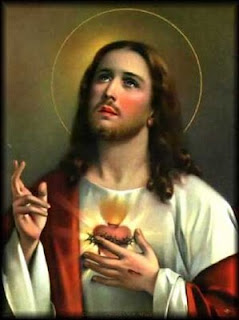
Every Round Goes Higher, Higher. A Reflection on the Feast of the Ascension

In more dioceses than not, the Feast of the Ascension is celebrated this weekend. The liturgist in me regrets the move, but here we are any way. So let’s ascend with the Lord, three days late!

This marvelous feast is not merely about something that took place two thousand years ago. For, though Christ our head has ascended, we the members of his body are ascending with him. Since he was ascended, we too have ascended. In my own life, as a Christian, I am brought higher every year by the Lord who is drawing me up with him. This is not some mere slogan, but something I am actually experiencing. An old song says, I was sinking deep in sin, far from the peaceful shore. Very deeply stained with sin, sinking to rise no more. But he master of the sea, heard my despairing cry. And from the waters lifted me. Now safe am I. Love Lifted me, When nothing else could help. Love lifted me!

Yes, the feast of the Lord’s Ascension is our feast too, if we are faithful. Let’s look at it from three perspectives.

I. The Fact of the Ascension. – The readings today describe a wondrous event that the Apostles witnessed. The Lord, by his own power is taken to heaven. In so doing he opens a path for us too. The gates of paradise swing open again: Lift up your heads, O gates! and be lifted up, O ancient doors! that the King of glory may come in! (Psalm 24:7). In Christ, man returns to God. Consider three things about the Ascension:

A. The Reality – Imagine the glory of this moment. Scripture says, As they were looking on, he was lifted up and cloud took him from their sight….they were looking intently in the sky as he was going (Acts 1:9). So impressive was the sight that the angels had to beckon them to get along to Jerusalem as the Lord had said, Men of Galilee,” they said, “why do you stand here looking into the sky? This same Jesus, who has been taken from you into heaven, will come back in the same way you have seen him go into heaven (Acts 1:11). Yes, it was glorious. Jesus had once said as a summons to faith, What if you were to see the Son of Man ascending to where he was before? (John 6:62). He had also encouraged them saying: Truly, truly, I say to you, you will see heaven opened, and the angels of God ascending and descending upon the Son of man (John 1:51) So here is a glorious reality, and a fulfillment of what Jesus had said.

B. The Rescue – In the Ascension, it does not seem that the Lord entered heaven alone. As we have remarked, in his mystical body we also ascend with him. But consider too this remarkable text that affirms that: Therefore it is said, “When he ascended on high he led a host of captives, and he gave gifts to men. In saying, “He ascended,” what does it mean but that he had also descended into the lower parts of the earth? He who descended is he who also ascended far above all the heavens, that he might fill all things (Eph 4:8ff). Yes, the Lord had earlier, just after his death, descended to Sheol and awakened the dead and preached the gospel to them (cf 1 Peter 4:6). And now, for those he had justified, came the moment ascend with Jesus as a “host,” as an army of former captives, now set free. Behold the great procession that enters behind Christ through the now opened gates of heaven: Adam and Eve, Noah, Abraham, Sarah, Isaac Jacob, Rachel, Judith, Deborah, David, Samuel, Isaiah, Jeremiah, Ezekiel, Malachi, John the Baptist….and one day you! Yes this is a great rescue. Adam and his descendants have not simply been restored to some paradisical garden, they have entered heaven.

C. The Rejoicing – Consider how, this once captive train, sings exultantly as they follow Christ upward to heaven. The liturgy today puts before us a likely song they sang: God mounts his throne to shouts of Joy! The Lord amid trumpet blasts. All you peoples clap your hands, shout to God with cries of gladness, for the Lord the most high, the awesome is the great king over all the earth. God reigns over the nations, God sits upon his holy throne (Psalm 47:6-7). I also have it on the best of authority that they were singing an old gospel song: I’m so glad, Jesus lifted me! Yes I also have it on the best of authority that they were even singing an old Motown song: Your love is lifting me higher, than I’ve ever been lifted before!

Yes, Here are some glorious facets of the Ascension.

II. The Fellowship of the Ascension – We have already remarked that, when Christ ascends, we ascend. Why and how? Scripture says, Now you are the body of Christ and individually members of it (1 Cor 12:27). It also says, All of us who were baptized into Christ Jesus were baptized into his death. By baptism we were buried together with him so that Just as Christ was raised from the dead by the glory of God the Father, we too might live a new and glorious life. For if we have been united with him by likeness to his death we shall be united with him by likeness to his resurrection (Rom 6:3ff). So, when Christ died we died. When Christ rose, we rose. When He ascends, we ascend.

But you may say, he is in glory, but I am still here, how is it that I am ascended or ascending? Consider a humorous example about our physical bodies. When I get on an elevator and punch the button for the top floor, the crown of my head gets there before the soles of my feet. But the whole body will get there unless some strange loss of integrity or tragic dismemberment takes place. So in an analogous way it is with Jesus’ Jesus mystical body. In Christ our head we are already in glory. Some members of his body have already gotten there. We who come later will get there too, provided we stay a member of the Body. Yes we are already ascended in Christ our head. We are already enthroned in glory with him, if we hold fast and stay a member of his Body. This is the fellowship of the Ascension.

III. The Fruitfulness of the Ascension – Jesus does not return to heaven to abandon us. He is more present to us than we are to ourselves. He is with us always to the end of the age (cf Matt 28:20). But in Ascending, without abandoning us, he goes to procure so very important things. Consider four of them:

A. Holy Ghost power – Jesus teaches very clearly that he is ascending in order to send us the Holy Spirit: Nevertheless I tell you the truth: it is to your advantage that I go away, for if I do not go away, the Counselor will not come to you; but if I go, I will send him to you (Jn 16:7ff) He also says, These things I have spoken to you, while I am still with you. But the Counselor, the Holy Spirit, whom the Father will send in my name, he will teach you all things, and bring to your remembrance all that I have said to you (Jn 14:25ff). And yet again, I still have many things to say to you, but you cannot bear them now. When the Spirit of truth comes, he will guide you into all the truth, for he will not speak on his own authority, but whatever he hears he will speak, and he will declare to you the things that are to come (Jn 16:13-14). So the Lord goes, that he might, with the Father, send the Holy Spirit to live within us as in a temple. In this way, and through the Eucharist, he will dwell with us even more intimately than when he walked this earth.

B. Harvest – Jesus says, And I, if I be lifted up from the earth, will draw all men unto me (John 12:32). While the immediate context of this verse is the crucifixion, the wonder of John’s gospel is that is that he often intends double meanings. Clearly Christ’s glorification is his crucifixion, but it also includes his resurrection and ascension. So, from his place in glory, Christ is drawing all people to himself. He is also bestowing grace on us from his Father’s right hand to be his co-workers in the harvest: But you shall receive power when the Holy Spirit has come upon you; and you shall be my witnesses in Jerusalem and in all Judea and Samaria and to the end of the earth (Acts 1:8). Yes, from his place in glory, Christ is bringing in a great harvest, as he said in Scripture: Do you not say, ‘Four months more and then the harvest’? I tell you, open your eyes and look at the fields! They are ripe for harvest. Even now the reaper draws his wages, even now he harvests the crop for eternal life, so that the sower and the reaper may be glad together. Thus the saying ‘One sows and another reaps’ is true. I sent you to reap what you have not worked for. Others have done the hard work, and you have reaped the benefits of their labor.” (Jn 4:35-38). Harvest! And it is the Lord’s work from heaven in which we participate.

C. Help – At the Father’s right hand Jesus intercedes for us. Scripture says, Consequently he is able, for all time, to save those who draw near to God through him, since he lives always to make intercession for them (Heb 7:25). The Lord links his ascension to an unleashing of special power: Amen, amen, I say to you, he who believes in me will also do the works that I do; and greater works than these will he do, because I go to the Father. Whatever you ask in my name, I will do it, that the Father may be glorified in the Son (Jn 14:12).

It is true, we must not understand asking in the name of Jesus as a mere incantation, for to ask in his Name means to ask in accord with his will. And yet, we must come to experience the power of Jesus to draw us up to great and wondrous things in his sight. Despite the mystery of iniquity all about us, we trust that Christ is conquering, even in the puzzling and apparent victories of this world’s rebellion. We read, In putting everything under him, God left nothing that is not subject to him. Though, at present we do not see everything subject to him, yet we see Jesus, who was made a little lower than the angels, now crowned with glory and honor….so that by his death he might destroy him who holds the power of death—that is, the devil— and free those who all their lives were held in slavery by their fear of death (Heb 2:8-9; 14-15). Thus, from heaven we have the help of the Lord’s grace which, if we will accept it, is an ever present help unto our salvation.

D. Habitation – Simply put, Jesus indicates that in going to heaven he is preparing a place for us: In my Father’s house are many mansions: if it were not so, I would have told you. I go to prepare a place for you. 3 And if I go and prepare a place for you, I will come again, and receive you unto myself; that where I am, there ye may be also (Jn 14:2ff) Yes, indeed, He has the blueprints out, and a hard hat on. He is overseeing the construction of a mansion for each of us that we may dwell with him, the Father and the Spirit forever.

Here then are the ways that Christ, by his love is lifting us higher, than we’ve ever been lifted before. Yes, love lifted me, when nothing else could help, Love lifted me.

Photo Credit: Hickory Hardscrabble via Creative Commons

Here’s a modernized version:

Lust in Toyland – A Poignant and Powerful Portrait of Lust in an old Pixar Video

The video below is an old (1989) Pixar “short” reel depicting, in a darkly humorous way, the sin of lust. As is often the case in Pixar movies, toys come alive, and tell us more about ourselves than we might have known. You might want to view it before reading my commentary.

As the video opens we scan the shelf of toys and spy upon a toy woman too good to be true. Indeed, like Barbie, her figure is impossible, or possible only by way of surgery. Yes, here is the woman of Hollywood, or worse, the woman of the pornographers: surgically altered, photographically airbrushed and Photoshopped. She is meant to make normal women feel inadequate, and to make men fantasize about unreality, such that real women seem inferior to them. Yes, here is Satan’s tactic in lust, to shift normal attraction, meant to draw us to one another, into distorted attraction, which turns us inward to fantasy, and away from each other and reality.

Now meet the snowman, cold on the outside but burning with lust on the inside. As we meet him, he is clearly bored with what he has, bored with his reality. Scripture says, All things are wearisome, more than one can say. The eye never has enough of seeing, nor the ear its fill of hearing (Eccl 1:8).

And then he sees her! Too good to be true (she is in fact not real, not true, as we have discussed). And now the fires of lust are kindled in him, and he engages in a series of destructive, and self-destructive actions, all to satisfy his lust.

Is this not often what lust does? Those trapped by it will often throw everything overboard to possess its object. They will endanger and inflict harm on their very self, they will throw loved ones overboard, they will squander, use up and destroy their wealth and all they have. Some have destroyed marriages and families, forsaken children, and brought disease and poverty on them self, all for what lust promises: the latest voluptuous one, “Baby if you’ve got the curves, I’ve got the angles.”

Not a few of the actions of this toy snowman are of great symbolism:

1. Spying upon her, he fixes his eyes. For everything in the world–the cravings of sinful man, the lust of his eyes and the boasting of what he has and does–comes not from the Father but from the world. (1 John 2:16).

2. Conscience speaks – Suddenly there is a sound from above and he looks up. Is this the voice of his conscience, or the voice of God? Thoughtful, he looks down, and considers for a moment. Scripture personifies lust, and the voice that our snowman must hear as he looks up and down.

My son, pay attention to my wisdom, listen well to my words of insight, that you may maintain discretion, and your lips may preserve knowledge. For the lips of an adulteress drip honey, and her speech is smoother than oil; but in the end she is bitter as gall, sharp as a double-edged sword. Her feet go down to hell, her steps lead straight to the grave. She gives no thought to the way of life; her paths are crooked, but she knows it not. Now then, my sons, listen to me; do not turn aside from what I say. Keep to a path far from her, do not go near the door of her house, lest you give your best strength to others (Prov 5:2-8)

(Pardon the quote ladies, for it lays the sin sin at the feet only of the woman. But remember lust is being personified here, and it is a father speaking to his sons in the passage).

3. But lust wins, he looks up angry and curses the glass “boundary” that prevents his fulfillment of his lustful desire. The boundary must go! The same Scripture says,  The evil deeds of a wicked man ensnare him; the cords of his sin hold him fast. He will die for lack of discipline, led astray by his own great folly. (Prov 5:23-25)

4. Lust, the home wrecker – The first thing he throws away is his home. He hurls it at the glass boundary. With it, we can presume goes his wife and family. Again scripture says,  You give your best strength to others and your years to one who is cruel. Drink water from your own cistern, running water from your own well. Should your springs overflow in the streets, your streams of water in the public squares? Let them be yours alone, never to be shared with strangers. May your fountain be blessed, and may you rejoice in the wife of your youth. A loving doe, a graceful deer— may her breasts satisfy you always, may you ever be captivated by her love. Why be captivated, my son, by an adulteress? (Prov 5:9, 15-20)

5. He goes on a reckless path of self destruction. He cuts off his nose to spite his face, literally. We also see his face become increasingly distorted as he wreaks havoc on himself and his world. His whole world, and everything and everyone in it, is shaken. For, like Jonah who brought storms to others when he ran from God, so does this snowman make the world around him shake and storm by his lust. He sows in the wind and reaps the whirlwind. And this is quite literally illustrated as a great storm swirls in his little world.

6. He descends deeper into sin. And because he has affected others, his whole world descends with him. So too for us, whom lust has brought low together. Our whole culture has descended, and lust is a huge reason for this. Scripture says of lust personified: Her feet go down to death; her steps lead straight to hell (Prov 5:4-5). And so this snowman and his world slide off the shelf and descend deeper into sin, while lady lust looks on.

7. The downward cycle continues and he is imprisoned in his lust. Quite literally drowning in his lusts, our snowman spies on a lusty mermaid and lunges for her. But his prison finds him, and once again, he discovers the truth with which we began, The eye never has enough of seeing, nor the ear its fill of hearing (Eccl 1:8). Indeed he is locked in his lusts. Again as Scripture says,  The evil deeds of a wicked man ensnare him; the cords of his sin hold him fast. (Prov 5:22)

And so we leave our snowman locked in his lust. He has lost his home and family, disfigured himself and fallen mighty low, taking his world and others with him. Such can be the toll of lust.

A rather serious post, I suppose, especially given the rather light fare of the video. But I hope you can see that the humor has a dark side, and that this little movie goes a long way in giving a poignant portrait of lust. “Enjoy” the video.

Pondering the Great Reversal That Is Coming

One of the strong traditions of Scripture is of the great reversal that will one day come for many. I have often been sobered by it when I consider how blessed I have been in this life. I have also been consoled by it when I struggle to understand why some people in this world seem to suffer so much more that I do, or others do.

Life seems a very uneven proposition if we only look at this side of the equation. Only God sees the whole picture, but to some extent, he has revealed that those who have suffered much in this life will be more than rewarded in the life to come and that there will be a great reversal.

The theme of the great reversal is most fully developed in the New Testament where the understanding of the life to come is also most developed.

Consider the following texts:

  1. [Jesus said], “But many who are first will be last, and the last will be first.” (Matt 19:30 & also Matt 20:16 & also Mark 10:31)
  2. [Mary said], “He has cast down the mighty from their thrones but lifted up the lowly. The hungry he has filled with good things; but the rich he has sent away empty.” (Lk 1:52-53)
  3. Abraham replied [to the rich man], ‘My child, remember that you received what was good during your lifetime while Lazarus likewise received what was bad; but now he is comforted here, whereas you are tormented. (Luke 16:25)
  4. Blessed are you who are now hungry, for you will be satisfied. Blessed are you who are now weeping, for you will laugh. Blessed are you when people hate you, and when they exclude and insult you, and denounce your name as evil on account of the Son of Man. Rejoice and leap for joy on that day! Behold, your reward will be great in heaven. For their ancestors treated the prophets in the same way. But woe to you who are rich, for you have received your consolation. But woe to you who are filled now, for you will be hungry. Woe to you who laugh now, for you will grieve and weep. Woe to you when all speak well of you, for their ancestors treated the false prophets in this way. (Luke 6:21-26)
  5. Much will be required of the person entrusted with much, and still more will be demanded of the person entrusted with more. (Luke 12:48)
  6. I consider that the sufferings of this present time are as nothing compared with the glory to be revealed for us. (Rom 8:18)
  7. For this momentary light affliction is producing for us an eternal weight of glory beyond all comparison, as we look not to what is seen but to what is unseen; for what is seen is transitory, but what is unseen is eternal. (2 Cor 4:17-18)

There are other texts, and I am grateful if you will add to this list. But, for now, let these suffice. As I have said, I am both challenged and consoled by these texts.

I am consoled for I, like others, have suffered in this life and experienced set backs. In regards to this, the Lord promises that sufferings and set backs, if endured with faith, produce ultimate profit, not loss. Much of this profit may wait till heaven, but surely sufferings endured with faith are like treasure stored up in heaven. First the cross, but then the crown. Hallelujah.

I am also consoled on account of others. I, like you, know people who have suffered far more than seems fair. Loss after loss mounts up, grief after grief. My humanity recoils, and I often cry to God on behalf of others who seem to suffer so much more than others. Lost health, lost jobs, lost home and family members. Why, O Lord?!

I think of my poor sister who was mentally ill and horribly afflicted by demons and voices who spoke to her, haunted her, and robbed her increasingly of any touch with reality. Ultimately her life ended tragically when she died in a fire. She was surely among the “last” in this life. But she loved God and wanted desperately to get well. The day after she died I offered Mass for her, and I heard her speak to me in the depth of my heart and she said “I’m OK now, Charlie.” And somehow I knew that God was taking care of her, purifying and clearing her mind.

And I also knew that she who was among the last but believed, I would one day see as among the first in the glory of heaven (pray God I get there). I suspect that she will be close to the throne and that I, who have been among the first here in this world, will have a “mansion” far less spacious than hers.

I am consoled for my sister’s sake and also for those who, unlike me, live in great poverty in other parts of the world. The bounty of American living is but a dream to them. Perhaps there is war. Perhaps there is famine or natural disaster. Perhaps they are victims of despotic and corrupt governments. They are less free, less blessed, in greater stress and often in desperate need. They are among the “last” in this world. But, if they have faith, they will be blessed to be among the first in the great reversal that is coming when the Kingdom fully breaks in. Faith IS essential. Jesus did not say all the last shall be first but that many who are last shall be first. I am sure that it is living faith that makes the difference.

But I am also challenged. I am among those who are first. What does this say for me in the great reversal that is coming upon this world? I have good health, I enjoy bountiful blessings. I am more blessed that I deserve. I live in the greatest, richest, and most powerful country in the world. My needs are largely provided for. I am here in my air-conditioned room with time enough to write and ponder things. I am far beyond mere subsistence. I am surely among the first, the rich. Even the poorest in this country are blessed compared to many others in the world.

Where shall I be when the first trumpet sounds, when the great reversal sets in?

Not everything is as it appears. We crave wealth, power and access and call it a blessing. We want to be first. But God warns it may well be a curse:

Those who want to be rich are falling into temptation and into a trap and into many foolish and harmful desires, which plunge them into ruin and destruction. For the love of money is the root of all evils, and some people in their desire for it have strayed from the faith and have pierced themselves with many pains. (1 Tim 6:9-10).

Knowing this and other texts like it, we still want to be rich, on top, first. We are very obtuse.

And so, I must say I am challenged. I am not defeated however or fatalistic. God has not utterly forsaken the “first.” He has left us a way and given us instruction on how to avoid the “curse” of our wealth and good fortune. Simply put, that we should use our status as “first” to bless others. That our many gifts would be placed at the service of the human family. A few texts come to mind:

  1. [Jesus said], “I tell you, make friends for yourselves with deceitful wealth, so that when it fails, they [likely the poor whom we befriended] will welcome you into eternal dwellings.” (Luke 16:9)
  2. Tell the rich in the present age not to be proud and not to rely on so uncertain a thing as wealth but rather on God, who richly provides us with all things for our enjoyment. Tell them to do good, to be rich in good works, to be generous, ready to share, thus accumulating as treasure a good foundation for the future, so as to win the life that is true life. (1 Tim 6:17-19)

And so it is that the Lord instructs us who are “cursed” to be first to store up our true treasure in heaven (Matt 6:19). Of course we do not store up our treasure in heaven by putting it in a balloon or rocket. Rather we store it up by generously dispensing it to the poor and needy. Perhaps by simple gift, or by providing jobs and economic opportunity for others. Perhaps by sharing our gifts of knowledge, or time or other talents. In so doing perhaps our curse of being among the first will be overcome and the challenge will be met.

The great reversal is coming! Where will I be when the first trumpet sounds?

This Chant of the funeral Mass refers to the great reversal but prays that the deceased will be found with Lazarus who once was poor. The text says: In paradisum deducant te Angeli; in tuo adventu suscipiant te martyres, et perducant te in civitatem sanctam Ierusalem. Chorus angelorum te suscipiat, et cum Lazaro quondam paupere æternam habeas requiem.(May the angels lead you to paradise and at your coming may the martyrs receive you and may they lead you into the Holy City Jerusalem. May a choir of Angels receive you and with Lazarus who once was poor, may you have eternal rest).

Make Haste…Slowly! – On Balancing two texts of Scripture about the use of Discipline in the Church

We’ve had a good amount of debate on the blog about the question of Church discipline. Specifically, what should bishops do to discipline prominent Catholics and Catholic institutions who stray from Church teaching and/or practice, and do so in a rather public way.

The issues revolve around abortion, especially voting to fund abortion, homosexual “marriage,” and religious liberty. Names and Institutions such as Nancy Pelosi, Kathleen Sebelius, Sr. Carol Kegan, John Kerry, the late Ted Kennedy, Georgetown University, Notre Dame University, etc., et al.

Prudence – I have argued that the best way forward in such things is often a matter of prudential judgment. A prudential judgment is the judgment, rooted in the virtue of prudence whereby a person, recognizing his moral duty in a given matter, discerns and then chooses the best means to accomplish it. A prudential judgement is also one in which the circumstances must be weighed to determine the correct action. And since circumstances may vary, there are situations where two people could weigh the circumstances differently and ethically come to different conclusions. Further there are, often times, different paths to the same goal.

It would seem that the essential goals for a bishop in matters like these would be the salvation of souls, the good of individuals, the common good, unity of the faithful in the truth of Christ and the gospel and of holding souls as close to Christ as possible.

How best should this be accomplished? There seem to be two basic camps in the discussion with very different views of what the Bishops should do in terms of discipline, when and to whom. In a way I am mindful of the old Latin expression: Festina Lente: Make haste, slowly! Hence I will term these two schools of thought: Festina! and Lente! Lets look at each school and see the scriptural roots behind each.

I. FESTINA! Swift and firm action – This view holds that the individuals and institutions like those above should be strongly and publicly warned by their own bishop, and, in the case of Federal politicians, also warned by the Cardinal Archbishop of Washington. Further, they should be denied Holy Communion and also warned of formal excommunication if they do not repent. Such procedures should be begun soon after it is discovered that repentance is unlikely.

It is argued that this approach is necessary, both for the good of their own souls, but also for the common good of the Church. As for institutions, such as the universities listed, they should loose their status and identity as Catholic institutions in short order, if they fail to comply with the document Ex Corde Ecclesiae and other relevant norms. Again, this, it is said, will prevent them from doing further harm.

Scandal – For the Bishops, pastors and other Church leaders to fail in this regard is to give wide and public scandal and to allow evil and error to proliferate.

Fraternal correction – This sort of conclusion is strongly rooted in the need and call for fraternal correction spoken of in scripture. Jesus himself says,

“If your brother sins against you, go and show him his fault, just between the two of you. If he listens to you, you have won your brother over. But if he will not listen, take one or two others along, so that ‘every matter may be established by the testimony of two or three witnesses.’ If he refuses to listen to them, tell it to the church; and if he refuses to listen even to the church, treat him as you would a pagan or a tax collector. “I tell you the truth, whatever you bind on earth will be bound in heaven, and whatever you loose on earth will be loosed in heaven. (Matt 18:15-18)

There are numerous other passages in the Scriptures about fraternal correction (which St. Thomas numbers as an act of charity) in a lengthier article I wrote on the topic here: Correcting the Sinner

The point of fraternal correction, even up to, and including excommunication, is that it is like a medicine meant to heal. It’s purpose is not simply to shame or exclude, but to illustrate the seriousness of something and call forth repentance and ultimate reintegration into the community of faith. A second purpose of fraternal correction, even including excommunication is to protect the community from the effects of sin and sinners.

Here then is approach number one to the situation before us: swift and firm action by the bishops, pastors and other Church leaders, for the reasons stated, against offenders such as those listed above.

II. LENTE! Careful, deliberative discussion with the purpose of keeping doors of communication open and avoiding the alienation of either offenders or third parties. This position usually gives greater weight to the circumstances of our time, wherein disciplinary actions are often misunderstood and misrepresented by a hostile media, and other third parties. For example, it is thought that the refusal of communion to a pro-abortion politicians, will not be seen as a matter of the Church engaging a member in a matter of internal discipline. Rather it is seen and portrayed as a politically based attack by a Church that is increasingly conservative and only “selectively outraged.” These charges are not true but are widely accepted as such. There is also the fear that the disciplined public figures will become martyrs for their cause, and the whole thing becomes a backfire for the Church.

This approach also gives greater weight to the wish to keep the doors of discussion open and to avoid the risk of alienation either of the individual, the institution, or the people people closely associated with them. It emphasizes that Christ called sinners more than he repelled them, that it is better to hold sinners close, than repel them.

The approach is strongly rooted in the Scripture of the wheat and the tares:

Jesus told them another parable: “The kingdom of heaven is like a man who sowed good seed in his field. But while everyone was sleeping, his enemy came and sowed weeds among the wheat, and went away. When the wheat sprouted and formed heads, then the weeds also appeared. “The owner’s servants came to him and said, ‘Sir, didn’t you sow good seed in your field? Where then did the weeds come from?’ “‘An enemy did this,’ he replied. “The servants asked him, ‘Do you want us to go and pull them up?’ “‘No,’ he answered, ‘because while you are pulling the weeds, you may root up the wheat with them. Let both grow together until the harvest. At that time I will tell the harvesters: First collect the weeds and tie them in bundles to be burned; then gather the wheat and bring it into my barn.’” (Matt 13:24-30).

It is also argued that this second approach, articulated here by Jesus, is also the usual approach of God, who is patient with sinners and often very slow to punish. Indeed, his patience often makes the patience of Catholic bishops seem pale by comparison. For God was “slow” to bring an end to the likes of Stalin, Hitler, Pol Pot and many other genocidal maniacs. He has allowed many heretics and heresies to flourish.

God’s delay is deeply mysterious to us. Why does he allow such things, knowing many will be hurt, killed, misled, and confused? It is not easy to say. But this is God’s usual way, and the way described by Jesus in the parable of the wheat and tares. In that parable the “owner” (God) sees greater risk in harming the wheat by pulling up the weeds, than by letting them grow together to the harvest. There is a wisdom that we can grasp here, but it also remains mysterious to us that God allows evil and error to go on so long.

So where do these reflections and camps leave us? It would seem that they lead us back to the understanding that knowing the best course in given circumstances, involves prudential judgements and the weighing of many factors. It would seem that we are led to greater humility and away from certain and sweeping condemnations of Bishops or other leaders who do not follow our exact plan and judgment, and also of those who think more aggressive measures are needed today. Reasonable people will differ on what is best.

Note the balance demonstrated by both Scripture and orthodoxy. Both these very different courses of action are taught and displayed in Scripture. Both are needed. Both can be applied depending on circumstances. The Jesus who said of the unrepentant sinner refusing correction of the Church, “Treat him as a Gentile or tax collector,”  also said of the weeds,  “No, don’t tear them out, let them grow together until the harvest.”

Which is it? Orthodoxy says both. And it is a prudential judgement about which course of action to apply when, on whom, where and to what extent.

Comments are open. I realize you may favor one approach or the other. It is fine to say what you prefer to be done by Church leaders. But try to avoid denunciations of either side. As I hope can be seen, both traditions have a place in the Church, and reasonable men and women can, and do, authentically differ on which course to take. And they differ both generally, and in specific cases.  Again, it is Okay to say what approach you favor, but avoid name calling and judgements about the personal character of those who may have different approaches or understandings, including our leaders. It might be interesting to note not only why you favor one course over another, but also, why you think the parameters of the other course of action do not apply.

In this movie scene from The Mission two brother priests have chosen very different ways to address an impending threat to the community. One chooses to confront the evil,  the other chooses the way of prayer. Sadly both end up dying and destruction comes upon the community despite the best (and different) efforts of both. Who was right, who was wrong? The frustrating and ambiguous ending reminds us that it is not always clear what is best. Yet somehow in the terrible wake of this battle, the faith survived, for God can make a way out of no way.

Happiness is an inside job – As seen in Scripture.

In the first reading for Tuesday’s daily mass there is a remarkable description of an event in the life of Paul and Silas. And, even more remarkable than the event itself is their reaction to it. Let’s pick up the story as told in Acts:

The crowd in Philippi joined in the attack on Paul and Silas, and the magistrates had them stripped and ordered them to be beaten with rods. After inflicting many blows on them, they threw them into prison and instructed the jailer to guard them securely. When he received these instructions, he put them in the innermost cell and secured their feet to a stake. (Acts 16:22-25)

It is so easy for us to read passages like this and miss the severity of what happened. The two are beaten with rods. Such beatings might vary in some degree, but the overall severity of the passage (e.g. having them cast into the deepest part of the prison and the jailer later having to bathe their wounds) leads to a reasonable conclusion that the beating was also severe. Such beatings lead to deep bruises and contusions, both external and internal bleeding, and often included broken ribs and possible trauma to the kidneys and other internal organs.

After this severe beating, and likely bloody and in severe pain they are ordered bound by leg shackles and cast in the deepest and darkest part of the prison. In this inner part was deep darkness, rats, snakes, mice, vermin. There was likely also dank water, along with urine and feces.

No matter how we look at it, the external dimensions of both the prison and their pain are grave. It would be enough to have the average person in despair, self pity and perhaps, even a semi-conscious state.

Yet what do we find?

About midnight Paul and Silas were praying and singing hymns to God, and the other prisoners were listening to them. (Acts 16:26)

Yes! despite an awful beating, severe pain, and terrible conditions, they are singing and praising God. It is loud enough that the other prisoners in other parts of the prison hear them.

And here is a remarkable teaching: happiness is an inside job. Paul and Silas, despite every outside discomfort, and the worst physical pain of bleeding contusions and broken or bruised ribs, have a joy that cannot be taken away. They have a connection to God that cannot be severed.

It is too often the case today that we strive to root our happiness in external matters such as money, esteem, creature comforts and the like. And yet, it remains true that many who have these things in abundance are still unhappy, and, also, that many who lack these things in abundance are happy.

There is something deeper about happiness than mere comfort, riches or externalities. I remember some years ago talking with the personnel director of the diocese about an impending transfer. I told him of my fear that they might send me somewhere where I would not be happy. He told me, “Charles, you have been in four assignments now and have been happy at every one. The fact is, you’re going to be happy wherever you go, because that’s the way you are. Happiness is an inside job.”

I have come to discover he was right, and I’ve never been unhappy wherever they sent me. There’s a joy I have that the world didn’t give to me and the world cannot take away.

Sure, there are moments of sorrow and tension in every life. But deeper down there is a stable serenity that the Lord has given me for which I am exceptionally grateful. And I have come to discover that deep inner place of peace, of joy, and contentment, and I have further discovered it is largely unaffected by external realities.

There is a Greek word: μακάριοι (makarioi) which describes a kind of stable happiness or blessed state. The pagan Greeks used the verb to refer to the happiness of the gods, unaffected by worldly matters. Jesus takes up this verb in the beatitudes: Blessed (μακάριοι – happy) are the poor in spirit, the Kingdom of Heaven is theirs. In other words, “Stably blessed and happy are those who have their treasure in heaven, rather than this passing and unstable world.”

Here then is a gift to be sought: the gift of an inner and stable happiness, the gift to be like Paul and Silas, to bless the Lord at all times, what ever the circumstances. This of course is the “normal Christian life.” As Scripture says,

I will bless the LORD at all times: his praise shall continually be in my mouth. (Psalm 34:1)

And Paul himself says,

Though outwardly we are wasting away, yet inwardly we are being renewed day by day. For our light and momentary troubles are achieving for us an eternal glory that far outweighs them all. So we fix our eyes not on what is seen, but on what is unseen. For what is seen is temporary, but what is unseen is eternal. (2 Cor 4:16-18).

And again he said, Rejoice in the Lord always. I will say it again: Rejoice! (Phil 4:4).

Yes the normal Christian life is to be one of joy, a joy largely unaffected by external events, and accessible even in moments of sorrow where a consolation, difficult to describe is always at work.

Two final things to note of this passage about Paul and Silas, is how their joy and confident disposition affect others. There is an old saying “When I get better, others get better too.” In other words, we have important effects on others around us.

The first thing is to note its liberating power. For the text says, there was suddenly such a severe earthquake
that the foundations of the jail shook; all the doors flew open, and the chains of all were pulled loose
(Acts 16:27). It is the role of the Christian to exude a joy and a confidence that liberates others from the prison cells of despair, sin and depression. Do people see you as a person of hope? Does your joy liberate and give confidence?

Secondly note the love that is manifest by Paul and Silas, and how that love moves the jailer to repentance and conversion. The text tells us: When the jailer woke up and saw the prison doors wide open, he drew his sword and was about to kill himself, thinking that the prisoners had escaped. But Paul shouted out in a loud voice, Do no harm to yourself; we are all here. Now consider that the jailer may well have been one of the men who beat them with rods. And, at a human level, the average person might rejoice to see the jailer try and kill himself. But Paul, not wanting him to lose his life, calls out and, even at possibly being re-imprisoned, seeks to save him. So moved is the jailer by this love and faith, that he seeks immediate conversion. How has your love and reverence for life won the hearts of others?

Yes, happiness is an inside job. Here is a gift to be sought from God: an inner transformation and peace that is stable and largely unaffected by external things. What a gift this is to us, and to others around us. For, when I get better, others get better too.

Concerning Graciousness in Speech and Love for One Another – Yes, even on blogs!

In the last few days I have never had to refuse to post so many comments.

It started last Thursday evening when I posted a reply to the President’s announcement that he now favored gay “marriage.” I opined that I thought his understanding of Jesus and his reading of the Christian moral vision was flawed because it was partial. That it did not respect the often paradoxical nature of Jesus who was able to hold together what the world often cannot reconcile, e.g. love for sinner and yet a highly demanding moral vision without compromise.

Generally the comments were good and did not stray too far into politics, which was not the point.

But then, it would seem, a homosexual site must have linked to the site and there poured in highly negative commentary, much of it respectful, but much more of it so vile I will not describe it, other than to say if it was not riddled with profanity, it was loaded with deeply offensive personal attacks upon the members of the Church, other commenters, et al., and highly unfair, inaccurate and  hateful descriptions of the Church.

To some extent I have come to expect this when posting on the issue of homosexuality. While I remain committed to insisting that the vast majority of the homosexual community is respectful and kind, even if they disagree with the Church, there is a very vocal, and extremely hostile fringe, that does not brook any departure from total acceptance of the homosexual agenda.

That was round one.

Round two was today, when I had to delete and many comments as I accepted. The venom this time came from the right.

The Archdiocese it seems, had not gone far enough, according to many, in denouncing Georgetown University. Many opined that more was required. (And in fact there may be more to come). And while this is a fair enough position to hold, the fact that the strategy was not 100% what some thought should be done, caused some very acidic and bitter comments to come through. Many of these comments contained name-calling and attacks on the integrity and commitment both of Cardinal Wuerl and the Bishops in general. I could not post them. It is not the purpose of this blog to bash the bishops and denounce their leadership.

This is a blog of the Archdiocese of Washington and I am a priest of Jesus Christ and this local Church. It is my mission and purpose to build unity among the faithful and to bind them more closely to Jesus and to the Bishops, who, by His grace, are our shepherds. I hope you can understand that I could never post some of things I read today.

To be sure, we do not shy away from controversial topics here and I DO see a place for conversation that is, at times, frank and edgy. Debate is a fact in the Church and there is a forum for that here. The Archdiocese and the Cardinal permit this, it is after all their blog, not mine. But there have to be limits, and charity is an absolute limit. So is respect for the office of Bishop.

Most of the denunciation of bishops that takes place in this regard is regarding what is know as “prudential judgments,” they do not even involve doctrinal deviations. A prudential judgement is a judgement of the best way to attain a certain goal, say unity, or orthodoxy. Some strategies are long term in nature, others more focus on a swift and sometimes sweeping strike. In prudential judgments, reasonable people will differ on the best means to the end.

It is clear that some commentors on this blog want swift and sweeping action in many, many areas of Church life. But to be honest, that is not the usual approach of the Church, which often thinks in terms of centuries more than days and weeks. The nature of the Church, almost from the beginning is to thoughtfully consider, and move very slowly and cautiously.

Even given this historical perspective, many will still want swift and sweeping action. But the bottom line is, these are prudential judgments and there actually ARE different ways of proceeding. Strategy is as much art, as science.

And, speaking of strategy,  how about a little strategy when it comes to how we speak? I have considered myself,  and been considered a theological conservative by most of my peers. And while I have ministered in diverse settings (from the Traditional Latin Mass all the way to vibrant African American Liturgies), my basic core is what I like to term pastoral orthodoxy. I don’t cut corners and surely won’t water down the faith to be popular.

That said, I shudder of late at the terrible strategy of many of my conservative brethren in the Church who seem to think that bitter criticism and harsh invective is a way to win friends and influence people. It is not. Some people are the worst of ambassadors for conservative or traditional Catholic points of view. I cringe as I see what they write and say. Too often I just have to shake my head and press delete, even if I sympathize with their view. “Gosh,” I think, “Why did they have to say it that way? Why do they have to affirm one thing, by attacking other legitimate options?”

Regarding yesterday’s post I was so discouraged. The editorial in the Catholic Standard was a step in the right direction for those who think the Georgetown situation is egregious. I am in that category. But how sad it was to read, not encouragement, but ridicule, laughter and dismissive comments in large numbers from fellow conservatives, that the Archdiocese did not go far enough according to them.  But it WAS a step in the right direction from that point of view. And how valuable it would have been had conservatives praised the editorial and given encouragement for further action, saying to the hierarchy, in effect, “We’ve got your back if and when you need to move further forward in this. And when others denounce you for it, we will be there with you every step of the way.”

Frankly, fellow conservatives, we have to learn to be something other than a huge pain in the neck and the “complainers in chief” about every single thing. We should do more than make people cringe when they hear we are “on the other line.” Where’s the support, where’s the encouragement that should come when steps, even baby steps, are made in the hopeful directions?

Come on now, work with me on this! Lets combine more praise with necessary critique. Let’s soft-peddle the harshness and season our speech with salt. Let’s show a little more joy and the confidence of those who worship a risen and victorious Lord. And when good steps are made in directions we deem appropriate, let’s turn up the praise and speak with gratitude. Come on Church, work with me on this. Our Bishops need our prayers, encouragement and support. And even when we feel the need to tell them our concerns, lets find a way to curb our temper and speak graciously.

To be fair, some the authors of the comments I had to delete, I contacted by e-mail and explained my reason and they graciously accepted my critique. Others did not. Some resubmitted, others did not. I also am not without sympathy when it comes to the struggle of patiently waiting in a Church that moves slowly and cautiously.

Also to be fair, most readers and those who comment here don’t need to hear me on this. I beg your pardon and patience, if that is the case.

But the past few days have been awful. I expect hate and ridicule from the radical fringe outside the Church. But it really hurts when it comes from within.

Lets end with scripture:

Let your conversation be always full of grace, seasoned with salt, so that you may know how to answer everyone. (Col 4:6)

Do not let any unwholesome talk come out of your mouths, but only what is helpful for building others up according to their needs, that it may benefit those who listen. (Eph 4:29)

But in your hearts set apart Christ as Lord. Always be prepared to give an answer to everyone who asks you to give the reason for the hope that you have. But do this with gentleness and respect (1 Peter 3:15)

I don’t know, you decide who is who in this video and what it might ultimately mean:

Archdiocese of Washington speaks out over choice of Kathleen Sebelius as Speaker at Georgetown University

The Vicar General of the Archdiocese of Washington, Bishop Barry Knestout forwarded the following editorial from the Catholic Standard, the official newspaper of the Archdiocese. He asked the we priests share it in any way we deem appropriate with the people of the Archdiocese. In this matter.

Many of you write me and ask when and if the Archdiocese will speak out on this or that matter. In this matter, I am able to report that it has. And frankly the editorial pull no punches, as you will see. The original text is below in bold black italics. My comments are in plain red text. The original article is here: Cathstan.org and a PDF of it is here: Disappointed but Not Surprised

Late last Friday, Georgetown University announced that U.S. Secretary of Health and Human Services Kathleen Sebelius is the featured speaker for an awards ceremony at the University’s Public Policy Institute. This news is a disappointment but not a surprise.

As is well known, Secretary Sebelius is the architect of the “HHS mandate”, now federal law, which requires all employers — including religious institutions — to provide health insurance coverage of abortion-inducing drugs, sterilization and contraceptives for its employees and redefines religious ministry to exclude Catholic social services, hospitals and universities if they serve or employ non-Catholics. Given her position, it is disappointing that she would be the person that Georgetown University would choose to honor.

Founded in 1789 by John Carroll, a Jesuit priest, Georgetown University has, historically speaking, religious roots. So, too, do Harvard, Princeton and Brown. Over time, though, as has happened with these Ivy League institutions, Georgetown has undergone a secularization, due in no small part to the fact that much of its leadership and faculty find their inspiration in sources other than the Gospel and Catholic teaching. Many are quite clear that they reflect the values of the secular culture of our age. Thus the selection of Secretary Sebelius for special recognition, while disappointing, is not surprising.

Pay close attention to this paragraph. The editorial, while not using canonical language,  in effect sets forth the view that Georgetown has largely become a secular University, along the line of Harvard, Yale et al. It goes even further, stating that the primary source of inspiration at Georgetown is not the Gospel or Catholic teaching, but instead, is other unnamed sources.

To be clear, there are surely some very fine teachers and students on campus. I know at least several who are striving to maintain some semblance of Catholic identity there. It remains true that Mass is still offered on campus, but that is true of Secular universities as well.

So, what is Catholic about Georgetown? Very little, it would seem by the editorial’s assessment. This assessment, I know, many of you will share, in the wake of one discouragement after another emanating from the campus of Georgetown.

Blessed John Paul II, in his 1990 apostolic constitution on Catholic Universities, Ex Corde Ecclesiae, invites Catholic universities into a relationship of faith and excellence. He calls them to share in the Church’s task of bringing the Gospel and Christian values into the culture of our day.

He reminds us that a Catholic university is “a living institutional witness to Christ and his message, so vitally important in cultures marked by secularism… Moreover, all the basic academic activities of a Catholic University are connected with and in harmony with the evangelizing mission of the Church,” among them, “dialogue with culture that makes the faith better understood” (ECE I: B.4.49).

Basic Catholic Mission stuff here. Sadly Georgetown and many other Catholic Universities are not clear on “Job 1.”

One can only wonder how the selection of Secretary Sebelius for such a prominent role as a featured speaker can be reconciled with the stated Catholic mission and identity of Georgetown University. Secretary Sebelius’ vision on what constitutes faith-based institutions presents the most direct challenge to religious freedom in recent history.

Yes, I wonder if Georgetown and others who think like this, have any  idea where intrusive government will end? It does not take a prophet to see that if the Federal Government can intrude on a matter like this (Catholic sexual and life teachings) which many at Georgetown sniff at, that the same Government will be back with more demands.

And these demands, the faculty and administration at Georgetown may be less sanguine about. Who is to say and more conservative administration could not demand that Georgetown teach, facilitate, and fund abstinence based programs as part of a healthcare mandate, or perhaps that they require all students and employees to contribute to and pay for a pro-life crisis pregnancy center to help bring babies to term, and that they fund an adoption agency on campus to encourage single moms to adopt their children to intact families. What if all this was in a future health care mandate that sought to preserve and foster the lives of infants and Georgetown was required to pay for all this?

I doubt Georgetown faculty and staff would be so sanguine about this, and say, “Well of course Government knows best, and if Government calls this women, infant and children’s healthcare, who are we to say no?” No, I rather doubt Georgetown would be inviting the HHS Secretary from a conservative administration proposing this. If they did, the protests would be so thick, that he or she couldn’t even get on campus.

But wake up Georgetown! You celebrate a woman who is helping to gut religious liberty. But your religious liberty is just as much on the line as any one else’s. Uncle Sam will be back, and you might not be so pleased the next time. Time for sobriety Georgetown.

On the same weekend that the Georgetown announcement was made, Pope Benedict XVI spoke of the importance of Catholic education and the intellectual and cultural challenges of the New Evangelization in the context of contemporary American society. The Holy Father recalled that during his pastoral visit to America in April 2008, in his homily at the Mass at Nationals Stadium, he called on the Church in America to cultivate “a mindset, an intellectual culture which
is genuinely Catholic”. Last weekend he reiterated the need for American Catholic institutions of higher learning to commit to “building a society ever more solidly grounded in an authentic humanism inspired by the Gospel and faithful to the highest values of America’s civic and cultural heritage”.

With all of the people struggling so hard to preserve freedom of religion, and with all that the United States Conference of Catholic Bishops has said in defense of this important value, Georgetown’s choice of the architect of the radical challenge of such freedom for special recognition can only be seen as a statement of where the university stands – certainly not with the Catholic bishops. Clear and unambiguous

Georgetown University’s response to the commencement speaker decision is disappointing, but not surprising. When the vision guiding university choices does not clearly reflect the light of the Gospel and authentic Catholic teaching, there are, of course, disappointing results.

In other words, the fruit does not fall far from the tree. And the editorial could not be more clear, the vision at Georgetown is not the Gospel and it is not Catholic teaching.

So who wrote this? The editorial is unsigned. But the Catholic Standard is the official paper of the Archdiocese of Washington. As such it is a recognized voice of the Archdiocese and editorials like this are not published without review by the Cardinal’s senior staff.

I hope you will agree that the editorial lays out a very serious need for soul searching at Georgetown. And, while some of you may wish that universities like Georgetown would have long ago been censured and/or had their Catholic identity officially removed, that involves extensive and careful canonical procedures. I have no knowledge that any such actions are underway or have ever been tried in the past. And such matters are wholly left to the pastoral discretion of the bishops. I think we ought to allow the bishops their rightful prudential judgements in these sorts of matters and not be too hypercritical of them. They know a lot more than we ever will, and they have a bigger picture in mind as well, as they try to hold everyone as close to Christ as possible.

In your comments please consider charity, and remain prayerful about this matter, as I know most of you do.

This video is from the Cardinal Newman Society

On the Paradox of Love and Law – A Reflection on the Gospel for the 6th Sunday of Easter

In the gospel today Jesus cuts right across the modern Western tendency to oppose Love and Law, Law and Joy. Though we oppose them, Jesus joins all three concepts and summons us to a new attitude. Lets take a look.

I. Connections – Jesus says, As the Father loves me, so I also love you. Remain in my love. If you keep my commandments, you will remain in my love, just as I have kept my Father”s commandments and remain in his love.” “I have told you this so that my joy may be in you and your joy might be complete.

Note here how the Lord joins three concepts: Love, Law and Joy. This precisely the opposite of what western culture does. The best that Western culture will admit of Law is that it is a necessary evil. While this is the best assessment of it, the more routine assessment is that law is somehow an unloving imposition by the powerful upon the unpowerful, by the hierarchy on the laity, by the (evil, unloving, oppressive, Pharisaical, etc.) Church on decent people.

But whereas the modern world severs law and love, Jesus links them. How do we both experience and show love? Jesus says, we do so by the keeping of the commandments. Jesus sets forth a vision whereby we, having experienced God’s love, desire and rejoice in his commands. We also show love to the Lord, by this very obedience and joyful adherence to his commands. And this loving obedience goes even further by setting forth an abundant joy, by the very keeping of those commands.

Again, this goes completely contrary to modern notions that sever joy from law and oppose them, and that describe God’s love abstractly, and separate from his love. The loving God is somehow “nice” and makes no demands, sets no limits. The “loving” God, according to the world, has few or no rules, he affirms, encourages, accepts, and includes.  Or this is the thinking.

But the real Jesus is far more complex. He is surely loving, especially of sinners, he encourages, includes the outcast, and so forth. Be he also speaks of sin and rebukes it. He embraces the sinner, but says, “sin no more.” He lays forth a demanding moral vision, even as he shows mercy. In this Gospel, Jesus joins love and law, and says the law brings joy. They are not opposed, they are not either/or, they are both/and.

Yet the modern world insists that love and law are at opposite poles. Consider the remarks of President Obama on Wednesday, describing his reasons for embracing so called gay “marriage.”

…In the end the values that I care most deeply about and she [Michele] cares most deeply about is how we treat other people and, you know, I, you know, we are both practicing Christians and obviously this position may be considered to put us at odds with the views of others but, you know, when we think about our faith, the thing at root that we think about is, not only Christ sacrificing himself on our behalf, but it’s also the Golden Rule, you know, treat others the way you would want to be treated. And I think that’s what we try to impart to our kids and that’s what motivates me….

To be fair to the President, his remarks are a bit difficult to interpret absolutely, he is speaking off the cuff rather than reading prepared remarks. But that said, he (wrongly) affirms Gay “marriage” by, in essence, evoking just the flawed polarity we have been critiquing. It would seem he is saying that, “Jesus was a pleasant sort of fellow, who loved every one, and all these rules (about sexuality and other things) cannot possibly have come from him. He was an affirmer, an inclusive Messiah who befriended the outcast etc, et al… All he really cared about is that we treat each other nicely, and just as we would never want to be upset, we should not upset or offend anyone by what we say or do.

Now, all these things have some truth. But the fact remains that Jesus was a lot more complex and diverse than just the affirmer in chief who went about saying pleasant things. In fact he often held many very contrary things in tension and balance.

Consider the following portrait from Ross Douthat in his recent book:

Christianity is a paradoxical religion because the Jew of Nazareth is a paradoxical character. No figure in history or fiction contains as many multitudes as the New Testament’s Jesus. He’s a celibate ascetic who enjoys dining with publicans and changing water into wine at weddings. He’s an apocalyptic prophet one moment, a [careful and] wise ethicist the next….He promises to set [spouses and one another and] parents against children,  and then disallows divorce; he consorts with prostitutes while denouncing even lustful thoughts….He can be egalitarian and hierarchical, gentle and impatient, extraordinarily charitable and extraordinarily judgmental. He sets impossible standards and then forgives the worst of sinners. He blesses the peacemakers and then promises that he’s brought not peace but the sword. He’s superhuman one moment; the next he’s weeping….

Douthat goes on to conclude:

The boast of Christian orthodoxy, as codified by the councils of the early Church and expounded in the Creeds, has always been its fidelity to the whole of Jesus…..[Where heresy says which one] Both, says orthodoxy….The goal of the great heresies, on the other hand, has often been to extract from the tensions of the gospel narratives a more consistent, streamlined, and noncontradictory Jesus. [1].

Again note, in this Gospel, how Jesus joins Love, law and joy. This is paradoxical in modern terms, but true in gospel terms. For the president to merely appeal to “love” and the “golden rule” is to appeal to Jesus in an incomplete and “choosey” way.

The fact is, the real Jesus, and the apostles whom he inspired to write the Gospels AND the epistles, opposes Homosexual activity (Rom 1:18ff; 1 Cor 6:6-9; 1 Tim 1:8-11; Lev 18:22; Lev 20:13; Gen 19 inter al.), as well as illicit heterosexual activity (cf Eph 5:5-7; Gal 5:16-21; Rev 21:5-8; Rev. 22:14-16; Mt. 15:19-20; 1 Cor 6:9-20; Col 3:5-6; 1 Thess 4:1-8; 1 Tim 1:8-11; Heb 13:4). He and his inspired apostles and prophets say so plainly, and these authors, apostles and prophets, do so in love.

We do not have time here to set for the whole teaching on homosexual and heterosexual sins. You can read more here: Biblical Teaching on Homosexual Activity.

The point here is to accept that Jesus, who is love, does not hesitate to teach on many moral topics and warn sinners of judgment. He both personally, and through his inspired apostles, does not fail to speak with clarity on anger, greed, malice, neglect of the poor, divorce, fornication, adultery, impure thoughts, homosexual acts, lack of faith, revenge, dishonesty, the sin of human respect, false and worldly priorities, and the list could go on.

It is simply false to say as the President implies and others say that  Jesus is love, and the Golden rule of “be nice” is all that is required. Jesus’ love is more encompassing than moral abstractions and generalities. Such diminished notions of Jesus and the Gospel exist on the right as well in concepts such as the prosperity gospel, and often unquestioning notions of going quickly to war etc.

Not only does Jesus link love to the keeping of the commandments in this text he also says the keeping of the commandments leads to joy.

Of this, I am a witness. God’s law gives joy to my heart. Regarding sexuality, as a priest, I live as a celibate, like Jesus, and my life is very fulfilling. I have been faithful to my celibate commitment without fail as a priest. I have not strayed from proper boundaries, I do not look at pornography, I am not in any way sexually active with women or anyone. In all this I am not repressed, I am not sad or lonely. My life is joyful, I am fulfilled and see my celibacy as a gift. To those who cannot marry, whether because they are homosexual, or young, or have not met the right person, I say God can and still does bless you. Living celibately is fulfilling, and joyful for those who are temporarily and/or permanently called to it.

The Church cannot and will not affirm either Gay “marriage”, homosexual acts or illicit heterosexual acts. In so doing we are not any more unloving, repressed, or sad than Jesus (who is none of these things). Neither can we affirm any other acts or attitudes that the Bible calls sinful. These things are all said and taught in love, and they bring joy to those who will accept them.

The Lord is no liar, and he promises that love, his commandments, and joy are all interrelated. I am a witness that this is true. Thus, note the connection between love, law and joy.

II. The Core – The Lord says, This is my commandment, Love one another as I have loved you. While it is true that the Church, and all of us as individuals, must speak the truth, we must speak it in love. We are not out to win an argument, to overpower, or to merely criticize. We are out to love. It is not helpful, and quite likely harmful, to correct people we do not first love.

Hence the Lord’s command to love one another is at the core of any preaching or teaching task. There are many today who declare that they do not experience love from the Church, only “denunciations.” It is a hard thing for the Church to convey to a large number, to a nation, or to a culture, our love. But to the degree we have failed to convey it, or even have failed to have that love we must repent, and strive ever more to both have love, and express it.

That said, the mere fact that we announce God’s law and summon others to it does not make us unloving. There is no doubt that some will take offense, no matter what we say or how we say it. But the anger or hurt of others does not always mean we have done or said something wrong. Jesus, who was sinless, offended many and was a sign of contradiction, then, even as he is now.

But for the Church we must never fail to ask for a deepening love, even for those who hate us, misunderstand us and misrepresent us. The core of Jesus’ teach is “Love one another.”

Jesus goes so far as to say that we must be willing to endure martyrdom in order to lovingly speak the truth to others. He says, No one has greater love than this, to lay down one’s life for one’s friends. Are you and I willing to endure hatred, being spit upon, laughed at, being called hateful, bigoted and homophobic, backward, repressed, intolerant and so forth, so that others can hear the truth? Jesus was willing, because he had the kind of love to stay in the conversation, even when many (not all) hated him. What are you willing to bear to proclaim the truth in love?

III. Camaraderie – Jesus also links knowledge of his law to friendship. He says, You are my friends if you do what I command you. I no longer call you slaves, because a slave does not know what his master is doing. I have called you friends, because I have told you everything I have heard from my Father.

Note too another connection Jesus makes that the modern world rarely does. The world thinks of rules and laws and commandments in terms of slavery and subservience. But Jesus links these to friendship. A friend knows what his friend is about, and gladly seeks to understand and support him. Scripture says, Happy are we. O Israel, for what pleases God is known to us (Baruch 4:4)

Yes, true friendship seeks to know and understand the friend and to accomplish what is important to ones friend. Many today call themselves the friend of Jesus, but they give him little more than lip service. A true friend of Jesus is delighted to know his will and accomplish it.

IV. Call – Jesus says, It was not you who chose me, but I who chose you and appointed you to go and bear fruit that will remain, so that whatever you ask the Father in my name he may give you. This I command you: love one another.” And thus, in the final lines, we are reminded that the Lord who has chosen us can and will equip us to live his law, to bear fruit in the keeping of the commandments, to be someone the Father can trust with blessings.

To be rebellious and resentful is to be untrustworthy of further blessings. But here again the Lord stresses, the keeping of the commandments is linked to love, and to further blessings.

The commandments bring joy, they are rooted in love and bring blessings. Do you believe this? or will you accept the worldly thinking that opposes love and law, law and joy, law and friendship? The choice is yours, but as for me, I am already a witness that the law is love, it is joy, it is friendship. Yes, I am a witness. How about you?

This song rejoices in the Light of Jesus, the clear Sun (Son) of Righteousness who shows the way to the way to the Father: