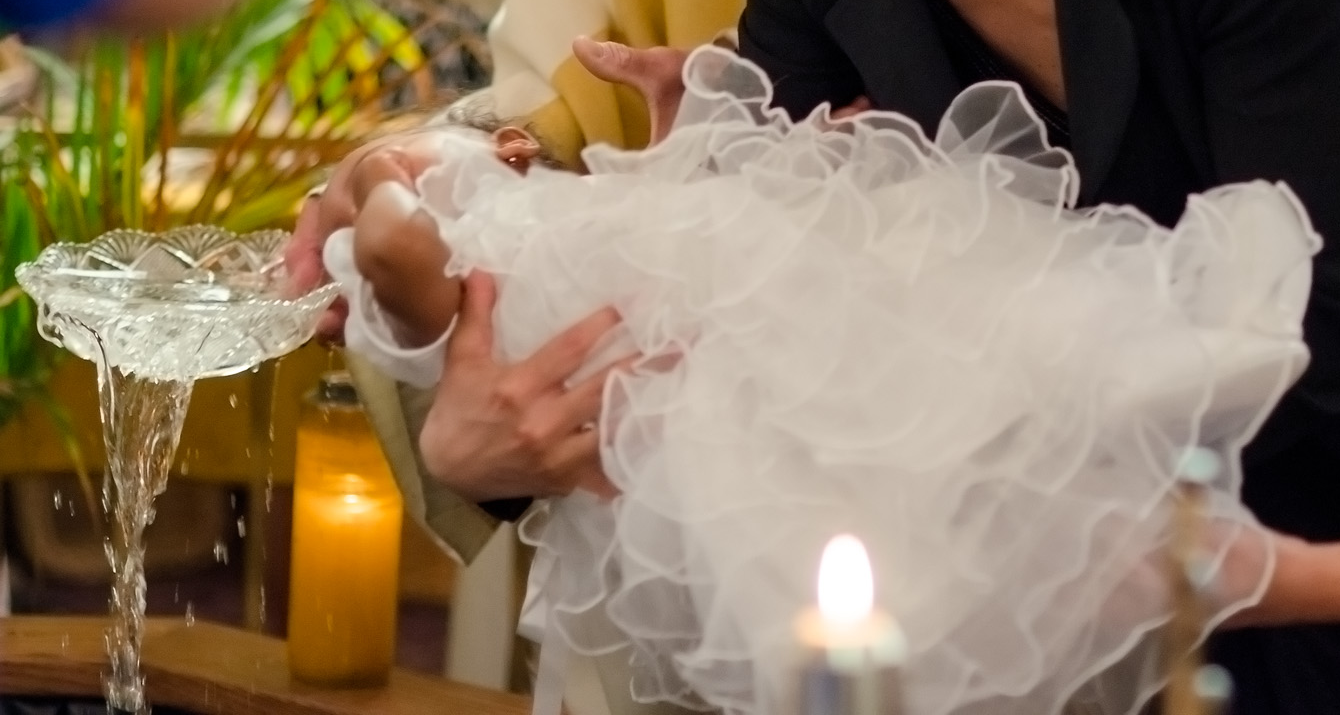
 There has been some interesting coverage in the news recently regarding the Church’s stance on baptizing children conceived or reared in irregular situations.
In recent decades there has been an explosion in the number of children conceived and born outside of Holy Matrimony. The general approach of the Church has been to baptize these children as long as there is no evidence of an ongoing rejection of the Church teaching that sexual intimacy is reserved for marriage. While people may have fallen in weakness, the presumption was that they at least accepted the norm and were going to try to live by it.
If the “couple” in question were living together outside of marriage, the baptism was handled discreetly and the couple was counseled to cease fornication.
It is not certain that every pastor admonished couples as he should but this was (and is) the general policy.
Enter the new and ever more frequent problem of same sex “couples” presenting a child for baptism, and now the stakes get higher. Why? Because of the visibility of the sin involved. At the baptism ceremony, one can at least presume that a single mother has repented of fornication. But it is hard to presume that a homosexual “couple” living together openly, in a culture that has suddenly decided to “celebrate” their “lifestyle,” is making a similar admission of the wrongness of their past behavior. It is also difficult to presume that many who attend the baptism have clarity on the aberrance of homosexual acts.
Thus the Church finds herself in a deeper quandary regarding how to baptize children being brought up in irregular situations that are far more public, situations that bespeak acceptance and even celebration of something the Church must oppose.
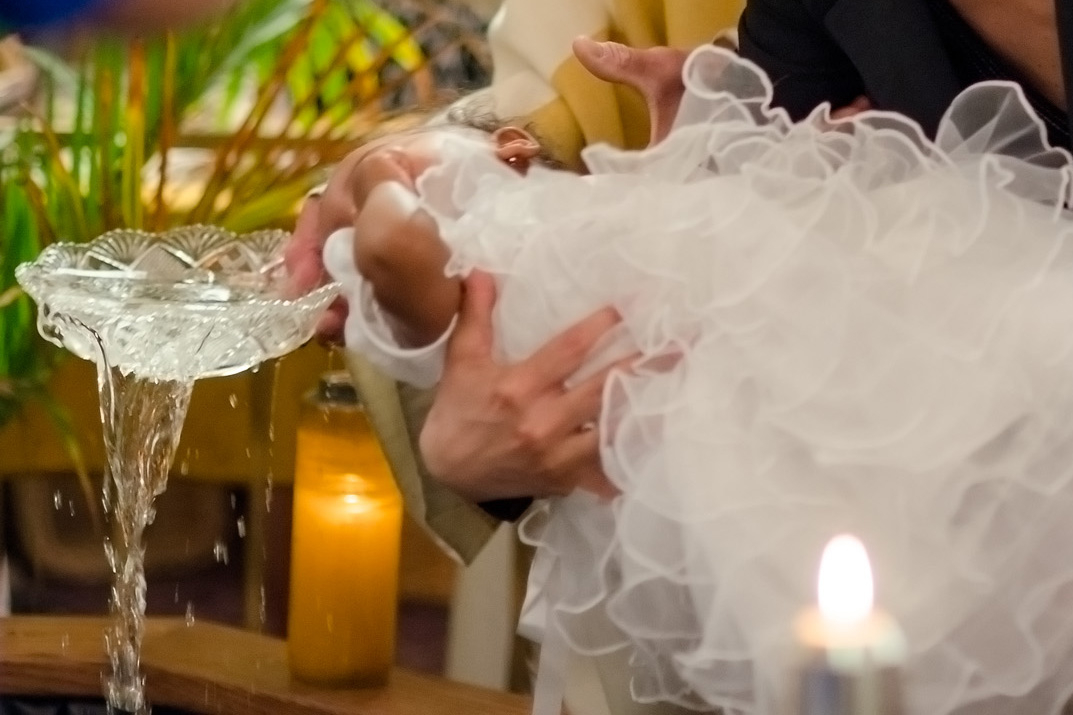
Discretion is the operative word. We still have every reason try to baptize children in these irregular situations; after all, it is not the fault of the child. However we must balance the common good of avoiding scandal with the individual good of each child by seeking to handle these baptisms discreetly, giving no opportunity for public confusion regarding what we must reasonably and biblically oppose (same-sex unions).
Here are some excerpts from an article that was in the Washington Post this past Saturday along with my comments in plain red text. (The full text of the article is here: New Battleground?.)
… Catholic leaders have carefully, if quietly, avoided doing anything to block gay couples from having their children baptized … And this is for the good of the child, who is not guilty of the sins of parents, guardians, or caretakers. It is not to be seen as an affirmation of the sins of the adults involved, whether this be due to homosexual acts, fornication, or adultery.
The default position for most bishops … is that if the parents pledge to raise the child Catholic, then no girl or boy should be refused baptism.
They generally let parish priests make the final call and let them administer the sacrament, though it is usually done in a private ceremony with the biological parent—not the adoptive mother or father—listed on the baptismal certificate.
The honest truth is that most priests have been so inundated by single mothers that we no longer handle the baptism of such children discreetly (as was done decades ago), but have held such baptisms publicly, and often alongside the baptisms of properly married parents. This must likely be reexamined. We have fallen prey to the normalization of fornication in our culture. And while not every priest has done so, it must be admitted that we have not properly distinguished between what ought to be discreet (because of the behavior of the parents) and what can be publicly celebrated. However, one was still able to presume the possibility that the parents had repented of fornication and were now living properly. This is often not the case with so called homosexual “couples” who often (but not always) wish to live in very public opposition to Church teaching.
[But a] new debate was prompted by the emergence of a memo—first reported by the Wisconsin State Journal—that was sent in early May to priests of the Madison Diocese by the top aide to Bishop Robert Morlino. In the memo, the vicar general of the diocese, Monsignor James Bartylla, says there are “a plethora of difficulties, challenges, and considerations associated with these unnatural unions (including scandal) linked with the baptism of a child, and such considerations touch upon theology, canon law, pastoral approach, liturgical adaptation, and sacramental recording.”
Yes, they are unnatural unions and present a host of difficulties to us. Even in the “single mother” scenarios that have recently troubled us, comes the listing of a “father” who is often absent or sometimes even unknown. I have often had to struggle with a woman who either did not want to disclose the father or did not even know who the father was. There is always the option of writing Pater ignotus (father unknown) in the baptismal register, but it is generally desirable to indicate the biological father if he can be known. But at least the mother was known. Members of so called “gay” couples do not fit on either line. Which do we list? Who is the father? Who is the mother? It’s a mess. Further, the rites call for a blessing for mother and father. What do we do? What do we say? Its a mess, a big mess.
Bartylla says that pastors must now coordinate any decision on baptizing the children of gay couples with his office and that “each case must be evaluated individually.” And this makes sense. When you’ve got a mess, and this is a real mess, it makes sense to adopt a uniform policy. If there are 100+ parishes in a diocese, there should not be 100+ policies in a matter as serious as this. The Bishop, who is chief legislator and liturgist, ought to set the norms.
A spokesman for the Madison Diocese, Brent King, said … “We want everyone to receive this most important sacrament, and we are dealing with this sensitive matter prudently, for the child’s sake and the integrity of this most sacred sacrament,” wrote King. Yes, we want to baptize every child we can. This mess is not their fault. But we have to do so in ways that protect the common good by avoid scandal and confusion.
Officials at the USCCB said these decisions are left to local church leaders, and indicated there are no plans to formulate a national directive beyond the guidance offered in a 2006 statement on ministering to gay people. That document says that baptizing the children of gay parents is “a serious pastoral concern” but that the church should not refuse them access to the sacrament. OK, good, but I suspect that some national norms are going to be needed as well.
Since the bishops passed that document, however, an ongoing wave of victories for same-sex marriage advocates has continued to push the issue into the public arena. As more gay Catholics can marry, and can be open about their relationship, more gay couples may be presenting their children for baptism.
Exactly. What was once an abstract, even theoretical problem is now becoming more widespread. Further, the homosexual extremists are looking to embarrass us, to set us up. We need to consider carefully a way forward that respects our traditions, but does not give any credence to their unnatural unions.
“The question with gay couples is whether their opposition to the church’s teaching on marriage means that they do not in fact intend to raise the child in the faith,” said Rita Ferrone, the author of several books about liturgy and a consultant to U.S. dioceses on liturgical matters. “Gay parents may or may not be ideologically opposed to church teaching, but chances are they do not merely disobey but also reject the various norms they have transgressed,” Ferrone said.
Sadly, these days the presumption is that many people, even beyond the “gay” community itself, not only approve of but even brazenly celebrate what God calls sin and abomination. Thus our presumption of good will is difficult to maintain. Our operative presumption must become that we are being set up and pressured to approve what God does not approve.
DeBernardo said the problem with a policy that focuses specifically on gay parents is that it “stigmatizes lesbian and gay couples as being more suspect than any other parents.” Sadly, though, many if not most gay parents want to live their sin publicly. It is not fair to ask us to be silent; we cannot do so.
“It is very likely that no parents that present a child for baptism are perfectly following all church rules,” he said. “Why single out only lesbian and gay parents for further scrutiny?” OK, but again the operative point is the public nature of the sin and the scandal given by its public nature. Some sins are just more obvious and public than others.
Countering any trend to curb baptisms, however, is the long-standing presumption, in church teaching and among even conservative church leaders, that no child should be denied baptism.
And herein lies the delicate balance: the good of the child vs. the common good to avoid scandal. The key going forward is discretion. More baptisms than in the past are going to need to be celebrated privately, in the presence only of the immediate family (i.e., parents or guardians and godparents). This will need to include fornicators and other irregular parents. We have become too lax and must now apply a norm consistently that has been poorly applied in the past.
And thus the bottom line seems clear: baptize these children, but do so discreetly. Further, we ought to regain more discretion as to how we baptize children in other irregular situations. The common good and the individual good of the children can and should be balanced, but they are not mutually exclusive.