Let Him Who Has Ears, Hear! Parables that Portray the Drama of Human Choice

092314-pope-2In yesterday’s post, I pondered the great drama of human life as Scripture sets it forth. We are caught up in a great and cosmic battle and must choose sides. There are two armies and no third way given. Sadly, most have lost any sense of the battle and of the drama of life, despite the battle lines being clearer than ever.

As a kind of follow-up to yesterday’s post it is valuable to examine how the drama of human decision is portrayed in an unlikely place: the parables. I say “unlikely” because most casual readers of the Bible tend to see the parables merely as interesting, entertaining stories. They are indeed interesting and entertaining, but they are deadly serious as well and they powerfully portray the drama of human life, the need to decide, and the consequences of our decisions. They carry very weighty messages and substantial warnings. Do not misconstrue their creative, pithy, memorable qualities as signs of superficial teaching.

Some of Jesus’ starkest warnings come in the parables, and in them, the drama of human life in the valley of decision (Joel 3:14) is vividly proclaimed. Indeed, the parables are MOSTLY about the drama and decisions of human life and the stance we take in the cosmic battle that rages around us. Our decisions point to our destiny. Of the 37 parables of Jesus, 20 are parables that remind us of the drama of our lives in the valley of decision and warn us of the consequences of our choices, choices that bring blessing or curse, rise or ruin, salvation or condemnation. Let’s review a quick summary of them in order of increasing intensity:

  1. The rich fool (Luke 12:16–21): This is a parable of a rich man whose land yielded a bountiful harvest and, rather than being generous with his surplus, he hoards it. God called him a fool and claimed his life that night. Jesus warns us therefore of the foolishness of living for passing, worldly things and that total loss is coming for those who are not rich in what matters to God.
  2. The wise and the foolish builders (Matthew 7:24–7; Luke 6:46–49): This is the conclusion of the Sermon on the Mount, wherein the Lord describes the dramatic difference between those who follow His teachings and those who do not. Those who heed His Word are like those who build their houses on solid rock and are able to endure the storms that come. But the foolish, who do not heed His Word, are like those who build their houses on sand. For them, the result is total loss and destruction when the storm of judgment comes.
  3. The parable of the sower (Matthew 13:3–9; Mark 4:3–9; Luke 8:5–8): Though God sows the seed of His Word abundantly. Some of it falls on the path and birds eat it up. Other seed falls among thorns, which choke it off. And still other seed falls on rocky soil and so withers due to the lack of roots. And here is the dramatic warning to those who harden their hearts to God’s Word or who allow the soil of their heart to be thinned or choked off by the world: you will not bear the necessary fruit. Some seed, however, does fall on rich soil and yields an abundant harvest. There is a dramatic difference in the results, and it is rooted in the disposition of our hearts.
  4. The parable of the wheat and tares (Matthew 13:24–30): God’s field of wheat is oversown by the weeds of Satan. (This is a dramatic description of the two armies on this earth.) Angry field hands propose pulling up the weeds but the owner cautions that the wheat might also be harmed. But though he instructs them to allow the wheat and weeds to grow together until the harvest, there is a harvest, at which time the wheat will be gathered in but the weeds will be thrown into the fire. So there is a day of judgment, though not yet. The drama must still unfold but the final verdict will ultimately be rendered.
  5. The barren fig tree (Luke 13:6–9): This is another parable of patience, wherein extra time is given to an unfruitful fig tree. But the day of judgment is set, and if fruit is not found the tree will be cut down. And here, too, is the drama of our life: either we manifest the fruit of righteousness or we will be removed from the Lord’s field.
  6. The dragnet (Matthew 13:47 –50): The kingdom of God, the Church, is compared to a dragnet, which captures all sorts of things. The drama unfolds when the net is hauled ashore and there comes the judgment. Only what is good is retained; that which is unclean and worthless is cast aside.
  7. The parable of the counting of the cost (Luke 14:28–33): Jesus warns that discipleship is costly and that some are not able or are unwilling to finish once started. He uses the images of a building begun without resources to finish it, or of a king going to war when he knows he is outnumbered. And thus some will set off to be disciples but later realize that they do not have the resources or willingness to continue. And herein the Lord sets forth that discipleship is costly and the warfare is real. The implication of this is that some are willing to accept the cost while others are not.  The road to salvation is narrow and few find it. The narrow way is the way of the Cross, and many turn back, instead preferring the wide road that leads ultimately to destruction.
  8. The unforgiving servant (Matt 18:23-35): A man who owes a huge debt has it forgiven, but refuses to forgive the much smaller debt of a fellow servant. The king then calls the man back and applies the same unforgiving standard to him that he used on his confrere. And thus the measure we measure out to others will be measured back to us. Merciless is the judgment on one who has shown no mercy. And further, if we do not forgive the sins of others, neither will we find forgiveness from the Father. The choice to forgive and show mercy is a dramatic and crucial decision for us, one that will affect our final judgment in a powerful way!
  9. The prodigal son (Luke 15): A sinful son returns and is reconciled to his father. But in a dramatic twist, the other, “obedient” son grows bitter and refuses to enter his father’s house. Even more dramatically, the parable ends without us knowing if the obedient son ever entered or not. This is because you are that son and you must decide if you will enter the Father’s house on His terms or stay outside, brooding that God doesn’t do everything on your terms.
  10. The unjust steward (Lk 16:1-13): An unscrupulous steward has been discovered “cooking the books” and embezzling funds. But in the end, his craftiness is praised by Jesus even though it is wrong. The point being made is that most sinners are far more dedicated to their world than Christians are to the Kingdom. And here is set forth another example showing that too many are simply not willing to fight for and with the Kingdom, and are lost as much through apathy as through wickedness.
  11. The rich man and Lazarus (Lk 16:19-31): A rich man is insensitive to the poor and we are taught that such insensitivity and neglect is a damnable sin. The rich man lands in Hell. In the great drama of his life, the rich man preferred to be wealthy in the world rather than to store up treasure for himself in Heaven. So hardened is his heart that even though he is in torment in Hell, he does not ask to come to Heaven, but rather that Lazarus be dispatched to Hell to bring him water. The rich man has not changed. He still looks down on Lazarus and still prefers creature comforts to God and His kingdom. His heart was dramatically hardened, and so can ours be if we let sin, neglect, and insensitivity go unchecked.
  12. The wicked vineyard workers (Mat 21:33-41): The owner of a vineyard sends representatives to collect his share of the produce, but the wicked workers stone some and kill others. Finally, they kill the owner’s son. Next the owner comes and submits them to a bad end. And thus in the drama of this world, there are many who reject God’s call for a share in their hearts and stone or even kill those who prophetically call them to give God glory and to live holy lives. In rejecting His appointed prophets, they also reject Christ and will come to a bad end!
  13. The great banquet (Matt 22:1-14; Lk 14:15-24): A king holds a wedding feast for his son. But the invited guests make excuses and are too involved in worldly affairs to come even to so great an offering. The king grows angry and burns their town. He then goes off to invite others. Finally the banquet is filled, but there is one in attendance who refuses to wear the provided wedding attire. He is thrown into the outer darkness and we are taught that while many are called, few are chosen. And thus our decision to accept God’s invitation is critical. Either we accept the invitation and enter the feast or else a fiery end is in store for us. And even those of us who accept must wear the robe of righteousness that God provides or else risk being cast into the outer darkness. Our decisions are dramatic and they determine our destiny!
  14. The wise and the foolish virgins (Mat 25:1-13): Ten bridesmaids await the groom’s arrival. Five were wise and carried extra oil. Five were foolish and were unprepared when the groom arrived. The wedding went on without the foolish bridesmaids and when they finally returned, the groom said to them, “Depart from me, I know you not.” And here too is depicted the drama of our lives. We must live in readiness; the oil of our holiness must always be replenished and kept ready by prayer, the sacraments, Scripture, and fellowship with the Church (Acts 2:42). Judgment day is coming! Keep your lamps trimmed and burning!
  15. The sheep and the goats (Mat 25:31-46): In a scene of the great judgment, the Lord welcomes the righteous sheep on his right to the glory of Heaven, but consigns the wicked goats on his left to the fires of Hell. While the passage emphasizes the corporal works of mercy and indicates that to neglect them is a damnable sin, the passage should not be taken to mean these will be the only matters adjudicated. But again, note how dramatic our decisions in life are, including the care of the poor and needy!

There are a few other parables to add to the list such as the curse of the barren fig tree and the parable of the talents. But allow these to illustrate.

Clearly, the Lord consistently sets before us the great drama of human life and decision. Our choices matter and build to a fundamental destiny. Thoughts beget deeds, deeds beget habits, habits beget character, and character begets destiny. This is the drama and dignity of our life.

And though consistently preached by Jesus in the parables and in countless other texts, the theme is rarely mentioned today in preaching. This must change for us who preach if we are to authentically announce the Gospel. For those who hear and heed, blessings await. For those who stubbornly refuse or sinfully neglect the message, grey doom awaits. This is the drama of a life not far from you.

Perhaps two final passages from Jesus: one a word of warning, the other a word of blessing:

Jesus said, “Take heed, watch and pray; for you do not know when the time will come. It is like a man going on a journey, when he leaves home and puts his servants in charge, each with his work, and commands the doorkeeper to be on the watch. Watch therefore—for you do not know when the master of the house will come, in the evening, or at midnight, or at cockcrow, or in the morning— lest he come suddenly and find you asleep. And what I say to you I say to all: Watch” (Mk 13:33-37).

Therefore you also must be ready; for the Son of man is coming at an hour you do not expect. Who then is the faithful and wise servant, whom his master has set over his household, to give them their food at the proper time? Blessed is that servant whom his master when he comes will find so doing (Mat 24:44-47).

Multitudes in the Valley of Decision! A Meditation on the Dramatic Battle in Which We Live

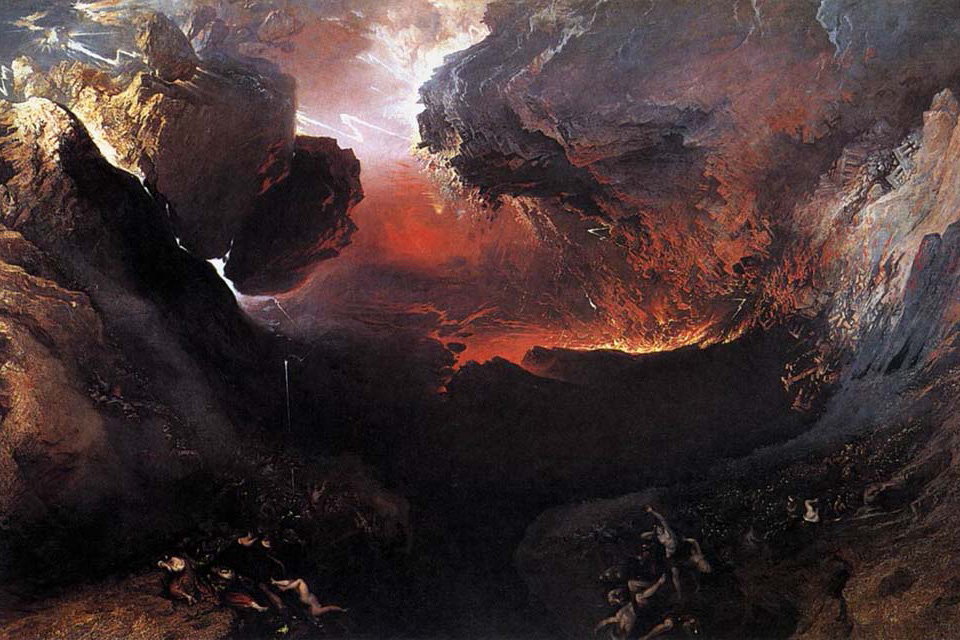
092114A grave deficiency of modern times is the loss of the sense that our lives are caught up in a tremendous, epic battle. And yet here we are living in the midst of a great drama—in the greatest story ever told.

Behind the scenes is a deadly enemy, one of whom many rarely speak: Satan. Yet he is active and involved, manipulating both the world and the flesh (our sinful nature). We are on the front lines of a fierce spiritual war, a war that is to blame for most of the casualties you see around you. Yes, fellow Christians, there is a dragon, the roaring lion—Satan—who seeks to devour our souls.

Ah! But there is also a Son, a Savior, who is born to us and whom we call Wonderful Counselor, Mighty God, Everlasting Father, and Prince of Peace (cf Is 9:6). And He shall reign forever. His hand is outstretched, first on the cross, but now outstretched to you to save you and to draw you up out of the raging waters, to deliver you from the kingdom of darkness into the Kingdom of light!

Will you take hold of His hand, or not? This is the decision—your decision—in the great drama of your life and of every life; it is your chapter in the greatest story ever told.

Yes, the battle rages all around us and we are swept up in it! It’s happening in our world, our culture, our families, and in our hearts. The sequence hymn from Easter says dramatically of it,  Mors et vita duello; Conflixere Mirando (death and life at battle in a stupendous conflict)!

The Book of Joel vividly describes the great drama, not merely an eschatological battle, but a battle that is already around us in the decision we must make, in the war we must wage, with God’s grace, against the evil that is in and around us. It is a vivid and dramatic war and we must choose sides. And our decision will one day be revealed in the great judgment that is coming on this world.

Prepare war, stir up the mighty men! Let all the men of war draw near, let them come up. Beat your plowshares into swords, and your pruning hooks into spears; let the weak say, “I am a warrior.” Hasten and come, all you nations round about, gather yourselves there. Bring down thy warriors, O LORD. Let the nations bestir themselves, and come up to the valley of Jehoshaphat; for there I will sit to judge all the nations round about. Put in the sickle, for the harvest is ripe. Go in, tread, for the wine press is full. The vats overflow, for their wickedness is great.  Multitudes! Multitudes, in the valley of decision! For the day of the LORD is near in the valley of decision (Joel 3:9-14).

Text after text in the Bible describes the awesome drama and the great decision we must make, a decision on which hinges our very destiny. Here are just a few:

  1. I have set before you life and death, the blessing and the curse. Choose life, then, that you and your descendants may live, by loving the LORD, your God, obeying his voice, and holding fast to him. For that will mean life for you (Deut 30:19-20).
  2. Simeon blessed them and said to Mary his mother, “Behold, this child is set for the fall and rising of many in Israel, and for a sign that is spoken against  (and a sword will pierce through your own heart also), that thoughts out of many hearts may be revealed” (Lk 2:34-36).
  3. Jesus said to the unbelieving Jews, “You are from below, I am from above; you are of this world, I am not of this world. I have told you that you would die in your sins, for you will die in your sins unless you believe that I AM” (John 8:23-24).
  4. Watch and pray that you may not enter into temptation (Matt 26:41).
  5. And he said to them, “Go into all the world and preach the gospel to the whole creation. He who believes and is baptized will be saved; but he who does not believe will be condemned” (Mk 16:15).
  6. For we are not contending against flesh and blood, but against the principalities, against the powers, against the world rulers of this present darkness, against the spiritual hosts of wickedness in the heavenly places. Therefore take the whole armor of God, that you may be able to withstand in the evil day, and having done all, to stand (Eph 6:12-14).
  7. I am astonished that you are so quickly deserting him who called you in the grace of Christ and are turning to a different gospel— not that there is another gospel, but there are some who trouble you and want to pervert the gospel of Christ. But even if we, or an angel from heaven, should preach to you a gospel contrary to that which we preached to you, let him be accursed! (Gal 1:4)
  8. Be sober, be watchful. Your adversary the devil prowls around like a roaring lion, seeking someone to devour. Resist him, firm in your faith (1 Peter 1:8).
  9. A great sign appeared in the heavens, a woman clothed with the sun, with the moon under her feet, and on her head a crown of twelve stars; she was with child and she cried out in her pangs of birth, in anguish for delivery. And another portent appeared in heavens; behold, a great red dragon, with seven heads and ten horns, and seven diadems upon his heads. His tail swept down a third of the stars of heaven, and cast them to the earth. And the dragon stood before the woman who was about to bear a child, that he might devour her child when she brought it forth; she brought forth a male child, one who is to rule all the nations with a rod of iron, but her child was caught up to God and to his throne … And the great dragon was thrown down, that ancient serpent, who is called the Devil and Satan, the deceiver of the whole world—he was thrown down to the earth … Rejoice then, O heaven and you that dwell therein! But woe to you, O earth and sea, for the devil has come down to you in great wrath, because he knows that his time is short!” And when the dragon saw that he had been thrown down to the earth, he pursued the woman who had borne the male child … The dragon was angry with the woman, and went off to make war on the rest of her offspring, on those who keep the commandments of God and bear testimony to Jesus (Rev 12, selected verses).
  10. “Lo, I am coming like a thief! Blessed is he who is awake, keeping his garments that he may not go naked and be seen exposed!” And they assembled them at the place which is called in Hebrew Armageddon (Rev 16:15-16).

And so here we are in the Valley of Decision, in Hebrew, the Valley of Armageddon. Here is the drama of our life! Multitudes in the Valley of Decision! All of us have a decision to make, an army to join, a direction to choose! Tertium non datur (No third way is given). There are only two armies on the field of battle; there are no demilitarized zones, no sidelines. Choose an army! What will it be, light or darkness, grace or sin, Jesus or Beelzebub?

Yes, here is the immense drama in the greatest story ever told; it is our drama and our story.

And yet this drama is hardly ever discussed today. In the very times in which the drama and the contrast between the two ways has never been clearer, never been starker, there is near silence. If anything, our times are marked by boredom and a kind of dull lack of awareness of the battle that is raging around us.  We have “spiritual ADHD,” endlessly fidgeting but never focusing on what matters. There is also a kind of “spiritual myopia,” in which the two armies are lost in the blur of perceived (but not real) “pluralism.”

Put plainly, if you don’t think that this drama is real and that the choice of one side or the other is required, if you think that the biblical texts I have cited are histrionic and hysterical, you have been deceived. You have been lulled to sleep by the spirit of this age.  You’ve been deceived by Satan, as was Eve long ago when he said to her, “You surely will not die.”

All of us must wake up to the battle that rages about us, to the great drama in our life, a drama that is unfolding before our very eyes. If you insist on sleeping through the drama or ignoring the summons to wake up, beware! For Scripture says of such dreamers that there will come upon them a strong delusion, to make them believe what is false, so that all may be condemned who did not believe the truth but had pleasure in unrighteousness (2 Thess 2:11-13).

Awaken to the drama! Choose the Lord! Be a soldier in the army of the Lord! Only Jesus can save us from this “present evil age.” His grace and mercy are there for us in abundance, but His respect for our freedom means that our choices matter, they build in one direction or the other. This is the drama of our life and is also our dignity. Scripture pronounces a great blessing on those who choose the Lord:

Grace to you and peace from God the Father and our Lord Jesus Christ, who gave himself for our sins to deliver us from this present evil age, according to the will of our God and Father; to whom be the glory for ever and ever. Amen  (Gal 1:1-2).

In tomorrow’s blog, I will explore how the themes of the drama and the warning are the basis of MOST of Jesus’ parables. There are sheep and goats, wise virgins and foolish ones, servants who are ready and those who are not, and so forth.

Dimensions of Discipleship – A Homily for the 25th Sunday of the Year

092014This is one of those parables that rock our world and our worldly way of thinking. And frankly, that is one of its purposes. We are tempted to side with the laborers who were hired first and who worked the longest. When we find out that they got paid the same as the men who only worked an hour the thought occurs to us that somehow this is unfair.

But, think very carefully before asking God to be “fair.” What we really should ask of God is that he be merciful. For if he were fair, we’d all be in Hell right now. The fact is, we have no innate capacity to stand before God in pure justice; we simply cannot measure up to that. It is only grace and mercy that will win the day for us. So be very careful about trying to play the fairness card on God. In fact, when we see Him being merciful to someone else, we ought to rejoice, for it also means that we might stand a chance.

There are other aspects of this Gospel that are important to learn from: the various dispositions of discipleship.  As the parable unfolds, we can see five teachings. Let’s look at each of them in turn.

I. The AVAILABILITY of Discipleship – The text says, A landowner went at dawn to hire laborers to work in his field … He went later and found others standing idle … “Why do you stand here all day idle?”

Now it is clear that what we have described here are “day workers.” These were men who stood in public places hoping to be hired for the day. It was and still is a tough life. If you worked, you ate; if you didn’t, you’d have little or nothing to eat. They were called day laborers because they were hired on a day-to-day basis, only when needed. This is a terrible form of poverty for its uncertainty and instability.  Men like these were and are the poorest of the poor.

But note how their poverty, their hunger, makes them available. Each morning they show up and are ready, available to be hired. Their poverty also motivates them to seek out the landowner and indicate that they are ready and willing to work. The well-fed and the otherwise employed do not show up; they are not available. There’s something about poverty that makes these men available. Because their glass is empty, it is able to be filled.

But we are these men. We are the poor who depend on God for everything. Sometimes we don’t want to admit that, but we are. And every now and then it is made plain to us how poor, vulnerable, and needy we really are. And this tends to make us seek God. In our emptiness, poverty, and powerlessness suddenly there is room for God. Suddenly our glass, too often filled with the world, is empty enough for God to find room. And in our pain we stand ready for God to usher us into the vineyard of His kingdom. An old gospel song says, Lord, I’m available to you, my storage is empty and I am available to you. It is our troubles that make us get up and go out with the poor to seek the Lord and be available to Him. When things are going too well, Lord knows where we are to be found! Another gospel song says, Lord don’t move my mountain but give me the strength to climb it. Don’t take away my stumbling blocks but lead me all around. ‘Cause Lord when my life get a little too easy you know I tend to stray from thee.

Yes, we might wish for a trouble-free life, but then where would we be? Would we seek the Lord? Would we make ourselves available to God? Would we ever call on Him at all?

II. The AUTHORITY of Discipleship – The text says, The LandOWNER said, “Go into my vineyard” … HE sent them into HIS vineyard.

Notice that it is the landowner who calls the shots. Too many who call themselves the Lord’s disciples rush into His vineyard with great ideas and “biggie-wow” projects that they have never really asked God about. But this passage teaches us that entrance into the vineyard requires the owner’s permission. If we expect to see fruits (payment for the work) at the end of the day, we have to be on the list of “approved workers.”

Fruitful discipleship is based on a call from the Lord. Scripture says, Unless the Lord builds the House, they that labor to build it labor in vain (Ps 127:1). Too many people run off and get married, take new jobs, accept promotions, start projects, and so forth without ever asking God.

But true discipleship requires the Lord’s call first: “Go into my vineyard.” Got a bright idea? Ask God first. Discern His call with the Church and a good spiritual director, guide, or pastor.

III. The ALLOTMENT of Discipleship – The text says, The vineyard owner came at dawn, 9:00 AM, Noon, 3:00 PM, and 5:00 PM.

We may puzzle as to why God calls some early and others late; it’s none of our business. But he does call at different times. And even those He calls early, He does not always ask to do everything right now. There is a timing to discipleship.

Moses thought he was ready at age 40, and in his haste he murdered a man. God said, “Not now!” and made him wait until he was 80.

Sometimes we’ve got something we want to do but the Lord says, “Not yet.” And we think, “But Lord, this is a great project and many will benefit!” But the Lord says, “Not yet.” And we say, “But Lord, I’m ready to do it now!” And the Lord says, “Not yet.”

Sometimes we think we’re ready, but we’re really not. An old gospel song says, God is preparing me. He’s preparing me for something I cannot handle right now. He’s making me ready, just because he cares. He’s providing me with what I’ll need to carry out the next matter in my life. God is preparing me. Just because he cares for me. He’s maturing me, arranging me, realigning my attitude. He’s training me, teaching me, tuning me, purging me, pruning me. He’s preparing me.

IV. The ABIDING of Discipleship – The text says, When it was evening the owner of the vineyard said to the foreman, “… summon the laborers and give them their pay, beginning with the last and ending with the first.”

Notice that the wages are paid in the evening and in the order determined by the landowner (God). The lesson is simple: we’ve got to stay in the vineyard. Some people start things but do not finish them. But if you’re not there at six o’clock, no pay.

Scripture says that we must persevere. Jesus says, But he who perseveres to the end will be saved (Mat 24:13). We also read, To those who by persistence in doing good seek glory, honor, and immortality, he will give eternal life (Rom 2:7). And again, You need to persevere so that when you have done the will of God, you will receive what he has promised (Heb 10:36).

Yes, we must work till evening comes. Saying that we had faith and received all our sacraments when we were young will not suffice. We have to work until evening. An old spiritual says, Some go to Church for to sing and shout. Before six months they’s all turned out. How about you?

V. The ATTITUDE of Discipleship – The text says, Those hired first grumbled … “We bore the heat of the day and burdens thereof.”

Notice how the early workers think of their entrance into the vineyard and its labors as a “burden.” Of course the vineyard is really the Kingdom of God. And it remains true that many lukewarm “cradle Catholics” consider the faith to be a burden and think somehow that sinners “have all the fun.” Never mind that this is completely perverse thinking; it is held by many anyway, whether consciously or unconsciously.

But consider the laborers hired last. Were they having a picnic? Not exactly. Most were resigning themselves to the fact that they and their families would have little or nothing to eat that night. Similarly, most sinners are not “living the life of Riley.” Repeated and life-long sin brings much grief: disease, dissipation of wealth, regret, loss of family, addiction, and so forth. No matter what they tell you, sinners do not have all the fun.

Further, being a Christian is not a burden. If we accept it, we receive a whole new life from Christ: a life of freedom, purity, simplicity, victory over sin, joy, serenity, vision, and destiny.

How do you view the Christian life? Is it a gift, a treasure beyond compare no matter its difficulties? Or is it a burden, a bearing of labor in the heat of the day? Scripture says, For by grace you have been saved through faith; and this is not your own doing, it is the gift of God. The passage goes on to describe our “works” not as burdens but as something God enables us to do: For we are his workmanship, created in Christ Jesus for good works, which God prepared beforehand, that we should walk in them (Eph 2:8-10).

So here are five dispositions of discipleship, which the Lord teaches in this parable.

Note well what the Lord teaches, for too often we want to decide what it means to be a disciple. Beware, for the worst kind of disciple is the one who gets out ahead of the Lord and tries to define his or her own role. Jesus is Lord; let Him lead. So, some final questions for you: Are you a disciple who is glad at being called, and the earlier the better? Or are you like the disciples who grumbled at having to do all the work in the heat of the day? Is discipleship delightful or dreary for you?

This song says, “I’m available to you…” And it reminds us that the owner of the vineyard still seeks souls to enter His vineyard. He wants to use your voice to say to someone: “You, too, go into my vineyard!”

Don’t! It’s a trap! A Moral Lesson from a Commercial

091914Here’s a little commercial that requires very little decoding. A woman enters an office and, spying a very nice pen, has thoughts of petty theft. Just as she is about to depart, stolen pen in hand, a voice from above says, “Don’t! It’s a trap!” She looks up to see a co-worker swinging in a net that has swooped him up.

And so, too, for us. When temptation comes our way we often hear that voice “from above” saying, “Don’t! It’s a trap!” But the voice we hear is not that of some fellow sinner—it is the voice of God.

For Scripture says,

Whether you turn to the right or to the left, your ears will hear a voice behind you, saying, “This is the way; walk in it” (Isaiah 30:21).

And the Catechism says,

Deep within his conscience man discovers a law which he has not laid upon himself but which he must obey. Its voice, ever calling him to love and to do what is good and to avoid evil, sounds in his heart at the right moment … For man has in his heart a law inscribed by God … His conscience is man’s most secret core and his sanctuary. There he is alone with God whose voice echoes in his depths (Catechism of the Catholic Church (CCC) # 1776).

Yes, there is that small, still voice of God, who, in the midst of our temptations, reminds us that the sinful pleasures that the world, the flesh, and the devil propose are ultimately traps and lies. And whatever good we may imagine in them (through vain reasoning) is ultimately a deception.

Don’t! It is a trap.

What is Honor? Today, I Felt its Weight

091814-AThis morning, I celebrated one of the most remarkable funerals of my 25 years as a priest. With the body present, I sang a Requiem Mass for a man who died ten years before I was born.

On January 1, 1951, Private First Class Arthur Richardson of A Company, 1st Battalion, 19th Infantry Regiment, 24th Infantry Division went north with his platoon into what is now North Korea. The platoon was overtaken by a much larger group of North Korean soldiers and he was taken prisoner. This was the last that was heard of Pfc. Arthur Richardson. It was reported to his wife later that month that he was missing in action. In 1954, he was declared Killed in Action, though his body was not recovered and no definitive word had been received about him. He was posthumously awarded the Purple Heart and the Bronze Star.

It now seems certain that he died in or near a Prisoner of War camp in Suan since his remains were returned by North Korea in 1994, along with those of as many as 800 other soldiers from that region. After years of painstaking work, the U.S. Army was recently able to definitively identify his remains using DNA evidence, and informed his family.

The family asked me if I would offer the old Latin Requiem Mass for him since this was the only form of the Mass he had ever known. And so this morning I had the great privilege of celebrating a Missa Cantata Requiem Mass. (Pictures online here: Requiem)

091814-BThe burial that followed at Arlington was with full military honors.

(See left – click to enlarge)  Horses pulled the caisson that bore the body of Pfc Richardson and all were saddled, but the horses on the left had riders while those on the right did not. Also in the procession was a marching band, a group of about a dozen riflemen, a bugler, and the honor guard. It was a very moving sight. The band played “Soul of My Savior,” “Holy God, We Praise Thy Name,” “God of Our Fathers,” and “America.”
What is honor? The full etymology of the word is debated. But what seems most likely is that it comes from the Latin word honos, which, though translated as “honor,” also points to the word “onus,” which means “weight” or refers to something that is heavy. Hence, to “honor” someone is to appreciate the weight, significance, or burden of something he has done. It is to acknowledge that he carried a great burden well, that he withstood a heavy load, that what he did was weighty, significant.
Our soldiers, police officers, and first responders are deserving of our honor, for they put their lives on the line so that others can live, be more free, and experience abundance. None of us can fail to appreciate the burdensome weight that many carry so that we can live well, freely, and comfortably. Freedom is not free; it is costly. Jesus says, Greater love has no man than he would lay down his life for his friends (Jn 15:13).
War remains controversial (as it should). But soldiers do not create the politics they are sent to address. They are simply told that there is a danger to be addressed, an injustice to be ended, and so they go. Private First Class Arthur Richardson went north during the Korean War. He did not return to us. But he carried well the great weight of being a solider. He also carried the weight of collective human sinfulness (which is what brings war) and felt its burden keenly. He gave his life.
Today it was a privilege for me to render honor and prayers for his sacrifice. I did so not only as a priest, but also as a citizen of the United States. Today, both Church and State gave due honor to our brother. We recognized the honos, the onus, the weightiness of his sacrifice and the burden he carried. We rendered thanks to him and buried him at last in a place of great honor, where the weight of human struggle and honor is visible in the 400,000 white tombstones standing like silent sentinels whispering, “Honor, honor to those who have carried the burden of our struggles.”
Honorable Private First Class Arthur Richardson (Bronze Star and Purple Heart awardee), rest in peace.

To fallen soldiers let us sing,
Where no rockets fly nor bullets wing,
Our broken brothers let us bring
To the Mansions of the Lord

No more weeping,
No more fight,
No prayers pleading through the night,
Just Divine embrace,
Eternal light,
In the Mansions of the Lord

Where no mothers cry
And no children weep,
We shall stand and guard
Though the angels sleep,
Oh, through the ages safely keep
The Mansions of the Lord

How Strange: Longing For Heaven Is Almost Never Expressed Today

091714There is a long list of things that people never hear in sermons anymore: mortal sin, judgment, Hell, purgatory, fornication … you name it. But there is another omission that is rather odd given the tenor of these times: Heaven.

Almost no one talks of Heaven and I seldom hear any expressed desire to go there. The way most of our prayers sound, we are content to have God make this world a better place. People will ask God to fix their health, fix their finances, and so forth. But quite absent from most prayers is any mention of Heaven or a desire to go there and be with God.

Many old prayers spoke of longing for Heaven. The Hail, Holy Queen laments that we live in exile, in a valley of tears, and are poor, banished children of Eve who long to see the blessed fruit of Mary’s womb, Jesus. Lots of old hymns sang of being free at last, of flying away to Heaven some bright morning when this life is over and looking forward to that day, “By and By when the morning comes.” Yes, soon and very soon! Older churches were designed to remind Catholics of Heaven and their structures were often centered around the vision of Heaven from the Book of Revelation.

Today, most of the focus of our so-called spiritual life is on making this world a better place, almost as if we were saying to God, “Make this world a little more comfortable and I’ll just stay here forever!”

Honestly, do you long for Heaven or are you just trying to make it through to tomorrow? Have you ever heard a sermon on Heaven? Does the thought of it excite you? It IS after all our reward, that eye has not seen and ear has never heard!

Granted, today there is a serious problem with universalism wherein it is assumed that almost everyone is going straight to Heaven when he dies. And maybe that’s part of the problem. Since so few think they can possibly lose the gift of Heaven, most take it for granted (literally and figuratively). Why be vigilant or care that much about something that is certain and has to be entered through a rather unpleasant door called death? We tend to regard lightly what we get for free, but if we must sacrifice to get it, we value it more highly.  (If we had to scrimp to be able buy tickets for some event, we’ll be sure to get there on time!)

Another factor is that we live very comfortably these days. It is a kind of comfort that both distracts us from spiritual things and focuses us on worldly things. Our comforts also make the Cross seem strange, even immoral. Who cares about Heaven, especially since you have to die to get there! Instead most would rather focus on expanding their cable service or taking a cruise.

Yes, Heaven is a pretty remote thought for many today.

I thought about this yesterday, on the Feast of St. Cyprian, as I read through some of his works and happened upon an account of his martyrdom and also a meditation he wrote on the joy of Heaven. Consider this brief account of his martyrdom and then his short reflection on longing for Heaven:

On arriving at the spot where he was to die, Bishop Cyprian took off his mantle (overcoat), and fell to his knees and prostrated himself before God. Then, arising he took off his dalmatic which he gave to his attending deacons and remained in his long white robe. He payed his executioner the sum of 25 gold denarii. While this gesture was not unheard of, especially for a person of some means, it nevertheless tells us of the graciousness and forgiveness in the heart of Cyprian. He himself tied the blindfold over his eyes after which his hands were tied. Kneeling again he awaited the final blow. At length the sword passed and Cyprian ended his pilgrimage here. It was September 14, 258.

Reflecting on his martyrdom we do well to recall his own words of Heaven,

We have solemnly renounced the world and therefore, while we continue in it, should behave like strangers and pilgrims. We should welcome that happy day (of our death) which is to fix us, in our proper habitation, to rescue us from the embarrassments and snares of this world, and remove us to the kingdom of heaven.

Who of us, if he had long been a sojourner in a foreign land would not desire to return to his native country? Who of us, when he had begun to sail there would not wish for a prosperous wind to carry him to his desired home with speed, that he might sooner embrace his friends and relatives? We must account paradise our country.

There friends and parents and brethren and children without number wait for us and long to celebrate our happy arrival. They are in secure possession of their own joy yet are solicitous for ours. How great will be our common joy upon the transports of meeting together in those blessed abodes.

How unutterable must be the pleasures of that kingdom which have no intermission. There we shall meet with the glorious choir of apostles; with the goodly company of the prophets; with an innumerable multitude of holy martyrs; there we shall be blessed with the sight of those triumphant virgins who have subdued the inordinate lusts of the flesh; and there we shall behold the rewards of those who, by feeding the hungry and consoling the afflicted have with their earthly treasure stored up for themselves treasure in heaven.

To these beloved brethren let us hasten with eager longing!

Let us pray that it may befall us speedily to be with them; speedily to come to Christ. May God see this our purpose. May Christ look upon this resolution of our mind and faith, who will give more ample rewards of His love to those whose longings for Him have been greater (De Mortalitate, 26).

Yes, speedily may we be rescued from the embarrassments and snares of this world. And may we stay in the Lord’s narrow way that nothing will prevent us from beholding the beautiful face of God, for whom we long and whom we must ever more deeply desire! Let us hasten to the Lord and Heaven with eager longing!

Homosexual Acts Cannot be Approved or Celebrated by the Church – Here’s Why

091614In recent years, homosexuality has frequently been in the news. An increasingly nationwide effort to make homosexual acts something to celebrate has gained great ground and sowed serious confusion even among those who describe themselves as Christian and Catholic. Hence, it is necessary once again to instruct on this matter and to reassert what Scripture plainly teaches and why the Church cannot affirm what the world demands we affirm.

An essential fact is that the Scriptures are very clear in unambiguously, uncompromisingly declaring homosexual acts as a serious sin and as disordered. “Disordered” here means that they are acts that are not ordered to their proper end or purpose. Sexual acts are, by their very nature, ordered to procreation and to the bonding of the mother and father who will raise the children conceived by their sexual intimacy. These ends or purposes have been intrinsically joined by God, and we are not to separate what what God has joined.  In the Old Testament, Scripture describes the sinful and disordered quality of homosexual acts by the use of the word “abomination,” and in the New Testament, St. Paul calls homosexual acts “paraphysin” (contrary to nature).

Attempts by some to reinterpret Scripture to mean something else are fanciful, at best, and  use theories that require twisted logic and questionable historical views in an attempt to set aside the very plain meaning of the texts.

Likewise in the wider culture, among those who do not accept Scripture, there has been an increasingly insistent refusal to acknowledge what the design of the human body plainly discloses: that the man is for the woman, and the woman is for the man. The man is not for the man, nor the woman for the woman. This is plainly set forth in the design of our bodies. The outright refusal to see what is plainly visible and literally built into our bodies is not only a sign of intellectual stubbornness and darkness (cf Rom 1:18, 21), but it also leads to significant issues with health, even to deadly diseases.

And we who believe in the definitive nature of scriptural teaching on all aspects of human sexuality are not merely considered out-of-date by many in our culture, but are being increasingly pressured to affirm what we cannot reasonably affirm. Cardinal Francis George recently expressed the current situation in this way:

In recent years, society has brought social and legislative approval to all types of sexual relationships that used to be considered “sinful.” Since the biblical vision of what it means to be human tells us that not every friendship or love can be expressed in sexual relations, the church’s teaching on these issues is now evidence of intolerance for what the civil law upholds and even imposes. What was once a request to live and let live has now become a demand for approval. The “ruling class,” those who shape public opinion in politics, in education, in communications, in entertainment, is using the civil law to impose its own form of morality on everyone. We are told that, even in marriage itself, there is no difference between men and women, although nature and our very bodies clearly evidence that men and women are not interchangeable at will in forming a family. Nevertheless, those who do not conform to the official religion, we are warned, place their citizenship in danger [1].

Whatever pressures many may wish to place on the Church to conform, however they may wish to “shame” us into compliance by labeling us with adjectives such as bigoted, homophobic, or intolerant, we cannot comply with their demands. We must remain faithful to scriptural teaching, to our commitment to natural law, and to Sacred Tradition. We simply cannot affirm things such as fornication and homosexual acts and reject the revelation of the body as it comes from God.

What some call intolerance or “hatred” is, for us who believe, rather, a principled stance wherein we see ourselves as unable to overrule the clear and unambiguous teaching of Holy Scripture. And this teaching exists at every stage of revelation, from the opening pages right through to the final books of Sacred Writ. The Church has no power to override what God has said; we cannot cross out sentences or tear pages from the Scripture. Neither can we simply reverse Sacred Tradition or pretend that the human body, as God has designed it, does not manifest what it clearly does.

The Catechism of the Catholic Church announces this principled stance with eloquence and with an understanding of the difficulties encountered by those with same-sex attraction:

Basing itself on Sacred Scripture, which presents homosexual acts as acts of grave depravity, tradition has always declared that “homosexual acts are intrinsically disordered.” They are contrary to the natural law. They close the sexual act to the gift of life. They do not proceed from a genuine affective and sexual complementarity. Under no circumstances can they be approved. 

The number of men and women who have deep-seated homosexual tendencies is not negligible. This inclination, which is objectively disordered, constitutes for most of them a trial. They must be accepted with respect, compassion, and sensitivity. Every sign of unjust discrimination in their regard should be avoided. These persons are called to fulfill God’s will in their lives and, if they are Christians, to unite to the sacrifice of the Lord’s Cross the difficulties they may encounter from their condition.

Homosexual persons are called to chastity. By the virtues of self-mastery that teach them inner freedom, at times by the support of disinterested friendship, by prayer and sacramental grace, they can and should gradually and resolutely approach Christian perfection (CCC 2357-2359).

We can speak no other way. We do not detest those of same sex-attraction, but we as a Church owe them the same truth we have always proclaimed as coming from God, and out of respect we must  hold them to the same standards of chastity by which all must live.

There can be no sexual intercourse for any who are not in a valid heterosexual marriage. We cannot give approval for it; we do not have the power to do this, no matter how insistent, forceful, or even punitive the demands that we do so become. This will not change because it cannot change.

Homosexuals are not being singled out in this matter. As we saw in yesterday’s post, fornication (pre-marital sex) is also set forth by scripture and tradition as a very serious mortal sin (cf Eph 5:5- 7; Gal 5:16-21; Rev 21:5-8; Rev. 22:14-16; Mt. 15:19-20; 1 Cor 6:9-20; Col 3:5-6; 1 Thess 4:1-8; 1 Tim 1:8-11; Heb 13:4). It cannot be approved no matter how widespread its acceptance becomes. One standard of sexual norms applies to all people, whatever their orientation.

Sadly those of unalterable same-sex attraction have no recourse to marriage. But all of us bear burdens of one sort or another, and not everyone is able to partake in everything life offers. For the sake of holiness, heroic witness is necessary, and many of those with same-sex attraction do live celibately and give admirable witness to the power of grace.

God must have the final word in this. And so I present to you here some selections from Sacred Scripture that clearly teach against homosexual acts. The witness of Scripture in this regard is very consistent across all the ages of biblical Revelation. From the opening pages of Holy Writ to the final books, homosexual acts, along with fornication and adultery, are unambiguously forbidden and described as gravely sinful. In addition, homosexual acts, because they are contrary to nature and to the revelation of the body and the nature of the sexual act, are often described as acts of depravity or as an “abomination.” Some consider such words unpleasant or hurtful. I understand, but they are the words that Scripture uses. Here is a sample of Scriptural teaching against homosexual acts:

  1. You shall not lie with a male as with a woman; it is an abomination (Leviticus 18: 22).
  2. If a man lies with a male as with a female, both of them have committed an abomination (Lev 20:13).
  3. Likewise, the story of the destruction of Sodom and Gomorrah depicts, among other things, the sinfulness of homosexual activity. It is too lengthy to reproduce here in its entirety, but you can read about it in Genesis 19.
  4. For the wrath of God is revealed from heaven against all ungodliness and wickedness of men who by their wickedness suppress the truth. For what can be known about God is plain to them, because God has shown it to them…in the things that have been made. So they are without excuse; they became futile in their thinking and their senseless minds were darkened. Claiming to be wise, they became fools…For this reason God gave them up to dishonorable passions. Their women exchanged natural relations for unnatural, and the men likewise gave up natural relations with women and were consumed with passion for one another, men committing shameless acts with men and receiving in their own persons the due penalty for their error. And since they did not see fit to acknowledge God, God gave them up to a base mind and to improper conduct (Romans 1:18ff).
  5. Do you not know that the wicked will not inherit the kingdom of God? Do not be deceived: neither the fornicators, nor idolaters, nor adulterers, nor male prostitutes nor homosexual offenders nor thieves nor the greedy nor drunkards nor slanders nor swindlers will inherit the kingdom of God (1 Corinthians 6-9).
  6. The law is not laid down for the just but for the lawless and disobedient, for the ungodly and sinners, for the unholy and profane, for those who strike their fathers and mothers, for murderers, the sexually immoral, for those who practice homosexuality, enslavers, liars, perjurers, and whatever else is contrary to sound doctrine, in accordance with the gospel of the glory of the blessed God with which I have been entrusted.(1 Timothy 1: 8-11).

And this is the testimony of Sacred Scripture. To these could be added other passages, along with a long list of quotes from the Fathers and from Sacred Tradition, with Councils and other teaching documents from the earliest days of the Church until today.

To those who like to object that Jesus himself never spoke of homosexual acts, I would give these three responses:

  1. It was not a disputed matter among the Jews to whom he preached.
  2. Jesus said to his apostles, “He who hears you hears me.” And therefore Jesus does speak through St. Paul and the other epistle writers.
  3. The same Holy Spirit that authored the Gospels also authored the Epistles. There are not different authors or levels of authority in Sacred Writ. What St. Paul says is no less authoritative or inspired than what the evangelists recorded.

The teaching of the Church regarding the sinfulness of homosexual acts, fornication, and adultery cannot change, attested to as they are in Sacred Scripture and Tradition. The Church can only offer the truth to all the faithful and to all in this world, along with her promise of God’s mercy to those who seek repentance and who now desire to live chastely. To those who refuse, she continues to give warning and to pray both for conversion and for rescue from the deceptions of the world and the evil one.

Cardinal George summarized well both the reason we cannot approve homosexual acts and the solution of celibacy for those of same-sex attraction: The biblical vision of what it means to be human tells us that not every friendship or love can be expressed in sexual relations [2]. Clear and concise. Thank you, Cardinal George.

For more information and support for those who have same-sex attraction, see here: Courage

Premarital Sex is a Mortal Sin – We must be clear and insist on repentance as the only way to be saved

091514We live in times in which many call good or “no big deal” what God calls sinful. This is especially true in the area of sexuality, where whole sectors of our society not only tolerate but even celebrate sexual practices that the Scriptures call gravely sinful, and which will lead to Hell if not repented of. Acts of fornication (pre-marital sex) and homosexual acts cannot be considered acceptable by any Catholic or by any person who sincerely accepts the Scripture as the Word of God. And even for those who do not share our faith, acts of fornication and homosexual acts can be plainly seen to cause great harm in the manner in which they spread serious disease, harm marriage and family, lead to abortion, and for the children who do survive abortion, subject them to having single mothers, absent fathers, and a lack of the best environment which they are due.

I want to focus today on the terrible and mortal sin of fornication and present the clear biblical teaching against it. Tomorrow I will do the same regarding homosexual acts. Sadly, many Catholics say their pulpits and classrooms are silent about these issues. The hope in this post today is to present a resounding, biblical trumpet call to purity which leaves no ambiguity as to the sinfulness of sex before marriage. Scripture is clear: fornicators will not inherit the Kingdom of God. That is to say, fornication is a mortal sin and those who do not repent of it will go to Hell.

The usual conditions for mortal sin apply (grave matter (which fornication is), sufficient reflection, and full consent of the will). However, we ought not lightly conclude that these conditions are seldom met. I have met with many couples preparing for marriage who are sexually active and I have never found them to be surprised that I rebuke them for this. They know it is wrong. The voice of God stills echoes in their consciences. And as for consent of the will, it can be admitted that some fall occasionally in a weak moment. But consistent fornicating, with no measures taken to prevent it, is not “weakness”; it is sinful neglect of prudence and common sense.

We are in a sinfully confused cultural setting in which many either celebrate or make little effort to avoid what God calls a very serious sin. The Church cannot lack clarity and pulpits and classrooms have often been silent. Such silence has led to parents themselves being silent. And silence has been taken for approval.

But fornication cannot be approved of. It is sinful and may well exclude many unrepentant sinners from Heaven. Our charity for souls must compel our clarity about the grave sinfulness of premarital sex and cohabitation.

Let us turn our attention to the biblical text.

The following quotes from the New Testament are passages that clearly condemn fornication and other unclean or impure actions. Again, fornication is the most common biblical word for premarital sex. The gravity and clarity of such condemnations are helpful in the sense that they help us to take such matters seriously and steer clear of them. However, the condemnations should not be seen in isolation from God’s mercy, as He never fails to forgive those who come to Him with a humble and contrite heart. God hates sin but He loves sinners and is full of mercy and compassion for them. But this mercy must be accessed through repentance.

With this in mind, read the following passages from the New Testament, which condemn fornication and other forms of sexual impurity:

THAT THERE IS A PRESCRIPTION TO GENERAL SEXUAL PURITY – Among you there must not be even a hint of sexual immorality, or of any kind of impurity, or of greed, because these are improper for God’s holy people. Nor should there be obscenity, foolish talk or crude joking, which are out of place, but rather thanksgiving. For of this you can be sure: No fornicator, no impure or greedy person—such a man is an idolater—has any inheritance in the kingdom of Christ and of God. Let no one deceive you with worthless arguments. These are sins that bring God’s wrath down upon the disobedient; therefore, have nothing to do with them (Ephesians 5:3-7).

THAT UNREPENTANT FORNICATORS ARE EXCLUDED FROM THE KINGDOM –

1. The one who sat on the throne said to me, “See I make all things new!” Then he said, “Write these matters down for the words are trustworthy and true!” He went on to say: “These words are already fulfilled! I am the alpha and the omega, the beginning and the end. To anyone who thirsts I will give to drink without cost from the spring of life giving water. He who wins the victory shall inherit these gifts and he shall be my son. As for the cowards and traitors to the faith, the depraved and murderers, the fornicators and sorcerers, the idol-worshipers and deceivers of every sort – their lot is the fiery pool of burning sulphur, the second death!” (Revelation 21:5-8)

2. Happy are they who wash their robes so as to have free access to the tree of life and enter the city through its gates! Outside are the dogs and sorcerers, the fornicators and murderers, the idol-worshipers and all who love falsehood. It is I Jesus who have sent my angel to give you this testimony about the Churches (Rev. 22:14-16).

3. No fornicator, no impure or greedy person—such a man is an idolater—has any inheritance in the kingdom of Christ and of God (Eph 5:5).

4. I warn you, as I have warned you before: those who do such things shall not inherit the kingdom of God!  (Gal 5:21)

THAT SINS OF THE FLESH CRUSH THE SPIRIT WITHIN US – My point is that you should live in accord with the Spirit and you will not yield to the cravings of the flesh. The Flesh lusts against the spirit and the spirit against the flesh; the two are directly opposed. This is why you do not do what your will intends. If you are guided by the spirit you are not under the law. The acts of the sinful nature are obvious: sexual immorality, impurity and debauchery, idolatry, sorcery, hostilities, bickering jealousy, outbursts of rage, selfish rivalries, dissensions, factions, envy, drunkenness, orgies and the like. I warn you, as I have warned you before: those who do such things shall not inherit the kingdom of God! (Galatians 5:16-21)

THAT EVEN OUR THOUGHT LIFE IS SUMMONED TO PURITY –

1. You have heard the commandment “You shall not commit adultery.” What I say you to is, Anyone who looks lustfully at a woman has already committed adultery with her in his thoughts. If your right eye is your trouble, gouge it out and throw it away! Better to lose part of your body than to have it all cast into Gehenna. Again, if your right hand is your trouble, cut it off and throw it away! Better to lose part of your body than to have it all cast into Gehenna (Matthew 5:27-30).

2.From the mind stem evil designs – murder, adulterous conduct, fornication, stealing, false witness, blasphemy. These are the things that make a man impure (Matt. 15:19-20).

3. Wicked designs come from the deep recesses of the heart: acts of fornication, theft, murder, adulterous conduct, greed, maliciousness, deceit, sensuality, envy, blasphemy, arrogance, an obtuse spirit. All these evils come from within and render a man impure (Mark 7:21).

THAT SEXUAL IMPURITY IS A FORM OF WORLDLINESS AND IDOLATRY – Put to death whatever in your nature is rooted in earth: fornication, uncleanness, passion, evil desires and that lust which is idolatry. These are sins which provoke God’s wrath (Colossians 3:5-6).

THAT MY BODY IS NOT MY OWN TO DO WITH MERELY AS I PLEASECan you not realize that the unholy will not fall heir to the Kingdom of God? Do not deceive yourselves: no fornicators, idolaters, or adulterers, no sodomites, thieves, misers, or drunkards, no slanderers or robbers will inherit the kingdom of God. And such were some of you; but you have been washed, consecrated, justified in the name of our Lord Jesus Christ and in the Spirit of our God. Do you not see that your bodies are members of Christ? Would you have me take Christ’s members and make them members of a prostitute? God forbid! Can you not see that the man who is joined to a prostitute becomes one body with her? Scripture says, “The two shall become one flesh.” But whoever is joined to the Lord becomes one spirit with him. Shun lewd conduct. Every other sin a man commits is outside of his body, but the fornicator sins against his own body. You must know that your body is a temple of the Holy Spirit, who is within – the Spirit you have received from God. You are not your own. You have been purchased at a price. So glorify God in your body (I Cor. 6:9-11, 15-20).

THAT THE CALL TO CHRISTIAN PURITY IS NOT MERELY A HUMAN OPINION; IT IS GOD’S DECLARED TRUTH. FURTHER, SEXUAL SIN IS A FORM OF INJUSTICE – Now my brothers, we beg and exhort you in the Lord Jesus that, even as you learned from us how to conduct yourselves in a way pleasing to God – which you are indeed doing – so you must learn to make still greater progress. You know the instructions we gave you in the Lord Jesus. It is God’s will that you grow in holiness: that you abstain from sexual immorality, each of you guarding his member in sanctity and honor, not in passionate desire as do the Gentiles who know not God; and that each must refrain from overreaching or cheating his brother in the matter at hand; for the Lord is the avenger of all such things, as we once indicated to you by our testimony. God has not called us to sexual immorality but to holiness; hence whoever rejects these instructions rejects, not man, but God who sends the Holy Spirit upon you (I Thess. 4:1-8).

THAT FORNICATION AND OTHER SEXUAL SINS ARE NUMBERED AMONG THE MORE SERIOUS SINS We know that the Law is good, provided one uses it in the way law is supposed to be used — that is, with the understanding that it is aimed, not at good men but at the lawless and unruly, the irreligious and the sinful, the wicked and the godless, men who kill their fathers or mothers, murderers, fornicators, sexual perverts, kidnappers, liars, perjurers, and those who in other ways flout the sound teaching that pertains to the glorious gospel of God — blessed be he — with which I have been entrusted (I Timothy 1:8-11).

THAT FORNICATION AND ADULTERY DISHONOR MARRIAGE Let Marriage be honored in every way and the marriage bed be kept undefiled, for God will judge fornicators and adulterers (Heb 13:4).

Therefore do not be deceived; fornication is a serious sin. It is a mortal sin. It is a sin that excludes one who does not repent of it from Heaven. It offends God, harms children and the family, spreads disease, encourages abortion, is an injustice against children and society, dishonors marriage, and merits strong punishment, as God’s Word declares.

Do not despair of God’s mercy, but do repent. Mercy is accessed only by repentance.  Little more needs to be said. It is wrong—seriously wrong—to fornicate. Repent at once and without delay.