The following post contains some adult content. There is nothing inappropriate, but it does speak frankly to an aspect of sexual desire. Exercise caution if reading it to younger children.
There is a secret, once known and widely shared among women, that the best way to get and hold a man’s attention is through modesty. Near nakedness can get a man’s attention, but it is modesty that will hold it.
Why is this so? It is because mystery is powerfully attractive. It entices; it draws and holds one in a kind of suspense. At its heart, modesty is a reverence for mystery. It uses mystery to build the very relationship that is meant to unlock its secrets: Holy Matrimony.
Relationships are not built by a mere glance. Modesty helps to hold the glance while the relationship has time to grow and be tested.
Modesty is not prudishness. The word modesty comes from the word mode, which refers to a central tendency of a group of numbers. As such, modesty is a kind of middle ground that does not seek to burden women with excessive coverings but that also considers the needs of others, so as not to inflame passions and lust. True modesty reveals beauty, but also reminds that much more remains hidden and must be reserved only for the deepest relationship of Holy Matrimony.
Sadly, many women today have not been taught this essential feminine virtue. Men are too often treated to a “full disclosure” or to disclosures that leave little to the imagination. This does excite a kind of “animal” attraction in a man, but it cannot usually hold that attention for very long. Why? Because mystery, once disclosed, is no longer mystery, and its attractive power vanishes quickly. Soon enough, a man who is not attached to a woman for deeper reasons loses interest and starts to be drawn to other women, whose mystery still attracts because it has not been uncovered.
Many men are not even consciously aware that this is why they have lost interest; they do not intend to be crass. But at the level of desire, mystery is important. Once the key has been turned and the mystery unlocked, a powerful card has been played.
Women used to instinctively and collectively know this. They used modesty to hold the man’s attention, build the relationship, summon his proposal of marriage, and then draw him to the marriage bed—not to the back seat of a car or an apartment couch. In the context of a more fully formed relationship the fuller mystery of her was finally revealed and shared. Children usually came quickly in those days and this, too, helped to hold the man fast. Though her mysteries had been revealed, there was now more to keep the man’s attention. For by now, after courtship and engagement, he now knew her more richly in the depth of her person. They had shared memories and become part of each other’s extended families. And even more, their own children were now here, or at least on the way.
The mystery kept secret by modesty was now revealed, but the ties that bind were now operative and filled the role that modesty had assisted in bringing about. And most women of previous generations also knew that even after marriage modesty still had some role, for her modest attire and demeanor still could draw his glance somehow.
Yes, modesty is a great feminine secret, once known by most women. Now, though, many have foolishly cast it aside.
I pray that many will once again discover modesty’s paradoxical draw. While immodesty may attract a man’s quick, animal attention, only modesty can really hold his attention and root it in something higher and better than animal desire. Believe it or not, men have rational souls too! Higher and better motives still work and attract men. Modesty is both powerful and attractive. Here’s to a great “secret weapon”!
The second reading from last Sunday’s Mass (5th Sunday of Easter) is very Catholic, and too informative to merely pass up. It presents the Church as rather highly organized and possessed of some of the structures we know today in full form. Granted, some of these structures are in seminal form, but they are there.
We will also notice qualities of the original kerygma that are at variance with what some modern thinkers declare should be the methodology of the Church. The soft Christianity of those who replace the cross with a pillow and who insist on solely inclusion and affirmation is strangely absent in this early setting.
Let’s look the first reading from the Acts of the Apostles (Acts 14:21-27) and see there the true path of priests, teachers, and leaders in the Church. Four steps are prescribed for our consideration, by noting that they went forth announcing, admonishing, appointing, and accounting.
I. Announcing – The text says, After Paul and Barnabas had proclaimed the good news to that city and made a considerable number of disciples …
Notice that the happiness is linked to the harvest. By proclaiming the Good News, they yield a great harvest. As Catholics, we are not sent out merely to proclaim a list of duties; we are sent to proclaim the Gospel. And the Gospel is this: God so loved the world that He sent his Son, who by dying and rising from the dead has purchased for us a whole new life, free from sin and the rebellious obsessions of this world. He is victorious over all the death-directed drives of this world. Simply put, he has triumphed over these forces and enabled us to walk in newness of life.
God save us from brands of the faith in which rules and obligations are all that is heard by sour-faced saints, dead disciples, fussy Pharisees, bored believers, and frozen chosen. Save us from Pharisaical philosophers who are obsessed with particulars not even commanded by God, who sneer at things they consider beneath than their preferences.
No, we are sent to announce a new life, a life free from the bondage of sin, rebellion, sensuality, greed, lust, domination, and revenge. We are sent to announce a life of joy, confidence, purity, chastity, generosity, and devotion to the truth rooted in Love.
Yes, here is a joyful announcement rooted in the cry Anastasis (Resurrection)! New Life! The old order of sin is gone and a new life of freedom from sin is here!
Did everyone accept this as good news? No. Some, indeed many, were offended and sought to convict Christians as “disturbers of the peace.” Some don’t like to have their sin and bondage called out as such. They prefer bondage, sin, and darkness to light, holiness, and freedom.
As Catholics, we announce what is intrinsically good news, and we ought to start sounding like it by proclaiming it with joy. We must proclaim it without the bitterness and anger that are indicative of those who are more interested in winning an argument than in joyfully announcing something wonderful, freeing, and true.
II. Admonishing – The text says, … they returned to Lystra and to Iconium and to Antioch. They strengthened the spirits of the disciples and exhorted them to persevere in the faith, saying, “It is necessary for us to undergo many hardships to enter the kingdom of God.”
Preaching/teaching is a process. You don’t just preach or teach once and then move on; you return and reiterate. Paul and Barnabas are retracing their steps back through towns they have already evangelized. They do not just come, have a tent revival, and move on. They return and, as we shall see, they establish the Church.
Notice what they do:
1. Encourage – They strengthened the spirits of the disciples. 2. Exhort – They exhorted them to persevere in the faith. 3. Explain – They explained by saying, “It is necessary for us to undergo many hardships to enter the kingdom of God.”
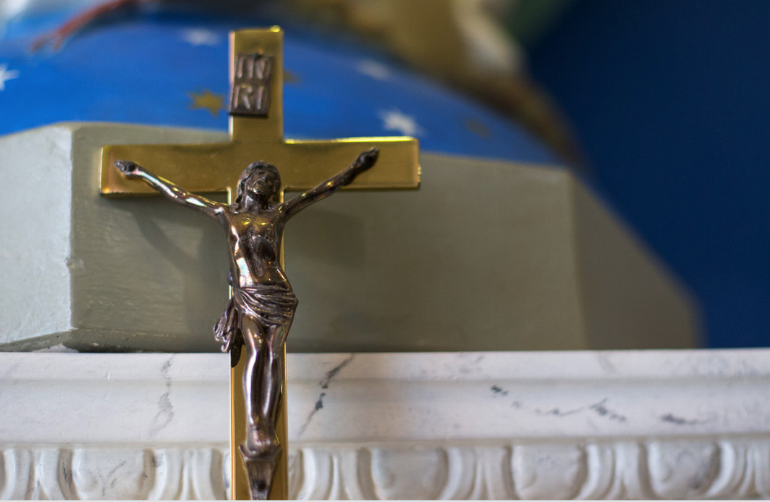
Let’s focus especially on the last the point. Paul and Barnabas teach that if you’re not willing to endure the cross, no crown will come your way. If you can’t stand a little disappointment, if you can’t stand being talked about, if you think you should always be up and never down, then I’ve come to remind you: No cross, no crown.
Yes, beware of “cross-less” Christianity. We do have good news to proclaim but there is also the truth that we get to the resurrection and the glory through the cross. There is a test in every testimony, a trial in every triumph. There are demands of discipleship, requirements for renewal, laws of love, and sufferings set forth for Saints.
Good preaching combines the hardship and the happiness in one message. It is a joy to follow in the footsteps of our Lord, who endured hostility, hardship, and the horrors of the cross but still triumphed and showed that the wisdom of this world is foolishness to God. Yes, He caught the wise in their craftiness and showed that the thoughts of the wise in this word are futile (cf 1 Cor 3:20). He made a public spectacle of them, triumphing over them (paradoxically) by the cross (cf Col 2:15).
Thus, St. Paul and Barnabas announce the cross, a stumbling block to the Jews and foolishness to the Gentiles (cf 1 Cor 1:23). Many today insist that the Church soft-pedal the cross, that she use honey, not vinegar. No can do. We joyfully announce and uphold the paradox of the cross. We must be willing to be a sign of contradiction to this world, which sees only pleasure and the indulgence of sinful drives as the way forward, which exalts freedom without truth or obedience, and which calls good what God calls sinful.
Too many so-called Christian denominations have adopted the pillow as their image and have a “give the people what they want” mentality. That is 180 degrees out of phase with the cross.
The Catholic Church does not exist to reflect the views of its members, but to reflect the views of its founder and head, Jesus Christ. As He went out to die, Jesus announced the cross without ambiguity, saying, Now is the time for judgment on this world; now the prince of this world will be driven out. And I, when I am lifted up from the earth, will draw all men to me (John 12:31-32).
And so we announce the cross not merely as suffering, but as life, power, and love. By the power of the cross, it is possible to live without sin, to overcome rebellion, pride, lust, and greed; it is possible to learn to forgive and to live the truth in love.
The world will hate us for this. But such hardships, such crosses, are necessary preludes to the hallelujah of Heaven. The Church can do no less than to point to the cross. The center of our faith is a cross not a pillow. And the cross is our only hope (Ave Crux spes unica nostra (Hail, O Cross, our only hope).
Yes, the Church announces the cross and admonishes a world obsessed with pleasure and with passing, fake happiness.
III. Appointing– The text says, They appointed presbyters for them in each church and,with prayer and fasting, commended them to the Lord in whom they had put their faith. Then they traveled through Pisidia and reached Pamphylia. After proclaiming the word at Perga they went down to Attalia.
And thus we see the ordination of priest leaders in every place. “Priest” is just an English mispronunciation of the word “presbyter.” Paul and Barnabas did not simply go about vaguely preaching and then moving on. They established local churches with a structure of authority. The whole Pauline corpus of writings indicates a need to continue oversight of these local churches and to stay in touch with the priest leaders established to lead these local parishes.
Later, St. Paul spoke of the need for this structure in other places when he wrote (to Titus),
This is why I left you in Crete, that you might amend what was defective, and appoint presbyters in every town as I directed you (Titus 1:5).
This appointment was done through the laying on of hands and is called ordination today. It was a way of establishing order and office in the Church to make sure that the work continued and that the Church was governed by order. This is why we call the sacrament involved here the “Sacrament of Holy Orders.”
Note, too, that a critical task for leaders in the Church is to develop and train new leaders. Too many parishes depend on individual charismatic and gifted leaders whose inevitable departure leaves a void, not an ongoing ministry or organization. This should not be so. Good leaders train new leaders.
IV. Accounting – The text says, From there they sailed to Antioch, where they had been commended to the grace of God for the work they had now accomplished. And when they arrived, they called the church together and reported what God had done with them and how he had opened the door of faith to the Gentiles.
Note that Paul and Barnabas are now returning to render an account for what they have done. Accountability is part of a healthy Church. Every priest should render an account to his bishop, every bishop to his metropolitan and to the Pope. Today’s ad limina visits of bishops to the Pope is the way this is done. Further, priests are accountable to their bishop through various mechanisms such as yearly reports and other meetings.
A further background to this text is that Paul and Barnabas are returning to Antioch because it was from there that they were sent forth by the local bishops and priests on this missionary task.
While they were worshiping the Lord and fasting, the Holy Spirit said, “Set apart for me Barnabas and Saul for the work to which I have called them.” Then after fasting and praying they laid their hands on them and sent them off (Acts 13:2).
Thus St. Paul was not the lone ranger that some think him to be. He was sent and was accountable.
But when he who had set me apart before I was born, and had called me through his grace, was pleased to reveal his Son to me, in order that I might preach him among the Gentiles, I did not confer with flesh and blood, nor did I go up to Jerusalem to those who were apostles before me, but I went away into Arabia; and again I returned to Damascus. Then after three years I went up to Jerusalem to visit Cephas, and remained with him fifteen days (Gal 1:15-18).
Then after fourteen years I went up again to Jerusalem with Barnabas, taking Titus along with me. I went up by revelation; and I laid before them (but privately before those who were of repute) the gospel which I preach among the Gentiles, lest somehow I should be running or had run in vain (Gal 2:1).
The preacher and teacher must be accountable: For we shall all stand before the judgment seat of God; for it is written, “As I live, says the Lord, every knee shall bow to me, and every tongue shall give praise to God.” So each of us shall give account of himself to God (Rom 14:10-12).
And thus we see some paths for priests, preachers, teachers, and leaders. We must announce the Gospel as good news, with joy and confidence. We must admonish a world obsessed with pleasures to embrace the cross as our only hope. We must continue to develop, train, and appoint leaders to follow after us. And we must be accountable to one another.
A nice and quick portrait of some healthy traits for the Church!
When I gave a talk recently at the Institute of Catholic Culture on the subject of the Second Coming, I was I asked to describe what our resurrected bodies will be like. Here is an article I wrote a few years back that details some aspects of our resurrected bodies:
St Paul writes to the Philippians of the glory that our currently lowly bodies will one day enjoy:
He will change our lowly body to conform with his glorified Body by the power that enables him also to bring all things into subjection to himself (Phil 3:19).
I once spoke with an older woman who wasn’t all that pleased to hear that her body was going to rise and be joined again to her soul. “Oh, Father, you don’t mean this old decrepit body, do you? If my body has to rise, I’m hoping for an improved model!”
I think most of us can relate to the desire that our current body be improved. And it surely will be. Notice that the passage above says that our lowly (weak, diseased, and often overweight) bodies will be changed and will reflect the glory of the resurrected body of Jesus. Yes, this old general issue clunker is going to be upgraded to a luxury model; I’m headed for first class.
When we recall the four last things (death, judgment, Heaven, and Hell), we ought to consider for a moment what Scripture and Tradition have to say about what our resurrected bodies will be like.
Now an important starting point in discussing this matter is a little humility. The fact is, a lot of what I am going to say here is speculation—but it is not wild speculation; it is rooted in Scripture. However, Scripture is describing things that are somewhat mysterious and difficult to reduce to words. Further, Scripture does not always provide as much detail as we might like. Sometimes we are left to infer qualities of the resurrected body based only on scriptural texts whose main purpose is something else (the resurrection of Jesus). For example, in one passage Jesus is described as appearing and disappearing at will in a room with locked doors. The point of the text is to tell us that He appeared, not necessarily to convey that the resurrected body has something we have come to call “agility” (see below). The text does not elaborate further, so we are left to note things about Jesus’ resurrected body and then apply them to our own. It is not wrong to do this, for Paul above says that our resurrected bodies will have qualities that conform to Jesus’ resurrected body. But the point is that the biblical texts do not elaborate on this or other qualities in a detailed manner and so we are left to speculate and make inferences.
St. John the Apostle expresses some of the humility we should bring to this discussion:
Beloved, now we are children of God, and it has not appeared as yet what we will be like. But We know that when He appears, we will be like Him, because we will see Him just as He is (1 John 3:2).
I do not interpret John to mean that we know nothing, for if that were the case he would negate other Scriptures. Rather, I interpret him to mean that we do not fully grasp the meaning of what we are discussing, and that much of it is mysterious. Some things are known and revealed but much more is unknown and far beyond what we have yet experienced.
With the need for humility in mind, let’s consider some of what we might be able to say of the qualities of a resurrected body. Perhaps it is well that we start with the most thorough passage in the New Testament on this subject and then list the seven traditional qualities of a resurrected body.
St. Paul writes of the resurrected body in First Corinthians:
But someone will ask, “How are the dead raised? With what kind of body will they come?” How foolish! What you sow does not come to life unless it dies. When you sow, you do not plant the body that will be, but just a seed, perhaps of wheat or of something else. But God gives it a body as he has determined, and to each kind of seed he gives its own body …. The splendor of the heavenly bodies is one kind, and the splendor of the earthly bodies is another …. The body that is sown is perishable, it is raised imperishable; it is sown in dishonor, it is raised in glory; it is sown in weakness, it is raised in power; it is sown a natural body, it is raised a spiritual body. If there is a natural body, there is also a spiritual body. So it is written: “The first man Adam became a living being”; the last Adam, a life-giving spirit. The spiritual did not come first, but the natural, and after that the spiritual. The first man was of the dust of the earth; the second man is of heaven. As was the earthly man, so are those who are of the earth; and as is the heavenly man, so also are those who are of heaven. And just as we have borne the image of the earthly man, so shall we bear the image of the heavenly man …. Listen, I tell you a mystery: We will not all sleep, but we will all be changed—in a flash, in the twinkling of an eye, at the last trumpet. For the trumpet will sound, the dead will be raised imperishable, and we will be changed. For the perishable must clothe itself with the imperishable, and the mortal with immortality. When the perishable has been clothed with the imperishable, and the mortal with immortality, then the saying that is written will come true: “Death has been swallowed up in victory.” “Where, O death, is your victory? Where, O death, is your sting?” (1 Cor 15:35-55 selectae)
Using this and other passages we can distinguish the seven traditional qualities of a resurrected body. Here we will allow our source to be St. Thomas Aquinas’ Summa Theologica. For each quality I’ve included a link to the corresponding section of the Summa.
1. Identity– The very same body that falls in death will rise to be glorified; we will not get a different body. St. Thomas says, For we cannot call it resurrection unless the soul return to the same body, since resurrection is a second rising, and the same thing rises that falls: wherefore resurrection regards the body which after death falls rather than the soul which after death lives. And consequently if it be not the same body which the soul resumes, it will not be a resurrection, but rather the assuming of a new body (Suppl. Q 79.1).
This does not mean that the body will necessarily be identical in every way. As St. Paul says, our current bodies are like the seed. A seed does not have all the fully developed qualities of the mature plant, but it does have them in seed form. Similarly, our current body is linked to our resurrected body causally and essentially, though not all the qualities of the resurrected body are currently operative. St. Thomas goes on to say, A comparison does not apply to every particular, but to some. For in the sowing of grain, the grain sown and the grain that is born thereof are neither identical, nor of the same condition, since it was first sown without a husk, yet is born with one: and the body will rise again identically the same, but of a different condition, since it was mortal and will rise in immortality. (Ibid).
Scripture attests that the same body that dies will also rise. Job said, And after my flesh has been destroyed, yet in my flesh I will see God; I myself will see him with my own eyes—I, and not another (Job 19:26-27). And to the Apostles, shocked at His resurrection, Jesus said, Look at my hands and my feet. It is I myself! Touch me and see; a ghost does not have flesh and bones, as you see I have (Luke 24:39).
Hence the same body rises and so there is continuity. But there is also development and a shining forth of a new glory and of capabilities that our bodies do not currently enjoy.
2. Integrity – We will retain all of the parts of our current bodies. This means every physical part of our body, even the less noble parts (e.g., intestines). It is clear from the Gospel that Jesus ate, even after the resurrection. He ate a fish while in their company (Luke 24:43). He also ate with the disciples in Emmaus (Luke 24:30). He ate breakfast with them at the lake shore (Jn 21:12). Hence it follows that even less noble parts of our body will rise, for eating and digestion are still functions of a resurrected body. St. Thomas argues (I think rightly) that food will not be necessary to the resurrected body (Suppl. 81.4), but it is clearly possible to eat, for Christ demonstrated it.
St. Thomas reasons that every aspect of our bodies will rise since the soul is the form of the body. That is, the body has the faculties it has due to some aspect of the soul. The soul has something to say and hence the body has the capacity to talk and write and engage in other forms of communication. The soul has the capacity to do detailed work and hence the body has complex faculties such as delicate and nimble fingers, arms and so forth, to carry out this work. Now body is thus apt for the capacities of the soul, though now imperfectly, but then even more perfectly. (cf Summa Suppl. Q. 80.1).
On some level it seems we should keep our speculation within limits. The Summa goes into matters that I think are highly speculative; you can read some of these speculations by clicking on the link above. Personally I think we should refrain from trying to ask questions such as whether hair and nails will grow or what bodily fluids will still be necessary and why. For example: Will latrines be needed in Heaven or will food be perfectly absorbed and nothing wasted? We just have to stop at a certain point and say that we just have no business knowing this sort of thing and it is purely speculative to discuss it. The bottom line is that the body shall rise, whole and complete. Its functions will be perfected and will be perfectly appropriate for the soul. But as for the intimate details, we ought to realize that humility is our best posture.
3. Quality – What about age, gender, and other physical characteristics? Our bodies will be youthful and will retain our original gender. Youthful here does not necessarily mean 21 years old. In the Philippians text that began this post, Paul says that our glorified bodies will be conformed to Christ’s glorified body. Jesus’ body rose at the age of 30-33 years. Elsewhere, St. Paul exhorts Christians to persevere: Until we all meet into the unity of faith, and of the knowledge of the Son of God, unto a perfect man, unto the measure of the age of the fullness of Christ (Eph 4:13). Hence it would seem that Christ’s resurrected body is the perfect age.
St Augustine also speculates that because Christ rose again of youthful age (about 30), others also will rise again of a youthful age (cf De Civ. Dei xxii).
St. Thomas further notes,Man will rise again without any defect of human nature, because as God founded human nature without a defect, even so will He restore it without defect. Now human nature has a twofold defect. First, because it has not yet attained to its ultimate perfection. Secondly, because it has already gone back from its ultimate perfection. The first defect is found in children, the second in the aged: and consequently in each of these human nature will be brought by the resurrection to the state of its ultimate perfection which is in the youthful age, at which the movement of growth terminates, and from which the movement of decrease begins (Suppl. Q. 81.1).
Further, since gender is part of human perfection, all will rise according to their current gender. Other qualities such as height and hair color will also be retained, it would seem, since this diversity is part of man’s perfection.
Here, too, we have to realize that merely picturing Jesus as a 33-year-old man is not sufficient. All of the resurrection appearances make it clear that though still recognizable, His appearance was somehow changed—and this is a mystery. Further, the heavenly description of Jesus is far from simple to decode in manners of age and appearance:
and among the lampstands was someone “like a son of man,” dressed in a robe reaching down to his feet and with a golden sash around his chest. His head and hair were white like wool, as white as snow, and his eyes were like blazing fire. His feet were like bronze glowing in a furnace, and his voice was like the sound of rushing waters. In his right hand he held seven stars, and out of his mouth came a sharp double-edged sword. His face was like the sun shining in all its brilliance (Rev 1:12-18).
Hence we must avoid oversimplifications when we speak of how our resurrected bodies will appear. We cannot simply project current human realities into Heaven and think that we understand what a resurrected body will look like in terms of age, stature, and other physical qualities. Those qualities are there but they are expressed at a higher level.
4. Impassability – We will be immune from death and pain. Scripture states this clearly:
The dead will be raised imperishable, and we will be changed. For the perishable must clothe itself with the imperishable, and the mortal with immortality (1 Cor 15:52-53).
He will wipe every tear from their eyes. There will be no more death’ or mourning or crying or pain, for the old order of things has passed away (Rev 21:4).
St. Thomas goes on at some length in the Summa, and you can read this by clicking on the link above.
5. Subtlety – Our bodies will be free from the things that restrain them now. Subtlety refers to the capacity of the resurrected body to be completely conformed to the capacities of the soul. St. Thomas says of this quality, the term “subtlety” has been transferred to those bodies which are most perfectly subject to their form, and are most fully perfected thereby…. For just as a subtle thing is said to be penetrative, for the reason that it reaches to the inmost part of a thing, so is an intellect said to be subtle because it reaches to the insight of the intrinsic principles and the hidden natural properties of a thing. In like manner a person is said to have subtle sight, because he is able to perceive by sight things of the smallest size: and the same applies to the other senses. Accordingly, people have differed by ascribing subtlety to the glorified bodies in different ways (Suppl. Q. 83.1).
In other words, the body is perfected because the soul is perfected. The resurrected body is fully conformed to the soul. In my current lowly body, though I may wish to go to Vienna in a few moments to hear an opera, my body cannot pull that off. My current body cannot instantly be somewhere else on the planet. I have to exert effort and expend time to get there. After the resurrection, Jesus could appear and disappear in a room despite the closed doors; he could simply be where he wanted instantly. Before his resurrection he had to take long physical journeys (cf John 19:20, 26). This quality is very closely related to agility, which we consider next.
6. Agility – We will have complete freedom of movement. Our souls will direct our bodies without hindrance. St. Thomas says, The glorified body will be altogether subject to the glorified soul, so that not only will there be nothing in it to resist the will of the spirit … from the glorified soul there will flow into the body a certain perfection, whereby it will become adapted to that subjection … Now the soul is united to body not only as its form, but also as its mover; and in both ways the glorified body must be most perfectly subject to the glorified soul. We have already referred Jesus’ ability, in His glorified body, to be anywhere at once, unhindered by things such as locked doors. Consider these other description of the agility of the resurrected body:
As they talked [on the road to Emmaus] and discussed these things with each other, Jesus himself came up and walked along with them (Luke 24:15).
Then their eyes were opened and they recognized Jesus, and he disappeared from their sight (Luke 24:31).
While they were still talking about this, Jesus himself stood among them and said to them, “Peace be with you” (Luke 24:36).
7. Clarity – The glory of our souls will be visible in our bodies. We will be beautiful and radiant. It is written in the Scriptures:
The just shall shine as the sun in the kingdom of their Father (Matthew 13:43).
The just shall shine, and shall run to and fro like sparks among the reeds (Wisdom 3:7).
The body in sown in dishonor, it shall rise in glory (1 Cor 15:43).
This post is based on a talk I gave to a group of men in Scranton, PA. I preached out of a text from St. Paul to Timothy, whom St. Paul considered a son in the faith:
But as for you, O man of God … Pursue righteousness, godliness, faith, love, steadfastness, gentleness. Fight the good fight of the faith. Take hold of the eternal life to which you were called and about which you made the good confession in the presence of many witnesses. I charge you in presence of God, who gives life to all things, and of Christ Jesus, who in his testimony before Pontius Pilate made the good confession, to keep the commandment unstained and free from reproach until the appearing of our Lord Jesus Christ, which he will display at the proper time—he who is the blessed and only Sovereign, the King of kings and Lord of lords, who alone has immortality, who dwells in unapproachable light, whom no one has ever seen or can see. To him be honor and eternal dominion. Amen (1 Tim 6:11-16).
I. Our Chase – But as for you, O man of God … Pursue righteousness, godliness, faith, love, steadfastness, gentleness. First of all, note that the personal pronoun used is “you.” I even looked this up in the Greek text to verify the translation. So “you” here means you, you personally. This mandate is for you, not merely for others who don’t have their act together as well as you do and who need to hear stuff like this. So, man of God, pay attention, God the Holy Spirit is speaking to you.
Note, too, the phrase “man of God.” Our world often values a concept of manhood that is very different from what God expects. In this world, men are often esteemed for being rich, physically powerful, or socially well-connected. But what does it mean to be a man of God? As you might expect, it means something far richer and deeper than the externalities of the world. The Man of God is to be strong by being “of God,” by having his heart and soul anchored in the Lord and what the Lord expects of him. In so doing, he will be strong and an anchor for those he loves; they are depending on him to be a true man, not a passive husband or father, not a weak leader. Inner strength needed for this.
What are some of the qualities that God the Holy Spirit emphasizes in this passage? What are we to pursue? Let’s look at the initial list in this verse:
Righteousness (δικαιοσύνη (dikaiosune)) – When we hear words like righteousness or justice, we tend to think only in a legal sense. But in the New Testament righteousness has a more of a relational sense.
Righteousness is the gift of God whereby we are restored to a right relationship with God. It is the state of him who, by God’s grace, is as he ought to be. The righteous man has his heart set on God. He wants what God wants. He loves and desires God. He loves who and what God loves.
In so doing, his relationships with others are also right, proper, and just.
But at its heart don’t miss the relational dimension of this. Righteousness is no mere legal imputation. It is being in a right relationship with God. And relationship change us. Who of us has not met someone who changed our life? Maybe it was a teacher who inspired us, a co-worker or employer who opened doors for us, a woman whom we later married. If mere human relationships can be life-changing, how much more so can being in a right relationship with God!
Pay attention here: the normal Christian life is to be in a life-changing, transformative relationship with God. It is to be in living, conscious contact with God and through that to be changed by into the very holiness and righteousness of God, with whom we walk in an increasingly close, tender, and powerful way.
Jesus knew his Father and tenderly called him “Abba.” Because of this, Jesus feared no other man. He was strong, steadfast, loving, and clear. He was merciful but uncompromising. Jesus loved what His Father loved, whom His Father loved, and in the way His Father loved. This relationship (I refer here to his human nature) is what made Him strong, and a man among men. He was not, as some are, easily swayed, confused, or conflicted. Jesus’ firm and clear relationship with His Father steadied and made proper all His relationships with human beings.
Strong men are in a clear and deepening relationship with the Lord God. And by this they are in proper and right relationships with others.
Godliness (eusebeia) – This means piety or reverence (from eu (well) + sebomai (venerate)). The Godly man walks with a reverence, with a proper and holy fear of God. The Fear here is a holy fear, not merely a cringing fear. It is a fear that holds God in awe and deeply respects Him. Out of love and respect, a man does not want to offend God; and so he walks in reverence among his family, friends, and co-workers.
Out of deep love for His Father and (humanly speaking) a holy reverence, Jesus walked among His people with an absence of human fear and without the need to flatter others. Even His enemies said of Him, Teacher, we know that you are true and teach the way of God truthfully, and you do not care about anyone’s opinion, for you are not swayed by appearances (Matt 22:16).
If we want to be men like Jesus, we must first have a holy fear, a reverence. If we fear God in this way, we will increasingly fear no man nor will we fear any weapon drawn against us.
Faith (πίστις (pistis)) – This means to believe, to be persuaded. The root meaning of the Greek word pistis here is to be persuaded, to be moved to conclude something based on sound reasoning and proper judgment. God engages our intellect with His truth. The man of faith, through the gift of faith, rightly assents to these truths.
But note, too, that a merely intellectual assent, if it is true Faith, leads the man of God to trust. For if what God has said is true, then we are called to base our whole life on it and to walk in that faith. The truth, the Word of God, is not merely informative; it is transformative. And thus, to the degree that we accept it, our life and what we do begin to change.
The man of faith says, “Lord it is enough for me to know that you have said this. And even if it is hard or if I don’t always know every detail or outcome, I am going to follow you and obey you. Lord, I trust in you and the surety of your word and your promises.
So true faith results in the obedience of faith (Rom 1:5) and will thereby change our life by increasingly conforming it to the truth of faith.
Though He did not need faith, Jesus surely showed forth the obedience of faith. He never sinned and He kept His Father’s will, even when that obedience cost Him His life.
How about you?
Love– The gift of love (agape) is the gift to have a divine affection for God. By this gift, the man of God loves Him with reverence, but also with a tender and filial affection. God is my Father and I love Him! I really love the Lord. I know what my Heavenly Father has done for me and I am moved to great affection for Him who has been so very good to me.
This gift unburdens our walk. We do what God wants not because we have to but because we want to. Love lightens every load. By this gift, the man of God loves Him as well as what and whom He loves. If God wants it, I want it.
Most of us know the power of romantic love, which can move us to make great sacrifices and overlook many faults! How much more does divine love (agape) move us to undertake any number of things simply because we love God.
As He went forth to die, Jesus said, The world must know that I love the Father, and I do exactly as the Father commanded Me. Get up, then let us go from here (Jn 14:31).
Is your love this real and this practical? Does your love provoke you to sacrificial acts for God and for others? Do you love God more than your own comfort and your own prosperity? Do you love God more than your very self?
Steadfastness (ὑπομονή (hupomone)) – This literally means to remain under. And thus God enables the believer to remain under or endure the challenges He allots in life.
Life is hard and the challenges are many. We will either meet those challenges or cave under them. In this sense, life is a test. In hardship, we discover what we are made of; we learn where we are strong and where we need growth.
Our culture prefers to remove or defer challenges. Many parents are too protective. Schools want to remove tests and have reward ceremonies in which no one is overlooked. Ordinary boys are restless and full of “spit and vinegar,” but they are pressured to be more like girls and are medicated if they do not comply. Competition and winning are downplayed. Many never reach maturity or purity in their life let alone their faith.
But God, as a good Father, still extends challenges to us. Even if the world no longer esteems mature manhood or challenges us to be men, God does. But this means challenges, and it requires of us a steadfastness that produces greater perfection.
Jesus had much to endure and labor under in this world. But as a true and perfect man, He persevered and never wavered—all the way through to the end. And from His glorious throne Jesus says to us, In this world you shall have tribulation. But have courage, I have overcome the world (John 16:33). And we read in the Gospel of Matthew, He who perseveres to the end shall be saved (Mat 24:13).
Are you steadfast? Can you remain under burdens until the Lord shall deliver?
Gentleness/Meekness (πρᾳΰτης (prautes)) – This is a virtue whereby we master anger and do not compromise justice or truth (though in a meek or gentle way). Aristotle described this virtue as the proper middle ground between too much anger and not enough anger.
Indeed, there are some things that we should be angry about. But we must master our anger and direct its energy toward the good. Our anger must be our passion to set things right.
The meek and gentle are not weak; they are strong and can master anger and direct it to good ends.
Jesus was angry a lot. But it was a productive anger, whereby He manfully set His face to Jerusalem like flint and would not turn back until He had vanquished pride by His humility. Scripture says of Jesus that we should fix our eyes on Jesus, the pioneer and perfecter of faith. For the joy set before him he endured the cross, scorning its shame, and sat down at the right hand of the throne of God (Heb 12:2).
Yes, out of anger (a productive and pure anger) Jesus took up the battle for us. He scorned the threat of suffering and led us over the hill of Calvary to Glory.
Have you found a good fight? Are you “angry” enough to endure it?
II. Our Contest – The text says, Fight the good fight of the faith. The Greek word used here for fight is πρᾳΰτης (agonizomai), which means to struggle as if engaged in an intense athletic contest or warfare.
We have already set the stage for this in the discussion on gentleness/meekness above. The point here is to understand the good fight. We are very quick to debate and to get passionate about sports, politics, issues at work, etc. But most of this is a “yawn fest” compared to the true battle between Satan, the Red Dragon, and the people you know and love. Satan is after your wife and children. He wants their souls and is working hard to corrupt them and rob them of faith. He is subjecting them to endless temptations. He is seeking to corrupt their minds; and frankly he’s pretty good at it. What are you doing about this? What are you doing about your own mind and the battle for your own soul? This is the good fight. If you find a good fight, get in it.
Scripture says that Jesus saw a large crowd and pitied them, for they were like sheep without a shepherd. He taught them at great length and went out to the cross for them.
What is your fight? Are you fighting for your children and family? Are you fighting for people you love? Are you growing in your own faith and helping others to do so?
This is the good fight, the fight for faith!
III. Our Cause – The text says, lay hold of the eternal life to which you were called and about which you made the good confession in the presence of many witnesses.
In other words, actively work to acquire the life that Jesus died to give you. Seize it and don’t let go. As a servant leader and as the high priest of your family, help others to do so as well. Imbue your children with the faith. Read Bible stories; teach the faith; insist on what is good. Be the spiritual leader of your home.
IV. Our Charge – The text says, I charge you in the presence of God, who gives life to all things, and of Christ Jesus, who in his testimony before Pontius Pilate made the good confession, to keep the commandment unstained and free from reproach.
Repent of your sins and allow the Lord to purify your life. The commandments are not mere abstract rules. The Commandments and the whole moral tradition are a picture that the Lord is painting of the transformed human person.
Therefore, let the Lord transform you and present you to others as “free from reproach,” that is, free from criticisms of hypocrisy. Let the Lord paint the picture of holiness and transformation in your life.
V. Our Crown– The text says, until the appearing of our Lord Jesus Christ, which he will display at the proper time—he who is the blessed and only Sovereign, the King of kings and Lord of lords, who alone has immortality, who dwells in unapproachable light, whom no one has ever seen or can see. To him be honor and eternal dominion. Amen.
We have a King who is all-glorious and who has shown us the way. We must make this journey unto the end when we shall see Him in all His glory.
Who shall ascend the mountain of the Lord?
And who shall stand in his holy place?
He who has clean hands and a pure heart,
who does not lift up his soul to what is false
and does not swear deceitfully.
He will receive blessing from the Lord
and righteousness from the God of his salvation.
Such are the men who seek him,
who seek the face of the God of Jacob (Ps 24:3-6).
The title of this sermon uses the word legacy, which refers to something transmitted by or received from an ancestor or predecessor.
Perhaps the most accessible image of this is money. If I receive 100 million dollars from a dying relative, I can use those funds to start living differently. My bills, which now seem overwhelming, can be paid with just the interest earned from my newfound wealth. I can start enjoying things I thought I could never afford in the past. In other words, a legacy can completely change the way I live and open up new possibilities.
It is in this sense that we explore today’s Gospel, wherein our Lord sets forth for us a new power, the power of love. If we tap into it and draw from its riches, we are able to live differently. If we will but lay hold of it, there is a kind of legacy, a deposit of riches from which we can draw.
Let’s look at this Gospel in three stages and discover what the Lord has done for us and has left us, by way of a legacy.
I. The Provision and Pivot of the Passion– The text says, When Judas had left them, Jesus said, “Now is the Son of Man glorified, and God is glorified in him. If God is glorified in him, God will also glorify him in himself, and God will glorify him at once.
Note how the text speaks in the present: the Son of Man is glorified. The aorist tense of the verb (used in the Greek translation) indicates something that has begun and is underway. Judas’ going forth has started a process that is now underway and will, by God’s grace, result in liberation and glorification for Jesus and for us. The Lord Jesus is no mere victim. Everything is unfolding exactly as foretold. The Son of Man will suffer, but in the end will be glorified.
And this glory will make available for us a whole new life.
Now this leads us to a question: What happened when the Son of God died and rose for me? This question is not posed in order to receive merely the answer from the catechism. Expressed more deeply, the questions are these: What difference does the passion, death, and resurrection of Jesus Christ make for me today? Are they just ancient historical events that is meaningful only because others say so? Or have I grasped and begun to lay hold of what Jesus has done for me?
Scripture says that Jesus’ death is glorification and new life for us: We know that our old self was crucified with him so that the sinful body might be destroyed, and we might no longer be enslaved to sin…We were buried therefore with him by baptism into death, so that as Christ was raised from the dead by the glory of the Father, we too might have a whole new life (Rom 6:4-7).
In other words, Jesus, the Son of Man, is glorified in His passion and is destroying the power of sin and death by His cross and resurrection. Each of us needs to spend our life pondering what happened when the Son of God died for us. What we ponder is not some mere historical event. It is that, but it is far more. To the degree that we will lay hold of this saving work, we will come to see and experience the power of the cross of our Lord Jesus Christ to put sin to death and to bring new life forth in Christ.
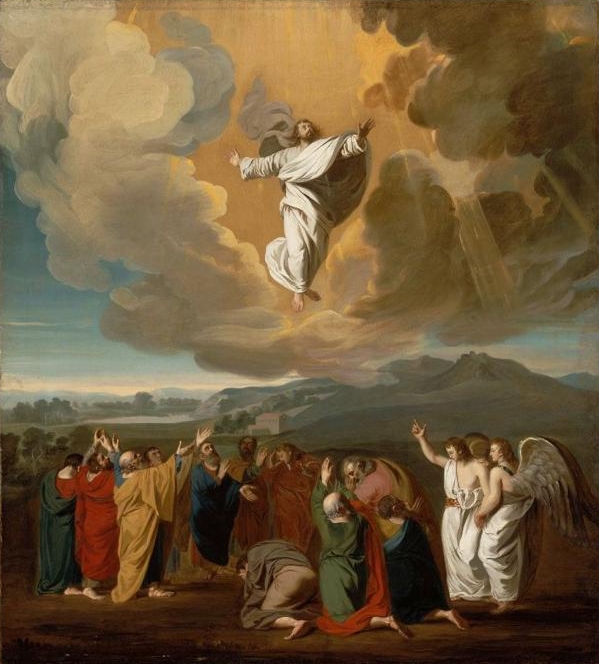
Of this, I am a witness, for I have seen the power of the cross and its power to quell sinful fears, worldly lusts, and endless preoccupations. On account of what Jesus endures for us, He ascends on high not to leave us, but to open the way for us to a greater and fuller life. It is a life in which we see sin put to death and many graces and charisms come alive: charisms of confidence, joy, and hope; it is an increasingly victorious life. It is up to us to grasp this saving work and the new life it offers us by the power of the cross of Christ and Him crucified.
This is the moment of glory, the pivotal point of all things. This the glory and the basis of a new life. Because of what Jesus does at this moment, His glory and ours is ushered in, it is all premised on this.
II. The Power and Produce of the Passion – The text says, I give you a new commandment: love one another. As I have loved you, so you also should love one another.
When we hear the phrase “Love one another as I have loved you.” we can fall into the trap of thinking, “Uh oh, I have to do more! I have to try harder. Because He loved me, now I, with the power of my own flesh, have to love others.” But this is not the gospel. The phrase is not about rules; it’s about relationship. Jesus is not just saddling us with more responsibilities. He is equipping, empowering, and enabling us to love with the same love with which He has loved us.
The point here is to let Jesus love you, to experience His love. And with this love, experienced and embraced, be empowered to love others.
The Lord does not just say, “Love.” Rather, He says, “Receive love and then love with the love that you have received.” Scripture says,
– We love, because he first loved us (1 John 4:19).
– As the Father has loved me, so have I loved you. Abide in my love! If you keep my commandments, you will abide in my love, just as I have kept my Father’s commandments and abide in his love (John 15:9).
In other words, we have the power to keep His commandments and to love others to the degree that we receive and abide—that is, remain—in His love. We love with His love, not merely with our own love.
Do not miss this point! Do you see it? This is the Gospel: by the power of His love and grace we are empowered to love and keep His commandments and to see our lives changed. The Gospel is not a moralism that tells us to obey a bunch of rules. The Gospel is that God has sent His Son, who died for us and rose to give us a wholly new and transformed life, a life that keeps the commands and loves others with the power of God’s own love, received and experienced.
III. The Proof Positive of the Passion – The text says, This is how all will know that you are my disciples, if you have love for one another.
We have discussed many times on this blog the fact that the usual Greek word for “know” is richer than our modern notion of “intellectual knowing.” The Greek word for merely knowing something intellectually is oida. But the Greek verb used in this Gospel is γινώσκω (ginosko), which refers to experiential knowing, to knowing in a deep, personal, and experiential way.
Thus, the point is that others will notice the legacy of love living us in a very real and experiential way. The faith, hope, and love that we proclaim will not, and cannot, be a mere intellectualism; it is to be something that others can see and experience at work within us.
Hence, the proof, the evidence, the picture of God’s love, is not some vague feeling or a mere intellectual attribute in us. It is a powerful and dynamic force that equips, empowers, and enables us to love. The Lord says here that His love is something that changes us in a way that others will notice. It changes our relationships in a palpable, tangible, and noticeable way. We notice and experience its power and so do others.
Yes, we will love even our enemies. And we will do this, not out of the power of our own flesh or because have to, but because we want to receive, and have received from the Lord, a new heart and the power to love.
Note also that the love we have will not be a merely sentimental one. It will be a true love, a love rooted in truth. It will be a love like Jesus has, a love that does not compromise the truth or water down its demands. It will be a love that speaks the truth but does so not to win an argument, but to summon the other to fulfillment and flourishing. This is what Jesus did. He loved, but He loved in truth and integrity. Nothing would compromise His love for His Father or the glorious vision and plan of the Father for all His children to abide in truth and holiness.
And thus for us the proof positive that the legacy of love is at work within us is, first of all, our own transformed lives, which other people can see. Second, it is the love that others can and do experience from us. Granted, this love will sometimes challenge and irritate others (as it did with Jesus’ love for the world), but it is a love that is difficult to deny, an integrity that is hard to impugn, a love that even if disconcerting is real, palpable, and obvious.
This, then, is the legacy of love. It is a treasure, an inheritance that the Lord Jesus has left us to draw upon. This love is not our work; it is not our wealth, not our power. It is all His. He has left it for us to draw upon. Will we? Or will we make excuses about how we are not able to do the things to which He has summoned us? But don’t you get it? It is not our power, not our love; it is His, and He has left us this legacy, this inheritance to draw upon.
Lay hold of this power, this love, and let it transform your life. Let it turn you into proof positive of the power of the cross to transform lives and to bestow new life.
Here are some of the lyrics from the song “Love Lifted Me”:
Souls in danger look above, Jesus completely saves, He will lift you by His love, out of the angry waves. He’s the Master of the sea, billows His will obey, He your Savior wants to be, be saved today.
Love lifted me! Love lifted me! When nothing else could help Love lifted me!
We live in times of great ingenuity; we have a lot of smarts. We’ve been to the moon and back. Our computers can do more and more amazing things, even as we are able to make them smaller and smaller. We can see farther than ever into outer space and look more deeply than ever into “inner space,” doing microsurgery and studying the human genome.
Yet although we have become technological giants, at the same time we’ve become moral midgets. Though able to solve complex technical problems, we can’t figure how to stay faithful to our commitments or keep our families together. The churches that once dominated our skylines are now dwarfed by buildings dedicated to banking, insurance, and other passing worldly affairs.
Our houses, with their great rooms, cathedral ceilings, and granite countertops, are monuments to our wealth. But inside, these houses are not homes; they are often filled with division and sterility.
Despite all our monetary wealth there is little wisdom; despite all our power there is little prudence.
From an eternal perspective our smarts amount to sandcastles on the beach that are sure to be washed away. Ultimately they cannot stand any more than can we.
Scripture warns of the human tendency to maximize the minimum and minimize the maximum. We are smart, but about the wrong things. Our priorities are misguided.
Woe to you, teachers of the law and Pharisees, you hypocrites! You give a tenth of your spices—mint, dill and cumin. But you have neglected the more important matters of the law—justice, mercy and faithfulness. You should have practiced the latter, without neglecting the former. You blind guides! You strain out a gnat but swallow a camel (Matt 23:22-24).
But God said to [the rich man who built barns], “You fool! This very night your soul is required of you; and now who will own what you have prepared?” So is the man who stores up treasure for himself, and is not rich in what matters to God (Luke 12:20-21).
For the people of this world are more shrewd in dealing with their own kind than are the people of the light (Lk 16:8).
For everyone looks out for their own interests, not those of Jesus Christ (Phil 2:21).
But mark this: There will be terrible times in the last days. People will be lovers of themselves, lovers of money, boastful, proud, abusive, disobedient to their parents, ungrateful, unholy, without love, unforgiving, slanderous, without self-control, brutal, not lovers of the good, treacherous, rash, conceited, lovers of pleasure rather than lovers of God— having a form of godliness but denying its power. Have nothing to do with such people (2 Tim 3:1-5).
How prosperous Israel is—a luxuriant vine loaded with fruit. But the richer the people get, the more pagan altars they build. The more bountiful their harvests, the more elaborate their pagan pillars. Their heart is false; now they must bear their guilt. The LORD will break down their altars and destroy their pillars (Hosea 10:1-2).
A discerning person keeps wisdom in view, but a fool’s eyes wander to the ends of the earth (Proverbs 17:24).
They are ingenious in their wickedness (Romans 1:30).
In other words, we humans tend to get smartest about the least important things, and are foolishly forgetful of eternal things—the things that matter most. Yes, we maximize the minimum and minimize the maximum. There are some who know everything there is to know about football, or who’s who in Hollywood or politics, but are at a loss when it comes to the most basic spiritual concepts, biblical stories, or moral teachings. Hours are consumed by sports, television, and politics, but there is no time for prayer.
Well, you get the point. We are smart, but about the wrong things. Meanwhile we remain foolishly out of touch with the things that matter to God and that last unto life eternal.
I thought of all this when I saw the following commercial, which appeared recently in my YouTube queue. It features men who have developed every talent imaginable related to beer.
Now I have nothing against beer in moderation. But allow the beer to represent the things of this world. And thus we see humorously illustrated our tendency and capacity to become very talented in worldly things. But at the end of the day, it’s just beer; it’s just the world, a world that is passing away.
Are we as talented and ingenious about spiritual things?
Judas Maccabeus was Handel’s most famous oratorio during his lifetime, more popular than the Messiah. There are many wonderful moments in it, especially its bold and brave choruses. Written in 1746, it covers the biblical events of 170–160 B.C., when Judea was ruled by the Seleucids and the people were compelled to worship Zeus. Some resisted; others obeyed. The priest Mattathias went to the hills and gathered others who were willing to fight for their faith. This is all recounted in the First Book of Maccabees in the (complete) Catholic Bible. The words to Judas Maccabeus largely paraphrase the biblical text and were written by Thomas Morell.
Of all the arias in the oratorio, I’ve often thought that this one should be more well known, due to its keen reminders to us:
Wise men, flattering, may deceive us;
With their vain, mysterious art;
Magic charms can ne’er relieve us,
Nor can heal the wounded heart.
But true wisdom can relieve us,
Godlike wisdom from above;
This alone can ne’er deceive us,
This alone all pains remove.
It’s a simple teaching, but so easily forgotten. In a world of false prophets and hucksters with empty promises of what are (at best) passing comforts, we need to recall that we are easily deceived; in fact, we seem to enjoy being deceived more than we’d probably like to admit.
Flattery refers to excessive and insincere praise, especially praise given to another in order to further one’s own interests. It is used to beguile or to gain another person’s attention. It is likely of Germanic origin, stemming from a word that meant to stroke or caress repeatedly.
Many, from marketers to politicians to ideologues, seek to ingratiate themselves to us in order to sell products, ideas, or philosophies. The ideologues, especially, try to present themselves as great humanitarians, caring more than others do. They use euphemisms such as choice, progress, death with dignity, tolerance, and so forth. But such terms are meant to stroke us to sleep, to beguile us, to hide the ugly reality (often the death of other human beings) of what these things actually produce.
So easily do they deceive us. I have noted in other posts that to be deceived is to be picked up and carried off. The image that comes to mind is that of limp prey in the mouth of a lion as it is carried off to be consumed.
Strangely, we often seem to like being deceived. Sometimes lies and euphemism help to hide uglier realities we would rather not face. It’s as if we say to the flatterers and liars, “It’s OK, lie to me. It’s just too much trouble to look at what’s really going on behind the veiled language.”
The text of the oratorio speaks of vain, mysterious art. Something that is vain is ultimately empty on the inside even if on the outside all seems wonderful and in good order.
The phrase mysterious art does not necessarily refer to magic, but to that which is unknown. Some flatterers like to use fancy terms, photos, movies, colorful graphs, and the like to impress us with their knowledge or to mesmerize us so that we dare not protest what they say.
But as the text goes on to say, none of this can really help us. There may be momentary comforts, but soon they are gone. Satan (and to a large degree, the world) promises happiness now, but the bill comes later. In contrast, God often asks for sacrifices, discipline, and perseverance through difficulty up front and then lets us reap the reward later. Indeed, the cross produces glory far beyond the sufferings it brings: For our light and momentary troubles are achieving for us an eternal glory that far outweighs them all (2 Cor 4:17).
The text goes on to teach that our wounded hearts need more than relief; they need healing. And only Godlike Wisdom from above can accomplish this. Why? Well, God himself says why:
The heart is more deceitful than all else and is desperately sick; who can understand it? I, the LORD, search the heart, I test the mind (Jer 17:9-10).
To find healing, go to God and to His revealed Word and sacred teachings. He knows your heart because He made you. He knows what will really heal and nourish your heart. Be not deceived and mesmerized by false prophets, hucksters, and merchants of the mediocre; God alone can fill the God-sized space in your heart. Only God, who made us for Himself, can satisfy our longings.
During Eastertide we continue to read from the Book of Revelation and meditate on Jesus as the Lord of history and the Victor over sin and death. As Revelation moves to its conclusion, it points forward to the Parousia (the magnificent second coming of the Lord). We do well to allow our imaginations to be engaged in contemplating the glory that awaits those who are faithful, to meditate on the joy and ecstasy of the culmination of all things!
However, we must also soberly meditate on the need to be ready and on the great danger that many who are not serious may be lost. But the great and terrible day of the Lord will indeed be great for those who have allowed the Lord to prepare them.
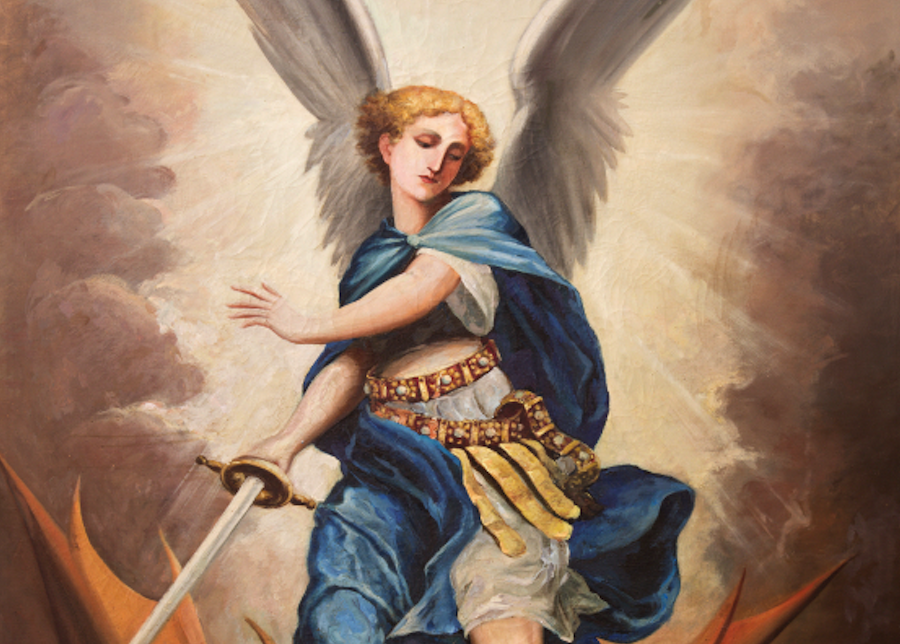
There is a magnificent book by Cardinal Jean Daniélou on angelology (the study of angels) entitled The Angels and their Mission: According to the Fathers of the Church. It is a must read and is very accessible—a mere 114 pages. It is packed full of stirring and edifying accounts of the wonderful works of the angels, according to Scripture and the Fathers of the Church.
The final chapters, on the eschaton (the last things) and the Parousia, are particularly magnificent. I would like to distill them here, adding some material and reworking it just a bit. However, the research is that of Cardinal Daniélou. I hope that you will be stirred with as much joy and zeal as I was in reading and preparing this material.
As a beginning point,let us ponder what happens to the ministry of our Guardian Angel when we die. Even if our souls are in Heaven, our bodies are still awaiting the resurrection. Ancient Christian tradition maintains that during this time the angels keep watch over the tombs of the saints. In the Jewish apocalyptic book, The Assumption of Moses, it is said that Joshua saw Moses’ soul rising to Heaven with the angels (40:1–7). However, the Epistle of Jude also says that the Archangel Michael fiercely disputed with the devil about the body of Moses (cf Jude 1:9). Stories such as these, combined with the ancient Christian practice of frequently depicting angels in cemetery art and funeral monuments, indicate a role for the angels in guarding the bodily remains of the elect, even those sadly scattered about or buried in the depths of the sea.
Scripture is replete with descriptions of the role of angels in the great second coming of the Lord. In the Gospel of Matthew there is a text that may refer to 70 A.D., but surely also describes the end of time:
Then will appear the sign of the Son of man in heaven, and then all the tribes of the earth will mourn, and they will see the Son of man coming on the clouds of heaven with power and great glory; and he will send out his angels with a loud trumpet call, and they will gather his elect from the four winds, from one end of heaven to the other (Matt 24:30-31).
The first epistle to the Thessalonians also says,
For the Lord himself will descend from heaven with a cry of command, with the archangel’s call, and with the sound of the trumpet of God. And the dead in Christ will rise … (1 Thess 4:16).
St. Cyril goes on to describe the extraordinary magnificence that the presence of the multitude of angels gives to the final judgment. He considers how the great depth and breadth of the spiritual world has been invisible until now (except to the eyes of faith) but suddenly is made manifest! He asks us to try to imagine the immensity of the multitude of angels by considering the vast numbers of human beings who ever existed, from the time of Adam to the present day, all standing before the Lord Jesus. And then he asks us to consider that the angels are vastly more numerous than we are, for they are the 99 sheep whereas humanity is but the one sheep! Such numbers can only be spoken of as myriads and myriads! Or as Daniel poetically says,
Thrones were set up and the Ancient of Days took his throne. His clothing was white as snow, the hair on his head like pure wool; His throne was flames of fire, with wheels of burning fire. A river of fire surged forth, flowing from where he sat; Thousands upon thousands were ministering to him, and myriads upon myriads stood before him (Dan 7:9-10).
Such a vision and such multitudes can hardly be imagined.
The first step in assembling this great Judgement is waking the dead, and the angels surely play a part in this.
The second Sibylline book, a Christian work, describes the archangels shattering the gates of death, raising up the bodies of even those who had been drowned in the sea or whom savage beasts had devoured (Sib, 2:214–235).
St. Ephrem speaks of the angels waking the dead:
Then the Lord will appear in the heavens like lightning with an unspeakable glory. The Angels and the Archangels will go on before his glory like flames of fire, like a mighty torrent. The Cherubim will turn their faces and the Seraphim will fly ahead crying out in fear: “Arise, you who sleep. Behold the bridegroom is coming!” Then the tombs will be opened and in the flash of an eye all the people will rise and behold the beauty of the Bridegroom.
St. Paul says that our bodies—truly our bodies—will rise, but they will be gloriously transformed:
He will change our lowly body to conform with his glorified body by the power that enables him also to bring all things into subjection to himself (Phil 3:21).
So will it be with the resurrection of the dead. The body that is sown is perishable, it is raised imperishable; it is sown in dishonor, it is raised in glory; it is sown in weakness, it is raised in power (1 Cor 15:42).
Then, of course, comes the Judgment by Christ. Here, too, the angels play a role.
Matthew 13 describes the angels as separating the wicked from the just:
The Son of man will send his angels, and they will gather out of his kingdom all causes of sin and all evildoers, and throw them into the furnace of fire; there men will weep and gnash their teeth. Then the righteous will shine like the sun in the kingdom of their Father (Mat 13:41-43).
And Matthew 25 describes the angels as with Christ when He takes His judgment seat:
When the Son of man comes in his glory, and all the angels with him, then he will sit on his glorious throne. Before him will be gathered all the nations, and he will separate them one from another as a shepherd separates the sheep from the goats (Matt 25:31-32).
St. Cyril of Jerusalem writes of the angels leading the sinners away, body and soul, “in the full sight of the armies of heaven and they will be unable to escape.”But the angels are also uniting the just.
So, on the one hand, Matthew 13 describes the angels leading evildoers away:
The Son of man will send his angels, and they will gather out of his kingdom all causes of sin and all evildoers, and throw them into the furnace of fire … (Mat 13:41-42).
And on the other hand, St. Ephrem also describes the angels leading the elect to paradise:
Then the angels will come together from all sides and take up the holy and faithful people into the glory of the clouds above, to their meeting place with Christ.
Origen also speaks of the angels escorting the blessed to paradise:
When … we have begun to enter the holy place and pass on to the promised land, those who are really holy and whose place is the Holy of Holies will make their way, supported by the angels and unto the tabernacle of God … They will be carried on [the angels’] shoulders and raised up by their hands.
St. Paul seems to speak to the same glory when he writes to the Thessalonians,
The dead in Christ will rise first. Then we who are alive, who are left, will be caught up together with them in the clouds to meet the Lord in the air. Thus we shall always be with the Lord (1 Thessalonians 4:17).
The Fathers of the Church then consider and imagine the joy (and relief) of the angels, whose long work is now done. Of this final culmination, Scripture says,
The last enemy to be destroyed is death. “For God has put all things in subjection under [Jesus’] feet.” But when it says, “All things are put in subjection under him,” it is plain that he [the Father] is excepted who put all things under him. When all things are subjected to him, then the Son himself will also be subjected to him who put all things under him, that God may be everything to everyone (1 Cor 15:26-28).
And thus, having gone forth to execute Judgment, Jesus now returns to His Father’s right, in the Holy of Holies. He ascends there, now with all the members of His body (body and soul) joined to Him. He ascends to the throne as Unus Christus, amans seipsum (one Christ, loving Himself). And though equal to His Father in glory and majesty, He is delighted to hand over the Kingdom of His Body, the Church, to His Father, who is, as Father, the Principium Deitatis.
And at this ascension, the Fathers ponder that the angels will make the same declaration, the heavens echoing with their cry:
Lift up your heads, O gates; and be lifted up, O ancient doors, that the King of glory may come in. Who is the King of glory? The Lord, strong and mighty, the Lord, mighty in battle. Lift up your heads, O gates; and be lifted up, O ancient doors; that the King of glory may come in. Who is this King of glory? The Lord of hosts, he is the King of glory (Psalm 24: 7-10).
And there shall then come to pass the transformation of all creation and the fulfillment of its longing for its share in the glorious freedom of the Children of God, as prophesied through St. Paul:
For the creation waits with eager longing for the revealing of the sons of God; for the creation was subjected to futility, not of its own will but by the will of him who subjected it [because of our sins]. But the creation itself will be set free from its bondage to decay and obtain the glorious freedom of the children of God. We know that the whole creation has been groaning in travail together until now; and not only the creation, but we ourselves, who have the first fruits of the Spirit, groan inwardly as we wait for adoption as sons, the redemption of our bodies … (Rom 8:19-25).
And now it comes! Heaven and earth are united. Creation receives its original glory and more besides, for the heavenly realities are now joined to the earth, beautifully restored and raised.
Then I saw a new heaven and a new earth; for the first heaven and the first earth had passed away, and the sea was no more. And I saw the holy city, new Jerusalem, coming down out of heaven from God, prepared as a bride adorned for her husband; and I heard a loud voice from the throne saying, “Behold, the dwelling of God is with men. He will dwell with them, and they shall be his people, and God himself will be with them; he will wipe away every tear from their eyes, and death shall be no more, neither shall there be mourning nor crying nor pain any more, for the former things have passed away.” And he who sat upon the throne said, “Behold, I make all things new” (Rev 21:1-5).
Cardinal Daniélou beautifully concludes,
On that day, the joy of the friends of the Bridegroom, [the angels] will be complete. They have led to paradise the souls of the just who are entrusted to them. They have kept watch over their mortal remains. But [for now] they still await the day in which the Bridegroom will come to look for his Bride, when her beauty is finally perfect, in order to lead her into the House of his Father for the eternal wedding feast (p. 114).
Of this magnificent beauty, St. Methodius says to us,
Oh dearly beloved, [the angels] burn to see the day of your marriage, all the angels Christ has called from heaven. They will come, O Lord, O Word, and they will carry with them mighty gifts, in their spotless robes.
Thus we shall always be with the Lord (1 Thess 4:17).
The Spirit and the Bride say, “Come” … He who testifies to these things says, “Surely I am coming soon.” Amen. Come, Lord Jesus! The grace of the Lord Jesus be with all the saints. Amen (Rev 22:17; 20-21).

 The following post contains some adult content. There is nothing inappropriate, but it does speak frankly to an aspect of sexual desire. Exercise caution if reading it to younger children.