A Biblical Meditation on the Difficulties of Old Age

elderly_wheelchairToday I would like to discuss the Gospel from last Saturday morning’s daily Mass (25th Week of the Year). For indeed one of the more beautiful passages in the Old Testament is the 12th Chapter of Ecclesiastes. It is a melancholy but soulful meditation on old age. Its poetic imagery is masterful as it draws from the increasingly difficult effects of old age such as hearing loss, fading eyesight, difficulty walking, digestive issues, and even gray hair.

Remember your Creator in the days of your youth, before the evil days come And the years approach of which you will say, I have no pleasure in them; Before the sun is darkened. and the light, and the moon, and the stars, while the clouds return after the rain; When the guardians of the house tremble, and the strong men are bent, And the grinders are idle because they are few, and they who look through the windows grow blind; When the doors to the street are shut, and the sound of the mill is low; When one waits for the chirp of a bird, but all the daughters of song are suppressed; And one fears heights, and perils in the street; When the almond tree blooms, and the locust grows sluggish and the caper berry is without effect, Because man goes to his lasting home, and mourners go about the streets; Before the silver cord is snapped and the golden bowl is broken, And the pitcher is shattered at the spring, and the broken pulley falls into the well, And the dust returns to the earth as it once was, and the life breath returns to God who gave it. Vanity of vanities, says Qoheleth, all things are vanity! (Ecclesiastes 12:1-8)

And now some commentary on each verse (my comments are in red)

Remember your Creator in the days of your youth, before the evil days come And the years approach of which you will say, I have no pleasure in them;

We are advised to give thanks to God for the vigor of youth because “evil” days will come. Here evil does not mean “sinfully evil.” Rather, it refers to days that are difficult and bad, days that bring challenge and pain.

We might want to be thankful for living in the modern age, because the burdens of old age are far less than they were in ancient times. Consider all the medicines and aids that make aging less difficult: Pain medicines alleviate arthritis; calcium supplements help with osteoporosis; blood pressure medication helps prevent stroke and partial paralysis; motorized scooters increase mobility; eyeglasses and hearing aids improve our ability to interact. In the ancient world, age only brought increasing and cumulative burdens, so that our author says regarding these days, “I have no pleasure in them.”

Before the sun is darkened. and the light, and the moon, and the stars, while the clouds return after the rain;

This is a poignantly poetic description of eyesight going bad. The light darkens, the moon and stars are less visible (perhaps they are blurry), and the clouds of cataracts begin to afflict the elderly.

When the guardians of the house tremble, and the strong men are bent, And the grinders are idle because they are few, and they who look through the windows grow blind;

The “guardians of the house” are the arms. They begin to tremble with the tremors common to old age, even without Parkinson’s disease.

The “strong men” are the legs. They are bent, less able to carry the weight of the body. Bent also describes the legs when we are seated, unable to walk.

The “grinders” are the teeth and they are few! We have far better dental health today. In ancient times, it was common for the elderly to have lost many if not most of their teeth. This made it difficult to eat and required food to be mashed.

The image of an elderly person sitting by a window looking out, but able to see less and less, is surely sad, but also vivid. I remember my grandmother in her last years. She could no longer read much because her eyesight was so poor and her mind could not concentrate on the text. So she sat for hours and just looked out the window.

When the doors to the street are shut, and the sound of the mill is low; When one waits for the chirp of a bird, but all the daughters of song are suppressed;

The “doors to the street” are the tightly compressed lips common to the very elderly, especially when teeth are missing. It also depicts how many of the elderly stop talking much. Their mouths seem shut tight.

The sound of the mill may be another reference to chewing. Many of the elderly lose their appetite. One the psalms says regarding the elderly, “I moan like a dove and forget to eat my bread” (Psalm 102:4).

Waiting for the chirp of the birds may be a reference to the silence of the elderly, but it may also be a reference to deafness, as many can no longer hear their singing and chirping, something the young often take for granted.

And one fears heights, and perils in the street; When the almond tree blooms, and the locust grows sluggish and the caper berry is without effect,

Walking is difficult, sometimes treacherous, and requires great effort for many of the elderly. Whereas the young may not think twice about climbing a flight of stairs, the elderly may see them as an insurmountable obstacle.

Perils in the street like loose or upturned stones cause fear because falls for the elderly can be catastrophic. They may also not be able to get up if they fall.

The almond tree blooming is a symbol for gray hair because almond trees had white blooms.

The caper berry had several uses in the ancient world. It was an appetite stimulant, an aphrodisiac, and was also used to treat rheumatism!  But in old age, it would seem that the desired effects are hard to come by.

Because man goes to his lasting home, and mourners go about the streets; Before the silver cord is snapped and the golden bowl is broken, And the pitcher is shattered at the spring, and the broken pulley falls into the well, And the dust returns to the earth as it once was, and the life breath returns to God who gave it.

Finally, death comes, as symbolized by the mourners in the street. The silver cord and the golden bowl, symbols of life, are now snapped and broken.

The broken pitcher symbolizes that the body no longer contains the soul.

The pulley, a device used to lift, is now broken, indicating that the body will no longer rise from its place but rather fall into the well of the grave.

And we return to the dust and the soul goes to God.

Vanity of vanities, says Qoheleth, all things are vanity!

In the end, all things pass. Nothing remains. Because all things are to pass, they are vain (empty). The physical world is less real than the spiritual world, because the physical passes while the spiritual remains. Since you have been raised to new life with Christ, seek the things that are above, where Christ is seated at God’s right hand (Col 1:3).

This chapter from Ecclesiastes is a sad but powerfully beautiful description of old age. I have often shared it with the very elderly and those who are suffering the ill effects of old age. I remember reading it slowly to my father as he lay dying in his hospital room. He could no longer talk much, but as I read it to him I saw him nod and raise his hands as if to say “Amen!” It was almost as if he meant to say, “Somebody understands; God understands.” Perhaps you also know an elderly person who could benefit from this passage. I know that it is sad and that not everyone is in a condition that they can hear such a stark and sad description, but some are in a frame of mind such that they can derive peace from it, as God, through His word, tell them that He knows exactly what they are going through.

https://youtu.be/FinjNCcxlTs
 

Ignoring the Poor Is a Damnable Sin – A Homily for the 26th Sunday

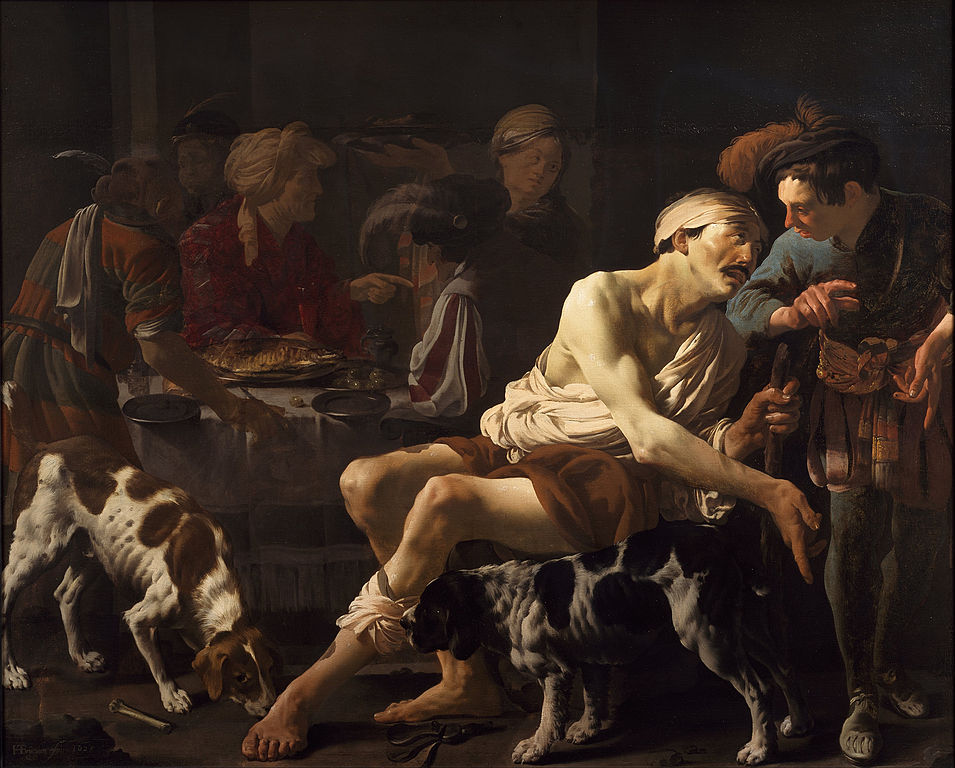
The Rich Man and the Poor Lazarus by Hendrick ter Brugghen

In the Gospel for today about the rich man and Lazarus the Lord gives us some important teachings on judgment and Hell. We live in times in which many consider the teachings on Hell to be untenable. They struggle to understand how a God described as loving, merciful, and forgiving can assign certain souls to Hell forever. Despite the fact that the Doctrine of Hell is taught extensively in Scripture as well as by Jesus Himself, the doctrine does not comport well with many modern notions and so many think that it has to go.

Today’s Gospel goes a long way toward addressing some of the modern concerns about Hell. Prior to looking at the reading, it is important to understand why Hell has to exist. I have written on that topic extensively here: http://blog.adw.org/2010/07/hell-has-to-be/. Here is a brief summary of that lengthier article:

Hell has to exist essentially for one reason: respect. God has made us free and respects our freedom to choose His Kingdom or not. The Kingdom of God is not a mere abstraction. It has some very specific values and these are realized and experienced perfectly in Heaven.

The values of the Kingdom of God include love, kindness, forgiveness, justice to the poor, generosity, humility, mercy, chastity, love of Scripture, love of the truth, worship of God, and the centrality of God.

Unfortunately, there are many people who do not want a thing to do with those values, and God will not force them to adopt and live them. While everyone may want to go to Heaven, Heaven is not merely what we want it to be; it is what it is, as God has set it forth. Heaven is the Kingdom of God and the values thereof in all their fullness.

Hence there are some (many, according to Jesus) who live in such a way that they consistently demonstrate that they are not interested in Heaven, because they are not interested in one or many of the Kingdom’s values. Hell “has to be,” because God respects people’s freedom to choose to live in this way. Because they demonstrate that they do not want Heaven, God respects their freedom to choose “other arrangements.”

In a way, this is what Jesus says in John’s Gospel when He states that judgment is about what we prefer: And this is the judgment: the light has come into the world, and people loved the darkness rather than the light because their works were evil (John 3:19). In the end, you get what you want: light or darkness. Sadly, many prefer the darkness. The day of judgment discloses our final preference and God respects that, even if it is not what He would want for us.

This leads us to today’s Gospel, which we will look at in three stages.

I. The Ruin of the Rich Man – As the Gospel opens we see rich man (some call him Dives, which simply means “rich”). There was a rich man who dressed in purple garments and fine linen and dined sumptuously each day.

It is clear that he lives very well and has the ability to help the poor man, Lazarus, who is outside his gate. But he does not do so.

The rich man’s sin is not so much one of hate as of indifference. He is living in open rejection of one of the most significant Kingdom values: love of the poor. His insensitivity is literally a “damnable sin,” as it lands him in Hell. The ruin of this rich man is his insensitivity to the poor.

The care of the poor may be a complicated matter, and there may be different ways of approaching it, but in no way can we ever consider ourselves exempt if it is within our means to help them. We simply cannot avoid judgment for our greed and insensitivity. As God said in last week’s reading regarding those who are insensitive to the poor: The LORD has sworn by the pride of Jacob: Never will I forget a thing they have done (Amos 8:7). God may well “forget” many of our sins (cf Is 43:23; Heb 8:12), but apparently disregarding the needs of the poor isn’t one of them.

Hence this rich man has willfully and repeatedly rejected the Kingdom and is ruined by his greed and insensitivity. He lands in Hell because he doesn’t want Heaven, where the poor are exalted (cf Luke 1:52).

Abraham explains the great reversal to him: My child, remember that you received what was good during your lifetime while Lazarus likewise received what was bad; but now he is comforted here, whereas you are tormented.

II. The Rigidity of the Rich Man – You might expect the rich man to be repentant in the end and to have a change a heart, but he does not. Looking up into Heaven he sees Lazarus next to Abraham, but rather than finally recognizing Lazarus’ dignity and seeking his forgiveness, he tells Abraham to send Lazarus to Hell with a pail of water to refresh him. The rich man still sees Lazarus as beneath him (even though he has to look up to see him); he sees Lazarus as an errand boy and wants him to come to Hell with water.

Notice that the rich man does not ask to be admitted to Heaven! Although he is unhappy with where he is, he still does not seem to desire Heaven and the Kingdom of God with all its values. He has not really changed. He regrets his current torment, but does not see or desire Heaven as a solution to that. Neither does he want to appreciate Lazarus’ exalted state. The rich man wants to draw him back to the lower place he once occupied.

This helps to explain why Hell is eternal. It would seem that there is a mystery of the human person that we must come to accept: that we come to a point in our life when our character is forever fixed, when we no longer change. When exactly this occurs is not clear; perhaps it is at death itself.

The Fathers of the Church often thought of the human person as clay on a potter’s wheel. As long as it is on the wheel and moist it can be molded, changed, and fashioned. But there comes a point when the clay is taken off the wheel and placed in the fiery kiln (fire is judgment day (cf 1 Cor 3:15)), at which time its shape is forever fixed and cannot be changed.

The rich man now manifests this fixed quality. He has not changed one bit. He is unhappy with his torments, even wanting to warn his brothers. But he apparently does not intend to change, or somehow he is unable to change.

This is the basis for the teaching that Hell is eternal: once having encountered our fiery judgment, we will no longer be able to change. Our decision against the Kingdom of God and its values (a decision that God, in sadness, respects) is forever fixed.

III. The Reproof for the Rest of Us – The rich man, though he cannot or will not change, would like to warn his brothers. He thinks that perhaps if Lazarus would rise from the dead and warn them, they would repent!

We are the rich man’s brethren, and we are hereby warned. The rich man wanted exotic measures but Abraham said, “They have Moses and the prophets. Let them listen to them.” “Oh no, father Abraham, but if someone from the dead goes to them, they will repent.” Then Abraham said, “If they will not listen to Moses and the prophets, neither will they be persuaded if someone should rise from the dead.”

Of course this reply is dripping with irony, given Jesus’ resurrection from the dead.

That aside, the fact is that we should not need exotic signs to bring us conversion. The phrase “they have Moses and the prophets” is a Jewish way of saying that they have Scripture.

The Scriptures are clear to lay out the way before us. They give us the road map to Heaven and we only need to follow it. We ought not need an angel, or a ghost, or some extraordinary sign. The Scriptures and the teachings of the Church should be sufficient.

Their message is clear enough: daily prayer, daily Scripture, weekly Eucharist, frequent confession, and repentance all lead to a change of heart wherein we begin to love the Kingdom of God and its values. We become more merciful, kind, generous, loving toward the poor and needy, patient, chaste, devout, and self-controlled.

In the end we must be clear: Hell exists. It has to exist, because we have a free choice to make, and God will respect that choice even if he does not prefer it.

You and I are free to choose the Kingdom of God, or not. This Gospel makes it clear that our ongoing choices lead ultimately to a final and permanent choice, at which time our decision is forever fixed.

The modern world needs to sober up. There is a Hell and its existence is both reasonable and in conformity with a God who both loves us and respects our freedom.

If we have any non-biblical notions in this regard, we ought to consider ourselves reproved. Popular or not, Hell is taught, as is the sobering notion that many prefer its darkness to the light of God’s Kingdom.

The care of the poor is very important to God. Look through your closet this week and give away what you can. Look at your finances and see if they are pleasing to God. The rich man was not cruel, just insensitive and unaware. How will you and I respond to a Gospel like this?

A Glimpse of Our True Enemy, As Seen in a Commercial

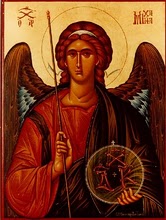
St michael archangel iconThe commercial below is a good illustration of a description of reality supplied by St. Paul.

Finally, be strong in the Lord and in the strength of his might. Put on the whole armor of God, that you may be able to stand against the schemes of the devil. For we do not wrestle against flesh and blood, but against the rulers, against the authorities, against the cosmic powers over this present darkness, against the spiritual forces of evil in the higher realms (Ephesians 6:10-12).

As the video opens we see a man and woman approaching each other, each surrounded by cartoonlike demons. I call them demons because although they appear to be “cute” they are nothing of the sort. Like the biblical “wolves in sheep’s clothing,” they are influencing the two humans in the video in a hidden but very real way. Demons surely do this to all of us, tempting us to sin and seeking to influence our thoughts and actions. The two people in the commercial seem oblivious to the presence of these creatures, just as we are often unaware of the demons who seek to influence us.

When they meet, the man and woman confront each other with hostility. St. Paul would remind us that they ought to set aside their petty “turf war” and realize that they are being manipulated by dark forces from higher realms.

But they do not do so; much as we often do, they begin to fight.

In a moment of revelation, though, they both see their common enemy and join forces against him. There’s an old saying, “Warring brothers reconcile when there is a maniac at the door.”

As St. Paul says, our battle is not so much against one another, but against powers and dark forces from higher realms. Would that we could all see this more clearly.

Scripture is a prophetic declaration of reality; it tells us what is really happening. Enjoy this brief depiction of an archetypal biblical teaching. Even if the commercial’s creators did not intend to convey this understanding, the eyes of faith can see it.

The Lies of the Devil and the Empty Promises of the World

blog-09-22One of the great illusions under which we labor is that if we only get just one more thing from this world, then we will be happy. Perhaps we think that if we just had a little more money, or a better job, or the latest iPhone, or if we were married to so-and-so, or if we lived in a better neighborhood, then we would be satisfied and content at last. But “at last” never seems to come even if we do get some of the things on our list. As Ecclesiastes puts it, The eye never has enough of seeing, nor the ear its fill of hearing (Ecc 1:8). Whoever loves money never has money enough; whoever loves wealth is never satisfied with his income (Ecc. 5:8).

Although we realize this deep down, we continue to fall for the lie again and again. We think that just one more thing will do the trick. So we lay out the money and spend the time. And then the delight lasts twenty minutes at most! The world just can’t close the deal.

There is a joke (a parable, in my mind) that illustrates the endless treadmill the world has us on and how it continually seduces us into wanting just one more thing. In the end, this leads us to neglect the one thing most necessary.

There was a lonely man who thought that perhaps buying pet would ease his loneliness. So he went to the pet store and looked at many animals. He found himself drawn to one in particular. The sign over the cage said, “Talking Parrot: Guaranteed to talk.” Thinking that this would surely solve his problem, the man brought the cage up to the merchant at the counter.

“That’ll be $250, please.”

A week later the man returned, disappointed.

“This parrot isn’t talking!”

“You mean to say that he didn’t climb the ladder and talk?”

“Ladder? You didn’t tell me about a ladder!”

“Oh, sorry. The ladder is $10.”

So the man bought the ladder, brought it home, and put it in the cage. Another week went by and the man returned to the pet store.

“This parrot still isn’t talking!”

“You mean to say that he didn’t climb the ladder, look in the mirror, and talk?”

“Mirror? You didn’t mention anything about a mirror!”

“Oh, sorry. It’ll be $10 for the mirror.”

So the man bought the mirror, brought it home, and put it in the cage along with the ladder. Another week went by and the man returned to the pet store again.

“This parrot still isn’t talking!”

“You mean to say that he didn’t climb the ladder, look in the mirror, peck the bell, and talk?”

“Bell? You didn’t say anything about a bell!”

“Oh, sorry. The bell is $10.”

So the man bought the bell, brought it home, and put it in the cage along with the ladder and the mirror. Yet another week went by and the man returned to the pet store.

“This parrot still isn’t talking!”

“You mean to say that he didn’t climb the ladder, look in the mirror, peck the bell, jump on the swing, and talk?”

“Swing? You didn’t tell me about a swing!”

“Oh, sorry. It’ll be $10 for the swing.”

So the man bought the swing, brought it home, and put it in the cage along with the ladder, the mirror, and the bell. One more week went by and the man returned to the pet store again.

“How’s your parrot?”

“He’s dead!”

“Dead? Did he ever talk before he died?”

“Yes, he did finally talk.”

“What did he say?”

“He said, ‘Don’t they sell any birdseed at that store?’”

Lesson 1: Promises, Promises

The world and the “prince of this world” are always promising results, yet when those results aren’t forthcoming there are only more demands. First the bird, then the ladder, the bell, the mirror, and the swing. There is always just one more thing that’s needed before the perfect result comes! But it’s a lie. The lie comes in many forms: you just need one more accessory, or the upgraded version of the app, or just one more drink, or a newer car, or a bigger house, or a face lift, or bariatric surgery. Yes, you just need one more thing and then you’ll be there. Happiness is always just past the next purchase.

In speaking to the woman at the well, Jesus said, Everyone who drinks this water will be thirsty again (Jn 4:13). And that is the sober truth about this world: it cannot finally quench our thirst, which is a thirst for God and Heaven. But time and time again we go back to the world and listen to the same lie, thinking that this time it will be different.

Surely it is sensible to make use of the things of this world to aid us in accomplishing our basic duties, but they are not the answer to our deeper needs. The big lie is that they are the answer. And when they fail to satisfy us, the lie just gets bigger, declaring that just a little more of it will surely close the deal.

Lesson 2: The One Thing Most Necessary

In buying the ladder, mirror, bell, and swing, the man neglected the most important thing: food. So, too, for us. We seek to accumulate worldly toys and trinkets that are passing, while neglecting eternal and lasting realities. We seem to find time for TV, sports, shopping, etc., but neglect or completely forget about prayer, Scripture, the Sacraments, the Liturgy, worship, and the development of any kind of relationship with the Lord. We are staring into the mirror focused on our own self. The enticements of this world summon us to endless things, mostly trivial in the long run. We are climbing the ladder of success without regard as to what is at the top of that ladder.

All of these less important matters divert us from the one thing necessary: feeding our souls on the Lord. Whoever eats my flesh and drinks my blood remains in me, and I in him…the one who feeds on me will live because of me (Jn 6:56-58).

Ah, but there’s no time for all that. Getting to Mass, praying, receiving Holy Communion? No time! I hear a bell summoning me to just one more diversion, one more meeting. I’m too busy climbing the ladder of success. I’m too busy looking at myself in the mirror to make sure that I fit in, and that everyone likes me.

“Dead? Did he ever talk before he died?”

“Yes, he did finally talk.”

“What did he say?”

“He said, ‘Don’t they sell any birdseed at that store?’”

Just a little parable on the lies of the devil and the empty promises of this world.

On Jesus’ Merciful Call of St. Matthew, a Great Sinner

blog-09-21On the Feast Day of St. Matthew (celebrated Wednesday of this week), we must acknowledge a great mercy in Jesus’ call. As a tax collector, Matthew was considered a great sinner. In fact, the term “tax collector” was a biblical euphemism for great sinner. Yet despite this, Jesus called him to be an Apostle.

In our times many set mercy and the fact that we are sinners in in opposition to each other. But the Lord Jesus unites these realities together. For the Lord, mercy is necessary because there is sin, not because sin is “no big deal.” It is because sin is a big deal that mercy is needed and is glorious.

Bishop Robert Barron aptly states, Many receive the message of divine mercy as tantamount to a denial of the reality of sin, as though sin no longer matters. But just the contrary is the case. To speak of mercy is to be intensely aware of sin and its peculiar form of destructiveness (Vibrant Paradoxes: The Both/And of Catholicism, p. 1).

Mercy does not deny sin; it acknowledges it and supplies an often-challenging remedy. Jesus shows mercy by calling us from our sin and healing us from its effects.

This understanding is evident in the Gospel for the Feast of St. Matthew:

As Jesus passed by,
he saw a man named Matthew sitting at the customs post.
He said to him, “Follow me.”
And he got up and followed him.
While he was at table in his house,
many tax collectors and sinners came
and sat with Jesus and his disciples.
The Pharisees saw this and said to his disciples,
“Why does your teacher eat with tax collectors and sinners?”
He heard this and said,
“Those who are well do not need a physician, but the sick do.
Go and learn the meaning of the words,
I desire mercy, not sacrifice.
I did not come to call the righteous but sinners
” (Matt. 9:9-13).

Notice three things from this Gospel about the relationship between mercy and sin:

I. In His mercy, Jesus reckons us as sinners and regards us as sick. Jesus states plainly, “I have come to call sinners” (this means us). He also says that those who are well do not need a doctor, but the sick do (this means us).

Many today have been deceived. Some even call their sin good and something of which to be proud. They say, “God made me this way,” or “God likes me just the way I am.” No! To those such as these the Lord Jesus says, “You are sick. You are a sinner.” An antiphon in the Breviary says, God sees all men as sinners, that he might show them his mercy.

So in His mercy Jesus does not overlook sin or call it something good; he calls it what it is: sin and sickness.

II. In His mercy, Jesus summons us to change. In this Gospel, Jesus calls Matthew away from his tax post. He says, “Follow me.” In other words, “Stop what you are doing, come away from it, and follow me out of here.” To the woman caught in adultery He says, “Do not sin again.” Jesus began His ministry by saying, “Repent and believe the Gospel.” To repent (metanoiete) means to change, to come to a new and different mind.

The changes Jesus insists upon are too numerous to list in their entirety, but among them are that we become free of lust, vengeful anger, greed, and unforgiveness, and that we become more generous, loving, serene, faithful, and trusting.

Thus in His mercy Jesus does not confirm us in our sin; He summons us away from it. He summons us to change and equips us to do so. His merciful call is “Come away from here. Enough of this; follow me.”

III. In His mercy, Jesus heals sinners of sin. Jesus uses the image of a doctor and states plainly that sick people (sinners) need a doctor. Jesus is that doctor. A doctor does not look at a sick patient and say, “You’re just fine the way you are” or “I affirm you.” That would be malpractice. Jesus sees sin for what it is. He calls it such and prescribes the necessary medicines. He will also likely speak to a person’s lifestyle and recommend needed changes. This is how a doctor heals.

Jesus invokes the image of a doctor with what He does. He diagnoses and says, “This is bad. This is sickness. This is sin.” He then applies healing remedies such as the Sacraments, the Holy Liturgy, His Word, the carrying of the cross, active and passive purifications, punishments due to sin, solid moral teaching, and holy fellowship. Like a doctor, Jesus summons us from a bad and unhealthy life to a good and healthy one.

Thus, in His mercy, Jesus heals our sins. He does not ignore them or approve of them. And He certainly does not call them good or something to celebrate. In His mercy, He heals them; He ends them.

So mercy is not a bland kindness. It is not mere flattery that pretends that sin does not exist or that it doesn’t matter. Beware of fake, flattering mercy. True mercy says, “Sin is awful. Let’s get out of here and go to a far better place.”

Matthew got up and followed Jesus. How about us?

Why Is Our Tolerance for Pain Greater Than It Is for Pleasure?

"The Garden of Eden" by Thomas Cole
“The Garden of Eden” by Thomas Cole

One of the great mysteries of our life in this world is that we can endure more pain than pleasure. Indeed, we can endure only a little pleasure at a time. In fact, too much pleasure actually brings pain: sickness, hangovers, obesity, addiction, laziness, and even boredom. Yet we seem to be able to endure a lot of pain. Some of our pain, whether physical or emotional, can be very intense and go on for years.

Why is it that we can endure more pain than pleasure?

Physiologists and anthropologists might focus their answer on the fact that we are wired for survival and being able to endure pain helps us more than being able to enjoy pleasure. Fair enough. But I would like to offer an additional answer from a spiritual point of view.

The spiritual answer is that pain is for now while pleasure is for the hereafter. In this world, this exile, this valley of tears, we are being tested; we are meant to fill up our quotient of pain. And while we do enjoy some pleasures here, they are only a foretaste of what will be fully ours only in Heaven. In this world the foretaste seems limited to bite-sized morsels. Otherwise (as noted) we are overwhelmed by pleasure, distracted by it, and even sickened and enslaved by it. Until pain has had its proper effect within us, we are not disciplined or pure enough to properly enjoy large amounts of pleasure.

Pain is thus our first assignment here in this world, this paradise lost. Pain both purifies and teaches.

We should recall that God offered us the paradise of Eden with the proviso that we trust Him to teach us what is best. But we insisted on the knowledge of good and evil for ourselves and the right to decide what was right and wrong. We wanted a better deal than Eden. Here we are now in that “better deal.” Adam and Eve chose to eat from the Tree of the Knowledge of Good and Evil, even knowing that God had said it would usher in suffering and death. And we have all ratified their choice on countless occasions.

God, respecting our freedom, did not undo our choice. Rather, He said, in effect, “Fine, I will meet you at the cross of suffering and death, and allow that very suffering and death to be the way back to me.” And thus the way back to paradise, and to an even higher and heavenly glory, is through the cross.

This is why our tolerance for pain is greater now than is our capacity for pleasure. God has equipped us in this way because pain is for now; pleasure is for later.

Frankly, we need a high tolerance for pain, because it is a needed remedy for a very serious malady. Our condition is grave and requires strong medicine. The cross and its pain is the strong medicine needed. And thus our tolerance for pain must be certainly be greater than our capacity for pleasure.

Pain, despite its unpleasant qualities, has many salutary effects. It teaches us limits and helps conquer our pride. It purifies us. It reminds us that this world is passing and cannot ultimately be our answer. It intensifies our longing for Heaven and the shalom of God. If we endure pain with faith, it draws us to seek help and to trust God more. Pain endured with faith is like being under the surgeon’s scalpel. The scalpel inflicts pain but only to cut away what is harmful. It is a strong but healing medicine.

For now, our assignment is clear. Pain has the upper hand and is the strong medicine we need. When in pain, seek relief from God. But if he says no, remember that God promises that His grace will be sufficient for us (see 2 Cor 12:9), and that pain has a healing place for now. It is indeed a gift in a strange package.

Yes, it is a mysterious truth that we have a higher tolerance for pain than for pleasure. But given our current location in paradise lost, it makes sense. One day when suffering, pain, and death have had their full effect, we will enter into the Heaven of God, where pain will be no more and where our capacity for pleasure will blossom like a rose. Having been purified by our pain, our capacity for pleasure will now be full and there will be joys unspeakable and glories untold.

One, Holy, Catholic, Apostolic, and Organized! A Biblical Picture of the Early Church in Miniature

blog9-19I’d like to return to a brief Gospel that was read last week at daily Mass (Friday of the 24th Week of the Year). Though terse to the point of leaving a preacher wondering what to say, it actually paints a beautiful picture of the Church. Here is that short passage, followed by some commentary.

And it came to pass that Jesus journeyed throughout the towns and villages,
preaching and proclaiming the good news of the Kingdom of God.
Accompanying him were the Twelve
and some women who had been cured of evil spirits and infirmities,
Mary, called Magdalene, from whom seven demons had gone out,
Joanna, the wife of Herod’s steward Chuza,
Susanna, and many others
who provided for them out of their resources
(Luke 8:1-3).

Let’s look at the picture of the Church presented here:

I. They are with Jesus.

Though small, the community consists of head and members together. Jesus, the Head of the Body (the Church), is journeying, and His members are with Him. They are men and women, clergy (Apostles) and lay.

They are with Jesus and Jesus is with them. Some today think they can have Jesus without the Church. Sorry, no can do. Jesus is far more than just your personal Lord and savior. Head and members are together. The text says that they accompany Jesus, but they do not do this as isolated individuals. Jesus does not make a merely personal journey with them, but a communal one as well.

Each does his part and depends on the others.

This is another way of describing the Church as “one” and refers to one of the four marks of the Church mentioned in the early creeds: one, holy, catholic, and apostolic. Christ has one Body, the Church. He does not have many bodies, nor is Christ dismembered; the parts of His body are not scattered about and separated.

According to Ephesians 5 and Revelation 20-25, the Church is also Bride. Christ does not have many brides; he is no polygamist. He has one bride, the Church. Yes, the Church is “one.”

II. They are journeying throughout the area from one town to another.

This is another way of describing the Church with another of the four marks of the Church. The Church is “catholic” (universal). The Church goes everywhere, throughout the known regions, throughout the world. The Church calls everyone to faith, repentance, and salvation.

III. They are proclaiming the Kingdom of God.

The Greek text uses two terms to describe their fundamental work: κηρύσσων καὶ εὐαγγελιζόμενος (kerusson kai euaggelizomenos).

Kērýssō means to herald, to announce a message publicly and with conviction in order to persuade.

Euaggelizō comes from eu (well) and angellō (to proclaim). This same word was used to describe proclamations by the Roman emperors; and their messages most certainly would change the lives of those who heard them. How much more so the true evanggelion (gospel)!

Thus, they were proclaiming well a lifesaving and transformative message. The early Church went about heralding, like a town crier, the truth of the Gospel with conviction. They proclaimed the lifesaving transformative message of the true God.

So, too, today—if we truly are the Church we claim to be. Note that this message was proclaimed with Christ and the Apostles. There is no true proclamation of the Gospel apart from union with Christ, the source, and His appointed witnesses, the Apostles. This points to another of the four marks of the Church: apostolic.

IV. They are changed by their encounter, healed, and drawn to greater holiness.

Here is another of the four marks of the Church: holy. The Church is holy by the grace of Christ. Despite including sinners in her midst, she is granted by Christ the means of holiness through grace, the sacraments, the Word of God, and prayer.

The normal Christian life consists of being healed and made more holy. All the members described in this passage have had their lives changed; they were healed and made more holy. Some have had demons driven out, others have been called from lesser to higher things (e.g., Luke 5:10). All have been moved and astonished by the Lord’s teachings and are now following Him generously, giving Him their time and resources—their very selves. They are seeing their lives changed, their minds enlightened, and their wills strengthened. They are not perfect or complete, but they are on the way with Jesus. They have taken him into the boat of their lives.

V. They are organized.

Note, finally, that there is an organization in this picture of the early Church. Too easily we imagine that Jesus and the Twelve just walked about aimlessly, going from one town to the next as seemed expedient. No, not so. Jesus had things planned out. He knew each town He planned to visit and sent delegations of disciples ahead to prepare the people (e.g., Luke 10:1).

Further, the early Church depended on the donations of the women and others described in this passage, who helped them out of their means. Others were involved in preparing meals, arranging for lodging, etc. We know that Judas was the treasurer, so there must have been funds that needed to be managed (see John 12:6).

Surely there were many logistical concerns for this small but not insignificant band of early Christians, who provide an image of the Church in her infancy. Even today practical concerns are not absent. There are monies needed, provisions to be procured, plans to be implemented, and repairs to be made to structures and people.

From just a few almost terse lines comes a rich description of the early Church, the infant Church. It is also an exhortation for all of us, who can benefit from this pure picture of the Church as one, holy, Catholic, apostolic, and organized!

The Church Must Be Light, That the World May See

lightIn the Gospel today (Monday of the 25th Week of the Year) the Lord says,

No one who lights a lamp conceals it with a vessel or sets it under a bed; rather, he places it on a lampstand so that those who enter may see the light (Lk 8:16).

In other words, the Lord lit the light of the Church in order to give light to the world and to be seen. The world is in darkness; the moral darkness of these times is very deep.

You don’t light light. It is the darkness that needs the light. Light is meant to be seen. There are too many “undercover Christians,” “secret agent saints,” and “hidden holy ones.” Jesus didn’t light our light so that we could hide under a basket out of fear or secrecy. He wants the Church to shine; He wants you and me to shine. He wants every Christian to be a light so that we’re like a city on a hill! He wants us to shine so that we can’t be hidden.

If we don’t shine, then the world is dark. That is because we are not just a light, we are (in Christ) the light. If you want to know why the world is in darkness, you don’t need to look very far. We like to think that things are a mess because the wrong party is in power, or Hollywood is too secular, etc. But if we are the light of the world, then the world is dark because we are not shining the light of Christ. Light scatters darkness; it does not blame it. This darkness has happened on our watch. As a Church, we have been too content to hide our light under a basket. That is why the world is dark. If we collectively do our work, then the darkness does not stand a chance. But too many people—clergy and lay—remain fearfully silent while the purveyors of darkness are loud and proud.

To all of this, Jesus simply says, “You are the light of the world.”

Let’s look at some details about the light:

The CAUSE – Jesus describes himself as the One who lights a lamp. We are to yield to Christ, to allow Him to shine through us. He is the cause of our light. Let your light shine. There’s an old gospel song that says, “When you see me trying to do good, trying to live as a Christian should, it’s just Jesus, Jesus in me.”

The COST – The purpose of light is to shine, but there is no shining without burning. Shining costs us something. It may be Christ’s light, but it is through us that He shines. This means sacrifice on our part. It means letting Him use us. It means not always sleeping in when we want to. It means not just sitting at home and saying “Ain’t it awful.” It means getting out there and getting involved. It means risking a few things. It means being targeted and visible. It means being identified with someone (Jesus) who is hated by many. And in a world that prefers the darkness to the light (cf John 3:19-21), it means being called harsh, out-of-touch, and hateful. There is no shining without burning.

The CONCRETENESS – Letting our light shine is no abstract thing. It involves concrete behavior. Jesus talks about deeds. Your light shines by the way you live, the choices you make, the behavior you exhibit. The light shines when Christians get married and stay married, stay faithful to their commitments, and are people of their word. Our light shines when we tell the truth instead of lying, live chastely instead of fornicating, and behave courteously and respectfully. It shines when we respect life; it shines when we stop behaving recklessly. Our light shines when we clean up our language, give to the poor, and work for justice. Our light shines when we refuse to view pornographic, violent, or degrading material. Our light shines when we love instead of hate, when we seek reconciliation instead of vengeance, and when we pray for our enemies. Our light shines when we walk uprightly and speak the truth in love, without compromise. That’s when our light shines.

The CONSEQUENCE – God is glorified when our light shines. We should not act or get involved merely to satisfy our own anger or to fight for our own sake. We are light so as to glorify God. It is not about our winning; it is about God shining and being glorified. Too often when we do get involved we merely seek to win an argument or to be praised rather than to glorify God. We must pray that we have good intentions, for it is possible to do the right thing for the wrong reason. The desired result is God’s glory not ours.

Turn on the lights! It’s time to shine or else it’ll be over soon. Are you ready to shine? The Church is not just any light, the Church (by God’s grace) is the only light there is at all. As a member of Christ’s Body the Church, what are you doing to shine?

https://youtu.be/7OIwSQmyCg4