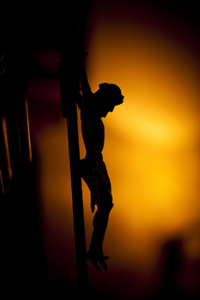
The Blessing of Pilgrimage – A Journey in Faith!

This coming March (19th – 30th), Patrick Coffin (of Catholic Answers) and I will lead a pilgrimage to the Holy Land. You are invited to come! Details are available here: Catholic Holy Land Pilgrimage.

As I prepare for that trip I recall that one of the greatest moments in my entire life, and certainly in my life as a priest, was celebrating Holy Mass in the Church of the Holy Sepulchre, at the Latin altar on Golgotha, the very site of the crucifixion. Not far away, just at the other end of the Church was the site of the resurrection. I was overwhelmed to think I was at the very site to which every Mass points.

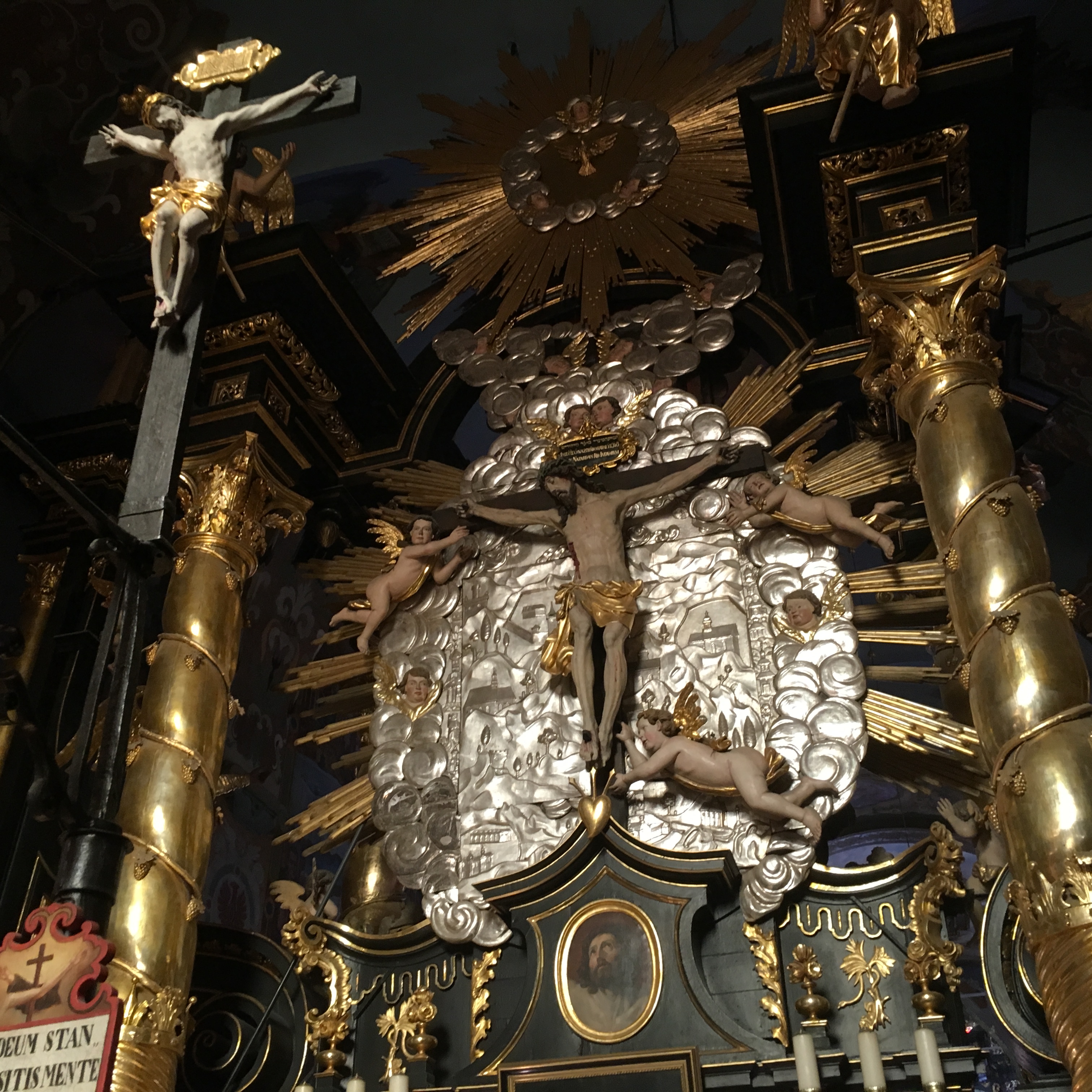
calvaryThe site of the crucifixion and burial of the Lord is well documented both archaeologically and historically. A large church was built over the site in the Byzantine period (the period just after the Edict of Constantine). Parts of the current church date back to the 7th century. At one end of the church is a tall hill, covered over by the church structure but reachable by steep stairs. At the top of the platform high up in the church, the rock face of Calvary is exposed and there is a hole (under the Orthodox altar) through which pilgrims can reach to touch the rocky spot where the cross stood. Just six feet to the right of that is the Roman Catholic (Latin) altar where I was privileged to celebrate Mass with my parish group (see photo at right).

A pilgrimage is not a vacation; it is not a mere trip—it is a journey in faith. It is designed to grow our faith and confirm it. We pray and celebrate Mass every single day. Each day we visit several sites that we have always heard about and read in the Scriptures, both the Old and New Testaments.

There is nothing like walking through the streets of ancient Capernaum, standing in the ruins of the synagogue where the Bread of Life discourse was given. What an amazing experience to sail the Sea of Galilee, or go to Nazareth and look into the archeological remains of the simple home where the Angel Gabriel visited Mary! What a view from Mt. Tabor down into the Jezreel Valley, the “Valley of Armageddon”! It is nothing short of glorious to be in the hill country of Judea and walk the steep hill up to the Church of the Visitation. Jericho, too, never fails to amaze. And what an experience to go back up to Jerusalem and sit on the Mount of Olives, looking over the Kidron Valley! Ponder that our Lord sat here as well, looking down on ancient Jerusalem. Yes, what a view! Imagine spending time in quiet prayer in the Garden at Gethsemane and thinking of that difficult night for our Lord more than 2,000 years ago.

The Holy Land—there is just nothing like it! Even though I’ve been there twice, I still can’t wait to go back.

Another strong impression from my previous visits to the Holy Land is how very Catholic it is. To go to the many sites is to “enter” the Catholic Church, at least physically. At almost every site, a Catholic church dominates the scene: at Capernaum (where the loaves and fishes were multiplied), at Cana, in Nazareth, on the Mount of the Beatitudes, on Mt. Tabor. In all these places there is only one church building, and it is a Catholic church building. In Jerusalem, too, most of the sites have a Catholic church on or adjacent to the site: The Mount of Olives, Dominus Flevit (where the Lord wept over Jerusalem), the Garden of Gethsemane, the house of Caiaphas, the place of the trial before Pontius Pilate.

I wonder what Protestant Christians experience as they visit site after site and see, once again, a Catholic church (Blessed Sacrament and all) either at the site or literally on top of it. And in the few sites where the church is not Catholic (Bethlehem and Holy Sepulchre) it is the Orthodox who oversee it. In both cases there is a strong Roman Catholic presence. I do not intend to convey a triumphalist attitude, but only to say that I feel very proud and happy to be a Catholic when I’m in the Holy Land. Almost every site is fundamentally a Catholic site.

Gratitude for the Franciscans – We ought to be very grateful to the Franciscans of the Holy Land for the wonderful care they provide for these holy sites. They have been most kind to the groups I have led, allowing us to say Mass as well. At each site they are hospitable to people of every faith. They keep the churches clean and the holy sites in good repair. They have also accommodated archeological research and have been most helpful to the process of verifying the authenticity of the sites.

Please consider visiting the Holy Land. The pilgrimage that Patrick Coffin and I will lead takes place early next year (March 19th – 30th 2017). We will visit all the crucial sites: in Galilee, up north, in Jerusalem, in Bethlehem, in Jericho, and the Dead Sea down to the south. If you’ve never been before, I assure you that your life will be changed as all the sites you have always heard of are suddenly right before your very eyes.

More information on the trip is available here: Catholic Holy Land Pilgrimage.

Patrick Coffin put a video invitation together that you can view here:

Modesty and Beach Volleyball

One of the less edifying aspects of the Summer Olympics in Rio is the attire of the women’s beach volleyball players from Western countries. Most of the women wear a tiny bikini with the bottom being especially tiny. (I do not show a picture here because I deem it immodest to do so. Instead, I show a picture of some of the men, whose attire I mention below.)


Frankly, playing volleyball in a tiny bikini seems quite unnecessary. I would argue that it detracts from the sport because it distracts from the sport. The attention doesn’t seem to be drawn to the ball, shall we say. I would further argue that the attire encourages the focus not even on the women, but on certain aspects of the women’s bodies.

I can understand that swimmers (male and female) wear tight and sometimes abbreviated swimsuits to lessen drag in the water. Gymnasts, too, often wear brief and/or tight clothing to improve their performance and maximize the mobility of their limbs. The clothing is thus at least somewhat performance related.

But I can see no performance enhancement brought about by the wearing of tiny bikinis. Some will point out that the bikini top in question acts as a sports bra. Fine, but men wear supportive attire, too; but they do so under their shorts, not out in the open.


The Egyptian women’s beach volleyball player shown in the above photo illustrates that it is possible to compete quite well without wearing a bikini. One could argue that having short sleeves and shorter leg coverings might be cooler for the players. The impact on performance of wearing the hijab is debatable, but it is worn tucked in and did not seem to bother the women who wore it. These women played and competed well in a sport that is relatively new to their country and region.

Men’s beach volleyball attire also illustrates that near nudity is not required to play the sport well. The men do not play wearing tiny swimwear. They wear ample shorts along with t-shirts or tank tops.

I realize that each time the question of modesty has come up on this blog there are some readers who want to dismiss such discussions and emphasize the right of people to dress as they please. They believe that any sexual temptation aroused is almost wholly the fault of the viewer, not the one wearing the attire.

Modesty should avoid excessively burdening people. It seeks a middle ground wherein the one who dresses and the other who sees share responsibility. The one wearing the attire should not be burdened with difficult requirements, nor should the viewer be burdened by facing undue temptation. Mutual charity and concern are the goals.

The Catechism of the Catholic Church speaks of modesty as protecting the mystery, chastity, and dignity of the human person.

Modesty protects the mystery of persons and their love. … Modesty protects the intimate center of the person. It means refusing to unveil what should remain hidden. It is ordered to chastity to whose sensitivity it bears witness. … Modesty is decency. It inspires one’s choice of clothing. It keeps silence or reserve where there is evident risk of unhealthy curiosity. It is discreet (CCC 2521-2522).

As always, comments are appreciated, but I have found in the past that discussions about modesty are often difficult to have in a way that is helpful or charitable. Reasonable people may differ on the details of modesty. Modesty does involve a range of options, influenced by circumstances and the sensibilities of cultures. I have articulated here that I see no need for tiny bikinis in this sport and that I think more modest attire is important. If you disagree, please explain the relationship you see of the brief bikini to the sport, considering that men in general and women from other cultures who compete do not see the need to wear so little. If you agree, please remember in your comments that the imputation of motives to individuals is a sketchy and usually uncharitable thing to do. Everyone, please use care when commenting.

Battle Plan – A Homily for the 20th Sunday of the Year

roseThe readings today speak of a great cosmic battle that is taking place all around us. In the Gospel, Jesus speaks of it vividly and of his own mission to engage our ancient foe and to gather God’s elect back from the enslaving clutches of Satan, who was a murderer and a liar from the beginning (cf John 8:44).

As Jesus approaches Jerusalem for the final time, He describes the battle that is about to unfold. It is a battle He wins at the cross and resurrection, but it is one whose parameters extend across time to our own era.

We also do well to examine the second reading, which describes what should be our stance in reference to the great cosmic battle. Though the victory is ours, we can only lay hold of it by clinging to Christ and walking with Him. The Hebrews text gives us a kind of battle plan.

Let’s begin by considering Jesus’ description in the Gospel of the cosmic battle and of his own great mission as the great Shepherd of the sheep and the Lord of armies (Dominus Deus Sabaoth).

I A Passion to Purify – Jesus begins by saying, I have come to set the earth on fire, and how I wish it were already blazing!

Fire is powerful and transformative. Fire gives warmth and makes food palatable, but it also consumes and destroys. Nothing goes away from fire unchanged!

The Lord has come to purify us, by the fiery power of His love, His grace, and His Word. He has a passion to set things right.

But purification is seldom easy or painless, hence the image of fire. In this great cosmic battle, fire must be cast upon the earth, not only to purify but to distinguish. There are things that will be made pure, but only if other things are burnt away and reduced to ashes.

This image of fire is important, because many people today have reduced faith to seeking enrichment and blessings. Faith surely supplies these, but it also demands that we take up our cross and follow Christ without compromise. Many, if not most, enrichments and blessings come only through the fiery purification of God’s grace, which burns away sin and purifies us of our adulterous relationship with this world. Fire incites, demands, and causes change; and change is never easy.

Therefore, Jesus announces the fire by which He will judge and purify this earth and all on it, rescuing us from the power of the evil one.

This is no campfire around which we sit singing cute songs. Jesus describes it as a blaze that must set the whole world on fire!

How do you get ready for fire? By letting the Lord set you on fire! John the Baptist promised of the Lord, He will baptize you with the Holy Spirit and fire (Matt 3:11). And indeed, the Lord sent forth His Spirit on the early Church as tongues of fire (cf Acts 2:3) so as to bring them up to the temperature of glory and to prepare them for the coming judgment of the world by fire.

The battle is engaged. Choose sides. If you think you can remain neutral or stand on some “middle ground,” I’ve got news for you about which side you’re really on. No third way is given. You’re either on the Ark or you’re not. You’re either letting the fire purify you or you’re being reduced to ashes. You’re either on fire by God’s grace (and thereby ready for the coming judgment of the world by fire) or you’re not. The choice is yours. Jesus is passionate to set things right. He has come to cast fire on the earth

II A Painful PathThe text says, There is a baptism with which I must be baptized, and how great is my anguish until it is accomplished!

In coming among us, the Lord does not merely come to get us out of trouble, but to get into trouble with us. Though sinless, Jesus takes upon Himself the full weight of human sinfulness and manfully carries it to the cross. He accepts a “baptism” in his own blood on our behalf.

In waging war on our behalf against the evil one, Jesus does not sit in some comfortable headquarters behind the front lines; He goes out “on point,” taking the hill of Calvary and leading us over the top to the resurrection glory. He endures every blow, every hardship on our behalf.

And through His wounds we are healed by being baptized in the very blood He shed in the great cosmic war.

It is a painful path He trod, and he speaks of His anguish in doing it. But having won the victory, He now turns to us and invites us to follow Him, through the cross the glory.

The choice to follow is ours. In this sense the cosmic battle continues, as Jesus describes in the verses that follow.

III. A Piercing Purgation In words that are nothing less than shocking, the Lord says, Do you think that I have come to establish peace on the earth? No, I tell you, but rather division. From now on a household of five will be divided, three against two and two against three; a father will be divided against his son and a son against his father, a mother against her daughter and a daughter against her mother, a mother-in-law against her daughter-in-law and a daughter-in-law against her mother-in-law.

The words shock but they speak a truth that sets aside worldly notions of compromise and coexistence with evil. In order for there to be true peace, holiness, and victory over Satan, there must be distinction not equivocation, clarity not compromise. Fire and water do not mix; you can hear the conflict when they come together: hissing, popping, searing, and steaming. One must win; the other must lose. Compromise and coexistence are not possible.

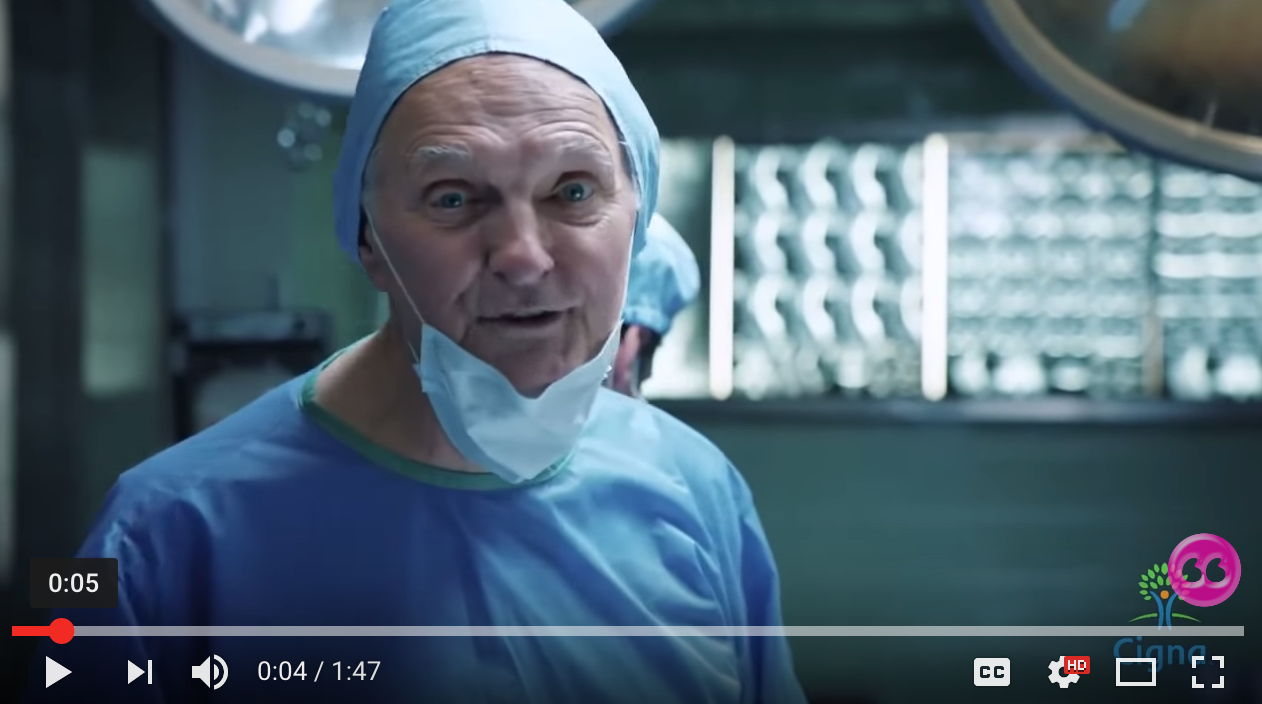
The Lord said (back in Matthew 10:34) that He came not for peace but for the sword. In this there is a kind of analogy to a surgeon’s scalpel. The surgeon must wield this “sword” to separate out healthy flesh from that which is diseased. Coexistence is not possible; the diseased flesh has to go. The moment one talks of “coexisting” with cancer, the disease wins. Were a doctor to take this stance he would be guilty of malpractice. When there is cancer, the battle must be engaged.

And thus in this great and cosmic battle, the Lord cannot and will not tolerate a false peace based on compromise or an accepting coexistence. He has come to wield a sword, to divide. Many moderns do not like it, but Scripture is clear: there are wheat and tares, sheep and goats, those on the Lord’s right and those on His left, the just and wicked, the lowly and the proud, the narrow road to salvation and the wide road to damnation.

And these distinctions, these divisions, extend into our very families, into our most intimate relationships. This is the battle. There are two armies, two camps. No third way is given. Jesus says elsewhere, Whoever is not with me is against me, and whoever does not gather with me scatters (Matt 12:30).

Of all this we must be sober and must work for our salvation and the salvation of all. For while there may not be a season of mercy and patience now, the time is short for us all. The distinction between good and evil, righteousness and sin, will be definitive and the sword must be wielded.

And thus the Lord speaks to us of a cosmic battle in the valley of decision (cf Joel 3). Jesus has won, and it is time to choose sides. And even if family members reject us, we must choose the Lord. The cosmic battle is engaged. The fire is cast and the sword of the Spirit and God’s words is being wielded. The Lord has come to divide the good from the wicked, the sheep from the goats. Judgment begins now, with the house of God. Scripture says,

For it is time for judgment to begin with God’s household; and if it begins with us, what will the outcome be for those who do not obey the gospel of God? (1 Peter 4:17)

If this be the case, how do we choose sides, practically speaking? And having chosen sides, how do we fight with the Lord in the cosmic battle?

For this it is helpful to turn to the Letter to the Hebrews from today’s Mass, a magnificent text that summons us to courage and constancy. Let’s examine the four prescriptions in this letter for a soldier in the army of the Lord.

I Lay hold of the Proof of faith – The text begins Since we are surrounded by a great cloud of witnesses.

What do witnesses do? They testify to what is true, to what they have seen, heard, and experienced. In the previous chapter of Hebrews, we were given a litany of witnesses from the Old Testament who learned to trust God and were rescued from ungodly men and innumerable snares. Individually and collectively they stand before us summoning us to courage and declaring that God can make a way out of no way, that He can move mountains and deliver His people, that He can do anything but fail.

And thus we are to listen to their testimony, respond courageously to the summons to battle, and choose the Lord’s side, knowing that the Lord has already won the victory. To the litany of Old Testament heroes can be added an innumerable number of saints in our Catholic experience who speak to us of victory and who summon us to faith and steadfast courage. Yes, there is the cross, but resurrection always follows!

These witnesses tell us to choose the Lord for He has already won the victory, to live the life of faith by adhering to the Scriptures and the teachings of the Church, to let the Sacraments strengthen us, to rest in prayer, and to walk in fellowship with other Catholic believers in the army of the Lord.

Jesus is the Lord of Hosts; He is the King of Glory; He is the Head of the Body, the Church. We ought to listen to the testimony of these heroes and accept their witness as a proof of faith.

II Live The Priority of faith – The text says, let us rid ourselves of every burden and sin that clings to us and persevere in running the race that lies before us while keeping our eyes fixed on Jesus, the leader and perfecter of faith.

We are given the example of a runner in a race. What does a runner do? He runs the race! Runners do not stop to watch television; they do not stop to make small talk; they do not take stupid detours or go in the opposite direction. They do one thing: they run the race. So, too, with our faith: it has priority. Nothing should be allowed to hinder us.

Runners also know where the finish line is and what the goal is. They do not run aimlessly. They keep their eyes on the prize and single-hardheartedly pursue the goal. Not one step is wasted. No extra baggage is carried that would hinder them or weigh them down.

And so it must be for us. We must have our eyes on Jesus. He and the glory He offers are our goal. Every step must be toward Him. All that weighs us down or hinders us must be set aside. Increasingly, our life is to center on one thing, one goal. As St. Paul says,

This one thing I do: forgetting what lies behind and reaching forward to what lies ahead, I press on toward the goal for the prize of the upward call of God in Christ Jesus (Phil 3:13-14).

The rose window at the upper right (from my parish church) depicts the Christocentric vision of the Medieval world. Every petal of the window is precious: family, spouse, children, work, career, and vocation, but all are centered on Christ, flowing from Him and pointing back to Him. How different this is from the modern anthropocentric and egocentric world, in which man is at the center, his ego on throne, and God is relegated to the edges!

Let Christ be your center. An old song says, “Jesus you’re the center of my joy.”

III Learn the Perspective of faith. The text says, For the sake of the joy that lay before him he endured the cross, despising its shame, and has taken his seat at the right of the throne of God.

It is clear that there are crosses, setbacks, disappointments, and suffering in life. But do you know where these lead? To glory, if we are faithful! And thus the text reminds us that the Lord Jesus endured shame and the cross for the sake of the joy and glory that lay ahead.

There is no place in the Christian life for a discouraged, hangdog attitude of defeat. We’re marching to Zion, beautiful Zion! Glories untold await us. Scripture says, For our light and momentary troubles are producing for us an eternal glory that far outweighs them all. So we fix our eyes not on what is seen, but on what is unseen, since what is seen is temporary, but what is unseen is eternal (2 Cor 4:17-18).

So keep this perspective of faith. The devil wants you to be discouraged. Rebuke him and tell him you’re encouraged because no matter what you are going through, it’s producing.

IV Last to the end through the Perseverance of Faith – The text says, Consider how [Jesus] endured such opposition from sinners, in order that you may not grow weary and lose heart. In your struggle against sin you have not yet resisted to the point of shedding blood.

It is not enough just to answer an altar call or to get baptized. It is necessary to persevere. In this cosmic battle Jesus says, At [the end] time many will turn away from the faith and will betray and hate each other, and many false prophets will appear and deceive many people. Because of the increase of wickedness, the love of most will grow cold, but the one who stands firm to the end will be saved (Matt 24:10-13).

In a cosmic war like this, endurance to the end is essential. We must make it over the hill of Calvary with Jesus and unto the resurrection. Victory is promised, but we must make the journey—and make it with Jesus.

Scripture says, Now I would remind you, brothers, of the gospel I preached to you, which you received, in which you stand, and by which you are being saved, if you hold fast to the word I preached to you—unless you believed in vain (1 Cor 15:1-2).

OK, it’s a tough Sunday. This is not exactly the prosperity gospel, or a “Consumer Christianity” focused on enrichment without sacrifice or crowns without crosses. But this is the real Christianity and the only faith that can save. Jesus describes the cosmic battle and moves forward manfully to vanquish our ancient foe. But then He turns and says, “Follow me. Hear the Proof of faith. Make it your Priority. See by its Perspective and Persevere unto the end.”

At the end of the day, there will be only two groups: the victors and the vanquished. You know the outcome by faith, so why not pick the winning team?

The battle is engaged. Choose sides!

This video shows pictures from my parish Church, which features the “Great Cloud of Witnesses” up on the clerestory level.


Rock a My Soul in the Bosom of Abraham – Learning the Wisdom of an old Spiritual

Blog-08-12There is an old African-American spiritual that says, “Rock a my soul in the bosom of Abraham. Oh, rock a my soul!” At first glance its meaning may seem obscure, but it speaks to a deep tradition and a kind of spiritual strategy that has great wisdom.

Biblically, the “bosom of Abraham” referred to the place of rest in Sheol, where the righteous dead awaited the Messiah and Judgment Day. It is mentioned only once (Luke16:22-23), in the Parable of the Rich Man and Lazarus. In the parable, Lazarus is said to rest and abide in the bosom of Abraham, awaiting the Messiah’s full redemption, whereas the rich man is in Gehenna, a place of torment.

More generally, though, the image of resting in the bosom of Abraham is rooted in the image of a sick, frightened, or wounded child resting safely in the arms of his parents (in this case those of his father). Most children remember awakening from a bad dream and running into their parents’ bedroom for refuge, to a place where they could rest in security.

Spiritually, Abraham is our father in faith; he also symbolizes the heavenly Father. The ancient Jews considered the bosom of Abraham as a place of security, both in life and after death. Resting in the arms of Abraham meant resting in a place where the evil one could not reach and where the just rested securely.

Christians, too, have taken this image of safety and rest in the arms of Abraham. It finds expression in the beautiful hymn “In paradisum,” in which Christians are commended to the place (the bosom of Abraham) where Lazarus is poor no longer. One of the antiphons in the final commendation says, “May angels lead you to the bosom of Abraham.”

And then came the beautiful African-American spiritual that added a rocking motion to the beautiful rest in Abraham’s arms. The spiritual life is likened to the action of a father, rhythmically rocking his child in his arms. The rocking is soothing, reassuring, and (if one is attuned to it) adds a necessary spiritual rhythm to life.

Yes, rock a my soul in the bosom of Abraham, Oh, rock a my soul. In a world of injustice and great darkness, we need the soothing rhythm of the Father’s love. We need to learn to dance and move to its rhythms and not be overcome with the tremors and evils of this world.

Consider the graceful dance in this video and seek to imitate its wisdom. Learn to move to the rhythm of the Father rocking us in His arms. Learn to move to the gentle and steady beat of God’s love as He holds us close.

Rock a my Soul …

Enjoy this video, featuring an interpretation of this beautiful and rhythmic spiritual. It is a graceful and exuberant dance showing security in God’s love and embrace.

What Are Our Pets Really Saying? A Meditation on the Eager Expectation of All Creation

Dog and catI am often struck by the mystery of the relationship that dogs and cats set up with their owners. While I realize that we humans often project what we want their behavior to mean, I am still fascinated by the reality of how our pets come to “know” us and set up a kind of communication with us.

Dogs, especially, are very demonstrative, interactive, and able to make knowing responses. Cats are more subtle. My cat, Jewel, knows my patterns. She also knows how to communicate to me that she wants water, food, or just a back rub. She’s also a big talker, meowing each time I enter the room. I wish I knew what she wanted.

Yes, this interaction with our pets is indeed a mysterious thing. I am not suggesting that animals are on a par with us intellectually or morally; Scripture is clear that animals are given to us by God and that we are sovereign stewards over them.

But animals, especially our pets, are also to be appreciated as gifts of God. Scripture is also clear that animals will be part of the renewed creation that God will bring about when Christ comes again in glory:

The wolf will live with the lamb, the leopard will lie down with the goat, the calf and the lion and the yearling together; and a little child will lead them. The cow will feed with the bear, their young will lie down together, and the lion will eat straw like the ox. The infant will play near the hole of the cobra, and the young child put his hand into the viper’s nest. They will neither harm nor destroy on all my holy mountain, for the earth will be full of the knowledge of the Lord as the waters cover the sea (Isaiah 11:6-9).

Hence, when Christ from His judgment seat shall finally say, Behold, I make all things new (Rev 21:5), and when with John we see a new heavens and a new earth (Rev 21:1), I have little doubt that animals will share in that recreated and renewed kingdom where death shall be no more (Rev 21:4).

They are part of the Kingdom! Without elevating pets (no matter how precious to us) to the full dignity of human beings, it is not wrong to think that they will be part of the Kingdom of God in all its restored harmony and beauty.

Maybe now, in the mystery of our interaction with our pets, God is giving us a glimpse of the harmony we will one day enjoy with all creation. Scripture says,

For indeed, creation waits in eager expectation for the sons of God to be revealed. For the creation was subjected to frustration, not by its own choice, but by the will of the one who subjected it, in hope that the creation itself will be liberated from its bondage to decay and brought into the glorious freedom of the children of God (Romans 8:19-21).

Yes, creation itself is eagerly waiting the day when God says (in the words of an old spiritual), “Oh, preacher, fold your Bible, for the last soul’s converted!” And then creation itself will be set free from its bondage to death and decay and will be gloriously remade into its original harmony and the life-possessing glory that was once paradise.

Perhaps the mystery of our pets is that they are ambassadors for the rest of creation, a kind of early delegation sent by God to prepare the way and begin to forge the connections of the new and restored creation. Perhaps they are urging us on in our task of making the number of the elect complete so that all creation can sooner receive its renewal and be restored to the glory and harmony it once had. Who knows? But I see a kind of urgency in the pets I have had over the years. They are filled with joy, enthusiasm, and the expectation of something great.

They show joyful expectation! Yes, there was a kind of joyful expectation in the dogs of my youth: running in circles around me, dashing to greet me when I arrived home, and jumping for joy when I announced a car ride or a walk. My cats have always sauntered over to meet me at the door with a meow, an arched back, and a rub up against my leg. Somehow our pets manifest this Scripture passage: Creation waits in eager expectation for the sons of God to be revealed (Romans 8:19).

We Live in a Rebellious House

homeOne of the observations that God makes about us over and over again is that we are stiff-necked (cf Ex 32:9, 33:3; Deut 9:3, 10:16; 2 Chron 30:8; 2 Kings 17:14; Jer 7:26; and many, many other texts).

The charge occurs again in the reading from today’s Mass (Thursday of the 19th Week of the Year):

The word of the LORD came to me:
Son of man, you live in the midst of a rebellious house;
they have eyes to see but do not see,
and ears to hear but do not hear,
for they are a rebellious house (Ezekiel 12:1-2).

Yes, God repeats that we tend to be stubborn, prideful, and difficult to correct. And when reproved we often harden our hearts and become resentful.

God notes elsewhere (in love),

I know that you are obstinate, and your neck is an iron sinew and your forehead brass (Is 48:4).

This is another way of saying, “I know that you are stubborn. You are hardheaded, as though your head were made of iron. Nothing gets through your thick skull, as if it were made of bronze.”

Yes, we certainly are difficult! God calls us sheep, but in some ways we are more like cats; our Shepherd, Jesus, has the unenviable task of herding cats! 

For some of us, this tendency to be stiff-necked is gradually softened by the power of grace, the medicine of the sacraments, instruction through God’s Word, and the humility that can come from these. 

For others, though, the stubbornness never abates, even growing stronger as a descent into pride and hard-heartedness sets up. The deeper the descent, the more obnoxious the truth becomes. The likelihood of conversion decreases; resistance to the truth becomes hostility towards it.

God tells Ezekiel that we (collectively speaking) are rebellious. The word “rebellious” comes from the Latin re- (again)+ bellare (to wage war). In other words, God says that we again and again resort to fighting against Him. So easily do we resist Him and even wage war against the truth!

God is talking about all of us. Even though not every individual exhibits this tendency to the same extent, we all have it to some degree.

St. Paul describes this tendency using the phrase “the mystery of iniquity” (2 Thess 2:7). The Greek word here translated as “iniquity” is ἀνομία (anomia) and literally means “without law.” So, this description speaks of an attitude of living in lawlessness, of having utter disregard for God’s law.

While it is clear that it is rooted in Original Sin, there remains a mysterious aspect of this stiff-necked rebelliousness: Why are some people more this way more than others? Why do some harden their hearts more and more while others find the path of humility?

Being stiff-necked, stubborn, impenitent, and hard-hearted is deadly. If it is not repented of, it is a path straight to destruction, to Hell. One must submit to God in order to be saved.

Recall this short text from Proverbs that illustrates the problem:

He who is often reproved, yet stiffens his neck, will suddenly be broken beyond healing (Prov 29:1).

Here, then, is a matter to consider as we look to our moral condition. Am I rebellious? If so, how? Am I teachable, or do I resist and scoff?

Help me, Lord, for you are clear that being rebellious, stubborn, and stiff-necked is a serious problem. Keep me teachable, Lord, and order my steps in your Word!

Is There a “Dark Delight” in Prophets Who Foretell Doom? A Consideration of a Text from Ezekiel

Blog-08-09Today’s reading from daily Mass (Tuesday of the 19th Week of the Year) features an unusual image and a seemingly “dark delight.”

It was then I saw a hand stretched out to me, in which was a written scroll which he unrolled before me. It was covered with writing front and back, and written on it was:  Lamentation and wailing and woe! He said to me: Son of man, eat what is before you; eat this scroll, then go, speak to the house of Israel. So I opened my mouth and he gave me the scroll to eat. … I ate it, and it was as sweet as honey in my mouth (Ezekiel 2:10-3:3).

The reference to eating a scroll is likely allegorical. The direction to eat the scroll of God’s Word probably came while Ezekiel was in a prophetic state, a state of ecstasy during which prophets often received their message. But whether allegorical or literal, the point is that Ezekiel and all of us must allow the Word of God to enter us deeply and become part of our very substance. The Word of God needs to “stick to our ribs” (as I find ordinary food does so easily in my advancing age)!

But there remains a kind of “dark delight” for us to consider. The scroll Ezekiel ingests was said to consist of lamentation, wailing, and woe, yet Ezekiel says it was sweet to the taste.

Was Ezekiel delighting in the looming destruction of Jerusalem? Why would lamentation, wailing, and woe be sweet to the taste? Was Ezekiel delighting in the darkness? Was there an unholy vengeance at play here? What could be sweet about woe?

Perhaps an analogy will help us to understand what tasted “sweet” to Ezekiel. Consider a man with cancer. Because surgery is painful and costly, the first treatments attempted involve chemotherapy or radiation. Over time, it becomes increasingly clear that surgery will be required. The decision is to operate is made and a date is set. It is major surgery and thus will require a lengthy recovery period and significant physical therapy. As the date approaches, though the man laments the need for surgery and the likely pain to follow, a strange peace comes over him, even an eagerness to be done with it. Though lamentation, wailing, and woe are at hand, beyond that there will be healing. Thus with a kind of sweet joy, he experiences a strange relief as the surgery day arrives. He says to himself, in effect, “Bring it on! Let’s get this over and done with. I’m sick and tired of being sick and tired. It’s time for this cancer to go, despite the cost.”

Perhaps this was Ezekiel’s experience of the sweetness of even a hard prophecy that would not only harm what and whom he loved, but would also afflict him with exile and the pain of loss. This had become necessary because the people were unrepentant and the injustices growing ever worse. Over and over again Ezekiel was told that the people were stubborn, that they did not listen, that their foreheads were brass and their necks were iron. Now it was time to lance the boil, to do the only thing left to bring about the needed healing and change. Yes, it was a lamentation and a woe, but it was necessary and the time had come. There was a “sweetness” in knowing that God would deal with the spiritual cancer accordingly and that injustice and sin were going to be dealt with.

Thus, it was not a “dark delight,” for the delight was not in the darkness or the pain itself, but in the end of injustice and sin. The sweetness was in the restoration of at least some sanity, health, and the beauty of truth.

Some of us who comment on the current condition of our culture and warn of coming judgment are accused of this sort of “dark delight.” Some have written me off, saying that they think that I want this to happen, that I want to see us all destroyed.

While I can’t speak for everyone who comments on the current state, I can say that I would prefer a quick and remarkable repentance that will save the nation and culture I love. I also know that lamentation and woe will make my own life much harder, even downright awful. My only “delight” in a chastisement is the healing that might follow for the generations to come. But I pray that I want what God wants. If patient waiting is His will then so be it. If dramatic chastisement (as in Ezekiel’s day) is His will then so be it. Do what you need to do, Lord.

I understand that some will see this as vindictive and even unpatriotic. Jesus and St. Stephen, who spoke of the coming destruction of the Temple, were also thought by some to “want” the destruction and even to be plotting to bring it about. Jesus wept over ancient Jerusalem and her coming destruction. He preferred her repentance but knew that it would not come (Jn 11:35). Thus, for Jesus (and surely for Stephen, too) there was no dark delight, but rather a gut-wrenching lament; they both ultimately paid dearly. I ask only for a heart made ever purer, a heart that weeps for sin (my own and that of all), a heart that seeks only the happiness and wholeness that comes from God’s vision for us.

If We Understand the Sacrifice of the Mass to Be a Meal, We Must Clarify What Sort of Meal It Is

Blog-08-08There been much tension regarding the Mass as both a meal and a sacrifice. A necessary corrective was introduced in the past twenty years to rectify the overly strong emphasis, heavily advanced during the 1970s and 1980s, on the Mass as a meal. The purpose of the corrective was to bring back needed balance with the root of the Mass: the cross and the overall paschal mystery.

While we cannot dismiss the idea of the Mass as a meal, we must understand what sort of meal it is. When most people today hear the word “meal,” they do not think of a holy banquet or wedding feast, but more of an informal meal. And informality in American culture has become very informal indeed! We rarely dress up anymore; formal banquets, black-tie dinners, and the like are rare.

Thus our understanding of the Mass as a meal is colored by our culture’s informal definition, which is not intended in the Church’s understanding of the Mass. Permit, then, some of the following correctives:

I. The Mass is a meal, but it is no ordinary meal. The Mass is a sacred meal or banquet (Sacrum Convivium) and also the great Wedding Feast of the Lamb, for which one should be properly clothed (see Rev 19:6-9; Matt 22:12-13). This meal is not an informal one; it is a great banquet that should be esteemed and for which one should be prepared.

There are many people today who emphasize the “table fellowship” that Jesus had with sinners. They argue the Eucharist should be open to all, Catholic or not, saint or (even the worst) sinner. It is true that Jesus was often found at the table with sinners, where He ate with them.

But the Last Supper, at which the Eucharist was first given, was not just any meal; it was a Passover meal. The Passover meal was not an open one; it was a family meal and one rooted in the Jewish faith. People were instructed to celebrate this meal with their own families. And while several smaller or poorer families could come together for the meal, that was the exception rather than the norm.

Hence, the Last Supper is not to be compared to the open “table fellowship” Jesus had with sinners. Only the Apostles were formally gathered for the Last Supper.

So, to the extent that we can speak of the Mass as a meal, it is not an ordinary one with a “come-one, come-all” and/or “come as you are” mentality. It is not informal. It is a sacred meal that should be received worthily, celebrated with reverence, and which is integrally linked to the sacrifice of Jesus Christ on the cross.

Joseph Cardinal Ratzinger wrote substantially on this topic back in the late 1990s, and I presented and reflected on his writings here: Worthy Reception.

II. The Mass is not a reenactment of the Last Supper. It surely includes aspects of the Last Supper (most crucially the words of Institution of the Blessed Sacrament of the Eucharist).

But these aspects of the Last Supper are summarized and referenced, not reenacted. If it were truly a reenactment, then when the priest says that Jesus gave thanks, blessed and broke the bread, and gave it to them saying, “This is my body …”, he should send the host around immediately. And then when he takes the chalice and utters the words of consecration, he should tell all the people to drink from it immediately.

A literal reenactment might also require that we all recline on the floor on our left elbows at low, U-shaped tables. The Last Supper was not served at a modern, American-looking table, or even at one as Da Vinci imagined it. And perhaps the priest should recite the lengthy, priestly prayer of Jesus at the Last Supper, as recorded in John’s Gospel. Maybe a foot-washing should take place at every Mass. But even if we don’t absolutize the notion of reenactment, the point remains that the Mass is not a re-staging of the Last Supper.

Even at the Last Supper, in giving us the words of consecration Jesus points beyond the Last Supper itself. He says of the Bread, “This is my Body, which will be given up for you.” Thus He points beyond the meal to the cross. He says of the wine in the chalice, “This is the cup of my Blood, the Blood of the new and eternal Covenant, which will be shed for you and for many …” Here, too, He points beyond the meal itself to the cross.

Hence, while the connection of the Mass to the Last Supper is clear, it is not the only or even most important connection. The meal itself points to the sacrifice of Christ on the cross. And since at Communion we receive a living Lord (not a piece of dead flesh), the Mass also points to the resurrection.

III. When the priest speaks the words of Consecration at Mass, he is not addressing the congregation. This is another common point of confusion today. Not only is the Mass not a mere reenactment of the Last Supper, even when the priest speaks the words of Consecration at Mass, he is not addressing the congregation. These words, like all the words of the Eucharistic prayer, are directed to the Heavenly Father. They serve as a kind of basis and context for our sacrifice. When saying these words, the priest is speaking in the person of Christ and indicating that this act of our worship, as members of the Body of Christ, is united to the once-for-all, perfect sacrifice of Jesus on the Cross.

The essential point is that the words are directed to the Father. For a priest to gaze intently at the congregation and/or show the bread dramatically as he says the words of Consecration is to send the wrong signal, because it is not the people who are being addressed.

In the rubrics, the priest is directed to bow a little (parum se inclinat) as he says the words. He is not to be like an actor on a stage reenacting the Last Supper with all sorts of gestures and engagement of the faithful as if they were the Apostles. He is to bow as he speaks to the heavenly Father of what Jesus did and said in the institution of the Eucharist.

To reiterate, the entire Eucharistic Prayer is addressed to the Heavenly Father. Thus we are not “pretending” or reenacting the meal that was the Last Supper.

IV. What most makes the Mass a meal is the food that we receive. The food we receive is Jesus the Lord, who feeds us with His Body and Blood, Soul and Divinity. O sacrum convivium in quo Christus sumitur! (O Sacred Banquet in which Christ is received!) It is not necessary or even essential to engage in theatrics or to insist that the altar look like a simple, modern meal table (though noble simplicity has its place).

Thus the Mass is truly a meal as well as a sacrifice. But we must understand that the meaning of the word “meal” in the context of the Mass is distinct from some of our modern notions. It is a formal, sacred, exclusive meal for those of the household of faith who are in a state of grace. Proper attire and formality should be balanced with noble simplicity. And although the Last Supper is surely integral to the Mass, it is not merely reenacted; it is taken up in its essence (not merely in its external aspects), which points to the cross.