The Lord Must Follow the Preacher – A Reminder of Where Preaching Really Gets Its Power

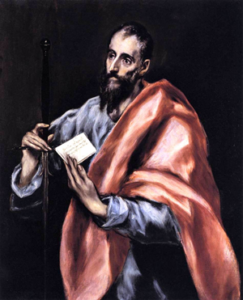
pope-gregoryIn the first reading from today’s Mass (Wednesday of the 22nd Week) St. Paul warns that the faithful should not esteem the preacher too highly. Esteem the Lord, who was able to speak through Balaam’s donkey. If God can use a donkey to preach, then one should not be too enamored of the particular human instrument the Lord uses to preach.

Pope St. Gregory taught that the preacher goes ahead of the Lord, announcing Him, as it were, and then the Lord comes in to “close the deal”:

Beloved brothers, our Lord and Savior … sends his disciples out to preach two by two. … Rightly is it said that he sent them ahead of him into every city and place where he himself was to go. For the Lord follows after the preachers, because preaching goes ahead to prepare the way, and then when the words of exhortation have gone ahead and established truth in our minds, the Lord comes to live within us. To those who preach Isaiah says: Prepare the way of the Lord, make straight the paths of our God. And the psalmist tells them: Make a way for him who rises above the sunset. … Therefore, we make a way for him who rises above the sunset when we preach his glory to you, so that when he himself follows after us, he may illumine you with his love.

Think over, my beloved brothers, think over his words: Pray the Lord of the harvest to send laborers into his harvest. Pray for us so that we may be able to labor worthily on your behalf, that our tongue may not grow weary of exhortation, that after we have taken up the office of preaching our silence may not bring us condemnation from the just judge.

(from a homily on the Gospels by St. Gregory the Great, Pope (Hom 17, 1-3: PL 76, 1139))

This is an important insight that can help preachers to avoid both pride and an exaggerated sense of responsibility. Yes, the preacher goes before the Lord, who then follows after to quicken the Word that has been planted.

First of all, this is a remedy for pride, because the preacher is not the Lord. Although it is the Lord’s own Word he preaches, the preacher cannot completely express what God alone can effect in the human heart. The preacher can but sow the seed of the Word; only God can bring forth the harvest. As St. Paul wrote,

I planted, Apollos watered, but God gave the increase. So neither he who plants nor he who waters is anything, but only God, who makes things grow (1 Cor 3:6-7).

The preacher can propose, but the Lord must come after to “close the deal.” The Samaritan woman was rather abruptly but truthfully told this by the townsfolk:

We no longer believe just because of what you said; now we have heard for ourselves, and we know that this man really is the Savior of the world (Jn 4:42).

Every preacher should delight to hear this. It is a valuable lesson for the preacher to remember his place. He goes before to announce the presence of God, who alone can heal and bring in the truest harvest by His grace.

The preacher is like the best man at an ancient Jewish wedding, to whom St. John the Baptist equated himself.

He who has the bride is the bridegroom; but the friend of the bridegroom, who stands and hears him, rejoices greatly because of the bridegroom’s voice. So this joy of mine has been made full. He must increase, but I must decrease (Jn 3:29-30).

St. Gregory’s insight also helps preachers to avoid an exaggerated sense of responsibility. Sometimes preachers may think too much rests on them, on their eloquence, on finding just the right analogy or the perfect wording. He may also lament his flaws. And while every preacher must work to hone his skills, Unless the LORD builds the house, its builders labor in vain (Ps 127:1).

Thus the preacher can help to lay a foundation, but it is the Lord who must build the house. It is both helpful and freeing for the preacher to remember that he merely goes before the Lord; the Lord will follow after with every good grace. The preacher must do his part in proclaiming the authentic word of God, but only the Lord Himself can perfect the message in every soul. He must preserve knowledge and prepare the way for the Lord, who causes the seed to grow in the hearts of the faithful and who will ultimately judge the living and the dead.

This is both freeing and reassuring. Most of us who preach realize this from time to time, particularly when someone recounts back to us something we have said, but does so in a way that surprises us. This demonstrates how the Lord helps people to hear something that our feeble words could only suggest.

In the end, every preacher must trust the Lord, who comes after him to complete what is lacking and to bring forth the fruits that he can only point to. The Lord causes His truth to shine forth—in consolation for the faithful and in judgment for the wicked. The battle is the Lord’s; so is the victory and the harvest.

This chorus from Handel’s Messiah says, “The Lord gave the word; great was the company of the preachers.”

The Critical Danger of Unbelief

Moses Breaking the Tablets of the Law (1659) by Rembrandt

I had an interesting discussion with Matt Hadro on EWTN’s “Morning Glory” radio show about the rising number of “nones” in our country. When asked for their religious affiliation, “nones” do not identify themselves as atheists or agnostics, but rather check the “none” box. They tend to be dismissive of “organized” religion and generally believe that it is acceptable to construct a purely personal religious view and understanding of God.

Indeed, we live in times when many people make light of the fact that others do not believe in God or relegate their faith to a solely personal and largely irrelevant aspect of life. This attitude exists even among many Catholics who, though believers themselves, don’t seem to be overly concerned that others are not. What seems to be of greater concern to most believers—Catholics included—is that a person be “nice.” If a person is determined to be “nice,” little else seems to matter.

Frankly, all of us should be concerned by the rise of unbelief in our culture, whether it is atheism, agnosticism, “none-ism,” indifference, or the rampant secularism that relegates God to the margins. We should be concerned because unbelief on a wide scale (as is the case today) is not only unhealthy for a culture, it is dangerous to it.

This danger is fairly obvious when one considers that unbelievers (and most “under-believers” such as “nones”) think that they answer to no one. When one no longer acknowledges that God exists and sees everything, “reinvents” God, selects what he likes from what God has commanded, or doesn’t understand that he will ultimately have to answer to God for what he has or has not done, it is easy to ignore important aspects of the moral life.

Realizing that we will one day answer to God is an important reminder that we are not a law unto ourselves. The knowledge that we will not ultimately escape if we treat others with contempt, engage in serious injustice, live unchastely, or indulge greed, is an important curb on sin (or at least a call to repentance).

This observation does not mean that every unbeliever or “under-believer” lives a reprobate life. There are atheists who live exemplary lives, who exhibit natural virtues, whether they do so because it is to their benefit or simply because they have some ethical sense that comports with the right reason.

But, other things being equal, having large numbers of unbelievers who do not think that they are ultimately accountable for what they do or fail to do is never healthy to good order, morality, or virtue.

Further, when belief is lost by many, so is a common moral reference point. The Judeo-Christian moral view formed the basis for modern law, justice, constitutional rights, and ethics. While sectarian differences obviously existed in the country for 200 years before this rise of unbelief, there was basic agreement on the essential moral issues, based on a biblical worldview. The rise of unbelief has caused this moral consensus to break down. In its place there has arisen a tyranny of relativism, in which numbers matter more than reason. The one who wins is the one with the loudest megaphone, the most power, and the greatest influence.

This, too, is dangerous to a culture. Without a shared cultus, there can be no real culture. The word cultus refers to a reference point (God and His revelation) that is above and outside a culture, that is bigger and more lasting. Without that shared cultus, that devotion to someone higher, there can be no culture.

Today, when we cannot agree on what makes a marriage, or even on something as obvious as whether one is male or female, the tyranny is starting to resemble anarchy and nihilism. No culture can withstand such a basic undermining. Problems of this sort are civilization killers.

Thus, belief is not only important—it is critical. We cannot go on relegating this matter to the realm of the purely personal and largely irrelevant. Being “nice” is not enough. We must be accountable to God and see Him as authoritative in our life. If we are to survive we must do this, both individually and collectively.

The First Commandment says, I am the Lord your God. You shall have no other gods before me (Exodus 20:2). This is not some egocentric God, demanding worship and that He have no rivals. This is our loving Father, who knows what unbelief does to us. When we reject Him and/or turn to other gods, we are harmed immeasurably. We lose our way and inherit a lawless and confused world, in which the tyranny of relativism holds sway and no one thinks or acts as if he will one day answer for what he has and has not done.

Do not make light of the rampant unbelief in our world today. It is far more serious than most imagine. God commands the most serious things for our own well-being. The First Commandment is that we believe and that we call others to do the same. There is a reason that it is commandment number one!

Is There Such a Thing as Pure Evil? Here’s What St. Thomas Says.

Blog12-13-featureWe human beings are inclined to thinking categorically and absolutely. But not all (or even most) categories are absolute. Is there such a thing as absolute goodness, with no error admixed? Yes, most assuredly. God is so, as are the saints He has perfected in Heaven. But is there such a thing as absolute evil, in which there is no admixture of goodness? St. Thomas Aquinas and others say that there is not.

On one level, this is because evil is a privation, the absence of something that should be there. Hence if someone (or something) were wholly evil, he (it) would not exist at all. There would be no “there” there.

St. Thomas says,

Now in things it is impossible to find one that is wholly devoid of good. Wherefore it is also impossible for any knowledge to be wholly false, without some mixture of truth. Hence Bede says that “no teaching is so false that it never mingles truth with falsehood.” Hence even the teaching of demons, with which they instruct their prophets, contains some truths whereby it is rendered acceptable. For the intellect is led astray to falsehood by the semblance of truth, even as the will is seduced to evil by the semblance of goodness (Summa Theologica II, IIae, Q. 172, Art. 6).

Jesus warned us, Beware of false prophets, who come to you in sheep’s clothing but inwardly are ravenous wolves. You will know them by their fruits (Matt 7:15-16). The essence of temptation is including or alluding to something that is good or true. It is the good and the true that attract and serve as the lure. A fish would not be tempted by a rock attached to a hook. The bait is designed to attract the fish; it hides the hook. Similarly, we are not attracted by what is evil, ugly, and awful.

Scripture describes Eve’s temptation to partake of the forbidden fruit as follows: The woman saw that the fruit of the tree was good for food and pleasing to the eye, and also desirable for gaining wisdom (Gen 3:6). Food, beauty, and wisdom are all good. Thus even in the archetypal temptation, good things were proffered. But these concealed and were admixed with terrible ingratitude, disobedience, pride, and lack of trust in God.

Though the good can be absolute and categorical, evil cannot. Why is this important?

1 – It helps to make our battle with temptation and evil more informed, more prudent. It helps us to recognize the sly tactics of those who tempt us to evil by way of something good (but it is only apparently—not actually—good for us, due to the evil wrapped up in it).

This helps us to discern more carefully. We learn to distinguish what seems good (or as St. Thomas says, has the semblance of good) from what is truly good. Because nothing is absolutely evil, we can note what is good within any proposal, but also look beyond it to grasp the evil lurking there.

2 – It teaches that evil has no good of its own. Whatever good it has is stolen from what is truly good. Evil steals the good by misappropriating, misapplying, exaggerating, or deforming it in some way. Evil in itself appeals to no one, so it must steal from the good and dress itself up, luring us with what is good and cloaking its true emptiness.

Evil in itself is unappealing and devoid of anything it can claim as its own. It lives like a parasite on the good and must take something good in order to be anything at all.

So, while evil may appear powerful and enticing, in itself it has nothing to offer. Though evil scoffs at the good, it ultimately depends upon it.

3 – It helps us to avoid hatred and disdain of human persons, even those deeply wounded by sin and marked by rebellion or arrogance. There remain in them things that are good. They still have existence (from God). They still have intelligence and will, and not everything they do or desire is evil. Thus good can still be found in them; we can hope to appeal to those still good qualities as a basis for conversion before it is too late.

4 – It helps us find what is true even in false doctrines and philosophies. Heresy and error usually involve some exaggeration of what is true, but they fail to regard other truths that balance and distinguish them. Hence it is usually imprudent to wholly dismiss erroneous teachings as lunacy or to ridicule their proponents. A time-tested method is to find what is true, meet the proponent there, and then disclose the error by showing how it fails to account for other truths meant to balance it. St. Thomas Aquinas was a master at this.

5 – It teaches us patience and fortitude. The Lord told the parable of the wheat and the tares. Having sown good wheat in his field, the owner (God) acknowledges that an enemy sowed the tares. What is interesting is that the wheat and the tares look very much alike until just before the harvest. Nevertheless, an impatient field hand proposes to the owner that all the tares be removed immediately. The owner (God) urges caution, saying, No, because while you are pulling the weeds, you may harm the wheat with them (Mat 13:29).

While it is true that wheat cannot become tares and tares cannot become wheat, the same is not so with us. Too easily can we who would be wheat become tares. Yet also we who are tares can become more and more like wheat.

Thus in our battle against evil we must show care not to destroy what is good in us or in others. Even in evil people, some good can be found and nourished. This does not mean that strong medicine is never required, but the goal is to preserve what is good and to expose clearly what is evil.

So there will be a day of judgment, but not yet. God permits time so that we and others may repent. He seeks to grow what is good from within otherwise bad situations.

This often requires patience, admixed with resolve to expose evil for what it is. To be patient is not necessarily to be quiet. The word patience is rooted in the concept of suffering (patior = I suffer, I endure). To be patient is to stay at the work of preaching and calling to repentance until the very day of the harvest. To be patient involves suffering and endurance, because evil is stubborn and hides, pretending to be good.

The virtue of fortitude helps us to be courageous and to persistently stay at this work in spite of obstacles, disappointments, and setbacks.

6 – It provides us with insight as we endure suffering. God permits evil so that something good and better can come from it. There are hidden and paradoxical gifts in suffering and enduring evil. We are taught patience and humility. We learn to thirst for justice and the paradise of Heaven. Error can help us to better understand truth and hone our skills in apologetics as we seek to refute error. Because evil is not absolute, God can draw good from it; in all things God works for the good of those who love him, who have been called according to his purpose (Rom 8:28).

7 – It teaches us a subtlety about God’s justice in relation to Hell and the damned. While Heaven is perfection and pure goodness, Hell is not pure evil. St. Thomas teaches,

It is impossible for evil to be pure and without the admixture of good …. [So]those who will be thrust into hell will not be free from all good … [And even] those who are in hell can receive the reward of their goods, in so far as their past goods avail for the mitigation of their punishment (Summa Theologica, Supplement 69.7).

This can assist us in understanding that God’s punishments are just and that the damned are neither devoid of all good nor lacking in any experience of good. Even though a soul does not wish to dwell in God’s Kingdom due to that person’s rejection of God or the values of the Kingdom, the nature of suffering apart from God in Hell is commensurate with the sin(s) that excluded the person.

This would seem to be true even of demons. In the Rite of Exorcism, the exorcist warns the possessing demons, “The longer you delay your departure, the worse your punishment shall be.”

In his Inferno, Dante wrote of levels within Hell and that not all the damned experience identical sufferings. Thus, an unrepentant adulterer might not experience the same suffering in kind or degree as a genocidal and atheistic head of state directly responsible for the death of millions. Both have rejected key values of the Kingdom: one rejected chastity, the other rejected the worship due to God and the sacredness of human life. But the degree of their sin and the consequences of that sin are very different.

So Heaven is a place of absolute perfection, a work accomplished by God for those who say yes. But Hell, though a place of great evil, is not a place of absolute evil. It cannot be, because God continues to sustain human and angelic persons in existence there (despite their final rejection of what He offers), and existence itself is good. He also judges them according to their deeds. Their good deeds may ameliorate their sufferings; this, too, is good and allows for good in varying degrees there. Hell is not in any way pleasant, but it is not equally bad for all. And thus God’s justice, which is good, reaches even Hell.

In summary, good can be perfect and whole, but evil can never be pure and total. The implications to this are many. Pray carefully over the insights presented above and apply them well, for the days are evil. Thanks be to God that total evil is not to be found. Our job is to find what is good and, by God’s grace, to grow it.

You Have to Serve Before You Sit – A Homily for the 22nd Sunday of the Year

blog-08-27In the Gospel for Sunday’s Mass, the Lord Jesus summons us to a deeper appreciation for what brings true honor, for what makes a person truly great. As you may imagine, what the world considers great and honorable is rather different from what God thinks and sees. Let’s look at this Gospel in three parts and discover its paradoxical vision.

I. THE PERSON who HONORS – The Lord is at a banquet and notices people vying for seats of honor. In response, He gives the following teaching: When you are invited by someone to a wedding banquet, do not recline at table in the place of honor. A more distinguished guest than you may have been invited by him, and the host who invited both of you may approach you and say, “Give your place to this man,” and then you would proceed with embarrassment to take the lowest place.

What the Lord is really reminding us is that at formal banquets, it is the host who determines where we sit. This is most common at wedding receptions, where seats are assigned by the couple ahead of time. For someone to walk in and sit at the head table reserved for the wedding party is both rude and pompous. The polite and expected thing is to report to the entrance table, receive a table number, and graciously take your seat there.

Of course the banquet we are invited to is God’s Kingdom. In that Kingdom God has a place for us, but it is God who assigns each his place.

Recall that when a dispute arose among the Apostles as to who was the greatest, Jesus responded, I assign to you, as my Father assigned to me, a kingdom, that you may eat and drink at my table in my kingdom (Luke 22:29).

Another time, when James and John approached Jesus for seats at His right and left (places of honor), Jesus responded, But to sit on my right hand and on my left hand is not mine to give; but it shall be given to them for whom it is prepared (Mk 10:40).

So, our places in the Kingdom are determined by God.

Many miss this point and like to assign themselves places and honors in God’s kingdom. But in the end, that right belongs to God. Some go through life resentful that they are not as rich or powerful as others. Some wish they were taller, thinner, smarter, or more attractive. They are jealous of what they see as the advantages of others.

Be very careful here. It is not for us to determine what is best for us. It is not for us to assign our own seat. Just because we think it is better to be rich than poor does not mean that it is so. The Lord warns how difficult it is for the rich to inherit the Kingdom of God. So being rich isn’t necessarily the blessing we think it is. It is for God to decide what is best for us. Riches, power, popularity, and good looks are all things that tend to root us in this world; they are not necessarily blessings. Having a “good” job like someone else’s, a family like someone else’s, or a talent like someone else’s may not be what is best for us.

God decides all that; he gives us the talents and blessings as well as the burdens and challenges He knows are best for us. So don’t just walk into God’s Kingdom and seat yourself! Check in with the host and find out His will in terms of your seat. He’s got just the right one for you.

II. THE PARADOX of HONORS – Jesus was noticing how they were choosing the places of honor at the table. In effect, He was struck by how people perceive honor and how they vie for what they think is honor. They want to impress others and be thought of as important.

But remember, this is God’s banquet. The qualifications for the seats of honor there are very different from those necessary for worldly honors. In the world, we are impressed by things like brawn, beauty, bling, and bucks. We’re impressed by big cars, big houses, big hair, and a big entourage. When a limo pulls up, just watch all eyes turn. The popular, the powerful, the glitterati, and the game changers emerge to flashing cameras and thunderous applause. These are the things that we notice; this is what draws our eyes.

But what about God? As God looks around the banquet hall of His Kingdom, who draws His eye? The Lord provides the answer in many places in Scripture:

  1. Whoever would be great among you must be the servant, and whoever would be first among you must be slave of all. For the Son of man also came not to be served but to serve, and to give his life as a ransom for many (Mark 10:43).
  2. Rather let the greatest among you become like the youngest, and the leader like one who serves. For who do you think is the greater, one who sits at table, or one who serves? Is it not the one who sits at table? But I am among you as one who serves (Luke 22:26)
  3. Though the LORD is on high, he looks upon the lowly, but the proud he knows from afar (Ps 138:6).
  4. But God chose the foolish and low born things of the world to shame the wise; God chose the weak things of the world to shame the strong. He chose the lowly things of this world and the despised things–and the things that are not–to nullify the things that are, so that no one may boast before him (1 Cor 1:27).
  5. Listen, my beloved brethren. Has not God chosen those who are poor in the world to be rich in faith and heirs of the kingdom which he has promised to those who love him? (James 2:5)
  6. Many who are last shall be first, and many who are first shall be last (Luke 13:30).
  7. He has cast down the mighty from their thrones and lifted up the lowly. (Luke 1:52).

So, back to our question: In the banquet hall of God’s Kingdom, who catches His eye? Is it those at the “head table”? It is those on the red carpet behind the rope line? No. If we apply God’s words, we see that those who catch God’s eye are not even at the table; they are those waiting on the tables, those serving, those back in the kitchen cooking and washing dishes! It is the lowly, the humble, the servants of all, who catch God’s eye.

Here is the paradox of honor in God’s kingdom: It is not about being powerful in the worldly sense. God is not impressed by the size of our house, car, or bank account. Our popularity does not impress Him. It is our service, humility, and love for others that catches His eye. The seats of honor, the places closest to God’s heart, are for those who serve.

III. THE PRESCRIPTION for HONORS – The prescription is clear. Jesus instructs us, when you are invited, go and take the lowest place so that when the host comes to you he may say, “My friend, move up to a higher position.”

What all this adds up to is that if we want to be great in the Kingdom of God then we had better become a servant. Jesus says that we should take the lowest place, that we should serve before we sit. What makes a person great is serving. The greatest thing about us is not our big paycheck or our fancy house; it is that we serve.

We are great when we identify with the lowly and humble and seek to serve rather than to be served. We are great when we use our wealth, power, talents, and abilities to build up the people of God and extend His Kingdom. Even things we do for which we are paid can be service, provided that serving is our primary motivation.

Jesus then adds, When you hold a banquet, invite the poor, the crippled, the lame, the blind; blessed indeed will you be because of their inability to repay you. For you will be repaid at the resurrection of the righteous. What this amounts to is a complete change in the way we see what is great in this world.

Jesus is giving us more than a moralism here (be generous to the poor). He is offering us a new vision for who is greatest in His Kingdom. We ought to run to the poor, the blind the lame, and the afflicted, because they give us the ability to serve. In the end, our greatest honor is serving others, especially the poor and afflicted who cannot repay us.

A final dimension to all this is learning that some of the greatest and most honorable people we know are those who serve us. Because serving is the greatest honor in the Kingdom of God, we ought to hold in high honor those who wait on our tables, clean our houses and workplaces, do the “dirty work,” serve in our hospitals, and care for us and serve us in countless other ways. They are doing something honorable and we ought to treat them with respect, kindness, and honor. We ought to give generous tips when that is appropriate, but above all we are to honor them.

For the greatest among you is the servant, and whoever would be first among you must be slave of all (Mk 10:43).

Yes, you have to serve before you sit in any place of honor at God’s banquet.

The song in the video below says, “Sit down, servant. I can’t sit down … My soul’s so happy that I can’t sit down.” The video depicts quite a varied cultural expression: a Thai choir singing an African-American spiritual!

Two Biblical Lessons in One Commercial

Blog-08-26In the video below, a little child is troubled by the presence of a golden retriever while strangely consoled by a stuffed lion. The solution? Disguise the dog as a lion so that the child will let the dog approach. It seems a rather strange tactic; most would say that dogs are much nicer than lions. But try telling that to the little girl!

I see two biblical themes here:

The first theme is that God met the fallen human race where we were in order to lead us to something better. When people today read the early history of the Bible, most of us are aghast at the level of violence. In ancient times there were no settled laws, no legislatures, no agreed-upon borders between nations, no judges, and no police; there was only fierce tribalism. Brutal battles usually settled land disputes and other disagreements. Annihilating one’s adversary through total physical destruction and genocidal removal was an accepted strategy.

This is where God met ancient Israel. They only understood the fierce lion, not the Lamb of Sacrifice. God would lead them there, but first He had to choose a people, clear the land for them, and then settle them there. Thus He first came to them as Yahweh Sabaoth (the LORD of armies) and summoned them to fierce battle to take the Promised Land by force.

Soon enough, God would lead them to understand more peaceful methods, but for the time being violence was all they understood. Israel was much like the child in the video, who strangely prefers the lion to the gentler dog. So, then, look like the lion and establish the relationship; gentler things will come later.

The second theme is that of St. Paul, who said, To the weak I became weak, that I might win the weak. I have become all things to all people, that by all means I might save some. I do it all for the sake of the gospel, that I may share with them in its blessings (1 Cor 9:22-23).

St. Paul was willing to set aside his own preferences and (to some degree) to become all things to all people in order to save them. St. Paul refers here not to the truth, but to cultural things such as dietary matters, language, wealth, perceived strengths, and other sensibilities. He did this in order to establish a relationship and to open the door to the Gospel. Some today interpret St. Paul too broadly, saying that we should set aside moral and doctrinal teachings in order to reach people. But note that St. Paul only sets aside certain things, and those “for the sake of the Gospel that I may share its blessings.” Thus, the truth of the Gospel is the point! If food or what sort of headgear I wear gets in the way, then away with it—but never away with the truth of the Gospel. Opening the door to the Gospel is the whole purpose!

And thus in this video the dog is “willing” to don lion headgear in order to reach the child. He’s willing to become lion-like in order to show her the truth of canine loyalty.

I know this may seem like a stretch, but I hope you get the point. Enjoy the video!

Decide! Parables on Judgment and the Drama of Human Life

Blog-08-25Today’s Gospel at daily Mass (Friday of the 21st Week of the Year) features one of the many parables in which Jesus paints a picture of the great drama of human life. We are caught up in a great and cosmic battle and must choose sides; there are only two armies and no third way is given. Sadly, most have lost any sense of this, despite the battle lines being more clearly drawn than ever.

Most casual readers of the Bible tend to view the parables as merely interesting, entertaining stories. They are indeed interesting and entertaining, but they are deadly serious as well; they powerfully portray the drama of human life, the need to make decisions, and the consequences of those decisions. The parables carry weighty messages and substantial warnings. Do not misconstrue their creative, pithy, memorable qualities as signs of superficial teaching.

Some of Jesus’ starkest warnings come in the form of parables. In them, the drama of human life in the valley of decision (Joel 3:14) is vividly proclaimed. Indeed, the parables are mostly about the drama and decisions of human life and the stance we take in the cosmic battle that rages around us. Our decisions point to our destiny. Of Jesus’ 37 parables, 20 are ones that remind us of the drama of our lives in the valley of decision and warn us of the consequences of our choices, choices that can bring blessing or curse, rise or ruin, salvation or condemnation. Let’s review some of them, in order of increasing intensity:

  1. The rich fool (Luke 12:16–21): This is a parable of a rich man who hoards the surplus yielded by a bountiful harvest rather than being generous with it. God calls him a fool and claims his life that very night. In this parable Jesus warns us of the foolishness of living for passing, worldly things, and cautions that total loss is coming for those who are not rich in what matters to God.
  2. The wise and the foolish builders (Matthew 7:24–7; Luke 6:46–49): This is the conclusion of the Sermon on the Mount, and in it the Lord describes the dramatic difference between those who follow His teachings and those who do not. Those who heed His Word are like those who build their houses on solid rock and are thus able to endure the storms that come. But the foolish, who do not heed His Word, are like those who build their houses on sand. For them, the result is total loss and destruction when the storm of judgment comes.
  3. The parable of the sower (Matthew 13:3–9; Mark 4:3–9; Luke 8:5–8): Though God sows the seed of His Word abundantly, some of it falls on the path where it is consumed by birds. Other seed falls among thorns, which choke it off. Still other seed falls on rocky soil and withers due to the lack of roots. This is a dramatic warning to those who harden their hearts to God’s Word or who allow the soil of their heart to be thinned or choked off by the world. The warning is this: you will not bear the necessary fruit. Some seed, however, does fall on rich soil and it yields an abundant harvest. There is a dramatic difference in the results, and it is rooted in the disposition of our hearts.
  4. The parable of the wheat and tares (Matthew 13:24–30): God’s field of wheat is over-sown by the weeds of Satan. (This is a dramatic description of the two armies in this world.) Angry field hands propose pulling up the weeds, but the owner cautions that doing so might harm the wheat. He instructs them to allow the wheat and weeds to grow together until the harvest. There is a harvest, at which time the wheat will be gathered in but the weeds will be thrown into the fire. So there is a day of judgment, though not yet. Although the drama must still unfold, the final verdict will ultimately be rendered.
  5. The barren fig tree (Luke 13:6–9): This is a parable about patience. In it, extra time is given to an unfruitful fig tree. But the day of judgment is set, and if fruit is not found on the tree on that day, it will be cut down. This is the drama of our life: if we do not manifest the fruit of righteousness we will be removed from the Lord’s field.
  6. The dragnet (Matthew 13:47 –50): The kingdom of God (the Church) is compared to a dragnet, which captures all sorts of things. The drama unfolds when the net is hauled ashore and there comes the judgment. Only what is good is retained; that which is unclean and worthless is cast aside.
  7. The parable of the counting of the cost (Luke 14:28–33): In this parable, Jesus warns that discipleship is costly and that some are not able or willing to finish once started. He uses the images of a building begun without the resources necessary to finish it, and of a king going to war knowing he is greatly outnumbered. Similarly, some will set off to be disciples but later realize that they do not have the resources or willingness to continue. Thus the Lord sets forth in this parable that discipleship is costly and that the warfare is real. The implication of this is that some are willing to accept the cost while others are not. The road to salvation is narrow and few find it. The narrow way is the way of the cross. Many turn back from it, preferring the wide road that ultimately leads to destruction.
  8. The unforgiving servant (Matt 18:23-35): A man who owes a huge debt to the king has it forgiven, but then refuses to forgive the much smaller debt of a fellow servant. The king then calls the man back and applies the same unforgiving standard to him that he used on his confrere. Thus the measure we measure out to others will be measured back to us. Merciless is the judgment on one who has shown no mercy. And further, if we do not forgive the sins of others, neither will we find forgiveness from the Father. The choice to forgive and show mercy is a dramatic and crucial decision for us, one that will affect our final judgment in a powerful way!
  9. The prodigal son (Luke 15): A sinful son returns to and is reconciled with his father. But in a dramatic twist, the “obedient” son becomes bitter and refuses to enter his father’s house. Even more dramatically, the parable ends without us knowing whether or not the obedient son ever entered. This is because you are that son and you must decide for yourself if you will enter the Father’s house on His terms or stay outside, brooding that God doesn’t do everything on your terms.
  10. The dishonest steward (Lk 16:1-13): An unscrupulous steward has been discovered embezzling funds. In the end, though, Jesus praises his craftiness even though it is wrong. The point being made is that most sinners are far more dedicated to their world than Christians are to the Kingdom. This parable is another example showing that too many are simply not willing to fight for and with the Kingdom, and are thus lost as much through apathy as through wickedness.
  11. The rich man and Lazarus (Lk 16:19-31): In this parable, a rich man who has been insensitive to the poor ends up in Hell. Through this we are taught that such insensitivity is a damnable sin. In the great drama of his life, the rich man preferred to be wealthy in the world rather than to store up treasure for himself in Heaven. So hardened is his heart that even though he is now in torment in Hell, he does not ask to come to Heaven, but rather that Lazarus be dispatched to Hell to bring him water. In this, the rich man shows that he has not changed; he still looks down on Lazarus and prefers creature comforts to God and His kingdom. His heart is dramatically hardened, and so can ours be if we let sin, neglect, and insensitivity go unchecked.
  12. The wicked vineyard workers (Mat 21:33-41): The owner of a vineyard sends representatives to collect his share of the produce, but the wicked workers beat some and kill others. Finally, they kill the owner’s son. Next the owner comes and submits them to a bad end. In the drama of this world, there are many who reject God’s call for a share in their hearts; they beat or even kill those who prophetically call them to give God glory and to live holy lives. In rejecting His appointed prophets, they also reject Christ and will come to a bad end!
  13. The great banquet (Matt 22:1-14; Lk 14:15-24): A king holds a wedding feast for his son, but the invited guests are too involved in worldly affairs to bother coming even to so great an event. The king grows angry and burns their town. He then goes off to invite others until the banquet is filled. But there is one in attendance who refuses to wear the provided wedding attire. For this, he is thrown into the outer darkness. Through this parable we are taught that while many are called, few are chosen. Our decision to accept or reject God’s invitation is critical. Either we accept it and enter the feast or else a fiery end is in store for us. Even those of us who accept must wear the robe of righteousness that God provides us or else risk being cast into the outer darkness. Our decisions are dramatic and they determine our destiny!
  14. The wise and the foolish virgins (Mat 25:1-13): Ten bridesmaids await the groom’s arrival. Five were wise and carried extra oil; five were foolish and thus unprepared when the groom arrived. The wedding went on without the foolish bridesmaids and when they finally returned, the groom said to them, “Depart from me; I know you not.” This parable depicts the drama of our lives. We must live in readiness. The oil of our holiness must always be replenished and kept ready by prayer, the sacraments, Scripture, and fellowship with the Church (Acts 2:42). Judgment day is coming! Keep your lamps trimmed and burning!
  15. The sheep and the goats (Mat 25:31-46): In a scene of the great judgment, the Lord welcomes the righteous sheep on his right to the glory of Heaven, but consigns the wicked goats on His left to the fires of Hell. While the passage emphasizes the corporal works of mercy and indicates that to neglect them is a damnable sin, the passage should not be taken to mean these will be the only matters adjudicated. But again, note how dramatic our decisions in life are, including how we choose to care for the poor and needy!

The Lord repeatedly sets before us the great drama of human life and decision. Our choices matter and they build to a fundamental, final destiny. Thoughts beget deeds, deeds beget habits, habits beget character, and character begets destiny. This is the drama and dignity of our life.

Though consistently preached by Jesus in the parables and in countless other texts, this theme is rarely mentioned in preaching today. We preachers must change this if we are to authentically announce the Gospel. For those who hear and heed the message, blessings await. For those who stubbornly refuse or sinfully neglect the message, doom awaits. This is the drama of every human life.

Here are two final passages from Jesus. The first contains a warning, the second, a blessing.

Jesus said, “Take heed, watch and pray; for you do not know when the time will come. It is like a man going on a journey, when he leaves home and puts his servants in charge, each with his work, and commands the doorkeeper to be on the watch. Watch therefore—for you do not know when the master of the house will come, in the evening, or at midnight, or at cockcrow, or in the morning— lest he come suddenly and find you asleep. And what I say to you I say to all: Watch” (Mk 13:33-37).

Therefore, you also must be ready; for the Son of man is coming at an hour you do not expect. Who then is the faithful and wise servant, whom his master has set over his household, to give them their food at the proper time? Blessed is that servant whom his master when he comes will find so doing (Mat 24:44-47).

If You’re Looking for a Book on Prayer, Get This One First

prayerThe Lord says that we have to pray and indicates that without prayer we will give way to temptation. Thus prayer is essential for us to escape sin and keep our lives on the right path. While God offers many graces to overcome sin and live holy lives, those graces are often delivered through the doorway of prayer. Prayer is God’s way of knocking at the door of our heart; prayer is our way of answering. Prayer is God’s offer and prayer is our response. Jesus says,

Behold, I stand at the door and knock. If anyone hears my voice and opens the door, I will come in to him and eat with him, and he with me (Rev 3:20).

The shared meal referred to here, beyond its reference to the Eucharist, is also a sign of intimacy. While our culture is casual about eating (and just about everything else), in those days sharing a meal was not done with just anyone. Meals were shared with close family and friends. That is one reason that people of Jesus’ time were often surprised to see the people with whom Jesus shared meals. St. Peter also shocked the people of his time when he entered the household of a Gentile (Cornelius) and ate with him (Acts 10 & 11).

So, Jesus knocking at the door of our heart, seeking entrance, and sharing a meal, is a sign of reverence and intimacy. And we surely also need the food He offers: His Word and His Word made flesh.

Yes, prayer is both beautiful and essential.

Yet many Christians find prayer difficult. To some degree, our difficulties today are greater than in previous eras due to the constant noise and abundant distractions of our time. So noisy and frantic are our lives that sitting still and being silent is downright unnerving for many.

This is all the more reason that we must pray and pray well!

Learning to pray is not just a “fake it till you make it” proposition. As with any other area of life, we need to be taught; we can benefit from the experience of those who have gone before us. While it is true that prayer must be more than a “technique,” it is also true that prayer is more than a vague and purely subjective experience. Thus teaching can help us to find what is best and to avoid pitfalls that can discourage us.

Of all the books on prayer I recommend, The Fulfillment of All Desire by Dr. Ralph Martin is at the very top of my list. Anyone for whom I have been a spiritual director will attest that my first request of him or her is to obtain a copy of Dr. Martin’s book and begin reading it.

The book is valuable not only due to Ralph’s own wonderful insights, but also because he organizes and summarizes the teachings of the great Doctors of prayer (from the Catholic and Western traditions) so well. He draws heavily from St. Paul, St. Augustine, St. Teresa of Avila, St. John of the Cross, St. Catherine of Siena, St. Francis De Sales, St. Therese of Lisieux, St. Bernard of Clairvaux, and St. Thomas Aquinas.

He organizes the material along the fundamental stages of prayer: the purgative way, the illuminative way, and the unitive way. In the purgative stage we seek, by God’s grace, to identify our sins and attachments and to become increasingly free of them. We undergo basic conversion and begin to develop the habit of prayer. In the illuminative stage we see our love for and intimacy with God and neighbor increase, the virtues grow stronger within us, and our prayer become quieter and deeper. In the unitive stage, having made progress by grace, we receive a habitual, deep, and ever-deepening union with God, marked by joy, humility, and stability.

In his presentation of each stage, Dr. Martin samples richly from the writings of the saints and the teaching of the Church. He also gives much practical advice that helps to root the teaching within the setting of the modern world. He goes to the sources and brings them to us, applying their wisdom to our situation.

Simply put, the book is essential to anyone who seeks a guide to prayer.

And, dear readers, I hope you do seek a guide to prayer, for prayer is essential. Jesus said that temptation is looming, and if we don’t pray our lives can go off track pretty quickly without that remedy. But the Lord did not leave us alone to respond to so great a summons! He has sent us saints and biblical wisdom to teach us. And in our times, He anointed Dr. Ralph Martin to compile and present this wisdom to us freshly and comprehensively.

If you don’t have a copy of The Fulfillment of All Desire, go sell all that you have and buy one! 🙂

A Good Reminder from the Lord on Titles and Honors

Christ Showing A Little Child As The Emblem Of Heaven by Benjamin West

Last Saturday (20th Week of the Year) featured a Gospel in which the Lord cautions us on the use and collection of titles. Speaking of the religious authorities of His day, Jesus lamented,

They love places of honor at banquets, seats of honor in synagogues, greetings in marketplaces, and the salutation ‘Rabbi.’ As for you, do not be called ‘Rabbi.’ You have but one teacher, and you are all brothers. Call no one on earth your father; you have but one Father in heaven. Do not be called ‘Master’; you have but one master, the Christ. The greatest among you must be your servant. Whoever exalts himself will be humbled; but whoever humbles himself will be exalted (Mat 23:6-12).

Jesus is not trying to banish words from our vocabulary. Neither is He dismissive of all titles. Elsewhere Jesus says, You call me ‘Teacher’ and ‘Lord,’ and rightly so, for that is what I am (John 13:13). To reduce these Gospels to a dismissal of the use of titles is to miss the point. The deeper points are the need for humility and the understanding that titles are a summons to serve.

In another Gospel (Luke 9), after a dispute arose among the Apostles about who was the greatest, Jesus placed a child in their midst and said, in effect, “Here is the greatest. Now be sure to honor this greatest one with service and care.” Jesus also seems to imply that this is how the Father sees all of us.

It really is a simple lesson, so simple that we usually miss it entirely: For all our coveted titles, honors, and distinctions, our greatest title is “Beloved Child of God.”

Understanding our status as a child is the true picture of greatness, not being a “big cheese.” To be humble and to understand the dignity of humility is what God calls great.

We Catholics (and especially we Catholic clergy) love our distinctions and honorifics: Your Excellency, Your Eminence, Your Grace, Your Holiness, Pontifex Maximus, Reverend, Very Reverend, Right Reverend, Reverend Father, etc. You name it, we’ve got it!

Lay people have their titles too: Worthy Grand Knight, Past Grand Knight, Prefect, Chairman, etc.

When I was Dean, my own full title was this mouthful: The Very Reverend Monsignor Charles Evans Pope, M. Div., M.A. And you might want to add “Big Mouth Blogger,” too!

Do you want to know what God calls me? “Carlitos” (Little Charlie). Regardless of the “exalted” status I attain, to God I am just a little boy whom He dares not let out of His sight lest I run into trouble. Whatever my titles (and I am grateful for every bit of graciousness extended to me), I am no more baptized than any other Christian, and my greatest title is “Child of God.”

The Pope has authority, is deserving of our respect, and rightly has titles accorded him. But he is no more baptized that you or I. Before God, we are accorded this highest and equal dignity: God’s chosen ones, holy and beloved (cf Col 3:19). We are just his little children. This is our greatest dignity, our greatest title.

Why, you may ask, do I say, “little children”? Because Jesus did—and not just in this Gospel, but elsewhere as well. There is a tender moment when, after His resurrection, the Lord Jesus stood on the shore of the Sea of Galilee and called out to grown men, “Little children, have you caught anything?” The Greek word used is Παιδία (padia) meaning little children or infants. And while this diminutive is surely used affectionately, there is little doubt that this is how God likely sees us.

We easily forget our beloved status before God and engage in debates about our relative (lesser) status here in this world. We get argue about who is the greatest, who gets to do what, and who gets which honors. We debate the rules surrounding roles: why women can’t be priests, who is the head of the household, and what leadership positions are open to whom.

Setting aside our greatest dignity, we focus on lesser distinctions.

To be sure there are distinctions and offices, some of them from God. Scripture says,

And God has placed in the church first of all apostles, second prophets, third teachers, then miracles, then gifts of healing, of helping, of guidance, and of different kinds of tongues. Are all apostles? Are all prophets? Are all teachers? Do all work miracles? Do all have gifts of healing? Do all speak in tongues? Do all interpret? Now eagerly desire the greater gifts (1 Cor 12:28-31).

But note that any distinctions, even those from God Himself, do not affect our dignity, because that is something we all have by baptism. Before any other title, role, or honor, our greatest title and dignity is “Child of God and member of the Body of Christ.”

Regarding our dignity, Scripture says,

So in Christ Jesus you are all children of God through faith, for all of you who were baptized into Christ have clothed yourselves with Christ. Here there is neither Jew nor Gentile, neither slave nor free, nor is there male and female, for you are all one in Christ Jesus. If you belong to Christ, then you are Abraham’s seed, and heirs according to the promise (Gal 3:26-29).

St. Paul is not denying distinctions. Of course there is male and female. But distinctions do not overrule our common and fundamental dignity as children of God.

Do we really understand this? Too often, we do not. And thus in an instant we’re back into debates about who is greatest, who gets to do what, and who is in charge.

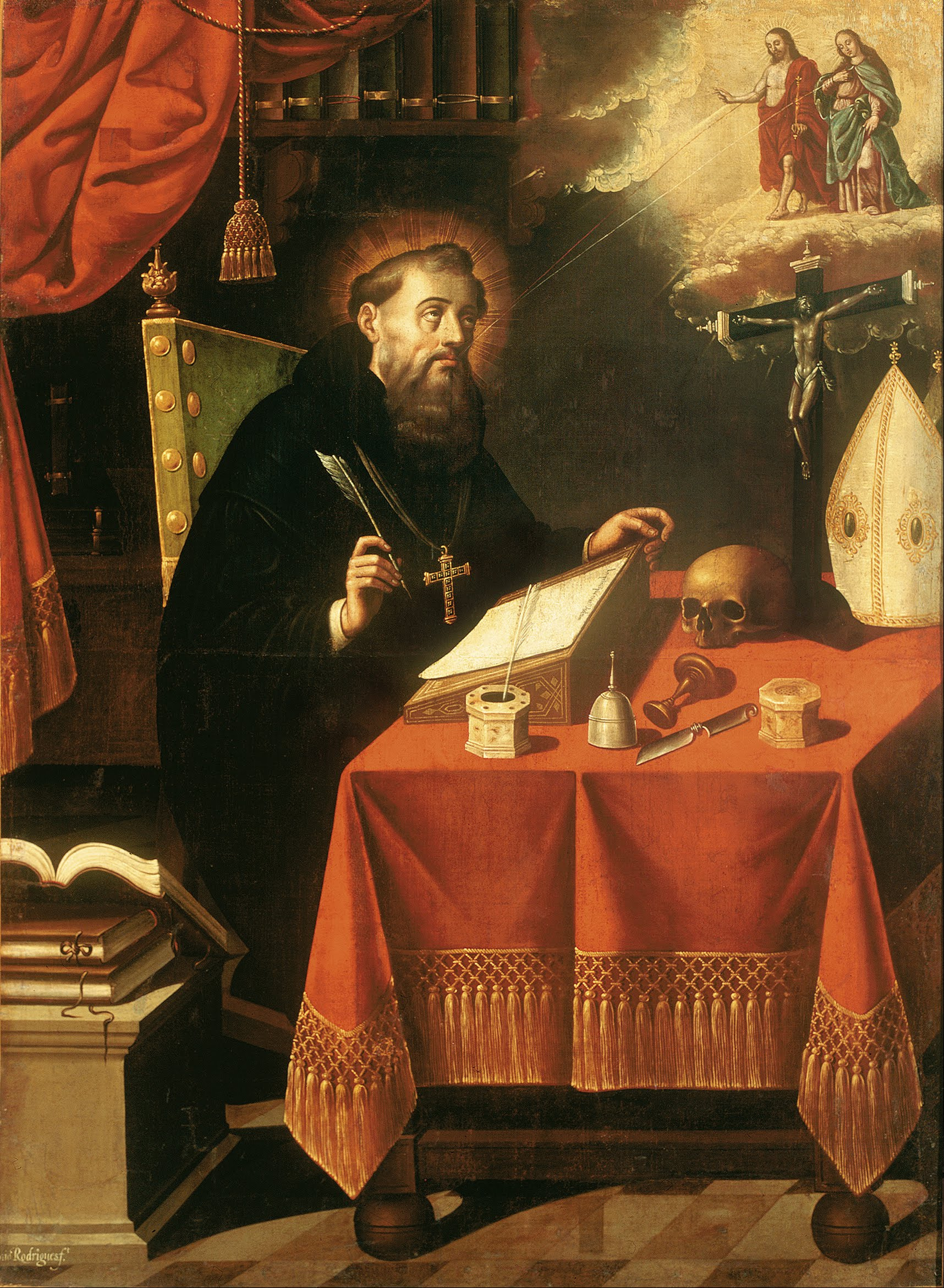
St. Augustine beautifully underscored how distinctions do not affect dignity when he said, “For you I am a bishop, with you I am a Christian.” To my own parishioners I have sometimes built on this quote and said, “For you I am a pastor, with you I am your brother, from you I am your son.”

Distinctions should not be confused with dignity. Our greatest dignity and title is something we share, something given to us by God not by man: “Child of God.” It’s your greatest title. This is a simple teaching by Jesus that is often overlooked.

I will conclude with a humorous story:

One day a powerful and influential Cardinal Archbishop of a large city was in Jerusalem strolling with his priest secretary in the market. He came upon a vendor who cried out, “You, sir! Come here and I’ll give you a fair deal!” The secretary, annoyed at the vendor’s use of the lesser title “sir” said to him, “Do you know who this is?” “No,” replied the vendor. The priest said, “This is His Eminence Cardinal Archbishop so-and-so.” “Really?” answered the vendor, “Well, I’ll still give you a fair deal!”

Our distinctions do not affect our fundamental dignity.

Here is how God sees us: