Sometimes our pets teach us a lot about ourselves. The video below shows various dogs resisting the taking of a bath. Some hide; some go limp and become passive; others get feisty.
I see here a similarity with Catholics when they hear that it is time for Confession. Advent is an important time to go to Confession because we are preparing for the birth of our Savior. He is called Jesus (a name that means “God saves”) because He will save us from our sins. It would be a rather perfunctory and hollow Christmas without a preceding Confession, would it not?
And yet some Catholics, much like the dogs in this video, scamper away to hide. Others just look nervous and resist. Still others get hostile and say, “No way!”
This is just a fun way to say, “It’s time for Confession, time to wash our sins away!”
Enjoy this video. Dogs are so much fun, aren’t they?
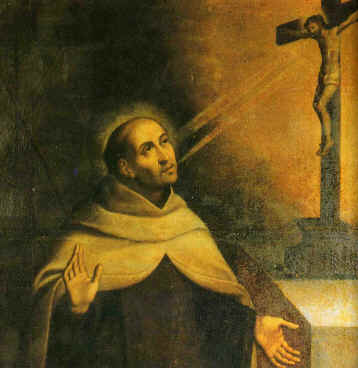
Yesterday’s feast of St. John of the Cross points to a rich vein of teaching from the spiritual master. Among St. John’s teachings is that deep union with God requires a growing purification from the things of this world and from inordinate passions. The path to this is often not easy. In this post I would like to ponder some hard spiritual truths that will set us free.
In calling them “hard truths,” I mean that they are not the comfortable bromides that many seek. They speak bluntly about the more irksome and difficult realities with which we are confronted. But if we accept them, they have a strange way of bringing serenity by getting us focused on the right things instead of chasing after false dreams.
A person can spend his whole life being resentful that life isn’t perfect, forgetting all the while that we are all in exile. We are making a difficult journey to a life in which, one day, every sorrow and difficultly will be removed and death will be no more—but not now.
There is an unexpected serenity in living in the world as it is rather than resenting it for not being the way we want it to be. For now, the journey is hard and we have to be sober about our obtuse desires and destructive tendencies. That is why there is value in calling these insights “hard truths that will set us free.”
In the opening section of his Spiritual Canticle, St. John of the Cross lays out a presumed worldview that the spiritually mature ought to have attained. Because he presumes it of his reader, he states it only briefly.
The soul … has grown aware of her obligations and observed that life is short (Job 14:5), the path leading to eternal life constricted (Mt. 7:14), the just one scarcely saved (1 Pet. 4:18), the things of the world vain and deceitful (Eccles. 1:2), that all comes to an end and fails like falling water (2 Sam. 14:14), and that the time is uncertain, the accounting strict, perdition very easy, and salvation very difficult. She knows on the other hand of her immense indebtedness to God for having created her solely for Himself, and that for this she owes Him the service of her whole life; and because He redeemed her solely for Himself she owes Him every response of love. She knows, too, of the thousand other benefits by which she has been obligated to God from before the time of her birth, and that a good part of her life has vanished, that she must render an account of everything—of the beginning of her life as well as the later part—unto the last penny (Mt. 5:25) when God will search Jerusalem with lighted candles (Zeph. 1:12), and that it is already late—and the day far spent (Lk. 24:29)—to remedy so much evil and harm. She feels on the other hand that God is angry and hidden because she desired to forget Him so in the midst of creatures, Touched with dread and interior sorrow of heart over so much loss and danger, renouncing all things, leaving aside all business, and not delaying a day or an hour, with desires and sighs pouring from her heart, wounded now with the love for God, she begins to call her Beloved …
Let’s examine these hard but freeing spiritual insights one by one. My commentary is in red.
The soul has grown aware of her obligations and observed
that life is short (Job 14:5)
More than in any other age, we today entertain the illusion that death can easily be postponed—it cannot. We are not guaranteed the next beat of our heart, let alone tomorrow! It is true that with advances in medical science, sudden death is relatively uncommon, but this can easily lead us to believe that we can cheat death—we cannot.
Life is short; we do not get to choose when we will die. Both my mother and sister died suddenly, swept away in an instant. They never got to say goodbye. You do not know if you will even finish reading this sentence before death summons you.
This is wisdom. It is a hard truth that gives us an important perspective. Life is short and you have no way of knowing how short.
What are you doing to get ready to meet God? What do you get worked up about? What are you not concerned about? Are your priorities rooted in the truth that life is short? Or are you making wagers in a foolish game in which the house (death and this world) always wins?
There is a strange serenity and freedom in realizing that life is short. If we do so, we tend not to get as worked up about passing things and become more invested in lasting things and the things to come.
[that] the path leading to eternal life [is] constricted ( 7:14)
Another illusion we entertain today is that salvation is a done deal. A great heresy of our times is a belief in almost-universal salvation, which denies the consistently repeated biblical teaching that declares, Enter by the narrow gate. For the gate is wide and the way is easy that leads to destruction, and those who enter by it are many. For the gate is narrow and the way is hard that leads to life, and those who find it are few (Matt 7:13-14 inter al).
In parable after parable, in warning after warning, Jesus speaks with sober admonition about the reality of Hell and the finality of judgment. No one loves you more than Jesus does, and yet no one warned you more about Hell and judgment than He did.
Salvation is not easy; it is hard. Jesus said this; I did not. He did not say this because God is mean, but because we are stubborn, obtuse, and prefer darkness to light. We need to sober up about our stubbornness and our tendency to prefer “other arrangements” to what God offers and teaches. In the end, God will respect our choice. The day will come when our choice for or against the Kingdom and its values will be sealed forever.
This is a hard saying but it sets us free from the awful sin of presumption, a sin against hope. It instills in us a proper focus on the work that is necessary to root us in God. Accepting this hard truth will make you more serious about your spiritual life and aware of the need for prayer, the Sacraments, Scripture, and the Church. It will help you to have more well-ordered priorities, ones that are less obsessed with the passing and more rooted in the eternal. It will make you more evangelical and urgent to save souls.
[that] the just one [is] scarcely saved (1 Pet. 4:18)
This is a further truth that sets aside modern errors about an almost-universal salvation. The fuller context of the quote is this: For it is time for judgment to begin with God’s household; and if it begins with us, what will the outcome be for those who do not obey the gospel of God? And, “If it is hard for the righteous to be saved, what will become of the ungodly and the sinner?” (1 Peter 4:17-18)
And yet despite this and many other quotes and teachings like it, we go one presuming that almost everyone will go to Heaven. We set aside God’s Word and replace it with human error and wishful thinking. We substitute human assurances for God’s warnings. We elevate ourselves over St. Paul, who said that we should work out our salvation in fear and trembling (Phil 2:12) and who spoke of disciplining himself lest, after preaching to others, he should be lost (1 Cor 9:27). Are we really better and more enlightened that Jesus? Than Paul? Than Peter?
Salvation is hard. This is not meant to panic us, but to sober us to the need for prayer, the Sacraments, Scripture and the Church. Without these medicines we don’t stand a chance. And we must persevere to the end.
This hard truth sets us free from illusion and sends us running to the Lord, who alone can save us. Smug presumption roots us in the world. Godly fear and sober awareness of our stubborn and unrepentant hearts send us to Jesus, freeing us.
[that] the things of the world [are] vain and deceitful ( 1:2)
Such a freeing truth! First, that the things of this world are vain. That is to say, they are empty, passing, and vapid. We so highly value power, popularity, and worldly glories, but they are gone in a moment. Who was Miss America in 1974? Who won the Heisman Trophy in that same year? And if you happen to know, do you really care? Does it really matter? It’s empty show, glitter, fool’s gold.
And though we should fight for justice, for the sake of the kingdom, even here the Scriptures counsel some perspective: I have seen a wicked, ruthless man, spreading himself like a green laurel tree. But he passed away, and behold, he was no more; though I sought him, he could not be found. (Ps 37:35-36).
And how deceitful is this passing world! The main deceit of this world is to say, I am what you exist for. I am what matters. I am what satisfies.” These are lies and deceptions on all fronts. The form of this world is passing away; it cannot fulfill our infinite desires. Our hearts were made for God and only being with Him one day will satisfy us.
Yet so easily do we listen to the world’s seduction and lies! Too often we want to be lied to. We prefer to chase illusions and indulge vanity and deceit.
How freeing this truth is! We learn to make use of what we need and begin to lose our obsession with vain and passing things and with our insatiable desire for more. Yes, perhaps you can survive without that granite countertop.
This is a very freeing truth if we can accept its hard reality. And, becoming more free, a deeper serenity finds us.
that all comes to an end and fails like falling water (2 Sam. 14:14)
The world is passing away. It can’t secure your future. The world’s cruel lie that it can fulfill you is on display in every graveyard. So much for the world’s empty promise: “You can have it all!” Yes, and then you die.
Meditate on death frequently. Indeed, the Church bids us to rehearse our death every night in prayer by reciting the Nunc Dimittis.
Scripture says,For here we have no lasting city, but we seek the city that is to come (Heb 13:14). Do you have your sights fixed where true joys are? Or are you like Lot’s wife?
Let this truth free you to have the proper perspective: Since, then, you have been raised with Christ, set your hearts on things above, where Christ is, seated at the right hand of God (Col 3:1).
that the time is uncertain
Do you have plans for tomorrow? Great, so do I. The only problem is that tomorrow is not promised or certain, neither is the next beat of your heart. This is another hard but freeing truth.
[that] the accounting [is] strict
Jesus warns, But I tell you that everyone will have to give account on the day of judgment for every empty word they have spoken (Matt 12:36). St. Paul says, He will bring to light what is hidden in darkness and will expose the motives of the heart (1 Cor 4:5). And he adds, So we make it our goal to please him, whether we are at home in the body or away from it. For we must all appear before the judgment seat of Christ, so that each of us may receive what is due us for the things done while in the body, whether good or bad (2 Cor 5:9-10). And James chillingly says, So speak and so act as those who are to be judged by the law of liberty. For judgment will be merciless to one who has shown no mercy (James 2:12-13). What James says is particularly chilling because so many today are without mercy.
If God judges us with the same strict justice we often dish out to others, we don’t stand a chance. The accounting will be strict anyway, so don’t pile on unnecessary severity and wrath. This is another freeing truth that helps us take heed of the coming judgment.
[that] perdition [is] very easy
I wonder why he repeated this. I just wonder!
[that] salvation [is] very difficult
And look, he repeated this, too! I wonder why. Maybe repetition is the mother of studies.
[that we are often and strangely ungrateful and unmoved] She knows on the other hand of her immense indebtedness to God for having created her solely for Himself, and that for this she owes Him the service of her whole life; and because He redeemed her solely for Himself she owes Him every response of love. She knows, too, of the thousand other benefits by which she has been obligated to God from before the time of her birth, and that a good part of her life has vanished
This is a sober truth that calls us to remember. What does it mean to remember? It means to have present in your mind and heart what the Lord has done for you so that you are grateful and different.
We live so many years and so many hours of each day in ingratitude. We get all worked up and resentful about the smallest setbacks while almost completely ignoring the countless blessings we receive each day.
Our ingratitude is particularly obnoxious because of the easy manner in which we mindlessly discount our incredibly numerous blessings, while magnifying every suffering, setback, and trial. We spend so much of our life in the “complaint department.” We are often stingy with even a simple “Thank you, Lord, for all your obvious and hidden blessings. Thank you, Lord, for creating, sustaining, and loving me to the end, and for inviting me to know, love, and serve you.”
that she must render an account of everything—of the beginning of her life as well as the later part—unto the last penny ( 5:25) when God will search Jerusalem with lighted candles (Zeph. 1:12)
Did he repeat himself again? Now why do you suppose he does that? You don’t think he considers us stubborn, do you?
[that] it is already late—and the day far spent ( 24:29)—to remedy so much evil and harm Repetitio mater studiorum.
[that the unrepentant will experience the wrath to come] She feels on the other hand that God is angry and hidden because she desired to forget Him so in the midst of creatures
The wrath of God is really in us, not in God. It is our experience of discomfort before the holiness of God. It is like being accustomed to a dark room and suddenly being brought into the bright afternoon sunlight. We protest and claim that the light is harsh, but that is not so. We are incapable of tolerating the light due to our preference for and acclimation to the darkness. In the same way, God is not “angry.” He is not moody or harsh. He is God and God does not change.
St. John teaches here the hard but freeing truth that God is holy; no one is going to walk into His presence unprepared. If we prefer the world and its creatures to the Creator, we thereby prefer the darkness and cannot tolerate the light. Heaven is simply not possible for those who prefer the darkness. And thus Jesus says, And this is the judgment: the light has come into the world, and people loved the darkness rather than the light because their works were evil (John 3:19). That’s right,this occurs just three verses after the famous and oft-quoted John 3:16.
And while the sinful soul may “feel” that God is angry and is hiding Himself, the problem is in the sinful soul, not God.
The freedom of this hard saying comes in reminding us and urging us to get ready to meet God. God is not going to change; He can’t change. So we must change, and by His grace, become the light of His holiness.
[that we need to call on the Savior] Touched with dread and interior sorrow of heart over so much loss and danger, renouncing all things, leaving aside all business, and not delaying a day or an hour, with desires and sighs pouring from her heart, wounded now with the love for God, she begins to call her Beloved.
Here is the real point of all of these hard truths: to make us love our Savior more, to learn to depend on Him and run to Him as fast as we can. Only when we know the hard truths are we really going to get serious.
After all, who is it that goes to the doctor? Is it the one who thinks he doesn’t have cancer (even though he does)? Or is it the one who knows he’s sick?
Sadly, the answer is not clear enough to us in modern times, times in which even within the Church there are many who don’t want to discuss any of the hard truths we need to lay hold of before we can get serious.
A steady diet of “God loves you and all is well no matter what” has emptied our pews. Why? Well, who goes to the spiritual hospital if all he hears is that nothing is wrong and that his salvation is secure, almost no matter what?
The good news of the Gospel has little impact when the bad news is no longer understood. What does salvation mean if there is no sin and nothing from which to be saved? Now of course the bad news should not be preached without pointing to the good news as well; the point is that both are needed.
Thus, St. John’s hard truths are not meant to discourage. They are meant to sober us and send us running to the doctor.
Now look, you’ve got it bad and that ain’t good. The good news is that there’s a doctor in the house. Run to Him now; He’s calling you!
I was explaining to a new Catholic recently that the reason the color purple (violet) is used during Advent is that Advent, like Lent, is considered a penitential season. During these times we are to give special attention to our sins and our need for salvation. Traditionally, Advent was a time when would take part in penitential practices such as fasting and abstinence, just as is done during Lent.
In recent times, though, Advent has become almost devoid of any real penitential practices. Neither fasting nor abstinence is required; they are not really even mentioned. There is nothing in the Missal or other liturgical sources that refers to Advent as a penitential season. While confession is encouraged and the readings of early Advent still retain a focus on repentance and the Last Judgment, the era of the forty-day fast beginning on November 12th is long gone.
During the Middle Ages, Advent observances were every bit as strict as those of Lent. St. Martin’s Feast Day was a day of carnival (meaning “farewell to meat” (carnis + vale)). In those days, the rose vestments of Gaudete (Rejoice) Sunday were a real indication of something to celebrate: the fast was relaxed for a day. Then it was back to fasting until Christmas. Lent began with Mardi Gras (Fat Tuesday), when the last of the fat was used up before the Lenten fast would begin the next day.
The fasting and abstinence practiced in those days were far more strict than the token observances we have today. There were regional differences in the details. In many places all meat was strictly forbidden during both Advent and Lent, but some areas permitted fowl. Most regions allowed the consumption of fish. Some areas prohibited fruit and eggs. In monasteries, little more than bread was consumed. On the Fridays of Lent and Advent, some believers abstained from food for the entire day; others ate only one meal. In most places, however, the Friday practice was to refrain from eating until the evening, when a small meal without vegetables or alcohol was eaten.
Yes, those were the days of the giants, when fasting and abstinence were real sacrifices.
Today’s token fast (required only on Ash Wednesday and Good Friday) isn’t much of a burden: one full meal and two smaller meals. Is that really a fast at all? And we are only obligated to abstain from meat on the Fridays of Lent rather than the entire forty days.
What is most remarkable to me is that such fasts of old were undertaken by people who had a lot less to eat than we do today. Not only was there less food overall, but is was far more seasonal and its supply less predictable. Further, famines and food shortages were relatively common. Yet despite all this, they were able to fast twice a year for forty days at a stretch, eighty days in total. There were also “ember days” sporadically throughout the year at the change of seasons, when a daylong fast was enjoined.
Frankly, I doubt that we moderns could pull off the fast of the ancients, or even the elders of more recent centuries. Can you imagine all the belly-aching (pun intended) that would ensue if the Church called us to follow the strict norms of even 200 years ago? We would hear complaints that such demands were unrealistic and even unhealthy.
Perhaps this is a good illustration of how enslaved we are by our abundance. The more we have, the more we want; and the more we want, the more we think we can’t survive without. We are so easily owned by what we claim to own, enslaved by our abundance.
When I ponder the Catholics of 100+ years ago, they seem like giants compared to us. They had so much less that we do today, yet they seem to have been so much freer. They were able to fast. Though poor, they built grand Churches and had large families. They fit so many more people into their homes. They lived and worked in conditions few of us would be able to tolerate. Sacrifice seemed more “normal” to them. I have not read that there were any huge outcries during those times, complaints that the “mean, nasty Church” imposed fasting and abstinence during Advent and Lent. (There have always been exceptions for the very young, the elderly, the sick, and pregnant women.) Neither have I read that fasting from midnight until receiving Communion the next day was considered too onerous. Somehow they accepted these sacrifices and were able to undertake them. They had a freedom that I think many of us lack.
Imagine the joy when, for a brief time, the fast was lifted: the Feast of the Immaculate Conception, Gaudete Sunday, the Feast of the Annunciation, the Feast of St. Joseph, and Laetare Sunday. For us, Gaudete Sunday just means a pink candle, and wondering what we are rejoicing about. For Catholics of old, these were literally feast days.
I fully admit to being a modern man. I find the fasting and abstinence described above nearly “impossible.” I did give up wine this Advent, and during Lent, I swore off radio and television. But something makes me look back to the giants of old, who, though having far less than I, did such things as a matter of course.
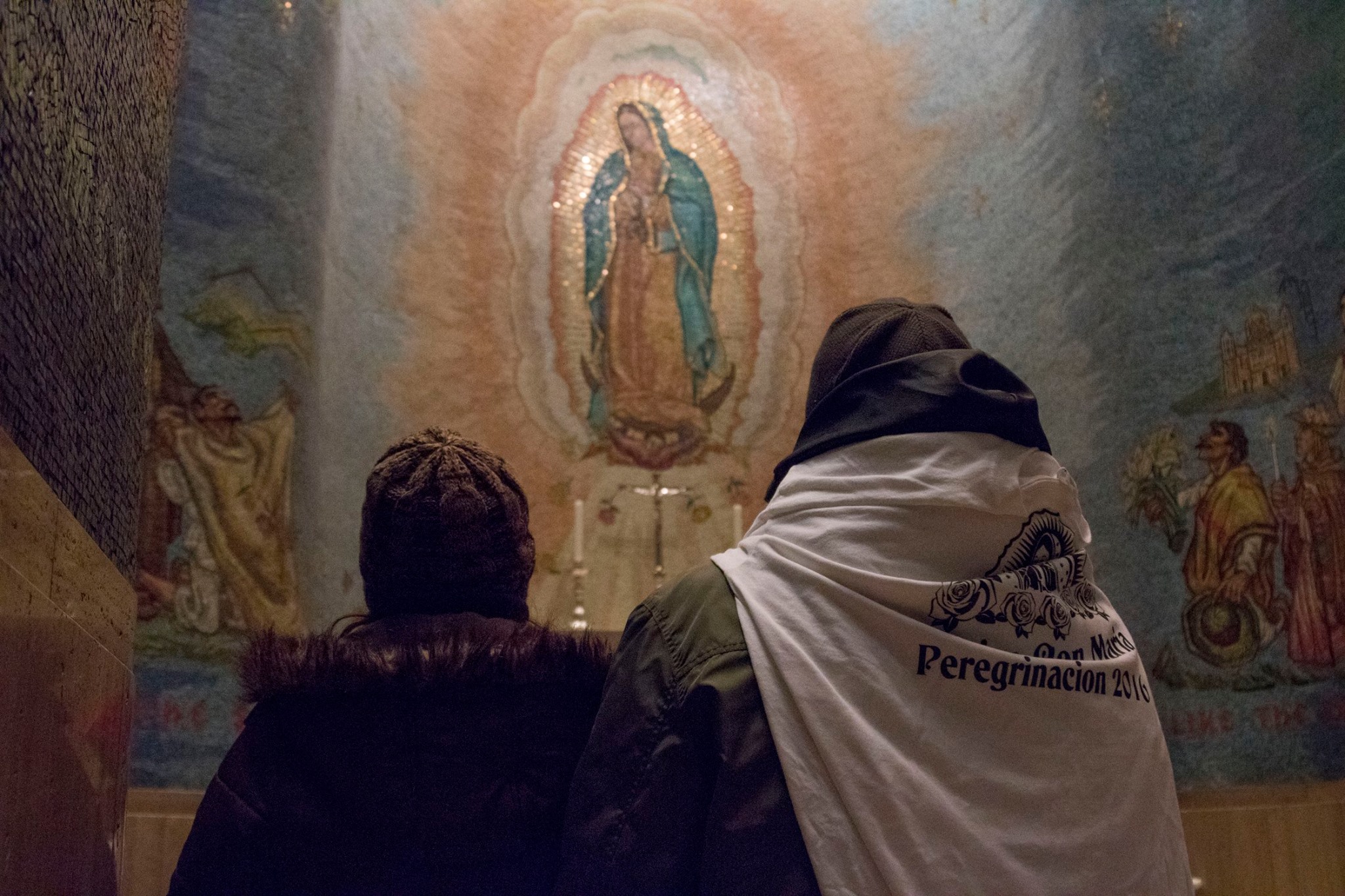
I’d like to reflect this evening on the first reading from today’s Mass for the Feast of Our Lady of Guadalupe.
A great sign appeared in the sky, a woman clothed with the sun, with the moon under her feet, and on her head a crown of twelve stars. She was with child and wailed aloud in pain as she labored to give birth. Then another sign appeared in the sky; it was a huge red dragon, with seven heads and ten horns, and on its heads were seven diadems. Its tail swept away a third of the stars in the sky and hurled them down to the earth. Then the dragon stood before the woman about to give birth, to devour her child when she gave birth. She gave birth to a son, a male child, destined to rule all the nations with an iron rod. Her child was caught up to God and his throne. The woman herself fled into the desert where she had a place prepared by God. Then I heard a loud voice in heaven say: “Now have salvation and power come, and the Kingdom of our God and the authority of his Anointed” (Rev 12:1-10).
I. Drama – In this great passage, there is a kind of a pulling back of the veil, a disclosure of what is really going on: There is a great and cosmic battle that reaches upward and outward, across generations, across nations and empires, and down into the close quarters of every human heart. It is the great battle between darkness and light, between the great Red Dragon and the Lord of Glory.
During this battle, there is a great sign in the heavens. There stands a woman clothed with the sun, the moon under her feet, and a crown of twelve stars about her head. She brings forth a son, destined to rule the nations with a rod of iron, to crush the dragon with the heel of his foot.
Many seek to localize the descriptions from the book of Revelation into either the first century or the end of time, but in fact they are fulfilled both then and now. For this great struggle was then, is now, and will continue until Christ comes again in glory to definitively apply the victory He has already won.
This great cosmic drama explains most of the struggles we see around us and within us. It explains the insanity of war, retribution, violence, promiscuity, abortion, and every evil afflicting us today. It explains our greed, our unreasonable fears and suspicions, our cynicism, and the fact that so often we are just plain mean to one another.
But this drama in the Book of Revelation also shows the woman clothed with the sun, Mary, and her son Jesus. And so it also explains our love, our thirst for justice, our appreciation for truth and beauty, and our capacity for caring, forgiveness, and living chastely and uprightly.
A wonderful documentary released in 2012, The Blood and the Rose, depicts this great drama. The title describes beautifully how in the midst of a bloody and violent world, the Lord often extends a rose, His mother.
There she is at the foot of the cross, with all its blood. There she is at the turning back of Muslim invaders at Lepanto. There she is at Guadalupe in the face of bloodthirsty Aztec gods. There she is at Fatima between two horrible wars.
But in the midst of all the blood and drama, the Lord extends a rose, His mother. Her message is never complex, it is simply the Gospel: repent and believe the good news. Yes, do whatever my Son tells you. Repent; forsake your evil ways. Come to a new mind and begin to live in the kingdom that is now available to you. As a good mother, she warns us and tells us to pray, pray, pray. During the blood of conflict and the dramatic battle between light and darkness, a rose: mother Mary.
II. Dramatis personae– The second thing that occurs to me is the cast of characters and the simplicity of the setting of the great drama. To whom does God extend the rose of His love at the beginning; to whom does Mary trust her message?
The pattern began with the incarnation itself. God sent Gabriel not to a powerful queen of this world, not to a woman of great access, power, or money. Rather He sent him to a humble maiden in a town so small that there was no road that even went to it. Nazareth, a town of 300, accessible only via footpath—that is where Gabriel was sent, and to a woman few had ever heard of—Mary of Nazareth. Some have described this is as a daring raid, conducted secretly behind enemy lines.
Down through the centuries, the pattern continued. Mary herself most often goes to the most hidden and humble of people: Juan Diego, a simple working man; Bernadette Soubirous, a peasant girl; and the three children young children of Fatima. None of these was a scholar, theologian, bishop, powerful businessman, king, queen, or prince. God chose the weak things of the world to shame the strong. God chose the lowly things of this world and the despised things—and the things that are not—to nullify the things that are, so that no one may boast before him (1 Cor 1:27-29).
We tend to think that solutions come through the great and powerful, through the “big cheeses” of the time. But the pride of this world will be conquered with humility; Heaven reaches out to the merest children. In the midst of the blood and horrible roar of war, the rose is extended quietly; its message goes forth to the humble.
III. Direction – A final matter to consider on this Feast of Our Lady Guadalupe is the direction to which it points. And frankly, it points to the south. The center of the Church has shifted south and her complexion has become browner.
As the lights are going out in the West and much of the developed world, many other lights are coming on: in Africa, Brazil, Korea, and elsewhere. In Africa the number of Catholics has increased dramatically over the past fifty years.
Guadalupe somewhat signaled this all the way back in the 16th century. At the very time when Martin Luther was leading a revolt against the Church, at the very time when some two million Germans walked out of the church, nine million Mexicans walked in. In the midst of the bloody Aztec meltdown, in the midst of the blood feuds in Europe, Our Lady extended a rose in Mexico. The faith lit up in Mexico, Central America, and South America, even as it began its death throes in Europe.
In 1917 in Fatima, The Lord extended a rose through Our Lady. She warned three young children of a coming war that would be far worse than any that had ever been known before. She warned that if people did not repent and pray, Russia would spread her errors far and wide. But unlike 16th century Mexico, Europe did not heed her offer and disaster ensued, disaster that continues to unfold today.
Surely Africa, Central America, and South America are not without their problems. Protestant errors have infected too many. In Africa especially, many Catholics are being martyred at the hands of Muslims. There are still problems with government corruption and the lack of resources, but the blood of martyrs is the seed for the Church; it has always been so and will continue to be so until Christ comes again.
But in the midst of all the blood, in the midst of all the difficulties, God extends a rose to the poor and humble, the rose of His Mother Mary.
Happy Feast of our Lady of Guadalupe. For those of you who at times feel discouraged, remember the beautiful image of the blood in the rose. Stay calm and Viva Christo Rey!
Then I heard a loud voice in heaven say, “Now have salvation and power come, and the Kingdom of our God and the authority of his Anointed.”
Here is an old song based on an even older text that points to Mary at Guadalupe, whom many Mexicans call “La Morena,” the dark-skinned lady. The text (translated to English) says,
I am the little dark girl, I’m the dark girl. It is said that darkness, is caused by sin, but sin was never found in me nor it will ever be.
I am the little dark girl, I’m the dark girl. I am the thornless rose, about whom Salomon rhapsodized: I am black, and beautiful and for me they will sing.
I am the little dark girl, I’m the dark girl. I am the flaming bush, that burns but is not consumed, nor am I touched by that fire that will touch the others.
Outside, there is a great drama of light and darkness is unfolding before us. The light is giving way to darkness.
Here in the Northern Hemisphere the days are getting very short; and they’re going to get even shorter. In Washington D.C., where I live, it’s dark by 5:00 PM. On cloudy days, it’s almost dark by 4:00! My brothers both live farther north, one in St. Paul and the other in Seattle; it gets dark even earlier there.
There’s a humorous quote (attributed to Yogi Berra) that goes, “It’s getting late very early out there.”
For us who live in modern times, the drama is less obvious, little more than an annoyance as we merely have to switch on the lights earlier.
But think of those who lived not long before us, in a time before abundant electrical lighting. Perhaps it was possible to huddle near a candle or fire, but in the end, darkness put a real stop to most things. Neither work, nor reading, nor most forms of recreation could take place. Darkness was a significant factor.
Recently, during a widespread power outage, I was struck by just how incredibly dark it was outside at night without the streetlights and inside lights emanating from homes. Frankly, I found it hard to even venture out. Bearings were quickly lost and I stumbled over simple things like a curb and a fence post. We moderns just aren’t used to this.
Once, I toured Luray Caverns in the Shenandoah Mountains. At the bottom of the caverns, hundreds of feet down, they gathered us near the center of a large cave and shut off the lights. The darkness was overwhelming. It was almost a physical feeling. I felt a wave of slight panic sweep over me and was so relieved when the lights came back on. Is this what it is like to be blind? Light is very precious.
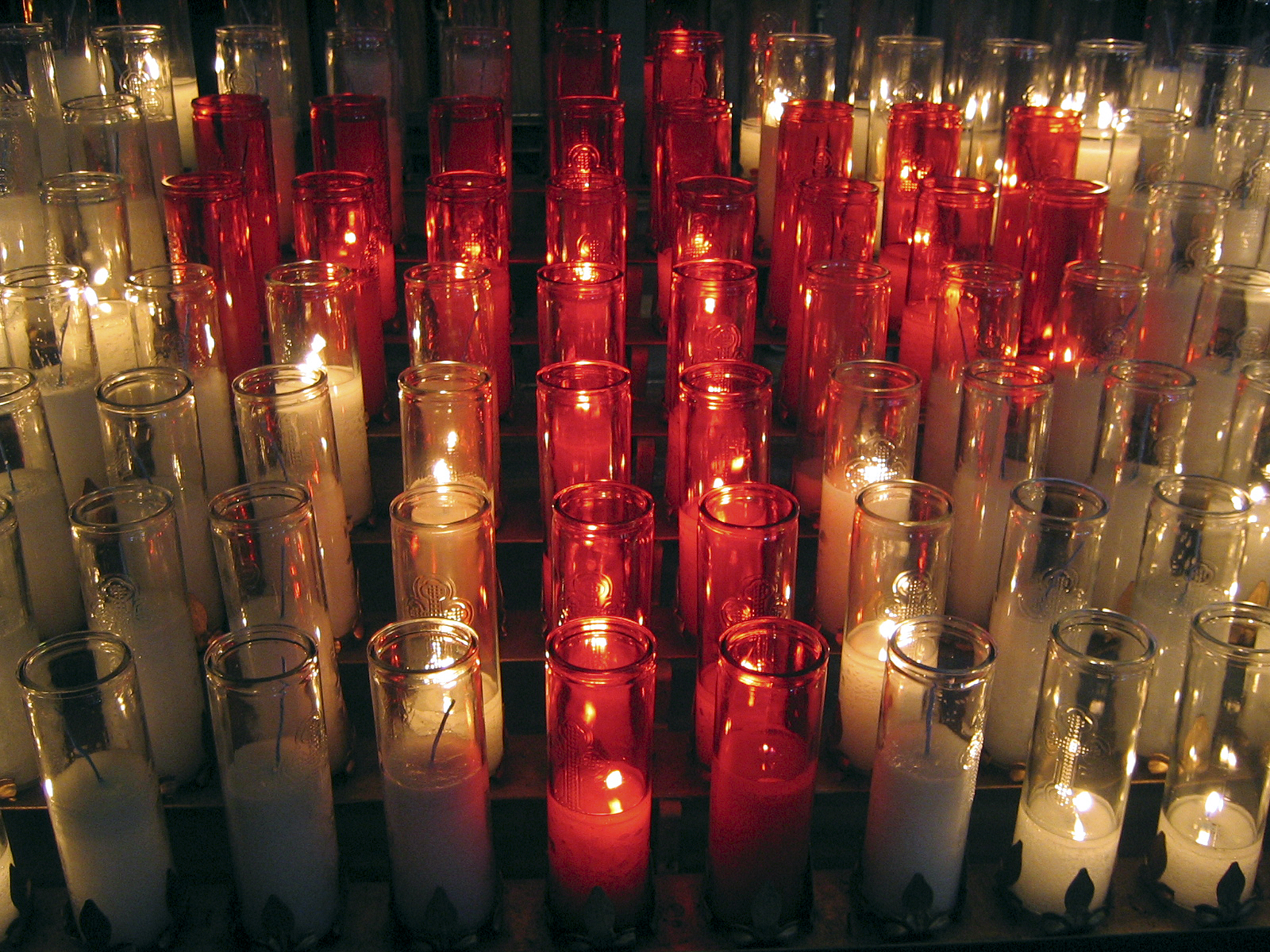
And so, here in a “deep and dark December,” the light continues to recede. The spiritual impact of this drama of light is brought into the Church. Our hymns turn to images of light. The darker it gets, the more candles we light on the Advent wreath. In the darkest moments of December, our Advent wreath is at its brightest. As Scripture says, The light shines in the darkness, and the darkness has not overcome it. … The true light that gives light to everyone was coming into the world (John 1:5, 9). An old prayer says, Within our darkest night you kindle a fire that never dies away.
As the drama of light outside continues, the shortest, darkest days of the year approach (December 21st and 22nd). By December 23rd, the ancients noticed a slight return of the light. The morning star heralds something new, something brighter.
People, look east. The time is near Of the crowning of the year. Make your house fair as you are able, Trim the hearth and set the table. People, look east and sing today: Love, the guest, is on the way.
And then, on December 24th, in the middle of one of the longest nights, the liturgy of Christmas begins. Christ is born, and on December 25th a new light shines. The days begin to get longer.
Yes, a great drama of light is unfolding before us. It is Advent. It is time to recognize our need for the light and just how precious is Jesus, the light of the world. Ponder in these darkest days the beauty of the light.
Consider, too, the theme of light in many of the Advent songs we sing. Here are few excerpts, mostly from old Latin Hymns:
From “Veni, Veni, Emmanuel”:
O come, thou Dayspring from on high, And cheer us by thy drawing nigh: Disperse the gloomy cloud of night And death’s dark shadow put to flight Rejoice, rejoice Emmanuel, Shall come to thee O Israel.
From the German hymn “Wachet Auf”:
Wake, awake, for night is flying; The watchmen on the heights are crying: Awake, Jerusalem, at last! Midnight hears the welcome voices And at the thrilling cry rejoices; Come forth, ye virgins, night is past; The Bridegroom comes, awake; Your lamps with gladness take; Alleluia! And for His marriage feast prepare For ye must go and meet Him there.
From “Conditor Alme Siderum”:
Creator of the stars of night, Thy people’s everlasting light Oh Christ, thou savior of us all, We pray thee hear us when we call
From “Vox Clara Ecce Intonat”:
Hark! a thrilling voice is sounding; “Christ is nigh,” it seems to say, “Cast away the works of darkness, O ye children of the day.” Wakened by the solemn warning Let the earthbound soul arise; Christ, her Sun, all ill dispelling, Shines upon the morning skies.
From the Liturgy of St. James (4th century) “Σιγησάτο παρα σὰρξ βροτεία”:
Rank on rank the host of heaven Spreads its vanguard on the way, As the Light of light descendeth From the realms of endless day, That the powers of hell may vanish As the darkness clears away.
From “Veni, Redemptor Gentium”:
Thy cradle here shall glitter bright, And darkness breathe a newer light, Where endless faith shall shine serene, And twilight never intervene
Enjoy this Advent and watch for the light; it will surely come.
What is the perfect gift? We tend to answer this question more in terms of what we want, but today’s Gospel teaches us that the perfect gift is what God is offering. One of the goals of the spiritual journey is to come to value, more than our latest desire, more than our perceived need—more than all else—what God offers.
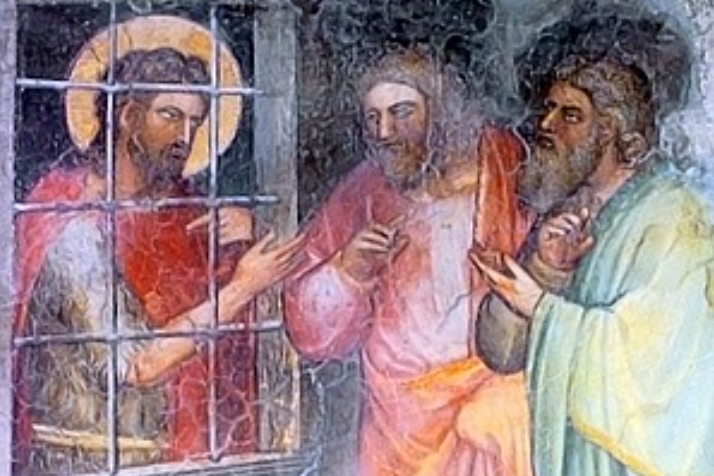
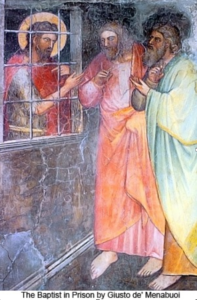
In reviewing today’s Gospel, I am going to take a stance regarding St. John the Baptist that I realize is not without controversy. The Gospel opens with John (who is in prison) sending his disciples to Jesus with a strange question: “Are you he who is to come, or should we look for another?” This is a strange question coming from the one who pointed Jesus out and spoke so powerfully of Him!
Many of the Fathers of the Church (e.g., John Chrysostom, Gregory the Great, Theodore of Mopsuestia) interpreted John’s question as a rhetorical one, designed to teach his reluctant disciples to follow Jesus.
I, however, would like to present a different interpretation: that John’s question is a sincere one, and manifests some puzzlement—even discouragement.
While some will take offense no matter how many disclaimers I provide, I still insist that I mean no impiety in my interpretation. It is a common biblical stance that even the greatest scriptural heroes are presented in very human terms. Abraham, Jacob, Moses, David, the judges and prophets, on down to the Apostles are all depicted as humans who are imperfect from the start, who struggle to understand and have perfect faith. Some of them committed great sins—even including murder. One of the most powerful themes of the Bible is that God is able to work with imperfect, struggling human beings and draw them to great sanctity and great accomplishments.
And thus out of respect for biblical tradition, I take today’s Gospel at what seems to me to be face value. If St. John is merely asking a rhetorical question, it seems odd that Jesus would not be aware of that. Instead, Jesus sends an answer back to John, asking him not to be scandalized (shocked) by the manner in which He goes about fulfilling Messianic texts.
I am not claiming that St. John is sinning or has failing faith; only that he, like all the prophets and patriarchs (and us), must sometimes struggle to understand God’s ways. Even Mother Mary, when Jesus was twelve and said that He must be in His Father’s house, did not understand what He was saying and had to ponder these things in her heart (cf Luke 2:50-51).
Today’s Gospel is best seen in three stages, as John the Baptist is encouraged to make a journey from puzzlement, through purification, to perfection; a journey to understand that the perfect is gift is not one of our own imagining but of God’s true offer. It is a Gospel that encourages us to find and appreciate the perfect gift.
I. Puzzlement – When John the Baptist heard in prison of the works of the Christ, he sent his disciples to Jesus with this question, “Are you the one who is to come, or should we look for another?”
This is a strange question given what St. John had already done! With delight, John had pointed out Christ as He approached, saying, Behold, the Lamb of God (John 1:29). With humble hesitation, John had baptized the One who would change everything. He encouraged his disciples to follow after the One who was mightier than he. So why this unusual question?
Is John puzzled? Is he discouraged? It’s hard to say. Some argue that John doesn’t really mean the question seriously; he is just encouraging his disciples to ask it. But that had not been John’s approach in the past.
So perhaps John is puzzled or even struggling to understand. Consider that John had been looking for a Messiah who would root out injustice, crush the wicked, destroy the oppressors, and exalt the poor and the oppressed. Recall his words from last Sunday’s Gospel:
Even now the axe is laid to the root of the trees; every tree therefore that does not bear good fruit is cut down and thrown into the fire. “I baptize you with water for repentance, but he who is coming after me is mightier than I, whose sandals I am not worthy to carry; he will baptize you with the Holy Spirit and with fire. His winnowing fork is in his hand, and he will clear his threshing floor and gather his wheat into the granary, but the chaff he will burn with unquenchable fire (Mat 3:10-12).
John is now in prison, relegated there by a tyrant, an oppressor—the very sort of man John was sure that the Messiah would cut down and cast into the fire. Where was the hoped-for deliverance? Where was the exaltation of the lowly and the casting down of the mighty? Where was the axe being laid to the root of the tree? Jesus was not doing this sort of thing at all. Although He had some confrontations with religious leaders, His main work seems to have been healing the sick and summoning average people to repentance and faith.
So perhaps John’s question is genuine and he is puzzled or discouraged. The very one who had announced Jesus and pointed Him out when He came, sends his disciples to Jesus with a question: Are you he who is to come, or should we look for another?
John was not wholly off-base in his expectation of a Messiah coming in wrath. There are many texts that spoke of it. Here are a few:
Wail, for the day of the LORD is near; as destruction from the Almighty it will come. … Behold, the day of the LORD comes, cruel, with wrath and fierce anger, to make the earth a desolation and to destroy its sinners from it! … I will punish the world for its evil, and the wicked for their iniquity; I will put an end to the pride of the arrogant, and lay low the haughtiness of the ruthless. Therefore, I will make the heavens tremble, and the earth will be shaken out of its place, at the wrath of the LORD of hosts in the day of his fierce anger (Is 13:6-10).
Who can stand before his indignation? Who can endure the heat of his anger? His wrath is poured out like fire, and the rocks are broken asunder by him (Nahum 1:6).
But who can endure the day of his coming, and who can stand when he appears? (Mal 3:2)
John had worked hard calling people to repentance in order to get them ready for the great and terrible day of the Lord. John’s puzzlement is thus understandable; Jesus goes about healing and preaching, and instead of slaying the wicked, endures scorn and ridicule from those in power.
The perfect gift for John would be to see all injustice rooted out, to see the threshing floor cleared and the distinction between the wheat and the chaff made obvious, to see the wicked burned with fire and the righteous shine like the firmament. Like many of the prophets, John sensed that the perfect gift was this: let judgment run down as waters and righteousness as a mighty stream (Amos 5:24).
Of itself this is a good and biblical vision that will one day be accomplished. But at this point is it the perfect gift? Is it the gift that Jesus wants to offer? What is the perfect gift?
II. Purification – Jesus gives an answer to John’s disciples that draws from a different tradition of Messiah texts than those John had emphasized. The Old Testament texts that spoke of the Messiah were complicated and at times hard to interpret. While some texts spoke of His wrath toward the wicked and unjust, others spoke of His healing and mercy.
The differences in the description of the Messiah had a lot to do with the context, the audience, and also the possibility that the Messiah’s ministry might be accomplished in stages. Hence, while John the Baptist was not wrong in his application of the wrathful and vindicating texts to the Messiah, the New Testament tradition came to understand such texts more in terms of the Messiah’s second coming than his first.
Jesus thus gives the following answer to those sent by John:
Go and tell John what you hear and see: the blind regain their sight, the lame walk, lepers are cleansed, the deaf hear, the dead are raised, and the poor have the good news proclaimed to them.
In this answer, Jesus stitches together many quotes and prophecies about the Messiah, mostly from Isaiah. For example, consider the following:
In that day the deaf shall hear the words of a book, and out of their gloom and darkness the eyes of the blind shall see. The meek shall obtain fresh joy in the LORD, and the poor among men shall exult in the Holy One of Israel (Isaiah 29:18-19).
The Spirit of the Lord GOD is upon me, because the LORD has anointed me to bring good tidings to the afflicted; he has sent me to bind up the brokenhearted, to proclaim liberty to the captives, and the opening of the prison to those who are bound; to proclaim the year of the Lord’s favor, and the day of vengeance of our God; to comfort all who mourn (Is 61:1-3).
The dead shall live, their bodies shall rise. O dwellers in the dust, awake and sing for joy! For thy dew is a dew of light, and on the land of the shades thou wilt let it fall (Is 26:19).
Then the eyes of the blind shall be opened, and the ears of the deaf unstopped; then shall the lame man leap like a hart, and the tongue of the dumb sing for joy (Is 35:5-6).
There is a need to purify our sense of what is best for God to do, to come to a better appreciation of the perfect gift.
To those who are disappointed in His lack of wrathful vengeance, Jesus says something quite remarkable: And blessed is the one who takes no offense at me.
Many of us have been hurt by others or have been deeply troubled by the fact that the wicked seem to prosper while the just struggle. When will God act? Why doesn’t He do something? It is very easy for us to be puzzled, discouraged, or even offended by God’s seeming inaction.
To all this Jesus simply says, And blessed is the one who takes no offense at me.
It is essential to accept Jesus’ teaching in order to have our sense of the perfect gift purified. Rejoicing in any other gifts than grace and mercy is very dangerous. Hoping for a wrathful punishment to be inflicted on the proud and all sinful oppressors, or wishing this upon individuals or even whole segments of the world, is very dangerous. The last time I checked, all of us are sinners.
Here, then, is the necessary purification in our thinking: God’s greatest gift is not the crushing of our enemies; it is His Son, Jesus.He is the Perfect Gift.
Further, it is not Jesus’ wrath that is His greatest gift; it is His grace and mercy. That is the perfect gift from the Perfect Gift. Without Jesus and a whole lot of His grace and mercy, we don’t stand a chance.
Even John the Baptist, of whom Christ said, among those born of women there has been none greater than John the Baptist—even he needs lots of grace and mercy.
III. Perfection – And thus we see that the perfect gift is the grace and mercy of Jesus. It is not the destruction of our enemies. It is not a sudden, swift ushering in of justice before God’s chosen time. The perfect gift is the grace and mercy of Jesus, which all of us without exception desperately need.
In order to emphasize the absolute necessity of grace and mercy, and the perfect gift that they are, Jesus turns to the crowds and speaks of St. John the Baptist:
Jesus began to speak to the crowds about John, “What did you go out to the desert to see? A reed swayed by the wind? Then what did you go out to see? Someone dressed in fine clothing? Those who wear fine clothing are in royal palaces. Then why did you go out? To see a prophet? Yes, I tell you, and more than a prophet. This is the one about whom it is written: Behold, I am sending my messenger ahead of you; he will prepare your way before you. Amen, I say to you, among those born of women there has been none greater than John the Baptist.”
And thus St. John the Baptist is the best that this world has produced. But pay attention to what the Lord says next:
Yet the least in the kingdom of heaven is greater than he.
Do you see what grace and mercy can do? Do you see that they surpass any worldly excellence? The world can produce only human, worldly excellence. Grace and mercy produce heavenly excellence and make us like unto God. Without these gifts of God, we don’t stand a chance. John the Baptist needed grace and mercy; Mother Teresa needed grace and mercy. Grace and mercy are perfect and necessary gifts.
One day the perfect justice of God that we all seek will roll in. But unless and until you receive the perfect gift of grace and mercy through Jesus, you will not be able to endure the perfect justice of God. So until that time, it has pleased God to offer us the perfect gift of His Son, who by His grace and mercy will prepare us for that day.
If you are looking for the perfect gift this Christmas, look to Jesus. He alone can bestow the grace and mercy that we so desperately need. If even the holy St. John the Baptist was in need, how much more so you and I? Grace and mercy far exceed anything we can ask for or imagine.
Do you want to give the perfect gift to others? Then bring them to Jesus; bring them to Mass. Jesus awaits us in prayer, in the liturgy, in His Word proclaimed, and in the sacraments. Jesus is the perfect gift. The destruction of sinners is not the perfect gift; their conversion and salvation is.
Find the perfect gift this Christmas; find Jesus. Give the perfect gift this Christmas; give Jesus. Give Jesus the perfect gift this Christmas; give Him the give of your very self—the perfect gift.
For most people who view the commercial below, the focus is the Apple iPhone. But for us, I think the true focus should not be the Apple phone the man holds, but the apple of his eye, his daughter. Here is a father who delights in his daughter, and a daughter who is both affirmed by and happy in his delight.
A young girl naturally desires the love and appreciation of her father. She delights in being the apple of Daddy’s eye. If she does not find this from her father, she too easily seeks it from other men, whose love is less pure.
One of the great gifts that a father can give to his daughter is delighting in her for who she is without reference to mere sexual charms. A woman, however beautiful, is a person. She is someone’s daughter and certainly God’s daughter. She is to be loved for her own sake not merely for her charms. In delighting in his daughter, a father also models what she should expect from other men, and teaches her that mere attraction is not the same as pure or mature love.
Sadly, though, with the current crisis of fatherhood today, many young women do not receive this message; they easily confuse being the object of men’s lust with being the object of their proper esteem. Just because a man finds her beautiful does not mean that he respects her. Too many men will regard her body but not her soul.
A good father teaches these truths not only to his daughter, but to men who would be her suitors. Not so long ago, a young man was expected to meet the father of the young woman he dated. And even if few words were exchanged between them, the message from the father was clear: This is my daughter. She is a person, not just someone who exists for your pleasure. Treat her with respect; if you do not, you will have to answer to me!
Pray for fathers to be strong and loving. Daughters (and sons) need them desperately. Without strong and present fathers who show great love and set proper boundaries, many children develop what is often called “the father wound.” It is deep, sometimes subtle, and always harmful.
As you view this commercial, focus less on the Apple phone and more on the father and the apple of his eye—his daughter. With this appreciation from her father, she will be helped to judge every “Romeo” in the light of the proper self-esteem taught to her by her father.
For my money, the best Advent hymn ever is Veni Redemptor Gentium (Come Redeemer of the Nations), written by St. Ambrose in the 4th century. It is more widely known by the title “Come Thou Redeemer of the Earth.” Sadly, it is not often sung in Catholic parishes today. Most Catholics I’ve asked have never even heard of it.
One of the beautiful things about the ancient Latin hymns is how richly theological they are. Not content to merely describe an event, they give sweeping theological vision and delve into its more hidden mysteries.
Here we are in Advent and Jesus is coming. Get ready! Well, yes, but He’s not just coming; He’s redeeming, dying, rising, ascending, and reigning at the Father’s right hand! But how can you squeeze all of that into an Advent hymn? Well, just below you can read the text and see.
Full vision – For now, ponder the theological point that hymns like this make: no act of God can be reduced merely to the act in itself. Everything God does is part of His sweeping master plan to restore all things in Christ, to take back what the devil stole from us. Too often we see the events of our redemption in a disconnected sort of way. But it is all really one thing and the best theology connects the dots. It is not wrong for us to focus on one thing or another, but we must not forget that it is all one thing in the end.
Without this reminder, we can easily develop a kind of myopia that overemphasizes one aspect of redemption at the expense of others. In the 1970s and 1980s it was “all resurrection all the time,” but no passion or death.
Christmas, too, has its hazards. We get rather sentimental about the “baby Jesus” but miss other important aspects of his incarnation. The passion and death are present in His birth into homeless poverty, the swaddling clothes, the flight into Egypt, and so forth. The Eucharist is evident in His birth at Bethlehem (House of Bread) and His being laid in a manger (a feed box for animals). His glory as God and His ultimate triumph are manifested in the star overhead and the angels’ declaration of glory! You see, it is all tied together, and the best theology connects the dots.
With that in mind, I present this wonderful Advent hymn, so seldom sung in our Catholic parishes. It can be sung to any Long Meter (LM) tune but is usually sung to its own melody (“Puer Natus”). You can find this melody in the index of most hymnals. I provide below only the English translation, but both the Latin and the English are available in this document: Veni Redemptor Gentium. I think the poetic translation reprinted below is a minor masterpiece of English literature and hope that you’ll agree. Enjoy this sweeping theological vision of the mystery of Advent caught up into the grand and fuller vision of redemption.
Among the theological truths treated in this brief hymn are these: His title as Redeemer, His birth to a virgin, His inclusion of the Gentiles, His sinlessness, His two natures in one person, His incarnation at conception, His passion, His death, His descent into Hell, His ascension, His seat at the Father’s right hand, His divinity and equality with the Father, His healing and sanctification of our humanity so wounded by sin, His granting us freedom and eternal life, His renewing of our minds through the light of faith, and His opening of Heaven to us.
Not bad for a mere seven verses! St. Ambrose, pray for us!
Come, thou Redeemer of the earth, Come manifest thy virgin birth: All lands admire, all times applaud: Such is the birth that fits our God.
Forth from his chamber goeth he, That royal home of purity, A giant in twofold substance one, Rejoicing now his course to run.
The Virgin’s womb that glory gained, Its virgin honor is still unstained. The banners there of virtue glow; God in his temple dwells below.
From God the Father he proceeds, To God the Father back he speeds; Runs out his course to death and hell, Returns on God’s high throne to dwell.
O Equal to thy Father, thou! Gird on thy fleshly mantle now; The weakness of our mortal state With deathless might invigorate.
Thy cradle here shall glitter bright,
And darkness breathe a newer light,
Where endless faith shall shine serene,
And twilight never intervene.
All laud, eternal Son, to thee Whose advent sets thy people free, Whom with the Father we adore, And Holy Ghost, for evermore.
This video below gives you an idea of what the tune for Veni Redemptor Gentium sounds like. The words in this version are slightly different from what is shown above, but the tune is perfect. Just try not to dance as it is sung!

 Sometimes our pets teach us a lot about ourselves. The video below shows various dogs resisting the taking of a bath. Some hide; some go limp and become passive; others get feisty.