Many Titles of Christ from Scripture

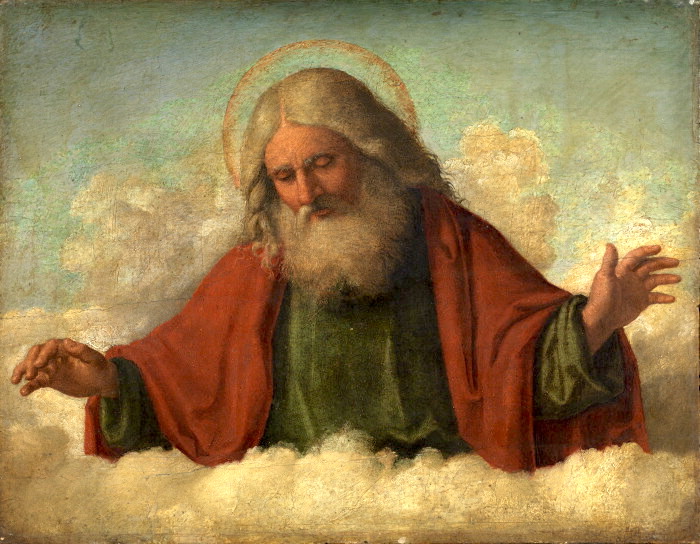
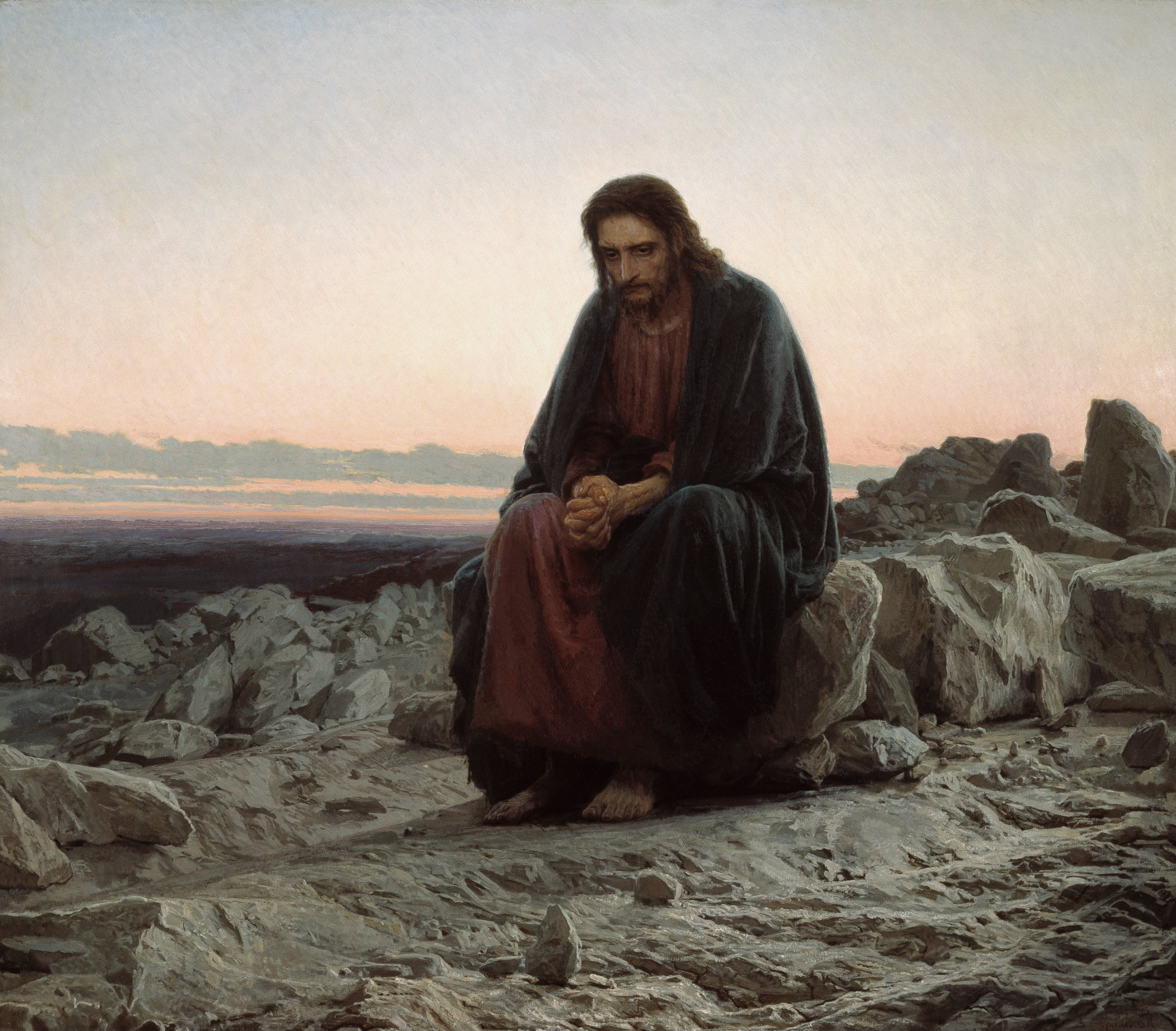
JesusThere are many, many different titles of Christ in both the New and Old Testaments. If one studies them carefully, they can provide a “mini-catechesis” of the Lord Jesus.

Presented below are more than 150 different titles of Christ. For each title, I have included a link to the Scripture from which it was drawn. The list was compiled from various sources, but most come from The Catholic Source Book, which was compiled and edited by Fr. Peter Klein. In addition, some years ago my readers helped me to expand the list to its current state.

I have placed the list in PDF format here, in case you’d like to save it for future reference.

Titles of Jesus Christ in Scripture:

Advocate – 1 John 2:1

Alpha and Omega – Revelation 1:8; 22:13

The Almighty – Revelation 1:8

Amen – Revelation 3:14

Ancient of Days – Daniel 7:22

Apostle and High Priest of our Confession – Hebrews 3:1

Arm of the Lord –Isaiah 53:1

Author and Finisher of our Faith – Hebrews 12:2

Beloved – Matthew 12:18

Beloved Son – Colossians 1:13

Bread of God – John 6:33; 50

Bread of Life – John 6:35

Living Bread – John 6:51

Bridegroom – John 3:29

Bright Morning Star – Revelation 22:16

Brother – Matthew 12:50

Captain of Our Salvation – Hebrews 2:10

Carpenter – Mark 6:3

Carpenter’s Son – Matthew 13:55

Chief Shepherd – 1 Peter 5:4

Chosen One – Luke 23:35

Christ – Matthew 16:20

Christ Jesus – 1 Timothy 1:15; Colossians 1:1

Christ of God – Luke 9:20

Christ the Lord – Luke 2:11

Christ Who Is Above All – Romans 9:5

Consolation of Israel – Luke 2:25

Chief Cornerstone – Ephesians 2:20; 1 Peter 2:6

Dayspring – Luke 1:78

Deliverer – Romans 11:26

Deliverer from the Wrath to Come – 1 Thessalonians 1:10

The Desire of All Nations – Haggai 2:7

Eldest of Many Brothers – Romans 8:29

Emmanuel – Matthew 1:23

Faithful and True Witness – Revelation 1:5; 3:14

Father Forever – Isaiah 9:6

First and Last – Revelation 1:17; 2:8

Firstborn Among Many Brothers – Romans 8:29

Firstborn from the Dead – Revelation 1:5

Firstborn of All Creation – Colossians 1:15

First Fruits – 1 Corinthians 15:20

Friend of Tax Collectors and Sinners – Matthew 11:19

Gate of the Sheepfold – John 10:7

Glory – Luke 2:32

Good Shepherd – John 10:11; 14

Grain of Wheat – John 12:24

Great Shepherd of the Sheep – Hebrews 13:20

Head – Ephesians 4:15

Head of the Church – Colossians 1:18; Ephesians 1:22

Hidden Manna – Revelation 2:17

High Priest – Hebrews 3:1; 4:14; 7:26

He Who Holds of the Keys of David – Revelation 3:7

He Who Is Coming Amid the Clouds – Revelation 1:7

Heir of all things – Hebrews 1:2

Holy One – Acts 2:27

Holy One of God – Mark 1:24

Holy Servant – Acts 4:27

Hope – 1 Timothy 1:1

Horn of Salvation – Luke 1:69

I Am – John 8:58

Image of the Invisible God – 2 Corinthians 4:4; Colossians 1:15

Indescribable Gift – 2 Corinthians 9:15

Intercessor – Hebrews 7:25

Jesus – Matthew 1:21

Jesus the Nazarene – John 18:5

Judge of the World – 2 Timothy 4:1; Acts 10:42

Just One – Acts 7:52

Just Judge – 2 Timothy 4:8

King – Matthew 21:5

King of Israel – John 1:49

King of Kings – Revelation 17:14; 19:16; 1 Timothy 6:15

King of Nations – Revelation 15:3

King of the Jews – Matthew 2:2

Lamb of God – John 1:29

Last Adam – 1 Corinthians 15:45

Leader – Matthew 2:6; Hebrews 2:10

Leader and Perfecter of Faith – Hebrews 12:2

Leader and Savior – Acts 5:31

Life – John 14:6; Colossians 3:4

Light – John 1:9; John 12:35

Light of All – Luke 2:32; John 1:4

Light of the World – John 8:12

Light to the Gentiles – Is 49:6, Lk 2:32

Lion of the Tribe of Judah – Revelation 5:5

Living Bread Come Down From Heaven – John 6:41

Logos – John 1:1

Lord – Luke 1:25

One Lord – Ephesians 4:5

My Lord My God – John 20:28

Lord Both of the Dead and the Living – Romans 14:9

Lord God Almighty – Revelation 15:3

Lord Jesus – Acts 7:59

Jesus Is Lord – 1 Corinthians 12:3

Lord Jesus Christ – Acts 15:11

Lord of All – Acts 10:36

Lord of Glory – 1 Corinthians 2:8

Lord of Lords – 1 Timothy 6:15

Lord of Peace – 2 Thessalonians 3:16

The Man – John 19:5

Man of Sorrows –Isaiah 53:3

Master – Luke 5:5

Mediator – 1 Timothy 2:5

Messenger of the Covenant – Malachi 3:1

Messiah – John 1:41; 4:25

Mighty God – Isaiah 9:6

Morning Star – 2 Peter 1:19; Revelation 2:28; Revelation 22:16

Nazarene – Matthew 2:23

Passover – 1 Corinthians 5:7

Power and Wisdom of God – 1 Corinthians 1:24

Power for Salvation – Luke 1:69

Priest Forever – Hebrews 5:6

Prince of Life – Acts 3:15

Prince of Peace – Isaiah 9:6

Prophet – John 4:19; John 9:17

Rabboni – John 20:16

Ransom – 1 Timothy 2:6

Redeemer – Isaiah 59:20

Rescuer from This Present Evil Age – Galatians 1:4

Radiance of God’s Glory – Hebrews 1:3

Resurrection and Life – John 11:25

Righteous One – Is 53:11

Rising Sun – Luke 1:78

Root of David – Revelation 5:5

Root of David’s Line – Revelation 22:16

Root of Jesse – Isaiah 11:10

Ruler – Matthew 2:6

Ruler of the Kings of the Earth – Revelation 1:5

Ruler and Savior – Acts 5:31

Savior – 2 Peter 2:20; 3:18

Savior of the World – 1 John 4:14; John 4:42

Second Adam – Romans 5:14

Servant of the Jews – Romans 15:8

The Servant of the Lord – Isaiah 52:13

Shepherd and Guardian of Our Souls – 1 Peter 2:25

Slave – Philippians 2:7

Son – Galatians 4:4

Beloved Son – Colossians 1:13

Firstborn Son – Luke 2:7

Son of Abraham – Matthew 1:1

Son of David – Matthew 1:1

Son of God – Luke 1:35

Son of Joseph – John 1:45

Son of Man – John 5:27

Son of Mary – Mark 6:3

Son of the Blessed One – Mark 14:61

Son of the Father – 2 John 1:3

Son of the Living God – Matthew 16:16

Son of the Most High – Luke 1:32

Son of the Most High God – Mark 5:7

Only Son of the Father – John 1:14

Source of God’s Creation – Revelation 3:14

Spiritual Rock – 1 Corinthians 10:4

Living Stone – 1 Peter 2:4

Stone Rejected by the Builders – Matthew 21:42; 1 Peter 2:8

Stumbling Stone – 1 Peter 2:8

Suffering Servant, Servant of Yahweh – Is 42:1, 49:3

Sun of Righteousness – Malachi 4:2

Teacher – Matthew 8:19; Matthew 23:10

Testator of the New Covenant – Hebrews 9:16

The Glory of the Lord – Isaiah 40:5

The Rose of Sharon and the Lily of the Valleys – Song of Songs 2:1

The Lord our Righteousness – Jeremiah 23:6

True God – 1 John 5:20

True Vine – John 15:1

The Way, the Truth, and the Life – John 14:6

The One Who Is, Was, and Who Is to Come – Revelation 3:7

Wisdom of God – 1 Corinthians 1:24

Wonderful Counselor – Isaiah 9:6

Word – John 1:1; 14

Word of God – Revelation 19:13

Word of Life – 1 John 1:1

I would also ask for your help. There may be other titles of Christ that are not on the list. I would be grateful if you would use the comments section to add any titles you notice are missing. If you know the scriptural reference, it would be helpful if you could include it, but if not I will try to locate it.

When considering an addition please consider whether it is truly a title or just a description. For example, “kind” is an adjective, and certainly describes Jesus, but it is not a title per se. Nouns show usually show better promise as titles of Christ, but even nouns do not always amount to a title. For example, “walker” is a noun, and surely Christ did a lot of walking, but again it is not a title per se.

What Is the “Sin of Human Respect”?

cross-1448946_1920On one level “human respect” seems like a good thing. After all, we ought to respect, honor and appreciate one another. What then is meant by the “sin of human respect”? It is that sin wherein we fear man more than God; we are more concerned with what people think of us than what God thinks of us. This is an unholy, sinful fear, and is at the root of many of our sins, both of commission and of omission.

Consider some examples:

  1. A man goes up to a group of other men who are talking about the boss and also speaking inappropriately about some women in the office. He knows that their disparaging comments about the boss are unfair or even untrue. He also knows that talking about the women in the office using crude sexual imagery and lustful references is wrong. But because he wants to “fit in,” he joins in the conversation and contributes to what he knows is wrong. He laughs at the off-color jokes and makes no attempt to steer the conversation in a more appropriate direction. He does this because he fears rejection and is more concerned about what his co-workers think of him than what God thinks of him. He fears man more than he does God. That God is displeased with his actions is less important to him than that any of these men should be displeased.
  2. A young woman knows that sex before marriage is wrong and that this displeases God. However, she has dated a number of men now and has slept with most of them. She does this partly because she fears rejection. Perhaps if she does not give in to the desires of the young men she dates they will reject her and she will be alone. She thinks that a woman “has to do this” in order to be popular and desirable. She fears man more than she does God. What human beings think is more important to her than what God thinks. She may well minimize the importance of God’s displeasure by saying to herself, “Oh well, God understands.” But at the same time, she maximizes in her mind the importance of the displeasure of weak and fallible human beings, thinking that displeasing them would lead to catastrophe. She respects—that is, fears—man more than she does God.
  3. A pastor of a parish has a mandate from God and the Church to preach the whole counsel of God but he struggles to preach the “hard” things. After all, teaching on things like abortion, fornication, divorce, contraception, homosexual activity, euthanasia, and capital punishment causes some people to be upset. He fears this anger, fears offending people, fears being misunderstood. Once, when he spoke about abortion (because the Bishop mandated it), a few parishioners came up to him and told him that he should not bring politics into the pulpit. Once, when he had preached about the problem of divorce (the topic of that day’s Gospel), a (divorced) woman approached him after Mass saying that she felt hurt and “excluded.” Experiences like these have led the priest to “play it safe.” He always starts the homily with a joke and the people seem to love him for it. He chooses to preach only in abstractions and generalities. He exhorts people to be a little more kind, a little more generous, but avoids specificity. He does this because he fears man more than he does God. That God might be displeased that His people are not hearing the truth about important moral issues or receiving proper instruction in discipleship is a vague and distant fear to this priest. But one person raising an eyebrow at what he says is enough to ruin his whole week. Thus he goes silent as a prophet and becomes a people-pleaser instead. He respects—fears—man more than he does God.
  4. A mother knows that she is to raise her children in the fear of the Lord and train them in godly way, but oh, the protests when she tells them to do their chores, or go to bed, or do their homework! It’s just such a hassle to endure their anger and disappointment. She also remembers how stern her parents were and how she had vowed she would be nicer to her own children. So, little by little, she lets her authority erode and the children more often than not get their way. Her husband is not a strong disciplinarian and he wants to be thought of as “cool” by his children and their friends. God’s insistence on prayer, discipline, and respect for elders, gives way to what the children want. The oldest, a teenager, doesn’t want to go to Mass anymore. But after all, “You can’t force religion on kids,” they think. Here, too, the parents fear their children more than they do God. They have greater respect for their children than they do for God.

So these are some examples of the “sin of human respect.” It runs very deep in our wounded nature and leads to many other sins as well. Many people are desperate for attention, respect, acceptance, and approval from other human beings. Many of these same individuals, though (even the religiously observant), struggle to be nearly as concerned with what God thinks of them or whether He approves of their behavior.

God has a straightforward solution to this: we should fear Him and no one else. There is an old saying, “If I kneel before God I can stand before any man.” It makes sense that it is a lot easier to fear (respect) one, than many. The more we learn to fear (respect) God, the less concerned we become with what others think. This is not an invitation to become a sociopath who cares not a whit what others think. We are to remain polite, groom ourselves, and not intentionally pick fights. But in the end, we are instructed by the Lord to be freed of all the fearful trepidation of what others think.

Calling this is a straightforward solution refers more to its description than its execution. It is not easy to extract ourselves from this very deep drive; in fact, it takes a life time. But the first step to healing is admitting we have a problem. Then we begin to see it for what it is, understand its moves, and let the Lord steadily free us.

Let us also be clear: the fear of the Lord that is counseled here is not a cowering and servile fear. If this is all one can muster, though, it is better than having no fear at all! But the real goal is to have a filial fear of God, fearing to offend Him because we love Him. This type of fear of the Lord holds Him in awe. It is to have a reverence for Him rooted in deep love and gratitude. Out of this love and gratitude we fear to offend Him more than offending any other.

Perhaps some Scripture quotes that address various aspects of the problem of human respect and the remedy of holy fear will be a fitting conclusion to this reflection:

  1. Through the fear of the LORD a man avoids evil (Prov 16:6).
  2. Do not let your heart envy sinners, but always be zealous for the fear of the LORD (Prov 23:17).
  3. Better a little with the fear of the Lord than great wealth with turmoil (Prov 15:16).
  4. The fear of God will be with you to keep you from sinning (Ex 20:20).
  5. You alone are to be feared O Lord (Psalm 76:7).
  6. God is more awesome than all who surround him (Psalm 89:7).
  7. I lie down and sleep; I wake again, because the LORD sustains me. I will not fear the tens of thousands drawn up against me on every side (Psalm 3:4-5).
  8. I will give them singleness of heart and action, so that they will always fear me for their own good and the good of their children after them (Jer 32:39).
  9. The Pharisees came to Jesus and said, “Teacher, we know you are a man of integrity. You aren’t swayed by men, because you pay no attention to who they are; but you teach the way of God in accordance with the truth” (Mark 12:14).
  10. Woe to you when all men speak well of you, for that is how their fathers treated the false prophets (Luke 6:26).
  11. If anyone is ashamed of me and my words, the Son of Man will be ashamed of him when he comes in his glory and in the glory of the Father and of the holy angels (Luke 9:26).
  12. And do not be afraid of those who kill the body but cannot kill the soul; rather, be afraid of the One who can destroy both soul and body in Gehenna (Matt 10:28).
  13. If the world hates you, realize that it hated me first. If you belonged to the world, the world would love its own; but because you do not belong to the world, and I have chosen you out of the world, the world hates you (Jn 15:18-19).
  14. It does not concern me in the least that I be judged by you or any human tribunal; I do not even pass judgment on myself; I am not conscious of anything against me, but I do not thereby stand acquitted; the one who judges me is the Lord (1 Cor 4:3).
  15. From now on, let no one make troubles for me; for I bear the marks of Jesus on my body (Gal 6:17).
  16. We know what it is to fear the Lord, we try to persuade men. What we are is plain to God, and I hope it is also plain to your conscience (2 Cor 5:11).

A Meditation on the Brevity of Life, As Seen in a Video

January 30 BlogMy cousin, John Clem, died suddenly last week at the age of 52. It was likely a pulmonary embolism. The suddenness of his death shocked and deeply saddened many. He was dearly loved and was a great servant of God and man in the Charlottesville, Virginia area.

At the funeral today, my mind drifted back to a photo album my father once assembled not long before his death. In the frontispiece he inscribed a passage from Psalm 103:

But as for man, his days are like the grass,
or as the flower of the field.
The wind blows and he is gone,
And his place never sees him anymore.

Indeed, our lives do pass swiftly. I often think about the many men who once lived in my rectory, this place that never sees them anymore. One day, I too will be swept from here, becoming a distant memory peering out from some old photographs in the archive.

In Psalm 90 there are some other painfully beautiful lines:

O Lord, you have been our refuge
from one generation to the next.
Before the mountains were born
or the earth or the world brought forth,
you are God, without beginning or end.

You turn men back to dust
and say, “Go back, sons of men.”
To your eyes a thousand years
are like yesterday, come and gone,
no more than a watch in the night.

You sweep men away like a dream,
like the grass which springs up in the morning.
In the morning it springs up and flowers:
by evening it withers and fades. …

Our life is over like a sigh.
Our span is seventy years,
or eighty for those who are strong.

Make us know the shortness of our life
that we may gain wisdom of heart.
Lord, relent! Is your anger forever?
Show pity to your servants.

In the morning, fill us with your love;
we shall exult and rejoice all our days.
Give us joy to balance our affliction
for the years when we knew misfortune.

Show forth your work to your servants;
let your glory shine on their children.
Let the favor of the Lord be upon us.

Yes, lines like these went through my mind at the funeral and also this past weekend as I saw this beautiful video—a commercial, really. The short video below shows the span of one woman’s life, some seventy years, in less than two minutes. How quickly she moves through the stages of her life, from infancy to her golden years!

At the end of the video, the woman walks off into the distance as the setting sun casts its orange and gold rays. Here, too, I recalled the moving lines of an old hymn:

The golden evening brightens in the west;
Soon, soon to faithful warriors comes their rest;
Sweet is the calm of paradise the blessed.
Alleluia.

Our years number seventy—or perhaps eighty for those who are strong. Or as the old Douay beautifully put it, The days of our years are threescore and ten. But if in the strong they be fourscore …

100 Questions Jesus Asked and You Should Answer

Christ-Heinrich-HofmannOne of the bigger mistakes one can make is to read Scripture as a spectator, treating it as merely a collection of stories and events that took place thousands of years ago. While these are historical accounts, they are much more than that.

Truth be told, these ancient stories are our stories. We are in the narrative. We are Abraham, Sarah, Moses, Deborah, Jeremiah, Ruth, Peter, Paul, Magdalene, Mother Mary, and, if we are prepared to accept it, Jesus. We cannot simply read about what others said or did. For what Peter and Magdalene and others did, we do. Peter denied and ran; so do we. Magdalene loved and never gave up; so should we. Magdalene had a sinful past and a promising future; so do we. Peter was passionate and had a temper; so do we. But Peter also loved the Lord and ultimately gave his life for the Him; so can we. Jesus suffered and died but rose again and ascended to glory; so have we and so will we.

The Scriptures are our own story. To read scripture as a mere spectator is to miss the main point.

In the light of this, there emerges another key to unlocking the meaning of the Scriptures: Answer the questions! One of the many things Jesus did was to ask a lot of questions. Whenever you read the Gospels and Jesus asks a question of someone, answer it. Do not wait to see how Peter, or Magdalene, or the Pharisees, or the crowd respond. You answer the question, in your own words. This brings Scripture powerfully alive.

In 2000, John Marshall, bishop of Burlington, Vermont (and later of Springfield, Massachusetts) compiled a book: But Who Do You Say That I Am? In it, he presented a list of all the questions that Jesus asked in the Gospels, encouraging readers to answer each of them. Along with each question, Bishop Marshall adds a brief commentary and some additional Bible verses to provide context. I have selected 100 of the questions in the book and listed them below. While it is not the complete list, it should certainly provide sufficient food for thought.

In the list below, I have shown the question itself along with a reference to the verse in which it can be found. But unless you really think it necessary, avoid looking it up at first. Let the question meet you where you are right now. It may mean something for you that is very different from its original context, but that is OK. Answer each question prayerfully and reflectively. Just pick a question, consider it, and answer it by talking to the Lord.

100 questions that Jesus asked and which you must answer:

  1. And if you greet your brethren only, what is unusual about that? Do not the unbelievers do the same? (Matt 5:47)
  2. Can any of you by worrying add a single moment to your lifespan? (Matt 6:27)
  3. Why are you anxious about clothes? (Matt 6:28)
  4. Why do you notice the splinter in your brother’s eye yet fail to perceive the wooden beam in your own? (Matt 7:2)
  5. Do people pick grapes from thorn bushes or figs from thistles? (Matt 7:16)
  6. Why are you terrified? (Matt 8:26)
  7. Why do you harbor evil thoughts? (Matt 9:4)
  8. Can the wedding guests mourn so long as the Bridegroom is with them? (Matt 9:15)
  9. Do you believe I can do this? (Matt 9:28)
  10. What did you go out to the desert to see? (Matt 11:8)
  11. To what shall I compare this generation? (Matt 11:6)
  12. Which of you who has a sheep that falls into a pit on the Sabbath will not take hold of it and lift it out? (Matt 12:11)
  13. How can anyone enter a strong man’s house and take hold of his possessions unless he first ties up the strong man? (Matt 12:29)
  14. You brood of vipers! How can you say good things when you are evil? (Matt 12:34)
  15. Who is my mother? Who are my brothers? (Matt 12:48)
  16. Why did you doubt? (Matt 14:31)
  17. And why do you break the commandments of God for the sake of your tradition? (Matt 15:3)
  18. How many loaves do you have? (Matt 15:34)
  19. Do you not yet understand? (Matt 16:8)
  20. Who do people say the Son of Man is? (Matt 16:13)
  21. But who do you say that I am? (Matt 16:15)
  22. What profit would there be for one to gain the whole world and forfeit his life and what can one give in exchange for his life? (Matt 16:26)
  23. O faithless and perverse generation, how long must I endure you? (Matt 17:17)
  24. Why do you ask me about what is good? (Matt 19:16)
  25. Can you drink the cup that I am going to drink? (Matt 20:22)
  26. What do you want me to do for you? (Matt 20:32)
  27. Did you never read the scriptures? (Matt 21:42)
  28. Why are you testing me? (Matt 22:18)
  29. Blind fools, which is greater, the gold, or the temple that makes the gold sacred? … Which is greater, the gift, or the altar that makes the gift sacred? (Matt 23:17-19)
  30. How are you to avoid being sentenced to hell? (Matt 23:33)
  31. Why do you make trouble for the woman? (Matt 26:10)
  32. Could you not watch for me one brief hour? (Matt 26:40)
  33. Do you think I cannot call upon my Father and He will not provide me at this moment with more than 12 legions of angels? (Matt 26:53)
  34. Have you come out as against a robber, with swords and clubs to seize me? (Matt 26:53)
  35. My God, My God, why have you forsaken me? (Matt 27:46)
  36. Why are you thinking such things in your heart? (Mark 2:8)
  37. Is a lamp brought in to be put under a basket or under a bed, rather than on a lamp stand? (Mark 4:21)
  38. Who has touched my clothes? (Mark 5:30)
  39. Why this commotion and weeping? (Mark 5:39)
  40. Are even you likewise without understanding? (Mark 7:18)
  41. Why does this generation seek a sign? (Mark 8:12)
  42. Do you not yet understand or comprehend? Are your hearts hardened? Do you have eyes and still not see? Ears and not hear? (Mark 8:17-18)
  43. How many wicker baskets full of leftover fragments did you pick up? (Mark 8:19)
  44. [To the blind man] Do you see anything? (Mark 8:23)
  45. What were you arguing about on the way? (Mark 9:33)
  46. Salt is good, but what if salt becomes flat? (Mark 9:50)
  47. What did Moses command you? (Mark 10:3)
  48. Do you see these great buildings? They will all be thrown down. (Mark 13:2)
  49. Simon, are you asleep? (Mark 14:37)
  50. Why were you looking for me? (Luke 2:49)
  51. What are you thinking in your hearts? (Luke 5:22)
  52. Why do you call me “Lord, Lord” and not do what I command? (Luke 6:46)
  53. Where is your faith? (Luke 8:25)
  54. What is your name? (Luke 8:30)
  55. Who touched me? (Luke 8:45)
  56. Will you be exalted to heaven? (Luke 10:15)
  57. What is written in the law? How do you read it? (Luke 10:26)
  58. Which of these three in your opinion was neighbor to the robbers’ victim? (Luke 10:36)
  59. Did not the maker of the outside also make the inside? (Luke 11:40)
  60. Friend, who appointed me as your judge and arbiter? (Luke 12:14)
  61. If even the smallest things are beyond your control, why are you anxious about the rest? (Luke 12:26)
  62. Why do you not judge for yourself what is right? (Luke 12:57)
  63. What king, marching into battle, would not first sit down and decide whether with ten thousand troops he can successfully oppose another king marching upon him with twenty thousand troops? (Luke 14:31)
  64. If, therefore, you are not trustworthy with worldly wealth, who will trust you with true wealth? (Luke 16:11)
  65. Has none but this foreigner returned to give thanks to God? (Luke 17:18)
  66. Will not God then secure the rights of his chosen ones who call out to him day and night? (Luke 18:7)
  67. But when the Son of Man comes, will he find any faith on earth? (Luke 18:8)
  68. For who is greater, the one seated at table or the one who serves? (Luke 22:27)
  69. Why are you sleeping? (Luke 22:46)
  70. For if these things are done when the wood is green, what will happen when it is dry? (Luke 23:31)
  71. What are you discussing as you walk along? (Luke 24:17)
  72. Was it not necessary that the Messiah should suffer these things and then enter his glory? (Luke 24:26)
  73. Have you anything here to eat? (Luke 24:41)
  74. What are you looking for? (John 1:38)
  75. How does this concern of your affect me? (John 2:4)
  76. You are a teacher in Israel and you do not understand this? (John 3: 10)
  77. If I tell you about earthly things and you will not believe, how will you believe when I tell you of heavenly things? (John 3: 12)
  78. Do you want to be well? (John 5:6)
  79. How is it that you seek praise from one another and not seek the praise that comes from God? (John 5:44)
  80. If you do not believe Moses’ writings, how will you believe me? (John 5:47)
  81. Where can we buy enough food for them to eat? (John 6:5)
  82. Does this (teaching of the Eucharist) shock you? (John 6:61)
  83. Do you also want to leave me? (John 6:67)
  84. Why are you trying to kill me? (John 7:19)
  85. Woman, where are they? Has no one condemned you? (John 8:10)
  86. Why do you not understand what I am saying? (John 8:43)
  87. Can any of you charge me with sin? (John 8:46)
  88. If I am telling you the truth, why do you not believe me? (John 8:46)
  89. Are there not twelve hours in a day? (John 11:9)
  90. Do you believe this? (John 11:26)
  91. Do you realize what I have done for you? (John 13:12)
  92. Have I been with you for so long and still you do not know me? (John 14:9)
  93. Whom are you looking for? (John 18:4)
  94. Shall I not drink the cup the Father gave me? (John 18:11)
  95. If I have spoken rightly, why did you strike me? (John 18:23)
  96. Do you say [what you say about me] on your own or have others been telling you about me? (John 18:34)
  97. Have you come to believe because you have seen me? (John 20:29)
  98. Do you love me? (John 21:16)
  99. What if I want John to remain until I come? (John 21:22)
  100. What concern is it of yours? (John 21:22)

After all this you might have a few questions for God!

Picture This! A Homily for the 4th Sunday of the Year

sermon-on-the-mountThe Gospel passage on the Beatitudes is one of the most familiar. Yet the Beatitudes are difficult to understand because many of them are paradoxical. We do not usually refer to the poor as blessed, but rather the well-off; we do not typically call those who mourn blessed, but rather the joyful.

The word “beatitude” itself means “supreme blessedness.”

First, it is critical to understand that beatitude is not something we achieve; rather it is something we receive. The Beatitudes declare an objective reality as the result of a divine act. The use of the indicative mood in the passage should be taken seriously; we should not transform it into an imperative. In other words, the Beatitudes are more of a description than a prescription. Jesus is not saying that we should be poor or meek and then God will bless us. Rather, He is saying that this is what the transformed human person is like; that this is what happens to us when He begins to live His life in us and transform us; that this is what our life is like when His grace and the power of His cross bring about in us a greater meekness and poverty of spirit; that we will experience being blessed.

Beatitude is a work of God and it results when we yield to His saving work in us.

With this understanding we can see the Beatitudes not as a prescription of what we must do, but a description of what a human being is like who is being transformed by Jesus Christ.

Second, we should consider the Hebrew roots. The Greek word makarioi in today’s text is rendered as “blessed,” but it also corresponds to the Hebrew word asher, which is more of an exclamation. It could easily be translated, “O, the blessedness of ….” When translated this way, it emphasizes that something is being described rather than prescribed.

Third, we must examine the Greek linguistic roots. Makarioi, (blessed) literally means “to make long or large.” We are enlarged or enhanced as a result of God’s blessings. Thus, the term “blessed” as used here describes a kind of stable, serene, confident joy that one receives because of God’s blessings.

Fourth, we should look at the Greek cultural roots. In pagan times, makarioi (blessed) referred especially to the happiness of the gods. They had achieved a state of happiness and contentment in life that was beyond all cares, labors, and even death. They lived in some other world away from the worries and problems of ordinary people. In taking up this term to translate the Hebrew asher, the New Testament teaches on the stability of beatitude, if it is from God. To a large degree it is a stable, deep, and serene beatitude not greatly affected by the vicissitudes of this world; because the world does not give it, it cannot take it away.

There is an old saying that happiness is an “inside job.” Too many people try to find happiness in the world, which is fickle and unstable. The Lord wants to confer on us an inner beatitude that is deeply rooted, stable, and not easily swept away by worldly conditions. In the Beatitudes, the Lord paints a picture of this state of blessedness.

This helps to explain the paradox of some of the Beatitudes. We are still blessed even when poor, mourning, or persecuted. Further, we are confirmed in blessedness by such realities, because they serve as reminders that we are not at home in this world and that God and His kingdom are our preoccupation and the source of our true beatitude.

Let’s explore the Beatitudes and remember that Jesus is saying, “When I begin to live my life in you and put the sinful flesh to death, you will experience the following blessings.”

Blessed are the poor in spirit for the kingdom of God is theirs.

Who are the poor in spirit? They are those who, by God’s grace, have their true treasure increasingly in Heaven rather than earth. They are poor to this world but rich to God. They have learned to depend on God.

All of us are dependent on God, but we may not realize it. The poor in spirit are those who have come to peace in the knowledge that they depend on God for every beat of their heart, for every good thing they have. Humans strongly resist any such sense of dependence or lack of control. Many strive to acquire wealth, power, and resources in order to create the illusion that they are in control—they are not. Ultimately this whole system will fail. It is a recipe for frustration and unhappiness.

Further, control is like an addictive drug. The more we get, the more we need in order to feel less anxious. Our modern age illustrates this. Consider, for example, modern medicine, through which we can control things we never could before: are all our fears gone as a result? No. Humans have never lived so long and been so healthy, yet, we have never been so anxious about our health. Our medicine cabinets are filled with prescriptions and over-the-counter medications. And still we worry! Control is an illusion, an addiction all its own. In the end, it seems we can never have enough of it to feel sufficiently “safe.”

How blessed are those who delight to depend on God, who realize that every beat of their heart is His gift and that everything they have is from Him and belongs to Him! Not only do they realize this; they delight in it. They are blessed because they are free of the countless fears that flow from the endless quest for illusory control.

Now Matthew adds “in spirit” to “the poor” because not all who are materially poor are thereby freed of the obsession with wealth, power, and the need to control. To be poor is not necessarily a measure of what is in my wallet, but what is in my heart.

This world is not the Kingdom, but Heaven is. How blessed are those who delight to know and experience that there is a Heaven! They may be poor in the eyes of this world, but who needs most of it? They already have the Kingdom by faith and that Kingdom is growing for them. The kingdom of this world, however, is passing away.

Blessed are those who mourn, for they will be comforted.

Who are those who mourn? They are those who, delighting in the Kingdom of Heaven, see the awful state of most of God’s people. They see that so many do not know God or why they were created. They see others willfully locked in sin and darkness. They see still others who are victims of the sins of injustice and oppression. And because of this they mourn, and moan, and pray. This beatitude is the basis of intercessory prayer and deepening love for sinners. Because I mourn, I pray for the world.

The object of this beatitude is rooted in the Kingdom of God and its values, not the passing values of this world. If my car gets scratched or the stock market goes down and I may mourn, but that’s not the type of mourning referred to here.

How blessed are those who mourn over what really matters and who pray! God will console, strengthen, and encourage them. He will cause their mourning to bear fruit in prayer and action for others. To mourn is this way is to be blessed. It is a grief that “hurts so good,” because we know that it brings abundant blessings for the world as it intensifies our prayer and our own commitment to God and His Kingdom.

Blessed are the meek, for they shall inherit the earth.

Anger is a difficult passion. It can be frustrating, but it is a necessary zeal for what is right. Aristotle spoke of meekness (praotes) as the proper balance between too much anger and not enough. Sometimes we merely vent our anger, but at other times we fail to be angry enough, allowing evil and injustice to go unaddressed and un-resisted. How blessed are those who, by God’s grace, have authority over their anger! They do not vent their anger unnecessarily or excessively. They have the zeal and courage to stand up for what is right and to express righteous indignation at sin and injustice.

The meek have authority over their anger and other passions and thus will inherit the earth. Self-control conserves resources, using them appropriately; unrestricted passions dissipate resources, squandering the gifts of God.

Blessed are those who hunger and thirst for righteousness, for they will be satisfied.

Many fight God and ridicule the values of His kingdom. Chastity, forgiveness, and mercy are objects of particularly derision today. Many hunger for anything but God; wealth, power, popularity, the latest fad—anything but God.

How blessed are those who hunger and thirst for the righteousness and justice of God and the values of His Kingdom! God will satisfy them with the joy of living under His law and they will rejoice to see the wisdom of His ways. They hunger for God’s word and devour it when they find it. They rejoice to see God put sin to death in them and bring about virtue. They are excited and satisfied at what God is doing in their life. They are blessed indeed.

Blessed are the Merciful for they shall obtain mercy.

We live in a world that often prizes revenge and the destruction of one’s enemies, but Scripture teaches that the measure that we measure to others will be measured back to us (Matt 7:2). We are also taught that if we do not forgive others we will not be forgiven (Matt 6:15), and that merciless is the judgment on the one who has shown no mercy (James 2:12). It is misguided and just a bad idea to go around condemning others and “throwing the book” at everyone.

How blessed are those who, by God’s grace, have experienced His mercy and share it with others! They are able to leave most vengeance to God. Though they correct the sinner, they do not feel the need to exact revenge. By showing mercy, they will experience mercy from God. They are blessed indeed.

Blessed are the pure of heart for they shall see God.

The Greek here is better translated as “single-hearted.” It is so easy for feel torn by contrary drives and wishes. The Book of James says that the man of two minds is unstable in all his ways (James 1:8).

Blessed are those who can say, with St. Paul, [T]his one thing I do. … I press on to the prize marked out for me in Christ Jesus (Phil 3:13), or to say with the psalmist, There is only one thing I ask of the Lord: to dwell in the courts of the Lord and behold his face (Psalm 27:4). How blessed to be single-hearted, to be centered on one thing, to have but one purpose, to be undivided and uncompromised!

Blessed are the peacemakers for they shall be called the sons of God.

Everyone loves peace but only some are really working for it. True peace can only be based on the truth. Being a peacemaker is more than being a nice guy and overlooking things. True peacemakers announce the Kingdom and bring souls to Christ; they strive for righteousness and justice and announce its demands. How blessed are those whom God inspires with a dedication to such work! They are indeed sons of God.

Blessed are those who are persecuted for righteousness sake for theirs is the Kingdom of God.

In life we are going to suffer, so it might as well be for something decent and noble. How blessed are those who, because they love God and His kingdom, are hated by this world! At least they share a common lot with Jesus. They know that only false prophets are loved by all (Lk 6:26). There is a paradoxical serenity that comes from this sort of persecution because it is a sign that we are no longer of this world, that the world has lost its hold on us and thus hates us (Jn 15:19). Forsaking this world and hated by it, they are blessed because the Kingdom of God is theirs in abundance.

In all these ways, the Lord paints a kind of picture for us of the transformed human person. He says, “This is what begins to happen to you as I live my life in you.”

One of my mentors over the years has been Fr. Francis Martin, a great scholar of Scripture, teacher at the Dominican House of Studies (among many other places), and author of numerous books and articles. He has also had a great ministry to priests over the years, through the giving of retreats. Here are some of his reflections on today’s Gospel:

The Miracle of Life as We March

063009-Pope1-AThe magnificence of life is really too wonderful too describe. Some years ago, I found this description, which summons reverence by its very ability to baffle the mind:

MIRACLE OF LIFE– Consider the miracle of the human body. Its chemistry is just as extraordinarily well tuned as is the physics of the cosmos. Our world on both sides of the divide that separates life from lifelessness is filled with wonder. Each human cell has a double helix library of three billion base pairs providing fifty thousand genes. These three billion base pairs and fifty thousand genes somehow engineer 100 trillion neural connections in the brain—enough points of information to store all the data and information contained in a fifty-million-volume encyclopedia. And then after that, these fifty thousand genes set forth a million fibers in the optic nerves, retinae having ten million pixels per centimeter, some ten billion in all, ten thousand taste buds, ten million nerve endings for smell, cells that exude a chemical come-on to lure an embryo’s lengthening neurons from spinal cord to target cell, each one of the millions of target cells attracting the proper nerve from the particular needed function. And all this three-dimensional structure arises somehow from the linear, one-dimensional information contained along the DNA helix. Did all this happen by chance or do you see the hand of God?

Friday, many of us are marching for life, here in Washington, D.C. and in other communities. Today we ponder the great mystery that is expressed in the 139th psalm:

For it was you who created my being, knit me together in my mother’s womb. I thank you for the wonder of my being. … Already you knew my soul my body held no secret from you when I was being fashioned in secret …. [E]very one of my days was decreed before one of them came into being. To me, how mysterious your thoughts, the sum of them not to be numbered! (Psalm 139 varia)

No human being is an accident, no conception a surprise or inconvenience to God. He knew and loved us long before we were ever conceived, for He says, Before I ever formed you in the womb I knew you (Jer 1:4). God has always known everything we would ever do or be.

It is often mysterious to us why human life is sometimes conceived under difficult circumstances such as poverty, times of family struggle or crisis, even disability and disadvantage. But in the end we see so very little; we must ponder the mystery of God’s reminder that many who are “last” will be first in the Kingdom (e.g. Matt 20:16; Luke 1:52-53).

So on Friday, many will march, but all are called to remember the sacred lives that have been lost. We acknowledge our loss, for the gifts of these children have been swept from us. We pray for women who struggle to bring children to term and experience pressure to consider abortion. We pray for the immediate conversion of all who support legalized abortion for any reason as well as for the dedication to assist women facing difficulties in giving birth to or raising their children.

The following video is a shortened version of the masterpiece “Genesis,” by Ramos David. It depicts fetal development in magnificent fashion. Because this is an abbreviated version, I have taken the liberty of adding a different music track. The piece you hear is William Byrd’s Optimam Partem Elegit (She has Chosen the Best Part). The title is most fitting as we pray that all mothers will choose life. The full length video, in higher definition, can be found on YouTube by searching for “Genesis Ramos David”

Marching for Life

march-for-lifeAs we prepare for the March for Life this Friday, I am led to ponder some of the subtler psychological roots of abortion. Beyond the legal problems and the moral issues such as unrestrained lust, greed, and selfishness, there are several other trends in our culture that should be recognized. They all tend to feed upon one another.

Addiction to comfort

In the modern Western world, we have attained very “comfortable” lives. Our homes are heated and air-conditioned. We have clean running water; access to advanced medical care; an abundant, diverse, and inexpensive food supply; and access to technological inventions that have removed much of the tedious work from our lives.

Aversion to discomfort

All of this has made us extremely sensitive to the slightest discomfort; many are practically terrified of suffering. We react with great drama to the slightest inconvenience. It can be something as minor as having to sit and wait because of a delayed flight, or a computer that is slow to bring up a web page. We also don’t like the discomfort brought on by strong words or challenging ideas. Many complain about what they term “micro-aggressions” and demand that colleges provide “safe spaces” to protect students from the “suffering.”

In an age of near addiction to comfort (and extreme aversion to discomfort), suffering is not only deemed meaningless, it has become the worst thing imaginable. St. Paul said that the cross is an absurdity to the world; that is surely evident today.

Ashamed of the Cross

Today it is not merely unbelievers who shun the cross and reject its wisdom and power; it is also many Catholics, who should know better. Not only do we fear the slightest suffering ourselves, but we also are extremely hesitant to summon anyone else to carry a cross. Thus, many are embarrassed to defend the “hard” teachings of the faith because they might upset someone.

Almost everyone knows that Jesus commanded us to take up our cross and follow Him, and that we should help others to carry their crosses, but at the end of the day, we are too weak, fearful or ashamed to proclaim that the cross is the wisdom and power of God at work in hidden and often paradoxical ways. We have crosses displayed in our parishes and we sing about lifting high the cross, but we don’t really mean it. We are more often embarrassed by any practical application of the command to carry the cross.

Our silence and shame as Christians has allowed our addiction to comfort to grow. Any form of self-denial or call to resist sinful and excessive attachments is considered too hard and mean-spirited. Anyone who is challenged or made uncomfortable is now considered a victim who should be accorded sympathy and understanding.

Appalling Solutions

Absent any theology of the cross, suffering loses its meaning. Serious sufferings so appall us that many actually suggest death as a remedy. Our culture of death increasingly proposes the killing (through abortion and euthanasia) of human beings as a solution to problems. Nowadays, people don’t have problems, they are the problem and their lives seem “meaningless” and worth ending. Eliminate the person and you eliminate the problem; or so the thinking goes. This is the culture of death, and it has happened on our watch, fellow Christians.

When we march, we are confronted by supporters of abortion who contend that abortion is a good thing if the baby might be deformed, raised in poverty, or endure difficult family or social situations. Death, the killing of the patient, is promoted as a kind of therapy—the strangest therapy of all! It is a horrifyingly twisted notion of compassion. Abortion advocates of this sort, claiming to “care” for the unborn child, actually lead them off to execution.

They also claim to care for the mother, who they think might suffer in some way if she gives birth to a child. But instead of really assisting her or offering to facilitate adoption, they lead her into a “clinic” to have an act of violence performed on her.

And thus the combination of our obsession with comfort and our fear of the cross ushers in the greatest cruelty of all. Perhaps no one has more effectively described the cruelty of abortion on every level than Fr. Paul Marx, who wrote the following many years ago:

America has serious problems of poverty, discrimination, and homelessness. But no Americans are poorer, or more discriminated against, or more homeless than the aborted babies: nameless, helpless, defenseless, penniless, naked, abandoned by their parents, forced out of their uterine homes, forsaken by society, stripped of all legal rights, labeled as sub-humans, denied baptism, denied the last rites, denied anesthesia, tortured, murdered, cannibalized for their organs, denied decent burials, cremated, or discarded with the trash, and then totally forgotten (Fr. Paul Marx, OSB, PhD).

This is why we must march. To those children who have suffered the supreme cost of our collective malaise, we must say, You are not forgotten. Our obsession with comfort, our fear of the cross, our darkened intellects, our hardened hearts, our lust and greed, have done this to you. Some of us have acknowledged our personal and collective sinfulness and commit to reminding this world that your lives mattered and that you are not forgotten. We will march for you this Friday and work daily until the time when we can look back and, with converted hearts, recognize the evil our age has wrought.

What Does the Christian Tradition Mean by the Word “Mystery?”

milky-way-916523_1280In the secular world, a “mystery” is something that baffles or eludes understanding, something that lies undisclosed. And the usual attitude of the world toward mystery is to solve it, get to the bottom of, or uncover it. Mysteries must be overcome! The riddle, or “who-done-it” must be solved!

In the Christian and especially the Catholic world, “mystery” is something a bit different. Here, mystery refers to the fact that there are hidden dimensions in things, people, and situations that extend beyond their visible, physical dimensions.

One of the best definitions I have read of “mystery” is by the theologian and philosopher John Le Croix. Fr. Francis Martin introduced it to me some years ago in one of his recorded conferences. Le Croix says,

Mystery is that which opens temporality and gives it depth. It introduces a vertical dimension and makes of it a time of revelation, of unveiling.

Fr. Martin’s classic example of this to his students is the following:

Suppose you and I are at a party, and Smith comes in the door and goes straightaway to Jones and warmly shakes his hand with both of his hands. And I say, “Wow, look at that.” Puzzled, you ask, “What’s the big deal, they shook hands. So what?” And then I tell you, “Smith and Jones have been enemies for thirty years.

And thus there is a hidden and richer meaning than meets the eye. This is mystery, something hidden, something that is accessible to those who know and are initiated into the mystery and come to grasp some dimension of it; it is the deeper reality of things.

In terms of faith there is also a higher meaning to mystery. Le Croix added the following to the definition above: It [mystery] introduces a vertical dimension, and makes of it a time of revelation, of unveiling.

Hence we come to appreciate something of God in all He does and has made. Creation is not just dumbly there. It has a deeper meaning and reality. It reveals its Creator and the glory of Him who made it. The heavens declare the glory of God; the skies proclaim the work of his hands (Psalm 19:1).

In the book of Sirach, after a long list of the marvels of creation, is this magnificent line: Beyond these, many things lie hid; only a few of God’s works have we seen (Sirach 43:34).

Indeed, there is a sacramentality to all creation. Nothing is simply and dumbly itself; it points beyond and above, to Him who made it. The physical is but a manifestation of something and Someone higher.

In the reductionist world in which we live, such thinking is increasingly lost. Thus we poke and prod in order to “solve” the mysteries before us. And when have largely discovered something’s physical properties we think we have exhausted its meaning. We have not. In a disenchanted age, we need to rediscover the glory of enchantment, of mystery. There is more than meets the eye. Things are deeper, richer, and higher than we can ever fully imagine.

Scripture, which is a prophetic interpretation of reality, starts us on our great journey by initiating us into many of the mysteries of God and His creation. But even Scripture does not exhaust the mystery of all things; it merely sets us on the journey ever deeper, ever higher. Mysteries unfold; they are not crudely solved.

For the Christian, then, mystery is not something to be solved or overcome so much as to be savored and reverenced. To every person we know and everything we encounter goes up the cry, O magnum et admirabile mysterium (O great and wondrous mystery)! Now you’re becoming a mystic.

Here is a video of Fr. Francis Martin speaking briefly on mystery: