In the Divine Office, we are reading some of the more terrifying passages from the Book of Revelation, related to the seven trumpets, seals, and bowls of wrath. There is also a reference to the underreported “seven thunders,” reminding us that there are some things that are not for us to know.
Then I saw another mighty angel coming down from heaven. He was robed in a cloud, with a rainbow above his head; his face was like the sun, and his legs were like fiery pillars. He was holding a little scroll, which lay open in his hand. He planted his right foot on the sea and his left foot on the land, and he gave a loud shout like the roar of a lion. When he shouted, the voices of the seven thunders spoke. And when the seven thunders spoke, I was about to write; but I heard a voice from heaven say, “Seal up what the seven thunders have said and do not write it down” (Rev 10:1-4).
A similar passage occurs in the Book of Daniel. Having had certain things revealed to him, Daniel is told,
But thou, O Daniel, shut up the words and seal the book, even to the time of the end (Dan 12:4).
To the Apostles, who pined for knowledge of the last things, Jesus said,
It is not for you to know the times or the seasons, which the Father hath put in his own power (Acts 1:7).
In all of these texts we are reminded that there are some things—even many things (seven is a number indicating fullness)—that are not for us to know. This is a warning against sinful curiosity and a solemn reminder that not all of God’s purposes or plans are revealed to us.
Several reasons come to mind for this silence and for the command to seal up the revelation of the seven thunders:
It is an instruction against arrogance and sinful curiosity. Especially today, people seem to think that they have right to know just about anything. The press speaks of the people’s “right to know.” And while this may be true about the affairs of government, it is not true about people’s private lives, and it is surely not true about all the mysteries of God. There are just some things that we have no right to know, that are none of our business. Much of our prying is a mere pretext for gossip and for the opportunity to see others’ failures and faults. It is probably not an exaggeration to say that more than half of what we talk about all day long is none of our business.
It is a rebuke of our misuse of knowledge. Sadly, especially in the “information age,” we speak of knowledge as power. We seek to know in order to control, rather than to repent and conform to the truth. We think that we should be able to do anything that we know how to do. Even more reason, then, that God should withhold from us the knowledge of many things; we’ve confused knowledge with wisdom and have used our knowledge as an excuse to abuse power, to kill with nuclear might, and to pervert the glory of human life with “reproductive technology.” Knowledge abused in this way is not wisdom; it is foolishness and is a path to grave evils.
It is to spare us from the effects of knowing things that we cannot handle. The very fact that the Revelation text above describes this knowledge as “seven thunders” indicates that these hidden utterances are of fearful weightiness. Seven is a number that refers to the fullness of something, so these are loud and devastating thunders. God, in His mercy to us, does not reveal all the fearsome terrors that will come upon this sinful world, which cannot endure the glorious and fiery presence of His justice. Too much for this world are the arrows of His quiver, which are never exhausted. Besides the terrors already foretold in Scripture, the seven thunders may well conceal others that are unutterable and too horrifying for the world to endure. Ours is a world that is incapable of enduring His holiness or of standing when He shall appear.
What, then, is to be our stance in light of the many things too great for us to know and that God mercifully conceals from us? We should have the humility of a child, who knows what he does not know but is content that his father knows.
O Lord, my heart is not proud nor haughty my eyes. I have not gone after things too great nor marvels beyond me.
Truly I have set my soul in silence and peace. Like a weaned child on its mother’s lap, even so is my soul.
O Israel, hope in the Lord both now and forever (Psalm 131).
Yes, like humble children we should seek to learn, realizing that there are many things that are beyond us, that are too great for us. We should seek to learn, but in a humility that is reverence for the truth, a humility that realizes that we are but little children, not lords and masters.
Scripture says, Beyond these created wonders many things lie hid. Only a few of God’s works have we seen (Sirach 43:34).
Thank you, Lord, for what you have taught us and revealed to us. Thank you, too, for what you have mercifully kept hidden because it is too much for us to know. Thank you, Lord. Help us learn and keep us humble, like little children.
Temptation is something that every human person experiences. At times we may wonder why God permits it. Why does He allow moral and spiritual dangers to afflict us? Could He not prevent every temptation that confronts us? And if He can, why does He not? Is He just setting us up for failure?
There are many mysterious aspects of God’s will, to what He prevents and what He allows. However, there are some explanations that at least partially address the presence of temptation in our lives.
On the one hand, temptation is a necessary result of the fact that humans have choice. God has willed that some of his creatures (angels and men) should be free in order that they might love. God seeks sons and daughters, not slaves, animals, or inanimate objects. He wants children who love Him freely. Love presupposes freedom. Our “yes” only has meaning if we are permitted to say “no.” So freedom presupposes the ability to choose.
Temptation emerges from the “no” side of the equation. Sinful choices always contain something that is appealing to us. We are not drawn to that which is wholly unappealing. There must be something in sin that at least partially appeals to us otherwise it would not really seem to us as that we needed to make a choice at all.
So in a certain sense temptation is necessary if choices are to exist and freedom is to be real. God permits temptation as a necessary condition for freedom and choice.
Further, consider that God never permits something troublesome except that a greater good will come from it. Hence, it is perhaps striking but true to recognize that there are some good things that can come from temptation. Let’s consider some of them.
1. Temptation can teach humility.Origen says in his commentary on prayer, Temptation has its usefulness. … It teaches us to know ourselves in such a way that we discover the fullness of our misery, and it leads us to give thanks for the benefits conferred upon us (De Oratione, 29).
If we have any conscience at all, nothing can humble us more than temptation. Through it we realize how easily we can be drawn away, how easily we stray. We are like sitting ducks. We live by the mercy of God. Were it not for His grace, think how much more sinful and lost we would be!
Just thinking about temptation for a moment shows how crazy we are! Even when we know how harmful things are for us, we still desire them. We’re overweight and yet still want four doughnuts for breakfast. We know the harm of illicit sexual activities but still lust burns away within us. We know that we are headed for bankruptcy yet we can’t seem to rein in our spending! We think we know so much, that we are so smart, and yet we are drawn to do the stupidest things. So often the slightest breeze of temptation can knock us over.
If we are honest with ourselves, we realize that our difficulty with temptation shows how miserably weak and pitiful we are. All we can do is to cry out to God for help and pray that He will build virtue in our life, slowly but surely. Help us, Lord. Save us from ourselves and our foolish desires!
2. Temptation discloses our hearts. We often like to think highly of ourselves and tell ourselves how much we love God, but the things that tempt us have a way of disclosing the more honest truth. Yes, we love God—but not nearly enough.
Frankly, the things that tempt us disclose that our hearts are very divided. The ugly truth is that if we’re not careful, we’ll have many lovers. The Book of James says it plainly: Adulterers! Do you not know that a friend of the world is an enemy to God? (James: 4:4)
Yes, we have many lovers. One moment we sing of our love for God, but temptations remind us that we are also very enamored of the world and its passing glories. Yes, we love God, but how we also love our little trinkets, our sinful pleasures, our opinions, our anger (and we feel so right as it courses through us)! Yes, we say, “Lord, how beautiful your dwelling places,” and then lust cries out “How much more beautiful are the things available in the dark corners of the Internet.”
So, whatever your temptations are, they tend to disclose your heart. Realize that all the little lies we tell ourselves like, “I’m basically a good person,” have to yield to the more honest assessment disclosed by temptation. We’re all a mixed bag. Yes, we love God, but we also lust after and pine for many inappropriate people and things. Yes, we are grateful to God and know how good He’s been to us, but we also easily retreat in fear and become stingy and unforgiving.
Temptation teaches. Certain things tempt us more than others. Why is this? Learn from what tempts you as to the true condition of your heart. Some things don’t tempt us as much as they used to, thanks be to God! Why is this and how has God accomplished it?
If we’re smart, we’ll run to God and fall to our knees saying, “Help me, Lord. Save me. Have mercy on me and keep me by your grace!”
3. Temptation can teach us of the oppressiveness of sin and Satan. Although there are aspects of the things that tempt us that seem pleasurable, temptation is a crushing burden for anyone who has a conscience—and we all do.
Nothing teaches us more about the oppressiveness of the world, the flesh, and the devil than temptation. Temptation is like a weight that we have to carry around. It is like hammer blows or overwhelmingly loud noise. Satan, the world, and the flesh annoy us, pick at us, and with unrelenting pressure seek to destroy us. Temptation is intrusive, burdensome, and just plain annoying. Temptation is filled with lies, half-truths, empty promises, and fleeting pleasures. At the end of the day, it offers nothing but all the disaster that sin brings.
If we will but take a moment and reflect, it is not hard to see how true all of this is. Temptation discloses just how awful, annoying, and just plain irritating Satan is.
How this contrasts with the gentle, unobtrusive, whispering voice of God, who respects our freedom! God seldom, if ever, shouts or gets in our face and pressures us; He does not lie to us.
4. Temptation can strengthen us. An old hymn says, “Yield not to temptation, for yielding is sin, each victory will help you, some other to win.”
The Greek word for temptation can also be translated as “test.” The tests and challenges of life can strengthen us if we address them properly. Standing down one threat encourages us to meet the next one with greater strength and wisdom. In weightlifting and athletics, training brings improvement. Lifting ten pounds strengthens us to be able to lift twenty. Walking one mile prepares us to be able to walk two.
While at times wearying, battling temptation strengthens us to win more readily in the future. Scripture says, Resist the devil and he will flee (James 4:7). Therefore, God permits some temptations in order that they might strengthen us for even greater wins.
5. Temptation can show forth the genuineness of our faith.Scripture says, You may for the time have to suffer the distress of many trials. But this is so that your faith, which is more precious than fire tried gold, may by its genuineness, lead to praise, honor, and glory when Christ Jesus appears (1 Peter 1:6-7). Yes, coming through a world of temptations with our faith still intact shows the genuineness of that faith. It is a faith that has been tested, but that has still endured.
Here is real faith! In the world of temptation, in a world of many opportunities to say “no,” our “yes” shines ever more gloriously. We said “yes” when it was hard to do so!
Temptation, properly endured and overcome, shows forth the glory and the genuineness of our faith.
Yes, temptation is mysterious, but it has its place, and by God’s grace it even brings benefits!
There is an interesting moment in John 6 that deserves both personal and ecclesial reflection. Jesus has just fed the multitudes by multiplying the loaves and fishes, a miraculous corporal work of mercy. Prior to this, of course, He had taught them at great length. Let’s just say that Jesus had them listen to a sermon before the food was distributed, just as used to be done at the local Catholic shelter or the gospel mission; the sermon preceded the soup!
On the evening after the multiplication of loaves and fishes, Jesus withdrew and sent the disciples in a boat across the Sea of Galilee. Some in the crowd seemed to like the idea of a free meal and wanted more. Here is where we pick up the story.
So when the crowd saw that Jesus was not there, nor his disciples, they themselves got into the boats and went to Capernaum, seeking Jesus. When they found him on the other side of the sea, they said to him, “Rabbi, when did you come here?” Jesus answered them, “Amen, Amen, I say to you, you are seeking me, not because you saw signs, but because you ate your fill of the loaves.Do not work for the food that perishes, but for the food that endures to eternal life, which the Son of Man will give to you. For on him God the Father has set his seal” (Jn 6:24-27).
In other words, Jesus admonishes them not to be concerned with food for the belly but also food for the soul, which He really wants to give us so that we make it to eternal life. In this case, the true bread He wants to give them is the Eucharist, but we can extend the notion and understand that God wants to give us spiritual graces even more than mere earthly bread.
In the passage above, the people pay little heed to His summons that they should seek that which endures unto eternal life. Rather, the people persist in asking for the belly-filling bread. “Give us this bread always … like Moses once did,” they cry out. Almost in exasperation, Jesus says, “I am the bread of life” (John 6:35).
You can see that there is in them a dismissal of the needs of the soul and an emphasis on the needs of the body. They prefer the food that perishes to the food that nourishes unto eternal life.
The Lord admonishes,Do not work for the food that perishes, but for the food that endures to eternal life, which the Son of Man will give to you (John 6:27).
As individuals we ought to ponder where our own focus lies. We are often quick to pray when we have financial problems or a health scare, but are we as quick to pray when spiritual troubles or threats come near? We almost never miss a meal, but missing prayer is all too common. Various medicines often crowd our shelves, but how about spiritual books? The doctor, dentist, and lawyer will quickly get our time (and money), but often our confessors, catechists, and God Himself have to wait. Would that we were more urgent about our souls than the things that perish.
As a Church, too, we run the risk of being reduced to a social service agency. The corporal works of mercy are good and should certainly be performed. The care of the body is important, but what of the souls we are called to care for? Having a coat drive or donating canned goods is proper, but are we as effective and dedicated at instructing the ignorant, calling sinners to repentance, or evangelizing? When we give food to the poor or pay their electric bill, do we inquire as to the state of their souls? Are they being spiritually fed? How? Are they spiritually in the light or in the darkness? Monetary debt reduction is a fine thing, but what about the debt of sin some of the poor are under? Do we ask about these things? Do we invite or really even care about their souls? Are we content merely to give the bread that perishes? Is not our greatest glory to give the food that endures unto life eternal? How effectively are we doing the primary job of the Church? The poor have souls too.
These are just some things the Lord leaves us to ponder as individuals and as the Church.
Even as Easter moves swiftly on, it is valuable to ponder some of the puzzling aspects of the resurrection. In this, St. Thomas Aquinas remains our teacher, along with the Fathers of the Church whom he references.
Let’s explore the enigmatic statement of our Lord Jesus to Mary Magdalene:
Do not cling to me, for I have not yet ascended to the Father; but go to my brothers and say to them, “I am ascending to my Father and your Father, to my God and your God” (John 20:17).
There is much to ponder and distinguish here.
First, we should set aside certain previous translations (e.g., the King James and the Douay-Rheims), which rendered “Do not cling to me” as “Do not touch me.” The Greek text has subtleties that were missed in these early English translations. “Do not touch me” sounds almost rude. The Greek expression Μή μου ἅπτου (Me mou haptou) is best rendered, “Do not go on clinging to me” because haptou is a verb in the middle voice.
The middle voice is one that English lacks. It is midway between the active and passive voices and indicates that the subject of the verb (in this case, Mary) both acts and is acted upon. Mary lays hold of the Lord, but needs to do so in light of the fact that something is different. Something deeper is being shown to her and she is missing that. Mary actively sees as alive the Jesus she has known, but passively needs to receive something new about Him. This is the middle voice, with elements of the active and the passive.
Further as Strong’s Greek dictionary sets forth, ἅπτω (haptou) means, “to fasten to,” “to adhere to,” or “to cling to.” The translation “Do not touch me” misses a subtle difference. What the Lord asks of Mary is that she not merely cling to what is familiar, but step back and see what is new. He is no longer a mere rabbi or teacher. He is not merely the Jesus she knew; He is Lord and He is risen.
Second, we must ponder what Jesus means when He says that He is ascending. St. Thomas Aquinas teaches that these words can be understood in two ways.
As Augustine says (Tract. cxxi super Joan.), “these words of our Lord, ‘Do not touch Me, for I am not yet ascended to My Father,’” show “that in that woman there is a figure of the Church of the Gentiles, which did not believe in Christ until He was ascended to the Father. …” (Summa Theologiae III, Q. 55, Art. 6, Reply to Obj. 3)
This seems weak to me because although Scripture does speak to later ages, it also speaks to those who experienced it contemporaneously. Thus, to say that it refers to the Church of the Gentiles should not be understood exclusively, for it also must have spoken to Mary and the non-Gentiles of the time. St. Augustine is and was far holier than I, so if there is doubt, listen to him, not me, but I don’t believe that we should reduce the Lord’s meaning only to this.
[Augustine says] “… Jesus would have us to believe in Him, i.e. to touch Him spiritually, as being Himself one with the Father. For to that man’s innermost perceptions He is, in some sort, ascended unto the Father, who has become so far proficient in Him, as to recognize in Him the equal with the Father … whereas she as yet believed in Him but carnally, since she wept for Him as for a man.”Or as Chrysostom says (Hom. lxxxvi in Joan.): “This woman wanted to converse with Christ just as before the Passion, and out of joy was thinking of nothing great, although Christ’s flesh had become much nobler by rising again.” And therefore He said: “I have not yet ascended to My Father”; as if to say: “Do not suppose I am leading an earthly life; for if you see Me upon earth, it is because I have not yet ascended to My Father, but I am going to ascend shortly.” Hence He goes on to say: “I ascend to My Father, and to your Father” (Ibid).
In other words, Jesus’ ascent in Mary (and in every other follower) must take place. He is far more than a man resuming mortal nature. He is more; He is Lord. We must come to see Him as Lord and God. In this way, He must ascend in our sight. We must see Him at a higher level and in a higher way. He is no mere sage or rabbi; He is Lord and God! He must ascend in this way, in our understanding.
In recent years, Mary had rightly reverenced Jesus as teacher and rabbi, but Jesus the Lord is doing more now than merely leading an earthly life and fitting into earthly categories.
In effect, Jesus is saying to Mary, “Don’t go on clinging to what in Me is familiar to you. Step back, take a good look, and then go tell my brothers what you see.”
When Mary Magdalene did this, she ran to the apostles and said, “I have seen the LORD (emphasis mine)” (Jn 20:18). I presented “LORD” in uppercase here because up until this point, Mary had used the word “Lord” as a title of human respect. She had said, “They have taken my Lord and I don’t know where they have put him.” Of course, regarding the divine LORD, you don’t take Him and put Him anywhere. He is LORD and He does as He pleases. Now, no longer clinging to him in merely a familiar way, Mary says, “I have seen the LORD (emphasis mine),” meaning it in a plenary and divine sense.
For Mary, the Lord is ascending. She is seeing Him in a higher way. The Lord has ascended for Mary Magdalene. How about for you?
Finally, what of the Lord’s expression that He was ascending to “My Father and your Father, to My God and your God”?
In English, we can use the word “and” in either an equivalent or a comparative sense. I could say to someone, “You are my brother and my friend.” This uses the “and of equivalence” because it indicates that you are both a brother and a friend to me in the same, or in an equivalent way.
Other uses of the word “and” indicate a more comparative sense. When we say that Jesus is “Son of God and Son of Mary,” we mean that He is the Son of His Father in a different way than He is Son of Mary. He is Son of both, but in very different ways. In the liturgy, when the priest says, “Pray, brethren, that my sacrifice and yours may be acceptable to God the almighty Father,” he indicates that while both his sacrifice and the sacrifice of the people are both sacrifices, they are sacrifices in different ways. The priest acts in persona Christi capitis (in the person of Christ the head), while the faithful act as members of the body. Both are rightly called sacrifices, but they are so in different ways.
Thus, when Jesus says that He is ascending to “My Father and your Father,” He does not use the “and of equivalence” but the “and of comparison.” As a man, Jesus can speak of God as His Father, but His human nature is hypostatically united to His divine nature as God, the Second Person of the Trinity. So, although God is our Father and also Christ’s Father, He is Christ’s Father in a far richer and more profound way.
He says to them, “My God and your God,” not by way of equivalence, but by way of comparison.
In all these ways, the Lord Jesus must ascend in our understanding. He will do so, as long as we do not go on clinging to Him in a merely human and familiar way.
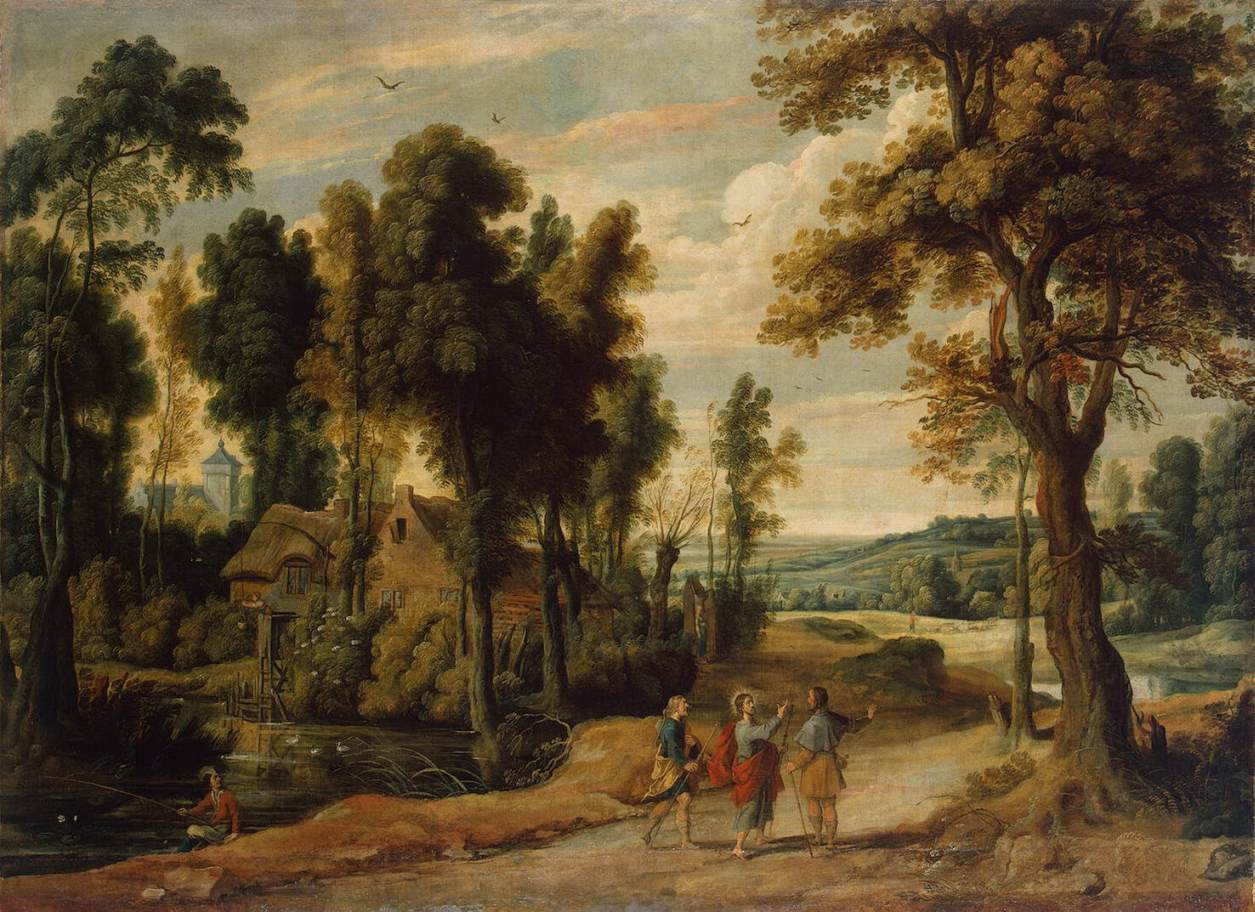
In today’s Gospel we encounter two discouraged and broken men making their way to Emmaus. The text describes them as “downcast.” That is to say, their eyes are cast on the ground, their heads are hung low. Their Lord and Messiah has been killed, the one they had thought would finally liberate Israel. Some women had claimed that He was alive, but these disciples have discredited those reports and are now leaving Jerusalem. It is late in the afternoon and the sun is sinking low.
They are also moving in the wrong direction, West, away from Jerusalem, away form the resurrection. They have their backs to the Lord, rising in the East.
The men cannot see or understand God’s plan. They cannot “see” that He must be alive, just as they were told. They are quite blind as to the glorious things that happened hours before. In this, they are much like us, who also struggle to see and understand that we have already won the victory. Too easily our eyes are cast downward in depression rather than upward in faith.
How will the Lord give them vision? How will He reorient them, turn them in the right direction? How will He enable them to see His risen glory? How will He encourage them to look up from their downward focus and behold new life?
If you are prepared to “see” it, the Lord will celebrate Holy Mass with them. In the context of a sacred meal we call the Mass, He will open their eyes and they will recognize Him; they will see glory and new life.
Note that the entire gospel, not just the last part, is in the form of a Mass. There is a gathering, a penitential rite, a Liturgy of the Word, intercessory prayers, a Liturgy of the Eucharist, and an ite missa est. In this manner of a whole Mass, they have their eyes opened to Him and to glory. They will fulfill the psalm that says, Taste, and see, the goodness of the Lord (Psalm 34:8).
Let’s examine this Mass, which opens their eyes, and ponder how we also taste and see in every Mass.
Stage One: Gathering Rite – The curtain rises on this Mass with two disciples having gathered together on a journey: Now that very day two of them were going to a village seven miles from Jerusalem called Emmaus (Lk 24:13). We have already discussed above that they are in the midst of a serious struggle and are downcast. We only know one of them by name, Cleopas. Who is the other? If you are prepared to accept it, the other is you. So, they have gathered. This is what we do as the preliminary act of every Mass. We who are pilgrims on a journey come together on our journey.
It so happens for these two disciples that Jesus joins them:And it happened that while they were conversing and debating, Jesus himself drew near and walked with them (Luke 24:15). The text goes on to tell us that they did not recognize Jesus yet.
The Lord walks with us, too. It is essential to acknowledge by faith that when we gather together at Mass the Lord Jesus is with us. Scripture says, For where two or three are gathered in my name, there am I among them (Matt 18:20). For many of us, too, although Jesus is present we do not recognize Him. Yet he is no less among us than He was present to these two disciples who fail to recognize Him.
Liturgically, we acknowledge the presence of the Lord at the beginning of the Mass in two ways. First, as the priest processes down the aisle the congregation sings a hymn of praise. It is not “Fr. Jones” they praise; it is Jesus, whom “Fr. Jones” represents. Once at the chair the celebrant (who is really Christ) says, “The Lord be with you.” In so doing He announces the presence of Christ among us promised by the Scriptures.
The Mass has now begun and our two disciples are gathered; the Lord is with them. So, too, for us at every Mass. The two disciples still struggle to see the Lord, to experience new life, and to realize that the victory has already been won. So, too, do some of us who gather for Mass. The fact that these disciples are gathered is already the beginning of the solution. Mass has begun. Help is on the way!
Stage Two: Penitential Rite – The two disciples seem troubled and the Lord inquires of them the source of their distress: What are you discussing as you walk along? (Lk 24:17). In effect, the Lord invites them to speak with Him about what is troubling them. It may also be a gentle rebuke from the Lord that the two of them are walking away from Jerusalem, away from the site of the resurrection.
Clearly their sorrow and distress are governing their behavior. Even though they have already heard evidence of Jesus’ resurrection (cf 24:22-24), they seem hopeless and have turned away from this good news.
Thus the Lord engages them in a kind of gentle penitential rite, engages them about their negativity.
So, too, for us at Mass. The penitential rite is a moment when the celebrant (who is really Christ) invites us to lay down our burdens and sins before the Lord, who alone can heal us. We, too, often enter the presence of God looking downcast and carrying many burdens and sins. Like these disciples, we may be walking in the wrong direction. In effect, the Lord says to us, “What are thinking about and doing as you walk along? Where are you going with your life?”
The Lord asks them to articulate their struggles. This calling to mind of struggles, for them that day and for us in the penitential rite, is a first step to healing and recovery of sight.
Again, we see in this story about the two disciples on the road to Emmaus, the Mass that is so familiar to us.
Stage Three: Liturgy of the Word – In response to their concerns and struggles, the Lord breaks open the Word of God, the Scriptures: Then beginning with Moses and all the prophets, he interpreted to them what referred to him in all the scriptures (Luke 24:27).
Not only does the Lord refer to Scripture, He interprets it for them. Hence the Word is not merely read; there is a homily, an explanation and application of the Scripture to the men’s struggles. The homily must have been a good one, too, for the disciples later remark, Were not our hearts burning (within us) while he spoke to us on the way and opened the scriptures to us? (Luke 24:32)
So, too, for us at Mass. Whatever struggles we may have brought, the Lord bids us to listen to His Word as the Scriptures are proclaimed. Then the homilist (who is really Christ) interprets and applies the Word to our life. Although the Lord works through a weak human agent (the priest or deacon), He can write straight with crooked lines. As long as the homilist is orthodox, it is Christ who speaks. Pray for your homilist to be an obedient and useful instrument for Christ at the homily moment.
Notice, too, that although the disciples do not yet fully see, their downcast attitude is gone; their hearts are now on fire. Pray God, that it will be so for us who come to Mass each week and hear from God that the victory is already ours in Christ Jesus. God reminds us, through Scripture passages that repeat every three years, that although the cross is part of our life, the resurrection surely is, too. We are carrying our crosses to an eternal Easter victory. If we are faithful to listening to God’s Word, hope and joy build within our hearts and we come, through being transformed by Christ in the Liturgy, to be men and women of hope and confidence.
Stage Four: Intercessory Prayers – After the homily, we usually make prayers and requests of Christ. We do this based on the hope, provided by His Word, that He lives, loves us, and is able. So it is that we also see these two disciples request of Christ, Stay with us, for it is nearly evening and the day is almost over (Luke 24:29).
Is this not what we are doing when we say, in so many words, “Stay with us, Lord, for it is sometimes dark in our lives and the shadows are growing long. Stay with us, Lord, and with those we love, so that we will not be alone in the dark. In our darkest hours, be to us a light, O Lord, a light that never fades away”?
Indeed, it is already getting brighter, for we are already more than halfway through the Mass!
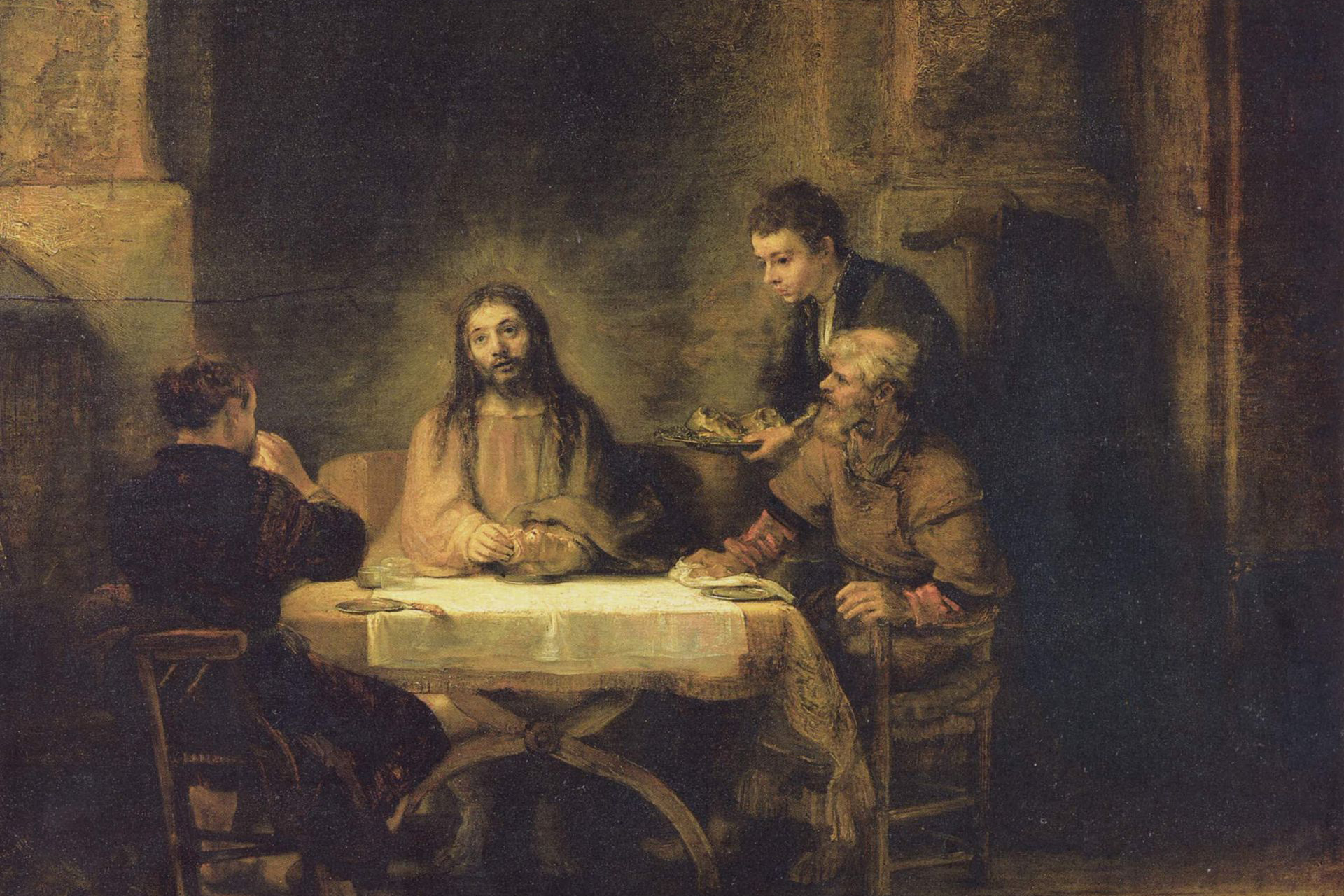
Stage Five: Liturgy of the Eucharist – Christ does stay with them. Then come the lines that no Catholic could miss: And it happened that, while he was with them at table, he took bread, said the blessing, broke it, and gave it to them (Luke 24:30). Yes, it is the Mass to be sure. All the basic actions of the Eucharist are there: He took, blessed, broke, and gave. They are the same actions that took place at the Last Supper and that we repeat at every Mass. Later, the two disciples refer back to this moment as the breaking of the bread (Luke 24:35), a clear biblical reference to the Holy Eucharist.
The words of Mass immediately come to mind: “While they were at supper, He took the bread and gave you thanks and praise. He broke the bread, gave it to His disciples, and said, “Take this all of you and eat it. This is my Body, which will be given up for you.”
A fascinating thing then occurs: With that their eyes were opened and they recognized him, but he vanished from their sight (Luke 24:31).
It is the very act of consecration that opens their eyes. Is this not what Holy Communion is to do for us? Are we not to learn to recognize Christ by the very mysteries we celebrate? Are we not to “taste and see”?
The liturgy and the sacraments are not mere rituals; they are encounters with Jesus Christ. Through our repeated celebration of the holy mysteries, our eyes are increasingly opened, if we are faithful. We learn to see and hear Christ in the liturgy, to experience his ministry to us.
The fact that Jesus vanishes from their sight teaches us that He is no longer seen with the eyes of the flesh, but with the eyes of faith and the eyes of the heart. Although He is gone from our earthly, fleshly, carnal sight, He is now to be seen in the sacrament of the altar and experienced in the Liturgy and in other sacraments. The Mass has reached its pinnacle for these two disciples and for us. They have tasted and now they see.
Consider these two men who began this Gospel quite downcast. Their hearts are on fire and they now see. The Lord has celebrated Mass in order to get them to this point. So, too, for us: the Lord celebrates Mass in order to set our hearts on fire and open our eyes to glory. We need to taste in order to see.
I sought the Lord, and he answered me; he delivered me from all my fears. Those who look to him are radiant; their faces are never covered with shame. This poor man called, and the Lord heard him; he saved him out of all his troubles. … Taste and see that the Lord is good; blessed is the man who takes refuge in him (Psalm 34:4-8).
Yes, blessed are we if we faithfully taste in order to see, every Sunday at Mass.
Stage Six: Ite Missa Est– Not able to contain their joy or hide their experience, the two disciples run seven miles back to Jerusalem to tell their brethren what has happened and how they encountered Jesus in the breaking of the bread. They want to, they must speak of the Christ they have encountered, what He said and what He did.
Note that this liturgy has reoriented them. They are now heading back east, toward the Risen Son.
How about us? At the end of every Mass, the priest or deacon says, “The Mass is ended. Go in peace.” This does not mean, “We’re done, go home and have nice day.” It means, “Go into the world and bring the Christ you have received to others. Tell them what you have seen and heard here, what you have experienced. Share with others the joy and hope that this Liturgy gives.”
Have you ever noticed that part of the word “mission” is in the word “dismissal”? You are being commissioned, sent on a mission to announce Christ to others.
Finally, the Lucan text says of these two disciples, So they set out at once and returned to Jerusalem where they found gathered together the eleven and those with them … Then the two recounted what had taken place on the way and how he was made known to them in the breaking of the bread (Lk 24:33,35). How about us? Does our Mass finish that well, that enthusiastically? Can you tell others that you have come to Christ in “the breaking of the bread,” in the Mass?
Jesus has used the Mass to drawn them from gloom to glory, from downcast to delighted, from darkness to light. It was the Mass. Do you “see” it there? It is the Mass. What else could it be?
The commercial below depicts the common problem of feeling overwhelmed by the all of the need we see around us. There is so much neediness, yet we don’t have sufficient resources to help in every effort or to donate to every worthy cause.
The commercial rightly concludes that we can address this feeling by doing. In other words, while we cannot do everything, we can surely do something. What that “something” is requires discernment. What are my gifts? What are the needs I am best positioned to help with? What is my state in life (married or single, parent with young children or empty-nester, wealthy or poor)? What is my natural demeanor (patient, energetic, organized, creative)?
I don’t have all of the gifts; you don’t have all of the gifts; but together we have all of the gifts.
Sometimes the sense of being overwhelmed is God’s way of tapping us on the shoulder and asking us, “What do you have?” “Five loaves and two fish, but what good is that?” (see John 6:9). Jesus simply says that we should bring them, bring what we have. Even little things can mean a lot; they can make a big difference. Lots of little things add up to a lot.
In yesterday’s Mass (Thursday of the Second Week of Easter) there was a reference to the wrath of God and the fact that only Jesus can save us from it. The Gospel warns, whoever disobeys the Son, will not see life, but the wrath of God remains upon him (John 3:36).
But what is God’s wrath? It is spoken of often in Scripture but it is a concept with which we must be careful. On the one hand we cannot simply dismiss it as contradictory to the fact that God is love, but neither can we deny God’s wrath as unfit in terms of His love.
It seems worthwhile to consider some aspects of the very complicated reality. There is not enough space to cover the whole topic in this post, but the comments stay open, as always, for your additions and subtractions. What are some ways that we can explain and understand the wrath of God? Let me propose a few.
The wrath of God is not merely an Old Testament concept. In fact, it is mentioned quite frequently in the New Testament as well. For example, consider the following examples, of which there are many more:
Jesus said, “Whoever believes in the Son has eternal life, but whoever rejects the Son will not see life, for God’s wrath remains on him” (John 3:36).
The wrath of God is being revealed from heaven against all the godlessness and wickedness of men who suppress the truth by their wickedness (Rom 1:18).
Do not take revenge, my friends, but leave room for God’s wrath, for it is written: “It is mine to avenge; I will repay,” says the Lord (Rom 12:19).
Let no one deceive you with empty words, for because of such things [e.g., sexual immorality] God’s wrath comes on those who are disobedient (Eph 5:6).
For God did not appoint us to suffer wrath but to receive salvation through our Lord Jesus Christ (1 Thess 5:9).
The angel swung his sickle on the earth, gathered its grapes and threw them into the great winepress of God’s wrath (Rev 14:19).
It is clear that the “wrath of God” is not some primitive concept with which the New Testament has dispensed. Notice, too, that the wrath of God is not something only for the end of the world. It is also spoken of as something already operative in certain people.
So again, what is God’s wrath and how can we reconcile it with His love? Consider some of the following images, explanations of God’s wrath. None of them alone is sufficient, but considered together, one can get an overall understanding.
Image: On one level, God’s wrath is His passion to set things right. We see this image of God’s wrath in Genesis, when God cursed Satan and uttered the protoevangelium (the first good news): I will make you and the woman enemies … one of her seed will crush your head while you strike at his heel (Genesis 3:15). God is clearly angered at what sin has done to Adam and Eve; this continues whenever He beholds sin and injustice. God has a passion for our holiness. He wants what is best for us. He is angered by what hinders us in this regard. Surely all sins provoke His wrath, but there are five sins that especially cry out to Heaven: willful murder (Gen. 4:10); the sin of the Sodomites (Gen. 18:20; 19:13); the cry of the people oppressed (Ex. 3:7-10); the cry of the foreigner, the widow, and the orphan (Ex. 20:20-22); and injustice to the wage earner (Deut. 24:14-5; Jas. 5:4) (cf Catechism of the Catholic Church # 1867). In terms of sin, injustice, and anything that hinders the possibility of salvation, God has a wrathful indignation and a passion to set things right. This is part of His love for us. His wrath may be manifested through punishment, disturbance of our conscience, or simply by allowing us to experience the consequences of our sin and injustice.
Clarification: God’s wrath is not like our anger. In saying that God is angry, we must understand that however God experiences anger (or any passion), it is not tainted by sin. When we get angry we often experience an out-of-control quality; our temper flares and we say and do things that are excessive if not sinful. It cannot pertain to God to have temper tantrums and to fly off the handle, to combine anger with an unreasonable lashing out. The way God does experience anger is not something we can fully understand but it is surely a sovereign and serene act of His will, not an out-of-control emotion.
Clarification: God is not moody. It does not pertain to God to have good days and bad days, good moods and bad ones. Scripture clearly indicates that God does not change. Consider this from the Book of James: Every good and perfect gift comes from above, from the Father of lights, in whom there is no variableness or shadow of turning (James 1:17). God’s wrath does not indicate that He has suddenly had enough, or that His temper has flared, or that His mood has soured. God is. He does not change.
Image: The primary location of God’s wrath is not in God; it is in us. Perhaps the best definition I have ever heard of God’s wrath is this one: “God’s wrath is our experience of the total incompatibility of our sinful state before the Holiness of God.” Sin and God’s holiness just don’t mix; they can’t keep company. Think of fire and water. They do not mix. They cannot coexist in the same spot. Bring them together and you can hear the conflict. Think of water spilled on a hot stove and hear the sizzling and popping; see the steam rising as the water flees. If, on the other hand, there is a lot of water, the fire is overwhelmed and extinguished, but the point is that they cannot coexist. They will conflict and one will win. This is wrath: the complete incompatibility of two things. It is this way between sin and God’s utter holiness. We must be purified before we can enter the presence of God otherwise we could never tolerate His glory. We would wail and grind our teeth and turn away in horror. The wrath is the conflict between our sin and God’s holiness. God cannot and will not change so we must be changed, otherwise we experience wrath. Notice that the experience is primarily within us, not God. God does not change; He is holy and serene; He is love. If we experience His wrath it is on account of us, not Him.
Image: It is we who change, not God and this causes wrath to be experienced or not. Consider the following example. On the ceiling of my bedroom is a light with a 100-watt light bulb. At night before bed I delight in the light. I am accustomed to it. But then at bedtime I turn off the light and go to sleep. When I awake it is still dark, so I turn on the light. Ugh! Grrr! The light is bright and I curse it! Now, mind you, the light has not changed one bit. It is still the same 100-watt bulb it was hours earlier. The light is the same; it is I who have changed. But do you know what I do? I blame the light and say, “That light is harsh!” But the light is not harsh; it is just the same as when I was happy with it. Now that I have changed I experience its wrath but the wrath is really in me. Consider the experience of the ancient family of man with God. Adam and Eve walked with God in the cool of the evening when the dew collected on the grass (cf Gen 3:8). They had a warm friendship with Him and did not fear His presence. After sinning, they hid. Had God changed? He had not; they had. They now experienced him very differently. Fast forward to another theophany. God had come to Mt Sinai and as He descended the people were terrified, for there was thunder and lightning, clouds, and the loud blast of a trumpet. The people told Moses, “You speak to us, but let not God speak, else we will die” (Ex 20:19). God, too, warned Moses that the people could not get close lest His wrath be vented upon them (Ex 19:20-25). Had God changed? No, He had not. He was the same God who walked with them in the cool of the evening in a most intimate way. It was we who had changed. We had lost the holiness without which no one can see the Lord (Heb 12:14). The same God, unchanged though He was, now seemed frightening and wrathful to us.
What then shall we do? If we can allow the image of fire to remain before us we may well find a hopeful sign in God’s providence. God is a holy fire, a consuming fire (cf Heb 12:26; Is 33:14); how can we possibly come into His presence? How can we avoid the wrath that would destroy us? Well, what is the only thing that survives in the presence of fire? Fire is the only thing that survives! So we’d better become fire if we want to see God. So it was that God sent tongues of fire upon the Apostles, and upon us at our Confirmation. God wants to set us on fire with the Holy Spirit and in holiness. God wants to bring us up to the temperature of glory so that we can stand in His presence: “See, I will send my messenger, who will prepare the way before me. Then suddenly the Lord you are seeking will come to his temple; the messenger of the covenant, whom you desire, will come,” says the LORD Almighty. But who can endure the day of his coming? Who can stand when he appears? For he will be like a refiner’s fire or a launderer’s soap. He will sit as a refiner and purifier of silver; he will purify the Levites and refine them like gold and silver. Then the LORD will have men who will bring offerings in righteousness, and the offerings of Judah and Jerusalem will be acceptable to the LORD, as in days gone by, as in former years (Mal 3:1-4). Indeed, Jesus has now come: For you have turned to God from idols to serve the living and true God, and to wait for his Son from heaven, whom he raised from the dead—Jesus, who rescues us from the coming wrath (1 Thess 1:10-11).
So there is a “wrath of God,” but it is more in us than in God. But I will not say to you that there is no wrath in God. Scripture does indicate that wrath pertains to God’s inner life. What exactly it is and how God experiences it is mysterious. To some extent we can say what it is not (as we did above) but we cannot really say precisely what it is. Far more rich than this is the meditation that the wrath of God is essentially in us. It is our experience of the incompatibility of sin before God. We must be washed clean in the Blood of the Lamb and purified. Most of us will also need purification in Purgatory, but if we let the Lord do His saving work, we are saved from the wrath, for we are made holy and set on fire with His love. Fire never fears the presence of fire. God is love, but He will not change, so love must change us.
One of the greatest cinematic depictions of the wrath of God occurred in the movie Raiders of the Lost Ark. The Nazis sinfully think that they can open the Ark and endure the presence of God. What they get is wrath, for sin cannot endure the reality of God’s presence. “Enjoy” this clip from the movie!
After Christ rose from the dead, He appeared to His disciples at certain places and times, but did not seem to stay with them continuously. On the first Easter Sunday, He appeared six times in rather rapid succession: first to Mary Magdalene, then to the women at the tomb, third as the women left the tomb, fourth to Peter, fifth to the two disciples going to Emmaus, and sixth to the ten Apostles in Jerusalem (when Thomas was not present).
In His public ministry, Jesus seemed to be with His disciples nearly all the time. However, after His Resurrection he would appear, converse, and teach, but then be absent from them bodily. For example, John 20:26 says that “after eight days” Christ appeared to the disciples, suggesting that He was not otherwise present to them during that period.
While it is true that we do not have an exact calendar of His appearances and not every appearance is necessary recorded, it seems apparent that the Lord was not constantly with the disciples during the forty days prior to His ascension.
Why is this?
St. Thomas Aquinas reflected on this question and offers two basic reasons. In so doing he does not propose an absolute explanation, but rather demonstrates why it was fitting that Christ was not with them continuously during the forty days prior to the ascension. St. Thomas writes,
Concerning the Resurrection two things had to be manifested to the disciples, namely, the truth of the Resurrection, and the glory of Him who rose.
Now in order to manifest the truth of the Resurrection, it sufficed for Him to appear several times before them, to speak familiarly to them, to eat and drink, and let them touch Him. But in order to manifest the glory of the risen Christ, He was not desirous of living with them constantly as He had done before, lest it might seem that He rose unto the same life as before … [For as Bede says] “He had then risen in the same flesh, but was not in the same state of mortality as they.”
That Christ did not stay continually with the disciples was not because He deemed it more expedient to be elsewhere: but because He judged it to be more suitable for the apostles’ instruction that He should not abide continually with them, for the reason given above.
He appeared oftener on the first day, because the disciples were to be admonished by many proofs to accept the faith in His Resurrection from the very out set: but after they had once accepted it, they had no further need of being instructed by so many apparitions (Summa Theologiae, Part III, Q. 55, Art. 3).
While St. Thomas observes that there may well be appearances that were not recorded, he is inclined to hold that there were not a lot more of them. He writes,
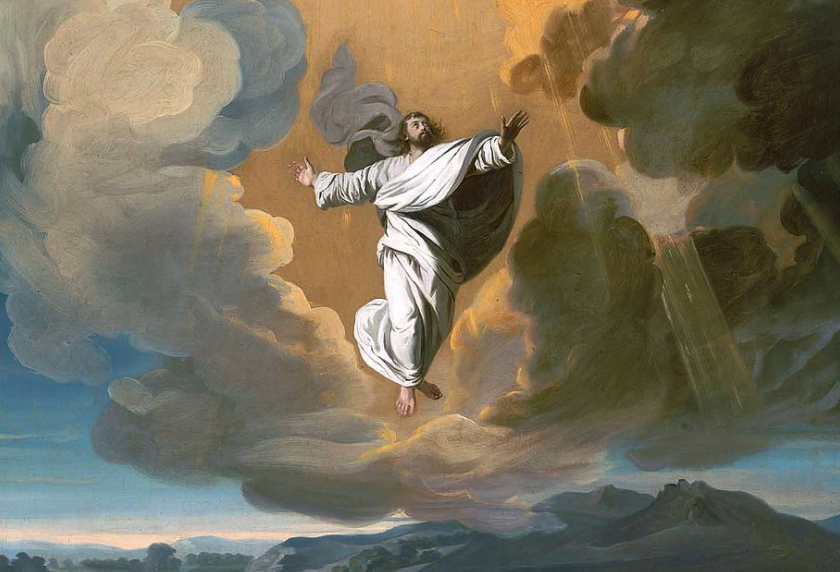
One reads in the Gospel that after the first day He appeared again only five times. For, as Augustine says (De Consens. Evang. iii), after the first five apparitions “He came again a sixth time when Thomas saw Him; a seventh time was by the sea of Tiberias at the capture of the fishes; the eighth was on the mountain of Galilee, according to Matthew; the ninth occasion is expressed by Mark, ‘at length when they were at table,’ because no more were they going to eat with Him upon earth; the tenth was on the very day, when no longer upon the earth, but uplifted into the cloud, He was ascending into heaven. But, as John admits, not all things were written down. And He visited them frequently before He went up to heaven,” in order to comfort them. Hence it is written (1 Corinthians 15:6-7) that “He was seen by more than five hundred brethren at once … after that He was seen by James”; of which apparitions no mention is made in the Gospels (ibid).
St. Thomas strikes a balance between the Lord’s need to instruct them and summon them to faith in the resurrection, and the need for them to grasp His risen glory. Christ did not merely resume His former life. The disciples were not to cling to their former understandings of Him as Rabbi and teacher; now they were to grasp more fully that He is Lord.
Though Thomas does not mention it here, I would add another reason for the Lord’s action of not abiding with them continuously: It was fitting for Him to do this to accustom them to the fact that they would no longer see Him as they had with their physical eyes. Once He ascended, they would see Him mystically in the Sacraments and in His Body the Church. Thus, as the Lord broke the Bread and gave it them in Emmaus, they recognized Him the Eucharist (Luke 24). Thereupon He vanished from them. It was as if to say, “You will no longer go on seeing me in the same manner. Now you will experience me mystically and in the Sacraments.”

 In the Divine Office, we are reading some of the more terrifying passages from the Book of Revelation, related to the seven trumpets, seals, and bowls of wrath. There is also a reference to the underreported “seven thunders,” reminding us that there are some things that are not for us to know.