One of the most basic human passions is anger. Not all anger is sinful, however. One way different types of anger can be distinguished is by their object.
If the object of the anger is appropriate (e.g., injustice), then anger is an appropriate response. In the case of reacting to injustice, anger is like an energy that the soul delivers in order to address the injustice with zeal and persistence.
On the other hand, if the object of the anger is inappropriate, then so is the anger. Some examples of this would be anger generated by something petty such as a perceived slight or anger resulting from someone pointing out that we are wrong. In such cases anger is to some degree sinful because its cause is tainted.
Anger can also become sinful if it is inordinate. Even if anger’s object is appropriate, we don’t have the right to rage, strike out, or excessively vent our anger.
Anger is a passion that is hard to master. It has its place, but we must learn to curb it and uses its force for good.
In the video below, there is a humorous illustration of appropriate anger vs. excessive anger. In the first scene, a football player stirs up anger in his teammates (about an opposing team who “dares” to enter their home stadium) in order to win a football game. I know that a football game is a petty object, but allow it for illustration.
In the second scene, one of the players uses excessive anger to rid his house of a mere fly. Although the object of his anger is somewhat appropriate, the anger is excessive and ends up causes a lot of collateral damage. Be careful with your anger, even when it is just!
Scripture says, Be angry but sin not (Ephesians 4:26).
In the reading at daily Mass for Friday of the Twenty-eighth Week in Ordinary Time, St. Paul speaks of Abraham’s faith. Abraham did come to strong faith, but it took time!
One of the beautiful things about the Bible is that it does not present epic figures who never fell. Rather, it presents us with authentic human beings who struggled and eventually “got there.” As an example, I was talking the other day with someone who remarked, “Too bad we can’t all be strong in faith like Abraham.” Ah, Abraham, the paragon of faith! Well that was true eventually, but Abraham had some very bad moments in his journey that we ought not to overlook. Surely he became strong in faith, but only after some pretty bad falls along the way. Consider some of Abraham’s struggles.
ImperfectInitiation – Abram (God called Abraham later on) was told, “Leave your country, your people, and your father’s household and go to the land I will show you” (Gen 12:1). And he does. On one level this is remarkable because God didn’t give him any directions; He just said, go, and Abram went, trusting that God would direct him. Notice a little detail, though, that I would argue amounts to a lack of total obedience: So Abram left, as the LORD had told him; and Lot went with him (Gen 12:4). How did his nephew Lot get included? Some may argue that this is no big deal, but for the record, God did not mention Lot in His instructions to Abram. Sure enough, Lot’s presence causes trouble later on. There is always trouble lurking when we do not obey God completely.
WaywardWanderer – Abram gets to the Holy Land and God shows him its beauty. He reconnoiters the land and eventually pitches his tent near Bethel, a name that means “house of God.” So there he is right where he ought to be: in the House of God, on the Land God showed him (cf Gen 12:5-9). There is only one problem: there is a famine in the land. Will Abram trust God, who called him to this land? No! He goes off to Egypt (Gen 12:10), trusting Pharaoh—not God—to feed him. God never said, “Go to Egypt.” It is quite ironic that Abram leaves a place called Bethel (house of God) to go to the house of Pharaoh.
Fearful Foolishness – In Egypt, Abram does something awful. His wife Sarai (only called Sarah later in the narrative) is very beautiful; Abram is worried that men will want her and thus kill him, her husband, so that they can have her. Abram lies and claims that Sarai is his sister; he convinces her to say the same (Gen 12:11-13). Abram even goes so far as to allow her to be placed in Pharaoh’s harem (Gen 12:14-16). This is all to protect his own hide and to gain influence. Let’s just make it plain: he “pimps out” his own wife! Pharaoh eventually discovers the lie and, suffering its consequences (severe plagues), denounces Abram (Gen 12:17-19). In effect, Pharaoh fears God more than he does Abram. It takes Pharaoh to get Abram to go back to where he belongs. Abram returns to the Holy Land, to Bethel, not because of his faith but because of Pharaoh’s threats (Gen 12:19-20).
Confusing Consequences – At least Abram is back where he needs to be, in Bethel, right? Well, now the Lot mistake manifests itself. Abram and Lot actually did quite well in Egypt; they with flocks so large that the land cannot sustain them both together (Gen 13:1-8). Notice that Holy Land could sustain Abram, but not Abram and Lot together. This hearkens back to the original disobedience of Abram in bringing Lot in the first place. Lot and Abram agree to part company and Lot picks the choicer part of the land (where the Dead Sea is now) (Gen 13:8-12). Problem solved, right? Not exactly. The text says that Lot pitched his tent toward Sodom (Gen 13:12). You know where all that is going to lead! In the end, it will be another distraction for Abram, who brought Lot along when he shouldn’t have. Lot shows bad judgement; he shouldn’t be associating with the wicked in Sodom and Gomorrah. All of this draws Lot into a big mess in which his family is corrupted. Lot’s wife cannot turn her back on Sodom and is killed; his daughters later trick him into impregnating them (Gen 19:30ff). All of this is a distraction for Abram, who should never have brought Lot along in the first place.
Faltering Faith – God promises Abram and Sarai many descendants, but both of them falter in faith several times with regards this. Abraham’s first struggle comes when, after many years of promises from God, no child has yet been born. Abram says “… what good will your gifts be, if I keep on being childless and have as my heir the steward of my house, Eliezer? … [Y]ou have given me no offspring, and so one of my servants will be my heir.” God responds, “No, that one shall not be your heir; your own issue shall be your heir” (Gen 15:1-4). Later, Sarah, also despairing that God can ever deliver on His promise, suggests adultery to Abraham, and proposes that he sexually exploit Hagar, her slave girl, and have a child by her. And he does! (Gen 16:1-4) Hagar gives birth to Ishmael, setting off ugliness between Hagar and Sarah (imagine that!) (Gen 16:4-6). God once again has to rebuke Abraham and remind him of His promises. Later, Sarah, paranoid over Hagar’s exalted position as the mother of Abraham’s first born child demands that Abraham commit an act of great injustice and to drive Hagar and Ishmael into the desert (Gen 21:9-14). And he does!
Derisive Doubt – God renews His promises to Abram and Sarai and changes their names (to Abraham and Sarah) by entering into a covenant with them (Gen 17:1-15). As God renews His promises for many descendants, Abraham prostrates himself and laughs (Gen 17:17). Later, Sarah laughs at the promise as well (Gen 18:12). Finally, Sarah gives birth to Isaac (a name that means “He laughs”), which commemorates the struggle of Abraham and Sarah to believe what God told them.
Do you see? Abraham’s journey was marred by some pretty ugly setbacks, but ultimately Abraham did come to believe God. He receives the fruit of faith in his son Isaac. God prepares one final test to strengthen Abraham’s faith (Gen 22). He tells him to offer his son as a sacrifice. This time, Abraham does not hesitate. He sets out for Moriah, determined to obey God. Isaac asks, Where is the lamb for sacrifice? (Gen 22:7) Abraham has finally made it to faith; he simply responds, God himself will provide the lamb for the sacrifice (Gen 22:8). Abraham has arrived. He has come to trust God and knows that obeying Him will not be without its reward. And God did provide the lamb, as you well know.
Abraham didn’t simply “have faith.” He had to get there through years of struggle, setbacks, and hard lessons. He had to learn that to obey God brings blessings, but to disobey God brings trouble. Abraham learned that God means exactly what He says and that he should trust Him in all things. If Abraham, the great hero of faith, had to go through all of this to arrive at faith, maybe there is hope for us! We, too, are summoned to learn of faith and grow in it. We are called to obey more and more perfectly and to stop trying to improve on God’s plan. Abraham’s example isn’t just a relief for us who struggle; it is also a road map, telling us what we must do. Faith has to grow and we have to let it.
Here’s an old gospel song that says, “A saint is just a sinner who fell down and got up.” Maybe there is hope for us, too—provided we get back up.
We continue to read from St. Paul’s Letter to the Romans in daily Mass. In today’s reading, we learn that we are justified by faith apart from the Law. The debates about faith and works are often the result of varied interpretations of today’s text.
One of the sources of confusion is a failure to understand the deeper point: that we are saved by Jesus Christ. It is by being put into a saving relationship with Him that we are saved. This relationship changes us; it affects what we do and do not do. Thus our works change, but it is as a result of the relationship with the Lord. Catholics and Protestants often talk past each other on this topic. It is not simply faith, or faith and works, it is Jesus to whom we must look.
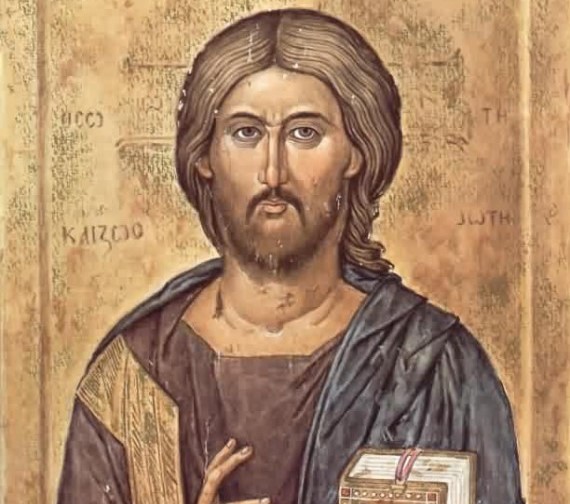
Another confusion is over what we mean by the Word of God. It does not just refer to a book we call the Bible. Reading the Bible is a good thing, but meeting the Lord there is deeper and better. Many people think of the Word of God as an “it” when in fact the Word of God is a person, Jesus Christ. Jesus did not come merely to give us information and to exhort us. He came to give us His very self. Jesus is the “Word made Flesh.”
Pope Emeritus Benedict XVI made this point in his post-synodal apostolic exhortation, Verbum Domini.
[There is a] statement made by the author of the Letter to the Hebrews: “In many and various ways God spoke of old to our fathers by the prophets; but in these last days he has spoken to us by a Son, whom he appointed the heir of all things, through whom also he created the world” (1:1-2). … Here the Word finds expression not primarily in discourse, concepts, or rules. Here we are set before the very person of Jesus. His unique and singular history is the definitive word which God speaks to humanity. We can see, then, why “being Christian is not the result of an ethical choice or a lofty idea, but the encounter with an event, a person, which gives life a new horizon and a definitive direction.” … “the Word became flesh and dwelt among us” (Jn 1:14a). These words are no figure of speech; they point to a lived experience! Saint John, an eyewitness, tells us so: “We have beheld his glory, glory as of the only Son from the Father, full of grace and truth” (Jn 1:14b). … Now the word is not simply audible; not only does it have a voice, now the word has a face. (Verbum Domini 11-12).
The Word of God is not merely words on the pages of a book. The Word of God is not just an idea or an ethical system. The Word of God is not just a set of teachings or doctrines. The Word of God is Jesus Christ. In order to really grasp this Word, we cannot read ink spots on a page, we must come to know Him, and experience Him and His power active in our lives.
It is dangerous to turn Scripture into an abstraction or to treat it as just a text. St Thomas Aquinas wrote, The Son is the Word, not any sort of word, but one Who breathes forth Love. Hence Augustine says (De Trin. ix 10): “The Word we speak of is knowledge with love.” Thus the Son is sent not in accordance with [just] any kind of intellectual perfection, but according to the intellectual illumination, which breaks forth into the affection of love, as is said (John 6:45): “Everyone that hath heard from the Father and hath learned, comes to Me” (Summa Prima Pars, 43.5 ad 2).
Hence we cannot really grasp Scripture unless we come to know Jesus Christ. Further, to authentically read Sacred Scripture is to encounter Jesus Christ there. Before we analyze a passage from Scripture we are summoned to encounter the One who is speaking to us.
It is surely possible for some people, even secular scholars, to analyze a Greek text of Holy Writ and translate it into English (or another language). Some scholars can analyze the idioms used or the historical context. Such research can help us to understand what a particular passage is saying on one level, but only a deep, personal knowledge of Jesus Christ can help us to know what the text really means. It is this personal, communal, historical, and ongoing encounter with Jesus Christ that distinguishes true theology from mere literary analysis or religious study.
Indeed, theologians and Scripture scholars can be dangerous if they do not personally know Jesus Christ. Knowing Jesus is not the same as knowing about Him. I might know about Jesus Christ from reading a book or from being told by someone, but this is not enough; I must know Him. Being a true authority in Scripture requires meeting and knowing the author. Do you notice that the word “author” is in the word “authority”?
Note how Pope Emeritus Benedict quotes the Prologue of John’s Gospel: “the Word became flesh and dwelt among us” (Jn 1:14a) and then continues on to say, These words are no figure of speech; they point to a lived experience! He also says, in reference to the passage from Hebrews 1, Here we are set before the very person of Jesus.
In the liturgical context of Scripture, this fact is enshrined in our ritual. As the priest or deacon proclaims the Gospel, the congregation stands out of respect. For it is Christ Himself who speaks to them and whom they encounter in this proclamation of the Word. At the conclusion of the proclamation of the Gospel, they acknowledge that they are encountering Jesus as they say to Him personally, Laus tibi Christe (Praise to you Lord Jesus Christ).
Scripture and the wider concept of the Word of God authentically interpreted by the Church, is not merely a book or a set of ideas. It is an encounter with a living God, the Lord Jesus Christ. The Word of God is a person, Jesus Christ.
Perhaps a couple of short stories will help to illustrate the difference between seeing Scripture as merely a text, and seeing it as an encounter with the Word made Flesh, Jesus.
A rural Appalachian community was visited by a Shakespearean actor. They were amazed at his elegant but strange way of speaking. At one point in his public recital he recited the 23rd Psalm. His speech was elegant, the words pronounced in finest King James English and presented with great drama and flair. At the end of his recitation a strange, awkward silence filled the room rather than the usual applause. Finally, a poor farmer in the back of the room stood up and apologized, saying that the only reason no one had applauded was that they weren’t sure he was done. “See, out in these parts we say it a little different.” The poor farmer began, “The Loerd is mah shayperd …” When he finished, the room was filled with shouts of “Amen” and “Praise the Lord.” The Shakespearean actor then told the poor farmer, “I was elegant, but your words had greater power. That is because I know only the technique, but you know the author.”
Some years ago I heard an African Methodist Episcopal Church (AME) preacher address an ecumenical gathering. He said to those in attendance, “You know I heard some strange stuff in seminary! The professors said that Jesus never really walked on water, that He didn’t really multiply loaves and fishes, He just got folks to be generous. They said that He didn’t really know He was God, that He didn’t really rise from the dead. He just lives on in our thoughts or something. Can you believe they taught me that in a Christian seminary?” Throughout his description of these wretched “teachings,” the disapproval in the gathering of Protestants and Catholics was audible. As he relayed this litany of faulty scholarship you could hear people saying, “Lord have mercy!” and “Mah, mah, mah.” Then the preacher stopped, mopped his brow, looked at them, and said, “I’ll tell you what. The problem with them wasn’t that they read the wrong books, y’all. The problem with them was that they ain’t never met my Jesus!” Well the house just about came down; folks were on their feet for ten minutes praising God. The choir stood up and began this familiar chorus: “Can’t nobody do me like Jesus; He’s my Lord!”
Well, you get the point. When you’ve met Jesus Christ you just don’t doubt that He walked on the water, multiplied loaves, raised Lazarus, knew perfectly well that He was God, and stepped out of the tomb on Easter morning.
The Word of God is not merely a text; It is a person, Jesus Christ, the Logos, the Word made Flesh. Once you’ve met Him, His spoken (and later written) Word begins to make greater and greater sense and there is just no doubt that this Word is true and powerful.
I’ll let Pope Emeritus Benedict provide the concluding words to today’s post: … the Word finds expression not primarily in discourse, concepts, or rules. Here we are set before the very person of Jesus. … These words are no figure of speech; they point to a lived experience! Saint John, an eyewitness, tells us so: “We have beheld his glory, the glory as of the only Son from the Father, full of grace and truth.”
We continue to read from the Letter to the Romans in daily Mass. Scripture is a prophetic interpretation of reality. That is, it tells us what is really going on from the perspective of the Lord of History. An inspired text, it traces out not only the current time, but also the trajectory, the end to which things tend. It is of course important for us to read Scripture with the Church, and exercising care, to submit our understanding to the rule of faith and the context of Sacred Tradition.
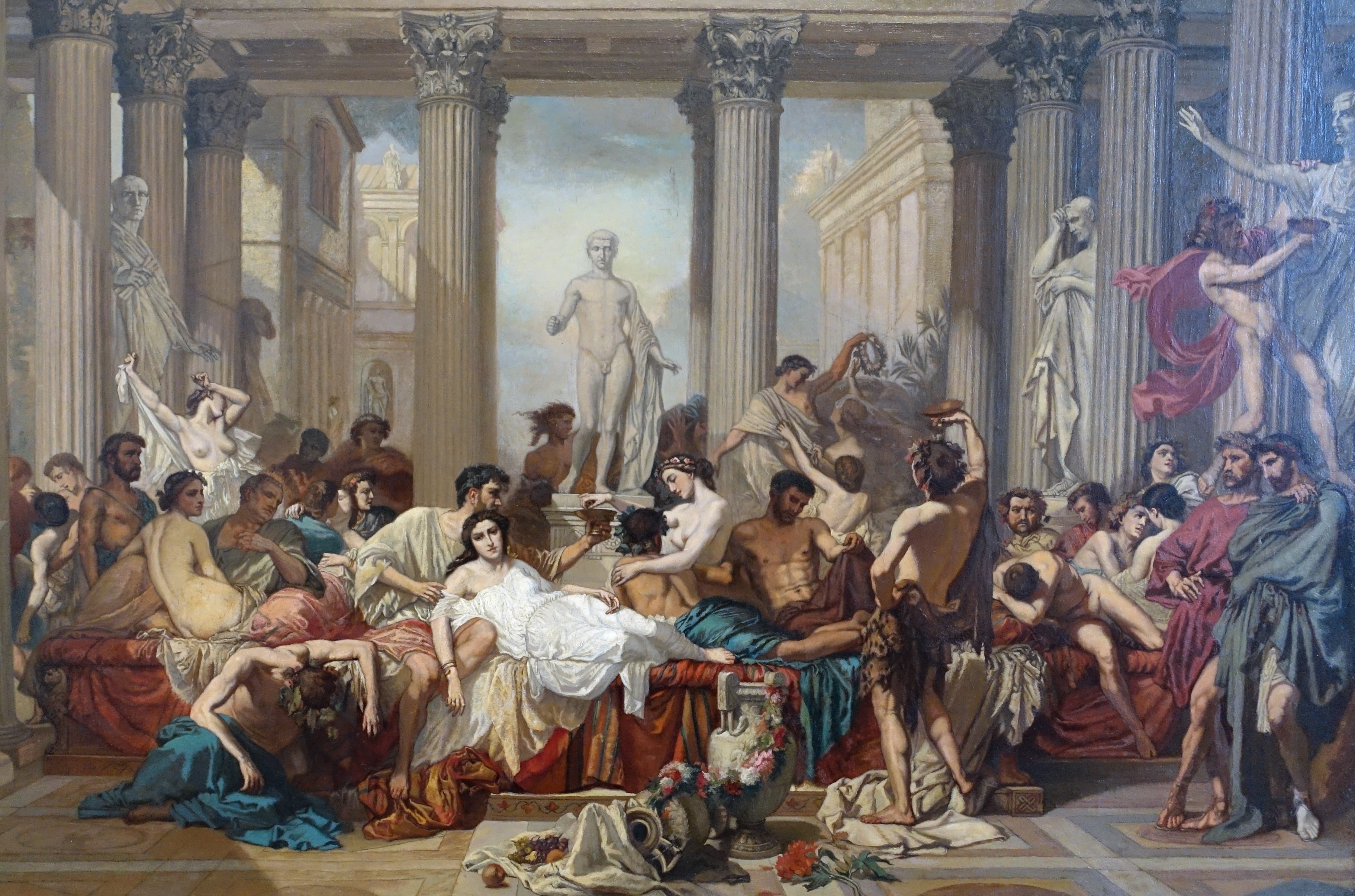
With those parameters in mind, I would like to consider Romans 1, wherein St. Paul describes the grave condition of the Greco-Roman culture of his day. Under the inspiration of the Holy Spirit, he prophetically interpreted the times of the first century A.D. Although the text speaks specifically to those times, it is clear that our modern times are becoming nearly identical to what was described.
St. Paul saw a once-noble culture in grave crisis; it was in the process of being plowed under by God for its willful suppression of the truth.
Let’s take a look at the details of this prophetic interpretation of those days and apply it to our own. The text opens without any niceties and the words rain down on us almost like lead pellets.
I. The Root of the Ruin – The text says, The wrath of God is being revealed from heaven against all the godlessness and wickedness of people, who suppress the truth by their wickedness.
As the curtain draws back, we not eased into the scene at all. We are confronted at once with the glaring lights of judgment and the fearsome word “wrath.” Note that the wrath of God is called a revelation. That is to say, it is a word of truth that reveals and prophetically interprets reality for us. The wrath is the revelation!
It’s quite astonishing, really. It directly contradicts to our modern tendency to see God only as the “affirmer in chief,” whose love for us is understood only in sentimental terms, never in terms of a strong love that insists on what is right and true, on what we need rather than what we want.
What is the wrath of God? It is our experience of the total incompatibility of unrepented sin before the holiness of God. The unrepentant sinner cannot endure His presence, His holiness. For such a one, there is wailing and grinding of teeth, anger, and even rage when confronted by the existence of God and the demands of His justice and holiness. God’s wrath does not mean that He is in some simplistic sense angry, emotionally worked up. God is not moody or unstable. He is not subject to temper tantrums as we are. Rather, it is that God is holy and the unrepentant sinner cannot endure His holiness; the sinner experiences it as wrath.
To the degree that God’s wrath is in Him, it is His passion to set things right. God is patient and will wait and work to draw us to repentance, but his justice and truth cannot forever tarry. When judgment sets in on a person, culture, civilization, or epoch, His holiness and justice are revealed as wrath to the unrepentant.
What was the central sin of St. Paul’s (and our own) time? They suppress the truth by their wickedness (Romans 1:18). It is the sin that leads to every other problem.
Note this well: those who seek to remain in their wickedness suppress the truth. On account of wickedness and a desire to persist in sin, many suppress the truth. The catechism of the Catholic Church warns,
The human mind … is hampered in the attaining of such truths, not only by the impact of the senses and the imagination, but also by disordered appetites which are the consequences of original sin. So it happens that men in such matters easily persuade themselves that what they would not like to be true is false or at least doubtful (Catechism of the Catholic Church # 37).
St. Paul wrote this to St. Timothy:
For the time will come when people will not tolerate sound doctrine. Instead, to suit their own desires, they will gather around them a great number of teachers to say what their itching ears want to hear (2 Tim 4:3).
Isaiah described this:
They say to the seers, “See no more visions”; to the prophets, “Give us no more visions of what is right; tell us pleasant things, prophesy illusions” (Isaiah 30:10).
Yes, on account of a desire to cling to their sin and to justify themselves, people suppress the truth. While this human tendency has always existed, there is a widespread tendency for people of our own time in the decadent West to go on calling good, or “no big deal,” what God calls sinful.
When we do this, we suppress the truth. Now, as then, the wrath of God is being revealed. On account of the sin of repeated, collective, obstinate suppression of the truth, God’s wrath is being revealed on the culture of the decadent West.
II. The Revelation that is Refused – The text goes on to say, … and since what may be known about God is plain to them, because God has made it plain to them. For since the creation of the world God’s invisible qualities—his eternal power and divine nature—have been clearly seen, being understood from what has been made, so that people are without excuse (Romans 1:19-20).
Note that God the Holy Spirit and St. Paul attest that the suppression of the truth is willful; it is not merely ignorance. While the pagans of St. Paul’s day did not have the Scriptures, they are still “without excuse.” Why? Because they had the revelation of creation. Creation reveals God and speaks not only to His existence, but also to his attributes, to His justice and power, to His will and the good order He instills in us and thus expects of us.
All of this means that even those raised outside the context of faith, whether in the first century or today, are “without excuse.”
The Catechism also couches our responsibility to discover and live the truth in the existence of something called the conscience:
Deep within his conscience man discovers a law which he has not laid upon himself but which he must obey. Its voice, ever calling him to love and to do what is good and to avoid evil, sounds in his heart at the right moment. … For man has in his heart a law inscribed by God. … His conscience is man’s most secret core and his sanctuary. There he is alone with God whose voice echoes in his depths. … Moral conscience … bears witness to the authority of truth in reference to the supreme Good to which the human person is drawn, and it welcomes the commandments. …. [Conscience] is a messenger of him, who, both in nature and in grace, speaks to us behind a veil, and teaches and rules us by his representatives. Conscience is the aboriginal Vicar of Christ (CCC #1776-1778).
Because of the witness and revelation of the Created order, and on account of the conscience present and operative in all who have attained the use of reason, those who suppress the truth are without excuse. They are suppressing what they know to be true.
It has been my experience in my many years as a pastor working with sinners (and as a sinner myself) that those I must confront about sin know full well what they are doing. They may have suppressed the still, small voice of God; they may have sought to keep His voice at bay with layers of rationalization; they may have also collect false teachers to confirm them in their sin and permitted many deceivers to tickle their ears. Deep down, though, they know that what they do is wrong. At the end of the day they are without excuse.
Some lack of due discretion may ameliorate the severity of their culpability, but ultimately they are without excuse for suppressing the truth.
So there is also the revelation of creation, the Word of God (which has been heard by most people today), and the conscience. Many people today, as in St. Paul’s time, refuse revelation. They do so willfully in order to justify wickedness; they are without excuse.
III. The Result in the Ranks – The text says, For although they knew God, they neither glorified him as God nor gave thanks to him, but became vain in their thinking and their senseless minds were darkened. Although they claimed to be wise, they became fools and exchanged the glory of the immortal God for images made to look like a mortal human being and birds and animals and reptiles (Romans 1:21-23).
This should seem very familiar. In St. Paul’s day, and even more so in ours, a prideful culture has set aside God, whether through explicit atheism and militant secularism or through neglect and willful tepidity. Today, God has been pushed to the margins of our proud, anthropocentric culture. His wisdom has been forcibly removed from our schools and from the public square. His image and any reminders of Him are increasingly being removed by force of law. Many people even mock His Holy Name, mentioning His truth only to scorn it as a vestige of the “dark ages.”
Faith and the magnificent deposit of knowledge and culture that has come with it has been scoffed at as a relic from times less scientific than our own much more “enlightened” age.
Our disdainful culture has become a sort of iconoclastic “anti-culture,” which has systematically put into the shredder every bit of Godly wisdom it can. The traditional family, human sexuality, chastity, self-control, moderation, and nearly all other virtues have been scorned and willfully smashed by the iconoclasts of our time. To them, everything of this sort must go.
As a prophetic interpretation of reality, the Scripture from Romans describes the result of suppressing the truth and refusing to acknowledge and glorify God: … they became vain in their thinking and their senseless minds were darkened. Although they claimed to be wise, they became fools (Romans 1:21).
Yes, there is a powerful darkening effect that comes from suppressing the truth and refusing the wisdom and revelation of God. While claiming to be so wise, smart, advanced, we have collectively speaking become foolish and vain; our intellects grow darker by the day. Our concern for vain, foolish, passing things knows little bounds today. Yet the things that really do matter: death, judgment, Heaven, and Hell, are almost never attended to. We run after foolish things but cannot seem to exercise the least bit of self-control. Our debts continue to grow but we cannot curb our spending. We cannot make or keep commitments. Addiction is increasingly widespread. All of the most basic indicators indicate that we have grave problems: graduation rates, SAT scores, teenage pregnancy, sexually transmitted diseases, abortion rates, divorce rates, cohabitation rates. The numbers that should be going up are down and the numbers that should be going down are up.
Although we claim to be so wise and smart today, we have become collectively foolish. Even our ability to think of solutions and to have intelligent conversations has decreased, since we cannot seem to agree on even the most basic points. We simply talk past one other, living in our own smaller and increasingly self-defined worlds.
If you think that the line about idolatry doesn’t apply today, you’re kidding yourself. People are fascinated by stones and rocks, and by all sorts of syncretistic combinations of religions, including the occult. This is the age of the “designer God,” when people no longer tolerate the revealed God of the Scriptures, but believe instead in a reinvented one—who just so happens to agree with everything they think. Yes, idolatry is alive and well in this age of the personal sort of hand-carved idol that can be invoked over and against the true God of the Scriptures.
And people today congratulate themselves for being tolerant, open-minded, and non-judgmental! It is hard not see that our senseless minds have become dark, our thoughts vain, and our behavior foolish.
Our culture is in the very grave condition that this Scripture, this prophetic interpretation of reality, describes. There is much for which we should be rightfully concerned.
IV. The Revelation of the Wrath – The text says, Therefore God gave them over in the sinful desires of their hearts to sexual impurity for the degrading of their bodies with one another. They exchanged the truth about God for a lie, and worshiped and served created things rather than the Creator—who is forever praised. Amen.Because of this, God gave them over to shameful lusts. Even their women exchanged natural sexual relations for unnatural ones. In the same way the men also abandoned natural relations with women and were inflamed with lust for one another. Men committed shameful acts with other men, and received in themselves the due penalty for their error (Rom 1:24-27).
In this passage the “wrath” is revealed. The text simply says, God gave them over to their sinful desires. This is the wrath; this is the revelation of the total incompatibility of unrepented sin before the holiness of God and the holiness to which we are summoned.
In effect, God is saying, if you want sin and rebellion, you can have it. It’s all yours. You’ll experience the full consequences of your sinful rebellion, the full fury of your own sinful choices. Yes, God gave them over to their sinful desires.
It seems that God has also given us over in a similar way to our sinful desires today.
Note that the first and most prominent effect is sexual confusion. The text describes sexual impurity, the degradation of their bodies, shameful lusts, and the shameful acts of homosexual relations. The text also speaks of “due” penalty for such actions, probably disease and other deleterious effects that result from using the body for purposes for which it is not designed.
Welcome to the 21st century decaying West.
Many misunderstand what Romans 1 is saying. They point to this text as a warning that God will punish us for condoning and celebrating homosexual acts. But Romans 1 does not say that God will punish us for this; it says that the widespread condoning and celebrating of homosexual acts is God’s punishment; it is the revelation of wrath. It is the first and chief indication that God has given us over to our stubborn sinfulness and to our lusts.
Let us be careful to make a distinction here. The text does not say that homosexuals are being punished; some may mysteriously have this orientation but live chastely. Rather, it is saying that we are all being punished.
Why? For over 60 years now the decadent West has celebrated promiscuity, pornography, fornication, cohabitation, contraception, and even to some extent adultery. The resulting carnage of abortion, STDs, AIDs, single motherhood, absent fathers, poverty, and emotionally damaged children does not seem to have been enough to bring us to our senses. Our lusts have only become wilder and more debased.
Through the use of contraception, we severed the connection between sex, procreation, and marriage. Sex has been reduced to two adults doing what they please in order to have fun or share love (really, lust). This has opened the door to increasingly debased sexual expression and to irresponsibility.
Enter the homosexual community and its demands for acceptance. The wider culture, now debased, darkened, and deeply confused, cannot comprehend the obvious: that homosexual acts are contrary to nature. The very design of the body shouts against it. But the wider culture, already deeply immersed in its own confusion about sex and now an increasing diet of ever-baser pornography that celebrates both oral and anal sex among heterosexuals, has had no answer to the challenge.
We have gone out of our minds. Our senseless minds are darkened, confused, foolish, and debased. This is wrath. This is what it means to be given over to our sinful desires. This is what happens when God finally has to say to a culture, if you want sin you can have it—until it comes out of your ears!
How many tens of millions of babies have been aborted, sacrificed to our wild lusts? How deep has been the pain caused by rampant divorce, cohabitation, adultery, and STDs? Yet none of this has caused us to repent.
In all of this, The wrath of God is being revealed from heaven against all the godlessness and wickedness of people, who suppress the truth by their wickedness. Notice again, homosexuals are not being singled out; The wrath is against all the godlessness and wickedness of those who suppress the truth. When even the carnage has not been enough to bring us to our senses, God finally says, enough, and gives us over to our own sinful desires to feel their full effects. We have become so collectively foolish and vain in our thinking and darkened in our intellect that as a culture we now “celebrate” homosexual acts, which Scripture rightly calls disordered. (The word St. Paul uses in this passage to describe homosexual acts is paraphysin, meaning “contrary to nature.”) Elsewhere, Scripture speaks of these as acts of grave depravity that cry to Heaven for vengeance.
But as the text says, Although they know God’s righteous decree that those who do such things deserve death, they not only continue to do these very things but also approve of those who practice them (Romans 1:32). This is darkness; this is wrath.
This is the result of being given over to our sins: a deeply darkened mind. The celebration of homosexual acts is God’s punishment and it demonstrates that He has given us over.
V. The Revolution that Results – The text says, Furthermore, just as they did not think it worthwhile to retain the knowledge of God, so God gave them over to a depraved mind, so that they do what ought not to be done. They have become filled with every kind of wickedness, evil, greed and depravity. They are full of envy, murder, strife, deceit and malice. They are gossips, slanderers, God-haters, insolent, arrogant and boastful; they invent ways of doing evil; they disobey their parents; they have no understanding, no fidelity, no love, no mercy (Romans 1:28-31).
The text states clearly and in very familiar terms the truth that when sex, marriage, and family go into the shredder, an enormous number of social ills are set loose.
This is because children are no longer properly formed. The word “bastard” in its common informal usage refers to a despicable person, but its more “technical” definition is an illegitimate child. Both senses are related. This text says, in effect, that when God gives us over to our sinful desires, we start to act like bastards.
Large numbers of children raised outside the best setting of a father and a mother in a stable traditional family is a recipe for the social disaster described in these verses. I will not comment on them any further; they speak for themselves.
VI. The Refusal to Repent – Although they know God’s righteous decree that those who do such things deserve death, they not only continue to do these very things but also approve of those who practice them (Romans 1:32).
Here, too, is the mystery of our iniquity, of our stubborn refusal to repent no matter how high the cost, how clear the evidence. Let us pray we will come to our senses. God has a record of allowing civilizations to come and go, nations to rise and fall. If we do not love life, we do not have to have it. If we want lies rather than truth, we can have them and we will feel their full effects.
Somewhere God is saying,
When I shut up the heavens so that there is no rain, or command locusts to devour the land or send a plague among my people, if my people, who are called by my name, will humble themselves and pray and seek my face and turn from their wicked ways, then I will hear from heaven, and I will forgive their sin and will heal their land. Now my eyes will be open and my ears attentive to the prayers offered in this place (2 Chron 7:14-15).
St. Paul writes this in today’s reading from the Letter to the Romans: “I am not ashamed of the gospel. It is the power of God for the salvation of everyone who believes” (Rom 1:16).
“Gospel” here refers to the whole of the New Testament rather than merely the four Gospels. The gospel is the apostolic exhortation, the proclamation of the apostles of what Jesus taught and said and did for our salvation. This proclamation was recorded and collected in the letters of the apostles Paul, Peter, James, John, and Jude, and in what later came to be called the four Gospels of Matthew, Mark, Luke, and John. The gospel is the transformative word of the Lord proclaimed by the apostles in obedience to the command of the Lord,
Go therefore and make disciples of all nations, baptizing them in the name of the Father and of the Son and of the Holy Spirit, teaching them to observe all that I have commanded you. And behold, I am with you always, to the end of the age (Matt 28:19-20).
Of these apostles (“sent ones”) Jesus says this:
Very truly I tell you, whoever receives the one I send receives me; and whoever receives me receives the one who sent me (Jn 13:20).
So the gospel is the authoritative and transformative proclamation of the Lord’s word through the apostles in totality. Of this full and received message St. Paul says he is not ashamed, though he has suffered for preaching it; others have suffered and even been killed for it!
Can we say the same? Are we unashamed of the gospel? Sadly, too many people are to some extent ashamed of the gospel. Even among practicing Catholics and clergy, there are too many who promote a compromised, watered-down message rather than boldly, joyfully, and confidently proclaiming the full gospel.
Many are ashamed of the gospel’s moral vision, especially those parts that challenge the rebellion of our times against marriage, the family, the proper purpose of sexuality, and the sanctity of human life. If a priest or lay person brings up such topics, too many Catholics cringe, embarrassed that a controversial subject has been mentioned. Some worry that someone might be angered, challenged, or “hurt.” The embarrassment and nervousness are often visible by the looks on their faces or their seeming need to change the subject, speak in euphemisms, or talk in generalities and abstractions. It seems that they want to avoid a clear discussion of the truth in such matters at all costs.
Many are ashamed of the strong demands of the cross. Jesus wanted us to be under no illusions. Strong medicine is required for what ails us. The cross and the need for self-denial and sacrifice are at the center of the gospel, but many are ashamed when the concept of the cross goes from being an abstraction to something more specific. Thus when the world protests with rhetorical questions we are embarrassed and too often compromise or grow silent. For example, when someone indignantly asks, “Are you saying that a woman who is pregnant as a result of rape must carry the child to birth?” Instead of responding, “Yes, and we must help her to decide whether to raise the child or place the child up for adoption,” we often compromise, saying that maybe abortion is all right in cases of rape or incest—but it isn’t. The child is innocent; he or she does not deserve to be killed. We are easily ashamed of the cross in other cases, too, such as in the abortion of possibly “defective” babies or euthanasia/assisted-suicide for the suffering. We shy away from standing firm when it comes to embracing of any kind of suffering, inconvenience, or cross. It’s harder to get married and stay married than it is to divorce; it’s harder to resist sin than give way to temptation; it’s harder to delay satisfaction than to indulge right away. In these ways the cross is no abstraction; it is quite real. When it gets real, though, many of us are ashamed of the gospel and what it proclaims.
Many are ashamed of the proclamation that Christ as the exclusive and only savior. In our “pluralistic” world, which “diversity” is an absolutized virtue, the thought that Jesus is the sole savior of mankind is an embarrassment to many Catholics. Scripture says of Jesus, He is ‘the stone you builders rejected, which has become the cornerstone.’ Salvation is found in no one else, for there is no other name under heaven given to mankind by which we must be saved (Acts 4:11-12). Jesus himself says, I am the way and the truth and the life. No one comes to the Father except through me (Jn 14:6). When the world says that there are many ways to God, that people have a right to worship the “god of their own understanding,” and that all ways are valid and good and true, too many Catholics are ashamed of our teaching that Jesus is the unique and only savior of mankind. If there are Muslims, Buddhists, or Zoroastrians in Heaven it is only because of the mercy and grace of Jesus. Talk like this engenders shame in many Catholics, who cringe and want to parrot the world’s view that Christianity has no preeminence or saving value above any other view.
Many are ashamed of what Jesus teaches on judgment and Hell. There are many passages in which Jesus and the apostles warn of Hell, judgment, and eternal exclusion from the Kingdom of God. Many shamefully dismiss Jesus’ parables and teachings about Hell and judgement as excess or hyperbole; strangely, they assert that when Jesus said that many would be lost and few would be saved that he meant precisely the opposite. They think that God will never say, “Depart from me you evildoers. Depart from me; I never knew you” Many are embarrassed by such teachings and simply dismiss them as implausible. They have shamefully reinvented God as a “sweetie pie” rather than the all holy God to whom we must be conformed if we ever hope to be able to endure His presence. Too many are embarrassed by the gospel and these teachings, most of which comes right from the mouth of Jesus.
Many are ashamed of simple biblical terms such as sin (especially mortal sin), evil, repentance, conversion, judgment, Hell, and phrases such as “woe to you,” “vengeance is mine,” and “fornicators will not inherit the Kingdom of God.” Many dismiss such common biblical phrases as “unwelcoming,” “unkind,” and “un-Christlike.” Never mind that many of these biblical phrases were commonly on the very lips of Jesus. Too many are ashamed of the real Christ and prefer a refashioned, softened one.
St. Paul says that he is not ashamed of the gospel. What about us? Are we confident and uncompromising in proclaiming the gospel or are we ashamed and fearful? Do we compromise the gospel in order to avoid the scorn of an unbelieving, sin-sick world? Do we stand up without shame and proclaim the truth with love and confidence?
Are we ashamed of the gospel or are we joyful and confident?
This song says, “You should be a witness! Stand up and be a witness for the Lord!”
There is a very important phrase in the beginning of St. Paul’s Letter to the Romans, which we are reading in daily Mass. A common modern conception of what it means to have faith has an egocentric element, for which St. Paul provides a remedy. In describing his authority and mission as an apostle, he says,
Through [Jesus] we have received the grace of apostleship, to bring about the obedience of faith, for the sake of his name (Romans 1:3-4).
There it is: the obedience of faith.
He repeats the same phrase at the very end of Romans as well:
Now to God who is able to strengthen you according to my gospel and the preaching of Jesus Christ … through the prophetic writings has been made known to all nations, according to the command of the eternal God, to bring about the obedience of faith—to the only wise God be glory forevermore through Jesus Christ! Amen (Romans 16:25-27).
So again we read, “the obedience of faith.” It forms the bookends of the Letter to the Romans. St. Paul both starts and ends the letter declaring his purpose to be bringing about the obedience of faith.
Are we listening? Faith requires obedience from us. There are precepts, knowledge, and commands to which we must be obedient. Faith and obedience are two sides of the same coin. If we have true faith, we will be obedient and we cannot have a saving obedience apart from faith. If we have faith, we will base our life upon its promises and demands. We will see and judge the world by the standards of faith, even if that challenge us and convicts us of error or wrongdoing. Who has not obedience cannot claim to have faith. You can tell a tree by its fruit. If there is no good fruit (obedience) then there is not a good tree (faith).
This is important because many today have turned faith into a kind of self-help, self-affirming thing. According to this notion, the role of faith and religion is to comfort me, affirm me, and give me meaning that pleases me. Many speak of the “god within,” or the “god of my understanding.” They think that they have a perfect right to craft their own “god” and worship him (or her, it, or them). Inventing your own god and worshipping it used to be called idolatry and was the most egregious sin imaginable. Today, however, many blithely call this being “spiritual but not religious” and self-righteously speak of their spiritual hubris as a kind of tolerance, enlightenment, and openness.
In such a view, “god” becomes a kind of “affirmer-in-chief” or divine butler whose role is to step and fetch, to provide for me and console me. A god who says no or summons us to difficult things is unimaginable to many. The “Jesus I know” or the “god of my understanding” is fine with almost any sin (except intolerance of course), and is, frankly, just a big sweetie-pie. Gone is the cross or any demand to repent or to come to conversion. If there is any demand at all, it is that I learn to love and accept myself just as I am and others just as they are.
Apparently Paul never got that memo. He sees faith as a truth to comprehend and obey. Faith is taught and revealed, not invented and self-proclaimed.
The Greek word translated here as obedience is ὑπακοή (hypakoe), which literally means to be under what is heard: hypo (under) + akouo (hear). Having heard the revealed faith, we are to be under its sway, its demands, and its truth.
The opening words of Jesus’ ministry were “Repent and believe the gospel” (Mark 1:15). The word “repent” is a translation of the Greek metanoiete, which literally means “come to a new mind.” In other words, get rid of all that worldly mumbo-jumbo and the self-deception of the “god of your understanding.” Lose the trendy gibberish and double-talk. Come to a new, transformed mind that grasps the revealed truth of the gospel and have a will that is ready to obey.
St. Paul is clear that his work is to bring about the obedience of faith in us. Consolation, welcoming, and affirmation have their place, but obedience is the central goal—even if it means that affirmation, welcoming, and consolation must go. Would that all pastors and their flocks had this key goal in mind. To obey is better than sacrifice, and to heed is better than the fat of rams (1 Sam 15:22).
The past three Sundays have featured shocking parables about our readiness, fruitfulness, and decision as to whether to accept and enter the Kingdom of God. The Lord has used the image of a vineyard extensively: a vineyard into which workers are dispatched at different times of the day but who have different attitudes about what is due to them at the end of the day; a vineyard into which two sons are sent, one of whom goes and one who does not; a vineyard in which are wicked tenants who refuse to render rightful fruits to the landowner and who abuse and even kill those sent to call for the harvest, including the landowner’s son.
The parables to the great and dramatic decision to which we are all summoned: Will we accept the Kingdom of God, entering into to and accepting its terms or not? It is a decision on which your destiny depends. Jesus is not playing around; he lays out the drama in stark and shocking ways. He is not the harmless hippie or mild-mannered Messiah that many today have recast Him to be. He is the Great Prophet, the Very Son of God, the Lord who authoritative stands before us and tells us to decide.
This Sunday’s Gospel is perhaps the most shocking and dramatic of all. In it, the Lord Jesus issues another urgent summons to the Kingdom. As with past Sundays, there is the warning of hellish destruction for the refusal of the Kingdom. This view must be balanced, however, by the vision of a seeking Lord who wants to fill His banquet and will not stop urging us until the end. You might say the theme of this Gospel is “Party or Perish!”
Let’s look at today’s Gospel in five stages.
I. RICH REPAST – The text says, The kingdom of heaven may be likened to a king who gave a wedding feast for his son. He dispatched his servants to summon the invited guests to the feast …
Of course the King is God the Father and the wedding feast is that of His Son, our Lord Jesus Christ. On one level, the wedding feast is the invitation to faith in general. More biblically, the wedding feast is that of the Lamb, which is described in the Book of Revelation (19:7-9). Hence it is also the Liturgy of Heaven in which we share through the Mass.
What a wonderful image of the Kingdom: a wedding feast! Most Jewish people of that time looked forward to weddings all year long. They were usually scheduled between planting and harvest, when things were slower. Weddings often lasted for days and were among the most enjoyable things imaginable. There was feasting, family, and great joy in what God was doing. Now consider the unimaginable joy and honor of being invited to a wedding hosted by a king!
Yes, these were powerful images for the ancient Jews of the Kingdom: A wedding feast, and for a king’s son at that! The joy, the celebration, the feasting, the magnificence, the splendor, the beautiful bride, the handsome groom, the love, the unity; yes, the Kingdom of Heaven may be likened to a king who gave a wedding feast for his son.
Who would not want to come? We may well ask, if this is Heaven, who would not want to go?
II. RUDE REJECTION – The text says, … but they refused to come. A second time he sent other servants, saying, “Tell those invited: ‘Behold, I have prepared my banquet, my calves and fattened cattle are killed, and everything is ready; come to the feast.’” Some ignored the invitation and went away, one to his farm, another to his business. The rest laid hold of his servants, mistreated them, and killed them.
Here is a real twist to the story, an unexpected development. Why the rejection of the king’s offer? In our time, why the rejection of what God offers? Are these people crazy? In effect, Jesus explains their rejection in a two-fold way: worldliness and wickedness.
One group of those rejecting the invitation to the Kingdom of Heaven do so for worldly reasons. Jesus describes them as going one to his farm, another to his business. In other words, the things of the world, though not evil in themselves, preoccupy them. They are too busy to accept the invitation; their priorities and passions are elsewhere.
They think, weddings are nice but money is nicer; God and religion have their place, but they don’t pay the bills.
The goal of the worldly, is this world and what it offers, not God or the things awaiting them in Heaven. Things like prayer, holiness, Scripture, and sacraments don’t provide obvious material blessings to the worldly minded so they are low on the priority list. St. Paul speaks of people whose god is their belly and who have their mind set on worldly things (cf Phil 3:19).
So off they go, one to his farm, another to his business; one to watch football, another to detail his car; one to sleep in, another to go golfing; one to make money, another to the mall to spend it.
A second group of those rejecting the Kingdom do so out of some degree of wickedness. Jesus speaks of how they abuse and even kill those who invite them. Why this anger? For many, the kingdom of God is rejected because it is not convenient to their moral life. Many of them rightly understand that in order to enter the wedding feast of the Kingdom, they will need to be “properly dressed.” Of course “proper dress” here refers not to clothes but to holiness and righteousness, to living the moral vision of the Kingdom.
The invitation to the wedding feast of the Kingdom incites anger because it casts a judgment on some of their behaviors and tweaks their conscience. A great deal of the hostility directed toward God, Scripture, the Church, and her servants who speak God’s truth, is explained by the fact that, deep down, they know that what is proclaimed is true.
If their minds have become darkened or their hearts hardened by sin, they simply hate being told what to do or any suggestion that what they are doing is wrong. Being told to live chastely, or to forgive, or to be more generous to the poor, or to welcome all new life (even if there are deformities or disabilities), or that there are priorities higher than money, sex, career, and worldly access; all of this is obnoxious. Yes, the world often treats God and those who speak of Him with contempt. Some are even martyred in certain places and times.
Of course many who reject the Kingdom do so for multiple reasons, but Jesus focuses on these two broad categories, under which a lot of those reasons fall.
III. RESULTING RUIN – The text says, The king was enraged and sent his troops, destroyed those murderers, and burned their city.
As with last week’s Gospel, there is a shocking detail to the story that is somewhat mysterious. How can such a violent punishment be squared with a vision of God who loves us?
It is not an easy thing to answer, but to respond by pretending that this is not taught or that this will never happen, is to reject the loving urgency with which Jesus speaks. He is not simply using scare tactics or hyperbole; He is teaching us what is true for our salvation.
Historically, this destruction happened to ancient Israel in 70 A.D., forty years after Jesus’ resurrection. After forty years the no of the invited guests (in this case, the Ancient Jews) became definitive and led to their ruin and the end of the temple.
It is the same for us. The Lord invites us all to accept His Kingdom as long as we live. If we are slow to respond, He repeats his offer again and again. In the end, though, if we don’t want to have the Kingdom of God, we don’t have to have it. Upon our death, our choice is fixed. If our answer is no, our ruin is certain, for outside the Kingdom there is nothing but ruins. We will either accept the invitation to live in the Kingdom of God and by its values or we will reject it and make “other arrangements.” Those other arrangements are ruinous.
Be sure of this: God wants to save everyone (cf Ez 18:23, 32, 33:1; 1 Tim 2:4). If Hell exists, it is only because of God’s reverence for our freedom to choose. Mind you, there are not just a few who reject the Kingdom. They live showing that they do not want a thing to do with many of the values of the Kingdom of Heaven: chastity, forgiveness, love of enemies, generosity to the poor, and detachment from the world. God will not force them to accept these things or to be surrounded by those who live them perfectly in Heaven. They are free to make other arrangements and to build their eternal home elsewhere. Compared to Heaven, everything else is a smoldering ruin.
IV. RELENTLESS RESOLVE – The text says, Then he said to his servants, ‘The feast is ready, but those who were invited were not worthy to come. Go out, therefore, into the main roads and invite to the feast whomever you find.’
When some reject the invitation, God merely widens the invitation. He wants His Son’s wedding feast to be full, so He keeps on inviting and widening the invitation. Here is an extravagant God who does not give up. When rejected, He just keeps calling.
V. REMAINING REQUIREMENT – The text says, The servants went out into the streets and gathered all they found, bad and good alike, and the hall was filled with guests. But when the king came in to meet the guests, he saw a man there not dressed in a wedding garment. The king said to him, ‘My friend, how is it that you came in here without a wedding garment?’ But he was reduced to silence. Then the king said to his attendants, ‘Bind his hands and feet, and cast him into the darkness outside, where there will be wailing and grinding of teeth.’ Many are invited, but few are chosen.
Here, then, is a warning, even for those of us who do accept the invitation and enter the Kingdom: We must wear the proper wedding garment.
As we have already remarked, the garment referred to is not one of cloth but of righteousness. This righteousness in which we are to be clothed can come only from God. God supplies the garment. The book of Revelation says that the saints were each given a white robe to wear (Rev 6:10). The text also speaks of the Church in a corporate sense as being clothed in righteousness: Let us rejoice and exult and give him the glory, for the marriage of the Lamb has come, and his Bride has made herself ready; it was granted her to be clothed with fine linen, bright and pure”—for the fine linen is the righteous deeds of the saints (Rev 19:7-8). Hence righteousness is imaged by clothing, and that clothing is given by God. At our baptism the priest makes mention of our white garment as an outward sign of our dignity, which we are to bring unstained to the judgment seat of Christ. At our funeral, too, the white pall placed upon the casket recalls the white robe of righteousness given to us by God.
Scripture speaks elsewhere of our righteousness as a kind of clothing that we “put on”:
Let us then cast off the works of darkness and put on the armor of light (Rom 13:12).
But put on the Lord Jesus Christ, and make no provision for the flesh, to gratify its desires (Rom 13:14).
And be renewed in the spirit of your minds, and put on the new nature, created after the likeness of God in true righteousness and holiness (Eph 4:23).
Put on the whole armor of God, that you may be able to stand against the wiles of the devil. (Eph 6:11).
Stand therefore, having girded your loins with truth, and having put on the breastplate of righteousness (Eph 6:14).
You have put on the new nature, which is being renewed in knowledge after the image of its creator (Col 3:10).
Therefore, as God’s chosen people, holy and dearly loved, clothe yourselves with compassion, kindness, humility, gentleness and patience. (Col 3:12).
But, since we belong to the day, let us be sober, and put on the breastplate of faith and love, and for a helmet the hope of salvation. (1 Thess 5:8).
Hence, when the king comes upon a man “not properly dressed,” he confronts him. The man has no response and so is cast out. Recall two things. First, this is not about a dress code, but a holiness code. The clothes symbolize righteousness. Second, the garment is provided. We have no righteousness of our own, only what God gives us. Hence, the refusal to wear the proper clothes is not about poverty or ignorance of the rules; it is an outright refusal to accept the values of the Kingdom and to “wear” them as a gift from God.
Scripture says of Heaven,Nothing impure will ever enter it, nor will anyone who does what is shameful or deceitful (Rev 21:27). Scripture also warns us, without holiness no one will see the Lord (Heb 12:14b). An old spiritual says, “None can walk up there, but the pure in heart.” Consider that Heaven would not be Heaven if sin and unrighteousness were allowed to exist there.
Only God can make us pure enough to enter Heaven, but He offers this gift of purity to everyone. Yet not everyone chooses to accept the garment of righteousness He offers. Not all will agree to undergo the purification necessary to enter Heaven.
The Lord concludes by saying that many are called, but few are chosen. Indeed, the Lord calls many (likely, all), but far fewer are chosen, for they themselves do not choose the Kingdom and the garment of righteousness. God ratifies their own choice.
Understand the urgency with which Jesus speaks and teaches. Our choices have consequences and, at some point, our choices become fixed. At that point, God will ratify what we have chosen. Notions of judgment, fixed choices, and Hell may be obnoxious to some; surely these teachings are sobering and even frightening to all. We may have legitimate questions as to how to reconcile the existence of Hell with God’s mercy, however judgment and the reality of Hell are all still taught—and they are taught by the Lord Jesus who loves us. No one loves you more than Jesus Christ, yet no one spoke of Hell more than He did.
The Lord is solemnly urging us to be sober and serious about our spiritual destiny and that of those whom we love. Hear the Lord’s urgency in this vivid parable, told in shocking detail. Realize that it is told in love and heed its message.
In the Gospel of Luke, the Lord told the parable of the Prodigal Son. In it, the sinful son returned to his father, who, joyful and moved, threw a great feast. The older son sulked, refusing to enter. Incredibly, his father came out and pleaded with him to come in. “We must rejoice,” he said. Oddly, the parable ends there. We never learn if the sulking son entered. The story does not end because we must finish it. Each of us is the son. What is our answer? Will we accept all the Kingdom values and enter, or will we remain outside? And what are we doing to ensure that our loved ones give the proper answer? The Father is pleading with us to enter the feast. What is our answer?
There is a rather humorous aspect of the story of the Tower of Babel in the Book of Genesis. You likely know the basic story, which begins with the men of that early time saying, Come, let us build ourselves a city, with a tower that reaches to the heavens, so that we may make a name for ourselves (Gen 11:4). It was an image of pride, of grandiosity. The humor comes in that although the great tower has a top that seems to reach up to the heavens, it is actually so small that God must come down from Heaven in order to see it. The text says, And the LORD came down to see the city and the tower, which the children of man had built (Gen 11:5).
Of course God, omniscient as He is, sees everything. The humor is for our benefit. It makes the point that man’s greatest, tallest, most prominent, and glorious work is in fact so puny that God must stoop in order to get a glimpse of it. God isn’t surprised by how great we are; what does alarm Him is how colossal our pride is. In response He has to humble us, by confusing our language and scattering us about the planet.
I recalled this story as I was on a long flight today. I noticed that even the tall buildings of some large cities were difficult to see from 30,000 feet. I also remembered the video below, which shows some amazing footage of Earth taken from the International Space Station (ISS). The narrator explains some of the features we are seeing and where on the globe we are looking as the pictures pass by. Although the view is amazing, what is even more remarkable is what we do not see: us!
It is astonishing that even though the ISS is passing over well-populated areas, there is no visual evidence that we even exist. No cities or buildings are visible, no planes streaking through the skies, even large-scale agricultural features seem lacking. There is only one mention of a color difference across the Great Salt Lake, due to a railroad bridge preventing lake circulation. The bridge itself, however, is not visible—only its effect.
We think of ourselves as so important, so impressive. Yet we cannot be seen even from low Earth orbit. It is true that at night our cities light the view, but during the day next to nothing says that we are even here. Even when I magnified the video on my 30-inch iMac screen, I can see no sign of us below.
Watching the video makes me think of Psalm 8:
O Lord, our Lord, how majestic is your name in all the earth! You have set your glory above the heavens. … When I consider your heavens, the work of your fingers, the moon and the stars, which you have set in place, what is man that you are mindful of him, the son of man that you care for him? Yet, You made him a little lower than the angels and crowned him with glory and honor. You made him ruler over the works of your hands; you put everything under his feet: all flocks and herds, and the beasts of the field, the birds of the air, and the fish of the sea, all that swim the paths of the seas. O Lord, our Lord, how majestic is your name in all the earth!
Yes, we are powerful (by God’s gift), yet so tiny as to be nearly invisible from a short distance into space. Our mighty buildings rise, but they rise from a speck of space dust called Earth, which revolves around a fiery point of light called the Sun. Yet our huge sun is but one point of light in the Milky Way galaxy of over 100 billion other stars. And the Milky Way galaxy, so huge that its size is nearly incomprehensible to us, is but one of an estimated 200 billion galaxies.
What is man that you are mindful of him? (Psalm 8:4) Jesus says of us: And even the very hairs of your head are all numbered (Matt 10:30). God, who knows the numbers of the stars and calls them by name, also knows the number of hairs on each of our heads. Nothing escapes Him.
There’s an old preacher’s saying that “We serve a God who sits high, yet looks low.” Indeed, we should never forget how tiny we are and never cease to marvel that God knit us together in our mother’s womb and sustains every fiber of our being. We cannot even be seen from low Earth orbit. Yet God, who sees all, looks into our very heart. Though tiny, we are wonderfully, fearfully made (Psalm 139) and God has put all things under our feet.

 One of the most basic human passions is anger. Not all anger is sinful, however. One way different types of anger can be distinguished is by their object.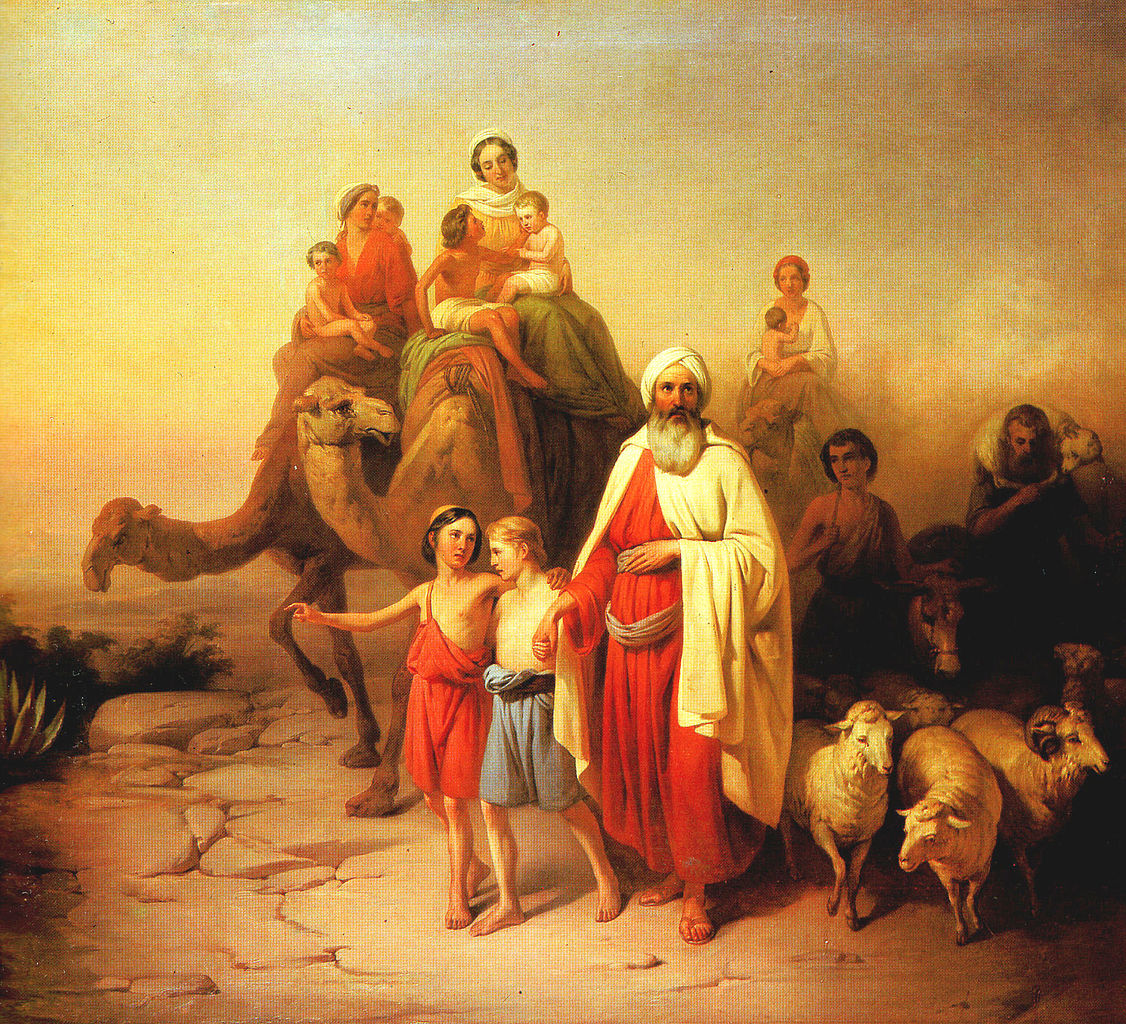
.jpg)