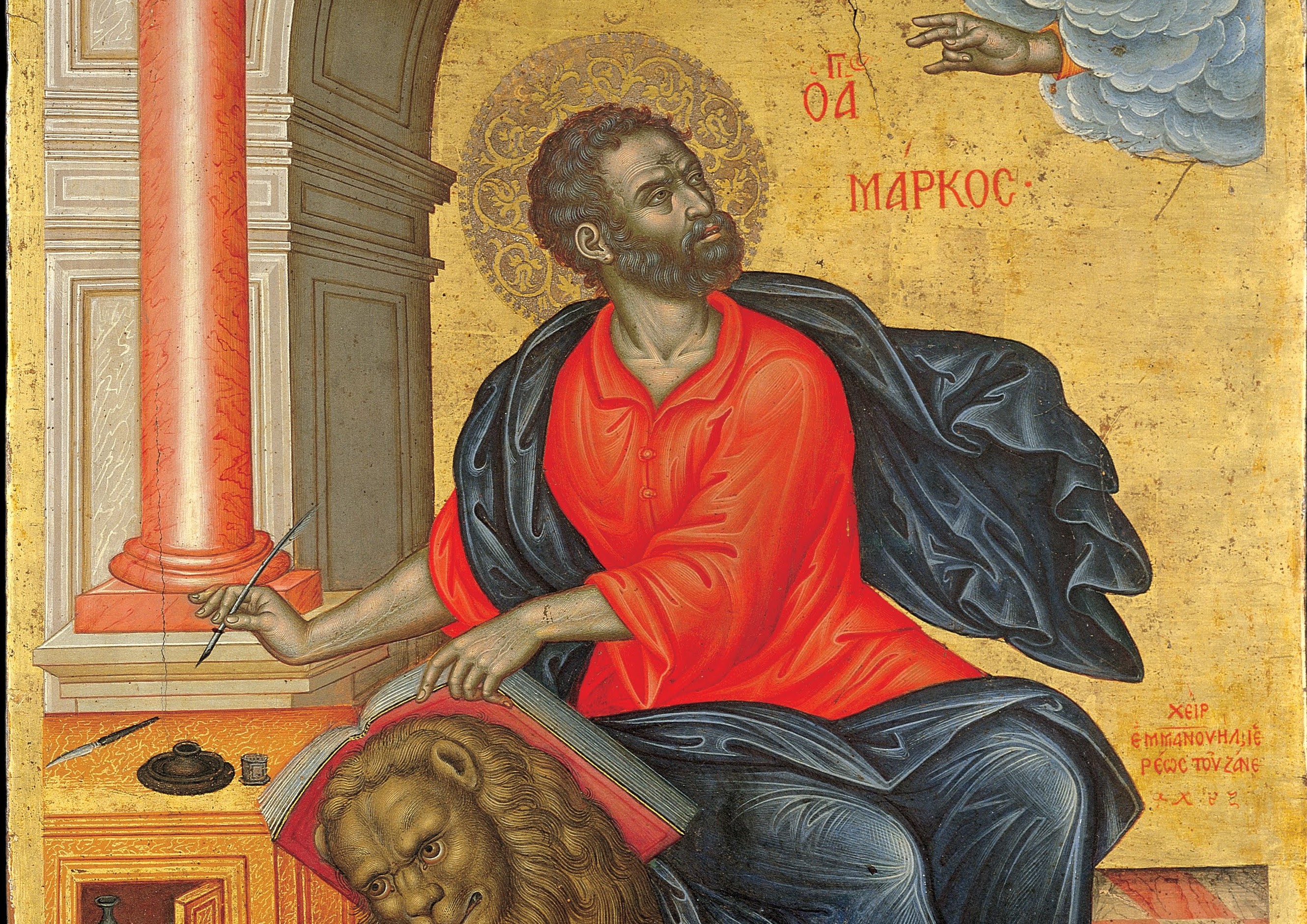
A couple of brief thoughts about St. Athanasius whose feast we celebrate today.
I have served in African-American parishes for most of my priesthood and have often wondered why there don’t seem to be any black parishes named for this North-African saint. There are many named for Augustine and Cyprian, both of whom were likely of Berber stock despite hailing from northern Africa. Athanasius, on the other hand, while certainly not a sub-Saharan African, is described as having dark — even blackish — skin. Yet almost no African-American Catholic community claims him. It just seems curious to me. I once wrote to a rather prominent historian who has written on African-American Catholicism to ask why this was so, but I never received a response.
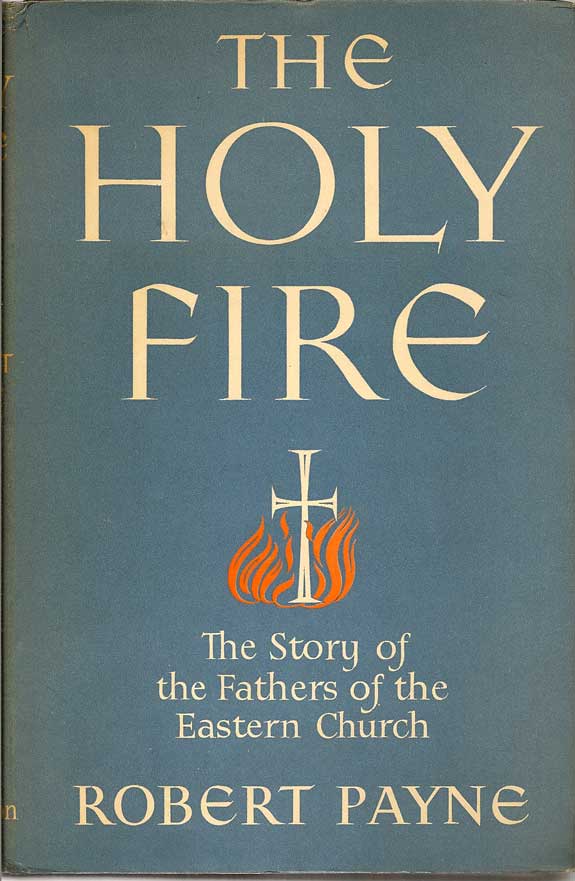
My favorite description of Athanasius comes from The Holy Fire, by Robert Payne, whose writing style I just love. In my opinion he is at his best in describing St. Athanasius. Enjoy this vivid excerpt:
There are times when the dark, heavy syllables of his name fill us with dread. In the history of the early Church no one was ever so implacable, so urgent in his demands upon himself, or so derisive of his enemies. There was something in him of the temper of the modern dogmatic revolutionary: nothing stopped him. The Emperor Julian called him “hardly a man, only a little manikin.” Gregory Nazianzen said he was “angelic in appearance and still more angelic in mind.” In a sense both were speaking the truth.
The small, dauntless man who saved the Church from a profound heresy, staying the disease almost single handed, was as astonishing in his appearance as he was in his courage. He was so small that his enemies called him a dwarf. He had a hook nose, a small mouth, short reddish beard which turned up at the ends in the Egyptian fashion, and his skin was blackish. His eyes were very small, and he walked with a slight stoop, though gracefully as befitted a prince of the Church. He was less than thirty when he was made Bishop of Alexandria. He was a hammer wielded by God against heresy.
There were other Fathers of the Eastern Church who wrote more profoundly or more beautifully, but none wrote with such a sense of authority or were so little plagued with doubts …. He wrote Greek as though those flowing syllables were lead pellets …. His wit was mordant. He did not often employ the weapon of sarcasm, but when he did, no one ever forgot it. When Arius, his great enemy died, he chuckled with glee and wrote off a letter to Serapion giving all the details of Arius’ death, how the heretic had talked wildly in church and was suddenly “compelled by a necessity of nature to withdraw to a privy where he fell, headlong, dying as he lay there.” As for the Arians, Athanasius hated them with too great a fury to give them their proper names. He called them dogs, lions, hares, chameleons, hydras, eels, cuttlefish, gnats, and beetles, and he was always resourceful in making them appear ridiculous …. At least twice Athanasius was threatened with death, and he was five times exiled. He was perfectly capable of riding up to the Emperor and holding the emperor’s horse by the bridle while he argued a thesis.
In the end he had the supreme joy of outliving all his enemies and four great emperors who had stood in his path, and must have known, as he lay dying, that he had preserved the Church …. It was a long triumph of one man against the world—Athanasius contra mundum! (pp. 67-68)
Today’s reading from the Acts of the Apostles tells of the stoning of St. Paul. We do well to ponder the kinds of sufferings the Apostles endured to announce the Gospel and win souls for Christ. In the “softer” Church of the declining West, it is hard for us even to imagine such suffering. How many Catholics today can even bear to rouse themselves to get to an hour-long Mass on Sunday? How many of us clergy will not speak the truth so as to avoid a raised eyebrow?
All but one of the first apostles suffered martyrdom as well as countless other sufferings before their lives were brutally ended. Arguably, 30 of the first 33 popes died as martyrs. Two others died in exile. Only one died in his bed.
We should never fail to thank God for the heroic ministry of the early Christians, clergy and laity alike, who risked everything to believe and to announce the Gospel. Having encountered Christ, they were so transfixed by His truth and His very person that they could not remain silent. Even in the face of persecution and death, the apostles declared, simply and forcefully, we cannot stop speaking about what we have seen and heard (Acts 4:20).
As a tribute to them and to the early Church I present here a catalogue of sorts of St. Paul’s sufferings. We know the most about his trials, but surely many others also suffered. As you read through what Paul endured, remember the many others as well. When discomfited by a mere inconvenience or a minor persecution, consider the price that others paid so that we could know Christ and be saved.
In this first passage, God announced Paul’s sufferings to Ananias:
For he is a chosen vessel of mine to bear My name before Gentiles, kings, and the children of Israel. I will show him how many things he must suffer for My name’s sake (Acts 9:15-16).
Here are some of Paul’s own descriptions of what he endured:
We are perplexed, but not in despair; persecuted, but not forsaken; struck down, but not destroyed — always carrying about in the body the dying of the Lord Jesus, that the life of Jesus also may be manifested in our body. For we who live are always manifesting the death of Jesus’ sake, that the life of Jesus also may be manifested in our mortal flesh. So then death is working in us, but life in you (2 Corinthians 4:8-12).
… in labors more abundant, in stripes above measure, in prisons more frequently, in deaths often. From the Jews five times I received forty stripes minus one. Three times I was beaten with rods; once I was stoned; three times I was shipwrecked; a night and a day I have been in the deep; in journeys often, in perils of waters, in perils of robbers, in perils of my own countrymen, in perils of the Gentiles, in perils in the city, in perils in the wilderness, in perils in the sea, in perils among false brethren; in weariness and toil, in sleeplessness often, in hunger and thirst, in fasting often, in cold and nakedness—besides the other things, what comes upon me daily: my deep concern for all the churches (2 Corinthians 11:23-27).
… in much patience, in tribulations, in needs, in distresses, in stripes, in imprisonments, in tumults, in labors, in sleeplessness, in fasting; by purity, by knowledge, by longsuffering, by kindness, by the Holy Spirit, by sincere love, by the word of truth, by the power of God, by the armor of righteousness on the right hand and on the left, by honor and dishonor, by evil report and good report; as deceivers, and yet true; as unknown, and yet well known; as dying, and behold we live; as chastened, and yet not killed; as sorrowful, yet always rejoicing; as poor, yet making many rich; as having nothing, and yet possessing all things (2 Corinthians 6:3-20).
Why do I still suffer persecution? [For, if not] the offense of the cross has ceased (Galatians 5:11).
Therefore, I take pleasure in infirmities, in reproaches, in needs, in persecutions, in distresses, for Christ’s sake. For when I am weak, then I am strong (2 Corinthians 12:10).
… my doctrine, my manner of life, purpose, faith, longsuffering, love, perseverance, persecutions, afflictions, which happened to me at Antioch, at Iconium, at Lystra—what persecutions I endured. And out of them all the Lord delivered me. (2 Timothy 3:10-11)
And why do we stand in jeopardy every hour? I affirm, by the boasting in you which I have in Christ Jesus our Lord, I die daily …. [Indeed] I have fought with beasts at Ephesus (1 Corinthians 15:30-32).
And lest I should be exalted above measure by the abundance of the revelations, a thorn in the flesh was given to me, a messenger of Satan to buffet me, lest I be exalted above measure. Concerning this thing I pleaded with the Lord three times that it might depart from me. And He said to me, “My grace is sufficient for you, for My strength is made perfect in weakness.” Therefore, most gladly I will rather boast in my infirmities, that the power of Christ may rest upon me. Therefore, I take pleasure in infirmities, in reproaches, in needs, in persecutions, in distresses, for Christ’s sake. For when I am weak, then I am strong (2 Corinthians 12:7-10).
You know that because of physical infirmity I preached the gospel to you at the first … (Galatians 4:13).
From now on let no one trouble me, for I bear in my body the brandmarks of the Lord Jesus (Galatians 6:7).
I tell the truth in Christ, I am not lying, my conscience also bearing me witness in the Holy Spirit, that I have great sorrow and continual grief in my heart (Romans 9:1-2).
Demas, in love with this present world, has deserted me and gone to Thessalonica. Crescens has gone to Galatia, Titus to Dalmatia. Luke alone is with me …. Tychicus I have sent to Ephesus …. Alexander the coppersmith did me great harm; the Lord will repay him according to his deeds. Beware of him yourself, for he strongly opposed our message. At my first defense [in Jerusalem] no one came to stand by me, but all deserted me. May it not be charged against them! But the Lord stood by me and strengthened me, so that through me the message might be fully proclaimed and all the Gentiles might hear it. So, I was rescued from the lion’s mouth (2 Timothy 4:10-17).
For I am already being poured out as a drink offering, and the time of my departure is at hand. I have fought the good fight, I have finished the race, I have kept the faith. Finally, there is laid up for me the crown of righteousness, which the Lord, the righteous Judge, will give to me on that Day, and not to me only but also to all who have longed for His appearing (2 Timothy 4:6-8).
Lest you think that St. Paul exaggerated in his descriptions, consider the following occurrences documented by St. Luke in the Acts of the Apostles:
Fellow Jews plot to kill him in Damascus, must be lowered in a basket from city walls to escape (Acts 9:23).
Hellenists seek to kill him in Jerusalem, must flee to Caesarea (Acts 9:29).
Paul is persecuted and run out of Antioch in Pisidia (Acts 13:15).
Facing likely arrest and stoning at Iconium, Paul flees to Lystra and Derbe (Acts 14:5).
He is stoned, dragged out of Lystra, and left for dead (Acts 14:19).
Paul is opposed by elders and others in Jerusalem (Acts 15:11).
He is arrested as a disturber of the peace, beaten with rods, and imprisoned at Philippi (Acts 16:23).
Paul is ordered by Roman officials to leave Philippi (Acts 16:39)
Attacked where he lodged in Thessalonica, he must be secreted away to Beroea (Acts 17:5-7, 10).
Paul is forced out of Beroea and must flee to Athens (Acts 17:13-15).
He is mocked in Athens for teaching about the resurrection (Acts 17:32).
Paul is apprehended by fellow Jews and taken before the judgment seat of Gallio in Corinth (Acts 18:12).
He is opposed by the silversmiths in Ephesus, who riot against him (Acts 19:23-41).
Paul is plotted against by the Jews in Greece (Acts 20:3).
He is apprehended by the mob in Jerusalem (Acts 21:27-30).
Paul is arrested and detained by the Romans (Acts 22:24).
He barely escapes being scourged (Acts 22:24-29).
Paul is rescued from the Sanhedrin and Pharisees during their violent uprising in Jerusalem (Acts 23:1-10).
Assassination plots are made against him by fellow Jews, who swear an oath to find and kill him (Acts 23:12-22)
Paul endures a two-year imprisonment in Caesarea (Acts 23:33-27:2).
He is shipwrecked on the island of Malta (Acts 27:41-28:1).
Paul is bitten by a snake (Acts 28:3-5).
He is imprisoned in Rome (Acts 28:16-31).
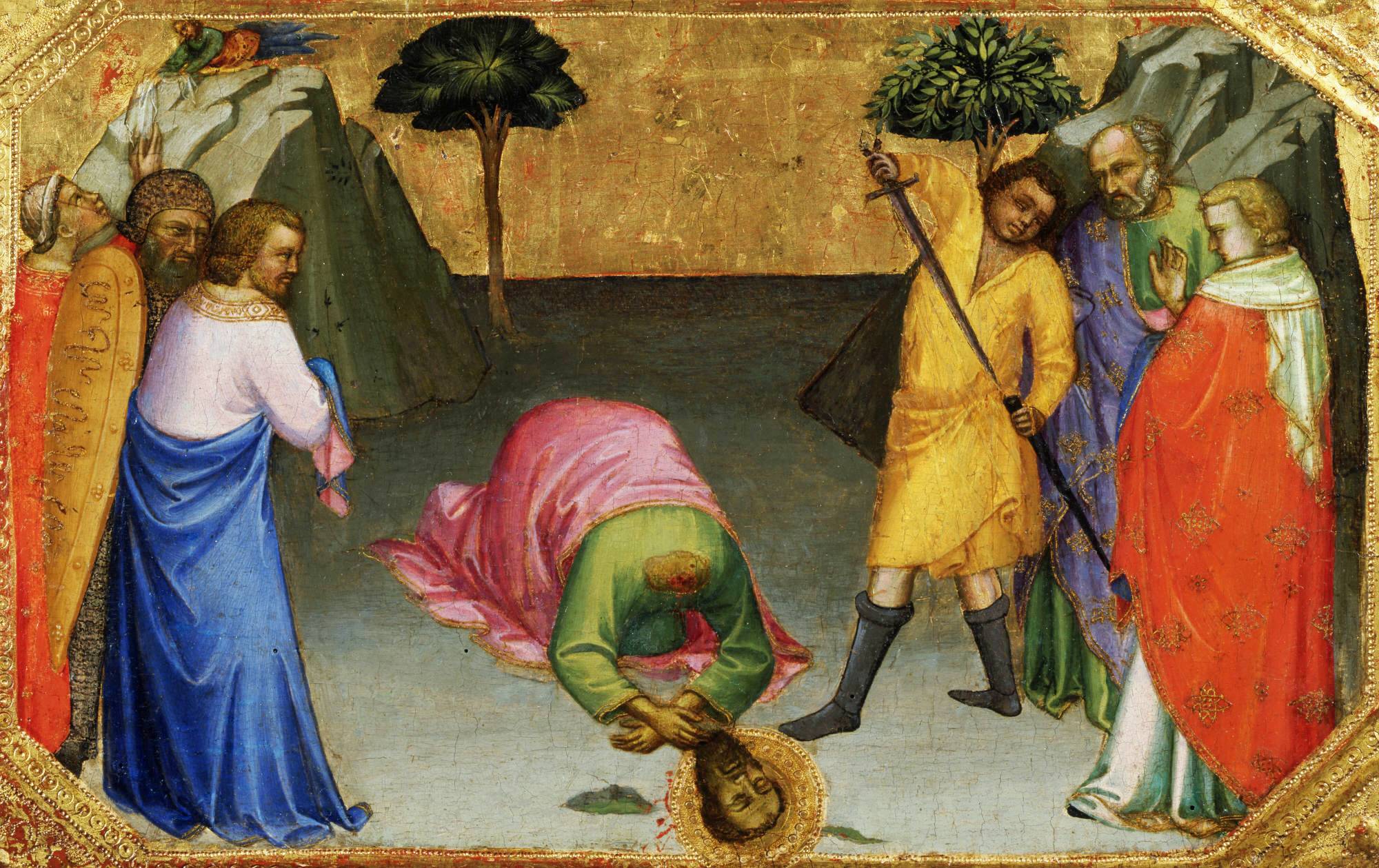
Paul was executed by decapitation ca. 68 A.D.
Never forget the price that others have paid in order that we may come to saving faith. Each Sunday, remember that the Creed we profess was written in the blood of martyrs.
The movie Paul, Apostle of Christ is a worthy tribute to St. Paul and the suffering of the early Christians:
This post is part of an occasional series on the virtues
At its heart, humility is reverence for the truth about oneself. We are neither to esteem ourselves too highly nor despise ourselves as bereft of God’s gifts. By humility we acknowledge that we depend on God and the gifts of others but also that we are called to accept our gifts and then use them for others. None of us has all the gifts, but together, and from God, we have all the gifts. In acknowledging our own gifts, humility calls us to remember that they are gifts, received from God and supplied or awakened by others. St. Paul says, What do you have that you did not receive? If then you received it, why do you boast as if you did not receive it? (1 Cor 4:7)
Fundamentally, humility bids us to recognize our lowliness and remember our need to be submitted to the gifts and lawful authority of others. The word humility is derived from the Latin humilitas or, as St. Thomas says, from humus, the earth beneath our feet.
Humility as a virtue is the good habit by which a person has a modest estimate of his own worth and submits himself to others, according to reason. St. Thomas says, “… humility is a quality by which a person considering his own defects has a lowly opinion of himself and willingly submits himself to God and to others for God’s sake. … The virtue of humility consists in keeping oneself within one’s own bounds, not reaching out to things above one, and submitting to one’s superior” (Summa Contra Gent., bk. IV, Ch. 55).
Humility does not require us to have no esteem for the gifts and graces that God has granted us. No one should fail to esteem the gifts of God, which are to be valued above all things. St. Paul says that one of the works of the Holy Spirit is That we may know the things that are given us from God (1 Corinthians 2:12). Humility also moves us to esteem the goods in others that we do not possess and to acknowledge defects or sins in our own self that we do not perceive in others. In this sense, saints were able to see their own faults and sins in a clearer light than that which is ordinarily given to persons who are not saints.
Humility is a kind of key that removes pride and makes us able and fit to receive grace. St. James writes, God resists the proud, and gives his grace to the humble (James 4:6).
An additional dimension of humility is the spontaneous embracing of humiliations. This is a practice humility accepts (though not in every case) when it is done for a necessary purpose. It is not humility but folly to embrace any and every humiliation. Doing so may harm good order and divert those gifted in one area to act immoderately in areas beneath or beside what they are best and most fit to do. When virtue calls for a thing to be done, even a very lowly one, it belongs to humility not to shrink from doing it. For example, you should not refuse to perform some lowly service when charity calls upon you to help others.
Humility is a virtue and “every virtue observes or consists of the mean” (omnis virtusin medio consistit). Thus, virtue is the middle ground between excess and defect. Humility is no exception.
The defect of humility is pride, in which we esteem our self too highly and forget our lowliness and need.
These are the excesses of humility:
Too great an obsequiousness, which may serve to pamper the pride in others through flattery or encourage their sins of tyranny, arrogance, and arbitrariness.
Too much abjection of oneself, wherein one disdains the gifts of God. Disdaining one’s gifts is not in service of the truth and dishonors the giver. It may also limit one’s usefulness to others by hiding or limiting what God wants shared and used for others.
Displaced humility – Excess humility may also be derogatory to a man’s office or holy character such that he dishonors both himself and his office. This can dishearten others or fuel irreverence and dishonor to offices or states of life (e.g., the consecrated religious life or the priesthood).
St. Thomas, drawing on St. Gregory and others, lists degrees (or acts) of humility:
To be humble in heart but also to show it in one’s very person, one’s eyes fixed on the ground; one should restrain haughty looks.
To speak few and sensible words and not to be loud of voice; one should not be immoderate in speech.
Not to be easily moved and disposed to laughter; one should check laughter and other signs of senseless or demeaning mirth.
To maintain silence until one is asked; one should not be in a hurry to speak.
To do nothing except as exhorted by the common rule of the monastery or community; in one’s work one should seldom depart from the ordinary way.
To believe and acknowledge oneself a greater sinner than all; in this respect one should ponder first one’s own sinfulness.
To presume oneself insignificant and unprofitable for most purposes; one should deem oneself less than fully capable of great things.
To confess one’s sin; one should experience one’s sinfulness with compunction.
To embrace patience by obeying under difficult and contrary circumstances; one should not be deterred from this on account of the difficulties and hardships that come under obedience.
To subject oneself to a superior; one should regulate one’s own will according to the judgment of a lawful superior.
To avoid excessive delight in fulfilling one’s own desires; one should not insist on one’s own will.
To fear God and to be always mindful of everything that He has commanded.
It’s hard not be moved to the recognition that we in many ways fall short of this virtue.
Because it governs and moderates pride (our chief fault), humility is to be regarded as one of the most needed of virtues. May the Lord grant us humility in the abundance and clarity needed!
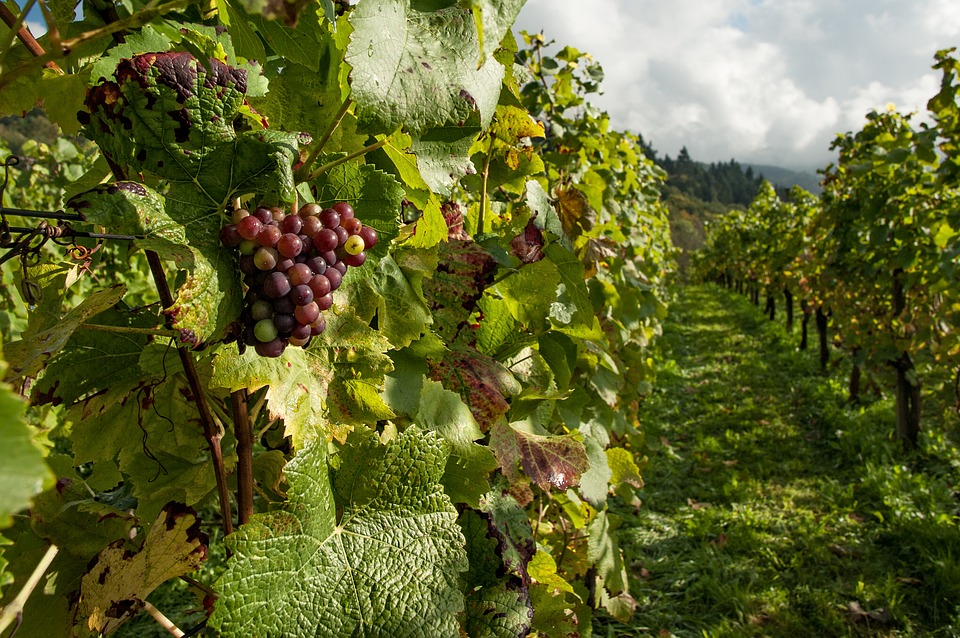
In this Easter Season, we continue to reflect on how the Risen Lord Jesus minsters to us and supplies our needs. Last week we considered Him as our shepherd. This week we learn how He is the vine and we the branches, wholly dependent on Him for everything. As we consider how He cares for us as His disciples, we need to rescue the word “care” from its rather sentimental modern sense. True care does not merely include pleasant things such as providing food and shelter. Sometimes care involves difficult things, but ones that are necessary to discipline and purify us so that we grow and bear more fruit. Thus, the Lord speaks of “pruning” in this passage. While caring, pruning is not often pleasant, but it is proper care. Let’s look at how the Lord cares for us so that we can be true disciples.
The Lord presents us with four basic principles that assist us in being better, more fruitful disciples.
I. The Purpose of Disciples– The text says, I am the true vine, and my Father is the vine grower. He takes away every branch in me that does not bear fruit … Anyone who does not remain in me will be thrown out like a branch and wither; people will gather them and throw them into a fire and they will be burned.
The purpose of a vine is to bear fruit. What are the fruits that the Father seeks? Surely justice, righteousness, and holiness are chief among them. The Letter to the Galatians speaks of them in this way: But the fruit of the Spirit is love, joy, peace, patience, kindness, goodness, faithfulness, gentleness, and self-control (Gal 5:23). Surely, we can add virtues and fruits such as generosity, chastity, mercy, forgiveness, and zeal for God and His kingdom. These are among the fruits God seeks, and which are the purpose of the vine, His son Jesus, whom He sent to nourish us so that these fruits would come to pass.
Yet there are some branches that, though they take nourishment from the vine, do not bear fruit. Not only do they fail to bear fruit, they often harm the vine by drawing strength away from the fruit-bearing branches.
I know little of grapes, but for many years now I have grown tomatoes. As the tomato plant grows, small shoots emerge from the base of the vine branches. These are usually called “suckers,” because they draw strength away from the main branch where the tomatoes are growing. These suckers should be plucked for the health and vigor of the plant and the best development of the fruit.
God will often do the same. In our modern age, with its stress on individualism, hearing that God cuts off unfruitful branches strikes us as unmerciful and harsh. However, God has in mind not just the individual, but the strength and fruitfulness of the whole vine. Failing to bear fruit does not just affect the individual; it affects the whole vine. Therefore, God, as a loving vine-dresser, cuts away the harmful branches. Your life is not just about you. My life is not just about me. We exist in myriad, complex relationships with one another, and God must care for all of them. Because the purpose of the vine is to bear fruit, God tends the vine with that in mind.
The text goes on to say that severed branches wither and that “people” will gather them and throw them into the fire. If I don’t know who I am and whose I am, if I am no longer rooted in Christ, anyone can name me and carry me off. Yes, without the stability of abiding on the vine, I can get “carried away” by worldly things. In this way, I wither and die spiritually; the slightest breeze can blow me about. Like any dried and withered branch, I am good for nothing but to be thrown into the fire. Unless Christ carries me and sustains me, I am carried away by others, who cast me into the fire.
II. The Pruning of Disciples – The text says, and every [branch] that does he prunes so that it bears more fruit. You are already pruned because of the word that I spoke to you.
Most of us who have cared for roses know how important pruning is. Without this careful and necessary cutting, the rose bush grows long and gnarly. It expends its strength more on the branches than on the flowers. Little by little the flowers become smaller and less beautiful; the leaves lose their beauty, shape, and color, becoming smaller and lighter green. Eventually the rose bush looks little better than a weed.
I imagine that if a rose bush could talk, it would protest and cry out in pain every November as I descend upon it and cut back its growth to a mere one foot above the ground. In May, though, the gorgeous roses in the front yard are a masterpiece and all the pain of November is forgotten.
Pain and pruning are part of the Christian journey; God knows what He is doing. We often do not, and like the roses in November that cry out in pain and protest, we look for answers. Yet no more than I can explain my purpose to the roses (they are only rose bushes, after all), can God explain to us what He is about (we are mere mortals with minds too small to comprehend the whole picture).
Just the same, November pruning gives way to May glory; God the vine-dresser knows what He is doing.
Note, too, that the Lord says that His Word “prunes” us. If we let the Word enter us uncompromised and unabridged, we read, For the word of God is living and active. Sharper than any double-edged sword, it penetrates even to dividing soul and spirit, joints and marrow; it judges the thoughts and attitudes of the heart (Heb 4:12). Yes, God’s Word can humble our pride, cut to the quick our distorted and wrongful thinking, and hold us accountable. It can cut away error and mend the decayed wounds of sin.
We must allow the Word of God to be what it is. Too many of us seek a filtered and watered-down version of God’s Word. No! Let the undiluted Word go to work, of which Scripture itself says, Is not my word like fire, declares the LORD, and like a hammer that breaks a rock in pieces? (Jer 23:29)
A pruned vine bears abundant fruit. None of us like pruning, but nothing is more necessary.
III. Persistence of Disciples – The text says, Remain in me, as I remain in you. Just as a branch cannot bear fruit on its own unless it remains on the vine, so neither can you unless you remain in me. I am the vine, you are the branches. Whoever remains in me and I in him will bear much fruit, because without me you can do nothing.
In this short Gospel, the word “remain” occurs seven times. Do you get the point? Remain! The Greek word μείνατε (meinate) is the plural imperative of the verb meno, meaning, “to abide.” To abide means to remain habitually or to stay somewhere. It speaks of stability and persistence.
It is clear that a branch must always stay attached to the vine or else it is doomed. Absolutely nothing is possible to a branch (except to wither and die) unless it is attached to the vine 24 x 7 x 365. Nothing could be clearer in this analogy than this truth.
Yet it seems very unclear to the average disciple of Jesus, who so easily walks away, finding abiding both tedious and difficult. Then we wonder why our spiritual life is tepid and its fruits lackluster! We can’t have even a mediocre spiritual life apart from Christ; the text says we can’t do anything at all but be scattered.
How do we abide with and in the Lord? Scripture distinguishes four ways. We abide and experience union with the Lord through
HIS WORD – If you abide in me, and my words abide in you, ask whatever you will, and it shall be done for you (Jn 15:7). Anyone who loves me will be true to my word and my Father will love him and we will come to him (Jn 14:22).
HOLY COMMUNION – He who eats my flesh and drinks my blood abides in me, and I in him (Jn 6:56).
PRAYER (especially communal prayer) – For where two or three are gathered in my name, there am I in the midst of them (Matt 18:20).
KEEPING HIS COMMANDMENTS – Those who keep his commandments abide in him and He in them (1 John 3:22).
Yes, abiding is accomplished through prayer, Scripture, sacraments, fellowship, and walking uprightly. This Gospel could not be more clear: abide, abide, abide, abide, abide, abide, abide. Seven times the word is used.
Do you get it? Abide. Abide persistently.
IV. The Produce of Disciples – The text says, If you remain in me and my words remain in you, ask for whatever you want and it will be done for you. By this is my Father glorified, that you bear much fruit and become my disciples.
Attached to and abiding in the vine, we will produce abundant fruit. Note that this is linked to a kind of fruitfulness in prayer that comes from the Father’s good pleasure.
Why is He pleased to answer our prayers if we abide? Because He can trust us with His blessings. In effect, He can say, “Here is someone who is close to my Son, who habitually remains with Him and abides with Him. Yes, here is someone I can trust with blessings. Here is a wise steward who is in union with my Son.” Scripture speaks often of the correlation between wise stewardship and blessings:
(Luke 16:10-11) Whoever can be trusted with very little can also be trusted with much, and whoever is dishonest with very little will also be dishonest with much. So, if you have not been trustworthy in handling worldly wealth, who will trust you with true riches?
(Matt 25:21) His master replied, “Well done, good and faithful servant! You have been faithful with a few things; I will put you in charge of many things. Come and share your master’s happiness!”
(Luke 12:48) From everyone who has been given much, much will be demanded; and from the one who has been entrusted with much, much more will be asked.
Do you want more? Then use well what you already have. Be someone whom the Father can trust because you stay close and abide with His Son. Be like those who can say, with mother Ruth, Wherever you go I will go, and where you stay I will stay (Ruth 1:16). Be like the man who said to his wife, “If you ever leave me, I’m going with you.”
The remarkable video below led me to ponder the relationship between reverence and fear and more importantly the difference between them. Reverence is a healthy form of fear, as contrasted with a cringing, hostile one.
The word “reverence” is rooted in the Latin reveror, meaning “to stand in awe of, to revere or respect.” Reverence includes a healthy fear of overstepping, harming, or violating something or someone we hold in awe or deeply appreciate. It is somewhat like the Holy Fear of the Lord counseled by Scripture, wherein we hold God in awe and dread offending Him out of respect and love.
When we have the healthy fear of reverence, we hesitate to simply barge in and behave “as if we owned the joint.” We proceed carefully, realizing that we are dealing with something or someone precious. We recognize that we are not dealing with something ordinary or with something we own, but rather something that someone else owns and regards highly.
When I have reverence for a person, I esteem him and am loath to cause him harm or grief. I curb my behavior and seek to avoid any unnecessary harm.
So, reverence is a healthy form of fear, a kind of wonder or awe at the mystery and magnificence of things and people. Of course, it should never supplant or overrule our reverence or holy fear of God, but it does have a proper and healthy place in our dealings with people and even with the created world.
If reverence is cultivated, it also helps us avoid unhealthy fear, cringing fear rooted in anxiety about backlash or retaliation. Because reverence keeps us respectful, we need not fear negative consequences.
This video is best understood in the light of this reflection. It features an extraterrestrial being who seems to be exploring an unknown planet. As he explores, he unreflectively (and thus irreverently) collects samples. Soon enough, he experiences something of a call to account, though a very loving one. Nevertheless, his irreverence ignites his fear and he acts rashly and thoughtlessly. In the end he recovers reverence, but sadly at a high price.
Pride is our most pervasive and serious sin. Humility is its antidote and the foundation of our spiritual life, and as the remedy to our most deep-seated pathology, it must be strong medicine. Humility is hard to swallow and has a lot of things it needs to work on.
I. The Foundation of Humility – Humility as a foundation is a good image, because by it we bow toward the earth or soil (humus in Latin) and abase ourselves before God. Foundations and holes in the earth go together.
By humility we understand that we are small and poor, barely more than dust and water. If God does not scoop us from the earth, we are nothing. Only by His command is the mysterious spark and organizational principle of life ignited. We are wholly dependent on God; our life is contingent. We do not explain ourselves at all. We are dependent not only on our parents (who cannot explain themselves either), but also on God’s purely gratuitous act of summoning us from dust. We are given existence by Him who is existence itself.
We are given not merely existence, but something mysterious called “life.”
Do you think you have life figured out? Can you define it? Imagine that you have before you an acorn and a small rock of similar size. One (the acorn) has the mysterious spark of life in it; the other does not. Plant both in the earth and add water. One transforms into a mighty oak; the other remains unchanged. What is the difference between the acorn and the rock? “Life,” you say. Well, tell me, what is that? Can you weigh it in a scale? Can you see its essence under a microscope? We see life’s effects, but we do not see it. We detect its absence, but where has it gone? What exactly departs when a human, an animal, or a plant dies?
Thus humility, like a foundation, bids us to bow low to the earth and admit that we know very little. Even the most basic thing (life) that enables everything else eludes us and taunts us by its mystery.
II. The First Humility – We must distinguish between humility toward God and humility toward others. Humility toward God is simple (and it is first and foremost) because our duty in that regard is clear. There is no ambiguity in comparing ourselves to Him who is perfection, glory, and purity.
Humility toward others, though, has ambiguities that can only be resolved by reference to God, for not everything in another person is superior; not everything in others is perfect truth or purity.
Indeed, our first humility is toward God. By it we recognize that we are nothing without Him. Even more so, no good work of ours—not even the slightest salutary act—can happen without the grace of God.
III. The Finding of Humility – Humility also recognizes that we do not have meaning, direction, or purpose apart from God. Therefore, we must look to the Book of Creation and the Book of Scripture, the Word of God, to discover and obey the truth and meaning given by God in what is created and what is revealed.
Atheists and materialists boldly assert that nothing has meaning, purpose, direction, or sense. They hold that everything that has happened is by chance; a random, meaningless crashing together of atoms (wherever they came from). Even atheists, though, cannot seem to accept or live by their own radical theory. Only one of them, Nietzsche, was ever “brave” enough to live in a meaningless world—and he died insane.
For us who would seek for humility, we must sit before what God has created and what He has revealed in Scripture, humbly observing, learning, and obeying what He teaches us there. We do not simply project meaning; we must humbly seek it, find it, and obey the truth and meaning of things.
IV. The Frank Truth of Humility – Humility also admits the frank and obvious truth that we are sinners. We have base, selfish, narrow hearts that are strangely attracted by what we know is harmful and yet resistant to what we know is good. Our will is inconsistent, vacillating, and whimsical, yet at the same time stubborn. We tend to maximize the minimum and minimize the maximum. Our darkened minds seem almost to prefer foolish and dubious explanations to what is clear, common-sense, and obviously true. We almost seem to want others to lie to us. We love to rationalize and daydream. Knowing a little makes us think we know it all. Frankly, we are a mess. We are only saved with difficulty and because God is powerful, patient, and abundant in grace and mercy.
V. The Fellowship of Humility – St. Thomas Aquinas says quite poetically, “Wherefore, every man, in respect to what is his own, should subject himself to every neighbor in respect to what the neighbor has of God’s” (Summa Theologica IIa IIae 161, a 3). Indeed, our neighbors have many things from God that are to be respected. They have things that we share, but also many others that we do not have at all. I do not have all the gifts, and you do not have all the gifts, but together we have all the gifts. We have them all, though, only by mutual respect and humble submission. Thus, our humility toward others is really humility toward God, who wills that others should be part of His governance of us and of our completion.
Note, too, a careful distinction that flows from what St. Thomas teaches regarding humility toward others. It is not to be reduced to mere human respect or flattery nor is it to be rooted in worldly and servile fear. True humility has us abase ourselves before others based on what is of God in them. The humble person does not abase himself before others for what is wicked in them. Indeed, many holy and humble people have had to rebuke the wicked and have suffered as a result.
Consider our Lord, who found it necessary to rebuke the leaders of His day. Consider John the Baptist, who rebuked Herod; or the apostles, who refused the command to speak Jesus’ name no longer. These were humble men, but they also knew that the first humility belongs to God and that no humility toward human beings can ever eclipse it.
Therefore, the modern notion of “Who am I to judge?” is not proper humility. Rather, it is rooted more in a kind of sloth (cloaked in the self-congratulatory language of tolerance) that avoids humbly seeking truth and being conformed to it. The truly humble person is open to correcting others and to being corrected because humility always regards the truth.
VI. The Focus of Humility – “Humility is reverence for the truth about ourselves.” Indeed, the focus of humility is always the truth.
What is the truth? Each of us is gifted but incomplete.
Humility doesn’t say, “Aw shucks, I’m nothing.” That is not true. You are God’s creation and are imbued with gifts, but they are gifts. You did not acquire them on your own. God gave them to you, most often through others who raised you, taught you, and helped you to develop the skills and discover the gifts that were within you. So, you do have gifts, but they are gifts. Scripture says, What have you that you have not received? And if you have received, why do you glory as though you had not received? (1 Cor 4:7)
Although you are gifted, you do not have all the gifts. This is the other truth of humility: that God and others must augment your many deficiencies. Whatever your gifts, and however numerous they are, you do not have all or even most of them. That is only possible in relationship with God and His people.
Admit it: true humility is tough. If you don’t think so, then try the test below from St. Anselm, who lists seven degrees of humility. How far along are you?
Here are St. Anselm’s degrees of humility (as quoted in the Summa Theologica IIa IIae q. 161a. 6):
to acknowledge oneself contemptible,
to grieve on account of it,
to confess it,
to convince others to believe this,
to bear patiently that this be said of us,
to suffer oneself to be treated with contempt, and
to love being thus treated
In this video do you think that Lancelot might be struggling just a bit with pride?
Today’s Feast of St. Mark (also known as John Mark) reminds us that the Gospel occurs within the human setting and condition. Mark was at the center of the tension between Paul and Barnabas; their differences were so severe that it led to a parting of ways.
Yet St. Mark, despite his less-than-stellar beginning in Church leadership came to prove his worth and was reconciled to St. Paul.
To fill in the back story, let’s begin by St. Barnabas and then turn our attention to St. Paul.
St. Barnabas was a Jew, a native of Cyprus, and of the tribe of Levi. As such he likely served in the Temple as a priest, depending on his age at his conversion to Christianity. His given name was Joseph, but the apostles called him Barnabas, which means “son of encouragement” (cf Acts 4:36).
He was probably a wealthy man, for St. Luke describes him early in Acts as a generous man who sold land to support the growing Church.
Most critically, it was Barnabas who vouched for the new convert, Saul of Tarsus, later known as Paul. Paul was viewed with suspicion by those in Jerusalem, including the apostles, who only recently had been targets of his persecutions (cf Acts 9:26).
Talk about one of the most pivotal introductions in history! Indeed, it may be argued that this changed the course of Western history and surely that of the Church. Barnabas smoothed the way for St. Paul, the Church’s most zealous missionary and greatest biblical theologian. After Barnabas’ introduction, Paul was able to move freely around the disciples.
Sometime after this, the apostles in Jerusalem sent Barnabas to Antioch, which was home to both Jews and Gentiles. It seems that he was not yet considered to be of the rank of apostle or bishop (Acts 13:1 calls him a teacher). Rather, he went more to observe and be of help. Under the leadership of Barnabas and others, the Church in Antioch thrived and grew quickly.
So, Barnabas sent for Paul to come and join him. They worked together for at least a year, and it was at Antioch that the disciples were called Christians for the first time (Acts 11:26). Barnabas continued to advance and build up Paul’s ministry in the Church. Barnabas gave us a stunning moment in Church history; it is not wrong to call St. Paul his protégé.
At a certain critical point, leaders at Antioch laid hands on Barnabas and Saul. While some debate this, to me it is the clearest moment when it can be said that they were ordained and given the rank of bishop and the title “Apostle.”
Missionaries – Having done this, the Church leaders at Antioch, directed by the Holy Spirit, sent Barnabas and Paul forth on missionary work. This journey is what is now known as Paul’s first missionary journey. It is interesting to note that early in the journey described in Acts, Barnabas is listed first, followed by Paul. By Acts 13:43, however, the order changes and Paul is listed first. This suggests a change in leadership.
They took with them on this first journey the Barnabas’ cousin John, who was called Mark. Somewhat early on the journey, Mark decided that he could no longer go on and turned away from the missionary trip. Later on, this would prove to be significant.
The last major role for Barnabas was in Acts 15 at the Council of Jerusalem, which was convened to decide whether Gentile converts could become full members of the Church without converting to Judaism. Barnabas, along with Paul, provided important testimony to the zeal and conversion of the Gentiles.
A sad moment – After the Council in Jerusalem, Paul and Barnabas returned to Antioch in triumph, their ministry vindicated. They planned another missionary journey together, but then came a critical, sad moment:
Sometime later Paul said to Barnabas, “Let us go back and visit the believers in all the towns where we preached the word of the Lord and see how they are doing.” Barnabas wanted to take John, also called Mark, with them, but Paul did not think it wise to take him, because he had deserted them in Pamphylia and had not continued with them in the work. They had such a sharp disagreement that they parted company. Barnabas took Mark and sailed for Cyprus, but Paul chose Silas and left (Acts 15:36-40).
Although it was a sad moment, it illustrates the human situation. Here were two men who had been like brothers. Paul owed his inclusion in leadership largely to Barnabas. They had taught together. They had journeyed hundreds of miles by ship and then by foot into the northern mountains, making converts in effective ministry. More recently they had just returned from Jerusalem, their vision and ministry approved and vindicated against naysayers among the brethren. Yet at this magnificent moment, Paul and Barnabas argued and parted company over Barnabas’ cousin Mark.
One of the things I admire most about the biblical text is that it does not whitewash things like this. Heroes are not perfect men; they are flawed and representative of the human condition. They are gifted and strong but struggle with the same issues and demons that haunt us all.
What is the lesson to be learned? God uses us even in our weakness. Who was right and who was wrong here? It is difficult to say. Two gifted men were unable to overcome an impasse. Alas, that is the fallen human condition. God will continue to work, however. He can make a way out of no way and write straight with crooked lines.
Even sadder, this is the last we hear of Barnabas in any substantial way. He who had been so instrumental in the life of his protégé Paul, and in the early Church now exits the stage in the heat of an argument. The text says that Barnabas and Mark sailed for Cyprus, and then there is silence.
Barnabas is mentioned in Galatians, but given the vague timeline, it is difficult to assume it took place after the disagreement described in Acts. It likely took place earlier and may illustrate that there were already tensions between Paul and Barnabas before the “Mark incident.” In Galatians we see that Barnabas was following Peter’s weak example of not eating with Gentiles, which was clearly upsetting to Paul (cf Gal 2:13).
Healing? It would also seem that Barnabas continued to labor as a missionary for Paul, who makes mention of him to the Corinthians (cf 1 Cor 9:6). Although Paul’s reference to Barnabas is a passing one, it gives no indication of a rift between them. This suggests that there was some healing of the division, even if they did not labor together again.
More healing? Even for John, called Mark (likely the same Mark who became secretary to Peter and authored the Gospel of Mark), it would seem that he and Paul overcame their difficulties. For St Paul wrote to Timothy, likely about the same Mark, Get Mark and bring him with you, because he is helpful to me in my ministry (2 Tim 4:11). There is something of a redemption here for Mark and a healing for Paul. The “useless” deserter Mark is now one who is helpful to Paul.
Although the loss and seeming disappearance of St. Barnabas is sad, there is still the story of St. Mark’s growth to greater maturity and to leadership. Though less-than-reliable at first, Mark later proves his worth. It would seem we have St. Peter to thank for that, taking Mark as his secretary and aide. We also owe thanks to St. Barnabas, who did not give up on Mark. In the end, John Mark proves himself helpful in the ministry and St. Peter called him “my son” (1 Peter 5:14).
Yes, God can make a way out of no way. Even in our weakness (and often only because our weakness keeps us humble), God can do great things.
In the Office of Readings last week, we examined some of the more terrifying passages from the Book of Revelation, related to the seven trumpets, seals, and bowls of wrath. There is also a reference to the underreported “seven thunders,” reminding us that there are some things that are not for us to know.
Then I saw another mighty angel coming down from heaven. He was robed in a cloud, with a rainbow above his head; his face was like the sun, and his legs were like fiery pillars. He was holding a little scroll, which lay open in his hand. He planted his right foot on the sea and his left foot on the land, and he gave a loud shout like the roar of a lion. When he shouted, the voices of the seven thunders spoke. And when the seven thunders spoke, I was about to write; but I heard a voice from heaven say, “Seal up what the seven thunders have said and do not write it down” (Rev 10:1-4).
A similar passage occurs in the Book of Daniel. Having had certain things revealed to him, Daniel is told,
But thou, O Daniel, shut up the words and seal the book, even to the time of the end (Dan 12:4).
To the Apostles, who pined for knowledge of the last things, Jesus said,
It is not for you to know the times or the seasons, which the Father hath put in his own power (Acts 1:7).
In all of these texts we are reminded that there are some things—even many things (seven is a number indicating fullness)—that are not for us to know. This is a warning against sinful curiosity and a solemn reminder that not all of God’s purposes or plans are revealed to us.
Several reasons come to mind for this silence and for the command to seal up the revelation of the seven thunders:
It is an instruction against arrogance and sinful curiosity. Especially today, people seem to think that they have right to know just about anything. The press speaks of the people’s “right to know.” And while this may be true about the affairs of government, it is not true about people’s private lives, and it is surely not true about all the mysteries of God. There are just some things that we have no right to know, that are none of our business. Much of our prying is a mere pretext for gossip and for the opportunity to see others’ failures and faults. It is probably not an exaggeration to say that more than half of what we talk about all day long is none of our business.
It is a rebuke of our misuse of knowledge. Sadly, especially in the “information age,” we speak of knowledge as power. We seek to know in order to control, rather than to repent and conform to the truth. We think that we should be able to do anything that we know how to do. Even more reason, then, that God should withhold from us the knowledge of many things; we’ve confused knowledge with wisdom and have used our knowledge as an excuse to abuse power, to kill with nuclear might, and to pervert the glory of human life with “reproductive technology.” Knowledge abused in this way is not wisdom; it is foolishness and is a path to grave evils.
It is to spare us from the effects of knowing things that we cannot handle. The very fact that the Revelation text above describes this knowledge as “seven thunders” indicates that these hidden utterances are of fearful weightiness. Seven is a number that refers to the fullness of something, so these are loud and devastating thunders. God, in His mercy to us, does not reveal all the fearsome terrors that will come upon this sinful world, which cannot endure the glorious and fiery presence of His justice. Too much for this world are the arrows of His quiver, which are never exhausted. Besides the terrors already foretold in Scripture, the seven thunders may well conceal others that are unutterable and too horrifying for the world to endure. Ours is a world that is incapable of enduring His holiness or of standing when He shall appear.
What, then, is to be our stance in light of the many things too great for us to know and that God mercifully conceals from us? We should have the humility of a child, who knows what he does not know but is content that his father knows.
O Lord, my heart is not proud nor haughty my eyes. I have not gone after things too great nor marvels beyond me.
Truly I have set my soul in silence and peace. Like a weaned child on its mother’s lap, even so is my soul.
O Israel, hope in the Lord both now and forever (Psalm 131).
Yes, like humble children we should seek to learn, realizing that there are many things that are beyond us, that are too great for us. We should seek to learn, but in a humility that is reverence for the truth, a humility that realizes that we are but little children, not lords and masters.
Scripture says, Beyond these created wonders many things lie hid. Only a few of God’s works have we seen (Sirach 43:34).
Thank you, Lord, for what you have taught us and revealed to us. Thank you, too, for what you have mercifully kept hidden because it is too much for us to know. Thank you, Lord. Help us learn and keep us humble, like little children.

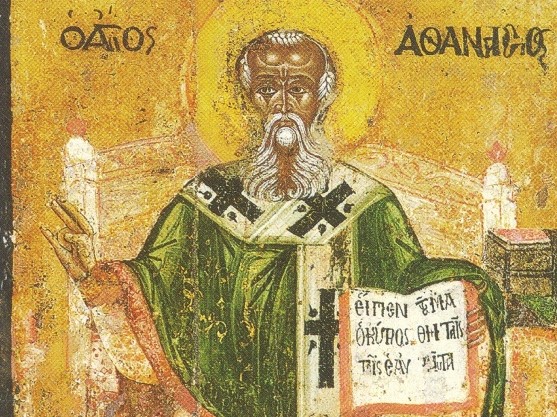
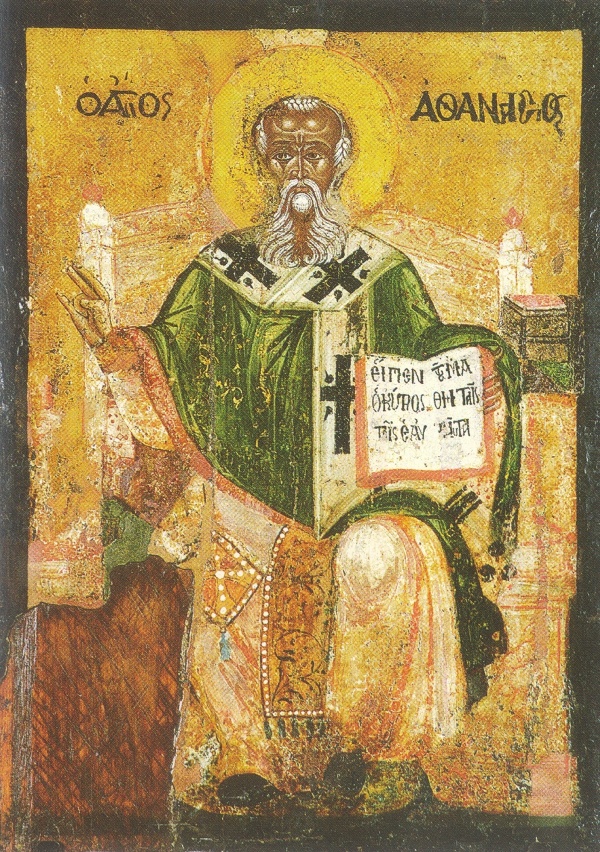 A couple of brief thoughts about St. Athanasius whose feast we celebrate today.
The small, dauntless man who saved the Church from a profound heresy, staying the disease almost single handed, was as astonishing in his appearance as he was in his courage. He was so small that his enemies called him a dwarf. He had a hook nose, a small mouth, short reddish beard which turned up at the ends in the Egyptian fashion, and his skin was blackish. His eyes were very small, and he walked with a slight stoop, though gracefully as befitted a prince of the Church. He was less than thirty when he was made Bishop of Alexandria. He was a hammer wielded by God against heresy.