When I was a good bit younger, in college actually, I had to take a few economics and marketing courses. At that time I thought to myself, “God has a bad marketing department,” since things like Scripture and prayer were often so difficult to understand and do. God seemed to insist that we pray, but everyone I ever asked admitted that prayer was difficult. And while many had reasons they offered as to why prayer was difficult, I still wondered why, if God could just zap prayer and make it delightful, He didn’t just do so. “Yes,” I thought, “God has a bad marketing plan!”
But of course God isn’t selling products; He’s raising children. He’s healing hearts, and heart surgery involves pain and often lengthy procedures. Many purifications, mortifications, and changes are going to be necessary if we want to attain holiness and Heaven.
Let’s look at three reasons our soul needs purification. Note that purifications of the soul are akin to, but distinct from, the mortifications necessary for our body and the passions related to it (e.g., gluttony, lust, and greed). For our soul, too, can be weighed down with excesses and defects.
Drawing from the spiritual masters and St. Thomas Aquinas, Fr. Reginald Garrigou-Lagrange details three reasons that our soul needs purification, especially as we begin to make progress. They are spiritual pride, spiritual gluttony, and spiritual sloth. Each of these brings conditions and temptations to a soul that is beginning to make some progress in prayer and fervency. The very gifts of progress and fervency are also possible dangers to the ongoing growth that is needed. Thus God purifies us in diverse manners in order to avoid having these traps capture us entirely.
Let’s look at each in turn. The text is my own, but the insights and inspiration are found in Fr. Garrigou-LaGrange’s Three Ages of the Interior Life, Vol two, pp. 44ff, Tan Publications.
I. Spiritual pride – This comes when a person, having made some progress and experienced consolations as well as the deeper prayer of a proficient, begins to consider himself a spiritual master. He or she may also start to judge others severely who seem to have made less progress.
Those afflicted with spiritual pride often “shop around” for a spiritual director, looking for one who affirms rather than challenges their insights. Further, they tend to minimize the true reality of their sins out of a desire to appear more perfected than they really are.
Soon enough we have a Pharisee of sorts, who regards himself too favorably and others too poorly. There is also the problem of hypocrisy, since spiritual pride would have one play the role of a spiritual master and proficient, when one really is not.
God, therefore, must often humble the soul who has begun to make progress. In a certain sense He slows the growth, lest the greatest enemy, pride, claim all the growth.
II. Spiritual sensuality – This is a kind of spiritual gluttony, which consists in being immoderately attached to spiritual consolations. God does sometimes grant these to the soul, but the danger is that the consolations come to be sought for their own sake. One starts to love the consolations of God more than the God of all consolations. Growth in the love of God for His own sake is too easily lost or becomes confused and entangled. Or even worse, it becomes contingent upon consolations, visions, and the like.
Hence God must often withhold these for the sake of the soul, which must learn the discipline of prayer, with or without consolations, and to love God for His own sake. Uncorrected, spiritual gluttony can lead to spiritual sloth, which we consider next.
III. Spiritual sloth – This emerges when spiritual gluttony or other expectations of prayer are not met. There sets up a kind of impatience or even disgust for prayer and the narrow way of the spiritual life. Flowing from this is discouragement, a sluggishness that cancels zeal, and the dissipation of prayer and other spiritual practices. One allows endless distractions, makes excuses, shortens prayer and other spiritual exercises, or does them in a perfunctory manner.
Here, too, God must seek to purify the soul of attachment to consolations, lest such sloth lead to a complete disgust and a refusal to walk the narrow way of the spiritual life. Perhaps this sort of purification will take place through secondary causes, wherein the Lord acts though a spiritual director to insist on prayer, no matter how difficult. Perhaps, too, certain seasons such as Lent and Advent, or other “ember days” and the like will be used by God to bring greater zeal to the soul weighed down with spiritual sloth.
Clearly, God must correct this spiritual sloth and help us to accept God and prayer on His terms, not ours. The insistence on delight and consolations on our own terms is a great enemy to the docility and humility necessary for true growth.
Yes, there are many purifications necessary for us, whether we like to admit it or not. We might like to think that our spiritual life would itself be free from excesses or defects or at least would be a sign of great progress. But often even the most beautiful prayer experiences and spiritual stages are replete with the need for purification and further growth. Perhaps this is what Isaiah meant when he wrote,
In our sins we have been a long time, and shall we be saved? We have all become like one who is unclean, and even our righteous deeds are like a polluted garment (Is 64:5-6).
In daily Mass for Monday of the 11th Week of the Year, we read a passage from the Sermon on the Mount. It is a challenging text that raises many questions if read in a literal or absolute manner.
You have heard that it was said, ‘An eye for an eye and a tooth for a tooth.’ But I say to you, offer no resistance to one who is evil. When someone strikes you on your right cheek, turn the other one to him as well. If anyone wants to go to law with you over your tunic, hand him your cloak as well. … You have heard that it was said, ‘You shall love your neighbor and hate your enemy.’ But I say to you, love your enemies, and pray for those who persecute you … (Matt 5:38-44).
What a text. It seems to preclude self-defense! What does it mean to “offer no resistance to one who is evil”? Jesus does not say that one should not defend oneself if attacked; He says that one should turn the other cheek. Is this a call to radical pacifism? Does this mean that a nation should have no police force, no judicial system, no army? So radical does this text seem to most that they are overwhelmed and simply turn the page.
Instead of turning the page, though, we might do well to reflect on its message:
The text seems to be more about offenses against personal dignity than physical attack. It is true that a strike on the cheek is physical, but in the ancient world such acts were understood as an attack on personal dignity rather than a grave physical threat. This is the case even today. Being slapped in the face is not a devastating threat to physical well-being; it is an insult. In the ancient world one who wished to humiliate a person struck the person’s left cheek with his open right hand. For the one struck, this was an indignity to endure, but not the worst one that could be inflicted. The worst insult that could be given was striking the right cheek of a person with the back of one’s right hand.
So, what Jesus is describing in this passage is more a question of dignity. His basic teaching is that if someone tries to rob you of your dignity (by a slap on the cheek), realize that your dignity does not come from what others think of you; it is given by God and no one can take it from you. Demonstrate your understanding of this by offering your other cheek. Don’t retaliate to “regain” your dignity. The one who struck didn’t give you your dignity and cannot take it away from you. To retaliate is to enter the world of the one who insulted you. Stand your ground; do not flee, but do not become like the one who insulted you.
This text is not about defending oneself from life-threatening physical attack; it is a text about personal dignity. Wanting to get back at others because they offended you, or did not praise you enough, or poked fun at you, or did not give you your due; all of that ends because it no longer matters to you—at least not when Jesus starts to live His life in you.
So, this text has a cultural context that does not necessarily require us to interpret Jesus’ words as an absolute exclusion of legitimate self-defense in moments of serious physical threat.
Any distinctions I have made above by way of explanation should not remove the core of Jesus’ message, which is meant to limit retaliation and remove from it anything “personal” other than the protection of one’s life from imminent threat or significant injustice.
This reflection serves as background to the Church’s careful and thoughtful approach to the subject of necessary self-defense. The Catechism of the Catholic Church sets forth this teaching as part of its exposition on the 5th Commandment (Thou Shalt Not Kill). Here are some excerpts:
The legitimate defense of persons and societies is not an exception to the prohibition against the murder of the innocent that constitutes intentional killing. “The act of self-defense can have a double effect: the preservation of one’s own life; and the killing of the aggressor … The one is intended, the other is not” (CCC #2263).
Love toward oneself remains a fundamental principle of morality. Therefore, it is legitimate to insist on respect for one’s own right to life. Someone who defends his life is not guilty of murder even if he is forced to deal his aggressor a lethal blow: If a man in self-defense uses more than necessary violence, it will be unlawful: whereas if he repels force with moderation, his defense will be lawful … Nor is it necessary for salvation that a man omit the act of moderate self-defense to avoid killing the other man, since one is bound to take care of one’s own life than of another’s (CCC #2264).
Legitimate defense can be not only a right but a grave duty for one who is responsible for the lives of others. The defense of the common good requires that an unjust aggressor be rendered unable to cause harm. For this reason, those who legitimately hold authority also have the right to use arms to repel aggressors against the civil community entrusted to their responsibility (CCC #2265).
The efforts of the state to curb the spread of behavior harmful to people’s rights and to the basic rules of civil society correspond to the requirement of safeguarding the common good. Legitimate public authority has the right and duty to inflict punishment proportionate to the gravity of the offense. Punishment has the primary aim of redressing the disorder introduced by the offense. When it is willingly accepted by the guilty party, it assumes the value of expiation. Punishment then, in addition to defending public order and protecting people’s safety, has a medicinal purpose: as far as possible, it must contribute to the correction of the guilty party (CCC #2266).
Assuming that the guilty party’s identity and responsibility have been fully determined, the traditional teaching of the Church does not exclude recourse to the death penalty, if this is the only possible way of effectively defending human lives against the unjust aggressor. If, however, non-lethal means are sufficient to defend and protect people’s safety from the aggressor, authority will limit itself to such means, as these are more in keeping with the concrete conditions of the common good and more in conformity to the dignity of the human person. Today, in fact, as a consequence of the possibilities which the state has for effectively preventing crime, by rendering one who has committed an offense incapable of doing harm—without definitely taking away from him the possibility of redeeming himself—the cases in which the execution of the offender is an absolute necessity “are very rare, if not practically nonexistent” (CCC #2267).
All citizens and all governments are obliged to work for the avoidance of war. However, “as long as the danger of war persists and there is no international authority with the necessary competence and power, governments cannot be denied the right of lawful self-defense, once all peace efforts have failed (CCC #2308).
The strict conditions for legitimate defense by military force require rigorous consideration. The gravity of such a decision makes it subject to rigorous conditions of moral legitimacy. At one and the same time:
the damage inflicted by the aggressor on the nation or community of nations must be lasting, grave, and certain;
all other means of putting an end to it must have been shown to be impractical or ineffective;
there must be serious prospects of success;
the use of arms must not produce evils and disorders graver than the evil to be eliminated. The power of modern means of destruction weighs very heavily in evaluating this condition.
These are the traditional elements enumerated in what is called the “just war” doctrine (CCC #2309).
Thus, self-defense and the ending of unjust aggression should never be something we do lightly or without reflection. The Lord and the Church require of us serious reasons for bringing lethal blows even to enemies; we should never undertake such measures without considering carefully other less-extreme responses. Respect for life means that I can demand my enemy respect my life, but also means that I must respect his. Recourse to war or other lethal measures may sometimes be necessary, but we must examine our motives and carefully consider alternative methods.
Finally, recall that the Sermon on the Mount is not a list of moral rules that we are expected to follow with the power of our own flesh. Rather, they are a description of the transformed human person. They describe what a person is like when the Lord lives in him and transforms him by His grace. The transformed person is not excessively concerned with personal dignity. The world did not bestow dignity and thus cannot take it away. The transformed person is not concerned with getting back at those who have inflicted blows against their dignity; He is content to be in God’s favor and increasingly free of vainglory, the excessive desire for human praise and standing.
The readings for this Sunday speak of God’s providence, which is often displayed in humble, hidden, and mysterious ways. While it is true that God sometimes works in overpowering ways, His more common method seems to be using the humble and even unlikely things of the created order to accomplish His goals.
For us who are disciples, there are three related teachings given to us that speak of how God will make use of us and others. It is also good to link these teaching to Father’s Day, which occurs this weekend here in the U.S. These three teachings can be described as Adaptability, “Awe-Ability,” and Accountability.
ADAPTABILITY– In today’s first reading and in the Gospel, we hear how God can take something humble and adapt it to be something mighty and powerful.
The tender shoot of the first reading becomes a mighty oak: I [the Lord] will take from the crest of the cedar…a tender shoot, and plant it on a high and lofty mountain. … It shall put forth branches and bear fruit and become a majestic cedar (Ezekiel 17:22-23).
The mustard seed of the first reading which becomes a great shade tree:The … kingdom of God … is like a mustard seed that, when it is sown in the ground, is the smallest of all the seeds on the earth. But once it is sown, it springs up and becomes the largest of plants and puts forth large branches, so that the birds of the sky can dwell in its shade (Mk 4:32-33).
Yes, God adapts us for His purposes and no one should say, “I cannot be used.” An old song says, “If you can use anything Lord, you can use me.” There’s a litany I’ve seen floating around the Internet that says,
The next time you think God can’t use you, remember
Noah was a drunk
Abraham was too old
Isaac was a daydreamer
Jacob was a liar
Leah was ugly
Joseph was abused
Moses was murderer had a stuttering problem
Gideon was afraid
Samson had long hair and was a womanizer
Rahab was a prostitute
Jeremiah and Timothy were too young
David had an affair and was a murderer
Elijah was suicidal
Isaiah preached naked
Jonah ran from God
Naomi was a widow
Job went bankrupt and was depressed
Peter denied Christ
The Disciples fell asleep while praying
Martha worried about everything
The Samaritan woman was divorced, more than once
Zaccheus was too small
Paul was too argumentative
Timothy had an ulcer
and Lazarus was dead!
No excuses, then, God chooses the weak and makes them strong
In fact, it is often our very weakness that is the open door for God. In our strength we are usually too proud to be of any use to Him. Moses was too strong at age forty when he pridefully murdered a man, thinking he was doing both the Jews and God a favor. Only forty years later, at the age of eighty, was Moses weak and humble enough to depend on God. Only then could God use him.
We are invited in this principle to consider that it is not merely in the “biggie-wow” things we do that God can work. It is also in the humble and imperfect things about us—the mustard seed of faith, the tiny shoots, the humble growth—that God can magnify His power.
So, God can adapt even the humblest, most ordinary, lowliest things and from them bring forth might and lasting fruit. Never despair of what is most humble about you, or that you are of little account on the world’s stage. It is precisely our humble state that God most often uses to bring forth His greatest and most lasting works.
“AWE-ABILITY” – This is the capacity to reverence mystery and to have wonder and awe at what God does. In today’s Gospel, Jesus emphasizes that although a man plants seeds, he does not really know the deeper mysteries of life and growth:
This is how it is with the kingdom of God; it is as if a man were to scatter seed on the land and would sleep and rise night and day and through it all the seed would sprout and grow, he knows not how (Mk 4:26-27).
Despite our often-self-congratulatory celebration of our scientific prowess and of how much we know, there is much more that we neither know nor understand. We do well to maintain a reverential awe of the deeper mysteries of God’s works and His ways. We are also rather poor at assessing the effectiveness of our methods. We may come away from a project considering it to have been very effective, and yet little comes of it in the long run. Conversely, sometimes what we consider to have been an ineffective effort may bear great fruit. God works in His own ways and we do well to remember that He can surprise us, reminding us that He is able and is in charge.
Some years ago, a friend of mine had on her desk a “God can.” It was a metal cookie tin with the following saying on its lid: He worketh in strange and mysterious ways, his wonders to perform. Into this box she would place slips of papers on which were written the challenges, struggles, and failures of her life. When she reached the limits of her strengths and abilities, she would say, “I can’t, but God can.” So, into this metal “God can” went the slips of paper, placed there in the hope that God would make a way out of no way. Quite often He did.
We do well to cultivate a sense of wonder and awe at who God is and how He works. Not only does this bring us joy, but it also opens us to hope. It reminds us that God can work in hidden ways to exult what is humble and to bring great transformation to those who are cast down and troubled. As we saw in the “adaptability” section of this post, it is often in the humblest things that God performs His mightiest works.
ACCOUNTABILITY– If it is true that we can’t, but God can; if it is true that God can use us mightily despite our humble state, our weakness, and even our sinfulness; then there can be no excuse for not bearing fruit in our life. Each of us is accountable to the Lord for how we let Him use us and work through us to further His Kingdom.
The second reading reminds that we must all appear before the judgment seat of Christ, so that each may receive recompense, according to what he did in the body, whether good or evil (2 Cor 5:9-10).
God is able to adapt and to work in wondrous and hidden ways to lift us up, even if we are humble and struggle. Given this capacity of God’s, we must one day render an account of how we have responded to God’s grace and His invitation to be used for His work.
On that day of judgment, the answer “I couldn’t” will ring hollow, because God can. Today’s readings remind us to be open to what God can do, often in mysterious ways, and even with the most humble things in our life.
Today is also Father’s Day, and so the following litany of resolution seems appropriate:
I DO solemnly resolve before God to take full responsibility for myself, my wife, and my children.
I WILL love them, protect them, serve them, and teach them the Word of God as the spiritual leader of my home.
I WILL be faithful to my wife, to love and honor her, and be willing to lay down my life for her as Jesus Christ did for me.
I WILL bless my children and teach them to love God with all of their hearts, all of their minds, and all of their strength.
I WILL train them to honor authority and live responsibly.
I WILL confront evil, pursue justice, and love mercy.
I WILL pray for others and treat them with kindness, respect, and compassion.
I WILL work diligently to provide for the needs of my family.
I WILL forgive those who have wronged me and reconcile with those I have wronged.
I WILL learn from my mistakes, repent of my sins, and walk with integrity as a man answerable to God.
I WILL seek to honor God, be faithful to His church, obey His Word, and do His will.
I WILL courageously work with the strength God provides to fulfill this resolution for the rest of my life and for His glory.
As for me and my house, we will serve the Lord (Joshua 24:15).
This resolution comes from the 2011 movie Courageous, which I strongly recommend seeing.
All of us, men and women, will be held accountable, for even if we can’t, God can. Even if we feel too humble and insignificant, God does His greatest work with humble things and humble people. For us, it is simply to say that we have an adaptability that God can use. This should inspire in us an “awe-ability” that joyfully acknowledges God’s often secretive and hidden power. If that be the case, then, knowing our accountability, it simply remains for us to say, “If you can use anything, Lord, you can use me!”
The word honesty comes from the Latin honestas meaning an honor received from others, a kind of “standing in honor” before others (honor + stas (to stand)). It’s interesting that most people are willing to be a little phony in order to get vague appreciation or to be thought well of. (The whole cosmetics industry is based on this.) But when one is actually “honored” in a formal way by others, there is an elevated sense that we need to truthfully deserve the honor. And thus honor calls forth honesty.
A similar concept is sincerity. The word sincerity comes from the Latin as well: sine (without) + cera (wax). It seems that sculptors in the ancient world often used a hard, resin-like wax to hide their errors. But every now and then there was the perfect carving, with no wax needed, nothing phony about it, no cover-ups.
I thought about these words as I saw this commercial. In the ad, the “honor” of engagement draws forth honesty and sincerity. The honesty of one person brings forth the honesty of the other and they both end up more relaxed.
I was interviewed on National Public Radio last year regarding a blog post I had written a few years previously about the movie “Toy Story.” The link to the interview is at the bottom of this post. You may wish to skip my written remarks below and just go to the interview instead, as it incorporates most of my reflections.
There was a movie some years ago that most of you have probably seen called Toy Story. It had a profound impact on me, for it came out at a critical time in my life.
It was my 33rd year of life and the 6th year of my priesthood. As I have related elsewhere, I had suffered a nervous breakdown that required a week in the hospital and a month off to recuperate. What drove me to that point was agreeing to take an assignment I really wasn’t ready for. I was asked to pastor a parish that was in serious financial trouble. The stress nearly finished me.
Invincible? I was a young priest at the time, still in my “invincible” stage, when I thought I could do anything. I guess it’s fairly common for young men to think they can handle anything. During those years, opinions are strong, dreams are still vivid, and hard experiences have not yet taught their tough lessons.
So, this young priest said “yes” to the assignment, even though I had reservations. Soon enough, the panic attacks came, followed by waves of depression. There were days when I could barely come out of my room. A week in the hospital for evaluation, a month off to recuperate, and years of good spiritual direction, psychotherapy, and the sacraments have been God’s way of restoring me to health.
Somewhere during the early stages of my recovery, I saw the movie Toy Story. Right away, I recognized myself in Buzz Lightyear. Buzz begins the movie as a brash, would-be hero and savior of the planet. Buzz Lightyear’s tagline is, “To infinity … and beyond!” The only problem is that he seems to have no idea that he is a toy. He thinks he has come from a distant planet to save Earth. Buzz often radios to the mother ship and, hearing nothing, concludes that she must be just out of range.
At a critical point in the movie, it begins to dawn on Buzz that he is just a toy and may not be able to save the day. He struggles with this realization and resists it. He tries to leap to the rescue, not knowing he can’t really fly, and falls from the second floor breaking off his arm. Suddenly, Buzz realizes he’s just a toy, that all his boasting was based on an illusion. Buzz then sinks into depression, his sense of self destroyed.
But God wasn’t done with Buzz Lightyear. In the end, Buzz does save the day, by simply being what he was made to be: a toy. One of the neighborhood kids, Sid, straps Buzz to a rocket, intending to launch him high in the air. In the end, that enables Buzz to “fly” and save the day at a critical moment. Although Sid meant Buzz’s launch to cause harm, God meant it for good. The humiliation Buzz suffered enabled him to conquer his pride; it made him able to save the day.
The lesson of the movie is a critical one and certainly the lesson I learned in my own personal crisis. The lesson is that our greatness does not come from our inflated notions of our self but from God. God does not need or want us to pretend to be something we are not. He wants us to be exactly what He made us to be. It is often through our weakness that He is able to do His greatest work.
Just as Buzz comes to realize that he is just a toy, I have come to realize that I am but a man. I have certain gifts and lack others. Some doors are open to me and others are not. When I accept that and come to depend on God to fashion me and use me according to His will, great things are possible. If we go on living in sinful illusion, we miss our true calling and our proper place in God’s kingdom. Ultimately, each of us must come to discover the man or woman that God created us to be. That is our true greatness. It is often through our weaknesses and humiliations that we learn this best.
At Mass for Wednesday of the 10th Week in Ordinary Time, we read a crucial question from Elijah. It came at a time of widespread apostasy among the Jewish people. Elijah summoned a multitude to Mt. Carmel in the far north of Israel:
Elijah appealed to all the people and said, “How long will you straddle the issue? If the Lord is God, follow him; if Baal, follow him.” The people, however, did not answer him (1 Kings 18:21).
The Baals were the gods of the Canaanites. It had become expedient and popular to worship them because the ruling political leaders, the apostate King Ahab and his wicked wife Jezebel, had set forth the worship of the Baals by erecting altars and sacred columns. All who wished their life to go well and to have access to the levers of prosperity were surely “encouraged” to comply. Jezebel funded hundreds of prophets of Baal and the goddess Asherah. She had many of the prophets of Israel killed and forced others into hiding. Through a policy of favoritism and fear, the true faith was suppressed, and false ideologies were promoted.
At this critical moment, Elijah asked his question. In effect he told them that they needed to decide whether to serve the Lord God out of courageous fidelity or the Baals out of cowardly fear.
We, too, must decide. In our times, the true faith has been undermined in the hearts of many by plausible liars, cultural war, and political correctness. Those who strive to hold to the true faith are called hateful, bigoted, and intolerant. A legal framework is growing that seeks to force compliance to the moral revolution and abandonment of the biblical worldview. Social pressures are at work as well, seeking to compel compliance through political correctness, through suppression of speech and ideas, and through the influence of music, cinema, and art.
The same question must be asked of us: How long will you straddle the issue? If the Lord is God, follow him at any cost. If Baal is your god, follow him! If you prefer what is popular, politically correct, and safe, go for it; but understand that if you do so, your decision is increasingly for Baal, not the Lord. In a culture that insists you celebrate fornication, homosexual acts, transgenderism, abortion, euthanasia, and all sorts of intemperance, realize that your decision to comply amounts to a choice for Baal.
Some claim that they are not really making a fundamental choice against God and for the modern Baals. Rather, they prefer to think that they are being “tolerant,” that they are pleasant moderates seeking to “build bridges” and keep the faith “mainstream.”
The lines are starkly drawn. The choices required of us are clear. The ancient maxim has never been more true: tertium non datur (no third way is given). Jesus says, You cannot serve God and mammon (Mat 6:24). James adds, Adulterers! Do you not realize that a friendship with the world is enmity at God? (James 4:4) Elijah’s question cannot be watered down. There are two sides in the moral battle of our times: choose one.
The people of Elijah’s time did not want to answer. The text says that they just stood there silently. But a lack of response does not make the question or the choice go away. Prolonged silence to so fundamental a question becomes an answer in itself. Silence and fence-sitting are not valid answers when the lines are so clearly drawn.
Here is a warning to “fence-sitters” in the form of an old story:
A man once refused to take sides in the critical and disputed matters of his day, nobly declaring that he was tolerant of all views. Taking his seat on the fence he congratulated himself for his openness; others did too. One day the devil came and said to him, “Come along now, you’re with me.” The man protested, “I don’t belong to you. I’m on the fence!” The devil simply replied: “Oh, but you do belong to me. You see, I own the fence.”
“How long will you straddle the issue? If the Lord is God, follow him; if Baal, follow him.”
A rather succinct and accurate summary of our current malaise is that we live in the age of “the imperial, autonomous self.” In effect, many if not most people claim an authority, a right, to craft their own reality and live according to their own notions of it. Not so long ago, it was generally accepted that reality was something outside ourselves, something that we had to go out to meet, study, and obey. There was a certain “is-ness” to things. Conformity with the basic and revealed nature of things produced thriving and the kind of happiness that comes from being in harmony with what fundamentally is.
Recently however, there has been the ascendency of the notion that reality is what I say it is. The “soft garments” version of this is, “That may be true for you, but I see it differently. You live your truth and I will live mine.”
A Supreme Court decision of the early 1990s gave voice to this notion in its ruling defending a woman’s “right” to abort her baby:
Such vapid language from the highest court in the land undermines the very concept of law. If someone can just define abortion as good, or define even the very nature of the universe, why can’t someone commit mass murder and call it good? This is the exultation of the imperial, autonomous self with almost no qualification! No family, community, nation, or culture can exist as a collection of imperial, autonomous individuals; it would be moral and political anarchy! Something outside ourselves (e.g., reality, the real (not imagined) universe, divine law, natural law, agreed-upon legal norms) must unite us.
The imperial, autonomous self cannot stay soft when, as the court suggests, the heart of liberty is neither the truth nor law (divine, natural, or civil). As we have seen in recent years, the imperial, autonomous becomes the imperious, combative self; the battle is not won by those with the most reasonable stance but by the most powerful, richest, loudest, fiercest, most exotic; or by those with most access to the media and popular culture.
The soft version of the imperial, autonomous self marches under the banners of tolerance, kindness, and open-mindedness. The fiercer version that has emerged more recently substitutes tyranny for tolerance. Few of these tyrants will admit their tyranny; they prefer to call it tolerance, but they have substituted a new meaning for the word.
Tolerance used to be understood as “a measured willingness to live with differences.” Today it has come to mean “agreement” and even “approval.” Of course, if I agree with you and approve of what you do, I do not need to practice tolerance. Thus, the redefinition of tolerance vacates the original meaning of the word entirely. Interestingly this new definition still permits calling others intolerant using the original meaning! It illustrates the “brilliance” of the cultural left in refashioning our very vocabulary and harnessing the power of words. I have written more on this matter here: Misunderstood Tolerance.
We ought not to be mistaken; the “tolerance” of the cultural elites is in fact tyranny. This is evident time and time again when anyone dares to stray from the acceptance and approval that are demanded by this new meaning. If one transgresses by not approving whatever previously sinful behavior currently demands approval, the repercussions include denouncement and demonization. The person or group is labeled unkind, hateful, intolerant, bigoted, phobic, discriminatory, and/or guilty of aggression (or the newly coined “microaggression”) and is accused of making people “feel unsafe.”
Having successfully demonized people or groups, the next move is to silence and suppress any expression of alternate views. Speakers delivering oppositional lectures on campuses are not merely protested, they are interrupted, shouted down, and even subjected physical disruption. All of this is deemed acceptable because the protesters are silencing the views of “bad” and “intolerant” people. In this way, the cultural left—which once held free speech as among the highest freedoms—is increasingly silencing oppositional speech.
The next stage is not merely to denounce opponents, but to legally punish them and criminalize their non-cooperation in the latest cause-du-jour. They are threatened legally, hauled into court, decertified, fined, and/or shut down for failing to approve of whatever the theoretically tolerant people say they should.
A recent Supreme Court case granted some relief to a Colorado baker who was subjected to this. This does not mean that such actions are going to stop. The cultural elites and self-appointed enlightened ones will just keep at it until they reach their objectives. Wearisome, lengthy, and expensive lawsuits, along with increasingly severe legislation, will likely continue until complete compliance has been achieved.
Thus, we see how the imperial, autonomous self gradually becomes the imperious, authoritarian self. Tolerance becomes tyranny. Our current Pope warns of ideological colonization. Pope John Paul II, and Pope Benedict XVI warned of the “tyranny of relativism” and subjectivism. When we shift the locus of truth from the object (reality) to the subject (the individual), “truth” becomes about power and who has more of it.
George Weigel, in his thoughtful book The Fragility of Order , summarizes our times as follows:
The drastic attenuation of … three great ideas:
that there are deep truths built into the world, into human beings and into human relationships;
that these truths can be known by reason;
and that knowledge of these truths is essential to living virtuously, which means living happily (p. 124).
With these three great ideas weakened, we are left with a very small world; we are turned inward and have become self-referential. These are the ultimate parameters of the imperial, autonomous self: it is a small world, closed on itself, with a population of one. It is centered on me and whatever I think. Forget about anyone else. Forget about heritage. Forget the collected wisdom of millennia. Because little can be agreed upon (even the patently obvious sex of male and female bodies), we are left with a fierce power struggle between competing visions of “reality.”
If Western culture was the fair flower of the Judeo-Christian vision, the post-modern world is an ugly dandelion with deep tap roots. It is a dandelion that has gone to seed, and its white, cotton-like seeds are blowing in the breeze and taking root everywhere.
What are we to do? First, we must see the revolution for what it is. There is a hopelessly fatal shifting of the locus of truth away from what is revealed by God in biblical revelation (Divine Truth) and in the Book of Creation as grasped by reason (Natural Law). This is our Judeo-Christian heritage; it was what grounded us and united us. Having removed and denied the efficacy of this, our modern world has become unmoored and unraveled, mired in hopeless power struggles.
Only a return to our roots can save us. Therefore, St. Paul’s mandate to Timothy must also become ours:
Preach the word; be prepared in season and out of season; reprove, rebuke, and encourage with every form of patient instruction. For the time will come when men will not tolerate sound doctrine, but with itching ears they will gather around themselves teachers to suit their own desires. So they will turn their ears away from the truth and turn aside to myths. But you, be sober in all things, endure hardship, do the work of an evangelist, fulfill your ministry (2 Tim 4:2-5).
This is true not only for bishops and priests, but for parents, Catholics in general, and all believing citizens of this land. America remains a great country, and our religious sensibilities are not completely lost. There is time, but the door is closing, and our cultural opponents are more fierce and bold than ever before. This is a good fight, and if you find a good fight you should get in it.
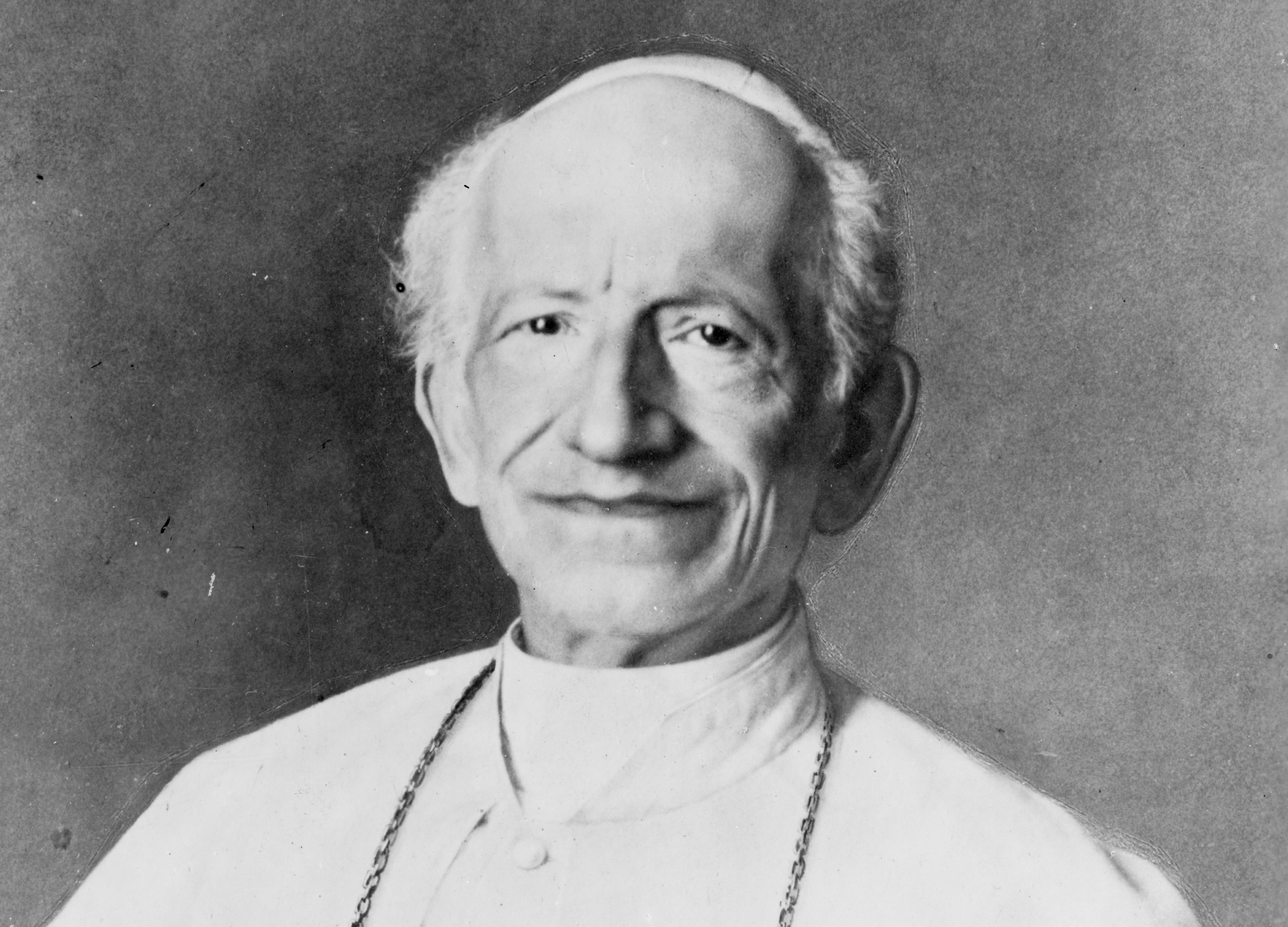
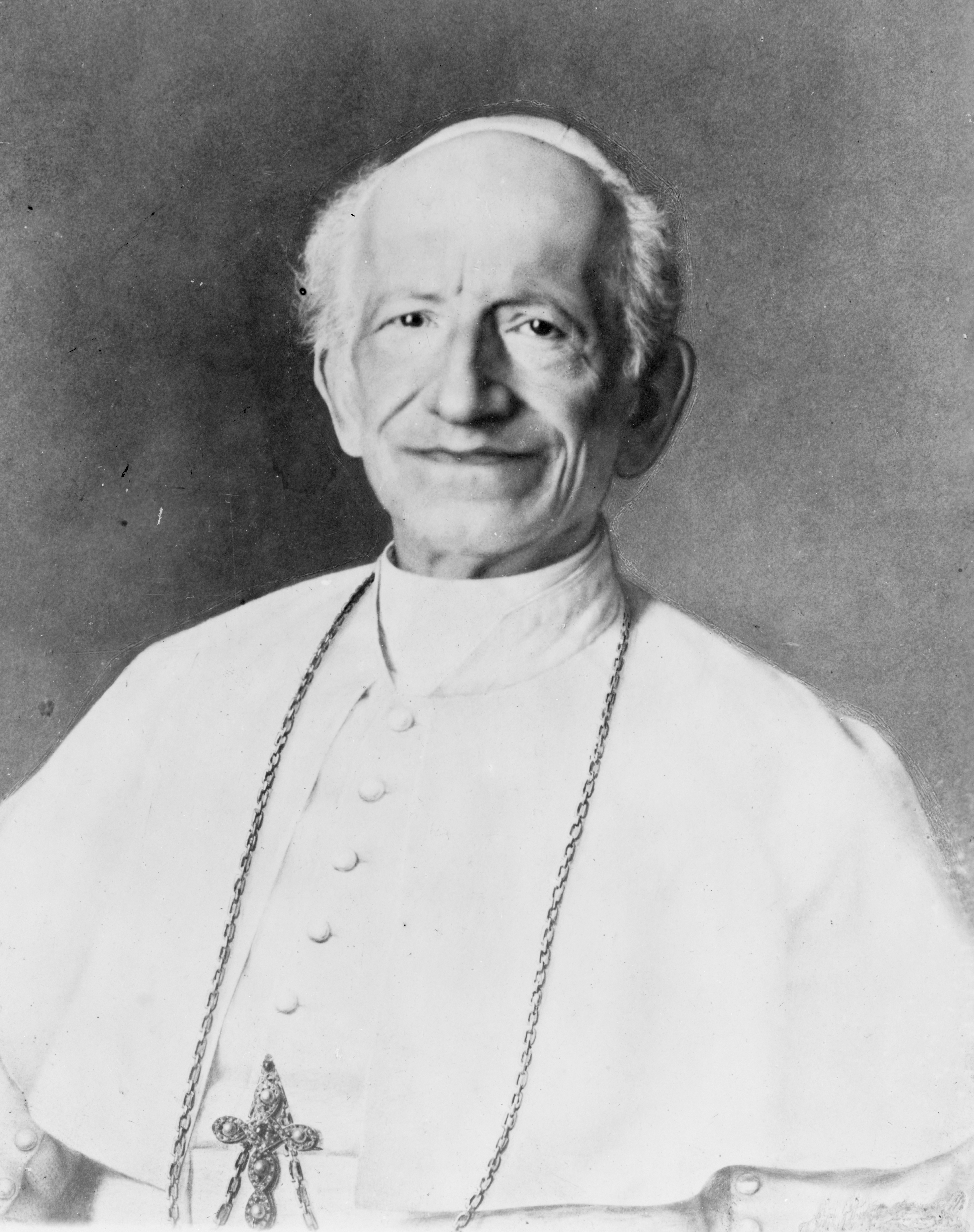
Pope Leo XIII penned an insightful analysis of three trends that both alarmed him and pointed to future problems. He wrote of these three concerns in 1893 in the Encyclical on the Holy Rosary entitled Laetitiae Sanctae (Of Holy Joy). The Pope laid out these three areas of concern and then offered the Mysteries of the Rosary as a remedy. Let’s look at how he described the problems and then consider what he proposed as a solution. His teaching is presented in bold, black italics. My remarks are shown in plain, red text.
There are three influences which appear to us to have the chief place in effecting this downgrade movement of society. These are—first, the distaste for a simple and laborious life; secondly, repugnance to suffering of any kind; thirdly, the forgetfulness of the future life (# 4).
Problem 1: The distaste for a simple and laborious life – We deplore … the growing contempt of those homely duties and virtues which make up the beauty of humble life. To this cause we may trace in the home, the readiness of children to withdraw themselves from the natural obligation of obedience to the parents, and their impatience of any form of treatment which is not of the indulgent and effeminate kind. In the workman, it evinces itself in a tendency to desert his trade, to shrink from toil, to become discontented with his lot, to fix his gaze on things that are above him, and to look forward with unthinking hopefulness to some future equalization of property. We may observe the same temper permeating the masses in the eagerness to exchange the life of the rural districts for the excitements and pleasures of the town … (#5).
One of the truths that set us free is that life is hard. Along with the progress we can and do experience come trials, arduous work, and setbacks. Few things of true value come to us without significant cost. Coming to realize and accept that life is hard is freeing, for it minimizes or even removes many of our resentments. Many today expect that life should be peachy all the time and when it is not become angry and resentful; some even threaten lawsuits. It is common today to think of happiness as a God-given right. Our Founding Fathers recognized the pursuit of happiness as a right, but many think happiness itself is a right. When they are not happy, the system has somehow failed them. Many today expect to live lives in which there is little risk and things come easily. This has been one of the factors influencing the growth of government. As insistence on a comfortable life grows and hard work begins to seem an unreasonable demand, we expect government to ease our burdens and provide comfort and happiness; we are less willing to work hard for these things. Rather, we see happiness and comfort as things to which we are entitled.
Unrealistic expectations are premeditated resentments. With unrealistic expectations, people quickly grow resentful. Our ancestors of a mere 150 years ago had different notions. They looked for happiness, too, but largely expected to find that in Heaven. Many of the old Catholic prayers bespeak a vision that this world was a place of travail and exile, a valley of tears where we sighed and longed to be with God. Many Catholics of those earlier times lived lives that were both difficult and short; they lived with far fewer creature comforts than we do today. There was no electricity or running water; medicines were few and far less effective. Entertainment was limited, houses were smaller, and transportation was far more restricted.
We live so well in comparison, yet despite being more comfortable, there is little evidence that we are happier. Indeed, we seem more resentful, probably because we expect more—a lot more. As Pope Leo noted, young people resent discipline and seem to expect to be spoiled. Most parents seem more than willing to indulge them while shirking their duty to correct, as that would bring tension and difficulty.
The value of hard work and the satisfaction that comes from it seem lost on many today. Cardinal Theodore McCarrick used to counsel us priests that if we did not go to bed tired, something was wrong. All of us need some rest and relaxation, but hard work actually brings greater satisfaction to times of rest.
The high expectations we have today breed discontent. We really insist on living in a fantasy that this world is, or can be, paradise; it cannot. A better strategy is to accept that life is at times difficult and to meet its difficulties with courage. Though this is a hard truth, accepting it brings peace.
In response to this first error, Pope Leo commended to our attention the Joyful Mysteries of the Rosary and in particular a meditation on the implicit lessons of the home at Nazareth:
Let us take our stand in front of that earthly and divine home of holiness, the House of Nazareth. How much we have to learn from the daily life which was led within its walls! What an all-perfect model of domestic society! Here we behold simplicity and purity of conduct, perfect agreement and unbroken harmony, mutual respect and love … devotedness of service. Here is the patient industry which provides what is required for food and raiment; which does so “in the sweat of the brow,” which is contented with little …. These are precious examples of goodness, of modesty, of humility, of hard-working endurance, of kindness to others, of diligence in the small duties of daily life, and of other virtues …. Then will each one begin to feel his work to be no longer lowly and irksome, but grateful and lightsome, and clothed with a certain joyousness by his sense of duty in discharging it conscientiously … home-life … loved and esteemed … (# 6).
Problem 2: Repugnance to suffering of any kind – A second evil … is to be found in repugnance to suffering and eagerness to escape whatever is hard or painful to endure. The greater number are thus robbed of that peace and freedom of mind which remains the reward of those who do what is right undismayed by the perils or troubles to be met with in doing so …. By this passionate and unbridled desire of living a life of pleasure, the minds of men are weakened, and if they do not entirely succumb, they become demoralized and miserably cower and sink under the hardships of the battle of life (# 7).
Today more than ever there is almost a complete intolerance of any sort of suffering. This has been fueled by the fact that we have been successful in eliminating much suffering from daily life.
We are largely protected from the elements, medicines alleviate much of our pain and bodily discomfort, appliances and advanced technology provide unprecedented convenience and make most routine manual labor all but unnecessary.
This leads to the unrealistic expectation that all suffering should be eliminated. There is almost an indignity expressed when one suggests that perhaps some things should be endured or that it is unreasonable to expect government, or science, or “someone” to eliminate every evil or all forms of suffering.
Further, we seem unwilling to accept that accidents happen, and unfortunate circumstances occur. Instead we demand more and more laws, some of which are intrusive and oppressive; we undertake lawsuits that discourage the very risk-taking that makes new inventions, medical breakthroughs, and scientific techniques possible.
We often hold people responsible for things over which they have little to no control. Economies have cycles as do climates. Governments and politicians cannot be expected to solve every problem or alleviate every burden. Sometimes things just happen and there’s no one to blame and no one that can fix it.
Life is not a cushioned room. While we can and should try to fix unnecessary hazards and seek to ease one another’s burdens, suffering, sorrows, accidents, and difficulties are all part of life in this valley of tears. Acceptance of this truth leads to a kind of paradoxical serenity. Rejection of it and indulgence in the unrealistic notion that all suffering is unreasonable leads to resentment and further unhappiness.
In response to this second error, Pope Leo commended to our attention the Sorrowful Mysteries of the Rosary.
If from our earliest years our minds have been trained to dwell upon the sorrowful mysteries of Our Lord’s life … we [may] see written in His example all the lessons that He Himself had taught us for the bearing of our burden of labor– and sorrow, and mark how the sufferings…He embraced with the greatest measure of generosity and good will. We behold Him overwhelmed with sadness, so that drops of blood ooze like sweat from His veins. We see Him bound like a malefactor, subjected to the judgment of the unrighteous, laden with insults, covered with shame, assailed with false accusations, torn with scourges, crowned with thorns, nailed to the cross, accounted unworthy to live …. Here, too, we contemplate the grief of the most Holy Mother … “pierced” by the sword of sorrow … (# 8).
Then, be it that the “earth is accursed” and brings forth “thistles and thorns,”—be it that the soul is saddened with grief and the body with sickness; even so, there will be no evil which the envy of man or the rage of devils can invent, nor calamity which can fall upon the individual or the community, over which we shall not triumph by the patience of suffering …. But by this patience, we do not mean that empty stoicism in the enduring of pain which was the ideal of some of the philosophers of old, but rather …. It is the patience which is obtained by the help of His grace; which shirks not a trial because it is painful, but which accepts it and esteems it as a gain, however hard it may be to undergo. [Men and women of faith] re-echo, not with their lips, but with their life, the words of [the Apostle] St. Thomas: “Let us also go, that we may die with him” (John xi., 16) (# 9).
The cross is part of this life, but Christ has made it clear that it yields ultimately to glory if we carry it willingly and with faith.
Problem 3: Forgetfulness of the future life – The third evil for which a remedy is needed is one which is chiefly characteristic of the times in which we live. Men in former ages, although they loved the world, and loved it far too well, did not usually aggravate their sinful attachment to the things of earth by a contempt of the things of heaven. Even the right-thinking portion of the pagan world recognized that this life was not a home but a dwelling-place, not our destination, but a stage in the journey. But men of our day, albeit they have had the advantages of Christian instruction, pursue the false goods of this world in such wise that the thought of their true Fatherland of enduring happiness is not only set aside, but, to their shame be it said, banished and entirely erased from their memory, notwithstanding the warning of St. Paul, “We have not here a lasting city, but we seek one which is to come” (Heb. xiii., 4) (# 11).
I am increasingly amazed at how infrequently most people think of Heaven. Even Churchgoing believers talk little of it; priests rarely preach on it. Our main preoccupation seems to be making this world a more comfortable and pleasant place. Even in our so-called spiritual life, our prayers bespeak a worldly preoccupation: Lord, fix my money problems; improve my heath; get me a better job. It is almost as though we are saying, “Make this world pleasant enough and I’ll just stay here.” It is not wrong to pray for these things, nor is it wrong to work to make this world a better place, but our true home is in Heaven and we ought to seek its shores eagerly. We should meditate on Heaven frequently and the deepest longing of our soul should be to be with God forever. Instead we fear getting older; our culture tries to keep death hidden away. It ought to be that we can’t wait to see God. Sure, it would be nice to finish a few things we’ve started, but as Heaven and being with God draw closer, we should be happy that the years are flying by faster. Each day means we are one day closer to God!
Our prosperity has misled us into having an unhealthy love of this world. A friend of the world is an enemy to God (James 4:4). We are distracted and too easily forget that this world is passing away; we are all going to die. Only a proper longing for Heaven can correct the absurdity that an obsessive love for this world establishes in our soul.
Meditate on Heaven frequently! Read the scriptures, such as Revelation 1, & 4-5, 20-21. Ask for a deeper longing from God.
In response to this third error, Pope Leo commended to our attention the Glorious Mysteries of the Rosary as a medicine for both our absurd attachment to this passing world and our forgetfulness of Heaven:
These mysteries are the means by which, in the soul of a Christian, a most clear light is shed upon the good things, hidden to sense, but visible to faith, “which God has prepared for those who love Him.” From them we learn that death is not an annihilation which ends all things, but merely a migration and passage from life to life. By them we are taught that the path to Heaven lies open to all men, and as we behold Christ ascending thither, we recall the sweet words of His promise, “I go to prepare a place for you.” By them we are reminded that a time will come when “God will wipe away every tear from our eyes,” and that “neither mourning, nor crying, nor sorrow, shall be any more,” and that “We shall be always with the Lord,” and “like to the Lord, for we shall see Him as He is,” and “drink of the torrent of His delight,” as “fellow-citizens of the saints,” in the blessed companionship of our glorious Queen and Mother. Dwelling upon such a prospect, our hearts are kindled with desire, and we exclaim, in the words of a great saint, “How vile grows the earth when I look up to heaven!” Then, too, shall we feel the solace of the assurance “that this momentary and light affliction produces for us an eternal weight of glory beyond measure, exceedingly” (2 Cor. iv., 17).
Here, then, are three diagnoses and three remedies. It is interesting that the roots of these problems were already evident in 1893. How much more they press upon us over a century later! It is helpful to have a doctor of souls to help us name the demons that afflict us. Having named a demon, we have more power over it and can learn its moves more easily.
Demon, your name is “laziness” and “distaste for hard work.” By the joyful mysteries of the Lord’s life, be gone.
Demon, your name is “refusal of any suffering” and “resentment at the cross.” By the sorrowful mysteries of the Lord’s life, be gone.
Demon, your name is “forgetfulness of Heaven” and “obsession with the passing world.” By the glorious mysteries of the Lord’s life (and our Lady’s, too), be gone.

 When I was a good bit younger, in college actually, I had to take a few economics and marketing courses. At that time I thought to myself, “God has a bad marketing department,” since things like Scripture and prayer were often so difficult to understand and do. God seemed to insist that we pray, but everyone I ever asked admitted that prayer was difficult. And while many had reasons they offered as to why prayer was difficult, I still wondered why, if God could just zap prayer and make it delightful, He didn’t just do so. “Yes,” I thought, “God has a bad marketing plan!”