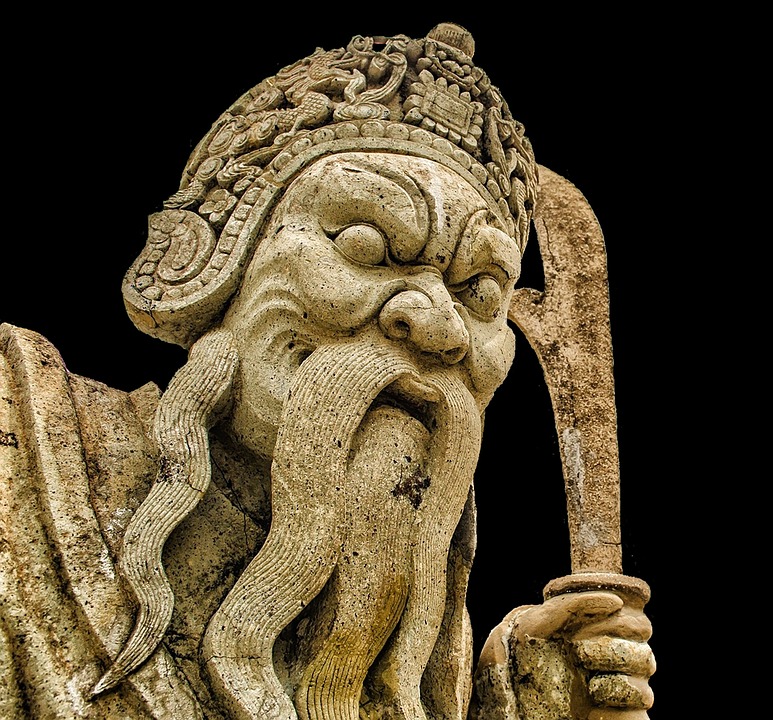
Important Reminder: God is more Powerful than Satan

In the work of deliverance ministry, one of the first obstacles to overcome in the afflicted soul is an exaggerated notion of the power of Satan and his demons. Often the troubled person is experiencing a time of crisis. Overwhelmed, he is often scared and sees only darkness. The power of the evil one seems very real, while the power of the angels, of grace, and of God Himself is discounted or all but forgotten.

There are some important truths that need to be reestablished in the faith life of those so afflicted:

  • God is more powerful than Satan.
  • Angels are more powerful than Satan.
  • The Word of God, the sacraments, and Christian blessings are more powerful than curses, hexes, or the lies of the evil one.
  • Satan is not all powerful; his power is limited.
  • Satan is not Not only is his knowledge limited, it is sometimes inaccurate.
  • Satan is a creature. Demons are creatures; they are beneath God and subject to His authority.

One must be restored to a trusting faith in the love of God and in His power and authority over all things. Deliverance ministry (to include the Rite of Major Exorcism) is not a magic pill; it is a journey in faith and faith is necessary for its fruitfulness.

Part of faith includes the rather difficult concept that God allows certain afflictions “for a season and for a reason.” God mysteriously allows some of His creatures, human and demonic, to afflict one another, but it is only to draw some greater good and ultimate glory from the sufferings (see 2 Cor 4:17). Faith embraces not only the power of God over demons but also His mysterious providence in allowing some degree of affliction in our lives. From the perspective of faith, Joseph was able to say to his brothers (who had acted wickedly toward him): You intended it for evil, but God intended it for good, so that many would be saved (Gen 5:20).

In this essay, I want to focus on correcting exaggerated notions of Satan’s knowledge, power, and influence. This is not to say that we should have no concern whatsoever about the devil. Indeed, we should be sober. Daily, with confidence and with recourse to the assistance of God, we must stand against Satan’s evil temptations and torments:

Be sober-minded; be watchful. Your adversary the devil prowls around like a roaring lion, seeking someone to devour. Resist him, firm in your faith, knowing that the same kinds of suffering are being experienced by your brotherhood throughout the world. And after you have suffered a little while, the God of all grace, who has called you to his eternal glory in Christ, will himself restore, confirm, strengthen, and establish you. To him be the dominion forever and ever. Amen (1 Peter 5:8-11).

To be sober does not mean to unreasonably fearful of the devil or to forget God’s power and grace. Through strong faith we are to resist, to stand up again and again against Satan. To this end, it is helpful to understand that we can, by grace, stand against him, for God has set limits on Satan’s power, knowledge, and influence.

Let’s consider a few areas that illustrate some of the limitations of demons:

Demons are not omniscient.

To be omniscient means to know all things at all times, past, present, and future. This sort of knowledge pertains to God, but not to His creatures; and Satan and his demon minions are creatures. They are fallen angels. While intelligent, their intellects are darkened by sin as are ours (e.g., Romans 1:21-22).

We see this illustrated in Scripture. Satan has only gradual awareness of who Jesus is and that He has come. Jesus is born quietly in the small town of Bethlehem, in a kind of daring raid behind enemy lines. Satan seems aware of some sort of incursion, but is not certain as to where, or who it is. In the Epiphany account (Matthew 2:1-12), we see him seek information through his agent Herod. Even upon learning of the birthplace, he still does not know who. Herod takes a wild stab and orders the murder of all male children under the age of two (the Holy Innocents). Jesus and the Holy Family evade his grasp and slip away. This demonstrates the limits of Satan’s knowledge. He is aware of the incursion but ignorant of the details. Jesus, the Son of God, continues to live in Satan’s lair for thirty years and Satan does not know who or where He is.

In the narrative of the temptations in the desert (Matthew 4:1-11), Satan seems to narrow in on Jesus and His identity. He still seems unsure, however, for he says, “If you are the Son of God …” (e.g., Matt 4:6). From this time forward it would seem that Satan has reached a conclusion as to the identity of Jesus and through his demons manifests that conclusion. Scripture reports, Whenever the evil spirits saw him, they fell down before him and cried out, “You are the Son of God” (Mk 3:11). Another time a demon cried out, I know who you are—the Holy One of God (Mk 1:24). There are other similar passages in Scripture (e.g., Mk 1:34, Luke 4:41).

We should not conclude that Satan had a comprehensive or flawless knowledge of Jesus and of the full plan of salvation. If Satan had had such complete knowledge, especially of the plan of God, he would not have inspired the crucifixion of Jesus, the very means by which he was defeated. Why play into the hands of your enemy if you know you are going to lose?

Hence, there is evidence that Satan eventually acquired a basic understanding of Jesus’ divinity and of His plan, but his knowledge was limited and likely somewhat flawed.

From this we can conclude that demons are not omniscient. They cannot know the future. They cannot read our minds. They cannot even interpret the present with perfect accuracy. However, demons have long observed human behavior; they can see more widely and know hidden things about the past and the present.

This breadth of knowledge is often evident in exorcisms, where demons show some ability to disclose hidden things of the present or past. They also lie and guess a lot; and anything they claim to know about the future is a lie because they cannot know anything about future events or outcomes.

Demons are smart but lack wisdom.

One of the most surprising things encountered by exorcists and those who work on their teams is that many demons behave in downright juvenile ways. They sneer, call people names, whine, and in many ways seem to be dumb as rocks; they often act like pre-teens.

There are certain higher ranks of demons who are fierce and loud. Others are capable of great subtlety and psychological manipulation. A great many of lower ranking demons, however, are boorish, narcissistic, and incapable of anything close to sophistication.

One explanation for this is that while intelligent, they lack wisdom. Wisdom is a gift of the Holy Spirit that is operative when one is in a state of grace. Without wisdom, demons have no way to organize their intelligence to its proper end.

Wisdom, according to St. Thomas Aquinas, is a gift through which we know the deepest cause of all things: God. Out of this gift comes clear judgment of all things because we know their author, know something of His purposes, and can orient our behaviors toward our truest and highest goal, God Himself (see Summa Theologica II, IIae, q. 45).

Without wisdom, human beings tend to “major in the minors.” They maximize the minimum and minimize the maximum. Their lives are often disorderly and foolhardy because they have lost the moorings of either their origin or their destination. They may be very smart or capable in certain specific (e.g., finance, football), but to what end? There is little to organize their life or prioritize matters.

Similar things must set up in demons as well. It seems hard for demons to develop a coherent strategy other than to sow chaos and elicit fear. There are lots of histrionics, diversions, and silly games, but little that displays anything other than a short-term strategy to disrupt, cause pain, and manifest irrational hatred.

Another explanation for the juvenile behavior of many demons is that sin darkens the intellect. The old saying, “sin makes you stupid” is likely operative here as well.

All this said, we should not presume that demons they are as dumb as they seem. Some of it may be an act to inspire pride during the deliverance session. Pride is the mortal enemy of any exorcist or deliverance team member. The surprisingly “dumb” behavior of demons, whether real or an act, makes most exorcisms more tedious than frightening.

Satan and demons are not all-powerful.

While at the current time the Lord permits a certain freedom of at least some demons to “roam the earth and patrol it” (Job 1:7), he also limits their power.

A remarkable passage of Scripture says,

Then I saw an angel coming down from heaven with the key to the Abyss, holding in his hand a great chain. He seized the dragon, the ancient serpent who is the devil and Satan, and bound him for a thousand years. And he threw him into the Abyss, shut it, and sealed it over him, so that he could not deceive the nations until the thousand years were complete. After that, he must be released for a brief period of time. (Rev. 20:1-3).

Most Catholic scholars and the Fathers of the Church interpret the “thousand years” in the passage above as a figurative long period of time rather than specifically 1000 years. They hold that this “thousand years” has already begun and is the time in which we now live, the current “Church age.” During this time, the gospel goes out to the nations, as it has been, and Satan’s power is limited to some degree.

Although Satan and demons are described as “chained,” “in prison,” or “in darkness,” this is more likely a way of indicating that their power to influence or move about is limited in some way. This does not say that they do not wield considerable power, only that it is not unlimited. If you think it is bad now, just imagine what it will be like when their power is unchained!

It is said that St. John Vianney spoke of the devil as a chained dog. While it can bark and make a lot of noise, it can only bite if we get too close. Thus, Christians must remember that God mysteriously permits some influence of demons; He allows them to cause some harm, but their power is limited. They cannot directly kill, and it would seem that they cannot even fully control the very evil they set loose. This is evident in the way that the wicked often turn on one another. It can also be seen in the way that strong evils often usher in reforms. Consider, further, that the Church is still here preaching and teaching the same gospel after two millennia, while numerous evil regimes, empires, heresies, and corruptions have all come and gone. Although the gates (i.e., powers) of Hell have tried to prevail, they have failed due to Jesus’ promise of indefectibility for the Church as His Body and Bride (see Mat 16:18).

Demons are outnumbered.

While the exact number of demons and angels is unknown, Scripture hints at the fact that demons are outnumbered two to one:

And there was seen another sign in heaven: and behold a great red dragon, having seven heads, and ten horns: and on his head seven diadems: And his tail drew the third part of the stars of heaven, and cast them to the earth … (Rev 12:3-4).

It is likely that the “stars” referred to here are the angels. Satan is able to rally a third of them to his side and they became demons, some of whom roam the earth and others who are consigned already to Hell (see 2 Peter 2:4).

The good news is that for every angel that fell to become a demon, two did not and are thus able to serve God, assist us, and do good works.

These are important reminders for all of us, afflicted or not. There is a kind of theatric fear that too often exaggerates the powers of demons. Movies and other verbal and visual sources emphasize things to scare us and to deepen the drama of the movie or book. Satan and the work of demons should not be summarily dismissed. They are intelligent, crafty, and persistent. Our faith in the Lord must outweigh our fear of demons. We must grow in our faith that God has the power and capacity to both overcome evil on our behalf and to draw greater good from it when He chooses to permit it.

There is an old saying meant to shift our focus: Stop telling God how big your storm is and start telling your storm how big your God is. For deliverance and exorcism to have their fullest effect, confident and trusting faith must grow and exaggerated notions of the power of demons must give way. To all of us experiencing any trouble Jesus has this to say:

These things I have spoken unto you, that in me you might have peace. In the world you shall have tribulation: but have confidence; I have overcome the world. (Jn 16:33).

Here is a classic commercial that emphasizes the “cheap parlor tricks” of demons, though in this case the cause is more natural than first appreciated by those here. Remember, the first goal of demons is to strike fear in us.


Here’s What Grows in King Jesus’ Garden

Flowers, besides being beautiful, have often been used in Christian tradition to signify virtues and remind us of the saints. For example, consider this brief meditation of St. Augustine on the virtues related to our state in life:

I tell you again and again, my brethren, that in the Lord’s garden are to be found not only the roses of his martyrs. In it there are also the lilies of the virgins, the ivy of wedded couples, and the violets of widows. On no account may any class of people despair, thinking that God has not called them. Christ suffered for all. What the Scriptures say of him is true: He desires all men to be saved and to come to knowledge of the truth (Sermo 304, 1-4: PL 38, 1395-1397).

In addition, a number of flowers trace their name to the Virgin Mary. The marigold, most often a bright yellow color, is a shortened version of “Mary’s gold.” The carnation is a corruption of the word “coronation”; these flowers were often used to crown statues of Mary. The herb rosemary is said to honor Mary’s title Rosa Mystica, (Mystical Rose). The beautiful Lady’s Slipper was shortened from “Our Lady’s Slipper.”

Consider, too, this old Dutch carol from the 17th century, which links various virtues to flowers in the garden of King Jesus:

King Jesus has a garden, full of diverse flowers
Where I go cutting bright bouquets, all times and hours.

Refrain:
There, naught is heard but Paradise bird,
Harp, dulcimer, lute,
With cymbal, trump and timbral,
And the tender, soothing flute.

The Lily, white in blossom there, is Chastity:
The Violet, with sweet perfume, Humility.

The lovely Damask-rose is known as Patience:
The bright and sturdy Marigold, Obedience.

The Crown Imperial also blooms in yonder place,
`Tis Charity, of stock divine, the flower of grace.

Yet, mid the brave, the bravest prize of all may claim
The Star of Bethlem—Jesus—blessed be his Name.

Ah! Jesu Lord, my heal and weal, my bliss complete,
Make thou my heart thy garden-plot, fair, trim and neat.

–Traditional Dutch, from Geestlijcke Harmonie, 1633; tr. George Woodward in Songs of Syon, 1908.

A few years back I made a video that features a rendition of this carol. I hope you’ll enjoy the music and the beautiful flowers and celebrate the virtues in the garden of King Jesus.

How Justice and Mercy are Alike with God

Many people today set mercy and justice in opposition to each other, but where is mercy if justice is absent? Could the victims of genocide really be said to experience mercy if their unrepentant killers were ushered past them into the Kingdom of Heaven? Could Heaven even be Heaven if unrepentant sinners dwelled there? At some point, mercy demands that justice rightly separate what is stubbornly evil from what is good. For now, there is a time of mercy and access to the throne of mercy, but there comes a day when justice requires a final answer and verdict. It is mercy that accompanies us to the justice of the final judgement. Mercy and grace prepare us.

Mercy that canceled the requirements of God’s justice and His law would not be mercy at all. It would leave us deformed and incomplete; it would mean that injustice would continue forever. Neither of these outcomes is merciful.

Further, justice that did not rely on grace and mercy would not be justice at all. This is because without grace and mercy, we are dead in our sins; justice is unattainable.

One of the signs of orthodoxy is the ability to hold competing truths in tension, realizing that they are there to balance each other. For example, on the one hand God is sovereign and omnipotent, but on the other we are free to say no to Him; both are taught in Scripture. Our freedom mysteriously interacts with God’s sovereignty and omnipotence.

Heresy will not abide any tension and so it selects one truth while discarding others meant to balance or complete it. For example, is God punitive or forgiving; is he insistent or patient? Too often we focus on one while downplaying or dropping the other. In some eras, the notion of a harsh, strict God was so emphasized that His mercy was all but lost. Today, the tendency is to stress His mercy and kindness while nearly dismissing His role as the sovereign Judge who will set things right by upholding the just and punishing the unrepentant and wicked.

The balance of orthodoxy holds that justice and mercy are alike with God.

  • The LORD loves righteousness and justice. His mercy fills the earth (Ps 35:5).
  • Righteousness and justice are the habitation of your throne: mercy and truth shall go before your face (Ps 89:14).
  • Hear my prayer, O LORD; give ear to my pleas for mercy! Because of your faithfulness and justice, answer me (Ps 143:1).

Yes, in God, justice and mercy meet.

https://youtu.be/XFj-3RHGkrY?t=2786

Five Aspects of Faith – A Homily for the 19th Sunday of the Year

The Gospel this Sunday amounts to a summons to faith by Jesus. He is summoning us to faith in Himself and in the truth He proclaims about His presence in the Holy Eucharist. Last week’s Gospel ended with Jesus declaring that He was the bread come down from Heaven. This Sunday’s Gospel opens with His Jewish listeners grumbling because He claims to have come from Heaven. Throughout the Gospel Jesus stands firm in His call to faith; He teaches them of the necessity of faith, its origins, and its fruits. Let’s look at what the Lord teaches in four stages.

I. The Focus of FaithThe Jews murmured about Jesus because he said, “I am the bread that came down from heaven,” and they said, “Is this not Jesus, the son of Joseph? Do we not know his father and mother? Then how can he say, ‘I have come down from heaven’?”

Their lack of faith is a scandal. In addition, it shifts our focus to the need for faith and emphasizes how difficult it is to have faith. Both the scandal and the difficulty are illustrated in the background to the crowd’s lack of faith.

Recall that Jesus had just fed over 20,000 people with five loaves and two fishes, leaving 12 baskets full of scraps. It was this very miracle that led many of them follow Him to the other side of the lake. All the miracles Jesus worked were meant to summon people to faith and to provide evidence for the truth of His words. The Gospel of John recounts Jesus saying, for the works which the Father has granted me to accomplish, these very works which I am doing, bear witness that the Father has sent me (John 5:36).

Yes, their lack of faith, their grumbling, and their murmuring was scandalous. The multiplication of the loaves and fishes was not the first miracle Jesus had worked to this point and it would not be the last. Recall that he had

Changed water into wine, healed lepers, healed the centurion’s servant, cast out demons, healed the lame, healed the woman with a hemorrhage, raised Jairus’ daughter, cast out blindness, cured the man with a withered hand, walked on water, calmed storms at sea, healed the deaf and mute, caused miraculous catches of fish, raised the widow’s son, and raised Lazarus!

What do they focus on? On what Jesus does or on where He is from? It seems clear they are more focused on His human origins: where He is from and who His human kin are.

How many people today really put their focus on what God is doing, on the many daily miracles of simple existence, and on the many ways that even defeats become victories?

Jesus focuses on faith because we humans are a hard case and our faith needs to grow.

II. The Font of Faith – Noting their lack of faith, Jesus rebukes them in these words: Stop murmuring among yourselves. No one can come to me unless the Father who sent me draw him, and I will raise him on the last day. It is written in the prophets: They shall all be taught by God. Everyone who listens to my Father and learns from him comes to me.

Jesus teaches two things here: that our faith in Him comes from the Father, and that we are a hard case.

First, Jesus teaches that His Father is the source of our faith in Him. Scripture teaches this truth elsewhere as well:

  • For by grace are ye saved through faith; and that not of yourselves: it is the gift of God (Eph 2:8).
  • This is my beloved son, listen to him (Matt 3:17).
  • But the testimony which I have is greater than that of John; for the works which the Father has granted me to accomplish, these very works which I am doing, bear me witness that the Father has sent me. And the Father who sent me has himself borne witness to me (John 5:36).
  • I bear witness to myself, and the Father who sent me bears witness to me (John 8:18).

The central work of the Father is to save us by drawing us to faith in His Son, whom He sent to redeem the world.

Jesus also teaches that this work of God generally meets considerable resistance from us. This is evident in Jesus’ words: the Father must “draw” us to the Son. The Greek word used here is ἑλκύσῃ (helkuse), which means to drag, draw, pull, or persuade; it implies that the thing being drawn or dragged is resisting. This same word is used in John 21:6 in describing drawing a heavily laden net to shore.

Thus, Jesus points to their stubbornness in coming to faith. We are stubborn and stiff-necked, so the Father must exert effort to draw—even drag—us to Jesus.

Yes, we’re a hard case and sometimes we have to be “drug.” Someone once said,

I had a drug problem when I was young: I was drug to church on Sunday morning. I was drug to church for weddings and funerals. I was drug to family reunions and community socials no matter the weather. I was drug by my ears when I was disrespectful to adults. I was also drug to the woodshed when I disobeyed my parents, told a lie, brought home a bad report card, did not speak with respect, spoke ill of the teacher or preacher, or if I didn’t put forth my best effort in everything that was asked of me. I was drug to the kitchen sink to have my mouth washed out with soap if I uttered a profane four-letter word. I was drug to pull weeds in Mom’s garden and to do my chores. I was drug to the homes of family, friends, and neighbors to help some poor soul who had no one to mow the yard, repair the clothesline, or chop some fire wood. And if my mother had ever known that I took a single dime as a tip for this kindness, she would have drug me back to the woodshed. Those drugs are still in my veins and they affect my behavior in everything I do, say, and think. They are stronger than cocaine, crack, or heroin. If today’s children had this kind of drug problem, America might be a better place.

III. The Functioning of Faith Jesus goes on to teach about how faith functions and what its fruit is: Amen, amen, I say to you, whoever believes has eternal life.

Regarding the functioning of faith, the Greek text is clearer than the English translation. The Greek word used here for “believes” is πιστεύων (pisteuon), a present, active participle. This construction signifies an ongoing action and is better translated as “He who goes on believing” or “He who is believing.”

The danger is in reducing faith to an event or an act. Some say that they answered an altar call; others point to their baptism. That’s good, but what is going on today? What is prescribed here by the Lord is lasting, ongoing faith. It is a lasting faith because faith is more than a one-time event; it is an ongoing reality. Faith is more than something you have; it is something you do, daily. It involves learning and trusting in God. It is a basing our whole life on His Word, the daily obedience of faith.

Here are a few other Scripture passages about the ongoing need for faith:

  • But you must hold fast to faith, be firmly grounded and steadfast in it. Unshaken in the hope promised you by the gospel you have heard (Col 1:21ff).
  • Brethren I want to remind you of the gospel I preached to you, which you received and in which you stand firm. You are being saved by it at this very moment provided you hold fast to it as I preached it to you. Otherwise you have believed in vain (1 Cor 15:1).
  • He who perseveres to the end will be saved (Matt 24:13).

IV. The Fruit of Faith – Having taught of the ongoing quality of faith, Jesus also speaks of its fruit: eternal life.

The Christian use of the word “eternal” does not refer only to the length of life but to its fullness or quality. The Greek word that is used here is αἰώνιος (aionios), from which we get the English word (a)eon). According the Greek lexicon of Scripture, the word does not focus on the future per se, but rather on the quality of the age.

Note, too, that the Greek word translated here as “has” is ἔχει (echei), which is a present, active indicative. Thus, it does not refer just to something that we will have but something we now have. Believers live in “eternal life” right now, experiencing this quality of God’s life now as a present possession. We do not enjoy it fully, as we will in Heaven, but we do have it now and it is growing within us.

Thus, Jesus teaches that the believer enjoys the fullness of life in him even now, and in a growing way each day. One day we too we will enjoy the fullness of life, to the top, in Heaven.

Here, then, is Jesus teaching on the functioning of faith (its ongoing quality) and the fruit of faith (eternal life, i.e., the fullness of life).

V. The Food of Faith – Having set forth the necessity of faith, Jesus now prepares to turn the heat up a bit and test their faith. Not only does He tell them that He has come from Heaven, but also that He is Bread they must eat. Your ancestors ate the manna in the desert, but they died but this is the bread that comes down from heaven so that one may eat it and not die. I am the living bread that came down from heaven; whoever eats this bread will live forever; and the bread that I will give is my flesh for the life of the world.

This final verse points to next week’s Gospel, in which this concept will be developed more fully and more graphically.

Having warned them of the necessity of faith, Jesus now points to one of His most essential teachings: the Holy Eucharist, the Sacrament of His Body and Blood.

Without faith, they cannot grasp or accept this teaching. As we shall see in next week’s Gospel reading, most of them turned away and would no longer follow Him because they could not accept what He was saying; they did not have the faith to trust Him in this matter. Instead, they scoff and leave Him. We will say more about this next week as John 6 continues to unfold.

For now, let the Lord ask you, “Do you have faith to believe what I teach you on this?” Perhaps, like the centurion, we can say, “I do believe; help my unbelief.” Perhaps, like the apostles, we can say, “Increase our faith.” Perhaps we can imitate St. Thomas Aquinas and say,

Visus, tactus, gustus in te fallitur, (Sight, touch and taste, in thee fail)
 Sed auditu solo tuto creditur. (But only the hearing is safely believed)
 Credo quidquid dixit Dei Filius; (I believe whatever the Son of God says)
 Nil hoc verbo veritátis verius. (Nothing is more true than this word of truth)

In the end we either have faith or will be famished. We will have the faith to approach the Lord’s table or we will go unfed. Jesus says later, Unless you eat the flesh of the Son of Man and drink his Blood, you have no life in you (Jn 6:53). In other words, we starve spiritually without the faith that brings us to God’s table.

How few come to the Lord’s table today, in these times when faith is so lacking. Only about a quarter of American Catholics attend Mass regularly. How can we stay away if we have faith in the Eucharist? We cannot. If we truly we believe, we will never deliberately miss Sunday Mass. Our devotion to the Lord will grow daily and our experience of the fullness of life (eternal life) will grow.

It’s faith or famine. Do you believe?

We Are Wayfarers and Our Food Is the Eucharist, as Seen in a Commercial

The commercial below reminds me of the fact that the Eucharist is our necessary food for the journey; it is the food of wayfarers. In John chapter 6, Jesus teaches that the miraculous manna described in Exodus and Numbers was the food that sustained the ancient Jews in the desert and strengthened them bodily for their journey to the Promised Land. While most of them did not make it to the Promised Land because of their unbelief, their children did. The manna was the food that fed them for that long journey.

Jesus then says that He is now the living bread come down from Heaven for us:

I am the bread of life. Your fathers ate the manna in the wilderness, yet they died. This is the bread that comes down from heaven, so that anyone may eat of it and not die. I am the living bread that came down from heaven. If anyone eats of this bread, he will live forever. And this bread, which I will give for the life of the world, is My flesh (Jn 6:48-51).

If for some strange reason the ancient Jews had refused to eat the manna given them, they would have died of hunger in the desert. So, too, for us. If we do not receive Holy Communion, we will not have the strength to make it to the Promised Land of Heaven:

Truly, truly, I tell you, unless you eat the flesh and drink the blood of the Son of Man, you have no life in you. Whoever eats My flesh and drinks My blood has eternal life, and I will raise him up at the last day (Jn 6:53-54).

So, the Eucharist is our true and necessary food to sustain us. Without it we are starving ourselves and do not have strength for the journey. Even if God has other ways to feed those who cannot reasonably know of or receive the Eucharist, that is no excuse for those of us who know better.

In the commercial below, a young man eats his oatmeal while staring dreamily out the window. Astride his bicycle and seeing a steep mountain before him, he feels strengthened for the journey, an epic journey. For us, the mountain is Heaven and the epic journey is the drama of our life through the hills and valleys of this world. We are wayfarers and our food is the Eucharist.

Sweet Hour of Prayer! Or Not? How do You Experience Prayer?

111914How do you think of prayer? Is it another thing you “have to do” among many other things on your list? Or is prayer a time when you refrain from doing? Is prayer a requirement you regret or a rest you relish? What is prayer for you?

The danger in answering questions like these is that we may answer them the way we think they “should” be answered rather than in an honest way. Many struggle with prayer and experience it with a lot of negativity: boredom, distraction, drudgery, and so forth.

The fact is, prayer is tough. We are very sensory by nature and used to seeing and hearing the one to whom we speak. To encounter God in silence and without sight is unfamiliar, jarring, and challenging. Some use icons or pictures, some a prayer book; some pray before the Blessed Sacrament. But in the end, the eyes of the flesh cannot see, only the eyes of the heart, the eyes of faith can. This is not only difficult, it is obnoxious to our flesh (i.e., sinful nature), which demands to see and hear on its own terms. And the flesh wages war on our spirit (cf Gal 5:17) and like a fidgeting child protests all throughout prayer.

Of course the best way to address this problem is with honesty. Without honesty we don’t really have a spiritual life. A true journey to God requires that all the masks come off, that all the little lies we like to tell ourselves and all the deceptions be set aside. Start with honesty.

Praying out of what is – When people tell me they have a hard time praying I say, “Then THAT is your prayer. Tell God how absolutely bored you are when you pray. Tell Him that you would rather do just about anything than pray to Him. Tell Him that when it occurs to you that you should pray, or when some crazy priest reminds you to pray, your heart sinks and you put it off and put it off. Tell God you hate praying … And do you know what you are doing as you tell Him all this? You are praying!”

Yes, this is prayer.

“But Father, but Father, I can’t talk to God like that!” “Why not?” I say. God already knows that this is how you feel. It’s a pretty silly thing to sit in front of God wearing a mask that He can see right through: but all things are naked and exposed to the eyes of him to whom we must give account (Heb 4:13). Five minutes of a prayer of honesty is better than two hours of a prayer of rhetoric and “stained glass” themes that we don’t really mean. Pray honestly; talk to God about what is really going on.

The Book of Psalms is the prayer book of the Bible and it has God for its author. And notice how plain-spoken the psalms are.

Every emotion, every experience is grist for the prayer mill: joy, serenity, victory, thanksgiving, petition, anger (even anger at God!), rage, vengefulness, disappointment, loss, grief, fear, and despair. It’s all there and more. There are even psalms that ask God to harm or kill our enemy (69, 109, 137). Even the beautiful Psalm 139 ends with the request that God slay the wicked. But these are feelings we have from time to time and God wants us to talk to Him about them. If the Book of Psalms is a directive for prayer (and it is), then God wants us to speak to Him about everything, even the darkest and most sinful of things. Prayer is conversation with God. But it has to be honest.

And something starts to happen when we become really honest in prayer. Little by little, it becomes more relevant to us and we even start to like it a bit. Now don’t tell your flesh that! But your soul starts to breathe; it starts to exhale. When all the little self-imposed, unbiblical rules about prayer and all the things we’re “not supposed to say to God” get set aside, the soul enjoys freedom, and the honesty is refreshing.

And little by little, prayer becomes not so much another thing to do as it is a rest from all our doing. It is a time to rest, to exhale, to sigh, and to be refreshed by the simple act of being honest with someone who loves us and whom we are growing to love. Someone who, before ever a word is on our lips, knows it through and through (Psalm 139:4). Prayer is the freedom to be honest, to rest from the labor of wearing masks, and to be relieved of the restless anxiety about what others think or expect of us. Prayer is a sigh of truth, a rest from the contradictory demands of an often phony world.

Consider this description of prayer from St. Anselm:

Insignificant man, escape from your everyday business for a short while, hide for a moment from your restless thoughts. Break off from your cares and troubles and be less concerned about your tasks and labors. Make a little time for God and rest a while in him. Enter into your mind’s inner chamber. Shut out everything but God and whatever helps you to seek him. And when you have shut the door, look for him, speak to God … (Proslogion, Chapter 1).

Yes, speak to God. Be honest. Tell Him what is really happening. If you need a manual to assist you, get a good Bible or copy of the psalms—one that gives a title or a brief sentence describing its content. Find one that suits you on this particular day and then read it, slowly. Before long, as the weeks and years tick by, you’ll find you are speaking on your own, in psalm-like honesty. Some of us even grow silent over the years, as words no longer seem necessary or even possible: cor ad cor loquitur (heart speaks to heart).

And when words seem difficult to come by, just sigh. St. Augustine says, This task [of prayer] is generally accomplished more through sighs than words, more through weeping than speech (Letter 130, to Proba). It may seem a strange thing, but sighing is very relaxing, and much is released from the soul by it. I have often thought of Gregorian Chant as a musical sigh to God, and it brings me great peace. I am blessed to have a cavernous Church and to be able to read and sing Chant there.

So pray. Pray honestly. If words are hard, just sigh or sit quietly. But pray. Watch and wait for the Lord. It’s not work, it’s rest.

There is another old hymn that speaks of the delights of true and honest prayer. It is the old classic, “Sweet Hour of Prayer.” Note its lyrics and then answer these questions: “Is this how you think of prayer? If not, why not?” What if your prayer were less “rule-bound” and more just time you spent apart from this dreary world and with God? Pray these words and ask for their reality:

Sweet hour of prayer! sweet hour of prayer!
That calls me from a world of care,
And bids me at my Father’s throne
Make all my wants and wishes known.
In seasons of distress and grief,
My soul has often found relief,
And oft escaped the tempter’s snare,
By thy return, sweet hour of prayer!

Sweet hour of prayer! sweet hour of prayer!
Thy wings shall my petition bear
To Him whose truth and faithfulness
Engage the waiting soul to bless.
And since He bids me seek His face,
Believe His Word and trust His grace,
I’ll cast on Him my every care,
And wait for thee, sweet hour of prayer!

Sweet hour of prayer! sweet hour of prayer!
May I thy consolation share,
Till, from Mount Pisgah’s lofty height,
I view my home and take my flight.
This robe of flesh I’ll drop, and rise
To seize the everlasting prize,
And shout, while passing through the air,
“Farewell, farewell, sweet hour of prayer!”

https://youtu.be/v8ZyCIqe1wU

In Loud and Strident Times, the Sacred Liturgy Can Restore Us to Balance

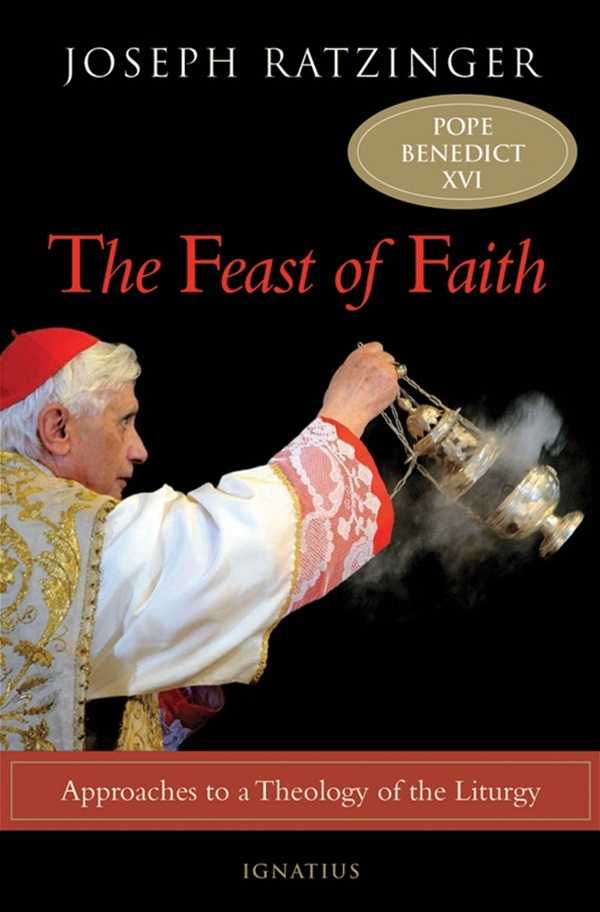
One of the most concise and cogent descriptions of these often-strident times came from Joseph Cardinal Ratzinger in 1986. It is contained in, of all places, his treatise on the theology of sacred music in a book called The Feast of Faith (Ignatius Press, 1986). His comments have recently been republished in a larger compendium of his works: Collected Works: Theology of the Liturgy (Ignatius Press, 2014, Vol 11).

It hard to describe our times as anything but contentious. Loud, strident protests often predominate over reasoned discourse and thoughtful argumentation.

To be sure, every era has had, and needed, protest and public opposition to injustice. There is a time and a place for loud protest and the use of memorable sound bites.

However, it is the predominance of loud protest and civil disobedience that stands out today. Sound bites, slogans, and simplistic “war cries” have to a large extent replaced thoughtful, reasoned discourse. Volume, power, and visually flashy techniques are prized; they are being used more and more. Such approaches too frequently produce more heat than light.

Consider, then, this remarkable analysis by Joseph Cardinal Ratzinger, written back before the Internet and social media had turned up the volume even more. He paraphrased an insight by Gandhi, applied it to his analysis of our times, and then proposed a healing remedy to restore balance:

I would like to note a beautiful saying of Mahatma Gandhi … Gandhi refers to the three habitats of the cosmos and how each of these provides its own mode of being. The fish live in the sea, and they are silent. The animals of the earth scream and shout; but the birds, whose habitat is the heavens, sing. Silence is proper to the sea, shouting to the earth and singing to the heavens. Man has a share in all three of them. He carries the depths of the sea, the burden of the earth, and the heights of the heavens in himself. And for this reason, all three properties also belong to him: silence, shouting, and singing.

Today—I would like to add—we see only the shouting is left for the man without transcendence, since he only wants to be of the earth. …

The right liturgy, the liturgy of the Communion of the Saints, restores totality to him. It teaches him silence and singing again by opening him to the depths of the sea and teaching him to fly, the angels’ mode of being. It brings the song buried in him to sound once more by lifting up his heart. …

Right liturgy … liberates us from ordinary, everyday activity and returns to us once more the depths and the heights, silence and song … Right liturgy … sings with the angels … is silent with the expectant depths of the universe, and that is how it redeems the earth (Joseph Cardinal Ratzinger Collected Works, Vol 11, Theology of the Liturgy, Ignatius Press, p. 460).

This is a remarkable analysis and an insightful application of liturgy and cosmology to the issues and imbalances of our day! It is in the vein of “Save the Liturgy, save the world.” For indeed, only in the worship of God do we find our true selves. Only in the liturgy is our true personality formed. The human person in his glory unites the material and spiritual orders. We are capable of pregnant, expectant silence; of the joyful shout of praise and the Gospel going forth; and of the song of Heaven.

As Cardinal Ratzinger pointed out, though, we are too often preoccupied with and value only one aspect: the shouting of the earthbound creatures of this world.

Good and proper liturgy trains us in all three aspects (silence, shouting, and singing) and accomplishes the balance that is often lost today. The liturgy is a training ground, not only for our heavenly destination, but also in what it means to be truly human.

A Prophetic Tour in the Land of Ruin

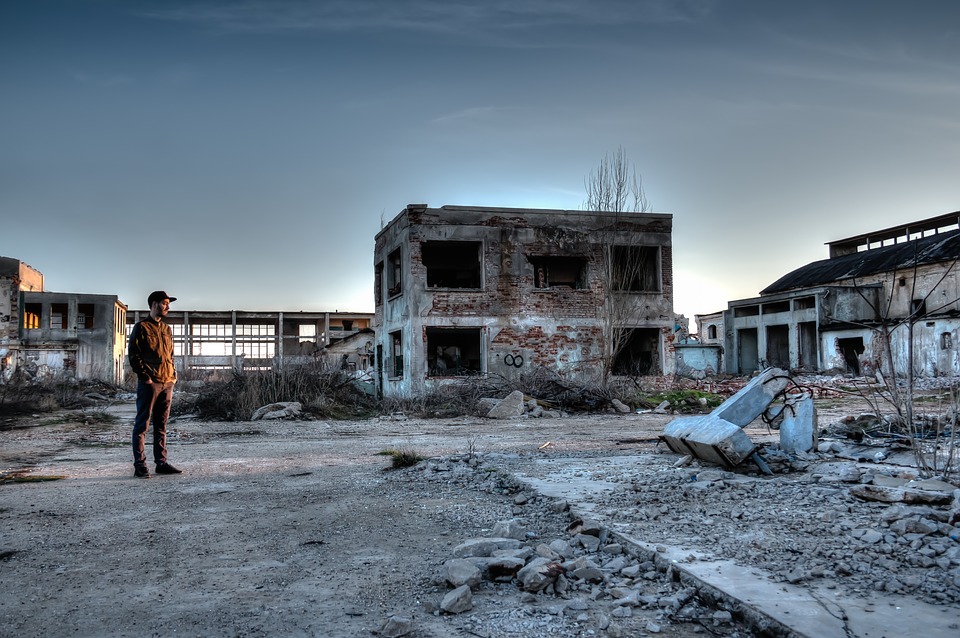
At Mass for Tuesday of the 18th Week of the Year, we read from one of the later chapters of Jeremiah the Prophet, who wrote during the time of the Babylonian exile. He serves as a kind of “tour guide” through a land of ruin, one that seems all too familiar to us today.

The Northern Kingdom of Israel had been destroyed by the Assyrians in 721 B.C. The Southern Kingdom of Judah, ignoring numerous warnings and calls to repentance, later experienced the same fate; the Babylonians laid siege and destroyed Jerusalem in 587 B.C. Just prior to this destruction, Jeremiah saw the glory of God lift from the Temple and move away to the east. The city and even the Temple now lay in ruins. The Ark of the Covenant was lost and the survivors were deported to Babylon.

Yes, it was a terrible destruction, but one that could have been avoided if the Lord’s people had only heeded the warnings of the prophets and returned wholeheartedly to the Him and His commandments. With the Lord and within the safe walls of His commandments there is strength and protection. Outside the walls and His presence, Judah was a sitting duck, easy prey.

Let’s consider what the Lord says through Jeremiah in today’s passage and ponder how this historical event speaks to our times.

Ruin Thus says the LORD, the God of Israel: Incurable is your wound, grievous your bruise.

Simple medicines or bandages are not sufficient. These wounds are deep, foul, and festering. Sin does this to us spiritually as its evils go deeper and deeper. A simple skin cancer, left untreated, can find its way into inner organs and even reach our bones. So, too, does sin, untreated by repentance, grow more serious. It renders us vulnerable to deeper and more serious sins that bring spiritual ruin, darkness, and a stubbornly unrepentant demeanor in which the cancer of pride is in its final stages. Judah has reached this stage and the only medicine that is left is for the people to experience the full ramifications of their rejection of God.

What of the once-Christian West? What of America? Can we possibly think that our cultural revolution, rooted in sinful rebellion against authority, sacred Tradition, the moral vision of the Scriptures, and the meaning of human sexuality and marriage can yield anything but corruption? Can our greed, our insatiable desire for more no matter the human (or monetary) cost, forever mortgage our future? Have not our wounds multiplied and gone deeper? The blood of our aborted children cries out to Heaven. Our broken families multiply due to promiscuity and rampant divorce. Broken families yield a bumper crop of broken children as the cycle deepens. Are these wounds curable? Do we even show any willingness to take the necessary medicines of self-control, fidelity, and obedience to God’s vision? It seems not. Midnight fast approaches. As Jeremiah once warned the people of his time, so must we in the Church today send up the warning cry that our wounds are getting worse, the intellectual and moral darkness is growing ever deeper, and our time to repent is getting shorter. Soon enough, as with Ancient Israel and Judah, the full bill for our sin will come due.

Scripture says,

Do not be deceived: God is not mocked, for whatever one sows, that will he also reap. For the one who sows to his own flesh will from the flesh reap corruption, but the one who sows to the Spirit will from the Spirit reap eternal life. And let us not grow weary of doing good, for in due season we will reap, if we do not give up. So then, as we have opportunity, let us do good to everyone, and especially to those who are of the household of faith (Gal 6:7-10).

Rejection There is none to plead your cause, no remedy for your running sore, no healing for you. All your lovers have forgotten you, they do not seek you.

Among the things that the ancient Jews did was to run after other lovers and other remedies. They were entangled in foreign military alliances and became enamored of pagan culture and religion. God spoke of their running after pagan gods as infidelity and adultery, for they were espoused to Him.

As for us in the formerly Christian West, while we are not espoused to God as a nation (though surely as members of the Bride of Christ), we too have often sought solutions far from God or even opposed to Him. We have cast aside God’s plan for our happiness and bought into the notion that worldly indulgence and sin will bring us happiness and health. In so doing we call God a liar and forsake our covenant with Him. We run after other lovers, trusting the world, the flesh, and the devil instead of our God, who made us and saved us. Secular mindsets and even outright atheism have made deep inroads into our culture. Church attendance has plummeted while attention to the “bread and circuses” of the modern world has reached new highs. We trust our affluence, power, medicine, and science (all themselves great gifts of God), but we do not trust the true Shepherd and Lord of our souls, the only one who can really save us.

What are these philosophers that pose as healers and lovers, who have ushered in this ruin, doing now? They are doubling down on their false prescriptions and going ever deeper into darkness, repeating the lies of these worldly philosophies, glorying in the flesh, and marginalizing the vision of God. Moderns cry out “Love!” and speak of compassion, but it is a false love and a false compassion.

The text essentially asks, where are these lovers now? Where is the happiness and fulfillment they promised with their false notions of freedom?

Reason I struck you as an enemy would strike, punished you cruelly; Why cry out over your wound? your pain is without relief. Because of your great guilt, your numerous sins, I have done this to you.

The consequences of sin cannot forever be postponed. Even if God mercifully protects us from some of them, He will not do so forever. God’s patience is directed toward our salvation. He gives us time to repent, but at some point (known only to Him) our presumptiveness eclipses His patience. The boil must be lanced; gangrenous tissue must be cut away. Only strong— even desperate—measures will work. They may seem to us to be cruel, but to do nothing would be to lose all, and that is far more cruel. Our sins and unrepentance “force” these difficult measures, so that at least a few might be saved.

When does a person, a culture, or a nation reach such a point? Only God knows, but why test the situation? The Lord says,

“… O Israel, if you would but listen to Me! ‘You shall not have in your midst a foreign god; you shall not bow to an alien god. I am the LORD your God Who brought you up out of the land of Egypt’—open wide your mouth, and I will fill it.” But My people did not listen to My voice, Israel did not yield to Me; so I set him free with their stubborn heart, that they could follow their own counsels. O that My people would listen to Me, that Israel would follow My ways! At once I would subdue their enemies, against their foes bring back My hand. Those who hate the LORD shall cringe before Him; their doom will last forever. But He would [rather] feed him the finest wheat: and sate you with honey from the rock. (Ps 81:9-17).

RestorationThus says the LORD: See! I will restore the tents of Jacob, his dwellings I will pity; City shall be rebuilt upon hill, and palace restored as it was. From them will resound songs of praise, the laughter of happy men. I will make them not few, but many; they will not be tiny, for I will glorify them. His sons shall be as of old, his assembly before me shall stand firm; I will punish all his oppressors.

God permits these terrible ills to befall His people so that He might save at least some, a faithful remnant.

The people of Israel spent eighty years in Babylon, and then as if miraculously, God brought them back. The Babylonians were defeated by the Persians; Cyrus, King of Persia, permitted them to return to their land and even offered to help rebuild Jerusalem! Now that there is a purified remnant, God will begin again with His people. Future purifications will also be necessary.

What of us? In times of old, there was a faithful remnant that did not fully succumb to the darkness of the days. There were others who did repent; it is for their sake that God acts to bring an end to widespread evil lest all His people be consumed. Though none of us has lived a perfect life, through repentance we should seek to be the faithful remnant God acts to save. We are likely going to see even darker days before the evil of our times plays out and is purged. The battle is the Lord’s. For our part, we should seek to stay faithful, repent when we fall, and look to the day when God will restore this world or come again in glory.

The Church has survived many ups and downs in this world. Empires have risen and fallen, nations and cultures have come and gone, but we are still here proclaiming the gospel, in season and out of season, until the Lord shall come.

What is your mission and mine? Be the remnant! Yes, Lord, do what you need to do, but please, help us to stay faithful!

Reunion His leader shall be one of his own, and his rulers shall come from his kin. When I summon him, he shall approach me; how else should one take the deadly risk of approaching me? says the LORD. You shall be my people, and I will be your God.

Here is the endgame. The Lord’s ultimate work for each of us is to restore ourselves to union with Him. Jesus came to give us access to the Father through the shedding of His Precious Blood. Jeremiah’s message to us is to stay faithful unto death, when we will be summoned to the Father, and by the grace of our Lord Jesus approach Him with the confidence of holiness granted to us by that grace. The Book of Hebrews describes this and gives us both hope and an exhortation:

Therefore, brothers, since we have confidence to enter the holy places by the blood of Jesus, by the new and living way that he opened for us through the veil, that is, through his flesh, and since we have a great priest over the house of God, let us draw near with a true heart in full assurance of faith, with our hearts sprinkled clean from an evil conscience and our bodies washed with pure water. Let us hold fast the confession of our hope without wavering, for he who promised is faithful. And let us consider how to stir up one another to love and good works, not neglecting to meet together, as is the habit of some, but encouraging one another, and all the more as you see the Day drawing near (Heb 10:19-25).

Thus, a quick tour through a ruined land, but with our eyes set on a glorious reunion.

Meanwhile, be the remnant and stay faithful, by His grace. Let God do His work. Maranatha!