Sometimes our pets teach us a lot about ourselves. The video below shows various dogs resisting the taking of a bath. Some hide; some go limp and become passive; others get feisty.
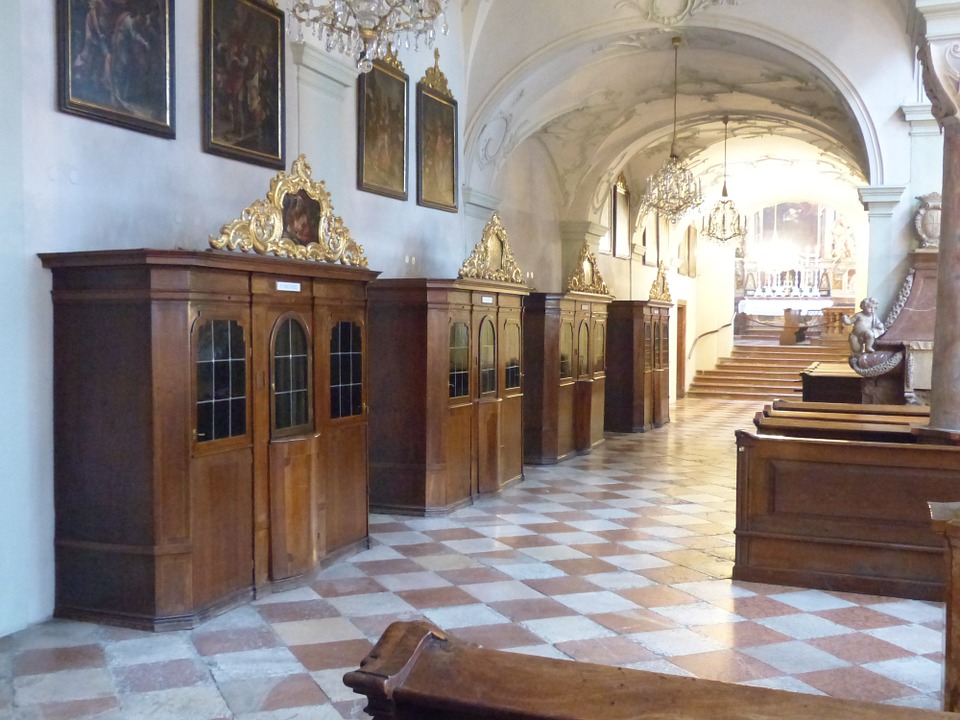
I see here a similarity with Catholics when they hear that it is time for Confession. Advent is an important time to go to Confession because we are preparing for the birth of our Savior. He is called Jesus (a name that means “God saves”) because He will save us from our sins. It would be a rather perfunctory and hollow Christmas without a preceding Confession, would it not?
And yet some Catholics, much like the dogs in this video, scamper away to hide. Others just look nervous and resist. Still others get hostile and say, “No way!”
This is just a fun way to say, “It’s time for Confession, time to wash our sins away!”
Enjoy this video. Dogs are so much fun, aren’t they?
In preparation for the coming of Christmas, we have been discussing some of St. Thomas Aquinas’ writings. In this last installment we’ll be looking at his commentary on the time and place of Jesus’ birth.
We live in a culture that tends toward a kind of temporal pride. We think that we have come of age, that we are smarter and wiser than our forebears. Scientific, technical, and medical knowledge are more highly developed to be sure, but there is more to life than what falls into those realms.
The religious version of temporal pride is expressed in this utterance: “If Jesus lived in our times, He would …” The sentence is then completed with any view we favor or consider to be “enlightened” and “modern.” Jesus did not choose to live in our time, however, and there may well be good reasons for that. As God, He could have chosen any age—and He did not choose ours.
St. Thomas Aquinas, who lived in the 13th century, pondered the reasons for the time and place of Jesus’ birth in his Summa Theologica. In it he addressed some of the questions and objections raised during his era.
The time of the Lord’s birth – St. Thomas discussed this in his Summa Theologica, Part III, Question 35, Article 8. He used as his starting point St. Paul’s attestation to the fittingness of the time of Christ’s birth: When the fullness of the time was come, God sent His Son, made of a woman, made under the law (Gal 4:4). Here, the “fullness of time” is understood to mean “at the designated or determined time.” St. Thomas wrote,
Whereas [other men] are born subject to the restrictions of time, Christ, as Lord and Maker of all time, chose a time in which to be born, just as He chose a mother and a birthplace. And since “what is of God is well ordered” and becomingly arranged, it follows that Christ was born at a most fitting time.
St. Thomas responded as follows to objections raised in his day regarding the time of Christ’s birth:
Some objected that because Christ came to grant liberty to His people, it was not fitting that He came at a time when the Jewish people were subjected to Roman occupation and the Herodian dynasty (Herod was not a true Jew). St. Thomas answered that because Christ came in order to bring us back from a state of bondage to a state of liberty, it was fitting that He be born into bondage with us and then lead us out. We can grasp this logic in a wider sense when we consider that He assumed our mortal nature in order to give us an immortal nature; He died in order to restore us to life. St. Thomas, referencing Bede, wrote that Christ submitted Himself to bondage for the sake of our liberty. He also added that Christ wished to be born during the reign of a foreigner so that the prophecy of Jacob might be fulfilled (Genesis 49:10): The scepter shall not be taken away from Juda, nor a ruler from his thigh, till He come that is to be sent. The bondage was not to be ended before Christ’s coming, but after it and through it.
Others objected that the time of year, near the winter solstice, was not fitting for Christ’s birth. They argued that it was not fitting for the Light of the World to be born during the darkest time of the year. Thomas replied that Christ wished to be born at a time when the light of day begins to increase in length so as to show that He came to draw man back to the light, according to Luke 1:79: To enlighten them that sit in darkness and in the shadow of death.
The place of Christ’s birth – St. Thomas discussed this in the Summa Theologica, Part III, Question 35, Article 7.
Christ willed to be born in Bethlehem for two reasons. First, because “He was made … of the seed of David according to the flesh,” as it is written (Romans 1:3); … Therefore, He willed to be born at Bethlehem, where David was born, in order that by the very birthplace the promise made to David might be shown to be fulfilled. The Evangelist points this out by saying: “Because He was of the house and of the family of David.” Secondly, because, as Gregory says (Hom. viii in Evang.): “Bethlehem is interpreted ‘the house of bread.’ It is Christ Himself who said, ‘I am the living Bread which came down from heaven.’”
St. Thomas responded to some objections to Bethlehem as the place of Jesus’ birth.
Some argued that Christ should have been born in Jerusalem because it is written (Isaiah 2:3) that “The law shall come forth from Sion, and the Word of the Lord from Jerusalem,” and that because Christ is the very Word of God, made flesh, He should have come into the world at Jerusalem. St. Thomas answered that Christ, as the Son of David, fittingly echoed David’s priestly/kingly role. King David was born in Bethlehem and finished his ministry as priest/king in Jerusalem, so it was fitting that Christ as King be born in Bethlehem and, as true High Priest, die in Jerusalem.
Others argued that Bethlehem was too poor and unseemly a place for the Christ to be born. Thomas responded, [The Lord] put to silence the vain boasting of men who take pride in being born in great cities, where also they desire especially to receive honor. Christ, on the contrary, willed to be born in a mean city, and to suffer reproach in a great city. Thomas added,[And] that we might acknowledge the work of God in the transformation of the whole earth, He chose a poor mother and a birthplace poorer still. He cited Scripture: “But the weak things of the world hath God chosen, that He may confound the strong” (1 Corinthians 1:27).
Still others argued that because Scripture (Matthew 2:23; Isaiah 11:1) said “He shall be called a Nazarene,” Christ should have been born in Nazareth. Thomas easily dispatched this objection by observing that one is not always born where one is raised. He also added (referencing Bede), He wished to be born at Bethlehem away from home…in order that He who found no room at the inn might prepare many mansions for us in His Father’s house.
With St. Thomas to guide and teach us, we have pondered over the past few days some aspects of the incarnation and birth of our Lord. May you who have read and I who have presented be enriched by the teachings of the Lord through the great St. Thomas Aquinas.
Below is a link to an organ prelude on the hymn “Bethlehem of Noblest Cities,” also known as “Earth Hath Many a Noble City.” It is accompanied by beautiful art related to Bethlehem. Here are the words to the hymn:
Earth hath many a noble city; Bethlehem, thou dost all excel: out of thee the Lord from heaven came to rule his Israel.
Fairer than the sun at morning was the star that told his birth, to the world its God announcing seen in fleshly form on earth.
Eastern sages at his cradle make oblations rich and rare; see them give, in deep devotion, gold and frankincense and myrrh.
Sacred gifts of mystic meaning: incense doth their God disclose, gold the King of kings proclaimeth, myrrh his sepulcher foreshows.
Jesus, whom the Gentiles worshiped at thy glad epiphany, unto thee, with God the Father and the Spirit, glory be.
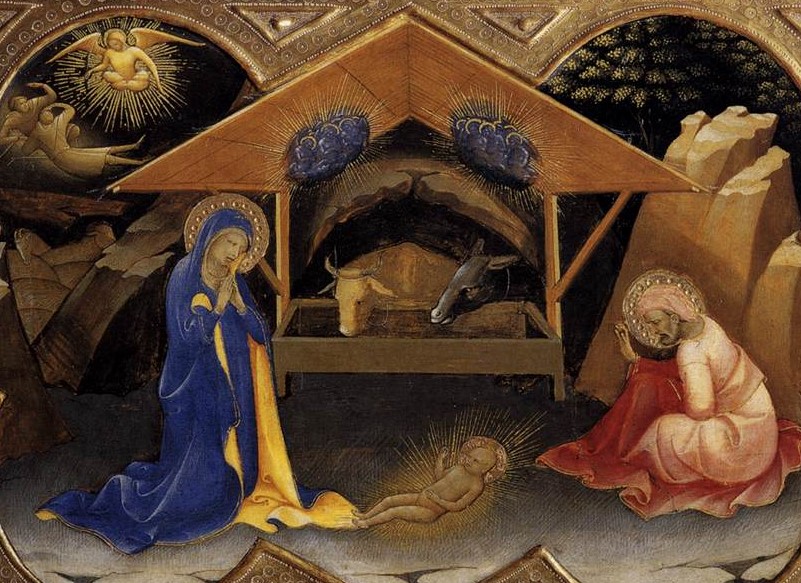
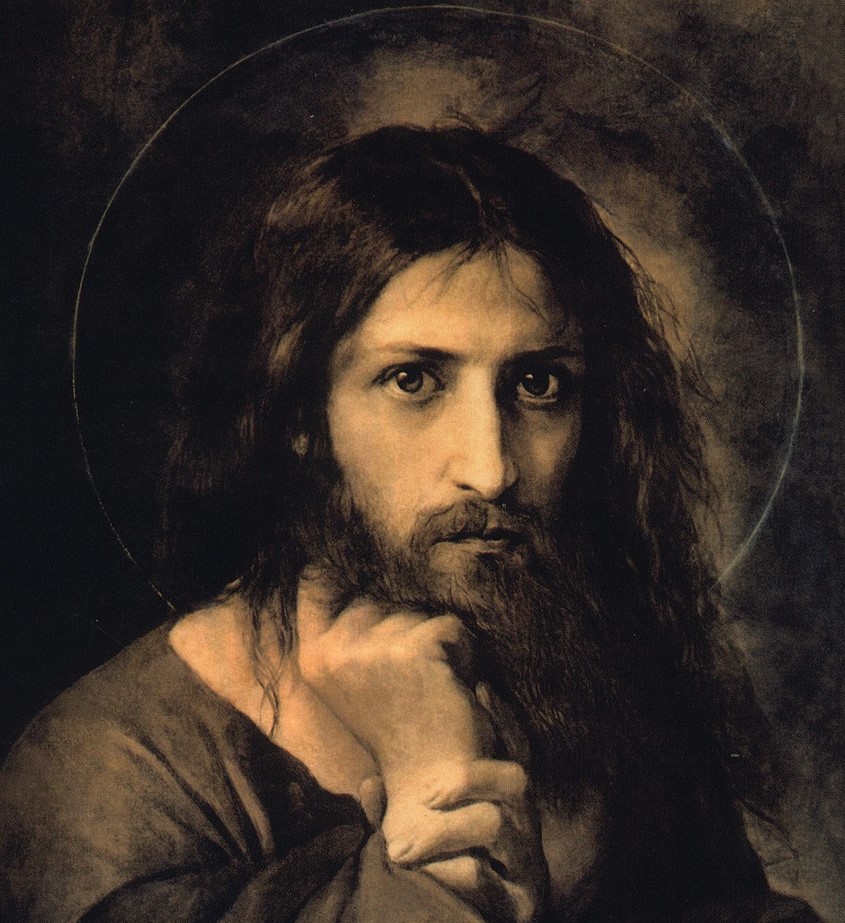
Reproduction of image by Georg Cornicelius (1888)(original destroyed)
Continuing our series of questions related to the Incarnation, we next ponder whether Jesus would have come at all had we not sinned in the garden. We also consider why He waited thousands of years before coming to our rescue.
Would Jesus have come if Adam had not sinned?
St. Thomas Aquinas (in his SummaTheologica) first states that there are different opinions on the matter. He also notes that God’s power is not limited and therefore God could have become incarnate even if sin had not existed. However, St. Thomas believes that if man had not sinned then the Son would not have become incarnate. As I often do, I’ve presented St. Thomas’ words in bold italics, while my commentary appears in plain red text.
For such things as spring from God’s will, and beyond the creature’s due, can be made known to us only through being revealed in the Sacred Scripture, in which the Divine Will is made known to us. Hence, since everywhere in the Sacred Scripture the sin of the first man is assigned as the reason of Incarnation, it is more in accordance with this to say that the work of Incarnation was ordained by God as a remedy for sin; so that, had sin not existed, Incarnation would not have been (Summa Theologica, Part III, Question 1, Article 1).
While theological speculation may have its place, it is certain that the Incarnation was instituted by God first and foremost as a remedy for sin. While the Incarnation offers more than is required to remedy sin (e.g., an increase in human dignity (because God joined our family), God’s visitation, the opening of a heavenly (not merely earthly) paradise), Scripture presents remedy for sin as God’s primary motive. In remedying our sin, God shows the greatness of His mercy because He does not merely restore us but elevates us to a higher place. The least born into the Kingdom of God is greater that the exemplar of the Old Covenant, John the Baptist. Had we not sinned and had God merely wanted to elevate us, He could have done so in other ways. It seems to me that St. Thomas’ position is best suited to the evidence.
If the Incarnation is a remedy for sin, why did God wait so long to apply it?
St. Thomas provides a sensible answer that addresses aspects of the question we might not have considered. His answer is found in the Summa Theologica (part III, question 1, article 5). First, he addresses why the Incarnation did not happen before sin:
Since the work of Incarnation is principally ordained to the restoration of the human race by blotting out sin, it is manifest that it was not fitting for God to become incarnate at the beginning of the human race before sin. For medicine is given only to the sick. Hence our Lord Himself says (Matthew 9:12-13): “They that are in health need not a physician, but they that are ill … For I am not come to call the just, but sinners.”
Next, St. Thomas addresses why the Incarnation did not happen quickly, soon after Original Sin, rather than thousands of years later. He sets forth four reasons:
First, on account of the manner of man’s sin, which had come of pride; hence man was to be liberated in such a manner that he might be humbled and see how he stood in need of a deliverer. … For first of all God left man under the natural law, with the freedom of his will, in order that he might know his natural strength; and when he failed in it, he received the law; whereupon, by the fault, not of the law, but of his nature, the disease gained strength; so that having recognized his infirmity he might cry out for a physician, and beseech the aid of grace.
Quick solutions to problems do not always permit proper healing to take place. Most parents know that if they solve every problem a child has, important lessons may be lost. It is often beneficial to live with our questions for a while so that the answers are more appreciated and more effective.
Indeed, it took us humans quite a while to acknowledge the seriousness of our sin and pride. Shortly after Eden, the tower of Babel indicated that human pride was still a grave problem. Even when given the Law, a good thing, the flesh corrupted it, turning its perfunctory observance into an occasion for pride. The prophets then had to keep summoning Israel and Judah back to the Lord and away from prideful self-reliance. The Assyrian invasion of the Northern Kingdom and the Babylonian Captivity only further illustrated the depths of our sin, so that this cry went up: “O Lord, that you would rend the heavens and come down” (Is 64:1).
We had to be led gradually to recognize our profound need for a savior. Otherwise, even if the remedy were offered, too few might reach for it.
Secondly, on account of the order of furtherance in good, whereby we proceed from imperfection to perfection. Hence the Apostle says (1 Corinthians 15:46-47): “Yet that was not first which is spiritual, but that which is natural; afterwards that which is spiritual … The first man was of the earth, earthy; the second man from heaven, heavenly.”
There is a kind of theology of grace implicit in this answer. Grace builds on our nature, and it is our nature, physically and spiritually, to grow gradually. While sudden conversions and growth spurts have their place, the best and most typical growth is that which occurs steadily and in stages.
Thirdly, on account of the dignity of the incarnate Word, for on the words (Galatians 4:4), “But when the fullness of the time was come,” a gloss says: “The greater the judge who was coming, the more numerous was the band of heralds who ought to have preceded him.”
Here is underscored the dignity of the Son of God, that many should precede Him, announcing Him. There was also a need for us to be prepared to meet Him, so that we would not miss Him or refuse Him when He came. As Malachi says, See, I will send the prophet Elijah to you before that great and dreadful day of the Lord comes. He will turn the hearts of the parents to their children, and the hearts of the children to their parents; or else I will come and strike the land with total destruction (Mal 4:5-6). Those who were prepared were able to abide the day of the Lord’s coming and heed His call.
Fourthly, lest the fervor of faith should cool by the length of time, for the charity of many will grow cold at the end of the world. Hence (Luke 18:8) it is written: “But yet the Son of Man, when He cometh, shall He find think you, faith on earth?”
This is an interesting aspect of the question that many might not consider; we typically ponder more what is good for us than what is good for succeeding generations. It is sadly true, though, that fervor, both collective and individual, can fade as a wait becomes lengthy. Therefore, St. Thomas suggests that God appointed a time for the Incarnation within human history such that the greatest possible number of people could be saved.
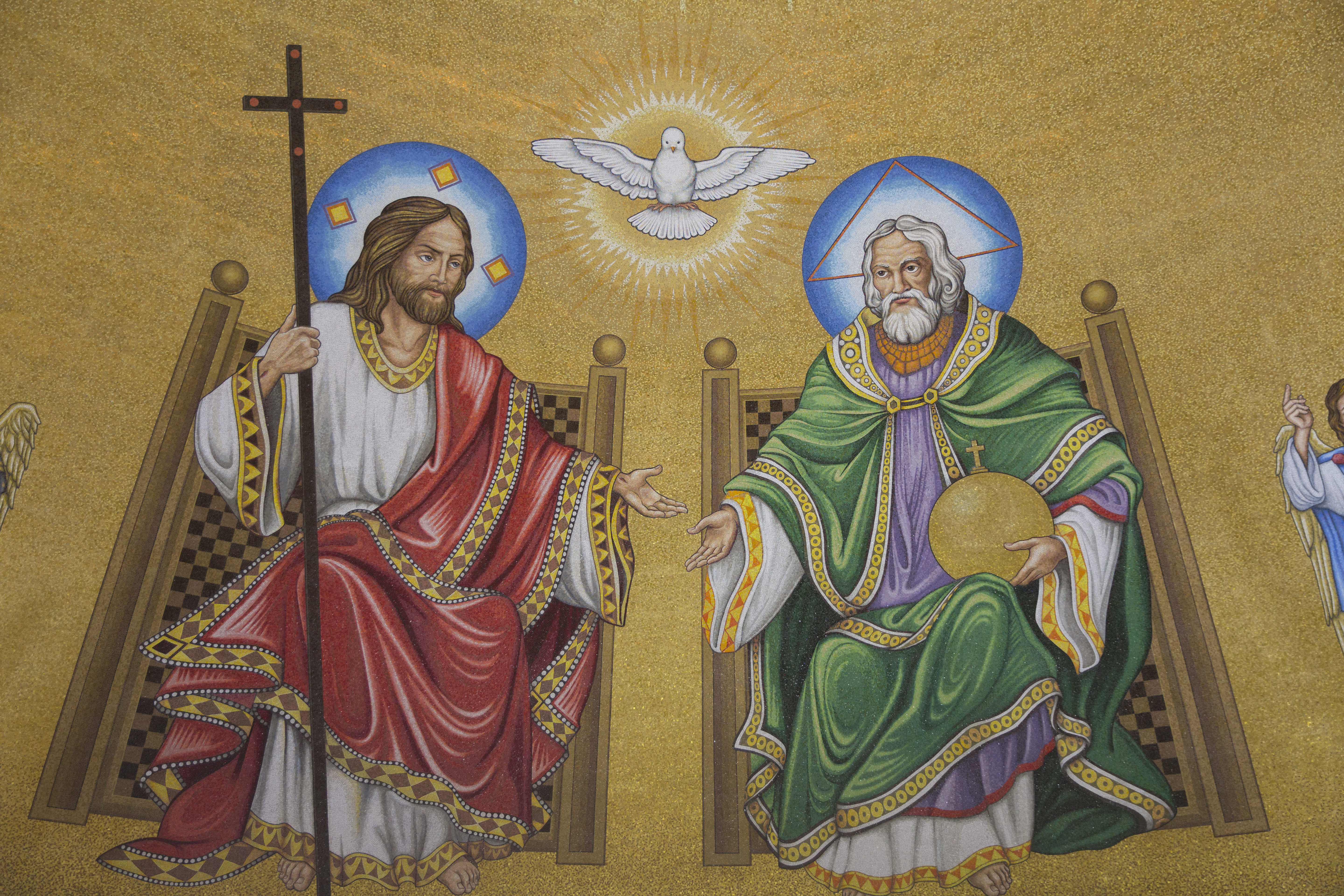
Trinity Dome. Credit: J. Lippelmann, Catholic Standard
As we await the approaching Feast of Holy Christmas, we have been pondering some of St. Thomas Aquinas’ teachings on the Incarnation. Today we will consider why it was the Son, the Second Person of the Blessed Trinity, who became incarnate.
Most people have never even thought of this question let alone sought to answer it. God could have chosen many different ways to save us; He chose to act as He did not because it was required but because it was fitting. It falls to us to ponder, using Scripture and our own reason, why His chosen way was fitting and what we can learn from this.
As always, St. Thomas Aquinas provides rich resources for us. I present below his teaching from the SummaTheologica (part III, question 3, article 8) in bold, italics; my poor commentary appears in plain red text. St. Thomas proposed four reasons as to why it was most fitting for the Son to become incarnate.
I. First, on the part of the union; for such as are similar are fittingly united. Now the Person of the Son, Who is the Word of God, has a certain common agreement with all creatures, because the word of the craftsman, i.e. his concept, is an exemplar likeness of whatever is made by him. Hence the Word of God, Who is His eternal concept, is the exemplar likeness of all creatures. … for the craftsman by the intelligible form of his art, whereby he fashioned his handiwork, restores it when it has fallen into ruin.
When the Father created all things, He uttered a Word (i.e., Let there be light). He creates through His Word (the Logos), and the Word of God is Christ. Therefore, in speaking creation into existence by the Logos, God impresses a kind of logike (logic) on all things.
In this way the Son, the Logos, has a “certain common agreement with all creatures,” who bear something of logic or likeness to Him. If this be so, then, as St. Thomas reasons, God the Father would best repair His creation by the same Word through whom He first created it.
II. Moreover … Man is perfected in wisdom (which is his proper perfection, as he is rational) by participating the Word of God, as the disciple is instructed by receiving the word of his master. Hence it is said (Sirach 1:5): “The Word of God on high is the fountain of wisdom.” And hence for the consummate perfection of man it was fitting that the very Word of God should be personally united to human nature.
While it is true that Original Sin affected our bodily integrity, perhaps our greatest wound was the darkening of our intellect, which was (and is) our greatest gift, the distinguishing characteristic between us and brute animals. So, it is especially fitting that the Word of God, who is also the Wisdom of God, should be joined to our nature and bring healing to us in this way.
St. Paul writes, Do not be conformed to this world, but be transformed by the renewing of your mind. Then you will be able to discern what is the good, pleasing, and perfect will of God (Rom 12:2). Even human words can instruct; all the more, then, can the Word of God made Flesh enlighten and heal us. This shows forth the fittingness that the Word—the Son, the Second Person of the Trinity—should become flesh.
III. The reason of this fitness [of the Second Person becoming flesh] may [also] be taken from the end of the union, which is … the heavenly inheritance, which is bestowed only on sons, according to Romans 8:17: “If sons, heirs also.” Hence it was fitting that by Him Who is the natural Son, men should share this likeness of sonship by adoption, as the Apostle says in the same chapter (Romans 8:29): “For whom He foreknew, He also predestinated to be made conformable to the image of His Son.”
In other words, because it is sons who inherit, it is fitting that He who is Son by nature should become incarnate. So shall we, conformed to His image as sons through our adoption and membership in His Body, also inherit the Kingdom and glory through the healing He effects in us.
IV. [Further], the reason for this fitness may be taken from the sin of our first parent, for which Incarnation supplied the remedy. For the first man sinned by seeking knowledge, as is plain from the words of the serpent, promising to man the knowledge of good and evil. Hence it was fitting that by the Word of true knowledge man might be led back to God, having wandered from God through an inordinate thirst for knowledge.
In grasping inordinately for the wrong kind of knowledge (the knowledge of evil) and in insisting on his own right to decide what was good and what was evil, Adam sinned. In and of itself, seeking knowledge is good; it was the object that was disordered (and thus forbidden). Because humans have this thirst to know (of itself good), all the more reason that God should offer us the true Word and Wisdom of God: the Son.
For the Word to become flesh is thus more fitting. In effect, God the Father says, “Let me offer you what you were really seeking but sought inordinately.” For this reason, the Son, who is the Word, who is Truth itself, becomes incarnate.
As we approach the Christmas feasts, it is good for us to ponder aspects of the Incarnation. In this post, I would like to consider what St. Thomas Aquinas teaches about its fittingness. God was not radically “required” to do everything as He did. We do well to ponder why the manner of the Lord’s incarnation is “fitting,” why it makes sense.
St. Thomas, referencing St. John Damascene, gives four reasons for the fittingness of the incarnation of Christ:
But, as Damascene says (De Fide Orth. iii, 1), by the mystery of Incarnation are made known at once the goodness, the wisdom, the justice, and the power or might of God—“His goodness, for He did not despise the weakness of His own handiwork; His justice, since, on man’s defeat, He caused the tyrant to be overcome by none other than man, and yet He did not snatch men forcibly from death; His wisdom, for He found a suitable discharge for a most heavy debt; His power, or infinite might, for there is nothing greater than for God to become incarnate …” (Summa Theologica III, 1.1)
Here are each of Thomas’ (Damascene’s) reasons, along with some less-worthy commentary from me.
I. His goodness, for He did not despise the weakness of His own handiwork – To despise more literally means to look away or disregard something. God did not do this with Adam and Eve nor with us, their descendants, who have ratified their sinful choice. He continues to love us and call us.
Consider that even at the moment of the Original Sin, God first rebuked the devil and announced a solution that from woman would come forth a son destined to crush the power of the evil one. This protoevangelium (first good news) signals that God has not given up; He already has plans to save us. Although God would go on to announce the painful consequences of Adam’s sin, He does so only after announcing that His mercies are not exhausted, and His goodness is not altered.
Thus, God does not despise (look away from) His creation. Even His punishments are meant to heal us and to prepare us for the offer of something far greater: no mere earthly paradise, but Heaven itself. At the Incarnation, therefore, God’s goodness and fidelity to His promise is evident. Jesus, our promised Savior, is the hand extended to us in God’s goodness.
II. His justice, since, on man’s defeat, He caused the tyrant to be overcome by none other than man, and yet He did not snatch men forcibly from death – God, in making us free, “must” respect our free choices, not cancel them. If He canceled them, we would not have true freedom.
God does not undo our choices or remove their consequences; He builds on them. This is His justice at work.
We got into this mess through a man, a woman, and a tree. God will use these very elements to free us. The new Adam is Christ; the new Eve is Mary; the tree is the cross. Just as the first Adam and Eve were free but sinless, so Christ and Mary are sinless. While the first Adam and Eve said no in disobedience, Christ and Mary say yes in obedience.
God Himself, in Christ, joins our family and cancels the sin of Adam in a way that respects our first choice, but shows a different result. He takes the very suffering and death we chose and makes that the way back. The cross of Christ and our own share in that cross become the way back, the way to heavenly glory.
In His justice, God does not cancel our choices (and thereby our freedom). He does not “snatch us forcibly from death.” Rather, in His justice, He honors our freedom by taking our choices and their consequences (suffering and death) and making them the very way back to Him and to glory. He justly respects our choices but offers us another way.
III. His wisdom, for He found a suitable discharge for a most heavy debt – A mere man, say a prophet or a holy man, could not atone for our sins. Our debt is simply too high (see Matt. 18:24ff). A man alone does not have the power to save. God alone would have nothing to do with our case. As the God-man, Jesus has both the power to save us and the brotherhood to speak and act for us. We are saved by the human decision of a divine person. This shows both God’s justice and His wisdom, for He is not overcome by the conundrum of human impossibility and divine recusal. In the Incarnation, both truths are fittingly regarded and yet overcome.
IV. His power or infinite might, for there is nothing greater than for God to become incarnate – How can the infinite enter the finite? How can the eternal enter time? How can God, whom the very heavens could never contain, dwell in Mary’s womb and rest in her arms? Alpha et O matris in gremio! (Alpha and Omega sit in mother’s lap!) Here, God shows His mighty power to astonish us with His paradoxical wisdom and ways.
St. Thomas quotes St Augustine: The Christian doctrine nowhere holds that God was so joined to human flesh as either to desert or lose … the care of governing the universe … God is great not in mass, but in might. Hence the greatness of His might feels no straits in narrow surroundings (Ibid, ad 4).
God’s power is paradoxically demonstrated in the fact that He can make himself small but suffer no loss in ability or supreme power.
As the great feast of the Birth of the Lord approaches, I wish a merry and fitting Christmas to you all.
But who may abide the day of his coming and who shall stand when he appeareth? This is the cry that goes up from the final pages of the Old Testament (Mal 3:2). The Lord himself gives the answer:
See, I will send you the prophet Elijah before that great and dreadful day of the Lord comes. He will turn the hearts of the fathers to their children, and the hearts of the children to their fathers; lest I come and strike the land with doom! (Mal 4:5-6)
With these words the Old Testament ends.
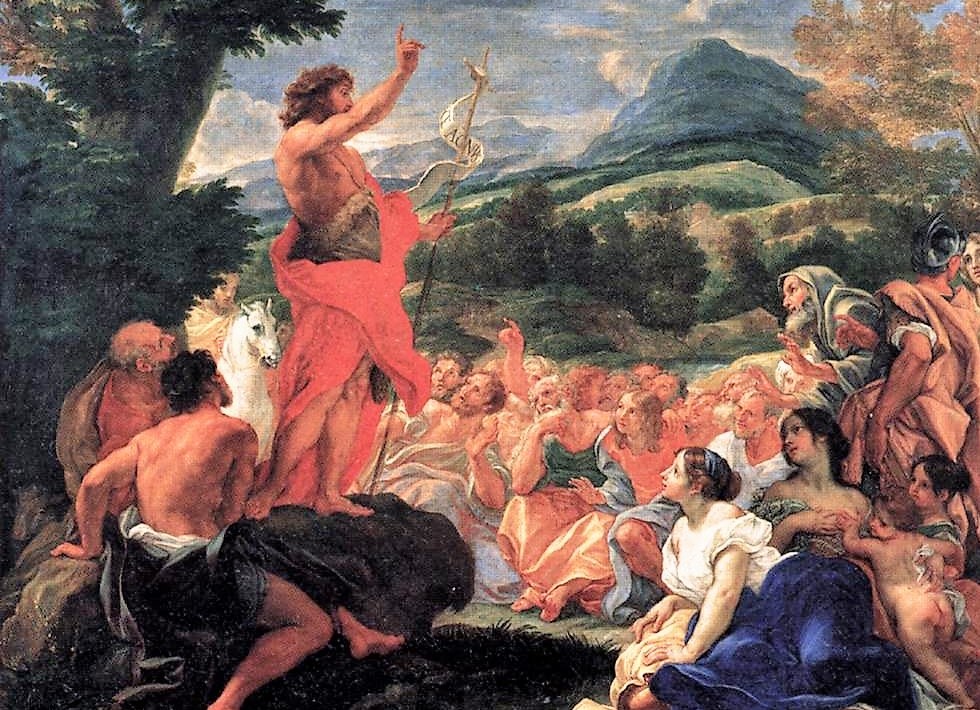
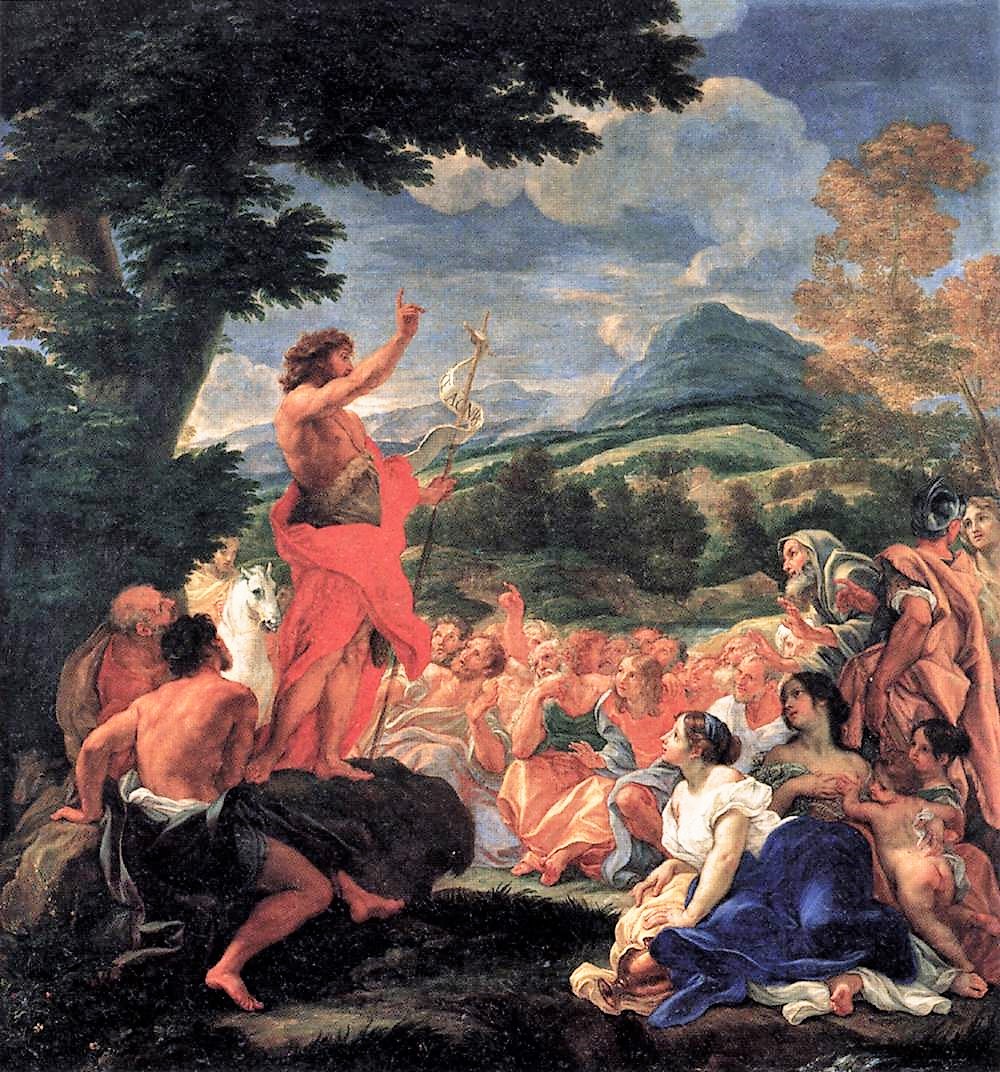
The New Testament opens in the desert near the banks of the River Jordan, with John the Baptist, of whom Jesus says, He is the Elijah who was to come (Mt 11:14). In John the Baptist is the fulfillment of the Elijah figure, who was to come to prepare the hearts of the people for the great coming of the Messiah.
All of this leads us to this Sunday’s Gospel, in which John the Baptist summons the faithful to repentance so that they will be ready when the Messiah arrives. Those of us who want to be ready also need to go into the wilderness and listen to John’s message: Prepare the way of the Lord! Although only the Lord can finally get us ready, we must be able to say to Him, “I’m as ready as I can be.”
Let’s look at this Gospel reading in three stages, going into the wilderness with John the Baptist as our teacher:
1. Context – Luke sets forth the context meticulously: In the fifteenth year of the reign of Tiberius Caesar, when Pontius Pilate was governor of Judea, and Herod was tetrarch of Galilee, and his brother Philip tetrarch of the region of Ituraea and Trachonitis, and Lysanias was tetrarch of Abilene, during the high priesthood of Annas and Caiaphas, the word of God came to John the son of Zechariah in the desert.
What’s going on here? Why all the specifics? It almost seems as if we are reading an ancient Middle Eastern phone book or a “Who’s Who in the Eastern Mediterranean.” Yes, notice the following:
The Prestige– You might say that this is a parade of the prestigious, a roll call of royalty, a list of leaders! There is an emperor (i.e., the federal government), a local governor (i.e., the state government), three tetrarchs (state and local officials), and two religious (and secular) leaders. Anybody who is anybody is in the list, yet it was not to any of them that the Word of God came.
The Person– It was John the Baptist, the simple man in the desert, to whom the Word came. Who? He was not on anyone’s list! John the who? Where do you say he lives? He doesn’t live in the palace or even in Jerusalem? Recall these Scripture passages:
But God chose what is weak in the world to shame the strong, God chose what is low and despised in the world, even things that are not, to bring to nothing things that are, so that no human being might boast in the presence of God (1 Cor 1:27-29).
At that time Jesus, full of joy through the Holy Spirit, said, “I praise you, Father, Lord of heaven and earth, because you have hidden these things from the wise and learned, and revealed them to little children. Yes, Father, for this was your good pleasure (Luke 10:21).
He has lifted up the lowly, and the rich he has sent away empty. To this simple, unlettered man, the Word of God came, and many went out to hear him speak the Word of God in wisdom.
The Place – Where is the Word of God proclaimed? Where is John the Baptist found? Where will Jesus appear? In a palace? In the “Ivy League” town of Jerusalem? No indeed; not in a palace, not in some air-conditioned environment, not in a place of power, but in a place of vulnerability, where one experiences one’s limitations. In the desert, neediness reaches out and grabs you. Yes, it is in a hot desert that the prophet was found.
It is in this hostile climate that we go to hear the call and feel its power. Do you understand the context? It is not be overlooked. The context is not found in the halls of power; it is found in the desert, where thirst and hunger hit rich and poor alike. It is here that the Word of God is found and heard.
2. Call – The text says, John went throughout the whole region of the Jordan, proclaiming a baptism of repentance for the forgiveness of sins, as it is written in the book of the words of the prophet Isaiah: A voice of one crying out in the desert.
Here we have a basic biblical call, “Repent and believe in the good news!” John said this, but so did Jesus in His opening call: After John was put in prison, Jesus went into Galilee, proclaiming the good news of God. “The time has come,” he said. “The kingdom of God is near. Repent and believe the good news!” (Mk 1:14 -15)
There must be balance in preaching. Repent and believe the good news! Modern thinking and practice have strayed from this kerygmatic balance between “Repent” and “Believe the good news!” Many today only want to hear or proclaim the “good news.” The good news only makes sense, though, if we understand that we are in dire need of a divine physician. Repenting sets the stage for the good news.
As we have discussed in other posts, metanoia means more than moral conversion. It means, more literally, to have one’s thinking changed (meta = change, noia = thought), to have one’s mind renewed, to think in a new way. The basic message is to have our mind converted from worldly self-satisfaction and self-righteousness and to be convinced of our need for forgiveness and for a savior. Yes, we are sinners in need of a savior. We are bound for eternal death and destruction and cannot save ourselves. There is good news, though: the Savior is here, even at the door! We must arise and be ready to answer when He knocks.
Our modern world, concerned more with comfort and relief than with healing, needs to experience something of the desert. There’s nothing like it to remind us of our frailty and neediness. Today in the Church we often try to make everyone feel comfortable; we don’t want to risk talking about sin or other controversial topics because it might unsettle someone. Where’s the desert in that? John wasn’t found in some air-conditioned marble palace. He was in the searing desert with no creature comforts to be found. There was and is just the call to come to a new mind, to reorder misplaced priorities, to surrender self-righteousness, and to accept that we are frail sinners who need a savior.
With the “bad news” established, the good news makes sense—and it really is good news: the savior is near, even at the door. However, we have to go out into the desert and listen to a humble man, not one of the rich and powerful. We must listen to John, a man clothed in camel hair and subsisting on wild honey and locusts.
He does proclaim good news, but we must be ready for it.
3. Content – What does it mean to repent? John says, Prepare the way of the Lord, make straight his paths. Every valley shall be filled, and every mountain and hill shall be made low. The winding roads shall be made straight, and the rough ways made smooth, and all flesh shall see the salvation of God.
Notice the elements of the content:
Ready– The text says, Prepare the way of the Lord. This is a hectic season; we’re all getting ready for Christmas, but mostly in a social way (buying presents, going to parties, and decorating the house). Will we be spiritually ready for Christmas? We know how to get ready for a lot of things. We prepare for tax day. We make sure to be on time for work. We know how to catch a plane. We know how to get to a movie or a sporting event at the right time. We spend years getting ready for careers. Why don’t we spend more time getting ready for God? The one thing that is most certain is that we will die one day and stand before God. Are you ready? As the text says, Prepare the way of the Lord! This world will pass away, but the things of God remain. Careers and promotions are not certain, but death and judgment are. Why do we get ready for uncertain, worldly things and yet not spend time on spiritual things?
Right– The text says, make straight his paths. The winding roads shall be made straight! A winding road is a symbol of shifting priorities, of waywardness, of a heart that is not steadfast and straight. Too often we are all over the moral map; we are inconsistent and crooked. Scripture says,
In all your ways acknowledge him, and he will make straight your paths (Prov 3:6).
Put away from you crooked speech and put devious talk far from you. Let your eyes look directly forward, and your gaze be straight before you. Take heed to the path of your feet, then all your ways will be sure. Do not swerve to the right or to the left; turn your foot away from evil (Prov 4:24-27).
Consider this example. If I am driving from Washington, D.C. to New York City and see a sign that says, “South to Richmond,” I know that following the sign would be foolish; it would lead me in the wrong direction. We know how to set a course for worldly destinations and how to avoid going the wrong way, but what about our course home to Heaven? We might sing, “I’m on my way to Heaven and I’m so glad the world can’t do me no harm,” but then we see an exit marked, “Sin City, Next Exit” and sure enough we take it. Why? Many of us are outraged to hear that we can’t just go whichever way we please, do whatever we want, and still end up in Heaven. Then comes all the anger directed at the Church, the Bible, the preacher, and anyone who might remind us that we have to make straight the ways of the Lord. You can’t go down to go up. You can’t turn left or right and say you’re going straight. Thus, the text says that we should make straight the way of the Lord.
Reverent– The text says, Every valley shall be filled, and every mountain and hill shall be made low.
The mountain represents pride. Every sin is rooted in pride, because it asserts that our way is better than God’s. We think that we know better than God. We are modern; Scripture is old fashioned. We are with it while the Church is out of touch. This is the mountain of pride and we must let it go. God hates pride; He just can’t stand it. There is nothing that excludes us more from Heaven than pride, thinking that we know better than God does.
The valley symbolizes low self-esteem and despair. It may not be obvious, but a lot of sins come from low self-esteem. For example, we gossip and denigrate others because we think that if they are brought low, we will feel better about our own self. We also give way to peer pressure easily because we can only feel better about our own self if we “fit in” and are approved by others. Sometimes we’ll even sin in order to accomplish that. Some young women will fornicate for the price of a nice meal, selling their bodies for less than a prostitute would—all because they fear that they won’t be loved if they don’t. Young men pressure young women and disrespect them because they think that they must in order to “be a man.” Many young men join gangs—even drop out and commit crimes—all to “belong” and be “cool.” Low self-esteem is an ugly business that leads us to commit many sins. These valleys have to be filled in.
The solution to both pride and low self-esteem is fear of the Lord, reverence. The fear of human beings and what they will think is at the root of much sin. That is why the Scriptures admonish us to fear the Lord instead. When I fear the Lord, I don’t need to fear anyone else. When I reverence the Lord, my pride is dissolved. Mountains are made low and valleys are leveled when we have a reverential and loving fear of the Lord.
Refined– The text says, the rough ways shall be made smooth. Rough ways are filled with obstacles, stumbling blocks, and pitfalls. What are some of the things that hinder our ways? What are some of our obstacles and pitfalls?
What are some of the specific things that cause me to stumble? Are they habits, excesses, or unlawful pleasures? What are the things that make me rough and difficult to live with? Am I unyielding, unforgiving, unmerciful, or unkind? Am I lax, frivolous, unspiritual, or unaccountable? What are the rough ways in me and in my path that need smoothing? What trips me up? What in me needs softening and smoothing?
Recognizing– The text says, and all flesh shall see the salvation of God. The Greek word used in this passage is ὁράω (horao). While it is translated as “see,” it involves an active receptivity, more in the sense of looking than merely having something overshadow us or cross our visual path. The danger is that we can close our eyes. Thus, we must remain active and receptive. We must look for salvation and redemption; we must seek it. It is a gift, but we must open our eyes and accustom ourselves to its light and to its ways.
Learning the ways of the faith is very much like learning a language. Until we learn the letters, the meaning of the words, and the grammar, a different language can look or sound like gibberish. For many today, the ways of faith are just that: gibberish. For us who believe, though, because we have been made ready for God, because we make straight his paths, because we reverence God and reject roughness, we are able to recognize our redemption and rejoice in its presence.
This brief video, a Christmas commercial by Canadian Tire, needs little commentary from me. It reminds us that the most important things at Christmas aren’t things at all.
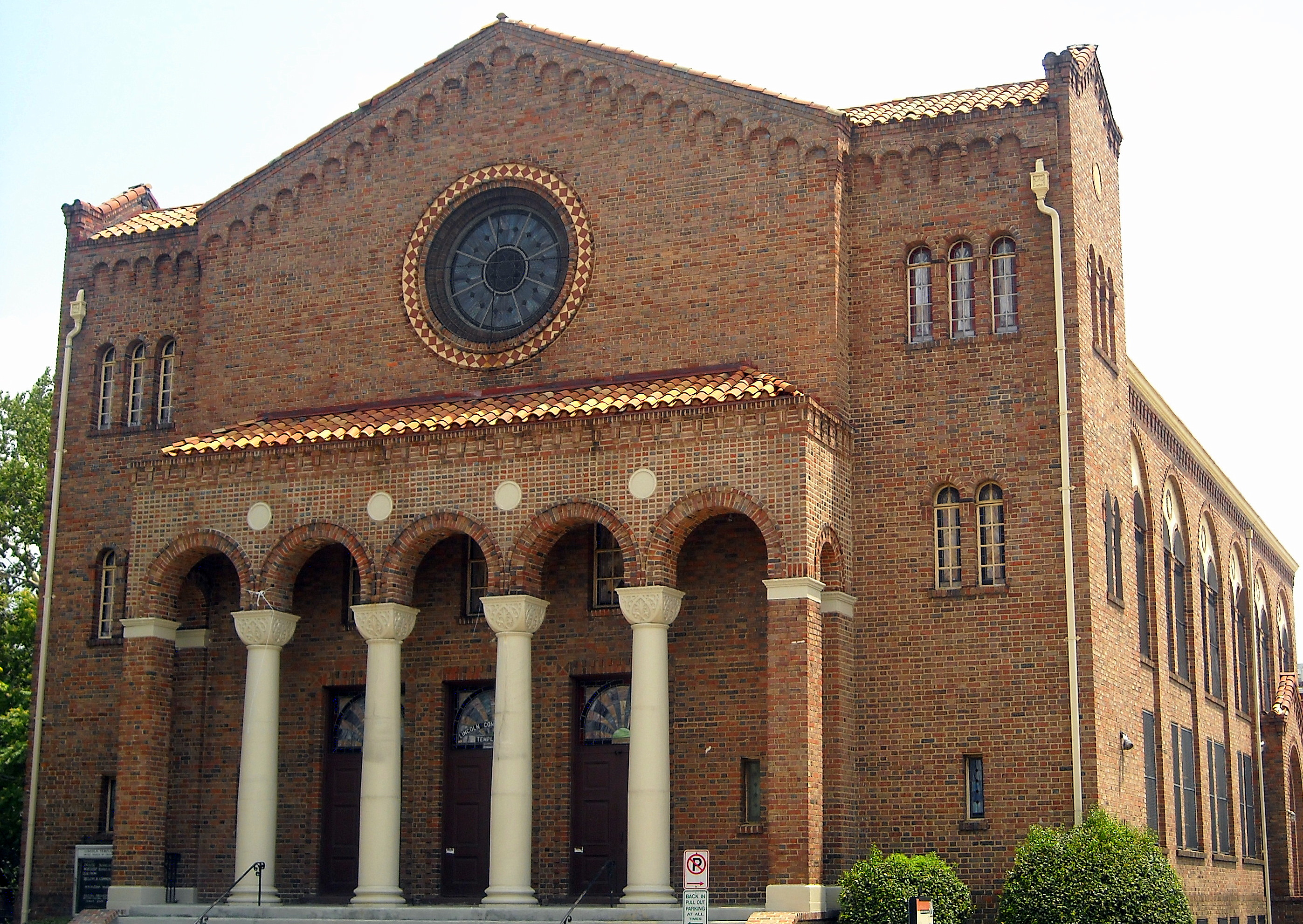
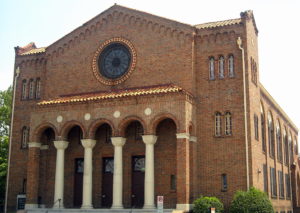
Lincoln Congregational Temple in Shaw, credit: NCinDC, Flickr
As I walk or drive through my Capitol Hill neighborhood here in Washington, D.C., I pass by more than twenty churches (all of them Protestant) that have been closed in the past decade. Many of them are grand and prominent buildings. (Click here to see four of them.) Most of the them have been converted to condominiums, likely due to historic preservation norms that seek to retain the exterior appearance of historic buildings.
A recent study by the local non-profit organization Sacred Spaces Conservancy confirms my anecdotal evidence about the large number of closures. On Capitol Hill, a growing neighborhood with a tremendous number of row houses, about 40 percent of buildings used for worship have closed [*]. Such a figure is shocking and demonstrates a collapse of religious observance. Our Catholic parishes have suffered as well, but thankfully none of them have closed.
As always, there is important detail behind the numbers. At the root is a dramatic demographic shift in the population of the District of Columbia. The once majority-black city is no longer so; African-Americans now make up less than 50 percent of the population. The new arrivals to the city are also younger. To say that the city is undergoing gentrification is not really accurate. The majority of the new residents are not gentry at all; they are largely young adults, saddled with college debt and unable to afford to own property. The median home price in this area is close to one million dollars. Because most of them do not have the means to buy a home, they rent, and even then must usually share with others to make it affordable.
This is the new demographic reality: A once solidly African-American area is now more racially diverse and younger as well. The new residents are in general less religiously observant and those who are “religious” are less tied to particular denominations or congregations. This is a challenge to institutions established in a very different world.
This has affected Protestant and Catholics in different ways.
The Protestant Experience:
There are reasons that the Protestant congregations have been more affected by the changes than the Catholic parishes. In general, Protestant denominations were and are divided in that they served specific groups defined by both racial and sectarian lines. For example, there might have been ten “Baptist” churches in a fairly small area, but they weren’t serving just different Baptist denominations; there were White Baptists, Black Baptists, Primitive Baptists, Free Will Baptists, and so forth. Add to this a slew of other denominations and distinctions such as African Methodist Episcopal, Evangelical Lutheran, Missouri Synod Lutheran, High Church Episcopal, Low Church Episcopal, and Broad Church Episcopal. The city churches were built during a time when these distinctions mattered.
However, it is the racial focus of Protestant churches that looms largest of all in this city. Dr. Martin Luther King once observed that the most segregated day of the week is Sunday. This still rings largely true. It wasn’t just race, it was the length of the service and styles of worship, preaching, and music. Black churches in solidly black neighborhoods could flourish in many varieties from storefront churches to megachurches to historical “anchor” churches such as Metropolitan Baptist and Foundry United Methodist. African-American congregations that identify strongly with black traditions of worship have not adjusted easily to the demographic shifts of recent years. Thus, they face the choice of either moving to where their congregants have moved or closing. It isn’t just “inflexible” niche marketing that is the problem; whites who move in are not easily persuaded to attend their services. Whether it is liturgical style, preaching content, or just the “awkward” experience of being a minority, whites and other non-African-American arrivals don’t join in large enough numbers to shore up a declining congregation.
In short, the combination of changing demographics and denominational division has spelled disaster for many traditionally black congregations. Some of them have moved to the suburbs; others have closed. Focusing on a niche market is a problem when the niche disappears or moves away.
As for the mainline (largely white) Protestant churches, I would argue that a collapse of faith has depleted them, at least collectively. Many of them ceased preaching the “old time religion” a long time ago, having largely assimilated to a post-Christian world and acclimated to the sexual revolution. Gone are the moral demands of the gospel, which have been replaced by a social “gospel.” Gone is the drama of salvation. Jesus is less Lord and Savior and more a good man and ethical teacher. For those who think the Catholic Church should chart a similar course, please note that as much as we have declined, the mainline Protestant churches have collectively seen an utter collapse in attendance [**].
The Catholic experience:
The experience of the Catholic parishes on Capitol Hill has not been ideal, but it is better, and we can survive collectively. There are reasons for this.
Our first commitment is generally to serve a neighborhood or region. In a certain sense, the whole world is divided up into parishes. Every diocesan parish has a boundary. Boundaries used to tell Catholics where they should attend Mass. Today, boundaries tell the Church where we are supposed to go. A parish is responsible for every person who lives within its boundaries. Thus, with few exceptions, the parish stays put whether its founding parishioners remain or move away. Although there are a few ethnic parishes here and there (mainly due to language and/or a special rite) that aim to serve only a particular group, this sort of “niche marketing” is generally frowned upon.
The Catholic Church is catholic (universal). My own parish has gone from a solidly African-American parish to one that is more than 40 percent non-African-American. In this, it is beginning to reflect the current makeup of the neighborhood, which is more racially diverse and much younger than it was. Noting this, we did a very Catholic thing. Although the changes brought stress, we went out to meet our neighbors. We knocked on doors; we talked to them in the park and at the local market. Over time we’ve adjusted to their needs; at their request we began an evening Mass that has become quite popular (it seems that younger people tend to be night owls). We still have our longer, vibrant Gospel Mass for the benefit of our traditional parishioners, some of whom have stayed in the neighborhood and others who have moved away but continue to attend Mass here on Sundays. This has been the second big sea-change in this parish and neighborhood. (The first one took place after World War II, when the neighborhood became solidly black.) Through it all, our parish stays and cares for whoever lives here.
That said, things are not nearly as good or strong as they should be in the Catholic Parishes of Capitol Hill. Not one of them has more than 1000 people in attendance on Sunday. The largest has just under 900; mine has 600; two of them have fewer than 200. Several of our schools have closed. Part of the reason for the smaller number of parishioners is that all these parishes were built before the advent of the automobile and thus are much closer to one another than is true in the suburbs. People in my neighborhood have three Catholic parishes within walking distance, with Masses offered at all sorts of different times, lowering the number in any one parish.
Yet, truth be told, all our Capitol Hill parishes were once much fuller. The parish schools were bursting with children and our rectories and convents were brimming. To some degree, the fact that all our parishes are still open is based on inertia from prior times. We were bigger than the Protestant congregations to begin with and so it’s taken longer to erode. The danger is that we are parking on someone else’s dime; the fuel that those of the past left us is dwindling to mere fumes. The generation that built our parish churches was poorer than we are in a monetary sense but seemingly richer in faith. There was a time when more than 80 percent of Catholics went to Mass weekly. Today it’s only about 20 percent and the figure has been dropping by the year. The current scandal has surely not helped, but the problem is deeper, older, and wider than that. Despite the steep drop in attendance, it has often been “business as usual”; our focus seems to be institutional more so than Christological or eschatological.
The problem is not a local one in Capitol Hill. This steep decline has occurred throughout the Western world. A secular world has, by definition, a worldly focus and little time or thought for God. The Catholic Church has not always responded well to this.
There isn’t the time to set up a complete scheme for evangelization, but as most of you who read here know, I think accommodation/watering down of the faith is precisely the wrong path. We must shine brightly in a world of increasing darkness. As Catholics and Catholic parishes, we are called to love everyone, but we must love them enough to tell them the truth. A fiery love for Christ that holds Him in awe and deeply respects His teachings must be combined with a true love for souls such that we strive to save them rather than merely pleasing them.
In a neighborhood with an increasing population, no church that was once full should close. We cannot simply blame demographics for decreasing numbers of parishioners. If every parishioner found one convert or returnee, the parish would double in size. Is that really so hard? What percentage of our parishioners can say they have ever gotten even one person to return to Church and the sacraments? Blaming demographics is a convenient excuse.
If secularism has swept in, we cannot simply lament it; we must accept the responsibility that it has happened on our watch. We must meet the challenge with fortitude and with the knowledge that the Lord built a worldwide Church with a cadre of leaders who hardly looked promising. He did it against all odds. He asks that we bring our five loaves and two fishes and promises to multiply the harvest of holiness and the numbers as well. His graces are not exhausted, and His mercies are not withheld if we but ask and act.
What are your five loaves and two fishes? What are your parish’s five loaves and two fishes? Not one Catholic parish should close in a neighborhood where people still live. Even if the “old-timers” have moved on, there is still a harvest of human beings to bring in. The harvest is plentiful, so ask the Lord of the harvest, “Lord, who is that one person in my family or among my friends to whom you are sending me? Show me, Lord, and I will go to work.”

 Sometimes our pets teach us a lot about ourselves. The video below shows various dogs resisting the taking of a bath. Some hide; some go limp and become passive; others get feisty.