Jesus Does Not Go into the Water Alone; He Takes Us with Him – A Reflection on the Baptism of the Lord

Baptism of Christ – Piero Della Francesca (1450)

This Sunday’s Feast of the Baptism of the Lord is a time to reflect on not only the Lord’s Baptism but our own. In an extended sense, when Christ is baptized, so are we, for we are members of His Body. As Christ enters the water, He makes holy the water that will baptize us. He enters the water and we follow. In these waters, He acquires gifts to give us.

Let’s examine the Gospel in three stages.

The Fraternity of Baptism – The text says, After all the people had been baptized and Jesus also had been baptized …

Luke mentions Jesus’ Baptism in passing, in the middle of a sentence. Perhaps he, like many of us, is puzzled as to why Jesus would request baptism. John’s baptism of repentance presumes the presence of sin, but the scriptures are clear that Jesus had no sin.

  • For we have not a high priest who is unable to sympathize with our weaknesses, but one who in every respect has been tempted as we are, yet without sin (Heb 4:15).
  • You know that he appeared to take away sins, and in him there is no sin (1 John 3:5).

Even though He never sinned, Jesus identifies with sinners. As He comes to the bank of the river, He has no ego concerns. He is not embarrassed or ashamed that some might think Him a sinner (though He was not). He accepts the humiliation of being seen in the company of sinners. Jesus freely enters the waters knowing that anyone who does not know Him will count Him among the sinners.

Consider how amazing this is. Scripture says, He is not ashamed to call us his Brethren (Heb 2:11). Elsewhere it says, God made him who had no sin to be sin for us, so that in him we might become the righteousness of God (2 Cor 5:21).

Jesus ate with sinners, something many of the religious leaders found scandalous. This man welcomes sinners and eats with them (Lk 15:2). Jesus was known as a friend of sinners. He had pity on the woman caught in adultery. He allowed a sinful woman to touch Him and anoint His feet. He cast out demons and fought for sinners. He suffered and died for sinners in a manner reserved for the worst of criminals. He was crucified between two thieves and was assigned a grave among the wicked (Is 53).

Praise God, Jesus is not ashamed to be found in our presence and to share a brotherhood with us. There is a great shedding of His glory in doing this. Scripture says, [Jesus], being in very nature God, did not consider equality with God something to be grasped, but made himself nothing, taking the very nature of a servant, being made in human likeness. And being found in appearance as a man, he humbled himself (Phil 1:3).

The Foreshadowing of our BaptismIn accepting baptism, Jesus does not enter the water alone. He takes us with Him, for we are members of His Body. As the Head of the Body, He goes where the members will follow. St. Maximus says,

I understand the mystery as this. The column of fire went before the sons of Israel through the Red Sea so that they could follow on their brave journey; the column went first through the waters to prepare a path for those who followed … But Christ the Lord does all these things: in the column of fire He went through the sea before the sons of Israel; so now in the column of his body he goes through baptism before the Christian people … At the time of the Exodus the column … made a pathway through the waters; now it strengthens the footsteps of faith in the bath of baptism (de sancta Epiphania 1.3).

So what God promised in the Old Testament by way of prefigurement, He now fulfills in Christ. They were delivered from the slavery of Egypt as the column led them through the waters. More wonderfully, we are delivered from the slavery to sin as the column of Christ’s Body leads us through the waters of baptism. God’s righteousness is His fidelity to His promises. In His Baptism and all it signifies (His death and resurrection), Jesus has come to fulfill all righteousness, and thus fulfills the promises made by God at the Red Sea and throughout the Old Testament.

The Four Gifts of Baptism – The text says, heaven was opened and the Holy Spirit descended upon him in bodily form like a dove. And a voice came from heaven, “You are my beloved Son; with you I am well pleased.”

Scripture says, we are members of Christ’s body (Eph 5:30). Thus, when Jesus goes into the water, we go with Him. In going there, He acquires four gifts on our behalf:

  1. Access The heavens are opened. The heavens and paradise were closed to us after Original Sin, but at Jesus’ Baptism, they are opened. Jesus acquires this gift for us. At our Baptism, the heavens open for us and we have access to the Father and to the heavenly places. Scripture says, Therefore, since we are justified by faith, we have peace with God through our Lord Jesus Christ. Through him we have obtained access to this grace in which we stand (Romans 5:1). Scripture also says, For through Jesus we have access in one Spirit to the Father. So then you are no longer strangers and sojourners, but you are fellow citizens with the saints and members of the household of God (Eph 2:17).
  2. Anointing The Spirit of God descends on him like a dove. Here, too, Jesus acquires the gift of the Holy Spirit for us. At our Baptism we are not just washed of sins, but we also become temples of the Holy Spirit. After our Baptism we are anointed with chrism, signifying the presence of the Holy Spirit. For adults, this happens at Confirmation, but even for infants there is an anointing at Baptism to recognize that the Spirit of God dwells in the baptized as in a temple. Scripture says, Do you not know that you are God’s temple and that God’s Spirit dwells in you? (1 Cor 3:16)
  3. AcknowledgmentYou are my beloved Son. Jesus receives this acknowledgment from His Father for the faith of those who heard it and to acquire this gift for us. In our own Baptism we become the children of God. Because we become members of Christ’s Body, we now have the status of sons of God. On the day of your Baptism, the heavenly Father acknowledges you as His own dear child. Scripture says, You are all sons of God through faith in Christ Jesus, for all of you who were baptized into Christ have clothed yourselves with Christ (Gal 3:26).
  4. ApprovalWith you I am well pleased. Jesus had always pleased His Father, but now He acquires this gift for us as well. Our own Baptism gives us sanctifying grace, the grace to be holy and pleasing to God. Scripture says, Blessed be the God and Father of our Lord Jesus Christ, who has blessed us in Christ with every spiritual blessing in the heavens, as he chose us in him, before the foundation of the world, to be holy and blameless in his sight (Eph 1:1-3).

Thus, at His Baptism Christ acquires these gifts for us so that we can receive them at our own Baptism. Consider well the glorious gift of your Baptism. If you don’t know the date, find out. It should be a day as highly celebrated as your birthday. Christ was baptized for our sake, not His own. All these gifts had always been His. In His Baptism, Jesus fulfilled God’s righteousness by going into the water to get them for you. It’s all right to say, “Hallelujah!”

Cross-posted at the Catholic Standard: Jesus Does Not Go into the Water Alone; He Takes Us with Him

There Are Few Easy Cures, as Seen in a Commercial

The commercial below illustrates an important principle about side effects. When faced with a problem, we often wish for an easy cure, one without any personal costs or side effects. However, in general, the bigger the problem, the more drastic the cure and the larger the side effects.

In my experiences with deliverance ministry and pastoral counseling, I have found that many people are desperate for a solution. They are hoping without hope that a few prayers will drive away the demons or problems and everything will be fine again.

Most people want relief, not healing — but healing is hard work and true deliverance often requires making significant changes. Some of the uncomfortable “side effects” can be having to confront past sins and traumas. Relief is cheap but often temporary. Healing is costly, but it brings about more lasting effects.

Enjoy this zany commercial. I got a particular kick out of the ending, when the pets reap a bountiful harvest as a side effect of the family’s unusual stress reduction technique.

Cross-posted at the Catholic Standard: There Are Few Easy Cures

What Does the Christian Tradition Mean by the Word “Mystery”?

milky-way-916523_1280In the secular world, a “mystery” is something that baffles or eludes understanding, something that lies undisclosed. And the usual attitude of the world toward mystery is to solve it, get to the bottom of, or uncover it. Mysteries must be overcome! The riddle, or “who-done-it” must be solved!

In the Christian and especially the Catholic world, “mystery” is something a bit different. Here, mystery refers to the fact that there are hidden dimensions in things, people, and situations that extend beyond their visible, physical dimensions.

One of the best definitions I have read of “mystery” is by the theologian and philosopher John Le Croix. Fr. Francis Martin introduced it to me some years ago in one of his recorded conferences. Le Croix says,

Mystery is that which opens temporality and gives it depth. It introduces a vertical dimension and makes of it a time of revelation, of unveiling.

Fr. Martin’s classic example of this to his students is the following:

Suppose you and I are at a party, and Smith comes in the door and goes straightaway to Jones and warmly shakes his hand with both of his hands. And I say, “Wow, look at that.” Puzzled, you ask, “What’s the big deal, they shook hands. So what?” And then I tell you, “Smith and Jones have been enemies for thirty years.

And thus there is a hidden and richer meaning than meets the eye. This is mystery, something hidden, something that is accessible to those who know and are initiated into the mystery and come to grasp some dimension of it; it is the deeper reality of things.

In terms of faith there is also a higher meaning to mystery. Le Croix added the following to the definition above: It [mystery] introduces a vertical dimension, and makes of it a time of revelation, of unveiling.

Hence we come to appreciate something of God in all He does and has made. Creation is not just dumbly there. It has a deeper meaning and reality. It reveals its Creator and the glory of Him who made it. The heavens declare the glory of God; the skies proclaim the work of his hands (Psalm 19:1).

In the book of Sirach, after a long list of the marvels of creation, is this magnificent line: Beyond these, many things lie hid; only a few of God’s works have we seen (Sirach 43:34).

Indeed, there is a sacramentality to all creation. Nothing is simply and dumbly itself; it points beyond and above, to Him who made it. The physical is but a manifestation of something and Someone higher.

In the reductionist world in which we live, such thinking is increasingly lost. Thus we poke and prod in order to “solve” the mysteries before us. And when have largely discovered something’s physical properties we think we have exhausted its meaning. We have not. In a disenchanted age, we need to rediscover the glory of enchantment, of mystery. There is more than meets the eye. Things are deeper, richer, and higher than we can ever fully imagine.

Scripture, which is a prophetic interpretation of reality, starts us on our great journey by initiating us into many of the mysteries of God and His creation. But even Scripture does not exhaust the mystery of all things; it merely sets us on the journey ever deeper, ever higher. Mysteries unfold; they are not crudely solved.

For the Christian, then, mystery is not something to be solved or overcome so much as to be savored and reverenced. To every person we know and everything we encounter goes up the cry, O magnum et admirabile mysterium (O great and wondrous mystery)! Now you’re becoming a mystic.

Here is a video of Fr. Francis Martin speaking briefly on mystery:

Cross-posted at the Catholic Standard: What Does the Christian Tradition Mean by the Word “Mystery”?

Some Basics of Christian Anthropology and How They Speak to Moral Issues of our Day (Part 2)

Note: This is the second of a two-part series. Part one is available here.

At its root, anthropology considers what human beings are and how they have interacted with one another and the world around them over time. While many think of anthropology as a secular study of cultures from ancient to modern day, I propose that there is also a Christian anthropology, one that considers who and what the human person is based on God’s revelation in His word and through our bodies. Indeed, our body is a revelation from God, and by and through it He teaches us.

This essay (consisting of both today’s and yesterday’s posts) is not a complete discourse on the topic. Rather, I selected certain teachings rooted in Scripture and the nature of our bodies that apply particularly well to moral issues of our day. In yesterday’s post we considered a few basic points; today we conclude with a few more.

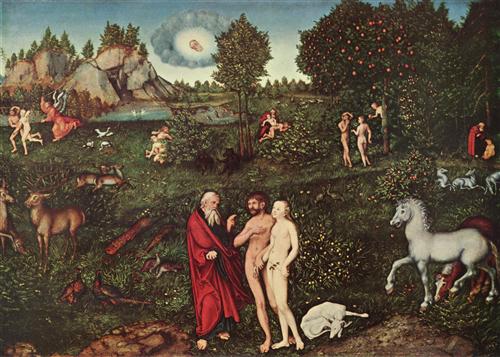
Each human being exists because of a sovereign, loving act of God.

It is a biological fact that a unique human being comes into existence at the moment of conception. The DNA in that single-cell embryo contains all the instructions needed for it to develop, over the next twenty years or so, into an adult.

However, Scripture indicates that although we come to exist at a specific moment in time, God has always known and loved us: The word of the Lord came to me saying, ‘Before I formed you in the womb I knew you’ (Jer 1:4-5). Scripture also praises God saying, For You formed my inmost being; You knit me together in my mother’s womb. I will praise You, for I am fearfully and wonderfully made (Psalm 139:13-14). Hence, each of us is specifically intended by God.

This makes every human life sacred. No form of unjust killing can be justified under any circumstances. Each of us is the result not merely of biological processes or human decisions but a sovereign, loving act of God. Our lives come from God and belong to Him. Therefore, abortion, murder, and suicide (including physician-assisted) are grave evils that we must combat. Even capital punishment must be opposed except in rare cases.

Our body is not our own.

A common assertion today is we can do whatever we like with “our own body.” However, Scripture reminds us, You are not your own; you were bought at a price. Therefore, glorify God with your body (1 Cor 6:19-20). Yes, Jesus redeemed us; He purchased our salvation at the price of His own blood and His own life!

Hence, our bodies are not tools to simply use as we please. Neither are they canvases on which to display tattoos, cuttings, piercings, and the like. We are not to degrade them by using them for excessive or illicit pleasures or to lure others into sin. I do not wish to divert this post into a debate about tattooing and piercing. While such things are not wholly excluded by Church law or Scripture, anything that deliberately, dramatically alters the appearance of the body we received from God is surely problematic. (The nearly permanent quality of such alterations is also concerning.) Such excesses are far too common today, at least in the U.S.

Because our bodies belong to God, we should ask ourselves, “Is God pleased with the way I regard, treat, and make use of the body He has given me?”

There is a nuptial meaning to the body.

We do not exist by ourselves nor only for ourselves. We are contingent beings and, as such, depend on our parents for our existence. Although we exist for our own sake and thus have intrinsic worth, we also exist for others. Our very body speaks to the most fundamental relationships of marriage and family. Simply put, there is a part of our body that is for another. The male and female reproductive organs are designed for each other. This is biologically evident, though sadly some have lost their way and refuse to acknowledge it.

The denial of the purpose of our body’s reproductive organs is manifest in the approval of homosexual practices that “close the sexual act to the gift of life [and] do not proceed from a genuine affective and sexual complementarity” (CCC # 2357). It is also manifest in certain heterosexual practices that close the sexual act to the fruit of life and/or use the sexual organs in disordered ways, ways in which they were not intended to be used.

To restate, there is a nuptial meaning to the body. Our body says to us, “I am for another.” Most of humanity realizes this truth through monogamous marriage. A man leaves his father and mother, seeks a wife, clings to her, and the two become one flesh (cf Gen 2:24). Thus, through the husband and wife, completing and complementing each other, a new member of the human family is created. This is the most common realization of the nuptial meaning of the body.

For priests and for religious brothers and sisters who live celibate lives, the nuptial meaning of the body is realized in a spiritual but real way. Religious sisters are espoused to the Lord, the bridegroom of their souls. Priests and religious brothers take up a spousal relationship with the Church, the bride of their souls. Priests and brothers are not bachelors nor are sisters “single women.” No, each lives in a spousal relationship.

What about members of the laity who never marry? Here, I would argue, a distinction must be made. Because there is a nuptial meaning to the body, there is no vocation to the single life per se. However, those who are currently single (including those who may remain that way permanently), may by that state be available to serve the Lord and the Church or community in a more substantial way. For such individuals, the nuptial meaning of the body is expressed through that vocational service.

Marriage has its structure because children both need and deserve the stable presence of their father and mother in their lives.

God did not design marriage arbitrarily. He set it forth as one man for one woman till death do them part, bearing fruit in their children (see Genesis 2:24-25). He did this because that is what is necessary and best for children. Marriage by its nature is oriented to having children. The Lord’s first command to Adam and Eve was, Be fruitful and multiply, fill the earth and subdue it (Gen 1:28).

Obviously, there must be a father and a mother for a child to exist at all, but beyond the conception of children there is the necessary work of raising them. Children need to have their parents reliably present in their everyday lives so that they can depend on them and trust them. Further, a child needs a father to learn the masculine genius of being human and a mother to learn the feminine genius of being human. This is necessary for the proper and best human formation—psychologically, spiritually, and emotionally. Even an unbeliever should be able to see this. The structure of marriage is not an arbitrary arrangement by God for us to toy with at will.

Sadly, we have done just that. We casually separate what God has joined. God intends for children to be conceived in the sexual union of a husband and wife pledged to each other for life. Having sex and having children are inextricably linked to Holy Matrimony, yet today we have largely separated them. As a result of minimizing the relationship between sex and marriage, there are many marriages without children (by choice) and many children without parents married to each other. We do this through sins and misbehavior such as fornication, adultery, divorce and “remarriage.” The current practice of refusing to favor a married heterosexual couple over a single mother, a single father, or a same-sex couple when placing a child for adoption also severs what God has joined. As a result of all these things, fewer than half of children today grow up in a traditional family.

While children might lose their mother or father through death, to intentionally subject them to anything other than being raised by their own parents is a grave injustice.

The common objection to this teaching is this: “Are you saying that a single mother, a single father, or a homosexual couple cannot raise a child just as well as a married (heterosexual) couple?” The answer is, “Yes, that is exactly what we are saying,” for all the reasons stated above. Some will respond with horror stories that occurred with this or that traditional couple, but atypical occurrences do not alter general norms, and “hard cases make bad law.”

God intends sex, marriage, and children to go together. Having sex naturally leads to having children; this is biologically demonstrable.

Sex, intimacy, and procreation belong together and should not be separated.

Contraception, the artificial prevention of conception that naturally results from human sexual intercourse, is an attempt to sever the connection between sexual relations and having children. Even if not every act of sexual intercourse can result in a child, the bodily truth is that sexual intercourse is directed toward having children. That sex is also pleasurable and may be a sign of love and intimacy does not set aside this point. God joins pleasures to the things that are most necessary for us so that we do not neglect them. For example, the purpose of eating food is to nourish the body. It is also true that eating is pleasurable and sharing meals promotes camaraderie. This does not, however, mean that the primary purpose of food is something other than bodily nourishment. God joins pleasure to food because eating is necessary for our survival, thus they are to be together, not separated.

As an analogy, consider a person who was not particularly interested in the nutritional aspect of food, but rather just liked the pleasure of eating and/or keeping company at feasts. As a result, he would eat and drink to excess, vomit it all up, and then return for more. We all wince at such a horror. This is because eating has a purpose that is being trampled upon in favor of lesser aspects. The proper end, bodily nourishment, is subverted when a person eats to excess and merely for pleasure.

This is precisely what contraception does when it severs the relationship between sex, intimacy, and procreation. We would be similarly aghast at a couple who had sex without any love between them, merely for the purpose of making babies for profit (e.g. selling them for adoption or for use as laborers). This makes the same point: sex, intimacy, and procreation belong together and should not be divided as separate pursuits. Every child deserves to be the fruit of the intimacy and shared love of a stably married father and mother.

Contraception facilitates the violation of the norm Let no one separate what God his joined (see Matt 19:6). The legalization of contraception in the U.S. has led to the explosion of promiscuity and all of the accompanying woes, including sexually transmitted diseases, teenage parents, children raised in single-parent households, and the horror of abortion, which has become the “contraception of last resort.” All of this has gravely harmed or even killed millions of children. Some argue that it is perfectly fine to separate the procreative dimension of sex from its pleasure or its promotion of intimacy, but in separating what God has joined we have reaped a harvest of misery and death. Contraception promotes the exaltation of the pleasure and intimacy of sexual intercourse unmoored from its purpose: the serious business of having and then raising children within a stable marriage. The worship of pleasure and intimacy unmoored from their purpose has led to the unbridled lust we see today.

There will always be more to say about Christian anthropology, but allow the points made in today’s and yesterday’s posts to paint the bigger picture: God has set forth an understanding of the human person both in Scripture and through our very body and soul. We do well to take heed of what He teaches.

Cross-posted at the Catholic Standard: Basics of Christian Anthropology (part 2 of 2)

Basics of Christian Anthropology (part 1 of 2)

Creation of Adam – Michelangelo Buonarroti (1510)

Anthropology is, most simply, the science or study of human beings through time and space. Different specialties focus on the analysis of biological/physiological characteristics and the examination of societies/cultures. In the religious sense, anthropology deals with the origin, nature, and destiny of human beings.

In our times there are many moral issues emerging from viewpoints that diverge widely from our given nature, both physical and spiritual. Numerous false notions (e.g., “transgenderism”) have arisen that either disregard or even deny physical data. Other errors involve ignoring the clear evidence of humans’ spiritual nature, which so distinguishes us from animals.

A Christian/biblical anthropology, however, sees the created order—and the human body in particular—as revelatory. The body is not just accidentally or incidentally present. No, the body is a revelation because through it, God speaks to us of who and what we are and what we ought to do. To this revelatory quality of the body God adds His own words in Scripture, leading to the emergence of a Christian anthropology.

In this essay I would like to review certain aspects of this Christian anthropology. This is by no means a complete or systematic treatise. Rather, it touches on certain key points that address modern errors. The order of these observations is not a perfect progression, but I have tried to progress from basic to more complex points.

We are the union of a body and a spiritual soul.

We are not merely our body nor are we merely our soul. We are the union of the two. Gnostic and dualistic anthropologies seek to divide body and soul or to indicate that a person is only his body or only his soul. Although we can distinguish body and soul intellectually, in reality they are so together as to be one. It is much like the flame from a candle. Although one can distinguish the light of the flame from its heat, one cannot put the heat over here and the light over there. They are so together as to be one. It is like this with our body and soul.

What is the soul?

On one level the soul is the animating principle of any living thing. Hence, even plants and animals have souls. The soul is related to the mysterious principle we call life. Although we casually use words like “life,” “death,” “living,” and “dead,” life is a mysterious reality. Imagine that in one hand I hold and acorn and in the other a stone. From a great distance they may even look alike. However, the acorn has the mysterious spark we call life while the stone does not. If I plant each in the ground and water the area, the acorn responds: first a shoot emerges and eventually a mighty oak tree. In contrast, the rock will do nothing no matter how long I wait; it does not have the mysterious spark called life. Neither does it have the animating principle we call the soul.

If the mysterious quality called life is taken away, the plant, animal, or human “dies.” Because the life that organized him/her/it is gone, the body or what is left falls into disorganization and decay. The force we call “life” and what we call the “soul,” are deeply mysterious.

What makes the human soul unique?

The human soul is different from that of animals and/or plants in that it is a spiritual soul. Scripture says of man, In the image of God He created them (Gen 1:27). It also says, Then the LORD God formed man from the dust of the ground and breathed the breath of life into [Adam’s] nostrils, and the man became a living being (Gen 2:7). To no other creatures are such attributions made. To say that we have a spiritual soul, that we have the breath of God within us and are made in His image, is to say that we have intellect and free will. It is our dignity to unite two orders of creation, the material and the spiritual, in our one person. Angels are pure spirit. Animals, though possessed of a soul (an animating principle), have no spirit and are thus material. Humans, however, unite the spiritual and the material. This is our glory and it is the central reason why our body will rise one day, gloriously transformed, and be restored to our spirit.

Sadly, there is a tendency today to equate humans with animals. Some say that humans are merely smart apes and that there are other creatures (e.g., dolphins) just as intelligent as we are. This is demonstrably false. You will know something by its fruits; you can see a cause by its effects. Humans are vastly different from all the other animals, even the highest primates, and this is evident in the effects we produce. While our bodies resemble other animals (especially mammals) in many ways, the similarity ends there. If the animals are just like us, where are their cities and farms? Where are their universities, libraries, and museums? Where is their art, their literature? Where are their legislatures where they pass laws or their courts where they hold one another accountable? Have they traveled to the moon and back? Have they learned and then handed on their knowledge to later generations? Where is their technological progress—or any progress at all, for that matter? Why are animals really no different than they were thousands of years ago?

Clearly there is a vast difference between human beings and other animals. This can be seen in the way we live and what we do, and in what they do not do.

Morally speaking, reducing humans to the state of animals not only robs us of our dignity but also our freedom, because it says that we are merely at the whim of instinct.

A common error today regarding the unity of body and spiritual soul is claiming that one is not one’s body but rather only one’s thoughts and feelings.

This is common among proponents of transgender and/or homosexual ideology. A certain man might say, “I am actually a woman.” A normally observant person would likely retort, “No, your body indicates that you are a man.” Yet, in transgender ideology, that observation is dismissed by saying, in effect, “I am not my body. My body has nothing to do with what or who I really am. I am my thoughts and feelings.” This amounts to a denial that our bodies are revelatory.

In homosexual ideology a similar error is encountered. A biological assessment makes it clear that the male and female reproductive organs are designed for each other. Further, an exit is not an entrance. Here, too, they dismiss the body as being of no relevance. This is pure Gnostic dualism: the body is of no account; one is only spirit, only thoughts and feelings. In such a world, what matters are intentions and thoughts; what the body teaches or indicates is of little account. This is an error because it dismisses the reality that the body presents to us.

The opposing but equally untrue claim is that one is only one’s body.

This is materialism and it denies the existence of soul. In this view, a person is merely a collection of chemicals and interactions between them. We only do what the chemicals and nerves “tell us” to do. We have no spirit and thus no free will. Because human behavior is said to be merely the result of physical interactions over which we have no control, there is no such thing as right or wrong. The absurdity of such a claim can be illustrated in this way:

Materialist: “You are just matter, a mere bag of chemicals.”

Believer: “I think that is dead wrong and an unfounded claim.”

(The materialist then becomes angry at the believer’s refusal to accept his claim.)

Believer: “Why are you angry? I am just a bag of chemicals and my behavior is just the result of the random firing of synapses. I am only saying and doing what those forces are making me say and do. Hence, I am not a responsible agent and your anger is unfounded.”

Obviously, the notion of right and wrong and of being accountable for our actions only makes sense if we have a spiritual soul that is able to rise above the effects of chemical reactions or nerve impulses.

We come in (only) two kinds.

In the creation of the human person, God says, So God created man in His own image; in the image of God He created him; male and female He created them (Gen 1:27). There are not dozens of different sexes/genders, as some assert. In fact, until recently, the word “gender” was used almost exclusively as a grammatical term (in some languages, nouns, adjectives, verbs, and/or pronouns have a gender) while the word “sex” referred to the classification of organisms as either male or female. (If you doubt me, look in a dictionary that was published any time prior to the last ten years or so.)

Yes, we are either male or female, and it is God who designates this and creates it. Our bodies reveal to us our sex, as designated by God. There is no need for a lengthy study of this matter; it is quite evident from a simple look at the body.

Some object that there are people born with both genitalia or who are ambiguously equipped, but the existence of such abnormalities does not indicate that there is a third (or fourth or more) sex. It does not follow that every anomaly indicates a different kind of human being. For example, some babies are born missing an arm; from this we do not conclude that there are two different sorts of human beings, those with two arms and those with one.

Therefore, given God’s teaching that we are either male or female, any acceptance of “transgender” ideology is inimical to Christian anthropology. It rejects what God has revealed to us in our bodies and what He teaches us in His written word. We must refute claims that there are more than two sexes/genders and insist that people accept the reality of what God has done. There is no such thing as a female “trapped in a male body” or vice versa. Neither can one “transition” so as to “be” the opposite sex. No matter how many surgeries one endures or how many hormones one takes, no matter what sort of clothing one wears, one’s sex cannot be changed. It is written in every cell of the body. One does not simply declare one’s sex nor can one change it. No, each person must humbly accept his or her sex from God, who is Creator and Lord.

In tomorrow’s post we will look at some other principles of Christian anthropology and relate them to errors of our day.

Cross-posted at the Catholic Standard: Basics of Christian Anthropology (part 1 of 2)

Christmas Wrap-up: Some Less-Obvious Questions about the Incarnation

Flight to Egypt – Francesco Mancini

Welcome to Epiphany-tide. In this week we transition from Christmas to the public ministry of Christ, with the Feast of the Baptism of the Lord scheduled for this coming Sunday. Before we leave Christmas altogether, we do well to ponder certain less-obvious questions about the Lord’s incarnation and birth. These questions are taken from St. Thomas Aquinas’s Summa Theologica. St. Thomas’s answers are presented in italics, while my inferior commentary appears in plain red text.

Whether Christ was born at a fitting time? (Summa Theologica III, q. 35, art. 8)

There is this difference between Christ and other men, that, whereas they are born subject to the restrictions of time, Christ, as Lord and Maker of all time, chose a time in which to be born, just as He chose a mother and a birthplace. And since “what is of God is well ordered” and becomingly arranged, it follows that Christ was born at a most fitting time.

This argument is based on the authority and sovereignty of God. Simply put, God was free to choose a time; whatever He does is properly ordered and best, therefore the time He chose was most fitting.

Moreover, at that time, when the whole world lived under one ruler, peace abounded on the earth. Therefore, it was a fitting time for the birth of Christ, for “He is our peace, who hath made both one,” as it is written (Ephesians 2:14). Wherefore Jerome says on Isaiah 2:4: “If we search the page of ancient history, we shall find that throughout the whole world there was discord until the twenty-eighth year of Augustus Caesar: but when our Lord was born, all war ceased”; according to Isaiah 2:4: “Nation shall not lift up sword against nation.”

St. Thomas’s claim that the world was at peace at that time is rather sweeping and bold. Does he mean that there was peace everywhere, even within households? We need not interpret it in such absolute terms. Instead, the claim can be understood more generally to mean that there were no known military campaigns underway nor were any necessary at that time. During the roughly 200-year Pax Romana (27 B.C. – 180 A.D.) it is not that there were no threats to peace and no civil disturbances anywhere in the Roman Empire.

Again, it was fitting that Christ should be born while the world was governed by one ruler, because “He came to gather His own [Vulgate: ‘the children of God’] together in one” (John 11:52), that there might be “one fold and one shepherd” (John 10:16).

This is another surprising and sweeping claim, at least to modern ears. We tend to think of “one shepherd” as a reference to a religious leader, e.g., the Pope. Remember, though, that today’s sharp distinction between secular and sacred leaders was largely unknown in the Middle Ages and earlier; back then, faith and governance were quite intertwined. Further, in saying that “the world” was governed by one ruler, St. Thomas has in mind the Roman Empire. He does not use “world” in a literal and absolute sense, but rather refers to a large section of the known world.

Whether Christ should have been born in Bethlehem? (Summa Theologica III, q. 35, art. 7)

It is written (Micah 5:2): “And thou, Bethlehem, Ephrata … out of thee shall He come forth unto Me, that is to be the ruler in Israel.”

Christ willed to be born in Bethlehem for two reasons. First, because “He was made … of the seed of David according to the flesh,” as it is written (Romans 1:3); to whom also was a special promise made concerning Christ; according to 2 Samuel 23:1: “The man to whom it was appointed concerning the Christ of the God of Jacob … said.” Therefore, He willed to be born at Bethlehem, where David was born, in order that by the very birthplace the promise made to David might be shown to be fulfilled. The Evangelist points this out by saying: “Because He was of the house and of the family of David.” Secondly, because, as Gregory says (Hom. viii in Evang.): “Bethlehem is interpreted ‘the house of bread.’ It is Christ Himself who said, ‘I am the living Bread which came down from heaven.’”

Whether Christ’s birth should have been made known to all? (Summa Theologica III, q. 36, art. 1)

Our modern egalitarian notions demand that the answer here be yes, but St. Thomas says no. He does so for three reasons, each of which amounts to the argument that telling everyone about the birth of Christ and who exactly He was would have short-circuited or prematurely ended some important events and truths that save us.

It was unfitting that Christ’s birth should be made known to all men without distinction. First, because this would have been a hindrance to the redemption of man, which was accomplished by means of the Cross; for, as it is written (1 Corinthians 2:8): “If they had known it, they would never have crucified the Lord of glory.”

This is a daring claim: St. Thomas says that some ignorance was necessary for Christ’s crucifixion (by which we are saved) to occur.

Secondly, because this would have lessened the merit of faith, which He came to offer men as the way to righteousness. according to Romans 3:22: “The justice of God by faith of Jesus Christ.” For if, when Christ was born, His birth had been made known to all by evident signs, the very nature of faith would have been destroyed, since it is “the evidence of things that appear not,” as stated, Hebrews 11:1.

Saving faith would have been jettisoned because faith is not needed for things that are evident.

Thirdly, because thus the reality of His human nature would have come into doubt. Whence Augustine says (Ep. ad Volusianum cxxxvii): “If He had not passed through the different stages of age from babyhood to youth, had neither eaten nor slept, would He not have strengthened an erroneous opinion, and made it impossible for us to believe that He had become true man? And while He is doing all things wondrously, would He have taken away that which He accomplished in mercy?”

If the whole world had known from the start that Jesus was Messiah and Lord, He could never have lived an ordinary life in Nazareth, laboring and living among us. But these ordinary years were important indicators of His coming and living as true man.

Whether those to whom Christ’s birth was made known were suitably chosen? (Summa Theologica III, q. 36, art. 3)

Salvation, which was to be accomplished by Christ, concerns all sorts and conditions of men: because, as it is written (Colossians 3:11), in Christ “there is neither male nor female, [Note that the preceding portion of the citation is in reality from Galatians 3:28] neither Gentile nor Jew … bond nor free,” and so forth. And in order that this might be foreshadowed in Christ’s birth, He was made known to men of all conditions. Because, as Augustine says in a sermon on the Epiphany (32 de Temp.), “the shepherds were Israelites, the Magi were Gentiles. The former were nigh to Him, the latter far from Him. Both hastened to Him together as to the cornerstone.” There was also another point of contrast: for the Magi were wise and powerful; the shepherds simple and lowly. He was also made known to the righteous as Simeon and Anna; and to sinners, as the Magi. He was made known both to men, and to women—namely, to Anna—so as to show no condition of men to be excluded from Christ’s redemption.

In effect, St. Thomas teaches here of the catholicity (universality) of the Church.

Whether Christ’s birth should have been manifested by means of the angels and the star? (Summa Theologica III, q. 36, art. 5)

Yes, this was appropriate, because when teaching we begin by moving from what is known to what is unknown. Different audiences (Jews and Gentiles) were called, so different approaches made sense, as each group was differently endowed with knowledge.

As knowledge is imparted through a syllogism from something which we know better, so knowledge given by signs must be conveyed through things which are familiar to those to whom the knowledge is imparted. Now, it is clear that the righteous have, through the spirit of prophecy, a certain familiarity with the interior instinct of the Holy Ghost, and are wont to be taught thereby, without the guidance of sensible signs. Whereas others, occupied with material things, are led through the domain of the senses to that of the intellect. The Jews, however, were accustomed to receive Divine answers through the angels ….

And the Gentiles, especially the astrologers, were wont to observe the course of the stars. And therefore Christ’s birth was made known to the righteous, viz. Simeon and Anna, by the interior instinct of the Holy Ghost, according to Luke 2:26: “He had received an answer from the Holy Ghost that he should not see death before he had seen the Christ of the Lord.” But to the shepherds and Magi, as being occupied with material things, Christ’s birth was made known by means of visible apparitions. And since this birth was not only earthly, but also, in a way, heavenly, to both (shepherds and Magi) it is revealed through heavenly signs: for, as Augustine says in a sermon on the Epiphany (cciv): “The angels inhabit, and the stars adorn, the heavens: by both, therefore, do the ‘heavens show forth the glory of God.”

Moreover, it was not without reason that Christ’s birth was made known, by means of angels, to the shepherds, who, being Jews, were accustomed to frequent apparitions of the angels: whereas it was revealed by means of a star to the Magi, who were wont to consider the heavenly bodies. Because, as Chrysostom says (Hom. vi in Matth.): “Our Lord deigned to call them through things to which they were accustomed.”

Cross-posted at the Catholic Standard: Christmas Wrap-up: Some Less-Obvious Questions about the Incarnation

Have You Ever Really Seen the Stars?

One of the central elements in the Epiphany story is the star. There are numerous theories as to what exactly it was. It may not have been a star at all, but Jupiter or Saturn, which are said to have come quite close to Earth around the year 6 B.C. I thought of that the other day because Jupiter is currently bright in the southeastern sky a couple of hours before sunrise along the East Coast of the U.S. With high-powered binoculars one can even see some of its many moons.

Most of us city dwellers have no idea what we’re missing when it comes to the night sky. Up until about a hundred years ago the night sky was illuminated with thousands of points of light, a breathtaking display many moderns have rarely if ever experienced.

My first and only real glimpse of the magnificent Milky Way was about 20 years ago. I was visiting a priest friend in rural North Dakota in mid-January, and the sky was cloudless, the temperature just below zero, and the humidity very low (thus, no haze). We decided to go for a nighttime walk away from the town. After we’d gone about half a mile I happened to look up; I couldn’t believe my eyes!

What is that?” I asked my friend. “Are those clouds coming in?
What do you mean? There are no clouds,” he replied.
“Then what is all that?” I asked, pointing upward.
He smiled and answered, “They’re stars; that’s the Milky Way.”

I was astounded by the sight, but at the same time I felt a bit angry that I’d been deprived of such a view all my life. Is this what the ancients saw every night? This must be what inspired the psalmist to write, The heavens declare the glory of God, the firmament shows forth the work of His hand … night unto night takes up the message (Ps 19:1ff). This must be what God meant when he told Abraham, “Look up at the heavens and count the stars—if indeed you can count them.” Then he said to him, “So shall your offspring be” (Gen 15:5).

Frankly, from where I live in Washington, D.C., I can count the stars, but the true night sky displays an astonishing number of stars. “The Spacious Firmament on High,” an old hymn by Joseph Addison, has these lyrics:

The spacious firmament on high,
With all the blue ethereal sky,
And spangled heavens, a shining frame
Their great Original proclaim. …

Soon as the evening shades prevail,
The moon takes up the wondrous tale, …
While all the stars that round her burn,
And all the planets in their turn,
Confirm the tidings as they roll,
And spread the truth from pole to pole.

What though in solemn silence all
Move round our dark terrestrial ball?
What though no real voice nor sound
Amid the radiant orbs be found?
In reason’s ear they all rejoice,
And utter forth a glorious voice,
Forever singing as they shine,
“The hand that made us is divine.”

If there is ever a widespread power outage on the East Coast, I pray it will happen on a cloudless, dry night. If it does, I will bid my neighbors to join me outside and behold the gift above.

We may think we know what the Magi saw as they beheld the star, but I doubt most of us have any idea at all. The sky that the ancients saw every night, the sky that is visible to those in rural areas even today, is more glorious than many of us can imagine: the stars in unbelievable numbers forever singing as they shine, “The hand that made us is divine.”

Here’s a video I put together some years ago featuring photographs of the night sky interspersed with more fanciful images:

The second half of this next video shows some wonderful high-definition pictures of the stars in the night sky. If your monitor is a good one, you might want to maximize the view—it displays nicely even on large screens.

Cross-posted at the Catholic Standard: Have You Ever Really Seen the Stars?

The Journey of Faith – A Homily for the Feast of Epiphany

There are so many wonderful details in the Epiphany story: the call of the Gentiles, their enthusiastic response, the significance of the star they seek, the gifts they bring, the dramatic interaction with Herod, and their ultimate rejection of Herod in favor of Christ.

In this meditation, I would like to follow these Magi in their journey of faith to become “Wise Men.” As magi, they followed the faint stars, distant points of light; as wise men, they follow Jesus, who is the ever glorious Light from Light, true God from true God.

We can observe how they journey in stages from the light of a star to the bright and glorious Light of Jesus Christ. And, of course, to authentically encounter the Lord is to experience conversion. All the elements of this story ultimately serve to cause them to “return to their country by another route.” Let’s look at the stages of their journey from being mere magi to becoming, by God’s grace, wise men.

Stage 1: The CALL that COMPLETES – The text says, When Jesus was born in Bethlehem of Judea, in the days of King Herod, behold, magi from the east arrived in Jerusalem, saying, “Where is the newborn king of the Jews? We saw his star at its rising and have come to do him homage.”

Notice the identity of these individuals: they are labeled magi (μάγοι (magoi) in Greek) and are from the East.

Exactly what “magi” are is not clear. Perhaps they are learned men; perhaps they are ancient astronomers. We often think of them as kings, though the text of this passage does not call them that. It also seems likely that Herod would have been far more anxious had they been actual potentates from an Eastern kingdom. We often think of them as kings because Psalm 72 (read in today’s Mass) speaks of kings coming from the East bearing gifts of gold and frankincense. However, for the record, the text in today’s Gospel does not call them kings, but rather “magi.”

Yet here is their key identity: they are Gentiles who have been called. Up until this point in the Christmas story, only Jews had found their way to Bethlehem. This detail cannot be overlooked, for it is clear that the Gospel is going out to all the world. This call completes the Church, which needs both Jews and Gentiles.

In today’s second reading, St. Paul rejoices in this fact, saying, the Gentiles are coheirs, members of the same body, and co-partners in the promise in Christ Jesus through the gospel (Eph 3:6). Because most of us are not Jewish by ancestry we ought to rejoice, for the call of these Magi prefigures our call.

Notice that God calls them through something in the natural world: a star. God uses something in creation to call out to them.

We do well to wonder what is the “star” that God uses to call each of us? Perhaps it is Scripture, but more typically God uses someone in our life in order to reach us: a parent, a family member, a friend, a priest, a religious sister, or a devoted lay person. Who are the stars in your life through whom God called you?

God can also use inanimate creation, as he did for these Magi. Perhaps it was a magnificent church, or a beautiful painting, or an inspirational song that reached you. Through something or someone, God calls each of us; He puts a star in our sky. These Wise Men, these Magi, followed the call of God and began their journey to Jesus.

Stage 2: The CONSTANCY that CONQUERS – Upon arriving in Jerusalem, the Magi find a rather confusing and perhaps discouraging situation. The reigning king, Herod, knows nothing of the birth of this new King. The Magi likely assumed that the newborn King would be related to the current king, so Herod’s surprise may have confused them. And Herod seems more than surprised; he seems threatened and agitated.

Even more puzzling, Herod calls in religious leaders to get further information about this new King. They open the sacred writings and the Magi hear of a promised King. Ah, so the birth of this King has religious significance! How interesting!

But these religious leaders seem unenthusiastic about the newborn King, and after providing the location of His birth, make no effort to follow the Magi. There is no rejoicing, no summoning of the people to tell them that a longed-for King has finally been born, not even further inquiry!

So the wicked (Herod and his court) are wakeful while the saints are sleepy. How odd this must have seemed to the Magi! Perhaps they even thought about abandoning their search. After all, the actual king knew nothing of this new King’s birth, and those people who did know about it seemed rather uninterested.

Ah, but praise the Lord, they persevered in their search; they did not give up!

Thanks be to God, too, that many today have found their way to Christ despite the fact that parents, clergy, and others who should have led them to Jesus were either asleep, ignorant, or just plain lazy. I am often amazed at some of the conversion stories I have heard: people who found their way to Christ and His Church despite some pretty daunting obstacles (e.g., poor religious upbringing, scandalous clergy, and poor role models). God sometimes allows our faith and call to be tested, but Those who persevere to the end will be saved (Matt 24:13).

To persevere is to open the door to wisdom, which often must be sought in spite of obstacles. This constancy is often what it takes to overcome the darkness and discouragements of the world.

Stage 3: The CONDESCENSION that CONFESSES – The text says, After their audience with the king they set out. And behold, the star that they had seen at its rising preceded them, until it came and stopped over the place where the child was. They were overjoyed at seeing the star, and on entering the house they saw the child with Mary his mother. They prostrated themselves and did him homage.

With what little information they have, the Magi set out and continue to follow the call of God through the star.

Note that they enter a “house.” We often think of the Magi as coming that same Christmas night to the cave or stable, but it seems not; Mary, Joseph, and Jesus are now in a house. Apparently they have been able to find decent lodging. Has it been days or weeks since Jesus’ birth? Regardless, it is likely not Christmas Day itself.

Notice, too, that they “prostrate” themselves before Jesus. The Greek word used is προσεκύνησαν (prosekunēsan), which means “to fall down in worship” or “to give adoration.” This word is used twelve times in the New Testament and each time it is clear that religious worship is the reason for the prostration.

This is no minor act of homage or sign of respect to an earthly king; this is religious worship. It is a confession of faith. The Magi manifest faith! The beginning of wisdom is the fear of the Lord. And these Magi are well on their way from being mere magi to being wise men!

But is their faith a real faith or just a perfunctory observance? It is not enough to answer an altar call or to get baptized. Faith is never alone; it is a transformative relationship with Jesus Christ. So let’s look for the effects of a real and saving faith.

Stage 4: The COST that COMES – There is a cost to discipleship. The Magi are moved to give three symbolic gifts that show some of what true faith includes. They are costly gifts.

Gold symbolizes all of our possessions. In laying this gift before Jesus, they and we are saying, “I acknowledge that everything I have is yours. I put all my resources and wealth under your authority and will use them only according to your will.” A conversion that has not reached the wallet is not complete.

Frankincense is a resin used in incense and symbolizes the gift of worship. In the Bible, incense is a symbol of prayer and worship (e.g., Psalm 141). In laying down this gift, we promise to pray and worship God all the days of our life, to be in His holy house each Sunday, to render Him the praise and worship He is due, to listen to His word and consent to be fed the Eucharist by Him, to worship Him worthily by frequent confession, and to praise Him at all times.

Myrrh is a strange gift for an infant; it is usually understood as a burial ointment. Surely this prefigures Jesus’ death, but it also symbolizes our own. In laying this gift before Jesus we are saying, “My life is yours. I want to die so that you may live your life in me. May you increase and may I decrease. Use me and my life as you will.”

Yes, these three gifts are highly symbolic.

The Magi manifest more than a little homage to Jesus. They are showing forth the fruits of saving faith. And if we can give these gifts, so are we.

In their holy reverence for God is wisdom in its initial stage!

Stage 5: The CONVERSION that is CLEAR – The text says, And having been warned in a dream not to return to Herod, they departed for their country by another way.

Here, then, is essential evidence for faith: conversion. It is not enough to get “happy” in Church; we have to obey. These Wise Men are walking differently now. They are not going home by the same way they came. They’ve changed direction; they’ve turned around (conversio). They are now willing to walk the straight and narrow path that leads to life rather than the wide road that leads to damnation. They are going to obey Christ. They are going to exhibit what St. Paul calls the “obedience of faith” (Rom 1:5; 16:26). They have not just engaged in perfunctory worship; they are showing signs of a true and saving faith. They are not just calling out to Jesus, “Lord, Lord!” They are doing what He tells them (cf Luke 6:46).

No longer mere magi, they are now wise men!

So there it is. Through careful stages, the Lord has brought the Gentiles (this means you and me) to conversion. He called these Magi to wisdom. They remained constant, confessed Him to be Lord, accepted the cost of discipleship, and manifested conversion. Have you? Have I?

Walk in the ways of these Wise Men! Wise men still seek Him; even wiser ones listen to and obey Him. Are we willing to go back to our country by another route? Is ongoing conversion part of our journey home to Heaven? Epiphany means “manifestation.” How is our faith made manifest in our deeds and conversion?

I have it on the best of authority that as the (now) Wise Men went home by another route, they were singing this gospel song:

It’s a highway to heaven!
None can walk up there
but the pure in heart.
I am walking up the King’s highway.
If you’re not walking,
start while I’m talking.
There’ll be a blessing
you’ll be possessing,
walking up the King’s highway.

Cross-posted at the Catholic Standard: The Journey of Faith – A Homily for the Feast of Epiphany