Suicide is Contagious: Don’t Let it Spread by Supporting Assisted Suicide

The Maryland physician-assisted suicide bill has been passed by the House of Delegates and is now being considered by the state Senate.  The House bill is numbered HB 399, and the bill cross-filed in the Senate is SB 311. We have every reason to be very alarmed by these developments. Other states are considering similar legislation designed to advance, assist, legalize and normalize the suicide of those who no longer see a reason to live.  Meanwhile, a law legalizing assisted suicide in the District of Columbia took effect in 2017.

Be very careful, dear reader, before you allow a narrow and flawed notion of compassion to bypass a more serious moral reflection.  Suicide is almost never a purely private act. If some are killing themselves it is more likely that others will too because it is either an option they had not previously considered or it prompted those who were already thinking about it to actually do it, especially when it is glorified in the media or the appearance of social approval is given.  Sometimes, people feel obligated to commit suicide when others are doing it.  See Report of the Secretary’s Task Force on Youth Suicide. Vol. 2: “Risk Factors for Youth Suicide,” (Davidson & Linnoila eds. 1991)(Dept. of Health and Human Services); Phillips, “The Influence of Suggestion on Suicide,” 39 Amer.Socio.Rev. 340 (1974).

Suicide rates increase dramatically when a famous person takes his or her own life.  And in places like Oregon, where assisted suicide has been legal since 1997, the overall suicide rate of healthy individuals is more than 40 percent higher than the national average.

Yes, suicide is contagious, especially if it is legalized. This is not only because is leads others to consider it, but also, because it leads many to begin expecting and requiring it of the sick and dying. We have already seen this in the terrible effects of legalized abortion. Infants with poor prenatal diagnoses are aborted at rates approaching 90 percent. Parents in such situations are often pressured both by doctors, family members, and their own desires for a “perfect” child, to abort.  To legalize killing is more than to simply permit it in rare circumstances, it is to unleash it; increase its numbers by widening expectations of when it can and “should” be used.

One person’s “right” to legally commit suicide, eventually becomes my duty to commit suicide. This is NOT a merely private decision. Yes, indeed, suicide is contagious. Every human person who is growing elderly or struggling with physical or mental disability, or diagnosed with progressive illnesses such as Multiple Sclerosis, COPD, Alzheimer’s are going to be the first to come under threat.

No Catholic can or should ever support legislation that permits physician assisted suicide, or other form of suicide.  Let’s consider first what the Catechism teaches about euthanasia/assisted suicide, how it defines it and why it is wrong:

Those whose lives are diminished or weakened deserve special respect. Sick or handicapped persons should be helped to lead lives as normal as possible. Whatever its motives and means, direct euthanasia [or assisted suicide] consists in putting an end to the lives of handicapped, sick, or dying persons. It is morally unacceptable. Thus an act or omission which, of itself or by intention, causes death in order to eliminate suffering constitutes a murder gravely contrary to the dignity of the human person and to the respect due to the living God, his Creator. The error of judgment into which one can fall in good faith does not change the nature of this murderous act, which must always be forbidden and excluded.

Discontinuing medical procedures that are burdensome, dangerous, extraordinary, or disproportionate to the expected outcome can be legitimate; it is the refusal of “over-zealous” treatment. Here one does not will to cause death; one’s inability to impede it is merely accepted. The decisions should be made by the patient if he is competent and able or, if not, by those legally entitled to act for the patient, whose reasonable will and legitimate interests must always be respected.

Even if death is thought imminent, the ordinary care owed to a sick person cannot be legitimately interrupted (CCC 2277-2279).

Thus the Catechism defines euthanasia/assisted suicide as the intentional ending of a life, whether by direct means such as injection with deadly drugs, or indirectly through the refusal to provide food and/or water. The distinction between euthanasia and assisted suicide lies in who initiates the final act that actually causes death, the patient himself (assisted suicide) or a third party (euthanasia).

One cannot emphasize enough that simply refusing or withdrawing burdensome treatments, or allowing the dying process to proceed once it has naturally begun by not providing machines such as ventilators that are unlikely to be therapeutic, is not euthanasia/assisted suicide. Church teaching does not require that one pursue every treatment possible. The patient must discern carefully with information supplied by his medical team along with an assessment of his personal resources—spiritual, psychological, emotional, familial, and financial—whether or not a particular treatment is excessively burdensome. However, even for an imminently dying person, basic care (which usually includes nutrition and hydration, even if administered through a tube) must be provided.

Pain management for those with terminal illnesses, for those with degenerative diseases, and for the dying is allowed and encouraged, even if the medication has the unintended side effect of shortening life. Arguments that dying is too painful and therefore a patient should be euthanized or assisted in dying are not valid, because it is very rare today that pain cannot be managed reasonably through advancements in the growing specialty of palliative care.

Let’s consider some other reasons, both religious and natural, that we should oppose assisted suicide/euthanasia. I’ll begin with the natural reasons that should concern us all, including those of different faiths and those with no faith tradition. Then I’ll move to the religious reasons that should influence us who believe.

Legalized assisted suicide grants death-dealing authority to certain persons, i.e. medical professionals; this in turn results in irreparable damage to the doctor-patient relationship.  Introducing death as a medical treatment option that can be offered by health care professionals fundamentally transforms a trusted profession that has been solely dedicated to healing for millenniaIt is because of this dedication to healing that doctors have enjoyed such respect and trust from their patients and society as a whole. The idea that government can give death-dealing power to certain individuals means that they can also enforce and regulate it. With an already broken healthcare system plagued with a spending problem, it is not difficult to imagine that assisted suicide will be an easy “fix” to our spending problem and legitimate treatment options will be refused.”

Legalized assisted suicide will likely lead to poorer healthcare and increased pressure on the sick, the elderly, the disabled, and the traumatically injured. Those who advocate for the physically and mentally disabled have good reason to fear that pressure will be applied to euthanize the disabled and those who have been in traumatic accidents. As the concept of “a life not worth living” grows, and as the idea gains traction that disability (even milder forms) is a fate worse than death, those who struggle with disability may well be easy targets for those who advise suicide. Some may feel pressured to no longer be a “burden.” Many will have the sense of their dignity being lessened. More can be read here: Disability and Euthanasia – History and Concerns.

As noted, granting individuals the right to end their life ultimately threatens us all because it implicitly denies the dignity of the dying. Failing to understand this dignity will lead to poorer care and will increase pressure on the elderly and dying to end their lives prematurely so that they are no longer a burden. In other words, the “right to die” too easily becomes the “duty to die.” What begins sociologically through pressure not to be a burden, soon enough becomes economically necessary because insurance benefits may vanish. And one can’t ignore the possibility of eventual legal pressure. The experience in the Netherlands is particularly sobering. More can be read on that here: Euthanasia Law in the Netherlands.

There are many more reasons to oppose euthanasia/assisted suicide purely on rational grounds. You can find more of these here at the archdiocese’s Transform Fear website.

Now I would like to move on to those reasons that originate from our faith in Jesus Christ.

One of my privileges as a priest is to have accompanied many people on their final journey toward death. I’ve also accompanied their family members. In making these journeys, I have discovered that some of God’s greatest and most necessary work takes place in and during the process of natural death.

Natural death is an important part of life that should be respected and accepted, not rejected. Some very important things happen on our deathbed that assist us spiritually, psychologically, and emotionally. These things happen not only to us but to our loved ones as well.

I have seen pride melt away; I have seen powerful contrition for past sins emerge. I have seen gratitude intensify, both in the one who is dying and in the loved ones who surround him or her. I have heard beautiful words like, “I love you,” “I am proud of you,” “I will miss you.” I have seen people let go and let God take over. I have seen forgiveness, tenderness, appreciation, and love being shared as never before. There is also the beautiful gift of listening and waiting, along with the learning of lessons that will never be forgotten.

I do not say that there is not grief and emotional pain; there is. But that is not all there is; there is beauty and love, too. And these are important and necessary. Perhaps some of the most necessary and profound things take place on our deathbed and at the deathbed of others.

Supporters of the legalization of assisted suicide and/or euthanasia might argue that these beautifully human and transformative moments also occur when one takes death into his own hands. I have no doubt that many tearful goodbyes are shared and some reconciliation among family members occurs as well. But there is a very different quality and a transparent authenticity within these moments when one has surrendered his/her life and control of it over to God.

The dying process helps us to receive the Kingdom of God like a little child, and God says this is necessary for us. As God directs Samuel, Do not look at his appearance or at his physical stature … For the Lord does not see as man sees; for man looks at the outward appearance, but the Lord looks at the heart (1 Sam 16:7). Even in the painful sight of once-strong individuals reduced to weakness, there is a kind of strange beauty and we must ask the Lord to give us the “eyes to see” (cf. Mt 13:16).

In the nursing homes of this land are people who once ran businesses, raised families, and led communities. Now many have returned to a kind of childhood, even infancy. Some cannot walk, some have to be fed, some can no longer talk, some clutch dolls, and some must wear diapers. All this seems so horrible to many, but important things are happening. These are not conditions that any of us would willingly choose or wish upon another. However, not one of these losses, even the significant loss of intellectual capacity in such diseases as Alzheimer’s, diminishes worth or dignity. I do not want to minimize the pain that accompanies these losses—and the pain is not limited to the patient alone. Often family members and caregivers undergo significant stress and experience the pain of our Blessed Mother at the foot of the cross. But again, something important is happening.

Are those in nursing homes really so different from you and me?  Maybe death and dying are the “place” where all worldly status, all privilege, all inequalities are leveled and we simply become who we are. Are we not all little children to God? Does He not have to provide for every one of us in our need? Does He not have to feed us, clothe us, and enable us to speak? Perhaps it is just that with the elderly and dying the illusion of self-sufficiency has been shed. The Lord says, Unless you change and become like little children you will not inherit the kingdom of God (Mat 18:3).

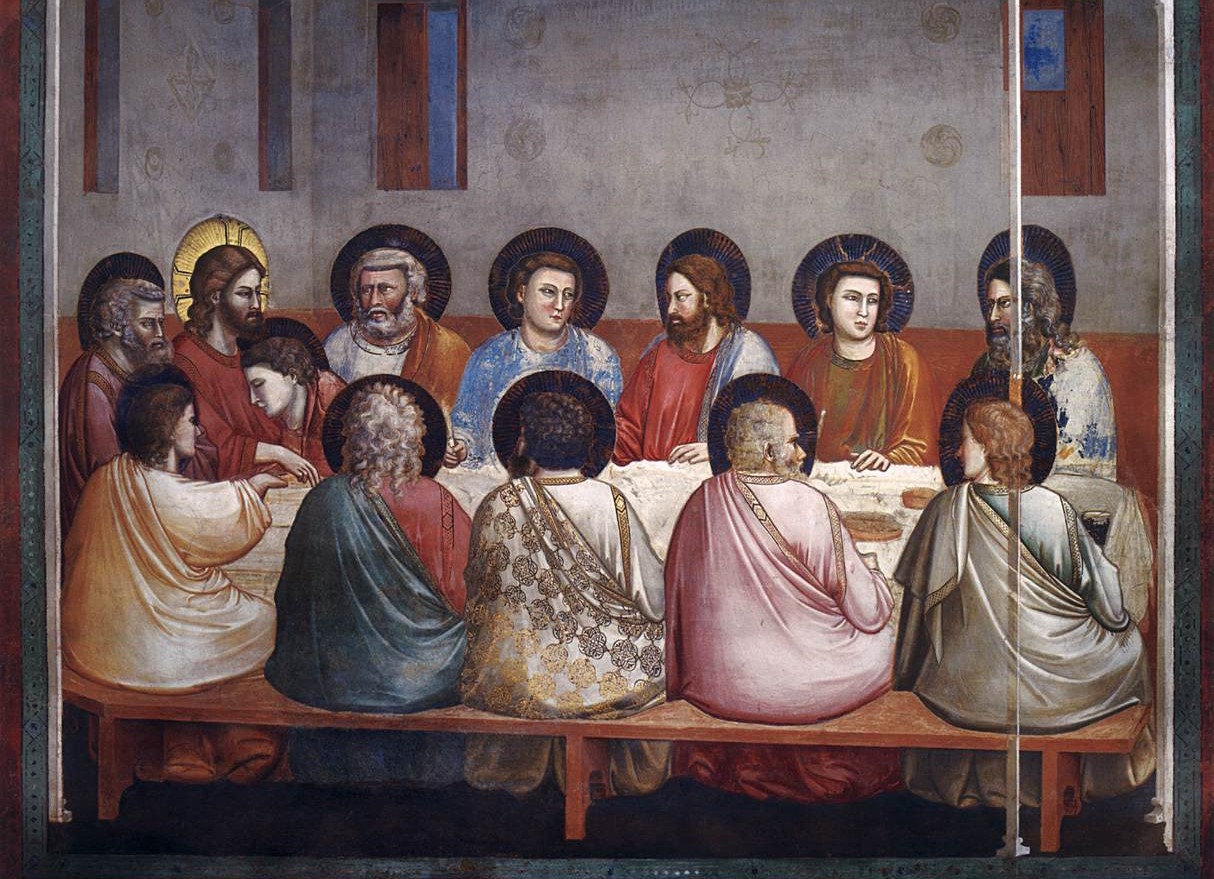
As Catholics, we can never affirm the world’s claim “My body is my own and I can do with it as I please.” For a believer, this is simply not true. Scripture says, You are not your own. For you have been bought with a price: therefore glorify God in your body (1 Cor 6:19). We are the steward, not the owner, of our body; we belong to God. As disciples, we seek to imitate Christ as He surrendered to His own impending death and gave us His Body at the Last Supper: This is my body which is given for you. Do this in remembrance of me (Lk 22:19).

As Christians, we must once again reaffirm our acceptance of the cross. No one likes the cross—it is a stumbling block to Jews and folly to Gentiles (1 Cor 1:22)—but we have been taught by Christ that the cross is both necessary and saving. And we must insist, at least among our own number, upon the belief expressed by St. Paul: So we do not lose heart. Though our body is wasting away, our inner self is being renewed day by day. For this momentary affliction is producing for us an eternal weight of glory beyond all comparison, as we look not to the things that are seen but to the things that are unseen. For the things that are seen are transient, but the things that are unseen are eternal (2 Cor 4:16-18).

Think carefully before you support assisted suicide/euthanasia through some notion of “compassion.” The truest compassion is to want for someone what he or she truly needs in order to be saved. Ultimately, only God can say what this is. We do not have dignity because we can control our own lives; we have dignity because our life is in God’s hands.

The archdiocese’s Department of Life Issues and the Maryland Catholic Conference have been working with coalitions such as Maryland Against Physician Assisted Suicide to warn people about how the bills threatens vulnerable populations, including those who are sick, elderly, disabled, or who lack adequate, affordable healthcare.

Suicide is Contagious! Don’t Let it spread. Please become informed and act against the legalization of assisted suicide/euthanasia.

Cross-posted at the Catholic Standard: Suicide is Contagious: Don’t Let it Spread by Supporting Assisted Suicide

“And in the Morning Watch the Lord … Cast a Glance” – A Meditation on the Look of the Lord

There is an astonishing verse in the Exodus account, which is read this week in the Office of Readings. The Lord had parted the waters of the Red Sea with a strong eastern wind and the Israelites had just made the crossing with the Egyptians in hot pursuit.

And in the morning watch, the Lord in the pillar of fire and of cloud, cast a glace on the Egyptian forces and threw the Egyptian forces into a panic (Ex 14:24).

Just one look … that’s all it took! One can imagine many other ways that God could have stopped them: lightning, angelic forces, etc. Instead, He merely “cast a glance.”

Was it an angry glance? The text does not say. I would speculate that it was a look of love, for if God is love, how could it have been anything else?

Why, then, the panic among the Egyptian forces? Perhaps it was like the reaction of those accustomed to the darkness, who wince in pain when beautiful light shines. Love confronts and drives out hate the way light drives out darkness. Love is what it is; it cannot be something else. To those held bound by hatred, though, love is like kryptonite. Thus, the Egyptian army falls at the glance of God, panics at the weakness it experiences. Yes, love can be like kryptonite.

I propose that despite the panicked result, God’s glance was one of love. God does not change. Even when we speak of His wrath or anger, we are speaking more of our experience than of what is in God. God is love and so He looks with love. That we experience something other than love is a problem in us, not in God.

Indeed, sometimes we see the look but miss the love. In the Gospel of Mark is told the story of a rich young man who sought perfection but somewhat on his own terms. Jesus looked at him with love and said to him, “You lack one thing: go, sell all that you have and give to the poor, and you will have treasure in heaven; and come, follow me” (Mk 10:21). The young man saw the look and heard the words, but missed the love. As a result, he went away saddened.

And lest we reduce God’s look of love to one of mere sentimentality, we ought to recall that God’s look of love can also convict us and move us to repentance. Peter’s denial of the Lord is recounted in all four of the Gospels. Simon Peter was in the courtyard of the high priest warming himself by the fire; he had just denied knowing the Lord for the third time when the cock crowed. The Gospel of Luke recounts, The Lord turned and looked at Peter. And Peter remembered the word of the Lord, how He had told him, “Before a rooster crows today, you will deny Me three times.” And he went out and wept bitterly (Lk 22:61-62). Here was a look of love that caused pain, but it was a healing pain that led to repentance.

For those of us with deeper faith, we learn to count on the look, the glance of God, to save us. An old hymn says, “Though billows roll, He keeps my soul. My heav’nly Father watches over me.” Another says, “His eye is on the sparrow and I know He watches me.”

Yes, the glance of God may make you feel sad, or mad, or glad; but it is the look of love, always seeking to console us or to set us right and bring about healing.

I have a large icon of Christ in my room. In my opinion, what icons from the Eastern tradition do best is to capture “the look.” No matter where I move in the room, it seems that Christ is looking right at me. His look is intense, though not severe. In the Eastern spirituality, icons are windows into Heaven. Hence, this icon is no mere portrait that reminds one of Christ; it is an image that mediates His presence. When I look upon Him, I experience that He knows me. He is looking at me with a knowing, comprehensive look.

The Book of Hebrews says of Jesus, No creature is concealed from him, but everything is naked and exposed to the eyes of him to whom we must render an account (Heb 4:13). Christ’s look in the icon in my room is not fearsome; it is serene and confident.

Particularly in Mark’s Gospel, there is great emphasis on the eyes and the look of Jesus. The following expression, or one like it, appears more than 25 times in the Gospel of Mark: And looking at them He said, …

Looking on Christ and allowing Him to look on you is a powerful moment of conversion. Jesus Himself said, For my Father’s will is that everyone who looks to the Son and believes in him shall have eternal life, and I will raise him up at the last day (Jn 6:40). And in the First Letter of John we read, What we shall later be has not yet been revealed. We do know that when it is revealed we shall be like him, for we shall see him as he is (1 Jn 3:2).

Keep looking to the Lord through the art that most moves you and especially in the Most Blessed Sacrament. Look at Him and let Him look at you. Be not dismayed as were the Egyptians of old. God is love and therefore His look is always one of love, no matter how we experience it.

The Lord is casting a glance at you right now. What do you see?

This video is a collection of clips from the movie The Passion of the Christ, set to music. It shows many of the looks of Jesus as well as some that come from us. Look for the “looks.”

Cross-posted at the Catholic Standard: “And in the Morning Watch the Lord … Cast a Glance” – A Meditation on the Look of the Lord

The Mature Christian

As a kind of follow-up to yesterday’s Gospel of the Transfiguration, we do well to reflect a little further on the Lord’s intention in leading Peter, James, and John up a high mountain. The Church teaches us His purpose in the Preface for the Second Sunday of Lent:

For after he had told the disciples of his coming Death, on the holy mountain he manifested to them his glory, to show, even by the testimony of the law and the prophets, that the Passion leads to the glory of the Resurrection.

In this way, not only was He preparing them for the difficult days ahead but also leading them to a more mature faith, one that could see beyond the Friday of the Passion to the glory of the Resurrection.

I recently attended a diocesan workshop on evangelization and leadership development, at which the moderator, Jim Lundholm-Eades of the Leadership Roundtable, gave an outstanding presentation. In it, he gave a remarkable, concise description of the mature Christian that flows well from the Lord’s intention for his apostles:

“A mature Christian knows that Jesus is risen from the dead and he or she lives out of that knowledge and experience.”

So beautifully said! Permit a brief reflection on this.

As I have pointed out in other posts, “knowing” in the biblical sense is more than an intellectual knowing; it is an experiential knowing. To “know” that Jesus is risen from the dead is to experience that Christ is alive and changing our life, that He is present to us and leading us to a deeper relationship with the Father. It is a relationship of mutual love that is transformative and empowering.

The mature Christian is not a perfect Christian but is living a life of hope, a life of confident expectation of God’s help. He has already seen sins put death and new graces coming alive. As a result, he has come to know that this growth will continue if he cooperates with God’s grace. He has a proper sorrow for his sins and humility on account of them—but not despair or humiliation, as if God would leave him forever beset by his sins. A mature Christian cooperates with God’s grace and mercy knowing that through that grace and mercy he will win in the end.

There are, of course, still sufferings to undergo, but they can be endured with greater trust and a lively hope. The mature Christian knows that God has permitted them for a reason, and He will surely release new blessings if he walks in faith. The mature Christian is not easily unsettled by difficulties or trials; he endures them with the courage that faith has. This is because he has come to know and experience that Jesus is risen from the dead and that the final destination for those of faith is victory and glory.

The mature Christian also knows that there is a battle to engage, both personally and in the world; it is a battle for souls. However, since he knows that Jesus has risen form the dead, he knows that the outcome of the battle has already been decided; he knows which army will ultimately win. Therefore, apparent setbacks or losses are not devastating. On Good Friday all seemed lost, but Jesus rose on Sunday morning. So, too, for the Church and all who battle for the truth and choose the Kingdom of God. We preach the gospel and seek to live it both in season and out of season, whether popular or ridiculed. The mature Christian is serene because he knows that Jesus is risen from the dead and that He has already won the final victory.

Yes, a mature Christian knows that Jesus has risen from the dead and lives out of that experience. How mature are you?

Cross-posted at the Catholic Standard: The Mature Christian

The Cross Is a Fruit-Bearing Tree – A Homily for the Second Sunday of Lent

The Second Sunday of Lent always features the Transfiguration. The first reason for this is that the trek up Mt. Tabor was one of the stops Jesus made with Peter, James, and John on His final journey to Jerusalem. It is commonly held that He did this to prepare His apostles for the difficult days ahead. There’s a line from an old spiritual that says, “Sometimes I’m up, sometimes I’m down, sometimes I’m almost to the ground … but see what the end shall be.” That is what the Lord is doing here: He is showing us what the end shall be. There is a cross to get through, but there is glory on the other side.

There also seems a purpose in placing this account here in that it helps describe the pattern of the Christian life, which is the Paschal mystery. We are always dying and rising with Christ in repeated cycles as we journey to an eternal Easter (cf 2 Cor4:10). This passage shows the pattern of the cross in the climb, the rising, and in the glory of the mountaintop; then it is back down the mountain again only to climb another one (Golgotha) and through it find another glory (Easter Sunday). Yes, this is the pattern of the Christian life: the Paschal mystery. Let’s look a little closer at three aspects of today’s Gospel passage.

The Purpose of Trials Jesus took Peter, John, and James and went up the mountain to pray.

We often pass over the fact that they had to climb the mountain, no easy task. Anyone who has been to Mt. Tabor knows just what a high mountain it is. The climb to the top is almost 2000 feet and steep as well. It would have taken the better part of a day and probably had its dangers. Looking down from the top is like looking from an airplane window out on the Jezreel Valley (a.k.a. Megiddo or Armageddon).

So, here is a symbol of the cross and of struggle. The climb was up the rough side of the mountain; it was exhausting, difficult, and tested their strength.

I have it on the best of authority that as they climbed they were singing gospel songs like these: “I’m comin’ up on the rough side of the mountain, and I’m doin’ my best to carry on!” and “My soul looks back and wonders how I got over!” and “We are climbing Jacob’s ladder; every round goes higher, higher.”

This climb is like our life. We have often had to climb, to endure, to have our strength tested. Perhaps it was the climb of earning a college degree. Maybe it was the climb of raising children or building a career. What do you have that you really value that did not come at the price of a steep climb, of effort, of struggle?

Most of us know that though the climb is difficult there is glory at the top if we but persevere. Life’s difficulties are often the prelude to success and greater strength.

Though we might wish that life had no struggles, the Lord intends a climb for us, for only the cross leads to true glory. Where would we be without some of the crosses in our life? Let’s ponder some of the purposes of problems in our life.

God uses problems to DIRECT us. Sometimes God must light a fire under you to get you moving. Problems often point us in new directions and motivate us to change. Is God trying to get your attention? Sometimes it takes a painful situation to make us change our ways. Proverbs 20:30 says, Blows and wounds cleanse away evil, and beatings purge the inner most being. An old gospel song speaks of the need for suffering to keep us focused on God: “Now the way may not be too easy, but you never said it would be. ’Cause when our way gets a little too easy, you know we tend to stray from thee.” It’s sad but true: God sometimes needs to use problems to direct our steps toward Him.

God uses problems to INSPECT us. People are like tea bags: if you want to know what’s inside them, just put ’em in hot water! Has God ever tested your faith with a problem? What do problems reveal about you? Our problems have a way of helping to see what we’re really made of. Through trials, I have discovered many strengths I never knew I had. There is a test in every testimony. Trials have a way of purifying and strengthening our faith as well as inspecting it to see whether it is genuine. In this you greatly rejoice, though now for a little while you may have had to suffer grief in all kinds of trials. These trials are only to test your faith, to see whether or not it is strong and pure (1 Peter 1:6).

God uses problems to CORRECT us. Some lessons we seem to learn only through pain and failure. When you were a child your parents told you not to touch the hot stove, but you probably really learned by getting burned. Sometimes we only realize the value of something (e.g., health, a relationship) by losing it. Scripture says, It was good for me to be afflicted so that I might learn your decrees (Psalm 119:71-72), Before I was afflicted, I strayed. But now I keep you word (Psalm 119:67).

God uses problems to PROTECT us. A problem can be a blessing in disguise if it prevents you from being harmed by something more serious. A man was fired for refusing to do something unethical that his boss had asked him to do. His unemployment was a problem for him and his family, but it saved him from being sent to prison a year later when management’s actions were discovered. In Genesis, Joseph says to his brothers, You intended to harm me, but God intended it for good to accomplish what is now being done, the saving of many lives (Genesis 50:20).

God uses problems to PERFECT us. Problems, when responded to correctly, are character-building. God is far more interested in your character than your comfort. Scripture says, We can rejoice, too, when we run into problems and trials, for we know that they are good for us they help us learn to be patient. And patience develops strength of character in us and helps us trust God more each time we use it until finally our hope and faith are strong and steady (Romans 5:3), and You are being tested as fire tests gold and purifies it and your faith is far more precious to God than mere gold; so if your faith remains strong after being tried in the fiery trials, it will bring you much praise and glory and honor on the day of his return (1 Peter 1:7).

So, the climb symbolizes the cross, but after the cross comes the glory.

The Productiveness of TrialsWhile he was praying his face changed in appearance and his clothing became dazzling white. And behold, two men were conversing with him, Moses and Elijah, who appeared in glory and spoke of his exodus that he was going to accomplish in Jerusalem. Peter and his companions had been overcome by sleep, but becoming fully awake, they saw his glory and the two men standing with him. As they were about to part from him, Peter said to Jesus, “Master, it is good that we are here; let us make three tents, one for you, one for Moses, and one for Elijah.” But he did not know what he was saying. While he was still speaking, a cloud came and cast a shadow over them, and they became frightened when they entered the cloud. Then from the cloud came a voice that said, “This is my chosen Son; listen to him.”

All the climbing has been worth it. Now comes the fruit of all that hard work! The Lord gives them a glimpse of glory. They get to see the glory that Jesus has always had with the Father. He is dazzlingly bright. A similar vision from the Book of Revelation gives us more detail:

I turned around to see the voice that was speaking to me. And when I turned, I saw seven golden lampstands, and among the lampstands was someone like a son of man, dressed in a robe reaching down to his feet and with a golden sash around his chest. The hair on his head was white like wool, as white as snow, and his eyes were like blazing fire. His feet were like bronze glowing in a furnace, and his voice was like the sound of rushing waters. In his right hand he held seven stars … His face was like the sun shining in all its brilliance. When I saw him, I fell at his feet as though dead. Then he placed his right hand on me and said, “Do not be afraid. I am the First and the Last. I am the Living One; I was dead, and now look, I am alive for ever and ever! And I hold the keys of death and Hades (Rev 1:12-17).

Yes, all the climbing has paid off. Now comes the glory, the life, the reward for endurance and struggle. Are you enjoying any of the fruits of your crosses now? If we have carried our crosses in faith, they have made us stronger and more confident. Some of us have discovered gifts, abilities, and endurance we never knew we had. Our crosses have brought us life!

The other night I went over to the church and played the pipe organ. It was most enjoyable, but it was the fruit of years of hard work.

Not only have my own crosses brought me life, but the crosses of others have done the same for me. I live and work in buildings that others scrimped, saved, labored to be able to erect. I have a faith that martyrs died to hand on to me and that missionaries journeyed long distances to proclaim. See, trials do produce!

St. Paul says that this momentary affliction is producing for us a weight of glory beyond all compare (2 Cor 4:14). In Romans he says, For I consider that the sufferings of this present time are not worth comparing with the glory that is to be revealed to us (Rom 8:18).

An old gospel song says, “By and by, when the morning comes, and all the saints of God are gathered home, we’ll tell the story of how we’ve overcome. And we’ll understand it better, by and by.”

So, the glory comes after the climb. This is the life that comes from the cross. This is the Paschal mystery: Always carrying about in ourselves the dying of Christ so also that the life of Christ may be manifest in us (2 Cor 4:10).

The Pattern of TrialsAfter the voice had spoken, Jesus was found alone. They fell silent and did not at that time tell anyone what they had seen.

Notice that although Peter wants to stay, Jesus makes it clear that they must go down the mountain and then walk a very dark valley to another hill: Golgotha. For now, the pattern must repeat. The cross has led to glory, but more crosses are needed before final glory. An old spiritual says, “We are climbing Jacob’s ladder … every round goes higher, higher, soldiers of the cross!”

Yes, this is our life: Always carrying about in ourselves the dying of Christ so also that the life of Christ may be manifest in us (2 Cor 4:10).

There are difficult days ahead for Jesus and the apostles, but the crosses lead to a final and lasting glory. This is our life, too: the Paschal mystery, the pattern and rhythm of our life.

Here is a rendition of the song “We Are Climbing Jacob’s Ladder.” The lyrics say that “every round goes higher, higher.” One can picture a spiral staircase as each round is pitched higher and higher musically. This is the pattern of our life: we die with Christ so as to live with Him, and each time we come back around to the cross or glory, we are one round higher and one level closer to final glory.

Cross-posted at the Catholic Standard: The Cross Is a Fruit-Bearing Tree — A Homily for the Second Sunday of Lent

You Now Have Five Seconds to Comply – Judgment in a Commercial

The video below is from a recent series of KFC commercials featuring the iconic Colonel Sanders as Colonel RoboCop. The commercial humorously demonstrates how a countdown or deadline can motivate people. As a writer, I frequently face deadlines and I know they certainly spur me get things done! With April 15th looming, most in the U.S. are increasingly motivated (if that’s the right word in this instance) to get their taxes finished.

However, all of these are earthly deadlines. Sadly, one of the most fundamental deadlines facing all of us is among the most ignored. It is a deadline in the most literal sense of the word: each of us will die one day. With few exceptions, the exact moment and manner of our death is unknown to us and outside our control.

What are we doing to get ready to meet God? Because we don’t know when we will die, it is easy to push it to the back of our mind—but it is an ever-present deadline, a possibility at every moment. Like a person with a life-threatening allergy who must always keep an emergency injection pen with him, each of us needs to stay in God’s grace at all times, for we know neither the day nor the hour (Mat 25:13).

In the commercial, the family is engrossed in a movie (featuring RoboCop, naturally). They ignore the intrusion by Colonel RoboCop until he begins counting down to zero. Don’t let this be a picture of your life with God, because you won’t get a countdown. Repent while it is still today; tomorrow is not promised.

https://youtu.be/lGPWkbVRNUk

Cross-posted at the Catholic Standard: You Now Have Five Seconds to Comply – Judgment in a Commercial

Jesus Teaches on the Need to Persist in Prayer and Wear God Out

In the Gospel reading from Thursday, the Lord teaches the need to persist in prayer.

Ask and it will be given to you; seek and you will find; knock and the door will be opened to you. For everyone who asks, receives; and the one who seeks, finds; and to the one who knocks, the door will be opened (Matt 7:7-8).

Seeking and knocking indicate persistence. While we might look for something briefly and then give up if we don’t find it, seeking implies an ongoing, perhaps lengthy search. Similarly, we don’t usually knock by softly tapping a door just once and then leaving if there’s no answer; we rap sharply a few times, and if no one comes forth we’ll usually try a few more times.

So, the Lord uses images of repetition for prayer. Indeed, the very word “repetition” comes from Latin roots denoting vigorous, repeated asking (re (again) + petere (to ask, beseech, or even to attack, go at, or strive for)).

Repetition, by its nature, is often vigorous and even pestering. Jesus teaches this concept in the parable about the persistent widow:

Then Jesus told them a parable about their need to pray at all times and not lose heart: “In a certain town there was a judge who neither feared God nor respected men. And there was a widow in that town who kept appealing to him, ‘Give me justice against my adversary.’ For a while he refused, but later he said to himself, ‘Even though I do not fear God or respect men, yet because this widow keeps pestering me, I will give her justice. Then she will stop wearing me out with her perpetual requests.’” And the Lord said, “Listen to the words of the unjust judge. Will not God bring about justice for His elect who cry out to Him day and night? Will He continue to defer their help? I tell you, He will promptly carry out justice on their behalf. Nevertheless, when the Son of Man comes, will He find faith on earth?” (Luke 18:1-8)

This is a funny parable! In effect, though, Jesus says that we should pray and not lose heart, that we should call out to God day and night. He is teaching us to pray in such a way that we wear the Father out!

Here’s another passage in which Jesus teaches persistence:

Then Jesus said to them, “Suppose one of you goes to his friend at midnight and says, ‘Friend, lend me three loaves of bread, because a friend of mine has come to me on a journey, and I have nothing to set before him.’ And the one inside answers, ‘Do not bother me. My door is already shut, and my children are with me in bed. I cannot get up to give you anything.’ I tell you, even though he will not get up to provide for him because of his friendship, yet because of the man’s persistence, he will get up and give him as much as he needs (Luke 11:5-8).

There are other examples, such as the Syrophoenician woman who kept asking Jesus to heal her daughter despite being ignored and even rebuked (Matt 15:20-24), and the blind man at Jericho who kept crying out to Jesus despite being told by the crowd to be quiet (Luke 18:39).

Ponder well this teaching and learn to persist in prayer. Pray to God in such a way as to wear Him out. Yes, pester God a bit. The Lord himself teaches us this. God is neither deaf nor grouchy, but for reasons of His own He wants us to be persistent in our prayers. There may come a time when we are able to discern that His answer to our request is no, but until that is clear, keep knocking, keep seeking; rinse and repeat. Wear God out!

https://youtu.be/WRwu0IITh3M

Cross-posted at the Catholic Standard: Jesus Teaches on the Need to Persist in Prayer and Wear God Out

Why Does Jesus Call Us Wicked?

In the Gospel for today’s Mass (Thursday of the First Week of Lent) Jesus says,

If you then, who are wicked, know how to give good gifts to your children, how much more will the Father in heaven give the Holy Spirit to those who ask him? (Lk 11:13)

I received an e-mail once, regarding this verse:

“This line bugs me. I think I know the larger point that Jesus makes here, and/or perhaps it’s poorly translated, but it seems a bit harsh for Jesus to refer to mankind as ‘wicked’. Wicked? That’s tough stuff! But perhaps, to Jesus, we are evil.”

So what is going on here? Why does Jesus call us wicked?

First let’s make sure that the translation from the Greek is a good one. The Greek expression used is πονηροὶ ὑπάρχοντες (poneroi hyparchontes). Poneroi is defined “bad, of a bad nature or condition,” but it is also defined as “full of labors, annoyances, hardships.” Hyparchontes is defined as “from the very beginning” or “being inherently.”

Thus, the translation “you who are wicked” is likely accurate. However, there is a sort of sympathy contained in it as well, implying that this wickedness comes from the fact that we have inherited a fallen nature that is weighed down with the labors and hardships that come from living in this fallen world, this “paradise lost.”

What do the commentaries say? It is interesting that in the seven modern commentaries I consulted, not one of them mentions this expression. However, some of the ancient Fathers did:

Cyril of Alexandria wrote, When he says, “You who are evil” he means, “You whose mind is capable of being influenced by evil and not uniformly inclined to good like the God of all” (Commentary on Luke, Homily 79).

In one of his homilies, Bede had this to say: Any human mortal, weak and still burdened with sinful flesh, does not refuse to give the good things which he possesses, although they are earthly and weak, to the children whom he loves (Homilies on the Gospel 2.14).

Elsewhere, Bede is quoted as follows: He calls the lovers of the world evil, who give those things which they judge good according to their sense, which are also good in their nature, and are useful to aid imperfect life. Hence he adds, “[They] know how to give good gifts to [their] children.” The Apostles even, who by the merit of their election had exceeded the goodness of mankind in general, are said to be evil in comparison with Divine goodness, since nothing is of itself good but God alone (Quoted in the Catena Aurea at Lk 11:13).

Athanasius said, Now unless the Holy Spirit were of the substance of God, Who alone is good, He would by no means be called good, since our Lord [Jesus] refused to be called good, inasmuch as He was made man (Quoted in the Catena Aurea at Luke 11:13).

What, then, can we draw from the fact that the Lord calls us “wicked”?

Jesus seems to be speaking by comparison or degree. He may not mean that we are evil in an absolute sense, rather that we are evil in comparison to God, who is absolute good. The Hebrew and Aramaic languages have fewer comparative words, so the ancient Jews would often use absolute categories to set forth comparison or degree. For example, elsewhere Jesus tells us that we must hate our father, mother, children, and even our very self and that we must love Him (e.g., Luke 14:26). This does not mean that we are to literally despise our family and others. It means that we are to love Jesus more than we love them. Because of the paucity of comparative words available, the ancient Jews used a lot of what we would consider to be hyperbole. In modern English we might say, “If you, then, who are not nearly as holy as God and are prone to sin, know how to give good gifts to your children, how much more will God, who is absolutely good and not prone to sin, give the Holy Spirit to those who ask Him?”

However, we ought to be careful not to discount Jewish hyperbole and simply rewrite the words; the point of the hyperbole cannot be completely set aside. Created things may share in God’s goodness, but God alone is absolutely good. So good is He, in fact, that everything else is practically evil in comparison. The hyperbole places the emphasis of God’s absolute goodness. We have no goodness apart from God’s goodness. If we do share in God’s goodness, it is infinitesimal in comparison. Hence, as Bede said, The Apostles even, who by the merit of their election had exceeded the goodness of mankind in general, are said to be evil in comparison with Divine goodness, since nothing is of itself good but God alone.

Even Jesus refused the title “good” for Himself in terms of His humanity. The Gospel of Mark contains the following dialogue: As Jesus started on his way, a man ran up to him and fell on his knees before him. “Good teacher,” he asked, “what must I do to inherit eternal life?” “Why do you call me good?” Jesus answered. “No one is good except God alone (Mk 10:17-18). As God, Jesus is good—absolute good. One could also argue that in His sinless humanity, Jesus is also good; but Jesus, presuming the man merely regarded Him as ordinarily human, rebukes him and declares that God alone is good.

In the end, it’s time for us to eat some humble pie. Jesus probably does not mean we are absolutely evil and have nothing good in us, but God alone is absolutely good. He is so good that we can barely be thought of as anything but evil in the face of His immense goodness. Humble pie doesn’t have much sugar in it, does it!

Cross-posted at the Catholic Standard: Why Does Jesus Call Us Wicked?

What is the Sign of Jonah?

In the Gospel for Wednesday (Wednesday of the First Week of Lent) the Lord says, This generation is an evil generation; it seeks a sign, but no sign will be given it, except the sign of Jonah (Lk 11:30). What is the sign of Jonah? Does it apply today?

The Gospels of Matthew and Luke present two signs of Jonah, one of which particularly concerns us here.

First Sign: In the Gospel of Matthew, Jesus invokes Jonah in a twofold way: For as Jonah was three days and three nights in the belly of the whale, so the Son of Man will be three days and three nights in the heart of the earth (Matt 12:40). In this image, Jonah’s descent into the belly of the whale is a sign of the Lord’s descent to Sheol. For the sake of brevity, I would like to set aside this first sign and go on to discuss the second sign of Jonah. (Matthew’s Gospel sets this second sign forth in essentially the same way as does the Lucan version.)

Second Sign: In the Lucan version, read at today’s Mass, the mention of the whale is omitted and only this second sign is declared: This generation is an evil generation; it seeks a sign, but no sign will be given it, except the sign of Jonah. Just as Jonah became a sign to the Ninevites, so will the Son of Man be to this generation. At the judgment the queen of the south will rise with the men of this generation and she will condemn them, because she came from the ends of the earth to hear the wisdom of Solomon, and there is something greater than Solomon here. At the judgment the men of Nineveh will arise with this generation and condemn it, because at the preaching of Jonah they repented, and there is something greater than Jonah here (Luke 11:29-32).

But what exactly is this (second) sign of Jonah? On one level, the text seems to spell it out rather clearly. Jonah had gone to the Ninevites with this message: Forty days more and Nineveh shall be destroyed (Jonah 3:3). In response, the Ninevites (led by their King) repented, fasted, and prayed. Seeing their actions, God relented and did not destroy them. So on one level the sign of Jonah is the message “Repent or die.” Just as the Ninevites heard Jonah’s warning, put faith in it, and were spared, so the people of Jesus’ time should put faith in His warning to repent and believe the Good News. If they do not, they will meet with great disaster.

What would cause this disaster? The description of the sign of Jonah taps into the historical context of Jonah’s ministry, but applied to the people of Jesus’ time it has a polemical tone. Let’s consider why.

  1. When Jonah was told to go to Nineveh, he resisted. He must have thought that it was a no-win situation for him: either they would rebuff his prophecy (and likely kill him) or they would heed his message and grow stronger. (Nineveh was the capital of Assyria, the mortal enemy of Israel, and Jonah had no interest in seeing them strengthened.)
  2. When Jonah made his announcement of imminent destruction, Assyria did repent, and in their strength they would become a rod in God’s hand to punish Israel. Isaiah the Prophet had well described Israel’s crimes and said that punishment would surely come upon her from Assyria. God would use Assyria to humble and punish His people, Israel. Here is a key passage in which Assyria is described in this way: … Assyria, the rod of my anger, in whose hand is the club of my wrath! I send him against a godless nation, I dispatch him against a people who anger me, to seize loot and snatch plunder, and to trample them down like mud in the streets (Isaiah 10:5-6).

Here, then, is a deeper meaning of the sign of Jonah: if Israel will not repent, then God will take their power and strength and give it to a foreign land that knows Him not. These foreigners will shame and humiliate Israel, inflicting God’s punishment on them.

This is humiliating to Israel on two levels. First, a pagan country would repent while God’s own people would not. Second, they are conquered by a foreign and unbelieving people. The destruction by Assyria was a devastating blow to the Northern Kingdom of Israel and resulted in the loss of the ten tribes living there. Only Judah and the Levites were left in the South as a remnant.

Let’s apply this understanding of the sign of Jonah, first to Jesus’ time and then to our own.

In Jesus’ time the sign of Jonah meant that if Israel would not repent and accept the Gospel, God would take it from them and give it to the Gentiles. Jesus says elsewhere to his fellow Jews, Therefore I tell you that the kingdom of God will be taken away from you and given to a people who will produce its fruit (Matt 21:43). Just as ancient Israel’s refusal to repent led to its destruction by the Assyrians, so Israel’s refusal to repent in Jesus’ time would mean destruction by the Romans (in 70 A.D.). This was prophesied by Jesus in the Mount Olivet discourse (Matthew 24:1-25:46, Mark 13:1-37, and Luke 21:5-36). According to Josephus, more than a million Jews were lost in this horrible war.

In our time, I suggest that the sign of Jonah may be active. I know that this may be controversial, but it seems to me that many Christians and Catholics in the decadent West have stopped loving life. Birth rates have dropped dramatically and are well below replacement level. We are on our way to aborting and contracepting ourselves right out of existence. God has loosed judgment on us in the form of the sign of Jonah. He seems to be saying this to us: “Fine, if you do not love life and are not zealous for the faith I have given you, then disaster is upon you. Others in this world still do appreciate larger families and are zealous for their faith. And even if they (like the Assyrians of old) are not Christian, I will use them to humble and punish you. They will grow and increase while you decrease. Perhaps when you are punished by a people who do not respect your religious liberty, you will repent and begin to love life.”

In the European Union today, the birth rate is about 1.6 children per woman. Globally, Muslim women average 2.9 children. Do the math and realize that Europe as we have known it is coming to an end. In the United States the birth rate is 1.8 children per woman. In general, the Catholic world in the West is in decline, both in terms of our birth rates and our zeal for the faith. We are surely being diminished by our culture of death and decadent sloth.

Is it the sign of Jonah upon us today in the decadent West? You decide.

https://youtu.be/qn9DDsxfpCA

Cross-posted at the Catholic Standard: What is the Sign of Jonah?