The gospel for daily Mass on Wednesday recounted the familiar story of Jesus walking on the water after having multiplied the loaves and fishes.
There is an odd turn of phrase (to modern ears) midway through the gospel: About the fourth watch of the night, [Jesus] came toward them, walking on the sea. He meant to pass by them (Mark 6:48).
This seems odd. Why would Jesus approach them, walking on the water (astounding miracle that it is), and simply mean to pass on by?
We may think that this means that Jesus will not to stop, but will keep on walking past them. However, this is not what it means.
This expression of God “passing by” is a common one in the theophanies of the Old Testament. For example, when Moses was up on the mountaintop, God revealed himself by “passing by.” The text says,
Then Moses said, “Now show me your glory.” And the Lord said, “I will cause all my goodness to pass in front of you, and I will proclaim my name, the Lord, in your presence. I will have mercy on whom I will have mercy, and I will have compassion on whom I will have compassion. But,” he said, “you cannot see my face, for no one may see me and live.” Then the Lord said, “There is a place near me where you may stand on a rock. When my glory passes by, I will put you in a cleft in the rock and cover you with my hand until I have passed by. Then I will remove my hand and you will see my back; but my face must not be seen” (Exodus 33: 18-23).
Another example of this is in the appearance the Lord made to Elijah, who was hiding in a cave after his flight from Jezebel. At one point, God called him out of the cave so that He could “pass by.” The text says,
The Lord said, “Go out and stand on the mountain in the presence of the Lord, for the Lord is about to pass by.” Then a great and powerful wind tore the mountains apart and shattered the rocks before the Lord, but the Lord was not in the wind. After the wind there was an earthquake, but the Lord was not in the earthquake. After the earthquake came a fire, but the Lord was not in the fire. And after the fire came a gentle whisper. When Elijah heard it, he pulled his cloak over his face and went out and stood at the mouth of the cave (1 Kings 19:11-13).
Here are some other example of this “passing by.”
When John the Baptist saw Jesus passing by, he said, “Look, the Lamb of God!” (Jn 1:36)
Now hearing a crowd going by, [the Blind Man] began to inquire what this was. They told him that Jesus of Nazareth was passing by. And he called out, saying, “Jesus, Son of David, have mercy on me!” (Lk 18:37-38)
Hence, for Jesus to “pass by” is not for Him to walk past us in hiding. Rather, it is for Him to reveal Himself to us and summon us to faith. Similarly, in the Old Testament texts God “passes by” not to hide but to reveal Himself and summon us to faith.
Some may argue that these phrases should be translated differently so that we can better grasp their meaning. Why not just say, “He came toward them to reveal himself to them?”
Perhaps there is some merit in this argument. But I would counter that a text often has a greater effect on us if it causes us to ponder and pray. Consider that in trying to “decode” this text, we have looked at four other passages. Further, we have deepened our appreciation of what it means for God to “pass by.”
There is a Scripture reading proclaimed at the Christmas Liturgy that usually gets overlooked. And yet it should elicit considerable reflection since it is proclaimed at the Christmas Midnight Mass, one of the Church’s most prominent Liturgies. It is from the Letter to Titus in the Second Chapter. I would like to reproduce it in full and then give some commentary following.
The grace of God has appeared, saving all
and training us to reject godless ways and worldly desires
and to live temperately, justly, and devoutly in this age,
as we await the blessed hope,
the appearance of the glory of our great God
and savior Jesus Christ,
who gave himself for us to deliver us from all lawlessness
and to cleanse for himself a people as his own, eager to do what is good. Titus 2:11-14
The Moral Life is a gift – The grace of God has appeared– The Word Grace (χάρις – charis) most fundamentally means, “grace” but it also means “gift.” And this word “gift” needs to govern the whole remainder of the passage which is an exhortation to receive the gift of a new moral life in Christ. One of the biggest mistakes made by most Christians regarding the Christian moral life is that it is something we must, by our own flesh power, “do.” It is not. It is something we must receive as a gift. Without this understanding the Gospel is not good news at all, it is just a long and burdensome list of requirements that we must do “or else.” Frankly, some of the more demanding passages of the New Testament (e.g. that we should love our enemies, never have lustful thoughts and be perfect and the heavenly Father is perfect) ought to clue us in that this is going to have to be God’s gift and God’s work in us. This text is teaching us that the grace (gift) of God’s very own life is available to us. Jesus Christ wants to live his life in us and offers us that relationship. As he begins to live his life in us sin is put to death and the grace (the very life and love of God) comes alive in us. Of course we can then love our enemies because it is God who is doing this in us. Lust, greed, self-centeredness, anger, resentments, fear and the like all begin to die and are replaced by joy, serenity, peace, patience, chastity, love, generosity, self-control and the like. A completely new life is made available to us. If anyone is in Christ, he is a new creation (2 Cor 5:17). This grace, (the gift of the very life of God) has now appeared in Jesus Christ and is available to you right now. Don’t leave this gift under the tree!
The gift is offered to all – saving all – The gift is offered to all. As I live, says the Lord, I do not want the sinner to die but to turn to me and live! (Ez 33:11) No one can say they are excluded or that that they are not being offered the gift of a new life in Christ. Therefore the Church’s moral exhortation cannot exclude anyone. There are many today who want to claim exemption from some aspect of the moral law. The claim comes most commonly today from the Gay community who say that God “made me this way” and thus that the Law of Chastity does not apply for them in the same way as others. But this cannot be so for it would amount to a denial that God’s call was universal and that his grace is sufficient. No indeed, God can equip, empower and enable all of us, whatever our condition or apparent limitations to receive and live this new life. ALL are offered this grace. Don’t leave any gifts under your tree unopened!
The gift does not just inform, it transforms – and training us to reject godless ways and worldly desires– The Greek word translated here as “training” is παιδεύουσα (paideuosa). First note it is a present participle which signifies an on-going action. As Catholics we see salvation as a process more than just an event. The training involved here is lifelong. We ought to have the experience that we are growing into the perfection that God has promised. I may not be what I want to be but at least I’m not what I used to be! Our training and transformation are on-going and lifelong. Secondly, we need to grasp what is meant by training. Some translators render this as “instructing.” But let’s be clear, our instruction is more than an intellectual thing. It is experiential as well. The Greek word παιδεύουσα is rooted in the Greek word paideuo which means to train up a child by discipline and instruction. Perhaps the best example we have of this today for adults is the notion of a personal trainer. A personal trainer does not just write instructions or talk over the phone. They show up and take you through the exercises personally. They point out bad form that will bring on injury and establish an exercise routine that works all the major muscle groups. They also impose a kind of discipline or routine until the next visit. This is what God wants to do for us. He wants to personally train us and build up strength in us so that we will recognize godless ways and worldly desires and he gives us the strength and will to reject them not merely because we have to but because we want to. Make sure you open and receive this gift from under your tree.
The gift of a clear, clean, sober mind – and to live temperately, justly, and devoutly in this age – The Greek word translated as “temperately” here is σωφρόνως (sophronos) and it more usually means sober, of sound mind, and by extension it can mean moderately or temperately. Obviously intemperate, extreme behavior causes our mind to be unsound. A good, clear mind is a gift that God wants to offer us by also giving us the gift to temper our behavior. To live justly is to be in right relationship with God and others, render to each what is due and receiving also what is due. This too is a very great gift to be sought. So often we are NOT in right relationships with God and others and the result is guilt, anger and frustration. The Greek word translated here as “devoutly” is εὐσεβῶς (eusebos) and it is an adverb meaning more commonly “reverently.” This helps us to understand the word more widely. To be devout is usually interpreted in religious terms as being prayerful. That is a good thing to be sure but the reverent behavior that is the gift here is to be respectful not only of God per se but also of everyone. The gift that the Lord offers in this verse is that with clear and sober minds we live in a right and reverent relationship with God and others. Don’t leave this gift under your tree either.
The gift of hope – as we await the blessed hope, the appearance of the glory of our great God and savior Jesus Christ – To live with hope is a very great gift. The Theological Virtue of Hope is the gift to have a confident expectation of God’s help in attaining eternal life. Therefore hope is not some vague wish, it is a confident expectation. We ought to live with great confidence for our God has the power to save and the will to save us. And if we but open the gifts under our Christmas Tree and allow them to flourish in our life we can look with confidence to our judgement and to the glorious second coming.
A very personal gift– who gave himself for us to deliver us from all lawlessness – Notice again, the moral life is a gift. We are delivered from lawlessness. We are not just warned not to be lawless we are offered the gift of deliverance. And this gift isn’t something Jesus went and got at some store. He paid the price for it with his own blood. We are delivered from lawlessness by the precious blood of Jesus. This is a very personal gift. Now don’t leave it unwrapped!
The gift of a willing heart – and to cleanse for himself a people as his own, eager to do what is good – The final expression of the gift is that when we receive the gift of the moral life from Jesus we are not only cleansed, our desires begin to be reformed. Thus we do not keep the law merely because we have to but because we WANT to. We become eager and joyful at keeping God’s law, not resentful and mournful about it. What a gift. Don’t leave it to be lost under the tree!
So, King Jesus has a garden full of diverse flowers, diverse gifts. There are many gifts he offers us but the fundamental gift he offers us is the gift of a new life, a reformed and restored heart and mind, eager to do what is right. This is his gift to us this Christmas and every day.
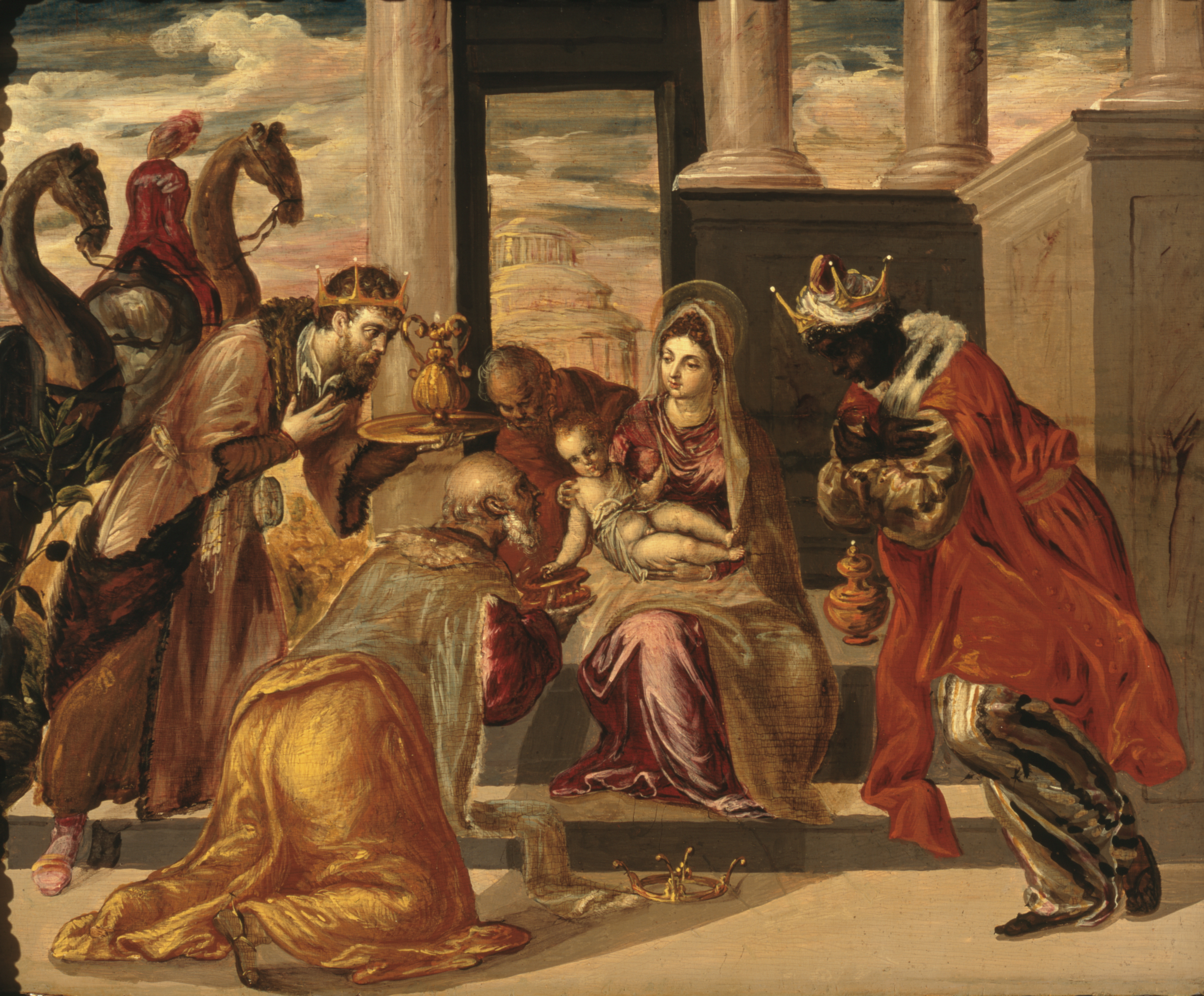
There are so many wonderful details in the Epiphany story: the call of the Gentiles, their enthusiastic response, the significance of the star they seek, the gifts they bring, the dramatic interaction with Herod, and their ultimate rejection of Herod in favor of Christ.
In this meditation, I would like to follow these Magi in their journey of faith to become “Wise Men.” As magi, they followed the faint stars, distant points of light; as wise men, they follow Jesus, who is the ever-glorious Light from Light, true God from true God.
We can observe how they journey in stages from the light of a star to the bright and glorious Light of Jesus Christ. And, of course, to authentically encounter the Lord is to experience conversion. All the elements of this story ultimately serve to cause them to “return to their country by another route.” Let’s look at the stages of their journey from being mere magi to becoming, by God’s grace, wise men.
Stage 1: The CALL that COMPLETES – The text says, When Jesus was born in Bethlehem of Judea, in the days of King Herod, behold, magi from the east arrived in Jerusalem, saying, “Where is the newborn king of the Jews? We saw his star at its rising and have come to do him homage.”
Notice the identity of these individuals: they are labeled magi (μάγοι (magoi) in Greek) and are from the East.
Exactly what “magi” are is not clear. Perhaps they are learned men; perhaps they are ancient astronomers. We often think of them as kings, though the text of this passage does not call them that. It also seems likely that Herod would have been far more anxious had they been actual potentates from an Eastern kingdom. We often think of them as kings because Psalm 72 (read in today’s Mass) speaks of kings coming from the East bearing gifts of gold and frankincense. However, for the record, the text in today’s Gospel does not call them kings, but rather “magi.”
Yet here is their key identity: they are Gentiles who have been called. Up until this point in the Christmas story, only Jews had found their way to Bethlehem. This detail cannot be overlooked, for it is clear that the Gospel is going out to all the world. This call completes the Church, which needs both Jews and Gentiles.
In today’s second reading, St. Paul rejoices in this fact, saying, the Gentiles are coheirs, members of the same body, and co-partners in the promise in Christ Jesus through the gospel (Eph 3:6). Because most of us are not Jewish by ancestry we ought to rejoice, for the call of these Magi prefigures our call.
Notice that God calls them through something in the natural world: a star. God uses something in creation to call out to them.
We do well to wonder what is the “star” that God uses to call each of us? Perhaps it is Scripture, but more typically God uses someone in our life in order to reach us: a parent, a family member, a friend, a priest, a religious sister, or a devoted lay person. Who are the stars in your life through whom God called you?
God can also use inanimate creation, as he did for these Magi. Perhaps it was a magnificent church, or a beautiful painting, or an inspirational song that reached you. Through something or someone, God calls each of us; He puts a star in our sky. These Wise Men, these Magi, followed the call of God and began their journey to Jesus.
Stage 2: The CONSTANCY that CONQUERS – Upon arriving in Jerusalem, the Magi find a rather confusing and perhaps discouraging situation. The reigning king, Herod, knows nothing of the birth of this new King. The Magi likely assumed that the newborn King would be related to the current king, so Herod’s surprise may have confused them. And Herod seems more than surprised; he seems threatened and agitated.
Even more puzzling, Herod calls in religious leaders to get further information about this new King. They open the sacred writings and the Magi hear of a promised King. Ah, so the birth of this King has religious significance! How interesting!
But these religious leaders seem unenthusiastic about the newborn King, and after providing the location of His birth, make no effort to follow the Magi. There is no rejoicing, no summoning of the people to tell them that a longed-for King has finally been born, not even further inquiry!
So the wicked (Herod and his court) are wakeful while the saints are sleepy. How odd this must have seemed to the Magi! Perhaps they even thought about abandoning their search. After all, the actual king knew nothing of this new King’s birth, and those people who did know about it seemed rather uninterested.
Ah, but praise the Lord, they persevered in their search; they did not give up!
Thanks be to God, too, that many today have found their way to Christ despite the fact that parents, clergy, and others who should have led them to Jesus were either asleep, ignorant, or just plain lazy. I am often amazed at some of the conversion stories I have heard: people who found their way to Christ and His Church despite some pretty daunting obstacles (e.g., poor religious upbringing, scandalous clergy, and poor role models). God sometimes allows our faith and call to be tested, but Those who persevere to the end will be saved (Matt 24:13).
To persevere is to open the door to wisdom, which often must be sought in spite of obstacles. This constancy is often what it takes to overcome the darkness and discouragements of the world.
Stage 3: The CONDESCENSION that CONFESSES – The text says, After their audience with the king they set out. And behold, the star that they had seen at its rising preceded them, until it came and stopped over the place where the child was. They were overjoyed at seeing the star, and on entering the house they saw the child with Mary his mother. They prostrated themselves and did him homage.
With what little information they have, the Magi set out and continue to follow the call of God through the star.
Note that they enter a “house.” We often think of the Magi as coming that same Christmas night to the cave or stable, but it seems not; Mary, Joseph, and Jesus are now in a house. Apparently they have been able to find decent lodging. Has it been days or weeks since Jesus’ birth? Regardless, it is likely not Christmas Day itself.
Notice, too, that they “prostrate” themselves before Jesus. The Greek word used is προσεκύνησαν (prosekunēsan), which means “to fall down in worship” or “to give adoration.” This word is used twelve times in the New Testament and each time it is clear that religious worship is the reason for the prostration.
This is no minor act of homage or sign of respect to an earthly king; this is religious worship. It is a confession of faith. The Magi manifest faith! The beginning of wisdom is the fear of the Lord. And these Magi are well on their way from being mere magi to being wise men!
But is their faith a real faith or just a perfunctory observance? It is not enough to answer an altar call or to get baptized. Faith is never alone; it is a transformative relationship with Jesus Christ. So let’s look for the effects of a real and saving faith.
Stage 4: The COST that COMES – There is a cost to discipleship. The Magi are moved to give three symbolic gifts that show some of what true faith includes. They are costly gifts.
Gold symbolizes all of our possessions. In laying this gift before Jesus, they and we are saying, “I acknowledge that everything I have is yours. I put all my resources and wealth under your authority and will use them only according to your will.” A conversion that has not reached the wallet is not complete.
Frankincense is a resin used in incense and symbolizes the gift of worship. In the Bible, incense is a symbol of prayer and worship (e.g., Psalm 141). In laying down this gift, we promise to pray and worship God all the days of our life, to be in His holy house each Sunday, to render Him the praise and worship He is due, to listen to His word and consent to be fed the Eucharist by Him, to worship Him worthily by frequent confession, and to praise Him at all times.
Myrrh is a strange gift for an infant; it is usually understood as a burial ointment. Surely this prefigures Jesus’ death, but it also symbolizes our own. In laying this gift before Jesus we are saying, “My life is yours. I want to die so that you may live your life in me. May you increase and may I decrease. Use me and my life as you will.”
Yes, these three gifts are highly symbolic.
The Magi manifest more than a little homage to Jesus. They are showing forth the fruits of saving faith. And if we can give these gifts, so are we.
In their holy reverence for God is wisdom in its initial stage!
Stage 5: The CONVERSION that is CLEAR– The text says, And having been warned in a dream not to return to Herod, they departed for their country by another way.
Here, then, is essential evidence for faith: conversion. It is not enough to get “happy” in Church; we have to obey. These Wise Men are walking differently now. They are not going home by the same way they came. They’ve changed direction; they’ve turned around (conversio). They are now willing to walk the straight and narrow path that leads to life rather than the wide road that leads to damnation. They are going to obey Christ. They are going to exhibit what St. Paul calls the “obedience of faith” (Rom 1:5; 16:26). They have not just engaged in perfunctory worship; they are showing signs of a true and saving faith. They are not just calling out to Jesus, “Lord, Lord!” They are doing what He tells them (cf Luke 6:46).
No longer mere magi, they are now wise men!
So there it is. Through careful stages, the Lord has brought the Gentiles (this means you and me) to conversion. He called these Magi to wisdom. They remained constant, confessed Him to be Lord, accepted the cost of discipleship, and manifested conversion. Have you? Have I?
Walk in the ways of these Wise Men! Wise men still seek Him; even wiser ones listen to and obey Him. Are we willing to go back to our country by another route? Is ongoing conversion part of our journey home to Heaven? Epiphany means “manifestation.” How is our faith made manifest in our deeds and conversion?
I have it on the best of authority that as the (now) Wise Men went home by another route, they were singing this gospel song:
It’s a highway to heaven!
None can walk up there
but the pure in heart.
I am walking up the King’s highway.
If you’re not walking,
start while I’m talking.
There’ll be a blessing
you’ll be possessing,
walking up the King’s highway.

 The gospel for daily Mass on Wednesday recounted the familiar story of Jesus walking on the water after having multiplied the loaves and fishes.