Too many Catholics are uncomfortable using the biblical and traditional words, “Repent,” convert and conversion. To repent means to change your mind and come to a new way of living. To convert means to turn from sinful ways or erroneous teaching.
But too many Catholics, including priests are uncomfortable using words like this. We used to speak of convert classes etc. But now many prefer abstract descriptions like, “Inquiry Classes” or the even more abstract “RCIA”
Many draw back lest they seem to suggest that others are wrong, “going wrong,” need to change, or, heaven forfend, “sinful.” Words like repent and convert more than suggest that there is right and wrong, true and false, sanctity and sinfulness, good and evil.
But the fact is, many, including us, need on-going conversion And a good number need outright conversion And a complete change of mind, heart and behavior.
Of course repentance and the call to conversion are a key biblical summons. repentance is not suggested, it is commanded, and without it we will not see the kingdom of God.
Perhaps a central reason for the embarrassment many feel at the call to repentance and conversion is that it runs a foul of a kind of “consumer Christianity” wherein faith is reduced to using God’s grace to access blessings but not to give one’s life over to Jesus Christ in love and obedience. Consumer Christianity targets “seekers” looking for enrichment rather than disciples. The heart of discipleship is, as Jesus says, is to “Deny yourself, take up your Cross, and follow me.”
But when faith is reduced to personal enrichment, true discipleship seems obnoxious and words like repentance, conversion, and concepts like self denial, and the cross are non-starters and rejected as negative, judgemental, and, to use consumer language, is bad marketing.
To be sure, the faith does enrich and words like repentance and conversion need not be accompanied with sour faces or with no reference to the joy of salvation. We need not act like the wild-eyed sidewalk evangelists screaming repent only as a tactic of cringing fear.
But as to the avoidance of any fear at all and the words repent and convert, nothing could be more unChrist-like, for Jesus led with the summons to repent. It was in the very opening words of his public ministry: He said, “The time is now! The kingdom of God is near! Repent, and believe the gospel (Mark 1:15).
And why does Jesus lead with this? Because the joy and enrichment of salvation cannot be accessed except through repentance and conversion. Eternal Life cannot be accessed except through turning our back on this world and dying to it. Easter Sunday is accessed only through Good Friday.
Consumer Christianity cannot save. Repentance and conversion, even if not popular in marketing focus groups of “seeker-sensitive” mega-churches, must be recovered in the call and vocabulary of the Church. Watering down the very thing Jesus led with is no way to make true disciples.
Repent and be converted that the Gospel may fill you.
Staying in a kind of reflective mode from last Sunday’s Gospel on greed and how to avoid it, let’s ponder why Jesus called some mammon (wealth) unrighteous. The phrase occurs in the Gospel of Luke in which Jesus says, I tell you, make friends for yourselves by your use of dishonest wealth, so that, when it fails, they will welcome you to eternal dwellings (Luke 16:9). We discussed yesterday what it means to be welcomed into eternal dwellings and who these friends who welcome us really are. But in this post perhaps we can consider what the expression “dishonest wealth” means.
More literally the Greek μαμωνᾶ τῆς ἀδικίας (mamona tes adikias) is translated, “mammon of iniquity.” “Mammon” is a Hebrew and Aramaic word that has a wider concept than just money. It refers to wealth in general and, even further, to the things of this world on which we rely. But what is meant by the expression “dishonest wealth”? Why is it called dishonest?
There seem to be various opinions and theories. None of them absolutely exclude the other but they do include some differences in emphasis. Here are three theories:
1. It refers to wealth that we have obtained in dishonest or illegal ways. Now I personally think that this is unlikely since the Lord’s advice is to take this “dishonest wealth” and give it others. If one has stolen from others the usual remedy is to return the stolen items to them. It is true that the Lord’s advice follows a parable in which a man stole (or embezzled) money. But the Lord is not praising his theft, but rather, his determination to be clever in worldly matters. The Lord wishes his disciples were as clever and thoughtful in spiritual matters. Hence it seems unlikely that the Lord means by “dishonest wealth” merely things that we have stolen. If we steal we ought to return it to the rightful owner, not make friends for ourselves of third parties for our own ultimate gain.
2. It refers to the fact that money and wealth tend to lead us to dishonesty, corruption, and compromise. Since it tends to lead to iniquity it is called (literally) the mammon of iniquity. It is a fact that Scripture generally has a deep distrust of money. For example,
How hard it is for the rich to enter the kingdom of God (Luke 18:24).
Those who desire to be rich fall into temptation and a trap and into many foolish and harmful desires that plunge men into ruin and destruction. For the love of money is a root of all kinds of evil. Some people, eager for money, have wandered from the faith and pierced themselves with many griefs (1 Tim 6:9-10).
Give me neither poverty nor riches, but give me only my daily bread. Otherwise, I may have too much and disown you and say, ‘Who is the Lord?’ Or I may become poor and steal, and so dishonor the name of my God (Prov 30:8).
It’s funny that despite knowing passages like these most of us still want to be rich! But at any rate, this interpretation sees the expression as referring more to where money and wealth lead rather than to money and wealth themselves. Of itself, money is not evil and neither is wealth. But they do tend to lead us into many temptations, to corruption, and to unrighteousness. Hence mammon is called “unrighteous” or “of iniquity.” Some also consider this manner of speaking to be a type of Jewish hyperbole since it assigns unrighteousness to all wealth even though it only tends to lead there.
Overall this position has merit but I personally think it is incomplete and needs to be expanded by a wider sense of unrighteousness. Simply chalking something up to Jewish exaggeration may miss the fact we are not simply to dismiss hyperbole in Scripture. I have often found that the Jewish hyperbole found in the Scriptures is there for a reason. The usual reason is that we are being asked to consider that the exaggeration may not be a total exaggeration after all and that there is actually more truth than exaggeration in the hyperbole. This notion is developed in the third theory.
3. It refers to the fact that this world is unjust and thus all its wealth has injustice and unrighteousness intrinsically attached. We live in a world in which the distribution of wealth, resources, and money is very uneven and unjust. Now economies around the world are very complicated matters and there may be any number of reasons for this. Some areas of this planet are just more fertile than others; some areas have more oil, etc. There is often a role that corrupt governments play in unjust distribution as well. It is a fact that we are sometimes unable to effectively help the needy in certain countries because corrupt governments and individuals divert what is intended for the poor. But there is just no getting around it: this world has a very unjust and unequal distribution of wealth and resources for any number of reasons. We in America live at the top of the system and cannot totally ignore that our inexpensive goods often are so because workers in other parts of the world earn a mere pittance to manufacture or harvest our cheap goods. Much of the convenience and comforts of our lifestyle are provided by people who earn very little for what they do, often without medical benefits, pensions, and the like.
Now again, economies are very complicated and we may not be able to do a great deal to suddenly change all this. But we ought to at least be aware that we live very well and many others do not, and that our high standard of living is often the result of the cheap labor elsewhere. When I buy a shirt in the air-conditioned store and take it in my air-conditioned car back to my air-conditioned house with its walk-in closet, it ought to occur to me that the person who made and packed this shirt probably doesn’t live nearly as well as I do. And the fact that he earned very little for his work is part of the reason I can buy the shirt for less than $20.
Now I am not calling for boycotts (they probably just hurt the poor anyway), and I am not sure exactly how we got to such inequity in the world. I know it annoys me when some people simply want to blame Americans for every ill there is. There are other factors such as international corruption, bad economic theory, etc. There’s plenty of blame to go around. But the fact is, this world is an unjust place and every bit of wealth we have is somehow tainted by that injustice.
So this final theory is not so quick to call Jesus’ expression “Jewish hyperbole.” Rather it considers as quite real the notion that worldly inequities are so vast and exist on so many levels that all the goods, comforts, and conveniences of this world are tainted, are steeped in unrighteousness and inequity. None of it is clean; none of it is fully righteous. In this sense Jesus rightly calls it “dishonest wealth.”
If that is the case, then what to do? Jesus is not unclear, for he goes on to counsel that we befriend the poor with our “unrighteous mammon,” that we be generous to others who are less fortunate. We who live so well need to remember that the monetary cost of a product may not fully express its true human cost. If we have been blessed (and boy have we been blessed), then we are called to bless others.
A final disclaimer – The questions of poverty and worldwide economies are complicated. I do not propose simple solutions. I am not an economist; I am not a socialist; I am not a communist. I am simply a Christian trying to listen to what Jesus is teaching. I am trying to internalize His teaching that I ought not be so enamored of the wealth of this world. For it is steeped in unrighteousness even if I don’t intend that unrighteousness. I think I hear the Lord saying, “Be on your guard with money and worldly wealth. It’s not as great as you think. In fact, if you don’t learn to be generous, it may well be your undoing.” There is a powerful Scripture addressed to us who have so much. It seems to offer hope for us if we follow its plan. I would like to conclude with it.
Command those who are rich in this present world not to be arrogant nor to put their hope in wealth, which is so uncertain, but to put their hope in God, who richly provides us with everything for our enjoyment. Command them to do good, to be rich in good deeds, and to be generous and willing to share. In this way they will lay up treasure for themselves as a firm foundation for the coming age, so that they may take hold of the life that is truly life (1 Tim 6:17-19).
You know I would value your thoughts, distinctions, and additions.
About 20 years ago I toured an old coal mine in Pennsylvania near Scranton. I was amazed at the conditions and hardships the coal miners had to endure. I have often thought of them and that tour when I turn on a light or an appliance since our power plant is fueled by coal. My comfort comes at a higher cost than my bill suggests.
In most traditional Catholic settings we usually think of the veil as something a woman wears, and as a sign of traditional modesty and prayer. In this sense we think of it as something good and positive, though perhaps some among us are less than enthusiastic.
But in the readings of Mass from this Wednesday, the veil is presented in far more ambivalent terms:
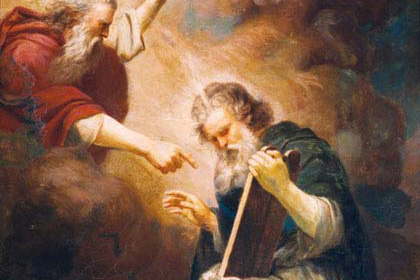
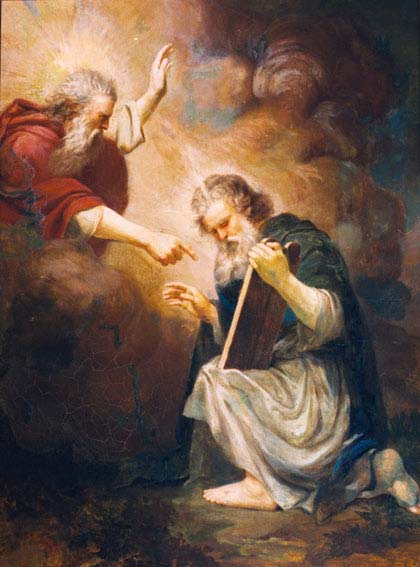
As Moses came down from Mount Sinai with the two tablets of the commandments in his hands, he did not know that the skin of his face had become radiant while he conversed with the LORD….the children of Israel…were afraid to come near him….He put a veil over his face. Whenever Moses entered the presence of the LORD to converse with him, he removed the veil until he came out again. On coming out, he would tell the children of Israel all that had been commanded. Then the children of Israel would see that the skin of Moses’ face was radiant; so he would again put the veil over his face until he went in to converse with the LORD (Exodus 34).
As we see, even the mere afterglow of God’s glory was something the people of old could not tolerate. Thus Moses wore a veil to shield them from God’s glory. And this is man in his sinful state, incapable of withstanding even the afterglow of God’s holiness.
On the one hand this humility is admirable. Unlike many modern, even many religious people today, the ancients knew that God was utterly holy, and that they were not. Many and varied were the rituals that recalled God’s holiness, and our sinfulness.
An often repeated but disputed tradition, is that the High Priest who went into the Holy of Holies once a year on the feast of Yom Kippur entered with much incense, lest he catch a glimpse of the Holy One and be struck dead on account of his sins. It is also said that he wore bells around his waist such that when he prayed, bowing and moving, those outside the veil knew that he was still alive. It is further said that he had a rope tied about his ankle so that if he was struck dead he could be dragged out without others having to enter the Inner Sanctum, themselves risking death, to retrieve the body!
True or not, it is clear that the ancient Jews understood that it was an awesome thing to be in the presence of a living and holy God! For who can look on the face of God and live?! (cf Ex 33:20)
How different this is from we moderns who manifest such a relaxed and comfortable posture in the presence of God, in his holy Temple. As we discussed on the blog last week, almost any sense of awe and holy fear has been replaced by a extremely casual disposition, both in dress, and in action. No need to rehearse all of that here. Read last weeks blog for that: Remove Your Sandals!
But it is clear, that if the ancient Jewish practice was at one extreme, we are clearly at the other.
However, it would be a dubious position to hold that God expects the kind of fearsome reverence manifested in ancient Israel. Jesus clearly came to grant us access to the Father, through the forgiveness of our sins. As he died on the Cross, the Scripture says:
And Jesus cried out again with a loud voice, and yielded up His spirit. And behold, the veil of the temple was torn in two from top to bottom; and the earth shook and the rocks were split. (Matt 27:50-51)
Yes, the veil in the temple was torn into from top to bottom. Extra biblical traditions (e.g. Josephus) also hold that after the earthquake, the large brass doors of the temple swung open and stayed that way.
Isaiah had saidOn this mountain he will destroy the veil that veils all peoples, the shroud that covers all nations (Is 25:7). This is clearly fulfilled at the moment that Jesus dies on the cross on Mount Moriah (Gologtha) and the veil of the Temple is rent. On account of the cleansing blood of Jesus that reaches us in our baptism, we gain access again to the Father. And thus we have a perfect right (granted us by grace) to stand before the Father with hands uplifted to praise Him.
So the veil is parted, torn asunder by Jesus. And thus the veil that veiled Moses’ face has something of an ambivalent quality. Yes, it does symbolize a great reverence. But it also signifies a problem that needed to be resolved. We were made to know God, to be able to look on the face of our God and live. Sin had made us incapable of doing this. Thus the veil that Moses wore was a veil that needed ultimately to be taken away.
St. Paul beautifully speaks of us looking on the face of the Lord with unveiled faces:
Setting forth the truth plainly, we commend ourselves to everyone’s conscience in the sight of God. And even if our gospel is veiled, it is only veiled to those who are perishing. The god of this age has blinded the minds of unbelievers, so that they cannot see the light of the gospel that displays the glory of Christ, who is the image of God. …For God, who said, “Let light shine out of darkness,” has made his light shine in our hearts to give us the light of the knowledge of God’s glory displayed in the face of Christ. (2 Cor 4:2-6)
And again,
We are not like Moses, who would put a veil over his face to prevent the Israelites from seeing the end of what was passing away. But their minds were made dull, for to this day the same veil remains when the old covenant is read. It has not been removed, because only in Christ is it taken away. Even to this day when Moses is read, a veil covers their hearts. But whenever anyone turns to the Lord, the veil is taken away….And we, who with unveiled faces contemplate the Lord’s glory, are being transformed into his image with ever-increasing glory, which comes from the Lord, who is the Spirit (2 Cor 3:13-18).
And thus, for some the veil remains. It is a veil that clouds their minds. This is not a veil of modesty or reverence, this is a veil of unknowing that must be removed by the gift of faith.
And thus, in Wednesday’s readings, we have a kind of “veil in reverse.” Most of us, at least the traditional among us, think of the veil as something beautiful and reverent. And it is. But the veil of Moses spoke of the sins and the sorrows of the people, it was a veil that needed to be removed.
That said, it remains true according to this author’s opinion that we moderns must find our way back to some degree of reverence and awe before the presence of God. Even in the New Testament, and after the resurrection, there are stories of both St. John and St. Paul who encountered the glory of the Lord Jesus, manifested from heaven. So awesome was this theophany that they both were struck down. Paul, as yet unbaptized was blinded. And John, though not blinded, fell to his face.
The removal of the veil of Moses is both necessary and prophesied, and cringing fear must give way to hopeful confidence and joy in the presence of the Lord. But especially in these proud times of self-esteem, there must be some manner in which we come to realize that we are in the presence of the Holy One of Israel,
As the ancient hymn from the Liturgy of St James says, All mortal flesh must keep silence, and with fear and trembling stand, pondering nothing earthly minded, for with blessing in His, Christ our God to Earth descendeth, our full homage to demand.
The veil of Moses is removed, but the “veil” of reverence, whether literal or metaphorical must remain.
We are reading the parable of the Sower in Daily Mass. Someone asked me a question: Since the sower is the Son of Man, Jesus himself, why would the Lord, who knows everything ahead of time, sow seed he knew would not bear fruit?
First, let’s review the text:
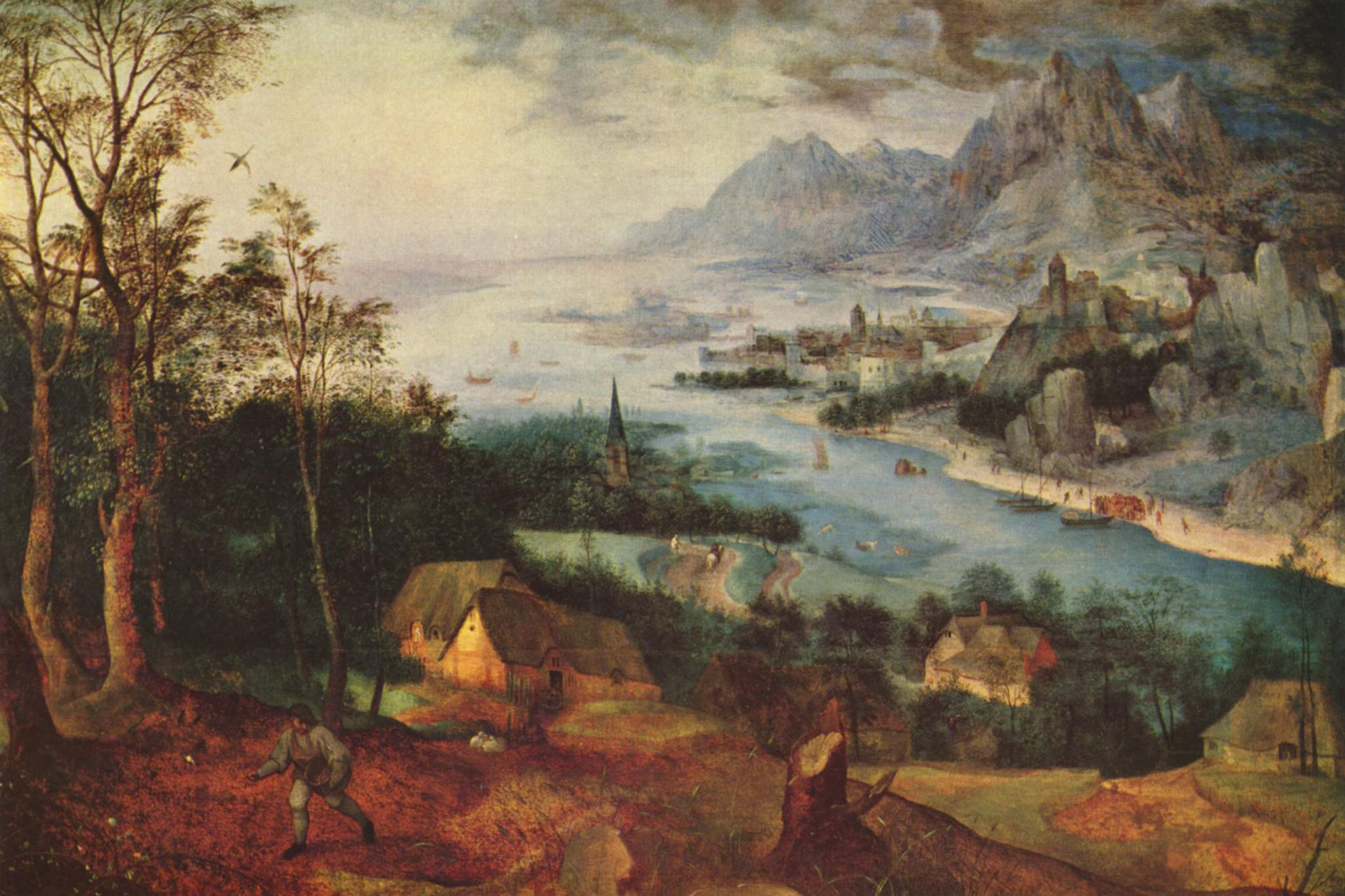
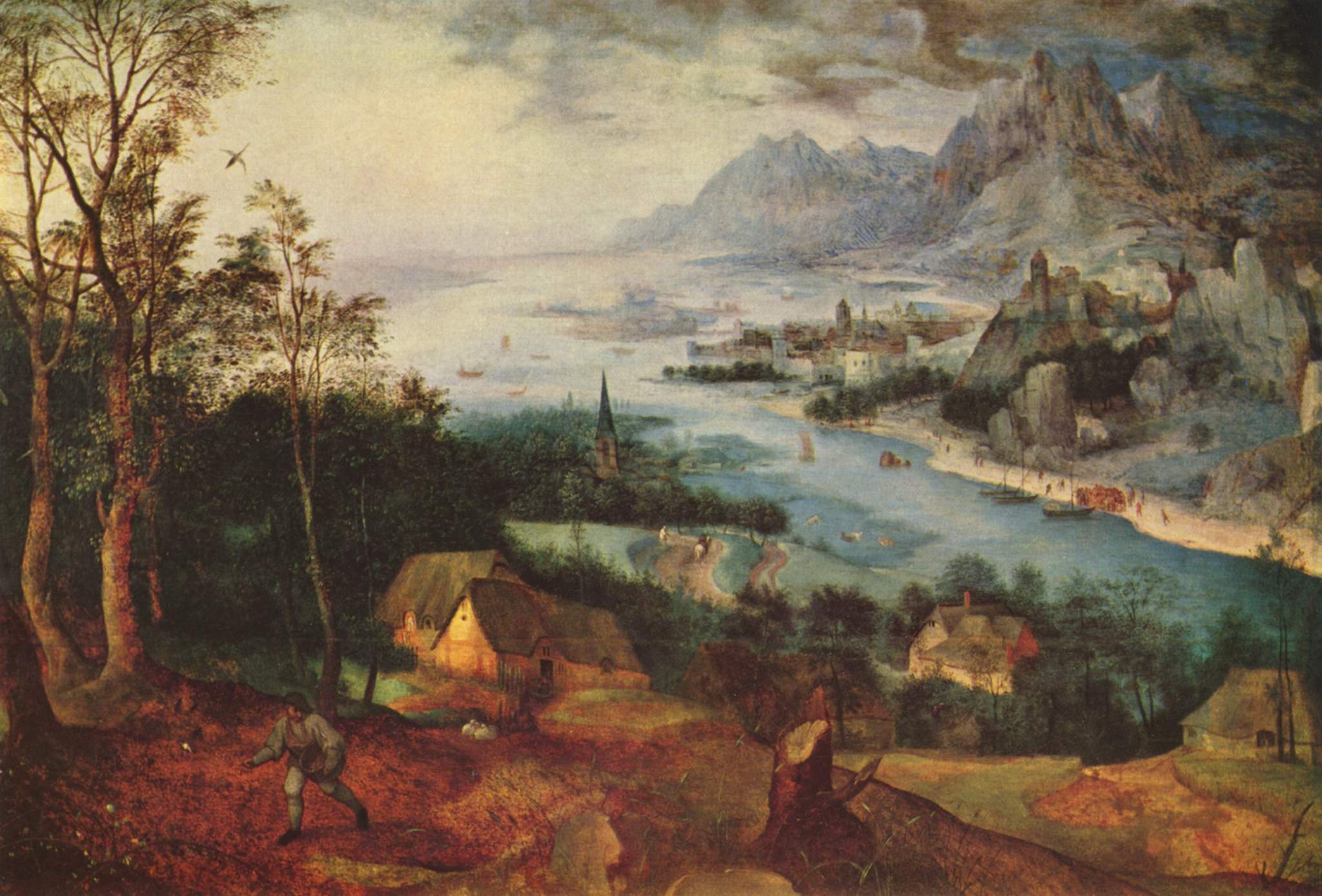
“A sower went out to sow. And as he sowed, some seed fell on the path, and birds came and ate it up. Some fell on rocky ground, where it had little soil. It sprang up at once because the soil was not deep, and when the sun rose it was scorched, and it withered for lack of roots. Some seed fell among thorns, and the thorns grew up and choked it. But some seed fell on rich soil, and produced fruit, a hundred or sixty or thirtyfold. Whoever has ears ought to hear.” (Matt 13:1-9)
So the question presents, Why then would God waste any seed on rocky or thin soil, or the path?
Perhaps a series of possible “answers” is all we can venture. I place “answers” in quotes since we are in fact touching on some mysteries here of which we can only speculate. So, here are some “answers.”
I. God is extravagant – it is not just seed He scatters liberally, it is everything. There are hundreds of billions of stars in over 100 billion galaxies, most of these seemingly devoid of life as we understand it. Between these 100 billion galaxies are huge amounts of, what seems to be, empty space. On this planet where one species of bird would do, there are thousands of species, tens of thousands of different sorts of insects, a vast array of different sorts of trees, mammals, fish etc. “Extravagant” barely covers it. The word “extravagant” means “to go, or wander beyond.” And God has gone vastly beyond anything we can imagine. But God is love, and love is extravagant. The image of him sowing seeds, almost in a careless way is thus consistent with the usual way of God.
This of course is less an answer to the question before us than a deepening of the question. The answer, if there is one, is caught up in the mystery of love. Love does not say, what is the least I can do? It says “What more can I do.” If a man loves a woman, he does not look for the cheapest gift on her birthday, rather he looks for an extravagant gift. God is Love and God is extravagant.
II. Even if the failed seed represents those who ultimately reject him, God loves that seed anyway. Remember, as Jesus goes on to explain, the seeds that fail to bear fruit, are symbols of those who allow riches, worldly preoccupation, persecution and other things to draw them away from God. But, even knowing this, does not change God’s love for them. He still wills their existence. Scripture says elsewhere, But I tell you: Love your enemies and pray for those who persecute you, that you may be sons of your Father in heaven. He causes his sun to rise on the evil and the good, and sends rain on the righteous and the unrighteous (Matt 5:44-45).
Yes, God loves even those who will reject him and will not, knowing ahead of that rejection, say to them, “You cannot exist.” He thus scatters even that seed, knowing ahead of time that it will not bear fruit. Further, he continues to send the sun and rain, even on those who will reject him.
Hence this parable shows forth God’s unfailing love. He sows seeds, even knowing they will not bear the fruit he wants. He wills the existence of all, even those who he knows ahead of time will reject him.
III. That God sows seeds and allows them to fall on bad soil is indicative of God’s justice. The various places the seed falls is indicative of human freedom, more than illustrative of the intent of God. For one may still question, “Why would God “allow” seed to fall on the path, or among thorns, or in rocky soil?” And the only answer here is that God has made us free. Were He to go and take back the seeds that fell in unfruitful places one could argue that God withdrew his grace and that one was lost on account of this, namely that God manipulated the process by withdrawing every possible grace. But God, in justice calls everyone and offers sufficient grace for all to come to faith and salvation. And thus the sowing of the seed everywhere is indicative of God’s justice.
IV. The variety of outcomes teaches us to persevere and look to faithfully sowing, rather than merely to the harvest. Sometimes we can become a bit downcast when it seems our work has born little fruit. And the temptation is to give up. But, as an old saying goes, “God calls us to be faithful, not successful.” In other words, it is up to us to be the means the means whereby the Lord sows the seed of his Word. The Word is in our hands, by God’s grace, but the harvest is not.
This parable teaches us that not every seed we sow will bear fruit. In fact a lot of it will not, for the reasons described by the Lord in a later part of the parable.
The simple mandate remains ad is this: preach the Word, Go unto all the nations and make disciples. St. Paul would later preach to Timothy: Preach the Word; be prepared in season and out of season; correct, rebuke and encourage–with great patience and careful instruction (2 Tim 4:2). In other words, sometimes the gospel is accepted, sometimes it is rejected. Preach it any way. Sometimes the gospel is popular, sometimes not. Preach it anyway. Sometimes the Gospel is in season, sometimes it is out of season. Preach it anyway. Sow the seeds, don’t give up.
Discharge your duty! St. Paul goes on to sadly remark, For the time will come when people will not put up with sound doctrine. Instead, to suit their own desires, they will gather around them a great number of teachers to say what their itching ears want to hear. They will turn their ears away from the truth and turn aside to myths. But you, keep your head in all situations, endure hardship, do the work of an evangelist, discharge all the duties of your ministry. (2 Tim 4:3-5). Once again the message is the same: preach anyway, sow the seed of the Word, persevere, do not give up, do not be discouraged. Discharge your duty and be willing to endure hardship, just preach! Some of the seed will yield a rich harvest, some will not, preach anyway.
So, permit these “answers.” God sows seed he knows will bear no fruit because he is extravagant, because he loves and wills the existence even of those he knows will reject him, because of his justice, and to teach us to persevere, whatever the outcome.
I interpret this video to mean that God will never withdraw his offer, not that he is trying to force a solution. For though he wants to save us, and promises never to let go, he respects our freedom to let go.
Last week in the Breviary we read the remarkable story of King Jehoshaphat and the victory of Israel against the Moabites, Ammonites and Meunites (2 Chronicles 20). It is a story that speaks of the power of praise to defeat a numberless army. Simply singing a hymn of praise can cast out demons, avert war, and send evil threats limping away.
Yes, praise! It is not always weapons of iron and steal and fiery bombs that wins the day. Often it is simple praise, hands lifted in prayer, voices raised in praise.
Never underestimate the power of the liturgy to change world history, to turn back threats and see the devil’s power crushed. Indeed, scripture says, Through the praise of children and infants you have established a stronghold against your enemies, to silence the foe and the avenger (Psalm 8:2).
I would like to take a more detailed look at this passage from Second Chronicles to see what praise and communal prayer can do. As a Church musician myself, and now a priest, I have often used this text to speak to Church Choirs of the power of praise. For, in this text we see that it is the choir, not the army that wins the day! Lets look at the text.
I. THE ANXIETY PORTRAYED –We begin with a description of a looming Crisis. The text says, After this the Moabites and Ammonites, and with them some of the Meunites, came against Jehoshaphat for battle. Some men came and told Jehoshaphat, “A great multitude is coming against you from Edom, from beyond the sea; and, behold, they are in Hazazontamar” (that is, Engedi). Then Jehoshaphat feared, and set himself to seek the LORD, and proclaimed a fast throughout all Judah. (2 Chron 20:1-3)
Now all this may seem a bit remote to us moderns. Indeed it my sound more like recitation for an ancient atlas or recitations from a “Jewish telephone book.” Don’t let all the names and places distract you. You and I also face a triple threat from the world, the flesh and the devil; from sins, sorrows and sufferings or just that situation you’re going through!
Indeed, as a pastor I am keenly aware that many come into our parishes on Sunday fighting demons and enemies. Many are overwhelmed, discouraged and afraid. They seek wisdom from God through his word and Sacraments.
And we who would pastor and lead parishes must seek above all to make our parishes, and the celebration of our liturgies, healing moments for God’s people, moments that give them hope and victory over afflictions and demons and difficulties. It is much like the disciples on the road to Emmaus who, encountering the Lord, had their hearts set on fire and their path redirected toward the heavenly Jerusalem.
People come with burdens, and we must be a place of blessing, or instruction in the Lord and a place that reminds of victory to those who persevere. And thus it makes sense that we head to the next step where in the faithful are assembled to seek healing, blessing and victory.
II. THE ASSEMBLING OF THE PEOPLE – The text says, And Judah assembled to seek help from the LORD; from all the cities of Judah they came to seek the LORD. And Jehoshaphat stood in the assembly of Judah and Jerusalem, in the house of the LORD, before the new court, and said, “O LORD, God of our fathers, art thou not God in heaven? Dost thou not rule over all the kingdoms of the nations? In thy hand are power and might, so that none is able to withstand thee. Didst thou not, O our God, drive out the inhabitants of this land before thy people Israel, and give it for ever to the descendants of Abraham thy friend? And they have dwelt in it, and have built thee in it a sanctuary for thy name, saying, ‘If evil comes upon us, the sword, judgment, or pestilence, or famine, we will stand before this house, and before thee, for thy name is in this house, and cry to thee in our affliction, and thou wilt hear and save.’ And now behold, the men of Ammon and Moab and Mount Seir, whom thou would not let Israel invade when they came from the land of Egypt, and whom they avoided and did not destroy– behold, they reward us by coming to drive us out of thy possession, which thou hast given us to inherit. O our God, wilt thou not execute judgment upon them? For we are powerless against this great multitude that is coming against us. We do not know what to do, but our eyes are upon thee.” Meanwhile all the men of Judah stood before the LORD, with their little ones, their wives, and their children. (2 Chron 20:4-11)
Notice that the people all assemble: Men and women, young and old, children too. Here is sacred assembly and the power of communal prayer. Private prayer is both necessary and good. But there comes a time each week when all the faithful must assemble and join their collective prayers and praises. Here is a time of collective praise and, as we shall see of the sharing of wisdom and mutual support.
Isn’t this what we do each Sunday? We face demons and enemies and struggle with fear, just as did these people of old. But we, like them assemble and find strength. We tell the biblical and personal stories of how we’ve overcome and we draw strength from our story. Yes, there we are, clergy and people together with our God who instructs us in the battle reminds us of the victory, feeds us to strengthen us, and gives us a pledge of future glory in the Eucharist.
The Book of Hebrews says,And let us consider how to stir up one another to love and good works, not neglecting to meet together, as is the habit of some, but encouraging one another, and all the more as you see the Day drawing near. (Heb 10:24-25)
Note that in this ancient gathering Jehoshaphat and the people do four things. There is:
1. The PRAISE of POWER (OF GOD)- For they say: O LORD, God of our fathers, art thou not God in heaven? Dost thou not rule over all the kingdoms of the nations? In thy hand are power and might, so that none is able to withstand thee. (vv. 4-6). And this is very much what we do in the Gloria, our collects, and in the Preface of the Eucharistic Prayer. In praising the power of God we acknowledge his capacity to save us and are stirred to hope that He, who can make a way out of no way, will save us.
2. The PROCLAMATION of PAST DEEDS – For they recall that God settled them in this land as blessed them day by day. And they recall God’s promise to answer their prayer. And we too, as we read God’s word every Sunday of affliction, but then of deliverance. We learn that weaping ay endure for a night, but Joy does come with the morning light! This proclamation and reminder of God’s steadfast help in the past, steels our confidence that, as Scripture says, But this I will call to mind; therefore I will hope: The LORD’s mercy is not exhausted, his compassion is not spent; They are renewed each morning—great is your faithfulness! The LORD is my portion, I tell myself therefore I will hope in him. The LORD is good to those who trust in him, to the one that seeks him; It is good to hope in silence for the LORD’s deliverance. -(Lamentations 3:21-26). Yes, we tell the story of how we’ve overcome and we’ll understand it better, by an by! In remembering the Lord’s mercy and deeds of the past we are encouraged that he did not bring us this far to leave us.
3. The PRESENTATION of the PROBLEM – For they say, And now behold, the men of Ammon and Moab and Mount Seir…are coming to drive us out of thy possession, which thou hast given us to inherit. (vv. 10 – 11) Yes, Lord we are afflicted on every side, be it these ancient enemies or the even more ancient enemies of the World the flesh and the devil. Yes, Lord we are in need, we are afflicted.
4. The PETITION of the POWERLESS – And thus they say standing before the Lord with hands raised: O our God, wilt thou not execute judgment upon them? For we are powerless against this great multitude that is coming against us. (v. 11-12) And we too cry out: Help us, save us, have mercy on us, and keep us O Lord by thy grace. We afflicted and powerless! Save us O Lord, spare us! And in acknowledging our powerlessness, comes our true power for then we start to rely on God.
III. THE ANSWER PROCLAIMED –And the Spirit of the LORD came upon Jahaziel the son of Zechariah, son of Benaiah, son of Jeiel, son of Mattaniah, a Levite of the sons of Asaph, in the midst of the assembly. And he said, “Hearken, all Judah and inhabitants of Jerusalem, and King Jehoshaphat: Thus says the LORD to you, ‘Fear not, and be not dismayed at this great multitude; for the battle is not yours but God’s. Tomorrow go down against them; behold, they will come up by the ascent of Ziz; you will find them at the end of the valley, east of the wilderness of Jeruel. You will not need to fight in this battle; take your position, stand still, and see the victory of the LORD on your behalf, O Judah and Jerusalem.’ Fear not, and be not dismayed; tomorrow go out against them, and the LORD will be with you.” Then Jehoshaphat bowed his head with his face to the ground, and all Judah and the inhabitants of Jerusalem fell down before the LORD, worshiping the LORD. And the Levites, of the Kohathites and the Korahites, stood up to praise the LORD, the God of Israel, with a very loud voice. 2 Chron 20:14-14)
And thus in this sacred assembly comes an answer from God. And thus we note:
1. RESPONSE – For God speaks an answer through the Prophet Jahaziel, just as the prophetic voice of His Church continues to speak for him today. And notice too its in the context of the assembled community that the answer comes.
2. REASSURANCE – And Jahaziel says, Fear not, and be not dismayed at this great multitude; for the battle is not yours but God’s….‘ Fear not, and be not dismayed; tomorrow go out against them, and the LORD will be with you.”Yes, we do well to remember that the battle is ultimately the Lord’s. It is he who will win, it does not all depend on us alone. And we do well to remember this today when we are beset by many difficulties and discouraging cultural trends. The Lord has already won. Nations may rise and fall, empires come and go, wicked philosophies have their time, and this has all happened in the age of the Church, but the Church and the Lord and the Gospel are still here and we have buried every one and everything that announced our death. Where is Caesar? Where is Napoleon, where is the USSR? God has already won, only the news has not yet dawned on some who choose the losing side.
3. REQUIREMENT –Tomorrow go down against them; behold, they will come up by the ascent of Ziz; you will find them at the end of the valley, east of the wilderness of Jeruel. You will not need to fight in this battle; take your position, stand still, and see the victory of the LORD on your behalf, O Judah and Jerusalem. But the Lord who made us without us, with not save us without us. He DOES have something for each of us to do. Our task is to discover our role and take our position on the field! Perhaps it is being a priest, catechist, teacher or parent. Perhaps it is the witness to and renewal of the temporal order. Perhaps it is raising children in Godly fear or summoning others to holiness. But find your place on the battlefield and be still and stable there, doing what the Lord says, knowing that he is with us and that the battle is His and that he does the real fighting.
In effect we have here a quick synopsis of what a good homily should be. A homily should give, using God’s Word and the teachings of the Church, a response and reassurance regarding the issues and afflictions faced by God’s people. And, it should remind us of our role in finding our place on the battlefield, remaining stably there and doing what the Lord asks, but to do so in supreme confidence.
IV. THE AWESOME POWER OF PRAISE – And finally comes the remarkable victory, a victory not won by military power, but by mighty praise. It is the praise of God that defeats his enemies round about. The text says: And they rose early in the morning and went out into the wilderness of Tekoa; and as they went out, Jehoshaphat stood and said, “Hear me, Judah and inhabitants of Jerusalem! Believe in the LORD your God, and you will be established; believe his prophets, and you will succeed.” And when he had taken counsel with the people, he appointed those who were to sing to the LORD and praise him in holy array, as they went before the army, and say, “Give thanks to the LORD, for his steadfast love endures for ever.” And when they began to sing and praise, the LORD set an ambush against the men of Ammon, Moab, and Mount Seir, who had come against Judah, so that they were routed. For the men of Ammon and Moab rose against the inhabitants of Mount Seir, destroying them utterly, and when they had made an end of the inhabitants of Seir, they all helped to destroy one another. When Judah came to the watchtower of the wilderness, they looked toward the multitude; and behold, they were dead bodies lying on the ground; none had escaped. When Jehoshaphat and his people came to take the spoil from them, they found cattle in great numbers, goods, clothing, and precious things, which they took for themselves until they could carry no more. They were three days in taking the spoil, it was so much. On the fourth day they assembled in the Valley of Beracah, for there they blessed the LORD; therefore the name of that place has been called the Valley of Beracah to this day. (2 Chronicles 20:20-26)
Note carefully that the Choir, dressed in holy array went in front of the Army! It is praise that will prevail this day! And as they go in front they sing: Give thanks to the LORD, for his steadfast love endures for ever! And this praise throws the enemy into confusion! The threefold opposing armies turn on each other. No one escaped, they were all killed by one another.
Pay attention, there is power in praise. Nothing discourages the evil one more than the praise. Nothing confutes and confuses the world, the flesh and devil more than the joyful shout of a Christian. There is a glory and a power to joy and confident praise that cannot be denied.
I myself am a witness to the transformative power of God’s praise and its capacity to put the world, the flesh and devil to flight. I have spent most of my priesthood in African American Parishes where jubilant praise is a constant practice. Songs of hope, and joy and blessings abound and even our many songs that summon us to repentance are quite often humorous and hopeful, warning of judgment, but promising mercy to the steadfast. And this praise has changed my life. It has put demons to flight, subdued fleshly anxiety, sins, and thinking, and put the world on trial. I am more confident, more courageous, and more equipped to speak the truth in love.
Praise works, my life has had to many victories to say anything else. When the praises go up, the blessings come down and the victory is won. Yes, I am a witness. How about you?
Lord, save us from sour-faced saints! God grant us joyful, confident and praise-filled Catholics all throughout this world. For in our praise, and joyful confidence in the truth of God’s Word and teaching comes a witness that is hard to refute. Yes Lord, even from the mouth of babes you have found praise to foil your enemies! (Ps 8:2). Yes Lord, teach us to praise you! Teach us the power of our song and of our joyful testimony.
Happy the people that know the joyful shout; that walk, O LORD, in the light of Thy face. (Psalm 89:16)
Today in the Divine Office we read of the tragic loss of Absalom, the Son of King David. And yet it remains true that too many of our own children today are lost, if not in death, surely in many other social ills and a lack of faith. What went wrong with Absalom and How was David to blame? What can we learn from this tragic tale?
First some back ground.
Of all the great Patriarchs of the Old Testament, David is among the greatest. Warrior and King, composer and conqueror, unifier and organizer, a man after God’s own heart. He united not only the 12 often fractured Tribes of Israel, but, as a kind if priest-king, stitched together the religious faith of Israel with its governance. King among them, he also collected and disseminated the great prayer-book of Israel, the Book of Psalms, composing many of them himself. So great was David, that among the most well known titles of Jesus would be, “Son of David.”
And yet, like almost all the great figures of the Bible, David was a man who struggled and was flawed. His demons would lead him even to murder as he amassed power and wives. And though he brought unity and governance to 12 contentious tribes, his own family was in a ruinous condition: afflicted by a murderous internecine conflict which had David for its much of its sinful source, and which he seemed powerless to stop.
In the end his family intrigues would cause the delicate union of the Israel he had woven, to come unraveled. And in David’s flaws are important lessons for our times as well.
Let’s recall a few details of King David’s life and domestic difficulties and see where things unravel.
David was the youngest son of Jesse, of whom God said, I have provided a king for myself among [Jesse’s] sons (1 Sam 16:1). Of David it is clear that he was chosen especially by God, for the Lord instructed Samuel to look for him saying, Do not consider his appearance or his height, ….The LORD does not look at the things man looks at. Man looks at the outward appearance, but the LORD looks at the heart ( 1 Sam 16:7).
Yes, there was something about David’s heart that God loved. Whatever his later flaws, David had a heart for God, and God a heart for David. Upon Samuel’s anointing of David, the Scripture says: And from that day on the Spirit of the LORD came upon David in power. ( 1 Sam 16:13)
Unifier – Upon the death of Saul, Ten Tribes from Israel in the north divided against Judah in the South, and war ensued. But through military action, and other more diplomatic efforts, David was successful in reuniting the Kingdom in 1000 BC. He drove out the Hittites to establish Jerusalem as the Capital. He also wove the kingship together with Israel’s faith in order to establish deeper ties among the Israelites. Thus Jerusalem also became the place of the Temple of God, and the Ark. It was during this time that David both collected, and probably wrote, a good number of the Psalms.
Yes here was the great man of whom God saidI have found David the son of Jesse, a man after My own heart, who will do all My will (Acts 13:22; 1 Sam 13:14). But God only seldom (such as with Mary) uses sinless humanity. We carry the treasure of God’s love in earthen vessels (cf 2 Cor 4:7). David’s strength was admixed with weakness and flaws, flaws which cascaded down through the lives of others, and gravely affected the Kingdom he was privileged to set forth.
Trouble begins with the fact that David had eight wives whose names we know: Ahinoam, Abigail, Maacah, Haggith, Abital, and Eglah; later Michal and Bathsheba. The Biblical text suggests he had other wives as well, upon settling in Jerusalem. From these David had 19 sons. Let the internecine intrigue and blood-letting begin.
Disclaimer – It is true that, as many will hasten to point out, that polygamy was common among the ancient patriarchs. Yes, it was. But that it was common does not shield from the fact that, as the Scriptures consistently show, Polygamy always brings terrible results: infighting, rivalries, and often murderous intrigue. I have written more in this problem here: Don’t Do Polygamy.
God in setting forth marriage in Genesis 1 & 2 prescribed one man for one woman in a stable and fruitful relationship. God created for Adam, only Eve, and not also Jane and Sue and Mary and Ellen and Samantha. And God said that a man (singular) shall leaven his father and mother (singular) and cling to his wife (singular) the TWO (not three or more) of the them shall become one (Gen 2:24).
Diversions from this God-given model bring only sadness and even death. David’s many marriages and sons by different mothers, is no exception, and the flawed family structure will bring real devastation not only to David’s family, but to all Israel.
First Degree Murder – David, already with many wives and competing sons, deepens the trouble when he has Uriah the Hittite killed, and takes his wife Bathsheba. The remarkably wicked act of murder rooted in lust and fear, shows a deep flaw in King David for which he is repentant, writing Psalm 51, the Miserere. But Bathsheba’s inclusion into the royal family only adds to the intrigue in the family, and the royal court. For she later advances the cause of her son, Solomon, against David’s older sons.
Rape – Even prior to that pot boiling over, tragedy had struck elsewhere in David’s family, among his sons. His eldest Son and likely heir, Amnon grew desirous of, and eventually raped his half sister Tamar daughter of David by his wife Maacah. “Blended families” have a higher degree of sexual abuse for the rather obvious reason that step-relations include less sexual reserve than full-blooded ones.
Weak Father – After the rape, according to Scripture, And when king David heard of these things he was exceedingly grieved: but he would not afflict the spirit of his son Amnon, for he loved him, because he was his firstborn (2 Sam 13:21). This was a mistaken understanding of love. For the love of a Father for his son must include discipline, and insistence on what is right. Amnon had seriously sinned and owed restitution. David remained quiet when he should have spoke and acted.
Resentful Son – Hence, due to David’s inaction, one of David’s other sons (and full brother of Tamar), Absalom, grew furious at what was done to his sister. He thus plotted, and eventually killed Amnon, and then fled to the Land of Geshur. David now had lost two sons and had a daughter who had been raped.
For indeed, though eventually pardoned by his father, King David, Absalom had grown bitter against David and raised an effective rebellion against him. In the war that ensued, Absalom and his rebellion were put down, and Absalom killed.
David seemed well aware of his role in Abasolom’s rebellion and demise. He had said earlier, when one of Absolom’s followers came cursing him: If he is cursing because the Lord said to him, ‘Curse David,’ who can ask, ‘Why do you do this?’” David then said to Abishai and all his officials, “My son, who is of my own flesh, is trying to take my life. How much more, then, this Benjamite! Leave him alone; let him curse, for the Lord has told him to. It may be that the Lord will see my distress and repay me with good for the cursing I am receiving today.” (2 Sam 16:10-12) Upon Absalom’s death David cried: O my son Absalom! My son, my son Absalom! If only I had died instead of you–O Absalom, my son, my son!” (2 Sam 18:33).
Court and family intrigue continues right up to David’s death. The now oldest, and likely successor and son of David, Adonijah, was ousted from succession by David’s wife Bathsheba who, working with Nathan, promoted her son Solomon, while David lay feeble and largely forgetful. Claiming she had earlier secured a private vow from David regarding Solomon’s succession, she set loose a power struggle between Adonijah and Solomon. In the end Solomon prevailed over Adonijah, and, after David’s death Solomon had his half-brother (Adonijah) killed.
Like Father Like Son – Solomon, though a great king in his own right, inherited some of his father’s foibles. He ended with having 1000 wives and as Scripture says of him: King Solomon, however, loved many foreign women…As Solomon grew old, his wives turned his heart after other gods, and his heart was not fully devoted to the Lord his God, as the heart of David his father had been. He followed Ashtoreth the goddess of the Sidonians, and Molech the detestable god of the Ammonites. So Solomon did evil in the eyes of the Lord; he did not follow the Lord completely, as David his father had done. (1 Kings 11:4-6).
The End of the Kingdom – So unraveled did Solomon become, and so disconcerting were his family and foreign intrigues, that shortly after his death, during the reign of his polygamous and expansionist son, Rehoboam. Israel again broke apart into the Northern Kingdom of Israel and the Southern Kingdom of Judah. They would never reunite.
How remarkable that King David, so highly regarded, not only by humanity, but by God himself, would have such deep flaws. And how remarkable too that, being as gifted as he was, David also brought such pain and sorrow to his family and, by extension to Israel.
What are the lessons for us?Let’s begin with the negative.
The first lesson is that allowing the family to decay and drift from God’s intended structure and form brings great harm. David’s polygamy, his unlawful and sinful acquisition of Bathsheba, his playing of favorites, and his refusal to correct and punish Amnon for the rape of Tamar, all contributed to serious and deadly consequences. And these deadly consequences expanded far beyond David’s own family, and rippled through all Israel leading ultimately to its break down and demise.
Some may argue that norms for marriage and family were less clear at this early stage of Israelite history, and that we ought not project later norms back on these times. I beg to differ. For Genesis 1 and 2 clearly set for the norms of Marriage as God intends: one man for one woman in a stable fruit-bearing relationship till death do them part. One man clinging to one woman, being fruitful and multiplying through their children. This is God’s plan as set forth in Genesis 2.
The first lesson for us is that our family struggles and modern departure from biblical norms regarding the family also have grave effects that extend beyond merely our own families. As divorce and remarriage, single parenthood, homosexual unions, and (coming soon) polygamy, proliferate in our culture, increasingly grave effects befall us as our children. There is often lack of proper discipline and supervision, and a lack of proper role models, and often gravely dysfunctional settings. As a result, our whole society grows weaker and more dysfunctional.
As the soil of the family grows ever thinner, we cannot expect to find the taller growths. And when the family is not strong, neither is the community, Church or nation. Birthrates fall and test scores fall, abortion, teenage pregnancy, sexually transmitted diseases, single motherhood and divorce all rise.
Our children are in the balance, and we like David, seem to have little will or ability to change our ways. And though we see destruction, even death all around us, there seems little collective will to repent, live chastely and exemplify biblical marriage. In so doing we act not only sinfully, but also unjustly to our children, our community, our Church and nation.
And, as with ancient Israel, our future is tied to our decisions regarding our families. As our families go, so will the nation go. The Church will ultimately remain, but she is sorely weakened by our collective lack of resolve to restore our families.
This is lesson one.
Lesson two – Despite David’s committing of some pretty serious sins, to include premeditated murder; despite also his flaws and weakness, Scripture clearly attests God’s love for David. God’s himself says of that he is a man after My own heart (Acts 13:22; 1 Sam 13:14). Yes, God had a heart for David, a special place in His heart.
And to be fair, David also had a great heart for God. It is true David was a sinner, and in several ways a very serious sinner. But he knew that, and was repentant (cf: 2 Sam 16:10-12; Psalm 51; 2 Samuel 12:11ff, inter al). He was a great King, to be sure, but also a humble man. In his final words near the end of his life, he advised: He that ruleth over men, must be just, ruling in the fear of God (2 Samuel 23:3). And though David sinned, he had a reverential fear for God rooted in love. He was a man after God’s own heart.
And herein lies the crux of this second lesson: God loves sinners, God uses sinners and flawed men and women. God can write straight with crooked lines, and make a way out of no way. Perhaps God should not have to, but he seems more than willing to use us, even in our brokenness.
Are there consequences to sin? Yes. But does God withdraw his love? Never. Even for those who finally refuse his Kingdom and it values, somehow his love reaches even into Hell. For how else could the souls there live without his sustaining love.
We should never doubt God’s love for us, no matter how deep our flaws or serious our sins. God will never forsake us. He may allow us to experience the consequences of our sins, as he did with David, and seems to be doing with us now, but God never withdraws his love or fails to shepherd us rightly. Whatever our sins, we have but to seek his mercy, like David, and accept his love. We are men and women after God’s own heart.
We ought to learn the terrible lessons of the family of David and repent of any of the ways we in the modern setting too often repeat these sins. But in the end we must never forget God’s love for us, and acting out of the power of that Love, we must strive to bring healing to our often broken and dysfunctional families.
Scripture is a prophetic interpretation of reality. That is, it tells us what is really going on from the perspective of the Lord of History. As an inspired text it traces out not only the current of the times, but also the trajectory, the end to which things tend. It is of course important for us to read Scripture with the Church and exercise the care the Church would have us show and, at the end of the day, to submit our understanding to the rule of faith and the context of Sacred Tradition.
With those parameters in mind, I would like to consider Romans 1, wherein St. Paul describes the grave condition of the Greco-Roman culture of his day. Under the inspiration of the Holy Spirit he prophetically interpreted those times of the First Century AD. And, though the text speaks specifically to those times, it is easily evident that our current times are becoming almost identical to what St. Paul and the Holy Spirit described.
St. Paul saw a once noble culture that was in grave crisis and was in the process of being plowed under by God for its willful suppression of the truth.
Let’s take a look at the details of this prophetic interpretation of those days and apply it to our own. The text opens without any niceties, and words reach us almost like lead pellets.
I. The Root of the Ruin – The text says, The wrath of God is being revealed from heaven against all the godlessness and wickedness of people, who suppress the truth by their wickedness.
As the curtain draws back, we not eased into the scene at all. We are confronted at once with the glaring lights of judgment and the woeful word: “wrath.” And note that the wrath of God is called here a revelation. That is to say it is a word of truth that revels, and prophetically interprets reality for us. The wrath is the revelation!
Quite astonishing really and directly contrary to our modern tendency to see God only as the “affirmer in chief;” whose love for us in understood only in sentimental terms, never in terms of a strong love that insists for us what is right and true, and what is ultimately what we need, not just what we want.
And what is the “wrath of God?” The wrath of God is our experience of the total incompatibility of unrepented sin before the holiness of God. The unrepentant sinner cannot endure the presence, and the holiness of God, There is for such a one wailing and grinding of teeth, anger and even rage when confronted by the existence of God and the demands of His justice and holiness. God’s wrath does not mean in some simplistic sense that God is “mad” as if being emotionally worked up to fury. God is not moody and unstable. God is not subject to temper tantrums like we are. Rather this, God is holy, and the unrepentant sinner cannot endure his holiness, but experiences it as wrath.
To the degree that God’s wrath is in Him, it is his passion to set things right. God is patient and will wait and work to draw us to repentance. But his justice and truth cannot forever tarry, and when judgment sets in on a person or culture, a civilization or epoch, his holiness and justice are reveled as wrath to the unrepentant, be it an individual or a culture.
And what was the central sin of St. Paul’s day, and our own too? Simply stated in the verse, THE sin of Romans 1 is this, (and it is the sin that leads to every other problem): they suppress the truth by their wickedness.
Note this well, those who seek to remain in their wickedness suppress the truth. It was the problem in St. Paul’s day and also in ours. On account of wickedness, and a desire to persist in sin, many suppress the truth. The catechism of the Catholic Church warns,
by the impact of the senses and the imagination, but also by disordered appetites which are the consequences of original sin….it happens that men in such matters easily persuade themselves that what they would not like to be true is false or at least doubtful. (Catechism of the Catholic Church # 37)
Yes, and St Paul also told St. Timothy
For the time will come when people will not tolerate sound doctrine. Instead, to suit their own desires, they will gather around them a great number of teachers to say what their itching ears want to hear. (2 Tim 4:3)
And as Isaiah had described:
They say to the seers, “See no more visions!” and to the prophets, “Give us no more visions of what is right! Tell us pleasant things, prophesy illusions! (Isaiah 30:10)
Yes, on account of a desire to cling to their sin and to justify themselves, people in Paul’s day and now as well suppress the truth. And while this human tendency has always existed, it has taken on a widespread and collective tendency in our own times, as it did in St. Paul’s age. There is an increasing and widespread tendency for people of our own time in the decadent West to go on calling good, or no big deal what God calls sinful.
As such we suppress the truth and now, as then, the wrath of God is being revealed. We shall see just how his wrath is revealed in a moment. But the text makes it clear, on account of the sin of the repeated, collective and obstinate suppression of the truth, God’s wrath is being revealed on the culture of the decadent West.
II. Revelation that is Refused – The text goes on to say, and since what may be known about God is plain to them, because God has made it plain to them. For since the creation of the world God’s invisible qualities—his eternal power and divine nature—have been clearly seen, being understood from what has been made, so that people are without excuse. – (Romans 1:19-20)
Note well that God the Holy Spirit and St. Paul attest that the suppression of the truth is willful. We are not dealing with simple ignorance here. And while it is true that the Pagan people of St. Paul’s day did not have the Scriptures, nevertheless, they are “without excuse.” Why? Because they had the revelation of creation. Creation reveals God, and speaks not only to His existence, but also to his attributes, to his justice and to his his power, his will and the good order He instills in what he has made and thus expects of us.
All of this makes even those raised outside the context of faith, whether in the First Century or own day, to be “without excuse.”
The Catechism also couches our responsibility to discover and live the truth as rooted in the existence of something called the conscience:
Deep within his conscience man discovers a law which he has not laid upon himself but which he must obey. Its voice, ever calling him to love and to do what is good and to avoid evil, sounds in his heart at the right moment. . . . For man has in his heart a law inscribed by God. . . . His conscience is man’s most secret core and his sanctuary. There he is alone with God whose voice echoes in his depths….It bears witness to the authority of truth in reference to the supreme Good to which the human person is drawn, and it welcomes the commandments….[Conscience] is a messenger of him, who, both in nature and in grace, speaks to us behind a veil, and teaches and rules us by his representatives. Conscience is the aboriginal Vicar of Christ. (Catechism of the Catholic Church #s 1776-1778).
Again, and therefore, because of the witness and revelation of the Created order, and on account of the conscience present and operative in all who have attained the use of reason, those who suppress the truth are without excuse for this suppression. They are suppressing what, deep down, they know.
It has been my experience for 25 years as a pastor working with sinners (and not being without sin myself) that those I must confront about their sin, know, deep down, what they are doing. They may have suppressed the still small voice of God, and they may have sought to keep His voice at bay by layers of stinking thinking. They have also collect false teachers to confirm them in their sin and permitted many deceivers to tickle their ears. But, deep down they know what they do is wrong and, at the end of the day, they are without excuse.
Some degree of the lack of due discretion may ameliorate the severity of their culpability, but ultimately they are without excuse for the suppressing of the truth. There is a revelation of creation (and for many today, also the Word of God which has been preached and heard by most).
But many today, as in Paul’s time refuse revelation, doing so willfully and to justify wickedness, they are without excuse.
III. The Result in the Ranks– The Text says, For although they knew God, they neither glorified him as God nor gave thanks to him, but became vain in their thinking and their senseless minds were darkened. Although they claimed to be wise, they became fools and exchanged the glory of the immortal God for images made to look like a mortal human being and birds and animals and reptiles. (Romans 1:21-23)
This should seem very familiar. As in St. Paul’s Day, but even more so in ours, a prideful culture has set aside God, whether through explicit atheism and militant secularism, or through neglect and willful tepidity. God has been escorted to the margins of our proud anthropocentric culture. His wisdom has been forcibly removed from our schools, and the public square. His image and any reminders of him are increasing removed by force of law. And many too mock His holy Name and mention His truth only to ridicule and scorn it as a remnant from the “dark ages.”
Faith and the magnificent deposit of knowledge and culture that has come with it, has been scoffed at as a relic from times less enlightened and scientific than our our own “brilliant” and enlightened times.
Our disdainful culture has become a sort of iconoclastic anti-culture which has systematically put into the shredder every vestige of Godly wisdom it can. The traditional family, human sexuality, chastity, self control, moderation and almost every other virtue have been scorned and willfully smashed by many iconoclasts of this time. To them everything of this sort must go.
And as a prophetic interpretation of reality, the Scripture from Romans describes the result of suppressing the truth and refusing to acknowledge and glorify God. The text says, they became vain in their thinking and their senseless minds were darkened. Although they claimed to be wise, they became fools.
Yes there is a powerful darkening effect that comes from suppressing the truth and refusing the wisdom and revelation of God. While claiming to be so wise, so smart and advanced, we have, collectively speaking become foolish, and vain, as our intellects grow dimer and darker by the day. Our concern for vain, foolish, passing and silly things knows little bounds today. And yet the things that really do matter, death, judgment, heaven and hell, are almost never attended to. We run after foolish things but cannot even exercise moderate self control. Our debt knows no bounds but we cannot stop spending. We cannot make or keep commitments, addictions are increasingly serious and widespread, and all most basic indicators indicate grave problems: graduation rates, SAT scores, teenage pregnancy, STDs, abortion rates, AIDs, Divorce rates, cohabitation rates. All the numbers that should be up are down, and the numbers that should be down are up.
Claiming to be so wise and smart, we have become collectively foolish and even our capacity to think clearly of solutions and have intelligent and meaningful conversations becomes increasingly impossible, since we cannot agree on even basic points. We simply talk past each other and live in separate little stovepipes, in smaller and increasingly self defined worlds.
And if you think the line about idolatry doesn’t apply today, don’t kid yourself. People are into stones and rocks, and all sorts of strange syncretistic combinations of religions, to include the occult. This is the age of the “designer God” wherein people no longer tolerate the revealed God of the Scriptures, but recast, reinvent, and remake a God of their own understanding, who just so happens to agree with everything they think. Yes, idolatry is alive and well in age of a designer God, a personal sort of hand carved idol that can be invoked over an against the true God of the Scriptures.
And for all this people today congratulate themselves for being tolerant, open-minded, non-judgemental and so forth. It is hard not see that our senseless minds have become very dark, our thoughts vain, and our behavior foolish.
Our culture is in the very grave condition that this Scripture, this prophetic interpretation of reality describes. There is much for which we are rightfully concerned.
And yet, tragically , the darkness, foolishness, idolatry and vanity get even worse. We must read on.
IV. The Revelation of the Wrath – The text says, Therefore God gave them over in the sinful desires of their hearts to sexual impurity for the degrading of their bodies with one another. They exchanged the truth about God for a lie, and worshiped and served created things rather than the Creator—who is forever praised. Amen.Because of this, God gave them over to shameful lusts. Even their women exchanged natural sexual relations for unnatural ones. In the same way the men also abandoned natural relations with women and were inflamed with lust for one another. Men committed shameful acts with other men, and received in themselves the due penalty for their error. (Rom 1: 24-27)
And here the “wrath” is revealed. The text simply says, “God gave them over to their sinful desires.” This is the wrath, this is the revelation of the total incompatibility of unrepented sin before the holiness of God and the holiness to which we are summoned.
In effect, God says, “OK, if you want sin and rebellion, you can have it. It is all yours. I will now allow you to experience the full consequences of your sinful rebellion. You will now feel the full fury of your own sinful choices.” Yes, God gave them over to their sinful desires….
And as a prophetic interpretation of reality, it seems conclusive that God has also given us over in a similar way to our sinful desires.
And note the first and most prominent effect of this being given over to sinful desires: sexual confusion of a colossal degree. The text describes sexual impurity, the degradation of their bodies, shameful lusts and the shameful acts of homosexual perversion that is condoned and celebrated. The text also speaks of bodily penalties for such action, probably disease and other deleterious effects that come from doing what is unnatural and using the body for purposes for which it is not designed.
Welcome to the 21st Century decaying West.
Many misunderstand what Romans 1 is saying and point to this text to warn us that God will punish us for our condoning and celebrating of homosexual acts. But Romans 1 does not say God will punish for this. Romans 1 says that the widespread condoning and celebrating of homosexual acts IS God’s punishment, it is the revelation of wrath. It is the first and chief indication that God has given us over to our stubborn sinfulness and to our lust.
Now, let us be careful to distinguish here. The text does not say that homosexuals are per se being punished. For some may mysteriously have this orientation but live chastely. But rather the text is saying we are all being punished.
Why? For over 60 years now the decadent West has celebrated promiscuity, pornography, fornication, cohabitation, contraception, and even to some extent adultery. The resulting carnage of abortion, STDs, AIDs, single motherhood, absent fathers, poverty, and all sorts of hideous and heinous effects on our children has not been enough to bring us to our senses. Our lusts have become wilder and more and more debased.
In contraception we severed the connections between sex, procreation, and marriage. Our senseless minds have become darkened. Sex was reduced to two adults doing what they pleased in order to have fun or “share love (lust).” This opened the door to increasingly debased sexual expression and irresponsibility.
Enter the homosexual community and its demands for acceptance. And the wider culture, now debased, darkened, and deeply confused, cannot comprehend what is frankly obvious, that homosexual acts are wholly contrary to nature. The very design of the body, of the actual body parts shouts against it. But the wider culture, already deeply immersed in its own unnatural confusions about sex via contraception, and an increasing and steady diet by many of highly debased pornography that celebrates both oral and anal sex among heterosexuals, had no answer to the challenge.
We have gone out of our collective mind, our senseless minds are darkened, confused, foolish, and debased. This is wrath, this is what it means to be given over to our sinful desires. This is what happens when God finally has to say to a culture, “If you want sin, you have it, until it comes out of your ears.”
How many tens of millions of aborted babies have been sacrificed to our wild lusts, how high have the other body counts of pain effects gone: children in poverty, without fathers, in confused and broken homes, divorce, STDs, deaths by AIDs. In none of this have we repented.
But in all of it the wrath of God is being revealed from heaven against all the godlessness and wickedness of people, who suppress the truth by their wickedness. Notice again, homosexuals are not being singled out, the wrath is against ALL godlessness and wickedness of all who suppress the truth. And when even our lustful carnage has not been enough to bring us to our senses, God finally says, enough, and gives us over to our own sinful desires to feel their full effect. We have become so collectively foolish and vain in our thinking and darkened in our intellect that we now as a culture “celebrate” homosexual acts which Scripture rightly calls disordered (paraphysin = “contrary to nature” and is the word St. Paul uses in this passage to assess homosexual acts). Scripture also speaks of these sorts of acts as acts of grave depravity that cry to heaven for vengeance.
But, as the text says, Although they know God’s righteous decree that those who do such things deserve death, they not only continue to do these very things but also approve of those who practice them (verse 32). This is darkness, this is wrath.
This is what it means to be given over to our sins, a deeply darkened mind. The celebration of homosexual acts IS God’s punishment and demonstrates, according to the text that God has given us over.
V. The Revolution that Results – The text says, Furthermore, just as they did not think it worthwhile to retain the knowledge of God, so God gave them over to a depraved mind, so that they do what ought not to be done. They have become filled with every kind of wickedness, evil, greed and depravity. They are full of envy, murder, strife, deceit and malice. They are gossips, slanderers, God-haters, insolent, arrogant and boastful; they invent ways of doing evil; they disobey their parents; they have no understanding, no fidelity, no love, no mercy. (Romans 1:28-31)
The text states clearly and in very familiar terms the truth that when sex, and marriage and family go into the cultural shredder, and enormous number of social ills are set loose.
This is because children are no longer properly formed. The term “bastard” in its figurative term refers to an incorrigible person, and its more literal meaning is some one who has no father. Both senses are related. And this text says in effect that every starts to act like bastards.
Children raised in large numbers, outside the best setting of a father and a mother in a stable traditional family, is a recipe for the social disaster described in these verses. I will not comment on them any further. They speak well for themselves and well describe our current struggle. Here too is the wrath revealed and the giving over to our sin that God seems to have permitted .
VI. The Refusal to Repent –Although they know God’s righteous decree that those who do such things deserve death, they not only continue to do these very things but also approve of those who practice them. (Romans 1:32)
Here too is the mystery of our iniquity, of our stubborn refusal to repent, no matter how high the body count, how clear the evidence. Let us pray we will still come to our senses. But if not, God has a record of allowing civilizations to come and go, nations to rise and fall. If we do not love life we do not have to have it. If we want lies rather than truth, we can have them and feel their full effects.
But somewhere God is saying,
When I shut up the heavens so that there is no rain, or command locusts to devour the land or send a plague among my people, if my people, who are called by my name, will humble themselves and pray and seek my face and turn from their wicked ways, then I will hear from heaven, and I will forgive their sin and will heal their land. Now my eyes will be open and my ears attentive to the prayers offered in this place. (2 Chron 7:14-15)
In the breviary we are currently reading St Cyprian’s commentary on the Lord’s prayer. It is a prayer shared by and prized by all Christians. Few if any have not committed to memory.
Yet within the Lord’s prayer is a mysterious word that both Greek and Biblical scholars have little agreement over or even a clear understanding of in terms of its precise meaning. Most Christians who do not read Greek are unaware of the difficulties and debate surrounding the word. They simply accept that the most common English translation of the Our Father as undisputed. To them the problem is largely unknown.
The mysterious word occurs right in the middle of the prayer: τὸν ἄρτον ἡμῶν τὸν ἐπιούσιον (ton arton hēmōn ton epiousion) which is rendered most usually as “give us this day our daily bread.”
The problematic word is epiousion. The difficulty is that the word seems to exist nowhere else in ancient Greek and that no one really knows what it means. Even the Greek Fathers who spoke and wrote Greek as their mother-tongue were unaware of its exact meaning. It occurs no where else in the Bible (with the exception of the parallel passage in Luke’s version of the Our Father in Luke 11:3). It appears nowhere in wider Greek literature, whether Christian or Pagan. The early Church Father Origen, a most learned and well read man, thought that Matthew and Luke, or the early Church had “made up” or coined the term.
So, frankly, we are at a loss as to the exact and original meaning of this word! It’s actually pretty embarrassing when you think of it. Right there in the most memorable text of Christendom is a word whose meaning seems quite uncertain.
Now, to be sure, over the centuries there have been many theories and positions as to what this word is getting at. Let’s look at a few.
Grammatical Analysis– The Greek word seems to be a compound word from epi+ousios. Now epi means over, above, beyond, in addition to, or some similar superlative. Ousious refers to the substance of something. Hence, to put these words together we have something amounting to supersubstantial, or super-essential.
The Eucharist – Some of the Greek and Latin Fathers thought is clearly referred to the Eucharist and surely not to ordinary food or bread. Origien for example cites how Jesus rebuked the people in John 6 for seeking bread that perishes rather than the Bread which endures unto eternal life which is Jesus’ flesh and which he will give us. (cf Origen On Prayer 27.2) St. Cyprian too, while admitting that “bread” can be understood simply, goes on to advance that the bread referred to here is more certainly Christ himself in the Eucharist (cf. Treatise on the Lord’s Prayer, 18).
Ordinary and daily bread – St. John Chrysostom however favors a notion that the bread for which we pray is only “bread for today: Just enough for one day….Here Jesus condescends to the infirmity of our nature….[which] does not permit you to go without food….I require necessary food not a complete freedom from natural necessities….It is not for wastefulness or extravagant clothing that we pray, but only for bread and only for bread on a daily basis so as not to worry about tomorrow (Gospel of Matthew Homily 19.5)
Bread for tomorrow – St. Jerome says, The word used by the Hebrews to denote supersubstantial bread is maar. I found that it means “for tomorrow” so that the meaning here is “give us this day our bread for tomorrow” that is, for the future (Commentary on Matthew 1.6.11). Many modern scholars favor this understanding as well.
Supernatural bread – But St. Jerome also says in the same place: We can also understand supersubstantial bread in another sense as bread that is above all substances and surpasses all creatures (ibid). In this sense he also seems to see it linked to the Eucharist. When he translated the text into Latin as the Pope had asked him to do he rendered it rather literally: panem nostrum supersubstantialem da nobis hodie (give us today our supersubstantial bread). If you look up the text of Matthew 6:11 in the Douay Rheims Bible you will see the word “supersubstantial” since that English text renders the Vulgate Latin quite literally.
Every good thing necessary for subsistence – The Catechism of the Catholic Church adopts an inclusive approach: Daily” (epiousios) occurs nowhere else in the New Testament. Taken in a temporal sense, this word is a pedagogical repetition of “this day,” to confirm us in trust “without reservation.” Taken in the qualitative sense, it signifies what is necessary for life, and more broadly every good thing sufficient for subsistence. Taken literally (epi-ousios: “super-essential”), it refers directly to the Bread of Life, the Body of Christ, the “medicine of immortality,” without which we have no life within us. Finally in this connection, its heavenly meaning is evident: “this day” is the Day of the Lord, the day of the feast of the kingdom, anticipated in the Eucharist that is already the foretaste of the kingdom to come. For this reason it is fitting for the Eucharistic liturgy to be celebrated each day. (CCC # 2837) As such the Catechism attempts no resolution to the problem but simply indicates that several interpretations are possible and non-exclusive to one another.
So when we have a Greek word that is used no where else and when such important and determinative Fathers struggle to understand it and show forth rather significant disagreement, we are surely left at a loss. It seems clear that we have something of a mystery.
Reverencing the Mystery – But perhaps the Lord intended that we should ponder this text and see a kind of multiple meaning. Surely it is right that we should pray for our worldly food. Likewise we should pray for all that is needed for subsistence, whether just for today or for tomorrow as well. And surely we should ask for the Bread of Life, the Holy Eucharist which is the necessary Bread that draws us to eternal life and which (Who) is over and above all earthly substances.
So there it is, the hidden and mysterious word in the middle of the Our Father. My own preference is to see that “epiousion” (supersubstantial) is a reference to the Eucharist. Jesus who super-abounds in all we could ask or want, said, “I am the Bread of life.” He is surely, in his Eucharistic presence, our Bread which super abounds.
Most modern translations have settled on the word “daily.” For the record, the Latin Liturgy also uses the word daily (quotidianum). But in truth no one word can capture what is said here. The Lord has left us a mystery to ponder. I know many of you who read here are learned in Greek, Latin, the Fathers, and scripture scholarship and I am interested in your thoughts. This article is incomplete and has not covered every possible facet of the argument. I leave that you, all who wish to comment.

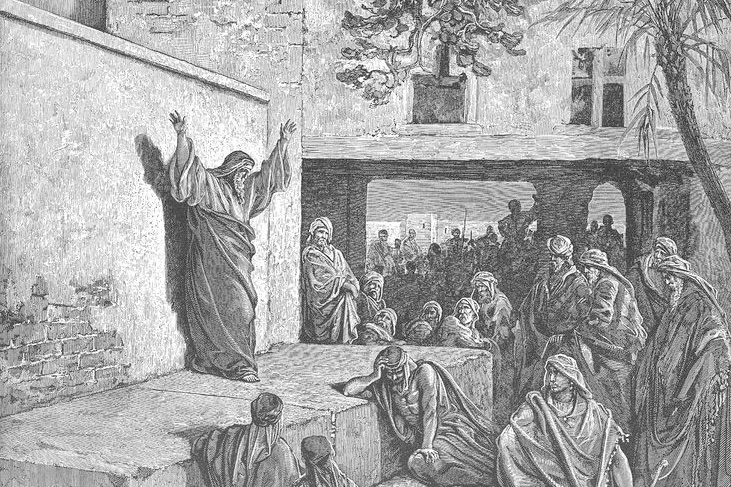
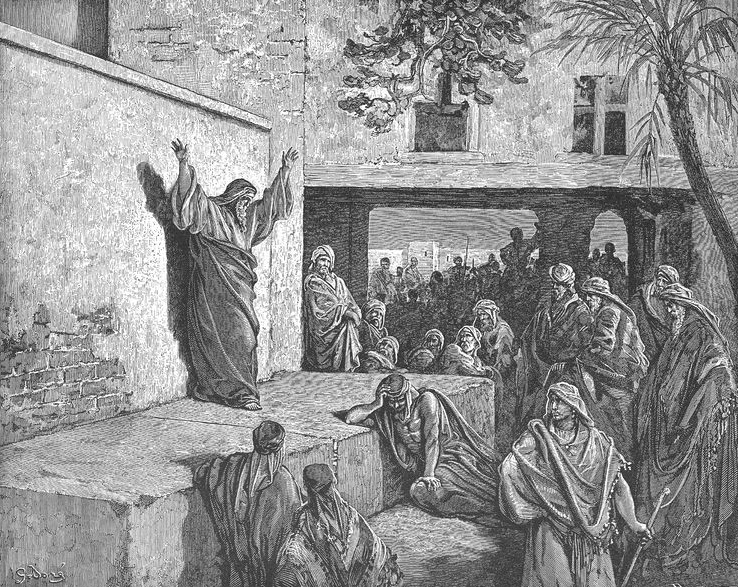 Too many Catholics are uncomfortable using the biblical and traditional words, “Repent,” convert and conversion. To repent means to change your mind and come to a new way of living. To convert means to turn from sinful ways or erroneous teaching.