Clergy, Catechists, Parents: Have you Proclaimed The Whole Counsel of God?

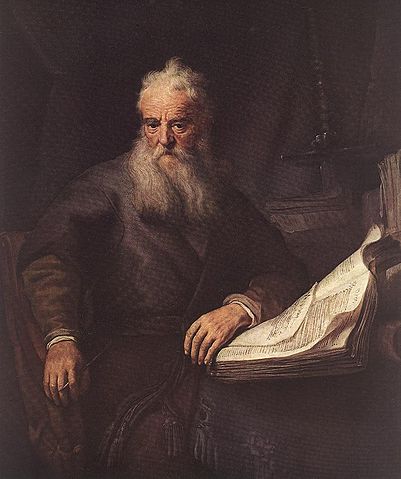
061713One of the more powerful moments in pastoral ministry as described in Scripture is Paul’s farewell speech to the presbyters (priests) of the early Church. Here is a skilled bishop and pastor, exhorting others who have pastoral roles in the Church.

Lets take a look at this text and apply its wisdom to Bishops and priests as well as to parents and other leaders in the Church.

Paul’s Farewell Sermon – The scene is Miletus, a town in Asia Minor on the coast not far from Ephesus. Paul, who is about to depart for Jerusalem summons the presbyters (priests) of the early Church at Ephesus. Paul has ministered there for three years, and now gathers the priests for this final exhortation.

In the sermon, St. Paul cites his own example of having been a zealous teacher of the faith who did not fail to preach the “whole counsel of God.” He did not merely preach what suited him or made him popular. He preached it all. To these early priests Paul leaves this legacy and would have them follow in his footsteps. Let’s look at excerpts from this final exhortation. First the text them some commentary:

From Miletus Paul had the presbyters of the Church at Ephesus summoned. When they came to him, he addressed them, “You know how I lived among you the whole time from the day I first came to the province of Asia. I served the Lord with all humility and with the tears and trials that came to me…., and I did not at all shrink from telling you what was for your benefit, or from teaching you in public or in your homes. I earnestly bore witness for both Jews and Greeks to repentance before God and to faith in our Lord Jesus…..But now, compelled by the Spirit, I am going to Jerusalem……“But now I know that none of you to whom I preached the kingdom during my travels will ever see my face again. And so I solemnly declare to you this day that I am not responsible for the blood of any of you, for I did not shrink from proclaiming to you the whole counsel of God….. (Acts 20:1-38 selected)

Here then is the prescription for every Bishop, every priest and deacon, every catechist, parent and Catholic: that we should preach the whole counsel (the entire plan of God). It is too easy for us to emphasize only that which pleases us or makes sense to us or fits in our worldview.

There are some who love the Lord’s sermons on love, but cannot abide his teachings on death, judgment, heaven and hell. Some love to discuss liturgy and ceremony, but the care of the poor is far from them. Others point to Jesus’ compassion, but neglect his call to repentance. Some love the way he dispatches the Pharisees and other leaders of the day, but become suddenly deaf when the Lord warns against fornication or insists that we love our neighbor, enemy and spouse. Some love to focus inwardly and debate over doctrine, but the outward focus of true evangelization to which we are commanded (cf Mat 28:19) is neglected.

In the Church today, as a whole, we too easily divide out rather predictably along certain lines and emphases: Life issues here, social justice over there; strong moral preaching over here, compassionate inclusiveness over there. When one side speaks, the other side says, “There they go again!”

And yet somewhere we must be able to say with St. Paul that we did not shrink from proclaiming the whole counsel of God.

While this is especially incumbent on the clergy, it must also be true for parents and all who attain to any leadership in the Church. All of the issues above are important and must have their proper place in the preaching and witness of every Catholic, clergy and lay. While we may have gifts to work in certain areas, we should learn to appreciate the whole counsel and the fact that others in the Church may be needed to balance and complete our work. It is true, we must exclude notions that stray from revealed doctrine, but within doctrine’s protective walls, it is necessary that we not shrink from proclaiming and appreciating the whole counsel of God.

And if we do this we will suffer. Paul speaks above of tears and trials. In preaching the whole counsel of God, (not just your favorite passages and politically correct and “safe” themes), expect to suffer. Expect to not quite fit in with people’s expectations.

Jesus got into trouble with just about everyone. He didn’t just offend the elite and powerful. Even his own disciples puzzled over his teachings on divorce saying If that is the case of man not being able to divorce his wife it is better never to marry! (Matt 19). Regarding the Eucharist, many left him and would no longer walk in his company (John 6). In speaking of his divine origins many took up stones to stone him, but he passed through their midst (Jn 8). In addition he spoke of taking up crosses, forgiving your enemy and preferring nothing to him. He forbade even lustful thoughts, let alone fornication, and insisted we must learn to curb our unrighteous anger. Preaching the whole counsel of God is guaranteed to earn us the wrath of many.

As a priest I have sadly had to bid farewell to congregations, and this farewell speech of Paul is a critical passage whereby I examine my ministry. Did I preach even the difficult stuff? Was I willing to suffer for the truth? Did my people hear from me the whole counsel of God, or just the safe stuff? In my time with these good people, did they hear clearly from me as to the critical moral issues of our day? Do they know what the Church teaches and her scriptures announce? Have I been clear with them not just what is taught, but also why?

How about you? Have you proclaimed the whole counsel of God? If you are clergy when you move on…..if you are a parent when your child leaves for college…..if you are a Catechist when the children are ready to be confirmed or have reached college age…..If you teach in RCIA and the time comes for sacraments……Can you say you preached it all?

God warned Ezekiel that if he failed to warn the sinner, that sinner would surely die for his sins but that Ezekiel himself would be responsible for his death, (Ez 3:17 ff). Paul is able to say he is not responsible for the death (the blood) of any of them for he did not shrink from proclaiming the whole counsel of God. How about us?

The whole counsel of God; not just the safe stuff, the popular stuff, not just the stuff that agrees with my politics and those of my friends. The whole counsel, even the difficult stuff, the ridiculed things. The Whole Counsel of God.

This video contains the warning to the watchmen (us) in Ezekiel 3. Watch it if you dare.

Love Perfects and Completes All: The Conclusion of St. Paul’s Great Treatise on Love

“Rings”  by Elizabeth Ashley Jerman  Licensed under  Wikipedia Commons BY CC SA 2.0
“Rings” by Elizabeth Ashley Jerman Licensed under Wikipedia Commons BY CC SA 2.0

In the great treatise on Love of 1 Corinthians 13, St. Paul sets forth a symphony of sorts in three movements, wherein he describes the Theological Virtue of Love. Over the past two days we looked at the first two movements:

Movement I – The PRIMACY and PREREQUISITE of Love

Movement II – The PORTRAIT and POWER of Love

today we conclude with

Movement III – The PERFECTION and PERMANENCE of Love

The text says,

Love never fails. If there are prophecies, they will be brought to nothing; if tongues, they will cease; if knowledge, it will be brought to nothing.

For we know partially and we prophesy partially, but when the perfect comes, the partial will pass away. When I was a child, I used to talk as a child, think as a child, reason as a child; when I became a man, I put aside childish things. At present we see indistinctly, as in a mirror, but then face to face. At present I know partially; then I shall know fully, as I am fully known.

So faith, hope, love remain, these three; but the greatest of these is love. (1 Cor 13:8-13)

The literary structure of this final movement is a “sandwich” of sorts, as I have tried to illustrate by the indentations above. The basic sandwich is this:

  1. Permanence – Verse 8
  2. Perfection – Verses 9-12
  3. Permanence  – Verse 13

Let us first consider the Perfection of Love. In English we tend to think of perfection more in terms of excellence. For example we might speak of moral excellence (being perfect), physical excellence (perfect beauty) or performative excellence (giving a perfect performance). But as is often the case in Scripture St. Paul and the Holy Spirit have in mind here more of perfection as completion.

The Greek word translated here as “perfect” is τέλειον (teleion). The Greek word téleios is and adjective derived from télos, which refers to a completed goal, something which is mature and has gone through the necessary stages to reach the end or goal. Hence τέλειος, α, ον (téleios, a, on) refers to something that is mature in all its parts, full grown or complete.

And this much is clear from what St. Paul describes here. Our ultimate destination is the completeness, the wholeness, the perfection that Love effects. And thus, things related to our Faith such as knowledge and prophecy, and what is related to Hope, namely “vision” are now incomplete, (i.e. imperfect). But Love, will perfect Faith and Hope when it comes in all its  fulness. This is because Love contains what Faith and Hope point to and long for.

God is Love and He is what and Who our Faith, through knowledge and prophesy, assures us of, and what and Who our Hope confidently expects to see.

Thus we learn how Love Himself perfects, that is completes, Faith and Hope. When we are fully swept up into the Love of God, fully united to the Love which God is, our knowledge will be no longer partial, our vision no longer experienced darkly as in a distorted mirror. We shall then “know fully” and see clearly.

Finally let us consider the Permanence of Love – St. Paul says that Love never fails. He qualifies to a great extent the outworking of Faith and Hope (for knowledge, prophecy and vision all need to be perfected). And Love also needs to be perfected in us, but is the greatest because it perfects and completes Faith and Hope, and they are subsumed in Love.

To explain this, consider how, in a sense, Faith and Hope will pass away. Let us say that I believe my book is at home on my coffee table. Thus I have faith that it is there. But when I go finally do go home and see it there on the table, I do not need faith any longer for faith is about things that are unseen (cf Heb 11:1).

Consider too how hope passes away with vision. Let us say that I not only believe my book is on my coffee table back at home but I also hope, that is I am confidently expectant that it will be there when I arrive. And sure enough, there it is! But I no longer need hope, for now I see it! And, as St. Paul says elsewhere, For who hopes for what he sees? (Romans 8:24)

And thus, in a sense Faith and Hope will go away, but Love will never fail or fall away. Perhaps it is better to say that Faith and Hope have now been fulfilled than to say they have utterly gone away. For St. Paul does say that Faith, Hope and Love, “remain.” But Faith and Hope “remain” only in the sense that they have been fulfilled by Love. Love however, is still operative as Love.

To illustrate this consider a young man on his way to the train station to meet his beloved fiance. He goes to the station with an intense love and longing to see her at last. He also goes there with faith, knowing and trusting that her train will arrive as the schedule says at 10:00 PM. He also goes there with hope, confidently expecting to see her at the appointed time. At long last she steps off the train and they embrace. Love brought him there, as did faith and hope. But now only love remains. Faith and hope are no longer necessary or operative, for their purpose is fulfilled and are swept up in love. But Love goes on, Love alone remains.

Yes, the greatest of these is Love.

And thus ends the great treatise, the great sonata, of St. Paul on Love in three movements. There a kind of Andante con moto in Movement 1 laying out the need for Love to inform and perfect every excellence. And second movement that is Allegro con brio or presto with its rapid, litany-like recital of the effects and moves of Love. And there is the Adagio con amore of the final movement, slower but rhapsodic as it points to the sky and the serene Love that waits for us in heaven, will all our longings fulfilled and complete.

A Strange Thing Jesus Said to a Paralyzed Man – Another Insight from Pope Benedict’s New Book

The Gospel from Monday the second week of Advent is the gospel of the paralyzed man who is lowered through the roof. It is presented to us in Advent because, among the many prophecies about the Messiah, would be that the lame would walk. But the Gospel also helps us to focus on Jesus’ central mission for us, and it is very provocatively expressed in this Gospel.

The Gospel passage contains a rather peculiar and somewhat awkward moment. Jesus looks at a paralyzed man and says to him,  As for you, your sins are forgiven (Lk 5:20). What a strange thing to say to a paralyzed man.

The Pharisees and scribes of course are all worked up for other reasons, but their reason is not ours, we know that Jesus has the authority to forgive sins. Let us stay focused on the strange thing to say to a paralyzed man, your sins are forgiven you.

One of us modern folk might be tempted to tap Jesus on the shoulder and say, “Ah excuse me, Lord, this man is paralyzed, his problem is paralysis, that’s what he needs healing for.”

Of course Jesus is not blind or unintelligent, knows this. But looking at a paralyzed man he does not see the paralysis as his most serious problem. The man has a far more serious problem, his sin.

Now most of us, who live in the world, have the world’s priorities, and we do not think like this. The Lord sees something more serious than paralysis, and we think, “What can be more serious than paralysis?!”But not as man sees, does God see. For God, the most serious problem we have is our sin. But again, we don’t think like this, and even being told we should think like this, we still don’t think like this.

For most of us, influenced by the flesh, are far more devastated by the loss of our physical health, or the loss of money, or the loss of a job, or some large worldly asset, than we are by the fact that we have sin. Threaten our physical health and well-being, or one of our larger physical assets, and we’re on our knees begging God for help. Yet most human beings have far less concern for their spiritual well-being. More often than not we are not nearly so devastated by sin that can deprive us of eternal life, as we are devastated by the loss of our health or some worldly thing.

Even many of us who have some sense of the spiritual life struggle with this obtuseness, and misplaced sense of priorities. Even in our so-called spiritual life, our prayers are often dominated by concerns that God will fix our health, improve or finances, get us a job, etc. It is not wrong to pray for these things, and we should. But honestly how often do we pray to be freed of our sins, do we really and earnestly pray to grow in holiness and to be prepared to see God face-to-face? Sometimes it almost sounds as if we are asking God to make this world more comfortable and we’ll just stay here forever. This attitude is an affront to the truer Gifts God is offering.

And so it is that Jesus, looking at a paralyzed man, says to him, your sins are forgiven. In so doing he addresses the man’s most serious problem first. Only secondarily does he speak to the man’s paralysis, which he almost seems to have overlooked in comparison to the issue of sin.

We have much to learn hear about how God sees, and what really are the most crucial issues in our life.

Joseph and Mary were told to call the child “Jesus,” for he would save his people from their sins. Of this fact Pope Benedict speaks in his latest book, Jesus of Nazareth: The Infancy Narratives:

Joseph is entrusted with a further task: “Mary will bear a son, and you shall call his name Jesus, for he will save his people from their sins” (Matthew 1:21).… On the one hand, a lofty theological task is assigned to the child, for only God can forgive sins. So this child is immediately associated with God, directly linked with God’s holy and saving power. On the other hand, though, this definition of the Messiah’s mission could appear disappointing. The prevailing expectations of salvation were primarily focused upon Israel’s concrete sufferings–on the reestablishment of the kingdom of David, on Israel’s freedom and independence, and naturally that included material prosperity for this largely impoverished people. The promise of forgiveness of sins seems both too little and too much: too much, because it trespasses upon God’s exclusive sphere; too little, because there seems to be no thought of Israel’s concrete suffering or its true need for salvation.

Pope Benedict then cites this same story of the paralytic and says,

Jesus responded [to the presence of the paralyzed man] in a way that was quite contrary to the expectation of the bearers and the sick man himself, saying: “My son, your sins are forgiven” (Mark 2:5). This was the last thing anyone was expecting this was the last thing they were concerned about.

The Pope concludes:

Man is a relational being. And if his first, fundamental relationship is disturbed–his relationship with God–then nothing else can be truly in order. This is where the priority lies in Jesus’ message and ministry: before all else he wants to point man toward the essence of his malady.

Yes, God sees things rather differently than we do. There is much to consider the fact that Jesus says paralyzed man your sins are forgiven you.

The Sin of Sodom and Gomorrah is not about “Hospitality”

Late last week on the blog the I made mention of the sins that “cry to heaven for vengeance.” The traditional list, is summarized in the Catechism which states The catechetical tradition also recalls that there are “sins that cry to heaven”: the blood of Abel, the sin of the Sodomites, the cry of the people oppressed in Egypt, the cry of the foreigner, the widow, and the orphan, injustice to the wage earner (# 1867).

It probably does not surprise you that I got push-back from certain homosexuals who wrote in to “remind” me that the sin of Sodom “has nothing to do with homosexual acts, or homosexual rape. Rather,” they said, “It is only about violations of hospitality rules of the ancient near east.”

I did not post these comments since I did not have time then to deal with this oft heard but very mistaken notion about the story of Sodom and Gomorrah in Genesis 19. But the meaning of the story is not unclear, and attempts to radically reinterpret the fundamental issue at the core of the story, tell us more about the struggle of the “interpreter” than of the story which has a rather plain, unambiguous meaning. The sin, the abomination, of Sodom, while not excluding any number of injustices, is clearly set forth as widespread homosexual practice.

When interpreting the meaning of a passage we do well to look not only to the plain meaning of the text, but also to other Biblical texts that may refer back to it and help clarify any ambiguities. In this text we can do both.

So first let’s look at the text itself as set forth:

Then the Lord said, “The outcry against Sodom and Gomorrah is so great and their sin so grievous that I will go down and see if what they have done is as bad as the outcry that has reached me. If not, I will know.” The men turned away and went toward Sodom….The two arrived at Sodom in the evening, and Lot was sitting in the gateway of the city. When he saw them, he got up to meet them and bowed down with his face to the ground. “My lords,” he said, “please turn aside to your servant’s house. You can wash your feet and spend the night and then go on your way early in the morning.” “No,” they answered, “we will spend the night in the square.” But he insisted so strongly that they did go with him and entered his house. He prepared a meal for them, baking bread without yeast, and they ate. Before they had gone to bed, all the men from every part of the city of Sodom—both young and old—surrounded the house. They called to Lot, “Where are the men who came to you tonight? Bring them out to us so that we can have sex with them.” Lot went outside to meet them and shut the door behind him and said, “No, my friends. Don’t do this wicked thing. Look, I have two daughters who have never slept with a man. Let me bring them out to you, and you can do what you like with them. But don’t do anything to these men, for they have come under the protection of my roof.” “Get out of our way,” they replied. And they said, “This fellow came here as an alien, and now he wants to play the judge! We’ll treat you worse than them.” They kept bringing pressure on Lot and moved forward to break down the door. But the men inside reached out and pulled Lot back into the house and shut the door. Then they struck the men who were at the door of the house, young and old, with blindness so that they could not find the door. The two men said to Lot, “Do you have anyone else here—sons-in-law, sons or daughters, or anyone else in the city who belongs to you? Get them out of here,because we are going to destroy this place. The outcry to the Lord against its people is so great that he has sent us to destroy it.” (Genesis 18:20-22; 19:1-13)

Now those who want to argue that this text is vague in meaning, begin by stating that the phrase “have sex with them” is more literally rendered from the Hebrew as “that we may know them.” And it is true that the Hebrew word יָדַע (yada) is rendered “know.” But this word is also a Hebrew idiom for carnal knowledge. For example in Genesis 4:1 we read: Now Adam knew (yada) Eve his wife, and she conceived and bore Cain, saying, “I have gotten a man with the help of the LORD.”

That the carnal knowledge meaning is intended here is also made clear in the context of what follows. Lot first calls their proposal a “wicked thing.” But just getting to know someone, or to greet a stranger, is not a wicked thing. Further that unlawful carnal knowledge is meant is also made clear in that Lot (horrifyingly) proposes that they have sex instead with his daughters “who have never slept with a man” (i.e. his virgin daughters).

It is true that Lot is further motivated by the fact that these men (angels in disguise) are under his care. But that does not change the nature of the threat that is involved, namely homosexual seduction or rape.

Being unable to dissuade “all the men from every part of the city of Sodom—both young and old” from the attempt at homosexual seduction, Lot is pulled to safety by the the two angelic visitors who tell Lot to get ready to go since they have come to destroy the city.

Now to the average reader who does not need to be defensive, the text conveys a clear message of widespread homosexuality in Sodom, a fact rather bluntly confirmed by the angelic visitors. And this is the clear emphasis of the story, not hospitality norms or other secondary concepts.

However, it may help to confirm this fact in other texts of the Bible and to legitimately ask if this is the only sin involved. Two texts are most specifically helpful in this regard. First there is a text from Ezekiel:

Now this was the sin of your sister Sodom: She and her daughters were arrogant, overfed and unconcerned; they did not help the poor and needy. They were haughty and did abominable things before me. Therefore I did away with them as you have seen. (Ezekiel 16:49-50)

Now this is the text used most often by those who deny any homosexual context in the sin of Sodom. And, to be fair, it does add a dimension to the outcry God hears. There are clearly additional sins at work in the outcry: pride, excess or greed, and indifference to the poor and needy. But there are also mentioned here unspecified “abominations.” The Hebrew word is תּוֹעֵבָ֖ה (tō·w·‘ê·ḇāh) which refers to any number of things God considers especially detestable, such as worshiping idols, immolating children, wrongful marriage and also homosexual acts. For example, Leviticus 18:22 uses the word in this context: Do not lie with a man as one lies with a woman; it is an abomination.

But of itself, this text from Ezekiel does remind us that widespread homosexuality is not the only sin of Sodom. And while the abomination mentioned here may not be specified exactly, there is another Scriptural text that does specify things more clearly for us. It is from the Letter of Jude:

In a similar way, Sodom and Gomorrah and the surrounding towns gave themselves up to sexual immorality and perversion. They serve as an example of those who suffer the punishment of eternal fire. In the very same way, these dreamers pollute their own bodies, reject authority and slander celestial beings. (Jude 7-8)

And thus it is specified that the central sin of Sodom involved “sexual immorality (ἐκπορνεύσασαι) and perversion (ἀπελθοῦσαι ὀπίσω σαρκὸς ἑτέρας – literally having departed to strange or different flesh).” And this would comport with the description of widespread homosexual practice in Sodom wherein the practitioners of this sin are described in Genesis 19 as including, “all the men from every part of the city of Sodom—both young and old.”

Hence we see that, while we should avoid seeing the sin of Sodom as only widespread homosexual acts (for what city has only one sin?), we cannot avoid that the Scriptures do teach that homosexual acts are central to the sins of Sodom which cry to heaven for vengeance, and for which God saw fit to bring a fiery end.

Genesis 19 speaks plainly of the sin, Ezekiel 16 broadens the description but retains the word “abomination,” and Jude 7 clearly attests to sexual perversion as being the central sin with which Sodom and Gomorrah were connected.

God the Holy Spirit has not failed to teach quite clearly on the fundamental nature of the sins involved in these ancient cities. Widespread homosexual practice is surely the keynote of condemnation received by these cities and attempts to recast the matter as a “hospitality” issue must be seen for the fanciful distortion they are.

I do not post this video because I agree with it, do really know what to think of it. Most Archeologists DO agree that the two cities were located right near what is today the Dead Sea, and this video falls in that general range. But archeologists are not at all certain that the many excavations in the area of the Dead Sea do in fact correspond to the cities called Sodom and Gomorrah.

"…whose historical character the Church unhesitatingly asserts…" A consideration of how Scripture is History

One of the issues most apologists of the faith, eventually and frequently encounter,  is the reliability of the Scriptures as an historical reference. Does the Bible record history? It surely does. However, the Scriptures do not necessary recount history in the very technical and chronological sense we usually do (or like to think we do) today. And some sophistication is required of those who have recourse to the Scriptures and other ancient documents.

While we want (as apologists) to exercise care in insisting on too much from a text, neither should critics be simply dismissive of the historical veracity of Scripture because it recounts actual historical events in ways not always in conformity with modern and Western notions.

Regarding the historicity of the Biblical accounts, Dei Verbum, (The Dogmatic Constitution on Sacred Scripture) from the Second Vatican Council insists on the historicity of the Gospel texts while also making some importatant observations about the nature of the History involved:

Holy Mother Church has firmly and with absolute constancy held, and continues to hold, that the four Gospels just named, whose historical character the Church unhesitatingly asserts, faithfully hand on what Jesus Christ, while living among men, really did and taught for their eternal salvation until the day He was taken up into heaven (see Acts 1:1). Indeed, after the Ascension of the Lord the Apostles handed on to their hearers what He had said and done. This they did with that clearer understanding which they enjoyed after they had been instructed by the glorious events of Christ’s life and taught by the light of the Spirit of truth. The sacred authors wrote the four Gospels, selecting some things from the many which had been handed on by word of mouth or in writing, reducing some of them to a synthesis, explaining some things in view of the situation of their churches and preserving the form of proclamation but always in such fashion that they told us the honest truth about Jesus. For their intention in writing was that either from their own memory and recollections, or from the witness of those who “themselves from the beginning were eyewitnesses and ministers of the Word” we might know “the truth” concerning those matters about which we have been instructed (see Luke 1:2-4). (Dei Verbum, 19).

Thus the Scriptures, in this case the Gospels, recount actual history, an actual history vouched for by eyewitnesses.  But it is a history that is inspired, one that is written in such a way that earlier events are seen and depicted in the light of later events. It is a history that involves selected events and wherein many things are synthesized and applied to the listeners and audiences to whom the apostles spoke and wrote at a later time.

As such the Sacred Authors, (beginning with the Holy Spirit), were less concerned with details such as exactly where and when a certain event took place. Was it the Sermon on the Mount, as in Matthew or the Sermon on the Plain, as in Luke?  Does it really matter? Perhaps it was in both places, perhaps the sermon was actually a collection of things Jesus said in many places and synthesized later by him, or his apostles. Did two or three women go to the tomb on Easter Morning? How many angels, one or two appeared? Why are there two very accounts of Creation in Genesis 1 and 2? What exactly happened to Paul when he arrived in Rome and why does Acts suddenly end without telling us? These sorts of details interest us moderns intensely, but the ancients were less concerned about such things.

Our modern, Western notion of history likes to carefully pinpoint dates, times and rather exact accountings of what was said and done. We are, of course, helped in this by our modern capacity to record events in voice and picture.

Indeed, our modern, Western approach to things in general is to control by measuring, whether it is borders, or time, or science or history. Statistics, dates, demographics, etc. not only impress us, but they also act to reassure us that what we say is true, because we have measured it.

To some degree, measuring accurately is related to truth, e.g. a debate between doctor and patient as to whether the patient has actually gained weight or not, is pretty well resolved by recourse to a scale.

But other things, especially those related to history,  are less measurable. For example, what is the meaning of a certain historical event? How important is a certain utterance, or the unfolding of a certain chain of events? When one recounts the history of a people or an era, what relative weight should certain things, people, events, movements, statistics, etc., receive?

So, when it comes to the recounting of history, while recourse to scientific measures of date, time, and high specificity to what is said or do, is helpful, it may not always be possible to render such details, and, even when it is, such specificity may or may not help us in history’s other task of connecting the dots and rendering  coherent the meaning and significance of history. There will always be, and must be, some degree of interpretation, of selectivity and yes, even of bias.

Some who like to be dismissive of  Scripture as history, because it is told from the point of view of faith, are often less willing to accept that all history is told from some point of view.

As a sacred history, Scripture IS history, speaking of things that actually happened and were said. But it is a sacred history, since God prophetically interprets for us the reality that history records. It is history from a point of view inspired by God.

We moderns have liked to think that our way of telling history is largely free of strong or biased interpretation. We like to think that history can be recounted with a “just the facts,” approach. But this is naive. For any time something moves from event to word, there is interpretation.

If, for example, I see a car accident and say, “Jones hit Smith,” I have already interpreted the event and given it from a viewpoint. In this case, I more than suggest that Jones is to blame. Even if I just say, “Two cars collided,” I am placing a passive interpretation on the event that suggests somehow that the cars were the moral agents. Of course cars are not moral agents and do not cause accidents. Thus my interpretive description suggests either that I do not know what really happened, or that I, for many possible reasons, do not want to speculate as to the cause. Thus, my lack of description is an interpretation no matter how I phrase it.

The ancients were more sophisticated in recognizing and accepting that any telling of history would involve interpretation. Recognizing this,  they gave greater latitude to authors and were less concerned that every little detail add up with other accounts they may have read.

In terms of Scripture, therefore, we have a more ancient understanding and telling of history that includes a lot of built-in interpretation.

But it is history. And we, who are apologists can certainly point the Sacred text as historical proof. Yet, at the same time, we ought to be careful to understand that the text does diverge to some degree from modern notions of exactitude in details. We can do violence to the Sacred text and lack sophistication to the degree that we try to make it conform to modern notions by “resolving” details the ancient authors were unconcerned about in the first place.

Trying to resolve, for example, which Gospel account of a certain event or saying is the earliest thus presumably the more “pure” account, may not be possible, and might send an ancient Christian into puzzled laughter. That both accounts are fundamentally the same is usually more than enough to compensate for the variance in details.

To non believers, who like to highlight historical discrepancies as proof of a lack of veracity, two things can also be said. First, very few non-believers doubt the existence or fundamental facts about other ancient people based on discrepancies in other ancient texts. Indeed, a lack of discrepancy might more than suggest the presence of a single author who wrote a “controlled” message to deceive, rather than to many eyewitnesses, who, though in some variance as to exacting details, nevertheless saw, remembered and recounted actual events.

Secondly, our own modern telling of history is far less precise, and free of bias than we would like to think. Even the evening news is riddled with bias and perspective, as well as disagreements as to the details. If that be the case with news less than a day old, even more so our recounting of events decades and centuries later.

In the end, sophistication is needed by all when speaking of things as “history” and “historical.” Accuracy is to be desired, but once something moved from event to word, there is always going to be some interpretation and viewpoint at work. This is the human condition, and both believer and nonbeliever alike do well to recognize and accept  that words, as analogy, never perfectly render what they describe. Assessing all history, not just Biblical History, requires this sobriety and sophistication.

Yet, as those of the household of faith, regarding Scripture, we can at least be sure, by faith,  that the Holy Spirit guided the authors and the magisterial interpreters of the Sacred Page. Thus Scripture is more than a humanly limited description of events and words, it is the divinely inspired interpretation of those events, it is prophetic interpretation of reality.

In this brief video, Fr. Francis Martin ponders the fact that the incident of the cleansing of the Temple is presented ny John at the beginning of Jesus’ ministry and by the synoptic Gospels at the end.

Your life is not about you.

I was meditating on John 11, for personal Bible Study earlier today. It is the story of the raising of Lazarus. And I was struck by the following lines:

[Martha and Mary] sent word to Jesus, “Lord, the one you love is sick.” When he heard this, Jesus said, “This sickness will not end in death. No, it is for God’s glory so that God’s Son may be glorified through it.” Jesus loved Martha and her sister and Lazarus. Therefore, when he heard that Lazarus was sick, he stayed where he was two more days…..[Later. Jesus] told [his disciples] plainly, “Lazarus is dead, and for your sake I am glad I was not there, so that you may believe. But let us go to him.”

One of the harder truths of life is that our life is not about us. Neither are we the most important thing or person in the world. Rather we exist in and for the glory of God and our ultimate glory in to be caught up in and be part of God’s glory and his Kingdom. Further, we also exist, not only for our own sake but also for the sake of others.

And we see some of this in this story of Lazarus. Jesus speaks of Lazarus’ grave illness as “for the glory of God.” He further indicates that it is also so that He (Jesus) may be glorified. Further, Lazarus’ illness is also for others, that they may come to believe.

And even more stunning than his words are the actions of Jesus, who, hearing of the grave condition of Lazarus, delays his departure to see him for two whole days. His delay means that Lazarus dies! Jesus then says to his disciples that he is “glad for their sakes that he was not there (for Lazarus)!

Now, few of us can failed to be shocked by some or all of this. But our shock is largely based on a premise that this story should be largely about Lazarus and his physical condition. But, it is not, in the first place about Lazarus or about his health. It is about Jesus, it is about God’s glory, and it is about our faith in God.

Jesus’ first concern is not about Lazarus’ physical life, his condition, or about the distress of Mary and Martha who see their brother sick and then die. His first concern is for the faith of all involved and he is willing to allow a crisis to unfold in order to finally strengthen the faith of the many, even if this means the distress of the few.

Your life is not about you. We are each part of a bigger picture, a picture that God sees far better than we. This concept shocks us, I suspect for at least two reasons:

First, we live in an age that strongly emphasizes the dignity, rights and importance of the individual. Of itself this is not bad and is one of the things that distinguishes our age and its concern for human rights. However, the importance and needs of the individual must be balanced against the common good, and the needs of other individuals and groups. It must also be seen in the light of God’s glory, God’s plan and the mysterious interplay of the individual, others and God. God alone knows all this and what is best for all involved, not just me.

Second, we live in an age that strongly emphasizes physical health and comfort, as well as emotional happiness. While these things are truly good, there are greater good. And the greatest good is our spiritual well being, our faith and holiness. God is far more concerned with our eternal destiny that our present comfort. Jesus says for example, it is better to cut off a hand, a foot or pluck out our eye than to sin seriously. And while he may be using hyperbole, the teaching remains that it a more serious thing to sin seriously than to loose even very precious parts of our body. We don’t think this way. We tend to value our bodies and physical well-being more than spiritual matters. Not so with God.

Hence we see that Jesus is willing to rank faith and spiritual well-being above physical and emotional comfort. He is also willing to act for the good of many, even if that means some difficulty for the few or the one. This many rankle our “self-esteem culture,” but, to some extent we are a little to “precious” these days, and it is good to be reminded we are not the only one who is important, and that we don’t exist only for our own sake, but also for others and for the glory of God.

Another example of this whole principle is the surprising and “inconclusive” ending of the Acts of the Apostles.

Fully the last two-thirds of Acts is focused on the Evangelical Mission of St. Paul as he made four journeys into Asia Minor and then into Greece. The final chapters of Acts deal with Paul’s arrest, imprisonment and appearance before Roman officials such as Felix and Festus, as well as Herod Agrippa in Jerusalem and Caesarea.

Paul appeals his case to Rome and is sent there on ill fated journey that shipwrecks at Malta. Finally making it to Rome, Paul is imprisoned and awaits the trial that will either vindicate him or seal his fate. The story seems to be building to a climactic conclusion and we, the readers, are ready to see Paul through his final trial. But then something astonishing happens: the story just ends. Here is the concluding line of the Acts of the Apostles:

[Paul] remained for two full years in his lodgings. He received all who came to him, and with complete assurance and without hindrance he proclaimed the kingdom of God and taught about the Lord Jesus Christ. (Acts 28:30-31)

But Luke! Don’t just leave us hanging! Did Paul go on trial? We he acquitted as some traditions assert and then made his way to Spain as he wanted? Or did he loose his appeal and suffer beheading right away? What was the outcome? We have seen Paul so far and now the story just ends?!

How can we answer this exasperating and unsatisfying end?

The simplest answer is that the Acts of the Apostles is not about Paul. It is about the going forth of the Gospel of Jesus Christ to the nations. Luke has, to be sure, personified this going forth of the Gospel to the nations by focusing on Paul. And once Paul reaches Rome and, though under house arrest, is able to freely preach the Gospel there (for there is chaining the Word of God (2 Tim 2:9)), the story reaches its natural conclusion. From Rome the Gospel will go forth to every part of the Empire, for every road led to Rome and away from it. Now that the Gospel has reached the center hub and is being freely preached, it will radiate outward in all directions by the grace of God.

It never WAS about Paul. It was about the Gospel. Paul himself testified to this when he said, I consider my life worth nothing to me, if only I may finish the race and complete the task the Lord Jesus has given me–the task of testifying to the gospel of God’s grace. (Acts 20:24)

We are often focused on personalities and frequently we loose track about what is most important. And, frankly the personality we are most focused on is very often ourselves. Acts never really was about Paul. And your life is not about you. It is about what the Lord is doing for you and through you. We often want things to revolve around us, around what we think, and what we want. But, truth be told, you are not that important, neither am I. We must decrease and the Lord must increase (Jn 3:30).

Here’s the classic song about modern vanity couched in very tricky logic.

Behold the Prophet! No One Escapes! – A reflection on what prophets are really like.

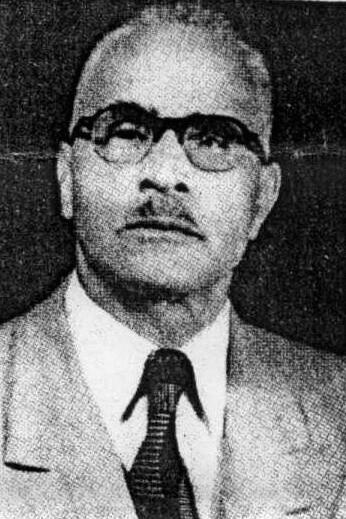
Vernon JohnsWe often like to read from and quote the prophets. But if you’ve ever met a real prophet you know that being in the presence of a real prophet can be very disturbing. Prophets love God’s people, but they love them too much to gainsay the truth.

Prophets were famous for goring every one’s ox. No one left the presence of a prophet untouched.

So troubling were the prophets of old, including Jesus, that most of them were persecuted, jailed, stoned, exiled and killed. Most of the Biblical prophets were beyond controversial, they were way over the top. Prophets denounced sin and injustice in the strongest language, announcing doom to a nation that refused to repent. Many Israelites thus considered them unpatriotic and downright dangerous. They justified throwing them into prison for their lack of patriotism and for the way their words questioned and upset the status quo and the judgements of those who held power.

To many, these were dangerous men who had to be stopped.

Jesus, though essentially our savior, also adopted the role of a prophet. Listen to these words as he denounces the people of his day for their rejection of his prophetic message. In this they are just like their fore-bearers who rejected the prophets:

Woe to you, scribes and Pharisees, you hypocrites. You build the tombs of the prophets and adorn the memorials of the righteous, and you say, ‘If we had lived in the days of our ancestors, we would not have joined them in shedding the prophets’ blood.’ Thus you bear witness against yourselves that you are the children of those who murdered the prophets; now fill up what your ancestors measured out! You serpents, you brood of vipers, how can you avoid being sentenced to Hell?! (Matt 23:29ff)

Many of us today like to think that, had we lived in Jesus’ time we would surely be on his side. But, truth be told, prophets can be hard to endure and Jesus had “difficult” things to say for everyone.

Honestly, most of us struggle with the truth to some extent. And especially we moderns who prefer a more gentle discourse with large doses of honey, and very little vinegar. We probably would wince as we walked along with Jesus. Jesus was very disconcerting. Jesus was more “plain spoken” than we are usually comfortable with. If we are honest, when we read the prophets and Jesus, we will come away with much to repent of.

A picture is worth a thousand words. Consider this video clip. It is of a modern prophet named Vernon Johns (see photo – upper right). In the early 1950s he was Pastor of the Dexter Avenue Baptist Church, in Montgomery Alabama. The Black Congregation that hired him was a rather sleepy congregation. In the face of rather awful racial discrimination, they preferred to remain silent and therefore safe. Vernon Johns tried to wake them from their sleep, but to no avail. They were too afraid (yet) to take a prophetic stand. Eventually Vernon Johns was arrested as a trouble maker, and the Board of Deacons fired him.

But Johns had laid a foundation for the next Pastor of Dexter Baptist, Dr. Martin Luther King Jr. Within a few years Rosa Parks refused to give up her seat and the Bus Boycott was on. The rest is history.

This clip is of Vernon Johns’ final sermon where, in finest prophetic tradition he denounces racism. But NO ONE escapes his vivid denunciations, even his own congregation. Watch this clip and behold what it must have been like with the prophets of old, even Jesus.

Behold the prophet! No one escapes! In the end of the clip, his daughter who had stood against her Father’s zeal sings “Go Down Moses.” The choir director who had also opposed him likewise stands to sing. The seed is planted even as the prophet is led away by the police.

A Hidden, Mysterious, and Much Debated Word in the Our Father

It is no doubt the most familiar prayer of all, the “Lord’s Prayer.” It is a prayer shared by and prized by all Christians. Few if any have not committed to memory. Yet hidden within the Lord’s prayer is a mysterious word that both Greek and Biblical scholars have little agreement over, or even a clear understanding of in terms of its precise meaning.

I call it “hidden” only because most Christians do not read Greek and are unaware of the difficulties and debate surrounding the word. They simply accept that the most common English translation of the Our Father as undisputed. To them the problem is hidden.

The mysterious word occurs right in the middle of the prayer: τὸν ἄρτον ἡμῶν τὸν ἐπιούσιον (ton arton hēmōn ton epiousion) which is rendered most usually as “give us this day our daily bread.” The problematic word is epiousion. The difficulty is that the word  seems to exist nowhere else in ancient Greek,  and that no one really knows what it means.

Even the Greek Fathers who spoke and wrote Greek as their mother-tongue were unaware of it’s exact meaning. It occurs no where else in the Bible (with the exception of the parallel passage in Luke’s version of the Our Father in Luke 11:3). It appears nowhere in wider Greek literature, whether Christian or Pagan. The early Church Father Origen, a most learned and well read man, thought that Matthew and Luke, or the early Church had “made up” or coined the term.

So, frankly, we are at a loss as to the exact and original meaning of this word! It’s actually pretty embarrassing when you think of it. Right there in the most memorable text of Christendom is a word whose meaning seems quite uncertain.

Now, to be sure, over the centuries there have been many theories and positions as to what this word is getting at. Let’s look at a  few.

  1. Grammatical Analysis– The Greek word seems to be a compound word from epi+ousios. Now epi means over, above, beyond, in addition to, or some similar superlative. Ousious refers to the substance of something. Hence, to put these words together we have something amounting to supersubstantial, or super-essential.
  2. The Eucharist – Some of the Greek and Latin Fathers thought is clearly referred to the Eucharist, and surely not to ordinary food or bread. Origien for example cites how Jesus rebuked the people in John 6 for seeking bread that perishes rather than the Bread which endures unto eternal life which is Jesus’ flesh and which he will give us. (cf Origen On Prayer 27.2) St. Cyprian too, while admitting that “bread”  can be understood simply, goes on to advance that the bread referred to here is more certainly Christ himself in the Eucharist (cf. Treatise on the Lord’s Prayer, 18).
  3. Ordinary and daily bread – St. John Chrysostom however favors a notion that the bread for which we pray is only “bread for today: Just enough for one day….Here Jesus condescends to the infirmity of our nature….[which] does not permit you to go without food….I require necessary food not a complete freedom from natural necessities….It is not for wastefulness or extravagant clothing that we pray, but only for bread and only for bread on a daily basis so as not to worry about tomorrow (Gospel of Matthew Homily 19.5)
  4. Bread for tomorrow – St. Jerome says, The word used by the Hebrews to denote supersubstantial bread is maar. I found that it means “for tomorrow” so that the meaning here is “give us this day our bread for tomorrow” that is, for the future (Commentary on Matthew 1.6.11). Many modern scholars favor this understanding as well.
  5. Supernatural bread – But St.  Jerome also says in the same place: We can also understand supersubstantial bread in another sense as bread that is above all substances and surpasses all creatures (ibid).  In this sense he also seems to see it linked to the Eucharist. When he translated the text into Latin as the Pope had asked him to do he rendered it rather literally: panem nostrum supersubstantialem da nobis hodie (give us today our supersubstantial bread). If you look up the text of Matthew 6:11 in the Douay Rheims Bible you will see the word “supersubstantial” since that English text renders the Vulgate Latin quite literally.
  6. Every good thing necessary for subsistence – The Catechism of the Catholic Church adopts an inclusive approach: Daily” (epiousios) occurs nowhere else in the New Testament. Taken in a temporal sense, this word is a pedagogical repetition of “this day,” to confirm us in trust “without reservation.” Taken in the qualitative sense, it signifies what is necessary for life, and more broadly every good thing sufficient for subsistence. Taken literally (epi-ousios: “super-essential”), it refers directly to the Bread of Life, the Body of Christ, the “medicine of immortality,” without which we have no life within us. Finally in this connection, its heavenly meaning is evident: “this day” is the Day of the Lord, the day of the feast of the kingdom, anticipated in the Eucharist that is already the foretaste of the kingdom to come. For this reason it is fitting for the Eucharistic liturgy to be celebrated each day. (CCC # 2837) As such the Catechism attempts no resolution to the problem but simply indicates that several interpretations are possible and non-exclusive to one another.

In the end, an unresolved mystery – So when we have a Greek word that is used no where else and when such important and determinative Fathers struggle to understand it and show forth rather significant disagreement,  we are surely left at a loss. It seems clear that we have something of a mystery.

Reverencing the Mystery – But perhaps the Lord intended that we should ponder this text and see a kind of multiple meaning. Surely it is right that we should pray for our worldly food. Likewise we should pray for all that is needed for subsistence, whether just for today or for tomorrow as well. And surely we should ask for the Bread of Life, the Holy Eucharist which is the necessary Bread that draws us to eternal life and which (Who) is over and above all earthly substances.

So there it is, the hidden and mysterious word in the middle of the Our Father. Most modern translations have settled on the word “daily.”  For the record, the Latin Liturgy also uses the word daily (quotidianum). But in truth no one word can capture what is said here. The Lord has left us a mystery to ponder. I know many of you who read here are learned in Greek, Latin, the Fathers, and Scripture scholarship, and I am interested in your thoughts. This article is incomplete and has not covered every possible facet of the argument. I leave that you,  all who wish to comment.