Posts Tagged ‘Eucharist’

More on “Spiritual Cross Training”

Getting into Spiritual Shape

About two months ago, I did a blog entry on “spiritual cross training.” I made an analogy between my goal of training for a 5K and training for spiritual fulfillment. I also mentioned that the friend I was training with rarely went to church and when I invited him to a Mass, he went once and commented that it did nothing for him. At that time, I told him, “Neither of us had run a yard in 10 years. What if we tried to run 3 miles in 24 minutes, failed miserably and then concluded ‘running does nothing for me?’” Really, if I haven’t run in years, how can I expect to be able to benefit from the sport in the first workout? Can I run around my neighborhood for five minutes and get on a scale and lament – “I haven’t lost any weight yet!”? I analogized that, “the practice of our faith is a spiritual workout. If you only go to church on Easter and Christmas, how could you possibly expect to be in good spiritual shape? If you don’t make prayer a habit, how can you expect to benefit from the exercise?”

3.1 miles in 36 minutes

Well, yesterday was the race for which we had been training and I am proud of this rather unflattering picture of me approaching the finish line. I am proud because four months ago, I was really out of shape. I was proud that my friend and I stuck to our training. But, I was most proud because one week prior, I had strained my back severely (I am not the twenty-something-blogger named Laura!). My physician said I would be in pain but running wouldn’t exasperate the injury. I was determined to do this race. My friend knew I was in pain as the race started but keep encouraging me to run through the pain.

So that his affliction may glorify God – John 9:1-41

We finished the race – I trailed him by a few minutes and we felt euphoric having finished with respectable times. Since the race was on a Saturday I asked him, “So, what are you doing tomorrow?” hoping the word “church” was somewhere in his answer. Glory to God, he said he was going to Mass adding, “You did not let a lower back strain get in your way, I shouldn’t let a boring homily get in mine.”

Staying motivated

Training for and running in a road race is not always fun. But the reward of crossing the finish line eclipses all of the pain and setbacks. The true reward comes in overcoming all of the obstacles that get in the way, including a lower back strain. Frankly, attending Mass regularly can have its setbacks as well, such as a boring homily or two. But, if you can see past the occasional disappointment, the reward that awaits, namely the worship of God in the form of the Eucharist, certainly eclipses all pain, suffering and sin.

Staying committed

We are now committed enough to running that we have already entered in a race scheduled for September. Next time, our goal is not to simply finish but to improve our time. Let’s pray that my friend finds that same commitment to God‘s command to keep holy the Sabbath. Also pray that he and others who have fallen away from the Church not only attend Mass regularly but that they integrate Christian spirituality into their entire lives, despite an occasional disappointment.

Eucharistic Adoration – It’s not just for Easter anymore

The Gift of the Eucharist

My parish has a gift that I must admit, I never really appreciated until recently. This is how God opened my eyes.

Last month, a young, newly ordained priest was celebrating his first Mass at the parish. I did not know him at all but, he grew up in the parish and was a product of the school there. Therefore, the parish community was very excited for this big event.

So many priests from one parish

One reason for our excitement is that the parish has a reputation for producing vocations to the priesthood. Noting this remarkable characteristic of the parish, this young new priest shared that he is often asked what is it about St. Mark’s in Hyattsville, Maryland that helps so many men find Christ in the priesthood.

His answer was extraordinary. He dutifully cited the school, its teachers, the people of the parish and the many priests that helped him hear that call. However, he pointed out that many parishes have these things and no priestly vocations to show for it. What was the difference then?

“Come worship him”

St. Mark the Evangelist Catholic Church has an Eucharistic adoration chapel that is open most of the day. Eucharistic Adoration has been a tradition at the parish for many years and this new priest cited its availability as the MAIN source of his vocation.

This is truly the greatest gift God gave us – The real presence of Christ is the Eucharist. Since that testimony, I have found more time to spend in the presence of the Eucharist in our adoration chapel. In the peaceful presence of the Body of Christ, I have found my prayers more fruitful, my problems more conquerable and my faith deepened.

Thank you Father Charles Gallagher for your vocation to the priesthood and for leading at least one deacon closer to Christ in the Eucharist.

What Do you Expect From Holy Communion?

Some people put more faith in Tylenol than they do in Holy Communion. That’s because when they take Tylenol they expect something to happen. But many people don’t really expect anything to happen when they receive Holy Communion.

In fact this is a problem that is present for many in regard to all the Sacraments and to liturgy in general. Many seem these things as tedious rituals rather than transformative realities. How many people really reflect that, in the Sacred Liturgy, Jesus is ministering to them? It is a sad truth that for many the liturgies of the Church are rather mindlessly attended: Sit, stand, say Amen, recite the Creed but all rather absent-mindedly

But how many really expect to be changed by the Liturgy the attend? How many expect to hear a Word proclaimed and preached that will powerfully change the way they think and see the world? How many expect to actually encounter Jesus Christ and be changed forever by that encounter? How many expect to receive communion and to be marvelously helped by this reception in ways far beyond what Tylenol or any other medicine could ever do in the physical order?  

Sadly, expectations are very low among the people of God. The blame can begin with the clergy who have not often taught the faithful to expect dramatic conversion of any kind let alone from receiving Holy Communion. But the blame does not end with the clergy. The fact is low expectations can sometimes be developed as a kind of strategy by many who fear change and see authentic conversion and true holiness as a fearful thing or as requiring just too much of what they would rather not surrender. And so expectations remain low, perhaps out of ignorance or perhaps out of fear and aversion.

On this Feast of Corpus Christi, What do you expect from receiving the Body, Blood, Soul and Divinity of Jesus Christ in Communion?

I can only say that I expect to become Christ. I will say it has not happened in an instant. But rather, incrementally, organically. But, as I have been faithful to Holy Communion, to prayer, scripture, Confession and the liturgy, I have experienced dramatic change. I have seen sins be put to death. I have more joy in the Lord, I am more confident and serene, less anxious and resentful. I love more, am more compassionate and have more  understanding. I do not fear most of the things that I used to fear. I am less greedy and more generous.

I do not boast here since it is not I who have done any of this. It’s just Jesus in me. I am not what I want to be but I am not what I used to be. I am becoming the One I receive in Holy Communion.  And I promise you the same. If you are faithful to the Sacraments, God will heal you. You will become holier each day. It may seem imperceptible on a day to day basis, but it is underway. It is true there are some setbacks along the way, but even these can bless us if we let them give us humility. Holiness will grow if we but take our medicine.

What do you expect from Holy Communion? I promise you, in the Lord Jesus Christ that if you are faithful to Confession, Communion, prayer, and the Liturgy, I promise you vigorous progress and ultimate perfection: ….being confident in this that God who has begun a good work in you bring it to perfection (Phil 1:6)

Mass on the Move: The Hidden Mass on the Road to Emmaus

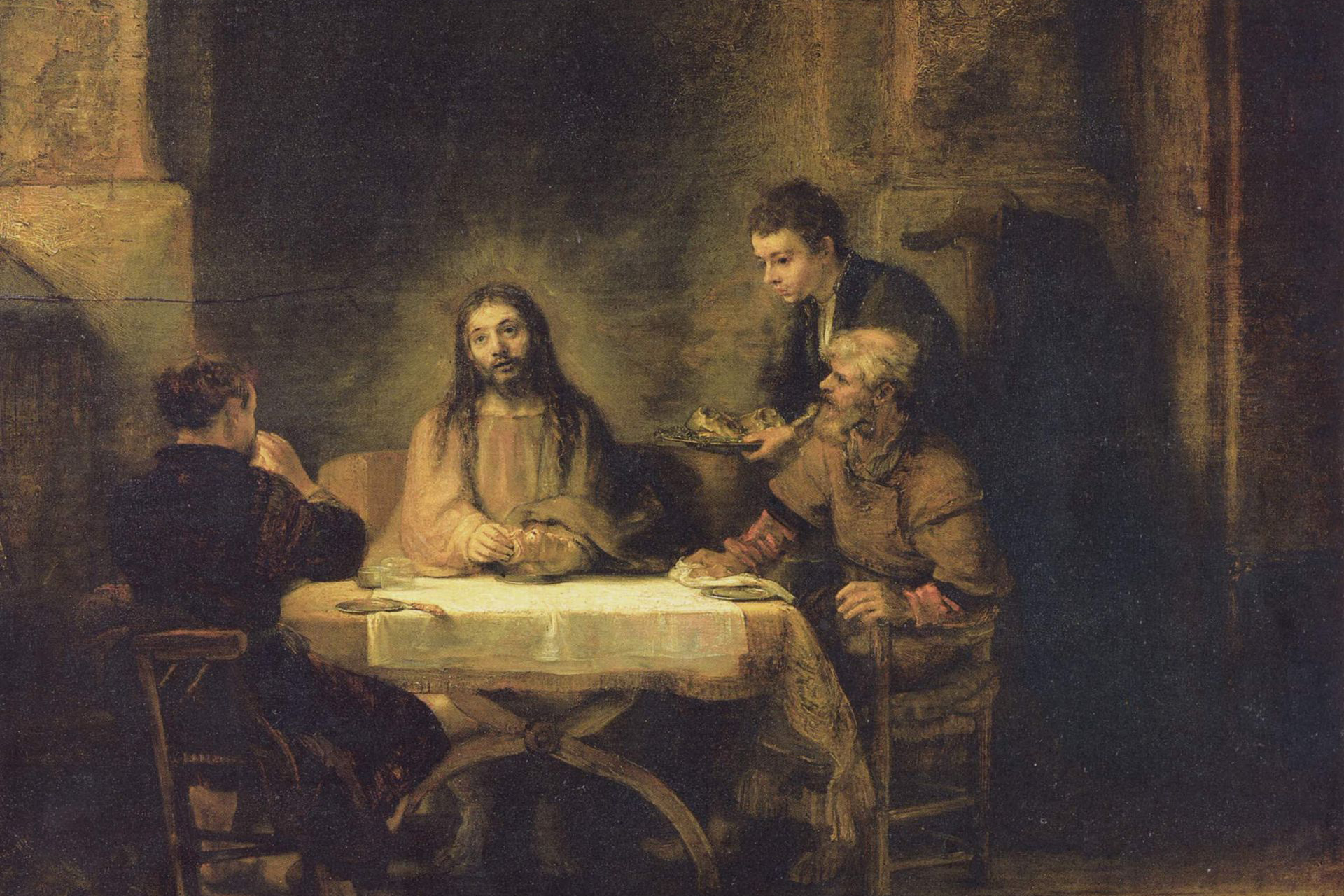
Today’s Gospel of the two disciples on the road to Emmaus (Luke 24:13ff) does more than present a resurrection appearance. It also presents the Mass in seminal form as I will show. In doing this Luke and the Holy Spirit teach us that the Mass is the essential and most vivid way that we encounter Christ now. The two disciples also learn this lesson for as soon as they recognize Christ “in the breaking of the bread” he vanishes from their earthly eyes. In effect Christ teaches them they will no longer see him in an earthly  way but now they will see him with the eyes of faith in the Eucharist, the liturgy and, by extension, in all the sacraments.

So for us to who to encounter the risen Lord Jesus, this Gospel teaches us that the Mass is the most perfect way and place we will encounter him. Let’s examine this resurrection appearance and see it for what it is, a Mass.

  1. Gathering Rite – The Curtain rises on this Mass with two disciples having gathered together on a journey: Now that very day two of them were going to a village seven miles from Jerusalem called Emmaus  (Lk 24:13). This is what we do as the preliminary act of every Mass. We who are pilgrims on a journey come together on our journey. It so happens for these two disciples that Jesus joins them: And it happened that while they were conversing and debating, Jesus himself drew near and walked with them (Luke 24:15). The text goes on to inform us that they did not recognize Jesus yet. Now for us who gather at Mass it is essential to acknowledge by faith that when we gather together, the Lord Jesus is with us,  for Scripture says, For where two or three are gathered in my name, there am I among them (Matt 18:20). it is a true fact that for many of us too, Jesus is unrecognized! Yet he is no less among us than he was present to these two disciples who fail to recognize him. Liturgically we acknowledge the presence of the Lord at the beginning of the Mass in two ways. First, as the priest processes down the aisle the congregation sings a hymn of praise. It is not “Fr. Jones” they praise it is Jesus whom “Fr. Jones” represents that they praise. Once at the Chair the celebrant (who is really Christ) says, “The Lord be with you.” And thereby he announces the presence of Christ among us promised by the Scriptures. The Mass has begun, our two disciples are gathered and the Lord is with them. So too for us at every Mass.
  2. Penitential Rite – The two disciples seem troubled and the Lord inquires of them the source of their distress: What are you discussing as you walk along? (Lk 24:17) In effect the Lord invites them to speak with him about what is troubling them. It may also be a gentle rebuke from the Lord that the two of them are walking away from Jerusalem, away from the site of the resurrection. Clearly their sorrow and distress are governing their behavior. Even though they have already heard evidence of his resurrection (cf 24:22-24), they seem hopeless and have turned away from this good news. The text describes them as “downcast” (24:17). Thus the Lord engages them is a kind of gentle penitential rite and  wants to engage them on their negativity. So too for us at Mass. The penitential rite is a moment when the celebrant (who is really Christ) invites us to lay down our burdens and sins before the Lord who alone can heal us. We too often enter the presence of God looking downcast and carrying many burdens and sins. We too like these two disciples may be walking in wrongful directions. And so the Lord says to us, in effect, “What are thinking about and doing as you walk along. Where are you going with your life. And thus again we see in this story about two disciples on the road to Emmaus, the Mass that is so familiar to us.
  3. The Liturgy of the Word – In response to their concerns and struggles the Lord breaks open the Word of God, the Scriptures. The text says: Then beginning with Moses and all the prophets, he interpreted to them what referred to him in all the scriptures (Luke 24:27). Notice that, not only does the Lord refer to Scripture but he interprets it for them. Hence the Word is not only read, there is also a homily, an explanation and application of the Scripture to the struggles these men have. The homily was a good one too for later, the disciples remark: Were not our hearts burning (within us) while he spoke to us on the way and opened the scriptures to us? (Luke 24:32) And so too for us at Mass. Whatever struggles we may have brought to the Mass, the Lord bids us to listen to his Word as the Scriptures are proclaimed. Then the homilist (who is really Christ) interprets and applies the Word to our life. It is a true fact that the Lord works through a weak human agent (the priest or deacon) but God can write straight with crooked lines and as long as the homilist is orthodox, it is Christ who speaks. Pray for your homilist to be an obedient and useful instrument for Christ at the homily moment. After the homily we usually make prayers and requests of Christ. And so it is that we also see these two disciples request of Christ: Stay with us, for it is nearly evening and the day is almost over. (Luke 24:29) Is this not what we also say in so many words: Stay with us Lord, for it is sometimes dark in our lives and the shadows are growing long. Stay with us Lord and those we love so that we will not be alone in the dark. In our darkest hours, be to us a light O Lord that never fades away. Yes, this whole brief journey of Jesus and the disciples is surely familiar to us who attend the Catholic Mass!
  4. The Liturgy of the Eucharist – Christ does stay with them and then come the lines that no Catholic could miss: And it happened that, while he was with them at table, he took bread, said the blessing, broke it, and gave it to them (Luke 24:30). Yes, the Mass to be sure. Later, the two disciples will refer back to this moment as the breaking of the bread(Luke 24:35), a clear Biblical reference to the Holy Eucharist. The words of Mass come immediately to mind: “While they were at supper He took the bread, and gave you thanks and praise. He broke the bread, gave it to his disciples and said, take this all of you and eat it: this is my Body which will be given up for you.” A fascinating thing happens though: With that their eyes were opened and they recognized him, but he vanished from their sight (Luke 24:31). First note that it is the very act of consecration that opens their eyes. Is this not what Holy Communion is to do for us? Are we not to learn to recognize Christ by the very mysteries we celebrate? The liturgy and the sacraments are not mere rituals, they are encounters with Jesus Christ, and though our repeated celebration of the holy mysteries our eyes are increasingly opened if we are faithful. We learn to see and hear Christ in the liturgy, to experience his ministry to us. The fact that he vanishes from their sight teaches us that he is no longer seen by the eyes of the flesh, but by the eyes of faith and the eyes of the heart. So though he is gone from our earthly, fleshly, carnal sight, he is now to be seen in the Sacrament of the Altar, and experienced in the liturgy and other sacraments. The Mass has reached it’s pinnacle, for these two disciples and for us.
  5. Dismissal Rite- Not able to contain their joy or hide their experience the two disciples run seven miles back to Jerusalem to tell their brethren what had happened and how they encountered Jesus in the breaking of the bread. They want to, have to,  speak of the Christ they have encountered, what he said and what he did. How about us? At the end of every Mass the priest or deacon says “The Mass is ended, go in peace.” This does NOT mean, “OK, we’re done here, go on home and haver nice day.” What it DOES mean is: “Go now into the world and bring the Christ you have received to others. Tell them what you have heard and seen here, what you have experienced. Share the joy and hope that this Liturgy gives with others.” Perhaps you can see the word MISSion in the word disMISSal? You are being commissioned, sent on a mission to announce Christ to others. The Lucan text we are reviewing says of these two disciples: So they set out at once and returned to Jerusalem where they found gathered together the eleven and those with them…..Then the two recounted what had taken place on the way and how he was made known to them in the breaking of the bread (Lk 24:33,35). How about us. Does our Mass finish as well, as enthusiastically?  

So there it is, the Mass on the Move. For a Catholic this resurrection account is unmistakably a Mass. True it is in seminal form, but all the elements are there. The teaching is clear, the risen Lord Jesus is now to be found in the Liturgy and the Sacraments. It is for us only to have our eyes opened and to recognize him there.

Was the Last Supper a Disaster?

The Last Supper could never be called a disaster since the Lord Jesus was there. But in terms of everyone else and their behavior it was nothing short of a disaster. Indeed it was so awful that one could hardly have faulted the Lord for saying, “That’s it Father, I’ve had it with them, I’m coming straight home!” Praise God he chose to die for the likes of us.

On Holy Thursday, let’s examine the sequence of the Last Supper which pretty well illustrates why the Lord had to die for us. We will see how earnest the Lord is about this Last Supper, how he enters it with an intense love for his disciples and a desire that they (we) carefully heed what he is trying to teach them. We shall see however that they (we) show forth a disastrous inattentiveness and a terrible lack of concern for the Lord. Here then are the movements of the Last Supper. Watch how things begin with the loving and careful attentiveness of the Lord and end with a selfish, inept and unloving response from the apostles (us?) Here is the sequence.

  1. COMING CLOUDS – Jesus knows that his hour has come. This meal will be his last meal. Judas has already conspired and been paid to hand him over. Scripture says  Before the feast of Passover, Jesus knew that his hour had come. He always loved those who were his own, and now he would show them the depths of his love. The devil had already induced Judas, son of Simon the Iscariot, to hand him over. (John 13:1) Hence in the gathering storm Jesus considers his last meal which will also be the first Holy Mass. He instructs his Apostles to prepare the meal: He sent two of his disciples, and said to them, “Go into the city, and a man carrying a jar of water will meet you; follow him, and wherever he enters, say to the householder, ‘The Teacher says, Where is my guest room, where I am to eat the Passover with my disciples?’  And he will show you a large upper room furnished and ready; there prepare for us.” (Mark 14:13-15)
  2. CARING CONCERN - This last supper was obviously important to Jesus. Luke records the heartfelt words of Jesus: And he said to them, “I have earnestly desired to eat this Passover with you before I suffer;  for I tell you I shall not eat again until it is fulfilled in the kingdom of God.” (Luke 22:15-16). Yes this was to be a very special moment for Jesus.
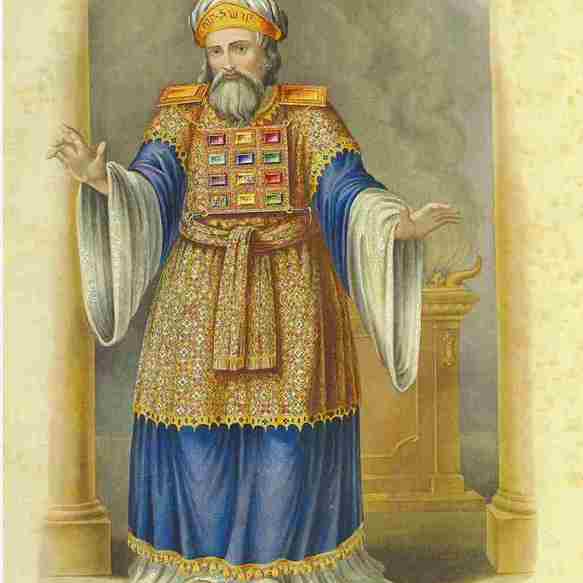
  3. COSTLY COMMUNION – Jesus, reclining at the table, will now celebrate the Holy Eucharist for the first time. But this was a costly communion. He had already lost many disciples for what he taught on the Eucharist (cf  John 6:50ff). It was a costly teaching. Further, after the first consecration,  as he looks into the cup he is looking at his own blood soon to be shed, and he distributes his own body soon to be handed over. Yes this is a costly communion, no mere ritual for him. Every other priest before him had offered a sacrifice distinct from himself, (usually an animal, sometimes a libation). But Jesus the great High Priest will offer himself. It is a costly communion.
  4. COLLABORATIVE CONDESCENSION – During the meal Jesus rises and then stoops to wash the disciples feet. He instructs them to see in this a model for those who would collaborate with him in any future ministry. John records it this way: He rose from the supper and took off his outer garments. He took a towel and tied it around his waist. Then he poured water into a basin, and began to wash the disciples’ feet, and to wipe them with the towel with which he was girded (John 13:5). Jesus then teaches the Disciples: Do you know what I have done for you? You call me Teacher and Lord; and you are right, for so I am.  If I then, your Lord and Teacher, have washed your feet, you also ought to wash one another’s  feet.  For I have given you an example, that you also should do as I have done to you. (John 13:12-15). We shall see that, in moments, they will demonstrate a complete disregard for what he has just tried to teach them. Now things get bad.
  5. CALLOUS CRIME- Back at table and after having taught them that they must wash one another’s feet Jesus becomes suddenly troubled in spirit and says, I tell you the truth, one of you is going to betray me. (John 13:21). This causes a commotion among the Apostles who begin to ask “Who can it be?”  As the anxiety and commotion around the table continue, Simon Peter motioned to this disciple and said, “Ask him which one he means.” Leaning back against Jesus, he asked him, “Lord, who is it?”  Jesus answered, “It is the one to whom I will give this piece of bread when I have dipped it in the dish.” Then, dipping the piece of bread, he gave it to Judas Iscariot, son of Simon. As soon as Judas took the bread, Satan entered into him. “What you are about to do, do quickly,” Jesus told him  (John 13:24-30).
  6. CONFOUNDING COMPETITION – But as Judas takes the morsel of bread and heads into the night, no one tries to stop him! No one rises and block the door or even utters a protest despite the fact that Jesus has clearly identified him! Why?!  Luke supplies the answer:  A dispute arose among them, which of them was to be regarded as the greatest. (Luke 22:24) They should be concerned about Jesus’ welfare but instead they debate about who of them is the greatest. How confounding and awful! Yet is that not our history? Too often we are far more concerned with our status and welfare than with any suffering in the Body of Christ. So much that is critical is unattended to because we are concerned with our status, position, comfort and welfare. Jesus had just taught them wash each other’s feet but in an inept response they end up arguing as to who was greatest. Jesus patiently reminds them and teaches: The kings of the Gentiles exercise lordship over them; and those in authority over them are called benefactors. But not so with you; rather let the greatest among you become as the youngest, and the leader as one who serves.  For which is the greater, one who sits at table, or one who serves? Is it not the one who sits at table? But I am among you as one who serves. (Luke 22:25-27) Meanwhile, due their (our) egotistical ineptitude Judas has escaped far into the night.
  7. CAUSTIC CONTENTIOUSNESS – Jesus continues to teach at the Last Supper. This moment he surely wanted to impress upon them his final instruction. How he must have longed for them to listen carefully and deeply internalize what he was teaching. Instead all he gets are arguments. Both Thomas and Phillip rebuke him. John records the outrage: Jesus said Do not let your hearts be troubled. Trust in God ; trust also in me.  In my Father’s house are many rooms; if it were not so, I would have told you. I am going there to prepare a place for you.  And if I go and prepare a place for you, I will come back and take you to be with me that you also may be where I am. You know the way to the place where I am going.”  But  Thomas said to him, “Lord, we do not know where you are going; how can we know the way?”  Jesus said to him, “I am the way, and the truth, and the life; no one comes to the Father, but by me.  If you had known me, you would have known my Father also; henceforth you know him and have seen him. So Thomas rhetorically rebuked the Lord, in effect saying, “We have NO IDEA where you are going, when will you show us the way!” Jesus answers but Phillip will have none of this promise to see the Father and he boldly says, Lord, show us the Father, and then we shall be satisfied.”  Jesus, likely saddened at all this  said to him, “Have I been with you so long, and yet you do not know me, Philip? He who has seen me has seen the Father; how can you say, ‘Show us the Father’? (John 14:1-9). Hence his own apostles are being argumentative and contentious. They are caustic and seem also to rebuke the Lord. The Supper isn’t going so well!
  8. COMIC CREDIBILITY GAP – Undeterred Jesus embarks on a lengthy discourse that John records and which has come to be called the priestly prayer of Jesus. At the end of it the apostles remark, perhaps ironically, perhaps with sincerity:  His disciples said, “Ah, now at last you are speaking plainly, not in any figure!  Now we know that you know all things, and need none to question you; by this we believe that you came from God.”(John 16:29-30). But Jesus knows their praise is hollow and will not stand the test. There is a great credibility gap to what they say, it is almost comical. So he says: Do you now believe?  The hour is coming, indeed it has come, when you will be scattered, every man to his home, and will leave me alone (John 16:31-32). Peter undeterred says, Though they all fall away because of you, I will never fall away.”  Here too is another almost comic credibility gap and thus  Jesus said to him, “Truly, I say to you, this very night, before the cock crows, you will deny me three times.”  Still insistent Peter said to him, “Even if I must die with you, I will not deny you.” And so said all the disciples. (John 16:33-35). Well you know the story and that only John made it to the cross. Their credibility was, by this time a dark comedy.
  9. COMPASSIONATE CONSTANCY- But you also know the rest of the story. Jesus went on and died for the likes of them (us). I wonder if he had some of this Last Supper in mind when he said to the Father, “Forgive them, they know not what they do.” Almost as if to say, “They have absolutely no idea what they are doing or thinking, so have mercy on them Father.”

What a grim picture of us the Last Supper was. A disaster really. But the glory of the story and the saving grace is this, the Lord Jesus Christ went to the cross anyway. Seeing this terrible portrait of them (us) can we really doubt the Lord’s love for us?

May your Holy Thursday be blessed. Hopefully you will attend Mass and the Last Supper/First Mass will be made present to you. Never forget what Jesus endured!

The Final Wish of a Dying Friend

Consider the following scenario. You are crossing the street with a friend and suddenly as if out of nowhere a large truck is bearing down on you both. Your friend sees it coming and pushes you out of the way but takes the full force of the hit himself. Coming to your senses you run to your friend who lies dying in the road. In grief you lament his imminent death and thank him for saving your life. You say, “What can I ever do to thank you for what you have done?!”  And he says, with his dying breath, “Please go to Church and remember me at the altar every Sunday.”  ….Would you do it? …..Of course you would! This is the final wish of a dying friend who saved your life. 

Well, isn’t this what Jesus did? Just before he died for us he left us a last request: “Do this in remembrance of Me.” Do what? you might say. Here is Jesus request in context:  The setting is the Last Supper that Jesus had with his disciples on the last evening before he died. As he sat at table with them he said,  “I have eagerly desired to eat this Passover  with you before I suffer…” Then he took the bread, said the blessing, broke it, and gave it to them, saying, “This is my body, which will be given for you; do this in memory of me.” And likewise the cup after they had eaten, saying, “This cup is the new covenant in my blood, which will be shed for you.  So here is what we are to do in memory of Him: celebrate the Holy Mass, receive Holy Communion! It seems so little and yet so many have drifted away from this last request. It must have been important to Jesus since it was his final request.

So here is a powerful to get to Mass each Sunday: to fulfill the final wish of a dying friend, a dying Savior and Lord who saved your life, who died in your place: “Do this in memory of me.”  The Book of Psalms also says it so well: “What return (what thanks) can I ever give the Lord for all the good he has done for me?! The cup of salvation I will take up, and I will call on the name of the Lord.” (Ps 116:13) What a beautiful line to remember as you see the priest lift up the Chalice at every mass and remember the final wish of a dying friend.

Consider sharing this sort of reflection with those who have drifted away from attending Mass. If attending Mass and receiving Holy Communion is understood as the final wish of a dying friend then to fail to do so is seen as a much more personal neglect of a a very profound and meaningful request. Missing Mass isn’t just the infraction of some abstract law, it is a personal matter. It is to refuse the final wish of a dying friend.

Even Demons Believe and Tremble – A Eucharistic Story

St Marys Trid Mass smaller

Msgr Pope At St Mary's

It was almost 15 years ago. I was At Old St. Mary’s here in D.C. celebrating Mass in the Latin (Extraordinary Form). It was a solemn high Mass. I don’t suppose I thought it any different than most Sunday’s but something quite amazing was about to happen.

As you may know the ancient Latin Mass is celebrated  ”ad orientem” (towards the Liturgical East). Priest and people all face one direction. What this means practically for the celebrant is that the people are behind him. It was time for the consecration. The priest is directed to bow low, his forearms on the altar table the host between his fingers. As directed I said the venerable words of Consecration in a low but distinct voice, Hoc est enim Corpus meum (For this is my Body). The bells rang as I genuflected, but behind me a disturbance of some sort, a shaking or rustling in the front pews behind me to my right. And then a moaning or grumbling. What was that? It did not really sound human, more like the grumbling of a large animal such as a boar or a bear, along with a plaintive moan that did not seem human. I elevated the host and wondered, “What was that?”  Then silence. I could not turn to look easily for that is awkward for the celebrant in the ancient Latin Mass. But still I thought,  What was that?

But it was time for the consecration of the Chalice. Again, bowing low and pronouncing clearly and distinctly but in a low voice:  Hic est enim calix sanguinis mei, novi et æterni testamenti; mysterium fidei; qui pro vobis et pro multis effundetur in remissionem pecatorum. Haec quotiescumque feceritis in mei memoriam facietis (for this is the cup of my Blood, of the new and eternal covenant; the mystery of faith; which will for the many be shed unto the remission of sins. When so ever you do this, you do it in my memory). But then, I heard another sound this time an undeniable moan and then a shriek as some one cried out: “Leave me alone Jesus! Why do you torture me!” Suddenly a scuffling as some one ran out with the groaning sound of having been injured. The back doors swung open, then closed. Then silence.

I could not turn to look for I was raising the Chalice high over my head. But I knew in an instant that some poor demon-tormented soul had encountered Christ in the Eucharistic and could not endure his real presence displayed for all to see. And the words of Scripture occurred to me: Even Demons believe and tremble (James 2:19).

But just as James used those words to rebuke the weak faith of his flock I too had to repent. Way was a demon-troubled man more aware of the true presence and astonished by it than me? He was moved in the negative sense to run. Why was I not more moved in a positive and comparable way? What of the other believers in the pews? I don’t doubt that any of us believed intellectually in the true presence. But there is something very different and far more wonderful in being moved to the depth of your soul! It is so easy for us to be sleepy in the presence of the Divine, forgetful of the miraculous and awesome Presence available to us.

But let the record show that one day, almost 15 years ago, it was made quite plain to me that I held in my hands the Lord of Glory, the King of heaven and earth, the just Judge and Ruler of the kings of the earth. Is the Lord truly present in the Eucharist? You’d better beleive it, even demons believe that!

St. Ignatius of Antioch – A Witness of the Early Church

Ignatius3Cardinal Newman once said, “To Read the Fathers of the Church is to become Catholic.” This is perhaps no better illustrated than By St. Ignatius of Antioch, whose feast we celebrated Saturday. He wrote very early,  about 110 A.D. He also knew the Apostle John. Hence he is an important witness to the life and think of the earliest days of the Church. He wrote six letters to the Christian Communities at Ephesus, Magnesia, Tralles, Rome, Philadelphia, and Smyrna and one Letter to Polycarp, Bishop of Smyrna. In all these letters he clearly reflects Catholic teaching and demonstrates that the current Catholic understanding of authority in the Church, the Eucharist and Church life are consistent with the ancient Apostolic Age.

In celebration of his Feast Day consider a few of his teachings and see how Catholic the early Church was. Consider also how false is the claim of some non-Catholic denominations that they have returned to the “simplicity” of the early Church and overthrown teaching that only emerged later. St. Ignatius of Antioch gives a real portrait of the early Church. His writings debunk fanciful notions of a decentralized Church devoid of significant doctrine and presents a Church that clearly defined herself and was  insistent on orthodoxy and Union with the local Bishop, a Church that was centered around the Eucharist Altar of the Lord. Go with me therefore to 110 A.D. and hear the voice of Bishop Ignatius Theophorus of Antioch who wrote these letters on his way to martyrdom in Rome:  (The full text of these letters is available at www.newadvent.org: HERE and HERE 

  1. The grave Sin of no longer attending Sunday Mass – Let no man deceive himself: if any one be not within the altar, he is deprived of the bread of God. For if the prayer of one or two possesses Matthew 18:19 such power, how much more that of the bishop and the whole Church! He, therefore, that does not assemble with the Church, has even by this manifested his pride, and condemned himself. For it is written, God resists the proud. Let us be careful, then, not to set ourselves in opposition to the bishop, in order that we may be subject to God. (Ignatius to the Church at Ephesus,  5)
  2. The Power of the Eucharist and Unity in the Liturgy – Take heed, then, often to come together to give thanks to God, and show forth His praise. For when you assemble frequently in the same place, the powers of Satan are destroyed, and the destruction at which he aims is prevented by the unity of your faith…obey the bishop and the presbytery with an undivided mind, breaking one and the same bread, which is the medicine of immortality, and the antidote to prevent us from dying, but [which causes] that we should live for ever in Jesus Christ. (Ignatius to the Church at Ephesus 13 & 20)
  3. Of the True Presence in the Eucharist and the fate of those who deny this truth – They [heretics and schismatics] abstain from the Eucharist and from prayer, because they confess not the Eucharist to be the flesh of our Saviour Jesus Christ, which suffered for our sins, and which the Father, of His goodness, raised up again. Those, therefore, who speak against this gift of God, incur death in the midst of their disputes. But it were better for them to treat it with respect, that they also might rise again. It is fitting, therefore, that you should keep aloof from such persons, and not to speak of them either in private or in public, but to give heed to the prophets, and above all, to the Gospel, in which the passion [of Christ] has been revealed to us, and the resurrection has been fully proved. But avoid all divisions, as the beginning of evils.  (Ingnatius to the Church at Smyrna,  7)
  4. The Sacred Liturgy is only properly celebrated in union with the Bishop – Take heed, then, to have but one Eucharist. For there is one flesh of our Lord Jesus Christ, and one cup to [show forth ] the unity of His blood; one altar; as there is one bishop, along with the presbytery and deacons, my fellow-servants: that so, whatsoever you do, you may do it according to [the will of] God. (Ignatius to the Church at Philadelphia,  4)
  5. Of the necessity of respecting authority within the Church and of preserving union with the Bishop – Now it becomes you also not to treat your bishop too familiarly on account of his youth, but to yield him all reverence, having respect to the power of God the Father, as I have known even holy presbyters [i.e. priests] do, not judging rashly, from the manifest youthful appearance [of their bishop], but as being themselves prudent in God, submitting to him, or rather not to him, but to the Father of Jesus Christ, the bishop of us all. It is therefore fitting that you should, after no hypocritical fashion, obey [your bishop], in honour of Him who has willed us [so to do], since he that does not so deceives not [by such conduct] the bishop that is visible, but seeks to mock Him that is invisible….I exhort you to study to do all things with a divine harmony, while your bishop presides in the place of God, and your presbyters in the place of the assembly of the apostles, along with your deacons, who are most dear to me, and are entrusted with the ministry of Jesus Christ,… As therefore the Lord did nothing without the Father, being united to Him, neither by Himself nor by the apostles, so neither do anything without the bishop and presbyters. Neither endeavour that anything appear reasonable and proper to yourselves apart; but being come together into the same place, let there be one prayer, one supplication, one mind, one hope, in love and in joy undefiled.  (Ignatius to the Church at Magnesia 3,6-7)
  6. Without Holy Orders there is no Church – In like manner, let all reverence the deacons as an appointment of Jesus Christ, and the bishop as Jesus Christ, who is the Son of the Father, and the presbyters as the sanhedrin of God, and assembly of the apostles. Apart from these, there is no Church…(Ignatius to the Church at Tralles,  3)
  7. Obedience to the Bishop is essential to one who claims to be obedient to God – See that you all follow the bishop, even as Jesus Christ does the Father, and the presbytery as you would the apostles; and reverence the deacons, as being the institution of God. Let no man do anything connected with the Church without the bishop. Let that be deemed a proper Eucharist, which is [administered] either by the bishop, or by one to whom he has entrusted it. Wherever the bishop shall appear, there let the multitude [of the people] also be; even as, wherever Jesus Christ is, there is the Catholic Church. It is not lawful without the bishop either to baptize or to celebrate a love-feast; but whatsoever he shall approve of, that is also pleasing to God, so that everything that is done may be secure and valid. (Ignatius to the Church at Smyrna, 8)  

Yes Jesus is Real – Reflection on Today’s Gospel

Here is some good teaching on today’s Gospel and then a musical reflection. The teaching section of this video is 3 minutes the music is 6 minutes. Also lots of good quotes on the screen in the last 2 minutes along with the music.

Is this the Body of Christ? – Absolutely!

pope-benedict-distributing-the-eucharist-to-a-child

In the previous post, Msgr. Pope gives us insight into a question that many Catholics fail to ponder.  As evidenced by his brilliant answer to a young Catholic, our Holy Father certainly does not fall into that category.  However, I fear that some of us who have been Catholic for a while may lose an appreciation for the gift of the Eucharist.

“Truly, I say to you, whoever does not receive the kingdom of God like a child shall not enter it.”

A few years ago, one of my high school students was in the process of coming into full communion with the Catholic Church. We would dialogue often during her journey and like most converts, she had many questions. By the grace of God, I usually had the answers.

Is this really the Body of Christ?

I recall one issue that she had a hard time understanding and I had a hard time explaining – Transubstantiation. The concept that a simple piece of unleavened bread and wine can become the actual Body and Blood of our Lord was hard to explain and hard for her to fully understand.

Break through

During a break though conversation I said, “Listen. When the minister of Holy Communion says, ‘The Body of Christ’, they are really saying, “This is the actual body of our Savior. It is not a symbol. It is not a representation. It is the actual body of Christ.  This is true because this is how Jesus instituted it.” I went on to say, “When you say ‘amen’, what you are really saying is that you agree with that proclamation. With all of your heart, mind and soul, you believe that you have come into the presence of Jesus is a very tangible way!” After months of dialogue, my student finally seemed satisfied with the conversation.  She was finally able to accurately reflect back to me her own understanding of the Eucharist.

Absolutely!

At the first school Mass following her reception into the Church, I was distributing Holy Communion. In the distance, I could see this young women maneuver herself so that she would end up in my line. When she approached, I raised the Eucharist and said, ” The Body of Christ.” Her response was remarkable. Instead of the expected ‘amen’, she smiled and in all of her excitement replied, “Absolutely!!!”

Now, I knew that the proper response is ‘amen’ but theologically, that was probably one of the most correct responses I have ever heard.

Say and think what you believe.

If you have lost an appreciation for the incredible gift of the Holy Eucharist, the next time you are in line for communion and receive God, please say “amen.” But think to yourself, “Absolutely!”