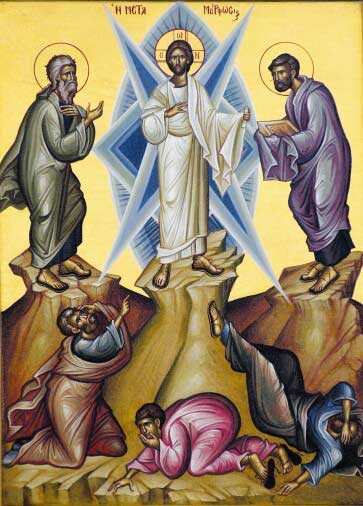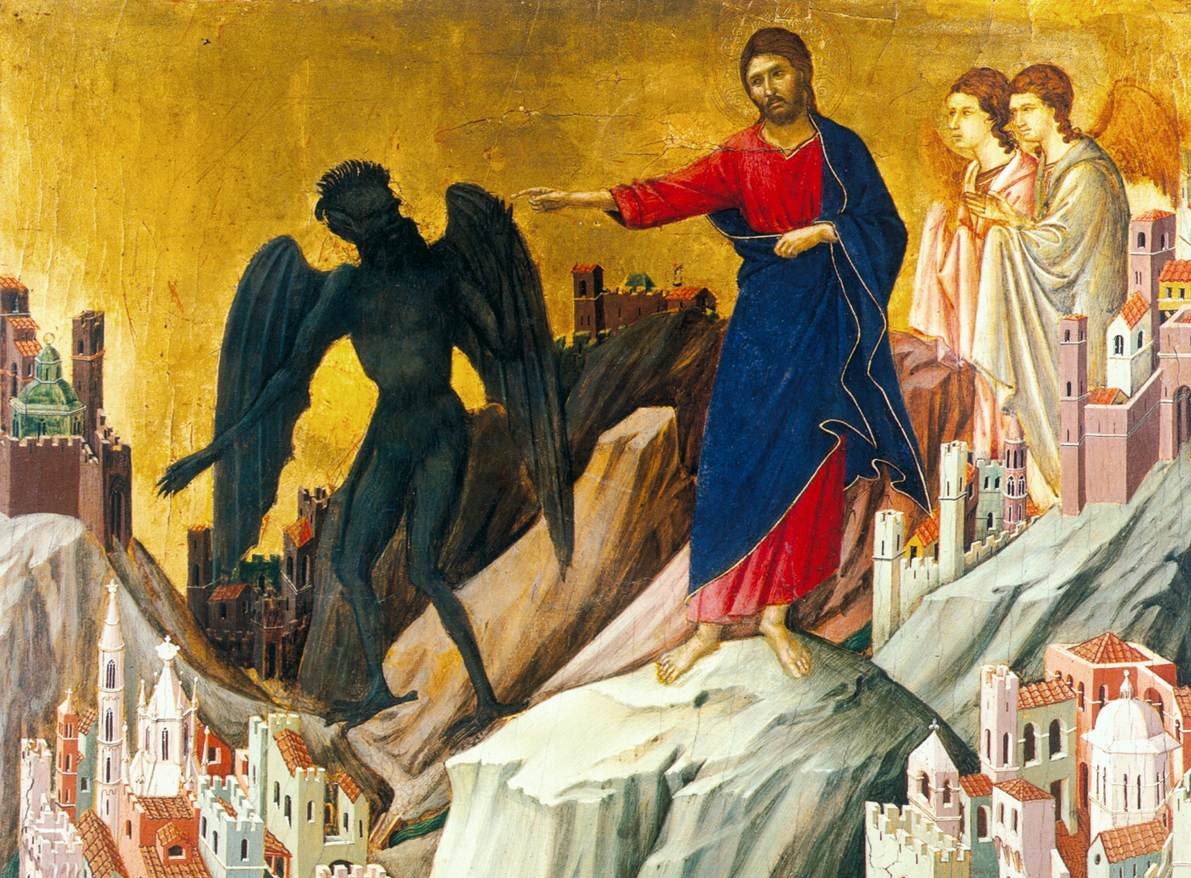
Three Teachings on Temptation

Sunday’s Gospel about the temptation of Jesus in the desert by Satan evokes several questions. The answers I propose are not intended to be a theological treatise, but rather a pastoral reflection.

I. Why does God permit temptation? God does not permit any evil or problem unless it can serve some greater good. In the case of temptation, He permits it because it summons us to love Him while giving us the freedom to reject or accept that call. God seeks sons and daughters who can love Him freely.

Of God’s creatures, only angels and humans possess free will. We are summoned to love, but love requires the freedom to make choices. In giving us freedom, God permits alternatives to saying “yes” to Him. These alternatives present themselves as temptations.

Temptation existed even in Eden, in paradise; and prior to that, the angels had a sweeping choice for or against God. Scripture hints that one third of them fell to the earth and are what now called demons (see Rev 12:4). Our “yes” to God must be very precious indeed, because in granting this freedom He permits that some, indeed many, choose to reject Him.

A second reason God permits temptation is that it tests and strengthens us. An old saying reminds us, “Things do by opposition grow.” Temptation is a kind of opposition we must learn to endure. In enduring, though, we become stronger. The spiritual life is like the physical life in that we grow stronger through repeated action. After lifting weights repeatedly, our physical strength increases and we can overcome increasingly more difficult physical challenges. It is the same with the spiritual life. An old gospel song says, “Yield not to temptation, for yielding is sin. Each victory will help you, some other to win.” Scripture says, Resist the devil and he will flee (James 4:7). Resisting implies ongoing effort, standing up to the devil repeatedly. It’s not a one-time battle, but an ongoing war in which each small victory makes us stronger and the devil more discouraged. As we grow stronger, the devil eventually stops wasting his time tempting us in certain areas. At times the battle may weary us, but in the long run, it strengthens us. Jesus illustrates this in his three-fold battle with Satan in the desert.

II. What are the sources of temptation? There is a tendency to attribute temptation and struggles to the devil, but tradition speaks to two additional sources: the world and the flesh. (Note that the flesh is not merely our body; it is a term that describes our rebellious tendency to sin and be prideful.) Scripture affirms these different sources, for not only are there passages in which the devil directly tempts (e.g., Adam and Eve in the Garden, Jesus in the desert), but there are ones that speak to the temptations of the world and the flesh: For all that is in the world—the desires of the flesh and the desires of the eyes and pride of life—is not from the Father but is from the world (1 John 2:16).

Frankly, many people do not need direct demonic temptation; they do a pretty good job of exposing themselves to temptation by indulging the flesh and embracing the world. The devil can pretty much leave them alone and monitor their self-destruction from a distance.

This is one reason those striving to convert and return to the Lord are often the target of demonic attacks. As long as they were traveling on the road to destruction and Hell, they barely noticed the devil, because he was walking right behind them. When they began to turn around, though, they ran right into him. While the devil can and does manipulate and influence both the flesh and the world, we do better to look first to these two sources before ascribing temptations directly to the devil himself.

The influence of the flesh and the world are more under our control and thus should be the main focus of our battle. We do well to limit our exposure to the world and to spend more time with heavenly influences such as Scripture, the liturgy, prayer, and healthy, godly relationships. We should also focus more attention on self-mastery, through frequent confession, practicing virtue, and keeping careful custody of our mind and heart. Thus we see that Jesus is in the desert engaged in deep prayer, mortifying the flesh, and stepping away from the world.

III. What is the chief weapon Jesus uses in refusing temptation and how can it help us? Temptation is ultimately about influence and the battlefield is the mind. In the story of Jesus’ temptations, he answers every sinful suggestion by the devil with Scripture.

  1. It is written: One does not live on bread alone, but on every word that comes forth from the mouth of God.
  2. Again it is written: You shall not put the Lord, your God, to the test.
  3. It is written: The Lord, your God, shall you worship and him alone shall you serve.

To every foolish and sinful thought Jesus replies, “It is written …”

Because the battle in temptation is about influence, the following question arises: What most influences you: the world, the flesh, the devil, or God?

We must actively seek to be influenced by God, by godly thoughts and godly truth.

There is an old saying, “Sin makes you stupid.” And indeed it does. Sin darkens our intellect and leads us to make convoluted justifications and rationalizations of attitudes and behaviors that any child can see are wrong and defy common sense. St. Paul describes sin-induced stupidity when writing about the people of his time who suppressed the truth about God; claiming to be wise, they became fools, and their senseless minds were darkened (see Rom 1:18-22). He also advises us, Do not be conformed to this world, but be transformed by the renewal of your mind, that by testing you may discern what is the will of God, what is good and acceptable and perfect (Rom 12:2). Nothing can so renew our minds as the very Word of God. By it we are called to see and judge all other things.

Thus, an essential antidote to temptation is to be deeply rooted in the truth of God. This does not mean merely mechanically quoting verses during an argument. Rather, it means being transformed by God’s Word and watching how it performs in our life. I have been reading Scripture every day for the last thirty years. The Word of God has changed me and has been instrumental (along with sacraments, prayer, and godly fellowship) in putting down sin and resisting the temptations that precede it. Some things that used to tempt me no longer do; other temptations that were once strong are now weaker. Still other temptations remain, but the battle is engaged! Jesus is right: the Faith and the Word of God are a strong shield to protect against the fiery darts of the world, the flesh, and the devil.

Temptation is an ongoing battle for all of us until the day we die. All the more reason to permit the Lord to teach us its causes, the way it operates, and the ways to resist it.

Jesus Does Not Forbid Correcting the Sinner

Many of the psalms and proverbs of ancient Israel are in the form of poetry. In ancient Jewish poetry, however, the rhyme is not in the sound; it is in the thought. Consider a couple of examples from the psalms and note how each couplet consists of a thought in the first line followed by the same idea stated in a slightly different way in the line that follows:

Why do the nations rage
and the peoples plot in vain?

The kings of the earth take their stand
and the rulers gather together,

against the LORD
and against His Anointed One:

“Let us break their chains
and cast away their cords.”

The One enthroned in heaven laughs;
the Lord taunts them
(Psalm 2:1-3).


Oh, give thanks to the LORD, for he is good,
for his steadfast love endures forever!

Who can utter the mighty deeds of the LORD,
or declare all his praise?

Blessed are they who observe justice,
who do righteousness at all times
! (Psalm 106:1-3)

Recognizing that the second part of each couplet fleshes out  the concept presented in the first part, we learn several things from Psalm 106: the goodness of the Lord is manifested in His steadfast and enduring love, reciting the mighty deeds of the Lord is a way of praising Him even if insufficiently, and observing justice means always doing what is right.

If we apply this same insight in studying the Gospel for today’s Mass (Monday of the Second Week of Lent), we can better understand Jesus’ meaning:

Stop judging and you will not be judged.
Stop condemning and you will not be condemned 
(Luke 6:37).

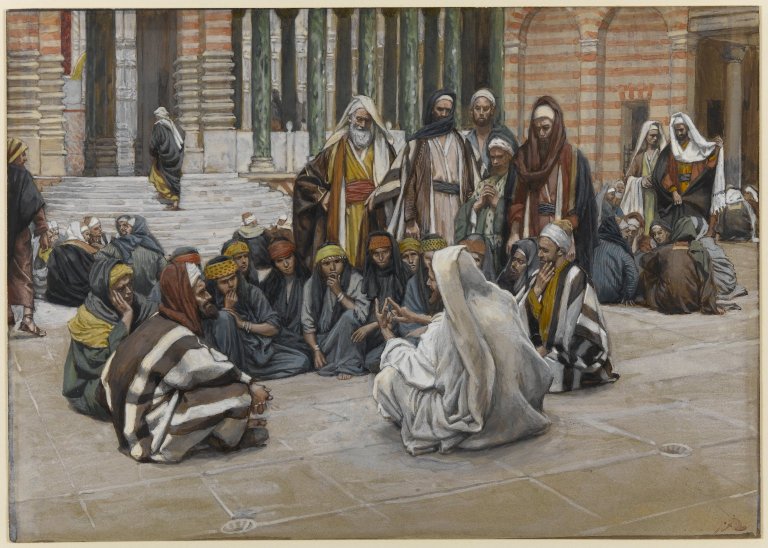
Considering these verses as a pair helps us avoid a common misunderstanding. Many people today try to shame Christians who criticize or “judge” the behavior of public sinners. For example, if we state that fornication or homosexual acts are morally wrong, we often hear something like this: “You’re judging me! You’re not being a very good Christian because Jesus says not to judge.” This is a misinterpretation of Jesus’ message. Jesus does not forbid all judgments (that would be absurd); rather, he forbids the judgment of condemnation. We can see this in the couplet from Luke above: the second part fleshes out the first part. Jesus is warning us against the judgment of condemnation.

What does it mean to condemn? Most literally and etymologically, it means to consign someone to Hell (something that is not within our power to do). It comes from the Latin con (with) and damnare (to damn; harm; pronounce as unfit, reprehensible, or deserving of severest censure.) The Greek word καταδικάζω (katadikazo) used in this passage has a similar meaning. The prefix “kata” intensifies dikazo (judge) making that judgment severe.

Thus, the Lord is warning us against pronouncing unnecessarily severe punishment or condemnation. People need time to repent. Correction or rebuke, which are sometimes necessary, should be designed to assist a person in reflecting and repenting, not to crush or humiliate him.

Later in this same passage Jesus further warns, For the measure you measure to others will be measured back to you(Luke 6:38). If you are needlessly severe with others, God will use this standard to evaluate and punish you. Because we’re all going to need grace and mercy from God, we do well to show mercy to others. As James says,  Judgment is without mercy to one who has shown no mercy (James 2:13).  (I have written more on this matter in a previous post: Can We Influence How God Will Judge Us?.)

Thus, the Lord does not forbid us to judge between good and bad behavior. We are expected to make such judgments and to distinguish between right and wrong. Further, He does not forbid us to correct one another. In fact, Scripture consistently counsels that we correct the sinner. (I have written in more detail on that in this post: Correcting the Sinner Is an Essential Work of Charity.)

Attempting to shame Christians into remaining silent rather than correcting others is a misunderstanding of Jesus’ message in these and similar passages. Taking a text out of context is a pretext of sorts. In this case the reason behind it is to attempt to silence criticism of immoral behavior. Also, notice that when someone rebukes you for correcting or “judging,” he is doing precisely the same thing to you! In calling you out, the person is violating his own rule. Recognize this hypocrisy and do not be fooled by this misinterpretation of Jesus’ words.

Every Round Goes Higher – A Homily for the Second Sunday of Lent

The second Sunday of Lent always features the Transfiguration. This is because we are following the Lord on His final odyssey to Jerusalem, and this journey up Mt. Tabor was one of His stops (with Peter, James, and John).

It is commonly held that Jesus did this to prepare His apostles for the difficult days ahead. There’s a line from an old spiritual that says, “Sometimes I’m up, sometimes I’m down, sometimes I’m almost on the ground … but see what the end shall be.” This is what the Lord is doing here: He is showing us what the end shall be. There is a cross to get through but there is glory on the other side.

The purpose in placing the account of the Transfiguration here is that it helps describe the pattern of the Christian life, which is the paschal mystery. We are always dying and rising with Christ in repeated cycles as we journey to an eternal Easter (cf 2 Cor4:10). This Gospel shows forth the pattern of the cross: the climb, the rising, and the glory of the mountaintop. Then it is back down the mountain again only to climb another one (Golgotha), and through it find another glory (Easter Sunday). Let’s look at today’s Gospel in three stages.

I The Purpose of Trials Jesus took Peter, James, and John and led them up a high mountain apart by themselves.

We often pass over the fact that they had to climb that mountain, no easy task.

Anyone who has been to Mt. Tabor can attest to its altitude: almost 2000 feet. Ascending it likely took the better part of a day and was probably somewhat dangerous. Looking down from the top on the Jezreel Valley (a.k.a. Megiddo or Armageddon) provides a view similar to what one would see out an airplane window.

So we have here a symbol of the cross and of struggle. A climb up the rough side of the mountain was likely exhausting, testing their strength.

I have it on the best of authority that as they climbed they were singing gospel songs like this one: “I’m comin’ up on the rough side of the mountain, and I’m doin’ my best to carry on!” Another song says, “My soul looks back and wonders how I got over!” Yet another says, “We are climbing Jacob’s ladder, every round goes higher, higher.”

This climb reminds us of life. Often we have had to climb, to endure, to have our strength tested. Perhaps it was the climb of earning a college degree. Perhaps it was the climb of raising children or building a career. What of real value do you have that did not come at the price of a climb, of effort and struggle?

Most of us know that although the climb is difficult, there is glory at the top if we but endure. Life’s difficulties are often the prelude to success and greater strength.

Although we might wish that life had no struggles, it would seem that the Lord intends them for us, for the cross alone leads to true glory. Where would we be without some of the crosses in our life? Let’s ponder some of the purposes of problems:

God uses problems to DIRECT us. Sometimes God must light a fire under you to get you moving. Problems often point us in new directions and motivate us to change. Is God trying to get your attention? Sometimes it takes a painful situation to make us change our ways. Proverbs 20:30 says, Blows and wounds cleanse away evil, and beatings purge the inner most being. Another old gospel song speaks of the need for suffering to keep us focused on God: “Now the way may not be too easy, but you never said it would be. ‘Cause when our way gets a little too easy, you know we tend to stray from thee.” Yes, God sometimes uses problems to direct our steps to Him.

God uses problems to INSPECT us. People are like tea bags: if you want to know what’s inside them, just drop them into hot water! Has God ever tested your faith with a problem? What do problems reveal about you? Our problems have a way of helping to see what we’re really made of. I have discovered many strengths I never knew I had through trials. There is a test in every testimony and trials have a way of purifying and strengthening our faith as well as inspecting it to see whether it is genuine. 1 Peter 1:6 says, In this you greatly rejoice, though now for a little while you may have had to suffer grief in all kinds of trials. These trials are only to test your faith, to see whether or not it is strong and pure.

God uses problems to CORRECT us. There are some lessons we learn only through pain and failure. When you were a child, it’s likely that your parents told you not to touch a hot stove, but you probably really learned by being burned. Sometimes we only learn the value of something (e.g., health, money, a relationship) by losing it. Scripture says, It was good for me to be afflicted so that I might learn your decrees (Psalm 119:71-72). Before I was afflicted, I strayed. But now I keep you word (Psalm 119:67).

God uses problems to PROTECT us. A problem can be a blessing in disguise if it prevents you from being harmed more seriously. A man was fired for refusing to do something unethical that his boss had asked him to do. Although his unemployment was a problem, it saved him from being sent to prison when management’s actions were finally discovered. In Genesis 50:20, Joseph speaks to his brothers: You intended to harm me, but God intended it for good to accomplish what is now being done, the saving of many lives.

God uses problems to PERFECT us. When responded to properly, problems are character builders. God is far more interested in your character than your comfort. Romans 5:3 says, We can rejoice, too, when we run into problems and trials, for we know that they are good for us they help us learn to be patient. And patience develops strength of character in us and helps us trust God more each time we use it until finally our hope and faith are strong and steady. Peter 1:7 says, You are being tested as fire tests gold and purifies it and your faith is far more precious to God than mere gold; so if your faith remains strong after being tried in the fiery trials, it will bring you much praise and glory and honor on the day of his return.

So here it is, the cross symbolized by the climb; but after the cross comes the glory.

II The Productiveness of Trials And he was transfigured before them, and his clothes became dazzling white, such as no fuller on earth could bleach them. Then Elijah appeared to them along with Moses, and they were conversing with Jesus. Then Peter said to Jesus in reply, “Rabbi, it is good that we are here! Let us make three tents: one for you, one for Moses, and one for Elijah.” He hardly knew what to say, they were so terrified. Then a cloud came, casting a shadow over them; from the cloud came a voice, “This is my beloved Son. Listen to him.”

All the climbing has paid off. Now comes the fruit of all that hard work. The Lord gives them a glimpse of glory! They get to see the glory that Jesus has always had with the Father. He is dazzlingly bright. A similar vision from the Book of Revelation gives us more detail:

I turned around to see the voice that was speaking to me. And when I turned I saw seven golden lampstands, and among the lampstands was someone like a son of man, dressed in a robe reaching down to his feet and with a golden sash around his chest. The hair on his head was white like wool, as white as snow, and his eyes were like blazing fire. His feet were like bronze glowing in a furnace, and his voice was like the sound of rushing waters. In his right hand he held seven stars, … His face was like the sun shining in all its brilliance. When I saw him, I fell at his feet as though dead. Then he placed his right hand on me and said: “Do not be afraid. I am the First and the Last. I am the Living One; I was dead, and now look, I am alive for ever and ever! And I hold the keys of death and Hades” (Rev 1:12-17).

Yes, all the climbing has paid off. Now comes the glory, the life, the reward for endurance and struggle. Are you enjoying any of the fruits of your crosses now? If we have carried our crosses in faith, it has made us more confident, stronger. Some of us have discovered gifts, abilities, and endurance we never knew we had. Our crosses have brought us life! St. Paul said, that this momentary affliction is producing for us a weight of glory beyond all compare (2 Cor 4:14). He also said, For I consider that the sufferings of this present time are not worth comparing with the glory that is to be revealed to us (Rom 8:18).

So here is the glory that comes after the climb. Here is the life that comes from the cross.

III. The Pattern of Trials – Suddenly, looking around, they no longer saw anyone but Jesus alone with them. As they were coming down from the mountain, he charged them not to relate what they had seen to anyone, except when the Son of Man had risen from the dead.

Although Peter wanted to stay, Jesus makes it clear that they must go down the mountain for the time being and walk a very dark valley to another hill (Golgotha); for now, the pattern must repeat. The cross has led to glory, but more crosses are needed before the final glory. An old spiritual says, “We are climbing Jacob’s ladder … every round goes higher, higher, soldiers of the cross!

This is our life. Always carrying within our self the dying of Christ so also that [the rising of Christ], the life of Christ may be manifest in us (cf 2 Cor 4:10).

There are difficult days ahead for Jesus and the Apostles, but the crosses lead to lasting glory. This is our life too. The paschal mystery is the pattern and rhythm of our life.

Here is an excerpt from the song “We Are Climbing Jacob’s Ladder.” The song repeats, “… every round goes higher, higher.” One can almost imagine a spiral staircase as the rounds get pitched higher musically. This is the pattern of our life: we die with Christ so as to live with Him. Each time we come back around to the cross, or back around to glory, we are one round higher and one level closer to final glory.

A Picture of Sloth in a Commercial

The commercial below basically says, “If you prefer the inferior product of our competitors, go right ahead and stick with them, but as for us, we’ll go with what’s better!

One of the tasks of the spiritual life is to allow God to convert our desires. In our fallen state we have tend to want things even if we know they are harmful to us—and we desire them in abundance, too. We are also inclined to be averse to things we know are good for us. It all began in our childhood when we wanted Twinkies galore but pushed broccoli around on our plate rather than eating it.

Many people struggle to desire prayer and spiritual reading, preferring lesser or even sinful activities. The root sin here is sloth, which is sorrow about, or aversion to, the good things God offers. We need to pray frequently and fervently for the conversion of our desires.

If I were to reword the theme of this commercial along spiritual lines, I’d say, “If you want to go on preferring the lesser, passing things of this world, go ahead, but as for me and my household, we will prefer the Lord!”

https://youtu.be/HTr_zZP2Mdc

Lenten Assignment: Be Grateful!

True gratitude is a grace, or gift, from God. It proceeds from a humble and transformed heart. We do not render thanks merely because it is polite or expected, or because God commands it but because it flows naturally from a profound experience of gratitude. The “command” of Scripture to give thanks is not a moral cliché but a truth and a description of what flows from a transformed heart.

We should seek from God the powerful transformation of our intellect and our heart so that we become deeply aware of the remarkable gift that is everything we have. As this awareness deepens so does our gratitude and joy at the “magnificent munificence” of our God. Everything—literally everything—is a gift from Him. Consider the following reflection from St. Gregory Nazianzen:

Recognize to whom you owe the fact that you exist, that you breathe, that you understand, that you are wise, and, above all, that you know God and hope for the kingdom of heaven and the vision of glory, now darkly as in a mirror but then with greater fullness and purity. You have been made a son of God, coheir with Christ. Where did you get all this, and from whom?

Let me turn to what is of less importance: the visible world around us. What benefactor has enabled you to look out upon the beauty of the sky, the sun in its course, the circle of the moon, the countless number of stars, with the harmony and order that are theirs, like the music of a harp? Who has blessed you with rain, with the art of husbandry, with different kinds of food, with the arts, with houses, with laws, with states, with a life of humanity and culture, with friendship and the easy familiarity of kinship?

Who has given you dominion over animals, those that are tame and those that provide you with food? Who has made you lord and master of everything on earth? In short, who has endowed you with all that makes man superior to all other living creatures?

Is it not God who asks you now in your turn to show yourself generous above all other creatures and for the sake of all other creatures?(From a sermon by Saint Gregory of Nazianzen, bishop. Oratio 14, De Pauperum amore, 23-25: PG 35, 887-890.)

Yes, we have so much for which we should be grateful!God holds together every fiber of our being: every cell and every part of every cell, every molecule and every part of every molecule, every atom and every part of every atom. He facilitates every function of our body: every beat of our heart, every movement of our body, the functioning of every organ. God sustains every intricate detail of the world in which we live: the ideal orbit of our planet such that we neither boil nor freeze; the magnetic shield that protects Earth from harmful solar radiation; every intricate process of our planet, solar system, galaxy, and universe. All of this, including us, is sustained by God and provided for by Him. The depth, height, length, and width of what God does is simply astonishing—and He does it all free of charge. Pondering such goodness and providence helps us to be more grateful. Yes, allis gift.

There are some gifts of God that don’t seem like gifts at all:losses, tragedies, and natural disasters. In such moments it is easy to feel that He has forsaken us; gratitude is probably the last thing on our mind. Even here, Scripture bids us to look more closely: And we know that all things work together for the good of those who love God and who have been called according to his purpose (Romans 8:28). We don’t always know how, but even in difficult moments God is making a way unto something good. He is paving a path unto glory, even if through the cross. Jesus has said to us, But I will see you again and you will rejoice, and no one will take away your joy. On that day you will have no more questions to ask me (Jn 16:22-23). Yes, even in our difficulties we are more than conquerors (Rm 8:37) because the Lord can write straight with crooked lines and make a way out of no way. Yes, allis gift!

It is hard to overestimate the role that gratitude plays in good mental, emotional, and spiritual health.Grateful people are different: more joyful, generous, kind, patient, serene, and confident. All of this comes from the fact that gratitude makes present to us the provident goodness of God. Acknowledging how good God has been to us helps us to become more trusting and less anxious. Because of this we have the confidence to be more generous; there is no need to hoard things because we know that God will take care of us. Yes, through gratitude we are freed from many anxious cares and given a serene and stable joy; we are equipped to be so much more patient and generous.

Ultimately, gratitude is a gift to be received from God. We ought to ask for it humbly. We can dispose ourselves to it by reflecting on things such as those discussed above, but ultimately gratitude comes from a humble, contrite, and transformed heart. True gratitude is a grace, a gift, that comes from a heart deeply moved, astonished, and aware of the fact that God is so very good. Allis gift!

The Role of Trials in Bringing Us to Spiritual Maturity

We live in a world of unprecedented comfort: electricity, indoor plumbing, heating and air-conditioning, medicine, healthcare, abundant food, myriad consumer products, and entertainment available with the click of a button. Despite this we do not seem more grateful or at ease than our forebears. If anything, we aremoreanxious. For example, though people have never lived so long nor been so healthy, we have never been more worried about our health.

One would think that such abundance and comfort would lead us to be exceedingly grateful and to overlook small setbacks, remembering how much more difficult life was for our ancestors—but the opposite seems more often to be the case. We seem to be easily frustrated and to have little tolerance for enduring even the most minor suffering. Our comfortable couches have made us soft and our countless options have made us overly particular and easily annoyed. There is an old saying that “Expectations are premeditated resentments.” We certainly have a lot of expectations these days, many of them unrealistic in the long run. The insistence on everything being perfect seems to rob us of the happiness we should enjoy. Everyone wants the ideal, and if there is any ordeal, they want a newdeal.

We seem to have lost the idea the idea that life is a time of testing for us. We live in paradise lost, and there are going to be difficulties. St. Augustine reminds us that trials have their purpose:

Our pilgrimage on earth cannot be exempt from trial. We progress by means of trial. No one knows himself except through trial, or receives a crown except after victory, or strives except against an enemy or temptations. [From a commentary on the psalms by Saint Augustine, bishop (Ps. 60, 2-3: CCL 39, 766)].

Yes, trials and tests help us to gain self-knowledge and self-mastery. Trials also have purifying and humbling effects. So good is God to us that He allows His graces to become our merits. For, having engaged the battle of life and undergone its trials, the crown of victory will be granted to us. St. Augustine surely has in mind St. Paul’s confident hope:

I have fought the good fight, I have finished the race, I have kept the faith. From now on the crown of righteousness is laid up for me, which the Lord, the righteous judge, will award to me on that day—and not only to me, but to all who crave His appearing(2 Tim 4:7-8).

Where would you and I be today without the trials of the past? We do not seek out suffering, but the suffering that inevitably comes in both small and large doses helps to form our character, make us stronger, and give us wisdom.

We who live in the developed world today have, for the most part, “First World problems,” and we do well to remember the inevitability of trials in this life. We don’t have to like them, but when they come, we should accept and endure them graciously. Resentment and anger at such trials do not bespeak spiritual maturity. Enjoy the good things and comforts of this life but beware the tendency to become soft and overly fussy. Remember, too, that this world is passing away.

The song “We’ll Understand It Better By and By” has these appropriate lyrics:

Trials dark on every hand
And we cannot understand,
All the ways that God will lead us
To that blessed Promised Land.
But He guides us with His eye,
And we follow till we die,
And we’ll understand it better by and by
.

God’s Law is Personal and Loving

In Monday’s first reading (Monday of the First Week of Lent) there is a recitation of the law that features the refrain “I am the Lord.” What does this expression mean and why is it appended to each command?

When we think of God’s law, there is a danger that we might think of it as we do of any secular law: as a sort of impersonal code written by nameless legislators or bureaucrats. We have not met them; we do not love, trust, or even know them. They are an abstraction we call “the government,” or just “they,” as in, “They don’t let you park here,” or “They’ll arrest you for that.”

If we have faith, God’s Law is personal, for it is given by someone we do love, trust, and know. Further, we believe that He loves us and wants what is best for us.

God’s law is not the equivalent of a no-parking sign put up by some nameless, faceless government agency. Rather, it is a personal exhortation, an instruction and command given by someone we know and who knows and loves us.

Consider this example: Suppose you pull in front of my church to park and you see a no-parking sign. Now suppose further that you decide to ignore it. You have broken a law—not a big one, but a law nonetheless. You’ve chosen to ignore a sign put there by “the government.” Now consider a slightly different scenario: You pull in front of my church to park and I, your beloved blogger and the pastor of the church you are attending, am standing out there by the curb and I say to you, “Please don’t park here.” This situation is different in that I, someone you know and love 🙂 , am personally requesting that you leave the space open for some reason unknown to you.

An old rabbinic saying makes this same point:

You want to know why so many of God’s laws end by saying “I am the Lord”? I will tell you! When God says, “I am the Lord,” he is saying, “Now look, I am the one who fished you out of the mud, so come over here and listen to me.”

When you experience the law in this personal way, you are far more likely to follow it, because someone you know and trust is asking and/or directing you. Now what if, despite this, you still choose to ignore the instruction not to park there. In this case, the law is personal, so your refusal to follow it becomes personal and is a far more serious situation.

Here are two (of many) examples of the “I am the Lord” phrase from Scripture:

You shall not defraud or rob your neighbor.
You shall not withhold overnight the wages of your day laborer.
You shall not curse the deaf,
or put a stumbling block in front of the blind,
but you shall fear your God.
I am the LORD.

You shall not act dishonestly in rendering judgment.
Show neither partiality to the weak nor deference to the mighty,
but judge your fellow men justly.
You shall not go about spreading slander among your kin;
nor shall you stand by idly when your neighbor’s life is at stake.
I am the LORD
(Lev 19:11-14).

Note how each ends with, “I am the Lord.” On the one hand, it lends solemnity to the pronouncement, but on the other, God is saying, “Hey, this is God talking! It is I, your Father, who speak to you; I who created you, led you out of slavery, parted the Red Sea for you, dispatched your enemies, fed you in the desert, and gave you drink from the rock. It is I; I who love and care for you; I who have given you everything you have; I who want what is best for you; I who have earned your trust. It is I, your Father, speaking to you and giving you this command.”

God’s law is personal. Do we see and experience it this way? This will happen only if we come to know the Lord personally. Otherwise, the danger is that we see the Law of God as merely an impersonal code, an abstract set of rules to follow. They might as well have been issued by the deity, the godhead, or even just the religious leaders of the day.

A gift to pray for in terms of keeping God’s Law is a closer walk with the Lord and an experience of His love for us. Such an experience is a great help in loving the Law of the Lord, for when we love the Lord we love His Law, seeing it not as an imposition, but as a personal code of love meant to protect us. When we offend against it, either willfully or through weakness, we are able to repent with a more perfect contrition, for we understand that we have offended someone we love and who is deserving of all our love.

Abba – St. Paul indicates that one of the gifts of the Holy Spirit is to be able to experience God as Abba. Abba is the Hebrew and Aramaic family word for father. It is translated by some as “Papa,” or “Dad,” but regardless of how it is translated, it indicates a deep love and tender affection. He is not merely “the Father” in some abstract or titular sense. He is someone I experience as my own dear Father, as someone who loves me. It is a personal, familial relationship that the Holy Spirit wants to grant us.

This personal relationship brings God’s law alive, makes it personal. And so God says, as He reminds of His Law, “I am the Lord. It is I speaking; I, the one who loves you.”

I might add that we also need to experience this with regard to the Church. Many see the Church in an impersonal way, as an institution. The real gift is to see the Church as Christ’s beloved bride and our Mother. In this sense, we love the Church and grow daily in affection for her, not seeing her “rules” as impersonal, but rather as the guidance and direction of a loving mother.

In this video, Fr. Francis Martin beautifully describes the gift of loving the Father with deep affection:

Flee to the Truth When Tempted – A Homily for the First Sunday of Lent

The Gospel today says that Jesus was tempted by the devil in the desert. Hebrews 4:15 also affirms, For we do not have a high priest who cannot sympathize with our weaknesses, but one who has been tempted in all things as we are, yet without sin.

How exactly a divine person, with a sinless human nature, experiences temptation is somewhat mysterious, and yet the text affirms that He does. A Lenten antiphon from the Breviary teaches that He did this, or allowed this, for our sake: Come, let us worship Christ the Lord, who for our sake endured temptation and suffering (Invitatory Antiphon for Lent). Hence, even without pondering too deeply the mystery of how He was tempted or experienced it, we can still learn what Jesus teaches us about how to endure temptation and be victorious over it. (More on the question of how Christ was tempted is available here.)

Before we look at each temptation, we might learn a few general aspects of what the Lord teaches us in electing to endure temptation.

Temptation and Sin – The fact that the Lord is tempted yet did not sin tells us that there is a distinction to be made between temptation and sin. Too often the very experience of temptation makes us feel sinful, as if we have already sinned, but that is not necessarily the case. Jesus, who never sinned, experienced temptation. Therefore, experiencing temptation is not to be equated with sin. One of the tactics of the devil is to discourage us into thinking that way. Some of our past sins may influence the degree to which we feel tempted, but we need not conclude that we have already sinned, or newly sinned, merely because we are tempted. Rather than to feel shame and run from God, we ought to run to Him with confidence and seek his Help.

Temptation and Scripture – Notice that Jesus responds to every temptation with Scripture. This is not to be equated with proof-texting or pronouncing biblical slogans. Rather, it indicates that Jesus was deeply rooted in Scripture, in the wisdom of the Biblical vision. In rebuking temptation in this way, Jesus is teaching us to do the same. It will not be enough for us to know a few biblical sayings, but to the degree that we are deeply rooted in the wisdom of God’s truth available to us through Scripture and the teachings of the Church, we are able to strongly rebuke unholy, worldly, or fleshly thinking. Half the battle in defeating temptation is knowing instinctively its erroneous vision. Having our minds transformed by the teachings of Scripture and the Church is essential in fighting temptation. Scripture says, Do not be conformed to this world, but be transformed by the renewal of your mind, that by testing you may discern what is the will of God, what is good and acceptable and perfect (Romans 12:2). Ephesian 6:17 speaks of the Word of God as the sword of the Spirit, with which we are properly armed for spiritual warfare. Thus, we are taught here by the Lord to be deeply rooted in His Word.

Temptation and Strength – Jesus is tempted three times, after which the devil leaves Him. In a certain way, the spiritual life is like the physical life, in that we grow stronger through repeated action. After lifting weights repeatedly, our physical strength increases and we are able to overcome increasingly difficult challenges. It is the same with the spiritual life. An old gospel song says, “Yield not to temptation, for yielding is sin. Each victory will help you, some other to win.” Scripture says, Resist the devil and he will flee (James 4:7). We need not conclude from this that Jesus needed to be strengthened (He did not) in order to understand that He is still teaching us what we need to do. The battle against temptation is not a “one and you’re done” scenario, but an ongoing battle in which each victory makes us stronger and the devil more discouraged. As we grow stronger, the devil eventually stops wasting his time tempting us in certain areas. At times the battle may weary us, but in the long run, it strengthens us. Jesus illustrates this with his three-fold battle with Satan.

Having review a few general principles, let’s look at the three temptation scenes.

Scene I: The Temptation of PassionsAt that time Jesus was led by the Spirit into the desert to be tempted by the devil. He fasted for forty days and forty nights, and afterwards he was hungry. The tempter approached and said to him, “If you are the Son of God, command that these stones become loaves of bread.” He said in reply, “It is written: One does not live on bread alone, but on every word that comes forth from the mouth of God.”

Hunger, as a desire, is a passion. It is not evil per se, for without it we would perish. The same is true of other natural desires for things like life, drink, and procreation (sexuality). We have other sorts of passions such as anger, love, joy, aversion, hatred, hope, despair, fear, and courage. Of themselves, these passions are neither good nor bad. Passions become bad only in relation to their object or insofar as we allow them to become inordinate.

Hence there is nothing wrong with Jesus as He experiences hunger. What the devil tries to do is to draw Jesus into the sin of yielding to His hunger and using His power inappropriately. Remember, Jesus had been led into the desert by the Spirit in order to fast and pray. This is His call. His hunger is real and without sin, but now He is tempted to set aside His call and to yield to His hunger in an inappropriate way, by rejecting his call to fast. Jesus is tempted to serve Himself. He obviously has the power to turn stones into bread, so a second temptation is to use His power inappropriately, to gratify and serve Himself rather than to glorify His Father.

What about us? We have passions, too. They are not wrong in themselves, but we can allow them to become inordinate or gratify them in unlawful ways. Remember that we, like Jesus, are called to fast. Our fast is from things like sin, injustice, unrighteousness, sexual impurity, unlawful pleasures, and excessive indulgence. We have it have it in our power to choose to reject our fast and to gratify our desires by rejecting our call to serve God. The devil tempts us to reject our call and to use our power to gratify our passions by lying, cheating, stealing, venting our anger, fornicating, and being gluttonous or greedy.

Jesus has recourse to God’s Word: Man does not live on bread alone, but on every Word that comes from the mouth of God. Jesus tells Satan that He would rather live and be sustained by the Word than by food; His food is doing the will of His Father.

What about us? Can we say, Neither have I gone back from the commandment of his lips; I have esteemed the words of his mouth more than my necessary food (Job 23:12)? Can we say that God’s Word is more important to us than my desires for satisfaction, sex, self-preservation, popularity, worldly joys, power, prestige, or possessions? Can we say that our strongest desire is for God and the things awaiting us in Heaven and that we will gladly forsake everything for it?

Scene II. The Temptation of PresumptionThen the devil took him to the holy city, and made him stand on the parapet of the temple, and said to him, “If you are the Son of God, throw yourself down. For it is written: He will command his angels concerning you and with their hands they will support you, lest you dash your foot against a stone.” Jesus answered him, “Again it is written, You shall not put the Lord, your God, to the test.”

It is important to trust God, but this is not an invitation to act recklessly. There will come a time when Jesus will throw himself down on the cross with the complete assurance that the Father will raise Him. He has this command from His Father. But now is not that time and Jesus must act to preserve and protect His life so that he can accomplish His full mission.

Presumption is a terrible problem today. Too many people think that they can go on sinning and that there will be, or should be, no consequences. This is true in both worldly and spiritual ways. Too many engage in risky and ruinous behavior and think, “I’ll be OK. I’ll escape. I won’t be a statistic. I won’t get caught. I won’t lose my job.” Many think, “I can use drugs without becoming addicted. I can have evil friends and still stay good and live morally. I can skip school and still get good grades. I can be promiscuous and won’t get a disease or become pregnant. I can drive recklessly and won’t have an accident. I can be disrespectful and still command respect.” In all this people are simply “cruisin’ for a bruisin’.”

Regarding the moral presumptiveness of thinking that no matter what we do, Heaven will still be the result, the Lord warns,

Say not I have sinned, yet what has befallen me? For the Lord bides his time. But of forgiveness be not overconfident adding sin upon sin. … Delay not your conversion to the Lord, put it not off from day to day for mercy and justice are alike with him (Sirach 5:4).

Do not be deceived; God is not mocked, for whatever a man sows, that he will also reap. For he who sows to his own flesh will from the flesh reap corruption; but he who sows to the Spirit will from the Spirit reap eternal life. And let us not grow weary in well‑doing, for in due season we shall reap, if we do not lose heart (Gal 6:7).

For they have sown the wind, and they shall reap the whirlwind. (Hosea 8:7).

But my people would not listen to me; Israel would not submit to me. So I gave them over to their stubborn hearts to follow their own devices. If my people would but listen to me, if Israel would follow my ways, how quickly would I subdue their enemies and turn my hand against their foes! (Psalm 81:11)

God clearly warns us that sin sets us on a path that hardens our heart and makes our final conversion increasingly unlikely. In this Lenten season, He is pleading with us to be serious about sin and its consequences. Sin renders us not only unfit for Heaven, but incapable of entering it.

A bad idea – Presuming that everything will be fine is not only a poor strategy, it is a snare of the devil, who seeks to cloud our mind with false hope and unreasonable expectations. Jesus has a very clear message for the devil and for any of us who would engage in presumption: Don’t you dare put the Lord your God to the test in this way. Obey Him out of love, but do not put Him to the test. Yes, presumption is a very foolish idea.

Scene III. The Temptation of Possessions Then the devil took him up to a very high mountain, and showed him all the kingdoms of the world in their magnificence, and he said to him, “All these I shall give to you, if you will prostrate yourself and worship me.” At this, Jesus said to him, “Get away, Satan! It is written: The Lord, your God, shall you worship and him alone shall you serve.”

Here is the obvious temptation of worldly possessions. Everything, everything, is offered to Jesus in exchange for a little worship of the devil. Tt may seem strange to us that having an abundance of things would be linked to worshiping the devil and forsaking God, but Scripture attests to this connection elsewhere:

  1. Adulterous people! Do you not know that friendship with the world is hatred toward God? Whoever therefore wants to be a friend of the world makes himself an enemy of God (James 4:4).
  2. Do not love the world or anything in the world. If anyone loves the world, the love of the Father is not in him (1 John 2:15).
  3. No one can serve two masters. Either he will hate the one and love the other, or he will be devoted to the one and despise the other. You cannot serve both God and Money (Matt 6:24).

This is all pretty blunt. We want to have both, but the Lord is clear in rebuking this temptation by insisting that we must serve God alone, adore God alone. The inordinate love of this world causes us to hate God more and more and to bow before Satan in order to get it. Don’t kid yourself. If this position seems extreme to you then you are calling God an extremist. The Lord is warning us that there is a major conflict here that steals our heart. For where a man’s treasure is, there is his heart (Matt 6:21). It is not wrong to desire what we really need to live, but our wants get us into trouble. The desire for riches ruins us and makes God seem as a thief rather than a savior. This is a very severe temptation and Jesus rebukes it forcefully. Him along shall you serve.

We need to beg God for single-hearted devotion to him. The Book of Proverbs has a nice prayer in this regard: Give me neither poverty nor riches, lest in my poverty I steal or in my riches I say “Who is the Lord?” (Prov 30:8-9, gloss)

In the end, temptations are real; we either accept God’s grace to fight them or we are going down. The Lord wants to teach us today about the reality of temptation and how to fight it, by His grace. Remember, the battle is the Lord’s and no weapon waged against us will prosper if we cling to His grace. In the end, the choice is clear: either tackle temptation (by God’s grace) or risk ruination (by Satan’s “ministrations”).

This song says,

“Yield not to temptation, for yielding is sin. Each victory will help you, some other to win. Fight valiantly onward. Evil passions subdue. Look ever to Jesus, He will carry you through. Ask the Savior to help you, comfort strengthen and keep you; He is willing to aid you, He will carry you through.”