Beware of the Solists! (or) It’s Not Good to Be Alone

There are a lot of “Solos” sung by our Protestant brethren: Sola Fide (saved by faith alone); Sola Scriptura (Scripture alone is the rule of faith); sola gratia(grace works alone). (See the Protestant Logo to the right). Generally one ought to be suspicious and careful of claims that things work alone. It is our usual experience that things work together in harmony with other things and are interrelated. Very seldom is anyone or anything alone.

The problem of the “solos” emerges, it seems to me, in our minds where it is possible to separate things out. But the fact is, just because we can separate out something in our mind does not mean that we can separate it in reality. Consider a candle flame for a moment. In my mind I can separate the heat of the flame from the Light of the flame. But in reality I could never take  a knife and put the heat over to one side and the light off to the other. In reality the heat and light are inseparable, so together as to be one.

I would like to respectfully argue that it is the same withthings like faith and works, grace and transformation, Scripture and the Church. We can separate all these things out in our mind but in reality they are one. Attempts to separate them from what they belong to lead to grave distortions and to the thing in question no longer being what it is claimed to be. Rather it turns into an abstraction that exists only on a blackboard or in the mind of a (geeky) theologian.

Let’s look at the three main “solos” of Protestant theology. I am aware that there are non-Catholic readers of this blog so please understand that my objections are made in respect . I am also aware that in a short blog I may oversimplify an thus welcome additions, clarifications etc. in the comments.

Solo 1: Faith alone (sola fide).For 400 years Catholics and Protestants have debated the question of faith and works. In this matter we must avoid a caricature of one another’s positions. Catholics do not and never have taught that we were saved by works. For heaven’s sake we baptize infants! We fought off the Pelagians. But neither do Protestants mean by “faith” a purely intellectual acceptance of the existence of God as many Catholics think they do.

But what concerns us here is the detachmentof faith from works as the phrase “Faith alone” implies. So let me ask, What is faith without works? Can you point to it? Is it visible? Introduce me to someone who has real faithbut no works. I don’t think they can be found. About the only example I can think of is a baptized infant! But oops, that’s a Catholic thing!  🙂  (Pardon me for having some fun). Hence it seems that faith alone is something of an abstraction. It is something that we can separate from works only in our minds but not in reality. If faith is a transformative relationship with Jesus Christ it seems we cannot remain unchanged by our entering into that relationship with him. This change affects our behavior, our works. Even in the case of infants it is possible to argue that they are changed and do have “works” it’s just that we cannot easily observe them. Scripture affirms that faith is never alone, that such a concept is an abstraction.  Faith without works is dead (James 2:26) It is not really faith at all since faith does not exist by itself  but is always present with and causes works through love. Galatians 5:6 says: For in Christ Jesus neither circumcision availeth anything, nor uncircumcision; but faith working through love. Hence faith works not alone, but through love. Further as Paul states in 1 Corinthians 13:2 if I have all faith so as to move mountains but do not have love, I am nothing. Hence faith alone is a null set, it is nothing in that it does not exist. True faith is never alone, it bears the fruit of love and works of holiness. Faith ignites love and works through it. Beware the solo  “faith alone” and ask where faith, all by itself can be found.

Solo 2: Grace alone (sola gratia). As for grace alone, this too is a puzzling claim since grace by its very nature changes us. Again, show me grace apart from works. That is an abstraction. It cannot be found apart from its effects. In our mind it may exist as an idea but in reality it is never alone. Grace builds on nature and transforms it. It engages the person who responds to its urges and gifts. If grace is real it will have it’s effects and cannot be found alone or apart from works. It cannot be found  apart from a real flesh and blood human who is manifesting its effects.

Solo 3: Scripture alone (sola Scriptura) – Finally beware the soloists who say Sola Scriptura! Namely the claim that Scripture alone is the measure of faith and the sole authority for the Christian. There are several problems with this.

  1. First, Scripture as we know it (with the full New Testament) was not fully assembled and agreed upon until the 4th Century and it was Catholic Bishops in union with the Pope who made the decision as to what books belonged in the Bible. The early Christians could not possibly live by sola scriptura.
  2. Secondly, until recently most people could not read. Kind of strange that God would make a book the sole rule of faith. Even today large numbers of people in the world still cannot read well.
  3. Thirdly, and most importantly, if all you have is a book,  that book still needs to be interpreted accurately. Without a valid and recognized interpreter the book can well serve to divide more than unite. It this not the experience of Protestantism which now has tens of thousands of denominations all claiming to read the same Bible but interpreting it in rather different manners? The problem is if no one is Pope everyone is Pope!  Protestantism claims that everyone alone with a Bible and the Holy Spirit can authentically interpret Scripture. Well then why does the Holy Spirit tell some that baptism is necessary for salvation and to others no.  Why the Holy Spirit tell some that the Eucharist really is Christ body and blood and others only a symbol? Why does the Holy Spirit say to some Protestants “Once saved always saved” and to others, “No” ?? So it seems clear that Scripture is not meant to be alone. Scripture itself says this in 2 Peter 3:16 our beloved brother Paul, according to the wisdom given to him, also wrote to you, Our Brother Paul speaking of these things [the Last things] as he does in all his letters. In them there are some things hard to understand that the ignorant and unstable distort to their own destruction, just as they do the other scriptures. Hence Scripture warns that it is quite possible to mis-interpret Scripture. Well then, were is the truth to be found? The Scriptures once again answer this: you should know how to behave in the household of God, which is the church of the living God, the pillar and foundation of truth. (1 Tim 3:15) Hence Scriptures are not to be read alone. They are a document of the Lord through the Church and must be read in the context of the Church and with the Church’s authoritative interpretation and Tradition. As this quote says, The CHURCH is the pillar and foundation of the truth. The Bible is a Church book and not meant to be read apart from the Church that received the authority to publish it from God.  Scripture is the most authoritative and precious document of the Church but it emanates from the Church’s Tradition and must be understood in the light of it. Further, faith is not alone but works through love, grace is not alone but builds on nature.

Thus the problems of singing solo seems to come down to the fact that we end up with an abstraction. Something that exists in the mind but in reality cannot be found alone. Thus to gloss on a famous passage from Genesis:

It is not good (or even possible) for grace or faith to be alone. It is not good for Scripture to be alone. I, (the Lord) will make a suitable partner for the grace of faith: works. I will make a suitable partner for the Scriptures: the Church. That is why the grace of faith leaves it’s Father and clings to its wife and the two of them becme one. That is why Scripture leaves its Father and joins itself to the Church and the two of them become one.

Ok it’s a little corny. But I couldn’t resist. In end, Beware the solos, it is not good to be alone!

Here is a brief video where Fr. Robert Barron ponders the Protestant point of view that every baptized Christian has the right to authoritatively interpret the Word of God.
What is the Wrath of God?

Not long ago I saw a bottle of hot sauce with the creative name “Wrath of God!” Now that’s gotta be some hot sauce! But what is God’s wrath? It is spoken of often in the scriptures and it is a concept with which we have to be careful. On the one hand we cannot simply dismiss the concept as contradictory to the fact that God is love. But neither can we fail to see God’s wrath apart from his love.

As a followup from yesterday’s blog it seems worthwhile to consider some aspects of the very complicated and reality of the wrath of God. There is not enough space to cover the whole topic in the post but the comments stay open as always for your additions and subtractions. What are some ways that we can explain and understand the wrath of God? Let me propose a few.

The wrath of God is not merely an Old Testament Concept. In fact we find it mentioned quite frequently in the New Testament as well. For example consider the following:

  1. Jesus said, “Whoever believes in the Son has eternal life, but whoever rejects the Son will not see life, for God’s wrath remains on him. (John 3:36)
  2. The wrath of God is being revealed from heaven against all the godlessness and wickedness of men who suppress the truth by their wickedness (Rom 1:18)
  3. Do not take revenge, my friends, but leave room for God’s wrath, for it is written: “It is mine to avenge; I will repay,” says the Lord. (Rom 12:19)
  4. Let no one deceive you with empty words, for because of such things [i.e. sexual immorality] God’s wrath comes on those who are disobedient. (Eph 5:6)
  5. For God did not appoint us to suffer wrath but to receive salvation through our Lord Jesus Christ. (1 Thess 5:9)
  6. The angel swung his sickle on the earth, gathered its grapes and threw them into the great winepress of God’s wrath. (Rev 14:19)

And there are at least a dozen other texts from the New Testament that could be referenced but allow these to suffice. So it is clear that the “wrath of God” is not some ancient or primitive concept that the New Testament has dispensed with. And notice too that the wrath of God is not something simply for the end of the world. It is also spoken of in some of the texts above and others not listed as something already operative in certain people.

So what is God’s wrath? And how can we reconcile it with his love?  Consider some of the images, explanations of God’s wrath. None of them all alone explain it but together a picture and understanding may emerge.

  1. Image: God’s wrath is his passion to set things right. We see this image of God’s wrath right at the beginning in Genesis when God cursed Satan and uttered the protoevangelium (the first good news): I will make you and the woman enemies….one of her seed will crush your head while you strike at his heel” (Genesis 3:15). God is clearly angered at what sin has done to Adam and Eve and he continues to have anger whenever he beholds sin and injustice. He has a passion for our holiness. He wants what is best for us. He is angered by what hinders us in this regard. Surely all sins provoke his wrath but there are five sins that especially cry out to heaven: Wilful murder – [Gen. 4:10]; The sin of the Sodomites, [Gen. 18:20; 19:13]; The cry of the people oppressed, [Ex. 3:7-10]; The cry of the foreigner, the widow and the orphan, [Ex. 20:20-22]; Injustice to the wage earner. [Deut. 24:14-5; Jas. 5:4] (cf Catechism of the Catholic Church # 1867). In terms of all sin and injustice and anything that afflicts or hinders the possibility of salvation,  God has a wrathful indignation and a passion to set things right. This is part of his love for us. His wrath may be manifest through punishments, disturbances of our conscience, or simply by allowing us to experience some or all the consequences of our sin and injustice.
  2. Clarification: God’s wrath is not like our anger. In saying that God is angry we ought to be careful to understand that however God experiences anger or any passion, it is not tainted by sin. God is not angry like we are angry. When we get angry we often experience an out of control quality, our temper flares and we often say and do things that are either sinful or at least excessive. It cannot pertain to God to have temper tantrums and to fly off the handle, to admix anger with an unreasonable lashing out. The way God does experience anger is not something we can fully understand but is it surely a sovereign and serene act of his will, not an out of control emotion.
  3. Clarification: God is not moody. It does not pertain to God to have good days and bad days, good moods and bad ones. Scripture seems clear enough when it indicates that God does not Change. Consider this from the Book of James 1:17 Every good and perfect gift comes from above, from the Father of lights, in whom there is no variableness or shadow of turning. Hence to speak of God’s wrath does not mean that he has suddenly had enough or that his temper has flared, or that his mood has soured. God IS. He does not change. As the text says, he is not variable. And this leads us to the next point.
  4. Image: Given what we have said,  the primary location of God’s wrath is not in God,  it is in us. Perhaps the best definition I have heard of God’s wrath is this: God’s wrath is our experience of the total incompatibility of our sinful state before the Holiness of God. Sin and God’s holiness just don’t mix. They can’t keep company. Think of fire and water. They do not mix. They cannot coexist in the same spot. Bring them together and you you can hear the conflict. Think of water spilled on a hot stove and hear the sizzle and popping and the steam as the water flees away. If, on the other hand there is a lot of water the fire is overwhelmed and extinguished . But the point is that they cannot coexist. They will conflict and one will win. This is wrath, the complete incompatibility of two things. It is this way between sin and God’s utter holiness. We must be purified before we can enter the presence of God otherwise we could never tolerate his glory. We would wail and grind our teeth and turn away in horror. The wrath is the conflict between our sin and God’s holiness. God cannot and will not change so we must be changed. Otherwise we experience wrath. But notice the experience is in us primarily and not God. God does not change, he is holy, serene, he is love. If we experience his wrath it is on account of us, not him. Consider the next example.
  5. Image: It is we who change, not God and this causes wrath to be experienced or not –Consider an example. On the ceiling of my bedroom is a light with a 100 watt light bulb. At night before bed I delight in the light. I am accustomed to it. But then at bed time I put out the light and sleep. When I awake it is still dark (at least in the winter). Hence I put the light on. But Ugh! Grrr! Now the light is bright and I curse it! Now mind you, the light has not changed one bit. It is still the same 100 watt bulb it was hours earlier. The light is just the same, it is I who have changed. But do you know what I do? I blame the light and say, “The light is harsh!” But the light is not harsh, it is just the same as when I was happy with it. Now that I have changed I experience its wrath but the wrath is really in me. So also consider the experience of the ancient family of man with God. Adam and Eve walked with God in the cool of the evening when the dew collected on the grass (cf Gen 3:8).  They had warm friendship with him and did not fear his presence. After sin, they hide. Had God changed? He had not, they had and they now experience him very differently. Fast forward to another Theophany. God has come to Mt Sinai and as he descends the people are terrified for there are peals of thunder, lightning, clouds and the loud blast of a trumpet. The people told Moses “You speak to us, but let not God speak, else we will die!” (Ex 20:19) God too warned Moses that the people could not get close  lest his wrath be vented upon them (Ex 19:20-25). Now again, had God changed? He had not. He was the same God who walked with them in the cool of the evening in a most intimate way. It was we who had changed. We had lost the holiness without which no one can see the Lord (Heb 12:14). The same God, unchanged though he was, now seemed to us frightening and wrathful.
  6. What then shall we do? If we can allow the image of fire to remain before us we may well find a hopeful sign in God’s providence. Since God is a holy fire, a consuming fire (cf Heb 12:26; Is 33:14) how can we possibly come into his presence? How can we avoid the wrath that would destroy us? Well, what is the only thing that survives in the presence of fire? Fire is the only thing that survives! So it looks like we’d better become fire if we want to see God. And thus it was that God sent tongues of fire upon the Apostles and us at our confirmation. God wants to set you and me on fire with the Holy Spirit and in holiness. God wants to bring us up to the temperature of glory so that we can stand in his presence: See, I will send my messenger, who will prepare the way before me. Then suddenly the Lord you are seeking will come to his temple; the messenger of the covenant, whom you desire, will come,” says the LORD Almighty.  But who can endure the day of his coming? Who can stand when he appears? For he will be like a refiner’s fire or a launderer’s soap. He will sit as a refiner and purifier of silver; he will purify the Levites and refine them like gold and silver. Then the LORD will have men who will bring offerings in righteousness, and the offerings of Judah and Jerusalem will be acceptable to the LORD, as in days gone by, as in former years. (Mal 3:1-4). And indeed Jesus has now come:   For you have  turned to God from idols to serve the living and true God, and to wait for his Son from heaven, whom he raised from the dead—Jesus, who rescues us from the coming wrath. 1 Thess 1:10-11)

So there is a wrath of God. As I have tried to show it is more in us than in God. But I will not say to you that there is NO wrath IN  God. Scripture seems clear to indicate that wrath does pertain to God’s inner life. What exactly it is and how God experiences it  is mysterious to us. We can say to some extent what it is not (as we did above) but we cannot really say what it is exactly. But far more rich is the meditation that the wrath of God is essentially in us. It is OUR experience of the incompatibility of sin before God. We must be washed clean in the Blood of the Lamb and purified. Most of us will need purification in purgatory too. But if we let the Lord work his saving work we are saved from the wrath for we are made holy and set on fire with God’s love. And fire never fears the presence of fire. God is Love but he will not change. So it is that Love must change us.

One of the greatest cinematic depictions of the Wrath of God occurred in the move the Raiders of the Lost Ark. The Nazi’s sinfully think they can open the Ark and endure the presence of God. What they get is wrath for sin cannot endure the reality of God’s presence. “Enjoy” this clip:

Complementarity of Vocations


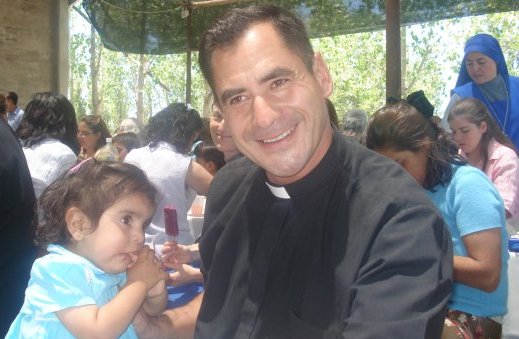
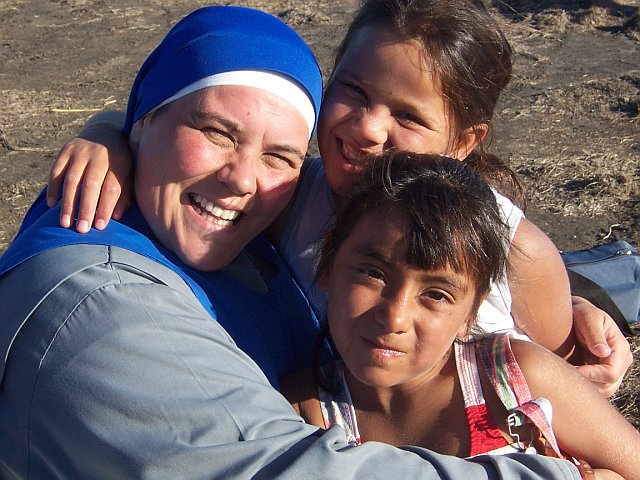
While in Argentina, I saw what spiritual motherhood and fatherhood looks like while spending time with the priests and nuns of the Religious Family of the Incarnate Word.

I was impressed by the strength, loving discipline, and leadership of the priests. To me, they exemplified masculinity and fatherhood. I was also struck by the joy, helpfulness, and affection of the nuns. To me, they exemplified femininity and motherhood.

This was most evident when the priests and nuns were with the children, young men, or young women. Seeing them interact, you might have thought that they were biological fathers and mothers because you wondered how they could love these children so much.

Spiritual motherhood and fatherhood isn’t just a quaint phrase; it’s a reality. Many of us aren’t used to seeing this kind of love between our religious and our children because of the fears caused by the scandals. But I was blessed to have seen what true, innocent spiritual fatherhood and motherhood looks like.

Seeing this also had another effect on me: it gave me a vision of what kind of mother I want to be and what kind of man I want as the father of my children.

From time to time we hear about the complimentarily of the married and celibate vocations; again, this is not just another quaint phrase. Both the married and celibate vocations are called to self-gift and to fruitfulness, and we can witness to each other and support each other in self-giving and in fruitful love.

Know any priests or nuns who are examples of spiritual motherhood or fatherhood? Take a moment to thank them and encourage them in living out their vocation.

Be VERY Careful Before You Ask God To Be Fair

The first reading for today’s (Feb 3) Mass describes how David decided to conduct a Census (likely in order to draft men for the army). The text speaks of this as a sin and though David regrets what he has done yet still God exacts a punishment. But the punishment afflicts not David per se but over 70,000 who died from pestilence at the hand of God. It is another of those difficult texts in the scripture where we struggle to understand how God is not acting “unjustly.” Why would God punish people who had not committed the actual sin in question? So let’s roll up our sleeves  and wrestle with this text. It is similar to what we discussed when we considered the “ban” (Did God Command Genocide?) . As with many things Biblical there are often many different theories and explanations. We only have time to explore a few.

First the Story:

King David said to Joab and the leaders of the army who were with him, “Tour all the tribes in Israel from Dan to Beer-sheba and register the people, that I may know their number.” Joab then reported to the king the number of people registered: in Israel, eight hundred thousand men fit for military service; in Judah, five hundred thousand. Afterward, however, David regretted having numbered the people, and said to the LORD: “I have sinned grievously in what I have done. But now, LORD, forgive the guilt of your servant, for I have been very foolish.”…Gad [the Prophet] then went to David to inform him  [of the Lord’s punishment]. He asked:  “Do you want a three years’ famine to come upon your land, or to flee from your enemy three months while he pursues you, or to have a three days’ pestilence in your land? … David answered Gad: “I am in very serious difficulty. Let us fall by the hand of God, for he is most merciful; but let me not fall by the hand of man.” Thus David chose the pestilence….and seventy thousand of the people from Dan to Beer-sheba died. But when the angel stretched forth his hand toward Jerusalem to destroy it, the LORD regretted the calamity and said to the angel causing the destruction among the people, Enough now! …[And David} said to the LORD: “It is I who have sinned; it is I, the shepherd, who have done wrong. But these are sheep; what have they done? Punish me and my kindred.” (2 Sam 24:2-17)

And now some of the concerns, questions and some possible answers.

What was wrong with conducting a census? There are three possible answers to this question.

  1. David sinned by pride in numbering the men in his kingdom. The purpose for this was to raise an army. But God had given David no order to or reason to go to battle. It is rather David’s pride and ambition that he musters for battle.
  2. David violates the Deuteronomistic Code which forbade Kings to build military power for its own sake. The code referred to this as “multiplying horses” which is a euphemism for building a large army. Here is the pertinent passage from Deuteronomy: The king, moreover, must not acquire great numbers of horses for himself or make the people return to Egypt to get more of them, for the LORD has told you, “You are not to go back that way again.” He must not take many wives, or his heart will be led astray. He must not accumulate large amounts of silver and gold. (Deut 17:16-17). Hence the powers of a king must be limited but David has transgressed this planning to draft a large army without battle imminent. In so doing he abuses his power but taking large numbers of men from their families and from their farms and occupations.
  3. David sins by not trusting God. The need for a large army is rooted in a lack of trust that God can help him win either with a smaller army or can help him muster troops when the need arises. David’s planning for the future amounts to a failure to have faith in God.

Why did God punish the people who did no wrong? It hardly seems fair that 70,000 people should die for the sin of David alone. David has repented of what he did. It is true sometimes even after repentance we sometimes need to experience punishment, but is the punishment so severe and why is it directed at the people? And here is our central question: Is God being unfair? There are at least two explanations or answers.

  1. The People were not innocent. At the time of Samuel the people clamored for a king. Samuel told them that this was a sinful desire on their part for God was their King. Still they persisted in their demands and here is where we pick up the story:  But when they said, “Give us a king to lead us,” this displeased Samuel; so he prayed to the LORD.  And the LORD told him: “Listen to all that the people are saying to you; it is not you they have rejected, but they have rejected me as their king. As they have done from the day I brought them up out of Egypt until this day, forsaking me and serving other gods, so they are doing to you. Now listen to them; but warn them solemnly and let them know what the king who will reign over them will do.”  Samuel told all the words of the LORD to the people who were asking him for a king.  He said, “This is what the king who will reign over you will do: He will take your sons and make them serve with his chariots and horses, and they will run in front of his chariots… He will take the best of your fields and vineyards and olive groves and give them to his attendants.  He will take a tenth of your grain and of your vintage and give it to his officials and attendants. Your menservants and maidservants and the best of your cattle and donkeys he will take for his own use. He will take a tenth of your flocks, and you yourselves will become his slaves. When that day comes, you will cry out for relief from the king you have chosen, and the LORD will not answer you in that day.” But the people refused to listen to Samuel. “No!” they said. “We want a king over us. (1 Sam 8:6-19). Hence the people are not innocent in this. They had been warned. Among the warnings was a very specific warning that the King would abuse his power to raise an army. Now David had planned exactly this. It is right that they should share in the punishment for they had forsaken God as their ruler and now they would have to suffer under the bad decisions of the earthly ruler they preferred.
  2. This is a moral tale that the innocent frequently suffer as a consequence of our sins – One thing that cannot be avoided is that the innocent frequently suffer from the decisions that others have made. For example, parents may squander their money, or drink too much, or behave badly. The children suffer though they did not do it. A bad pastor can bring down a whole parish, A bad general can get troops killed. Unfortunately our lives are interconnected and we cannot escape the fact that others often suffer for our bad choices. This is a sobering fact that should help us amend our ways. But, sadly, we are often insensitive to how our sins hurt others. David’s sin has hurt others and this is an important moral tale for us to heed for we too hurt others by our sins.

But # 2 still leaves unaddressed the fact that what is depicted in this story that God carries out  is not merely the natural consequence of the bad choice of a leader. Rather it is God himself who personallycarries this out through his angels. What this likely reflects is a biblical focus on primary causality. God is the first cause of everything that happens. In modern times we tend to focus more on secondary causality. If I take a walk tonight the primary cause of the walk is not me, it is God. I am the secondary cause of my walk for I who move must first be moved by God. The biblical world was accustomed to see things in terms of primary causality. There is an old saying, “What God permits, he commits.” We are unaccustomed to see things this way and focus on ourselves and what we do as somewhat independent of God. It is a symptom of our anthropocentric age. We like to say when we observe bad things, “God did not do that, Hitler (or some other bad person) did that.” But honestly, everything that happens God “does” for he sustains all things and is the first mover of everything that moves. This sovereigntyof God interacts mysteriously with our freedom. Clearly the notion of primary causality (God) and how it interacts with secondary causality (Us) requires some sophistication (which we often lack today). God is sovereign and the cause of all but we are free and responsible. Hence God is the primary cause of this plague but David is repsonsible. And WE are responsible for what we do. And we must sober up to the fact that our bone-headed decisions can lead to great pain for others.

A Call to humility – In the end humility is called for when texts like these arise. From our perspective the cry too easily goes up: “That’s not fair!” But be VERY careful before you ask God to be fair. If God were fair we’d all be in Hell right now. As it is, God is merciful and none of us have ever gotten the punishment  we deserved. God punishes David and his people. Perhaps they deserved it, perhaps it is just a consequence of bad choice of a leader. But in the end God summons his mercy and ends the pestilence. In the end it is only his grace and mercy that will ever see us through. We ought to have enough humility to banish notions of fairness in our relations with God. Mercy is the only way we stand a chance. Kyrie Eleison!

This song says, “Lord I’ve sinned but You’re still calling my name.”

Lost Liturgies File: The Churching of Women

Today as I write this it is the Feast of the Presentation (February 2). Some determine this feast to be the definitive end to the Christmas cycle and it is perhaps appropriate that yet another snowfall is descending on Washington. Biblically this feast commemorates the Jewish practice of a woman presenting herself at the temple forty days after the birth of a male child in order to be “purified” and blessed by the priest. Mary as an observant Jew fulfilled this obligation and it is recorded in Luke 2:22-24:

When the time of their purification according to the Law of Moses had been completed, Joseph and Mary took him to Jerusalem to present him to the Lord (as it is written in the Law of the Lord, “Every firstborn male is to be consecrated to the Lord”and to offer a sacrifice in keeping with what is said in the Law of the Lord: “a pair of doves or two young pigeons.”

The Jewish practice of “purifying” a woman after childbirth was set forth in the Book of Leviticus 12:1-8:

The LORD said to Moses, “Say to the Israelites: ‘A woman who becomes pregnant and gives birth to a son will be ceremonially unclean for seven days, just as she is unclean during her monthly period. On the eighth day the boy is to be circumcised. Then the woman must wait thirty-three days to be purified from her bleeding. She must not touch anything sacred or go to the sanctuary until the days of her purification are over.  If she gives birth to a daughter, for two weeks the woman will be unclean, as during her period. Then she must wait sixty-six days to be purified from her bleeding. ” ‘When the days of her purification for a son or daughter are over, she is to bring to the priest at the entrance to the Tent of Meeting a year-old lamb for a burnt offering and a young pigeon or a dove for a sin offering. He shall offer them before the LORD to make atonement for her, and then she will be ceremonially clean from her flow of blood.” ‘These are the regulations for the woman who gives birth to a boy or a girl. If she cannot afford a lamb, she is to bring two doves or two young pigeons, one for a burnt offering and the other for a sin offering. In this way the priest will make atonement for her, and she will be clean.’ “

As you can see, there is a fairly negative concept at work here. A woman becomes ritually unclean by giving birth. This was due to the flow of blood and/or other fluids at birth. Even more distressing to modern notions is that a woman who gave birth to a daughter was considered ritually unclean for even longer! Alas, it is well that the power of the Church to bind and loose has freed us from this thinking. Keep in mind that this was ceremonial law, not moral law and, hence, the Church is not setting aside immutable moral law in abrogating such notions of ritual impurity.

Nevertheless the custom and instinct of blessing women after childbirth was retained in the Church with an altered understanding from Jewish teaching. That rite came down through the centuries and was intact until very recent times and was referred to in many places as the “Churching of Women.” (The official Latin title of the Rite was actually benedictio mulieris post partum – (the blessing of women after giving birth))The rite was largely discontinued in the 1960s in the wake of the Second Vatican Council. The Book of Blessings published in 1984 does contain a “Blessing of a Woman after Childbirth” but it is seldom used and is significantly altered from the old rite in use until about 1965.

The reasons for the discontinuance are many. I remember my mother and other  women of my mother’s generation saying they had been taught the Jewish history of this rite and thus rejected it for that reason. But the Catholic Church was clear to distinguish its practice from the Jewish roots. Pope Gregory as early as the 6th Century protested any notion that defilment was incurred by childbirth. Further, the prayers of the old “Churching of Women” Rite never mentioned a need for purification and spoke only of blessing and thanksgiving. So those who taught women of my Mother’s generation against this practice were probably engaged more in polemics than true Church history. Another reason for the discontinuance was probably and simply that so many things were dropped during the changes in the wake of the Council.

On this Feast of the Presentation I would like to recommend this beautiful ritual to your attention. In an extended sense it fulfills What Mary did today, forty days after the birth of Christ. Surely we do not understand it in an Old Testament way, but we rescue and fulfill the tradition with the beauty of Christian faith and the dignity of women who are mothers.

I have attached a PDF version of it here:  The Churching of Women.  Though it has never been required by the Church it is a beautiful way to welcome back and bless a woman who has perhaps been away for a few weeks  giving birth. She has labored well for her family, her child and the Church and this ritual can serve simultaneously as a blessing and thanksgiving extended by the Church to the noble women who are our mothers. The blessing can be given after a baptism, after mass, collectively to recent mothers, or individually. It is true that the current baptismal rite contains a blessing for the mother but this older rite is a more single and special blessing. The Pope’s recent Motu Proprio permitting the older forms of the sacraments to be used has made these older rituals also more available. Here is the concluding prayer of the rite:

Almighty, everlasting God, through the delivery of the blessed Virgin Mary, Thou hast turned into joy the pains of the faithful in childbirth; look mercifully upon this Thy handmaid, coming in gladness to Thy temple to offer up her thanks: and grant that after this life, by the merits and intercession of the same blessed Mary, she may merit to arrive, together with her offspring, at the joys of everlasting happiness. Through Christ our Lord.

I looked for a video depicting the Churching of Women but found none. Instead enjoy this video by Shirley Ceasar which celebrates the love of a mother as an image of God’s love:  The full cost of my love is “no-charge”

Modesty is Reverence for Mystery

There has been a lot of very good discussion on yesterday’s blog post on the banishment of “dirty dancing” at many school dances. Much of the discussion has centered on modesty. Modesty is a beautiful, essential and often diminished virtue in today’s “tell-all,”  “show-all” world. There are many good definitions of modesty. Websters dictionary defines modesty first as freedom from conceit or vanity and secondly as propriety in dress, speech or conduct. It is the second definition that concerns us.

While the Websters definition of modesty is surely accurate I would like to say that the most beautiful and thought-provoking definition I have heard is that modesty is “reverence for mystery.”  The Catechism of the Catholic Church has some very fine reflections along this line. Here are some excerpts:

Modesty protects the mystery of persons and their love….Modesty protects the intimate center of the person. It means refusing to unveil what should remain hidden. It is ordered to chastity to whose sensitivity it bears witness…. Modesty is decency. It inspires one’s choice of clothing. It keeps silence or reserve where there is evident risk of unhealthy curiosity. It is discreet. (CCC 2521-2522)

There are just some things that are private and personal. In an age where gossip and prying into personal matters has become a 24 hour news cycle we do well to recover the notion that discretion is not the same as secrecy and cover-up. Modesty and discretion recognize that the disclosure of certain things requires a proper relationship and context. Some things should be shared and seen only in very specific settings and relationships. Some things SHOULD remain hidden out of respect for the human person. This is poorly appreciated by too many today.

Some thoughts on modesty to perhaps provoke further thought and comment:

  1. Modesty is wide ranging – A lot of our discussion on modesty has focused on questions of clothing. This is due to the many modern problems associated with this aspect of modesty. But modesty also includes things such as: discretion in conversations, bodily posture, movements,  and knowing  what, when and with whom to disclose certain things.
  2. Modesty as discretion – The inappropriate of revelation of personal matters is rampant in today’s talk show culture. People openly discuss what they should not before audiences of millions of people. This indiscretion percolates down to ordinary daily interactions wherein people often share too much and are also too curious about matters which should not pertain to them. The expression “Too much information (TMI)” has crept into our conversations as a recognition that many people too easily share their personal information with other often un-willing recipients.
  3. Modesty respects Context– It is clear that the criteria for modesty and discretion are affected by the individual(s) with whom we interact. Mixed company is a limiting factor that is often neglected today. It may be appropriate for women to speak act and dress a certain way in the exclusive company of other women which is wholly inappropriate in mixed company. The same is true for men. Certain topics of conversation that are appropriate in single sex company may be inappropriate in mixed company. Age is another factor. When children are present certain topics and behaviors are are wholly inappropriate. Sadly our immodest culture exposes children to all sorts of things that they are not ready for. We have grievously offended our children by easy exposure to things like pornography, immodest conversations, and adult topics. Even worse we have often sexualized children by dressing them (especially girls) either immodestly or in a way that pertains to adults. When I was a child it was rare for little girls to have ears pierced, wear lots of make-up perfume, high heels etc. Too often today we doll up little girls to look “sexy” as though they were grown women. Finally, locale is something of a factor. Being at the fitness center,  beach or the pool may allow for some adaption in clothing. However it is clear in this culture that we have often gone too far and some beach apparel is downright sinful.
  4. Modesty has Cultural Variants– There are some cultural variances – In some cultures it is common for people to cover up head to toe. In many Middle Eastern cultures it is considered disgraceful for men or woman  to wear shorts in public. Even the feet in some cultures of the far east are kept covered. Some in the West consider the veiling of the middle eastern cultures oppressive but such cultures often consider us sinfully exposed. In certain indigenous tribal settings it is not unheard of for women to go about topless, though this is rare. The Catechism says, The forms taken by modesty vary from one culture to another. Everywhere, however, modesty exists as an intuition of the spiritual dignity proper to man. …Teaching modesty to children and adolescents means awakening in them respect for the human person (CCC 2524) Thus the catechism, while admitting that there are variants in modesty, teaches clearly that the existence of some varying standards does not mean that modesty has NO standards. Modesty is a basic intuition proper to every person and culture. Despite some variation modesty does exist as a discernible truth that must be respected.
  5. Modesty is respect for others – The word modesty is rooted in the word “mode” which refers to a manner in which something is done, or to an arranged norm. Moderation also comes from this word since we adjust our behavior to a norm or reasonable “criteria.”  Hence modesty also displays reverence for others by respecting reasonable and agreed upon norms. Tweaking or shocking  others by immodest behavior, dress or conversation is a form of disrespect both to individuals and communities.
  6. Modesty is Charity– Immodesty can and often is seductive. It lures others to unchaste thoughts or to immoderate curiosity. To intentionally dress, act or speak in a way that deliberately causes others to sin can be a grave sin. Sometimes the effect is less intentional and rooted merely in an insensitive or unknowing manner of dress or speech. But to the degree that we come to understand that we are dressing, acting or speaking in a way that is reasonably tempting to others we ought to stop. This is charity for others who may be weaker than we are in the matter of chastity and self-control. A standard of reasonableness is also operative here. We cannot protect everyone from every possible attraction. Women for example should not have to hide every curve of their body in a way that would severely limit them just because some men struggle. But in all matters a charity should prevail and reason norms be employed that protect others from undue temptation. Humorously, some years ago a young woman in a VERY short skirt came to my Church Office and requested to meet with the pastor. I happened to be passing by in the hall and invited her to have a seat in the meeting room. Shortly after we were seated my secretary came in holding a blanket which she proceed to place over the woman’s legs. She apparently knew the woman and she said, “Don’t you EVER come in here dressed like that again and tempting my pastor!”  I must say I had been enjoying the brief view but was grateful to my secretary for her intervention. It was an act of charity  🙂
  7. Modesty is reverence for mystery– The human person has many deeper dimensions that cannot and should not be causally exposed. This is a characteristic of our soul that is also expressed in our body. As relationships deepen more is shared. Close friends share more than mere acquaintances, or so it should be. As regards sexuality, this is meant for the deepest and most personal relationship which we call marriage. Only a man and a woman who have committed themselves to a lifelong relationship should unveil this portion of their soul and body. To fully disclose oneself requires a oneness only God can effect. In marriage God makes two one. And only this absolute oneness should permit the sacred unveiling of one’s whole self to another. Sexual intercourse is a kind of sign or sacrament of the deep union of marriage which only God can give. This mystery of the other person should be reverenced prior to marriage by modesty and after marriage by a modest reverence for the privacy and personal quality of that mystery which is sexual intercourse.
  8. Modesty is beautiful and attracts – Most men, in their better moments, admit that they find modesty beautiful. Lust is base but modesty is beautiful. Lust excites only a physical urge but modesty draws forth an attraction to the whole person. I have not heard many women comment on how they experience modesty in men, but it is a sure fact that modesty is beautiful because mystery attracts. A woman’s mystique, her mystery, is deeply appealing to most men. Even in marriage, many husbands have told me how attracted they are by their wife’s modesty. In marriage there is surely a place and time for full disclosure, but in between modesty still seems attractive to most of the married men I’ve talked to. The following video does a pretty good job in showing forth the intersection of modesty, beauty, and admiration.

What is my priority?

During our two-week young adult mission trip in Argentina, one thing that really struck me was the selflessness of the priests and sisters working in the City of Charity.

Every day they had only one priority: to serve God by serving others. Every moment of their day was dedicated to someone else: a child who needed a playmate, an elderly man who needed to be fed lunch, a teenaged girl who needed help getting her wheeled-chair unstuck, etc. When they weren’t directly serving others, they were doing things behind the scenes: sweeping a room, preparing the next meal, going over a list of errands with the Superior, etc. And of course their days were marked by Mass, Liturgy of the Hours, and silent prayer.

While in Argentina, we had he pleasure of taking daily siestas which offered me the opportunity to ask myself: What is my priority? And it’s a question I think we can all ask ourselves.

Take a spiritual siesta this afternoon and ask yourself what your priority is. What priority dictates your decisions, your time management, who you spend your time with, what you do in your free time, etc?

Then ask God to reveal any selfishness in your life. Believe me, He’ll tell you the honest truth!

A skeptic discovers that marriage ought to be taken seriously

I’ve had a lot of conversations about marriage over the last couple of months and in many of them, I am asked to defend what people call the outdated, antiquated teaching of the church. I am always looking for ways to show how in the two thousand plus years of experience the church has had with marriage it has learned some incontrovertible truths. I am always looking for help in making the connection between culture and faith. One of the gifts of truth is that it makes sense yesterday, today and tomorrow.

 Help from the most unlikely places

Much to my surprise, help has come in the recently published book by Elizabeth Gilbert. Imagine this—you are an acclaimed author, you write a hugely successful book in which you conclude, among other things, that you will never marry again. However, than man with whom you fall in love with at the end of the book and with whom you imagined being together, forever without the benefit of marriage, needs to get married in order to be able to live happily ever after–legally– with you in the U.S. What’s a woman to do?  If you are the author you write a book. Committed: A Skeptic Makes Peace with Marriage is the story of how it all works out happily ever after. But let’s go back to the beginning.

Elizabeth Gilbert’s book, Eat, Love Pray was an Oprah Book Club sensation. It hit a cord with millions of women as she explored with honesty and humor her difficult divorce, her awful rebound relationship, and her year-long journey of “spiritual seeking” through Italy, Indonesia and India. Why the tour through the three “I’s?” She chose Italy for pleasure, India for its spirituality and Indonesia as a place to explore the balance of the two. I believe a lot of the book’s appeal is that it speaks to so many people who have lived through the pain of a failed marriage and a divorce and it speaks to a common longing for a chance to escape it all in a grand way.

To Gilbert’s credit, when faced with the real question of marrying though having publicly stated her rejection of the institution, she chose to spend 10 months research and studying the history and meaning of marriage so as to be able to honestly enter into another marriage. Though I have not read Committed, I have been reading and watching a number of interviews with her and have gained some insight into her thinking.

 Marriage Fundamentals

Let me state clearly that Gilbert does not espouse a Christian understanding of marriage. Why I find her insight helpful is that she realizes that certain fundamental concepts are critical to marriage and make the institution of marriage beneficial to couples and society. She asks many of the right questions and her answers provide the makings of a very interesting conversation.

Before she began work on her book she thought of marriage as a “repressive tool, suffocating and irrelevant.” In a recent interview(wsj.com), when ask about what she thinks of marriage now, she writes of marriage “as having a capacity to evolve and adapt(over thousands of years) in a way she finds miraculous and kind of inspiring.” Furthermore, she believes that we carry into modern marriage the expectations and social memory of thousands of years of history…” In Christian language we talk about the concept of marriage existing from the very beginning of God’s plan for creation.  We talk about marriage as a private relationship with a public significance and indeed Gilbert writes “marriage is both a public and private concern, with real-world consequences.” She writes wisely of how easily people confuse marriage with weddings. Marriage requires a maturity that thinks about life beyond the wedding day. She writes however of how she has come to respect the public significance of marriage beginning with the importance of ritual and ceremony for people, families and societies. She believes that the vows publicly recognize that the status of the couple has changed and they are moving into a new phase in life. As Catholics we use the language of the grace of the sacrament and the commitment to be a sign of God’s love and fidelity to the world. We insist that marriages take place in a church building because the church building symbolizes the role the couple’s marriage will play in the life of the community.

Self-Giving

One area in which her interviews have engendered a lot of conversation is that she claims that marriage is not for the young! She suggests that one needs a certain maturity to endure the disappointments, and even contradictions, one discovers about marriage. It seems to me that it is not so much age as the ability of spouses to grow together that enable one to navigate the ups and downs of married life. More importantly, it is the model of Jesus’ self-giving love that teaches us the most about married love. While Gilbert, in no way embraces this nuance, she does admit that one thing she fears– and the one thing which every married person with whom she spoke talked about—is how critical the act of self-sacrifice is to marriage.  Marriage, she finds provides the space needed to learn how to live this self-giving love.

It is interesting to see that in a time when popular culture seems to reject the teaching of the church on marriage, one critic of marriage, especially Christian marriage, appears to have re/discovered some of the church’s age-old wisdom.  We can only hope that this discovery will eventually lead to a full understanding of sacramental marriage as the fullest expression of married love.