"Neither shall you tattoo any marks upon you: I am the LORD." A Brief Rant on Tattoos

Sometimes I admit to feeling very old. I am only 50, but I find myself horrified by so many cultural trends. High on my list are the freakish (according to me) “body art” trends which involve piercings that make me wince when I see them. Lips and noses, tongues, cheeks, eyebrows (and other body parts I cannot mention on a family blog) are disfigured by unattractive “hardware” that interferes with their God-given purpose, and which also must be horrible breading grounds for bacteria and infection. I wince when I see it.

Tattoos as well, once thought of as the implements of drunken sailors and tramps, have become the common fare of many people. They remain to me (apparently an old fogie at a mere 50), a sign of grave immaturity and make me question the person’s judgment. I also find them disfiguring and disturbing in that they cannot (until recently) be removed. What a terrible thing to disfigure one’s body permanently in a moment of poor judgement and youthful folly. Sorry that’s just the way I see it, it is an innate response.

One sad and poignant moment I remember from about ten years ago was when a very pretty bride and her groom came in for marriage prep. I thought she was so pretty, and then she took off her jacket, and lo, and behold, two of the largest tattoos I have ever seen on both her upper arms. I mean they were big, and nasty blue. They would have shocked Popeye the Sailor. I had to ask her, but she just shrugged and said I sounded like her father. At the wedding she decided that big blue tattoos and a sleeveless wedding gown didn’t look traditional enough (I’ll say!), and so she tried to cover them over with makeup. But it was a hot a humid day, and before you knew this very pretty girl took on the appearance of a longshoreman. So sad. I can’t imagine what she was thinking when she did something so awful to her body.

You may say, keep your opinions to yourself Father, tattoos are way cool. But actually it is not merely my opinion. For God too looks askance at the practice, and actually forbids tattoos in one place. As the practice became widespread in the 1990s I often reminded people from my pulpit and the bulletin of the scripture forbidding of the practice:

You shall not make any cuttings in your flesh for the dead, neither shall you tattoo any marks upon you: I am the LORD. (Leviticus 19:28)

It would seem that God did not intend for the skin to be a canvas or a bill board. It is a shocking thing to permanently alter ones appearance, particularly when we consider that our bodies are not our own to simply do with as we please. For again, Scripture says,

Do you not know that your body is a temple of the Holy Spirit, who is in you, whom you have received from God? You are not your own; you were bought at a price. Therefore honor God with your body. (1 Cor 6:19-21)

Some may wish to argue that the Levitical outlawing of tattoos was more a concern for idolatry than tattoos per se. But then I must ask, Is not the modern faddish practice rooted in a kind of idolatry all its own? It is all the rage, and the obsession to fit in, (no matter what God might say, or that the body belongs to Him and is his masterpiece), is a kind of idolatry all its own.

I realize that many who have tattooed themselves acted in ignorance of the Leviticus text. But it is not a text simply to be ignored, and once it is known, it seems to me that we ought to accept that God is not pleased with the practice of tattooing, and cease practicing or praising it.

Imagine then my delight to read that tattoo removal is now becoming easier and more requested by those who realize they made a huge mistake in getting a tattoo. From today’s Washington Post:

She arrives quietly, coming in from the rain after work. She lies down on her stomach atop a sleek, white reclining chair. She lifts her shirt and tugs down her jeans slightly….to unveil a large pink flower tattoo with fat, webby green leaves, which she’s here to have lasered off her lower back. She wants to become a mother someday, and she doesn’t want her children to see this…..she starts crying. “I was only 18. It was a homemade tattoo done at a party…..I wasn’t thinking about what it meant, you know? Little did I know it meant something else — like people calling it a ‘tramp stamp.’ I’m a Pentecostal, and the body is a temple. And I felt really ashamed.”

If tattoos are the marks of an era — declarations of love, of loss, of triumph, of youthful exuberance or youthful foolishness — then tattoo removals are about regret, confessions that those landmarks are in the past. They’re about the realization that whatever you believed in with such force that you wanted it eternally branded on your skin is now foreign to you.

Getting a tattoo, once the province of sailors rather than suburbanites, is so mainstream that tats are inked at the mall and seen on everyone from Middle American mothers to H Street hipsters to Hollywood starlets.

Perhaps not surprisingly, a parallel trend is emerging: tattoo removal, with dozens of businesses and training schools opening across the country…..Tattoo removal by a super-powered laser seems like a facelift for young people, a chance to start over, erase, rewind. Like deleting a bad photo from a digital camera or defriending a Facebook friend.

While older lasers burned off the skin, Slavin’s new model interacts only with the ink and “makes it shake and makes it break,” he says. But it still hurts — it feels like hot rubber bands snapping against your skin, most removers say — and often is more painful than getting a tattoo.

“When it’s all said and done, I’m just not that guy anymore,” says Corey Newman, 29, who is getting married in May and wanted to get three tattoos removed: …He is spending $2,500 to take off tattoos that cost $600 to put on. “I am starting a new life now,” he says. “There’s a big difference between being 19 and 29.”

During a recent week, Saler’s appointment book included distraught mothers dragging their daughters in; ex-gang members with street tats who don’t want to be killed; professional women who are applying for office jobs…..aspiring CIA and FBI agents, along with other law enforcement operatives.

Burly, tattoo-faced Wayne Stokes, 34, arrives. He’s on his sixth session of a removal that might take up to 25.

He has tattoos on his face, neck, hands and chest. Both eyes are encircled by a black leopardlike….design….I wanted to look tough,” he says. “People ask me every day, ‘Why did you do it? Why did you put yourself through that pain of tattooing your entire face?’ I’ve realized I don’t have to keep that trauma on my body.”…when the tattoos are off, he wants to mentor abused kids.

Now that the painful decision to get rid of the tattoos is over, the physical pain begins. ….He gets into the chair and squeezes a ball as the laser hits his skin, turning parts of it red and then frosted white as the ink crystallizes into smaller particles that will be removed by his body’s immune system….Stokes says. “Sometimes I do dread coming in. But it’s the end result. “I want to look in the mirror and see myself again.”

These are excerpts. The Full Article is in the Washington Post is here: Rethinking the Ink

To this new procedure I can only say, thank God. And I hope the procedure will become less painful, less expensive, and that people will run (not walk) to avail themselves of it. I live for the day when the terrible era of “body art” (both piercings and tattoos) will be over. We are wonderfully and fearfully made from the hand of God. I only wish God had sent along a little tag: “Do not cut, pierce or ink, you’re fine the way I made you.”

A little make up and little work with the hair, fine, that’s working with what you have, but permanent alterations, cuttings and piercings that interfere with function are rejecting what God has made. We ought not do it.

I do expect an interesting comment thread! Have at it.


*

Advent 2011: Live Anew

Written by Br. Innocent Smith, OP

When we are waiting for the return of a long absent friend, for instance at a train station or airport, we strain our eyes as we attempt to pick him out of the crowd of people, wondering perhaps whether he will look the same as when we last saw him, whether we will even recognize him. We seek his face in the crowd, but have misgivings when we see someone who looks similar. Our imagination strains to recreate how he looked when we last saw him, to suggest how he might look now.

Something similar can happen even when we await someone we’ve never seen — we imagine what her features may be, how her voice will sound, what mannerisms she may exhibit. This is particular poignant, I imagine, for a mother who awaits the arrival of her unborn child. She feels the presence of the baby, kicking or lounging about as the case may be, but can only imagine what he may look like, how he might coo or cry, who he will resemble most. During the months of waiting, the mother longs to see the face of her child.

As we await the coming of the baby Jesus this Advent season, we have in a way both kinds of longing. The one we await is a traveller from a far-away land, who has existed since before time began, with God and in God, leaving sign posts concerning himself in Moses and in the Prophets–and yet he comes to us as a little baby, whose countenance has been formed anew in the womb of the Virgin Mary. As Mary awaits the birth of her son, she eagerly looks forward to seeing his face. She already has heard the holy name of Jesus, and has perhaps pronounced it, at least to her betrothed, who knows it also. Now she awaits the revelation of his holy face, the face of the child she has been told is the son of God. “Seek the face of the Lord always,” she prays. “Let the light of your countenance shine on me, O Lord.”

Meditation: On the feast of Our Lady of Guadalupe, Mary reveals herself as an expectant woman, bearing God in a hidden way within herself. Take a moment to join her in her longing to see her son. Pray to her that she may help you to long more profoundly to see the face of God.

Complaint Department That Way –> (200 miles). A Brief Meditation on our Tendency to Complain

It is amazing how easily and quickly we complain. Although I think this tendency is probably ingrained in the fallen version of our human nature, I think in modern times we have become the biggest complainers of all.

This is largely because we have come to expect that everything is supposed to be peachy and work instantly. And if it does not we are not only indignant, some of us even talk of lawsuits. Let the slightest thing go wrong, and we are so easily sullen and resentful, “How dare I have to suffer inconvenience, or wait, or that something is not in immediate supply.” Our high expectations easily breed resentment and anger.

I suppose in some ways it is just silly, but the more embarrassing and even dark aspect of it is when we compare the trivial things we have to suffer in the modern West, to the real suffering of others. While I vent over the fact that I had to reboot my stupid computer (again!), there is a very poor woman in a war-torn region wondering which end of the potato she and her children will have for lunch, and which end for dinner, and that is all they have. I wince and in my pathetic lack of patience and cry out, “Lord make me more grateful and generous!”

St. Paul, in yesterday’s (Sunday) epistle links gratitude and joy: Rejoice always. Pray without ceasing. In all circumstances give thanks (1 Thess 5:16). Paul said something similar is Philippians:

Rejoice in the Lord always. I will say it again: Rejoice! Let your gentleness be evident to all. The Lord is near. Do not be anxious about anything, but in everything, by prayer and petition, with thanksgiving, present your requests to God. And the peace of God, which transcends all understanding, will guard your hearts and your minds in Christ Jesus (Phil 4:4-7)

It’s just so important to cultivate a deep gratitude to God for all that we have. We are so very blessed. It is just downright silly and embarrassing how quickly we complain. And because we are ungrateful, our hearts lose their joy, we become negative, sullen, bored and just plain irritating. Would that we would cultivate gratitude more, we might be a more joyful culture, appreciative of live.

When I, like most children, would complain my father would often say to me, “Listen, you’re just spoiled. You better thank your lucky stars you weren’t born a hundred years ago. In the old days things were tough all over!” And frankly, they were tough, (and still are in many parts of the world). Before 1900, the things we take wholly for granted, and would not dream of living without, were all but unknown: hot and cold running water, indoor toilets, electricity, air conditioning, cars, spacious homes, lots of privacy, telephones, T.Vs, radios, and every form of electronic gadgetry.

We are blessed beyond measure. Again, as my father often said, “We don’t know how good we have it.”

In recent years the Lord has really put it on my heart to be more grateful. I spend a greater part of my personal prayer just resting in gratitude for God’s graces, and the endless blessings he bestows. Such a prayer discipline not only gives me greater joy, but has also helped me to be more generous and concerned for the poor. God has been so good to me and I have much for which to be grateful.

Somehow I am sure my earthly father, now deceased, would be pleased to hear this. One of his life-lessons has really struck home with me. 21st century America has its annoyances, but they are nothing like what our ancestors endured, neither are they close to the burdens others in this world currently endure. For all our blessings, we ought to give thanks, sing praise, and share generously with those who have real burdens, things really worth complaining about.

This video is a wonderfully funny video by a comedian who laughs with us at our tendency to complain about the littlest things in the presence of miracles. You may have seen the video (it has 8 million hits) but I have taken it here and edited out a few (mild) profanities. I hope you’ll have time to watch this brief video, it’s a real hoot, with a powerful message, as a mirror, of sorts, is held up before us.

Advent 2011: Live Anew

Written by Br.  Gabriel Torretta, OP

For children, December can be both the happiest and the most agonizing month of the year. The anticipation of Christmas is almost too much to bear—the long weeks of waiting, knowing that any (or none!) of the absolutely necessary, can’t-live-without toys and gadgets on their Christmas lists could be hiding in some closet somewhere, can be almost physically painful. Some might even resort to drastic measures to ease the pain of waiting—turning clocks forward, changing calendars, and rooting out potential present hiding spots.

As we get older, the objects of our desires change, but the ways we try to satisfy them might stay the same. Waiting for what we want is hard, and always comes with a kind of pain; just taking what we want often seems easier. Why wait in a long line if I can just cut to the front instead? Why ask to use my neighbor’s snowblower if I can take it and return it before he notices? Why apologize to my girlfriend if I can make my mistake look like her fault?

But we are not trapped forever in our own egos and selfish plans. The third beatitude shows us the way out: “Blessed are the meek, for they shall inherit the earth.” The meek are those who accept that they are not the masters of their own lives. Rather than trying to force their will upon every situation, they trust that the Lord loves them enough to give them what they need.

The meek are not spineless or weak; they are men and women who have allowed their desires to be shaped completely by God. The meek live the life God has given them without reservation or selfishness; freed from the prison of their own obsessive grip on time and the world, they are free to be fully human. The meek will inherit the earth, not by the merely transient pleasures of the world, but by the heavenly joy that has no end.

Our Lord will come again, we know not when. But we know he will take to himself all those who have given their desires over to him, who have not tried to force their way into heaven by selfish pride, but have allowed God to change them slowly, in his own time.

Today’s meditation: Spend a few minutes in prayer, asking God for the virtue of patience.

Made for Joy! (Third Sunday of Advent)

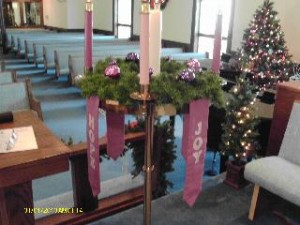
Today is a day for us to rejoice! Of course, every Sunday is a day of rejoicing because it’s the day on which we celebrate the resurrection of our Lord Jesus. On this third Sunday of Advent, however, joy and rejoicing are special themes that run throughout the prayers and Bible readings appointed for today’sMass. That’s why today is traditionally called “Gaudete” Sunday, from the Latin word for “rejoice.” And that’s also why the candle we lit on the Advent wreath today is pink, a more festive and joyful color than purple.

Joy is something that all of us long for and search for. Deep down, every one of us wants to be a joy-filled person. “God made us for joy,” said Pope John Paul II. That’s why it’s important, I think, that we give careful consideration to what today’s scripture readings suggest that we do. For instance, the first reading, from the prophet Isaiah, doesn’t tell us simply to rejoice. It tells us instead to rejoice “in the Lord.” That’s a critical distinction, because so many people today try to find joy in something other than the Lord.

Yet that’s a hopeless quest. Because while there are many things in our world that can bring us some passing happiness, true and lasting joy can only come about through a personal, life-giving relationship with the Lord. As Isaiah said, “In my God is the joy of my soul.” This means two things. First, joy is God’s gift to us when we’re in relationship with him. Second, if we want to be joyful people, we need to work on our relationship with God. Joy, then, is something we need to cultivate.

One way we can cultivate joy is to remember, on a regular basis, all the wonderful things that God has done for us. We heard Isaiah do this when he rejoiced that God had clothed him with a robe of salvation and wrapped him in a mantle of justice. And we heard Mary, the Mother of Jesus, do the same in today’s responsorial psalm, which is a selection from her Magnificat, the song she sang after Jesus was conceived in her womb. “My spirit rejoices in God my Savior,” she sang. “The Almighty has done great things for me.”

Attending Mass frequently, even daily if possible, is an excellent way we can remember the great things that God has done for us. In fact, this is one of the reasons why Jesus gave us the Mass. “Do this inmemory of me,” he said. And every time we honor that command, we recall Jesus’ life, death, resurrection, and ascension- all done out of love for us, for our salvation, and for our joy.

Praying the rosary is another excellent way we can bring to mind the great things that God has done for us, because it helps us to reflect upon the significant events in Jesus’ life, and Mary’s too. It’s also essential that we read the Bible. If you don’t do so already, I would recommend, during the week, prayerfully reading and studying the Scripture readings appointed for Sunday Mass.

A second way we can cultivate joy is by counting our blessings. This is what St. Paul tells us to do in today’s reading from I Thessalonians. “In all circumstances give thanks,” he said, “for this is the will of God.” So often, however, we go through our day taking things for granted and being bombarded with materialistic messages. We wind up envious of the things we don’t have, and ungrateful for the things we do. This can rob us of our joy. That’s why we should follow St. Paul’s advice to give thanks for anything and everything. We can give thanks for even the littlest things: A morning cup of coffee, the fact that the toilet flushed, a smile from a stranger. We can even give thanks for difficult and painful things, because they’re opportunities God gives us to exercise patience and forgiveness. If we give thanks for all things, we’ll recall how much God loves us and provides for us, and our joy will grow.

St. Paul also told us today to “pray without ceasing.” This is another way we can grow in joy. Praying without ceasing may seem like an unattainable or unrealistic goal. But ask yourself how much you pray now, and you’ll be sure to find that you can pray even more. One way to pray more is to make it a habit to pray at the beginning and the end of regular daily events. For instance, say a prayer when you first wake up. Instead of saying, “Oh no, it’s morning,” say “Oh God, it’s morning” and then ask for his blessings upon your day. Prayer also when you go to bed at night. We can also pray at the beginning and end of meals, commutes to and from our jobs, and when starting and finishing our work. We can pray when we tuck our kids in, pray when we drop them off at school, and pray when we pick them up. We can pray in the shower, in the car, and while we fold laundry and do the dishes. And many people today offer morning and evening prayers from devotional books or magazines.

The bottom line is that we joy for which we seek can only be found through a relationship with God. And anything we do to grow in that relationship will help us to grow in joy. Because with God, we’ll receive the joy of being forgiven. We’ll experience the joy of being unconditionally loved. We’ll know the joy of being promised an eternity of happiness. And we’ll find joy in the assurance that God is in control, that he walks by our side, and that he has a purpose and plan for our lives. Truly, in the words of John Paul II, “Our God is the God of joy!”

Image Credits: Wikipedia Commons, Wikipedia CommonsWikipedia Commons

Readings for today’s Mass:http://www.usccb.org/bible/readings/121111.cfm

Sweet, Beautiful, Soul Saving Joy – A Reflection on the Epistle for the Third Sunday of Advent

This Sunday is traditionally called Gaudete Sunday based on the Introit for the day: Gaudete in Domino semper, iterum dico, Gaudete (from Philippians 4:4 Rejoice in the Lord always, again I say, Rejoice). This theme is developed most fully in today’s readings  in 1 Thessalonians 5:16ff. It too begins with the salutation and imperative: Rejoice always!

Let’s take a closer look at that reading and what is meant by the admonition “rejoice.”

The text begins, Rejoice always. The Greek word properly translated here as “Rejoice” is χαίρετε (chairete). However, more is intended here than to merely rouse ourselves to some sort of the emotional state of joy or happiness. You may note the root word “charis” in “chariete” and “charis” refers to “grace.” Hence chairete means, properly, to delight joyfully in God’s grace, to experience God’s favor (grace) , to be conscious of and glad for His grace.

Thus, our text ask more of us than an emotional fervor. Rather, and more richly, it invites us to become joyfully aware of God’s grace and favor toward us, to consider the magnificent and unmerited gift of God’s love and favor, and thereby, to experience a kind of stable and deeply rooted joy, based on this abiding knowledge. Hence the text bids us to rejoice “always.”

The text goes further, to identify three basic ways that our joy can become both stable and deeply rooted in our personality and psyche. In effect the text does not merely tell us to rejoice always, but goes on to say how this can be done. Let’s look at these three ways.

I. PERSEVERANCE IN PRAISE – The text says, Pray without ceasing. In all circumstances give thanks, for this is the will of God for you in Christ Jesus. Do not quench the Spirit. Hence we see the first three foundations for rejoicing always. Let’s take them a little out of order.

A. In all circumstances give thanks thanksgiving is an important discipline that trains our mind to focus on reality. For it so happens that we tend to be negative, perhaps due to our fallen nature. The reality is that, everyday, ten trillion things go right and a few things go wrong. Now if you think ten trillion is an exaggeration, it is not. Consider all things that have to go right with every cell in your body. Add to that all the many things and factors on this earth, indeed in the whole universe that must be delicately balanced for you and I to be her, be alive and be flourishing. Ten trillion is not an exaggeration.

However, it we are not careful, we going to focus on the five or six things that went wrong today. And, mind you, some of them may feel serious at times (usually they are not). Nevertheless, even the truly serious mishaps cannot deny the reality of the ten trillion things that have gone right.

Thanksgiving disciplines our mind to focus on the bigger reality of countless blessings. Even some of the mishaps of a day can be blessings in disguise.

Hence we are told to give thanks in all circumstances. Daily thanksgiving disciplines our mind to focus on the blessings in astonishing number. What you feed grows, and if the negative is fed, it will grow. But, if the positive is fed, it will grow, and become an important basis of stable joy in our life. Give thanks in all circumstances.

B. Pray without ceasing – Here too is a discipline of the mind. Paul does not mean to stay in a chapel all day. He means that we should lay hold of the normal Christian life, which is to be in living conscious contact with God at every moment of our day. To the degree that we are consciously aware of God’s presence, and in a dialogue of love with him all day, our joy is deeper and becomes stable.  Thus we are able by this ongoing sense of His presence to “rejoice always.”

C. Do not quench the Spirit – That such gifts (on-going prayer and thanksgiving) are “God’s will for us” means that God wants to give us these gifts. Hence we should not quench the Spirit which bids us seek these things. But rather, we should heed His promptings and seek after these gifts, even pester God for them. Too often we quench the Spirit by not taking seriously the promises He offers us in Christ Jesus. We are not convinced that the Spirit can give us a whole new life, and deepen our prayer and gratitude, so we don’t even ask. We also quench the Spirit by cluttering our lives with endless distractions and we never sit still for a moment to listen to the small, still voice of God. But if we will fan into flame the gifts of God’s love, God the Holy Spirit will kindle a fire in us that never dies away. And as the gifts of his love, to include deeper prayer and constant thankfulness, take hold, our joy too deepens and we can “rejoice always.”

II. PERSPECTIVE THROUGH PROPHECY – the text says: Do not despise prophetic utterances. Test everything; retain what is good.

In the first place, “prophetic utterance” is Scripture itself. Scripture is a prophetic interpretation of reality. It describes the world as it truly is, and sets forth a clear vision. It is an antidote to the muddled and murky suppositions of worldly thinking which, at best, gropes in the darkness, and at worst, is deceitful and erroneous. We ought not despise God’s Word in any way, but accept it wholeheartedly and, to the degree that we do, it assures us of the ultimate victory of God, His truth and His Kingdom. Our own victory is also set forth in the paschal mystery of God’s word wherein every cross, faithfully carried produces for us a weight of glory beyond all compare (cf 2 Cor 4:17). This vision, this prophetic interpretation of reality, produces in us a serene joy that allows us to “rejoice always.”

Prophetic utterances are, also, the teachings of the Church, the utterances of the Fathers of the Church and the teachings of the saints down through the ages. There is a great deposit of faith carefully collected and loving handed down from apostolic times. The dogmas and doctrines of the faith are like the precious fragments gathered up by the Apostles at the multiplication of the loaves and fishes. For the Lord had told them that nothing was to go to waste. And so too for us who ought to seek for every instruction prophetically uttered by Mother Church, nothing is to fall to the ground.

The Fathers and saints too have left us a wondrous testimony that we should not despise or ignore. They, along with the Church utter wisdom and announce victory to every believer. In the laboratory of their own lives they have tested the Word of God and found it true. Added to this number are trustworthy people in our own time who teach us the Word of God. They include our parents, priests, religious, and holy men and women who have inspired us. And to the degree that we will let the Church and the saints teach us, along with trustworthy souls of our own time, to the degree that we do not despise prophetic utterance, the foundation of our joy becomes more sure and we can rejoice always.

III. PROGRESS TOWARD PERFECTION – The text says, Refrain from every kind of evil. May the God of peace make you perfectly holy and may you entirely, spirit, soul, and body, be preserved blameless for the coming of our Lord Jesus Christ. The one who calls you is faithful, and he will also accomplish it.

The greatest source of sorrow, the biggest killer of joy in our life, is our sin. To the degree that we indulge it, our joy is sapped. But to the degree that we allow the Lord to deliver us from sin and make us more and more holy, our joy will become deeper and lasting. The words “holy” and “whole” are not far apart. And to the degree that we become more whole, more perfected, more free of sin, more perfectly holy and blameless as the text says, our joy becomes deeper and we can increasingly “rejoice always.” God can do this for us if we are willing, and if we ask.

Thus we see that the mandate, the exhortation, to “Rejoice always” is far more than whipping ourselves up to an emotional high. Rather it is a stable and serene joy rooted in prayerful gratitude, a mind transformed by God’s truth and a growing holiness. Allow the promise of the Lord to be fulfilled in you. For he has said,

Now remain in my love. If you obey my commands, you will remain in my love, just as I have obeyed my Father’s commands and remain in his love. I have told you this so that my joy may be in you and that your joy may be complete (Jn 15:9-11)

This song says, Joy, Joy, God’s great joy! Joy, Joy, down in my soul. Sweet, beautiful soul-saving joy. Oh Joy! Joy in my soul!

Don’t Think….Look!

I want to give two thumbs up for good old fashioned experience, just experiencing life to its top…..just having an experience! Too often in today’s hurried age, and also in this time of frantic 24 hour news cycles, we rush past experience to analysis. Too often we insist on knowing immediately what something “means” and what to think about it. This rush to think and analyze often happens before the experience is even over. And, of course, analyzing something before all the data is in leads to limited and poor analysis. Two old sayings come to mind:

  1. Don’t Think…Look! – We miss so much of life when we retreat into our brains for immediate analysis. I recently went to an art exhibit called the “Sacred Made Real,” and as you walk in, they hand you a thick pamphlet describing each work. This is fine I thought, but before I read a word I wandered through and gazed upon each marvelous work first. Some of the works were mysterious to me, “Who was this?,” I thought. But the mystery was part of the experience. Later I went back and read on each work. I also noticed many people buried in their little pamphlet barely looking at the actual artwork, beyond an occasional glance. Most of their time was spent reading. There were others who had headphones on which provide a better look but still fills your head with information too soon. Another variant on this saying is “Don’t Think….Listen!” So often when listening to others. They may get a few words or a sentence out and zap, our mind lights up as we think how to answer them and we miss most of the experience of what they are saying to us.
  2. Do just do something, stand there. – In all of our activism we seldom savor life. Few people take a Sabbath rest anymore. Few eat dinner with their family. Few even know how to chill and just relax. Even many vacations are packed with activities and destinations which allow little real to actually experience what one is doing. I live near the U.S. Capitol and observe how some people are so busy taking pictures of the Capitol, I wonder if they ever really “see” or experience the Capitol.

I’d like to focus this insight of the importance of real experience on the Liturgy. And rather than give lots of discursive commentary I’d like to give some random “snapshots” and ponder our need to get back to experience more purely and simply.

  1. It’s First Communion, or perhaps a wedding. As children come down the aisle, or perhaps the bride, hundreds of cameras and cell phones are held aloft, annoying flashes go off creating a strobe effect. People scramble to get into better positions for a picture. In recent years I have had to forbid the use of cameras. The Bride and Groom are permitted to hire a professional photographer, and we also permit one professional photographer to take pictures at First Holy Communion and Confirmation. But otherwise I instruct the assembled people that the point of the Liturgy is to worship God, to pray and to experience the Lord’s ministry to us. I insist that they put away their camera and and actually experience the Sacrament being celebrated and the mysteries unfolding before them.
  2. A couple of years ago I was privileged to be among the chief clergy for a Solemn High Pontifical Mass in the Old Latin Form at the Basilica here in DC. The liturgy was quite complicated to be sure. We rehearsed the day before and as the rehearsal drew to a close I said to whole crew of clergy and servers, “OK, Tomorrow during the Mass, Don’t forget to worship God!” We all laughed because it is possible to get so wrapped up in thinking what is next and what I have to do, that we forget to pray! The next day I told God that no matter what, I was here to worship him. I am grateful that he gave me a true spirit of recollection in that Mass. I did mix up a minor detail, but in the end, I experienced God and did not forget to worship him. Success. Thank you Lord!
  3. The Mass is underway in a typical Catholic Parish. Something remarkable is about to happen, the Lord Jesus is going to speak through the Deacon who ascends the pulpit to proclaim the Gospel. Yes, that’s right, Jesus himself will announce the Gospel to us. As the Deacon introduces the Gospel all are standing out of respect. And 500 hundred pairs of eyes are riveted……on the Deacon? No! For many their eyes are riveted on a missalette. Half way through the Gospel the Church swims with the sound of hundreds of people turning the page of their missalettes, one or two of them drop them in the process. Sadly, most lose the experience of the proclamation of God’s Word with their heads buried in a missalette. They may as well have read it on their own. Some will argue that this helps them understand the reading better. But the Liturgy is meant to be experienced as a communal hearing of the Word proclaimed. And as for understanding, “Don’t think…..Listen!” Understanding and reflection comes later. In the homily the Lord will speak to us of something and give us what we need to hear and He will grant understanding. It’s all part of the “experience.”
  4. I celebrate a good number of Wedding Masses in the Old Latin Form. Some years ago a couple prepared a very elaborate booklet so that people could follow along and understand every detail of the Old Latin Mass. Of itself, it was a valuable resource. They asked me, prior to the Mass to briefly describe the booklet and how to use it. I went ahead and did so but concluded my brief tour of the book by saying, “This is a very nice book and will surely make a great memento of today’s wedding. But if you want my advice, put it aside now and just experience a very beautiful Mass with all its mystery. If you have your head in a book you may miss it and forget to pray. Later on you can read it and study what you have experienced.” In other words, “Don’t think….Look!”
  5. In the ancient Church the Catechumens were initiated into the “Mysteries,” (the Sacraments of Initiation) with very little prior instruction as to what would happen. They had surely been catechized in the fundamental teachings of the faith but the actual details of the celebration of the Sacraments were not disclosed. They were Sacred Mysteries and the disciplina arcanis (the discipline of the secret) was observed. Hence they simply experienced these things and where instructed as to their deeper meaning in the weeks that followed in a process known as mystagogia. Hence, experience preceded analysis, understanding and learning. And the very grace of the experience and the Sacraments provided the foundation for that understanding.

Well, I realize that this post will not be without some controversy. Let me be clear about one point, Catechesis is important but so is experience. And if we rush to analyze and decode everything we miss a lot. I have taught on the liturgy extensively in this blog (here: http://blog.adw.org/tag/mass-in-slow-motion/ ) and will continue to do so. There is a time to do so, but there is also a time just to be still and experience what God is actually doing in every liturgy, indeed, in every moment of our life.

Two thumbs up and three cheers for experience.

I realize that some further distinctions out to be made but I want to leave that for you who comment. Have at it.

A Silent Night

This time of year is an especially noisy one, wouldn’t you agree? Some of this noise we might call “good” noise: Christmas carols, the sounds of our favorite movies and shows, the excitement and laughter of children. Other noise, however, we might characterize as “bad,” namely the full-scale marketing assault we’re bombarded with “24/7.”

The danger with all this noise- both “good” and “bad” is that it can drown out the voice of God- a voice that rarely shouts, but usually speaks in whispers. That’s why we need to make a special effort to listen amidst the hubbub of this season.

Consider today’s gospel. Jesus laments that the people of his generation didn’t make an effort to listen- either to John the Baptist, or to him. As a consequence, they robbed themselves of the wisdom that only they could give.

Jesus dearly wanted them to listen, and he dearly wants us to listen as he speaks to us in the silence of our hearts. Yet in this season, silence isn’t going to find us. We have to go and find it, by making the time for quiet time with God. Just think about it: When were the abiding shepherds able to hear the herald angels sing? In the middle of a silent night.

Photo Credit: Wikipedia Commons

Readings for today’s Mass:http://www.usccb.org/bible/readings/120911.cfm