True gratitude is a grace, or gift, from God. It proceeds from a humble and transformed heart. We do not render thanks merely because it is polite or expected, or because God commands it but because it flows naturally from a profound experience of gratitude. The “command” of Scripture to give thanks is not a moral cliché but a truth and a description of what flows from a transformed heart.
We should seek from God the powerful transformation of our intellect and our heart so that we become deeply aware of the remarkable gift that is everything we have. As this awareness deepens so does our gratitude and joy at the “magnificent munificence” of our God. Everything—literally everything—is a gift from Him. Consider the following reflection from St. Gregory Nazianzen:
Recognize to whom you owe the fact that you exist, that you breathe, that you understand, that you are wise, and, above all, that you know God and hope for the kingdom of heaven and the vision of glory, now darkly as in a mirror but then with greater fullness and purity. You have been made a son of God, coheir with Christ. Where did you get all this, and from whom?
Let me turn to what is of less importance: the visible world around us. What benefactor has enabled you to look out upon the beauty of the sky, the sun in its course, the circle of the moon, the countless number of stars, with the harmony and order that are theirs, like the music of a harp? Who has blessed you with rain, with the art of husbandry, with different kinds of food, with the arts, with houses, with laws, with states, with a life of humanity and culture, with friendship and the easy familiarity of kinship?
Who has given you dominion over animals, those that are tame and those that provide you with food? Who has made you lord and master of everything on earth? In short, who has endowed you with all that makes man superior to all other living creatures?
Is it not God who asks you now in your turn to show yourself generous above all other creatures and for the sake of all other creatures?(From a sermon by Saint Gregory of Nazianzen, bishop. Oratio 14, De Pauperum amore, 23-25: PG 35, 887-890.)
Yes, we have so much for which we should be grateful!God holds together every fiber of our being: every cell and every part of every cell, every molecule and every part of every molecule, every atom and every part of every atom. He facilitates every function of our body: every beat of our heart, every movement of our body, the functioning of every organ. God sustains every intricate detail of the world in which we live: the ideal orbit of our planet such that we neither boil nor freeze; the magnetic shield that protects Earth from harmful solar radiation; every intricate process of our planet, solar system, galaxy, and universe. All of this, including us, is sustained by God and provided for by Him. The depth, height, length, and width of what God does is simply astonishing—and He does it all free of charge. Pondering such goodness and providence helps us to be more grateful. Yes, allis gift.
There are some gifts of God that don’t seem like gifts at all:losses, tragedies, and natural disasters. In such moments it is easy to feel that He has forsaken us; gratitude is probably the last thing on our mind. Even here, Scripture bids us to look more closely: And we know that all things work together for the good of those who love God and who have been called according to his purpose (Romans 8:28). We don’t always know how, but even in difficult moments God is making a way unto something good. He is paving a path unto glory, even if through the cross. Jesus has said to us, But I will see you again and you will rejoice, and no one will take away your joy. On that day you will have no more questions to ask me (Jn 16:22-23). Yes, even in our difficulties we are more than conquerors (Rm 8:37) because the Lord can write straight with crooked lines and make a way out of no way. Yes, allis gift!
It is hard to overestimate the role that gratitude plays in good mental, emotional, and spiritual health.Grateful people are different: more joyful, generous, kind, patient, serene, and confident. All of this comes from the fact that gratitude makes present to us the provident goodness of God. Acknowledging how good God has been to us helps us to become more trusting and less anxious. Because of this we have the confidence to be more generous; there is no need to hoard things because we know that God will take care of us. Yes, through gratitude we are freed from many anxious cares and given a serene and stable joy; we are equipped to be so much more patient and generous.
Ultimately, gratitude is a gift to be received from God. We ought to ask for it humbly. We can dispose ourselves to it by reflecting on things such as those discussed above, but ultimately gratitude comes from a humble, contrite, and transformed heart. True gratitude is a grace, a gift, that comes from a heart deeply moved, astonished, and aware of the fact that God is so very good. Allis gift!
The first reading this Sunday reminds us that our speech discloses our character:
When a sieve is shaken, the husks appear; so do one’s faults when one speaks. The fruit of a tree shows the care it has had; so too does one’s speech disclose the bent of one’s mind.
Praise no one before he speaks,
for it is then that people are tested (Sirach 27:4-7).
What we say reveals a great deal about us—more than we imagine. Speech is among our greatest gifts, yet self-mastery in speech is among the rarest. Some of the most common sins we commit are related to speech: gossip, idle chatter, lies, exaggeration, harsh attack, and uncharitable remarks. With our tongue we can spew hatred, incite fear, spread misinformation, tempt, discourage, promote error, and ruin reputations. With a gift capable of bringing such good, we can surely cause great harm!
The Letter of James says this:
We all stumble in many ways. Anyone who is never at fault in what he says is perfect, able to keep his whole body in check. When we put bits into the mouths of horses to make them obey us, and thus we can turn the whole animal. Or take ships as an example. Although they are so large and are driven by strong winds, they are steered by a very small rudder wherever the pilot wants to go. Likewise, the tongue is a small part of the body, but it makes great boasts.
Consider how a great forest is set on fire by a small spark. The tongue also is a fire, a world of evil among the parts of the body. It corrupts the whole body, sets the whole course of one’s life on fire, and is itself set on fire by hell.
All kinds of animals, birds, reptiles and sea creatures are being tamed and have been tamed by mankind, but no human being can tame the tongue. It is a restless evil, full of deadly poison. With the tongue we praise our Lord and Father, and with it we curse human beings, who have been made in God’s likeness. Out of the same mouth come praise and cursing. My brothers and sisters, this should not be (Jam 3:2-10).
Although one may conquer any sin by God’s grace, those associated with speech are among the hardest to overcome. Sometimes it seems as if our speech is being controlled by a separate, baser part of our brain. We can be halfway through saying something before realizing how foolish and sinful we are being. Scripture speaks artistically of the sinful tongue.
Here are some common sins of the tongue:
The Lying Tongue – speaking falsehoods with the intention of misleading others.
The LORD detests lying lips, but he delights in people who are trustworthy (Prov 12:22).
A false witness will not go unpunished, and one who utters lies will not escape (Prov 19:5).
Not every story should you believe (Sir 19:14).
The Backbiting Tongue – talking about others behind their backs, injuring their reputations through detraction.
A man’s tongue can be his downfall. Be not called a detractor; use not your tongue for calumny (Sir 5:13-16).
Never repeat gossip, and you will not be reviled. … Let anything you hear die within you … (Sir 19:5).
The Indiscreet Tongue – spreading confidential, unnecessary, or hurtful information about others.
He that goes about as a tale-bearer reveals secrets, therefore keep no company with such a one (Prov 20:19).
A gossip betrays a confidence; so avoid a man who talks too much (Prov 20:19).
He who repeats an evil report has no sense. Never repeat gossip… Let anything you hear die within you; be assured it will not make you burst. But when a fool hears something, he is in labor, like a woman giving birth to a child … (Sir 19:5, 14).
Thou shalt not go up and down as a tale-bearer among thy people (Lev 19:16).
The Flattering Tongue– exaggerating the good qualities of others in order to ingratiate ourselves to them.
May the Lord silence all flattering lips and every boastful tongue (Ps 12:4).
Wounds from a friend can be trusted, but an enemy multiplies kisses (Prov 27:6).
The Proud Tongue – speaking boastfully or in an overly certain way.
There is a saying that a proud tongue comes with two closed ears. Those of proud tongue are not easily corrected and do not qualify or distinguish their remarks as they should.
May the Lord silence all flattering lips and every boastful tongue, Those who say, “By our tongues we will prevail; when our lips speak, who can lord it over us?” (Ps 12:4-5)
An evil man is trapped by his rebellious speech, but a righteous man escapes from trouble (Prov 12:13).
The prudent man does not make a show of his knowledge, but fools broadcast their foolishness (Prov 12:23).
The Overused Tongue – saying too much, which usually ushers in sin by its excess.
A fool’s voice [comes] along with a multitude of words (Ecc 5:2).
When words are many, sin is inevitable, but he who restrains his lips is wise (Prov 10:19).
The Rash Tongue – speaking before one should, often without having all the information.
Be not rash with your mouth, and let not your heart be hasty to utter anything before God (Ecc 5:1).
Be swift to hear, but slow to answer. If you have the knowledge, answer your neighbor; if not, put your hand over your mouth (Sir 5:13).
Even a fool is thought wise if he keeps silent, and discerning if he holds his tongue (Prov 17:28).
The Quarrelsome Tongue – speaking in an overly opinionated way, attacking others personally, and/or provoking unnecessary division.
Fools’ words get them into constant quarrels; they are asking for a beating (Prov 18:6).
A fool finds no pleasure in understanding but delights in airing his own opinions (Prov 18:2).
Drive out the mocker, and out goes strife; quarrels and insults are ended (Prov 22:10).
The Cursing Tongue – wishing harm upon others, often that they be damned.
He loved to pronounce a curse—may it come back on him. He found no pleasure in blessing—may it be far from him (Ps 109:17).
Whoever curses his father or mother, his lamp will be extinguished in deepest darkness (Prov 20:20).
The Piercing Tongue – speaking unnecessarily harshly or severely.
The heart of the righteous weighs its answers, but the mouth of the wicked gushes evil (Prov 15:28).
Some people make cutting remarks, but the words of the wise bring healing (Prov 12:18).
Do not rebuke an older man harshly, but exhort him as if he were your father. Treat younger men as brothers, older women as mothers, and younger women as sisters, with absolute purity (1 Tim 5:1-2).
The Silent Tongue – failing to speak up when we ought to warn people of sin, call them to the Kingdom, and announce the truth of Jesus Christ.
In our age, the triumph of evil and poor behavior has been facilitated by our silence. As prophets, we are called to speak God’s Word.
Proclaim the message; persist in it in season and out of season; rebuke, correct, and encourage with great patience and teaching (2 Tim 4:2).
Israel’s watchmen are blind; they are all ignorant, they are all dumb dogs, they cannot bark (Is 56:10).
Yes, our speech is riddled with what it should not have and lacking in what it should. How wretched is our condition! Well, James did say, Anyone who is never at fault in what he says is perfect. Indeed, if anyone masters his tongue, he is a spiritual superman!
Set a guard over my mouth, O LORD; keep watch over the door of my lips (Ps 141:3).
Yes, help me, Lord. Keep your arm around my shoulder and your hand over my mouth! Put your Word in my heart so that when I do speak, it’s really you speaking.
During the month of February to celebrate African American History Month we focus on the ‘Spirituals’ and the impact they have on lives and faith. In this post we look to the theme of READINESS.
One of the great qualities of the African-American Spirituals is to treat serious subjects in a clear, memorable, and almost joyful way. This is true even of very weighty matters like sin and readiness for judgment day. They cover the judgment, but in a way that is playfully bright while at the same time deeply soulful.
Let us remember that Spirituals were written in the cauldron of great suffering. If any people might be excused from thinking that the Lord would exempt them from judgment day, it is surely the enslaved in the deep South. And yet the Spirituals are almost wholly devoid of self-righteousness. Enslaved blacks sang in ways that looked also to their own sins and need to be prepared. If they were prepared, God, who knew their trouble, would help them to steal away to Jesus. They did not see themselves as exempt from the need to be ready.
So let’s sample some of these lines from numerous spirituals that speak to judgment. Some of these first quotes occur in many of the Spirituals:
I would not be a sinner, I’ll tell you the reason why. I’m afraid my Lord might call my name and I wouldn’t be ready to die.
Some go to Church for to sing and shout, before six months they’s all turned out!
Better watch my brother how you walk on the cross! Your foot might slip and your soul get lost!
God gave Noah the rainbow sign, no more water but the fire next time!
Old Satan wears a hypocrite’s shoe, If you don’t watch he’ll slip it on you!
Knock at the window knock at the door, Callin’ brother Noah, can you take more?! No said Noah cause you’re full of sin! God’s got the key you can’t get in!
Oh sinner man better repent! Oh you’d better repent for God’s gonna call you to judgment There’s No hiding place down there!
Sinner please don’t let this harvest pass And die and lose your soul at last.
The words as one can see are memorable and poetic; they are playful and piercing. Other memorable songs of readiness and judgment are some of the following:
Most of these songs are deeply scriptural and make serious appeals to the human soul, but they do so in a way that is creative. They get you tapping your foot and invite you to a joyful consideration of the need to repent before it’s too late. Others are more soulful, even mournful, in their pentatonic scale. Given all the reluctance to discuss the four last things (death, judgment, Heaven, and Hell), songs like these may help to reopen the door to necessary conversations between preacher and congregation, parents and children. They are a valuable masterpieces and the great treasure for the Church and for the world.
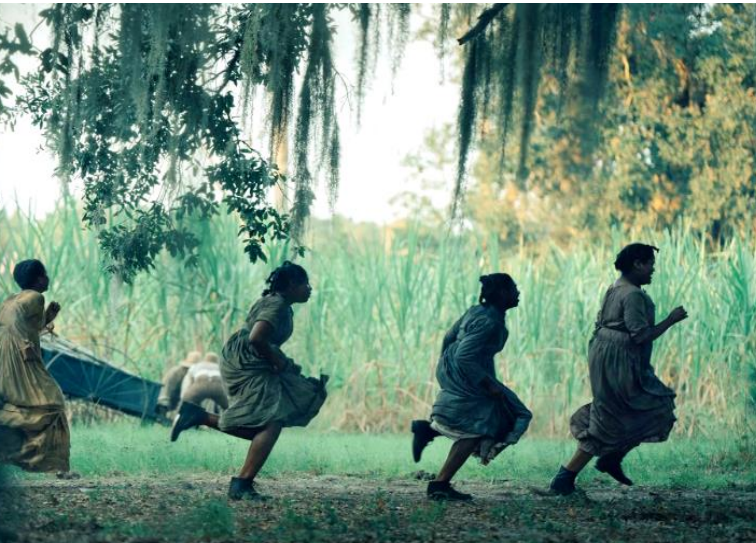
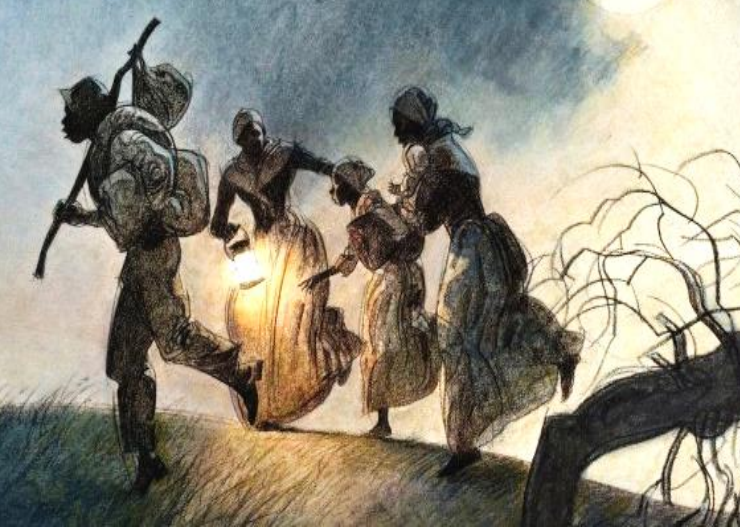
Note too, some of these Spirituals had a double meaning we should not ignore. The Gospel Train surely referred to the journey to heaven, but it too many it was also code for the Underground Railroad. Michael Row the Boat ashore speaks also the journey to the other side but it also images crossing the river from slave states to the free North.
We cannot conclude this reflection on readiness Spirituals without reference to one of the greatest and most spirited of them all: In Dat Great Gettin’ Up Morning. It is a tour de force of the last Day when the trumpet blows and the dead rise. It is joyful—a real toetapper—and makes a serious point along with a wish:
“In That Great Gettin’ Up Mornin Fare You Well!” I’m Gonna tell ya ’bout da comin’ of da judgment! Der’s a better day a comin’, Fare you well, fare you well! Chorus: In dat great gettin’ up mornin’, Fare you well, fare you well In dat great gettin’ up mornin’, Fare you well, fare you well Oh preacher fold yo’ bible, For dat last souls converted, Fare you well, fare you well Blow yo’ trumpet Gabriel, Lord, how loud shall I blow it? Blow it right and calm and easy, Do not alarm all my people, Tell dem all come to da judgment, Fare you well, fare you well! Do you see dem coffins burstin, do you see dem folks is risin’ Do you see dat fork of lightenin’, Do you hear dat rumblin’ thunder ?!? Fare you well, fare you well! Do you see dem stars a fallin’, Do you see da world on fire?!? Fare you well, fare you well Do you see dem Saints is risin’, Fare you well, fare you well See ’em marchin’ home for heaven, Fare you well, fare you well Oh! Fare you well po’r sinners, fare you well, fare you well Fare you well po’r sinners, fare you well, fare you well!
Thank God for the Spirituals, and thank those he inspired to craft them!
This is the second in a series of four postings on African American Spirituals.
In this second article on the Spirituals lets review of some of the general history of the Spirituals and then, we look to the theme of HOPE.
The Spirituals of the African-American tradition, sometimes called the “Negro spirituals” are songs created by enslaved Africans in the decades prior to the Civil War. They do not have individual composers, but emerged from the whole community. They were passed orally from person to person and improvised as suited the singers. They were crafted in the fields where the slaves would sing to pass the day and ease the often tedious work of planting, tending and harvesting the crops. Some were simple work songs that were sung in a call and response style. Over the years, the slaves and their descendants adopted Christianity, the religion of their masters, and they began to include religious themes into their field songs. They re-shaped it into a deeply personal way of dealing with the oppression of their enslavement. These songs, became known as spirituals and reflected the slaves’ expression of their faith. The songs told stories, from Genesis to Revelation: Adam and Eve in the Garden, Moses and the Red Sea. They sang of the battle of Jericho, Ezekiel seeing a wheel, Mary, Jesus, the blind man seeing, God troubling the water, and yes, the Devil, as one to avoid!
Some of the best known spirituals include: “Sometimes I Feel Like a Motherless Child,” “Nobody Knows The Trouble I’ve Seen”, “Steal Away,” “Swing Low, Sweet Chariot,” “Go Down, Moses,” “He’s Got the Whole World in His Hand,” “Every Time I Feel the Spirit,” “Let Us Break Bread Together on Our Knees,” and “Wade in the Water.”
The Spirituals have great authority since they were written in the cauldron of great suffering. If any people might be excused from thinking that the Lord had forsaken them or, that they would be exempt from judgment day, it was surely the enslaved in the Deep South. If any people might be excused from crying out for vengeance, it was those enslaved in the South. And yet the spirituals are almost wholly devoid of condemning language. Enslaved blacks sang in ways that looked also to their own sins and need to be prepared. If they were prepared, God, who knew their trouble, would help them to steal away to Jesus. They did not see themselves as exempt from the need to be ready and to persevere in the faith. In the years following Slavery, these songs were collected and given choral form that included elaborate harmonies and swift rhythms. The spirituals are wonderfully creative and contain a wisdom that comes from suffering and a hope that comes from faith in God’s promises. The African American Spirituals are a national treasure and gift to the Church of immeasurable value.
Now we turn to the theme of Hope.
There is an old story told of a young slave girl who lamented to her mom, “Mama, all the White folks got shoes, why don’t we?” Her mother replied, “Oh, we got shoes alright. See,
And then Mama said “Remember child,” Everybody talkin’ ‘bout heaven ain’t a goin’ there.”
(NOTE: Click on the songs in blue text for links to the internet to hear versions of these Spirituals).
So, songs and sayings like these got taken into the field by the slaves and became the foundation of the Spirituals. In the midst of great injustice and oppression with no end in sight, one can become depressed and angry. The message of the Spirituals drew on biblical stories and themes of life to convey the hope of ultimate victory in Jesus and the reward for faith. They were a kind of “Balm in Gilead to heal the wounded soul.” The oppressed looked beyond this valley of tears to heaven where joys unspeakable and glories untold awaited the faithful Christian. One spiritual says,
These songs gave hope in the midst of great sorrow and oppressive slavery. And this hope was not only in heaven after death, it was now as well. Many of the songs had double meanings. The city called heaven that I am “trying to make my home” was also code for the North where freedom could be found. “Marchin’ up to freedom land” could mean heaven but it could also mean the land of freedom up north. The slaves knew that not every blessing had to wait for heaven. God is in the blessing business right now. The spirituals sought to give courage to fellow slaves to forsake fear and look for opportunities to lay hold of their God-given freedom.
This is part one of a four part Series I am doing on the Spirituals
The Spirituals of the African-American tradition, sometimes called the “Negro spirituals” are songs created by enslaved Africans in the decades prior to the Civil War. They do not have individual composers, but emerged from the whole community. They were passed orally from person to person and improvised as suited the singers. They were crafted in the fields where the slaves would sing to pass the day and ease the often tedious work of planting, tending and harvesting the crops. Some were simple work songs in a call response style. Here is an example:
Refrain: Hoe Emma Hoe! You turn around dig a hole in the ground.
Call: O Emma help me to pull these weeds!
Response: Hoe Emma Hoe! You turn around dig a hole in the ground.
Call: O Emma worked harder than two strong men!
Response:Hoe Emma Hoe! You turn around dig a hole in the ground.
Over the years, the slaves and their descendants adopted Christianity, the religion of their masters, and they began to include religious themes into their field songs. They re-shaped it into a deeply personal way of dealing with the oppression of their enslavement. These songs, became known as spirituals and reflected the slaves’ expression of their faith. The songs told stories, from Genesis to Revelation: Adam and Eve in the Garden, Moses and the Red Sea. They sang of the battle of Jericho, Ezekiel seeing a wheel, Mary, Jesus, the blind man seeing, God troubling the water, and yes, the Devil, as one to avoid!
The songs were also used to communicate with one another in a kind of code, without the knowledge of their masters. This was particularly the case when a slave was planning to escape bondage and to seek freedom via the Underground Railroad. For example the well-known “Steal Away to Jesus” was not merely a song about death and the journey to a heavenly homeland; and, “I ain’t got long to stay here” in the song didn’t refer simply to death, but also to escaping to the north and out of slavery.
There were thousands of spirituals. However, the oral tradition of the slaves’ ancestors — and the prohibition against slaves learning to read or write—meant that the actual number of songs is unknown. Some of the best known spirituals include: “Sometimes I Feel Like a Motherless Child,” “Nobody Knows The Trouble I’ve Seen”, “Steal Away,” “Swing Low, Sweet Chariot,” “Go Down, Moses,” “He’s Got the Whole World in His Hand,” “Every Time I Feel the Spirit,” “Let Us Break Bread Together on Our Knees,” and “Wade in the Water.”
The Spirituals have great authority since they were written in the cauldron of great suffering. If any people might be excused from thinking that the Lord had forsaken them or, that they would be exempt from judgment day, it was surely the enslaved in the Deep South. If any people might be excused from crying out for vengeance, it was those enslaved in the South. And yet the spirituals are almost wholly devoid of condemning language. Enslaved blacks sang in ways that looked also to their own sins and need to be prepared. If they were prepared, God, who knew their trouble, would help them to steal away to Jesus. They did not see themselves as exempt from the need to be ready and to persevere in the faith.
During these last days of Black History month I would like to write several articles on the ‘Spirituals’ and the impact they have on our lives and faith. Each week, we will look at a specific theme and provide some history and clarity in relations to scripture.
I this column I want to focus on songs of sorrow. Frederick Douglas said of these spirituals: “Slaves sing most when they are most unhappy. The songs of the slave represent the sorrows of his heart; and he is relieved by them, only as an aching heart is relieved by its tears.” These songs were not mere self pity, they were an exhaling of their souls and a confident expectation of God’s ultimate deliverance.
They sang words and themes like: (You can click on each song to hear the song).
NOTE: You can hear the actual songs listed above by clicking on the song title which contains a link.
In the first years after the Civil War, most former slaves grew distant from the music of their captivity. Many wondered if this musical treasure would be lost. Thank God, no. The performance of spirituals was revived when a group of students from Fisk University in Nashville, Tennessee, began to tour in an effort to raise money for the school. They performed wonderfully scored choral versions of the spirituals that we are most familiar with now. The Fisk Jubilee Singers carried spirituals to many parts of the United States and also made tours of Europe in the 1870s. Their success encouraged other Black colleges to learn and perform more and more spirituals. Large collections of spirituals were collected, scored and published to meet the public demand.
The spirituals are wonderfully creative and contain a wisdom that comes from suffering and a hope that comes from faith in God’s promises. The African American Spirituals are a national treasure and gift to the Church of immeasurable value.
Are you a Christian? Before you answer, consider these other questions: Do you love your enemy? Do you do good to them who hate you? The honest answers to these questions are at the very heart of Christianity and represent what distinguishes a Christian from others. Let’s follow Jesus’ teachings in several stages. In so doing, we can learn our truest identity and how He seeks to transform us.
The ATTITUDE of a Christian
Jesus said to his disciples, “To you who hear I say, love your enemies, do good to those who hate you, bless those who curse you, pray for those who mistreat you. To the person who strikes you on one cheek, offer the other one as well, and from the person who takes your cloak, do not withhold even your tunic. Give to everyone who asks of you, and from the one who takes what is yours do not demand it back. Do to others as you would have them do to you.”
In effect, Jesus is telling us to put an end to the cycle of injustice and violence, by His grace. The Christian is to stand in the gap and say, “It ends with me.” This is Jesus’ game plan, his battle strategy. Defeat Satan’s cycle and thwart his plan to get two birds with one stone. Satan’s usual tactic is to inspire hatred or vengeance in someone, who then attacks us; in response, we lash back and become just like our enemy. In this way, Satan has captured two disciples for the price of one. The Lord tells us not to fall for that. We are to kill our enemies with kindness, get them with goodness, and lure them with love.
Note, then, four attitudes that the Lord distinguishes:
Merciful– Love your enemies, do good to those who hate you, bless those who curse you, pray for those who mistreat you.We ought to remember how merciful God has been to us. Even when we mistreated Him and were His enemies through sin, God show[ed] his love for us in that while we were yet sinners Christ died for us (Rom 5:8). Allow God to make you aware of His abundant mercy so that you are deeply grateful and thus equipped to love your enemy and mercifully withhold your wrath and vengeance toward him.
Meek– To the person who strikes you on one cheek, offer the other one as well, and from the person who takes your cloak, do not withhold even your tunic.Meekness is the virtue that governs anger. It is the proper middle ground between too much anger and not enough. Even when anger is an appropriate response, meekness moderates it, steering it away from destructive ends to helpful ones. It takes a strong person to control his anger, to refrain from retaliating or seeking revenge. Through meekness, we can also direct our anger toward the proper target: Satan. Use the energy of anger to defeat Satan’s plan!
Magnanimous– Give to everyone who asks of you, and from the one who takes what is yours do not demand it back. We are too easily angered when people seek our time, talent, or treasure; this anger can give way to wrath. Those who are magnanimous are open to being asked, at peace with saying no when necessary, and generous in sharing their gifts. Christians graced by Christ are less apt to say, “This is mine; leave me alone” and more likely to realize that God has been good to them. This joy in what God has given them disposes them to generosity with others. Joy is like an energy that fuels magnanimity.
Meet –Do to others as you would have them do to you.An old meaning of “meet” is suitable, proper, fitting, correct, or just. Christians are aware that if we want the world to be more just, it has to begin with us. We understand that we are going to need the help of others in countless ways and therefore treat others as we hoped to be treated. We sow justice, mercy, and patience in order to reap them in others.
The ALTITUDE of a Christian
For if you love those who love you, what credit is that to you? Even sinners love those who love them. And if you do good to those who do good to you, what credit is that to you? Even sinners do the same. If you lend money to those from whom you expect repayment, what credit is that to you? Even sinners lend to sinners and get back the same amount. But rather, love your enemies and do good to them, and lend expecting nothing back; then your reward will be great, and you will be children of the Most High, for he himself is kind to the ungrateful and the wicked. Be merciful, just as your Father is merciful.
Christians are supposed to stand out. By God’s grace, we are to rise above mere human norms. Note what Jesus expects of us:
We are to Excel – In effect, Jesus asks us these questions: How are you excelling? What makes you different from a virtuous atheist or pagan? What credit is it to you if you only do what they do? What makes you different from a sinner? The mark of a Christian is
that we love our enemies,
that we do good to them who do ill to us,
that we lend even when we expect to get nothing back, and
that we stop the cycle of injustice and violence.
We are to Exemplify – The text goes on to say, and you will be children of the Most High, for he himself is kind to the ungrateful and the wicked. Be merciful, just as your Father is merciful. In Matthew’s Gospel, Jesus says, But I say to you, Love your enemies and pray for those who persecute you, so that you may be sons of your Father who is in heaven; for he makes his sun rise on the evil and on the good, and sends rain on the just and on the unjust (Mat 5:44-45). Thus, we are to exemplify, to show forth who God is. We are to demonstrate that we are true children of the Father by doing what He does.
The ASSETS of a Christian
Stop judging and you will not be judged. Stop condemning and you will not be condemned. Forgive and you will be forgiven. Give, and gifts will be given to you; a good measure, packed together, shaken down, and overflowing, will be poured into your lap. For the measure with which you measure will in return be measured out to you.
Jesus teaches that, by His grace, we should do the following to store up treasures in Heaven:
Forego Condemnation – Jesus says, Stop condemning and you will not be condemned. Condemning means quickly and routinely seeking the worst of punishments for others. There are no second chances, no tempering of punishment or consideration of the context or background of people’s struggles; “Hang ’em high” is the cry of condemnation. Punishment is meant to be remedial. There are times when the strictest of punishments must be meted out, but typically only after lesser measures have been unsuccessful. However, correcting an erring brother is a spiritual work of mercy.
My brothers, if one of you should wander from the truth and someone should bring him back, remember this: Whoever turns a sinner from the error of his way will save him from death and cover over a multitude of sins (James 5:19-20).
Let the word of Christ dwell in you richly, teach and admonish one another in all wisdom (Col 3:16).
Thou shalt not hate thy brother in thine heart: thou shalt in fact rebuke thy neighbor, and not suffer sin upon him (Lev 19:17).
Brethren, if someone is detected in sin, you who live by the Spirit should gently set him right, each of you trying to avoid falling into temptation himself (Gal 5:25).
Nevertheless, be careful. The Lord says, The measure that you measure to others will be measured back to you (Mat 7:2). James also warns, Merciless is the judgment on the one who has shown no mercy (James 2:13). Thus, among our assets in Heaven will be mercy stored up for us at our judgment if we show mercy to others.
Forgive Transgressions – Jesus says, Forgive and you will be forgiven.If we do this, there is the promise of forgiveness being shown to us at our judgment. For if you forgive men their trespasses, your heavenly Father also will forgive you; but if you do not forgive men their trespasses, neither will your Father forgive your trespasses (Mat 6:13-15).
Freely Give – Jesus says, Give, and gifts will be given to you. Paradoxically, one of the ways we keep something in the Kingdom of God is by giving it away. When we give it away, we thereby store it up in Heaven.
I tell you, use worldly wealth to gain friends for yourselves, so that when it is gone, you will be welcomed into eternal dwellings. Whoever can be trusted with very little can also be trusted with much, and whoever is dishonest with very little will also be dishonest with much (Luke 16:9).
Whoever sows sparingly will also reap sparingly, and whoever sows generously will also reap generously. Each man should give what he has decided in his heart to give, not reluctantly or under compulsion, for God loves a cheerful giver. … As it is written, “He has scattered abroad his gifts to the poor; his righteousness endures forever.” Now he who supplies seed to the sower and bread for food will also supply and increase your store of seed and will enlarge the harvest of your righteousness. You will be made rich in every way so that you can be generous on every occasion, and through us your generosity will result in thanksgiving to God (2 Cor 9:6-11).
Jesus said to him, “If you would be perfect, go, sell what you possess and give to the poor, and you will have treasure in heaven; and come, follow me” (Matt 19:21).
Do not lay up for yourselves treasures on earth, where moth and rust consume and where thieves break in and steal, but lay up for yourselves treasures in heaven, where neither moth nor rust consumes and where thieves do not break in and steal (Matt 6:19).
Fully Receive – a good measure, packed together, shaken down, and overflowing, will be poured into your lap. For the measure with which you measure will in return be measured out to you.Here, then, is the promise of our assets if we become, by God’s grace, true Christians. In effect, your yardstick will become a boomerang. Let it come back to bless you. If you have been merciful you will find mercy. If you have forgiven you will find forgiveness. If you have given it shall be returned to you many times over. These are the assets of the Christian. Invest wisely!
I write to you in the midst of a semi-“religious” event: the Super Bowl. People have donned their sacred attire and are shouting praises. I enjoy football, but see it a lot less than most since I’m a priest and tend to be busy on Sundays! Yet I remain quite fascinated at how passionate and dedicated many Americans are to their team and to the game.
Would that more Catholics had the same dedication to the Mass and the Church that true football fans have to the game. (Fan is short for fanatic.) Would, too, that all priests and religious had the same sacrificial dedication that football players have.
Consider for a moment the players. They spend years coming up through a system of high school, college, and professional levels. Priest and religious do as well. Football players give their all to the game; their whole life is centered on it. Exhausting, year-round practice, weightlifting, and punishing games. They risk injury and suffer many pains, all for the game. Do priests and religious show the same dedication? Are they willing to make the same kind of sacrifices for Jesus? Will they risk injury and attack? I pray we will and do, but I wonder. True, we are not paid millions, but we don’t do it for the money. Are we as dedicated and sacrificial?
And what of the faithful? So many Catholics are dedicated to the game of football. They even come to Church wearing the jersey of their team, often sporting someone else’s name on their back! Let’s compare and contrast some of the aspects of football and see if the same thrill and dedication are exhibited for our Lord, the Mass, and the Church.
Disclaimer – I write a lot of this “tongue in cheek.” I am not brooding over this, just observing. I am also using a technique known as hyperbole. Hyperbole uses exaggeration to make a point. For example the phrase, “There must have been a million people there” is an exaggeration that is not literally true but does convey the idea that a lot of people were present. Please take these comparisons in the light-hearted manner in which they are intended.
That said, the point remains a serious one: we often exhibit unusual priorities when it comes to worldly vs. spiritual matters. We do well to look at ourselves with humor in order to ask God for greater passion for what matters most. Football is about a bag full of air going up and down a field. Faith is about our eternal destiny.
Consider the following Super Bowl behaviors and contrast them to Mass and the faith:
Super Bowl– Many fans prepare for the game for weeks. They follow the playoffs, review stats, and listen to commentaries and predictions. They make sure they are “up on” the game.” At a bare minimum, they know who is playing, and usually a great deal more. They often plan parties and invite others to join them. They discuss with fellow fans their wishes and the likely outcome of the game. They often boast of their team and loudly proclaim their intent to watch the game and see their team emerge victorious! They anticipate the game and look forward to it joyfully.
Mass – Little preparation is evident on the part of most who go to Mass. Generally, they do not review the readings or spiritually prepare by frequent confession. Fasting has disappeared from the Catholic landscape. In fact, ¾ of Catholics don’t go to Mass at all. And even of those who do, many don’t anticipate it joyfully. Many even dread going; they try to “fit it in” at the most convenient time and hope for the shortest possible Mass. This is true even on the great feasts like Christmas, Easter, and Holy Week. Most Catholics do not talk to others about going to Mass or invite them to join them.
Super Bowl – Many fans wear special clothes for the occasion, even at regular-season football games. They wear jerseys, hats with insignias, and other “sacred” apparel. Some even paint their faces and bodies.
Mass – Sacred apparel for Mass is all but gone. There isn’t much special attire and little care is given to display one’s faith through clothing or other marks of faith. Sunday clothes were once special. Women wore hats and veils; men wore suits and ties and would never dream of wearing a hat into Church. But all that is gone. “Come as you are” seems to be the only rule.
Super Bowl– People who go to football games often spend hundreds of dollars for tickets. Those who are fortunate enough to go to the Super Bowl spend thousands, gladly. Those who stay home often spend a lot of time and money on parties.
Mass – Most Catholics give on average 5-7 dollars per week in the collection plate. Many are resentful when the priest speaks of money.
Super Bowl – Most fans arrive early for the game, and do so eagerly. At regular-season games, many have tailgate parties. Fans at home joyfully anticipate the kick off and spend time in preparatory rites such as parties and beer. Even ordinary games find the fans watching pre-game shows and gathering well before the kickoff.
Mass– Many Catholics time their arrival for just before the Mass begins. Many—as high as 50%—arrive late. Arriving early to pray or to greet fellow worshippers is generally not something that is planned for.
Super Bowl– People LOVE the game. They are enthusiastic; they shout, cheer, and are focused and interested in each play. They are passionate, alive, and celebratory. They also care a great deal, exhibiting joy at good plays, and sorrow at bad ones. They are alive, exhilarated, and expressive. They care passionately about what is happening on the field.
Mass – Many look bored at Mass. In many ways, the expressions on people’s faces remind one more of a funeral than of a resurrected Lord. Rather than a sea of joyful faces, it looks like everyone just sucked a lemon: bored believers, distracted disciples, frozen chosen. One finds exceptions in many Black parishes, at charismatic Masses, and in some Latino parishes. But overall, little joy or even interest is evident. It is true that many would not think of loud cheers as appropriate in Church, but even a little joy and interest would be a vast improvement.
Super Bowl – Many fans sing team songs. Here in Washington we sing, “Hail to the Redskins, Hail victory! Braves on the warpath! Fight for ol’ D.C.!”
Mass – Most Catholics don’t sing.
Super Bowl– Even a normal football game lasts four hours including the pre- and post-game shows. Toward the end of each half, the game is often intentionally slowed down; incomplete passes stop the clock, etc. Fans gladly accept this slowdown and are even happy and excited if the game goes into overtime.
Mass – Frustration and even anger are evident in many of the faithful if Mass begins to extend beyond 45 minutes. Some people even begin to walk out. Many leave right after Communion even if the Mass is “on time.”
Super Bowl – Fans understand and accept the place of rules and expect them to be followed. Often they are angry when they are broken or when penalties are not called. They respect the role of the referee and the line judges and, even if they are unhappy, accept the finality of their judgments. They seem to understand that a recognized and final authority is necessary for the existence of the game.
Mass – Some Catholics resent rules and routinely break them or support those who do. They also resent Church authorities who might “throw a flag” or assess a penalty of any sort. Often they do not respect bishops or the authority of the Church. Many refuse to accept that recognized and final authority is necessary for the existence of the Church. Many Catholics resent pointed sermons at Mass in which the priest speaks clearly on moral topics. Praise God, many Catholics are faithful and respect Church authority. Sadly, though, others do not.
Super Bowl– Many who go to a football game endure rather uncomfortable conditions for the privilege: hard seats, freezing cold, pouring rain. Often the game is hard to see and the sound system is full of echoes. Still the stadium is full and few fans complain.
Mass – Many complain readily at any inconvenience or discomfort. It’s too hot; it’s too cold; the Mass times aren’t perfectly to my liking. Why aren’t the pews cushioned? (They’re harder to keep clean, that’s why.) Why wasn’t the walk to my usual door shoveled clear of snow? When will the sound system be better? Why do they ask me to move to the front in an empty Church?
OK, that’s enough. Remember, I use hyperbole here and intend this in a lighthearted manner. We humans are funny, and what we get excited about is often humorous. The truth is, people love their football. But this one point is serious: would that we who believe were as passionate as football fans. We need to work at this on two levels.
Clergy and Church leaders need to work very hard to ensure that the liturgy of the Church is all that it should be. High-quality, sacred music, good preaching, and devout and pious celebration are essential. Perfunctory, hurried liturgy with little attention to detail does not inspire.
The faithful, too, must realize more essentially what the Mass really is and then ask God to anoint them with a powerful and pious awareness of the presence and ministry of Jesus Christ. They must ask for a joy and zeal that will be manifest on their faces, in their deeds, and in their dedication.
Here’s one of the better Superbowl commercials from this year:
The Gospel passage this Sunday is Luke’s version of the Beatitudes. Being paradoxical, they are difficult to understand. We do not usually refer to the poor as blessed, but rather the well off; we do not typically call those who mourn blessed, but rather the joyful.
The word “beatitude” itself means “supreme blessedness.” In ancient Greek, makarios (blessed) referred to a deep, serene, and stable happiness largely unaffected by external matters. It also corresponds to the Hebrew word asher, which is more of an exclamation.
Each beatitude could easily be translated to begin in this way: “O, the blessedness of ….” Such a translation emphasizes that something is being described and experienced rather than prescribed.
So, it is critical to understand that beatitude is not something we achieve; rather, it is something we receive. The Beatitudes declare an objective reality as the result of a divine act. The use of the indicative mood in the passage should be taken seriously; we should not turn it into an imperative. In other words, as noted, the Beatitudes are more descriptions than prescriptions. Jesus is not simply saying that we should be poor or meek and then God will bless us. Rather, He is saying that this is what the transformed human person is like; this is what happens to us when He lives His life in us and transforms us; this is what our life is like when His grace and the power of His cross bring about in us a greater meekness and poverty of spirit—we will experience being blessed.
This helps to explain the paradox of some of the Beatitudes. We are still blessed even when we are poor, or mourning, or persecuted. Further, we are confirmed in blessedness by such realities because they serve as reminders that we are not at home in this world; God and His kingdom are our preoccupation and the source of our true beatitude.
In Luke’s version of the Beatitudes there are also woes described for those who reject the Lord’s offer. Let’s pair them up and consider them together, seeing the choice the Lord presents in each case: blessing or woe.
Blessed are you who are poor, for the kingdom of God is yours.
Who are the poor? They are those who, by God’s grace, have their true treasure in Heaven rather than on earth. They are poor to this world but rich to God. They have learned to depend on Him and are not obsessed with the passing riches of this world.
All of us are dependent on God, but we may not realize it. The poor in spirit are those who have come to peace in the knowledge that they depend on God for every beat of their heart, for every good thing they have. Humans strongly resist any such sense of dependence or lack of control. Many people strive to acquire wealth, power, and possessions in order to create the illusion that they are in control—they are not. Ultimately this whole system will fail; it is a recipe for frustration and unhappiness.
Further, control is like an addictive drug. The more we get, the more we need in order to feel less anxious. Our modern age illustrates this. Consider, for example, modern medicine, through which we can control things we never could before. Are all our fears gone as a result? No. Humans have never lived so long nor been so healthy, yet we have never been so anxious about our health. Our medicine cabinets are filled with prescriptions and over-the-counter medications, but we still worry! Control is an illusion, an addiction all its own. In the end, it seems we can never have enough of it to feel sufficiently “safe.”
How blessed are those who delight in depending on God, who realize that every beat of their heart is His gift and that everything they have is from Him and belongs to Him! They are blessed because they are free from the countless fears that flow from an endless quest for illusory control.
But woe to you who are rich, for you have received your consolation.
It’s nice to be rich, but if that’s all you live for, that’s all you’ll get. When it’s over it’s over, and then comes the judgment. Paradoxically, the only way to retain riches is to give them away or use them in serving others. Jesus instructs,
Store up for yourselves treasures in heaven, where moth and rust do not destroy, and where thieves do not break in and steal. For where your treasure is, there your heart will be also will be (Matt 6:20).
St. Paul says,
Instruct those who are rich in the present age not to be conceited and not to put their hope in the uncertainty of wealth, but in God, who richly provides all things for us to enjoy. Instruct them to do good, to be rich in good works, and to be generous and ready to share, treasuring up for themselves a firm foundation for the future, so that they may take hold of that which is truly life (1 Tim 6:17-19).
If we hoard wealth when others are in need or use our wealth in unjust ways, we may enjoy comforts in this world, but a stern judgment awaits. Live with the final judgment in mind; share and be generous. Jesus warns of woe that will come to those who resist his grace to be generous.
Blessed are you who are now hungry, for you will be satisfied.
All of us hunger physically, but the important thing is to hunger for God and the things waiting for us in Heaven. Many people hunger for anything but God—wealth, power, popularity, the latest fad.
It is in our hunger that we make room for God. It is then that we seek Him.
How blessed are those who hunger and thirst for the righteousness and justice of God and the values of His Kingdom! God will satisfy them with the joy of living under His law and they will rejoice to see the wisdom of His ways. They hunger for God’s Word and devour it when they find it. They rejoice to see God put sin to death in them and bring about virtue. They are excited and satisfied at what God is doing in their life. They are blessed indeed.
But woe to you who are filled now, for you will be hungry.
If we are filled with the things of this world, there is no room for God. Worldly things can only satisfy temporarily; being finite they cannot fill the infinite longing we have. We were made to know and love God; He alone can satisfy our longing. If we refuse this true food and true drink (see John 6:55), which is Christ Himself in the Eucharist, there awaits only a longing that will one day be permanent if we reject the Lord to the end. The Lord warns of woe to those who resist His gift to feed them with His Body and Blood and fill their minds with His Word.
Blessed are you who are now weeping, for you will laugh.
Who are those who weep? First, they are those who are not obsessed with emotional happiness and who accept sorrow as a part of life. Their sorrow is not about merely worldly things. They weep because they delight in the Kingdom of Heaven yet see the awful state of most of God’s people. They see so many who do not know God nor why they were created. They see people willfully locked in sin and darkness. They see still others who are victims of the sins of injustice and oppression. Because of these things they weep, mourn, and pray. This beatitude is the basis of intercessory prayer and deepening love for sinners. Because we mourn, we pray for the world.
Again, the object of this beatitude is rooted in the Kingdom of God and its values, not the passing values of this world. If our car gets scratched or the stock market goes down and we may mourn, but that’s not the subject of this beatitude.
How blessed are those who mourn over what really matters and who pray! They will laugh in the sense that God will console, strengthen, and encourage them. He will cause their mourning to bear fruit in prayer and action for others. To mourn in this way is to be blessed. It is a grief that “hurts so good,” because we know that it brings abundant blessings for the world as it intensifies our prayer and our own commitment to God and His Kingdom.
Woe to you who laugh now, for you will grieve and weep.
Rejoicing with the world is like celebrating on the Titanic before it hits the iceberg. The ride is wonderful for a while but then comes the cold and unforgiving depths. Too many in our world live frivolous lives. They “major in the minors.” They call good or no big deal what God calls sin; they even celebrate it and praise it. Jesus says, woe to them. While there are things to enjoy in this world, there is also much to lament. Sin and injustice, moral darkness, and confusion are nothing to celebrate. The Lord warns of woe to those who do not let Him transform their hearts so that they grieve over sin and darkness.
Blessed are you when people hate you, and when they exclude and insult you, and denounce your name as evil on account of the Son of Man. Rejoice and leap for joy on that day! Behold, your reward will be great in heaven. For their ancestors treated the prophets in the same way.
In life we are going to suffer, so it might as well be for something decent and noble. How blessed are those who, because they love God and His kingdom, are hated by this world! At least they share a common lot with Jesus. They know that only false prophets are loved by all. There is a paradoxical serenity that comes from this sort of persecution because it is a sign that we are no longer of this world, that the world has lost its hold on us and thus hates us (Jn 15:19). Forsaking this world and being hated by it, they are blessed, because the Kingdom of God is theirs in abundance.
Woe to you when all speak well of you, for their ancestors treated the false prophets in this way.
If the world is cheering for you, you’re playing on the wrong team, the losing team. The “world” is the set of philosophies, power structures, and inclinations at odds with the teachings and truths of God. A friend of the world becomes an enemy of God (James 4:4). Jesus says,
If the world hates you, understand that it hated Me first. If you were of the world, it would love you as its own. Instead, the world hates you, because you are not of the world, but I have chosen you out of the world. Remember the word that I spoke to you: ‘No servant is greater than his master.’ If they persecuted Me, they will persecute you as well (Jn 15:18-20).
Jesus warns of woe to those who pitch their tents in this world. It is passing away as are all those who seek its friendship. Jesus warns of the woe that comes from being too friendly with a lost and sinful world.
In all these ways, the Lord paints a kind of picture for us of the transformed human person. He shows us what happens to us as He lives His life in us.
Decisions have consequences. Depending on our choice to let God work in our life or not, there is either blessing or woe. Choose the blessings, dear brethren, choose the blessings.
One of my mentors over the years was the late Fr. Francis Martin, a teacher at the Dominican House of Studies (among many other places), a great scholar of Scripture, and the author of numerous books and articles; he also gave many a retreat for priests. Here are some of his reflections on the Gospel: