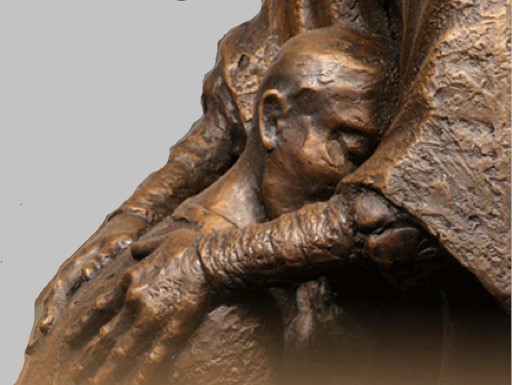
In the Stations of the Cross Jesus says a rather extraordinary thing. He addresses it to the women who have gathered to lament Him:
Daughters of Jerusalem, do not weep for me; weep instead for yourselves and for your children, for indeed, the days are coming when people will say, “Blessed are the barren, the wombs that never bore and the breasts that never nursed.” At that time people will say to the mountains, “Fall upon us!” and to the hills, “Cover us!” for if these things are done when the wood is green what will happen when it is dry? (Luke 23:28-31)
As awful as the crucifixion would be, as mightily sinful as it was for us to have condemned the Lord, Jesus says that something worse is coming, something even more awful. What was He talking about? Is it a prophecy for our times?
When we read any biblical text, we should ask three questions: What did it mean then? What does it mean now? What does it mean for me? Too often today an almost exclusive focus is placed on the historical meaning of a text. While this is interesting it is also important to apply the text to our own times and to our own self. This is usually the goal of good preaching. Let’s look at this passage with all three questions in mind.
1. What did it mean then? Jesus had often spoken of a great destruction soon to come upon Jerusalem for her lack of belief. He did this primarily in the Olivet Discourse, which is recorded in the Synoptic Gospels (Mt 24:1-51; Mk 13:1-37; Lk 21:5-36). Jerusalem will be surrounded by armies, nation will rise against nation, the temple will be destroyed and there will be great distress, unequaled from the beginning of the world until now—and never to be equaled again (Mat 24:21). Many misinterpret this discourse as referring to the end of the world, but Jesus is clearly referring to the destruction of the Temple and Jerusalem (which in fact took place in 70 A.D.) (cf Matt 24:2-4; Mark 13:2-5; Luk 21:5-7). In many ways, the Jewish war with the Romans was one of the bloodiest and most awful wars ever fought. Josephus indicates that 1.2 million Jews lost their lives in this devastating war. Jerusalem was destroyed and the Temple was thrown down, never to be rebuilt.
Jesus seems to be saying to the women, “Women of Jerusalem, though you weep for me in my suffering, be aware that something far worse will come upon you and your children. It will be so awful that people will actually call those who died ‘blessed’ and those who never existed ‘lucky.’ It will be so awful that people will long for death.”
He then refers to green wood and dry wood, in a sentence that basically means, “If I, who am innocent, meet this fate of crucifixion, what will be in store for the guilty?”
Hence, what this passage meant then was that Jesus was summoning the women to prayer, to a deep and mournful prayer that would call people to conversion. Otherwise, difficult days would lie ahead.
2. What does it mean now? Jesus spoke not only to his times but to ages yet unborn. His words fit our times like a glove. For indeed these are times when many say, “Blessed are the wombs that have borne no children. Blessed are the wombs that bear fewer children. Blessed are those who practice contraception. Blessed are the surgically sterilized.” In other words, Blessed are the barren, the wombs that never bore, the breast that never nursed. Throughout the Western world, birth rates have plummeted; in some countries they are dangerously low. Some Western Christian nations and societies are practicing contraception and inflicting abortion to the extent that they are approaching a point of no return. Years of fear-mongering about overpopulation, extolling the virtues of contraception, and preferring the single life to marriage and family has led to a dramatic shift in the attitudes of many Westerners toward children, who are now seen as more a burden than a blessing. Sterility and barrenness were considered a terrible curse until quite recently. But in what Pope John Paul II termed a “culture of death,” many have come to say “Blessed are the barren.” And although nations such as Germany, France, and Italy are practically begging their citizens to have more children (even providing tax incentives) it seems that most Western Christians can’t be bothered with such things as marriage and family.
In addition, many in the radical environmentalist movement today see humanity as a great scourge on the planet and would seem to prefer that “the mountains fall on us and the hills cover us.” There are bumper stickers that say, “Earth First.” There is a show on The History Channel fantasizes about “Life after Humans” (actually, it’s a rather creative show).
In looking forward to our times, perhaps Jesus’ words to the women would be: “Women of Jerusalem, do not weep for me; weep for your descendants. For the days are actually coming when people will say ‘Blessed are the barren.’ The days are actually coming when people will prefer not to have children at all or at least to have as few as possible. The days are actually coming when children will be aborted in the womb and the ability to do this will be called a ‘right,’ when women in difficult situations will be taken to abortionists by people who they are doing something good. The days are actually coming when depression, self-loathing, hopelessness, and misplaced priorities will so consume your descendants that they will prefer nonexistence to existence, when death will become a kind of ‘therapy’ through abortion, euthanasia, contraception, and stem-cell research. Yes, dear women, prayerful weeping may push off these grievous times for a while, but the days are coming when these things shall come to pass. For if you think things are bad now when the wood is green, what will happen when the wood becomes dry?”
You may think that the picture I paint with those words is a bit extreme. But there is a stunning quality to Jesus’ words as He warns these women of very difficult days ahead. They are just as stunning in our times. Though our historical moment is different, it actually seems to be a more literal fulfillment of Jesus’ words!
3. What does it mean for me? Now do you really think I am going to do your work for you? It remains for each of us to answer this question for him/herself. What do we weep about? Do we weep about things that really matter or merely over worldly losses—things that will be lost anyway? What kind of a world are we bequeathing to our children? Do we love life? Is new life a sign of hope for us or is it a burden? Do we speak prophetically about the culture of death? Do we encourage marriage and praise childbearing? Do we help young parents through some of the difficulties of raising children? The Lord surely has many more of these personal questions for us. Ponder the text slowly and consider what the Lord might be saying to you.
As a child, I remember being taught in school to fear overpopulation; we were told that the Earth would soon run out of room. The video below is a clip from “The Mark of Gideon,” a 1969 episode of Star Trek that showcases the overpopulation anxiety of the time. In this episode, Captain Kirk is abducted by Ambassador Hodin of the germ-free, overpopulated planet, Gideon. Hodin has a plan to use Kirk to introduce a deadly virus (which Kirk carries but to which he is immune) to Gideon in order to reduce the population. Kirk exhorts Hodin to instead encourage the population to use contraceptives and sterilization. The segment goes on to paint the inhabitants’ love for life as somewhat pathetic. Kirk even gets angry when they demonstrate respect for life from conception until natural death.
The Gospel this Sunday is about a man who had two sons, both of whom forsook him and refused to relive in relationship with him. Although the sons seem to have very different personalities (one outwardly rebellious, the other outwardly obedient), their internal struggles are similar. In effect, neither of them really wants a relationship with his father. Both prefer what their father has or can give them to their father himself.
In the end, one son repents and finds his way to the father’s heart. We don’t find out what happens to the second son. The parable didn’t tell us what happened to him because the story is really about us; it is we who must finish it. The question we must answer is this: What do I really want? Do I want the consolation of God, or the God of all consolation; the gifts of God, or the giver of every good and perfect gift?
Let’s look at this Gospel in four parts.
Renegade Son– Most of us are familiar with the Parable of the Prodigal Son. We tend to focus on the younger (and obviously sinful) son rather than the older one. This is interesting because the Lord Jesus seems to have His focus on the older son (the parable is addressed to the scribes and Pharisees, who see themselves as obedient). Nevertheless, let’s observe three things about this renegade son, this prodigal son.
Corruption– This is an angry young man, alienated from his father. He wants what his father has yet wants nothing to do with him. In effect, he tells his father, “You’re not dying fast enough. I want to be done with you and get what’s coming to me right now.”
His effrontery is even more astonishing given where and when it happened. Today, reverence for parents and elders is sadly lacking, but if our times are extreme in the one direction, ancient times in the Middle East were so in the other. In telling this parable as He does, Jesus shocks His listeners, who lived in a culture where no son would dream of speaking to his father in this way. Indeed, a son could be killed by his father for such insolence! Even to this day, so-called “honor killings” still occur in parts of the Middle East. If a child brings dishonor to the family, it is not unheard of for the father to kill him or her. While most governments forbid these practices, in many cultures people will look the other way and the perpetrators are seldom prosecuted.
Yes, Jesus must have shocked His listeners with such a parable. Here was a son who did something so insolent, ungrateful, and daring as to be practically unthinkable.
Even more astonishing than the son’s behavior, however, is the fact that the father actually gives him his inheritance and allows him to leave.
This is Jesus’ veiled description of the patience and mercy of the Father, who endures even greater insolence from us, His often-ungrateful children. We demand His gifts and take them with ingratitude; we want what God gives us but do not want Him.
Consequences– The renegade son sets off to “a distant country.” It is always in a distant country that we dwell apart from God. The consequences of the son’s behavior are great indeed.
This parable does not make light of sin. The Lord Jesus describes well a young man who chooses to live apart from God and in sinful rebellion. The result is that this renegade son lives in anguish and depravity. When he runs out of money, he finds he has no friends, no family, and no experience of his father.
So awful is his state that he becomes hungry for the disgusting mash that pigs eat. Yes, he is lower than the most unclean animal Jews can imagine: a swine.
Sin debases the human person and if its effects are not avoided, it orients us increasingly toward depravity. What was once unthinkable becomes easier and easier.
St. Augustine wrote of sin’s hold on individuals in his Confessions: “For of a forward will, was a lust made; and a lust served, became custom; and custom not resisted, became necessity. By which links, as it were, joined together (whence I called it a chain) a hard bondage held me enthralled” (Confessions, 8.5.10).
The renegade son is suffering the consequences of his sinful choices. He is debased, debauched, and nearly dead.
Conversion– In an almost miraculous turn of events, he comes to his senses. Too many, especially today, suffer a darkened intellect due to the debasing effects of their sin; it would seem that no matter how debased, confused, and even enslaved they become, they still do not come to their senses, for their senseless minds have become darkened (cf Romans 1:21).
Thanks be to God, the renegade son does come to his senses, thinking, I shall arise and go to my father. In this passage, the Greek text uses the word anistemi, here translated as “arise”—the same word used to describe the resurrection of Jesus. The young man’s father will later joyfully describe him as having been dead but then coming back to life.
St. Paul reminds us that we were dead in our sins, but God made us alive in Christ (cf Col 2:13). Thanks be to God for His mercy and for the conversion that He alone can effect in all of us, His renegade children, who ourselves have been debased and debauched and are dead in our sins. The conversion of this renegade son, we pray, is also our conversion, our rising and going back to the Father.
Rejoicing Father– The astonishing nature of this parable is only just beginning, for Jesus goes on to describe a father who is shockingly merciful. He does things that no ancient father would ever do. As Jesus describes this father, so filled with love and mercy that he sacrifices his personal dignity, we must remember that He is telling us that this is what His Father is like.
As the parable continues to unfold, we hear that the father sees the sonwhile he is still a long way off. This tells us that he was looking for his son, praying and hoping for his return.
Such mercy is rare. Most people who are hurt and have their dignity scorned would be resentful, saying, “Never darken my door again!”
How shockingly different this father is, lovingly and longingly awaiting the day when his son will appear on the horizon.
Upon seeing his son, the father runs out to meet him, something no ancient nobleman would ever do. Running was a sign of being in flight or of being a slave out on an errand. Further, in order to run, the ancients (who wore long garments) had to bare their legs—a disgraceful thing for nobility. Only common workers and slaves had their legs exposed.
Yes, this is the portrait of a father willing to debase himself so that he can run and greet his returning son. When we take one step, God takes two or more; He comes running to us!
In the parable, the robe and the ring that the father puts on his son are signs of family belonging or restoration. This is the full restoration of a young man willing to live as a slave in his own father’s house. The father will have none of it. “You are my son whatever your sins. They are forgotten. You are my beloved son!”
What kind of father is this? No earthly father would behave this way. This is the heavenly Father. Jesus is saying, “This is what my Father is like!”
Resentful Son – Now we turn our attention to the older brother. His sinfulness is more subtle. Outwardly, he follows his father’s rules; he does not sin overtly. Unlike his prodigal brother, he has never openly rejected his father; inwardly, though, he is not so different. Like his younger brother, the older son wants his father’s goods, not his father himself. To understand the subtlety of his struggle, let’s look at some of the details of the story. Notice the following fundamental issues with the resentful older son:
He is distant. It is interesting that the older son is the last person to find out about the feast. This is a son who is distant from his father, unaware of the happenings in his father’s life.
Off on some far-flung part of the property, he is going about his duties, which he seems to fulfill adequately. However, we get the feeling that there is a sense of distance between father and son.
Why doesn’t he know that his father, worried about his younger brother, has been looking for him each day? Even the slaves in the household are drawn into the preparations for this celebratory feast; the older son is the only one who knows nothing about it. Even more telling is that he is unaware of his father’s joy at his brother’s return.
Yes, the resentful son is distant, miles away from the heart of his father.
He is disaffected. When the older son learns of the feast and the reason for it, he becomes sullen, angry, and resentful. He is disaffected. He stays away from the feast, refusing to enter.
So bitter is he that his father hears of it and comes out to plead with him.
Do not be too quick to scorn him, however, for we are too like him. We die the death of a thousand cuts as we see other sinners finding mercy. We become envious when others are blessed.
He is disconsolate. The father emerges from the feast to plead with his older son to come in. Again, such a thing would be unheard of in the ancient world! Any father in those days would have commanded his son to come in to the feast, expecting immediate obedience.
This father is different, for he represents the heavenly Father, rooted in love more than in prerogatives and privileges. He has already demonstrated his love for his renegade son and now does so for his resentful older son.
The fact is, he loves both of his sons. Yes, the heavenly Father loves each one of us.
Tragically, the resentful son is unmoved by this demonstration of love. He remains disconsolate and must be confronted in his resentful anger.
He is disrespectful. Now we see the ugly side of the apparently obedient son. He doesn’t truly love or respect his father; he doesn’t really know him at all. He disrespects his father to his face. He speaks of him as if he is a slave master, saying, I have slaved for you … I have never disobeyed any one of your orders.
Orders? I have slaved for you? Where is his love for his father? He does not see himself as a son but rather as an unwilling slave, one who follows orders only because he must. In effect, he calls his father a slave master, a despot.
Further, he accuses his father of injustice. He views the mercy his father has shown to his brother as evidence of a lack of due mercy shown to himself. He considers his father unreasonable, unjust—even despicable. How dare his father show mercy to someone that he, the “obedient” son, does not think deserves it!
In calling his father an unjust slave owner and taskmaster, the son disrespects him to his face. The father stays in the conversation, though, pleading with his son to reconsider.
He is disordered. Among the older son’s complaints is that his father never gave him so much as a kid goat so that he could celebrate with his friends. Our goal in life is not to celebrate with friends; it is to celebrate with the heavenly Father.
Note how similar the two sons actually are. Previously, the renegade son saw his father only in terms of what his father could give him; his father was only valuable in terms of the “stuff” he could provide. Despite his outward obedience, the older son has the same problem, seeming to value only what his father can give him. It is not his father he really loves or even knows. He is interested only in what his father can give him.
In this way, the resentful son is disordered. He misses the whole point, which is not the “things” his father can give him but their relationship. The goal in life is to live with the Father forever in a relationship of love.
Again, be careful before you condemn the resentful son. It is so easy for us to want the good things of God but not God Himself, to want God’s blessings and benefits but not His beloved self, to want the gifts of God but not Him who is the giver of every good and perfect gift.
Yes, the disorder of this resentful son is too easily our disorder. There is something about our flesh that wants God to rain down blessings, yet once we have received them, we want to keep our distance from God. Relationships are complicated and dynamic. Our flesh prefers trinkets. We prefer to receive gifts on our own terms. Our flesh says, “Give me the priceless pearls, but begone with the powerful person who gives them!”
Response– The father is outside pleading with his resentful son to enter the feast. At this point, Jesus abruptly ends the parable. Yes, the story ends! Does the resentful son enter the feast or not? Why is the story left unfinished?
Simply put, it is because we must finish the story, for we are so easily the resentful son.
Right now, the heavenly Father is pleading with us to enter the feast. Too easily we brood and say that we have our reasons for not wanting to go. After all, that renegade son is in there, our enemy is in there. If Heaven involves meeting our enemies and celebrating with them, we don’t want anything to do with it.
Here is the great drama: will we enter the real Heaven? The real Heaven is not of our own making, defined by our own parameters.
Are we willing to enter on God’s terms, or will we stand outside resentfully, demanding that Heaven be on our own terms? Further, do we see Heaven as being with the Father, or do we just view it as a place where we get the things we want?
The heart of Heaven is to be with the Father, with the Holy Trinity. The danger, even for the religiously observant, is becoming the resentful son. The Father is pleading with us to enter the feast, to set aside our prejudices and notions of exclusivity.
To the resentful son the father says, your brother was lost and is found, was dead, and has come back to life.
The Father is pleading with us to enter the feast—not some made-up feast where we choose the attendees—but the real, actual feast of Heaven, where some surprising people may be in attendance.
This parable is unfinished; you and I must finish it. Will you enter the feast? The Father is pleading with you, saying, “Come in before it’s too late.” What is your response to His plea? Answer Him!
Just for fun, here is a retelling of the parable in the “key” of F:
Feeling footloose and frisky, a feather-brained fellow forced his fond father to fork over the farthings and flew to foreign fields and frittered his fortune, feasting fabulously with faithless friends.
Fleeced by his fellows, fallen by fornication, and facing famine, he found himself a feed-flinger in a filthy farmyard. Fairly famishing, he fain would have filled his frame with foraged food from fodder fragments. “Fooey! My father’s flunkies fare finer,” the frazzled fugitive forlornly fumbled, frankly facing facts. Frustrated by failure and filled with foreboding, he fled forthwith to his family. Falling at his father’s feet, he forlornly fumbled, “Father, I’ve flunked and fruitlessly forfeited family favor!”
The farsighted father, forestalling further flinching, frantically flagged the flunkies to fetch a fatling from the flock and fix a feast.
The fugitive’s fault-finding brother frowned on fickle forgiveness of former folderol. But the faithful father figured, “Filial fidelity is fine, but the fugitive is found! What forbids fervent festivity? Let flags be unfurled. Let fanfares flare.”
And the father’s forgiveness formed the foundation for the former fugitive’s future faith and fortitude.
When I was about 10 years old I took some sailing lessons and then did so again when I was in my early 30s. Sailing involves a kind of romancing of the wind, wherein one observes it and then adapts to it, wooing it, learning its moves, its vicissitudes, its often subtle and changing signs.
Oh, for the great times when the wind was with us! Catching the wind, the boat would speed along making a slick sound in the water. Oh, too, for those daring and thrilling times when the spinnaker was put out. The boat would almost strain as the proud winds filled her arcing sail.
There were also difficult days, too, days when the winds were contrary and there was the hard work of tacking, beating, and jibing.
Sailing is an image of receptivity. One cannot control the wind, but must simply accept it, taking it as it is. Yes, the sailor must adjust to what is, to learn to accept and work with what is given, to live in the world as it is rather than wishing for the world as it ought to be.
The sailor must simply accept the wind’s biddings and blessings, the way in which it would have us go: this way and that, sometimes quickly and unexpectedly. The good sailor accepts that a good strong breeze can suddenly grow calm only to stir again moments later. This is especially the case in the sultry days of summer, when the prevailing winds are less evident and their strength and direction can be local and subtle.
Yes, it is all very mysterious. Indeed, Jesus used the wind as an image for mystery when He said to Nicodemus, The wind blows wherever it pleases. You hear its sound, but you cannot tell where it comes from or where it is going. So it is with everyone born of the Spirit (Jn 3:8).
Thus the wind and sailing become symbolic of the soul interacting with God. We cannot control God nor should we try. Our role is to sense His direction and put out our sails accordingly. We are to “romance the wind” by growing deeper in our love and trust of God. We are to discover the serenity of accepting what is, of following His lead or receiving what is offered rather than seeking to control or manipulate the outcome.
Sometimes God’s Ruah, His Spirit and breath, is a strong and refreshing wind, as at Pentecost when Scripture says, And suddenly there came from heaven a sound like a mighty rushing wind, and it filled the entire house where they were (Acts 2:4). At other times, God speaks in a whispering breeze: And after the fire came a gentle whisper. When Elijah heard it, he pulled his cloak over his face and went out and stood at the mouth of the cave. Then a voice said to him, “What are you doing here, Elijah?” (1 Kings 19:12-13)
Yes, allow the wind to represent the movements of God’s Ruah. God is looking for some good sailors, ones who know the subtleties of the wind’s movements and can adjust accordingly.
Now because the wind cannot be controlled and must simply be accepted for what it is, many people prefer motorboats. How much nicer it is to feel empowered from within and to be able to resolutely set one’s own course, no matter the wind! With a motorboat, there is little to no threat of being at the mercy of the winds. There is no need to relate to, nor to be in relationship with, the wind; there is no need of romancing the winds here! No, with a motorboat there is only the need to drive forward with a powerful motor, following one’s own designs.
This is control; this is power. Here is the sailor alone with his own will, dependent on little and certainly on no other person. It is one man alone against the elements.
Motorboats are a mixed blessing, though. They require a good bit of gas, can be noisy, need maintenance, may suffer breakdowns, and can be downright dangerous to other things and people around them.
This is another image of our soul interacting with God. There are many who prefer to be under their own power, dependent upon no one but themselves, acting and operating independently. They prefer not to have to sense the direction of the winds, to watch for other signs, or to consider other factors.
Just as there are dangers with a motorboat, there are dangers associated with this sort of controlling person. Indeed, such individuals can be noisy “gas-guzzlers,” prone to breakdowns, and potentially hazardous to things and people around them. In their perceived power they often barrel through life, missing or ignoring its subtleties, and frequently causing harm to themselves and/or others. “Breakdowns” are almost predictable with this sort of person.
Most people prefer a motorboat, but God is more in the sailboat business. He’s looking for some good souls to sense the breeze of His Spirit, hoist their sails, and follow where He leads.
Each of us is invited to be more like a sailor, following the Spirit’s lead—yes, like a sailor, trusting in and yielding to a Godly breeze.
Do you prefer a motorboat or a sailboat? Are you a boater or a sailor?
Here is a remarkable video, not of a sailor at sea, but of a “land sailor,” a kite flier. Note the beautiful interaction as this man romances the wind, working with its subtleties and rejoicing in its moves as in a great dance.
There’s an old Johnny Cash song (“God’s Gonna Cut You Down”) that is rooted in today’s Gospel:
You can run on for a long time … Sooner or later God’ll cut you down … Go tell that long tongue liar, Go and tell that midnight rider, Tell the rambler, the gambler, the backbiter, Tell ’em that God’s gonna cut ’em down.
These verses go directly to the end point (judgment), but there is more to the story. First, there is mercy offered, then patience, and finally judgment.
Many today either dismiss judgment entirely or believe that judgment will result in instant entrance to glory.
Today’s Gospel contains a necessary balance. It speaks of God’s patience and care now but also of the day of reckoning, of judgment. On that day, He will adjudicate our “case”; the decision will be final; there will be no turning back.
Let’s look at this Gospel in two main parts:
The Proclamation of the Problem
The Gospel opens with these lines:
Some people told Jesus about the Galileans whose blood Pilate had mingled with the blood of their sacrifices. Jesus said to them in reply, “Do you think that because these Galileans suffered in this way they were greater sinners than all other Galileans? By no means! But I tell you, if you do not repent, you will all perish as they did! Or those eighteen people who were killed when the tower at Siloam fell on them—do you think they were more guilty than everyone else who lived in Jerusalem? By no means! But I tell you, if you do not repent, you will all perish as they did!”
What Jesus is saying is that is easy to focus on the sins of others, failing to discern our own need for repentance and mercy. Before God we are all beggars; all of us have sinned and fallen short of the glory of God (cf Romans 3:23). Every one of us is in need of boatloads of grace and mercy. While we may rightly distinguish that there is a difference here on earth between the sanctity of a Mother Theresa and the wretchedness of a Hitler, before God we all fall far short.
Sin surely affects the lives of others and we are not asked to be blind to that. It is important to learn from the example of others, both good and bad; the point is to learn. We miss the point if all we do when we see someone suffer the effects of sin is to say, “My, my, God don’t like ugly!” What about the ugly in us? What about our own sin?
To our all-too-eager question “What about them, Lord?” Jesus replies, “What about you? Work on your own issues and leave their final fate to me. Punishment doesn’t just come to others; if you don’t watch out it will come to you as well.” Just to make sure we get it, the Lord adds, “I tell you, if you do not repent, you will all perish as they did!”
In effect, the Lord tells us to get serious about our sin and what it can do to us. The most serious problem in life is not the fact that we die or the manner of our death. The most serious problem we face is not Pilate or any political misfortune; it is not falling towers or any physical threat. It is not financial setback, or suffering, or losing our job, or losing our possessions. The most serious problem we face is our own sin.
We don’t tend to think like this. Instead, we minimize the maximum and maximize the minimum. We get all worked up about lesser things while ignoring greater ones. We are forever worrying about passing things like health and money but paying little attention to the things of eternity and to getting ready to meet God. Let our physical health be threatened and we are instantly on our knees begging God for deliverance, but let our sins pile up and sinful drives be eating at our very soul and we take little notice. We don’t seem to care about being delivered from things that are far more serious than mere cancer.
The Lord says, If your right hand causes you to sin cut it off and throw it away. It is better to lose one of your members than to have your whole body cast into hell (Matt 5:30). Pay attention, the Lord is saying that it is worse to sin than to lose your right hand!
If I were to lose my right hand, I think I would lament it for the rest of my life. The very thought of it gives me stabbing grief. Why don’t we think of our sin this way? Do you see how obtuse we are, how distorted our priorities?
One day the Lord looked at a paralyzed man and decided to cure his most serious problem. He said, “Your sins are forgiven.” Could the man’s sins have been more serious than his paralysis? Yes!
Thus, the Lord warns us that we ought to be more serious about our sins lest we perish, not merely losing our earthly life but our eternal life. The fact that the solution to our problem required the death of the Son of God indicates that we are in far worse shape than we think. Without our repentance and the magnificent mercy of God, something far worse than having a tower fall on us or our enemies kill us might happen. Elsewhere in Scripture the Lord says, I tell you, my friends, do not be afraid of those who kill the body and after that can do no more. But I will show you whom you should fear: Fear him who, after the killing of the body, has power to throw you into hell. Yes, I tell you, fear him (Lk 12:4-5). The Lord is not counseling a cringing and avoidant fear but rather a respectful fear such that we are serious about judgment and understand that the result on that day will be eternal, unlike the passing quality of any earthly encounter.
Having portrayed the problem and underscored its seriousness, the Lord then reminds us that He is willing to help us, with His grace and mercy, to get ready. He sets forth a process in which we must cooperate, for judgment will surely come.
The Portrayal of the Process
The Lord tells a parable that sets forth the process in which we are currently engaged: a process of patience and mercy that leads to the finality of judgment. Note the following three steps:
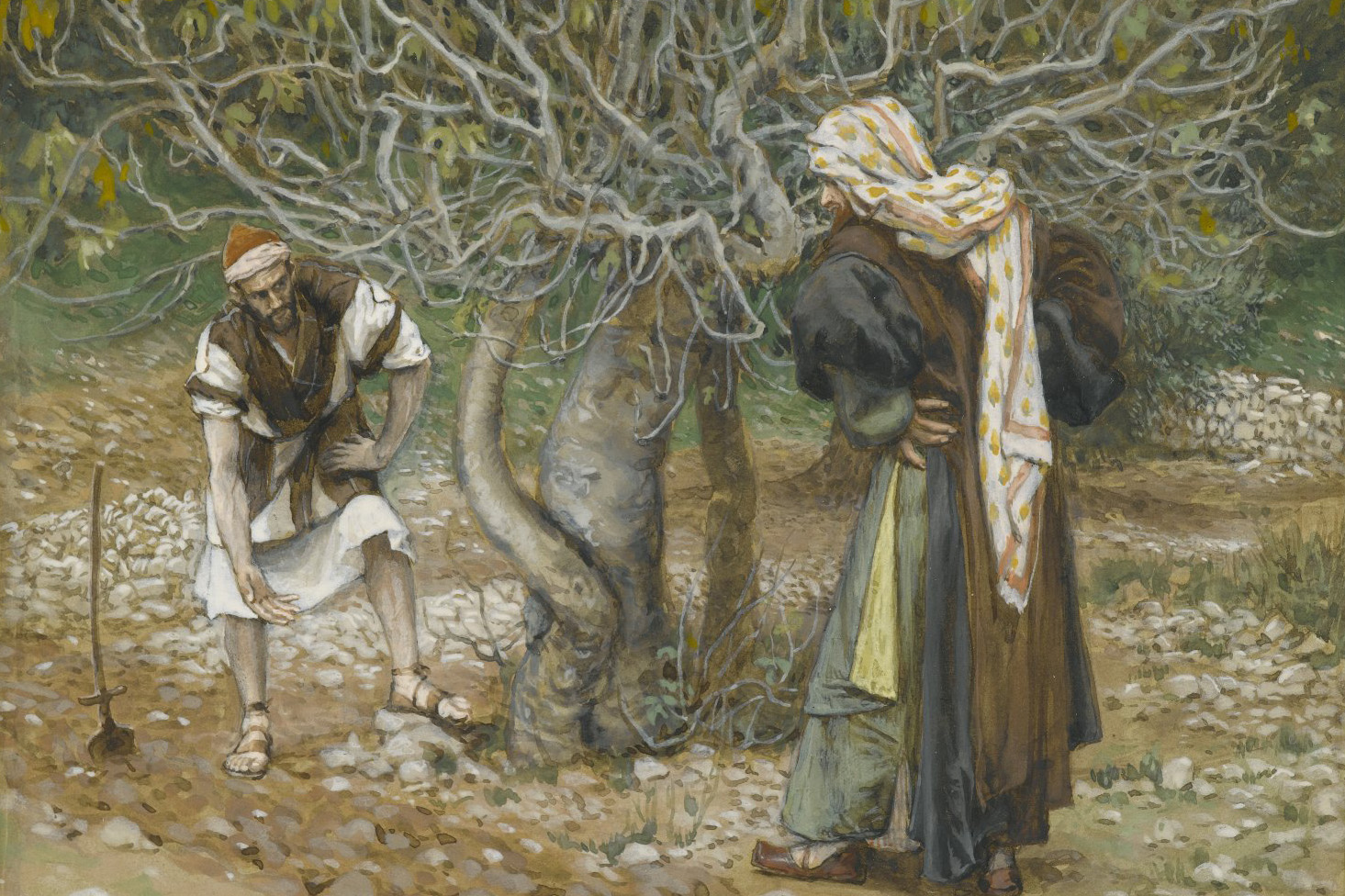
1. ASSESSMENT– There was once a person who had a fig tree planted in his orchard and when he came in search of fruit on it and found none said to the gardener, “For three years now I have come in search of fruit on this tree and have found none. So cut it down. Why should it exhaust the soil?”
Faith is a fruit-bearing tree. It is to bear the fruits of love, justice, and the keeping of the commandments. The Lord looks for these fruits and often, through our conscience and by His Word, assesses whether they are present.
Many claim to have faith, to be fruitful in what the Lord seeks, but it is He, as owner of the field, who sets the terms. We are not the judge in our own case. It is the Lord’s ongoing work to assess our progress and fruitfulness. He determines whether the necessary fruits are present.
Today, many people claim the right to assess their own status. They make bold proclamations that God would not “dare” to find them to be lacking in anything substantial. In presumption, many declare themselves to be safe, fruitful, and righteous.
This is not for us to say, however. In the parable it is the owner, the Lord, who makes the assessment; and note that in this parable He proposes that something significant is lacking.
Yet some interlocutor, here called the gardener but let’s call her the Church, asks for mercy and time. As we shall see, such mercy and time is granted, along with necessary supplies (grace) to help accomplish what is sought: the fruit of faith.
2. ASSISTANCE – The text goes on to describe the prayers and requests of the gardener (in this case, Mother Church): Sir leave it for this year also. I shall cultivate the ground around it and fertilize it. It may bear fruit in the future.
The Lord, the owner of the garden, not only grants the request but will also be the one to supply the necessary help to draw forth the fruits patiently awaited.
Indeed, the Lord sends us help and graces in so many ways:.
He speaks in our conscience.
He has written His law in our heart.
He gave us the law.
He sent us prophets.
He punishes our wrongdoings in order to bring us to repentance.
* Before I was afflicted, I strayed. But now I have kept your word (Ps 119:67). * But God disciplines us for our good, that we may share his holiness. For the moment all discipline seems painful rather than pleasant; later it yields the peaceful fruit of righteousness to those who have been trained by it (Heb 12:10).
He sent us His Son, who established the Church and gave us grace and the sacraments.
He gave us grace and the sacraments.
It was he who gave some to be apostles, some to be prophets, some to be evangelists, and some to be pastors and teachers, to prepare God’s people for works of service, so that the body of Christ may be built up until we all reach unity in the faith and in the knowledge of the Son of God and become mature, attaining to the whole measure of the fullness of Christ. [That we be] no longer be infants, tossed back and forth by the waves, and blown here and there by every wind of teaching and by the cunning and craftiness of men in their deceitful scheming. Instead, speaking the truth in love, in all things grow up into him who is the Head, that is, Christ (Eph 4: 11-17).
Do you see how much God has done for us? He has graced us in every way. He has entrusted to the Church, in answer to her pleas, every necessary grace to bear fruit. Now He patiently waits. He looks to return again to seek the fruits that are necessary for those who claim to have saving faith, fruits that are necessary to be able to endure the day of His coming, fruits that are necessary for us to have the holiness without which no one will see the Lord (Heb 12:14). Indeed, we cannot see or endure His presence without the fruit of holiness by His grace, for as Scripture says, Who may ascend the mountain of the Lord? Or Who may stand in his holy place? Only he who has clean hands and a pure heart (Ps 24:3-4). Only God can accomplish this, but He who made us without us will not save us without us. Thus, we must, by His grace, renounce our sin and accept His grace.
3. ACCEPTANCE– The parable ends very simply with this line: If not you can cut it down.
I’ve chosen the word “acceptance” carefully. Judgment is not so much God’s decision as it His acceptance of our decision to bear fruit or to refuse to do so; to accept or refuse His offer of the fruits of faith such as chastity, mercy, forgiveness, reconciliation, love of the poor, and appreciation of the truth.
On the day of judgment God accepts our final choice. It is not so much the passing of a sentence as it is the final recognition of the absolute choice that we have made. At this point it is no longer possible for us to change; what we are remains forever fixed.
As we get older it is harder and harder to change. We are like concrete that sets over time; like pottery, which begins moist and malleable, but whose shape is fixed when subjected to the fire.
Thus, the Lord teaches us to be serious about sin and about judgment. For now, there is mercy and every grace available to us, but there will come a day when our decision will be accepted and forever fixed.
The Gospel today teaches beautifully of God’s patience but also of our need for mercy. It warns us that the decision we make by the way we live our life will finally be accepted. Yes, there is a day of judgment closing in on each of us.
Pointing out how often we sang “Kumbaya, My Lord” will not suffice.
In today’s second reading, St. Paul warns us against presumption and trying to serve as judge in our own case:
Our ancestors were all under the cloud and all passed through the sea, and all of them were baptized into Moses in the cloud and in the sea. All ate the same spiritual food, and all drank the same spiritual drink, for they drank from a spiritual rock that followed them, and the rock was the Christ. Yet God was not pleased with most of them, for they were struck down in the desert. These things happened as examples for us, so that we might not desire evil things, as they did. Do not grumble as some of them did, and suffered death by the destroyer. These things happened to them as an example, and they have been written down as a warning to us, upon whom the end of the ages has come. Therefore, whoever thinks he is standing secure should take care not to fall (1 Cor 10:1:ff).
For now, there is mercy, but there will come a day of ratification, of judgment; a day when the question will be asked and the final answer supplied, not so much by God as by us.
Your flesh says, “No worries,” but the Lord says, “Repent!”
Here are more of the lyrics from the Johnny Cash song “God’s Gonna Cut You Down”:
You can run on for a long time Run on for a long time Run on for a long time Sooner or later God’ll cut you down
Sooner or later God’ll cut you down
Well, you may throw your rock and hide your hand and hide your hand Workin’ in the dark against your fellow man But as sure as God made black and white What’s down in the dark will be brought to the light.
You can run on for a long time Run on for a long time Run on for a long time Sooner or later God’ll cut you down
Sooner or later God’ll cut you down
Go tell that long tongue liar Go and tell that midnight rider Tell the rambler, the gambler,the backbiter Tell ‘em that God’s gonna cut you down Tell ‘em that God’s gonna cut you down Tell ‘em that God’s gonna cut you down
I have been doing a project for the St. Michael Center for Spiritual Renewal. In this case it was to make two videos on Angels and Demons. The videos needed to be close to thirty minutes, and thus I had to leave a lot of material out. However, five years ago I presented three lectures of 90 minutes each that permitted me to expand and offer more information. In case it can be helpful to you I am offering the two videos I just completed along with links to the talks and some written material I have produced here on the blog over the years.
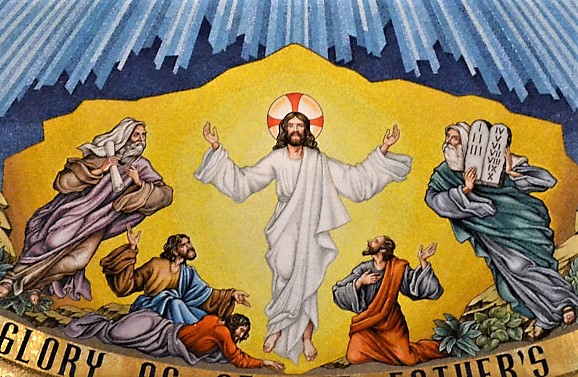
The Second Sunday of Lent always features the Transfiguration. The first reason for this is that the trek up Mt. Tabor was one of the stops Jesus made with Peter, James, and John on His final journey to Jerusalem. It is commonly held that He did this to prepare His apostles for the difficult days ahead. There’s a line from an old spiritual that says, “Sometimes I’m up, sometimes I’m down, sometimes I’m almost to the ground … but see what the end shall be.” That is what the Lord is doing here: He is showing us what the end shall be. There is a cross to get through, but there is glory on the other side.
There also seems a purpose in placing this account here in that it helps describe the pattern of the Christian life, which is the Paschal mystery. We are always dying and rising with Christ in repeated cycles as we journey to an eternal Easter (cf 2 Cor4:10). This passage shows the pattern of the cross in the climb, the rising, and in the glory of the mountaintop; then it is back down the mountain again only to climb another one (Golgotha) and through it find another glory (Easter Sunday). Yes, this is the pattern of the Christian life: the Paschal mystery. Let’s look a little closer at three aspects of today’s Gospel passage.
The Purpose of Trials– Jesus took Peter, John, and James and went up the mountain to pray.
We often pass over the fact that they had to climb the mountain, no easy task. Anyone who has been to Mt. Tabor knows just what a high mountain it is. The climb to the top is almost 2000 feet and steep as well. It would have taken the better part of a day and probably had its dangers. Looking down from the top is like looking from an airplane window out on the Jezreel Valley (a.k.a. Megiddo or Armageddon).
So, here is a symbol of the cross and of struggle. The climb was up the rough side of the mountain; it was exhausting, difficult, and tested their strength.
I have it on the best of authority that as they climbed they were singing gospel songs like these: “I’m comin’ up on the rough side of the mountain, and I’m doin’ my best to carry on!” and “My soul looks back and wonders how I got over!” and “We are climbing Jacob’s ladder; every round goes higher, higher.”
This climb is like our life. We have often had to climb, to endure, to have our strength tested. Perhaps it was the climb of earning a college degree. Maybe it was the climb of raising children or building a career. What do you have that you really value that did not come at the price of a steep climb, of effort, of struggle?
Most of us know that though the climb is difficult there is glory at the top if we but persevere. Life’s difficulties are often the prelude to success and greater strength.
Though we might wish that life had no struggles, the Lord intends a climb for us, for only the cross leads to true glory. Where would we be without some of the crosses in our life? Let’s ponder some of the purposes of problems in our life.
God uses problems to DIRECT us. Sometimes God must light a fire under you to get you moving. Problems often point us in new directions and motivate us to change. Is God trying to get your attention? Sometimes it takes a painful situation to make us change our ways. Proverbs 20:30 says, Blows and wounds cleanse away evil, and beatings purge the inner most being. An old gospel song speaks of the need for suffering to keep us focused on God: “Now the way may not be too easy, but you never said it would be. ’Cause when our way gets a little too easy, you know we tend to stray from thee.” It’s sad but true: God sometimes needs to use problems to direct our steps toward Him.
God uses problems to INSPECT us. People are like tea bags: if you want to know what’s inside them, just put ’em in hot water! Has God ever tested your faith with a problem? What do problems reveal about you? Our problems have a way of helping to see what we’re really made of. Through trials, I have discovered many strengths I never knew I had. There is a test in every testimony. Trials have a way of purifying and strengthening our faith as well as inspecting it to see whether it is genuine. In this you greatly rejoice, though now for a little while you may have had to suffer grief in all kinds of trials. These trials are only to test your faith, to see whether or not it is strong and pure (1 Peter 1:6).
God uses problems to CORRECT us. Some lessons we seem to learn only through pain and failure. When you were a child your parents told you not to touch the hot stove, but you probably really learned by getting burned. Sometimes we only realize the value of something (e.g., health, a relationship) by losing it. Scripture says, It was good for me to be afflicted so that I might learn your decrees (Psalm 119:71-72), Before I was afflicted, I strayed. But now I keep you word (Psalm 119:67).
God uses problems to PROTECT us. A problem can be a blessing in disguise if it prevents you from being harmed by something more serious. A man was fired for refusing to do something unethical that his boss had asked him to do. His unemployment was a problem for him and his family, but it saved him from being sent to prison a year later when management’s actions were discovered. In Genesis, Joseph says to his brothers, You intended to harm me, but God intended it for good to accomplish what is now being done, the saving of many lives (Genesis 50:20).
God uses problems to PERFECT us. Problems, when responded to correctly, are character-building. God is far more interested in your character than your comfort. Scripture says, We can rejoice, too, when we run into problems and trials, for we know that they are good for us they help us learn to be patient. And patience develops strength of character in us and helps us trust God more each time we use it until finally our hope and faith are strong and steady (Romans 5:3), and You are being tested as fire tests gold and purifies it and your faith is far more precious to God than mere gold; so if your faith remains strong after being tried in the fiery trials, it will bring you much praise and glory and honor on the day of his return (1 Peter 1:7).
So, the climb symbolizes the cross, but after the cross comes the glory.
The Productiveness of Trials – While he was praying his face changed in appearance and his clothing became dazzling white. And behold, two men were conversing with him, Moses and Elijah, who appeared in glory and spoke of his exodus that he was going to accomplish in Jerusalem. Peter and his companions had been overcome by sleep, but becoming fully awake, they saw his glory and the two men standing with him. As they were about to part from him, Peter said to Jesus, “Master, it is good that we are here; let us make three tents, one for you, one for Moses, and one for Elijah.” But he did not know what he was saying. While he was still speaking, a cloud came and cast a shadow over them, and they became frightened when they entered the cloud. Then from the cloud came a voice that said, “This is my chosen Son; listen to him.”
All the climbing has been worth it. Now comes the fruit of all that hard work! The Lord gives them a glimpse of glory. They get to see the glory that Jesus has always had with the Father. He is dazzlingly bright. A similar vision from the Book of Revelation gives us more detail:
I turned around to see the voice that was speaking to me. And when I turned, I saw seven golden lampstands, and among the lampstands was someone like a son of man, dressed in a robe reaching down to his feet and with a golden sash around his chest. The hair on his head was white like wool, as white as snow, and his eyes were like blazing fire. His feet were like bronze glowing in a furnace, and his voice was like the sound of rushing waters. In his right hand he held seven stars … His face was like the sun shining in all its brilliance. When I saw him, I fell at his feet as though dead. Then he placed his right hand on me and said, “Do not be afraid. I am the First and the Last. I am the Living One; I was dead, and now look, I am alive for ever and ever! And I hold the keys of death and Hades (Rev 1:12-17).
Yes, all the climbing has paid off. Now comes the glory, the life, the reward for endurance and struggle. Are you enjoying any of the fruits of your crosses now? If we have carried our crosses in faith, they have made us stronger and more confident. Some of us have discovered gifts, abilities, and endurance we never knew we had. Our crosses have brought us life!
The other night I went over to the church and played the pipe organ. It was most enjoyable, but it was the fruit of years of hard work.
Not only have my own crosses brought me life, but the crosses of others have done the same for me. I live and work in buildings that others scrimped, saved, labored to be able to erect. I have a faith that martyrs died to hand on to me and that missionaries journeyed long distances to proclaim. See, trials do produce!
St. Paul says that this momentary affliction is producing for us a weight of glory beyond all compare (2 Cor 4:14). In Romans he says, For I consider that the sufferings of this present time are not worth comparing with the glory that is to be revealed to us (Rom 8:18).
An old gospel song says, “By and by, when the morning comes, and all the saints of God are gathered home, we’ll tell the story of how we’ve overcome. And we’ll understand it better, by and by.”
So, the glory comes after the climb. This is the life that comes from the cross. This is the Paschal mystery: Always carrying about in ourselves the dying of Christ so also that the life of Christ may be manifest in us (2 Cor 4:10).
The Pattern of Trials – After the voice had spoken, Jesus was found alone. They fell silent and did not at that time tell anyone what they had seen.
Notice that although Peter wants to stay, Jesus makes it clear that they must go down the mountain and then walk a very dark valley to another hill: Golgotha. For now, the pattern must repeat. The cross has led to glory, but more crosses are needed before final glory. An old spiritual says, “We are climbing Jacob’s ladder … every round goes higher, higher, soldiers of the cross!”
Yes, this is our life: Always carrying about in ourselves the dying of Christ so also that the life of Christ may be manifest in us (2 Cor 4:10).
There are difficult days ahead for Jesus and the apostles, but the crosses lead to a final and lasting glory. This is our life, too: the Paschal mystery, the pattern and rhythm of our life.
Here is a rendition of the song “We Are Climbing Jacob’s Ladder.” The lyrics say that “every round goes higher, higher.” One can picture a spiral staircase as each round is pitched higher and higher musically. This is the pattern of our life: we die with Christ so as to live with Him, and each time we come back around to the cross or glory, we are one round higher and one level closer to final glory.
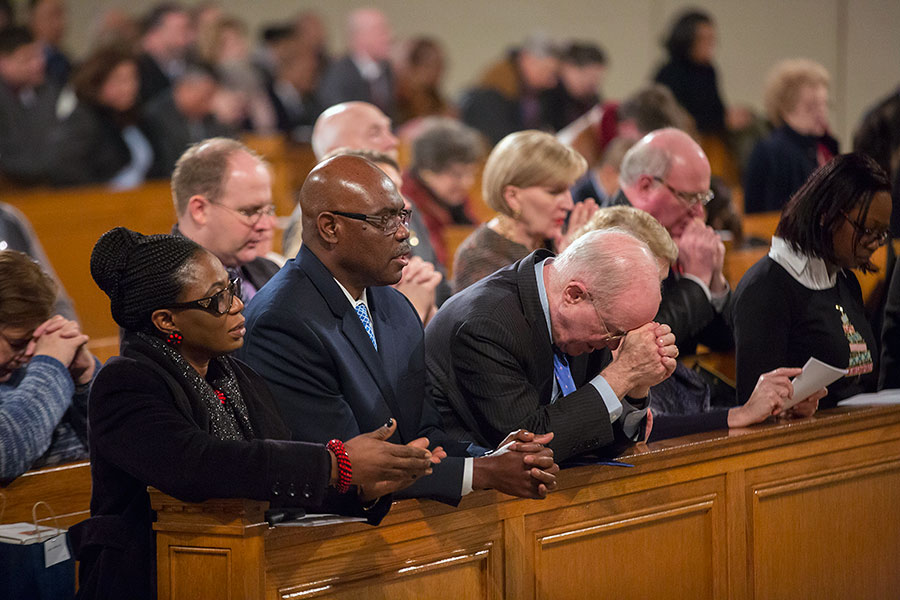
Reflecting on last week’s Ash Wednesday Masses it is possible to observe an unusual and puzzling sight. On this day, almost every priest looks out into a congregation that is barely recognizable. To be sure there are many familiar faces of those who regularly attend. But almost half (!) or more of the congregation is populated by faces unknown. Have tour busses unloaded their riders from distant lands? Is this the holiday season where many are here visiting family? No, this is Ash Wednesday, a most peculiar day. Even days before, the phones start ringing and rather urgent voices on the other end ask, “When will ashes be given?” One might almost think that ashes were necessary for salvation. Sadly, to none of the Sacraments is such urgency attached, even among the more faithful. Baptisms, confessions, marriages and Mass itself are often delayed, or even wholly omitted. But come Ash Wednesday there is an urgent and laser-like focus exhibited by large numbers of otherwise disinterested Catholics, it seems like many are majoring in the minors.
We may lament this, but what can we learn from this? Somehow, even if unwittingly, the Church has powerfully connected with a large segment of otherwise non-practicing Catholics as well as the unchurched. Ashes are awesome! Really? It’s pretty humbling isn’t it? The usual Catholic attempts to seem positive and “relevant” such as trendy music and positive “welcoming” themes are often found wanting. But then, these ashes, which break all the “rules” and theories of modern evangelization powerfully connect with the very folks we are trying to reach. Maybe we have things to learn!
Consider that the message of Ash Wednesday and the imposing of ashes is not one of our more joyous and positive messages. The fundamental message of this sacramental is, “You are going to die.” Sure we use a little poetry to say it: “Remember you are dust and unto dust you shall return.” But, its fundamental message is still the same: “You are going to die.” Even if one uses the alternate formula, “Repent and believe the Gospel”, repent is not one of our more cheerful or “welcoming” messages. People are not piling into Church to hear John 3:16 (God so loved the world…) and take some valuable or lasting token like a holy card or religious medal. They are lining up to have dirty ashes smeared on their forehead and to hear that they are going to die and need to repent before it’s too late. The Prophet Joel and St. Paul issue urgent warnings that we should weep and fast on account of our sins, that we must repent and be reconciled to God.
This is hardly what most modern evangelizers tout as the way to reach souls. But souls line up for it every year. Granted, many are not convicted enough to come again until next year, but the point is that the one time they DO come is on a day that breaks almost every precept of the“welcoming community” message at the heart of modern Church out-reach.
Why is this and what can we learn? In answering this I do not have vast polling data on which to rely. I have only anecdotal data from years of talking to Ash Wednesday Catholics and from hearing what others have discovered in their conversations. So, take what you like from my thoughts and leave the rest. Here then are a few thoughts.
Belonging seems to be deeper than membership or practice.
Many have left the formal practice of the faith and active membership. Some have angry differences with the Church, other have simply drifted or are indifferent. But, when it comes time to answer a survey question of their religious identity, they still check “Catholic.” Ash Wednesday somehow taps into this belonging and identity. It is a day, through the wearing of ashes or the participation in a well known rite that many of these Catholics say, “I still belong….These are my roots…I may not be a “good” Catholic, but Catholic I am.” In some sense, one might leave the Church but the Church never really leaves them; something is still there nudging them not to forget. To a lesser degree Palm Sunday serves a similar purpose and that little piece of palm leaf displayed in the home, usually on or near the crucifix gives voice to Mother Church’s tug on our heart. Though it, some Catholics say, “Through I am distant, I still belong.” In places like Mexico and the U.S., some Hispanics have gone to the Evangelical denominations, but the image of Our Lady of Guadalupe is still prominent in their homes. It is as if to say, “You can take the Man out of the Church, but you can’t take the Church out of the Man.”
Yes, belonging has deep roots, and somehow, people ritually express a kind of “forget me not” to the Church. Clearly we want to offer them more, but at least there is still some connection, some homing beacon that reminds us and them that they “still belong.”
A serious and sober message carries weight.
Though the message associated with the imposition of ashes is not a cheerful one, it does carry weight; it is something to take seriously and something which commands respect. Hence the Church is attractive when she preaches and teaches in a way that is substantial and respectable. Most people know that not everything is right in their lives and the message of Ash Wednesday resonates with this instinct. Most people, in seeking a doctor, want one who takes disease seriously and is willing to have an honest conversation about what must be done. Even if they are not ready or willing to follow all of his or her advice, they ultimately want the truth and will not respect a doctor who is not serious or engages in mere flattery. To a significant degree we have lost a sense of this in the Church.
As noted above, there has been a tendency in the past fifty years to “lighten up.” Great emphasis is put on “positive themes” such as God’s mercy and goodness, but little emphasis on repentance, which is the key that unlocks that mercy. There is almost a pathological avoidance of controversial moral teachings or more “negative” themes such as death, judgment, heaven and hell. No one should ever be upset and the fear of consequences should not be elicited. Parishes should be welcoming and non-judgmental, homilies encouraging and uplifting, sacrifices and reparation for sin and the demands of discipleship are soft-pedaled. And of course, “God is Love,” but that “love” is more often presented as a soft kindness, rather a strong love that seeks to set things right and bring us to the healing of holiness. Affirmation too often eclipses transformation. As for the liturgy, it is often not often celebrated in a way that says something profound and healing is taking place here. And while some think this is the necessary approach today to win converts, our churches have been steadily emptying through this period of “Catholic Lite.”
Further, such a pastoral strategy does not elicit the respect and reverence necessary if the Church is going to preach the Gospel with authority.And though many modern liturgists fear that negative themes will repulse modern man, Ash Wednesday calls such fears into question. So too Palm Sunday whose theme is the Passion. The Palm Sunday Gospel is long and intense; the suffering due to our sins is made quite clear. Yet attendance is also very good, in some places, even better than Easter or Christmas.
So here are some things to learn in terms of Evangelization. These observations are not intended in an absolute sense. Balance is needed where the bad news of sin, death and our need to repent are blended with the good news of mercy, healing and salvation. There is an old saying, “If you don’t know the bad news, the good news is no news.” Collectively we have been too averse to presenting the bad news. But as Ash Wednesday and Palm Sunday show, many of the unchurched are willing to hear it and fundamentally know it is true. The bad news also highlights how wonderful the good news is.
It is also clear that, whatever respect Ash Wednesday and Palm Sunday command, it is not enough. Only rarely do attendees at an Ash Wednesday Mass experience the conversion that helps the Church seal the deal. Looking to the future we do well to ponder how we might make use of evangelical moments such as Ash Wednesday, Palm Sunday, as well as funerals, weddings and baptisms. Many unchurched are encountered in such moments and simply preaching light-heartedly may need to be balanced with sober calls for repentance and a decision to walk with the Lord in the Church and in the Sacred Liturgy.
Warnings have their place and as Ash Wednesday shows, such messages are not as unappealing as many in the Church think. If we want Ash Wednesday Catholics to become All Sunday Catholics, maybe we can learn to build on what brings them in the first place and be less anxious to echo the opening words of Jesus’ public ministry, “Repent and Believe the Gospel!”
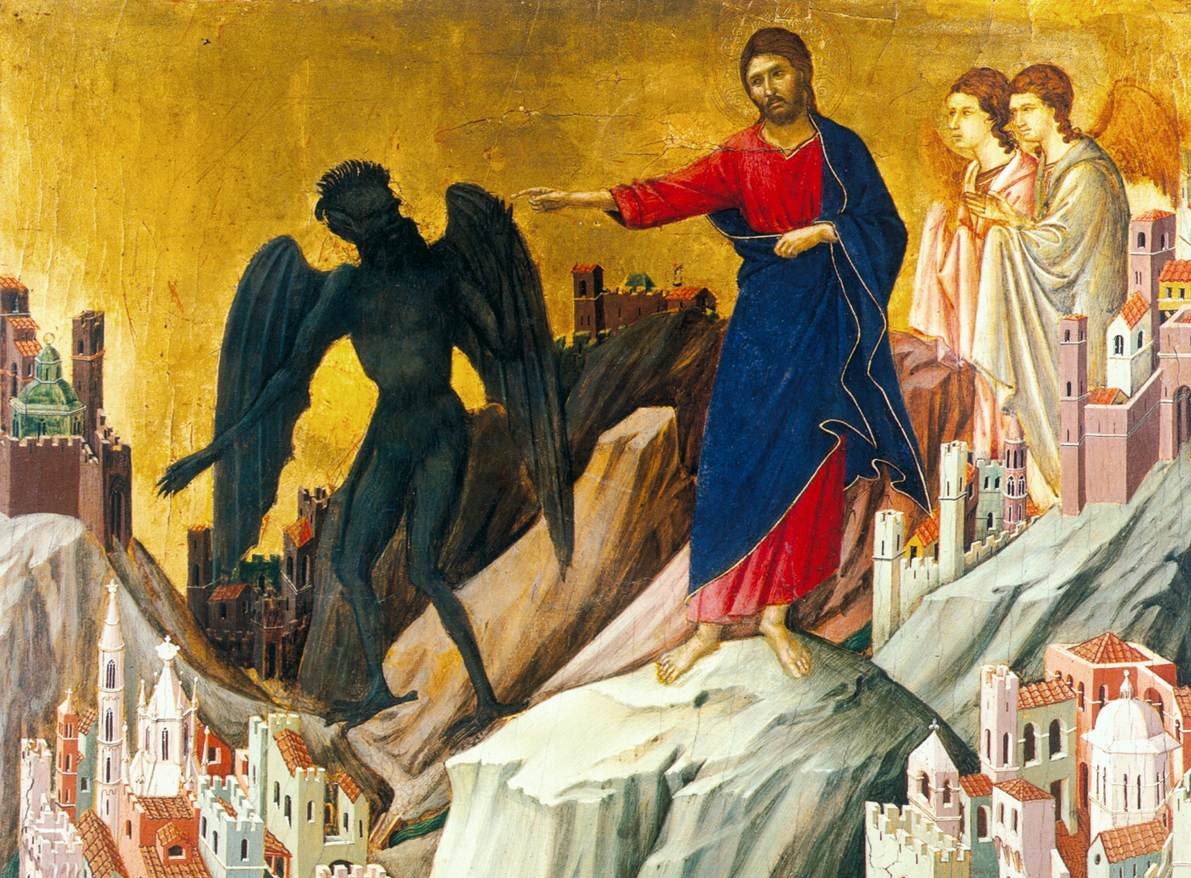
In this desert scene, the Lord Jesus faces down three fundamental areas of temptation, all of which have one thing in common: they seek to substitute a couch for the cross.
In a way, the devil has one argument: “Why the cross?” His question is a rhetorical one. He wants you to blame God for the cross, and in your anger, to reject Him as some sort of despot.
Well, pay attention, Church! The cross comes from the fact that you and I, ratifying Adam and Eve’s choice, have rejected the tree of life in favor of the tree that brought death. We, along with the devil, may wish to wince at the cross and scornfully blame God for it, but in the end the cross was our choice.
If you think that you have never chosen the tree of death and that God is “unfair,” then prove to me that you have never sinned. Only if you can do that will I accept that you have never chosen the Tree of the Knowledge of Good and Evil over the Tree of Life and that you deserve something better than the cross. Only then will I accept that you have never insisted on “knowing” evil as well as good.
If you can’t, then you’ve made the same self-destructive, absurd choice that the rest of us have. It is not God that is cruel but we who are wicked and are to blame for the presence of the cross. The cross comes not from God but from us. We ought to stop blaming God for evil, suffering, and the cross, and instead look in the mirror. The glory of this gospel is that the Lord Jesus came into this twisted world of our making and endured its full absurdity for our sake. If there is evil in this world, it is our choice, not God’s.
Have we finished blaming God? Are we ready to focus on our own issues? If so then let’s look at some areas of temptation that the devil can exploit because we indulge them. Let’s also see the answer that the Lord Jesus has for these temptations; for He, though tempted, never yielded.
Pleasures and Passions – The devil encourages Jesus to turn stones into bread. After such a long fast, the thought of bread is surely a strong temptation. In effect, the devil tells Jesus to “scratch where it itches,” to indulge His desire, to give in to what His body craves.
We, too, have many desires and are told by the devil in many ways to “scratch where it itches.” Perhaps no generation before has faced such strong temptation. We live in a consumer culture that is highly skilled at eliciting and then satisfying our every desire. All day long, we are bombarded with advertisements that arouse desire and then advise us that we simply must fulfill those desires. If something is out of stock or unavailable in exactly the way we want at the instant we want it, we are indignant. Why should I have to wait? Why can’t I have it in that color? The advertiser’s basic message is that you can have it all. This is a lie, of course, but it is told so frequently that we feel entitled to just about everything.
Some of our biggest cultural problems are ones stemming from overindulgence. We are a culture that struggles with obesity, addiction, sexual misconduct, and greed. We experience overstimulation that robs us of a reasonable attention span; boredom is a significant issue for many who are too used to the frantic pace of video games and action movies. We have done well in turning stones into bread.
Jesus rebukes the devil, saying, Man does not live on bread alone. In other words, there are things that are just more important than bread and circuses, than creature comforts and indulgence. Elsewhere Jesus says, A man’s life does not consist in the abundance of his possessions (Lk 12:15). I have written further on this in another post: The Most Important Things in Life Aren’t Things.
Popularity and Power– Taking Jesus up a high mountain, the devil shows Him all the nations and people of the earth and promises them to Him if Jesus will but bow down and worship him. This is a temptation to both power and popularity; the devil promises Jesus not only sovereignty but glory.
Because most of us are not likely to become sovereigns and because temptation is only strong in those matters that seem remotely possible for us, I will focus instead on popularity—something we deal with regularly in this life. One of the deeper wounds in our soul is the extreme need that most of us have to be liked, to be popular, to be respected, and to fit in. We dread being laughed at, scorned, or ridiculed. We cannot stand the thought of feeling minimized in any way.
For many people the desire for popularity is so strong that they’ll do almost anything to attain it. It usually starts in youth, when peer pressure “causes” young people to do many foolish things. They may join gangs, get tattoos, pierce their bodies, and/or wear outlandish clothes. Many a young lady, desperate to have a boyfriend (and thus feel loved and/or impress her friends), will sleep with boys or do other inappropriate things in order to gain that “love.” As we get older, we might be tempted to bear false witness, to make “compromises” to advance our career, to lie to impress others, to spend money we don’t have to buy things we don’t really need, and/or to try to impress people whom we don’t even like. Likewise, we may be tempted to be silent when we should speak out for what is right.
All of this is a way of bowing before the devil, because it demonstrates that we are willing to sin in order to fit in, to advance, or to be popular. Jesus says, You shall worship the Lord, your God, and him alone shall you serve.
The real solution to this terrible temptation of popularity is to fear the Lord. When we fear God, we need fear no one else. If I can kneel before God I can stand before any man. If God is the only one we need to please, then we don’t have to expend effort trying to please anyone else. I have written more on this matter elsewhere: What Does It Mean to Fear the Lord?.
Presumption and Pride – Finally (for now) the devil encourages Jesus to test God’s love for Him by casting Himself off the highest wall of the Temple Mount. Does not Scripture say that God will rescue Him? The devil quotes Psalm 91: With their hands they will support you, lest you dash your foot against a stone. In our time the sin of presumption is epidemic.
Many people think that they can go one behaving sinfully, recklessly, and wantonly and that they will never face punishment. “God is love,” they boldly say. “He would never send people to Hell or punish them!” In saying this, they reject literally thousands of verses of Scripture that say otherwise; they have refashioned God and worship a man-made idol. “God doesn’t care whether I go to Church,” they claim. “He doesn’t mind if I live with my girlfriend.” The list of things God “doesn’t mind” continues to grow.
The attitude seems to be that no matter what I do, God will save me. It is presumptuous to speak or think like this. Hell and punishment are surely difficult teachings to fully comprehend and to reconcile with God’s patience and mercy, but He teaches of them and therefore we need to stop pretending He doesn’t.
I have written elsewhere on the topic of Hell and why it makes sense in the context of a God who loves and respects us: Hell Has to Be.
A mitigated form of presumption is procrastination, wherein we constantly put our return to the Lord out of our mind. About this tendency it is said,
There were three demons summoned by Satan as to their plan to entrap as many human beings as possible. The first demon announced that he would tell them there is no God. But Satan wasn’t too impressed. “You’ll get a few, but not many and even those atheists are mostly lying and know deep down inside that someone greater than they made them and all things.” The second demon said he would tell them there is no devil. But Satan said, “That won’t work, most of them have already met me and know my power.” Finally, the third demon said, “I will not tell them there is no God or no devil, I will simply tell them there is no hurry!” And Satan smiled an ugly grin and said, “You’re the man!”
Jesus rebukes the devil by quoting Deuteronomy:You shall not put the Lord, your God, to the test. We ought to be very careful about presumption, for it is widespread today.
This does not mean that we have to retreat into fear and scrupulosity. God loves us and is rich in mercy, but we cannot willfully go on calling “no big deal” what He calls sin. We should be sober about sin and call on the Lord’s mercy rather than doubting that we that really need it or just presuming that He doesn’t mind.
The journey of our lives has its beauties but is also difficult and temptation is a reality, but as an old gospel song says, “The gospel train’s comin’, I hear it just at hand. I hear the car wheel rumblin’ and rollin’ thro’ the land. Get on board little children, get on board. There’s room for many more!”

 In the Stations of the Cross Jesus says a rather extraordinary thing. He addresses it to the women who have gathered to lament Him: