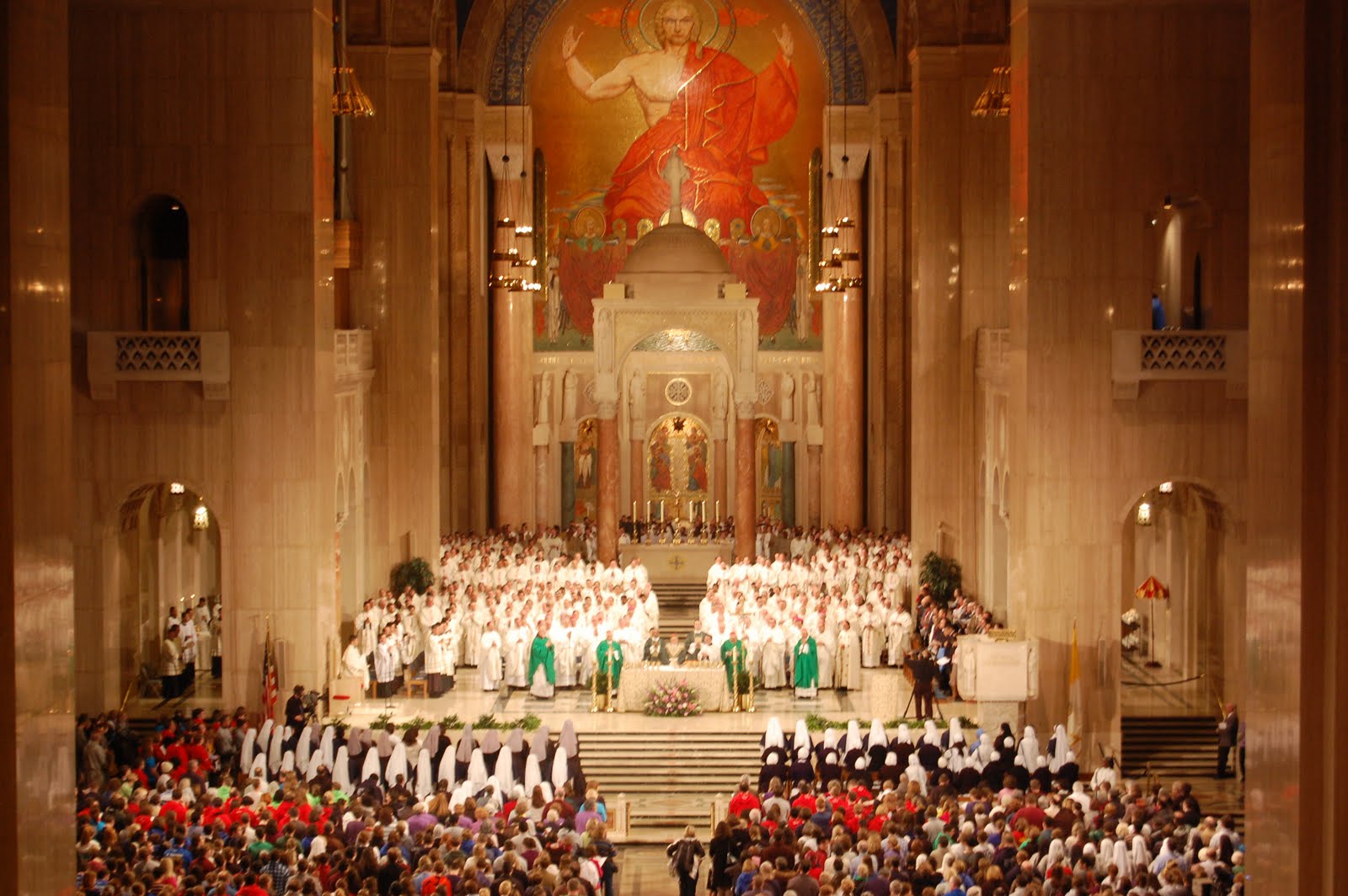
Some decades ago the argument from authority was often invoked as we answered some question about the faith. It was often considered sufficient merely invoke the existence of a rule. And thus, to my nagging question, “Why should I have to go to mass?” my parents would often answer, “Because it’s a rule!” Other variations of the answer would be, “Because the Church says so,” or, “Because it’s in the Ten Commandments.”
Never mind that there might actually be reasons that there was a rule, or a commandment. It was considered enough in those old days simply to say, “It is a rule.”
If, to some degree, it was sufficient back in those days to merely invoke authority, it is now, for better or worse, no longer the case today that it is enough simply to do so. It is true that there is a rule that we must attend Mass. For as the Catechism says,
This practice of the Christian assembly dates from the beginnings of the apostolic age. The Letter to the Hebrews reminds the faithful “not to neglect to meet together, as is the habit of some, but to encourage one another.”…the faithful are obliged to participate in the Eucharist on days of obligation, unless excused for a serious reason (for example, illness, the care of infants) or dispensed by their own pastor. Those who deliberately fail in this obligation commit a grave sin. (CCC 2178, 2181)
And the Ten Commandments say,
Remember the Sabbath day by keeping it holy…. the seventh day is a Sabbath of rest, a day of sacred assembly. (Ex 20:18; Lev 23:3)
and Jesus says in John 6:53,
Jesus said to them, “I tell you the truth, unless you eat the flesh of the Son of Man and drink his blood, you have no life in you.
As so it is clear, there is a Rule that we attend Mass. But it also remains true that the reasons the Church, the Lord, and Law all say this. For indeed, something is true not nearly because the Church or the Lord, or the Bible say so. But rather, the Lord, the Bible and the Church say so because it is true.
And from this perspective, perhaps it is a good thing that merely arguing from authority, or arguing from the existence of rules and Commandments, is not enough. We live in times where the reasons, and the logic behind such rules is often insisted upon.
Perhaps it is not unreasonable for those to whom we speak to demand such proof. For, as Scripture puts it, Always be prepared to give an answer to everyone who asks you to give the reason for the hope that you have. But do this with gentleness and respect (1 Peter 3:15). And thus it is good that we be able to give reasons for the things we teach, and the practices we rightfully insist upon. As never before, we are required not simply to say what we teach, but why.
So alright, parents, you rightfully should teach your children that they must go to Mass on Sunday, and also to pray, prepare for and receive Sacraments, and to belong to a believing community we call Parish, to insist that they ought to read Scripture know the Faith. Yes, it is right that a parent to teach their children these things. So alright you say to your children you must go to Mass on Sunday.
But but why do YOU go?
Notice that this question, does not ask merely for reasons to go to Mass, but asks for YOUR reasons. Why do you go, what is your personal testimony? For, frankly, it is not enough for us to give merely catechetical or apologetical reasons. Our children, as never before, need to have very personal testimony from their parents about the transformative power of faith in Jesus Christ. It’s time to testify, that is, to give her a personal testimony/ Yes, as never before, our children need to hear from us, parents, priests, catechists, parishioners.
So. why do you go to mass? Is there something you get out of it? How have you been blessed, and what are the fruits and effects having gone to Mass faithfully for many years? What effects have the Sacraments, prayer, liturgy in the Mass had on you?
Again, do not overlook personal quality that we must be invited to supply this testimony. Quoting the Saints and the teachings of the Church is indeed good and proper, but it is not enough. There comes a point in every Christian life when we who are mature in the faith need to testify: That what the Scriptures announce and the Church teaches is true. And I personally know it to be true because, in the laboratory of my own life, I have both tested and verified the truth of what is taught, and come to know personally that is true.
Therefore, the question remains, Why do YOU go to Mass?
Let me, as a priest, announce my own testimony. I want to say that since I was 24 years of age, when I entered the seminary, I have gone to Mass every day. I have both studied, and heard proclaimed, God’s Word every day. I have gathered with God’s people in the celebration of the sacred liturgy every day, and every Sunday. I pray every day for an hour, I pray the Liturgy of the Hours, and go to Confession once a week. I have lived in fellowship with other believers, gathering with them for prayer, and have experienced the both silent and vocal testimony of their faith and their experience that God is real, and God is good.
And I want to say, that as a result of all of this, I am a changed man. I have seen sins put to death, and new virtues come alive. I have a new mind, I think different thoughts, my priorities are different, and are better. I am more discerning, and my understanding of the meaning and purpose of my life is deeper. I have overcome terrible anxieties, and fears, and now I live in confidence, hope and joy. My life is not pain-free, or trouble-free, but I understand these troubles in a new way, seeing them as moments for growth, and grace. I am less negative, more positive and hopeful.
I could go on… But let me say this, I give God all the glory. It is his grace that transforms me. And I will say, He has done this primarily through the liturgy, through the holy Mass. He has accomplished this through the Sacraments, especially Holy Communion and Confession. These have been like medicine to me. And remaining faithful to God and to all of his sacraments, his Word and to the fellowship with the Church, I have been utterly transformed by Him and am being transformed more perfectly day by day.
I go to Mass, because through it, the Lord is changing me, is healing me, is transforming me. I have come to personally understand what the Lord means, that if we do not eat his Flesh and drink his Blood, we have no life in us. Without the Sacrament of his Body and Blood, my life would be so diminished, nothing compared to what it is now, in effect dead. It is only by the grace of God, his Word, his Sacraments, Prayer, and fellowship in the Church, that I have any life at all.
Of course we need to go to Mass on Sunday, of course! Without it I would be as dead as a diabetic without insulin, as starved man without food. I go to Mass, because through it the Lord saves me, feeds me, heals me. I have been privileged to walk with the same community of faith for the better part of 20 years. And in those years, in moments of crisis that arose, they have sung to me, prayed for me, witnessed to me, and shared Communion with me, summoning me to faith and reminding me the trouble don’t last always.
Where would I be without the Lord’s Church, without the Mass all the Sacraments, without the Word of God? At best, I would be nowhere, or it worst, is a very dark place.
Thus, I go to Mass receive the Sacraments, pray and keep fellowship, read and study God’s Word because it changes and transforms me. In no way do I see these as tedious rituals. No indeed, these are transformative realities, encounters with the living and healing Jesus Christ, to whom be all glory and thanksgiving.
Why do YOU go to Mass? What is your testimony. It is not enough today (if it ever was) to invoke rules. We have to say why, and we have to testify to it in a very personal way. Why do you go to Mass? Tell somebody!
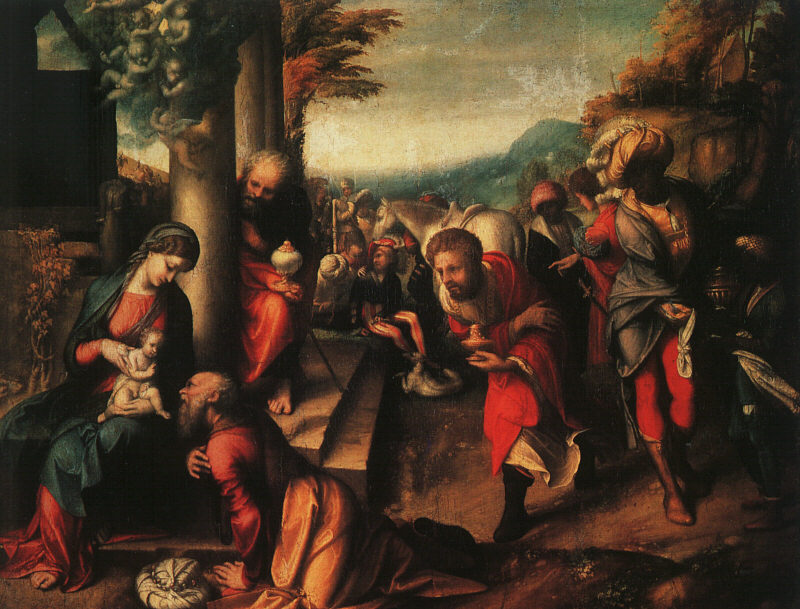
There are so many wonderful details in the Epiphany story: the call of the Gentiles, the nations, and their enthusiastic response, the significance of the star they see, and the gifts they bring, the dramatic interaction with Herod and their ultimate rejection of him in favor Christ.
In this meditation I would like especially to follow these wise men in their journey of faith. We can observe how they journey in stages from the light of a star, to the bright and glorious Light of Jesus Christ. And, of course to authentically encounter the Lord is to experience conversion. All the elements of this story serve ultimately to cause them to “return to their country by another route.” Let’s look at the stages of their journey to Jesus, let’s walk the way of the wise men.
Stage 1. CALL – The text says – When Jesus was born in Bethlehem of Judea, in the days of King Herod, behold, magi from the east arrived in Jerusalem, saying, “Where is the newborn king of the Jews? We saw his star at its rising and have come to do him homage.” – Notice first the identity of these individuals. They are called Magi, (μάγοι, (magoi) in Greek) and they are from the East.
Exactly what “Magi” are is debated. Perhaps they are wise men, perhaps they are ancient astronomers. We often think of them as Kings though the text does not call them that. It also seems Herod would have been far more anxious had they been actual potentates from an Eastern Kingdom. In our imagination we often think of them as Kings since Psalm 72, read in today’s Mass, speaks of “Kings” coming from the East bearing gifts of gold and frankincense. However, for the record, the text in today’s gospel does not call them kings, but “magi.”
Yet, here is their key identity: they are Gentiles and they have been called. Up to this point in the Christmas story, only Jews had found their way to Bethlehem. But now the Gentiles come. This detail cannot be overlooked, for it is clear that the gospel is going out to all the world.
St. Paul rejoices in this fact in today’s second reading as he says: that the Gentiles are coheirs, members of the same body, and co-partners in the promise in Christ Jesus through the gospel (Eph 3:6). Most of us are not Jewish by ancestry, and hence we ought to rejoice for in the call of these Magi is prefigured our call.
And notice that God calls them through something in the natural world. In this case a star. God uses something in creation to call out to them.
We do well to wonder what is the star that God used to call us? Perhaps it was Scripture, but more usually, it is first someone God has used to reach us, a parent, a family member, a friend, a priest, religious sister, or devoted lay person. Who are the stars in your life by whom God called you?
God can also use inanimate creation like he did for these Magi. Perhaps it was a beautiful Church, a painting or a song. By someone or something God calls. He puts a star in our sky. These wise men, these Magi, follow the call of God and begin their journey to Jesus.
Stage 2. CONSTANCY– Upon their arrival in Jerusalem the Magi find a rather confusing and perhaps discouraging situation. The reigning King, Herod, knows nothing of the birth of this new King. It must have seemed probable to them that the newborn King would be related to the current King, so his surprise may have confused them. But Herod seems more than surprised, he seems threatened and agitated.
Even more puzzling, he calls religious leaders to further inform him of this King. They open the sacred writings and the Magi hear of a promised King. Ah! So the birth of this king has religious significance! How interesting!
But, these religious leaders seem unenthusiastic of the newborn King and after giving the location of his birth seem to make no effort to follow the Magi. There is no rejoicing, no summoning of the people that a longed for king had finally been born. Not even further inquiry!
So the wicked (e.g. Herod and his court), are wakeful, and the saints are sleepy. How odd this must have seemed to the Magi. Perhaps it occurred to them to suspend their search. After all, the actual king knew nothing of this birth, and those who did, seemed little interested.
Ah, but praise the Lord they persevere in their search. They do not give up!
Thanks be to God too, that many today have found their way to Christ despite the fact that parents, clergy and others, who should have led them joyfully to Jesus, were either asleep, or ignorant or just plain lazy. I am often amazed at some of the conversion stories I have heard, people who found their way to Christ and his Church, despite some pretty discouraging obstacles like poor religious upbringing, scandalous clergy and bad example. God sometimes allows our faith and call to be tested but Those who persevere to the end will be saved (Matt 24:13).
Stage 3. CONFESSION OF FAITH – The text says, After their audience with the king they set out. And behold, the star that they had seen at its rising preceded them, until it came and stopped over the place where the child was. They were overjoyed at seeing the star, and on entering the house they saw the child with Mary his mother. They prostrated themselves and did him homage. – With what little information they have they set out and continue to follow the call of God through the star.
Note that they enter a “house.” We often think of the Magi as coming that same Christmas night to the cave or stable but it seems not. Mary (Joseph) and Jesus are found now in a house. It would seem that decent lodging has now been found. Has it been days since the birth? Perhaps even longer, but we are likely dealing with a different day than Christmas Day.
Notice too that they “prostrate” themselves before Jesus. The Greek word is προσεκύνησαν (prosekunēsan) which means more literally “to fall down in worship” or “give adoration.” The verb is used 12 times in the New Testament and it is clear each time that religious worship is the purpose of the prostration.
This is no mere homage or a sign of respect to an earthly King, this is religious worship. This is a confession of faith. So our Magi manifest faith!
But is it a real faith, or just a perfunctory observance? It’s not enough to answer an altar call, or to get baptized. Faith is never alone. It is a transformative relationship with Jesus Christ. So lets look for the effects of a real and saving faith.
Stage 4. COST – There is a cost to discipleship. The magi are moved to give three symbolic gifts that show some of what true faith includes. And they are costly gifts.
Gold is a symbol of all our possessions. In laying this gift before Jesus they and we are saying, “I acknowledge that everything I have is yours. I put all my resources and wealth under your authority and will use them only according to your will.” A conversion that has not reached the wallet is not complete.
Frankincense. is the gift of worship, for in the Bible incense is a symbol of prayer and worship (eg. psalm 141). In laying down this gift we promise to pray and worship God all the days of our life. To be in his holy house each Sunday and render him the praise and worship he is due. To listen to his word and to consent to be fed the Eucharist by him. To worship him worthily by frequent confession and to praise him at all times. And they give
Myrrh – a strange gift for an infant. Myrrh is usually understood as burial ointment. Surely this prefigures Jesus’ death but it also symbolizes our own. In laying this gift before Jesus we are saying, my life is yours. I want to die so that you may live your life in me. May you increase and may I decrease. Use me and my life as you will. So here are gifts that are highly symbolic.
The magi manifest more than a little homage to Jesus. They are showing forth the fruits of saving faith. And if we can give these gifts so too are we.
Stage 5. CONVERSION – The text says, And having been warned in a dream not to return to Herod, they departed for their country by another way.
Here then is essential evidence for faith: conversion. It is not enough to get happy in Church, we have to obey. Hence, these wise men are walking differently now. They are not going home by the same way they came. They’ve changed direction, they’ve turned around (conversio). They are now willing to walk the straight and narrow path that leads to life rather than the wide road that leads to damnation. They are going to obey Christ. They are going to exhibit what St. Paul calls the “obedience of faith” (Rom 1:5; 16:26). They have not just engaged in a possibly perfunctory worship, they are showing signs of a true and saving faith. They are not just calling Jesus “Lord, Lord!” They are doing what he tells them (cf Luke 6:46).
So there it is. Through careful stages the Lord has brought the Gentiles (this means you) to conversion. He called. They remained constant, confessed him to be Lord, accepted the cost of discipleship and manifested conversion. Have you? Have I?
Walk in the ways of the Wise men! Wise men still seek him. Even wiser ones listen to him and obey. Are we willing to go back to our country by another route? Is on-going conversion part of our journey home to heaven? If Epiphany means “manifestation” how is our faith manifest in our deeds and conversion?
I have it on the best of authority that as the wise men went home by another route they were singing a Gospel song: “It’s a highway to heaven! None can walk up there but the pure in heart. I walking up the King’s Highway. If you’re not walking start while I’m talking. There’ll be a blessing you’ll be possessing, walking up the King’s Highway. “
On of my problems on the blog is that I often “commit typos.” That is to say, I am lousy at proof reading my own material. A number of you send me little corregida, for which I am grateful. I do read over what I have wrote, but I read right past my errors and don see them at all. Yet this phenomenon is common in that when reading we often adjust see right past some of the most glaring of errors.
Consider the following passage:
I cdnuolt blveiee taht I cluod aulaclty uesdnatnrd waht I was rdanieg. The phaonmneal pweor of the hmuan mnid. Aoccdrnig to a rscheearch at Cmabrigde Uinervtisy, it deosn’t mttaer in waht oredr the ltteers in a wrod are, the olny iprmoatnt tihng is taht the frist and lsat ltteer be in the rghit pclae. The rset can be a taotl mses and you can sitll raed it wouthit a porbelm. Tihs is bcuseae the huamn mnid deos not raed ervey lteter by istlef, but the wrod as a wlohe. Amzanig huh? Yaeh, and I awlyas thought slpeling was ipmorantt.
Did you get all that? I’ll bet you did, just fine. I don’t think I missed a point, every word made perfect sense to me, grammatical and lexical nightmare that it was. The nonsense makes perfect sense. But allow this little exercise to explain to you that what I write makes perfect sense to me, even if it crosses your eyes.
An interesting computer thing happened when typing this post too, my spell checker just plain gave up. After the first five or so misspelled word, it just stopped underlining in red. Proof that if you tell a lie long enough, even spell checker will believe you.
And yet I want to remind you that for God, nothing unavenged will remain. My only concern, does this include blog edits? Does God permit alternate spellings and doe she grade on a curve? Will I spend time in purgatory for my unforced editing errors? Please consider praying for me when I die. In the meantime, keep those edits coming.
Here is my favorite jibberish (or is it gibberish) interview.
When I was a young man, a teenager really, I did the usual crazy stuff of the early, 70s, long hair, bell bottoms, wide ties, crazy plaids, shirt open at least least three buttons, and of course, rock-n-roll.
But, through it all I had this love for older things. I think it had something to do with my Grandmother, Nana, whom I loved with great affection. Often she lamented the loss of the old things and old ways. She missed the Latin Mass, she missed when manners were better, when people remembered how to dress well, when things were more certain, when, (as Archie and Edith put it, Girls were girls and men were men). She also missed when things were built sturdy and plastic was all but unknown.
Somehow her love for older things, and older ways took hold in me, even as I indulged the silly seventies. My parents’ generation born in the late 20s and 30s, and even more so those born after the War, were something of an iconoclastic generation: “Out with the old, in with the new…New and improved.”
I remember my mother often wanting to get rid of some old thing. I often volunteered to remove it, and would then hide it in the attic. Old silver, silverware, Tiffany lamps, statues, trunks etc, began to fill our attic. In addition, I loved old buildings and hated the glass boxes that were being built in the 70s. I remembered the old churches of my childhood in Chicago that “looked like churches” and lamented the “ugly modern church” of my 70s suburb. And even though I liked rock music, when I went to Church I couldn’t stand the “hippie music” of the 60s that predominated in the 70s parishes: Kum-by-yah, Sons of God. Such dreadful lyrics all on stapled mimeographed papers: Here we are, all together now, gathered round the table of the Lord, Eat his Body! Drink his blood! and we’ll sing a song of love, Allelu, Allelu, Allelu, Allelu-i-a!
My Grandmother often said how she missed the beautiful old songs, the incense, the veils, priests in cassocks, and so many other things. She somehow had my ear. I was sympathetic, hiding antiques from both my parents home and from the church too, as they were cast aside. I looked for a day when the sanity would return, and such cast-offs were once again valued.
And that day has largely come. Much of the iconoclasm of the 50s- through the mid 80s has given way, and many older things are once again appreciated. As I took some things out of the attic in the early 90s, my mother strangely appreciated them again. Other family members took some of the silver, etc. My Chalice, (photo, upper right), was an old cast off I had restored. Statues began to return to church, some of the old hymns have returned, and the Latin Mass, relegated to the cellar, has been dusted off and is now appreciated again by many, mostly younger Catholics. I have also had the good fortune of helping to restore two old Church’s to their former glory, and to undo some of the iconoclasm from which they suffered. I even wear my cassock quite often.
For the record, I do not mind some more modern churches, some of them have a handsome simplicity. But nothing irks me more than to see a beautiful older Church made to look like 1985, all white-washed and stripped bare. Thankfully, I think that terrible era is largely ending.
But we have been through a time of it in the Church to be sure. Perhaps some things had to go “into the attic” for a time, in order that they could be taken down again, and appreciated anew. But whatever the reasons for the iconoclasm, especially of the 1960s, I sense we are now recovering a balance. A balance that does not reject the new, but still appreciates the old; a balance that nods to a hermeneutic of continuity, of which the Pope speaks, rather than a rupture and radical discontinuity with the past; a balance of which Jesus says, Therefore every scribe who has become a disciple of the kingdom of heaven is like a head of a household, who brings out of his treasure things new and old (Matt 13:52).
Many look back and wonder at the great rupture and cultural tsunami we have endured in the West. We wonder how, and why. There are of course countless reasons, but I would like to single out just one: forgetfulness.
Traditions set up and endure for a reason. Fundamentally they simplify life by giving structure, boundaries and expectations. People know more easily how to navigate in the realm of tradition. But one sign that a tradition is in danger, is when people come to forget its purpose, when people forget where it came from or why we observe it, when people forget what it means or symbolizes.
I wonder if I were to get in my time machine and go back to 1940 in this parish and ask people some questions: Why do women wear hats and veils and men do not cover their heads? Why do we kneel to receive communion? Why is the Mass in Latin? Why does the priest face toward the altar? Why are all these things done this way? I suspect I would get an answer something to the effect: “I dunno, we just do it that way. Why don’t you ask the priest?”
In other words, I wonder if the first stage of losing a tradition is when it no longer makes conscious sense to people? That is, when when it is no longer clear to them why we do what we do, other than to say, “That’s just what we do.”
At some point when we are dealing with tradition we run the risk that they become wooden and rote, and we start sifting through the ashes of an old fire that has largely gone out. Unless we fan into flames the gifts of God’s love (cf 2 Tim 1:6) our love and appreciation of these things grows cold, and their beauty tarnishes. And then, some one says of something, “What’s this?” And we say, “What?! that old thing?!” And thus the suggestion to “get rid of it” receives a cursory nod, “Sure, that’s fine, get rid of it”
But the process begins with forgetfulness. And forgetfulness leads to a lack of understanding which then gives way to a lack of appreciation. And all this culminates with an almost gleeful dismissal of things old and now tarnished traditions which once sustained and framed our lives.
To be sure, some things need to fall away and perhaps there is place and time to lose things for a while, only to rediscover them. But what we have experienced in the last 60 years has been more than this sort of natural process. It has been a rupture, and radical discontinuity that has shaken many of our foundations, Church and family especially.
Therefore we do well to “remember” many of our traditions. The word “remember” suggests a process of putting the pieces back together again, a process of collecting some precious things that have been severed from the body and making them once again a “member” of the Body, the Church, and of our families. Remembering many of our lost traditions, even as we establish some new ones, is an important way of ensuring continuity with our past heritage and members.
Tradition is the “democracy of the dead” wherein our ancestors get a say in what we do. Tradition is a way to “re-member” the Church, to honor the ways and practices of the ancients that my grandmother recalled with fondness and a sense of loss. And it was a loss, but a loss I pray we are beginning to remedy, as we remember the best of the past and recover our traditions.
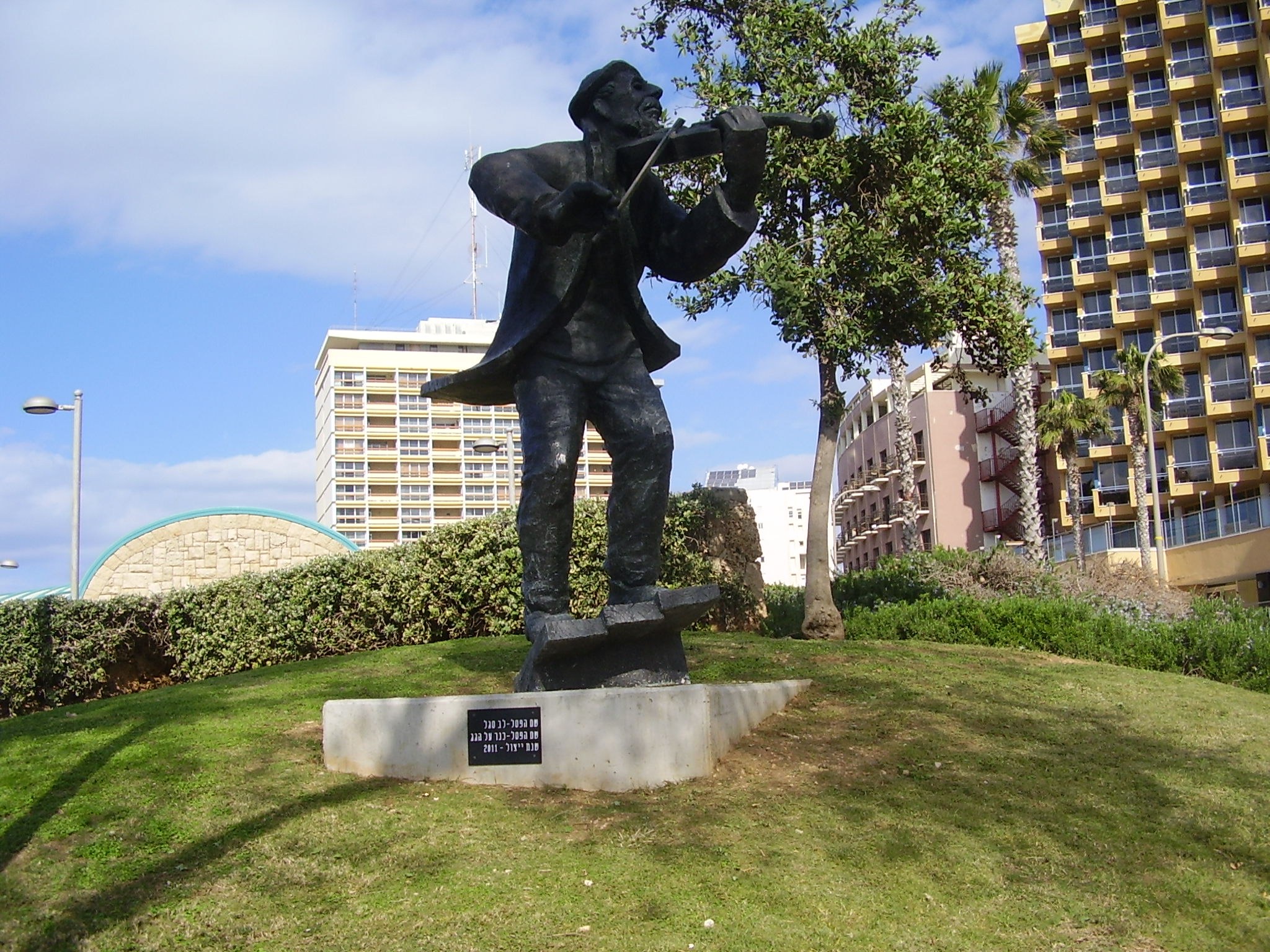
I thought of all of this as I watched this video from Fiddler on the Roof. This was written at a time when the sweeping changes of the last 60 years were already underway. And this song “Tradition!” while it tips a hat at tradition, ultimately ridicules it by implying that tradition is the kind of thing that essentially keeps men in charge, women down, and forces children into arranged and unhappy marriages.
At a key moment in the song Tevye is describing a tradition of the prayer tassels and says, You may ask, how did this tradition Got Started? And then after a pause he says, I don’t know! But it’s a tradition! The first sign that a tradition is in trouble is forgetfulness.
But the musical (written in 1964) pretty well captures the iconoclastic attitudes emerging at the time that were cynical of tradition in a general sort of way. Despite that cynicism Tevye rightly notes what we have come to discover only too well:
“Without our traditions our lives would be as shaky as a Fiddler on the Roof.”
Many Catholics seldom think past their own parish when the consider the Church. And yet the Catholic World is huge and quite vibrant:
1.2 Billion Catholics in the World.
412,236 Priests
721,935 Religious Sisters
221,055 Parishes
92,847 Catholic Elementary Schools with 31 million students.
43,591 Catholic Secondary Schools with 17 Million Students [*]
117,000 health care facilities, including hospitals, clinics, orphanages,” as well as “18,000 pharmacies and 512 centers” for the care of those with leprosy, all comprising 26% of the total of the world’s health care facilities. [*]
There is probably never a moment during the day in which Mass is not being celebrated somewhere on this planet, where the Liturgy of the Hours is not being celebrated. At every moment, Catholic school bells ringing, the poor and sick attended to by the Church, confessions being heard, counsel being given.
I am mindful of the words of an old hymn: The sun that bids us rest is waking, our brethren ‘neath the western sky.
Scripture also comes to mind
Go into all the world and preach the good news to all creation (Mk 16:15)
But you will receive power when the Holy Spirit comes on you; and you will be my witnesses in Jerusalem, and in all Judea and Samaria, and to the ends of the earth. (Acts 1:8)
Their voice has gone out into all the earth, their words to the ends of the world. (Rom 10:18)
My name will be great among the nations, from the rising to the setting of the sun. In every place incense and pure offerings will be brought to my name, because my name will be great among the nations,” says the LORD Almighty. (Mal 1:11)
Like your name, O God, your praise reaches to the ends of the earth; your right hand is filled with righteousness. (Psalm 48:10)
In that day you will say: “Give thanks to the LORD, call on his name; make known among the nations what he has done, and proclaim that his name is exalted. Sing to the LORD, for he has done glorious things; let this be known to all the world. (Is 12:4-5)
I am about to come and gather all nations and tongues, and they will come and see my glory. (Is 66:18)
And many others.
Yes, the Lord has done a glorious thing. It is so common to hear the failings of the Church and of her apparent irrelevancy to the modern Western World. And she remains, by God’s grace, strong, vital and worldwide. What a marvelous thing the Lord has done.
And if perhaps the worldwide picture overwhelms, consider even the life in one diocese in this country. My cousin John Clem alerted me to the video below, from the Archdiocese of St. Louis. It pictures the life of the Church in just one Archdiocese. As the clock in the video ticks by there is not a moment where the Church is not teeming with life, by God’s grace. The video beings in the early hours of the night where religious are praying the hours and shelters and crisis centers are up and running. As the morning dawns Masses are celebrated, parishes and school come to life, hospitals and clinics hum with activity. And as evening comes, more prayer, parish meetings and and the settling in of people in shelters. And in the late hours of the night an Archbishop prays for his people. One day in an Archdiocese.
Here in the Archdiocese of Washington, we did something similar in written form, a document called Catholic Impact. In its forty pages a similar story is told of a local Church, and Archdiocese, that teems with life.
There are surely struggles in the Church about which we must be sober today. But too easily we focus on the negative, on what is wrong, and we look right past a lot of what is right, what is good, life giving, healing, vivid and true. Let this video and book remind us of that.
The Lord continues to do a marvelous work in his mystical Body, the Church.
It occurs that our capacity to converse and to set forth arguments for the truth are often hindered today on account of many factors. One of those factors is a paradoxical relationship between a kind of skepticism and and exaggerated insistence on absolute proof that results. The fact is, absolute certitude in our human condition is rare, and to insist on it is usually unreasonable. This of course does not mean that firm certitude cannot be had in many matters as well as lesser degrees that remain a firm confidence as to the facts in a matter.
On Monday there was posted a reflection on the nature of thinking (Here)and argumentation and there was a promise of a follow-up. Herein is an attempt at that follow-through. First a quick review of Monday’s post:
We can distinguish two types of argumentation: Deductive and inductive.
Deductive arguments are supposed to be water-tight. For a deductive argument to be a valid, it must be impossible for both its premises to be true, and its conclusion to be false. The truth of the premises establishes the truth of the conclusion.
The classic example of deductive argumentation is:
1 All men are mortal.
2 Socrates is a man. Therefore:
3 Socrates is mortal.
It is simply not possible that both 1 and 2 are true, but 3 is false, so this argument is deductively valid.
Any deductive argument must meet this high standard or it commits a logical error, and so, technically, is fallacious.
Now to be sure, not all our arguments can meet this high standard of deductive reasoning since not every premise can be as firm as “all men are mortal.” This includes many arguments that we would usually accept as good arguments, arguments that make their conclusions highly probable, but, they are not absolutely certain. Thus an argument that claims the high standard of deductive reasoning, but cannot meet its high standards is said to commit a “formal fallacy”. This does not mean that the argument is without any merit, only that it claims too much for itself. We often set an impossibly high standard, namely, that all things must be absolutely certain for me, every argument absolutely airtight, and purely deductive.
And that leads us to inductive arguments which do not propose to be as rigorous as deductive argumentation. But note, they are STILL good arguments, and often the only argumentation available to us in many matters. A good inductive argument lends support to its conclusions and sets forth good reasons for them. But it does not assert and cannot claim the 100% certainty of deductive arguments. This is because they often use premises or assert conclusions that are not self evident, but only likely and probable. Thus the terms most often used to distinguish good and bad inductive arguments are “strong” and “weak” rather than certain or “proved.”
The fallacies discussed here in today’s post relate to inductive reasoning and argumentation rather than deductive.
One of the things that make inductive arguments strong or weak are the premises and reasoned conclusions drawn from them. Sometimes premises are weak, or sometimes, even if the premises are strong the conclusion is either erroneous or too strong. Errors in inductive arguments are called informal fallacies.
We do well to review some of the fallacies that commonly come up, especially in modern discourse, since they affect our discussion here on blogs like this, and may at times harm our ability to discuss matters and/or to engage in strong apologetics.
Not let it also be clear, in inductive reasoning and argumentation we are not in the realm of absolute proof and certitude and thus, not every fallacy renders an argument wholly in valid. A fallacy is a conclusion based on unsound argument, a failure in reasoning that renders an argument invalid or very weak. The conclusion in a given argument may still be valid, but our reasons set forth are weaker than they should be due to some fallacy or weakness in the argument. Thus, before we look at any fallacy we must first set forth the cautionary fallacy meant to warn the skeptic. Namely the:
Fallacist’s Fallacy – The fallacist’s fallacy involves rejecting an idea as false simply because the argument offered for it is fallacious. Having examined the case for a particular point of view, and found it wanting, it can be tempting to conclude that the whole point of view is utterly false. This, however, would be to go beyond the evidence. For it is possible to offer a fallacious argument even for proposals that are true. For example, One could argue that 2+2=4 but do so on the basis of an appeal to authority: “Mathematician Al Jones says so″ But using the argument from authority is weak, unnecessary and it does not follow that 2+2=4 merely because Jones says so. So, Perhaps the argument is bad, but it has a true conclusion. A proposition therefore should not be dismissed because one argument offered in its favor is faulty.
Thus, those who would like to think they can dismiss any claim to truth merely because they can find a fallacy in arguments are themselves committing a fallacy for an error in a premise, or conclusion does not of itself prove the point wrong in an absolute sense. And that leads to:
Argument from Authority – arguing that a point is true merely because some one in authority says so. Strictly speaking this is not a fallacy, at least in inductive reasoning. There are times when the testimony of an authority is an important aspect in inductive arguments. This is especially so when the authority is so beause they have witnessed something, or are highly expert in a complicated matter. But generally the argument from authority is a weaker argument.
Take Scripture for example, or the Magisterium. Arguments form authority can and do hold sway in the realm of faith, but it is also important to remember that something is not merely true because it is said by the Bible or a Sacred Council, but also that the Scriptures say these things because they are true, the Church teaches them because they are true. Hence we do well, especially in apologetics not merely to quote authority, but also to appeal to reason, natural law, human experience, the order of creation and other evidence to build the case.
The argument from authority is ineffectual to those outside the realm of faith and thus the instinct of the Church has usually been to rely on more than internal authority to make her case.
Ad Hominem (Personal Attack) – Arguments of this kind focus not on the evidence for a view but on the character of the person advancing it; they seek to discredit positions by discrediting those who hold them. It is important to attack arguments, rather than arguers, and this is where arguments that commit the ad hominem fallacy fall down. Now not every personal observation is ipso facto an ad hominem attack. It is not always invalid to question if one was a true witness to an event about which they speak, or even, to a certain extent if they are properly schooled in the matter whereof they speak. Neither is it necessarily an ad hominem attack to note personal mannerisms or tone that indicate something of substance related to the argument, perhaps of hostility to the subject or a lack of seriousness.
But again, generally speaking, ad hominem arguments are rather weak and implicitly suggest that that the interlocutor is not able to assail he argument on a more substantial level. It is not uncommon that Christians today are simply dismissed as backwards, old-fashioned, hateful, bigoted etc., as if that were somehow an argument. We too will often be dismissive of one another using labels such as conservative, liberal, etc as if that were an argument.
Appeal to Popularity – These are arguments that appeal to the mere fact that an idea is fashionable as evidence that the idea is true. This is a fallacy because there are many factors that can contribute to a rapid increase in popularity of an idea. Peer pressure, tangible benefits, or even mass stupidity could lead to a false idea being adopted by lots of people. A rise in the popularity of an idea, then, is no guarantee of its truth.
This is a common fallacy today in the era of opinion polls, focus groups and democratic notions. It is often said the Church must come more into line with the views of her members and the view of moderns Americans. The implication is that what is popular is therefore right. But this does not follow, for what is popular is not always right and what is right is not always popular. Further, the Church does not exist to reflect the views of its members, but rather of its founder.
Fallacy of Stereotyping – applying the observed property or characteristic of one part of a group to all the members of that group indiscriminately. Here too this fallacy is commonly exhibited in comments, a great deal of which I have to delete which like to presume that all Catholic priests are pedophiles because a small number were. There are other charges of this nature that fly: all Catholics suffer from guilt, the Catholic Church is just the Republican party at prayer, the Bishop are all a bunch of liberals, etc. All of us must be careful, for it is very easy to sterotype and we often get a lot of support for this behavior. But it too is weak for of argumentation at best and an outright lie at worse.
Appeal to Novelty – Appeals to novelty assume that the newness of an idea is evidence of its truth. That an idea is new certainly doesn’t entail that it is true. Merely being a new idea, of course, is no guarantee of truth. In our modern age this attitude is very pervasive. Old for many equals stuffy, prejudiced, uninformed, nonscientific etc. New is exulted by many as ipso facto better, more accurate, more informed, and some how right just because it is what we think now. Many scold the Church for not embracing modern attitudes about women, sexuality, authority and the like. We are told that we need to listen to the young and follow their lead. But the only real reason it would seem that we should do this is because these things are new and/or their proponents are young. Again, this is not a strong argument since new does not thereby equal right. To be sure there are some new things worth embracing, but that is because they are true for other reasons, rather than merely that they are new.
Appeal to Antiquity – Appeals to antiquity assume that the mere fact that an idea has been around for a while shows that it is true. That is, the only evidence that it offers is age. Age of itself can be a motive for credibility in that it indicates, to some degree, that an idea has stood the test of time. Age is also of value when looking the root meaning or origins of historical realities. Hence ancient sources can be more valuable when studying historical matters.
But of itself, age alone is not proof that something is right, since even some long stand ideas have fallen away based on better evidence. Further, even ancient documents (e.g. Gnostic gospels), contain error. Some years ago Pope Pius XII warned against an antiquarianism that seemed to be impressed with older and often rites and forms in the liturgy simply because they were old.
As an ancient Church we reverence antiquity and uphold the democracy of the dead that tradition is. But things are not good simply because they are old. Every appeal to antiquity is not to be excluded but of itself mere antiquity is not a strong argument since it does not follow that old always equals good or right. Otherwise, if someone can demonstrate something is older than Christianity, (e.g. the Jewish faith) then they would right and we would be wrong.
Appeal to Emotion – An argument that attempts to persuade using emotion, rather than evidence. This type of argument is fallacious because our emotional responses are not always a good guide to truth; emotions can cloud, rather than clarify, issues. Arguments are best based upon reason, rather than on emotion, if we want to demonstrate something as true. This is a common form of argumentation in the popular media and culture today. The “sob story” is a mechanism used to persuade that a particular course of action is right. And if someone cries on national television, it is often implied that what they are saying or proposing is somehow more true or carries more weight.
But something is not true simply because the person expressing it is emotional, whether angry or weeping or enthusiastic. Emotion may indicate some sincerity but as a form of argumentation it is weak.
I sometimes get comments on the blog that assert that a certain teaching of the Church is somehow hurtful to that commenter or offensive. Regrettable though this is, it is not an indicator that that Church teaching is necessarily wrong. Jesus of course offended a lot of people but it does not follow that he was wrong or committed error.
Appeal to Poverty – The appeal to poverty fallacy is committed when it is assumed that a position is correct because it is held by the poor. This is usually rooted in the a priori assumption and tendency to categorize in an unquestioning way and contrast the excesses, greed, and immorality of certain rich with the simplicity, virtue, and humility of certain poor. This can give rise to arguments that commit the appeal to poverty fallacy. The poverty of a person that holds a view, of course, does not establish that the view is true; even the poor can sometimes err in their beliefs.
Some years ago Liberation Theology was popular and many of its proponents argued its veracity since it had emerged from the poor and the experience of poverty. Perhaps there were elements of truth in the theology but it does not follow that merely because it came from the poor or was popular among them that there was truth for that reason.
There is another version of this argument that presumes that something is good or right merely because it seeks to alleviate poverty or address the issue. While that may be a good goal, it does not follow that the action is for that reason alone. In fact it can argued that great harm has been done in the name of do-goodism
Appeal to Wealth – An argument that assumes that someone or something is better simply because they are wealthier or more expensive. It is a thinking that everything that is associated with wealth is good. Rich people can be thought to deserve more respect than poorer people; more expensive goods can be thought to be better than less expensive goods solely because of their price.
There was a notion among some, especially back in the 1980s that the views of American Catholics should be more adopted by the Vatican that Catholics in the third world since we contributed most of the money and, on account of our wealth were more advanced. Arguments such as this makes an association with money a sign of superiority.
It may be of value to consult wealthier and successful people in matters of the business in which they excel, but wealth alone is not an argument of whether a position is right or wrong.
Is/ought Fallacy – An argument whose premises merely describe the way that the world is, but whose conclusion describes the way that the world ought to be. You can’t get an ‘ought’ simply from an ‘is’. For example consider the following: (1) Feeling lust is only natural and common. Therefore: (2) There’s nothing wrong with feeling lust. This argument’s premise simply describes the way that the world is for many people, asserting that it is natural to feel lust. To describe the way that the world is, though, is to say nothing of the way that it ought to be, namely that we ought not condemn lust.
And there are many who argue what ought to be from what is, often pointing to widespread misbehavior then concluding that we ought to therefore approve of it. But this does not follow, it is a fallacy. Now here we must be careful, for the point is not that there is no relationship between what is and the determination of what ought to be, only that merely moving from is to ought is not of itself sufficient.
Post Hoc Fallacy – The Latin phrase “post hoc ergo propter hoc” means, literally, “after this therefore because of this.” The post hoc fallacy is committed when it is assumed that because one thing occurred after another, it must have occurred as a result of it. Mere temporal succession, however, does not entail causal succession. Just because one thing follows another does not mean that it was caused by it. This sort of argumentation is especially weak when it comes to social and cultural phenomenon which are often complex and multivariate.
The most common form of this argument on blogs like this is the Vatican II argument wherein it is observed that things went south after the Council, therefore the Council caused it. Perhaps, perhaps not. Perhaps things would have been worse without the Council. But like most widespread social phenomena, it is difficult to point to only one thing as the cause for a complex matter. Simple temporal sucession in matters like these does not necessarily argue for cause and the post hoc argument is exceptionally weak in such matters.
Cum Hoc Fallacy – The cum hoc fallacy is committed when it is assumed that because two things occur together, they must be causally related. This, however, does not follow; correlation is possible without causation. Here in DC last year it was noted that whenever the Redskins lost the game closest to the election, that meant that the incumbent president or presidential party lost. But correlation does not equal cause. By the way the incumbent (Mr Obama) did not lose. Another famous example is that there were more pirates back when the planet was cooler and less pirates now that it is warmer. But no one would seriously argue that the solution to global warming (if that even exists) is to recruit more pirates.
An example is the Church regarding this fallacy is widely held notion that celibacy is somehow a cause of pedophilia. Never mind that the vast majority of celibate priests never offended and that Married men offend in greater percentages. Never mind that, many people connected celibacy and pedophilia and assumed that since they were together, in this case, celibacy must be a cause of this criminal behavior. They went on to suggest the elimination of celibacy. But again it does not follow that correlation (in this case a very weak correlation) equals cause.
Equivocation Fallacy – The fallacy of equivocation is committed when a word is used in two or more different senses within a single argument. For an argument to work, words must have the same meaning each time they appear in its premises or conclusion. Arguments that switch between different meanings of words equivocate, and so don’t work. This is because the change in meaning introduces a change in subject. If the words in the premises and the conclusion mean different things, then the premises and the conclusion are about different things, and so the former cannot support the latter.
This sort of error happens a lot in people who read the Bible. Consider this: 1. Salt is a compound of Sodium and Chloride and it often found in salt shakers.
2. Jesus said, you are the Salt of the Earth. 3. You are therefore sodium and chloride and likely live inside a salt shaker. But of course this does not follow since the literal meaning exists in the premise and the metaphorical or allegorical meaning in the conclusion.
Unfortunately today there is also and extended aspect of this problem wherein many miss the subtlety of language and fail to understand that words can be used literally, denotatively, connotatively, metaphorically, allegorically, euphemistically, hyperbolically and so forth. But not every word should be be equivocated to its literal meaning. Language is subtle and creative and care must be taken to examine the context and intention of the speaker or the message may be misunderstood. Offense is often taken when none is intended, error is presumed when in fact the word is used in a way other than the listener or reader understands. There is a tendency today to be crudely literalistic in interpreting many things and makes people quick to snap at what is meant in ways other than the merely literal.
Fallacy of Good intention – This fallacy says that something is good based merely on the good intention of the doer. Consider however if I place a key in a lock, thinking it is the correct key. Thus my intentions are good. But it does not follow that the lock will turn simply because I had good or right intentions. In fact that door will not open with the wrong key. Thus good intentions do not by themselves make an action good or right. Good intentions may speak to culpability, but not rectitude.
In the world as well many insist that things are good or right merely because some one means well. But it does not follow. Moral assessments must reasonably be made on what is actually done and how that act corresponds to what is reasonable, just, and in conformity to the truth.
Well OK, here are just a few fallacies that are common today. Remember, fallacies are a failure in reasoning that renders an argument invalid, but not always the conclusion. And thus, while noting fallacies like these above, we must also recall that not all of them are as egregious as others, and not all of them as devastating to the right conclusion as others. In inductive reasoning and and argumentation we are on a continuum wherein an argument may be said to be strong or weak. These fallacies obvious weaken an argument but they do not always render its conclusion absolutely wrong.
In the end we would discuss things among ourselves and also engage the world in argumentation ought to become more aware of fallacies such as these and more Here.
On the Day known as New Years Day in the secular world, there is a veritable feast of identities for this day on the Church’s calendar. It is the octave of Christmas, the Feast of Mary Mother God, the Feast that commemorates the Holy Name of Jesus and also of the Circumcision. Quite a lot to ponder actually!
In previous years I have commented on all these liturgical aspects, and even on the mystery of time.
But this year it strikes me to preach out of a text of St. Paul from the 3rd chapter of the Letter to the Philippians. The text recommends itself to a New Year’s theme, because Paul speaks and meditates on “what is behind, and what is before” him. And in his meditation he sets forth a kind of plan for a Christian to follow, a Christian who prayerfully reflects on the year that is passed, and the year that is about to unfold. Here then is the text from St. Paul, and a kind of four-point plan that follows.
But whatever was to my profit I now consider loss for the sake of Christ. What is more, I consider everything a loss compared to the surpassing greatness of knowing Christ Jesus my Lord, for whose sake I have lost all things. I consider them rubbish, that I may gain Christ and be found in him, …I want to know Christ and the power of his resurrection and the fellowship of sharing in his sufferings, becoming like him in his death, and so, somehow, to attain to the resurrection from the dead. Not that I have already obtained all this, or have already been made perfect, but I press on to take hold of that for which Christ Jesus took hold of me. Brothers, I do not consider myself yet to have taken hold of it. But one thing I do: Forgetting what is behind and straining toward what is ahead, I press on toward the goal to win the prize for which God has called me heavenward in Christ Jesus. All of us who are mature should take such a view of things….Only let us live up to what we have already attained. (Phil 3:7-16)
I. Consider your Profit–in the text St. Paul says, But whatever was to my profit I now consider loss for the sake of Christ. What is more, I consider everything a loss compared to the surpassing greatness of knowing Christ Jesus my Lord, for whose sake I have lost all things. I consider them rubbish, that I may gain Christ and be found in him. …I want to know Christ and the power of his resurrection and the fellowship of sharing in his sufferings, becoming like him in his death, and so, somehow, to attain to the resurrection from the dead.
At the end of one year the beginning of another, we do well to consider what it is that we truly value. Now we need to be careful when we make this consideration. For it often happens that we make answer the question, “What do I most value” in a way that speaks more to how we should answer the question, than what is really true. Most of us who are believers, know that we should value God, the Lord Jesus, above all things. But honestly, that is not always so.
So we ought to reflect, at the end of the year, what, or who, do we really value most. What, or who, is our greatest prize? Perhaps it is the Lord, but often other things compete for this title. Many idolize money, creature comforts, political outcomes, sports victories, career advancement, and many other things more than God, and the things of God.
Why is this consideration so important? Because, frankly, where our treasure is, our heart will also be (cf Luke 12:34). Thus, we do well at the beginning of the new year to ask the Lord to give us hearts that are more sure, more undivided, more single-hearted in our love for him.
But in order for us to receive this gift, we must also ask for new minds that become powerfully aware of just how great it is to know and love the Lord, and how comparatively passing the gifts and trinkets of this world are. Somehow, it has to get through our thick skulls that the things of this world don’t amount to much. They are but passing pleasures, mere trinkets upon which rust, decay and boredom soon descend. They are as St. Paul says, nothing but “rubbish,” compared to the glory of knowing God, and the glories he has waiting for us. Thus St. Paul says that he “wants to know Christ.”
One of the most common New Year’s resolutions is to lose weight. Well I have news for you, we’re all going to lose weight, a lot more than we think. These bodies of ours, when death has had its way, along with decay, will weigh little less than 5 pounds of dust and ashes. All our good looks, our big hair and youthful ruddiness will pass. We get worked up about secondary things. Perhaps losing weight is good, but knowing the Lord and valuing him is far more important. WHy not resolve to pray for a greater love and desire for God instead of just praying for less desire for food?
So, step one in the four-point plan is to get this through our thick skulls: the glories of this world are passing away, they last but a moment. Our only true and lasting treasure is the Lord and the things he helps the store up in heaven. Step one, in our four-point plan is to consider our profit, to consider what is truly valuable, truly lasting in our life.
II. Chase your prize–St. Paul goes on to say, Not that I have already obtained all this, or have already been made perfect,but I press on to take hold of that for which Christ Jesus took hold of me. Brothers, I do not consider myself yet to have taken hold of it.
Having considered our true treasure, and asking and experiencing that our heart be supernaturally directed to what we most value, it becomes easier by God’s grace to walk a clear path in the new year ahead. There may be things in our past that we regret, mistakes that have caused us setbacks. But with hearts renewed in what is truly valuable we are enabled increasingly, to forget what is behind and to press forward to what is ahead, the great glory of heaven, union with God, and all the saints.
The Greek word here is διώκω (dioko) which means to aggressively chase, like a hunter pursuing a catch,or a runner seeking a prize. Do you get the picture? The Christian life is not to be a tepid and boring, reluctant slouching towards God and heaven. It is to be a joyful, focused, earnest pursuit of God, and his kingdom. It is to be an eager pursuit of his will, his Word, and his Sacraments, like a starving man who sees food in the distance and runs with joy and zeal to devour with zesty delight every morsel he can claim!
It is clear, that we will only vigorously pursue things which we value highly. That is why step one in the four-point plan is so critical. Consider the kinds of sacrifices that people make for careers, for things like the “American dream.” People spend many years, and vast amounts of money pursuing the dream that lasts less than 80 years, maximum. But they make this pursuit, with zeal, even with joy, because they value the large home, the creature comforts, and the prestige of having “made it.”
To the degree, that we value Jesus and his kingdom this way we too will pursue it with joy, and be willing to make any number of sacrifices. Thus, having considered what truly profits us, would truly is our treasure, we will naturally chase our prize with joy and zeal.
III. Confirm your Priority– the St. Paul says: But one thing I do: Forgetting what is behind and straining toward what is ahead, I press on toward the goal to win the prize for which God has called me heavenward in Christ Jesus.
Note the expression, “this one thing I do.” When something is truly our passion, and our focus it tends to order everything else in our life. Consider that a runner in a race does not stop to have idle discussions, or go to shopping malls and movie theaters when in the race. Rather, the runner in a race focuses on running, winning the race. Only those things that assist him in that task this year will he do. For example, a distance runner may reach out to receive a cup of cold water that is offered along the path, for that helps his goal.
If, to use another example, a person is driving from Washington DC, North to New York City, they will ignore signs that say South, Atlanta. If it is necessary to pull over and get gas, that makes sense, and they will do so. If directions or other provisions for the trip are necessary, they will do so. But the destination, New York City is the goal that determines everything else. ANd only those things that assist the goal make sense.
And so it must be for us. Our life must be increasingly about one thing, and one thing only: knowing, and loving Jesus Christ and earnestly running to his kingdom. Anything that distracts from that one goal is to be discarded. And things that help us are embraced.
Thus note this, for our life to be ordered, and not confused and chaotic, we must have our one goal, always consciously in mind. Our priority is Jesus Christ and whatever hastens us to his kingdom.
IV. Claim what is promised–St. Paul says, All of us who are mature should take such a view of things….Only let us live up to what we have already attained.
Here St Paul, in speaking about is living up to what we have already attained, is essentially saying that we must live with Hope, that is, with confident expectation that what is promised is ours.
People only strive for what they can reasonably possess. And thus, the Theological Virtue of Hope, which defined is “the confident expectation of God’s help in attaining eternal life,” is an essential virtue for the Christian, both to have an cultivate.
When we know that what is promised is attainable by God’s grace we are all the more encouraged to strive eagerly for it, even if there are temporary setbacks and hardships involved. Thus, St. Paul says to us that we ought to live as those who have already attained, even though we are not yet at our goal.
In Christ our Head, we, the members of the Body, have already attained to the glory that is promised. And if we but run with him the race that is set before us, we will surely meet our goal. Thus as we enter this new year, we must renew our confidence in God’s providence, and in his grace.
The only ultimate obstacle, is our very self. We must neither surrender our confidence, nor conviction. Doubts and discouragement might cause us to veer from the path. Thus Paul counsels that we pray for vigorous Hope, a Hope that will strengthen our wills to endure, no matter the cost knowing that if we remain in Christ we will win.
Here then is a kind of four-point plan for the year ahead. We must consider what is truly our profit, what we value most. Chase our prize with a zeal that comes from that fact that it IS our prize, confirm our Priority by focusing like a laser on our Prize, Claim already what is our and live out of it.
A lot of breakdown in modern communication comes down to logical fallacies and cognitive distortions that have us talking past each other. Perhaps, as the new year draws near, we might spend a little time reflecting and “thinking about our thinking.”
All of us fall into these traps. I have spoken before on the blog of the problem of “all or nothing thinking” and also our tendency today to take everything personally, to be thin-skinned. Perhaps some of the following reflections on the nature of our knowledge and how we both argue and reason, may also be instructive, since, as a group, we tend today to be very polemical, ideological and not always well reasoned in our thinking. Indeed, careful reasoning is NOT an obvious gift that most in these times exhibit.
Neither do most of us properly understand the limits or range of argumentation and so we tend to live in times where many “absolutize” what they argue and/or demand unreasonable “proof” for what others say. Frankly, the kinds of absolute proof many demand today is not possible in most realms of knowledge, including the many aspects of even the physical sciences, as we shall see. But this does not means we therefore know nothing, but only that we know within a range of stronger and weaker certitude based on a number of factors.
What is set forth here and tomorrow, is not intended to be exhaustive. Indeed, anyone who has ever studied the branch of philosophy known as “Logic” will know that some of the structures of logic, and especially of “formal logical fallacies” are mind bending in their complexity and often ask us to hold many things constant (a difficult thing to do) while we discuss in great minutia some specific syllogism or point. There are, frankly, dozens of logical fallacies that can be distinguished, but many are very arcane, sensible only to the very erudite (of whom I am not one). Hence I will spare reader here the deepest distinctions and only discuss a few more common problems.
A logical fallacy is, fundamentally, an error in reasoning. Some logical fallacies are more common than others.
Most broadly we can distinguish between formal and informal fallacies. This is because there are two types of argument: deductive and inductive.
Deductive arguments are supposed to be water-tight. For a deductive argument to be a valid, it must be impossible for both its premises to be true, and its conclusion to be false. The truth of the premises establishes the truth of the conclusion.
The classic example of deductive argumentation is:
1 All men are mortal.
2 Socrates is a man. Therefore:
3 Socrates is mortal.
It is simply not possible that both 1 and 2 are true but 3 is false, so this argument is deductively valid.
Any deductive argument must meet this high standard or it commits a logical error, and so, technically, is fallacious.
Now to be sure, not all our arguments can meet this high standard of deductive reasoning since not every premise can be as firm as “all men are mortal.” This includes many arguments that we would usually accept as good arguments, arguments that make their conclusions highly probable, but, they are not absolutely certain. Thus an argument that claims the high standard of deductive reasoning, but cannot meet its high standards is said to commit a “formal fallacy”. This does not mean that the argument is without any merit, only that it claims too much for itself.
Why is this important? Because, in an age of skepticism we need to rediscover that our demand for pure deductive reasoning is often itself “unreasonable.” We often set an impossibly high standard, namely, that all things must be absolutely certain for me, every argument absolutely airtight, and purely deductive. But the problem with this is that it does not often pertain to us, mere mortals, to have such a command of facts in order to have such certainty. In demanding a certainty or evidence that is absolute, we are usually being unrealistic, for such absolute certainty is rare in our human condition.
Thus we moderns too easily tend to reject all evidence that is not what we consider absolute. Yet, though not absolute, it IS good evidence. And we also tend to invalidity anoint certain types of evidence (especially the physical sciences) with a certainty they do not actually have. For indeed, even the physical sciences make many assumptions and hold theories that are not 100% certain. And scientists DO hold metaphysical assumptions (e.g. that reality is intelligible) which are not unassailable.
Thus in our insistence for “absolute proof” and pure deductive reasoning, we often produce a cynicism in ourselves that closes a great deal of the world of experience off to us. For the fact is, most of what we see and experience admits of mystery and uncertainty.
On account of this attitude, many today reject faith which asks us to walk “by faith and not by sight.” The evidence of faith is supplied in trusting the authority of God who reveals. And yet, to be honest, most of what we know rests on what we learn from trustworthy sources and test in the laboratory of our life.
And so, if we are honest, pure certainty and the rarefied world of deductive reasoning is not the usual human condition. We do well to admit that faith is a valid strategy, as is moving forward without 100% certainty, and that even “pure science” contains a lot of theories, hypotheses, hunches and even guesses, not to mention pure mysteries and a plethora of unknowns.
And that leads us to inductive arguments which do not propose to be as rigorous as deductive argumentation. But note, they are STILL good arguments, and often the only argumentation available to us in many matters. A good inductive argument lends support to its conclusions and sets forth good reasons for them. But even when the premises of an inductive argument are solid and true, it does not necessarily mean with 100% certainty that its conclusions are true. That the argument is a good one and that its premises are true, only establishes that its conclusion is likely or probably true.
Again, let us be clear, inductive arguments, which involve most of the reasoning we must undertake, do not assert and cannot claim the 100% certainty of deductive arguments. This is because they often use premises or assert conclusions that are not self evident, but only likely and probable. Thus the terms most often used to distinguish good and bad inductive arguments are “strong” and “weak” rather than certain or “proved.”
An example of a strong inductive argument would be:
1 Every day until now the law of gravity has held. Therefore:
2 The law of gravity will hold tomorrow.
Note that this argument is very strong but not absolutely certain. Nevertheless most of us would act with confidence on its premise and conclusion and even make plans of a significant nature based on it. And this is case with most knowledge we have, which is not usually pure deduction, but involves a lot of inductive reasoning and argumentation.
Now, that said, we are not thus cast into a world of absolute uncertainty. There ARE standards for inductive arguments that must be met. And arguments that fail to meet the standards required of inductive arguments are said to commit fallacies, technically termed “informal fallacies” (since we are not in the realm of deductive reasoning with its absolute standards).
It is these “informal fallacies” that I would like to turn our attention in tomorrow’s post. As stated above, there are many logical fallacies that exist and have been well described. Some are more common that others, and some are more clear and egregious than others, but all of them have impact on what we may term critical thinking.
For today let this suffice. But tomorrow we can turn our attention to some (not all) of the fallacies that more often occur. As we shall see, since arguments consist of premises, inferences, and conclusions, some arguments fall short since the premises don’t give adequate support for the conclusion drawn and thus are termed fallacious. The most common fallacies center on matters of relevance, ambiguity, or presumption:
Fallacies regarding relevance rely on premises that aren’t relevant to the truth of the conclusion.
Fallacies regarding ambiguity make use of equivocation, “straw man” arguments, or play around with the plain meaning of words in a way that is erroneous or misleads.
Fallacies regarding presumption rely on false premises, and so fail to establish their conclusion. For example, arguments rooted in false dilemmas, false dichotomies or circular arguments.
Learning a little about the nature of argumentation and reasoning can help us to avoid some of the more common modern pitfalls that shut communication down. Further it can help us avoid the extremes of either insisting on too much certainty or of falling into the other extreme of relativism. Most human knowledge exists on a continuum with absolute and deductive certitude being relatively rare, as is total ignorance and absolute uncertainty at the other end. Most of our knowledge and argumentation may be said to fall in a middle range of things we know strongly or weakly, with great confidence or lesser confidence.
Accepting this middle ground can go a long way to open true discussion and mutual respect, wherein we neither demand unreasonable or absolute proof, but neither do we dismiss necessary standards in setting forth inductive and reasoned arguments.
More on this tomorrow (actually January Wed, 2nd yo be more precise).
Without proper balance a lot of modern argumentation looks and sounds a lot like this song:

 Some decades ago the argument from authority was often invoked as we answered some question about the faith. It was often considered sufficient merely invoke the existence of a rule. And thus, to my nagging question, “Why should I have to go to mass?” my parents would often answer, “Because it’s a rule!” Other variations of the answer would be, “Because the Church says so,” or, “Because it’s in the Ten Commandments.”