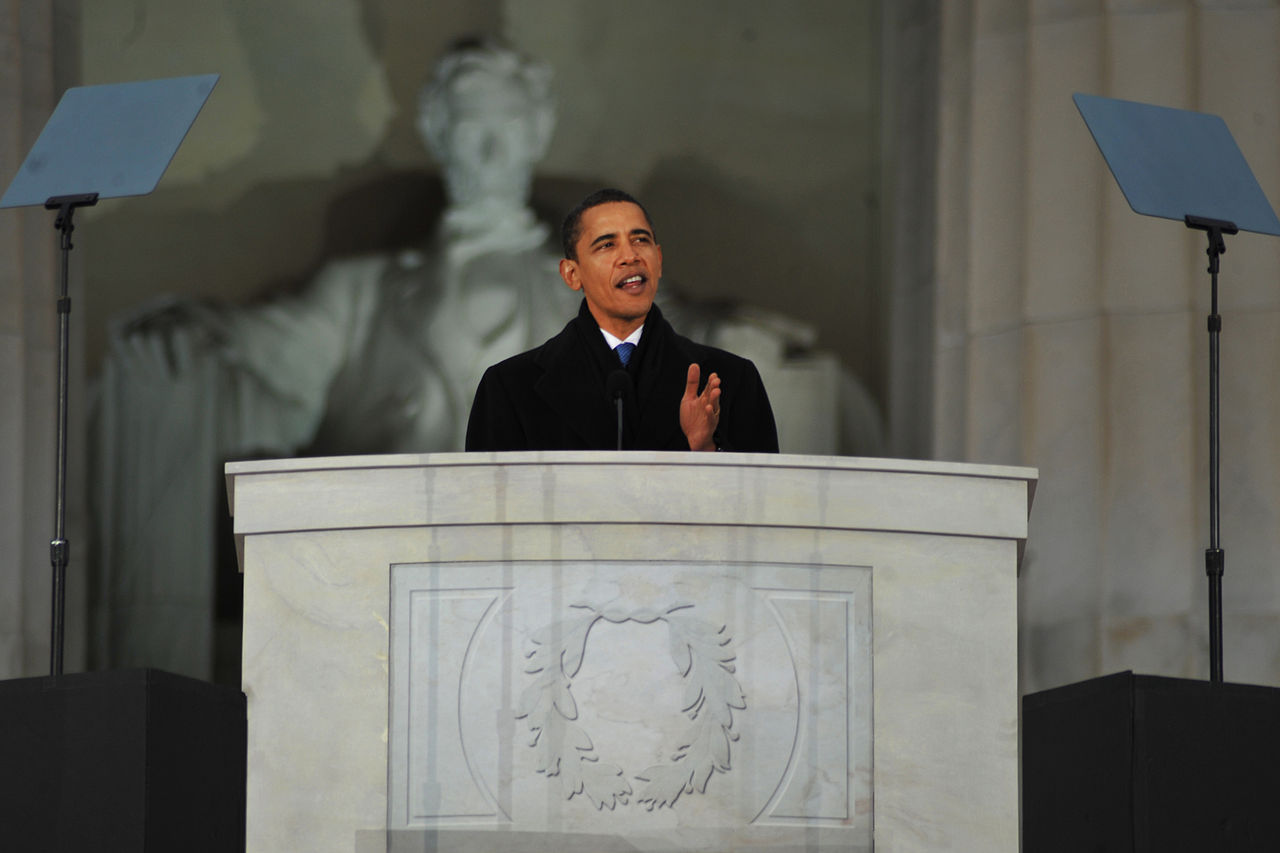
Light and Darkness: Some thoughts on this Presidential Inauguration Rooted in another Inauguration in 1865

012013Many thoughts move through my mind on this third Monday in January. Just up the street from where I live, the Second Inauguration of President Barack Obama is taking place. Today is also the official celebration of the birthday of Rev. Dr. Martin Luther King Jr. And also, later this week, my rectory will be filled to overflowing with priests and seminarians here for the March for life, which takes place on Friday. Yes, so many thoughts: thoughts of civil rights and racial justice, thoughts of the unborn, and their right to life, thoughts of a president, and this nation. So many thoughts.

Somehow, my mind drifts back to 1865, to the 2nd Inaugural Address of President. Abraham Lincoln. Many things also came together on that day: the nation was reeling in the aftermath of the terrible war that killed almost 600,000 soldiers and others. (If that number were projected forward percentage-wise to today’s population, it would mean that over 6 million people in this country would have lost their lives).

President Lincoln, likely out of grief and surely out of reverence, kept his remarks brief that March day. He too thought of life, and he also thought of racial justice, and the connection of a great moral issue to the health of this nation.

Surely he, and the whole nation, was relieved that the war was ending, but President. Lincoln also reflected, in this brief Second Inaugural Address, on the Justice of God, and how that justice cannot ultimately stay silent in the face of grave evil. Lincoln ponders in the address, if the just concluded war was not somehow an exercise of God’s justice: God allowing the war as a way calling the question of the grave evil of slavery, and by extension, calling us to greater racial justice.

Looking ahead, Lincoln also seems to warn that our sufferings may not be ended if we failed to act with justice in the critical days of reconstruction that lay ahead.

I would like to present excerpts from President Lincoln’s Second Inaugural Address and then apply some of it to us on this third Monday in January 2013, a day so filled with meaning regarding race, and life, and the fundamental question: “Whither our Nation?” Here are some excerpts:

[Slavery] constituted a peculiar and powerful interest. All knew that this interest was somehow the cause of the war. To strengthen, perpetuate, and extend this interest was the object for which the insurgents would rend the Union even by war…[No one] expected for the war the magnitude or the duration which it has already attained….Each looked for an easier triumph, and a result less fundamental and astounding. Both read the same Bible and pray to the same God, and each invokes His aid against the other. It may seem strange that any men should dare to ask a just God’s assistance in wringing their bread from the sweat of other men’s faces, but….The prayers of both could not be answered. That of neither has been answered fully. The Almighty has His own purposes. “Woe unto the world because of offenses; for it must needs be that offenses come, but woe to that man by whom the offense cometh.” [Matt 18:7].

If we shall suppose that American slavery is one of those offenses….He now wills to remove, and that He gives to both North and South this terrible war as the woe due to those by whom the offense came, shall we discern therein any departure from those divine attributes which the believers in a living God always ascribe to Him?

Fondly do we hope, fervently do we pray, that this mighty scourge of war may speedily pass away. Yet, if God wills that it continue, until all the wealth piled by the bondsman’s two hundred and fifty years of unrequited toil shall be sunk, and until every drop of blood drawn with the lash shall be paid by another drawn with the sword, as was said three thousand years ago, so still it must be said “the judgments of the Lord are true and righteous altogether.” [Ps 19:9]

With malice toward none, with charity for all, with firmness in the right as God gives us to see the right, let us strive on to finish the work we are in, to bind up the nation’s wounds, to care for him who shall have borne the battle and for his widow and his orphan, to do all which may achieve and cherish a just and lasting peace among ourselves and with all nations. [Abraham Lincoln, March 4, 1865]

Yes, a grave injustice had bewitched this land, Slavery and racial injustice. And Lincoln saw something of the justice of God in allowing a terrible punishment to grip this nation, a punishment meant to sober us and avenge the injustice that long awaited God’s decisive action.

This is not to sanction every act of the North in the Civil War, only to say that injustice sets loose evil, and that, at some point, God delivers us to our collective iniquity and that we who would sow in the wind, must now reap the whirlwind (Hosea 8:7). For every drop of blood exacted by the slave holder’s wrath, for every dollar gain through injustice, now the blood would be required back from an unjust nation, and from a nation that had profited on injustice every dollar would be paid back.

That was 1865. What of 2013? The blood of injustice still flows, especially through abortion. And many of the same arguments used for slavery are now used for abortion: personhood, privacy, personally opposed but unwilling to infringe on others rights (?!) to abort, etc. (More on that HERE) The blood has reached epic proportions and cries to heaven for vengeance, (Gen 4:10; Rev 6:10ff). God’s justice cannot remain forever silent.

It is a great irony that today a President is re-inaugurated whose presidency speaks to us of racial healing and justice, a theme that so occupied the mind of President Lincoln and the nation in 1865. And yet, that same president stands wholly in support of an equally and arguably worse injustice, a bloodshed whose numbers (in gallons of blood)  far outweigh the grave injustice of Slavery and Jim Crow.

As of today when I write this, 54,559,615 children have been unjustly murdered in this land by abortion. And it is not just the mothers who have done this that are culpable. It is this nation, collectively that is guilty. It is those who have sought abortion, those who perform them, those who pressure women to have them, those who vote to uphold this evil as a “right.” It is those who remain silent and those who vote for those who uphold this grave evil, or downplay its horrific reality. It is those who fail to provide reasonable alternatives and resources for women in crisis. It is those who live unchastely and fail to reproach those in their family members who live that way.

Yes, to a large extent few of us can fail to escape the fact that we have contributed to, even indulged in an unchaste, unjust and and unholy culture that leads to the death of millions every year. Abortion results largely from unchastity and the refusal of Americans, collectively to accept the consequences of our sin.

The President who stands before us today is largely a product of our culture. It is easy to demonize him. He is, in fact, the most virulent advocate of abortion who has ever occupied the Oval Office. So extreme is he in this view that many members of his own party cannot stand with him in this matter. He supported partial birth abortion, a procedure so grim that even “pro-choice” Americans are largely aghast. He also voted against legislation that children “born alive” i.e. children who survive the attempt to kill them in abortion, should then be allowed to live. No, said the President in his Senate days, such children who make it out of the womb alive after a “botched” abortion can still be killed thereafter, with impunity. Even most pro-choice Americans find this a bridge too far. Yet our President voted for such measures.

But as I say, he is a product of “us” collectively speaking. It is easy to demonize him, and he is certainly wrong. But blaming, or simply focusing on him, does not let the rest of us off the hook. We will have to collectively pay for our national sin. God’s justice will not remain forever silent.

And so, on this day of Inauguration, many thoughts flood my mind: prayers for a president, gratitude for racial healing, but also the alarming, ironic and paradoxical reality that a President (Mr. Obama) who points to the healing of one sin, but also points to a new and grave injustice.

We are so often selective in our moral assessments. God help our nation. For even as we celebrate a growing victory over injustice (slavery and racism), and it is/was a grave injustice, we tolerate another grave injustice with an even higher death toll.

President Lincoln rightly warned, with the searing drama of an ancient prophet that God would only tolerate injustice for so long. We cannot go on living outside of God’s justice and expect good results. Sooner or later we will encounter the consequences of what we do. Lincoln said that every drop of blood unjustly shed would be repaid, every dollar unjustly earned would be exacted, that we would pay to the full for our injustice. What was true in 1865 is no less true today.

Our only hope is collective and national repentance. Only then can the floodgates of mercy open. But, as our sad history often shows, collective repentance is hard to come by. Too many are on the take, too many profit by sin in a temporary and worldly way. The usual human story is that we are stubborn in our injustice, and only the severe measure of God handing us over to our iniquity has salutary effects.

Would that we could repent, but as for now the scales of justice are steeply tipped against us, our repentance seems unlikely, and the blood of the murdered cries ever louder from the rich soil of this land. God will not remain forever unmoved from that cry for justice.

I realize that it is not possible for me to write these remarks, or for you, dear reader, to read them, outside the prism of politics. But I want to be clear that as a Christian, and an American, I pray for our President (and nation) this day. I ask God’s blessing upon him, and his family. I pray that God will give him strength, and above all, wisdom. I cannot, and do not align myself with some Americans who seem to have a very personal dislike of President Obama, or who demonize him as though he were personally evil. I do not think this of him, nor do I dislike him. As a Catholic, I see it as my duty to pray for him in accord with the words of Scripture:

I [Paul] urge, then, first of all, that requests, prayers, intercession and thanksgiving be made for everyone— for kings and all those in authority, that we may live peaceful and quiet lives in all godliness and holiness. This is good, and pleases God our Savior. (1 Tim 2:1-3)

If the early Christians could pray for Nero, I can surely pray for our current leaders.

That said, it is clear that there are a number of positions and policies of our current president is gravely troubling, especially issues related to human life and religious liberty. Let me be clear though, my remarks in this blog should not be seen as directed and one man, President. Obama. My remarks are directed ultimately to us collectively as a nation.

As President Lincoln spoke of his concerns in 1865 for the nation, he did not simply focus his remarks on one man, e.g. Confederate “President” Jefferson Davis, or merely on one segment of the nation, the South. He spoke of a nation, and to a nation and summoned us to remember that we must act justly, and that if we chose to live outside of God’s justice, the toll, already so high, could become far worse.

And what of us today? Today we inaugurate for a Second Term an African-American President and we rightfully celebrate significant progress in racial justice. And yet, another, grave, and newer injustice has entered this land, the shedding of vast amounts of innocent blood in abortion. And this nation continues to legally sanction that very killing of the innocent as a “right.” This cannot stand.

I speak to day of the President only to pray for him and for his conversion in terms of the sacredness of human life, the proper understanding of Marriage and sexuality, and the proper respect for Religious Liberty. But in praying for him, I pray also for this nation, so soaked in blood. May we repent before it is too late, before the dam of God’s mercy breaks and we are drowned by the very innocent blood we have individually and collectively shed.

God bless our President and the Congress, and Go bless the United States of America.
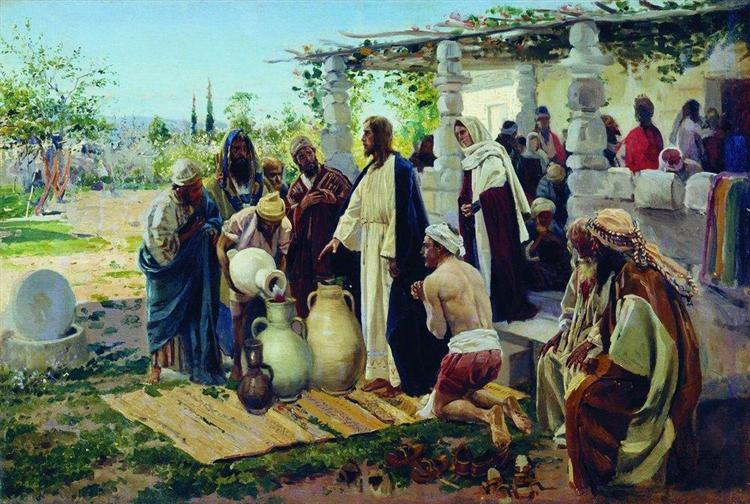
Biblical Basics About Mother Mary – A Homily for the Second Sunday of the Year

011913In the Gospel today of the Wedding Feast at Cana we have a theological portrait both of Mother Mary and also of Prayer. Lets look at the Gospel along Five lines:

I. The Place that Mary has – The text says, There was a wedding at Cana in Galilee and the mother of Jesus was there. Jesus and his disciples were also invited to the wedding.

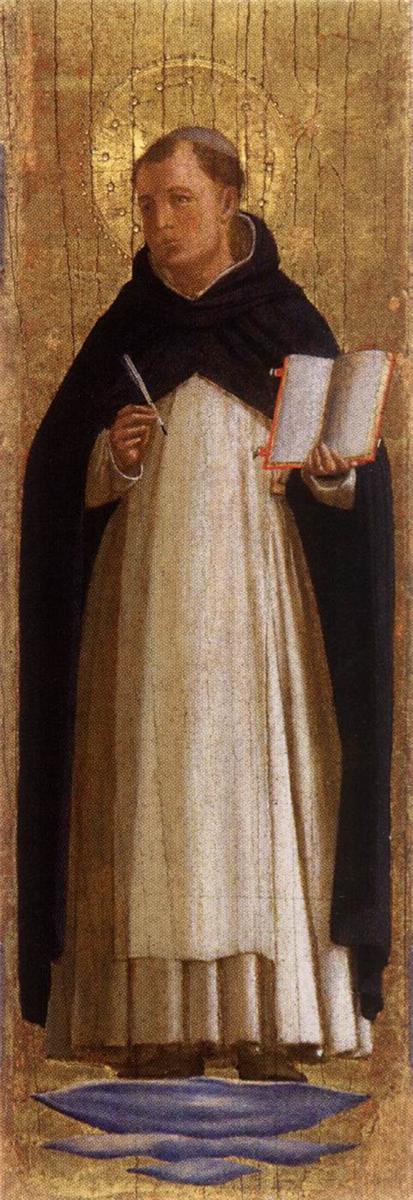
It is a fascinating thing about these opening verses that Mary almost seems to dominate the scene and the presence of Jesus is mentioned secondly. St. Thomas Aquinas, noting this says that at Cana Mary is acting as the “go-between” in arranging a mystical marriage (Commentary on John, 98; and 2,1, n.336, 338, and 343, 151-152). Hence in a way she almost dominates the scene, and, once the Marriage is arranged, steps back, her final words to us being, “Do whatever he tells you.”

How many of us have experienced Mary’s role in helping us find her Son and our place at the wedding feast of the Lamb. I know in my own life it was Mary who drew me back to her Son when I had strayed.

II. The Prayer that Mary Makes – The text says, When the wine ran short, the mother of Jesus said to him, “They have no wine.

Notice now another central role that Mary has: she is interceding here, she is praying for others to her Son. Notice three qualities to her prayer:

Her discernment – She notices the problem, probably even before the Groom and Bride. Indeed Mothers often notice the needs of their children before they do. But why didn’t Jesus notice? Perhaps he did, and surely as God he knew. But he waits for us to ask. Yes, God waits and expects us to ask. In part this respect, for not all of us are ready to receive all his gifts. In part also, this expectation that we ask is also rooted in God’s teaching us that we must learn to depend on him and learn habitually to bring him our many needs. The Book of James says, You have not because You ask not (James 4:2).

Her diligence – Simply put, she actually prays. Rather than fret and be anxious she goes straightway to her Son out of love for the couple (us) and trust in her Son. She sees the need and gets right to the work of praying, of beseeching her Son.

Her deference – Note that she does not tell Jesus what to do per se, says simply notes the need: “They have no wine.” She is not directive, as if to say, “Here is my agenda and solution for this problem, follow my plans exactly, just sing here at the bottom of my plan for action.” Rather she simply observes the problem and places it before her Son in confidence. He knows what to do and will decide the best way to handle things.

Thus Mary models prayer for us. What wine are you lacking now? What wine do your children and grandchildren lack? Do you notice your needs and the needs of others and consistently pray? Or does it take things getting critical for you to notice or pray? And when you pray do you go to the Lord with trust or an agenda?

So the Scriptures teach that Mary is the quintessential woman of prayer, a model of prayer. She not only intercedes for us, she teaches us how to pray.

III.The Portrait of Mother Mary – The text says, Woman, how does this concern of yours affect me? My hour has not yet come. His mother said to the servers, “Do whatever he tells you.

Notice three things about this brief dialogue

The Title of Mary Jesus calls her “Woman.” In Jewish culture a man could well respectfully call a woman “Woman,” but it was unheard of for a son to call his mother “Woman.”

Hence this text stands out as unusual and signals us that Jesus is speaking at a deeper level here. In fact, in the Johannine texts Jesus always calls his Mother, “Woman” and  this in fulfillment of Genesis 3:15  which says I will put enmity between you and the woman, and between your seed and her seed; he shall crush your head, while you strike at his heel.” And thus Jesus is saying that Mary is this woman who is prophesied.

So far from being disrespectful to Mary, Jesus is actually exulting her: You are the woman who was prophesied. You are she from whose “seed” comes forth the Son destined to destroy the power of Satan.

In this sense, Mary is also the new Eve. For Jesus also calls her “Woman” at the foot of the Cross wherein He is  the New Adam, Mary is the New Eve, and the tree this time is the Cross. And thus, just as we got into trouble by a man, a woman and tree, so now we get out of trouble by the same path. Adam’s “no” and sin is reversed by Jesus who saves us by his, “Yes.” Eve’s “No” is reversed by Mary’s yes.

The Tenacity of Mary Jesus says to his mother, literally in the Greek, “What to me and to thee, Woman?” (τί ἐμοὶ καὶ σοί, γύναι – ti emoi kai soi, gunai) Usually, in the Scriptures, when the phrase comes up (e.g. Gen 23:15; 1 Kings 19:20) it indicates some kind of tension between the interlocutors. And thus, on the surface, it would seem that Jesus is expressing resistance over his mother striving to involve him in this matter. And yet, what makes this interpretation odd, is that Mary doesn’t seem to interpret it as resistance.

Perhaps there was something in the tone of voice that Jesus used, or perhaps there was a look between them that resolves the tension, and evokes the sympathy of Jesus to the cause. Whatever the case, Mary stays in the conversation with Jesus, and overcomes whatever tension or resistance existed at first. In this, we surely see her tenacity.

And this tenacity comports well with the kind of similar tenacity we observe of her another places. For though startled by the presence of the angel Gabriel, she does engage Gabriel in a respectful, but pointed conversation that seeks greater detail. She also hastens to visit her cousin Elizabeth, and in the dialogue that follows, she proclaims a Magnificat that is anything but a shy and reclining prayer. She joyfully acknowledges the Lord’s power in her life, and all but proclaims a revolutionary new world order.

To be tenacious means to hold fast in spite of obstacles or discouragements. However we are to interpret Jesus’ resistance to Mary’s initial concern, it is clear that Mother Mary does not give up, and that she confidently expects the Lord to answer her favorably. This is clear from her confident departure from the conversation and turning to the Stewards with the instruction, “Do whatever he tells you.”

The Trust of Mary – She simply departs, telling the stewards, “Do whatever he tells you.” She does not hover. She does not come back and check on the progress of things. She does not seek to control or manipulate the outcome. She simply leaves the scene and leaves it all to Jesus.

IV. The power of Mary’s prayer – Whatever his initial concerns regarding mother Mary’s request, Jesus now goes to work: Now there were six stone water jars there for Jewish ceremonial washings, each holding twenty to thirty gallons. Jesus told the them, “Fill the jars with water.” So they filled them to the brim. Then he told them, “Draw some out now and take it to the headwaiter.” So they took it.  And when the headwaiter tasted the water that had become wine, without knowing where it came from — although the servers who had drawn the water knew —, the headwaiter called the bridegroom and said to him, “Everyone serves good wine first, and then when people have drunk freely, an inferior one; but you have kept the good wine until now.

If we do the math, we may confidently presume that Jesus produced almost 150 gallons of the best wine. Mary’s prayer, and tenacity have produced abundant results.

Sometimes the Lord says wait, only to grant further abundance. Scripture says, But they who wait for the LORD shall renew their strength; they shall mount up with wings like eagles; they shall run and not be weary; they shall walk and not faint (Isaiah 40:31).

The Catholic tradition of turning to Mary and regarding her as a special intercessor with particular power, is rooted in the passage. But she is not merely an intercessor for us, she is also a model for us.  Namely, that we should persevere in prayer and go to the Lord was confident expectation of its abundant response.  The effectual fervent prayer of a righteous man availeth much (James 5:16).

V. The product of Mary’s prayer – The text says, Jesus did this as the beginning of his signs at Cana in Galilee and so revealed his glory and his disciples began to believe in him.

And thus, at the conclusion of this Gospel is the significant result that many began to believe in the Lord this day on account of this miracle. And here is Mary’s essential role with reference to Jesus, that she should lead many souls to a deeper union with her Son. And having done so, she leaves us with this instruction, “Do whatever he tells you.”

Mary’s role is to hold up Christ for us to see, and she did a Bethlehem for the shepherds, and later the Wise Men; to hold him up as she did for Simeon and Anna and the Temple; to point to his glory and she does here at Cana; and ultimately to hold his body in her arms at the foot of the cross after He is taken down.

Note too, that as a mother, Mary has a special role in the beginnings of our faith, in the infancy and childhood of our faith. The phrase in the text says many “began to believe.” This is something called an “inceptive aorist,” which is often used to stress the beginning of an action or the entrance into a state. Thus Mary has a special role in helping to initiate our faith, in helping, by God’s grace to birth Christ in us. She is, as St. Thomas says, the go-between, the great match-maker in the mystical marriage of Christ and the soul. And having done that her final words are, “Do whatever he tells you.” And while she may draw back a bit, she continues to pray for us.

Here then are some Biblical basics about Mother Mary, in this Gospel of the wedding feast of Cana.

Somehow I am mindful of an old Gospel song which says, My Mother Prayed for me had me on her mind. Took the time and prayed for me. I’m so glad she prayed. I’m So glad she prayed for me.

An Inspiring and Beautiful Video for Altar Servers

011813-pope-1The Video at the bottom of the page was sent to me today and I want to say that I find it beautiful.

What makes the video so good is that it inspires a spirituality for the server that includes some of the following encouragement and advisement:

  1. That the Mass is mystical, beyond mere human sight, and that the server must learn to be sensitive to what lives beyond ordinary perception and become more spiritually aware.
  2. In so doing he should lead others to greater reverence by the example of supreme awareness of the presence of God.
  3. He should also, by his reverence  lead others to understand that what takes place on the altar is the making present of the most important moment in all of human history.
  4. The Altar server also provides practical leadership for the congregation as to when to sit, stand and kneel.
  5. Even the folded hands, pointed upward are meant to direct attention upward to God.
  6. The manner of his clothing (e.g. dress shoes, pressed trousers etc) are meant to and ought to show that what he is doing is a matter of utmost seriousness and importance.
  7. Our body, (posture etc) and our clothing impact our disposition, so all we do should be to help our hearts worship, and lead others to the same.
  8. Prayer, especially the rosary, is a good way to prepare one’s heart to be a better server.
  9. The goal is to have your heart in the right place.

A couple of other things I like about the video, that the man interviewed models well a piety that is serious but not somber looking. Not everyone gets this balance right, and some who are trying to look prayerful merely look sad, angry, or bored. But the man in this video shows an appropriate balance, a kind of natural and serene sobriety well suited to the Mass.

The images throughout the video are also beautiful and the photography is wonderful.

I suspect (sadly) that not all will be happy with some of the more traditional elements in the video: the ad orientem celebration of mass and the expressed preference for the cassock and surplice, rather than the alb. There is also no reference to girls serving. However, none of these aspects is forbidden. Perhaps a word about each.

  1. The ad orientem celebration of Mass (I speak here of the Ordinary Form), while less common, is not forbidden. I use it occasionally, after proper catechesis, in smaller settings in my parish. We have several side altars in the Church that I use on occasion, and I have also used the high altar for that purpose from time to time.  The catechesis I use includes the fact that the priest does not have his back to us. Rather we are all facing God, looking to the liturgical east for Christ to come again. I will say I would not adopt this position in my main Sunday liturgies at this time without consulting with the Bishop, simply out of respect for the fact that he is the chief liturgist of the diocese. But for smaller liturgies of a more private or intimate character, I do use the eastward orientation occasionally.
  2. The cassock and surplice – the preference here for this vesture is traditional. And while the current norms speak of the alb as being the common vesture for ministers of every rank in the Mass, (GIRM # 336). However the cassock and surplice are not forbidden and tend to be worn today especially by clerics who assist at mass but are not celebrating or concelebrating. As such, the cassock and surplice have a more priestly look. For this reason I think it unadvised that a girl or woman should wear the cassock and surplice. In my own parish the seminarians that assist us, as well as some of the older men wear the cassock and surplice. The younger boys and all the girls and women wear the alb.
  3. That only males are envisioned as servers – Here again, while it is common in most parishes today that box sexes serve, it is not required that the pastor observed this permission. For pastoral reasons, such as encouraging priestly vocations, the pastor may employ only men and boys as servers if he sees fit. In my last parish that is what we did. In my current parish, I inherited a server program that uses both sexes, and younger as well as older people. The mix is good and I see no reason to change it. But it is neither wrong for a pastor to make use of only males in this role. Neither is it wrong for the lay faithful to seek to encourage this sort of approach, as the video makers do.

I hope you will find this video as inspiring and beautiful as I do. And, just as the video we looked at last week did not please all, I do pray and ask for charity toward, and the presumption of good will by those who have made and produced this video. It is a good effort and has an important message in regard to reverence and spiritual preparation for altar servers.

Daily Reflections for the Year of Faith

Archdiocese of Washington: Year of Faith series

Written by:

Dominican Brothers of the Province of St. Joseph

011813-pope-2The Archdiocese of Washington, DC is hosting daily reflections on its Facebook page for the Year of Faith.  Have you missed them?  Here they are.  And please visit our page and “like” us, so you can follow along with the rest of the series.

Theme: Happiness.

1.  Why did God create me?

Above all, we must recognize that God created every one of us – out of nothing. God’s love holds us in being. The Dominican tradition recognizes that God created us to be happy. This hardly sounds like the dour Catholicism that some people imagine. In fact, God wants us to use the gifts He has given us. Human beings delight in the good. The tradition teaches: do good and avoid evil. The challenge is: we have to know the true good, which is what the Church teaches. God helps us to accomplish the good, even in difficult situations, so that we can know Him and so that we can be truly happy in this life and in the next.

2.  How can I be happy?

God created us to be happy. It’s not a matter of simply following rules. It means rejoicing in and possessing what is truly good. The Psalmist asks, “Who will show us the good?” (Ps 4:6). If only we knew what was true and good– and then we could walk in it. The Psalmist answers the question with a prayer. “Lift up the light of your face upon us, O Lord!” God teaches us a way of life that will make us happy, by revealing the face of His Son, Jesus. Aren’t we tired of walking in unhappiness and darkness? The Psalmist continues, “Thou hast put more joy in my heart than they have when their grain and wine abound.” Let us turn to Jesus and the Church He gave us, and there find joy.

3.  What will truly make me happy?

According to the TV, the answer is the latest car, gadget or drink. As silly as we know that answer is, we still find ourselves trying to secure our happiness with created things: the right school; the right career; the respect of our peers. While these details have a major impact on our lives, they are not the goal. For “no eye has seen, nor ear heard, nor the heart of man conceived, what God has prepared for those who love him.”(1 Cor 2:9) Achieving that true happiness, which ultimately means the beatitude of heaven, begins by letting the grace of God work in us, and to orient all the details of our life to the place he has prepared.

4.  How can I grow in happiness?

Habits shape human conduct. Habits make us act in a reliable and consistent way. Without them, we’d find it difficult to have a stable pattern of life. But are habits mere routine? The soldier tirelessly trains in the art of warfare, so he can act properly on the battlefield. Without such intense training, he wouldn’t be free to fight well in extreme and real life circumstances. Unless fighting is “second nature” he will make mistakes in the clutch. It is the same with the virtues, the good habits of the moral life. They form us so we can freely and happily act in the moral life. They make us free to grasp the good things that make us happy.

5.  Why do the saints seem so free and so happy?

Some people seem to think that a good person is someone who grits his teeth and does the right thing, constantly fighting off the desire to sin. While the moral life can feel like this for many of us sometimes, we know that there is a more perfect way. We see it in the lives of the saints. The saints do not spend all their day on the lookout for sin and avoiding it; they turn their face towards God and walk boldly towards Him, confident that their steps will not falter. This is the life of virtue. By God’s grace we can build up the habits and virtues that lead to a joyful life now and in the life to come.

Please don’t forget to visit our Facebook page and “like” it to follow the daily reflections.

Violence in Gaming and Movies and the Christian Walk

011713-pope-1In the wake of several mass killings, there has been a lot of talk about further restricting the sales of guns and various types of ammunition. I want to stay out from that discussion since reasonable Catholics will differ and I really don’t know much about the topic.

However, I do find it odd that there is a lot less discussion about other and perhaps more relevant issues related to explosive violence in our culture. Surely the breakdown of families, the decreasing discipline in schools, and a steady diet of violent video games and movies are factors too.

It is about the last matter that I would like to say a few things. Let me say from the start I am not calling for bans or boycotts. Actually, I am turning my attention to we the viewer, the consumer and am asking why it might be that violent “entertainment” appeals so much to so many of us. I wonder how well this can be squared with the Christian walk and if it is just harmless fun, or if there aren’t a few questions we should ask our self.

When I was a young man in my twenties I loved “action movies.” I remember that we guys often talked about the “kill ratio” as a way of rating the movie. High kill ratio movies were “good,” and low kill ratio movies were poor and dangerously on the way to becoming a “chick flick.” Car chases, buildings being blown up, and the bad guys being killed in large numbers, was the recipe we looked for.

In fact, I’ll save you some money and give you the plot of every adventure movie ever made or to be made:

  1. The movie opens with some bad guy, a guy who is unambiguously evil, doing some terrible thing. Perhaps he kills some one, takes hostages, or engages in a terrorist act.
  2. After this our hero steps on the scene.
  3. There follows about ninety minutes of car chases, blowing things up and killing lots of people
  4. He has a final showdown with the unambiguously evil bad guy and kills him.
  5. In having done this, He has exacted vengeance, restored justice and now walks off the scene, girl in arm, burning city in the background, roll credits.
  6. (There is usually a sub-plot which involves the girl wherein she enters the scene, complicating things for our hero. She is usually a combination of an insistent partner to our hero who is reluctant to accept his need for her help. Some other leading ladies play the role of damsel in distress, but that is less politically correct today).
  7. Bottom line, our hero is victorious and justice once again reigns in Gotham City.

OK, so save your $15. You’ve just had them all presented to you. There is almost no variance to this theme and it is usually downright cartoonish.

In recent years I have lost interest in these movies. Some of it is age. But a lot of it is my Christian walk. I no longer love these movies because it is seems to me that the Lord does not love them. For a Christian, who really stops to think about it and to apply the faith in violent movies and video games, it should, in my estimation become clear that violence ought not be proposed as entertainment, or be experienced as entertaining. Violence is always regrettable and is a cause for sober reflection, not exuberant joy.

I am no pacifist, there are times when the police have to repel or restrain criminals with violent force. There are times when nations, for a grave reason, and as a last recourse, must go to war. But this is always lamentable, and surely not entertaining. People often die terribly in war, and in other violent ways.

The adventure movies and video games often present simplistic and cartoonish notions of violence. For example, our hero may be involved in a high speed car crash. Despite this, he often walks away from it and remains quite fit to do further battle. But in reality no one walks away from a high speed car crash unscathed. The whole body is wrenched and there are almost always neck and back injuries that require months to recover from. Some never recover. Further, as our hero kills bad guys left and right, we are never invited to consider that in real life death has terrible ripple effects as families, children and others related to the dead, experience the tragedy and often never recover.

The CBS video below speaks of an area I know little, the world of video games. I will admit, that video games are simply not, and never have been a part of my world. When I was in high school the only video game available was “PONG” (a simple monochrome tennis game). Pac Man and Donkey Kong were just on the horizon, but I never warmed up to them in college years. The first video shows that a new rating system has come into play for these games, many of which are horribly violent as well as being saturated with sex and bad language. I am personally glad to see it and hope it will guide parents to be more sober about what their kids are playing.

I intend no crusade here. I am not calling for abolishment of such games, or of adventure movies. Neither am I saying that these movies and games cause mass killings. I am simply saying that they don’t help. I will even say I oppose those who refuse to let little boys have toy guns and play war. I figure for them it is just a stage, a boy thing. But that is a central point, it should be just a stage.

So what I do propose is that, as we grow in our Christian walk, the notion of raw violence as a form of entertainment, should become increasingly untenable for us. As we grow and consider real life, violence is something we increasingly mourn, increasingly find troubling. If it ever did appeal to us, it appeals less and less. The voice of Jesus echoes in our conscience: Put away your sword (Matt 26:52).

And as we grow in grace, that still small voice of Jesus gradually has its way. The swords are sheathed, the video controllers are set aside, the movies look silly, and violence becomes unappealing, lamentable, and a subject for prayer, rather than a form of entertainment. At least that has been my experience.

I’m glad I don’t like the “high kill ratio” movies any more. Somehow I think that’s how it should be, that I’ve outgrown them. I do worry that some young people have a pretty steady diet of this stuff and may be desensitized. I rather doubt that most of them will ever become mass killers. But I don’t think it helps by making the simulated killing of other people entertainment. And, at some level, it is worth asking our self, “Why do I like this?” Honestly, to say that the killing of large numbers is a reasonable solution to a problem, is generally a kind of an “anti-gospel.” At best, the violent engagement of an enemy is deeply lamentable and rarely necessary. And when it must be undertaken it is subject to the tenets of the Just War Tradition. Surely there is nothing “entertaining” about real violence.

A couple of videos for further reflection.

The first video is from CBS News and details some of the problems with violence in video games. The second video is a humorous description of how silly adventure movies really are. Pardon a could mild profanities. One of the lines says, Cool guys don’t look at explosions, they blow things up and walk away, and never think of the people they’ve killed.

A Beautiful Summary of Eucharistic theology in an antiphon by Aquinas

011713-pope-2There is a great hymn, an antiphon actually, written by St. Thomas Aquinas for the Office of Corpus Christi. It is O Sacrum Convivium and it serves as a wonderful summary of Eucharistic theology that is worth our attention. With that in mind I’d like to make a brief reflection on some of its compact teachings. First the text, then some commentary:

O sacrum convivium!
in quo Christus sumitur:
recolitur memoria passionis eius:
mens impletur gratia:
et futurae gloriae nobis pignus datur.

O sacred Banquet
In which Christ is received
The memory of his Passion is recalled
The Mind is filled with grace
And Pledge of future Glory is given to us.

O Sacred banquet (O Sacrum convivium) In recent decades there was perhaps a tendency to over emphasize the meal aspect of the holy Mass, without due and balanced reference to the sacrificial aspect of the holy Mass. But the necessary correction in more recent times, back toward emphasizing that the Mass makes present the Sacrifice of the Cross, should not lead us to forget the mass is also a holy banquet, a sacred meal with the Lord.

For the Lord says, For my flesh is real food and my blood is real drink (Jn 6:55). Thus, the Holy Eucharist is no mere sign, or symbol, but is in fact the true food of Christ’s true Body, true Blood, Soul and Divinity. The Eucharist, is also a foretaste, a praegustatum, of the great banquet in heaven, of which Christ says, And I confer on you a kingdom, just as my Father conferred one on me, so that you may eat and drink at my table in my kingdom and sit on thrones, judging the twelve tribes of Israel (Lk 22:29-30). And yet again, Here I am! I stand at the door and knock. If anyone hears my voice and opens the door, I will come in and eat with him, and he with me (Rev 3:20).

Note too that the Latin word convivium, of which “banquet” is an adequate translation, but also contains nuances that go beyond a mere meal. The Latin emphasizes a kind of coming together a sort of celebration of life. Con (with) + vivere (to live). Hence, the meal here is no mere supplying the food or calories. It is a coming together to celebrate new life. We receive the food of Christ’s Body and Blood, which not only gives an ingredient for life, but is in fact the true and very life of Christ.

In the Eucharist, we receive Life Himself, for Christ said of himself, I am the life (Jn 14:6). And further, he declares, As the living Father sent me, and I live because of the Father, so whoever feeds on me, he also will have life because of me. (Jn 6:57).

Of this life, he further describes it as “eternal life,” a term which refers not merely to the length of life, but also to the fullness of life.

Thus the Holy Eucharist is a meal, but no mere meal, it is Life, it is a convivial celebration of that life; it is a banquet which gives Life Himself.

In which Christ is received (in quo Christus sumitur)– Here again, is affirmation that we do not receive mere food, we receive Christ himself. This is no mere symbol, no mere wafer, no mere memory. It is Christ himself that we receive.

The verb here, sumitur, is in some sense bold. More literally translated than “received,” it is more literally translated as “taken up.” It is a present passive indicative form of the verb. And this indicates the great humility of our Lord. He lets himself “be taken up.”

Imagine, the Lord being in a moment of a passive relationship with us. He lets himself be taken up, or taken in by us. He is taken up, and becomes our food. Here is an astonishing humbling by our God, who then allows himself to be assimilated by us, and thereby assimilates us into him.

His humility, is meant to conquer pride in us. Yes, in this great banquet Christ himself is taken up, is received, is assimilated by us. And in this humble manner we are taken up into him, taken in, more perfectly to be a member of his body.

The memory of his passion is recalled (recolitur memoria passionis eius) The Eucharist is not only a meal, it is the making present of the Passion, Death and Resurrection of Jesus Christ. In every mass, we are brought to the foot of the cross, and the fruits of that Cross are applied to us.

We are also at the resurrection, for in Holy Communion we receive Christ who is living, present, and active.

The Latin verb recolitur, is properly translated “recalled.” However, once again there are nuances in the Latin verb which are hard to render with one English word. The Latin verb recolere means “to cultivate anew.” This somewhat agrarian image points to a kind of careful and intentional growing and fostering of something, in this case the memory of Christ’s Passion.

To cultivate in agriculture, is also to prepare for, and or pave the way for the growth of something. It means to prepare the soil.

In non agrarian settings, to cultivate anything implies a kind of care for it, and intention to foster the growth of something, to further or encourage something.

In all these images we see that the memory of Christ’s Passion is something that we should cherish, encourage and foster. It is something in which we should prepare the ground of our heart for ever deeper insights and for new growth in the memory of what He’s done for us

The other word, “memory,” is also a very precious word. What is memory and what does it mean to “remember?” To remember is to have deeply present in my mind and my heart what Christ has done for me, so that I am grateful, and I am different. It means to have it finally dawn on us what Christ has done for us in such a vivid and real way that our hearts and minds are grateful, transformed, and different. Our hearts of stone are broken open and God’s light and love flood in and we are changed. This is what it means to remember.

It is of course and ever deepening process to recall the memory of His Passion, not a mere one time event.

The Mind is filled with Grace (mens impletur gratia) – There are many graces of course that come with holy Communion:

Our venial sins are forgiven, our holiness is increased, our union with Christ becomes more perfected, we gradually become the One we receive, we receive strength and food for the journey across the desert of this world unto the Promised Land of Heaven, we receive life, and begin to participate in eternal life, our union with Christ and membership in his body is strengthened, as is our union with one another, and our union with the saints in heaven.

Yes, so many grace are infused, are poured forth into the mind and heart!

And a pledge of future glory is given to us (et futurae gloriae nobis pignus datur) – with the reception of Holy Communion come promises from Christ:

But here is the bread that comes down from heaven, which a man may eat and not die. I am the living bread that came down from heaven. If anyone eats of this bread, he will live forever….Whoever eats my flesh and drinks my blood has eternal life, and I will raise him up at the last day….Whoever eats my flesh and drinks my blood remains in me, and I in him. Just as the living Father sent me and I live because of the Father, so the one who feeds on me will live because of me. This is the bread that came down from heaven. Your forefathers ate manna and died, but he who feeds on this bread will live forever.” (John 6:50-58)

Yes, here is a pledge of future glory, of victory. Jesus alludes to the manna in the wilderness that sustained them for forty years in the desert. It was a sign of the victory to come. For why would God sustain them in the desert if he did not will to lead them ultimately to the Promised Land? It is the same for us. That God feeds us in this way is a sign and promise of his will to save us and bring us to the Promised Land of Heaven. He blesses and strengthens the journey and so adds surety and the pledge of the destination of future glory.

To this pledge the Lord also adds a warning: I tell you the truth, unless you eat the flesh of the Son of Man and drink his blood, you have no life in you (Jn 6:53)

And St. Paul also adds: Therefore, whoever eats the bread or drinks the cup of the Lord in an unworthy manner will be guilty of sinning against the body and blood of the Lord. A man ought to examine himself before he eats of the bread and drinks of the cup. For anyone who eats and drinks without recognizing the body of the Lord eats and drinks judgment on himself. (1 Cor 11:27-29)

Not a bad little summary of Eucharistic theology, all in a short antiphon.

A Beautiful Summary of Eucharistic theology in an antiphon by Aquinas

011613There is a great hymn, an antiphon actually, written by St. Thomas Aquinas for the Office of Corpus Christi. It is O Sacrum Convivium and it serves as a wonderful summary of Eucharistic theology that is worth our attention. With that in mind I’d like to make a brief reflection on some of its compact teachings. First the text, then some commentary:

O sacrum convivium!
in quo Christus sumitur:
recolitur memoria passionis eius:
mens impletur gratia:
et futurae gloriae nobis pignus datur.

O sacred Banquet
In which Christ is received
The memory of his Passion is recalled
The Mind is filled with grace
And Pledge of future Glory is given to us.

O Sacred banquet (O Sacrum convivium) In recent decades there was perhaps a tendency to over emphasize the meal aspect of the holy Mass, without due and balanced reference to the sacrificial aspect of the holy Mass. But the necessary correction in more recent times, back toward emphasizing that the Mass makes present the Sacrifice of the Cross, should not lead us to forget the mass is also a holy banquet, a sacred meal with the Lord.

For the Lord says, For my flesh is real food and my blood is real drink (Jn 6:55). Thus, the Holy Eucharist is no mere sign, or symbol, but is in fact the true food of Christ’s true Body, true Blood, Soul and Divinity. The Eucharist, is also a foretaste, a praegustatum,  of the great banquet in heaven, of which Christ says, And I confer on you a kingdom, just as my Father conferred one on me, so that you may eat and drink at my table in my kingdom and sit on thrones, judging the twelve tribes of Israel (Lk 22:29-30). And yet again, Here I am! I stand at the door and knock. If anyone hears my voice and opens the door, I will come in and eat with him, and he with me (Rev 3:20).

Note too that the Latin word convivium, of which “banquet” is an adequate translation, but also contains nuances that go beyond a mere meal. The Latin emphasizes a kind of coming together a sort of celebration of life. Con (with) + vivere (to live).  Hence, the meal here is no mere supplying the food or calories. It is a coming together to celebrate new life. We receive the food of Christ’s Body and Blood, which not only gives an ingredient for life, but is in fact the true and very life of Christ.

In the Eucharist, we receive Life Himself, for Christ said of himself, I am the life (Jn 14:6). And further, he declares,  As the living Father sent me, and I live because of the Father, so whoever feeds on me, he also will have life because of me. (Jn 6:57).

Of this life, he further describes it as “eternal life,” a term which refers not merely to the length of life, but also to the fullness of life.

Thus the Holy Eucharist is a meal, but no mere meal, it is Life, it is a convivial celebration of that life; it is a banquet which gives Life Himself.

In which Christ is received (in quo Christus sumitur)– Here again, is affirmation that we do not receive mere food, we receive Christ himself. This is no mere symbol, no mere wafer, no mere memory. It is Christ himself that we receive.

The verb here, sumitur, is in some sense bold. More literally translated than “received,” it is more literally translated as “taken up.” It is a present passive indicative form of the verb. And this indicates the great humility of our Lord. He lets himself “be taken up.”

Imagine, the Lord being in a moment of a passive relationship with us. He lets himself be taken up, or taken in by us. He is taken up, and becomes our food. Here is an astonishing humbling by our God, who then allows himself to be assimilated by us, and thereby assimilates us into him.

His humility, is meant to conquer pride in us. Yes, in this great banquet Christ himself is taken up, is received, is assimilated by us.  And in this humble manner we are taken up into him, taken in, more perfectly to be a member of  his body.

The memory of his passion is recalled (recolitur memoria passionis eius) The Eucharist is not only a meal, it is the making present of the Passion, Death and Resurrection of Jesus Christ. In every mass, we are brought to the foot of the cross, and the fruits of that Cross are applied to us.

We are also at the resurrection, for in Holy Communion we receive Christ who is living, present, and active.

The Latin verb recolitur, is properly translated “recalled.”  However, once again there are nuances in the Latin verb which are hard to render with one English word. The Latin verb recolere means “to cultivate anew.” This somewhat agrarian image points to a kind of careful and intentional growing and fostering of something, in this case the memory of Christ’s Passion.

To cultivate in agriculture, is also to prepare for, and or pave the way for the growth of something. It means to prepare the soil.

In non agrarian settings, to cultivate anything implies a kind of care for it, and intention to foster the growth of something, to further or encourage something.

In all these images we see that the memory of Christ’s Passion is something that we should cherish, encourage and foster. It is something in which we should prepare the ground of our heart for ever deeper insights and for new growth in the memory of what He’s done for us

The other word, “memory,” is also a very precious word. What is memory and what does it mean to “remember?”  To remember is to have deeply present in my mind and my heart what Christ has done for me, so that I am grateful, and I am different. It means to have it finally dawn on us what Christ has done for us in such a vivid and real way that our hearts and minds are grateful, transformed, and different. Our hearts of stone are broken open and God’s light and love flood in and we are changed. This is what it means to remember.

It is of course and ever deepening process to recall the memory of His Passion, not a mere one time event.

The Mind is filled with Grace (mens impletur gratia) – There are many graces of course that come with holy Communion:

Our venial sins are forgiven, our holiness is increased, our union with Christ becomes more perfected, we gradually become the One we receive,  we receive strength and food for the journey across the desert of this world unto the Promised Land of Heaven, we receive life, and begin to participate in eternal life, our union with Christ and membership in his body is strengthened, as is our union with one another, and our union with the saints in heaven.

Yes, so many grace are infused, are poured forth into the mind and heart!

And a pledge of future glory is given to us (et futurae gloriae nobis pignus datur) – with the reception of Holy Communion come promises from Christ:

But here is the bread that comes down from heaven, which a man may eat and not die. I am the living bread that came down from heaven. If anyone eats of this bread, he will live forever….Whoever eats my flesh and drinks my blood has eternal life, and I will raise him up at the last day….Whoever eats my flesh and drinks my blood remains in me, and I in him. Just as the living Father sent me and I live because of the Father, so the one who feeds on me will live because of me. This is the bread that came down from heaven. Your forefathers ate manna and died, but he who feeds on this bread will live forever.” (John 6:50-58)

Yes, here is a pledge of future glory, of victory. Jesus alludes to the manna in the wilderness that sustained them for forty years in the desert. It was a sign of the victory to come. For why would God sustain them in the desert if he did not will to lead them ultimately to the Promised Land? It is the same for us. That God feeds us in this way is a sign and promise of his will to save us and bring us to the Promised Land of Heaven. He blesses and strengthens the journey and so adds surety and the pledge of the destination of future glory.

To this pledge the Lord also adds a warning: I tell you the truth, unless you eat the flesh of the Son of Man and drink his blood, you have no life in you (Jn 6:53)

And St. Paul also adds: Therefore, whoever eats the bread or drinks the cup of the Lord in an unworthy manner will be guilty of sinning against the body and blood of the Lord. A man ought to examine himself before he eats of the bread and drinks of the cup. For anyone who eats and drinks without recognizing the body of the Lord eats and drinks judgment on himself. (1 Cor 11:27-29)

Not a bad little summary of Eucharistic theology, all in a short antiphon.

What are you going to believe, your eyes or your ears?

011513I have found myself in recent years insisting that people believe their ears and not their eyes.

Now our flesh demands to see by its own unregenerate power, only then will the flesh say it believes. But the truth is, our flesh does not often believe even when it sees. We usually figure, “they have some way of doing that” or perhaps we’ll say, “This is a trick, an illusion.” And illusionist can do some pretty amazing stuff! (See the video below).

But the Scriptures are clear to say that Faith comes by hearing and hearing by the Word of God (Rom 10:17) . It also says, Faith is the substance of things hoped for and the evidence of things unseen (Heb 11:1). Even Thomas who is said to believe because he sees is really confessing something he cannot see, that Jesus is Lord and God (Jn 20:29).

For example, when it comes to the sacraments we have to believe our ears, for our eyes cannot see the reality that faith declares to be so. St. Thomas Aquinas in the beautiful hymn Adoro Te Devote says:

    • Visus, tactus, gustus in te fallitur, (Sight and taste and touch in thee fall short)
    • Sed auditu solo tuto creditur; (But only the hearing is safely believed)
    • Credo quidquid dixit Dei Filius, (I believe whatever the Son of God has said)
    • Nil hoc verbo veritatis verius. (Nothing is truer than this word of truth)

And thus I must often remind people when it comes to sacraments:

  1. Eucharist – Though your eyes may still see bread and wine, believe your ears: “This is my Body, This is my Blood…..” (Matt 26:26 inter al). The Bread I will give is my flesh for the Life of the world….(Jn 6:51).”
  2. Marriage – Though your eyes may still see a newly married bride and groom as two separate distinct individuals, believe your ears: “They are no longer two, they are one. What God has joined together let no one divide.” (Matt 19:6)
  3. Baptism – Though your eyes may see a newly baptized baby as just the same, believe your ears: “This is my beloved son in whom I am well pleased….(Lk 3:21) If anyone is in Christ he is a new creation (2 Cor 5:17)…..We who were baptized into Christ Jesus were baptized into his death so that just as Christ was raised from the dead by the glory of God the Father we too might live in newness of life (Rom 6:4)
  4. Confession – A person who emerges from a confessional may appear just the same, but believe your ears: I absolve you from your sins..…Whose sins you forgive, they are forgiven them (Jn 20:23).

What are you going to believe….your eyes or your ears?

  • [For] we look not to what is seen but to what is unseen; for what is seen is transitory, but what is unseen is eternal….for we walk by faith, not by sight (2 Cor 4:18, 5:7).
  • And to the Pharisees who claimed they could see (but still refused to believe) the Lord said, “If you were blind, you would not be guilty, But you remain guilty because you claim you can see. (John 9:41)
  • And to those who do believe the Lord says through Peter: You have not seen him, yet you love him; and still without seeing him you believe in him and so are already filled with a joy so glorious that it cannot be described (1 Peter 1:8)

What are you going to believe, your eyes or your ears?

Your flesh demands to see. But I promise you, even if you do see, your flesh will explain it away. Consider this video. Illusionists can do some pretty amazing things. But notice how quickly your flesh is willing to explain it away. And this case it should for these are illusions. But what if you saw a real miracle? What do you suppose your flesh would do? What do you suppose?

Faith comes by hearing.