On Forsaking Fear By Remaining Ready. A Homily for the 19th Sunday of the Year

081013In the Gospel for this weekend (Luke 12:32-40) the Lord Jesus presents a “Recipe for Readiness.” He gives this recipe so that we can lay hold of his offer that we not be afraid. But he is not simply saying, “Be not afraid.” He is explaining how we can battle fear by being ready.

It is frequent problem in the modern experience of the Christian life that many remain vague about what is necessary to be ready to meet God. Many also make light of the day of Judgment and consider it all but certain that they and most of humanity will be found approved.

Jesus does not however adopt this posture. In fact he teaches the exact opposite and consistently warns of the need to be ready for our judgment. As such, He does not counsel a foolish fearlessness rooted in the deception that all or most will be saved. Rather he counsels a fearlessness based on solid preparation for the day of judgement. Jesus tells us at least five things to do in order to be ready, and therefore not afraid.

If we are not ready by these sorts of preparations, Jesus warns, later in this text that He will come when we least expect and, like a thief, take away all that we wrongly call our own. Jesus says elsewhere, But watch yourselves lest your hearts be weighed down with dissipation and drunkenness and cares of this life, and that day come upon you suddenly like a trap (Lk 21:34) And the apostolic tradition adds, that to those unprepared, disaster will fall on them as suddenly as a pregnant woman’s labor pains begin. And there will be no escape. (1 Thess 5:3).

Thus, while Jesus begins by saying that we ought not fear, (for the Father wants to grant us the kingdom), he also warns that being free of fear is contingent on embracing and following a plan that he (Jesus) sets forth for our life.

 So lets look at this plan and see how we can forsake fear by becoming and remaining ready. Jesus gives us five specific and concrete things to do that will help us to be ready when the Lord shall call us. It is not an exhaustive list, for no one passage of Scripture is the whole of Scripture. But here are some very practical and specific things to reflect on and do.

I. REASSESS YOUR WEALTH. Jesus says, Do not be afraid any longer, little flock, for your Father is pleased to give you the kingdom. Sell your belongings and give alms. Provide money bags for yourselves that do not wear out, an inexhaustible treasure in heaven that no thief can reach nor moth destroy. For where your treasure is, there also will your heart be. In effect the Lord is giving us here a triple teaching on wealth. First he says that we ought to

  • Fore-go Fear. In the end it is fear that makes us greedy and worldly. We grab up the things of this world because we are terrified of not having enough for tomorrow. But what if we could receive the gift to trust God more and know and experience that he will give us our daily bread? He has given us the Kingdom, why not everything else besides? He may not give us everything we want but we can learn to trust that he will give us what we really need. Seek ye first the Kingdom of God and His righteousness and all these other things will be given unto to you (Matt 6:21). If we can just allow God to diminish our fear we will be surprised how easy it is for us to be generous with what we have and not hoard it.
  • Forward your Fortune– We store up treasure for ourselves in heaven when we are generous to the needy and poor. Treasure is not stored in heaven by way of a rocket ship or balloon. It is stored there by generously distributing our wealth to others in wise and creative ways. This was discussed in last week’s reading more substantially see here: Instructions on Income While it may not be appropriate for us to sell everything and go live on a park bench, the Lord is surely telling us to be less attached to and passionate about money and things for they root us in this world. And where our treasure is, there also will our heart be.
  • Fix your focus – Our focus is wrong and worldly because most of us have our treasure here. But once we become less fearful and more generous, our obsession with worldly treasure subsides and our joy in heavenly treasure grows. And this fixes our broken focus. For now our heart is where our treasure really is and ought to be: in heaven with God. So simplify, be less rooted in this world and come to experience that your greatest treasure is God and the things waiting for you in heaven.

So, reassess your wealth. What is it and where is it? That will tell you a lot about your heart too.

II. READY TO WORK – The Lord says Gird your loinswhich is the ancient equivalent of “roll up your sleeves.” The Lord has a work for us and wants us to get about it.

Surely the Lord has more than a worldly career in mind. He has in mind things like raising kids in godly fear, pursuing justice, and growing in holiness. The Lord wants us to work in his Kingdom. We must commit to prayer, Sunday worship, the reception of the Sacraments, to obedience and holiness.

And the Lord has a particular work for us based on our gifts. Some can teach, others are good with senior citizens, still others are good entrepreneurs and can provide good work for others at a just wage. Some are skilled at medicine and the care of the sick. Some are called to priesthood and the religious life. Some are called to suffering and to offer that suffering for the salvation of souls. Some serve in strength, others in weakness. But all are called to serve, called to work.

So work with what the Lord gave you to advance his kingdom. Part of being ready means doing our work.

III. READ THE WORD – The Lord says, light your lamps.”

At one level, the phrase “light your lamps” is simply a symbol for readiness (eg. the Wise and Foolish Virgins in Matt. 25:1-13)

But in another sense “lamp” is also a symbol for Scripture. For example, You Word O Lord is a lamp unto my feet and a light unto my path (Ps 119:105). Or again, We possess the prophetic message that is altogether reliable. You will do well to be attentive to it, as to a lamp shining in a dark place, until day dawns and the morning star rises in your hearts (2 Peter 1:19).

So here we can also understand that the Lord is teaching us that an essential part of being ready is to be rooted and immersed in the Scriptures and the Teachings of the Church. It makes sense of course. There is just too much stinking thinking in this increasingly secular world hostile to the faith to think that our mind is going to be anything but sullied if we are not reading Scripture every day. How will our minds be sober and clear if we are inebriated by the world?

Clearly, being ready means reading Scripture each day and basing our life on it.

IV. REMAIN WATCHFUL – The Lord says, “And be like servants who await their master’s return from a wedding, ready to open immediately when he comes and knocks…..Be sure of this: if the master of the house had known the hour when the thief was coming, he would not have let his house be broken into. You also must be prepared, for at an hour you do not expect, the Son of Man will come

Now there are different ways to watch and wait. There is the passive watching and waiting that we may do when waiting for a bus. We just sit there and look down the street. But there is another way of waiting that is more active. Consider the kind of watchfulness that one has who waits on tables. This is an active waiting and watching. It observes what is necessary and what will soon become necessary and moves to supply what is needed.

There is also an eager sort of waiting intended here much like the eager waiting of a child on Christmas Eve. The Child does not wait in dread for the coming of “Santa” but with eager expectation.

And so it is that a watchful waiting and an eager waiting are what the Lord has in mind here. It is like that active waiting when we have invited a guest to our home eagerly prepared the house, and all is readiness. We know that his arrival is imminent and so we joyfully prepare and place all in order.

And to set our house in order is to sweep clean our soul of sin and all unrighteousness by God’s grace, and to remove all the clutter of the worldliness. Regular confession, daily repentance, sweep clean the house, and simplifying our lives and freeing ourselves from worldly attachments de-clutters the house of our soul.

Have you prepared the home of your soul for the Lord’s arrival? If not, the Lord says, you may experience him as a thief. Now the Lord is not really a thief for everything belongs to him. But if you and I have not renounced our worldliness and greed, if we have not de-cluttered our lives of attachments to this world, the Lord WILL come to and take back what is his, but he will seem like a  thief because we think it is ours.

It’s never a good idea to call God, the Lord and owner of all, a thief. Bad move.

V. REFLECT on your reWARD The Lord says, Blessed are those servants whom the master finds vigilant on his arrival. Amen, I say to you, he will gird himself, have them recline at table, and proceed to wait on them. And should he come in the second or third watch and find them prepared in this way, blessed are those servants. –

The Lord is clear that he has a reward for those who are found ready!

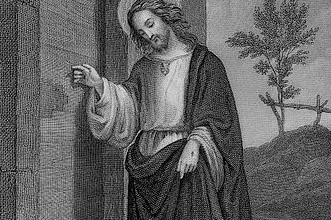
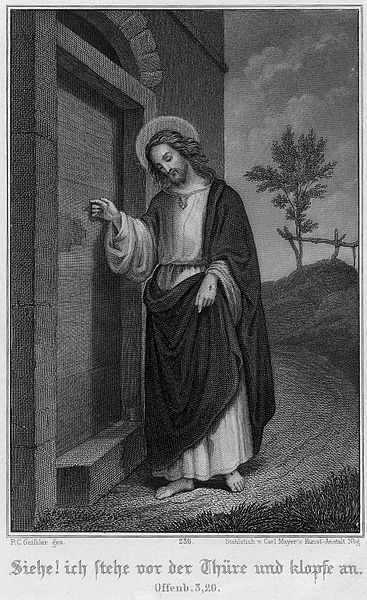
It is prefigured in the banquet of the Eucharist wherein the Lord prepares a meal and feeds us. The Lord says, Behold, I stand at the door and knock. If anyone hears my voice and opens the door, I will come in to him and eat with him, and he with me (Rev 3:20). And again, And I confer a kingdom on you, just as my Father has conferred one on me, that you may eat and drink at my table in my kingdom (Luke 22:30). We have so much easy food today but in the ancient world one of the most pleasant things they looked forward to was a hearty meal in the company of good friends and family.

The Lord offers us the magnificent blessing of heaven wherein we will be with him and those whom we love forever in unspeakable joy and peace.

Do you meditate often on heaven and long for its rewards? One of the stranger aspects of the modern world is that, even among believers, we talk so little of heaven. True, it is not a place any of us have been yet so it’s hard to fully understand what it will be like. But reflect often on the joy waiting for you in heaven.

Part of being ready to go home to Lord is to long for that day to come. When we want to do something we eagerly prepare for it, we are motivated and make sacrifices to do it.  When we desire it we will more naturally get ready and lay aside whatever is necessary to make the passage there.

So here are five elements constituting a recipe for readiness. Better set your house in order ’cause he may be coming soon!
A Little Glimpse of How God Must See Us (as depicted in a commercial)

On one particular morning, just two weeks after His resurrection, Jesus stood on the shore of the Sea of Galilee. And, seeing the Apostles in a boat just off shore he said, Little Children, Have you caught anything? (John 21:5).

It is a rather strange way to speak to grown men: “Little Children” (παιδία = paidia = little ones, children, infants, the diminutive of pais (child), hence “little ones”). And yet how deeply affectionate it is.

We often think of ourselves in grander terms, terms that bespeak power, wisdom, age and strength. But I suspect that, to God, we must always seem as little children.

When I do infant Baptisms I normally use the Gospel of Mark where the Lord says, among other things, Whoever does not receive the kingdom of God like a little child (παιδίον) shall not enter it (Mark 10:15). And thus, we must finally come to realize that however rich, or powerful, capable or mature we my think ourselves to be, we depend radically on Abba for everything, even the next beat of our heart. The infants I baptize are already preaching the Gospel of the Kingdom simply by their littleness. They summon us who think we are strong and independent to know who and what we really are: little children, so needful of Abba for everything.

I am often moved as I walk the halls of nursing homes and see many once powerful “adults” now reflecting to their truest state. And thus, like little children, they have become dependent. Many cannot talk any longer. Many just sing and hold dolls, wear diapers, need to be fed and cry for help and comfort. It has always been so for them (for us), it is just now more evident.

This Sunday’s Gospel begins with the Lord calling us his “little flock.” And so we are, little, and yet loved.

And somewhere, standing on the seashore of your life the Lord is calling out: “Little One…have you anything to eat?”

I though of this when I saw this video. I wondered as I viewed it if it doesn’t depict us all as God really sees us. The folk in this video think they are “big and bad.” But for a moment we them as God sees them. Enjoy this.

Five Biblical Lists of Mortal Sins

080813In a  kind of follow up from yesterday’s blog on the call to repentance, it seems it might be helpful to list what the Bible describes as some of the more serious sins.

One of the great deceptions of our time is that serious sin is a remote possibility for most people, and that it is only committed by very wicked people. And too many people assess their moral standing with unhelpful slogans such as “I’m basically a good person,” or “I haven’t murdered anybody.”

We have to be more serious and mature in our discernment than this. Of course God does not leave us in such a fog of uncertainty. His word is actually quite clear to list some of the more serious sins that we ought to be aware of so that we can humbly recognize our tendency to do these very things.

Rather than give lots of commentary, I just want to post five biblical lists of the more serious sins that exclude one from the kingdom of God. Saying that these are sins that “exclude one from the kingdom of heaven” is the biblical way of saying they are mortal sins.

It remains true that some of the sins listed, such as lying, can admit of lighter matter. But as we all know, there are very serious and harmful lies that we can all tell.

And so the Lord, in love wants to urgently warn us of the sins that exclude us from heaven. In all the lists that follow, avoid adopting a legalistic mentality. Take them to heart and allow them to become part of your daily moral reflection. The Lord warns us in love that sin is very serious. Even smaller sins, unattended to, begin to grow like a cancer and can ultimately kill us spiritually.

Be serious about it, do not buy into the deception that makes light of sin. God loves us, and because he loves us, he warns us that unrepentant sin is very serious and can rob our hearts of the desire for God, heaven and the good things waiting for us there.

Here then are five lists. they are not exhaustive and there are other sins mentioned elsewhere (e.g. refusal to forgive, cf Matt 6:15) Please reflect on, and share these lists.

 1 Cor 6:9-10 Or do you not know that wrongdoers will not inherit the kingdom of God? Do not be deceived: Neither the sexually immoral nor idolaters nor adulterers nor homosexual offenders, nor thieves nor the greedy nor drunkards nor slanderers nor swindlers will inherit the kingdom of God. And that is what some of you were.

Gal 5:19-21 The acts of the flesh are obvious: sexual immorality, impurity and debauchery; idolatry and witchcraft; hatred, discord, jealousy, fits of rage, selfish ambition, dissensions, factions and envy; drunkenness, orgies, and the like. I warn you, as I did before, that those who live like this will not inherit the kingdom of God.

Eph 5:3-6 But among you there must not be even a hint of sexual immorality, or of any kind of impurity, or of greed, because these are improper for God’s holy people. Nor should there be obscenity, foolish talk or coarse joking, which are out of place, but rather thanksgiving. For of this you can be sure: No sexually immoral, impure or greedy person—such a person is an idolater—has any inheritance in the kingdom of Christ and of God. Let no one deceive you with empty words, for because of such things God’s wrath comes on those who are disobedient. Therefore do not be partners with them.

Rev. 22:12-16 “Look, I am coming soon! My reward is with me, and I will give to each person according to what they have done. I am the Alpha and the Omega, the First and the Last, the Beginning and the End. “Blessed are those who wash their robes, that they may have the right to the tree of life and may go through the gates into the city. Outside are the dogs, those who practice magic arts, the sexually immoral, the murderers, the idolaters and everyone who loves and practices falsehood. “I, Jesus, have sent my angel to give you this testimony for the churches. I am the Root and the Offspring of David, and the bright Morning Star.”

Matt 25:41-46 “Then he will say to those on his left, ‘Depart from me, you who are cursed, into the eternal fire prepared for the devil and his angels. For I was hungry and you gave me nothing to eat, I was thirsty and you gave me nothing to drink, I was a stranger and you did not invite me in, I needed clothes and you did not clothe me, I was sick and in prison and you did not look after me.’ “They also will answer, ‘Lord, when did we see you hungry or thirsty or a stranger or needing clothes or sick or in prison, and did not help you?’ “He will reply, ‘Truly I tell you, whatever you did not do for one of the least of these, you did not do for me.’ “Then they will go away to eternal punishment, but the righteous to eternal life.”

And finally just a general warning from the Lord:

John 5:28-29 “Do not be amazed at this, for a time is coming when all who are in their graves will hear his voice and come out—those who have done what is good will rise to live, and those who have done what is evil will rise to be condemned. By myself I can do nothing; I judge only as I hear, and my judgment is just, for I seek not to please myself but him who sent me.

Here is Allegri’s Miserere (Psalm 51) Have mercy on me O God According to thy great Kindness.

Repent! Convert! Two Words that Need to Be Rediscovered.

080713Too many Catholics are uncomfortable using the biblical and traditional words, “Repent,” convert and conversion. To repent means to change your mind and come to a new way of living. To convert means to turn from sinful ways or erroneous teaching.

But too many Catholics, including priests are uncomfortable using words like this. We used to speak of convert classes etc. But now many prefer abstract descriptions like, “Inquiry Classes” or the even more abstract “RCIA”

Many draw back lest they seem to suggest that others are wrong, “going wrong,” need to change, or, heaven forfend, “sinful.”  Words like repent and convert more than suggest that there is right and wrong, true and false, sanctity and sinfulness, good and evil.

But the fact is, many, including us, need on-going conversion And a good number need outright conversion And a complete change of mind, heart and behavior.

Of course repentance and the call to conversion are a key biblical summons. repentance is not suggested, it is commanded, and without it we will not see the kingdom of God.

Perhaps a central reason for the embarrassment many feel at the call to repentance and conversion is that it runs a foul of a kind of  “consumer Christianity” wherein faith is reduced to using God’s grace to access blessings but not to give one’s life over to Jesus Christ in love and obedience. Consumer Christianity targets “seekers” looking for enrichment rather than disciples. The heart of discipleship is, as Jesus says, is to “Deny yourself, take up your Cross, and follow me.”

But when faith is reduced to personal enrichment, true discipleship seems obnoxious and words like repentance, conversion,  and concepts like self denial, and the cross are non-starters and rejected as negative, judgemental, and, to use consumer language, is bad marketing.

To be sure, the faith does enrich and words like repentance and conversion need not be accompanied with sour faces or with no reference to the joy of salvation. We need not act like the wild-eyed sidewalk evangelists screaming repent only as a tactic of cringing fear.

But as to the avoidance of any fear at all and the words repent and convert, nothing could be more unChrist-like, for Jesus led with the summons to repent. It was in the very opening words of his public ministry: He said, “The time is now! The kingdom of God is near! Repent, and  believe the gospel (Mark 1:15).

And why does Jesus lead with this? Because the joy and enrichment of salvation cannot be accessed except through repentance and conversion. Eternal Life cannot be accessed except through turning our back on this world and dying to it. Easter Sunday is accessed only through Good Friday.

Consumer Christianity cannot save. Repentance and conversion, even if not popular in marketing focus groups of “seeker-sensitive” mega-churches, must be recovered in the call and vocabulary of the Church. Watering down the very thing Jesus led with is no way to make true disciples.

Repent and be converted that the Gospel may fill you.

Fun but serious video I made two years ago.

What Does Jesus mean by "Unrighteous Mammon"?


080613Staying in a kind of reflective mode from last Sunday’s Gospel on greed and how to avoid it, let’s ponder why Jesus called some mammon (wealth) unrighteous. The phrase occurs in the Gospel of Luke in which Jesus says, I tell you, make friends for yourselves by your use of dishonest wealth, so that, when it fails, they will welcome you to eternal dwellings (Luke 16:9). We discussed yesterday what it means to be welcomed into eternal dwellings and who these friends who welcome us really are. But in this post perhaps we can consider what the expression “dishonest wealth” means.

More literally the Greek μαμωνᾶ τῆς ἀδικίας (mamona tes adikias) is translated, “mammon of iniquity.” “Mammon” is a Hebrew and Aramaic word that has a wider concept than just money. It refers to wealth in general and, even further, to the things of this world on which we rely. But what is meant by the expression “dishonest wealth”? Why is it called dishonest?

There seem to be various opinions and theories. None of them absolutely exclude the other but they do include some differences in emphasis.  Here are three theories:

1. It refers to wealth that we have obtained in dishonest or illegal ways. Now I personally think that this is unlikely since the Lord’s advice is to take this “dishonest wealth” and give it others. If one has stolen from others the usual remedy is to return the stolen items to them. It is true that the Lord’s advice follows a parable in which a man stole (or embezzled) money. But the Lord is not praising his theft, but rather, his determination to be clever in worldly matters. The Lord wishes his disciples were as clever and thoughtful in spiritual matters. Hence it seems unlikely that the Lord means by “dishonest wealth” merely things that we have stolen. If we steal we ought to return it to the rightful owner, not make friends for ourselves of third parties for our own ultimate gain.

2. It refers to the fact that money and wealth tend to lead us to dishonesty, corruption, and compromise. Since it tends to lead to iniquity it is called (literally) the mammon of iniquity. It is a fact that Scripture generally has a deep distrust of money. For example,

  • How hard it is for the rich to enter the kingdom of God (Luke 18:24).
  • Those who desire to be rich fall into temptation and a trap and into many foolish and harmful desires that plunge men into ruin and destruction. For the love of money is a root of all kinds of evil. Some people, eager for money, have wandered from the faith and pierced themselves with many griefs (1 Tim 6:9-10).
  • Give me neither poverty nor riches, but give me only my daily bread. Otherwise, I may have too much and disown you and say, ‘Who is the Lord?’ Or I may become poor and steal, and so dishonor the name of my God (Prov 30:8).

It’s funny that despite knowing passages like these most of us still want to be rich! But at any rate, this interpretation sees the expression as referring more to where money and wealth lead rather than to money and wealth themselves. Of itself, money is not evil and neither is wealth. But they do tend to lead us into many temptations, to corruption, and to unrighteousness. Hence mammon is called “unrighteous” or “of iniquity.” Some also consider this manner of speaking to be a type of Jewish hyperbole since it assigns unrighteousness to all wealth even though it only tends to lead there.

Overall this position has merit but I personally think it is incomplete and needs to be expanded by a wider sense of unrighteousness. Simply chalking something up to Jewish exaggeration may miss the fact we are not simply to dismiss hyperbole in Scripture. I have often found that the Jewish hyperbole found in the Scriptures is there for a reason. The usual reason is that we are being asked to consider that the exaggeration may not be a total exaggeration after all and that there is actually more truth than exaggeration in the hyperbole. This notion is developed in the third theory.

3. It refers to the fact that this world is unjust and thus all its wealth has injustice and unrighteousness intrinsically attached. We live in a world in which the distribution of wealth, resources, and money is very uneven and unjust. Now economies around the world are very complicated matters and there may be any number of reasons for this. Some areas of this planet are just more fertile than others; some areas have more oil, etc. There is often a role that corrupt governments play in unjust distribution as well. It is a fact that we are sometimes unable to effectively help the needy in certain countries because corrupt governments and individuals divert what is intended for the poor. But there is just no getting around it: this world has a very unjust and unequal distribution of wealth and resources for any number of reasons. We in America live at the top of the system and cannot totally ignore that our inexpensive goods often are so because workers in other parts of the world earn a mere pittance to manufacture or harvest our cheap goods. Much of the convenience and comforts of our lifestyle are provided by people who earn very little for what they do, often without medical benefits, pensions, and the like.

Now again, economies are very complicated and we may not be able to do a great deal to suddenly change all this. But we ought to at least be aware that we live very well and many others do not, and that our high standard of living is often the result of the cheap labor elsewhere. When I buy a shirt in the air-conditioned store and take it in my air-conditioned car back to my air-conditioned house with its walk-in closet, it ought to occur to me that the person who made and packed this shirt probably doesn’t live nearly as well as I do. And the fact that he earned very little for his work is part of the reason I can buy the shirt for less than $20.

Now I am not calling for boycotts (they probably just hurt the poor anyway), and I am not sure exactly how we got to such inequity in the world. I know it annoys me when some people simply want to blame Americans for every ill there is. There are other factors such as international corruption, bad economic theory, etc. There’s plenty of blame to go around. But the fact is, this world is an unjust place and every bit of wealth we have is somehow tainted by that injustice.

So this final theory is not so quick to call Jesus’ expression “Jewish hyperbole.” Rather it considers as quite real the notion that worldly inequities are so vast and exist on so many levels that all the goods, comforts, and conveniences of this world are tainted, are steeped in unrighteousness and inequity. None of it is clean; none of it is fully righteous. In this sense Jesus rightly calls it “dishonest wealth.”

If that is the case, then what to do? Jesus is not unclear, for he goes on to counsel that we befriend the poor with our “unrighteous mammon,” that we be generous to others who are less fortunate. We who live so well need to remember that the monetary cost of a product may not fully express its true human cost. If we have been blessed (and boy have we been blessed), then we are called to bless others.

A final disclaimer – The questions of poverty and worldwide economies are complicated. I do not propose simple solutions. I am not an economist; I am not a socialist; I am not a communist. I am simply a Christian trying to listen to what Jesus is teaching. I am trying to internalize His teaching that I ought not be so enamored of the wealth of this world. For it is steeped in unrighteousness even if I don’t intend that unrighteousness. I think I hear the Lord saying, “Be on your guard with money and worldly wealth. It’s not as great as you think. In fact, if you don’t learn to be generous, it may well be your undoing.” There is a powerful Scripture addressed to us who have so much. It seems to offer hope for us if we follow its plan. I would like to conclude with it.

Command those who are rich in this present world not to be arrogant nor to put their hope in wealth, which is so uncertain, but to put their hope in God, who richly provides us with everything for our enjoyment. Command them to do good, to be rich in good deeds, and to be generous and willing to share. In this way they will lay up treasure for themselves as a firm foundation for the coming age, so that they may take hold of the life that is truly life (1 Tim 6:17-19).

You know I would value your thoughts, distinctions, and additions.

About 20 years ago I toured an old coal mine in Pennsylvania near Scranton. I was amazed at the conditions and hardships the coal miners had to endure. I have often thought of them and that tour when I turn on a light or an appliance since our power plant is fueled by coal. My comfort comes at a higher cost than my bill suggests.

Who Feeds You? A meditation on preferring the "melons and leeks" of this world to the Manna of God.

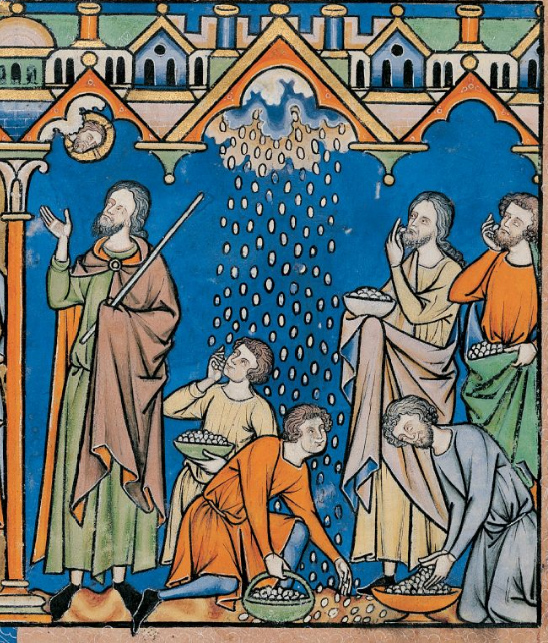
The first reading, for Mass yesterday (Monday)  of the 18th week is taken from the Book of Numbers. It features the Israelites grumbling about the manna in the wilderness in these words:


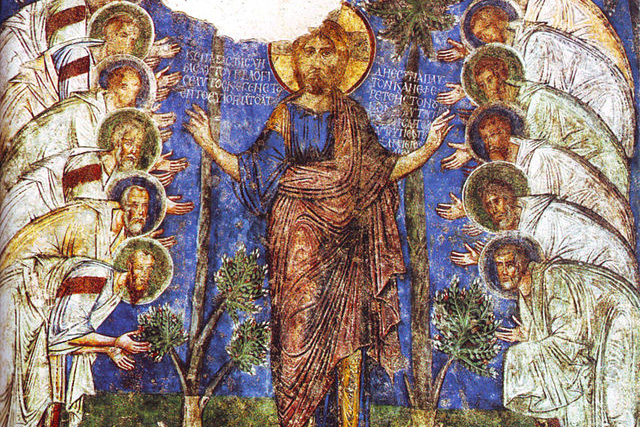
Would that we had meat for food! We remember the fish we used to eat without cost in Egypt, and the cucumbers, the melons, the leeks, the onions, and the garlic. But now we are famished; we see nothing before us but this manna.  (Numbers 11:4-5)

While it is possible for us to marvel at their insolence and ingratitude, the picture here presented depicts the human condition, and very common human tendencies. It is not unique to a people once in the desert. Their complaints, are too easily our own complaints and struggles.

Let’s look at a number of the issues raised, and see how it is possible for many of us today to struggle in the same way.

I. They prefer the abundance of food and creature comforts along with slavery in Egypt, to the freedom of the children of God and the chance to journey to the promised land. And this too easily  is our struggle. Jesus points to the cross, but we prefer the pillow. Heaven is a nice thought, but it is future, and the journey is long.

Too easily we prefer our version of “melons and leeks.” Perhaps it is possessions, or power, or popularity. Never mind that the price of them is a kind of bondage to the world and its demands. For when the world grants its blessings, we become enslaved by the fact that we have too much to lose. Hence we will compromise our freedom, which Christ died to purchase for us, and enter into a kind of bondage of sin.  We will buy into lies or commit any number of sins, perhaps we will suppress the truth, all in an attempt to stay popular and well-connected. Why? Because we have become desperate for the world’s blessings and we will make increasing compromises that harm our integrity or hurt other people just to get blessings we can’t live without.

We are in bondage to Egypt, enslaved to Pharaoh. We prefer it to the freedom of the desert, with its difficult journey to a Promised Land (Heaven) we have not yet fully seen. But the pleasures of the world, it’s melons and leeks are currently displayed and available for immediate enjoyment.

And besides, we can recast the slavery of the world call it by different names such as: being “relevant,” being “modern,” being “tolerant” and “compassionate.”  Yes, even as we descend into deeper darkness and bondage to sin and our passions, we will call it “enlightenment” and “choice” and “freedom.”.

And so the cry still goes up: “Give us melons, give us leeks, give us cucumbers and fleshpots! Away with the desert, away with the cross, away with the Promised Land, if it exists at all. It is too far off, and too hard to get to. Melons and Leeks please. Give us meat, we are tired of Manna!”

II. There is the boredom with the manna. While it’s exact composition is mysterious to us, it would seem that Manna could be collected, kneeded like dough and baked like bread. But as such, it was a fairly plain substance. It seems It was meant more to sustain than to entertain.

The people remembered their melons, leeks, and the fleshpots of Egypt, and  were bored with this plain manna. Never mind that it was miraculously provided every day by God, in just the right quantity. Even miracles can come to seem boring after a while to our petulantly demanding desires. The Lord may show us miracles today, and too easily do we demand even more tomorrow.

We are also somewhat like little children who prefer Twinkies and Cupcakes to vegetables and other more wholesome foods.

Indeed the boredom, even repulsion of the Israelites against the miracle food from heaven does not sound so different from many Catholics who say, “Mass is boring.”

While it is certainly true that we can work to ensure that the Liturgy reflects the glory it offers, it also remains true that God has a fairly stable and consistent diet for us. He exhorts us to stay faithful to the “manna,” to  the wholesome food of prayer, Scripture, the Sacraments, and stable faithful fellowship in union with the Church.

And in our fickle spirits, many run after the latest current fads and movements. Many Catholics say, “Why can’t we be more like the mega-churches with all the latest, including the Starbucks Coffee Café, a rock-star-like Pastor with a seeker sensitive, toned down preaching with many promises and few demands, contemporary music and all that jazz?!”

But as an old spiritual says regarding this type of person, “Some go to church for to sing and shout, before six months they’s all turned out!”  And thus some will leave the Catholic Church and other traditional forms which feature the more routine but stable and steady manner for the hip and the latest, the melons and leeks. But frequently they find that within six months they’re bored again.

While the Church is always in need of reform, there is a lot to be said for the slow and steady pace of the Church, as she journeys through the desert,  relying on the less glamorous but more stable and sensible food: the manna of the Eucharist, the word of God, the Sacred Liturgy, prayer, and fellowship  not just with the latest and greatest, but with stable and tested things.

III. Who Feeds You? Beyond these liturgical preferences of many for melons and leeks over Manna, there is also a manifest preference for the food of this world.  There is a tragic tendency for many Catholics, even regular church-goers, to get most of their food not from the Lord, not from Scripture, not from the Church, but from the Egypt of this world.

Most eat regularly at the banquet table of popular entertainment, secular news media, secular talk radio, etc. And they eat this food quite uncritically! The manna is complained about, but the meons and leeks are praised without qualification.

And while it is true the Christian cannot wholly avoid any contact with the world, or avoid all its food, when do the melons and leeks ever come in for criticism? When does a Christian finally look and say to themselves and others “Look, that is not the mind of God!” When do they ever conclude that this food is inferior or even poisonous to what God says and offers?  When does a parent finally walk into the living room, turn off the TV and teach their children that “What you have just seen and heard is not the mind of God” ?

Tragically, this is rare and the food of this world is eaten in an abundance far surpassing the food of God. The melons and leeks of the world are praised, and  the manna of God is put on trial, because it’s not like the food of the world.

This of course, is backwards for a Christian. The world should be on trial based on the Word of God. But as it is, even for most Catholics, the Word of God and the teachings of the Church are on trial by the standards of the world.

So the question is, who is it that feeds you? Is the world, or the Lord? What proportion of your food comes from the Lord, and what from the world? Honestly? What is more influential in your daily life and your thinking, the world, or the Lord? Honestly? Who is really feeding  you, informing you, influencing you? Is it the melons and leeks of the Egypt of  this world? Or is it the faithful, stable, even miraculous manna of the Lord and his Church?

IV. And finally,  there comes this question, “Whom are you feeding?” This question is drawn more from the Gospel of Monday’s Mass. Jesus’ disciples ask  the Lord to dismiss the crowds so that they could go and get food for themselves. But Jesus said to them, and us, “Give them something to eat yourselves.

So, who are you feeding, and with what? The Lord gave the apostles food, and they gave it to the people. Is the Lord giving you food? And are you feeding others with it?

People are going to need food, from day-to-day. Will they get it from the melons and leeks of this world? Or will they get the manna from us?  You and I must decide that.

There are many legitimate complaints today about silent pulpits. And where there  should be a setting forth the manna of God’s Word plainly, too often, there is silence or sermons filled with abstractions and generalities. This is rightly deplored.

However, silent pulpits are not the only problem, so are silent dining room tables where parents, have not studied the Word of God, and handed it on to their children.

Deplorable too is the public square, and the public media where  the melons and leeks of this world are in abundance, and the manna of God is hard-to-find. Theoretically, this has been a largely Christian country for the last 200+ years. So the darkness and ignorance of these times has expanded on our watch.

It is easy to blame others, but there are too many of us who are prefer the melons and leeks  of this world, and have  failed to supply the manna, given by the Lord to this now deeply confused world.

Here then, are some probing questions for all of us drawn from an ancient wilderness. God’s people who tired of the manna harm themselves and others too.

Have mercy on us, Lord our God. Give us a deep desire for the manna you offer. And having received it in abundance, help us to share it as well!

Investment Advice from St Basil the Great

080413Sunday’s Gospel on generosity and the need to renounce greed, is reflection worth continuing. Last week in the Breviary St. Basil the Great (in Hom. De caritate, 3, 6: PG 31, 266-267, 275) provided a reflection that amounts to an investment strategy not just for the near future of old age, but for eternity. Challenging though the saint’s thoughts are, they are also consoling and sensible. Lets listen to his instruction.

Out of no intended disrespect for the saint, I would like to add some of my own comments in plain red text along with his reflections, and to adjust the order of his remarks just a bit. His teaching is in bold, black italics. To read his commentary fully and in order click here: On Generosity

And thus St. Basil begins with a challenge, rooted in a blessing:

Man should be like the earth and bear fruit; he should not let inanimate matter appear to surpass him. The earth bears crops for your benefit, not for its own, but when you give to the poor, you are bearing fruit which you will gather in for yourself, since the reward for good deeds goes to those who perform them.

So, St Basil begins with a “humbling” challenge: Do not let dirt (humus) be more virtuous and profitable than you! In a way it is a play on the Lord’s image that if we who are called to be Salt of the Earth become flat, we are good for nothing, except to be thrown out and trampled underfoot. (cf Matt 5:13). 

But in a magnificent description of grace and mercy, St Basil contrasts the comparison and reminds us that God in his mercy allows his grace to become our merit. That is to say, God, who will never be outdone in generosity will surely not let our deeds of mercy go unrewarded, even though these deeds are really the result of his grace, not our own unaided flesh. God will never forget the mercy we have shown and if we stay in the grace of friendship with him as a member of Christ Body, we will surely not loose our reward. And thus Scripture says,

  1. Give and it shall be given unto you (Luke 6:38) 
  2. Blessed are the merciful for they shall obtain mercy! (Matt 5:7).
  3. Whoever is kind to the poor lends to the LORD, and he will reward them for what they have done (Prov 19:17). 
  4. A generous person will prosper; whoever refreshes others will be refreshed. (Prov 11:25)

Yes, always remember, generosity to the poor will be rewarded by God to those who remain faithful. Fear not to be generous for God will not be outdone by us in generosity. He will reward, he will repay!

And thus, St Basil continues:

Give to a hungry man, and what you give becomes yours, and indeed it returns to you with interest. As the sower profits from wheat that falls onto the ground, so will you profit greatly in the world to come from the bread that you place before a hungry man….In the presence of the universal judge, all the people will surround you, acclaim you as a public benefactor, and tell of your generosity and kindness.

And here St. Basil invokes the “investment strategy” given by the Lord Himself who said,

  1. Mat 6:19 Do not store up for yourselves treasures on earth, where moth and rust destroy, and where thieves break in and steal. But store up for yourselves treasures in heaven, where moth and rust do not destroy, and where thieves do not break in and steal.
  2. Luke 16:9 I tell you, use worldly wealth to gain friends for yourselves, so that when it is gone, you will be welcomed into eternal dwellings.
  3. And echoed by St. Paul: Command [the wealthy] to do good, to be rich in good deeds, and to be generous and willing to share. In this way they will lay up treasure for themselves as a firm foundation for the coming age, so that they may take hold of the life that is truly life. (1 Timothy 6:18-19)

And so here is given to us a good investment strategy. Namely, that we should store up our treasure in heaven so that, not only will it not be harmed or stolen, but also that it will be for blessing on the day of judgment!

It works like this: We store up treasure in heaven, not by putting it in some sort of balloon or rocket and sending it up, rather, we store it up in heaven by placing it in the hands of the needy and poor. What we generously give does not just go out and away, it goes UP and is “stored” in heaven for us, where it earns heavenly interest (as our Saint here notes). Scripture says, Cast your bread upon the waters: after many days it will come back to you (Ecclesiastes 11:1).

But not only is it “stored up” in heaven, but it also acts as an assurance on the day of judgment. Jesus says in the quote above that we ought to make friends for ourselves through out generous use of money.

Who are these friends? The poor! The needy! They are our investment brokers for the day of judgment and the world to come. The Lord says that when our wealth ultimately fails us (and it will fail us at death which we cannot buy our way of) they (i.e. the poor) will welcome you to eternal dwellings!

Imagine that on the day of judgment as you go before the Judgment Seat, multitudes of poor crying out, “Have mercy on this one Lord, for he was merciful to us!” Ah, what a blessed sound that will be! And the Lord hears the cry of the poor. I don’t know about you, But I am going to need a few folks praying and testifying for me on Judgement Day, and the poor and needy will be important advocates.

Yes, the Lord says, they (the poor) will welcome you to eternal dwellings and  St. Paul affirms that the wealthy who bless the poor will lay up a firm foundation for the coming age.

So listen to your heavenly investment broker Jesus, who says, be generous to the poor, and everything will be clean for you (Luke 11:41). Listen also to Jesus’ fellow investment analysts, St. Paul and St Basil, who insist that we will lay a firm foundation for the day of judgment and profit greatly in the World to come.

To be sure, generosity to the poor will NOT be the only thing we are judged on, but it sure will help on that DAY, standing before the Lord,  if we loved the poor and needy! And frankly, most of us are going to need every help we can get.

You are going to leave your money behind you here whether you wish to or not. On the other hand, you will take with you to the Lord the honor that you have won through good works.

And here St. Basil echoes Scripture which says, Henceforth, Blessed are those who die in the Lord. Let them rest from their labors, for their good deeds go with them. Even so, saith the Spirit (Rev 14:13)

Do you not see how people throw away their wealth on theatrical performances, boxing contests, mimes and fights between men and wild beasts, which are sickening to see, and all for the sake of fleeting honor and popular applause? If you are miserly with your money, how can you expect any similar honor?

Pay attention here. We do well to ask if we throw a lot of money away on passing, foolish or empty things. What are our versions of “theatrical performances,” “boxing contests” etc.?

Look, the Lord is not telling us never to go and see a movie, or sports event. But if we so easily spend money on this stuff, why not things that matter more and profit eternally?

And we ought to be careful with the many excesses of the modern age that often go unremarked. Most people older than 50 or so, who were middle class, grew up in a home of 1200 – 1500 square feet, had larger family sizes, and did just fine. Is it really necessary that homes today should routinely be 3500+ square feet with great rooms, cathedral ceilings, entertainment centers, and granite counter tops? Is it really that necessary? And why?

Again I am not trying to make lots of rules for you. I live in a nice rectory, generously bestowed and maintained by the people of God. St Paul also says, elsewhere, that our care of others ought not gravely harm us (cf 2 Cor 8:13). But honestly, don’t a lot of us have questions to ask in these affluent times about some of the excesses of the American Dream?

And if you choose to make such purchases, I am not your judge in this matter, or you mine. But surely we all have questions to ask ourselves. Is everything I want really needed?  And, more importantly, does my extravagance harm the poor and needy? Further, is my use of money wise, from an eternal perspective?

You decide, but these are questions we all ought to ask.

Your reward for the right use of the things in this world will be everlasting glory, a crown of righteousness, and the kingdom of heaven; God will welcome you, the angels will praise you, all men who have existed since the world began will call you blessed. Do you care nothing for these things, and spurn the hopes that lie in the future for the sake of your present enjoyment?

Amen! What is more important to us, comfort here, or glory there?

Come, distribute your wealth freely, give generously to those who are in need. Earn for yourself the psalmist’s praise: He gave freely to the poor; his righteousness will endure for ever. – Yes

How grateful you should be to your own benefactor; how you should beam with joy at the honor of having other people come to your door, instead of being obliged to go to theirs! But you are now ill-humored and unapproachable; you avoid meeting people, in case you might be forced to loosen your purse-strings even a little. You can say only one thing: “I have nothing to give you. I am only a poor man.” A poor man you certainly are, and destitute of all real riches; you are poor in love, generosity, faith in God and hope for eternal happiness.

My, my my! Don’t be poor in things eternal, don’t be poor in what matters to God.

This song says, “You may have all this world….Give me Jesus.”

You Can’t Take it with You, But You Can Send it on Ahead! Five teachings on Wealth from the Gospel of the 18th Sunday of the Year.

080313The Gospel today is not merely a warning against greed, it is an instruction on income and wealth given by Jesus to help us root out greed. As the Gospel opens the problem of greed is presented, and then a prescribed perspective about wealth is offered. Lets take a look at both parts of this gospel.

I. The Problem that is Portrayed – The text begins:  Someone in the crowd said to Jesus, “Teacher, tell my brother to share the inheritance with me.” He replied to him, “Friend, who appointed me as your judge and arbitrator?” Then he said to the crowd, “Take care to guard against all greed, for though one may be rich, one’s life does not consist of possessions.”

Note that Jesus turns to the crowd (to avoid personally indicting the man of something of which all can all be guilty), and warns without ambiguity that greed must be guarded against. Greed is the insatiable desire for more. It is to want possessions inordinately, beyond what is reasonable or necessary.

Greed is often downplayed today where accumulation and ostentatious display of wealth is often celebrated.  Great rooms with cathedral ceilings, 72″ flat screen TVs and even private home theaters (entertainment centers), fancy cars etc., are shamelessly flaunted.

But greed is at the root of a lot of evils and suffering. Scripture says,

For we brought nothing into the world, and we cannot take anything out of the world; but if we have food and clothing, with these we shall be content. But those who desire to be rich fall into temptation, into a snare, into many senseless and hurtful desires that plunge men into ruin and destruction. For the love of money is the root of all evils; it is through this craving that some have wandered away from the faith and pierced their hearts with many pangs. (1 Tim 6:7-10)

Note that these are very strong words. Greed causes us to be discontented and ungrateful, both of which are forms of unhappiness. It also leads us into temptations, into a snare or trap that sets loose the pangs of many harmful desires which seem to expand in ever increasing ways. And this desire for more and more too easily leads us to personal destruction, and to inflict great harm, insensitivity  and injustice on others.

On account of greed we almost never say, “I have enough, I will give away the rest or use it for others.” Many also wander from the faith since wealth is generally tied to this world and its demands, and they have “too much to loose.” Hence the faith is set aside in favor of the world, greed overrules God and the demands of the gospel.

The Lord will develop more of this in the parable ahead. But for now note that the Lord warns about the serious and destructive problem of greed. This is the problem that is portrayed.

II. The Perspective that is Prescribed – But the Lord does not simply condemn greed. He next goes on to tell a parable which strives to give a proper perspective about wealth. In itself, wealth is not evil. But without a proper perspective, we too easily fall into greed. Hence the Lord gives five teachings on wealth to help us keep it in perspective and avoid greed.

A. The INITIATION of Wealth – The text says, There was a rich man whose land produced a bountiful harvest. 

Notice that the subject of the sentence is the land, not the man. It was the land, not the man who yielded the increase. And hence, whatever we have has come from God and what God has given. Scripture says,

  1. Deuteronomy 8:18 But remember the LORD your God, for it is he who gives you the ability to produce wealth
  2. Psalm 24:1 The earth is the Lord’s and the fulness thereof, the world and those who dwell therein;
  3. James 1:17  Every good and perfect gift is from above, and comes down from the Father of lights, with whom is no variableness, neither shadow of turning.
  4. 1 Cor 4:7 What do you have that you did not receive? And if you did receive it, why do you boast as though you did not?

As such wealth is not bad or evil. But, in all our things, we must never forget that God is the true owner and we are the stewards. An old song says, God and God alone created all these things we call our own: From the mighty to the small the glory in them all is God’s and God’s alone.

God gives the increase and is the initiator of every blessing, but God remains the owner. And as stewards we are expected to use what belongs to God in accord with what God, the true owner wills. Too easily we forget this and usher in many woes on account of wealth.

And what is the will of God regarding our wealth? The Catechism speaks of God’s will as the “Universal Destination of Goods:”

God gave all the goods of the earth for all the people of the earth. This means that the goods of creation are destined for the whole human race…In his use of things man should regard the external goods he legitimately owns not merely as exclusive to himself but common to others also, in the sense that they can benefit others as well as himself. The ownership of any property makes its holder a steward of Providence, with the task of making it fruitful and communicating its benefits to others, first of all his family. (Catechism 2402, 2404)

If we will remember that we are stewards of God’s gifts, and that he ultimately intends all to be blessed, we can understand that greed is a form of theft, for it inordinately clings to what should be given to another out of justice. If I have two coats, one of them belongs to the poor.

Remembering that the initiation of my wealth is God, I can help to avoid greed by using my wealth for the purposes God gave it. It is not just for me, it is for all the people of this earth.

B. The INCONVENIENCE of wealth– the Parable continues, He asked himself, ‘What shall I do, for I do not have space to store my harvest?

The man sees his wealth and because he does not consider generosity an option, is somehow burdened by it: “What shall I do?” he asks anxiously. To be honest, great wealth brings comfort but  it is also a source of inconvenience. Consider just a few things that usually go with wealth:  locks, insurance, keys, alarms, storage facilities, worries, fears, repairs, maintenance, upgrades, cleaning, utilities, etc. We live in an affluent age but consider the stress. Consider also the loss of other more important values, we have bigger houses but smaller families, and our McMansions are really more houses than homes.

Scripture says,

  1. Eccl 5:12 The rest of a laborer is sweet, whether he eats little or much, but the abundance of a rich man permits him no sleep.
  2. Prov 15:16 Better is a little with the fear of the LORD than great treasure and trouble with it.
  3. Proverbs 17:1 Better a dry crust with peace and quiet than a house full of feasting, with strife.
  4. Ecc 5:10 Whoever loves money never has money enough; whoever loves wealth is never satisfied with his income. This too is meaningless.

So, wealth certainly has its comforts, but it also brings with it many inconveniences which make our lives stressful and complicated. Better to be free of great or excessive wealth in accord with God’s will than to be burdened and inconvenienced by it. Here is another perspective that helps us avoid greed.

C. The ILLUSION of wealth- The parable goes on to say,  And [the man] said, ‘This is what I shall do: I shall tear down my barns and build larger ones. There I shall store all my grain and other goods and I shall say to myself, “Now as for you, you have so many good things stored up for many years, rest, eat, drink, be merry!”

And here we are taught that riches easily lead us to an illusion of self sufficiency. We start to rely on self, and on riches, instead of God. But as we shall see the man’s wealth will utterly fail him before the night is out.

Riches can buy us out of temporary troubles, but cannot help with the central problem we face. No amount of money on this earth can postpone our appointment with death and judgment. Riches can get us a first class cabin on the ship, but on the “Titanic” of this earth we are no more set than the people in steerage. Indeed, because of the illusion it creates, wealth will more likely hinder us in our final passage. For it is only in trusting in God that we can make it to the other shore. But too much wealth and self reliance hinders our capacity to call on the Lord and trust him. Yes, wealth tends to create an illusion which cripples us from reaching our goal.  Scripture says:

  1. Ps 49:12 But man, despite his riches, does not endure; he is like the beasts that perish. This is the fate of those who trust in themselves, and of their followers, who approve their sayings.
  2. 1 Tim 6:17 Command those who are rich in this present world not to be arrogant nor to put their hope in wealth, which is so uncertain, but to put their hope in God, who richly provides us with everything for our enjoyment.
  3. Prov 11:28 Whoever trusts in his riches will fall,
  4. James 1:11 For the sun rises with its scorching heat and withers the grass; its flower falls, and its beauty perishes. So will the rich man fade away in the midst of his pursuits.
  5. Prov 30:8 Give me neither poverty nor riches, but give me only my daily bread. Otherwise, I may have too much and disown you and say, ‘Who is the LORD?’ Or I may become poor and steal, and so dishonor the name of my God.

An old gospel song says, Well the way may not be easy, but you never said it would be. Cause when my way get’s a little too easy you know I tend to stray from thee.

The illusion of riches is well illustrated in the modern age. Our wealth has tended to make us less religious. Less dependent on God. But really, can all our wealth and power, technology and science ultimately save us? We know it can not.

Yet strangely we entertain the illusion of wealth anyway. And we think, like the man in the parable, “Now I’ve got it, now I’m set.” This is an illusion, a set up. And coming to see it for the illusion that it is will help us avoid greed.

D. The INSUFFICIENCY of wealthBut God said to him, ‘You fool, this night your life will be demanded of you; and the things you have prepared, to whom will they belong?’

And thus we see the illusion give way to the reality of insufficiency. Scripture says,

  1. Psalm 49:5 There are men who trust in their wealth and boast of the vastness of their riches. But no man can buy his own ransom, or pay a price to God for his life. The ransom of his soul is beyond him. He cannot buy life without end nor avoid coming to the grave. He knows that wise men and fools must perish and leave their wealth to others. Their graves are their homes for ever, their dwelling place from age to age though their names spread wide through the land. In his riches man lacks wisdom, he is like the beast that perish.
  2. Mat 16:26 For what will it profit a man, if he gains the whole world and forfeits his life? Or what shall a man give in return for his life?

Money, wealth, power popularity and prestige can never really get us what we need. And it’s not just money, We have sought so many saviors in this world thinking they can somehow save us:

  1. SCIENCE can’t you save me? No I can’t save you I can tell you how far it is from the earth to the sun I can tell you how to sail in rocket ships up to outer space. But I can’t tell you how to climb to heaven I can’t save you.
  2. PHILOSOPHY can’t you save me? No I can’t save you I can tell you more and more about less and less until you know everything about very little. I can tell you about the greatest thoughts and opinions of the greatest thinkers But I can’t save you.
  3. EDUCATION can’t you save me? No I can’t save you I can make you smart. But I can’t make you wise I can’t save you.
  4. CULTURE can’t you save me?! No I can’t save you. I can make the world a more beautiful and entertaining place to go to hell from. But I can’t save you.
  5. ECONOMICS, can’t you save me?! No I can’t save you. I can make you richer But not rich enough to buy your salvation I can’t save you.
  6. POLITICS, can’t you save me?! No I can’t save you. I can give you power and access to worldly power But the word as we know it is passing away I can’t save you.

At the end of the day, all this world and all its riches cannot save us. Only God can do this. Here too is another perspective on wealth that helps us avoid greed.

E. The INSTRUCTION about wealth – The parable concludes:  Thus will it be for all who store up treasure for themselves but are not rich in what matters to God.”

As we have already remarked, wealth is not intrinsically evil. It is our greed that is sinful and gets us into trouble. And greed clings to wealth unreasonably and excessively. With greed we “store up treasure for our self and are not rich in what matters to God.”

So, what matters to God? What matters is that we be rich in justice, mercy, love, holiness and truth, that we be generous sharers of the bounty he bestows. And thus the Lord teaches us to generously share what we have over and above what we do not need. Consider the following teachings:

  1. Luke 16:9 I tell you, use worldly wealth to gain friends for yourselves, so that when it is gone, you will be welcomed into eternal dwellings.
  2. Mat 6:19 Do not store up for yourselves treasures on earth, where moth and rust destroy, and where thieves break in and steal. But store up for yourselves treasures in heaven, where moth and rust do not destroy, and where thieves do not break in and steal.
  3. 1 Tim 6:17-19 Command those who are rich in this present world not to be arrogant nor to put their hope in wealth, which is so uncertain, but to put their hope in God, who richly provides us with everything for our enjoyment. Command them to do good, to be rich in good deeds, and to be generous and willing to share. In this way they will lay up treasure for themselves as a firm foundation for the coming age, so that they may take hold of the life that is truly life.

There is an old saying: “You take it with you.” And this is true, but only partially. The Lord suggests that we can send our wealth on ahead, that we can store it up in heaven, that we can invest it in eternity. How? Do we put our gold in a balloon and float it up? No, we send it up, we send it on ahead by bestowing it on the poor and needy. This can include our children and family members, for Charity begins at home. But it does not end there. Thus our generosity should extend beyond the family to many of the poor.

If we do this the Lord teaches that the poor we bless will welcome us to heaven and speak on our behalf before the judgment seat. The Lord says when we bless the poor our treasure will be great, and safe in heaven. Further, our generosity and mercy will benefit us greatly on the day of judgment and help us, as St. Paul says above, lay hold of the life that is truly life.

So, you can’t take it with you, but you can send it on ahead.

Therefore, this final teaching or perspective on wealth is to be rich in what matters to God by being generous, not greedy.

And thus we have five teachings on wealth meant to give us perspective, so as to avoid greed.

And trust God! Greed is rooted in fear, but generosity trusts that God will not be outdone in generosity! And while our greatest rewards remain in heaven, God sends “interest payments” even now upon the generous. Scripture says,

  1. Prov 11:24 One man gives freely, yet grows all the richer; another withholds what he should give, and only suffers want.A generous man will be enriched, and one who waters will himself be watered.
  2. Ecclesiastes 11:1 Cast your bread upon the waters: after many days it will come back to you.
  3. Luke 6:38 Give, and it will be given to you; good measure, pressed down, shaken together, running over, will be put into your lap. For the measure you give, will be the measure you get back.”

Since you can’t take it with you, you might as well send it on ahead. Guard against greed by allowing these five teachings on wealth to give you a proper perspective on wealth.