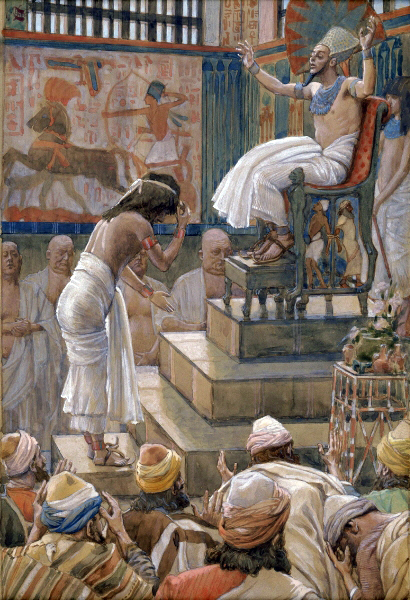
What we can learn about suffering in the story of Joseph, the Patriarch.

011314One of the greatest and most painful of mysteries is the problem of suffering and the broader problem of evil in the world. I was meditating with my Sunday School parents this past weekend on the Old Testament Patriarch Joseph. That story is rich with lessons about family struggles, envy, jealousy, pride, mercy and forgiveness. But the story also has a lot to say about suffering and the way that God can use it to bring blessings.

Lets take a moment and consider the problem of suffering and see what Joseph’s life has to teach us. But first we ought to begin with some background.

I. Prequel – God had set forth a vision for us; let’s call it “Plan A” also known as paradise. But of course that plan came at the “price” of a an intimate relationship with God the Father. Man would  not be at the center; God would be.

God also asked Adam and Eve to trust him in an important matter. And that matter was both symbolized and focused on a tree called “The Tree of the Knowledge of Good and Evil.”

The word “knowledge”  is key here. In scripture,  to “know” almost never means simple intellectual knowing. Rather, it means to know something by experience. In effect, the title of the tree teaches that God did not want Adam and Eve to know what was good and evil by experience. Rather, he wished them simply to trust Him to be their teacher, to be their Father who would guide them in these matters.

But as we know, Adam and Eve gave way to the temptation of the devil yielded to pride. They insisted on “knowing” good, and, more problematically, evil by experience. In effect, their decision amounted to saying,

“I will not be told what to do. I will decide what I want to do and  I will decide whether it is right or wrong. I will conduct experiments in this way for myself because I do not trust God to act in my interest, or to teach me accurately.”

The Catechism says Man, tempted by the devil, let his trust in his Creator die in his heart and, abusing his freedom, disobeyed God’s command. This is what man’s first sin consisted of. All subsequent sin would be disobedience toward God and lack of trust in his goodness. (# 397)

Thus, they would not trust God to teach them what was good and not. They insisted on knowing and deciding for themselves. Adam and Eve wanted a “better deal” than paradise. So welcome to the better deal.

We live now in Paradise Lost, a world where the imperial autonomous self creates a kind of hellish existence often marked with great suffering and, ultimately, death. In wanting to know, that is experience, evil we sadly got what we wanted: sin  and evil, sorrow and death as our daily fare.  And this is the first Biblical explanation of the problem of evil.

But why was the tree there in the first place? Simply put, it had to be. Without choice, there can be no freedom, and without freedom, there can be no love.   God wants his human children to be lovers, not slaves or instinct-driven animals but rather, children who can freely choose to love God or not. God is very serious about our freedom. Our “yes” is of no real meaning if our capacity to say “no” is not also very real.

II. Prescription –  What then is God to do? If He simply canceled our choice, or the consequences associated with it, could we really say that he is serious about our freedom? No. So working within the parameters of our decision, a decision that included the experiencing of evil, suffering and death, God chose to make those consequences the very path of our healing and salvation if we will walk with him in these.

Thus Christ came and endured the full fury of evil and suffering unleashed by that ancient tree in the garden, and He now mounts another tree of the cross in a place called “the skull.”

Now suffering and death provide a way back. And by his suffering and death Jesus sets us free and, still respectful of the choice we have made, Jesus bids us to follow him in the way of the cross.

So, as we’ve seen, God has entered our broken world, and made this brokenness a pathway by God’s grace. Suffering often produces glory and refines us so that we are pure gold. Through suffering, grants us wisdom and helps us to learn new skills, new insights.

III. Picture Perhaps the story of saint of Joseph in the Old Testament helps illustrate a lot of this. While are many layers to the story, both personal and communal, it is clear that God often allows great injustice and suffering, only to produce great glory and healing on account of it. Lets weave the story with some basic teachings about suffering.

A. Structures of Sin bring suffering  – The story of Joseph begins in the dysfunctionality of Jacob’s household. Jacob had two wives (Leah and Rachel) and 12 sons in different combinations with them and their maids (Zilpah and Bilhah).  Now polygamy, and adultery is not God’s plan! And, to be out of God’s will is always to ask for trouble. And having sons by four different women produces no end of internecine conflicts. Sure enough Jacobs sons all vie for power and have divided loyalties because they have different mothers.

And in this matter we see that a lot of suffering is ushered in by human sinfulness. When we are out of God’s will we invite trouble. Sadly, the trouble does not affect merely the sinners, it also affects many others.

Thus the sons of Jacob have been born into a mess, and into what moralists describe as the “structures of sin.” In these broken situations of structural sin, sin and suffering multiply.

And it is often the children who suffer. They themselves, inheriting a mess begin to act badly an disdainfully. Suffering and evil grow rapidly in these settings.

In the world today, it is probably not an exaggeration that 80% of our suffering would go away at once, if we all kept the Commandments. But sadly we do not repent, individually or collectively.

And thus the first answer to why there is suffering, is sin. Original Sin ended paradise, and individual sin brings dysfunction and a host of social ills and the sins that go with it. And while this does not explain all suffering (e.g. natural disasters etc) is does explain a lot of suffering.

Thus we see Joseph is about to suffer on account of a structurally sinful situation brought about by Jacob and his wives and mistresses and contributed to all the members of the household. It’s not his fault but he will suffer.

B. Suffering can bring purification and humility – Though the brothers of Joseph all fought among themselves, all of them agreed on one thing, Jacob’s youngest son Joseph had to go. Jacob’s favorite wife was Rachel and when she finally had a son, Joseph, he became Jacob’s favorite son. Jacob doted on him, praised him, and even gave him a beautiful coat that enraged his brothers with jealousy. They were also enraged and envious because Joseph had many gifts. He was a natural leader, and had the special gift to be able to interpret dreams. Joseph had the kind of self-esteem that perhaps too boldly celebrated his own gifts. Among the dreams that he had and articulated was if he would one day rule over his brothers. This was altogether too much for them. Even Jacob at the school Joseph for speaking in this manner.

Here we see a possible flaw or character defect in Joseph. It is hard to know if Joseph actually crossed the line. His dreams after all, were true. He was a gifted young man and would one day rule his brothers. Some one once said, “It’s not boasting if its true.”

And while this has some validity, it is possible for us to conclude that Joseph was awfully self assured and may have lacked the kind of humility that required purification.

Surely as a young man he also had a lot to learn, and suffering has a way of both purifying us and granting us humility and wisdom. If Joseph is going to be a great leader, he like Moses, needs some time in the desert of suffering.  And thus we sense God permitting trials for him to prepare him for wise, effective and compassionate leadership.

And so too for us. Trials and sufferings prepare us for greater things and purify us of pride and self-reliance. Woe to the man who has not suffered, who is unbroken. Thus God permits us trials and difficulties that help us hone our skills, know our limits, grow in wisdom and develop compassion and trust.

C. Suffering Opens Doors – On account of all of this is brothers plotted to kill him. But figuring they could make money on the deal, they instead sold him to the Ishmaelites as a slave. He ends up in Egypt, in the house of Potiphar. His natural leadership skills earned him quick promotions and he soon came to manage the household of this very wealthy man.

It is true that Joseph has had a disaster befall him. He was sold into slavery. It is hard to imagine a worse fate. Yet strangely God permits it to open a door. Now on his way off to Egypt in chains  it would hard to convince  Joseph that his life was anything but a disaster. Yet, God was up to something good.

And within months Joseph was in a good spot, working for a wealthy man as a trusted adviser and manager. As we shall see, more will be required for Joseph to be prepared for his ultimate work.

But for now, the lesson is clear enough, God permits some sufferings to get us to move to the next stage. He closes one door to open another. There is pain in the closing of the door to the familiar, but there is greater joy beyond in the door He opens.

How about for you? What doors has God closed in your life, only to open something better? At the time a door closes we may suffer, and wonder if God cares. But later we see what God was doing. For the new door opens to things far greater.

D. Suffering helps summon courage – In a tragic way, sorrow was again to come to Joseph.  For Potiphar’s wife took a liking to Joseph and sought to seduce him. Joseph refused her advances out of fear of God, and respect for Potiphar. But in her scorn she falsely accused Joseph of having made advances on her, and Joseph lands in jail! More misery, more suffering, and on account of the sins of others, not his own! Joseph is suffering for doing what is right!

One of the great virtues that we must all have, and see developed, is the virtue of courage. In a world steeped in sin, it takes great courage to resist the tide.

But courage, like any virtue cannot simply be developed in the abstract. Rather, it is developed and refined quite often in the crucible of opposition and persecution.

And thus we see how God helps Joseph develop his courage and trust by permitting this trial. Jesus would say many centuries later, In this world you shall have tribulation, but have confidence, I have overcome the world (Jn 16:33) He also said, Blessed are those who are persecuted for the sake of righteousness, for the kingdom of heaven is theirs (Matt 5:10).

As for Joseph, so also for us. If  we are going to make it through this sinful world with our soul intact, we are going to need a lot of courage. The Lord often develops his courage in the crucible, asking us to trust him that we will be vindicated, whether in this world or the next.

E. Suffering builds trust –  Joseph just happened to meet to prisoners from Pharaoh’s household, the Cup-bearer, and the Baker. In prison, they experience Joseph’s ability to interpret dreams, and observe his natural leadership skills. In accordance with a prophecy given by Joseph, the cup-bearer was restored to Pharaoh’s service who then reported Joseph’s skills to Pharaoh who just happened to be having dreams that troubled him.

God humbles us, only to exalt us. As Joseph has already learned, God can make a way out of no way. He can do anything but fail, and he writes straight with crooked lines.

Sure enough, in jail Joseph has his trust confirmed. Through his connections in jail, of all places, he will rise to become the prime minister of all Egypt. Having come through the crucible, Joseph is now ready for the main work that God has for him.

Consider how in your life, God’s providence has prepared you for something that an earlier stage in your life you couldn’t handle. Surely he prepared you in many ways; but among those ways was the way of humility and suffering. Setbacks or failures have a way of teaching us and preparing us for some of the greatest things that we enjoy. And in our struggles we learn the essential truth and we must come to trust and depend on God who knows what we need, what is best for us, and who knows how to prepare us for the works he expects of us.

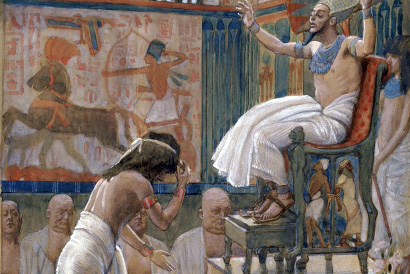
F. Suffering produces wisdom. –   Joseph is brought to Pharaoh and he so powerfully interprets Pharaoh’s dreams, not only as to their meaning, but even as to a 14-year plan that will lead them through a looming crisis. Pharaoh was impressed, and Joseph is appointed to the equivalent of prime minister of all Egypt.

Joseph is able to interpret Pharaoh’s dream. But he doesn’t simply interpret what it means, he also sets forth a wise plan. He explains to Pharaoh that the next fourteen years will have its ups and downs. Where might Joseph have learned this truth? Of course we know, in the crucible of his own life.

There’s a great wisdom in grasping that what is seen and experienced in this world is transitory. And thus we do well to listen to the Lord’s wisdom which is eternal.

Centuries later, the Lord spoke a parable of the certain wealthy man who had a great harvest and thought he was forever set. Lord called him a fool for thinking this way. Our abundance is not meant to be hoarded for ourselves. Excess food is not to be stored for myself, but rather stored in the stomachs of the poor and the hungry.

And thus Joseph, has been prepared for this moment by God, and he’s no fool. He has learned God’s wisdom and direction. Whatever abundance occurs in the next seven years must be set aside for those who will be hungry in the years that follow.

His wisdom is no accident, no mere hunch. It has come from the crucible of suffering. Suffering does that, it helps us become wise, get our priorities straight, and in this case, understand that our wealth depends on the Commonwealth. We cannot live merely for ourselves. That is foolishness, we are called to live for others.

What wisdom has God taught you through suffering? How has suffering helped you to get your priorities straight; to see the passing quality of life in this world, and to set your sights on the world it is to come and on the judgment awaits you? On the day of judgment will God call you a fool or a wise person? And if you are wise how did you get there?

G. In our suffering, we learn that our lives are not about us. – Joseph had predicted seven years of plenty, to be followed by seven years of famine. Hence, under Joseph’s direction during the years of plenty, grain was stored in abundance. So abundant was the harvest that with the grain stored, not only was Egypt saved from the famine, but also many neighboring lands. In a twist, Joseph’s brothers come to Egypt seeking food. And he is able to save the very brothers who thought to kill him. To his anxious brothers, who recognizing him fear for their lives, Joseph reassured them by saying you intended for evil, but God intended for good.

Yes, in our suffering, we learn that our lives are not about us. Joseph was not purified and prepared for this moment simply for his own sake, but even more, for the sake of others. God has led Joseph, often through terrible suffering to prepare him to help save others.

God did not simply prepare him to be a big cheese. God did not prepared him for glorious leadership for his own sake, but for the sake of others.

One of the lessons that we learn in Joseph’s story is that our life is interconnected with many other members of the Body of Christ, all of whom are precious and important to God.

God had to put Joseph through a lot to prepare him for his role of helping others. We are not called to live only for our self. God loves us individually, he also loves others through us; and he loves them enough that sometimes he is willing to make us wait, for their sake, or to cause us to suffer in order to groom us to help them. And the same is true of them toward us. All of us have received from the sacrifices of others, and are called to make sacrifices for others.

It is a hard truth, but true nonetheless, that God sometimes asks us to accept suffering for the sake of others, even as we are blessed by the sufferings of others who made many sacrifices for the things we enjoy.

This is the communal dimension of suffering. How is God prepared you through sufferings today to be able to help others?

Biblical stories have a wonderful way of teaching truth, and about our own life. And thus the Patriarch Joseph speaks to us from antiquity, and the pages of God’s holy Word. And somehow, I can hear Joseph saying that God can make a way out of no way. Somehow I hear him calling us to courage in our sufferings, and to perspective. Somehow I can hear him singing an old gospel hymn “God never fails. He abides in me, give me the victory for God never fails!”
To Mean Well is Not To Do Well.

011214I have noticed that it is very common today that moral assessments seem to center quite a lot around the intentions and feelings of the person involved. What is actually being done seems less significant and as long as a person “means well” or feels something is right then it is OK for them and we should make no further moral discernment. It is enough for too many that the person feels the act is right and means well.

But the fact is such criteria are NOT enough. Moral uprightness consists in doing well, not just meaning well or feeling good. Intentionality is not wholly insignificant, especially when it comes to assigning a level of “culpability” (guilt or blame). But intentionality and surely feelings cannot be the only determinative factors in assessing a moral act. We must look at the act itself, what actually happens, as the primary consideration of the moral quality of that act. We cannot simply say that something is good, it must actually be good.

Let me give a few examples as to how the actual, concrete act overrules whatever feelings or intentions we have:

1. Intentions alone do not turn locks, keys do – Every day I move between the buildings that make up our parish plant. Going in and out of buildings requires the use of keys. Now many of these keys look alike. As I approach the Church door, I take out my keys and put what I think is the Church key in the lock. Now I do this with best of intentions. I think I am doing what is right, I feel that what I am doing is right. Only problem is that I put the rectory key in the Church lock. Despite all my good intentions, despite that I thought and felt I was doing what was right, the lock does not turn.

All the good intentions in the world will not make that lock turn. I may swear that I think I am right, and that I feel right. But none of those things will win the day and turn that lock. I actually have to DO what is right to get the proper result. The right key has to go in the right lock to get the right result. What I actually do is the determinative factor. Feelings, thoughts and intentions cannot win the day.

2. Good intentions alone do not get me there, following the directions does. To get to your house you tell me to turn right on Park Ave. But I turn left. I may think you said left, I may sense or feel I am going in the proper direction, I may intend to be doing what is right, but none of that is going to change the fact that I am going 30 mph in the wrong direction and am not going to get to your house until I actually DO what is right.

3. Accidents happen, but there’s still a mess. There is a can of paint in a hallway as I walk down. I kick the can of paint over and paint spills all over the floor. Whether I did so intentionally or not will not change the fact that we’ve got a mess on our hands here that has to be cleaned.

But in this example, intentionality and what I think or know is important to determine how blameworthy I am. It is possible that my act of kicking the paint over was purely accidental. Perhaps I was unaware that painting was going on in the hall and I could not see the can as I rounded the corner. In this case my culpability (or blameworthiness) is probably very low if not non-existent. But suppose I knew there was painting going on and failed to exercise proper attentiveness. I kick the can of paint over through carelessness. In this case I have some blame. But suppose I saw the can of paint and (perhaps out of anger) purposefully kicked it over. Now my blame is full.

So intentions, knowledge and feelings are important in assessing the blameworthiness of a person. But these things cannot render a bad thing good. No matter what my intentions thoughts or feelings, we still have a big mess to clean up. The objective truth is that there is paint all over the floor. Simply saying, I had good intentions or didn’t know any better does not make the mess go away.

Rectitude is tied to reality – Too many people today use flawed or incomplete reasoning when it comes to morally assessing acts. Intentions, how a person feels, or what they think and know can affect blameworthiness, but they cannot make a bad thing good, they cannot make an evil act upright, they cannot remove the harm or negative results of an incorrect, bad or evil act. There is still a mess to clean up. There is still a U-turn to make, there is still a right key to find. Reality sets in.

There is a lot of flawed moral reasoning today around the issue of intentionality, feelings and thoughts. Important though these factors are they cannot undo reality. They cannot form the basis for judging the uprightness or wrongness of an act. Time to get back to reality in moral judgments. Time to do well, not just mean well. Time to actually do what is right not just think or feel you’re right. Back to reality.

The following video is a good example of the world’s moral reasoning. A man is in jail. All we need to know is that he meant well and had the best of intentions. How he landed in jail, all the other wrong things he’s done in his life, they matter so little that we are not even told what they were. ALL that matters is that he had the best of intentions. “Enjoy” the video.

The Bountiful Blessings of Baptism

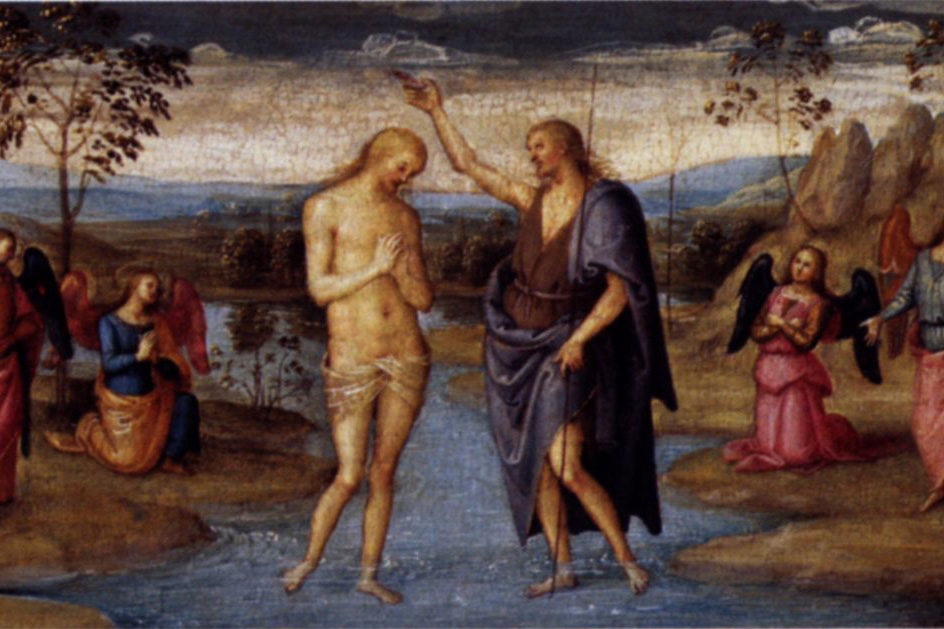
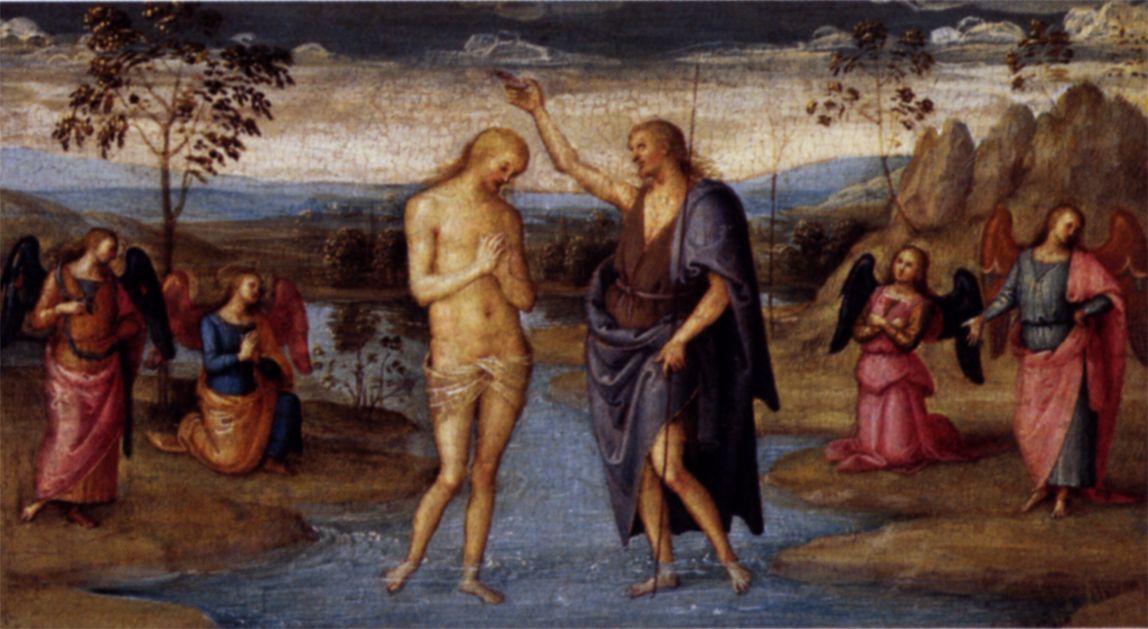
011114Today’s feast of the Baptism of the Lord is a moment to reflect not only on the Lord’s baptism, but also on our own. For in an extended sense, when Christ is baptized, so are we, for we are members of his body. As Christ enters the water, he makes holy the water that will baptize us. He enters the water and we who are members of his Body go with him. And in these waters he acquires gifts to give us, as we shall see below.

Let’s examine this text in three stages:

1. The Fraternity of Baptism – The text says Jesus came from Galilee to John at the Jordan to be baptized by him. John tried to prevent him, saying, “I need to be baptized by you, and yet you are coming to me?”

John is surely puzzled about Jesus requesting baptism. And likely so are we. Why? John’s baptism of repentance presumes the presence of sin. But the scriptures are clear, Jesus had no sin.

  1. For we have not a high priest who is unable to sympathize with our weaknesses, but one who in every respect has been tempted as we are, yet without sin (Heb 4:15 ).
  2. You know that he appeared to take away sins, and in him there is no sin (1 John 3:5 ).

So why does Jesus ask for baptism? He will answer this in a moment.

But first let’s consider this dramatic fact: Jesus identifies with sinners, even if he never sinned. As he comes to the riverside he has no ego concerns. He is not embarrassed or ashamed that some might think him a sinner even though he was not. It is a remarkable humiliation he accepts to be found in the company of sinners like us, and even to be seen as one of us. He freely enters the waters and, to any outsider who knew him not, he would simply be numbered among the sinners, which he was not.

Consider how amazing this is. The Scripture says He is not ashamed to call us his Brethren (Heb 2:11). It also says God made him who had no sin to be sin for us, so that in him we might become the righteousness of God (2 Cor 5:21).

Jesus ate with sinners to the scandal of many of the religious leaders: -This man welcomes sinners and eats with them!” (Lk 15:2). Jesus was known as a friend of sinners, had pity on the woman caught in adultery, allowed a sinful woman to touch him and anoint his feet. He cast out demons and fought for sinners. He suffered and died for sinners in the way reserved for the worst criminals. He was crucified between two thieves and He was assigned a grave among the wicked (Is 53).

Praise God, Jesus is not ashamed to be found in our presence and to share a brotherhood with us. There is a great shedding of his glory in doing this. Again, Scripture says, [Jesus], being in very nature God, did not consider equality with God something to be grasped, but made himself nothing, taking the very nature of a servant, being made in human likeness. And being found in appearance as a man, he humbled himself (Phil 1:3)

2. The Fulfillment of Baptism – The text says: Jesus said to [John] in reply, “Allow it now, for thus it is fitting for us to fulfill all righteousness.” Then he allowed him.

The Fathers of the Church are of varying opinions as exactly what Christ means by fulfilling all righteousness.

  1. Chromatius links the righteousness to all the sacraments and the salvation they confer: “This is true righteousness, that the Lord and Master should fulfill in himself every sacrament of our salvation. Therefore the Lord did not want to be baptized for his own sake but for ours” (tractate on Matthew 13.2)
  2. Chrysostom links it to the end and fulfillment of the Old Covenant: He is in effect saying, Since then we have performed all the rest of the commandments, this Baptism alone remains. I have come to do away with the curse that is appointed for the transgression of the Law. So I must therefore fulfill it all and, having delivered you from its condemnation, bringing it to an end. (Homily on Matt 12.1)
  3. Theodore of Mopsuestia sees Christ to mean that he is perfecting John’s Baptism which was only a symbol of the true Baptism. The Baptism of John…was perfect according to the precept of Law, but it was imperfect in that it did not supply remission of sin but merely made people fit of receiving the perfect one….And Jesus makes this clear saying, ‘For thus it is fitting for us to fulfill all righteousness.’ (Fragment 13).

From another perspective, the word “righteousness” refers, biblically, to God’s fidelity to his promises. Thus, is this sense, Jesus would mean that his baptism would be the sign of the fulfillment of God’s righteous promise of salvation. God had promised this and God is faithful to his promises. Jesus’ baptism indicates this. How?

St. Maximus of Turin speaks of the Old Testament prefigurement of baptism at the Red sea and then shows how Christ fulfills it:

I understand the mystery as this. The column of fire went before the sons of Israel through the Red Sea so that they could follow on their brave journey; the column went first through the waters to prepare a path for those who followed……But Christ the Lord does all these things: in the column of fire He went through the sea before the sons of Israel; so now in the column of his body he goes through baptism before the Christian people….At the time of the Exodus the column…made a pathway through the waters; now it strengthens the footsteps of faith in the bath of baptism. (de sancta Epiphania 1.3)

So what God promised in the in the Old Testament by way of prefigurement he now fulfils in Christ. They were delivered from the slavery of Egypt as the column led them through the waters. But more wonderfully, we are delivered from the slavery to sin as the column of Christ’s body leads us through the waters of baptism. God’s righteousness is his fidelity to his promises. Hence Jesus says, in his baptism and all it signifies (his death and resurrection) he has come to fulfill all righteous and he thus fulfills the promises made by God at the Red Sea and throughout the Old Testament.

3. The Four Gifts of Baptism – The Text says, After Jesus was baptized, he came up from the water and behold, the heavens were opened for him, and he saw the Spirit of God descending like a dove and coming upon him. And a voice came from the heavens, saying, “This is my beloved Son, with whom I am well pleased.

Eph 5:30 says we are members of Christ’s body. Thus when Jesus goes into the water we go with him. And in going there he acquires four gifts on our behalf as this text sets them forth. Lets look at the four gifts he acquires on our behalf:

  1. Access the heavens are opened . The heavens and paradise had been closed to us after Original Sin. But now, at Jesus’ baptism, the text says the heavens are opened. Jesus acquires this gift for us. So, at our baptism, the heavens open for us and we have access to the Father and to the heavenly places. Scripture says: Therefore, since we are justified by faith, we have peace with God through our Lord Jesus Christ. Through him we have obtained access to this grace in which we stand, (Romans 5:1) It also says, For through Jesus we have access in one Spirit to the Father. So then you are no longer strangers and sojourners, but you are fellow citizens with the saints and members of the household of God (Eph 2:17). Hence the heavens are opened also at our own Baptism and we have access to the Father.
  2. Anointing the Spirit of God descends on him like a dove – Here too, Jesus acquires the Gift of the Holy Spirit for us. In Baptism we are not just washed of sins, but we also become temples of the Holy Spirit. After baptism there is the anointing with chrism which signifies the presence of the Holy Spirit. For adults this is Confirmation. But even for infants, there is an anointing at baptism to recognize that the Spirit of God dwells in the baptized as in a temple. Scripture says, Do you not know that you are God’s temple and that God’s Spirit dwells in you? (1 Cor 3:16)
  3. Acknowledgmentthis is my beloved Son. Jesus receives this acknowledgment from his Father for the faith of those who heard, but also to acquire this gift for us. In our own Baptism we become the children of God. Since we become members of Christ’s body, we now have the status of sons of God. On the day of your Baptism the heavenly Father acknowledged you as his own dear Child. Scripture says: You are all sons of God through faith in Christ Jesus, for all of you who were baptized into Christ have clothed yourselves with Christ (Gal 3:26)
  4. ApprovalI am well pleased . Jesus had always pleased his Father. But now he acquires this gift for you as well. Our own Baptism gives us sanctifying grace. Sanctifying grace is the grace to be holy and pleasing to God. Scripture says, Blessed be the God and Father of our Lord Jesus Christ, who has blessed us in Christ with every spiritual blessing in the heavens, as he chose us in him, before the foundation of the world, to be holy and blameless in his sight. (Eph 1:1-3)

Thus, at his Baptism, Christ acquired these gifts for us so that our own Baptism we could receive them. Consider well the glorious gift of your Baptism. Perhaps you know the exact day. It should be a day as highly celebrated as your birthday. Christ is baptized for our sakes, not his own. All these gifts had always been his. Now, in his baptism he fulfills God’s righteousness by going into the water to get them for you. It’s alright to say, “Hallelujah!”

On The Problem of Rash Judgments as Seen in a Cartoon.

Bichon maltais blanc assis & coquin sur fond blancThe video at the bottom of this page is a touching story in illustration that things in life are not always what they first appear to be.

There is the sinful tendency we have of rash judgment. Too often we take offense at things when none was given or intended. Sometimes we get hurt because we simply misunderstand what a person is saying or doing. At other times we presume to know their motives. So for example, if a person takes a little longer to respond than we would like, we think they don’t care, or that their answer is “no.” But maybe the real problem is less personal toward us and they are dealing with a family crisis or there is a deadline at work. Rash judgements often cause us a lot of pain, and others to when we jump to conclusions and say or do harsh things in response to something that isn’t even true.

And even prior to the sinful drive of rash judgement, we have an often troublesome human tendency to “size things up” too quickly, before we really have all the information and can carefully sift, separate and distinguish. And thus we sometimes make poor decisions with out all the information we need.

There is yet another tendency to make conclusions that are too sweeping or simplistic, given the limited information we have. We do this regarding both people and situations.

Regarding the character of people, too often we like to assess them quickly and put them into one category or another. Thus, we may conclude that “Jane is a really wonderful person!” based on very few interactions with her or very limited information. We do this a great deal with the famous personalities and “heroes” of our culture, seeing them in broad and simplistic ways. In fact we usually know very little of them, other than what we see in a rather cursory and public way. In lionizing and idealizing people, we are often setting ourselves up for deep disappointment. And this disappointment is rooted in our rushed and simplistic judgments about people. The fact is, people are generally a mixed bag, often possessed of great gifts, and also afflicted by human weakness and personal flaws. Scripture says, No one is good but God alone. (Mk 10:18 inter al). It also says, For God regards all men as sinners, that he may have mercy on all (Rom 11:23). This the human condition, gifted but flawed.

Not all things are as they first appear. And no one should be regarded simplistically. We are usually a complicated mix of gifts and struggles. Discernment regarding people therefore ought to proceed with careful deliberation wherein we resist the urge to quickly size up and categorize people, and exercise careful discernment that is on-going, charitable and sober.

The rush to judgment is to be avoided. I have, in the past, been prone to criticize some of the judgments and decisions of the Church, and in particular, my diocesan leadership and religious superiors. Yet, in some of the matters about which I was most critical, I have come to discover that I did not have all the facts, and that my judgment was both rash and wrong. We often think we know the whole story. And often we do not.

Some (including me) have also criticized the Church for not operating in the fast speed zone of the modern world. We often want quick and bold statements to be issued. We desire rapid responses and bold initiatives made to every issue and crisis that emerges. Of themselves, these desires are not wrong. But they need to be balanced with an appreciation that discernment is often accomplished at slower speeds than we demand or wish. A more rapid response may sometimes be desired and even necessary. But there is something to be said about following the priority of the important rather than, merely, the priority of the urgent. And careful consideration and discernment is important and has its place.

In the Scriptures:

  1. There is the story of Samuel who was sent by God to find and anoint a King among Jesse’s sons. Arriving and seeing the eldest and strongest of the sons, Samuel was quick to conclude he must be the one: But the LORD said to Samuel, “Do not look on his appearance or on the height of his stature, because I have rejected him. For the LORD sees not as man sees: man looks on the outward appearance, but the LORD looks on the heart.” (1 Sam 16:6). Samuel was eventually led to anoint the youngest and least likely of the brothers, David.
  2. Call no one blessed before his death, for by his end shall a man be known. (Sir 11:28)
  3. And Paul cautions Timothy: Do not be hasty in the laying on of hands, and do not share in the sins of others. Keep yourself pure…Remember, the sins of some men are obvious, leading them to certain judgment. But there are others whose sins will not be revealed until later. (1 Tim 5:22,24)
  4. So we have stopped evaluating others from a human point of view. At one time we thought of Christ merely from a human point of view. How differently we know him now! (2 Cor 5:16)

Disclaimer – Discernment should be seen as a middle ground between quickly claiming we know too much, and claiming we can know nothing at all. Discernment is not an affirmation that there is no truth to be found, or that we are locked away in a purely subjective and relativistic world where no judgments can be made at all. Rather it is a caution from making sweeping, simplistic or rash judgments that are not based on things we really know. It is a call to sobriety, for people and situations are often more complicated than we first grasp, and it takes time to make proper assessments.

To discern: to sift, separate, or distinguish.

Enjoy this video; it is touching but also instructive. Sometimes we take offense or rejection, when none is given.

Why Did Jesus”mean to pass by”his Disciples when He was walking on the water?

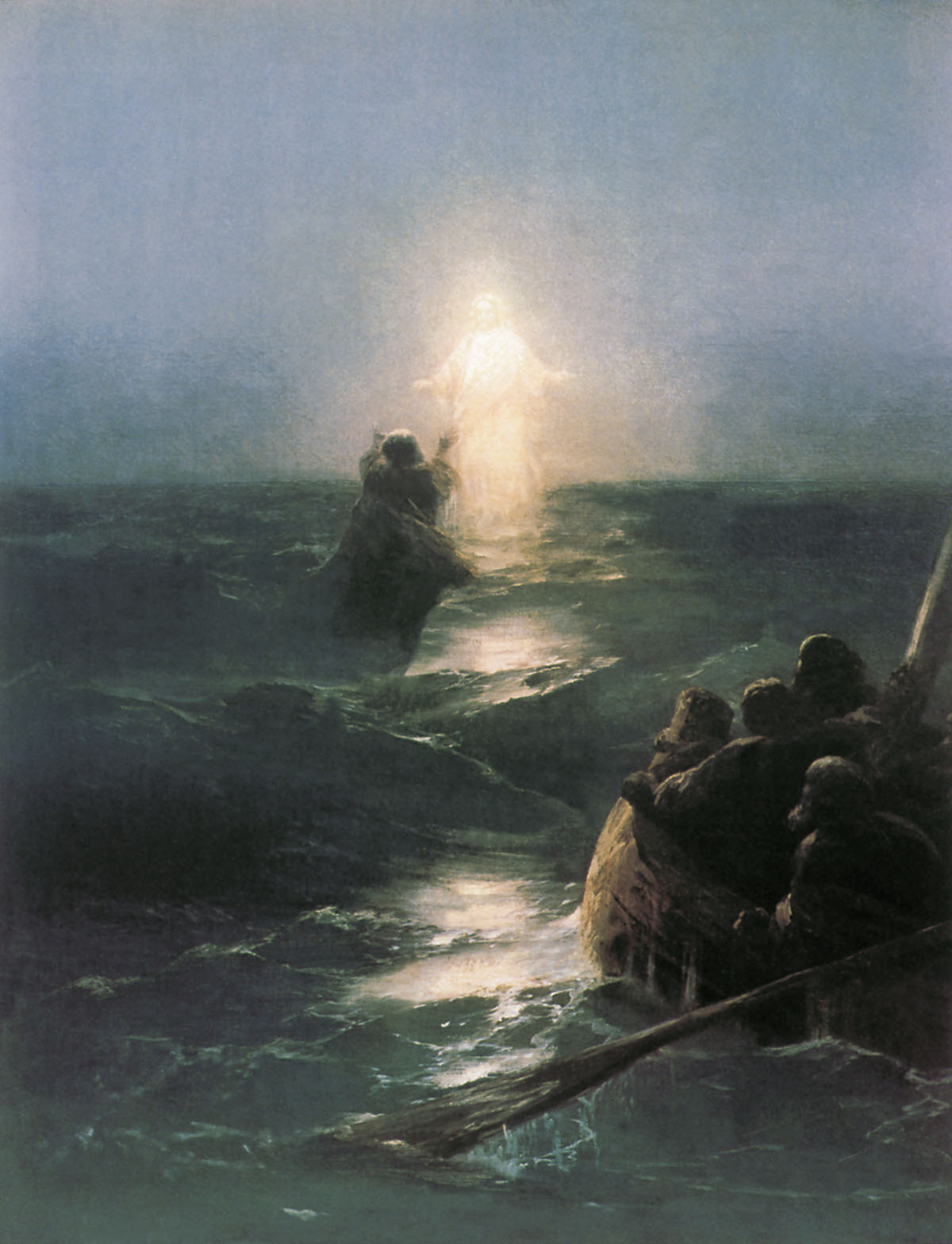
010914In the Gospel for daily Mass on this past Wednesday we read from Mark Chapter 6. It is the familiar story of Jesus walking on the water after having multiplied to loaves and fishes earlier that day.

There is to our modern ears an odd turn of phrase that takes place about midway through the gospel. It says: About the fourth watch of the night, [Jesus] came toward them, walking on the sea. He meant to pass by them… (Mark 6:48)

This seems odd. Why would Jesus approach them walking on the water, (astounding miracle that it is), and simply mean to pass on by?

The problem is, we think that it means that he will not to stop, but will keep walking passed them. But actually this is not what it means.

This expression of God “passing by” is common in the Theophanies of the Old Testament. For example, when Moses was up on the mountaintop, The text teaches us in Exodus, that he revealed himself to Moses by “passing by.” The text says:

Then Moses said, “Now show me your glory.” And the Lord said, “I will cause all my goodness to pass in front of you, and I will proclaim my name, the Lord, in your presence. I will have mercy on whom I will have mercy, and I will have compassion on whom I will have compassion. But,” he said, “you cannot see my face, for no one may see me and live.” Then the Lord said, “There is a place near me where you may stand on a rock. When my glory passes by, I will put you in a cleft in the rock and cover you with my hand until I have passed by. Then I will remove my hand and you will see my back; but my face must not be seen.” (Exodus 33: 18-23)

Another example of this is in the appearance he made to Elijah who was hiding in a cave after his flight from Jezebel. At one point, God called him out of the cave so that he could “pass by” The text says,

The Lord said, “Go out and stand on the mountain in the presence of the Lord, for the Lord is about to pass by.” Then a great and powerful wind tore the mountains apart and shattered the rocks before the Lord, but the Lord was not in the wind. After the wind there was an earthquake, but the Lord was not in the earthquake. After the earthquake came a fire, but the Lord was not in the fire. And after the fire came a gentle whisper. When Elijah heard it, he pulled his cloak over his face and went out and stood at the mouth of the cave. (1 kings 19:11-13)

Some other example of this “passing by are:

  1. When John the Baptist saw Jesus passing by, he said, “Look, the Lamb of God!” (Jn 1:36)
  2. Now hearing a crowd going by, [the Blind Man] began to inquire what this was. They told him that Jesus of Nazareth was passing by. And he called out, saying, “Jesus, Son of David, have mercy on me!”… (Lk 18:37-38)

Hence, for Jesus to “pass by” is not for him to walk past us in hiding. Rather, it is just the opposite, it is for him to reveal himself to us and summon us to Faith. This is also the case in the Old Testament texts where God “passes by” not to hide, but reveal himself and summon us to faith.

Some may argue that these phrases should be translated differently so that we can better grasp their meaning. Why not just say “He came toward them to reveal himself to them” ??

Perhaps there is some merit in this. But I would counter that more mileage is sometimes gained by the text causing us to ponder, and pray. Consider that in “decoding” this text we have looked at four other passages. Further, we have deepened our appreciation of what it means for God to “pass by.”

What is easy, is not always what is best for us.

Finding the Church in a Bach Fugue

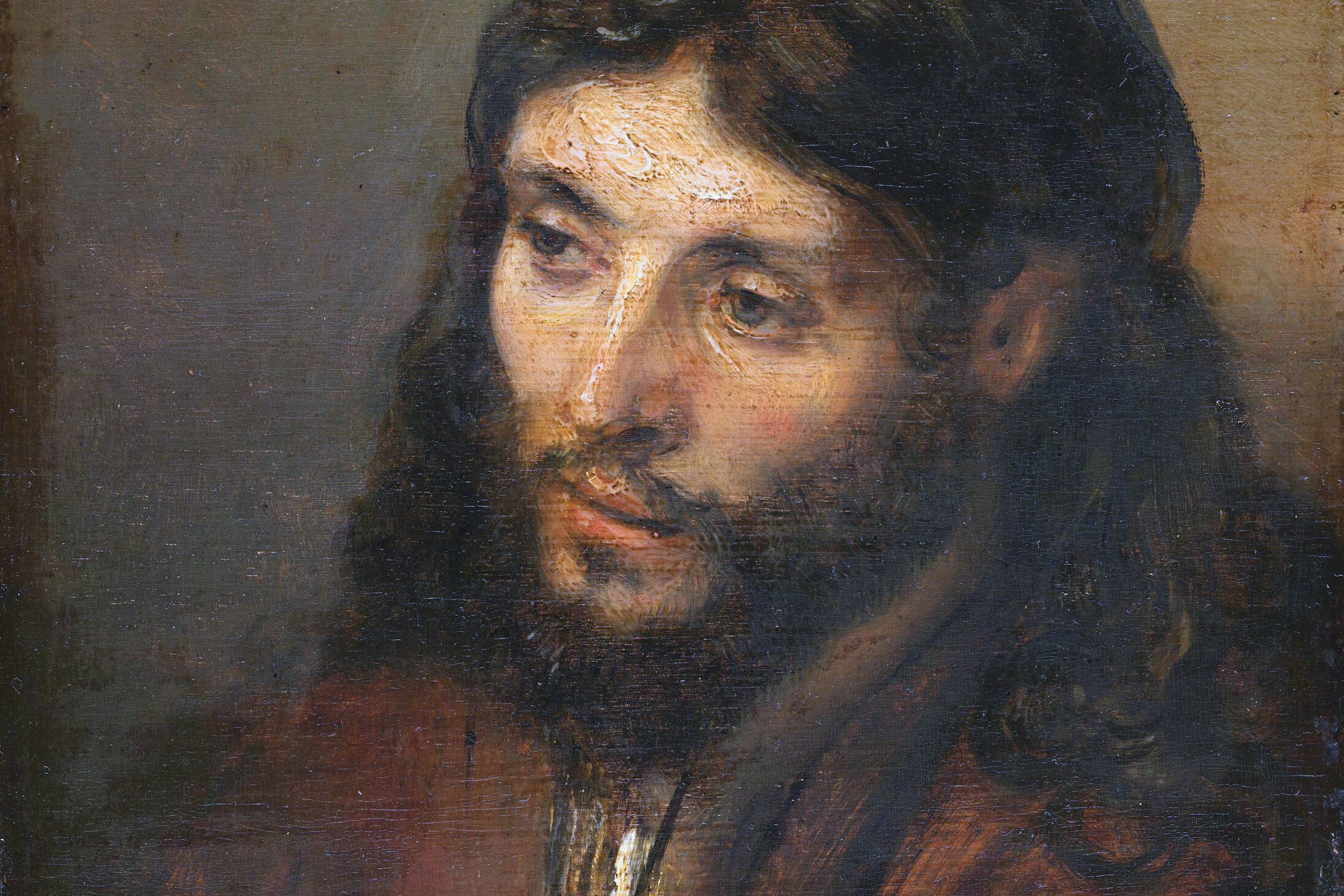
Head of Christ, by RembrandtMany of you have likely read the   classic description of the Church from the 1951 novel Dan England and the Noonday Devil by Myles Connolly. It is a wonderful reminder to us that the Church is not an institution but is a Body, made up of members who, in their own unique way, give witness to the one Body, which is Christ. I am presenting a summary here but you can read the whole quote here: What is the Church.

The Church to me is all important things everywhere. It is authority and guidance. It is love and inspiration. It is hope and assurance. It is God the Father, God the Son, and God the Holy Spirit. It is our Lady and St. Joseph. It is St. Peter and Pius XII. It is the bishop and the pastor. It is the catechism and it is our mother leaning over the crib teaching us our evening prayers. It is the cathedral at Chartres and the cross-tipped hut on Ulithi. It is the martyrs in the Colosseum and the martyrs in Uganda, the martyrs at Tyburn and the martyrs at Nagasaki. It is the wrinkled old nun and the eager-eyed postulant. It is the radiant face of the young priest saying his first Mass, and the sleepy boy acolyte with his soiled white sneakers showing under his black cassock….

It is the spire glimpsed from a train window and the cruciform miniature of a church seen far below on the earth from an airplane. It is six o’clock Mass with its handful of unknown saints at the communion rail in the gray dark and it is pontifical High Mass with its crowds and glowing grandeur in St. Peter’s….It is the Sistine Choir and it is the May procession of Chinese children singing the Regina Coeli in Peking.

It is the Carthusian at prime on Monte Allegro and the Jesuit teaching epistemology in Tokyo. It is the Scheutveld Father fighting sleeping sickness in the Congo and the Redemptorist fighting prejudice in Vermont. It is the Benedictine, the Augustinian, the Passionist, the Dominican, the Franciscan. It is all religious and especially the great unnamed Order of the Parish Priest.

It is the Carmelite Sister lighting the tapers for vespers in the drear cold of Iceland and the Sister of Notre Dame de Namur making veils for First Communion in Kwango. It is the Vincentian Sister nursing a Negro Baptist dying of cancer in Alabama and the Maryknoll Sister facing a Communist commissar in Manchuria. It is the White Sister teaching the Arabs carpetmaking in the Sahara and the Good Shepherd Sister in St. Louis giving sanctuary to a derelict child, a home to a lamb who was lost. It is the Little Sister of the Poor salving the sores of a forgotten old man in Marseilles, the Grey Sister serving the destitute in Haiti, the Blessed Sacrament Sister helping a young Negro write poetry in New Orleans. It is the Sister of Charity… It is all the Sisters everywhere.

It is the crippled woman who keeps fresh flowers before our Lady’s altar and the young woman catechist who teaches the barefooted neophytes in the distant hills. It is the girl who gives up her bridge game to drive the Sisters to the prisons and the homes of the poor, and it is the woman who goes from door to door begging for help for the orphanage. It is the proud mother of the priest and the heartbroken mother of the criminal. It is all mothers and sisters everywhere who weep and suffer and pray that sons and brothers may keep the Faith.

….It is the bad sermon and the good, the false vocation and the true. It is the tall young man who says the Stations of the Cross every evening and it is the father of ten who wheels the sick to Mass every Sunday morning at the County Hospital.

It is St. Martin and Martin de Porres, St. Augustine and St. Phocas, Gregory the Great and Gregory Thaumaturgus, St. Ambrose and Charles de Foucauld, St. Ignatius and Ignatius the Martyr, St. Thomas More and St. Barnabas. It is St. Teresa and St. Philomena, Joan of Arc and St. Winefride, St. Agnes and St. Mary Euphrasia. It is all the saints, ancient and new, named and unnamed, and all the sinners.

It is the bursting out of the Gloria on Holy Saturday and the dim crib at dawn Mass on Christmas. It is the rose vestments on Laetare Sunday and the blue overalls of the priest working with the laborers in a mine in the Ruhr.

It is the shiny, new shoes and reverent faces of the June bride and groom kneeling before the white-flowered altar at nuptial Mass, and it is the pale, troubled young mother at the baptismal font, her joy mingled with distress as she watches her first-born wail its protest against the sacramental water. It is the long, shadowy, uneven line of penitents waiting outside the confessional in the dusk of a wintry afternoon, each separate and solemnly alone with his sins, and it is the stooped figure of a priest, silhouetted against the headlights of a police car in the darkness of the highway as he says the last prayers over a broken body lying on the pavement beside a shattered automobile.

It is the Magnificat and it is grace before meals. It is the worn missal and the chipped statue of St. Anthony, the poor box and the cracked church bell. It is peace and truth and salvation. It is the Door through which I entered into the Faith and the Door through which I shall leave, please God, for eternity.

So there it is, The Church. Somewhere in this picture, is you, sharing your gift and serving your role. The Church is Christ. And all of us who are baptized are baptized into Christ, members of his body.

Somehow I sense the rhythm of a Bach Fugue as I read the description above. I know you think I’m a little arcane. But consider…

In the video below an organist plays Bach’s Fugue in C Major. Like any musical fugue, the organist begins by announcing the theme, playing it with his right hand. Soon enough the left hand answers and eventually the feet play the theme in the pedal. The fugue then takes the theme through a series of math-like progressions. Eighth notes become 16th and then even 32nd notes. But always the basic theme is being developed.

Now consider that the organist as Christ, the head of the body, and that the organ as the the Body of Christ. The organ, like any body has many parts. And since an organ is about making sounds, the different pipes make many different sounds. There are diapasons, the reeds, the flutes and the string pipes. The reeds are made up of various sounds like the trumpet, oboe, and vox humana. The string pipes make different sounds too such as viola, salicional, dulciana and so forth. The Flutes too come in many varieties as do the diapasons. And there are wonderful mixtures that give brightness and the deep low notes of the pedal sometimes as low as the 32′ contra Bombarde that makes the whole building shake. Yes, this too is an image of the Church. And Christ is able to make beautiful music with this wonderful variety.

And how does he make this music? Just like with a fugue, Jesus announces the basic fugal theme that underlies every other aspect of the song. And this theme is the truth of the Gospel. And every voice of the Church takes up that theme and sings it out in it own sound, using its own gift, but it is Christ who plays. And he (Jesus) develops and enriches the theme in a kind of development of doctrine that he leads the Church to proclaim. Rich diverse sounds, thematically building and developing. But always there is the basic theme, the fundamental truth.

Yes, here too is an image of the Church in a Bach fugue and in a virtuoso organist making beautiful music through unity with a wondrous instrument.

Should the Church Consider Reintroducing the Exorcism Prayers in the Rite of Baptism?

010714In yesterday’s blog post, we examined some reports on the revised Rite of Baptism being proposed in the Church of England. Many argue, I think rightly, that the new Rite results in a watering down of many essential truths. The longer is sin nor the devil explicitly renounced. You can read more of that here: COE Waters Down Baptismal Rite??

But for our own purposes, as Roman Catholics, I think it is only fair, and worth examining that our own Rite of Baptism underwent substantial changes as of 1969. Frankly, I was unaware of how substantial the changes were until I began celebrating baptisms in the Extraordinary Form (EF), according to the norms of Summorum Pontificum. I do not celebrate a lot of these EF Baptisms, perhaps two or three year. And while I like the Ordinary Form of Baptism and celebrate it almost from memory, I also find the older form, to be moving and substantial.

Most significant among the changes in the Rite that occurred in 1969,(And what I like to concentrate on here) was the removal of the exorcisms, four in all. And these were not mild exorcisms at all! They were weighty and imperative (i.e. commanding). The devil is really given his walking papers; he is commanded in no uncertain terms that he must depart, recognizing his sentence as having been defeated by Christ who claims this child now for his own.

Critics at the time argued that the prayers seem to treat the infant as though he or she was possessed. And for this, and other reasons, the exorcisms were removed from the baptismal rites of the Church. The new right does feature a prayer that is technically referred to as an exorcism. But the prayers is so mild-mannered, really more in the form of a mere blessing, that I doubt the celebrant of baptism really thinks of it as an exorcism, (let alone any demons understand that they are being commanded to leave). Here’s the current prayer that is, in the rite, referred to as the exorcism:

Almighty and ever-living God, you sent your only Son in to the world to cast out the power of Satan, spirit of evil, to rescue man from the kingdom of darkness, and bring him into the kingdom of light. We pray for this child: set him free from original sin, make him a temple of your glory, and send your Holy Spirit to dwell with him. We ask this through Christ our Lord.

Compare that to the prayers of exorcism from the old Rites which I here reproduce in English, though in EF Baptisms I say them in Latin:

Go forth from him (her), unclean spirit, and give place to the Holy Spirit, the Paraclete.

I exorcise thee, unclean spirit, in the name of the Father + and of the Son, + and of the Holy + Spirit, that thou goest out and depart from this servant of God, N. For He commands Thee, accursed one, Who walked upon the sea, and stretched out His right hand to Peter about to sink. Therefore, accursed devil, acknowledge thy sentence, and give honor to the living and true God: give honor to Jesus Christ His Son, and to the Holy Spirit; and depart from this servant of God, N. because God and our Lord Jesus Christ hath vouchsafed to call him (her) to His holy grace and benediction and to the font of Baptism.

And this sign of the holy Cross, which we make upon his (her) forehead, do thou, accursed devil, never dare to violate. Through the same Christ our Lord

I exorcise thee, every unclean spirit, in the name of God the Father + Almighty, in the name of Jesus + Christ, His Son, our Lord and Judge, and in the power of the Holy + Spirit, that thou be depart from this creature of God N, which our Lord hath deigned to call unto His holy temple, that it may be made the temple of the living God, and that the Holy Spirit may dwell therein. Through the same Christ our Lord, who shall come to judge the living and the dead, and the world by fire!

It will be granted, that these are strongly worded prayers. However they are not unlike many other exorcisms that were conducted in solemn blessings, such as the blessing of salt, the blessing of water, the blessing of oil, and so forth. It was a common practice in the rites of solemn blessings to first exorcise what was to be blessed and then bless it. It involved a kind of “clearing in the ground” before planting the seed. We’ll see more of this from St. Thomas in a moment.

Should the elimination of the prayers of exorcism concern us? Not insofar as the Church has permitted it. The Sacrament is surely valid. However, from a pastoral perspective I would like to respectfully propose that we make some consideration of restoring them to some extent.

Dr. Ralph martin makes some good observations in this regard that I would like to post here along with his substantial quotes from St Thomas Aquinas:

St. Thomas, in his fidelity to the teaching of the Apostles and the Fathers, takes very seriously the reality of the devil and the need to remove his influence from the lives of candidates for baptism. One reason for the lack of proper fruitfulness in the reception of Sacraments is that the power of the devil is not dealt with. St. Thomas says: “The power of the devil is restrained by prayers, blessings, and the like from hindering the sacramental effect”. (see ST III, q 66, a. 10) – (Dr. Ralph Martin, The Post-Christendom Sacramental Crisis and the Wisdom Thomas Aquinas. In Nova et Vetera. 11.1 pp 57-75)

Dr. Martin then cites the following quote from St. Thomas: in the Summa.  :

Whoever purposes to do a work wisely, first removes the obstacles to his work; hence it is written (in Jeremiah 4:3): “Break up anew your fallow ground and sow not upon thorns.” Now the devil is the enemy of man’s salvation, which man acquires by Baptism; and he has a certain power over man from the very fact that the latter is subject to Original, or even actual, sin. Consequently it is fitting that before Baptism the demons should be cast out by exorcisms, lest they impede man’s salvation. Which expulsion is signified by the (priest) breathing (upon the person to be baptized); while the blessing, with the imposition of hands, bars the way against the return of him who was cast out…. And the anointing with oil signifies man’s ability to fight against the demons…. (ST, III, q. 71, a. 2, Respondeo)

And thus, Dr. Martin, and of course St. Thomas Aquinas provide us with some very significant material for pastoral reflection. St. Thomas’ reflections not only describe the purpose of exorcisms, but also anticipate objections that were raised both then and now.

One objection is why bother exorcizing when the is about to be baptized and thereby freed of sin anyway? The question before us is certainly not the validity, or fact that the Sacrament of Baptism is received with or without the exorcisms; it is. Rather, the question is related to the fruitfulness of the sacrament once conferred.

And thus here Dr. Martin also Quotes St. Thomas in the same question (71) in the reply to the second objection which states: But sin is taken away by Baptism. Therefore men should not be exorcized before Baptism. And St. Thomas answers:

Reply to Objection 2. The power of the devil in so far as he hinders man from obtaining glory, is expelled from man by the baptismal ablution; but in so far as he hinders man from receiving the sacrament, his power is cast out by the exorcisms.

St. Thomas also adds,

Some say that the things done in the exorcism have no effect, but are mere signs. But this is clearly false; since in exorcizing, the Church uses words of command to cast out the devil’s power, for instance, when she says: “Therefore, accursed devil, go out from him,” etc. Therefore we must say that they have some effect, but, other than that of Baptism. For Baptism gives man grace unto the full remission of sins. But those things that are done in the exorcism remove the twofold impediment against the reception of saving grace. Of these, one is the outward impediment, so far as the demons strive to hinder man’s salvation. And this impediment is removed by the breathings, whereby the demon’s power is cast out…. The other impediment is within, forasmuch as, from having contracted original sin, man’s sense is closed to the perception of the mysteries of salvation….. (ST, III, q. 71, a. 3, Resp)

Hence the exorcisms are aimed at improving the fruitfulness of the Sacrament, not the fact of it. Just as we can reasonably conclude that one who is not catechized before or after the reception of the Sacrament of Baptism would generally show far less fruit, so also it seems reasonable to conclude that, other things being equal, the traditional exorcisms help to ensure the fruitfulness of the sacrament that is conferred. To use St. Thomas’ analogy, it does this by preparing the ground, such that when the seed of new life is conferred, it can readily receive it and there is room for it to grow.

As Dr. Martin also points out in his essay, we tend to significantly under-estimate the effects of Original Sin, even in an infant. These days, parents delay baptism for weeks, months, even years. There is little sense that their infant or young child is in any sense under the power of darkness or the evil one. Most parents, even many clergy and leaders,  see Original Sin is a kind of technical legal issue to be resolved, more than a massively serious problem to be dealt with as quickly and urgently as possible.

In this kind of a climate, The exorcisms listed above seem heavy-handed, and “over-the-top” while Original Sin seems to most people a little problem to be dealt with when all the family are in town for the nice little baptism ceremony.

Pastorally,  we need to make a journey back to a more sober appreciation of the condition in which we are all born, namely in Original Sin. It is no small matter, and the evil one clearly has some doorways, and strongholds in the unbaptized.

The old exorcism prayers articulated this well, and even if some consider their wording a bit excessive and the number of them  too numerous they do provide a pastoral framework of sobriety, and they also have the very real effect of helping to clear the ground, and prepare the way for the seed of New Life.

No, the infant or unbaptized person is not possessed in the formal sense of the word, but it never hurts to announce to Satan that is day is done, and give him his walking papers.

Disclaimers.

1. Obviously, as a parish priest, I am in no way authorized to alter the baptismal rite or any of the liturgies of the Church. I simply propose here a modest discussion among the faithful, (i.e. us)  which may or may not bear any fruit at all.

From time to time there are changes, most of the minor that come from Rome regarding the liturgical rites of the Church. Pope Benedict most recently made a change to the baptismal rite.

I only propose that we, namely the people of God, discuss among ourselves the restoration of some or all of the old exorcism prayers. If God the Holy Spirit desires this, the discussion will grow and ultimately have some wider effects in the Church.

2. Of course one immediate solution is to use the older Extraordinary Form of  Baptism which was recently permitted to be used again. But Let me be clear, I do not here, in this essay, seek to agitate for large-scale return to the extraordinary form of the sacraments. While parents are free to request this form of the sacrament from me, I do not pressure, or agitate for it. I do not even suggest it.  I simply say yes if requested.I am not aware of permission to conduct that Rite in English, and hence the use of Latin remains something of a barrier. (I am aware some clergy think they can conduct EF Baptisms wholly in English. Perhaps they can show me in writing where that is so, and what is the authorized translation to use).

The ordinary forms of the rites will continue to be those used by the vast majority of the faithful.  My main hope would be to initiate a discussion about the prayers of exorcism, be they optional or required, being reintroduced into the new rite of baptism.

This would be somewhat in line with Pope Benedict’s desire that the Extraordinary Form, and the Ordinary Form of the liturgies have some salutary effect on one another.

3. As one who has been engaged in deliverance ministry in recent years,  I have come to experience and understand the evil one is increasing his territory among many of the faithful. Deliverance prayers, to include minor exorcisms, and (with the bishop’s permission) major exorcism, will be something that will likely continue to grow in Church.

It is increasingly necessary for the faithful to specifically renounce Satan,  and all his works, and all his empty promises. It is also increasingly essential that many of the faithful be assisted by one-another and by clergy with deliverance prayers, minor exorcisms said by clergy,  to include in rare cases major exorcism.

The times in which we live make these sorts of prayers all the more necessary. It is in this context that I propose this discussion. I am indebted to Dr. Ralph Martin for his excellent article where he covers this issue and many others besides. You can read his full article here The Post-Christendom Sacramental Crisis and the Wisdom of St. Thomas Aquinas

Again I merely propose simple conversation. I am a loyal son of the Church and propose no rebellion or unauthorized practices in terms of adapting the Rites. Any changes, if they ever happen would take place under the Church’s authority.

Your thoughts?

Church of England “Waters Down”Baptismal Rite?

010614Recent adaptations in the baptismal rite of the Church of England further illustrate the troubles endured by that ecclesial communion. I’d like to excerpt an article, make some comments of my own, and then set up for an article tomorrow wherein we ought to spend a little time looking at our own current Rite of Baptism, and some of the ways it also made some puzzling (and some would argue troubling) shifts in emphasis of its own in the 1970s.

For now, here excerpts from an article in the Daily Mail . My comments are in plain red text.

Parents and godparents no longer have to ‘repent sins’ and ‘reject the devil’ during christenings after the Church of England rewrote the solemn ceremony. The new wording is designed to be easier to understand – but critics are stunned at such a fundamental change to a cornerstone of their faith, saying the new ‘dumbed-down’ version ‘strikes at the heart’ of what baptism means.

In the original version, the vicar asks: ‘Do you reject the devil and all rebellion against God?’ Prompting the reply: ‘I reject them.’

They then ask: ‘Do you repent of the sins that separate us from God and neighbor?’, with the answer: ‘I repent of them.’

But [now in the proposed new rite] already being practiced in 1,000 parishes, parents and godparents are asked to ‘reject evil, and all its many forms, and all its empty promises’ – with no mention of the devil or sin.

Somehow I am mindful of a slogan used at Google headquarters some years ago: “Don’t do evil.”

But of course these days, “evil” has become a somewhat vague and open-ended concept. Traditionally evil was understood as “moral evil” and involved rather clear violations of Divine and Natural Law.

Now, many who use the term “evil” tend to self-select what they mean by term. Thus, may things such as fornication, homosexual acts, greed, the idolatry of false worship, failure to attend divine services, and so forth are screened out of many people’s notion of evil. And things like, pollution, contributing to “global warming,” being “homophobic,”  or in any way “judgmental” or of any contrary opinion to the new morality, things like these replace the void left by the others.

So, sadly, simply asking, “Do you reject evil?” is too vague in the modern context. But it would seem, from what the article says later, that this is exactly the reason for the change. The authors of the new rite seem to want to keep the whole concept of what is being rejected here vague so as to be inclusive of a wide variety of notions. I can almost hear someone at one these rites when asked, “Do you reject evil” say, “Sure, why not. Evil is, like, bad, ya know? Don’t do evil, bro, I’m with you on that.”

The rewritten version… is designed as an alternative to the wording in the Common Worship prayer book, rather than a replacement. But why permit a watering down of the faith at all??

But the idea has angered many senior members of the Church, who feel it breaks vital links with baptisms as described in the Bible. One senior member of the General Synod, who did not wish to be named, said ‘The trouble is that large parts of the Church of England don’t believe in hell, sin or repentance. They think you can just hold hands and smile and we will all go to Heaven. That is certainly not what Jesus thought. Yes! Have we not discussed this very problem at length on this blog?

[The Church official went on to say] ‘There is so much left out that one wonders why do it at all? If you exclude original sin and repentance there is very little substance left. ‘It doesn’t just dumb the service down – it eviscerates it. It destroys the significance of the rite by watering down the concept of sin and repentance. ‘A humanist could say “I renounce evil.” If you take out repentance you immediately strike at the heart of the whole idea of needing to be baptized. ‘John the Baptist only baptized those who came and were repentant. This rite is saying to people you don’t need to be particularly repentant. Just come and join the club.’

Yes, indeed, baptismal  renunciations of Satan and repentance from sin, and the promises that follow are no time to be vague. Once again, I am somehow mindful that when I was a child my mother might ask me, in releasing from my time out in my room, “Do you promise to good?” And I’d say, “Yeah…” as I ran off to punch my brother in the stomach for “ratting me out.” Somehow I could still promise to be good, while at the same time “remind” my brother not to work for the opposition.

[Another Church official said] ‘By removing all mention of the devil and rebellion against God, we are left to our own vague understanding of what evil might or might not mean.’ Exactly

The draft was drawn up by the Church’s Liturgy Commission to redress fears the current version was too off-putting for lay people who only go to church for baptisms, weddings or funerals.

Wowza, why bend over backward for people that don’t even want to come anyway? My own experience with people who have “been away for a while” is that they are usually more disconcerted by changes in what they once knew, and that substantial changes only further drive them from the Church which comes to seem more and more unfamiliar.

Either way though, it seems strange that any denomination or Church should confect its liturgies to appeal to people who don’t come anyway.

The Bishop of Wakefield Stephen Platten, who chairs the commission, said repentance was implied in phrases urging people to ‘turn away from evil’…  (But that’s just the point, its only implied! We have to do better than that)….

And [Wakefield] defended the omission of the devil by saying it was ‘theologically problematic’.

Problematic? Do you mean that some other clerics and faithful in your denomination deny the Devil’s existence and that to mention him is problematic? Apparently Jesus never got their memo, since he talked about the devil a lot, and even engaged the devil personally on a number of occasions. He tangled with him in the desert, and, as I recall, drove him out of a number of people. And let me also add on a personal, as some one who has also tangled with old scratch, he is quite real.

Or perhaps the good bishop means that he understands that omitting any mention of the devil is what is problematic. If so, why do it, or permit others to do it?

Whatever the case, all the more reason to teach clearly on the reality of the Devil and teach people to specifically renounce him. In the Roman Rite we say rather clearly: Do You renounce Satan? And all his works? And all his empty promises? I DO renounce (abrenuntio) is the clearly prescribed response. And yet the good bishop says,

He said: ‘We are certainly not dumbing down. Far from it. What we are concerned about is to make sure that people who are coming to baptism understand what is being said.’ What am I missing here? Is it not the opposite that is being done? Since when does becoming more vague help to “make sure” people “understand?”

OK, well, sad to say the least, but not unexpected, given the meltdown in the Church of England. For the record there are Anglicans who are disturbed. And well they should be.

Of course it is not my job as a Catholic blogger to critique other denominations except insofar as it is a teaching moment for us who are Catholic. And as we know, there are sadly some among our own number some who have bought into the lies and errors which deny the existence of the Devil; who also seek to preach mercy and salvation without repentance. And we have well discussed it here.

Hence I do not single out the Church of England here. However, at least in the Catholic Church we have some mechanisms in place, including the grace of infallibility, which help avoid any dogmatic deviations, despite our internal bickering.

Tomorrow however I would like to broach a topic regarding our own baptismal rites and whether it is not perhaps time for us, as a Church, to reconsider having omitted the exorcisms that were once integral to that rite, even in the baptism of infants.

There is a good article on this matter I want to share with you by Ralph Martin who quotes extensively from St. Thomas on the importance of the exorcisms. I do “Old Rite” baptisms a few times a year and

I can tell you the exorcisms are powerful and they really give the Devil his walking papers. But more on this tomorrow!

Here’s a Hymn from a better moment in the Church of England: