In our care for the poor, there are many rewards that we know must wait. Sometimes we are not exactly sure what the help we supplied even did at all!
Scripture does speak of some blessings that will wait until heaven. And thus Jesus counsels us to store up for yourselves treasures in heaven, where neither moth nor rust destroys, and where thieves do not break in or steal (Matt 6:20). Of course, we do not store up treasure in heaven by putting it in a balloon or a rocket and sending it up there. Rather, what Jesus teaches is that we store it up in heaven by giving it to the poor and needy. Scripture says elsewhere, Cast your bread on the surface of the waters, for it will come back to you after many days. (Eccles 11:1)
And thus, some of our care for the poor will have rewards that we will reap later.
But some rewards are now. Perhaps we see what a difference our help has made. Or perhaps, too, we notice how God’s goodness to us increases, since he can trust us to be generous with His blessings. Scripture says, And if anyone gives even a cup of cold water to one of these little ones who is my disciple, truly I tell you, that person will certainly not lose their reward. (Matt 10:42). Or again, Give, and it will be given to you. A good measure, pressed down, shaken together and running over, will be poured into your lap. For with the measure you use, it will be measured to you. (Luke 6:38) And yet again, Whoever is kind to the poor lends to the LORD, and he will reward them for what they have done. (Proverbs 19:17).
Yes, some rewards are now, and not just “return gifts” from the Lord, but also the joy of giving itself; the joy of connecting with others.
All of those personal rewards and others besides are seen in this beautiful video. Please enjoy it! And remember, GOD will not be outdone in generosity.
And let us not be weary in well doing: for in due season we shall reap, if we faint not. As we have therefore opportunity, let us do good unto all men…. (Gal 6:9-10)
Every ancient prayer manual and guide to spirituality until about fifty years ago had at least one large section devoted to what was known as Pugna Spiritualis (spiritual battle or spiritual warfare). In more recent decades, many spiritual books have downplayed or completely deleted references to spiritual battle or spiritual warfare.
Sadly, many modern approaches to faith, religion, and spirituality prefer to emphasize exclusively consoling themes rooted in self-esteem, affirmation, etc. To be sure, the authentic faith can and does offer great consolation, but the truest and deepest consolation often comes after one has persevered along the sometimes-difficult path, along the “narrow way” of the cross.
But too many today, in the name of affirmation and pseudo-self-esteem are ready to excuse, and even affirm grave moral disorders, rather than fight them. Grace and mercy are preached, but without reference to the repentance that opens the door to these gifts. Both the possibility of Hell and any consequences of sin, are absent from many modern conceptions of faith and religious practice.
Some years ago, I was approached by a rather angry woman who, having heard my sermon on the seriousness of certain sins (which were in the readings of the day), expressed great indignation that I would preach on such topics. She said, “I come to church to be consoled and have my spirits lifted, not to hear old-fashioned warnings about judgment and sins.” She felt quite a “righteous indignation,” and was most certain that I had transgressed a fundamental norm, namely, that religion exists to console, and that any challenge to one’s moral stance, (except perhaps caring for the poor), is intolerant and way out of line.
Indeed, many today have this kind of attitude: that it is their birthright not to be troubled or vexed in any way by something people might say, especially a preacher who claims to represent God! The “God they worship” would never trouble them. They will have Jesus for their consoler and best friend, but not their Lord, and certainly not their judge. And never mind the literally thousands of verses from Scripture in which Jesus himself speaks sternly and warns of sin, death, judgment, and Hell. They will have none of it, and are certain that “the Jesus they know,” would never raise his voice at them or challenge them even for a moment. Never mind that the real Jesus says to take up our cross and follow him.
With spiritual battle having been removed from many people’s spiritual landscape, the idea that the Lord would summon us to battle, or ask us to choose sides, seems strangely foreign, intolerant, and uncompassionate.
Even more dangerous, these modern conceptions not only distort Jesus, but they downplay the presence and influence of Satan. This is a very, very bad idea. Even if we cease fighting against Satan, he will never ceases his sometimes very subtle attacks on us.
Jesus called consistently for prayerful, sober vigilance against the powers of evil and sin. Like it or not, we are in a battle. Either we will soberly and vigilantly undertake the battle, or we will be conquered and led off like sheep to the slaughter.
Despite what modern spiritual approaches would like to eliminate, Christianity has been a militant religion since its inception. Jesus was exposed to every kind of danger from the beginning. Herod sought his life; Satan tried to tempt him in the desert; many enemies plotted on all sides as he worked his public ministry, misrepresenting him, levying false charges, and conspiring to sentence him to death, and eventually even succeeding though only for a moment.
And as for Jesus, so also for his mystical Body the Church: Saul, Saul why do you persecute me!? (Acts 9:4) Jesus warns us that the world would hate us (Luke 21:17; John 15:20); that in this world we would have tribulation (Jn 16:33), and that we should watch and pray lest we give way to temptation (Matt 26:41). He summons us to persevere to the end if we would be saved (Mk 13:13). Jesus rather vividly described the kind of struggle with which we live when he said From the time of John the Baptist until now, the Kingdom of Heaven has suffered violence, and men of violence take it by force (Matthew 11:12). Indeed, no Christian until the time that Jesus returns, can consider himself on leave or dismissed from this great spiritual battle, from this great drama that we exist in, this battle between good and evil.
Popular theme or not, we do well to remember that we are in the midst of a great cosmic and spiritual battle. And in that battle, we must be willing to choose sides and fight with the Lord for the Kingdom of God. Either we will gather with him or we will scatter. We are to fight for our own soul, and the souls of those whom we love.
In the holy week that is about to unfold, we are reminded once again of the great cosmic battle that the Lord waged, and that is still being waged in our time. Though already victorious, in his mystical Body the Church, the Lord in his faithful members still suffers violence, rejection, and ridicule. It is also for us to reclaim territory from the evil one, to take back what the devil stole from us. We are to advance the glory of God’s Kingdom through the fruits of great spiritual struggle, sacrifice, prayer, fasting, preaching, and an extensive missionary campaign to which the Lord has summoned and commissioned us.
The battle is on; the struggle is engaged! To spiritual arms one and all! Fight the good fight for the Lord.
Still not convinced we are at war? Let the Lord pull back the veil just a bit and let you look at what’s really going on. The final words of this article will not be mine; they will be the Lord’s. Here is described the cosmic battle that is responsible for most of the suffering and confusion you experience:
A great sign appeared in heaven: a woman clothed with the sun, with the moon under her feet and a crown of twelve stars on her head. She was pregnant and cried out in pain as she was about to give birth. Then another sign appeared in heaven: an enormous red dragon with seven heads and ten horns and seven crowns on its heads. Its tail swept a third of the stars out of the sky and flung them to the earth. The dragon stood in front of the woman who was about to give birth, so that it might devour her child the moment he was born. She gave birth to a son, a male child, who “will rule all the nations with an iron scepter.” And her child was snatched up to God and to his throne. The woman fled into the wilderness to a place prepared for her by God, where she might be taken care of for 1,260 days. Then war broke out in heaven. Michael and his angels fought against the dragon, and the dragon and his angels fought back. But he was not strong enough, and they lost their place in heaven. The great dragon was hurled down—that ancient serpent called the devil, or Satan, who leads the whole world astray. He was hurled to the earth, and his angels with him. Then I heard a loud voice in heaven say:“Now have come the salvation and the power and the kingdom of our God, and the authority of his Messiah. For the accuser of our brothers who accuses them before our God day and night,has been hurled down. They triumphed over him by the blood of the Lamb and by the word of their testimony; they did not love their lives so much as to shrink from death. Therefore rejoice, you heavens and you who dwell in them! But woe to the earth and the sea, because the devil has gone down to you! He is filled with fury, because he knows that his time is short.” When the dragon saw that he had been hurled to the earth, he pursued the woman who had given birth to the male child. The woman was given the two wings of a great eagle, so that she might fly to the place prepared for her in the wilderness, where she would be taken care of for a time, times and half a time, out of the serpent’s reach. Then from his mouth the serpent spewed water like a river, to overtake the woman and sweep her away with the torrent. But the earth helped the woman by opening its mouth and swallowing the river that the dragon had spewed out of his mouth. Then the dragon was enraged at the woman and went off to wage war against the rest of her offspring—those who keep God’s commands and hold fast their testimony about Jesus. (Rev 12)
Among the struggles that many face in their spiritual lives is one in which we at times feel angry with God. While the sources of this anger can be varied, they tend to be focused in three areas: the existence of evil and injustice in the world (which God seems to permit), God’s seeming delay in answering our prayers, or some personal setback or trial in our life.
The thought that God can prevent bad things, often leads to expectations that he should prevent them. And then when such expectations are not met, resentment, disappointment, or anger can follow.
Sometimes our anger at God is obvious to us. But other times, it can take more subtle forms, such as depression or a kind of spiritual sadness, avoidance of God and spiritual things, a loss of hope, or a reduction in asking things of God at all in prayer. Sometimes too, we like to hide our anger with God by using understatements such as saying we are simply “disappointed,” or “frustrated.”
But the reality is, at times we are angry with God, sometimes very angry. What to do about this anger?
God himself seems to say, over and over again in the Scriptures, that he wants us to speak to him about it, to tell him that we are angry, and to pray out of this reality in our life.
God actually models this in the Scriptures. The book of Psalms is the great prayer book that God gave to Israel. In the Psalms is enshrined every sort of human experience and emotion: joy, exultation, hope, gratitude; but also dejection, hatred, despair, and yes, anger, even anger at God. God himself, through the Holy Spirit, authors the very prayers of the Psalms and says to us in effect, that every human emotion is the stuff of prayer. He models for us how to pray out of our experiences not only of joy and gratitude, but also of despair and anger. God says that whatever you’re going through should be the focus of your prayer.
Thus, God tells us that even if we are angry with Him, we should speak to Him about our anger. And he does not ask us to mince words, to minimize our emotions, or even to speak politely.
One of the most common expressions of human anger toward God in the Scriptures is in what might be called the “usquequo verses.” (pronounced “ooz- kay-quo”) The Latin word usquequo is most literally translated “how long?” And thus, in the Psalms, and in other verses of Scripture, will often come the question “How long Oh Lord?”
Now while the word usquequo can simply be a straightforward question, as in, “How long until lunch?” the adverb usquequo usually has more of a rhetorical form wherein one asks “how long?” in a plaintive and exasperated tone, as in “How much longer!?” As if to say, “Oh Lord, why do you let this awful situation go on? Where are you!?” Thus, the word bespeaks not only disappointment, but also even a certain sense of injustice that God would care so little about us that he would allow such terrible things to go on for so long.
God knows that we feel this way sometimes. And even if our intellect can supply some possible reasons that God would allow bad things to go on, or that He is not entirely to blame for the mess that we’re in, still it is clear that our feelings often are not satisfied with any rational explanation and simply cry out “How long, oh Lord!?
God knows this about us; He knows that we are feeling like this, and wants us to speak with him directly about it, to articulate it; to pray out of this experience.
Let’s sample some of these texts:
Psalm 13:1-2How long, Lord? Will you forget me forever? How long will you hide your face from me? How long must I wrestle with my thoughts and day after day have sorrow in my heart? How long will my enemy triumph over me?
Psalm 6: 3-6My soul is in deep anguish. How long, Lord, how long? Turn, Lord, and deliver me, save me because of your unfailing love. Among the dead no one proclaims your name. Who praises you from the grave? I am worn out from my groaning.
Psalm 10:1-2Why, Lord, do you stand far off? Why do you hide yourself in times of trouble? In his arrogance, the wicked man hunts down the weak, who are caught in the schemes he devises.
Psalm 35:17How long, Lord, will you look on? Rescue me from their ravages, my precious life from these lions.
Psalm 44:24Awake, Lord! Why do you sleep? Rouse yourself! Do not reject us forever. Why do you hide your face and forget our misery and oppression?
Psalm 89:46How long, Lord? Will you hide yourself forever? How long will your wrath burn like fire? Remember how fleeting is my life. For what futility you have created all humanity! Lord, where is your former great love, which in your faithfulness you swore to David?
Psalm 79:5-7How long, Lord? Will you be angry forever? How long will your jealousy burn like fire? Pour out your wrath on the nations that do not acknowledge you, on the kingdoms that do not call on your name; for they have devoured Jacob and devastated his homeland.
Psalm 74:10-11How long will the enemy mock you, God? Will the foe revile your name forever? Why do you hold back your hand, your right hand?
Psalm 94:2-3Rise up, Judge of the earth; pay back to the proud what they deserve. How long, Lord, will the wicked, how long will the wicked be jubilant?
Lam 5:20Why do you always forget us? Why do you forsake us so long?
Habakkuk 1:1-4How long, Lord, must I call for help, but you do not listen? Or cry out to you, “Violence!” but you do not save? Why do you make me look at injustice? Why do you tolerate wrongdoing? Destruction and violence are before me; there is strife, and conflict abounds. Therefore the law is paralyzed, and justice never prevails. The wicked hem in the righteous, so that justice is perverted.
Job 7:18-19Will you never look away from me, or let me alone even for an instant? If I have sinned, what have I done to you, you who see everything we do? Why have you made me your target? Have I become a burden to you? Why do you not pardon my offenses and forgive my sins? For I will soon lie down in the dust; you will search for me, but I will be no more.
Thus we see modeled for us that God desires us to speak what we are feeling, to give voice to our anger. Why is this? First of all, he knows already that we have it and does not desire our prayer to be suppressed, pretentious, or phony. If anger is the “elephant in the room,” let’s admit it rather than trying to pretend it’s not there. Second, in expressing our emotions aloud we often help vent or at least reduce their power. Suppressed feelings often become depression if they are not given respect and a voice.
The biblical texts also model a kind of Jewish insight and practice known as taking up a “rib” (pronounced “reeb”) wherein one argues, complains, contends, strives, or pleads a case with God. Even early on in the Biblical text we see Abraham and Moses often in (sometimes tense) negotiations with God (e.g. Genesis 18:16ff, Exodus 3, Numbers 14:10ff). And thus the psalms and similar texts model a kind of “rib” wherein one asks God to deliver on his promises and expresses exasperation at the apparent delay of the same. God the Holy Spirit models and encourages this sort of prayer in including it in the inspired text.
Mysteriously, God does not often answer the “Why?” implicit in our groans. But he is able and most willing to hear them. And sometimes it is our very groans that yield the desired relief. Scripture says, I love the Lord, for he heard my voice; he heard my cry, my appeal. He turned his ear to me, and thus, I will call on him as long as I live (Ps 116:1-2), and, Those who sow with tears will reap with songs of joy (Psalm 126:5). And St. Augustine says, More things are wrought in prayer by sighs and tears, than by many words. (Ltr to Proba, 2) Thus, our groans and soulful protests do reach God’s ears.
At other times, God gives a Job-like answer (cfJob 38 ff) in which he reminds us of our feeble capacity to see the whole picture when we protest suffering or evil. And thus, his answer is a kind of “non-answer,” in which he reminds us that our minds are very small.
But nevertheless, the point here is that God instructs us to ask, to protest, “How long?” as a sign of His understanding, even respect, for our anger and exasperation.
It is also interesting to note that God oftentimes takes up the complaint “How long?” as well! It ought not to surprise us that God is also at times “exasperated” with us, and in a kind of anthropomorphic turning of the tables, he too laments “How long?” Here are some of those texts:
Psalm 82:1God presides in the great assembly; he renders judgment among the “gods”: “How long will you defend the unjust and show partiality to the wicked?
Jer 4:21-22How long must I see the battle standard and hear the sound of the trumpet?“My people are fools; they do not know me. They are senseless children; they have no understanding. They are skilled in doing evil; they know not how to do good.”
Jer 23:26-28“I have heard what the prophets say who prophesy lies in my name. They say, ‘I had a dream! I had a dream!’ How long will this continue in the hearts of these lying prophets, who prophesy the delusions of their own minds? They think the dreams they tell one another will make my people forget my name…”
Matt 17:17“Unbelieving and perverse generation!” Jesus replied, “How long must I stay with you? How long shall I put up with you?”
So it would seem that God is willing to admit into prayer both our anger and His. Where there is love there is also bound to be some anger, for things matter when we love. God would rather have us speak openly and honestly of our anger toward him. He also often reveals His anger toward us. In this matter, vituperative anger, name calling, and cursing is in no way commended, but only honest airing of the fact of our anger and the basis for it.
There is an old saying, “No tension, no change.” The simple fact is that God allows some tension in our lives and in our relationship with him. One reason is that tension helps keep our attention and evokes change. In instructing us to cry out “How long, O Lord?” the Lord invites us to take up the energy and tension of our anger and make it the “stuff” of our prayer. In so doing, our prayer is more honest, and it soars on the wings of passion. It keeps us engaged and energized and fuels a kind of insistence and perseverance in our prayer.
Within proper bounds, and with humility presumed, anger in prayer has a proper place, and God himself both prescribes it and models it for us in the Book of Psalms and in other texts. Be angry, but sin not. (Eph 4:26)
This video is rather long, but it is a wonderful musical setting of Henry Desmarets’ (1661-1741) Usquequo Domine. Put it on in the background to play.
The translation of Psalm 13 sung here is as follows:
How long O Lord will thou forget me, must thy look still be turned away from me? Each day brings a fresh load of care, fresh misery to my heart; must I be ever the sport of my enemies? Look upon me, O Lord my God, and listen to me; give light to these eyes, before they close in death; do not let my enemies claim the mastery, my persecutors triumph over my fall! I cast myself on thy mercy; soon may this heart boast of redress granted, sing in praise of the Lord, my benefactor.
Over the years, as I have taught on the matter of sexual morality to both young people and couples preparing for marriage, I have noticed a pattern in the Biblical texts: sexual immorality is quite often linked to or closely associated with greed and theft. This link has become clearer and more understandable to me over the years.
Greed is the excessive desire to possess wealth or goods; it is the insatiable desire for more. This is closely linked to lust, which is an inordinate desire for the pleasures of the body.
Thus, the lustful, sexually immoral, unrepentant person says, in effect, “I want sexual pleasure for myself. I do not want to pay any ‘price’ for it by having to see it in relationship to other goods and people. I do not want to see it in relationship to the institution of marriage, or to the love of a spouse, or to family, or to children. I do not want commitments or responsibilities. I want to indulge in sex because I want it. All that matters is that I want it.”
Many go further in accepting few, if any limits on what they want, despising norms that in any way seek to limit their access to sex, or to place it in a wider, more responsible context.
For many today, sex is simply something they want. And the mere fact that they want it makes it right. Never mind that lust and sexual immorality have had devastating effects on marriage and family, that as promiscuity has soared so have divorce rates, abortion, single parent families, children without intact families, AIDS, sexually transmitted diseases, broken hearts, and the like. Never mind all this. For many, wanting sex makes it right, and precludes anyone from “telling them what to do.”
And this is greed, the insatiable desire for more, or the inordinate desire for things such that they are considered apart from wider norms that limit desires within the boundaries of what is reasonable and in service of the common good. Greed cares little for the common good, for the needs and rights of others. Greed just wants what it wants. Lust is very close to greed in that it is also an inordinate desire, one for bodily pleasures apart from any consideration of the needs of others or of what it just, right, and reasonable.
Let’s take a look at some of the texts wherein the Scriptures seem to connect greed and sexual immorality. Commentary by me on each of them follows in red.
1. But among you there must not be even a hint of sexual immorality, or of any kind of impurity, or of greed, because these are improper for God’s holy people….For of this you can be sure: No sexually immoral, impure or greedy person….has any inheritance in the kingdom of Christ and of God. (Eph 5:3,5)
The connection here between greed and fornication (porneia), translated here as sexual immorality, is not spelled out. Reading the text by itself might permit the possibility that it is only coincidentally connected to sexual immorality. But as seen below there are a good number of other texts that connect sexual immorality to similar notions of greed and covetousness. Hence, we ought to note the connection. That the connection was not developed or explained may signal to us that the early Christians saw the connection as more implicit and obvious than we moderns do.
2. Put to death, therefore, whatever belongs to your earthly nature: sexual immorality, impurity, lust, evil desires, and greed, which is idolatry. (Col 3:5)
Here the list is broadened to include lust and all evil desires. These are connected in the text to greed, and greed in turn is equated with idolatry.
Idolatry values someone or something in a way that hinders or surpasses the love, trust, and obedience we owe to God. It wants the thing, rather than God who made the thing. Through greed, we excessively desire things, such as sex, money, power, and creature comforts, and they take on greater importance to us than God, or what God sets forth for us to obey. Through greed, these things become idols, since they surpass God in importance to us. We prefer them to God; we obey our desires more than God. God can take a number and wait, I want what I want, and that is all that matters.
For many today, and apparently for many back in the time when these texts were written, sex is more important than God, hence the connection to greed.
3. You shall not covet your neighbor’s wife. (Ex 20:17)
The 6th Commandment had already forbidden the act of adultery. But note here, how this commandment goes deeper, indicating that we are not to covet. In speaking of what it means to covet the Catechism says: The sensitive appetite leads us to desire pleasant things we do not have…These desires are good in themselves; but often they exceed the limits of reason and drive us to covet unjustly what is not ours and belongs to another or is owed to him. The tenth commandment forbids greed and the desire to amass earthly goods without limit…..When the Law says, “You shall not covet,” these words mean that we should banish our desires for whatever does not belong to us. Our thirst for another’s goods is immense, infinite, never quenched. Thus it is written: “He who loves money never has money enough.” (CCC # 2535-2536).
Hence, to covet the wife of another includes both a sexual desire for her and a greed that wants to have her.
4. For from within, out of men’s hearts, come evil thoughts, sexual immorality, theft, murder, adultery, (Mk 7:21)
Here again, note that in a verse that includes fornication and adultery, is also included the word theft, referring to the unjust possession of something. The fornicator and the adulterer both steal what does not belong to them. Sexual intimacy belongs to the marriage bed alone. Hence, the unmarried person and the adulterer both take what is not theirs. Clearly, antecedent to most, if not all theft, is greed.
5. For this is the will of God, your sanctification; that is, that you abstain from sexual immorality; that each of you know how to possess his own vessel in sanctification and honor, not in lustful passion, like the Gentiles who do not know God; and that no man overreach and defraud his brother in this matter because the Lord is the avenger in all these things, just as we also told you before and solemnly warned you. For God has not called us for the purpose of impurity, but in sanctification. So, he who rejects this is not rejecting man but the God who gives His Holy Spirit to you. (1 Thes 4:3-8).
This text not only links sexual immorality to greed, but also to theft, and in a wider sense injustice. For, to fail to live chastely both overreaches and defrauds.
The Greek word here translated as overreach is υπερβαινειν (huperbainein). This word means, “to go over,” to overpass certain limits, to transgress, to go too far, to go beyond what is right or due. Hence again we can see how greed is tied into sexual immorality; for it is desire overreaching, going too far, beyond what is reasonable, due, or right. The lustful person is greedy because he wants what he wants no matter if it is excessive or wrong. All that matters is that he wants it. And this is greed.
The word translated here as “defraud” πλεονεκτει (pleonektei) is related to covetousness and greed since it emphasizes gain as the motive of fraud. Thus, sexually immoral persons defraud others: the sexual partner, families, and society as a whole. They do this by thinking more of what they want than of what is right, or of how it might harm others. They act fraudulently, for they act as though they are married when they are not, and they do this in order to steal the privileges of marriage.
6. Do you not know that the wicked will not inherit the kingdom of God? Do not be deceived: Neither the sexually immoral nor idolaters nor adulterers nor male prostitutes nor homosexual offenders, nor thieves nor the greedy nor drunkards nor slanderers nor swindlers will inherit the kingdom of God. (1 Cor 6:9-10)
Again, simply note that sexually immoral persons are numbered among or alongside thieves and swindlers. They are akin to thieves for they take what does not belong to them, and they swindle because they obtain through deceit. The deceit is that they implicitly claim the status of married persons by seizing the privileges and rights of marriage without taking up its duties.
Hence, the mention of thieves and swindlers along with the sexually immoral may not be coincidental, but may imply “birds of a feather.”
7. Marriage should be honored by all, and the marriage bed kept pure, for God will judge the adulterer and all the sexually immoral. Let your manners be without covetousness, contented with such things as you have; for God has said: I will not leave you, neither will I forsake you. (Heb 13:4-5)
In other words, don’t be greedy and steal the privileges of the marriage bed through adultery, premarital sex, or any indulgence of sexual pleasure outside marriage. If you are not married, it is not yours. If you are married, it is yours only with your spouse. Be content with what you have and stop being greedy or covetous.
Hence, we see demonstrated a rather consistent scriptural connection between sexual immorality, greed and theft.
Sexual intimacy is a prerogative and privilege of marriage. It exists to build up marriage, to encourage recourse to marriage, and to help knit husband and wife together in a fruitful love. To snatch sex away from its only proper place is to possess unjustly that which is not yours; it is theft. And scripture connects this stealing with greed and covetousness. Greed is the excessive desire to possess, beyond what is just or reasonable. If this desire is yielded to, we take what is not ours simply because we want it.
Many today claim that they can do as they please in terms of sexuality and many even boast of their sexual freedom and exploits. The entertainment media celebrate sexual freedom. But it would appear that Scripture sees such sexual exploits not as liberation, but rather as theft and greed.
It is true that some act in weakness. Some fall, but are repentant. Surely, God is rich in mercy for such souls as these.
But as for those who celebrate sexual immorality, they ought to consider that what they call good, God calls sin, God calls greed, God calls theft.
For those willing to see, God is waiting and God is willing.
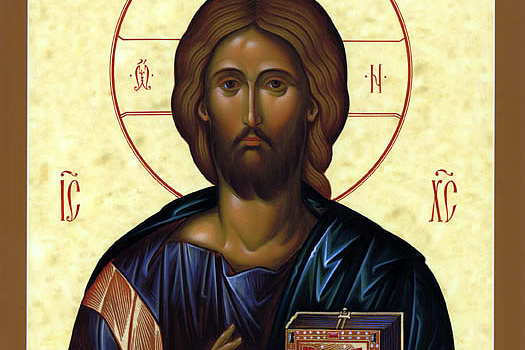
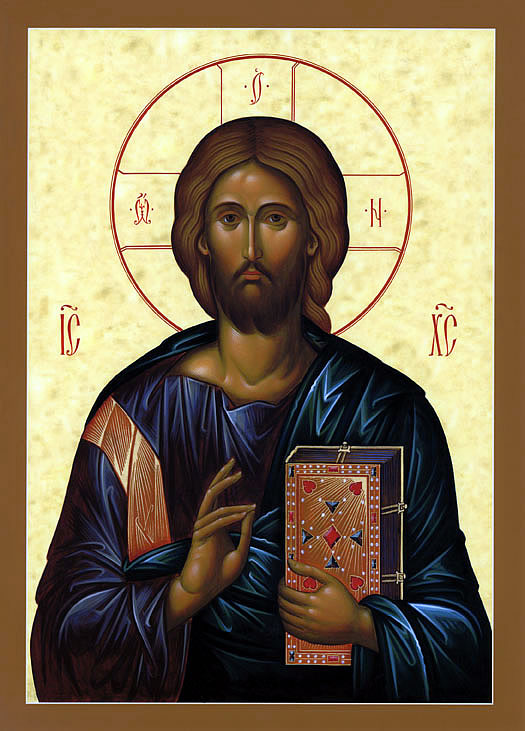
I have a large Icon of Christ in my room (see photo at right). What icons from the Eastern tradition do best is to capture “the Look.” No matter where I move in the room, Christ is looking right at me. His look is intense, though not severe. In the Eastern spirituality, Icons are windows into heaven. Hence, this icon is no mere portrait that reminds one of Christ, it is an image which mediates his presence. When I look upon him, I experience that he knows me. It is a knowing look and a comprehensive look.
The Book of Hebrews says of Jesus, No creature is concealed from him, but everything is naked and exposed to the eyes of him to whom we must render an account. (Heb 4:13).
But his look in the Icon is not fearsome; it is serene and confident. Hence the text from Hebrews goes on to say, Therefore, since we have a great high priest who has passed through the heavens, Jesus, the Son of God, let us hold fast to our confession. For we do not have a high priest who is unable to sympathize with our weaknesses, but one who has similarly been tested in every way, yet without sin. So let us confidently approach the throne of grace to receive mercy and to find grace for timely help. (Heb 4:14-16)
Particularly in Mark’s Gospel, there is great emphasis on the eyes and the look of Jesus. A frequent expression in that Gospel is “And looking at them He said….” Such a phrase or version like it occurs over 25 times in Mark’s Gospel referring to Jesus.
Looking on Christ and allowing him to look on you is a powerful moment of conversion. Jesus himself said, For my Father’s will is that everyone who looks to the Son and believes in him shall have eternal life, and I will raise him up at the last day.” (Jn 6:40) and the First Letter of John says, What we shall later be has not yet been revealed. We do know that when it is revealed we shall be like him, for we shall see him as he is (1 Jn 3:2).
There is just something within us that seeks the face of God and desires that look of love that alone can heal and perfect us. I often think of this verse from Scripture when I am at Eucharistic Adoration: Look! There he stands behind our wall, gazing through the windows, peering through the lattice. (Song 2:9). Yes, I long to see the Lord, and the Scripture also speaks of his longing to “see” us.
Here are some scriptures that remind us to seek the face of the Lord and to look to him:
Seek the LORD and his strength; seek his presence continually! (1 Chron 16:11)
If my people, who are called by my name, will humble themselves and pray and seek my face and turn from their wicked ways, then will I hear from heaven and will forgive their sin and will heal their land. (2 Chron 7:14)
You have said, “Seek my face.” My heart says to you, “Your face, LORD, do I seek.” (Ps 27:8)
Look to the LORD and his strength; seek his face always. (Ps 105:4)
I [the Lord] will return again to my place, until they acknowledge their guilt and seek my face, and in their distress earnestly seek me. (Hosea 5:15)
Everyone who looks to the Son and believes in him shall have eternal life, and I will raise him up at the last day. (John 6:40)
He who loves me will be loved by my Father, and I too will love him and show myself to him. (John 14:21)
Blessed are the pure in heart, for they will see God. (Matt 5:8)
Now we see but a poor reflection as in a mirror; then we shall see face to face. (1 Cor 13:12)
For God, who said, “Let light shine out of darkness,” made his light shine in our hearts to give us the light of the knowledge of the glory of God in the face of Christ. (2 Cor 4:6)
An old song says, We shall behold Him,Face to face in all of His glory…The angel will sound, the shout of His coming, And the sleeping shall rise, from their slumbering place. And those remaining shall be changed in a moment. And we shall behold him, then face to face.
Allow Christ to look on you.
This video is a wonderful collection of many of the looks of Jesus and the reaction of the people following those looks. Pay special attention. The video also features a lot of “looks” that come from us. Notice how people look upon Jesus, and how they, as human beings react, as they look on Jesus. Look for the “looks” in this video. The final looks are especially moving.
“Kittyply edit1” by David Corby, Edited by: Arad – Image:Kittyplya03042006.JPG. Licensed under CC BY 2.5 via Wikimedia Commons
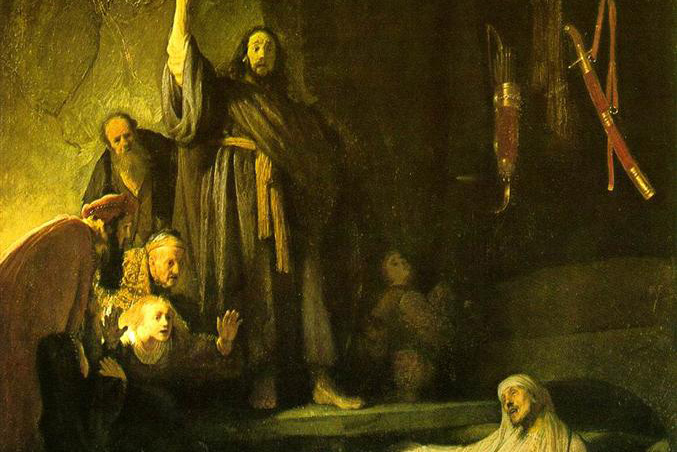
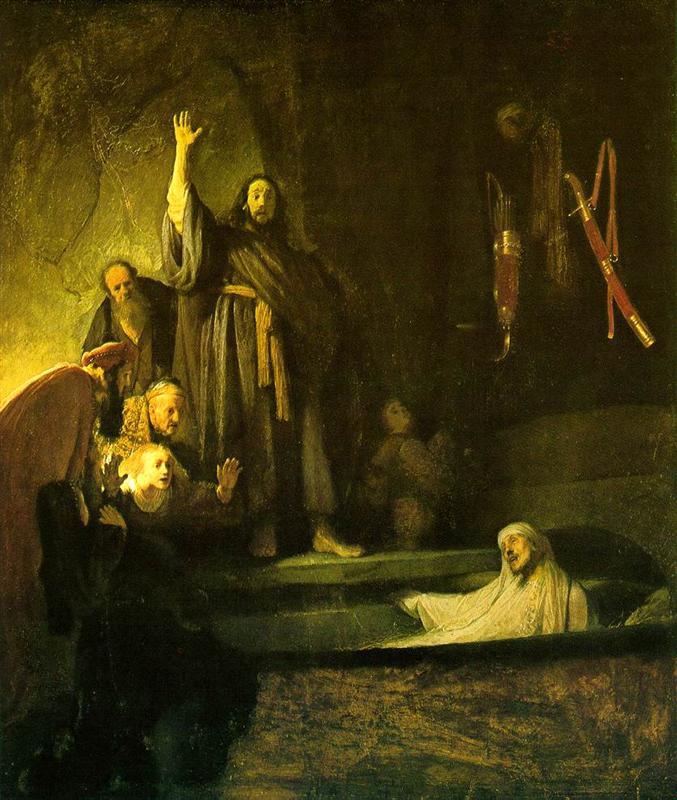
One of the main threads that ran through Sunday’s Gospel about the raising of Lazarus was faith, the need for faith and the Lord’s desire to draw others to a deeper faith. Jesus permits the illness and subsequent death of Lazarus, and even delays coming in order to increase their faith. He persistently questions both Martha and Mary about their faith and prays aloud that the crowd will come to come to greater faith. Yes, Jesus wants to grow everyone’s faith. This is something about which he is passionate – but why?
Simply put, faith is the door that must be opened by us in order for the Lord to go to work. And while faith itself is a grace – a gift – it is a grace that interacts with our freedom. Faith is the supernaturally granted, assisted, and transformed human element that opens the door for every other work of God.
Over and over again, the Lord Jesus links faith to his saving work. Either it is something he inquires about before a miracle, or he announces it after a miracle. Sometimes, due to the lack of faith, he “cannot” work a miracle. Consider some of the following texts that link faith to the work of Jesus:
• When he had gone indoors, the blind men came to him, and he asked them, “Do you believe that I am able to do this?” “Yes, Lord,” they replied. Then he touched their eyes and said, “According to your faith let it be done to you.” (Mt 9:28-29)
• But Jesus turning and seeing [the woman who touched his garment] said, “Daughter, take courage; your faith has made you well.” At once the woman was made well. (Matt 9:22)
• Then Jesus said to the centurion, “Go! Let it be done just as you believed it would.” And his servant was healed at that moment. (Matt 8:13)
• Some men brought to him a paralyzed man, lying on a mat. When Jesus saw their faith, he said to the man, “Take heart, son; your sins are forgiven.” (Matt 9:2)
• Then Jesus said to her, “Woman, you have great faith! Your request is granted.” And her daughter was healed at that moment. (Matt 15:28)
• “Go,” said Jesus, “your faith has healed you.” Immediately he received his sight and followed Jesus along the road. (Mk 10:52)
• Then he said to him, “Rise and go; your faith has made you well.” (Lk 17:19)
• Jesus said to her, “I am the resurrection and the life; he who believes in Me will live even if he dies, and everyone who lives and believes in Me will never die. Do you believe this?” (Jn 11:25-26)
• Jesus said to them, “A prophet is not without honor except in his hometown and among his own relatives and in his own household.” And He could do no miracle there except that He laid His hands on a few sick people and healed them. And He wondered at their unbelief. (Mk 6:4-6)
So in these and many other places, the Lord is absolutely insistent upon and needful of our faith in order to go to work. Faith is our “Yes.” Faith is our opening of the door to the Lord, who stands outside and knocks (cf Rev 3:20).
But why is this so? Perhaps an image or analogy will work. It is a humble one to be sure, but it may help to illustrate why the Lord “needs” our faith.
I have lived in the city for most of my twenty-five years as a priest. Now cities have streets, streets have alleys, and alleys have alley cats. And I have discovered that it is a very good thing to take care of the alley cats. It is because of them that there are very few if any rats in our alley. And this is a very great blessing. In gratitude, I take care of the alley cats – or at least I try to.
I say “try” because I have learned that there are three different categories of alley cat (get it? “CATegories…?). And depending upon which category they fall into, I am more or less able to help them.
The first category contains those alley cats that greatly trust me. They are the ones who come up onto the back porch when I return home and greet me. They rub up against my leg and arch their backs. They let me rub their necks. Among these alley cats have been Ellen Bayne, Jenny June, Katie Bell, Gracie Allen, and Oscar Wilde. (Yes, I name them all.) So trusting are these cats that I’m able not only to feed them, but often to get them necessary medical help. Because of their trust, I am able to help them greatly. Their trust, you might say their “faith,” opens the door and allows me to be a great help to them.
The second category contains those alley cats that stand at a distance and will not come close to me. They will allow me to put food out on the back porch, but they wait until I close the door to come up and partake of it. However, they usually only get the leftovers after Ellen Bayne and the others have already had their fill. This second type will not allow me to touch them, so they never get their necks rubbed, nor am I able to help them when they are injured or need medicine. Because they trust me less, I am able to do less for them.
The third category contains those that will have nothing to do with me simply because I am a human being. The very scent of a human being means that they will have nothing to do with anything carrying that scent. These cats will never come up the steps of my back porch, and any food that I would put out would go uneaten because it carries that human scent. Because they do not trust me at all, there’s nothing I can do for them, absolutely nothing.
And in all of this, there is a lesson. Trust opens the door, and then I can help the cats. A lot of trust yields a lot of help; a little trust yields a little help; no trust yields no help. And it is this way with us and God. Jesus needs our trust and our faith in order to be able to go to work, in order to “be able” to help us. What CATegory are you in?
While it is true that God could simply overrule us and force his help upon us, he does not generally do this. He needs our faith, our opening of the door, our trust to be able to go to work.
And this is why Jesus is so insistent in yesterday’s Gospel, on drawing out faith from those who lament Lazarus. This is why, all throughout the Gospels, the Lord connects his greatest works with faith and trust. He looks for faith, demands faith, needs faith in order to work miracles. And when he works them, he commends the faith of those who receive them. It is faith that opens the door.
Yes, what CATegory are you in? See how important faith is and how it opens the door? Lord increase our faith! I do believe Lord; help my unbelief!
In today’s Gospel, we hear the story of the raising of Lazarus from the dead. The story is a significant turning point in the ministry of Jesus, for as we shall see, it is because of this incident that the Temple leadership in Jerusalem resolves to have Jesus killed.
As is proper with all the gospel accounts, we must not see this as merely an historical happening of some two thousand years ago. Rather, we must recall that we are Lazarus; we are Martha and Mary. This is also the story of how Jesus is acting in our life.
Let’s look at this Gospel in stages and learn how the Lord acts to save us and raise us to new life. This gospel has six stages that describe what Jesus does to save us.
I. HE PERMITS. Sometimes there are trials in our life, by God’s mysterious design, to bring us to greater things. The Lord permits these trials and difficulties for various reasons. But, if we are faithful, every trial is ultimately for our glory and the glory of God. The text says,
Now a man was ill, Lazarus from Bethany, the village of Mary, and her sister Martha. Mary was the one who had anointed the Lord with perfumed oil and dried his feet with her hair; it was her brother Lazarus who was ill. So the sisters sent word to him saying, “Master, the one you love is ill.” When Jesus heard this he said, “This illness is not to end in death, but is for the glory of God, that the Son of God may be glorified through it.”
Notice therefore that Jesus does not rush to prevent the illness of Lazarus. Rather, he permits it for now in order that something greater, God’s Glory in Jesus, be manifest. In addition, it is for Lazarus’ own good and his share in God’s glory.
It is this way with us as well. We do not always understand what God is up to in our life. His ways are often mysterious, even troubling to us. But our faith teaches us that his mysterious permission of our difficulties is ultimately for our good and for our glory.
Scripture says,
Rejoice in this. You may for a time have to suffer the distress of many trials. But this so that your faith, more precious than any fire-tried gold, may lead to praise, honor, and glory when Jesus Christ appears. (1 Peter 1: 10)
But he knows the way that I take; when he has tested me, I will come forth as gold. (Job 23:10)
For our light and momentary troubles are producing for us an eternal glory that far outweighs them all. So we fix our eyes not on what is seen, but on what is unseen, since what is seen is temporary, but what is unseen is eternal. (2 Cor 4:17-18)
An old gospel hymn says, “Trials dark on every hand, and we cannot understand, all the way that God will lead us to that blessed promised land. But He guides us with his eye and we follow till we die, and we’ll understand it better, by and by. By and by, when the morning comes, and all the saints of God are gathered home, we’ll tell the story of how we’ve overcome, and we’ll understand it better by and by.”
For now, it is enough for us to know that God permits our struggles for a season and for a reason.
II. HE PAUSES. Here to we confront a mystery. Sometimes God says, “Wait.” Again, this is to prepare us for greater things than those for which we ask. The text says,
Now Jesus loved Martha and her sister and Lazarus. So when he heard that he was ill, he remained for two days in the place where he was.
Note that the text says that Jesus waits because he loved Martha and Mary and Lazarus. This of course is paradoxical since we expect love to make one rush to the aid of the afflicted.
Yet Scripture often counsels us to wait.
Wait on the LORD: be of good courage, and he shall strengthen thine heart: wait, I say, on the LORD. (Ps 27:14)
For thus says the Lord God, the holy one of Israel, “By waiting and by calm you shall be saved, in quiet an in trust, your strength lies. (Isaiah 30:15)
The Lord is not slow in keeping his promise, as some understand slowness. He is patient with you, not wanting anyone to perish, but everyone to come to repentance…God’s patience is directed to our salvation. (2 Pet 3:9)
Thus, somehow our waiting is tied to strengthening us and preparing us for something greater. Ultimately, we need God’s patience in order for us to come to full repentance; so it may not be wise to ask God to rush things. Yet still his delay often mystifies us, especially when the need is urgent.
Note too how Jesus’ delay here enables something even greater to take place. For, it is one thing to heal an ailing man. It is another and greater thing to raise a man who has been dead four days. To use an analogy, Jesus is preparing a meal. Do you want a microwave dinner or a great feast? Great feasts take longer to prepare. Jesus delays but he’s preparing something great.
For ourselves we can only ask for the grace to hold out. An old gospel song says, “Lord help me to hold out, until my change comes.” Another song says, “Hold on just a little while longer, everything’s gonna be all right.”
III. HE PAYS. Despite the design of God and his apparent delay, he is determined to bless us and save us. Jesus is determined to go and help Lazarus even though he puts himself in great danger in doing so. Notice in the following text how the apostles are anxious about going to Judea. For it is a fact that some there are plotting to kill Jesus. In order to help Lazarus, Jesus must put himself at great risk. The Text says,
Then after this he said to his disciples, “Let us go back to Judea.” The disciples said to him, “Rabbi, the Jews were just trying to stone you, and you want to go back there?” Jesus answered, “Are there not twelve hours in a day? If one walks during the day, he does not stumble, because he sees the light of this world. But if one walks at night, he stumbles, because the light is not in him.” He said this, and then told them, “Our friend Lazarus is asleep, but I am going to awaken him.” So the disciples said to him, “Master, if he is asleep, he will be saved.” But Jesus was talking about his death, while they thought that he meant ordinary sleep. So then Jesus said to them clearly, “Lazarus has died. And I am glad for you that I was not there, that you may believe. Let us go to him.” So Thomas, called Didymus, said to his fellow disciples, “Let us also go to die with him.”
We must never forget the price that Jesus has paid for our healing and salvation. Scripture says, “You know that you were ransomed from the futile ways inherited from your fathers, not with perishable things such as silver or gold, but with the precious blood of Christ, like that of a lamb without blemish or spot.” (1 Pet 1:18).
Indeed, the apostles’ concerns are borne out when we see that because Jesus raised Lazarus from the dead, the Temple leaders from that point on plot to kill him (cf John 11:53). It is of course dripping with irony that they should plot to kill Jesus for raising a man from the dead. We can only thank the Lord who, for our sake, endured even death on a cross to purchase our salvation by his own blood.
IV. HE PRESCRIBES.The Lord will die to save us. But there is only one way that saving love can reach us and that is through our faith. Faith opens the door to God’s blessings and it is a door we must open by God’s grace. Thus Jesus inquires into the faith of Martha and later that of Mary. The text says,
Martha said to Jesus, “Lord, if you had been here, my brother would not have died. But even now I know that whatever you ask of God, God will give you.” Jesus said to her, “Your brother will rise.” Martha said to him, “I know he will rise, in the resurrection on the last day.” Jesus told her, “I am the resurrection and the life; whoever believes in me, even if he dies, will live, and everyone who lives and believes in me will never die. Do you believe this?” She said to him, “Yes, Lord. I have come to believe that you are the Christ, the Son of God, the one who is coming into the world.”
Jesus prescribes faith because there is no other way. Our faith and our soul are more important to God than our bodies and creature comforts. For what good is it to gain the whole world and lose our soul? We tend to focus on physical things like our bodies, our health, and our possessions. But God focuses on the spiritual things. And so before raising Lazarus and dispelling grief, Jesus checks the condition of Martha’s faith and elicits an act of faith: “Do you believe this?” “Yes, Lord, I have come to believe.”
Scripture connects faith to seeing and experiencing great things.
All things are possible to him who believes. Mk 9:23
If you had faith as small as a mustard seed, you could say to this mountain, ‘Move from here to there’ and it would move. Nothing would be impossible for you.” (Mt 17:20)
And he did not do many miracles there because of their lack of faith. (Matt 13:58)
When he had gone indoors, the blind men came to him, and he asked them, “Do you believe that I am able to do this?” “Yes, Lord,” they replied. Then he touched their eyes and said, “According to your faith will it be done to you.” (Mat 9:28)
So Jesus has just asked you and me a question: “Do you believe this?” And how will you answer? Now be careful. I know how we should answer. But how do we really and truthfully answer?
V. HE IS PASSIONATE. Coming upon the scene Jesus is described as deeply moved, as perturbed, as weeping. The text says,
When Jesus saw her weeping and the Jews who had come with her weeping, he became perturbed and deeply troubled, and said, “Where have you laid him?” They said to him, “Sir, come and see.” And Jesus wept. So the Jews said, “See how he loved him.” But some of them said, “Could not the one who opened the eyes of the blind man have done something so that this man would not have died?” So Jesus, perturbed again, came to the tomb. It was a cave, and a stone lay across it. Jesus said, “Take away the stone.” Martha, the dead man’s sister, said to him, “Lord, by now there will be a stench; he has been dead for four days.” Jesus said to her, “Did I not tell you that if you believe you will see the glory of God?” So they took away the stone. And Jesus raised his eyes and said, “Father, I thank you for hearing me. I know that you always hear me; but because of the crowd here I have said this, that they may believe that you sent me.”
In his human heart, Jesus experiences the full force of the loss and the blow that death delivers. That he weeps is something of mystery since he will raise Lazarus in moments. But for this moment, Jesus enters and experiences grief and loss with us. Its full force comes over him and he weeps; so much so that the bystanders say, “See how much he loved him.”
But there is more going on here. The English text also describes Jesus as being perturbed. The Greek word here is Greek word ἐμβριμάομαι (embrimaomai), which means literally to snort with anger, to have great indignation. It is a very strong word, and it includes the notion of being moved to admonish sternly. What is this anger of Jesus and at whom is it directed? It is hard to know exactly, but the best answer would seem to be that he is angry at death, and at what sin has done. For it was by sin that suffering and death entered the world. It is almost as though Jesus is on the front lines of the battle and has a focused anger against Satan and what he has done. For Scripture says, by the envy of the devil death entered the world. (Wisdom 2:23). And God has said, “As surely as I live, declares the Sovereign LORD, I take no pleasure in the death of the wicked, but rather that they turn from their ways and live. Turn! Turn from your evil ways! Why will you die, O house of Israel?” (Ez 33:11).
I do remember at the death of some of my loved ones, experiencing not only sorrow, but also anger. Death should NOT be. But there it is; it glares back at us, taunts us, and pursues us.
Yes, Jesus experiences the full range of what we do. And out of his sorrow and anger, he is moved to act on our behalf. God’s wrath is his passion to set things right. And Jesus is about to act.
VI. HE PREVAILS.In the end, Jesus always wins. And you can go to the end of the Bible and see that Jesus wins there too. You might just as well get on the winning team. He will not be overcome by Satan, even when all seems lost. God is a good God; he is a great God; he can do anything but fail. Jesus can make a way out of no way. The text says,
He cried out in a loud voice, “Lazarus, come out!” The dead man came out, tied hand and foot with burial bands, and his face was wrapped in a cloth. So Jesus said to them, “Untie him and let him go free.”
I have it on the best of authority that as Lazarus came out of the tomb he was singing a gospel song: “Faithful is our God! I’m reaping the harvest God promised me, take back what devil stole from me, and I rejoice today, for I shall recover it all!”
But notice something important here. Although Jesus raises Lazarus, and gives him new life, Jesus also commands the bystanders (this means you and me) to untie Lazarus and let him go free. So Christ raises us, but he has work for the Church to do: to untie those he has raised in Baptism, and to let them go free.
To have a personal relationship with Jesus is crucial, but it is also essential to have a relationship to the Church. For after raising Lazarus (us), Jesus entrusts him to the care of others. Jesus speaks to the Church – to parents, priests, catechists, all members of the Church – and gives this standing order regarding the souls he has raised to new life: “Untie them and let them go free.”
We are Lazarus and we were dead in our sin. But we have been raised to new life. And yet we can still be bound by the effects of sin. And this is why we need the sacraments, Scripture, prayer, and other ministry of the Church through catechesis, preaching, and teaching. Lazarus’ healing wasn’t a “one and you’re done” scenario, and neither is ours.
We are also the bystanders. And just as we are in need of being untied and set free, so we who are also members of the Church also have this obligation to others. Parents and elders must untie their children and let them go free by God’s grace, and so pastors must do with their flocks. As a priest, I too have realized how my people have helped to untie me and let me go free, how they have strengthened my faith, encouraged me, admonished me, and restored me.
This is the Lord’s mandate to the Church regarding every soul he has raised: “Untie him and let him go free.” This is the Lord’s work, but just as Jesus involved the bystanders then, he still involves the Church (which includes us) now.
Yes, faithful is our God. I shall recover it all.
This is the song Lazarus sang as he came forth (I have it on the best of authority).
This is one of those videos that I think you should watch before I say much about it. There is something shocking about the end of it, something awful.
And yet the request by the young man in the video is a common one today, though it often comes in more subtle forms wherein people use one another in the most crass, utilitarian, and selfish ways. Do others exist merely to give you pleasure? Is this not often the message of cohabitation and sex without marital commitment?
Let me ask you one question about the ending of the video: why does what the young man says shock you?