
Nominalism, not nerdy and coming at you whether you like it or not!

090214How have we gotten into this mess wherein we have set aside reality in favor of what we think reality is? No longer do we go out to meet reality and accept the obligation of conforming to reality; now we sit back and claim the right to posit our own reality, to project reality and define it on our own terms. How did we get here?

Look to the nominalists, my friends.

A rather informative, though challenging, book on this matter is Journey to Modernity by Louis Dupré. In it he traces the medieval synthesis and rise of nominalism in the late 15th century, which in turn gave way to the Cartesian Revolution in the 17th century.

The nominalist revolution introduced the concept by insisting that we do not go out and discover reality so much as we simply create it by categorizing it with “names” (nomina –> names –> nominalism). The names we assign are not a recognizing of reality; they are a “making” of it. We assign meaning rather than discover it.

Welcome to the modern dark ages—dark, and getting darker. Welcome to the age of nominalism, invented in the late 15th Century and now a weed that has been allowed to flourish and is more widespread than ever.

The old version of nominalism denies the existence of universals: qualities or characteristics that can be illustrated or exemplified  by many particular things. At least this version of nominalism was debatable. Is there a universal “chair-ness” that all chairs exemplify, or is this just a human abstraction? Here a legitimate debate can be had.

The modern and more lazy version of nominalism, which I will call here “neo-nominalism,” holds that words (nomen = word) are simply arbitrary sounds we assign to things that reflect us, more so than anything we call reality. In a more sweeping way, whole categories are also dismissed.

Thus, for example, words and categories such as male, female, marriage, abortion, euthanasia, etc. are just words we assign; they are mere human “constructs” that do not exist in reality. So, many claim the right today to move beyond these human words and categories. They also claim the right to assign new words to describe these realties. Abortion becomes “choice,” “reproductive freedom,” or “women’s healthcare.” Unnatural sexual acts are called “gay” (a word that used to mean happy) and anal sex is celebrated as an “expression of love.” Same-sex “pseudo-gamy” is called “marriage.” Suicide or killing of the aged or imperfect is called “euthanasia” (a word that means “good death” in Greek). Sexual identity is now called “gender” (a grammatical classification of nouns found in nearly one-fourth of the world’s languages, not a word for human sexual differentiation).

Neo-nominalism claims the right to define new reality and scoffs at the more humble proposition that we ought to discover reality and conform to it. Neo-nominalism casts aside such humility and claims the right to define reality by inventing new words and thoughts and then imposing them on what really is. And thus we get endless absurdities such as LGBTQ (and Lord knows what letter will be added next). We have bizarre notions such as being “transgendered,” a concept that denies human distinctions that could not be more obvious and are literally inscribed in our bodies. But the neo-nominalists will not be troubled with reality.

The next and even more absurd “edge universe” for many of them is the so called “trans-human” movement in which even the reality of being human is dismissed as a mere “construct.” People will claim the right to start calling themselves other species and (presumably) the right to consort in all sorts of bizarre ways with animals, the “right” to develop cross-cloning, etc. For after all, who is to say what is “human” to these neo-nominalist iconoclasts?

For them, there is no reality, per se, just human constructs that are fungible. So-called “reality” is merely to be toyed with and defined according to the latest whim and need for self-justification through the re-describing of what is actually happening.

Neo-nominalism gets very dark and very absurd very quickly, as we are observing every day in our increasingly indecipherable “anti-culture.”

In effect, for them nothing is real; everything is just names, sounds, and abstractions. Reality is not something to go out and meet; it is not something to discover. There is no reality, just constructs that we invent and publish.

Welcome to the world of tyranny, where the powerful, the richly endowed, and those who have access get to say what reality is, rather then reality itself and those who have the intelligence and common sense to recognize it. Welcome to deep and gloomy darkness.

Rebel by insisting on reality, common sense, and the obvious. Refuse the lies and the rationalizations. Point unceasingly to reality.  And remember this: facts are stubborn things and in the end reality will befriend you and win the day. The nominalists currently have the power, but reality cannot be on holiday forever. People who live in this fantasy world will eventually either die in their sleep or awaken to the strange nightmare of reality. It will come; stay at your post. Do not forsake reality!

The singer in this song asks you to guess his name. Who do you think he is? Remember, regardless of what you’d like to call him, he is what he is. We don’t define him, and if we think we do, he defines us.

Here’s an answer from faith
The Five Stages of Religious Persecution

090114I first wrote on the topic of religious persecution over two years ago and since then things have only gotten worse. Clearly the situation in Iraq is awful. But here in the U.S. as well, the threats against religious liberty have continued.

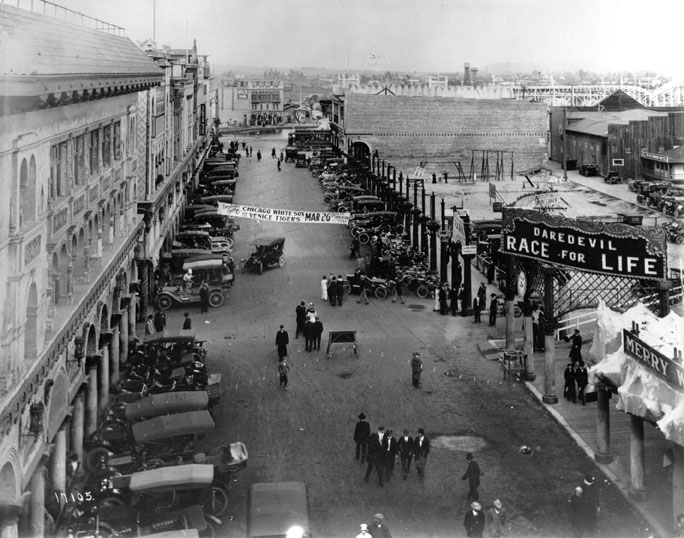
Indeed, here in the States it is rare that a respected segment of American life would become vilified and hated overnight. The usual transformation from respect to vilification progresses in stages that grow in intensity. And thus the Catholic Church, once a respected aspect of American life (along with the Protestant denominations), has become increasingly marginalized and even hated by many. It may help us to review these stages of persecution since it would seem that things are going to get more difficult for the Church in the years ahead. Generally there are five basic stages of persecution.

By way of giving due credit, I want to say that these stages were introduced to me by Johnette Benkovic, of Women of Grace EWTN. She spoke at a fundraiser here in DC for WMET 1160 AM, our Catholic radio station in the Guadalupe Radio Network. She gave a wonderful talk and a summons to courage. Among the things she set forth was a sober vision of how we have arrived at this current place where the culture is increasingly hostile to Christians, and to Catholics in particular. The stages are from her talk; the commentary is my own.

Here, then, are the five stages:

I. Stereotyping the targeted group – To stereotype means to repeat without variation, to take a quality or observation of a limited number and generalize it to describe the whole group. It involves a simplified and standardized conception or view of a group based on the observation of a limited sample.

And thus as the 1960s and 1970s progressed, Catholics and Bible-believing Christians were often caricatured in the media as “Bible thumpers,” simpletons, haters of science, hypocrites, and as self-righteous, old-fashioned, and backwards.

Catholics, in particular, were also accused of having neurotic guilt and a hatred of or aversion to sexuality.  We were denounced as a sexist institution filled with clergy who were sexually repressed, homosexuals, or pedophiles. We were labeled an authoritarian institution stuck in the past, one with too many restrictive rules.

Basically, as the stereotype goes, Catholics and Bible-believing Christians are a sad, angry, boring, backward, repressed lot. To many who accept the stereotype, we are a laughable—even tragic—group caught in a superstitious past, incapable of throwing off the “shackles” of faith.

To be sure, not everyone engages in this stereotyping to the same degree, but those are the basic refrains. And the general climate of this sort of stereotyping sets the foundation for the next stage.

II. Vilifying the targeted group for alleged crimes or misconduct – As the stereotyping grew in intensity, Catholics and Christians who did not toe the line in the cultural revolution were described as close-minded, harmful to human dignity and freedom, intolerant, hateful, bigoted, unfair, homophobic, reactionary, and just plain mean and basically bad people.

The history of the Church is also described myopically as little more than a litany of bad and repressive behavior as we conducted crusades and inquisitions, and hated Galileo and all of science. Never mind that there might be a little more to the story: that the Church founded universities and hospitals, was a patron of the arts, and preached a gospel that brought order and civilization to divided and barbaric times in the aftermath of the Roman Empire. The critics won’t hear any of that, or if they do, will give the credit to anyone or anything except the Church and the faith.

In writing this, I fully expect to get a bevy of comments saying, in effect, that this is exactly what we are. And not only will they feel justified in saying this, but even righteous, so ingrained has this vilifying become in the wider culture.

As with any large group, individual Christians and Catholics will manifest some negative traits, but stereotyping, vilifying, and crudely and indiscriminately presuming the negative traits of a few to be common to all is unjust.

Yet all of this has the effect of creating a self-righteous indignation toward believers and of making anti-Catholic and anti-Christian attitudes a permissible bigotry for many today.

III. Marginalizing the targeted group’s role in society – Having established the (false) premise that the Church and the faith are very bad and even harmful to human dignity and freedom, the critics proceed in the next stage to relegate the role of the Church to the margins of society.

To many in secularized culture, religion is seen as something that must go. They will perhaps let us have our hymns, etc. within the four walls of our churches, but the faith must be banished from the public square.

In this stage it becomes increasingly unacceptable and intolerable that anyone should mention God, pray publicly, or in any way bring his or her Christian faith to bear on matters of public policy. Nativity sets must go; out with Christmas trees. Even the colors red and green during the “Holiday Season” are forbidden in many public schools!

Do not even think of mentioning Jesus or of publicly thanking him in your valedictory address; you could very well have a judge forbid you to do so under penalty of law. You may thank Madonna the singer, but not the Madonna.

The LGBT club is welcome to set up shop and pass out rainbow-colored condoms at the local high school, but Christians had better hit the road; no Bibles or pamphlets had better see the light of day anywhere in the school building … separation of Church and State, you know…

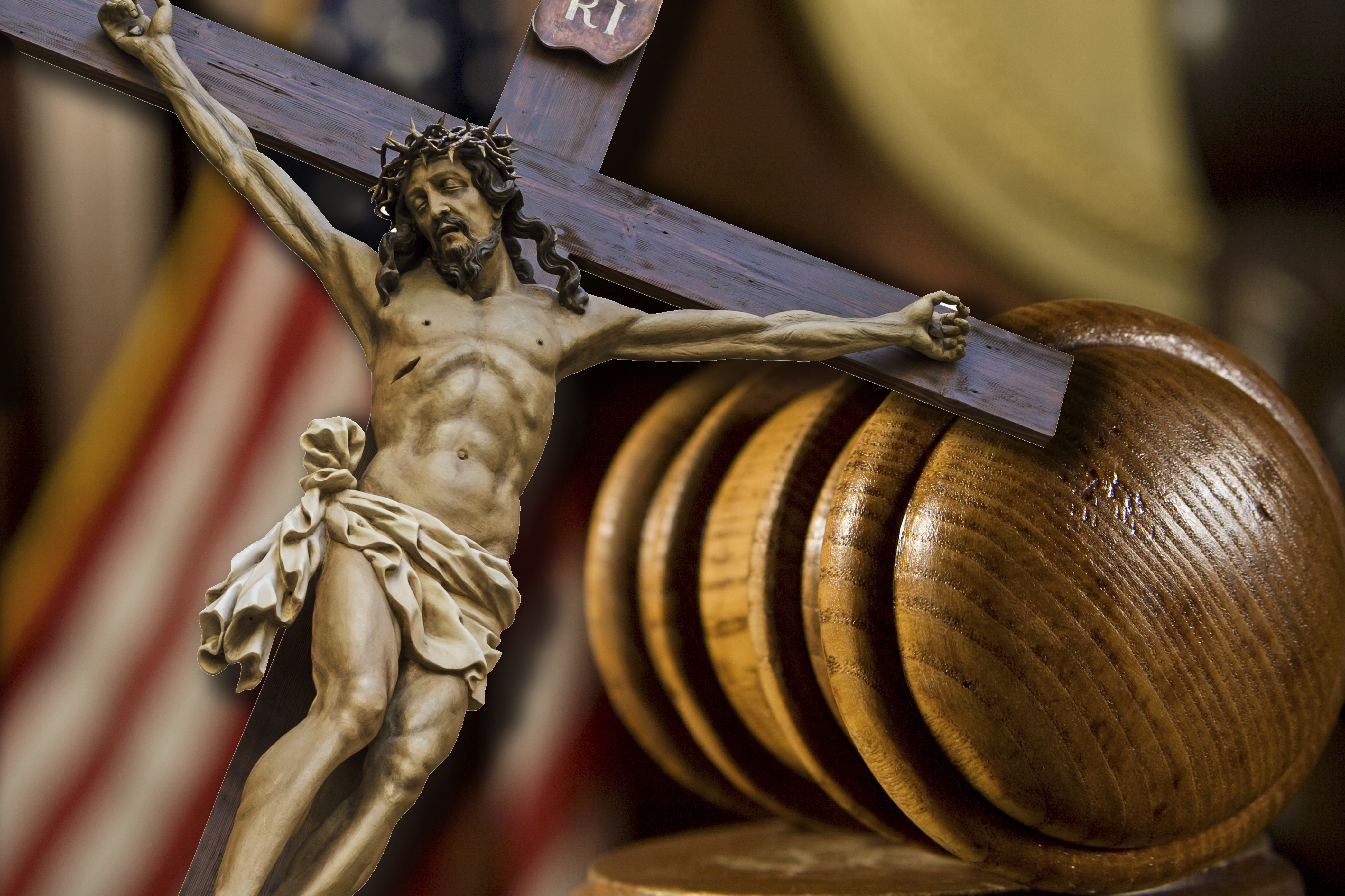
IV. Criminalizing the targeted group or its works – Can someone say HHS mandate?

But even prior to this egregious attempt to violate our religious liberty there have been many other times we have had to go to court to fight for our right to practice our faith openly. An increasing amount of litigation is being directed against the Church and other Christians for daring to live out our faith.

Some jurisdictions have sought to compel Catholic hospitals and pro-life clinics to provide information about or referrals for abortion and to provide “emergency contraception” (i.e., the abortifacient known as the morning-after pill). Several branches of Catholic Charities have been de-certified from doing adoption work because they will not place children with gay couples. In 2009, the State of Connecticut sought to regulate the structure, organization, and running of Catholic parishes. And recently a number of Christian valedictorians in various states have suffered legal injunctions when it was discovered that they planned to mention God and/or Jesus in their addresses. (More details can be found HERE.)

Many of these attempts to criminalize the faith have been successfully rebuffed in the courts, but the number and frequency of the lawsuits, and the time and cost involved with fighting them impose a huge burden. It is clear that attempts to criminalize Christian behavior is a growth sector in this culture and it signals the beginning of the steady erosion of religious liberty.

Many indeed feel quite righteous, quite politically correct in their work to separate the practice of the faith from the public square.

V. Persecuting the targeted group outright – If current trends continue, Christians, especially religious leaders, may not be far from facing heavy fines and/or incarceration.

Already in Canada and in parts of Europe, Catholic clergy have been arrested and charged with “hate crimes” for preaching Catholic doctrine on homosexual activity.

In this country there are greater provisions for free speech, but as we have seen, there is a steady erosion of our religious liberty and many Catholic dioceses are very familiar with having to spend long periods in court defending basic religious liberty. The trajectory points to suffering, lawsuits, fines, and ultimately jail.

Unlikely you say? Alarmist? Well, stages one through four are pretty well in place. One may wish to “whistle past the graveyard,” but it looks like we’re pretty well set for stage five. You decide.

Maybe a heavy post requires a light video. Here, Paul and Silas land in jail. It’s so bad its good: 🙂

A Meditation on the Utter Absurdity of the Cross to a Hedonistic World

083114In Sunday’s Gospel the Lord sets forth the theology of the Cross and redemptive suffering. In so doing he sets forth a doctrine that is utter absurdity to this world. The indignation of the modern world against the Cross borders on outrage. Why is this? Simply put, hedonism. Hedonism is the worldly “doctrine” that pleasure or happiness is the sole or chief good in life. It comes from the Greek word hēdonē “pleasure” and is akin to the Greek hēdys meaning “sweet.”

Of course pleasure is to be desired and to some degree sought, but it is not the sole good in life. Indeed, some of our greatest goods and accomplishments require sacrifice: years of study and preparation for a career; the blood, sweat, and tears of raising children.

But hedonism seeks to avoid sacrifice and suffering at all costs. Hedonism is directly opposed to the theology of the Cross. St. Paul spoke in his day of the enemies of the cross of Christ. Their end is destruction, their god is the belly, and they glory in their shame, with minds set on earthly things (Php 3:18–19). He also taught that the Cross was an absurdity to the Gentiles (1 Cor 1:23).

Things have not changed, my friends. And thus the world reacts with great indignation whenever the Cross or suffering is even implied. And so the world will cry out with bewildered exasperation and ask (rhetorically) of the Church: “Are you saying that a poor woman who was raped needs to carry the child to term and cannot abort?” (Yes we are.) Are you saying that a “gay” person can never marry his or her gay lover and must live celibately?” (Yes, we are.) “Are you saying that a handicapped child in the womb must be “condemned” to live in the world as handicapped and cannot be aborted and put out of his (read “our”) misery?” (Yes we are.) “Are you saying that a dying person in pain cannot be euthanized to avoid the pain?” (Yes, we are.)

The shock expressed in these rhetorical questions shows how deeply hedonism has infected the modern mind. The concept of the Cross is not only absurd, it is downright “immoral” to the modern hedonistic mentality, which sees pleasure as the only true human good. To the hedonist, a life without enough pleasure is a life not worth living. And anyone who would seek to set limits on the lawful (and sometime unlawful) pleasures of others is mean, hateful, absurd, obtuse, intolerant, and just plain evil.

When pleasure is life’s only goal or good, how dare you, or the Church, or anyone seek to set limits on it let alone suggest that the way of the Cross is better or is required of us!  You must be banished, silenced, and destroyed.

And indeed many faithful Catholics in the pews are deeply infected with the illusion of hedonism and thus take up the voice of bewilderment, anger, and scoffing whenever the Church points to the Cross and insists on self-denial, sacrifice, and doing the right thing even when the cost is great. The head wagging in congregations is often visible if the priest dares mention that abortion, euthanasia, IVF, contraception, and so forth are wrong and should be set aside regardless of the cost, or if he preaches about the reality of the Cross. The faithful who swim in the waters of a hedonistic culture are often shocked at any notion that might limit the pleasure others want to pursue.

Hedonism makes the central Christian mysteries of the Cross and redemptive suffering seem like a distant planet or a strange, parallel universe. The opening word from Jesus’ mouth, “Repent,” seems strange to the hedonistic world, which has even reworked Jesus and cannot conceive that He would want them to be anything but happy, content, and pleased. The cry goes up, even among the faithful, “Doesn’t God want me to be happy?” And on this basis all sorts of sinful behavior is supposed to be tolerated because insisting on the opposite is “hard” and because it seems “mean” to speak of the Cross or of self-discipline in a hedonistic culture.

Bringing people back to the real Jesus and to the real message of the Gospel, which features the Cross as the way to glory, takes a lot of work and a long conversation. We must be prepared to have that long conversation with people.

Every Round Goes Higher, Higher – A Homily for the 22nd Sunday of the Year

083014In today’s Gospel the Lord firmly sets before us the need for the Cross, not as an end in itself, but as the way to glory. Let’s consider the Gospel in three stages.

I. The Pattern that is Announced – The text says, Jesus began to show his disciples that he must go to Jerusalem and suffer greatly from the elders, the chief priests, and the scribes, and be killed and on the third day be raised.

Note here that the Lord does not announce only the Cross, but also the Resurrection. In effect, He announces the pattern of the Christian life, which we have come to call the “Paschal Mystery.”

The expression “Paschal Mystery” refers to the suffering, death, resurrection, and glorification of Jesus as a whole. The word “Paschal” is related to the Hebrew word for Passover, “Pesach.” Just as the shed blood of a lamb saved the people from the angel of death and signaled their deliverance, so does Jesus’ death, his Blood, save us from death and deliver us from slavery to sin.

So He is announcing a pattern: the Cross leads somewhere; it accomplishes something. It is not an end in itself; it has a purpose; it is part of a pattern.

St. Paul articulates the pattern of the Paschal Mystery in this way: We always carry around in our body the death of Jesus, so that the life of Jesus may also be revealed in our body (2 Cor 4:10). It is like an upward spiral in which the Cross brings blessings we enjoy. But we often circle back to the crosses God permits, and then there come even greater blessings and higher capacities. Cross, growth, cross, growth—and so the pattern continues until we reach the end, dying with Christ so as to live with Him.

This is the pattern of our life. We are dying to our old self, dying to this world, dying to our sins; but rising to new life, rising to the Kingdom of God, becoming victorious over sin. The Cross brings life; it is a prelude to growth. We die in order to live more richly. An old spiritual says of this repeated pattern that “every round goes higher, higher.”

Do you see the pattern that Jesus announces? The Lord does not announce the Cross to burden us, neither does the Church. No, the Cross is part of a pattern that, if accepted with faith, brings blessing, new life, and greater strength.

II. The Prevention that is Attempted – The text says, Then Peter took Jesus aside and began to rebuke him, “God forbid, Lord! No such thing shall ever happen to you.” He turned and said to Peter, “Get behind me, Satan! You are an obstacle to me. You are thinking not as God does, but as human beings do.”

Notice Peter’s exact wording: “No such thing shall ever happen to you.” And we ought to ask, “What such thing?” For in precluding that Jesus suffer and die he also implicitly blocks the rising and glorification of Jesus. For Christ cannot rise unless He dies.

Peter, of course, is not thinking this all the way through; he is not connecting the dots. But neither do we when we seek to avoid crosses for ourselves or to hinder others improperly from accepting the Cross. For the Cross brings glory and growth and we run the risk of depriving ourselves and others of these if we rush to eliminate all the crosses, demands, and difficulties of life. Perhaps we do this by enabling behaviors; perhaps we do it by spoiling children.

We also hinder our own growth by refusing to accept the crosses of self-discipline, hard work, obedience, resistance of temptation, and acceptance of suffering, consequences, and limits. In rejecting the Cross we also reject its fruits.

All this explains Jesus’ severe reaction to Peter’s words. He even goes so far as to call Peter, “Satan,” for it pertains to Satan to pretend to befriend us in protesting our crosses while it is really that he wants to thwart our blessings. Peter may not know what he is doing, but Satan does, and he seeks to become an obstacle to Jesus’ work.

Jesus’ severe reaction is rooted in protecting our blessings.

III.  The Prescription that is Awarding – Jesus goes on to teach further on the need for and wisdom of the Cross. The text says, Then Jesus said to his disciples, “Whoever wishes to come after me must deny himself, take up his cross, and follow me. For whoever wishes to save his life will lose it, but whoever loses his life for my sake will find it. What profit would there be for one to gain the whole world and forfeit his life? Or what can one give in exchange for his life? For the Son of Man will come with his angels in his Father’s glory, and then he will repay all according to his conduct.”

The heart of Jesus’ teaching here is the deep paradox that in order to find our life we must lose it. More specifically, in order to gain Heaven we must die to this world. And that dying is a process more so than just an event at the end of our physical life here. Though we cling to life in this world, it is really not life at all. It is a mere spark compared to the fire of love that God offers; it is a single note compared to the great symphony God directs.

Jesus instructs us to be willing to exchange this tiny and dying life for that which is true life. The Lord says that whatever small blessings come from clinging to this life and this world are really no benefit at all. If you choose life in this world rather than the true life God offers, you’re nothing but a big loser.

Of course what the world’s cheap trinkets offer is immediate gratification and evasion of the Cross. We may feel relief for a moment, but our growth is stunted and those cheap little trinkets slip through our fingers. We gain the world (cheap little trinket that it is) but lose our souls. Total loss. Or to quote a modern expression, “FAIL!”

Jesus’ final words, however, remind us that the choice is ours. For the day will come when He will respond to our choice. Either we accept true life and win, or we choose the passing, dying life of this world and we lose. The choice is ours.

This songs speaks of life as a kind of spiral climb between cross and glory. As the spiritual says, “Every round goes higher, higher, soldiers of the Cross.”

On Staying the Course with Mother Church, As seen on TV

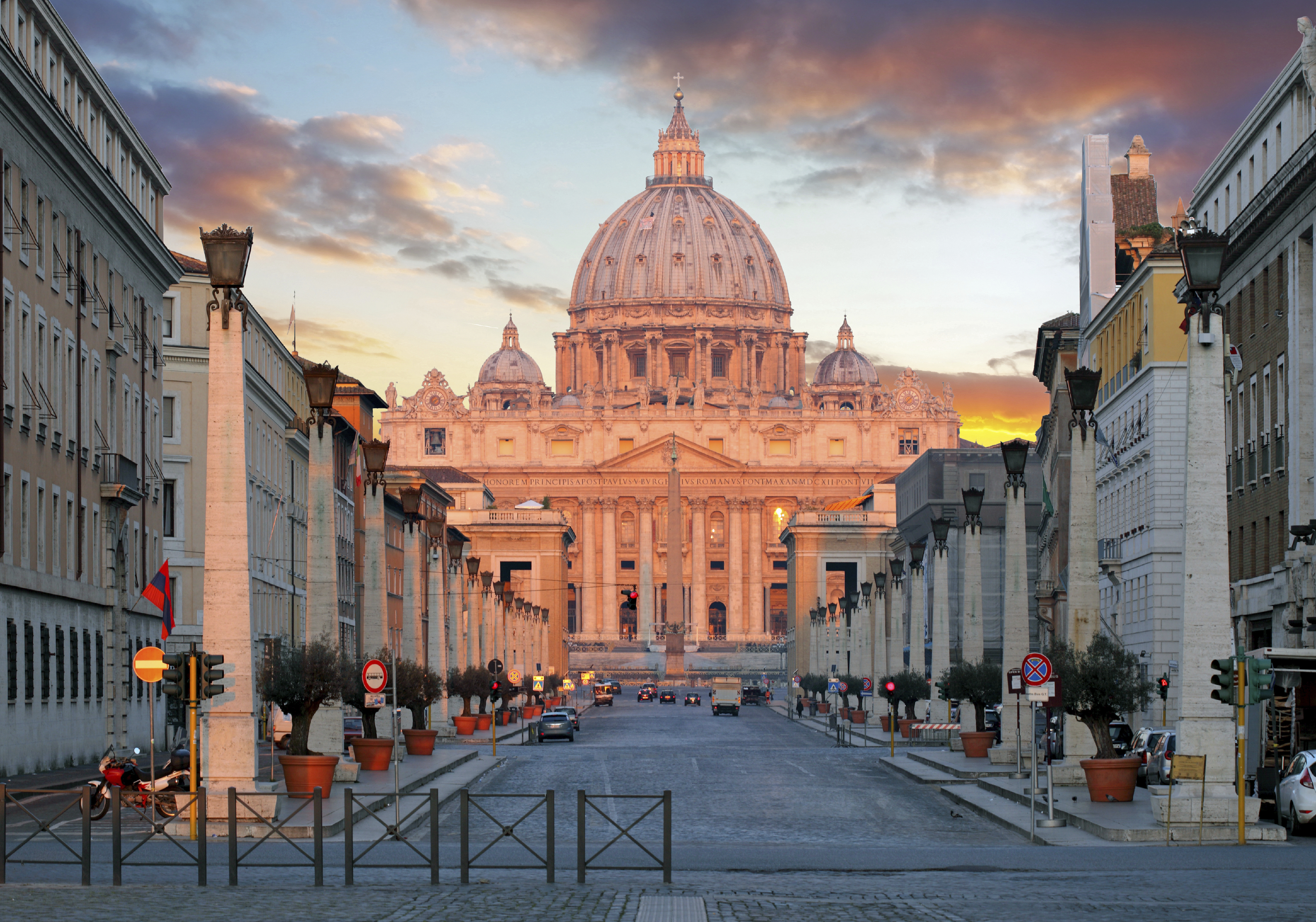
Rome, Vatican city
Rome, Vatican city

One of the cultural challenges we face in both living and proclaiming the faith is that the true faith often doesn’t fit our frantic pace or our expectation of instantaneous results. Consider that many today, including those of us who believe, demand the “quick fix.” Whatever the situation—be it sickness, the needed repair of something we own, the delivery of something we’ve purchased, a resolution of family troubles, or even deeper issues such as inner peace—we want it fixed right now.

But many things do not lend themselves to a quick fix, especially the deeper matters of the human soul. And the faith we proclaim does not suggest that it is so simple. In this sense the faith is less “marketable” to our quick-fix culture. We do not (and cannot) say, “Just come to Mass for six sequential Sundays and your problems will be over.” Rather, we say, “Give your life to Christ.”

The solution of God and of the true faith insists on an often slow but steady movement toward God, wherein He draws us in stages ever deeper to Him, to holiness, to perfection. Little by little our fears fade and our sins diminish; we become more loving, patient, compassionate, chaste, serene, and so forth. The process usually takes decades—no quick fixes here.

And many medicines need to be consistently applied: daily prayer, daily Scripture and spiritual reading, weekly Mass and Communion, frequent confession, and communal life in the Church including helpful friendships, faith-filled relationships, and works of charity.

There is an old saying, “Grace builds on nature.” That is to say, God’s grace respects the way we are made by Him. And just as it pertains to our physical nature to change slowly (but surely) and almost imperceptibly, our spiritual nature follows the same pattern. And while there may be “growth spurts,” it is more often the subtle and steady growth that makes the deepest difference.

I can surely say this has been my experience. I have been serious about my spiritual life for the last 30 of my 53 years—daily Mass, daily Scripture, daily holy hour, weekly confession, fellowship with my people, holy friendships, and spiritual direction. And wow, what a change! But it has taken me 30 years to get here, and most of my growth was imperceptible from day to day. I’m not what I want to be, but I’m not what I used to be; a wonderful change has come over me.

Not the quick fix, not the fast rush, just “a inching along like a poor inchworm” (as an old Spiritual says). But praise God I am where I am today.

Lifelong plans may not “sell,” but they are the way God insists on working.

On Fridays, I often try to keep the post a little shorter and I frequently use a commercial to make my point. So how about this one:

  1. In the commercial below there is a man named Jerry who is in a “state of regret.” In a certain sense (as we shall see) Jerry represents all who stray from the Church and God’s lifelong plan of faith—looking for a fast rush and a quick fix elsewhere, apart from the faith and the Church.
  2. Sure enough, Jerry’s regret is that he dropped his State Farm Insurance and went with “the other company.” Let’s call that company “Quick Fix Auto Insurance.” In allowing State Farm to represent the Church, I intend no endorsement, but I do note that “farming” is no quick-fix business; it involves a lot of patient waiting and persistent working. Such is the work of the Lord and His Church—no quick fix, it’s more like farming.
  3. Jerry complains to his former agent, “Jessica” (but let’s call her “Mother Church”). His complaint is “It only took me 15 minutes to sign with that other company but it’s taking a lot longer to hear back.” OK, so now he’s learned that there really is NO SUCH THING as a “quick fix” when it comes to many matters. And so must we learn this same truth. The world, the flesh, and the devil often make such promises and sow seeds of impatience in us when God does not act immediately, when the Church bids us to be patient and persistent. But now Jerry’s impatience has brought him further troubles, as we shall see.
  4. Jerry explains that he’s had a “fender bender.” The truth is that Jerry has bent far more than a fender; he is in real trouble. We too often like to minimize our sorry state when we’ve made bad decisions.
  5. Jessica (Mother Church) is sympathetic but wonders what she can do, since Jerry has ended his relationship with her. Without a relationship, how can she help him? Mother Church often wants to help us but must have a relationship with us in order to be able to help. God, too, seeks communion with us in order to help us. But communion, a relationship with the Lord and his Bride the Church, is necessary for help to be extended.
  6. Indeed Jessica (Mother Church) knows Jerry well and she seems, like a mother, to intuit exactly what he has done. She knows he’s in real trouble and has “put his car up a pole” (again). There’s just something about Mother Church; she knows her children and what we do; she knows and understands.
  7. Upon hearing Jessica’s (Mother Church’s) knowing but compassionate words, Jerry breaks down and says, “I miss you, Jessica!” The ad then says, “Let it out Jerry! Then come back to State Farm.” Yes, indeed. And so too for us. Soulful and tearful repentance and the restoration of our relationship with the Lord and His Church are the way out.
  8. Quick Fix Insurance Company can’t cut the deal. Come back to the Lord and His Church. The solution may not be “quick” but it will be sure if we stay the course.

C=JL² This is the Metaphysical Math and Source of All Creation. It is the Grand Unified Theory

082814In my years as a priest, I have often had people ask me why God, who we say needs nothing and is fully content and joyful in Himself, created anything outside Himself. Does His act of creation indicate that He lacked something or that He needed others?

This is difficult for us humans to understand. To some degree that difficulty arises from us, who are often motivated most by need. We tend to project our own realities onto God. But need and incompleteness are  not the only things that motivate.

In the Summa Theologica, St. Thomas Aquinas has a beautiful reflection on how and why God willed to create things outside Himself:

For natural things have a natural inclination not only towards their own proper good, to acquire it if not possessed, and, if possessed, to rest therein; but also to spread abroad their own good amongst others, so far as possible … to communicate as far as possible to others the good possessed; and especially does this pertain to the divine will, from which all perfection is derived in some kind of likeness. Hence, if natural things, in so far as they are perfect, communicate their good to others, much more does it appertain to the divine will to communicate by likeness its own good to others as much as possible … (Summa Ia, q.19, art 2).

As I read St Thomas I think of examples. For example a tree spreads it pollen for the sake of other trees and future trees. Flowers do the same and interact with bees and other insects. Elements interact with other elements to become compounds. Compounds become chemicals and so forth. An atom alone is very limited. Joined to other atoms, it can become a mighty structure. All this echoes something of the God who made it.

To be sure, it is true that God is able to savor the good that He is and to rest in it, to enjoy it fully. God can find complete satisfaction in the perfection of His own being, of His own glory.

But, as St. Thomas points out, even in us who are imperfect creatures, there is an aspect of our love and joy that wants to be effusive and diffusive, to radiate outward. It is not so much that love and joy are lacking something, but rather just the opposite—they overflow to others from us quite naturally. We do not share joy and love because we have to, but because we want to, and because they naturally shine forth.

When one is joyful, it is hard to hide it. Joy shows; it is effusive; it shines forth and naturally reaches others who will notice it and then immediately ask, “What are you smiling about? Why are you so happy?” Yes, those who are filled with joy and the experience of love seek naturally to share that with others. Someone who has heard good news or has experienced something wonderful can barely contain himself and immediately seeks to share it.

It is the same with love, though in more diverse and sometimes subtle ways. Love radiates; it motivates; it moves out and shines forth. Again, not because love is lacking, but more simply because that is what love does. It moves outward and bears fruit.

And so it is with God, who is Love. His love is not lacking something, but, as love, He radiates. He shines forth; He bears fruit. He delights in sharing. And He, whose nature is ‘to be’ who is existence itself, allows his love to radiate outward in a creation distinct from Him but proclaiming of his love and joy.

Behold! All creation is a shining forth God’s love and joy. See its immense size, its awesome diversity and fruitfulness—and then understand why the universe is expanding outward at such a rapid rate!

Scientists are looking for some grand unified theory, one simple principle or formula that explains everything. In a word, it is love. It is God, who is Love, and His joy rushing and radiating outward, bearing fruit and saying, “Come, share my joy!”  People, and especially scientists, like formulas, so how about this one?

C=JL²

That is, Creation equals Joy times Love squared. Love, of course, is the constant; it is ever-abiding and never withheld.  And yet it is mysteriously expanding outward. Why is love squared? I don’t know, but it makes the formula memorable! At the end of the day, God’s love is infinite. So then what is the square of infinity? Anyway it’s very big and it’s a constant.

Is God lacking something? No. Then why does He create? Because that’s what love does. But why then will it all end as Scripture says it will? It will not end in annihilation; it will “end” in a perfection that, though different, will be the fulfillment of all that is. Jesus, who holds all creation together in Himself  (cf Col 1:17), says at the end, “Behold I make all things new!” (Rev 21:5) And then will be fulfilled what St. Augustine said of what shall finally be for us and the Lord: Unus Chritus, amans seipsum (One Christ, loving Himself).

We are living in the love of God; yes, even those who reject it are living in His love.

People Need People, As Seen at the Beach

082714I spent a few days at Bethany Beach (in Delaware) this week with four other priests, thanks to some very generous lay people who allowed us to stay in their house. In Washington we speak of going to the beach. But in nearby Baltimore they say, “We’re goin’ down-e-ocean.” I think in New Jersey they call it  “going down the shore,” as in the Jersey shore. At any rate, thank God for a restful time, lots of long walks along the shoreline, interesting discussions, and good food. In fact, according to the Scripture story of the road to Emmaus, walking, talking, and dining provide an image of the Kingdom.

A brief thought occurred to me today as I walked along the water, this time alone. I began my walk right in the center of Bethany Beach, just down from the center of the boardwalk. The beach was rather crowded—lots of people, chairs and umbrellas everywhere, kids running back and forth into and out of the water.

As I headed north walking right on the shore, I noticed that the crowd thinned out quite quickly, so that within a hundred yards of where the boardwalk ended the beach became quite empty with just a few folks here and there.

Why, I wondered, did people huddle together so? I would think that people would prefer to spread out a little, would want some privacy, and might be willing to walk a ways to get it. Instead, they crowded together in an eight-block area along the Bethany Beach Boardwalk.

It occurred to me that despite our often-expressed desire for space and privacy, this image of people huddling together had important lessons to teach.

The chief and uniting lesson is that ultimately people need people. Crowding close together at the beach meant that there were others to provide not only company but safety. There were plenty of lifeguards, and if any trouble were to arise, plenty of people nearby to help. Where there are people there are also many conveniences near at hand. There were food vendors up on the nearby boardwalk as well as vendors selling beach gear. There was even a free town Wi-Fi signal in the air. Public bathrooms were nearby as was a safety station and a police presence. A lot of children, some of whom had only just met that day, were playing together, teaching each other to surf, riding boogie boards, or building sand castles.

A simple lesson, really, but somehow beautifully painted for me at Bethany Beach—people need people. People benefit from other people. People take care of other people and provide necessary services, protection, and company. Space and solitude have their place, but it really is more instinctual, even in this wide-open country, to cluster together in cities. For all of our complaints about crowds, in the end it’s good to have other people close at hand.

It was all a painting of what Scripture says, Woe to the solitary man! For if he should fall, he has no one to lift him up (Ecclesiastes 4:11).

Beach Baby from Tom Stillwell on Vimeo.