
Some Strategies for Overcoming Temptation

"Final Trophee Monal 2012 n08" by © Marie-Lan Nguyen / Wikimedia Commons. Licensed under  CC BY 2.5 via Wikimedia Commons.
“Final Trophee Monal 2012 n08” by © Marie-Lan Nguyen / Wikimedia Commons. Licensed under
CC BY 2.5 via Wikimedia Commons.

This is part two of an article on temptation. See yesterday’s post for part one.

How can we overcome temptation?

Remote Battles are Essential! When people ask about overcoming temptation they most often have in mind what to do “in the moment” of temptation. But if we focus merely on the moment of temptation we are missing the bulk of the work that needs to be done. For in order to become more successful in withstanding temptation, a strong foundation needs to be established. There is much “remote” work to be done such as growing in virtue, undertaking active purifications and mortifications, deepening our prayer life and relationship with God, learning to avoid common occasions of sin, rooting our thought life less in the world and more in what matters to God, and so forth.

Faithfully and steadily laying this foundation is really most of the battle and it goes a long way toward crowding out what is evil and lacking with what is good and more perfect. If we do this, what tempts us will decrease and the intensity of what temptation remains will be weaker. If we simply seek quick advice about how to ignore or withstand lustful thoughts or how to avoid gossip in the moment we may get a few good suggestions, but without a good foundation the results can be pretty discouraging.

Consider an example. Suppose we come upon a man in an alley who has clearly been assaulted by thugs. He is bloody, beaten, and unconscious—clearly the victim of a crime. However, if all we do is think about how terrible what has happened is, we may be missing a lot of background information that is important in understanding how this man fell victim. Why did he go down this alley in the first place? Why was he in a dangerous place alone? Did he have no means of escape? Did he know how to defend himself? Were his attackers people he knew who turned on him? Was he a good judge of character? While none of these factors excuse what happened to him, they do show that many things may have contributed to his sorry state.

And thus similar questions are significant in our battle against temptation. The “thugs” are demons, or the hucksters of this world, or our own unruly passions. When one of these thugs assault us, it is good to have some strategies to deal with it in the moment, but we also do well to ask ourselves other questions. How did I end up in this situation of temptation? Could it reasonably have been avoided? Do I know how to escape if I see trouble coming? Am I careful enough about where I go, whom I know, and what I allow to influence me? Where is God and how strong is my love for Him and my relationship with Him? How serious have I been about growing in virtue in my life and limiting the influence and power of vice? What strengths am I cultivating in remote moments that can help me in these critical moments of temptation?

Thus, much work is necessary that is remote to the moments of temptation if we are to stand a better chance of overcoming temptation in the heat of the moment. Fight the good fight of the faith (1 Tim 6:12).

Spiritual and moral theologians speak of a number of ongoing practices that help us to overcome temptations. These cannot be fully described and explained here, but here they are, briefly:

1. Growth in self-knowledge and knowledge of God – wherein we come to know our strengths and weaknesses as God reveals them to us. We consider who we really are before God and in the light of His Divine mercy. Learning of our nothingness without God and our status as blind beggars, we seek His grace and enlightenment and make steady progress out of pride and into true humility, gratitude, and dependence on God.

2. Mortifications – wherein we learn to apply the Lord’s counsel that we should deny ourselves, take up our cross, and follow Him. We learn to lose our life in order to find it. Mortifications involve putting to death, by God’s grace, the inordinate (unreasonable) demands of the flesh and sinful attitudes such as vengeance and hatred. One may even eliminate lawful pleasures completely as a way of gaining increased self-mastery and authority over the passions.

3. Focusing on the roots of sin – wherein we look especially to the seven cardinal (or capital) sins of pride, greed, lust, anger, gluttony, envy, and sloth, along with other drives such as fear and ingratitude. We seek to understand what they are and learn their moves. Naming them and seeing how they subtly work is a journey toward gaining greater mastery over them by God’s grace.

4. Predominant fault(s) – wherein we seek to learn our most common tendencies and weaknesses and place special emphasis on learning to master and overcome such tendencies. This is joined to the practice of a “particular examen” in which we focus on and look in depth at these predominant faults as we prepare for confession and undertake our daily examen.

5. Growth in all the virtues – St. Thomas emphasizes two in regard to temptations. Now the human will is hindered in two ways from following the rectitude of reason. First, through being drawn by some object of pleasure to something other than what the rectitude of reason requires; and this obstacle is removed by the virtue of temperance. Secondly, through the will being disinclined to follow that which is in accordance with reason, on account of some difficulty that presents itself. In order to remove this obstacle fortitude of the mind is requisite, whereby to resist the aforesaid difficulty even as a man, by fortitude of body, overcomes and removes bodily obstacles” (II IIae 123.1).

5. Active purifications of

A. The Senses – such as custody of the eyes and ears and our excessive need for comforts and bodily pleasures.

B. The Imagination – wherein we seek to inject increasingly holy thoughts into our mental landscape in order to crowd out foolish, impure, and unholy thoughts.

C. The Memory – wherein the memory of our past sins is increasingly expunged by not dwelling on them and by replacing these memories with better and more holy things. We must feed that which is holy and starve that which is painful or sinful. Good thought becomes our interest; evil thoughts and memories are increasingly robbed of oxygen and wither. Here, too, is the laudable practice of praying for the gift of holy tears, wherein we weep for our sins not to dwell on them but to develop an aversion to and avoidance of thinking back on them with any delight whatsoever.

D. The Intellect – wherein we study frequently the Holy Wisdom of God, Scripture, good theological and spiritual books, the lives the saints, etc. We are less conformed to the folly of the world and more transformed by the renewal of our minds and fresh, spiritual ways of thinking rooted in God’s wisdom. Note that Jesus had recourse to Scripture to refute every temptation in the desert. And thus He teaches that our intellect is to be steeped in God’s wisdom so as to refute the Devil, the flesh, and the world. Scripture says, For wisdom will enter your heart, and knowledge will be pleasant to your soul. Discretion will protect you, and understanding will guard you (Prov 2:10-11).

E. The Will – wherein we increasingly and intentionally practice virtue, reinforcing it and crowding out bad tendencies (vices). We seek to grow in love of God and neighbor and to act less out of self-love. As virtue grows it becomes more natural and we do good things with grater ease. Vices thereby attenuate (weaken).

6. Regular confession and Holy Communion – wherein we receive grace to avoid sin and grow in holiness and desire for God rather than sin. In Holy Communion, especially, we become more and more like the One we receive. These are like both medicine and food, healing us and strengthening us.

7. Prayer – here understood not as mere recitation but rather as ever-deepening union with God, whose love transforms us so that we have a disgust for sin and a love for goodness, beauty, and truth. Scripture says, With flattery the devil will corrupt those who have violated the covenant, but the people who know their God will firmly resist him (Dan 11:32).

 And thus we see that ongoing remote preparation is necessary long before the moment of temptation if we are to avoid some temptations altogether and are to be better equipped to avoid those that do come.

Virtue is its own reward! It is evident that those who have lived lives that were deeply mired in sin are going to face a lot more temptations going forward, even if they have repented. Thus we see the preventative role of virtue and of developing good habits early in life. Scripture says, Train up a child in the way he should go; even when he is old he will not depart from it.  The prudent sees danger and hides himself, but the foolish go on and suffer for it. Thorns and snares are in the way of the crooked; whoever guards his soul will keep far from them (Prov 22:4-6). And thus we see how sin begets sin and ushers in a greater urgency for its ways. Learning virtue and practicing it faithfully is a great means of avoiding a multitude of temptations. Sadly, many parents today attend too little to the moral life of their children. Sometimes a parent will say, “He’ll grow out it” or, “He’ll learn.” But more often it is just the opposite, as children become mired in sin and temptation early on and then follow this path more intensely all their lives.

Lay up good alternatives – It is typical when trying to lose weight that one is advised to remove poor food choices and lay up reserves of good foods that one likes but are better choices. Out with the Oreos and in with the fruit; out with the pasta and in with the vegetables. In other areas it’s out with cable TV and in with good movies or dedicated channels and entertainment alternatives. Stock up on good reading and audio materials that you like and have greater recourse to these. Spend the time learning and growing in the finer things of life that most appeal to you. Often one fine thing leads to other related interests. Do not make the mistake of simply removing things from your life; unhealthy vacuums are created. Instead, “crowd out” the bad stuff with better stuff, starting with what you like and letting the good things lead to other good things you might not like now but will later.

And then what? – None of us escapes fully all temptation. In those moments are there any recommendations to withstand the moment of attack? Try a few of these things:

1. Age quod agis (do what you are doing). In other words, develop the habit of starting and focusing on what you are doing and of not being easily distracted. Being mindful and intentional is a way of disciplining our minds. Learning this discipline assists us when temptations arise (many of which are forms of distraction). To the degree possible, stay focused and clear on what you are doing at any moment. Our mind can be affected and assisted even by the physical discipline of cleaning a kitchen or writing a paper.

2. Remember, one victory helps pave the way for others. We are not going to win every battle especially at first. But win the ones you can and be grateful. An old song says, “Yield not to temptation, for yielding is sin; each victory will help you, some other to win!” So don’t be discouraged; win what you can and when you fall, fall on Jesus and get right back up and try to win the next one. Strength builds, one victory at a time.

3. Consider that sin is a passing pleasure but the bill inevitably comes due later. Resisting temptation requires effort now but brings rewards (and no bill) later. Scripture says, Blessed is the one who perseveres under trial because, having stood the test, that person will receive the crown of life that the Lord has promised to those who love him (James 1:12).

4. Call on Jesus! Scripture says, Because he himself suffered when he was tempted, he is able to help those who are being tempted (Heb 2:18). Note that he is ABLE to help. An old song says that “King Jesus is a-listenin’ all day long, to hear some sinner pray.”  Ask to trust and act on His word, which says, Greater is He who is in you than he who is in the world (1 John 4:4).

5. Stay alert and sober (i.e., possessed of a clear mind that knows what is going on from moment to moment). Stay prayerfully aware of God, too. Most people live life in reaction mode rather than reflection mode. Those who reflect can walk up to a group of gossipers, grasp what is going on, and then stand back from cooperating in it, perhaps even directing the conversation elsewhere. Those in reaction mode just join right in without thinking. Jesus says, Watch and pray so that you will not fall into temptation. The spirit is willing, but the flesh is weak (Matt 26:41).

6. Accept that you are going to have to suffer at times to resist temptation. It is easy and often pleasant to sin. It is hard and sometimes unpleasant to resist its urges. Scripture says, In your struggle against sin, you have not yet resisted to the point of shedding your blood … Endure hardship as discipline; God is treating you as his children. For what children are not disciplined by their father? If you are not disciplined—and everyone undergoes discipline—then you are not legitimate, not true sons and daughters at all. Moreover, we have all had human fathers who disciplined us and we respected them for it. How much more should we submit to the Father of spirits and live! They disciplined us for a little while as they thought best; but God disciplines us for our good, in order that we may share in his holiness. No discipline seems pleasant at the time, but painful. Later on, however, it produces a harvest of righteousness and peace for those who have been trained by it (Heb 12:4,7-11).

7. If something causes you to sin frequently, be willing to part from it even if it is hard. Resolve to do so if necessary. Scripture says, If your hand or your foot causes you to stumble, cut it off and throw it away. It is better for you to enter life maimed or crippled than to have two hands or two feet and be thrown into eternal fire (Matt 18:8). If cable TV is a problem for you, get rid it, etc.

8. Many temptations occur at night when trying to retire. The Church bids us in night prayer to mediate on death. An ancient night prayer song says, “Teach me to live that I may dread, the grave as little as my bed. Teach me to die so that I may, rise glorious on the awful day.” It may seem strange but it works.

9. Love God and ask Him in moments of temptation for the grace to love Him more than the sin, more than yourself, and more than your pleasure.  See the moment of temptation as a time to show that your love for God is greater than for the world. Accept the challenge and realize that each victory will tend to increase your love for God and His truth.

10. In some temptations (such as addictions) it is good to have a sponsor or friend we can call when we are struggling. They help to support us and also to hold us accountable.

Please note that these suggestions may help but they may also come off as trite and sloganish if we are not doing the remote work spoken of above. True victory builds when our foundation is strong. Keep building the foundation and remember that holiness is a long-term gain. The modern world likes microwaves but God’s way is more like a crockpot. Learn to savor the steady growth of holiness and watch as temptations decrease and become less vexing. Temptations will never cease this side of the veil, but they can significantly decrease and lose their power to disturb us so much … by God’s grace, and in God’s time.

This song speaks of the virtues in the Garden of King Jesus, virtues such as chastity, patience, obedience, charity  and humility….
What Is Temptation, Why Does God Permit It, and What Are Its Sources?

032215I will be on the Catholic Answers radio show today (Monday, March 23) at 6:00 PM Eastern Time. The topic will be temptation, what it is and how to avoid and overcome it.  I’ve assembled some notes in preparation and I’ll present them (in two parts) in the blog. Today’s post focuses on what temptation is, why God allows it, and what its sources are. Tomorrow I’ll present the second half of the notes, which center on how to avoid and overcome temptation.

What is Temptation? A seminary teacher of mine once defined temptation quite plainly and succinctly: “Temptation is the work of the devil to drag you to Hell!” Indeed, that is quite plain. Of course he went on to give us more academic definitions, but he didn’t want us to miss the fact that when battling temptation we are in a war, a war with an enemy who wants to destroy us. He wants this because he is envious of our excellence from God.

In a more academic sense, temptation is defined as

an attraction, either from outside oneself or from within, to act contrary to right reason and the commandments of God. Jesus himself during his life on earth was tempted, put to the test, to manifest both the opposition between himself and the devil and the triumph of his saving work over Satan (cf Catechism # 538).

In the Bible, the words used for temptation are nasah (Hebrew) and peirazō (Greek). Both words carry a wide range of meaning that can be translated as either “temptation” or “testing.” In the first sense, the word points to an enticement to do evil. But in the second sense, the connotation is of something that proves our character and shows the depth or integrity of our commitment to God.

The English word “temptation” comes from the Latin temptare, which means more literally “to feel, or try out.” Thus the Latin root emphasizes the notion that temptation is not merely a bad thing, but also serves both as a kind of test of the depth and strength of our faith, and as an opportunity to hone our skills and deepen and purify our faith by God’s grace.

Why does God permit temptation? In one sense temptation is the “necessary” result of freedom. As free persons who are invited to love God and to say yes to his will, we must be permitted to say no. There must be real alternatives to what God offers. If God could force our yes, then we would not be free and our yes would have no real meaning. Further, if God were not to permit any alternatives, or if He did not allow us to know of these alternatives, again our yes would lose most of its meaning. So on one level, temptation is the result of freedom and our call to love.

But why doesn’t God limit temptation so that we have more of a chance? In fact God does limit temptation to some extent. He also provides other holy sources of influence for us. He limits temptation by the simple fact that not everything is possible for us. We experience physical limits, intellectual limits, economic limits, and so forth. Neither can we have every choice available to us at all times; choosing one thing often excludes others.

Further, God send us good influences. His voice echoes in our conscience. He has given us intellect and reason so that we are able to decipher the Natural Law. He has given us an attraction to goodness, beauty, and truth. He offers us the grace of faith and every other grace necessary to endure. He has given us direct revelation in his Scripture so that we can access by faith. He has sent prophets and even His own Son. And His Son continues His Ministry of teaching salvation and reconciliation through His Body, the Church. So God does limit temptation and He gives us other good influences to balance what temptations remain.

Scripture says, No temptation has overtaken you that is not common to man. God is faithful, and he will not let you be tempted beyond your ability, but with the temptation he will also provide the way of escape, that you may be able to endure it (1 Cor 10:13).

What are the sources of temptation? Briefly stated, they are the world, the flesh, and the devil. I will describe each of these more specifically below.

We can begin by noting that God is not a source of temptation despite what many conclude from the phrase in the Lord’s Prayer, lead us not into temptation (Matt 6: 6:13; Lk 11:4). This phrase is a petition asking God not to permit us to be subject to a test or temptation beyond our capacity to endure, and asking Him to give us grace to withstand what does. That God himself is not a source of temptation is attested to elsewhere in Scripture:

  • When tempted, no one should say, “God is tempting me.” For God cannot be tempted by evil, nor does he tempt anyone; but each person is tempted when they are dragged away by their own evil desire and enticed. Then, after desire has conceived, it gives birth to sin; and sin, when it is full-grown, gives birth to death (James 1:13-14).
  • For all that is in the world, the lust of the flesh and the lust of the eyes and the boastful pride of life, is not from the Father, but is from the world (1 John 2:16).

Temptation that comes from the world – The word “world” here does not mean “that which God created,” which is good. Rather, “world,” when used in this sense in the Scriptures, refers to the powers, opinions, priorities, and “values” that are arrayed against God and what He has revealed. It is that which is hostile, rebellious, and opposed to God and is therefore under the power of “the prince of this world” (e.g., John 12:31; 14:30; 16:11 ), “the prince of the power of the air” (Ephesians 2:2), and the “god of this world (or age)” (2 Corinthians 4:4).

Jesus says, If you belonged to the world, it would love you as its own. As it is, you do not belong to the world, but I have chosen you out of the world. That is why the world hates you (Jn 15:19).

St Paul says, Do not be conformed to this world, but be transformed by the renewal of your mind, that by testing you may discern what is the will of God, what is good and acceptable and perfect (Rom 12:2).

And yet the world does tempt us; it mesmerizes us with its beauties and trinkets, its comforts and priorities, which are essentially physical and passing. We see its glories and easily forget the more glorious One who made it; we seek its gifts and so quickly forget the Giver of those gifts; we delight in creation but so often not in its Creator.

Jesus warns how easily the world distracts us from that which is more necessary: And the one on whom seed was sown among the thorns, this is the man who hears the word, and the worry of the world and the deceitfulness of its wealth choke the word, and it becomes unfruitful (Matt 13:22).

Some examples of worldly temptations surround money and power. Here, Scripture warns of money:

But those who desire to be rich fall into temptation, into a snare, into many senseless and hurtful desires that plunge men into ruin and destruction. For the love of money is the root of all evils; it is through this craving that some have wandered away from the faith and pierced their hearts with many pangs (1 Timothy 6:9–10).

And here are scriptural warnings about power:

Beware lest you say in your heart, ‘My power and the might of my hand have gotten me this wealth.’ You shall remember the Lord your God, for it is he who gives you power to get wealth; that he may confirm his covenant which he swore to your fathers, as at this day (Deuteronomy 8:17–18).

But when King Uzziah was strong he grew proud, to his destruction. For he was false to the Lord his God, and entered the temple of the Lord to burn incense on the altar of incense (2 Chronicles 26:16).

It is also clear that temptation from the world is rather heavily weighted toward temptation from other people. St. Peter colorfully warns,

But there were also false prophets among the people, just as there will be false teachers among you. They will secretly introduce destructive heresies, even denying the sovereign Lord who bought them—bringing swift destruction on themselves. Many will follow their depraved conduct and will bring the way of truth into disrepute. In their greed these teachers will exploit you with fabricated stories. Their condemnation has long been hanging over them, and their destruction has not been sleeping … These are springs without water and mists driven by a storm, for whom the black darkness has been reserved. For speaking out arrogant words of vanity they entice by fleshly desires, by sensuality, those who barely escape from the ones who live in error, promising them freedom while they themselves are slaves of corruption; for by what a man is overcome, by this he is enslaved … (2 Peter 2:1-5, 17-19).

Temptation arising from the flesh – Here, “flesh” (sarx) does not refer to the physical body per se but to our many sinful drives. The flesh is that part of us that is rebellious, that does not like being told what to do, that resists the truth and bristles at being less than God and at being dependent upon Him.

In traditional teachings, the seven most basic sinful drives are Pride, Greed, LustAnger, Gluttony, Envy, and Sloth. Of these I have written elsewhere. Click on the individual words to read more.

Other sinful drives of the flesh include fear, hatred, vengefulness, unbelief, and worldliness. These serve as deep sources of temptation and explain why evil tempts us, why it is hard to resist, and why we are often sitting ducks who are easily overwhelmed by the devil and the world.

Of these drives Scripture says,

Jesus said, “But the things that come out of a person’s mouth come from the heart, and these defile them. For out of the heart come evil thoughts—murder, adultery, sexual immorality, theft, false testimony, slander. These are what defile a person; but eating with unwashed hands does not defile them” (Matt 15:18-20).

What causes fights and quarrels among you? Don’t they come from your desires that battle within you? You desire but do not have, so you kill. You covet but you cannot get what you want, so you quarrel and fight. You do not have because you do not ask God. When you ask, you do not receive, because you ask with wrong motives, that you may spend it on your flesh. Adulterers! (James 4:1-4)

As for you, you were dead in your transgressions and sins, in which you used to live when you followed the ways of this world and of the ruler of the kingdom of the air, the spirit who is now at work in those who are disobedient. All of us also lived among them at one time, gratifying the cravings of our flesh and following its desires and thoughts (Eph 2:1-3).

For I know that good itself does not dwell in me, that is, in my flesh. For I have the desire to do what is good, but I cannot carry it out. For I do not do the good I want to do, but the evil I do not want to do—this I keep on doing (Rom 7:18-19).

Temptation from Satan – Some temptation comes directly from Satan and demons, who suggest evil thoughts to us and point to wicked things, ways, and solutions. Satan is also able to manipulate the world (since he is the prince of this world) and our flesh since we give him lots of “buttons to push.”

Of  Satan and his tempting influence Scripture says,

Now the serpent was more crafty than any of the wild animals the Lord God had made. He said to the woman, “Did God really say, ‘You must not eat from any tree in the garden’?” (Gen 3:1)

Satan rose up against Israel and incited David to take a census of Israel (1 Chron 21:1).

Then Jesus was led by the Spirit into the wilderness to be tempted by the devil (Mat 4:1).

The seed sown beside the road are those who have heard; then the devil comes and takes away the word from their heart, so that they will not believe and be saved (Lk 8:12).

The evening meal was in progress, and the devil had already prompted Judas, the son of Simon Iscariot, to betray Jesus … As soon as Judas took the bread, Satan entered into him (John 13:2, 27).

Do not deprive each other except perhaps by mutual consent and for a time, so that you may devote yourselves to prayer. Then come together again so that Satan will not tempt you because of your lack of self-control (1 Cor 7:5).

Then the dragon was enraged at the woman and went off to wage war against the rest of her offspring—those who keep God’s commands and hold fast their testimony about Jesus (Rev 12:17).

And there we have the meaning and sources of temptation. Tomorrow’s post considers that temptation is a battle that can be won and looks to biblical and practical advice in laying hold of the victory that Christ has won for us.

The Cross Always Wins – A Homily for the 5th Sunday of Lent

The Gospel today is, to the world and those who are perishing, utter madness, utter foolishness. For Christ, in effect, declares that dying (to this world) is the only way to true life. While the world’s so-called wisdom declares to us that the way to life is power, prestige, possessions, and popularity, Jesus says we should die to all that in order to find true life.

The word “paradox” refers to something that is contrary to the usual way of thinking. And the true gospel (not the watered down, compromised one) is a real insult to the world.

Indeed, most of us struggle to understand and accept what the Lord is saying. But the Lord can give us a heart for what really matters, a heart for God, for love, and for the things waiting for us in Heaven. And the way to this new life is through the Cross. Jesus had to go to the Cross and die to give us this new life. And we, too, must go to the Cross and die with Him to this world’s agenda in order to rise to new life.

To those who would scoff at this way of the Cross, there is only one thing to say, “The Cross wins; it always wins.”

Let’s examine the Lord’s paradoxical plan to save us and bring us to new life.

I. The Plan of Salvation That Is Acclaimed – As the Gospel opens we hear of a rather strange incident. The text says,  Some Greeks who had come to worship at the Passover Feast came to Philip, who was from Bethsaida in Galilee, and asked him, “Sir, we would like to see Jesus.” Philip went and told Andrew; then Andrew and Philip went and told Jesus. Jesus answered them, “The hour has come for the Son of Man to be glorified.”

What is odd is Jesus’ apparent overreaction to the simple fact that some Greeks wished to speak to Him. From this seemingly simple and unremarkable (to us) fact, Jesus senses that His “hour” has now come. Yes, now is the time for His glorification to take place, that is, His suffering, death, and resurrection. Later He goes on to say, “I am troubled now. Yet what should I say? ‘Father, save me from this hour’? But it was for this purpose that I came to this hour. Now is the time of judgment on this world; now the ruler of this world will be driven out. And when I am lifted up from the earth, I will draw everyone to myself.” He said this indicating the kind of death he would die.

Yes, all this from the simple fact that certain Greeks (i.e., Gentiles) wish to speak to Him.

Even more remarkable is that nothing in the text indicates that Jesus goes over to speak to them. Although He has just given this stunning soliloquy and announced that the drama is about to unfold, there is no evidence that He went over to the Greeks to evangelize them. We will see why in a moment.

But first let us examine why this simple request “throws the switch” for Holy Week to unfold. In effect, the arrival of the Gentiles fulfills a critical prophecy about the Messiah wherein He would gather the nations unto Himself and make of fractured humanity one nation, one family. Consider two prophesies:

  1. I come to gather nations of every language; they shall come and see my glory. just as the Israelites bring their offering to the house of the Lord in clean vessels. Some of these I will take as priests and Levites says the Lord … All mankind shall come to worship before me says the Lord (Is 66:18, 23).
  2. And the foreigners who join themselves to the LORD, to minister to him, to love the name of the LORD, and to be his servants, every one who keeps the Sabbath, and does not profane it, and holds fast my covenant—these I will bring to my holy mountain, and make them joyful in my house of prayer; their burnt offerings and their sacrifices will be accepted on my altar; for my house shall be called a house of prayer for all peoples (Is 56:6-7).

Thus we see that one of the principle missions of the Messiah would be to save not only the Jewish People but all people and to draw them into right worship and unity in the one Lord. Jesus explicitly states elsewhere his intention to gather the Gentiles:

I am the good shepherd; I know my own and my own know me, as the Father knows me and I know the Father; and I lay down my life for the sheep. And I have other sheep, that are not of this fold; I must bring them also, and they will heed my voice. So there shall be one flock, one shepherd (John 10:14).

And so it is that this apparently simple request of the Greeks (Gentiles) to see Jesus, the Jewish Messiah, carries such significance for Him (and for us).

But why not run and greet them at once? Simply put, the call to and salvation of the Gentiles must wait for the death and resurrection of Jesus to be accomplished. It will be His atoning death that will reunite us with the Father and with one another. A simple sermon or slogan like “Can’t we all just get along” isn’t going to accomplish the deeper unity necessary. Only the Blood of Jesus can bring true Shalom with the Father and with one another; only the blood of Jesus can save us.

Consider this text from Ephesians:

But now in Christ Jesus you [Gentiles] who once were far off have been brought near in the blood of Christ. For he is our peace, who has made us both [Jews and Gentiles] one, and has broken down the dividing wall of hostility, by abolishing in his flesh the law of commandments and ordinances, that he might create in himself one new man in place of the two, so making peace, and might reconcile us both to God in one body through the cross, thereby bringing the hostility to an end. And he came and preached peace to you who were far off and peace to those who were near; for through him we both have access in one Spirit to the Father (Eph 2:13ff).

Thus nothing but the Blood of Jesus can make us whole, can save us or make us one either with the Father or with one another. There is no true unity apart from Christ. He secures it by His blood and the power of His Cross. Only by baptism into the Paschal mystery do we become members of the Body of Christ and find true and lasting unity, salvation, and peace.

So the door has opened from the Gentiles’ side. But Jesus knows that the way through the door goes by way of the Cross. His apparent delay in rushing to greet the Gentiles makes sense in this light. Only after His resurrection will He say, Go therefore and make disciples of all nations (Matt 28:19). For then there is the power through baptism to make all one in Christ. The price of our salvation, our new life, our peace with one another and the Father, is the death and Resurrection of Jesus. And thank the Lord that Jesus paid that price. An old songs says, “Oh, the love that drew salvation’s plan! Oh, the grace that brought it down to man! Oh, the mighty gulf that God did span! At Calvary!”

II. The Plan of Salvation Applied – Jesus goes on to say, Amen, amen, I say to you, unless a grain of wheat falls to the ground and dies, it remains just a grain of wheat; but if it dies, it produces much fruit. Whoever serves me must follow me, and where I am, there also will my servant be. The Father will honor whoever serves me.

Now while it is true that Jesus pays the price for our peace and unity with the Father and with one another, it is also true that He sets forth and prescribes a pattern for us. Note that Jesus says, Amen, Amen I say to YOU … and then he says, Whoever serves me must follow me.

Thus the pattern of His dying and rising to new life must also be applied to the pattern of our lives. If we seek unity and peace and to enjoy this new life with the Father, we must die in order to rise again. We must follow in the footsteps of Jesus. If we want peace we have to be willing to accept the pattern of dying for it and rising to it.

How must we die for this? Well we have to die to

  1. Our ego
  2. Our desire for revenge
  3. Our hurts from the past
  4. Our desire to control everything
  5. Our sinful and unbiblical agendas
  6. Our irrational fears rooted in ego and exaggerated notions
  7. Our hatreds
  8. Our unrealistic expectations
  9. Our stubbornness
  10. Our inflexibility
  11. Our impatience
  12. Our unreasonable demands
  13. Our greed
  14. Our worldliness

Yes, we have to be willing to make some sacrifices for unity and to obtain new life. We have to let the Lord put a lot of sinful and unhealthy drives to death in us. New life does not just occur; peace and unity do not just happen. We have to journey to them through Calvary. We, too, must allow the Lord to crucify our sinful desires and thereby rise to new life.

But remember, the Cross wins; it always wins.

III. The Plan of Salvation Accepted – Jesus speaks of a great promise of new life but presents it in a very paradoxical way. He says, Whoever loves his life loses it, and whoever hates his life in this world will preserve it for eternal life. We must learn to accept this!

In other words, if we are not willing to follow the pattern He sets forth of dying to ourselves and to this world, we cannot truly live. If we go on clinging to our worldly notions of life, if we live only for ourselves, for power, possessions, popularity, and prestige, we are already dead. For indeed, if we live only for the things of this world (and many do), ours will be a cruel fate, for we will die and lose everything. Yes, we’ll be total losers.

But if we allow the Lord to help us die to this world’s agenda and its pathetic charms, then and only then do we pass increasingly to real life, to true unity with the Father, and to deeper unity with one another in Christ. Only then does a newer, deeper life dawn upon us.  Only then do we see our lives dramatically transformed from day to day.

Jesus had to die to give this to us. And in order to have it bestowed on us, we must be configured to Christ’s death to this world in order to live in Him and find this new life. We die to a sinful and overrated world so that we can live in a whole new way, in a life open to something richer than we can ever imagine.

Note, too, that Jesus calls this new life “eternal life.” But eternal life means far more than living forever. While not excluding the notion of endless length, eternal more deeply means “fully alive.”

For those who know Christ this process has already begun. At my age (past 50), my bodily life has suffered setbacks. But spiritually I am more alive than I ever was at 20; and just wait until I’m 80! If we love and trust Christ, though our bodies decline with age our souls grow younger, more vibrant, and more fully alive with the years. Yes, I am now more joyful, more serene, more confident, less sinful, less angry, less anxious, more compassionate, more patient, … more alive!

But all of this comes from dying to this world little by little and thus having more room for the life Christ offers.

What is the price of our peace and our new life? Everything! For we shall only attain it by dying to this world. And while our final physical death will “seal the deal,” there are the thousands of “little deaths” along the way that usher in this new life. Our physical death is but the final component of a lifelong journey in Christ. For those who know Christ, the promise will then be fulfilled. For those who rejected Him, the loss will be total.

An old song says, “Now I’ve given Jesus everything, Now I gladly own Him as my King, Now my raptured soul can only sing Of Calvary!”

Yes, the promise is real but it is paradoxically obtained. The world calls all this foolishness. But you decide. Choose either the “wisdom of this world” or the folly of Christ. As for me, I’d be fine if you call me a fool, but make sure you add that I was a fool for Christ; I do not mind. The Cross wins; it always wins.

This song says,

Years I spent in vanity and pride,
Caring not my Lord was crucified,
Knowing not it was for me He died
On Calvary.

Refrain:
Mercy there was great, and grace was free;
Pardon there was multiplied to me;
There my burdened soul found liberty
At Calvary.

By God’s Word at last my sin I learned;
Then I trembled at the law I’d spurned,
Till my guilty soul imploring turned
To Calvary.

Now I’ve given Jesus everything,
Now I gladly own Him as my King,
Now my raptured soul can only sing
Of Calvary!

Oh, the love that drew salvation’s plan!
Oh, the grace that brought it down to man!
Oh, the mighty gulf that God did span
At Calvary!


*
It is joy unspeakable and full of glory,
Full of glory, full of glory,
It is joy unspeakable and full of glory,
Oh, the half has never yet been told.

The Last Man Standing – A Portrait of the Manipulative Power of Fear

“Earlier this week I posted on fear: the danger of fearing the wrong things, and of being manipulated by the fear-mongers who peddle those wrongful fears. (You can read that post HERE.)  Often this means that we do not fear what we really should since we are so distracted by lesser or even false fears. In this video, we see how fear is used to manipulate and to thin the ranks of candidates for a job. The other candidates for the position are manipulated and fooled by fear (FEAR = False Evidence Appearing Real). It is all a ruse. Because fear is such a potent tool wielded by those who know how to incite it, the schemers win.

Remember, not all fears are bad. Some things should be feared. But many fears are false, some are foolish, and others exaggerated. Courage is not a lack of fear. Rather, it is knowing what to fear and what not to fear, and then doing what is right in spite of fear.

“But my righteous one will live by faith. And I take no pleasure in the one who shrinks back.” But we do not belong to those who shrink back and are destroyed, but to those who have faith and are saved (Heb 10:38-39).

What Is Serenity and How Can We Grow in It?

031915During Lent, a gift to seek is greater serenity. The word comes from the Latin serenus, meaning clear or unclouded (skies). By extension it thus means calm, without storm.

Serenity has become more used in modern times with the advent of many 12-Step programs, which use the Serenity Prayer as an important help to their work.

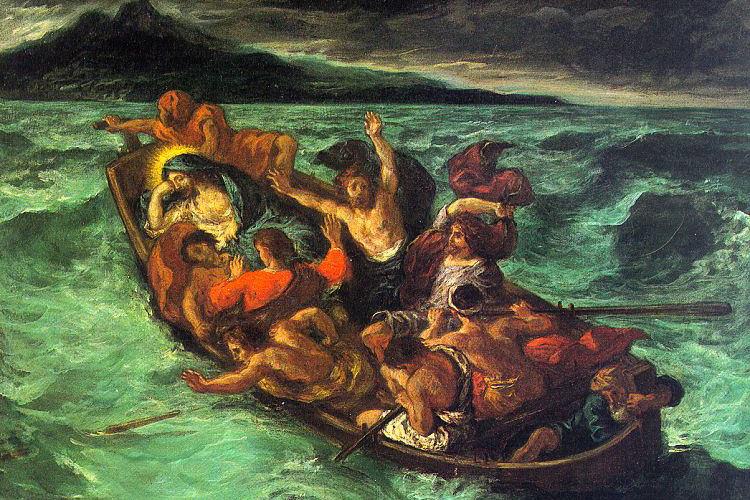
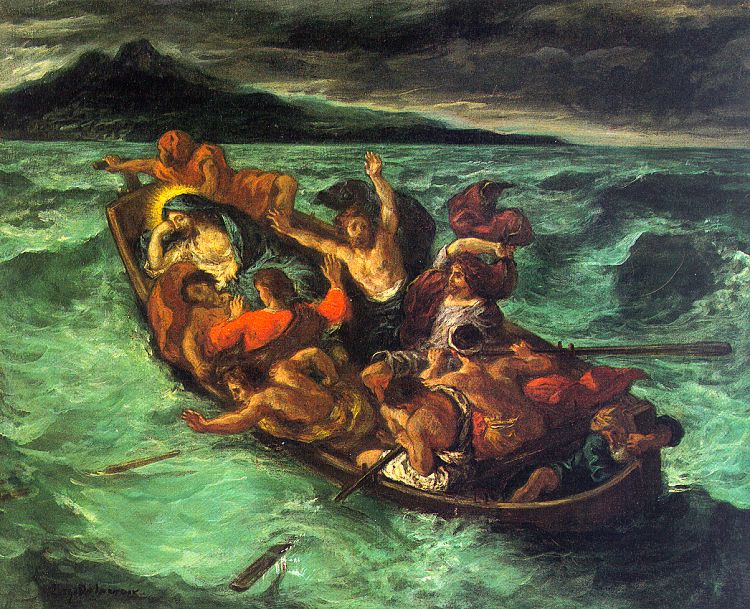
Perhaps the closest Greek word to serenity is γαλήνη (galene=calm) and it is used most specifically to describe the incident when Jesus stood in the boat and rebuked the storm, bringing about a great calm, a serenity (cf Matt 8:26). In this sense we can see how true serenity must come as a gift from God. For the storms of life can overwhelm and overpower us. So we need to seek serenity from God and receive it from Him.

My own personal experience with serenity is that it is a calm, confident, peaceful joy; a feeling that everything is all right, that everything is in God’s hands. It is a feeling that I know what is mine to do and what belongs to God.

I would like to examine four sayings that are related to serenity. I’m not exactly sure where I first got them, but I recently discovered them in a collection of old clippings I have from years ago. These sayings describe serenity itself (often without using the word) as well as its sources. Let’s look at them one by one (with a little commentary by yours truly). The sayings take the form of the stories of the desert Fathers but I am quite sure that they are actually modern reflections put into the older form.

1. The disciples ask the master, “Are there ways for gauging one’s spiritual strength?” “Many,” said the master. “Give us one,” beseeched the disciples. And the master responded, “Find out how often you become disturbed in the course of a single day.”

The normal Christian life is to be increasingly free from anger, anxiety, and disturbance. This results from the increasing trust that faith begets. The closer our walk with God and the more we experience His love for us, the more inconsequential to us is the hatred of the world, the insensitivity of others. We are increasingly untroubled when we are not praised or promoted because more and more, God’s love is enough for us, we experience it as real. We are less obsessed with what others think of us. Our fears give way to a powerful experience of God’s loving providence and His capacity to make a way out of no way.

Anger and inner turmoil abates as we leave vengeance to God and are less prone to anger in the first place. This is because most anger is rooted in fear, and as fear gives way to trust, the cause of much of our anger is gone. Gratitude for the graces we have received makes jealousy and envy less possible. Disturbances diminish overall.

Yes, serenity is a true indicator of spiritual progress. The increasing lack of disturbances in our day is a sign of God’s work in our soul. Here is a gift to be sought.

2. Sometimes there would be a rush of noisy visitors and the silence of the monastery would be shattered. This would upset the disciples; not the Master, who seemed just as content with the noise as with the silence. To his protesting disciples he said one day, “Silence is not the absence of sound, but the absence of self.”

It often happens that even when pray in physical silence, our minds are still filled with many concerns. The deepest prayer is to be caught up in God, to be gifted with contemplative silence. This silence is within and cannot easily be disrupted by the physical noises of the world. It is a deep, inner, spiritual serenity that envelops the soul. It is a peace that the world did not give and thus cannot take away. Here, too, is a gift to seek from God: deep, inner serenity. It is a silence focused on God and absent from ourselves and our egocentric concerns.

3. To a disciple who was forever complaining about others the Master said, “If it is peace you want, seek to change yourself, not other people. It is easier to wear slippers, than to carpet the whole of the earth.”

There is an old saying, “If I get better, others get better too.” The reform and transformation of the whole world begins with me. There is great serenity to be found in staying in our own lane and working our own issues.

Much anger is abated in a marriage when an aggrieved spouse thinks, “My marriage is not perfect because I am in it.” Perfect marriages, perfect churches, perfect families, perfect workplaces … they do not exist because there are no perfect people to populate them. And the imperfection begins with me. There is serenity in realizing and accepting this.

Unrealistic expectations (e.g., that others should be perfect) are premeditated resentments. And resentments rob us of serenity.

It is true that we must engage in properly ordered fraternal correction. But fraternal correction has little effect without humility and the serenity that defuses the difficulty of the actual moment of correction.

4. “How can I be a great man like you?” “Why be a great man?” said the Master. “Being a man is a great enough achievement.”

We often become imbued with unrealistic dreams for ourselves. It is not wrong to have dreams, but we must also accept that it is God who ultimately assigns each of us our place in His kingdom.

One of the great secrets of serenity is to gradually discover the man or woman God has created us to be. Simply becoming what we were made to be and respecting what God is doing is a great source of serenity. God alone can give us this knowledge of His plan for us.

Scripture says, LORD, my heart is not proud; nor are my eyes haughty. I do not busy myself with great matters, with things too sublime for me. Rather, I have stilled my soul, hushed it like a weaned child. Like a weaned child on its mother’s lap, so is my soul within me (Psalm 131:1-2).

There is a story about Rabbi Eliezer, who said, “I have often said to myself, ‘Eliezer, why are you not more like Moses? Moses was a great man!’ But then it occurs to me that if I do that, God will one day say to me, ‘Eliezer, why were you not Eliezer?'”

Yes, there is serenity in not trying to be someone else.

These are just a few thoughts on serenity. In the Scriptures, Jesus brought serenity that night in the boat by calming the storm.

Here’s an interesting thought: Did you notice that Jesus slept right through most of the storm that night and had to be awakened by the frightened disciples? Who was right, Jesus to be calm, or the disciples to be panicked? You decide.

And a final thought: Most people have heard the Serenity Prayer. But the part most people know is actually only the first few lines of a longer prayer. The author of the prayer is disputed, but the full prayer is here:

  • GOD, grant me the serenity to accept the things I cannot change,
  • the courage to change the things I can,
  • and the wisdom to know the difference.
  • Living one day at a time; Enjoying one moment at a time;
  • Accepting hardship as the pathway to peace.
  • Taking, as He did, this sinful world as it is, not as I would have it.
  • Trusting that He will make all things right if I surrender to His Will;
  • That I may be reasonably happy in this life, and supremely happy with Him forever in the next.
  • Amen

This song says, “When peace like a river attendeth by way, when sorrows like sea billows roll. Whatever my lot, thou hast taught me to say, “It is well, it is well with my soul.”

Purity of Heart is Needed to See God

031815I have mentioned here before that my mentor and teacher, Fr. Francis Martin, once asked, “Do you know what is the biggest obstacle for us in understanding the Word of God?” I was expecting him to answer his own question by saying something like, “We don’t know enough Greek,” or “We haven’t studied the historical critical method carefully enough.” But he looked around the room and then said, “The biggest obstacle we have to understanding the Word of God is our sin.”

He went on to encourage us in the discipline of study but warned that all the study in the world could not be of great help, indeed could be of harm, if we did not have a clean heart. I have respected him ever since and listened (on tape) to probably two dozen other priest conferences and courses he preached and taught. Though I was never formally enrolled in one of his classes, he became one of my principal teachers through his tape ministry. He now has a great YouTube ministry here: Fr. Francis Martin Ministries.

Scholars, academicians, and even some unbelievers can tell you to some extent what a particular biblical text is talking about, but only the holy, the saints, can tell you what it means. Toward the end of his life, Fulton Sheen commented that in modern times we have tried seemingly every possible way to build up the Church: committees, study groups, task forces, seminars, and advanced degrees in every sort of religious study; the only thing that we have not tried is holiness. He went on to recommend that every priest make a daily Holy Hour.

There is a passage in the Breviary that also shows the correlation between holiness and seeing:

If you say, “Show me your God,” I will say to you, “Show me what kind of person you are, and I will show you my God.” … God is seen by those who have the capacity to see him, provided that they keep the eyes of their mind open. All have eyes, but some have eyes that are shrouded in darkness, unable to see the light of the sun. Because the blind cannot see it, it does not follow that the sun does not shine. The blind must trace the cause back to themselves and their eyes. In the same way, you have eyes in your mind that are shrouded in darkness because of your sins and evil deeds. A person’s soul should be clean, like a mirror reflecting light. If there is rust on the mirror his face cannot be seen in it. In the same way, no one who has sin within him can see God. But if you will you can be healed. Hand yourself over to the doctor, and he will open the eyes of your mind and heart. Who is to be the doctor? It is God, who heals and gives life through his Word and wisdom … If you understand this, and live in purity and holiness and justice, you may see God. But, before all, faith and the fear of God must take the first place in your heart, and then you will understand all this. When you have laid aside mortality and been clothed in immortality, then you will see God according to your merits (From the book addressed to Autolycus by Saint Theophilus of Antioch, bishop).

So there it is; holiness together with a fear of the Lord is really the only way to see at all.

There is also the great gospel of the man born blind. At a pivotal moment, Jesus smears the man’s eyelids with clay and sends him to wash in the pool of Siloam. The man returns able to see. When asked how he came to see, he replies, in effect, “I went, I washed, and now I see.” This is baptismal theology even if in seminal form. We cannot see until we are washed. In the end it is baptism, confession, and a holy life by God’s grace that give the greatest light. One of the great theologians and Fathers of the Church, St. Cyprian, experienced the vision that baptism and holiness bring:

And I myself was bound fast, held by so many errors of my past life, from which I did not believe I could extricate myself. I was disposed therefore to yield to my clinging vices; and, despairing of better ways, I indulged my sins … But afterwards, when the stain of my past life had been washed away by means of the waters of rebirth, a light from above poured itself upon my chastened and now pure heart; afterwards, through the Spirit which is breathed from heaven, a second birth made of me a new man. And then in marvelous manner, doubts immediately clarified themselves, the closed opened … and what had been thought impossible was able to be done (Letter to Donatus, 4).

Only after baptism did some things make sense and seem possible for Cyprian.

I, too, have come to understand some things only after many years of prayer and growth. Daily Holy Hour, daily Mass, the Liturgy of the Hours, weekly confession … only then do some things become clear, only then does that which had been in darkness come to light. To be sure, study has had its place in my life, but only the path to holiness (combined with study) can ever really bring light.

We’ve tried everything else, how about holiness? …Blessed are the pure in heart, for they shall see God (Matt 5:8).

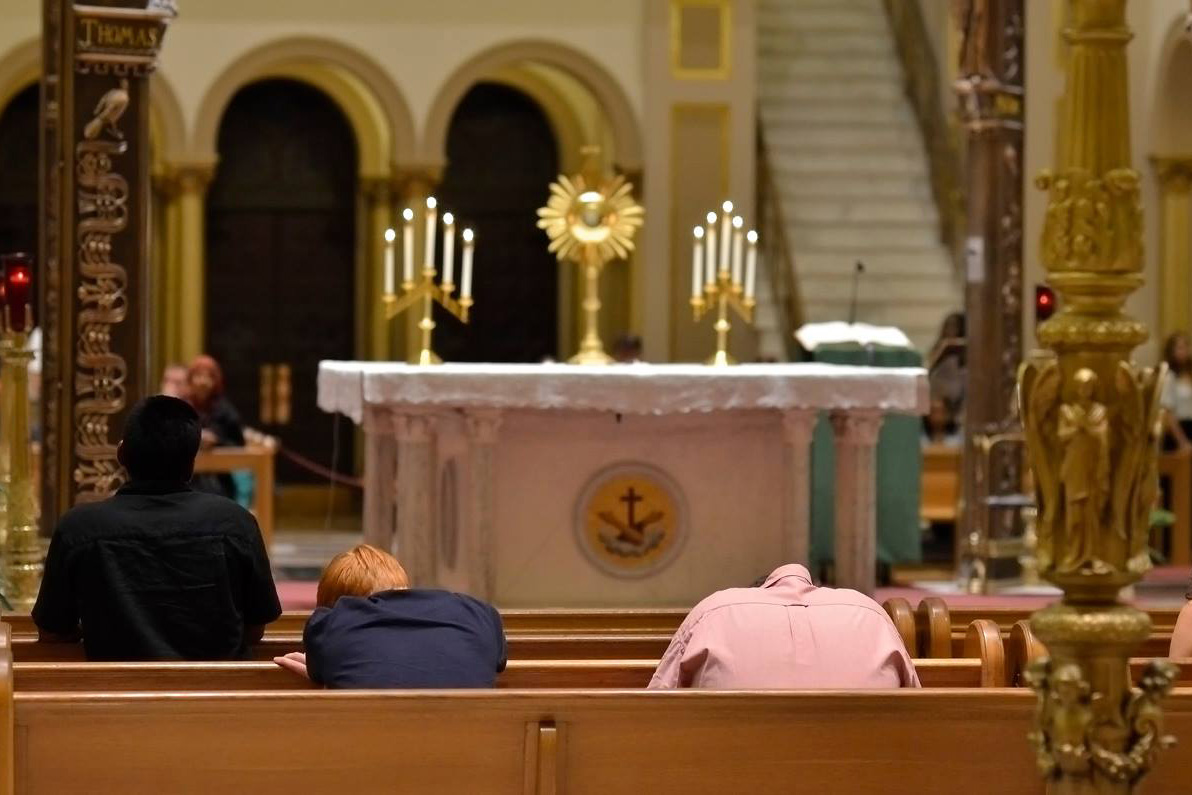
Here’s a video I put together on the beauty of prayer, especially before the Blessed Sacrament. It is set to the words of a beautiful Eucharistic Hymn, “Jesus My Lord, My God, My All,” directed by the late Richard Proulx.

Concerns about Cremation: Some Very Strange Practices Are Emerging

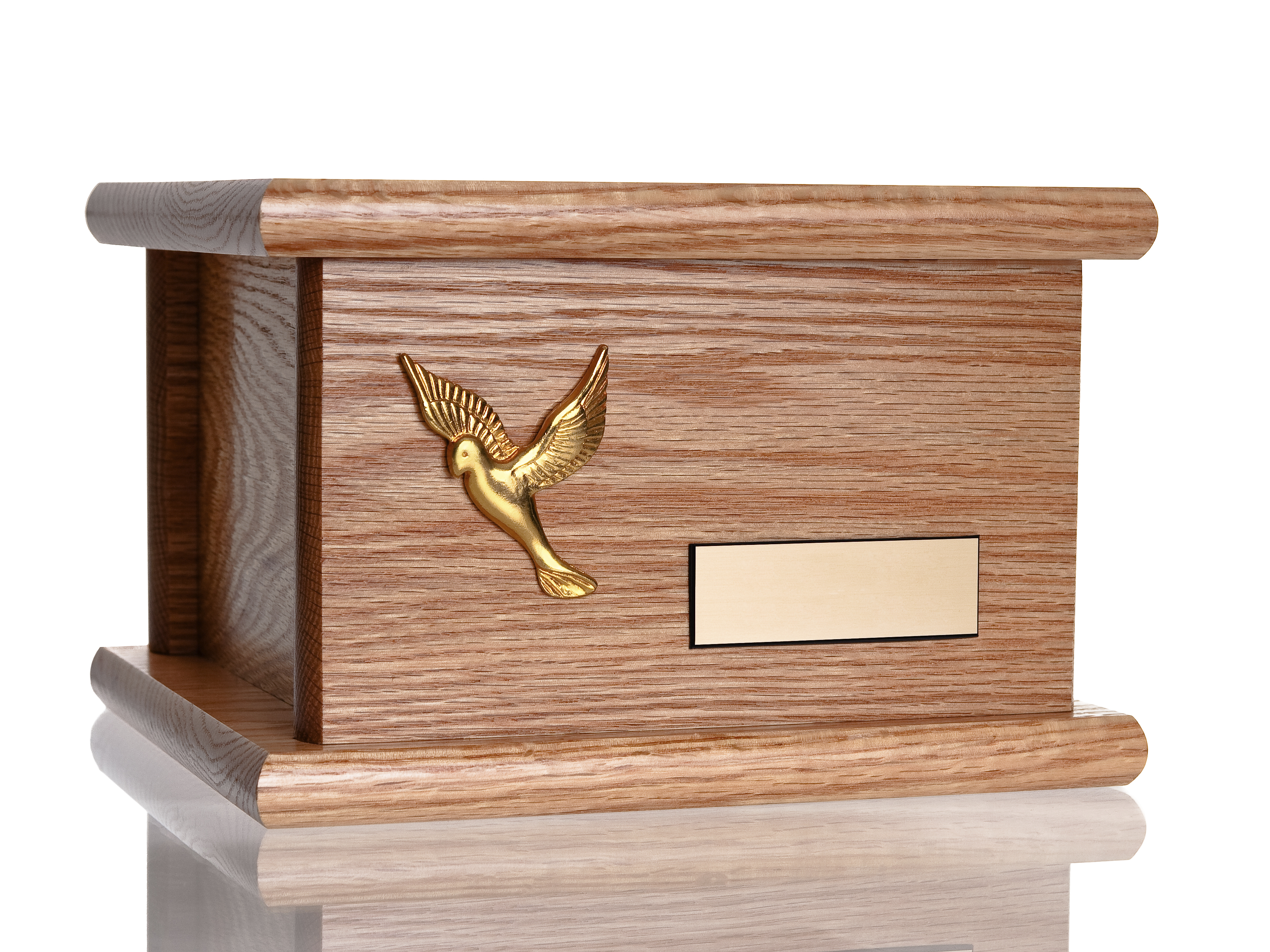
Funeral wood urn complete view isolated on pure white background

Some years ago, the Church gave wider permission for cremation and also lifted traditional restrictions on having cremated remains present in the church for funeral Masses. All of this is pastorally understandable. Very few if any people these days choose cremation for the reasons it had traditionally been forbidden, namely as a denial of the resurrection of the body. Generally the reasons chosen are economic, due to the increasingly high cost of traditional burial and the difficulty, especially in urban areas, of finding room for large cemeteries. The basic norms from the church regarding cremation are these:

The Church earnestly recommends that the pious custom of burying the bodies of the dead be observed; it does not, however, forbid cremation unless it has been chosen for reasons which are contrary to Christian teaching (Code of Canon Law No. 1176, 3).

Although cremation is now permitted by the Church, it does not enjoy the same value as burial of the body. The Church clearly prefers and urges that the body of the deceased be present for the funeral rites, since the presence of the human body better expresses the values which the Church affirms in those rites (Order of Christian Funerals no. 413).

The cremated remains of a body should be treated with the same respect given to the human body from which they come. This includes the use of a worthy vessel to contain the ashes, the manner in which they are carried, and the care and attention to appropriate placement and transport, and the final disposition. The cremated remains should be buried in a grave or entombed in a mausoleum or columbarium. The practice of scattering cremated remains on the sea, from the air, or on the ground, or keeping cremated remains in the home of a relative or friend of the deceased are not the reverent disposition that the Church requires (cf Order of Christian Funerals # 417).

From a pastoral point of view, these norms are  clear and understandable. However, as a pastor, I must say that I have growing concerns over practices that are appearing with the more widespread use of cremation.

The norms clearly indicate that cremated remains are not to be scattered, divided, or retained in the homes of the faithful on fireplace mantles, on shelves, or in other places. But these norms are somewhat difficult to enforce.

The problem emerges essentially from the detachment of the funeral Mass from interment. When cremation is chosen, it is common for the funeral Mass to be celebrated quickly but the burial to be scheduled at some “later date” when arrangements can be more conveniently made. Frequently clergy are told that the family will “call back” at some point in the future. But often these calls never come and burials are put off indefinitely.

Issues such as money, logistics, and family disputes are often factors in the delay. Priests, too, are  often busy and do not have time to follow up to see if “Uncle Joe” is ready for burial now.  As such, many deceased remain unburied for weeks, months, or years, or perhaps never even buried at all.

I was shocked a couple of years ago to discover that a certain Catholic family still had the cremated remains of an uncle on the top shelf of their closet. The delay centered around who in the family was going to pay for the burial lot and debates about whether burial was even necessary at all. Perhaps the ashes could just be scattered out in the woods.

Without the urgency to bury the dead, the burial is often given little regard.

Another concern came to my attention during recent funeral preparations. There was a tense debate going on among the assembled family members as to who would get to keep the ashes and who would not. The crematorium had offered to dispense ashes to different family members in sealed boxes or urns (for a price of course) and the debate seemed to center on whether certain family members were “qualified” to get some of “Mom” or not. Yikes! And when I instructed them that no division of the remains should take place at all, but rather that burial had to be arranged, I was greeted with puzzled stares and eventual “assurances” that such burial would be arranged “in due time,” once the family could work out their differences.

But things have gotten even worse.

Many funeral homes are now offering “jewelry” made from the cremated remains of loved ones or with the remains sealed within the jewelry. If you don’t believe me, click HERE, HERE, or HERE. The ghoulishness and bad taste are surpassed only by the shock of how suddenly such bizarre practices have been introduced. One can imagine the following awful dialogue: “Hey, that’s pretty new jewelry! Was that your Mom’s?”  “Well, actually it is Mom!” Double yikes!

Cremation is certainly here to stay. And I do not doubt there are sound pastoral reasons for its use. However, the norms of the Church insist that cremated remains be treated with the same respect as the body. And just as we would not scatter body parts in the woods, or divide up limbs and torsos to distribute to family members, or put fingers into resin and wear them as earrings, neither should we do this with cremated remains. These ARE the remains of a human being and they are to be buried or placed in a mausoleum with the same respect due the uncremated body.

I think pastors are going to have to teach more explicitly on this matter and that  bishops may need to issues norms that will help to prevent problems. One helpful norm might be to refuse to celebrate a funeral Mass until proper burial is scheduled. I am unclear if a pastor alone can do this, but surely a diocese must also have an increasingly firm and clear policy of which people are widely informed.

Simply permitting cremation without well-thought-out policies has proven to be a mistake. I pray that a post like this may provoke thought from all of us in the Church as to how to deal pastorally with a situation that is degrading quickly. We must do some teaching, but we also must not cooperate with bad practices.

The website of the United States Conference of Catholic Bishops has proposed a possible solution for Catholic cemeteries to offer to families who are financially unable to bury the cremated remains of loved ones:

For some families, the choice of cremation is based on financial hardship, so this choice often means also that there is no plan for committal or burial of the cremated remains. As a means of providing pastoral support and an acceptable respectful solution to the problem of uninterred cremated remains, one diocese offered on All Souls’ Day in 2011 an opportunity for any family who desired it the interment of cremated remains. The diocese offered a Mass and committal service at one of its Catholic cemeteries and provided, free of charge, a common vault in a mausoleum for the interment of the cremated remains. The names of the deceased interred there were kept on file, though in this case they were not individually inscribed on the vault. [1]

I am interested in your thoughts and experiences and hope to share them with my bishop and my fellow clergy


What is Sloth? It is More Subtle and Devilish Than Mere Laziness

Bored, overweight man sits on the sofaOne of the more misunderstood of the cardinal sins is sloth. This is because most see it merely as laziness. But there is more to sloth than that. Let’s take a moment and consider some aspects of the cardinal sin we call sloth.

The Greek word we translate as sloth is ἀκηδία akedia (a = absence + kedos = care), meaning indifference or negligence. St. Thomas speaks of sloth as sorrow for spiritual good. By it, we shun spiritual good as too toilsome (cf ST II-II 35,2).

Some modern commentators speak of sloth as a “don’t care” feeling. Some even say it is a kind of falling out of love with God and the things of God (cf Rev 2:4). On account of  sloth, the idea of right living and the gift of a transformed humanity inspires not joy, but aversion or even disgust because it is seen as too laborious or as requiring setting aside currently enjoyed or sinful pleasures. By sloth, many experience sorrow rather than joy or zeal in following God and receiving a transformed human life. They are distressed at the prospect of what might have to occur should they embrace the faith more deeply.

Sloth also tends to dismiss the power of grace, focusing on the “trouble” or effort attached to walking in the Christian way, rather than understanding grace as a work of God.

As said above, many people today equate sloth with laziness. But sloth is not merely laziness; it is more properly understood as sorrow or indifference. While sloth may sometimes look like boredom and a casual laziness toward attaining spiritual good, it can also be manifested by a frantic “busyness” with worldly things so as to avoid spiritual questions or living a reflective life.

Consider, for example, a man who is a workaholic. Now suppose that this man has a wife and children. A man in this position has some very significant gifts and duties beyond his career. He is a husband, a father, and the spiritual leader of his home. He is also a disciple, one whom the Lord has summoned to a new life, to the great discovery of God, and to the deepest meaning and realities of his life. He also has the awesome dignity to announce these truths to his wife and children.

But all of the duties and glories of his vocation overwhelm and even scare him. It all seems so irksome and the task too open-ended. Frankly, he doesn’t want to reflect too much because it might summon him to ponder things he would like to avoid considering: moral questions or priorities, whether he is spending enough time with his wife and children, whether his life is focused on the things that matter most. No, it’s all just too irksome, too ridden with uncertainty to enter more deeply into the spiritual life. Work is easier, and at work they call him “Sir” and do what he says.

So he buries himself in his work. And this helps him to avoid prayer and reflection. Of course there’s “no time” for Mass or for praying with his wife and children. There’s no time for scripture, retreats, and the like.

This man is not lazy but he is slothful. In the end his workaholism is sloth, for it is sorrow and aversion to the gift that the Lord offers him: to come out into the deeper waters and lower his net for a catch. In this case, his sorrow for spiritual good is manifested in avoidance rooted in fear. By sloth, he is not joyful at the invitation of the Lord or the Church. Instead he is sorrowful and averse to what he sees as toilsome and possibly raising uncomfortable things he would rather not think about. He does not hate God or the faith, but it is all just too much.

That said, sloth does often manifest itself as a kind of lethargy, a boredom that can’t seem to muster any interest, energy, joy, or enthusiasm for spiritual gifts. Such people may be enthusiastic about many things, but God and the faith are not among them.

Boredom seems to have increased in modern times and this fuels sloth. In effect, we are hyperstimulated in the modern world. The frantic pace, the endless interruptions, the abundance of entertainment, fast-paced movies, and video games all overstimulate us. From the time we awaken until we fall into bed at the end of the day, there is almost never a moment of silence or a time when we are not being bombarded by images, often flickering and quickly changing.

This hyperstimulation means that when we come upon things like quiet prayer or adoration, or are asked to listen for an extended period, or when the imagery is not changing quickly enough, we are easily bored.

And boredom feeds right into sloth. The “still, small voice of God,” the quiet of prayer, the simple reading of Scripture and the pondering of its message, the unfolding of spiritual meaning through reflection, the slower joys of normal human conversation in communal prayer and fellowship … none of these appeal to the many who are overstimulated and used to a breakneck pace. Sunday, once the highlight of the week for many (due to the beauty of the liturgy, the music, the hearing of the sermon, the joy of fellowship, and the quiet of Holy Communion), is now considered boring and about as appealing as going to the dentist, a necessary evil at best.  Thus, sloth is fueled by the boredom our culture feels at anything going less than 90 miles and hour.

Peter Kreeft says,

Sloth is a cold sin, not a hot one. But that makes it even deadlier. [For] rebellion against God is closer to him than indifference … God can more easily cool our wrath than fire our frozenness, though he can do both.  Sloth is a sin of omission not commission. That too makes it deadlier, for a similar reason. To commit evil is at least to be playing the game … Sloth simply does not play God’s game, either with him or against him … It sits on the sidelines bored … Better to be hot or cold than lukewarm [Back to Virtue, P. 154].

Sloth, of course, gives rise to many sins: we do not pray, attend Mass, go to confession, or read Scripture. We do not grow in our spiritual life and thus we fail to become the man or woman God made us to be. In some sense every sin contains an element of sloth, for when we sin we show a kind of aversion to the perfecting graces that God offers us. Rather than seeing the moral law of God as a great summons to freedom, we reject that call as “too much trouble.”

Socially, too, there are many manifestations of sloth. Two that are common in the modern world are secularism and relativism.

1. Secularism – By secularism, I am referring to a preoccupation with worldly things (rather than the more current meaning of hostility to religious faith). It is amazing how passionate we can get about worldly things. Perhaps it is football, or politics, or the newest electronic device. Perhaps it is our career, or the stock market, or something in the news. Yes, we are passionate people, and even the most reserved of us have strong interests occupying our mind.

And yet many of those who rejoiced at the basketball game that ended so thrillingly, or were passionately engaged at the political rally, or were so excited about the latest twist on their favorite television show, many of these same passionate, joyful people can muster no interest whatsoever in prayer, Mass, or Bible study. And if they do get to Mass they look like they’re in agony until it’s over.

This is secularism and it is a form of sloth. We have time and passion for everything but God. It is a very deep drive. We are mesmerized by many things of the world, but bored and sorrowful (and thus slothful) over the things of the spiritual life. Where is the joy? Where is the zeal? Where is the hunger for completion in God?

This is sloth. It is not merely depression or boredom; it is sloth. It is a sorrow toward the spiritual gifts of God. It is a deep drive of the flesh and it has to go. But only God and openness to His grace can ultimately save us and bring us more alive from this death-directed drive.

2. Relativism – Many today indulge a notion that there is no such thing as absolute or unchanging truth to which we are summoned and must ultimately conform. This is relativism. And many who practice it actually congratulate themselves for their “tolerance” and “open-mindedness.” They think of their relativism as a virtue. But more often than not, relativism is simply sloth masquerading as tolerance. The fact is, if there is such a thing as truth (and there is), then I should joyfully seek it and base my life on its demands and promises.

Many indulge in relativism because it is an easy way out. If there is no truth then I am not obliged to seek it nor base my life upon it. Frankly, many are averse to and sorrowful toward the truth because they find its demands irksome. This is sloth. Their sorrow is directed toward a very precious spiritual gift of God: the gift of truth. Instead of joyfully seeking the truth, the relativist is sorrowful and avoids the gift, couching his sloth in words such as “open-mindedness” and “tolerance.”

To be sure, there is a place for tolerance. But the true virtue of tolerance is usually misunderstood today and is often equated with approval. The proper understanding of tolerance is “the conditional acceptance of or non-interference with beliefs, actions, or practices that one considers to be wrong but still ‘tolerable,’ such that they should not be prohibited or unreasonably constrained.” The key point that is often lost today is that the tolerated beliefs or practices are considered to be objectionable, wrong, or bad. If this objection component is missing, we are not speaking any longer of “toleration” but of “indifference” or “affirmation.”

Hence, relativists who dismiss that there is truth to be found cannot rightly call their position “tolerance.” It is in fact indifference and is a form of sloth.

For all of our modern claims to be tolerant and open-minded, the more usual fact is that we are just plain lazy and slothful when it comes to seeking the truth. We (collectively speaking) do not love the truth but shun it, sorrowfully regarding its possible claims on us. Jesus said rightly, This is the judgement: Light has come into the world, but men loved darkness instead of light because their deeds were evil. Everyone who does evil hates the light, and will not come into the light for fear that his deeds will be exposed. But whoever lives by the truth comes into the light, so that it may be seen plainly that what he has done has been done through God (Jn 3:19-21).

A few reflections, then, on sloth.

Coming to recognize sloth for what it is, calling it by name, and learning its moves, are the first steps on the road to healing. Sloth is, of course, one of those drives that is so deep that ultimately we must fall to our knees and beg deliverance from the Lord, who alone can heal us.

The gift that the Lord offers us is promised in this beatitude: Blessed are they that hunger and thirst for righteousness (Matt 5:6).

We must also ask for and seek the fruits of the Holy Spirit, especially love, joy, and peace. These gifts kindle a fire of love in our hearts for God and for the gifts He offers.

Because sloth is such a deep drive, we must throw ourselves to the care of God with great humility, recognizing our poverty and seeking His miraculous grace to give us grateful, loving, and passionate hearts.

Finally, since sloth can also be caused by the feeling of being overwhelmed at the perfection of our call, we do well to consider two points:

  1. We ought to meditate carefully on what our specific call is. Since we cannot do and be everything, we need to come to an understanding of our own particular gifts and how God expects us to use them. Having done this, we do well to “stay in our lane.”
  2. We must understand that spiritual progress grows in stages and by many steps, not in one giant leap. Hence we need not be so sorrowful or averse to the good things God offers us. As a loving Father, He leads us and forms us most often in gentle ways as one spiritual victory leads to another.

Pray for zeal, joy, hope, confidence, and a hunger for holy things. The Christian journey is meant to be a thrilling one as we experience how God is utterly transforming us.

I don’t know, something tells me that after a heavy post like this it’s time to play the Bach Gigue Fugue. Since sloth is sorrow, Joy is an essential solution. Here is Joy in G Major!