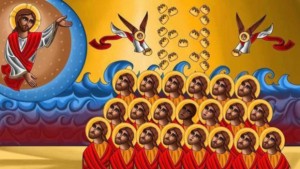
Honor to the Martyrs! A Declaration of Gratitude to the Martyrs of Our Day

051015
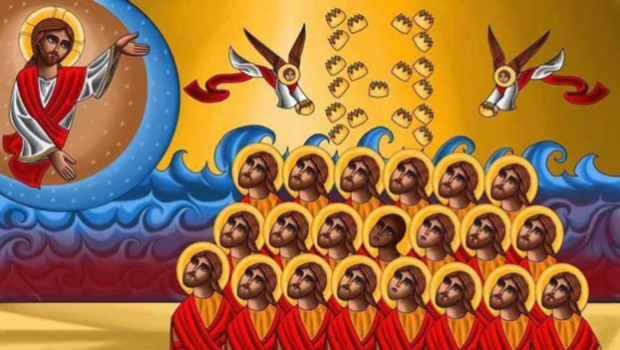
“21 New Martyrs Icon” by Tony Rezk

In the Divine Office last week we read a remarkable passage on the persecution of the Church. It seems proper to consider a portion of it in times like these; more on that in a moment.

Of course in writing of persecution and martyrdom, I write as an American who, though experiencing a lot more scorn these days, does not have to endure grave threat for being a Catholic. But as I consider Catholics and Christians in places like Iraq, Egypt, Syria, Nigeria, the Sudan, Kenya, and other places having their churches burned, seeing their ancient Christian communities scattered, being exiled, and being killed by beheading or other methods, I am both shocked and moved.

Frankly, I can barely avoid screaming when, while all this goes on in the world, we in America get worked up about things like whether or not someone deflated a football before a game. We can be so decadent, spoiled, and focused on trivialities (but I digress).

While there is a tragedy to the martyrdom of Catholics and other Christians, there is also a glory. I do not think that we will ever really know in this life what their suffering has merited for the Church or how, as St. Paul said, they  fill up in [their] flesh what is still lacking in regard to Christ’s afflictions, for the sake of his body, which is the Church (cf Col 1:24). Somehow their sufferings are mystically united to the once for all perfect act of Christ for our salvation.

Honor to these martyrs! How they make reparation for our often decadent and pusillanimous living of the faith. I can only thank God that, as many people in places like Europe and North America forsake the faith and consider it of little value or demand changes to it (to accommodate divorce and remarriage, alternate families, homosexual acts, euthanasia, etc.), many in other parts of the world suffer and die for the unabridged faith handed down from the Apostles. May their heroism move us to courage and to a determination to preach the faith, pure and unadulterated, without considering the personal cost.

We do not seek conflict, but we must be willing to accept what comes, for we serve a Lord who was crucified for what He taught. The Book of Hebrews says it well:

So Jesus also suffered outside the gate in order to sanctify the people through his own blood. Therefore let us go to him outside the camp and bear the reproach he endured. For here we have no lasting city, but we seek the city that is to come (Heb 13:12-14).

Persecution is really the normal state of the Christian and the Church when we are seeking to live and teach the faith. The goal of the Christian faith is not to offend, but neither is it to win a popularity contest. Jesus warns, Woe to you when everyone speaks well of you, for that is how their ancestors treated the false prophets (Luke 6:26). Jesus had enemies and told us to love and pray for them. If we don’t have any enemies, we should ask ourselves why not. Do we think we can be more successful than Jesus in preaching the Gospel, such that we can preach it or live it without giving offense?

It is going to get increasingly difficult for us in the decadent West to argue that persecution can be avoided by anything but a serious compromising of our faith or at least a camouflaging of it. And neither of these is acceptable for disciples of Christ.

Meanwhile our brothers and sisters in other parts of the world show us true courage and help the Church to be the Church: willing to follow our crucified Lord.

Not only that, but they are a kind of medicine for the world, too. This leads us (finally) to the remarkable passage from the Breviary to which I referred at the beginning of the blog. And while it is applied to all Christians, it can be said to apply especially to martyrs and others who endure suffering for the faith:

Christians … condemned because they are not understood, are put to death, but raised to life again. … They are persecuted. … yet no one can explain the reason for this hatred.

To speak in general terms, we may say that the Christian is to the world what the soul is to the body. As the soul is present in every part of the body, while remaining distinct from it, so Christians are found in all the cities of the world, but cannot be identified with the world. As the visible body contains the invisible soul, so Christians are seen living in the world, but their religious life remains unseen.

[But] The body hates the soul and wars against it, not because of any injury the soul has done it, but because of the restriction the soul places on its pleasures. Similarly, the world hates the Christians, not because they have done it any wrong, but because they are opposed to its enjoyments.

Christians love those who hate them just as the soul loves the body and all its members despite the body’s hatred. It is by the soul, enclosed within the body, that the body is held together, and similarly, it is by the Christians, detained in the world as in a prison, that the world is held together.

The soul, though immortal, has a mortal dwelling place; and Christians also live for a time amidst perishable things, while awaiting the freedom from change and decay that will be theirs in heaven.

As the soul benefits from the deprivation of food and drink, so Christians flourish under persecution. Such is the Christian’s lofty and divinely appointed function, from which he is not permitted to excuse himself (from a letter to Diognetus (Nn. 5-6; Funk, 397-401)).

Yes, honor to the martyrs. The world hates them but does not realize that it depends on them and on every faithful Christian to be its soul and life force. Without faithful Christian presence, the world is dead and heading for eternal death. Without martyrs, the Church risks being a friend of the world but an enemy of God (cf James 4:4). But with them in our ranks the Church can say, “I love God whatever the cost and am willing to go with Jesus outside the gates, outside the world’s embrace, and suffer shame and even death.”

Pray in thanksgiving for these glorious martyrs of our age. Pray, too, that we may have their courage when the wolf comes for us. That wolf may first come in sheep’s clothing, talking about “tolerance” and “acceptance.” But beware, you will know them by their fruits (Mat 7:16). Do not hate them, but resist the evil they glorify, even unto loss and death.

Honor to the martyrs, honor!
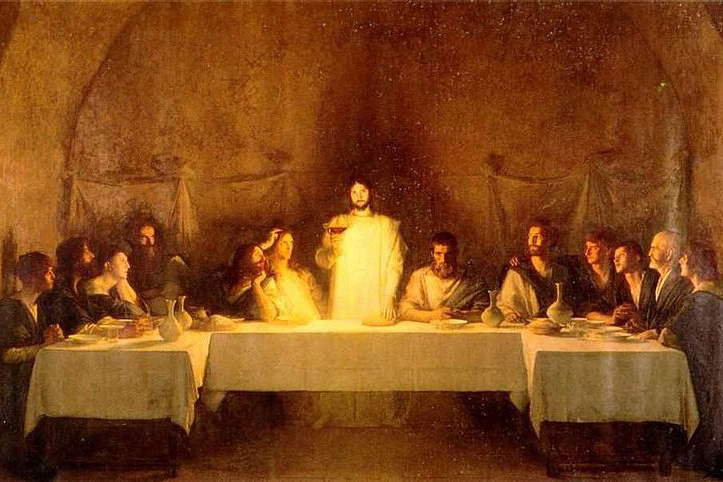
On the Paradoxical Connection Between Love and Law – A Homily for the 6th Sunday of Easter

050915In the gospel today, Jesus cuts right across the modern Western tendency to oppose love and law, and law and joy. Though we oppose them, Jesus joins all three concepts and summons us to a new attitude. Let’s take a look.

I. Connections – Jesus says, As the Father loves me, so I also love you. Remain in my love. If you keep my commandments, you will remain in my love, just as I have kept my Father’s commandments and remain in his love. I have told you this so that my joy may be in you and your joy might be complete.

Note here how the Lord joins three concepts: love, law, and joy. This is precisely the opposite of what Western culture does. The best that Western culture will admit of law is that it is a necessary evil. While this is the best assessment of it, the more routine assessment is that law is somehow an unloving imposition by the powerful on the weak, the hierarchy on the laity, the (evil, oppressive, Pharisaical, etc.) Church on decent people.

But whereas the modern world disconnects law from love, Jesus links the two. How do we both experience and show love? Jesus says that we do so by keeping the commandments. Jesus sets forth a vision whereby we, having experienced God’s love, desire and rejoice in His commands. We also show love to the Lord through this very obedience and joyful adherence to His commands. And this loving obedience goes even further by setting forth an abundant joy through the very keeping of those commands.

Again, this is completely contrary to modern notions. The “loving” God, according to the world, has few or no rules; He affirms, encourages, accepts, and includes. Or so goes the thinking.

But the real Jesus is far more complex. He is surely loving, especially of sinners. He encourages, includes the outcast, and so forth. But He also speaks of sin and rebukes it. He embraces the sinner, but directs, “Sin no more.” He sets forth a demanding moral vision, even as He shows mercy. In this gospel, Jesus joins love and the law, and says that the law brings joy. They are not opposed; they are not either/or, they are both/and. There was a lot more to Jesus than just being the “affirmer in chief,” who went about saying nothing but pleasant things. In fact He often held many very contrary ideas in tension and balance.

Consider the following portrait painted by Ross Douthat in his book Bad Religion, How We Became a Nation of Heretics.

Christianity is a paradoxical religion because the Jew of Nazareth is a paradoxical character. No figure in history or fiction contains as many multitudes as the New Testament’s Jesus. He’s a celibate ascetic who enjoys dining with publicans and changing water into wine at weddings. He’s an apocalyptic prophet one moment, a [careful and] wise ethicist the next. … He promises to set [spouses against one another and] parents against children, and then disallows divorce; he consorts with prostitutes while denouncing even lustful thoughts. … He can be egalitarian and hierarchical, gentle and impatient, extraordinarily charitable and extraordinarily judgmental. He sets impossible standards and then forgives the worst of sinners. He blesses the peacemakers and then promises that he’s brought not peace but the sword. He’s superhuman one moment; the next he’s weeping.

Douthat goes on to conclude:

The boast of Christian orthodoxy, as codified by the councils of the early Church and expounded in the Creeds, has always been its fidelity to the whole of Jesus. … [Where heresy says which one] Both, says orthodoxy….The goal of the great heresies, on the other hand, has often been to extract from the tensions of the gospel narratives a more consistent, streamlined, and noncontradictory Jesus. [1].

The point here is to note that Jesus, who is love, does not hesitate to teach on many moral topics and warn sinners of judgment. He both personally, and through his inspired Apostles, speaks with clarity about anger, greed, malice, neglect of the poor, divorce, fornication, adultery, impure thoughts, homosexual acts, lack of faith, revenge, dishonesty, the sin of human respect, false and worldly priorities, and countless other things.

In today’s gospel, not only does Jesus link love to the keeping of the commandments, He also says that the keeping of the commandments leads to joy.

Of this, I am a witness. God’s law gives joy to my heart. As a priest, I live as a celibate, like Jesus, and my life is very fulfilling. I have been faithful to my celibate commitment without fail. I have not strayed from proper boundaries; I do not look at pornography; I am not in any way sexually active with women or anyone else. In all this I am not repressed; I am not sad or lonely. My life is joyful; I am fulfilled and see my celibacy as a gift. To those who cannot marry, whether because they are homosexual, too young, or have not met the right person, I say that God can and still does bless you. Living celibately is fulfilling and joyful for those who are temporarily and/or permanently called to it.

The Church cannot and will not affirm or call good what God calls sin, whether it is greed, violence, or (more controversially) homosexual acts or illicit heterosexual acts. In so doing we are not any more unloving, repressed, or sad than Jesus is—and He is none of these things. Neither can we affirm any other acts or attitudes that the Bible calls sinful. These things are all taught in love and they bring joy to those who will accept them.

The Lord is no liar, and He promises that love, His commandments, and joy are all interrelated. I am a witness that this is true. Thus, note the connection between love, law, and joy.

II. The Core – The Lord says, This is my commandment, Love one another as I have loved you. While it is true that the Church, and all of us as individuals, must speak the truth, we must speak it in love. We are not out to win an argument, to overpower, or merely to criticize. Our goal is to love. It is not helpful, and quite likely harmful, to correct people whom we do not first love.

Hence the Lord’s command to love one another is at the core of any preaching or teaching task. There are many today who declare that they do not experience love from the Church, only “denunciations.” It is a hard thing for the Church to convey our love to a large number of people, to a nation, or to a culture. But to the degree that we have failed to love or to convey that love, we must repent and strive even harder both to love and to express that love.

That said, the mere fact that we announce God’s law and summon others to it does not make us unloving. As we have seen above, Jesus links these concepts. There is no doubt that some will take offense no matter what we say or how we say it. But the fact that others are angry or hurt does not necessarily mean that we have done or said something wrong. Jesus, who was sinless, offended many and was a sign of contradiction both then and now.

But as for the Church, we must never fail to ask for a deepening love for all, even for those who hate us, misunderstand us, and misrepresent us. The core of Jesus’ teaching is “Love one another.”

Jesus goes so far as to say that we must be willing to endure martyrdom in order to speak the truth to others. He says, No one has greater love than this, to lay down one’s life for one’s friends. Are you and I willing to endure hatred? Are we willing to be spat upon and laughed at? Are we willing to be called hateful, bigoted, homophobic, backward, repressed, intolerant, and so forth in order that others can hear the truth? Jesus was willing because He had the kind of love to stay in the conversation even when many (though not all) hated Him. What are you willing to bear to proclaim the truth in love?

III. Camaraderie – Jesus also links friendship to the knowledge of His law. He says, You are my friends if you do what I command you. I no longer call you slaves, because a slave does not know what his master is doing. I have called you friends, because I have told you everything I have heard from my Father.

And here is another connection that Jesus makes that the modern world rarely does. The world thinks of rules, laws, and commandments in terms of slavery and subservience. But Jesus links these to friendship. A friend knows what his friend is about and gladly seeks to understand and support him. Scripture says, Happy are we, O Israel, for what pleases God is known to us (Baruch 4:4).

Yes, true friendship means seeking to know and understand one’s friend and to accomplish what is important to him. Many today call themselves friends of Jesus but they give Him little more than lip service. A true friend of Jesus is delighted to know His will and to accomplish it.

IV. Call – Jesus says, It was not you who chose me, but I who chose you and appointed you to go and bear fruit that will remain, so that whatever you ask the Father in my name he may give you. This I command you: love one another.” And thus, in the final lines, we are reminded that the Lord, who has chosen us, can and will equip us to live His law, to bear fruit in the keeping of the commandments, and to be someone whom the Father can trust with blessings.

To be rebellious and resentful is to be untrustworthy of further blessings. But here again, the Lord stresses that the keeping of the commandments is linked to love and to further blessings.

The commandments bring joy; they are rooted in love and bring blessings. Do you believe this? Or will you accept the worldly thinking that opposes love and law, law and joy, and law and friendship? The choice is yours. As for me, I am already a witness that the law is love; it is joy; it is friendship. Yes, I am a witness. How about you?

This song rejoices in the Light of Jesus, the clear Sun (Son) of Righteousness, who shows the way to the Father:

Healing or Relief? Nailing Down the Real Problem, As Seen in a Funny Video

There is a stereotype regarding men and women that says that men like to solve problems while women like to seek sympathy and see a problem as a way to relate. OK, there is some truth here, but it is more of a vague tendency than a strong trait, and there are exceptions on both sides. The video below depicts the stereotype quite humorously.

But there is a human problem, shared by most of both sexes, wherein people seek relief more so than healing. Healing takes guts; it requires courageous change and often involves difficult choices. Many would rather seek quick answers than face the deeper issues that often drive their struggles. Thus a person may want relief from anxiety but not want to look at his lack of faith, or the unrealistic expectations and perfectionism that may drive his anxiety and low self-confidence. Many would prefer to take a pill to solve their problems (ignoring the potential side effects) instead of looking at the lifestyle choices that often underlie their issues.

We all need some sympathy, but we also need to be summoned to examine how we contribute to our own malaise. Consider that as you enjoy this humorous video.

It is the Decision of the Holy Spirit and Us – On the Council of Jerusalem and the Catholicity of the Early Church

050715In the first reading at today’s Mass is recounted the Council of Jerusalem, which scholars generally date to around 50 A.D. It was a pivotal moment in the history of the Church, since it would set forth an identity for the Church that was independent of the culture of Judaism per se, and would open wide the door of inculturation to the Gentiles. This surely had a significant effect on evangelization in the early Church.

Catholic ecclesiology is evident here in this first council in that we have a very Catholic model of how a matter of significant pastoral practice and doctrine is properly dealt with in the Church. What we see here is the same model that the Catholic Church has continued to use right up to the present day. In this and all subsequent ecumenical councils, there is a gathering of the bishops, presided over by the Pope, which considers and may even debate a matter. In the event that consensus cannot be reached, the Pope resolves the debate. Once a decision is reached it is considered binding and a letter is issued to the whole Church.

All these elements are seen in this first council of the Church in Jerusalem, though in seminal form. Let’s consider this council, beginning with some background.

1. Bring in the Gentiles! Just prior to ascending, the Lord gave the Apostles the great commission: Therefore go and make disciples of all nations, baptizing them in the name of the Father and of the Son and of the Holy Spirit (Matt 28:19). Hence, the Gentiles were now to be summoned and included in the ranks of discipleship and of the Church.

2. But the Church was mighty slow in beginning any outreach to the Gentiles. While it is true that on the day of Pentecost people from every nation heard the sermon of Peter, and more than 3000 converted, they were all Jews (Acts 2). In fact, it seems that at first the Church did little to leave Jerusalem and go anywhere at all let alone to all the nations.

3. Perhaps as a swift kick in the pants the Lord allowed a persecution to break out in Jerusalem after the stoning of Stephen (Acts 7). This caused the gospel to begin a northward trek, into Samaria at least. Samaritans, however, are not usually considered Gentiles, since they were a group that had intermarried with Jews in the 8th century B.C. There was also the baptism of an Ethiopian official, but he, too, was a Jew.

4. Fifteen Years? The timeline of Acts is a bit speculative. However, if we study it carefully and compare it to some of what Paul says (especially in Galatians), it would seem that it was 12 to 15 years before the baptism of the first Gentile took place! If this is true then it is a disgrace. There was strong racial animosity between Jews and Gentiles, and that may explain the slow response to Jesus’ commission. It may explain it, but it does not excuse it.

5. Time for another kick in the pants. This time the Lord goes to Peter, who was praying on a rooftop in Joppa, and by means of a vision teaches him that he should not call unclean what God calls clean. The Lord then sends to Peter an entourage from Cornelius, a high Roman military official seeking baptism. Cornelius, of course, is a Gentile. The entourage requests that Peter accompany them to meet Cornelius at Cesarea. At first, he is reluctant. But then recalling the vision (kick in the pants) that God gave him, Peter decides to go. In Cesarea, he does something unthinkable: Peter, a Jew, enters the house of a Gentile. He has learned his lesson and as the first Pope has been guided by God to do what is right and just. After a conversation with Cornelius and the whole household, as well as signs from the Holy Spirit, Peter baptizes them. Praise the Lord! It was about time. (All of this is detailed in Acts 10.)

6. Many are not happy with what Peter has done and they confront him on it. Peter explains his vision and also the manifestation of the Holy Spirit, insisting that this is how it is going to be. And while it is true that these early Christians felt freer to question Peter than we would the Pope today, it is also a fact that what Peter has done is binding even if some of them don’t like it; what Peter has done will stand. Once Peter has answered them definitively, they reluctantly assent and declare somewhat cynically, “God has granted life giving repentance even to the Gentiles!” (Acts 11:18)

7. Trouble is brewing. So, the mission to the Gentiles is finally open. But that does not mean that the trouble is over. As Paul, Barnabas, and others begin to bring in large numbers of Gentile converts, some among the Jewish Christians begin to object that they are not like Jews and insist that the Gentiles must be circumcised and follow the whole of Jewish Law—not just the moral precepts but also the cultural norms, kosher diet, purification rites, etc. (That is where we picked up the story in yesterday’s Mass.)

8. The Council of Jerusalem – Luke, a master of understatement, says, “Because there arose no little dissension and debate …” (Acts 15:2) it was decided to ask the Apostles and elders in Jerusalem to gather and consider the matter. So the Apostles and some presbyters (priests) with them meet. Of course Peter is there, as is James, who was especially prominent in Jerusalem among the Apostles and would later become bishop there. Once again, Luke rather humorously understates the matter by saying, “After much debate, Peter arose” (Acts 15:7).

Peter arises to settle the matter since, it would seem, the Apostles themselves were divided. Had not Peter received this charge from the Lord? The Lord had prophesied, Simon, Simon, behold, Satan has demanded to sift you all like wheat but I have prayed for you Peter, that your faith may not fail; and you, when once you have turned again, strengthen your brothers (Luke 22:31-32). Peter now fulfills this text, as he will again in the future, and as will every Pope after him. Peter clearly dismisses any notion that the Gentiles should be made to take up the whole burden of Jewish customs. Paul and Barnabas rise to support this. Then James (who it seems may have felt otherwise) rises to assent to the decision and asks that a letter be sent forth to all the Churches explaining the decision. He also asks for and obtains a few concessions.

So there it is, the first council of the Church. And that council, like all the Church-wide councils that would follow, was a gathering of the bishops in the presence of Peter, who worked to unite them. At a council, a decision is made and a decree binding on the whole Church is sent out—very Catholic, actually. We have kept this Biblical model ever since that first council. Our Protestant brethren have departed from it because they have no pope to settle things when there is disagreement. They have split into tens of thousands of denominations and factions. When no one is pope, everyone is pope.

A final thought: Notice how the decree to the Churches is worded. It is the decision of the Holy Spirit and of us (Acts 15:28). In the end, we trust the Holy Spirit to guide the Church in matters of faith and morals. We trust that decrees and doctrines that issue forth from councils of the bishops with the Pope are inspired by and authored by the Holy Spirit Himself. And there it is right in Scripture, the affirmation that when the Church speaks solemnly in this way, it is not just the bishops and the Pope speaking as men, it is the Holy Spirit speaking with them.

The Church—Catholic from the Start!

Pondering Prudence and Its "Parts" – A Reflection on the Sometimes-Misunderstood Virtue of Prudence

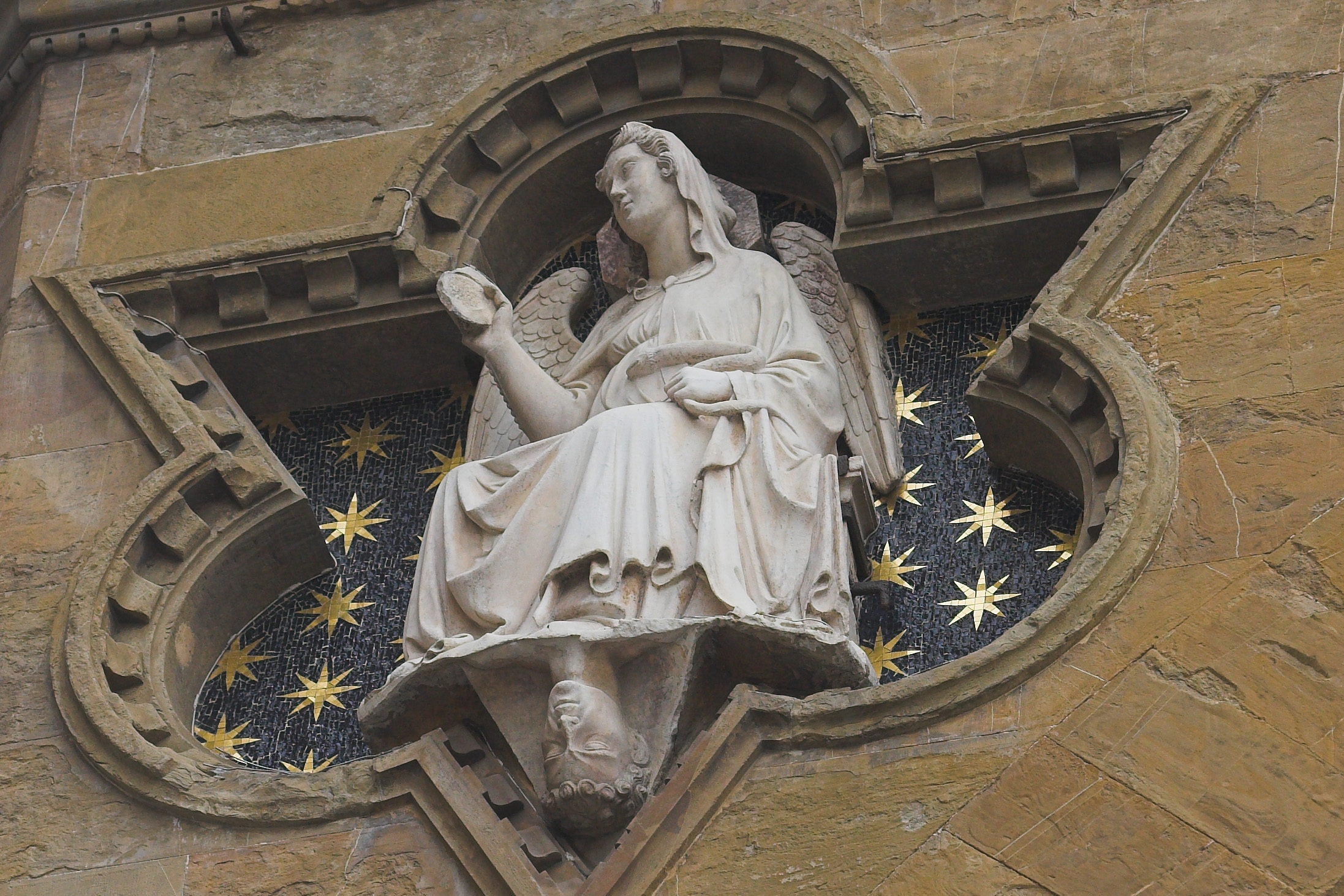
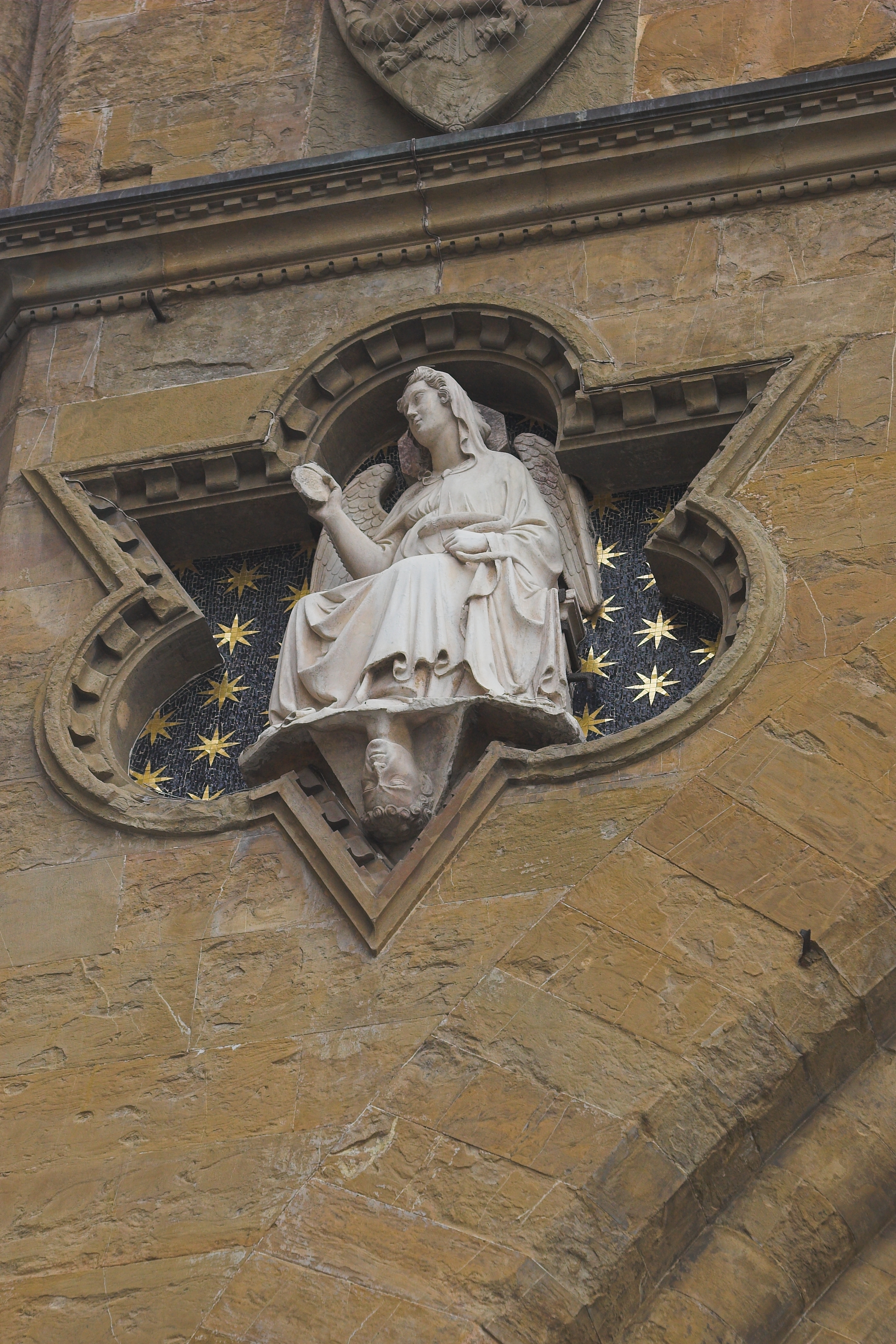
"Prudence at Loggia dei Lanzi". Licensed under CC BY-SA 2.5 via Wikimedia Commons
“Prudence at Loggia dei Lanzi”.
Licensed under CC BY-SA 2.5 via Wikimedia Commons

As a follow-on to yesterday’s post on the spiritual work of counseling  the doubtful, I would like to say a little more about prudence.

Prudence is often misunderstood by those who reduce it to mere caution or reluctance to act. It is true that sometimes prudence indicates caution and that hasty action is seldom prudent. However, sometimes it is prudent to act quickly. Having long discussions about the best way to put out a house fire before acting is not prudent. Quick, expedient action is the best means to an end in this case. This is sometimes the case in less obviously urgent matters, too, such as stemming the inflence of an erroneous teaching that may otherwise confuse or scandalize the faithful. Sometimes a carefully planned and gradual response is best. At other times a quick denunciation of the error is ideal. Prudence is the virtue that sees the best way and commands the will to execute that approach.

Let us consider more fully what prudence is by reviewing the teaching of St. Thomas Aquinas in the Summa Thelogica (II, IIae 47). The following is my meager attempt at a summary. Read St. Thomas directly if you seek further clarification.

St. Thomas states that It belongs to prudence chiefly to direct something to a right end; and this is not done aright unless both the end be good, and the means good and suitable (II, IIae 49.7, respondeo). So, prudence is the knowledge of how to act or conduct one’s life rightly, what to avoid or seek in the concrete and particular situations that make up our daily life. While prudence belongs to the intellect, since it so fundamentally guides the will, it also has the quality of a moral virtue. Prudence does not so much determine what is right and wrong as it regulates the means to determine what is moral and good. In effect, prudence discovers what is good by taking counsel, judging what is discovered, and then commanding the will to execute what we ought to choose.

Since prudence is a virtue, not merely an ability, it is oriented to what is good and morally upright. If perchance one were to speak of “prudence” that was oriented to what was sinful or evil we should rather refer to it as “craftiness” or “cunning,” but not prudence, properly understood.

Finally, although prudence can exist as a natural virtue, the Christian tradition usually speaks of it in a way that is charged by supernatural grace and informed by the Wisdom of God as well.

Prudence is fundamental enough that we may and ought to speak of it as having “parts,” which St. Thomas calls “quasi-integral” parts. This is because none of the parts replaces prudence as a whole or describes it alone, but together all the parts make it what it is. Thomas enumerates eight of these parts in the Summa (II IIae 49):

1. Memory – Since experience helps us to discover what is true in the majority of cases, memory of that experience is an important part of prudence.

2. Understanding – This refers to a kind of “grasp” or right estimation of things and what is to be done, rather than the kind of understanding we attribute to the intellect’s ability to synthesize or comprehend mere processes.

3. Docility – The ability and willingness to be taught, especially by our elders and those with greater experience, is part of prudence, since none of us can personally know and experience all the possible scenarios and matters for decision. Stubbornly opinionated people are almost never prudent since they are not open to being taught or to considering that their experience and prudential judgement can be assisted and augmented by teaching from others.

4. Shrewdness – The ability to rapidly estimate what is suitable and proper in a given circumstance both serves and is a part of prudence. While docility looks to the experiences of others, shrewdness is an aptitude for acquiring a right estimation of what is to be done. “Shrewdness” here is not understood in its pejorative sense, wherein it refers to mere cunning or craftiness, but rather it refers to the gift of being able to come quickly to a proper estimation of the good.

5. Reason – Since prudence involves accepting counsel and then taking account of a situation, it is necessary that one be able to reason well. And since prudence belongs to the intellect, reason both serves and is a part of prudence. “Reason” here, however, means not so much logical analysis as the right use of our mind, wherein we properly equip our mind and then use its faculties in a way that is adept but also humble.

6. Foresight – This is the ability to see something distant, namely how future contingencies (or consequences) bear upon what is to be done now.

7. Circumspection – This is the ability to compare the proposed course of action to the current circumstances and see how other things and people will be affected.

8. Caution – Since falsehood is often found along with what is true, and evil mixed with good, prudence needs a caution that is sober about this and seeks to avoid evil and grasp that which is good. Prudence needs a caution that looks to avoid evil—not just the evil of doing something, but also the evil of doing nothing.

And thus we reflect a bit on prudence, one of the four cardinal virtues. Continue to ask God for a healthy prudence, for frequently we err not in determining what is good, but on the best way to accomplish that good. Prudence opens doors and keeps us on course toward that which is truly good. And while at times prudence points to bold action, at others it counsels steady perseverance so that we attain the good without setting loose that which is inordinate or evil. Indeed, Lord save us from being “do-gooders” who lack prudence and may thereby set loose more evil than we seek to end!

Counsel the Doubtful – A Meditation on the Third Spiritual Work of Mercy

050515At first glance, counseling the doubtful may seem rather similar to instructing the ignorant. However, teaching has learning as its goal while counseling aims to assist with decisions. Certainly giving counsel often includes some aspects of teaching, such as providing information and perspective, but its primary purpose is to assist a person in coming to a decision. This distinction is contained in the root meanings of the words “counsel” and “doubtful.”

The English word “counsel” comes from the Latin consilium (con (with) + silium (a decision)). So to counsel means to assist someone in the act of deciding, not just to give vague or generic advice.

As such, counsel is connected to the virtue of prudence. Prudence is that virtue which directs particular human acts toward a good end.  In modern usage, prudence (and by extension, counsel) has often been equated with caution. But prudence is not caution per se; it is a virtue that sees the best way forward given the goals in mind. It is true that both prudence and counsel would avoid rash decisions until things have been properly considered. But of itself, the “prudent” response to a situation is not always the cautious one. Sometimes the prudent thing to do involves a bold or zealous response. Aristotle and classical philosophy defined prudence as recta ratio agibilium (right reason applied to practice). Prudence and counsel seek the best way forward toward a goal based on the situation and the available options.

However, since we are speaking here of counseling the doubtful as a spiritual work of mercy, the goal in this case refers to that which is moral and rooted in our final end of holiness and salvation. Thus while “counsel” in the general sense could include helping a person decide the best way to repair a car, when speaking of the spiritual work of mercy, such worldly issues are not our focus. Rather, the spiritual work of mercy to “Counsel the doubtful” is concerned with holiness and our goal of dwelling with God in Heaven forever. Finding a “good” way (recta ratio) forward is not mere expedience; it is what is moral, upright, and holy.

The work of giving counsel here is directed to the “doubtful.” Here, too, we need to rescue the word a bit from modern notions, which often associate doubt with skepticism. While a doubtful person may be skeptical of certain truths, “doubt” here is understood in a way that emphasizes the need to make a decision.

The word “doubt” comes from the Latin word dubius meaning “uncertain.” However, even more deeply, the word has roots in the Latin word duo (two). The Latin word dubium is a choice between two things. Even in English there is that strange (silent) “b” in the word “doubt.” This points to another related English word, “double,” which comes from the same Latin root (dubius). And thus the doubtful are the undecided, those of two minds on a certain matter, or, more pejoratively, the “double-minded.”

So we have come to a more precise description of the spiritual work of mercy we call “Giving counsel to the doubtful.” It is that work which helps the undecided (or those of two minds on something) to come to a good and upright decision rooted in the call to holiness and the goal of attaining Heaven by God’s grace.

Counsel of this sort is an integral part of prudence. According to St. Thomas Aquinas (Summa Theologica II-IIae 47-48), an act of prudence involves three things: taking counsel (looking about for the means suited in the particular case to reach the goal of moral virtue), judging soundly the fitness of the means suggested, and commanding its employment.

What a beautiful work of mercy it is to help better orient others toward their heavenly goal by assisting them in choosing the most virtuous and holiest way forward in a difficult or puzzling situation! Clearly, though, if we are to be equipped to provide this beautiful work of mercy, we must first be docile to the will and mind of God. We must be well instructed in heavenly wisdom, which is often paradoxical to the worldly-minded. The capacity to give spiritual counsel grows out of a deep prayer life, the study of Scripture, and the experience (and suffering) of living as a faithful Christian in the world.

Though in rare cases the gift to give counsel can be infused (i.e., poured into the soul by God), in most cases the gift deepens over time, assuming one is prayerful and attentive and docile to divine teaching. And thus our prayer, study, and life experiences are not only for our own sake, but for that of others as well.

St. Paul gives some wise counsel to those of us who would strive to accomplish this spiritual work of mercy:

You, however, continue in the things you have learned and become convinced of, knowing from whom you have learned them, and that from childhood you have known the sacred writings which are able to give you the wisdom that leads to salvation through faith which is in Christ Jesus. All Scripture is inspired by God and profitable for teaching, for reproof, for correction, for training in righteousness ... (2 Tim 3:14-16)

Similarly, St. Paul exhorts Titus to show forth the fruit of such devoted learning:

And as for you, speak the things which are fitting for sound doctrine. … In all things show yourself to be an example of good deeds, with purity in doctrine, dignified, sound in speech which is beyond reproach (Titus 2:1, 7-8).

And thus we are equipped to counsel the doubtful, to assist them (and ourselves) to become more deeply rooted in the decision to follow Jesus, to choose the Lord and the things awaiting in Heaven, to leave behind double-minded ways and duplicity, to decide for what is right, good, noble, and holy.

This is a great and wonderful work of mercy.

A Brief Directive for Church Leaders from the Acts of the Apostles

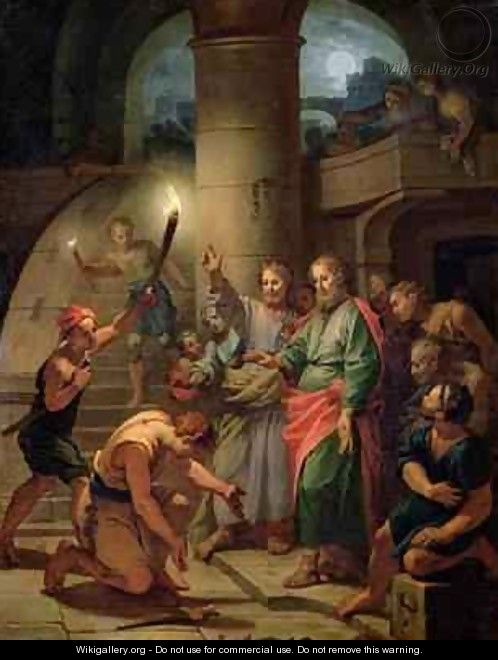
 "The Deliverance of St Paul and St Barnabas” oil on canvas by Claude-Guy Halle This file is licensed under the Creative Commons Attribution-Share Alike 2.0 Generic license.
“The Deliverance of St Paul and St Barnabas” oil on canvas by Claude-Guy Halle
This file is licensed under the Creative Commons Attribution-Share Alike 2.0 Generic license.

The second reading from today’s Mass is very Catholic and too informative to let pass without comment. It presents a highly organized Church, possessing some of the structures we know today in full form. Granted, some of these structures are in seminal (seed) form, but they are there.

We will also notice qualities of the original kerygma that are at variance with what some modern thinkers declare should be the methodology of the Church. The soft, cross-less Christianity of many today, who replace the cross with a pillow and insist on merely inclusion and affirmation, is strangely absent in this early setting.

Let’s look at the first reading from the Acts of the Apostles (Acts 14:21-27) and see the true path of priests, teachers, and leaders in the Church. Four steps are prescribed for our consideration. The Apostles went forth announcing, admonishing, appointing, and accounting.

I. Announcing – The text says, After Paul and Barnabas had proclaimed the good news to that city and made a considerable number of disciples …

Notice that happiness is linked to the harvest. Proclaiming the Good News, they yield a great harvest. As Catholics, we are not sent out to proclaim a mere list of duties. We are sent to proclaim the Gospel. And the Gospel is this: that God has loved the world and sent His Son, who by dying and rising from the dead has purchased for us a whole new life, free from sin and the rebellious obsessions of this world. He is victorious over all the death-directed and sinful drives of this present evil age. Simply put, He has triumphed over these forces and enabled us to walk in newness of life.

We are sent to announce a new life, a life set free from the bondage of sin, rebellion, sensuality, greed, lust, domination, and revenge. We are sent to announce a life of joy, confidence, purity, chastity, generosity, and devotion to the truth rooted in love.

Yes, here is a joyful announcement rooted in the cry Anastasis (Resurrection)! The old order of sin is gone and a new life of freedom from sin is here!

Did everyone accept this as good news? No. Some, indeed many, were offended and sought to convict Christians as “disturbers of the peace.” Some don’t like to have their sin and bondage called out as such. They prefer bondage, sin, and darkness to light, holiness, and freedom.

But at the end of the day, we as Catholics announce what is intrinsically good news and we ought to start proclaiming it with joy. We must announce it joyfully, as something wonderful, freeing, and true rather than sounding like bitter, angry people who are just trying to win an argument.

II. Admonishing – The text says, They returned to Lystra and to Iconium and to Antioch. They strengthened the spirits of the disciples and exhorted them to persevere in the faith, saying, “It is necessary for us to undergo many hardships to enter the kingdom of God.”

Notice first that preaching (teaching) is a process. You don’t just preach or teach once and move on; you return and reiterate. They are retracing their steps back through towns that they have already evangelized. They do not just come, have a tent revival, and then move on. They return and, as we shall see, they establish the Church.

Notice what they do:

1. Encourage – They strengthen the spirits of the disciples.
2. Exhort – They exhort them to persevere in the faith.
3. Explain – They explain by saying, “It is necessary for us to undergo many hardships to enter the kingdom of God.”

Let’s focus especially on the last the point. In effect, they announce and teach, “If you’re not willing to endure the cross, no crown will come your way. If you can’t stand a little disappointment sometimes, if you can’t stand being talked about sometimes, if you think you should always be up and never down, I’ve come to remind you, NO CROSS, NO CROWN.”

Yes, beware of cross-less Christianity. We do have good news to proclaim, but there is also the truth that we get to the resurrection and the glory through the Cross. There is a test in every testimony, a trial in every triumph. There are demands of discipleship, requirements for renewal, laws of love, and sufferings set forth for Saints.

Good preaching combines hardship and happiness in one message. It is a joy to follow in the footsteps of our Lord, who endured hostility, hardship, and the horrors of the Cross but triumphed over all of it, showing that the wisdom of this world is foolishness to God. Yes, He has caught the wise in their craftiness and shown that the thoughts of the wise of this world are futile (cf 1 Cor 3:20). He made a public spectacle of them, triumphing over them (paradoxically) by the Cross (cf Col 2:15).

Thus, Saints Paul and Barnabas announce the Cross, a stumbling block to Jews and foolishness to Gentiles (cf 1 Cor 1:23). Many today insist that the Church soft-pedal the Cross, saying that we should use “honey, not vinegar.” No can do. We joyfully announce and uphold the paradox of the Cross and must be willing to be a sign of contradiction to this world, which sees only pleasure and the indulgence of sinful drives as the way forward, which exalts freedom without truth or obedience, and calls good what God calls sinful.

Too many so-called Christian denominations have adopted the pillow as their image and a “give the people what they want” mentality. This is 180 degrees out of phase with the Cross.

The Catholic Church does not exist to reflect the views of her members, but to reflect the views of her founder and head, Jesus Christ. Jesus announced the Cross without ambiguity, saying as He went out to die, Now is the time for judgment on this world; now the prince of this world will be driven out. And I, when I am lifted up from the earth, will draw all men to me (John 12:31-32).

So we announce the Cross not merely as suffering, but as life, power, and love. It is possible, by the power of the Cross, to live without sin, to overcome rebellion, pride, lust, and greed. It is possible by the power of the Cross to learn to forgive and to live the truth in love.

And the world will hate us for this. But such hardships, such crosses are necessary preludes to the hallelujah of Heaven. The Church can do no less than to point to the Cross. The center of our faith is the Cross, not a pillow. The Cross is our only hope. Ave Crux! spes unica nostra!  (Hail O Cross! our only hope!)

Yes, the Church announces the Cross and admonishes a world obsessed with pleasure and passing, fake happiness.

III. Appointing – The text says, They appointed presbyters for them in each church and, with prayer and fasting, commended them to the Lord in whom they had put their faith. Then they traveled through Pisidia and reached Pamphylia. After proclaiming the word at Perga they went down to Attalia.

And thus we see the ordination of priest leaders in every place. “Priest” is just an English mispronunciation of “presbyter.” Paul and Barnabas did not simply go about vaguely preaching and then moving on. They established local churches with a structure of authority. The whole Pauline corpus of writings indicates a need to continue overseeing these local churches and to stay in touch with the priest leaders established to lead those churches.

Later, St. Paul spoke of the need for this structure in other texts, for example when he wrote to Titus,

This is why I left you in Crete, that you might amend what was defective, and appoint presbyters in every town as I directed you (Titus 1:5).

This appointment was done through the laying on of hands and today is called ordination. It was a way of establishing order and office in the Church to make sure that the work continued and that the Church was governed by order. This is why we call the Sacrament involved here the “Sacrament of Holy Orders.”

Note, too, that a critical task for leaders in the Church is to develop and train new leaders. Too many parishes depend on charismatic and gifted leaders and are left with a void rather than an ongoing ministry when those leaders die or must move on. This should not be so. Part of being a good leader is to train new leaders.

IV. Accounting – The text says, From there they sailed to Antioch, where they had been commended to the grace of God for the work they had now accomplished. And when they arrived, they called the church together and reported what God had done with them and how he had opened the door of faith to the Gentiles.

Note that Saints Paul and Barnabas are now returning to render an account of what they have done. Accountability is part of a healthy Church. Every priest should render an account to his bishop, and every bishop to his Metropolitan and to the Pope. Today’s ad limina visits of bishops to the Pope are the way this is done. Further, priests are accountable to their Ordinary through various mechanisms such as yearly reports and other meetings.

A further background to this text is that Paul and Barnabas are returning to Antioch because it was from there that they were sent forth by the local bishops and priests on this missionary task.

While they were worshiping the Lord and fasting, the Holy Spirit said, “Set apart for me Barnabas and Saul for the work to which I have called them.” Then after fasting and praying they laid their hands on them and sent them off (Acts 13:2-3).

St. Paul was not the “lone ranger” some think him to be. He was sent and was accountable. As we read elsewhere,

But when he who had set me apart before I was born, and had called me through his grace, was pleased to reveal his Son to me, in order that I might preach him among the Gentiles, I did not confer with flesh and blood, nor did I go up to Jerusalem to those who were apostles before me, but I went away into Arabia; and again I returned to Damascus. Then after three years I went up to Jerusalem to visit Cephas, and remained with him fifteen days (Gal 1:15-18).

Then after fourteen years I went up again to Jerusalem with Barnabas, taking Titus along with me. I went up by revelation; and I laid before them (but privately before those who were of repute) the gospel which I preach among the Gentiles, lest somehow I should be running or had run in vain (Gal 2:1).

The preacher and teacher must be accountable: For we shall all stand before the judgment seat of God; for it is written, “As I live, says the Lord, every knee shall bow to me, and every tongue shall give praise to God.” So each of us shall give account of himself to God (Rom 14:10-12).

And thus we see some paths for priests, preachers, teachers, and leaders. We must announce the Gospel as good news, with joy and confidence. We must admonish a world (and some Church members) obsessed with pleasures to embrace the Cross as our only hope. We must continue to develop, train, and appoint leaders to follow after us. And we must be accountable to one another.

A nice, quick portrait of some healthy traits for the Church!

Pondering Pruning – A Meditation on This Necessary Work of God in Our Lives

"2008-04-21 Tree trimming on Gregson St 2" by Ildar Sagdejev (Specious) Own work. Licensed under CC BY-SA 3.0 via Wikimedia Commons.
“2008-04-21 Tree trimming on Gregson St 2” by Ildar Sagdejev
  Licensed under CC BY-SA 3.0 via Wikimedia Commons.

The gospel from Sunday (John 15:1-8) presents us with an important meditation on the difference between love and kindness. Perhaps some further reflections from this gospel are in order today.

There is an unfortunate tendency in our times to reduce love to kindness. Kindness is an aspect of love, but so is rebuke. It is an immature notion of love that reduces it merely to affirming, or that refers to proper correction as a form of “hate.”

We saw in yesterday’s gospel that proper care involves the Lord “pruning” us so that we bear more fruit. But in soft times like these, many would not consider pruning, which is painful, to be proper care. Any reasonable, mature, balanced assessment yields the truth that pruning is necessary and is part of proper care.

Though I am less familiar with grape vines, I know my roses. And while I feed and water them, treat their common diseases, and pull the weeds that seek to choke them, I also prune them—sometimes quite severely. At this time of year, my fall pruning vindicates itself as proper care—the first rosebuds and the luxuriant foliage are in glorious evidence! Through the year I will continue all my care, including pruning, cutting away diseased branches, and shaping the plants. Who of you will question me for what I do to my beautiful roses?

It is no less the case with us that the Lord must prune us. And who would question the Lord for this necessary work? Yet many in our times do question Him and His Body, the Church, for doing just this.

First of all, He does this by proclaiming His Word: You are already pruned because of the word that I spoke to you (Jn 15:3). In this proclamation is a kind of pruning of the intellect; our worldly thinking and priorities are pruned away by the truth of God’s wisdom and His Word, which is like a scalpel or pruning hook.

Indeed, the word of God is living and effective, sharper than any two-edged sword, penetrating even between soul and spirit, joints and marrow, and able to discern reflections and thoughts of the heart. No creature is concealed from him, but everything is naked and exposed to the eyes of him to whom we must render an account (Heb 4:12-13).

The Word of God prunes away our error by shining the light of truth on our foolishness and worldliness; it exposes our sinfulness and silly preoccupations. It lays bare our inordinate self-esteem and all the sinful drives that flow from it: pride, greed, lust, anger, gluttony, envy, and sloth. A steady diet of God’s Word prunes and purifies our mind, reordering it gradually.

Yet for many of us, the Word of God alone (while sufficient in itself) is not enough due to our stubbornness and tendency to rationalize our bad behavior and “stinking thinking.” Too easily we call good or “no big deal” what God calls sin and surround ourselves with teachers and “experts” who tell us what our itching ears want to hear (cf 2 Tim 4:3).

And thus further pruning is needed. Such further pruning can be accomplished in two ways: active and passive purification. Active purifications are things that we undertake ourselves such as fasting or other mortifications. These help to prune away what stunts healthy growth and the fruits of righteousness.

But honestly, none of us will ever really do enough active purification to accomplish what is really needed—not even close. Consider an analogy I have used before: could you perform an appendectomy on yourself? Of course not! First, you could not really see enough to be able do it properly. Second, you would never be able to inflict that much pain on yourself. Such things must be accomplished for us by others.

Therefore, since active purifications are not enough to prune us properly, we must also accept passive purifications. Passive purifications are those things that God does or allows in order to prune us. And frankly some of them are quite painful: serious losses or setbacks, struggles with our health, difficulties in marriage or other vocations, the death of loved ones, the end of relationships, humiliating occurrences, accidents, and so forth. Other passive purifications are less painful, involving minor irritations, disappointments, or discomforts.

And when these occur we cry out in pain. Pruning hurts. But it may well be just what we need. The honest truth is that we human beings are so gifted, talented, and capable that if we didn’t have a few things to keep us humble, we’d be so proud we’d just go to Hell.

So God prunes. And whether we like to admit it or not, it is a form of care. We need these passive purifications; we need the pruning that keeps us bearing the fruit of holiness and righteousness.

In soft times like these, when the application of limits or the use of the word “no” is deemed “unloving” or “hateful,” we who would be Christians and light to the world must become clearer ourselves about the need for pruning. Even in the Church there is a hesitancy to speak of this need or of anything considered “negative” or “challenging.” To all this we can only reply that it is necessary at times for the surgeon to wield the scalpel, the vinedresser to apply the pruning sheers, the Lord to use passive purifications. It is hard and painful at times, but there is no other way given our stubborn and sin-prone souls.

There is also a communal dimension to this that was mentioned in yesterday’s gospel: He takes away every branch in me that does not bear fruit (Jn 15:2). This is not the pruning of a single branch; it is the cutting away of any branches that do not bear fruit and thus sap energy from the others.

In these highly individualistic times it is harder for people to grasp the common good and why it is sometimes necessary for the Lord to wholly remove from His Body (the Church) those who refuse to bear fruit. But the common good really is the answer.

And now back to my roses: one of my rose bushes tends to go wild. In the last two years it has become gnarly, losing its shape. Its roses have lost their wedged-tulip shape and are becoming small and rounded. I have taken to pruning it severely in the hopes of saving it. So far this has yielded limited success. This year, if it does not respond and return from the wild side, I will have to remove it. This is not only due to my preferences; I am concerned that the other bushes will cross-pollinate with it and also lose their dignity and form. One wild rose bush tends to exert its influence on others. Who of you will question me for what I do to protect my roses?

And who of us should protest against God for what He does to keep His vine strong and Heaven pure?

Pruning is needed both to help us bear fruit and to save us. It falls to us, like a faithful remnant, to recover this notion and teach it without apology or embarrassment. God knows what He is doing. He knows what makes for good disciples and perfect souls. It is hard, though, and it’s OK to ask God to be gentle with us. But in the end, may God never do anything less than is necessary to prepare heavenly glories for us.