On Humility in Prayer

blog10-27Perhaps like you, I have to see people I love and care about through some difficult periods in their lives. One neighbor and parishioner recently lost her eight-year-old daughter to cancer. A number of my parishioners are seeking work and praying daily for it, but no employment offers have been forthcoming. Still others cry out for relief from any number of different crosses. I, too, have lots of things for which I pray; sometimes I get discouraged or even angry when God seems to say, “No” or, “Wait.”

There is one thing that I have learned about true prayer: I have to be humble, very humble. The Scriptures say, We do not know how to pray as we ought (Romans 8:26). Many other translations of this text say even more emphatically, We do not know what we ought to pray for. Yet we are often so sure that we know what is best for us or best for others. But what we find is that the outcome we want is not necessarily the best one for us. This insight requires great humility. We see so little and understand even less. Though it is not wrong to ask for some particular outcome, we need to do so humbly. God alone knows the best answer and when to give it. Recognizing this requires humility.

There is an old teaching that basically says this: Many think of prayer as trying to get God to do your will, but true prayer is trying to understand what God’s will is and then doing it. I heard an African-American preacher put it this way: “You’ve got a lot of people that talk about naming and claiming and calling and hauling, but there’s just something about saying, ‘THY will be done!’ that we’ve forgotten.”

It’s not wrong to ask. The Book of James says, You have not because you ask not (James 4:2). But we do need to ask with great humility because we don’t really know what’s best. James and John came to Jesus one day seeking high positions in the new administration (Kingdom). Jesus said to them, You do not know what you are asking (Mk 10:38). And the truth is, we don’t.

So ask, but ask humbly.

St. Augustine writes beautifully on this matter in his letter to Proba:

Paul himself was not exempt from such ignorance … To prevent him from becoming puffed-up over the greatness of the revelations that had been given to him, he was given … a thorn in the flesh, a messenger of Satan to buffet him, he asked the Lord three times to take it away from him … even such a great saint’s prayer had to be refused: “My grace is enough for you, my power is at its best in weakness” (2 Cor 12:9).

So when we are suffering afflictions that might be doing us either good or harm, [we ought to remember that] we do not to know how to pray as we ought. [B]ecause they are hard to endure and painful, because they are contrary to our nature (which is weak) we, like all mankind, pray to have our afflictions taken from us. [But], we owe this much respect to the Lord our God, that if he does not take our afflictions away, we should not consider ourselves ignored and neglected. But [rather, we] should hope to gain some greater good through the patient acceptance of suffering. “For my power is at its best in weakness.”

These words are written so that we should not be proud of ourselves … when we ask for something it would be better for us not to get; and also that we should not become utterly dejected if we are not given what we ask for, despairing of God’s mercy towards us. [I]t might be that what we have been asking for could have brought us some still greater affliction, or it could completely ruin us through the corrupting influence of prosperity. In such cases, it is clear that we cannot know how to pray as we ought.

Hence if anything happens contrary to our prayer [request], we ought to bear the disappointment patiently, give thanks to God, and be sure that it was better for God’s will to be done than our own.

The Mediator himself has given us an example of this. When he had prayed, “My Father, if it is possible, let this cup pass me by,” he transformed the human will that was in him because he had assumed human nature and added, “Nevertheless, let it be as you, not I, would have it.” Thus, truly, by the obedience of one man many have been made righteous (St Augustine Letter to Proba (Ep 130 14.25ff)).

A Simple Directive from God in Times Like These

A silhouette of a young Christian woman is bowing her head in prayer, and desperation outside during sunset.

Beginning in 721 B.C., after repeated warnings from the prophets, terrible waves of destruction came on the Jewish people. The Assyrians invaded and conquered the ten northern tribes of Israel. The survivors were exiled and in a certain sense were not heard from again. (They are often called the “Ten lost tribes of Israel.”)

Small, feeble attempts at reform in the south for Judah and the Levites were mostly unsuccessful. Again, despite repeated warnings from the prophets, 587 B.C. was witness to another wave of destruction: the Babylonians invaded and destroyed Jerusalem. The city lay in ruins, the temple burned and looted. The survivors were exiled in Babylon and for eighty years the Promised Land lay in ruins.

How could this be? Why would God allow His people to be conquered? Worse yet, how could He allow the temple to be destroyed?

But He did. God does not care about buildings and land. He cares about the temple of our soul and a harvest of justice.

Even though His people were severely pruned and waiting for a spring of new growth, God did not forsake them utterly; He nurtured a remnant in Babylon. Through His prophets, God taught them to remain faithful and to await the day of liberation that would surely come.

We do well to look at a repentance text, a simple and humble text with very few moving parts. Why? Because many of us, especially the older of us, remember a once-flourishing Church that had enormous numbers and was influential in the culture. Back then over 80% of Catholics attended Mass every Sunday. Our schools and churches were packed and the faithful were generally respectful of Church teaching. Poor laborers and immigrants built glorious monuments to the faith along with schools, universities, hospitals, and orphanages. While we ought not to idealize those times, it is hard to argue that they did not produce a remarkable legacy of buildings, institutions, and large Catholic families.

But a cultural earthquake in the West shook us vigorously and many were lost to us. Today only 20-25% of Catholics attend Mass regularly. Once-packed churches have closed or been merged with others. Schools and seminaries have been shuttered and a flock that was once largely obedient has been infested with dissenting voices up to some of the highest levels. Birthrates have plummeted, liturgy has widely degraded, and catechesis seems ineffective against a secular juggernaut. Even those who have tried to stay faithful feel lost, weak, and discouraged.

It is not 587 B.C. by a longshot, but we cannot help but see some similarities. It may be good to recall this simple, humble text summoning all to repentance and encouraging the faithful remnant to stay true:

If my people, which are called by my name, shall humble themselves, and pray, and seek my face, and turn from their wicked ways; then will I hear from heaven, and will forgive their sin, and will heal their land (2 Chron. 7:14).

Well, what do you think? Is this really so complicated? The Lord seeks a humble, broken people who seek Him and His truth. Are you among them? Be careful, the Lord is not seeking a people who are proud and who denounce others; He had that in the Pharisees. What if changing others were not my primary task? What if repenting more deeply of my own sins were my focus? What if humbling myself were to come before finding fault in others? What if turning from my own sins were what would get God’s attention and bring healing on this land?

It’s pretty hard to change the world, but when it comes to my own life I stand a chance to be able to affect my acreage and claim it back for God.

King Jesus is listening all day long to hear a humble sinner pray. Too often we assess the problems in others, in the rival political party, in secularism, in culture. All of these areas certainly need help, but when do we ever get around to following what God asks of us: that we humble ourselves, pray, seek His face, and repent of our sinful ways?

I don’t know how or even if our land will be healed. Better cultures and empires than ours have fallen. But empires and cultures consist of individuals, and among us God seeks those who will humble themselves, seek His face, and turn from their sinful ways. Why not me? Why not you? Why complicate things? It is easier to wear slippers than to carpet the whole of the earth. What is God asking you to do to change this Hell-bound, sin-soaked world? Why not do it? What if the change of the whole world were to begin with you and me?

Compare and Contrast! Two Pictures from Different Ages – Which Age Looks Healthier?

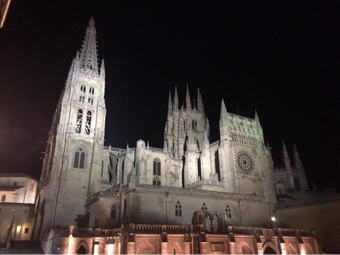
blog10-25-001A couple of years ago I was  in Burgos, Spain and saw the splendid cathedral there. My first views of it came at night and I took the photo at the upper right. What a magnificent building; such proportion and symmetry! To me there is the echo of tall trees in a forest, majestically reaching up to the heavens. There is also evident a great advance in building technique in the flying buttresses that support the soaring walls and towers.

These were the skyscrapers of the middle ages. Such angular, geometric, and vertical beauty; a fair flower of the 13th century echoing God’s creation and pointing to  Him in a great work of human praise.

Two medieval phrases come to mind in the beauty of this building. Beauty is:

  1. Beauty is id quod visum placet – (Beauty is) that which pleases when seen.
  2. Pulchra dicuntur quae visa placent – Things that give pleasure when seen are called beautiful.

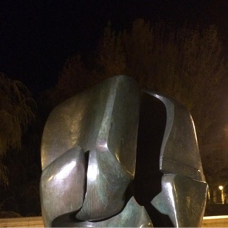
blog10-25-002 A mere thirty yards from this beautiful cathedral in the town square was something that is not beautiful in any traditional sense. I took the photo of it that is here on the left. It was not lightsome; it seemed to correspond to nothing in creation (unless one were to imagine a dinosaur dropping or some giant stumbling block). Frankly, like most modern abstract art, it looks more to me like someone’s nightmare. It seems to have little to say other than “Try to figure me out, you ignoramus.” For indeed, that is what I am usually called by art critics when I express dismay at these sorts of ugly blobs that clutter too many of our public squares and “art” museums today.

There are some who mistakenly call the Middle Ages the “Dark Ages” and smugly call our age “enlightened.” Certainly no age is perfect, but compare and contrast the two items in the photos here: one is lightsome, soaring, and inspiring; the other is dark, brooding, and opaque as to its meaning. One is a lightsome building from the 13th century, the other a dark “who-knows-what” from the 20th century. Based on representational art, which age seems more inspiring? Which seems more enlightened? You decide. But I’ll take the 13th century.

St. Thomas Aquinas (also from the 13th century) spoke of beauty as consisting of integritas, consonantia, and claritas.  He writes,

For beauty includes three conditions: “integrity” or “perfection,” since those things which are impaired are by the very fact ugly; due “proportion” or “harmony”; and lastly, “brightness” or “clarity,” whence things are called beautiful which have a bright color (Summa Theologica I, 38, art 8).

In applying these criteria to human art and architecture, we might consider the following:

 Integritas (integrity) – This speaks to the manner in which something echoes the beauty of what God has done. Thomas says that every created being is beautiful since God gives beauty to all created beings by a certain participation in the divine beauty. Therefore, human art and architecture are said to have integrity insofar as they participate in and point to the divine beauty of things. This need not mean an exact mimicry but at least a respectful glance to creation, holding some aspect of it forth so as to edify us with better and higher things. The cathedral above points to a majestic forest as its form, its soaring stone to the mountains. Its colored glass allows the natural light to dazzle the eye and tell the stories of the Gospel. It is a sermon in glass and stone. As such, it has integrity, since it tells forth God’s glory. I’m not sure what the dark metal blob says. To what does it point? I have no idea. As such, it does not have integrity, since it is not integrated into the glory of creation in any way that I can discern. It seems rather to mock creation. If you think it is beautiful and has integrity, I invite you so explain why and how. But I am at a loss to see any meaning at all in it.

Consonantia (proportion) – This refers to the order and unity within a given thing. What God creates has a unity and purpose in its parts, which work together in an orderly fashion to direct something to its proper function or end. Thus art and architecture intrinsically bespeak a unity and functionality or they point to it extrinsically. They make sense of the world and respect what is given, reflecting the beauty of order, purpose, and design that God has set forth. The cathedral is beautiful because its parts act together in an orderly and harmonious way. There is balance, proportion, and symmetry. There is a recta ratio factibilium (something made according to right reason). As such, the building participates in God’s good order; that is a beautiful thing. As for the dark metal “thing” (I don’t know what to call it), it doesn’t seem to me to have any proportion. It is roundish, but not really. Does it have parts? Do they work together for some end? If so, what end? I cannot tell. Rather than pointing to order, it makes me think of chaos. As such, I see no beauty echoed or pointed to.

Claritas (clarity) – It is through clarity that we can answer the question, “What is it?” with an ample degree of precision and ready understanding. Claritas also refers to the brightness or radiance of a thing. Something of God’s glory shines through; something about it gives light; something teaches and reminds us of God, and God and light are beautiful. The beautiful cathedral reflects the light shining on it, even at night. During the day it proclaims the glory of God by its soaring majesty, its sculptures, its windows, its order and proportion. It is a bright light showing forth the brightness of God and participating in it. As for the metal thing, it seems more to suck the light out of the room; it broods. I see no clarity, no brightness. I still cannot answer the question that clarity demands: “What is it?” There is no clear message. As such, it lacks beauty.

The criteria of beauty discussed here cannot be used for labeling things “beautiful” with absolute certainty, as if by applying a formula. They are more like guidelines to help us pin down some notion of beauty that is not purely subjective. Not all these criteria must be present for an object to be considered beautiful, and the presence of one does not guarantee that the object is beautiful.

So again, you decide. Each item pictured above is emblematic of its age. Were the “Dark Ages” really so dark? And is ours really so enlightened? Compare and contrast!

A Man Who Saw by Hearing

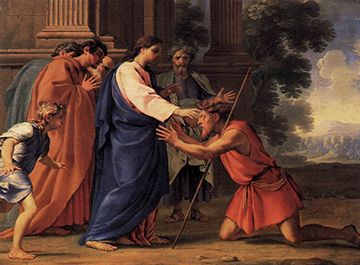
blog10-24Today’s gospel features the well-known story of the healing of the blind man (Bartimaeus). As when listening to any familiar story, we are inclined, upon hearing its opening lines, to think, “Oh, that story,” and just sort of tune out. But if we do so, we may miss many important details. The story of Bartimaeus is also our story; we, too, must let the Lord heal our blindness and give us sight. One paradox of this gospel is that the man receives his sight as the result of hearing.

Let’s look at this gospel in six stages.

I. The Perception of the Problem

The text says, As Jesus was leaving Jericho with his disciples and a sizable crowd, Bartimaeus, a blind man, sat by the roadside begging.

Bartimaeus has troubles; he is both blind and poor. But although he is physically blind, he is not spiritually blind. For he knows he has troubles; he knows he is blind. Knowing our troubles, being in touch with our neediness, is an important spiritual insight that many lack.

We are all so poor and needy that we depend on God for every beat of our hearts. Some people, though, feel self-satisfied, unaware of how blind, pitiable, poor, and naked they really are before God (cf Rev 3:17). In their pride, those who are spiritually blind lose this insight. They fail to ask for help from the Lord; they fail to ask for grace. Jesus said to the Pharisees, “If you were blind, you would not be guilty of sin; but since you claim you can see, your guilt remains” (John 9:41). In other words, physical blindness is not their problem, spiritual blindness is. And because they think themselves righteous on their own power, they think they do not need God and do not truly seek Him. Only humility and a true “vision” and experience of our poverty can help us to call out to God as we should.

But our blind man knows that he is blind, so he calls for help. As we shall see, however, his cries for help need some direction; they need to be properly specified and directed.

So we begin by noting that though Bartimaeus is blind he has spiritual insight.

Do we have this insight? Do we really understand how blind we are? We struggle to see God; we struggle to see and understand ourselves; we struggle to see others with compassion and understanding. Indeed, God is more present to us than is anything in this world. Yet somehow we can see all the things of this world, but struggle to see God. Neither do we see our own dignity, or the dignity and the gift of others, even our enemies. We do not see or understand how things work together, and we struggle to see and find meaning in the events of our day. We are also blind to our sin and seldom fully comprehend the harm our sin does.

Yes, we have a great deal of blindness; we struggle to see. But perhaps our worst blindness is that we do not even realize how blind we are. Like the Pharisees, we think that because we know a few things, we therefore know many things.

Consider the humility of the blind man: he knows he is blind; he knows he needs help, grace, and mercy. It is this humility that opens the door. Stage one in the journey must be the perception of the problem.

II. The Proclamation that is Prescribed

The text says, On being told it was Jesus of Nazareth who was passing by, he began to cry out and say, “Jesus son of David have pity on me.”

Note the subtle but important transition here. Up until this point, Bartimaeus has been calling upon anyone passing by for help. But no mere passerby, nor in fact anyone in this world, can ultimately help him with his real problem.

It is the same with us. Though we may turn to science, medicine, philosophy, economics, or politics, none of these can really help us. At best they can serve to specify what is wrong or to provide us with temporary medicines and passing comforts. But all these solutions will be rooted in this world, which is passing away.

True vision can only be granted by the Lord, who opens for us a vision of glory and who alone can draw us safely to that place where joys will never end and visions never cease.

When the blind man is told of the presence of Jesus, he directs his cry away from just any random passerby to the Lord, who alone can heal him: Jesus, son of David, have pity on me! The world, and passersby, can give him money or perhaps a meal, but only Jesus can give him meaning, the true vision that he really needs to see.

Do not miss the fact that his seeing comes, paradoxically, through hearing. For faith comes by hearing and hearing from the Word of God (cf Rom 10:17). It is a truth that faith is about hearing, not seeing. We often doubt things that we see. Even if our eyes see a marvel, we tend to dismiss it, thinking, “Oh, they have a way of doing that.” No, the eye is never satisfied with seeing (cf Eccl. 1:8). Faith comes by hearing and faith is obedience to what is heard. We walk by faith, by an inner seeing, not by physical sight.

Thus, it is by hearing that the blind man will come to see Jesus, who can help him to see. Bartimaeus hears from others that Jesus is passing by and takes up the proclamation that is prescribed: “Jesus, Son of David, have pity on me!”

III. The Perseverance that Produces

The text says, And they rebuked him, telling him to be silent. Yet he kept calling all the more, “Son of David, have pity on me!” Jesus stopped and said, “Call him.” So they called the blind man saying to him, “Take courage; get up. Jesus is calling you.”

It is true that those of us who seek to put our trust in the Lord and call on Him will often experience rebuke, hostility, and ridicule from the world. Bartimaeus ignores all of this; and so should we. He has heard the Name above all names, who alone in Heaven and earth can save, and calls upon Him.

Yes, Jesus does delay, not answering him right away. But the blind man perseveres, calling out all the more. Eventually, Jesus stops and says, “Call him.”

Why does God delay? While this is a very deep mystery, it is clear that one of the effects of His delay is to test our faith and strengthen it. In the end, it is not an incantation that saves us, but faith. Simply shouting, “In the name of Jesus!” is not enough. The name of Jesus is not some incantation like, “Open sesame.” Rather, it is an announcement of faith, and faith is more than words. Ultimately, it is not words alone that save us, but the faith that must underlie the words “Jesus, save me!”

IV. The Priority that is Presented

The text says, He threw aside his cloak, sprang up, and came to Jesus.

Do not miss this important detail. Bartimaeus’ cloak is probably the most valuable thing he owns. In that very arid climate, the temperature drops rapidly after sunset and it gets quite cool. In fact, so critical was the cloak that Scripture forbade taking one as collateral for a loan:  If a man is poor, do not go to sleep with his pledge in your possession. Return his cloak to him by sunset so that he may sleep in it (Deut 24:12-13).

But still, Bartimaeus casts aside his cloak and goes to Jesus. Thus, he leaves behind perhaps the most valuable and necessary thing for his survival in this world. Missing a meal might be inconvenient or uncomfortable but it would not kill him. But to spend one cold night without his cloak might well cause his death by hypothermia. In spite of this, Bartimaeus leaves everything behind and runs to the Lord.

What about us? What are we willing to leave behind in order to find Christ? An old gospel song says, “I’d rather have Jesus than silver and gold.” Another old hymn says, “There’s nothing between my soul and the Savior.” Is that true? Are you willing to leave it behind? Are you free enough to do so?

V. The Permission that is Procured

The text says, Jesus said to him in reply, “What do you want me to do for you?” The blind man replied to him, Master, I want to see!

Why does Jesus ask this question? Can He not see what a blind man needs?

But being healed takes courage. In this life, most of us seek mere relief, not healing. Tue healing takes courage because it brings about change and new demands on us. If the blind man is healed, it will no longer be acceptable for him to sit and beg; more will be expected; his life will be irrevocably changed.

Yes, to be healed requires courage. Many of us wonder why the Lord delays in answering our prayers. Perhaps we should think about a question from last week’s gospel: “Do you have any idea what you are asking?” Often we do not.

Truth be told, most of us want relief more than we want healing; there is a big difference. And the Lord is in the healing business. Do not miss what the Lord is really saying here. In effect, he says (to the blind man and to us), “Are you sure you really want healing?” The Lord respects us and our free will. He wants our consent before going to work. Though many of us think we want healing, we often don’t really know what we are asking.

The Lord waits … until a request makes real sense. He knows that many times we are not really ready for what he offers. He asks us, and only when our yes becomes definitive does He go to work.

VI. The Path that is Pursued

The text says, Jesus told him, “Go your way; your faith has saved you.” Immediately he received his sight and followed Jesus on the way.

As we have already seen, true healing brings forth radical change. The man who sat by the road begging now sees, but he is also up and walking about. And what is he doing? He is following Jesus. Faith has saved him. Faith not only gives sight but also summons us to obedience, an obedience that has us walk in the path of the Lord.

You see (pardon the pun), faith is more than an offer of relief. True faith instills real change: change in direction and change in the way we walk.

And thus today’s gospel speaks to us of a man who was blind, but, paradoxically, receives his sight and his faith by hearing. Bartimaeus heard of Jesus and then called on Him. Yes, his sight came from his hearing. And faith grants vision by hearing. True vision is seeing Christ, and having seen Him by hearing, following after Him.

I Want to Walk as a Child of the Light

1. I want to walk as a child of the light;
I want to follow Jesus.
God set the stars to give light to the world;
the star of my life is Jesus.

Refrain
In him there is no darkness at all;
the night and the day are both alike.
The Lamb is the light of the city of God;
Shine in my heart, Lord Jesus.

2. I want to see the brightness of God;
I want to look at Jesus.
Clear Sun of righteousness, shine on my path,
and show me the way to the Father.

3. I’m looking for the coming of Christ;
I want to be with Jesus.
When we have run with patience the race,
we shall know the joy of Jesus.

Let’s Pretend We Know What We’re Talking About – As Seen in a Commercial

blog10-23In life we don’t always have answers. There are just times when the best answer is, “I don’t know.” This is especially the case with the deeper mysteries of life such as the problem of evil, the “why” of suffering, and the reason why things sometimes don’t make sense.

As a younger priest I felt a lot of pressure to “have the answers” when tragedies occurred or when people experienced persistent setbacks in their lives. In more recent years I’ve learned to say less and to be more willing to sit quietly with people in their pain. To be sure, we have some answers, but explanations are poor substitutes for understanding and acceptance. Whatever explanations I can offer still leave even more things unexplained.

In life we sometimes must make decisions even though we don’t have all the information we’d like. Sometimes we simply have to guess at what’s best. At other times we have information and lots of (often-conflicting) advice, yet still remain uncertain as to what to do. We have to decide to trust God, remaining humbly open to His providence.

All of this is hard for us, especially these days, because we’ve cultivated such a high sense of being in control. But control, in anything but a limited sense, is an illusion. While you may have plans for tomorrow, tomorrow isn’t promised; you’re not even guaranteed the next beat of your heart. Your control of little things is based on myriad other things you can’t control.

Enjoy the video below, which humorously reminds us that we aren’t always certain what the best answer is even when the whole world is waiting for us to decide. Sometimes the best we can do is to decide and then accept the consequences of that decision. Hypocrisy—in this case pretending that the decision is all wise and fully informed—has a way of bringing scorn upon us that is far worse that what simple humility offers. Sometimes it’s OK to say, “I’m not sure,” or to accept that our decisions may be flawed.

Divine revelation is certain, but human decisions are flawed and uncertain.

Earth, Air, Fire, and Water: Great and Yet Terrifying Blessings

blog10-22-2015Some of God’s gifts come in strange and terrifying packages. The book of Job says,

The earth, though out of it comes forth bread,
is in fiery upheaval underneath (Job 28:2).

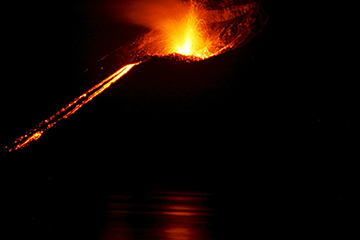
It is a fact that we live just above a fiery cauldron separated from us by a thin membrane of earthly crust rife with cracks through which fire routinely flares in volcanoes in fissures, a crust that is always shifting and even shaking violently in earthquakes.

And yet were it not for this violent cauldron beneath us, it seems unlikely that we would have life here at all. Volcanoes and other tectonic activity keep our soil rich and recycled. In this fiery cauldron are brewed some of our most useful minerals and most beautiful gems. Whole island chains and land masses are formed by eruptions and geothermal energy is a resource we have only just begun to tap. Many scientists think that volcanoes had a profound influence on the formation of an atmosphere in the early Earth period and that the molten core of the earth has an important influence on the Van Allen belt, a magnetic field that keeps the harmful portion of the sun’s radiation away from the earth’s surface.

Yes, Job had it right, some of God’s gifts come strange packages. The earth’s capacity to bring forth bread is directly connected to the fact that it is on fire beneath. And yet what a strange and terrifying package this gift comes in! For volcanoes and other seismic activity have claimed an enormous number of lives and a huge amount of property.

Water, too, such a rich source of life and blessing, can also turn in a moment to utterly destroyed life in huge numbers. Floods and tsunamis can sweep away huge areas in a flash.

And yet who could ever deny that without water life would be impossible? Ah, water, nothing more life-giving and nothing more deadly. Yes, some of God’s gifts come in strange and terrifying packages.

I have often wondered why so many cities throughout the world are built on or near floodplains and along the “ring of fire,” with its volcanoes and fault lines. But of course the answer is plain enough: it is in these very areas that some of the richest soil and the greatest resources are to be found.

God’s and nature’s most life-giving gifts are but a few degrees separated from disaster and instant death. We live on the edge of an abyss because that is where life is found.

Such a thin line, really. Mors et vita duello, conflixere mirando! (Death and life compete in a stupendous conflict!)  To live is to cheat death.

All the basic elements and forces: earth, air, water, and fire are so death-dealing and yet so life-giving; somehow they are all part of the great cycle of living and dying that God intends.

Only God is existence itself; the rest of us are contingent beings and part of a cycle. Only in union with Christ, who said, I am the life, will we ever cheat death. As Fulton Sheen once said, “Christ gave the earth the only serious wound it ever received, the wound of an empty tomb.” And with Christ, and only with Christ, will we one day give the earth that same wound.

For now, we live above the cauldron upon a thin crust; beneath us burns a tremendous fire. But somehow, mysteriously, it is the source of our bread.

The earth, though out of it comes forth bread,
is in fiery upheaval underneath (Job 28:2).

Yes, some of God’s greatest gifts come in strange and terrifying packages.

On the Relationship Between Light, Time, and the Mystery of God

blog.10.21I was meditating on time today, precipitated by some mysteries I’ve recently learned about the light of the Sun that reaches this earth.

I have long known that to look up into the night sky is to look far into the past. Looking up at the star Sirius, I am seeing 9 years into the past. Looking over at the star Antares, I am seeing 250 years into the past. And when I look the star Rigel, I am seeing 600 years into the past. Looking further still at the Andromeda galaxy, I am seeing one million years into the past. That is how long it takes the light of these stars and galaxies to reach us! We are not seeing them as they are now, but as they were then. The past, even the distant past, is very present to us.

The light of the sun takes 8.25 minutes to reach us. Thus we see the surface of the sun not as it is now, but as it was more than 8 minutes ago.

But I learned yesterday that the light of the sun is even older than I had thought. A little research on my part revealed this astonishing fact: the photons of light that reach the surface of the sun (and then reach us 8+ minutes later) were actually generated 100,000 years ago in the sun’s core.

Emerging from the sun’s core as the result of nuclear fusion, a photon of light enters the radiative zone (see diagram above). The plasma in that radiative zone is quite a maze for the photon to get through, such a maze that it takes the better part of 100,000 years to make the journey to the convective zone and the photosphere where it finally begins a rapid journey out into the vacuum of space.

Why does it take this long? Imagine being in a large room filled with people, trying to get to the door on the other side the room. But as you try to make your way across the room, person after person strikes up a conversation with you, delaying your progress. It won’t take you 100,000 years to get to the door, but you get the idea.

The diagram above shows the meandering, zigzag motion of a photon as it makes it way through a maze of plasma that detains the photon for up to 100,000 years!

Thus, the sunlight we currently bask in is much more than 8 minutes old; it’s 100,000 years old! The light we see today was made in the sun’s core back during the beginning of the last ice age.

The great mystery of time is on display for us at every moment. The past is present in many ways. And our past is on display and still present as well. If anyone on a planet near Rigel were looking back through a telescope at the earth right now, he would not see us as we are today, he might see Joan of Arc and her contemporaries of the 15th century. The light of our “today” will not reach Rigel for 600 years.

What is the present? That is mysterious as the sum total space of the universe and it depends on where you are. God, who is just as present at Rigel as He is here, has the same access to the images of 1415, as he does to those of 2015. Indeed, He is present at Andromeda just as much as here on earth; and a million years ago is just as accessible to Him as is now.

The future is even more mysterious, but that is just as available to God as is the past.

Do not miss the irony of the fact that the light of the sun (and the reflected light of the moon), by which we set our clocks and calendars to measure time and tell what time it is now, is 100,000 years old.

Does anybody really know what time it is? Only God, only God. Time is very mysterious and the more we think we know, it seems the less we really do.

All the days ordained for me were written in your book before one of them came to be. How precious to me are your thoughts, God How vast is the sum of them! Were I to count them, they would outnumber the grains of sand—when I awake, I am still with you (Psalm 139:16-18).

A Meditation on the Beautiful Gift of Sleep

deep-sleep=giftOne of God’s greatest gifts is that of sleep, especially deep, peaceful sleep. Alas, like many hyperactive and overstimulated moderns, I sometimes struggle to find deep sleep. My mother often said that she was a light sleeper, so maybe I also got it from her. But when deep sleep does come, what a wonderful gift! A deep night’s sleep can be so refreshing, truly one of life’s great pleasures.

Some of the Psalms speak of sleep. This Psalm speaks with gratitude of the gift of God to fall asleep quickly and to sleep deeply:

I will lie down in peace and sleep comes at once for you alone, Lord, make me dwell in safety (Ps 4:9).

Another Psalm speaks to us of how God blesses us while we sleep:

In vain is your earlier rising, your going later to rest, you who toil for the bread you eat, when he pours gifts on his beloved while they slumber (Ps 127:2).

What a magnificent thing to think of God bestowing blessings on us while we slumber! The image I have in mind is that of a parent coming to the bedside of a sleeping child and gently kissing him on the forehead, making sure he is all tucked in for the night.

Yet another Psalm speaks of the blessing of not having to get up in the middle of the night (to take care of you know what):

I will bless the LORD who gives me counsel; even in the night he admonishes my kidneys (Psalm 16:7).

Yes, an unusual blessing that God would keep watch over my kidneys! Many of the translators, finding this peculiar, translate it that God keeps watch over our hearts at night. Now that’s a nice thing, too, but the first meaning of the Hebrew word kilyah is “kidney.” There’s something earthy and practical about God keeping watch over our kidneys. Thank you, Lord! Not having to arise several times at night allows me to sleep more deeply. Thank you, Lord, for watching over my kidneys!

So yes, restful and peaceful sleep is such a great gift, a blessing itself, and also a source of blessings. Grant us, good Lord, a restful night and a peaceful slumber!

Dr. Ralph Martin, commenting on a teaching by St. Therese of Lisieux, has this amusing and consoling reflection on the relation of sleep and prayer:

Therese shares about her own long struggle to refrain from falling asleep during prayer times and offers some interesting advice:

I should be desolate for having slept (for seven years) during my hours of prayer and my thanksgivings after Holy Communion; well I am not desolate. I remember that little children are as pleasing to their parents when they are asleep as well as when they are wide awake; I remember, too, that when they perform operations, doctors put their patients to sleep. Finally, I remember that: “the Lord knows our weakness, that he is mindful that we are but dust and ashes.

[Dr. Martin observes]: Those of us who are parents know that we sometimes love our children even more when they finally go to sleep! Therese’s message is one of great confidence in God’s love for us. He knows our weaknesses and loves us anyway. If we just do the little bit we can, he’ll be able to continue the process of transformation even if prayer is sleepy and dry … little by little, even imperfect prayer will change us (Dr. Ralph Martin, The Fulfillment of All Desire, pp. 283-284).

Of course it is also clear that one of the more unpleasant experiences in life is to have a restless or sleepless night, especially if it is accompanied by anxiety or fear. In the worst years of my struggle with anxiety in my mid-thirties, I was actually afraid to go to sleep. I would often fall asleep and then within an hour be startled awake, racked with fear and wrestling with a demonic presence in my room. Somehow, in falling asleep, all my psychological and spiritual defenses seemed to shut down and I would awaken to terrors and fearsome assaults. Those were the difficult years when I feared, as late night drew on, that it was time to try to sleep.

The Book of Job well describes the nights I once experienced:

When I say, “My bed shall comfort me,
My couch shall ease my complaint.”
Then you [O Lord] affright me with dreams,
and with visions terrify me.
In bed I say, “When shall I arise!?”
But the night drags on;
And I am filled with restlessness until the dawn (Job 7:13-14; 4).

I used to keep a printed version of this on my nightstand. And in those dark nights at three in the morning I read it out loud as a kind of complaint to God.

Thanks be to God, I am delivered from those awful times. Thank you, Lord! But I am sympathetic to those whose bed provides no comfort and whose couch permits no sleep. It is an awful thing and a difficult cycle to break. I can only, with sympathy, encourage them to make the journey I’ve had to make: growing in trust, finding greater serenity, and taking back what the devil stole—the gift of a restful night and the peace and serenity the Lord wants to give.

Ah, yes, the gift of restful sleep and quiet nights! It is a beautiful gift to seek from the Lord each night. In the night prayer of the Church, there are these beautiful lines:

Protect us Lord as we stay awake, watch over us as we sleep, that awake we may keep watch with Christ, and asleep rest in his peace.

The office ends with the beautiful wish: May the Lord grant us a restful night and a peaceful death. The Salve Regina having been sung, the lights are switched off and we rest in the arms of God.

Here is one of the most beautiful Night Prayer Hymns:

God, that madest earth and Heaven, darkness and light;
Who the day for toil hast given, for rest the night;
May Thine angel guards defend us,
Slumber sweet Thy mercy send us;
Holy dreams and hopes attend us, all through the night.

When the constant sun returning unseals our eyes,
May we, born anew like morning, to labour rise;
Gird us for the task that calls us,
Let not ease and self enthrall us,
Strong through Thee whate’er befall us, O God most wise!

Guard us waking, guard us sleeping, and when we die,
May we in Thy mighty keeping all peaceful lie;
When the last dread call shall wake us,
Do not Thou, our God, forsake us,
But to reign in glory take us.