Who Will Endure the Day of His Coming? A Meditation on the Closing Words of Advent

How does the Old Testament close in your bible? Some older Catholic bibles placed 1 and 2 Maccabees as the last two books of the Old Testament. But in many bibles today, the two books of Maccabees are among the historical books rather than appended to the section of the prophets.

If Malachi is the final book listed in your Catholic bible, then it provides a kind of dramatic close to the Old Testament prophets. The curtain closes on the message of the prophets with a solemn warning to be prepared for the coming of the Lord and a promise by God to send us “Elijah” in order to prepare us. And, as the curtain reopens in the New Testament, St. John the Baptist is hard at work in the spirit and power of Elijah.

Let’s take a look at the dramatic words from Malachi. While they ring with promise, they also warn of great peril to those who do not lay hold of the promise. The words come forth almost like iron pellets. They describe the way through, but that way is only by being refined as by fire and by becoming fire.

Consider the words:

Surely the day is coming; it will burn like a furnace. All the arrogant and every evildoer will be stubble, and the day that is coming will set them on fire, says the Lord Almighty. Not a root or a branch will be left to them. But for you who revere my name, the sun of righteousness will rise with healing in its rays. And you will go out and frolic like well-fed calves. Then you will trample on the wicked; they will be ashes under the soles of your feet on the day when I act, says the Lord Almighty. Remember the law of my servant Moses, the decrees and laws I gave him at Horeb for all Israel. See, I will send the prophet Elijah to you before that great and dreadful day of the Lord comes. He will turn the hearts of the parents to their children, and the hearts of the children to their parents; or else I will come and strike the land with total destruction (Mal 4:1-6).

With these words, the Old Testament Book of the Prophets ends; the curtain closes. Remarkably, as the curtain reopens on the New Testament, we see the Elijah figure, John the Baptist, fulfilling exactly what is said here. I will have more to say on this later on in this post.

Here on the eve of the opening of the New Testament, with the conception and then birth of Christ, it is worth looking at the final words of the “old dispensation” in order to understand why we need the new, why we need a savior, who is Christ the Lord.

Let’s look at this text from Malachi in four stages.

I. Day of Destruction Surely the day is coming; it will burn like a furnace. All the arrogant and every evildoer will be stubble, and the day that is coming will set them on fire, says the Lord Almighty. Not a root or a branch will be left to them.

The concept of the Day of judgment as a day of fire and wrath must be carefully understood. It does not mean that God is angry in some human sense. God is not moody; He is not subject to having a “bad day.” God is love and is unchanging.

The images of wrath and fire describe our human experience of God if we are not prepared to experience His full presence. God is a burning furnace of charity; He is the fire of love and holiness. Some things, such as fine gold and silver, are able to be purified by fire. But many others cannot endure fire (e.g., wood, hay, and straw). God warns in this text that He is a Holy Fire and that we must be made ready to endure His glory. “Wrath” is the human experience of being unprepared to encounter the holy fire of God’s presence.

Consider that fire and water do not mix. One can hear the conflict between the two when water is spilled on a hot stove. Similarly, sin and injustice cannot endure the holiness of God. The unrighteous experience God’s presence as wrath.

Consider, too, the image of light. In the evening hours we delight in having the bright lights of our rooms by which to see. When we turn off the lights to prepare for bed, we grow accustomed to the darkness. Then at six in the morning when we turn the lights back on we complain that the light is harsh. But the light has not changed; it is not any brighter than it was the night before. Rather it is we who have changed; it is we who now prefer the dark.

And thus when we speak of the wrath of God, we ought to remember this and realize that the wrath of God says more about us than about God. God has not changed; we have. He is the same God who walked with us in the Garden of Eden. But we, departing to our sins and preferring the darkness, now too easily experience him as angry or harsh. He is not. The problem is in us.

As for fire, there is no reason to fear the fire of God’s loveprovided that fire of love is already at work in us bringing us up to the temperature of glory.

What this text warns about is not so much God’s stance but our stance: our preference for the darkness, and the coldness of our heart, which prefers selfishness and sin to love and holiness. When “the Day” comes, those who prefer darkness and cold will experience the warmth of God’s love as wrathful, as a destructive, burning fire.

Now when shall that “Day” come? It may come in one of two ways: either Christ will come to us in glory to judge the living and the dead, or we shall go to Him. Either way, the “Day” will come. And for the wicked, the Day will be one of wrath, of a burning, oven-like heat.

Historically, the “Day” referred to in this text is the coming of the Messiah, Jesus. One may wonder, since Jesus has come, where is the oven that burns up the wicked? Clearly, that aspect of this prophecy has been delayed to our judgment day.

But make no mistake, Jesus has already called the question. Either we will believe in Him and be saved or refuse to believe and be lost, subject to the wrath that is to come (cf  Mk 16:16; John 8:24; 1 Thess 1:10).

Jesus says, I came to cast fire on the earth, and would that it were already kindled! (Lk 12:49). So there is a fire that is coming on this world and all who dwell on it. God will judge the world by fire (cf 2 Peter 3:7). It is a fire that we must be prepared for or we will experience its wrath.

II. Distinction that Delivers But for you who fear my name, the sun of righteousness will rise with healing in its rays. And you will go out and frolic like well-fed calves. Then you will trample on the wicked; they will be ashes under the soles of your feet on the day when I act, says the Lord Almighty.

For those who have been rendered ready, and have, by God’s grace, come to love the light and heat of God’s love, the “Day” will not seem to be a blazing oven at all! Rather, it will a beautiful, sunlit day; the fire of God’s love will be like rays of sunshine that bring healing and warmth.

This is what God wants to accomplish for us: that we be ready to come into His presence. He will not and cannot change. Thus He must change us into His glory. He must set us on fire. It is no surprise, then, that the Pentecost event featured tongues of fire that came to rest on the faithful. It set them on fire and began a process to bring them up to the temperature of glory!

So again, note that the problem is not in God; it is in us. So also the solution is in us, being changed into glory. God will do this for His faithful and for those who fear His name. That is, he will do this for those who hold Him in awe and who respect that He is God, ever to be adored and obeyed.

Paradoxically, the way to avoid the fire of wrath is to accept the need in our life for a purifying fire. To avoid getting burned in the fire of wrath, we must pass through a fire that purifies rather than burns. Scripture says,

1. But who can endure the day of His coming? And who can stand when He appears? For He is like a refiner’s fire and like fullers’ soap. He will …purify the sons of Levi and refine them like gold and silver, (Mal 3:2-3).

2. Our work will be shown for what it is, because the Day will bring it to light. It will be revealed with fire, and the fire will test the quality of each person’s work. If what has been built survives, the builder will receive a reward. If it is burned up, the builder will suffer loss but yet will be saved—even though only as one escaping through the flames (1 Cor 3:13-15).

And thus prior to meeting God, we must all be purified as by fire so as to be able to endure the pure fire of God’s love.

To avoid the fire of wrath, let the Lord set you on fire and purify you by it!

III. Directives to avoid Doom Remember the law of my servant Moses, the decrees and laws I gave him at Horeb for all Israel.

At the end of the day, our love for God and our faith in Him must be made manifest in an obedience to His law. The law of God is not some arbitrary set of rules. It is an expression of the love and will of God to save us. God instructs us for our own salvation.

If you give me directions on how to get to your home, you are not just setting up arbitrary rules for me. You are giving me sound information for my own good and for the ultimate “salvation” of finding my way to your home. It is even more so with God, who can neither deceive nor be deceived. If we will follow Him and the path He sets out, then by His grace we will be saved from the coming wrath and from eternal loss. Follow the directions to avoid getting burned. Trust that His grace will equip, empower, and enable you to do so and thus find the way home to the Kingdom.

IV. Deliverer from total Destruction See, I will send the prophet Elijah to you before that great and dreadful day of the Lord comes. He will turn the hearts of the fathers to their children, and the hearts of the children to their fathers; or else I will come and strike the land with total destruction.

And so we come to the closing verses of the Old Testament. Having warned us of a coming fiery judgment, the Lord also promises us help. For it is not His will that any of us should be lost. Though He knows of our stubbornness and knows that many will prefer the darkness to the light, He nevertheless promises the help of His grace and the presence of Elijah.

Who is this Elijah? Does the Lord mean that Elijah will return from heaven in the fiery chariot? Probably not, but rather, that the office of Elijah will revive and be continued.

Historically, Jesus identifies John the Baptist as the Elijah figure who was prophesied here.

To be sure, Elijah comes and will restore all things. But I tell you, Elijah has already come, and they did not recognize him, but have done to him everything they wished. In the same way the Son of Man is going to suffer at their hands. Then the disciples understood that Jesus was talking to them about John the Baptist (Matt 17:11-13).

Thus the Old Testament ended with the promise of Elijah’s return. As the curtains close on the Old Testament and reopen again in the New Testament, we are brought almost immediately to the Jordan River, where John the Baptist is preparing the people; “Elijah” has returned. And thanks be to God for this, since many of Jesus’ earliest disciples and many of His apostles were first disciples of John the Baptist. John did his work well!

To some degree, the office of Elijah must continue on. In a certain sense, the Church is Elijah and is John the Baptist. And so are particular members of the Church such as our pastors, parents, religious, catechists, and teachers. All of them point to Christ and help lead us to Christ by saying, “There He is! Follow Him!”

In this last line of the Old Testament there is also a beautiful and poignant description of the work of Elijah: that he would turn the hearts of the fathers to their children, and the hearts of the children to their fathers. For indeed, to be reconciled to one another is a beautiful and an essential way to be prepared one day to meet God.

Scripture asks, How we can say we love God whom we do not see, when we do not love our neighbor whom we do see? (cf 1 Jn 4:20) Jesus, in the great judgment scene of Matthew 25:31, also links our love for the needy and the poor to our love for Him.

It is so easy for us to turn holiness and love into an abstraction. And yet, at the end of the day, a huge part of holiness is simply being reconciled to one another and having a vigorous love for one another rooted in the truth of the Gospel. An essential way to get ready for the day of fiery judgement is to be reconciled to God and one another.

Yes, it is fitting that on the last full day of Advent we read the final lines of the Old Testament. As the curtains of the old dispensation close, a promise of grace and mercy is extended. The Messiah will come. But before the day of fiery judgment, He will extend grace and mercy through Elijah.

Thursday evening we will see the Christ child lying in a manger. God makes himself small for us; He comes to us meek and lowly, extending His grace and mercy. One day He will come in fiery judgment on this world, but until that time he brings grace and mercy.

Yes, tomorrow evening, the cry of an infant will sound saying, come unto me; accept me now before it is time to finally close the curtains on this, the final age.

Before He comes again in glory to judge living and the dead, He comes to us once again humility, meekness, and lowliness. He calls to you now, this Christmas feast, in the tender voice of an infant. Yes, He is calling.

Why Christmas Is Celebrated at Night

blog12-22Some sing, “O Holy Night.” Some sing, “Silent Night.” Some sing, “It Came upon a Midnight Clear.” Christmas, it would seem, is a festival of the middle of the night. Jesus was born when it was dark, dark midnight. We are sure of it. And why shouldn’t we be?

Even though we are not told the exact hour of His birth, we are sure that it must have been at night. Scripture does say that the shepherds who heard the glad tidings were keeping watch over their flock by night (cf Luke 2:9). Further, the Magi sought him by the light of a star, and stars are seen at night—deep midnight. None of this is evidence that Jesus was born at 11:59 PM, but it sets our clocks for nighttime—deep midnight.

Add to this the fact that Christmas is celebrated near the winter solstice, the very darkest time of the year in the northern hemisphere. More specifically, Christmas breaks in on the very days when the light begins its subtle return. The darkest and shortest days of the year are December 21st and 22nd. By December 23rd and 24th, we notice a definite but subtle trend: the days are getting longer; the light is returning! It’s time to celebrate the return of the light; it’s going to be all right!

How fitting it is to celebrate the birth of Jesus, the true Light of the World, in deep and dark December. Jesus, our light, kindles a fire that never dies away. Indeed, in the dark hours of late December, we notice a trend. The light is returning; the darkness is abating; the days are growing longer from this point on. It is subtle now, but it will grow! And with the return of light, we celebrate our True Light: Jesus.

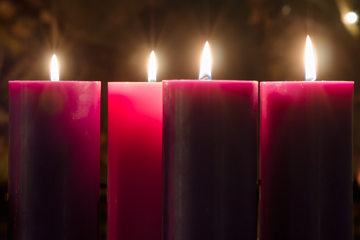
But light is best appreciated in contrast. We are most grateful for the glory of light when darkness assails us. There’s just something about Christmas Eve! As the date approaches and the darkness grows, we light lights. All through December, as the darkness grows we light Advent candles. We light more as it grows darker. Even the secular among us string lights during dark December, in malls and on houses. It’s as if to say, the darkness cannot win; the light conquers!

Lights have their true glory in contrast to the darkness. Who sees the stars at midday? Who appreciates the beauty of light until he has experienced the darkness? Yes, Christmas is a feast of the light. We confront the darkness of December and declare to it, your deepest days are over; the light is returning. And we of faith say to a world in ever-deeper darkness, your darkness cannot remain; it will be overcome and replaced. For though darkness has its season, it is always conquered by the light.

Light has a way of simply replacing the darkness. On December 22nd/23rd, the darkness begins to recede; the light begins to return. It is almost as if the darkness takes up the words of John the Baptist: He [Jesus] must increase, I must decrease. It seems subtle at first, but the light always returns; the darkness cannot last. In three months, the equinox occurs; in six months the summer solstice comes. The darkness will once again seek to conquer, BUT IT ALWAYS LOSES. The light will return. Jesus is always born at the hour of darkness’ greatest moment. Just when the darkness is celebrating most, its hour is over; the light dawns again.

Yes, we celebrate after sundown on December 24th in accord with a tradition going back to Jewish times (that our Feasts begin at sundown on the previous night).  Christmas morning is almost an afterthought. Most pastors know that the majority of their people have come the “night before.”  In a deep and dark December, a light comes forth, a star, and shines in the heavens.

We gather in and on a dark night. We smile. We are moved by the cry of a tiny infant, by whose voice the heavens were made. His little cry lights up the night. The darkness must go; the light has come; day is at hand.

Yes, we celebrate at night to bid farewell to the darkness. It cannot prevail. The darkness is destined to be scattered by a Light that is far more powerful, a Light it must obey, a Light that overwhelms and replaces it. Farewell to darkness; the Light of the World has come.

Jesus is the Light of the World.

The videos below are a celebration of light. As a Christmas gift to myself last December 22nd, the darkest day of the year, I took the afternoon off and went to photograph the triumph of light over darkness. I went to a Mausoleum—yes, to a place where thousands are buried in the walls. But also in those walls are windows, glorious windows where light breaks through and Christ shines forth. Some of the most beautiful stained glass in the city of Washington, D.C. reside in that place of death and darkness. The light breaks through and it speaks of Christ.

These videos are a testimony to just some of those windows. In this place, a place of death, a light breaks through: the light of faith, the Light of Christ. The lyrics in the first video are from Taizé: Christe, lux mundi, qui sequitur te habebit lumen vitae, lumen vitae (Christ, light of the world, who follows you has the light of life, the light of life). The second video features verses from the “Canticle of the Three Children” in the Book of Daniel.

As you view these videos, ponder the fact that stained glass begins as opaque sand. But when subjected to and purified by the fire, it radiates the glory of light, which can now shine through it. So it is for us. Born in darkness, but purified by Christ and the fire of the Spirit, we begin to radiate His many-splendored Light shining through us to a dark world.

The Light wins. He always wins.

Words Fail – Another Meditation on Silence Before the Mysteries of this Christmas Week

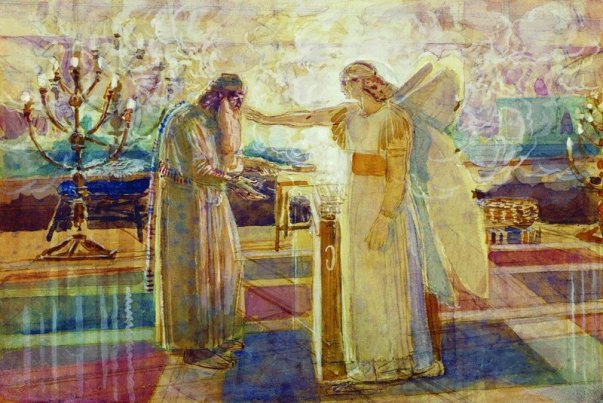
archangel-gabriel-struck-zechariah-mute-1824Though I wrote last week of holy silence, something urges me (a man of many words) to write of it again. During Mass today, the words of Zechariah came to my mind:

Sing and rejoice, O daughter of Zion, for behold, I come and I will dwell in your midst, declares the Lord … Be silent, all flesh, before the Lord, for he has roused himself from his holy dwelling (Zechariah 2:11, 13).

There is a common idiom: “Words fail me.” It is in this context that we can best understand God’s call to fall silent before the mystery of the Lord’s incarnation. Notice in the passage above that the call to silence follows the call to “sing and rejoice.”

Is there a difference between singing and rejoice, and just speaking? Of course there is! Singing, by adding the inscrutable sighs we call “song” (a deeply mysterious emanation from our souls) to the words, is declaring that “words fail.”

To be sure words, are a “necessary evil” for us. But honestly, in using words we indicate more what a thing or reality is not than what it is. For example, if I say to you, “I am a man,” I have really told you more what I am not than what I am. I have told you I am not a woman, nor a chair, nor a lion, nor a rock. But I have not told what it means to be a man. I have not told you myriad other things about myself that I could: I am a priest; my father was a lawyer and Navy veteran; my mother was a teacher; I am descended from Irish, German, and English immigrants. I have not told you about my gifts, or my talents, or my struggles, or numerous other aspects that make me who I am. And even if I spent several paragraphs relating my curriculum vitae to you, there would still be vastly more left unsaid than was said. Words fail.

Further, words are not the reality they (often poorly) attempt to convey. They are symbols of what they indicate. If you see a sign, “Washington” you don’t park there and take a picture of the sign. The sign itself is not Washington; it merely points to the reality that is Washington. You pass the sign and enter into a reality far bigger than the metal sign and begin to experience it. Words fail.

Many words are also more unlike the reality they describe than like it. My philosophy teacher once asked us how we would describe the color green to a man born blind. We struggled with the task but were able to come up with some analogies: green is like the taste of cool mint; green is like the feel of dew-covered grass. To some extent green is like these things, but the color green is more unlike these things than like them. Green, as a reality, is so much richer than the taste of cool mint or the feel of dew-covered grass. Words fail.

And if this be so in the case of mere earthly things, how much more so in the case of heavenly and Godly matters. The Lord therefore commands a holy silence of us as a kind of reminder that words fail. Silence is a proper reverence for the mysteries of the incarnation and of God. Words are necessary; without them orthodoxy could not be set forth and truth could not be conveyed. But, especially as regards God and the truths of faith, there comes this salutary reminder from St. Thomas Aquinas: “Now, because we cannot know what it God is, but rather what he is not, we have no means for considering how God is, but rather how he is not” (Prima pars, q. 3, prologue).

Therefore, fellow Catholics, as the mysteries of the incarnation unfold for us liturgically, Let all mortal flesh keep silence, and with fear and trembling stand, Christ our God to earth descendeth, bearing blessings in his hand (from the hymn, “Let All Mortal Flesh Keep Silence”).

Some Final Advent Exhortations from the Lord

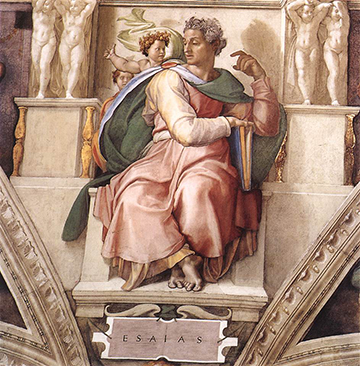
blog12-20As Advent approaches its end, the Office of Readings features some final admonitions for us from the Book of the Prophet Isaiah. On the one hand they console; on the other hand they challenge us to remain firm.

Isaiah addressed a people in exile who still awaited the first coming of the Lord. These texts now speak to us in difficult days when, exiled from Heaven, we await the His great second coming.

Let’s look at these admonitions of the Lord’s (from Isaiah 46:1-13) that were addressed to three different groups in ancient Israel, three groups still present in our time: the faithful remnant, the foolish rebels, and the at-risk fainthearted.

To the Faithful RemnantHear me, O house of Jacob, all who remain of the house of Israel, My burden since your birth, whom I have carried from your infancy. Even to your old age I am the same, even when your hair is gray I will bear you; It is I who have done this, I who will continue, and I who will carry you to safety.

Yes, this is directed to the devoted, to the remnant, to those who remain after the cultural revolution, to those sometimes discouraged and sorrowed over the infidelity of loved ones and the world around them. To these, often the elderly among us who remember a more faithful even if imperfect time, to these the Lord first speaks.

Blessed are those who mourn, for they shall be comforted. Who are the mournful? They are those who see the awful state of God’s people: not glorifying the Lord in their lives, not knowing why they were made, spending themselves on what neither matters nor satisfies. Yes, those who mourn shall be strengthened, and, as their sorrow has motivated them to pray and work for the kingdom, they shall be borne to safety.

Such as these, the faithful remnant, should never forget that God has carried them from the beginning, even in the strength of their prime. And now, reduced by age, the Lord still carries them. He has never forgotten them and will carry them to safety; their faith in difficult times will be rewarded.

To The Foolish Rebels Remember this and bear it well in mind, you rebels; remember the former things, those long ago: I am God, there is no other; I am God, there is none like me. Whom would you compare me with, as an equal, or match me against, as though we were alike? There are those who pour out gold from a purse and weigh out silver on the scales; Then they hire a goldsmith to make it into a god before which they fall down in worship. They lift it to their shoulders to carry; when they set it in place again, it stays, and does not move from the spot. Although they cry out to it, it cannot answer; it delivers no one from distress.

The word “rebel” is from the Latin re (again) + bellum (war). In this context it refers to those who are forever at war against God and His plan for their lives. They foolishly forget His saving deeds of the past. They imagine vain things: that there are other gods or entities that could save them. Even more foolishly, they craft other “gods” that they have to lift to their shoulders to carry.

Many in our day act in the same way: always at war with God, His Church, and His plan. As G.K. Chesterton once noted, when people stop believing in God, it is not that they will believe in nothing but that they will believe in anything. Chesterton also wrote that when we reject God’s big laws, we get ten thousand little laws. We transfer our trust away from God to false, crafted gods like government, or science, or the market. We hope that they will carry us, but we end up carrying the weight of these gods on our shoulders. We carry this weight in the form of taxes, debt, and anxiety about everything in our health or environment (demanded by the increasingly politicized scientific and medical communities).

Science, the market, and government are not intrinsically evil, but they are not gods either and cannot deliver us from ourselves. Only God can do this. But to the many who rebelliously and foolishly persist with their “non-gods,” God says, “I am God; there is no other.”

To the Fainthearted at Risk Listen to me, you fainthearted, you who seem far from the victory of justice: I am bringing on my justice, it is not far off, my salvation shall not tarry; I will put salvation within Zion, and give to Israel my glory. At the beginning I foretell the outcome; in advance, things not yet done. I say that my plan shall stand, I accomplish my every purpose. I call from the east a bird of prey, from a distant land, one to carry out my plan. Yes, I have spoken, I will accomplish it; I have planned it, and I will do it.

Among the faithful there are some who are at risk, who are close to giving up. God encourages them, but also warns that His plan will stand whether or not they endure. Thus there is an implicit warning from Jesus here, and an explicit warning elsewhere, that we must persevere. Jesus says that because lawlessness is increased, most people’s love will grow cold. But the one who endures to the end, he will be saved (Matt 24:12-13).

St. Augustine also wrote, [God has] devised a plan, a great and wonderful plan … All this had therefore to be prophesied, foretold, and impressed on us as an event in the future, in order that we might wait for it in faith, and not find it as a sudden and dreadful reality (From a discourse on the psalms by Saint Augustine, bishop (In ps. 109, 1-3: CCL 40, 1601-1603)).

God’s plan will stand whether or not we do. We must stand as well, even when we would faint or fall back. Our love must not grow cold nor our strength fail. God has triumphed and Satan has lost. We must choose with whom we will stand.

The evidence of the present time does not seem to show this, but as Scripture reminds us,

Therefore we do not lose heart … So we fix our eyes not on what is seen, but on what is unseen, since what is seen is temporary, but what is unseen is eternal (2 Cor 4:16-17)

For all that is in the world, the lust of the flesh and the lust of the eyes and the boastful pride of life, is not from the Father, but is from the world. The world is passing away, and also its lusts; but the one who does the will of God lives forever (1 Jn 2:16-17)

Here, then, are some final instructions from the Lord for us this Advent, instructions for us who wait for Him: be faithful; the plan will come to pass. Do not be a foolish rebel, nor one of the at-risk fainthearted. Rather, be part of the faithful remnant. For St. Paul says, Isaiah cries out concerning Israel: “Though the number of the Israelites be like the sand by the sea, only the remnant will be saved” (Romans 9:27).

The song performed in the clip below is entitled “Lord Help Me to Hold Out.”

A Summary of our Salvation – A Homily for the Fourth Sunday of Advent

Blog12-19Here on the Fourth Sunday of Advent we are close to the unfolding of the great mystery of the Word made flesh. It is easy for us to look right past it, but we do well to pause and ponder what is taught to us today about the salvation that is to unfold. One significant way we can do this is by reflecting upon the first reading today from the prophet Micah. In four short verses, we are presented with a kind of summary of our salvation, a snapshot of what ails us and how God heals us. Let’s see what the Lord and the Church have to teach us.

I. Our Humility – The text begins, And you, Bethlehem-Ephrathah, too small to be among the clans of Judah, from you shall come forth for me one who is to be ruler in Israel.

Of all the towns and villages in the land of Judah, one of the lowliest was Bethlehem. Though not far from the great city of Jerusalem—a matter of a few miles—it was little more than a rundown, frontier village with little to recommend itself. It was a place by which one passed quickly on the way to nearby Jerusalem.

Even today, despite all that happened there, Bethlehem remains a troubled and rundown little city, impoverished and crowded. Its steep, hilly streets feature little that is pleasant to the eyes. There is a great sorrow that hangs over it. It is hemmed in by guard towers and walls covered with razor wire. These are signs of a great standoff between Israel and the Palestinians. Largely isolated economically, the city suffers from poverty and unemployment.

The ancient Church of the Nativity at the top of the hill looks every bit of its 1500 years in age. It is dingy, covered in soot, and largely in a state of poor repair, due to a standoff among the Orthodox factions that oversee the building. The tension is palpable as one enters the church and nervous tour guides engage in delicate negotiations to ensure a quick visit to the cave of the Nativity beneath the altar.

Yes, Bethlehem remains lowly, troubled, and very humble. And yet it is here that our Savior chose to be born. He did not choose nearby Jerusalem, distant Rome, or any great imperial city. Not in a palace was He is born, but in a cave. And even in this humble and lowly city, one has to get mighty low to find the place where Christ was born. One descends down steep, narrow steps into a cave. And even inside this cave, one must stoop lower still, even kneeling on the floor, to touch the place where Christ was born.

A lowly place in a lowly villagethis is where Christ was born. See how the Lord esteems humility? God hates pride; He just can’t stand it. Pride is our greatest enemy, it is at the root of every sin we commit. That is why the Lord teaches us that humility is one of our greatest gifts.

The story also reminds us of something that took place in Bethlehem 1000 years before. The prophet Samuel was sent to anoint a new king to replace Saul. Having been sent to lowly Bethlehem, Samuel surveyed the sons of Jesse. Samuel was impressed by the seven strong young men he saw before him, but none of these were the king he was sent to anoint. There was one other son, so young and insignificant that Jesse had not even thought to include him. It was little David, who was out in the field tending the sheep. Yes, the lowliest one, he was the one whom God chose. Humility won the day (cf 1 Sam 16).

And so it is that Bethlehem shows forth the humility, the lowliness that alone opens the door to God. Bethlehem is a name that means “house of bread,” not “house of caviar,” not “house of fine wine,” rather, the house of ordinary bread. Humility ushers in our God.

II. Our Hardship – The text goes on to speak of our condition prior to the coming of Jesus: Therefore, the Lord will give them up, until the time when she will is to give birth has borne.

For indeed, our condition without Christ is grave. We are given up, given over to sin and to our own fruitless and self-destructive tendencies. And thus we learn of the gravity of our condition: that we cannot save ourselves. The prophet Isaiah had cried out, Oh, that you would rend the heavens and come down, that the mountains would tremble before you! … All of us have become like one who is unclean, and all our righteous acts are like filthy rags; we all shrivel up like a leaf and like the wind our sins sweep us away. No one calls on your name or strives to lay hold of you; for you have hidden your face from us and made us waste away because of our sins (Is 64:1,6-7).

Yes, our condition apart from Christ is hard and quite hopeless. In the age of the Law and the prophets, we learned the hard way that no matter how hard we try we cannot save ourselves. Our wounds are too deep, our pride too great, our hearts too dull, and our minds too dark. We are lost without God. How often have deluded men sought to create utopia only to discover ruins? We have only to consider the utopian notions of the last bloody century.

Yes, the age of the Law and the Prophets in the Old Testament shouts to us that we cannot save ourselves. We must rely on God; we must turn to Him. We don’t just need an angel—we need a savior. And until she who was to give birth has borne the son, the only way to describe the human family is just the way this text from Micah does: we had been given up, given over to our own sins so as to discover humility and our need for a Savior.

Isaiah wrote, All we like sheep have gone astray, every one to his own way (Is 53:6). St. Paul would later write of the time before Christ, we were dead in our sins (Eph 2:1), given over to our transgressions and iniquity.

So here is our hardship. We are wandering, lost and in need of a Savior.

III. Our Head – The text goes on to speak of our Savior, our shepherd, our ruler, and our head: Whose origin is from of old, from ancient times. He shall stand firm and shepherd his flock by the strength of the Lord, in the majestic name of the Lord, his God.

And thus we see that our Savior will be both God and man. He is God, for His origin is from of old, from ancient times (cf also Hebrews 7:3). He also saves us by the strength of the Lord. And yet He is also one of us, for the text speaks of Him as acting in the name of the Lord, His God.

He must be God in order to have the power to save us, and yet He must also be one of us in order to speak and act on our behalf. As God, He cannot obey God, for there is only one divine will. But as man, having a human will, He is able to obey the Father. Thus it makes sense that our Savior must be both God and man.

It is said that He will shepherd His flock. Shepherds feed, lead, and protect their flocks. And all this the Lord does for us. It is a trait of sheep to be wayward; sheep tend to stray. They need the watchful care of a shepherd. Similarly, even after saving us from our sins, the Lord must continue to feed us, lead us, and protect us. Otherwise, having been snatched from the wolf, we might run into a bear. Or, having been saved from the edge of a cliff, we might wander into a thicket.

Thus Christ, our shepherd and head, must go before us, showing us and opening the way. He must also walk behind us to guard us and to observe our every action. And he must walk beside us to keep our paths straight. We need a Savior, not just on Good Friday, but every hour of every day.

IV. Our Healing – The text goes on to say, and the rest of his kindred shall return to the children of Israel and they shall remain, for now his greatness shall reach to the ends of the earth; he shall be peace.

And thus we see that Jesus’ essential task in healing us is not simply a personal healing for me alone or for you alone. It is also healing that removes the divisions within and among us. One of the chief sources of our suffering in this world is division. Nation is divided against nation; races and ethnic groups are in competition; there is conflict and crushing hatred.

At the time of Jesus, Jews and Gentiles (largely Romans and Greeks) were in major conflict. The Jews of Jesus’ time were taught to love their neighbor and their fellow Jews, but to hate their enemy. Jesus taught that we must love and forgive our enemies and began the process of establishing a universal Church, a Catholic Church. He gave the apostles standing orders to preach the gospel to every nation and to unite everyone under the common title of disciple, of Christian. The dignity of baptism and of being a child of God was to be offered to all. As this text of Micah prophesies, the Lord’s salvation and greatness shall reach to the ends of the earth.

The text goes on to say, He shall be our peace. Note that this is not a “can we all just get along” sort of peace. It means that He shall be our peace. That is to say, the Lord Jesus Christ and the truth He proclaims are to be the source of our unity. In sending the apostles forth to proclaim the Gospel to every nation, Jesus said that they should teach the people to observe everything that He commanded, and should draw them into the life of the church through baptism (cf Matt 28:19). He is our peace. Jesus and His teachings are what are meant to unite us. Every other form of peace is not a true or lasting peace.

Thus Jesus initiated a process that was not meant to conquer the world politically. Rather, it was a process whereby His truth and grace would be proclaimed and those who accept these gifts would be able to come to greater and more lasting peace.

This peace must begin in the heart and mind of every individual believer who, by the grace of Jesus Christ, experiences an inner healing of the many conflicts and destructive drives caused by sin. Then, by drawing others to that same healing through evangelization to a life-changing, transformative relationship with Jesus Christ, this peace is meant to spread throughout the world. This will put an end to division; bring together the children of God; and show forth God’s greatness, truth, and salvation to the ends of the earth.

He is our peace. Jesus is our healing.

Today’s first reading, just prior to the Christmas reality, presents us with a summary of our salvation. It stresses our need for humility, describes our hardship, announces our Head (a Shepherd), and sets forth the basis for our healing. In a word, the basis for our healing is the Word made flesh, Jesus.

This song says,

We need to hear from you
We need a word from you
If we don’t hear from you
What will we do
Wanting you more each day
Show us your perfect way
There is no other way
That we can live.

Destruction is now is now in view
Seems the world has forgotten all about you
Children are crying and people are dying
They’re lost without you, so lost without you
But you said if we seek
Lord if we seek your face
And turn from our wicked, our wicked ways
You promised to heal our land
Father you can

Best Advent Hymn! I Wonder If You’ve Ever Heard of It

blog12-17For my money, the best Advent hymn ever is Veni Redemptor Gentium (Come Redeemer of the Nations), written by St. Ambrose in the 4th century. It is known more widely by the title “Come Thou Redeemer of the Earth.” Sadly, it is not widely sung in Catholic parishes. Most Catholics I’ve asked have never even heard of it.

One of the beautiful things about the ancient Latin hymns is how richly theological they are. Not content to merely describe an event, they give sweeping theological vision and delve into its more hidden mysteries.

So here we are in Advent, and Jesus is coming. Get ready! Well, yes, but He’s not just coming; He’s redeeming, dying, rising, ascending, and reigning at the Father’s right hand! But how can you get all that into an Advent hymn? Well, just below you can read the text and see.

Full vision – For now, ponder the theological point that hymns like this make: no act of God can be reduced merely to the act in itself. Everything God does is part of a sweeping master plan to restore all things in Christ, to take back what the devil stole from us! Too often we see the events of our redemption in a disconnected sort of way. But it is all really one thing and the best theology connects the dots. It is not wrong for us to focus on one thing or another, but we must not forget that it is all one thing in the end.

Without this reminder, we can develop a kind of myopia that overemphasizes one aspect of redemption at the expense of others. In the 1970s and 1980s it was “all resurrection all the time,” but no passion or death.

Christmas, too, has its hazards. We get rather sentimental about the “baby Jesus” but miss other important aspects of his incarnation. The passion and death are present in His birth in homeless poverty, the swaddling clothes, the flight into Egypt, and so forth. The Eucharist is evident in His birth at Bethlehem (House of Bread) and His being laid in a manger (a feed box for animals). His glory as God and His ultimate triumph are manifested in the star overhead and the angels’ declaration of glory! You see, it is all tied together, and the best theology connects the dots.

So with that in mind I present this wonderful Advent hymn, so seldom sung in our Catholic parishes. It can be sung to any Long Meter (LM) tune but is usually sung to its own melody (“Puer Natus”). I provide below only the English translation, but both the Latin and the English are available in this document: Veni Redemptor Gentium. I think the poetic translation reprinted below is a minor masterpiece of English literature and hope you’ll agree. Enjoy this sweeping theological vision of the mystery of Advent caught up into the grand and fuller vision of redemption.

Among the theological truths treated in this brief hymn are these: His title as Redeemer, His birth to a virgin, His inclusion of the Gentiles, His sinlessness, His two natures in one person, His incarnation at conception, His passion, His death, His descent into Hell, His ascension, His seat at the Father’s right hand, His divinity and equality with the Father, His healing and sanctification of our humanity so wounded by sin, His granting us freedom and eternal life, His renewing of our minds through the light of faith, and His opening of Heaven to us.

Not bad for seven verses! St. Ambrose, pray for us!

Come, thou Redeemer of the earth,
Come manifest thy virgin birth:
All lands admire, all times applaud:
Such is the birth that fits our God.

Forth from his chamber goeth he,
That royal home of purity,
A giant in twofold substance one,
Rejoicing now his course to run.

The Virgin’s womb that glory gained,
Its virgin honor is still unstained.
The banners there of virtue glow;
God in his temple dwells below.

From God the Father he proceeds,
To God the Father back he speeds;
Runs out his course to death and hell,
Returns on God’s high throne to dwell.

O Equal to thy Father, thou!
Gird on thy fleshly mantle now;
The weakness of our mortal state
With deathless might invigorate.

Thy cradle here shall glitter bright,
And darkness breathe a newer light,
Where endless faith shall shine serene,
And twilight never intervene.

All laud, eternal Son, to thee
Whose advent sets thy people free,
Whom with the Father we adore,
And Holy Ghost, for evermore.

This video gives you an idea of what the tune for Veni Redemptor Gentium sounds like. The words in this version are slightly different from what is shown above, but the hymn tune is perfect. Just try not to dance as it is sung! You can find the melody for this hymn tune, “Puer Natus,” in the index of most hymnals. The words to the hymn, however, can be sung to any Long Meter (LM) hymn tune.

Stir Up Your Power and Come, Lord! An Advent Meditation on the Paradox of God’s Power

Blog12-16One of the great cries of Advent is for God to rend the heavens and come down (Is 64:1), for Him to stir up his mighty power and come to save us (Ps 80:2). But what is it that we really seek? Is it armies with thunder and lightning? Is it vindication and peace on our terms? In a way, it is a dangerous cry if we mean it that way, for who of us can say that no wrath should come to us but only to those other people who deserve it? If God should come in thunderous judgement, are you and I really so sure we could endure and be numbered among the just?

It is clear that we need the Lord to save us, but is that salvation seen only in earthly terms where salvation is from my enemies and I myself remain largely unharmed?

In the final essay of volume 11 of his collected works (which I just finished reading), Joseph Ratzinger (Pope Emeritus Benedict) ponders a similar Advent theme. I’d like to present his reflections, and add a few of my own. In a sermon from December 2003, Joseph Cardinal Ratzinger taught,

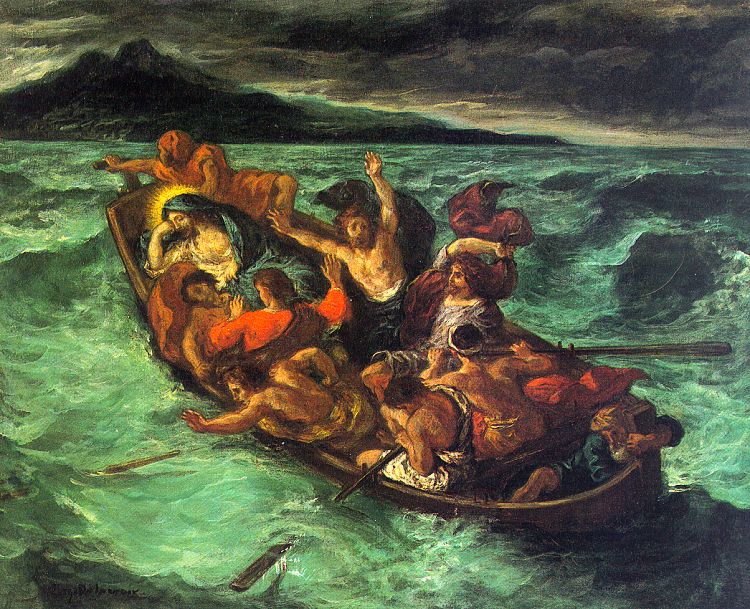
Stir up your might O Lord and come! This was the cry of Israel in exile … this was the cry of the disciples on the Sea of Galilee [in the storm] “Wake up O Lord and help us!” … And throughout all of history, the little bark of the Church travels in stormy waters … Stir up your might and come!

… What really is this might of God that seems to be asleep and must be wakened? St. Paul gives the answer in 1 Corinthians when he says that Christ the Crucified One, who is foolishness and weakness to men, is the wisdom and power of God.

Therefore, when we ask for this real power of God, we are not asking for more money for the Church, for more buildings, for more structures, for more political influence. We are praying for this special, entirely different power of God. We are praying with the awareness that he comes in a powerful way that seems to the world to be weakness and foolishness (Joseph Ratzinger, Collected Works, Vol 11: 595-596).

Yes, here is the paradox of God’s power: He defeats Satan’s pride by the humility of His Son; disobedience and the refusal to be under any authority are defeated by the obedience and submission of Jesus.

Once stirred, God’s power will not always—or even often—manifest itself in thunder and lightning or in armies that shatter and destroy. Rather, His “strong and outstretched arm” is often found nailed and bloody on the cross. Yet here, and in this way, he defeats Satan. How? Darkness cannot drive out darkness; only light can do that. Hatred cannot drive out hatred; only love can do that. And pride cannot drive out pride; only humility can do that.

And thus the Lord defeats Satan; not by the becoming a bigger, fiercer, more vengeful version of Satan, but by canceling Satan’s grievous stance with its opposite. It is the Lord’s refusal to meet Satan’s terms, to become anything like him or in any way enter his world. In this way, the Lord conquers pride with humility and hate with love. I am mindful of some of the words from an old hymn, “When I Survey the Wondrous Cross.”

See from His head, His hands, His feet,
Sorrow and love flow mingled down!
Did e’er such love and sorrow meet,
Or thorns compose so rich a crown?

The hymn concludes with these words:

Love so amazing, so divine,
Demands my soul, my life, my all
.

Cardinal Ratzinger continues his essay as follows:

He does not come with military divisions; he comes instead with a wounded heart that apparently has nothing more to say, yet then proves to be the true and wholly other power and might of God.

This paradox should challenge us mightily, because it means that God’s help will often not be on our terms. We would like to have every foe vanquished and every harmful sorrow of our life removed. No cross at all; just stir up your power Lord and take it all away. But that is not usually how God’s power stirs in this “paradise lost,” which we chose by our own ratification of Adam and Eve’s sinful choice. We preferred a tree and its fruit to God and He does not cancel our choice. Instead, He plants the tree of the Cross and saves us by the very suffering and death we chose in the ancient Garden of Eden.

Here is God’s true power at work in this sin-soaked and rebellious world: the power of Cross. And if you didn’t know what you were asking for when praying, “Stir up your power, Lord, and come to save us,” now you do. We might prefer that God save us on our terms, by the mere vanquishing of our foes and the removal of our suffering, but (as St. Paul teaches) power is made perfect in weakness; it is when we are weak that we are strong, for then the power of God rests on us (cf 2 Cor 12:9-10).

Cardinal Ratzinger then sets forth the challenge of this prayer for us:

[Hence our true declaration is] “Lord wake us up from our drowsiness in which we are incapable of perceiving you, in which we conceal and impede the coming of your holy power.

… Christianity is not a moral system in which we may merely roll up our sleeves and change the world. We see in the movements that have promised us a better world how badly that turns out!

… But [on the other hand] Christians are not merely spectators … rather [the Lord] involves us; he desires to be efficacious in and through us … And so the in this cry we pray to him for ourselves and allow our own hearts to be touched: Your power is in us, rouse it and help us not to be an obstacle to it, but, rather, its witnesses [to its] vital strength.

That may well mean suffering, martyrdom, and loss. It may not, and often does not, mean that God will simply vanquish our foes and remove all our suffering. In this world the saving remedy is the Cross; not just for others but for us, too. On Good Friday, Christ looked like a “loser.” Satan and the world danced. But on Sunday, the Lord got up. Friday was first, Saturday lingered, and then came Sunday. As for Christ, so also for us: always carrying in our body the death of Jesus, so that also the life of Jesus may be manifested in us (2 Cor 4:10). The victory will come but it comes through the paradoxical power of the Cross.

Does this Advent reflection sound too much like Lent for you? Why do you think we are wearing purple?

Now pray with me (but be sure to understand what you are asking): Stir up your power, Lord, and come to save us!

Here is the common Psalm for Advent: Lord make us turn to you, let us see your face and we shall be saved.