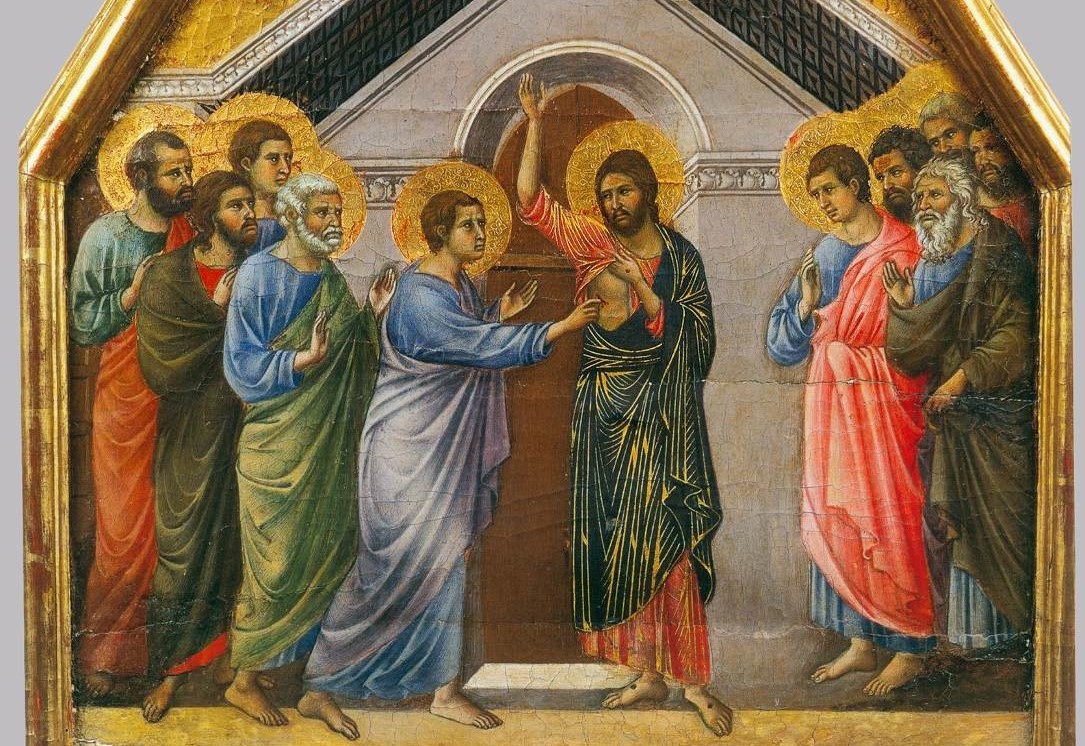
In evangelizing souls (including our own), there are usually stages that precede conversion. In the past I have written on these stages and referred to them as “Mad … Sad … Glad.”

Blog of the Archdiocese of Washington
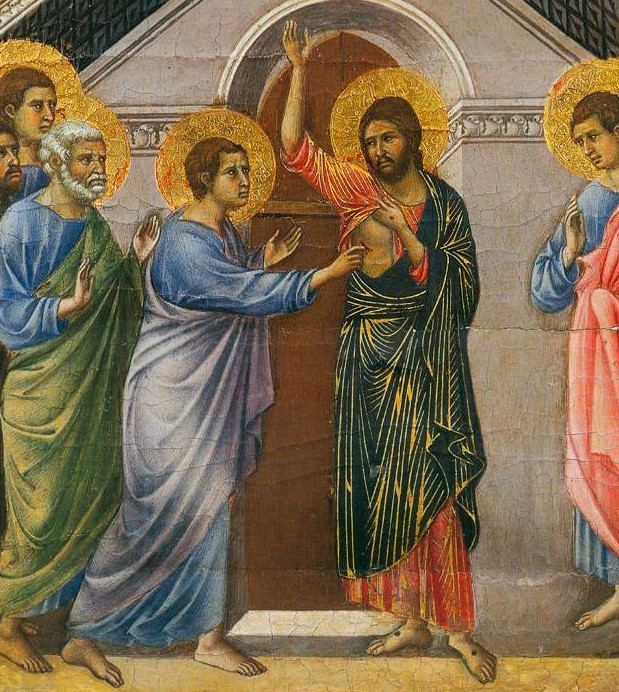
In evangelizing souls (including our own), there are usually stages that precede conversion. In the past I have written on these stages and referred to them as “Mad … Sad … Glad.”
1. Mad – In this stage, one may present as angry, resistant, or averse to the message of the Gospel or to some aspect of the Christian moral vision.
2. Sad – In this stage, one comes to realize that worldly notions and promises are both false and disappointing—even harmful to one’s life. One is chastened, realizing that rejecting God and His truth was wrong. Although initially experiencing humiliation and a kind of depression, through the prayers of the faithful and the work of the Holy Spirit one can turn this sadness into a humility that is now open to the Gospel.
3. Glad – In this stage, one is now open, through hope, to the wisdom and promise of the Gospel. One is joyful as the initial effects of the Gospel message bring conversion, transformation, hope, and a new vision.
Thus, conversion is a process, a kind of extended conversation. Notice that the same root, conversio, is in both words. We often want to think of evangelization as a moment, or a point of success in winning a soul for Christ. But rare indeed is the convert who is willing (or even able) to go from zero to a hundred on the disciple scale.
This is true not only with bringing souls to Christ, but also with the deeper conversion of lifelong Catholics. Sadly, as we know, not all Catholics agree with all of the teachings of the Gospel and the Church. Here, too, the stages of conversion typically apply; a longer conversation is usually necessary to conform them to the faith. Though possible, it is rare that one conversation or one sermon will draw a person from dissent to orthodoxy. The longer conversation between the individual, the Church, and God is usually necessary.
St. Gregory the Great reflected on the return of St. Thomas the Apostle (whose feast we celebrated earlier this week). He described, in a very brief sentence, the stages of St. Thomas’ conversion from unbelief to belief:
Do you really believe that it was by chance that this chosen disciple was absent, then came and heard, heard and doubted, doubted and touched, touched and believed? (St Gregory the Great, Pope Hom. 26, 7-9: PL 76, 1201-1202v)
As Pope St. Gregory described it, St. Thomas went from “absence” (unbelief) to an ever-present faith in four stages:
1. He came and heard. For reasons unspecified, St. Thomas was absent from the first appearance of the risen Lord to the Apostles on that Easter Sunday evening. Although not at that Sunday gathering of the Church, he still knew and had relationships with others who were there. It was they who told him, “We have seen the Lord!”
For a variety of reasons, many people today do not gather with us on Sundays. Sadly, they miss an encounter with the Lord. They do not hear him speak in His Word or offer us His Body and Blood. They do not receive His blessings through the priest. But they do know us. It is from us that they must hear the joyful shout, “We have seen the Lord!” Evangelization typically breaks down right here because most Catholics do not talk like this. They go to Church, come home, and say little or nothing about it. But if we are going to bring back the Thomases we know, this must change. We have to become more aware of how we encounter the Lord in every liturgy and learn to witness to the fact that the Lord is changing our life through this encounter.
I have attended and celebrated Mass every day for more than thirty years now. In that time, through praise, hearing God’s Word, being instructed in God’s Word, receiving the Word made Flesh in Holy Communion, and experiencing deep fellowship with believers, I am a changed man. Many shackles have come loose. A new mind and heart have been given to me and the prison cell of anxiety no longer constrains me. The Lord delivered us out of the kingdom of darkness and into the Kingdom of Light. Through the liturgy, that deliverance becomes deeper, richer, broader, and higher.
What is your testimony? Thomas was restored to the community by the testimony of others who had seen the Lord. And though he doubted, he heard the call to “Come and see.” To whom have you testified? Whom have you invited?
2. He heard and doubted. St. Thomas heard but doubted—but at least he heard! And he accepted the invitation to come the next Sunday.
In his expressed doubts and his demands to see and touch in the ordinary human way, we see the common human longing to experience God in tangible ways. The extreme form of this is a kind of radical empiricism or scientism that says, in effect, “If God does not tip the scale in my laboratory or light up the retina of my eyes, He is not real.” There is not enough space to debunk that in this post, except to say that as God is not physical, He is not weighed on a scale. There are many metaphysical realities that are very real. For example, justice, love, and mercy are certainly real, but you can’t weigh them on a scale or see them out for a walk. Since they are not physical, they are seen in their effects, though not in themselves. It is the same with God. He is not some other thing in the physical universe; He is existence itself.
Thomas’ insistence to see and touch is more commonly expressed in the desire of most people that faith and the experience of God be tangible, that it be palpably experienced rather than just a bunch of abstractions, generalities, and slogans.
It is not wrong to insist that if the faith we announce were real, it would have real effects on our lives and bring about transformation. This is why our witness cannot simply take the form of reciting slogans or even creeds. While the content of the faith must be clearly and accurately proclaimed, its effects must also be evident in order to evangelize effectively.
Rightly or wrongly, the mere advancement of arguments and ideas isn’t going to move most people today. They are looking for a tangible experience of truth; they want to see how the faith we proclaim has touched us and how they can touch it as well.
In this second stage, we learn that it is important to listen to the doubts people express and their need to touch and see the truth, not just hear it. Good apologists listen carefully and compose respectful answers. As any good apologist knows, though, mere arguments seldom win the day. An apologist must also be a witness to the power of the Gospel to set us free. The Gospel must be tangible: able to be seen, touched, and encountered in us who teach and proclaim it. We cannot simply present answers to questions. We have to be witnesses of the power of these truths to set us free.
3. He doubted and touched. St. Thomas, though excessive in his demand to see and touch in a merely physical way, expressed a common human need. Jesus rebuked Thomas’ demand to see in a purely ordinary and physical way. He praised those who come to faith without seeing in this way. However, this does not mean that there is no legitimate need for evidence. That is why Jesus sent out witnesses.
In an extraordinary way, the Lord met Thomas’ need, so that he might believe. He also cautioned that the ordinary way of encountering the Lord is not going to be through physical seeing and touching. Rather, we will encounter him in the Liturgy, the sacraments, His Word, and prayer and unity with His Body, the Church.
This must still be tangible for people, though. When people do encounter the gathering of the Church on Sunday morning, is Christ’s presence tangible? Are the expected effects of the true presence of Christ on display? Is there joy? Is the transformative power of Christ seen in the lives of the faithful? How?
We ought to pray and work for parish communities that feature transformed Catholics rather than bored believers and tepid troops. The Church is a bride, not a widow; the Mass is a wedding feast, not a funeral. What can a doubter touch and see in our parish? If we are alive, reverent, attentive to the Lord, eager and joyful to be instructed, and grateful for the Eucharist and what the Lord is doing in our lives, then the Thomas who comes into our parish will see the Lord step forward and say, “See and touch …. No longer be unbelieving but believe.”
4. He touched and believed. We have largely done our work in following these stages, perhaps just a few concluding questions. Although Thomas’ need to see and touch is excessive, it is not wholly illegitimate.
How can people see and touch the Lord in our life and the life of our parish? What evidence will unbelievers find in us and in our parishes so that they can touch and believe? Can Christ step forward in our lives and in our parishes and say to unbelievers or to the weak in faith, “See and touch my hands and my side. No longer be unbelieving but believe.”?
These are just some thoughts based on Pope St. Gregory’s stages of evangelization. You should be a witness!

All across the United States on the Fourth of July, we celebrate freedom. In particular, freedom from tyranny, from government that is not representative, from unchecked power, and from unaccountable sovereigns.
Yet as Christians, we cannot overlook that there are ways of understanding freedom today that are distorted, exaggerated, and detached from a proper biblical, Christian, or Natural Law context. Many modern concepts of freedom treat it as somewhat of an abstraction Yes, many speak of freedom in the abstract and have a hard time nailing down the details. Let’s talk about some of the details.
Most people like to think of freedom as absolute, as in, “No one is going to tell me what to do.” In the end, though, freedom is not absolute; it cannot be. As limited and contingent beings, we exercise our freedom only within limits and within a prescribed context. Pretending that our freedom is absolute leads to anarchy, which then leads to the collapse of freedom into chaos and the tyranny of individual wills locked in power struggles.
Yes, one of the great paradoxes of freedom is that it really cannot be had unless it is limited. Absolute freedom leads to an anarchy under which no one is really free to act. Consider the following:
1. Without traffic laws we would not be free to drive. The ensuing chaos would make it quite impossible, not to mention dangerous. The freedom to drive, to come and go freely, depends on us limiting our freedom through obedience to agreed-upon norms. Only constrained by traffic laws and agreed-upon norms can we really experience the freedom to drive. (See photo at upper right.)
2. Grammar or goofy – Right now I am writing this post in English. I appreciate the freedom we have to communicate and debate. But my freedom to communicate with you is contingent upon my limiting myself within the rules we call grammar and syntax. Were there no rules, I would lose my freedom to communicate with you, and you would not be free to comprehend me. What if I were to say, “Without not calendar if said my you in existential mode or yet,” and you were to respond, “dasja gyuuwe reuwiojlfs”? We might be exercising our “freedom” to say what we please, but our insistence on that absolute freedom would effectively cancel the experience of freedom, for we would not really be communicating. When we demand absolute freedom from the limits of grammar, syntax, and vocabulary, we are really no longer free to communicate at all. Anarchy leads not to freedom, but to chaos. (See the video below.)
3. Music or mumble – Once I finish writing this post, I am free to go over to the church and play the pipe organ (which I think I’ll do). But I am only free to do that because I once constrained myself with many years of practice under the direction of a teacher. I am also only free to play if I limit myself to interpreting the musical notation within a set of rules and norms. Within and because of these constraints and rules, I am free to play the organ. I may wish to refuse to follow the rule that one must first switch on the power, but I am not going to get very far or really be free to play unless I obey.
So the paradox of freedom is that we can only experience it by accepting constraints upon it. Without constraints and limits, our ability to act freely is actually hindered.
This is a very important first step in rescuing the concept of freedom from the abstract and experiencing it in the real world. Absolute freedom is not freedom at all. Because we are limited and contingent beings, we can only exercise and experience our freedom within limits.
This is also an important lesson to the modern world. Too many people today push the concept of freedom beyond reasonable bounds. They insist on their right to act, but without accepting the reasonable constraints that make true freedom possible. Many today demand acceptance of increasingly bad and disruptive behavior.
In rejecting proper boundaries, though, we usually see not an increase of freedom but a decrease of it for everyone. Our culture is becoming increasingly litigious as burdensome laws are passed by a “nanny-state” seeking to regulate every small aspect of our lives. Among the sources of the growing number of intrusive laws is people’s refusal to limit their bad behavior, to live up to their commitments, to exercise self-control, or to live within safe and proper norms. Many insist that the solution to protecting them from others who abuse their freedom is more laws. Many have been successful in getting increasingly restrictive laws passed.
Again, the lesson is clear: freedom is not possible without some limits. When reasonable limits are cast aside, the paradoxical result is not more freedom, but far less. Freedom is not absolute. Absolute freedom is not freedom at all; it is the tyranny of chaos and the eventual erosion of freedom.
Alexis De Tocqueville said, “Liberty cannot be established without morality, nor morality without faith.” In America today, we are seeing the erosion of all three of these—in reverse order. Those who want to establish freedom in the abstract will only see that freedom erode.
Jesus and freedom – This leads us to understanding what Jesus meant when He said, “If you hold to my teaching, you are really my disciples. Then you will know the truth, and the truth will set you free” (John 8:31-32).
There are many people today who excoriate the Church and the Scriptures as a limit to their freedom. Sadly, quite a number of these are Catholics. To such as these, the Church is trying to “tell them what to do.” Christians are trying “to impose their values on the rest of us.” Now of course the Church cannot really force anyone to do much of anything.
Yes, many claim that the announcement of biblical truth threatens their freedom. Jesus said just the opposite: it is the truth that sets us free. Now the truth is a set of propositions that limits us to some extent. If “A” is true, then “not A” must be false. I must accept the truth and base my life on it in order to enjoy its freeing power. The paradoxical result is that the propositions of the truth of God’s teaching do not limit our freedom; they enhance it.
Image – As we have seen, absolute freedom is not really freedom at all. It is chaos wherein no one can really move. Every ancient city had walls, but they were not so much prison walls as they were defending walls. True, one had to limit oneself by staying within them to enjoy their protection, but within them there was great freedom because one was not constantly fighting off enemies or distracted with fearful vigilance. People were freed to engage in other pursuits, but only within the walls.
Those who claim that the truth of the Gospel limits their freedom might also consider that the world outside God’s truth shows itself to be far less free than it seems.
● Addictions and compulsions abound in our society.
● Neuroses and high levels of stress are major components of modern living.
● A seeming inability to establish and honor lasting commitments has contributed to the breakdown of the family.
● An apparent obsession with sex has led to widespread STDs, AIDS, teenage pregnancy, single motherhood (absent fathers), and abortion.
● Greed and addiction to wealth enslave many in a sort of financial bondage in which they try to maintain a lifestyle they cannot afford and yet are still unsatisfied.
The so-called “freedom” of the modern world (apart from the truth of the Gospel) is far from evident. This bondage also extends to the members of the Church to the extent that we do not seriously embrace the truth of the Gospel and base our lives upon it. The Catechism says rather plainly,
The more one does what is good, the freer one becomes. There is no true freedom except in the service of what is good and just. The choice to disobey and do evil is an abuse of freedom and leads to “the slavery of sin” (CCC # 1733).
In the end, the paradox proves itself. Only limited freedom is true freedom. Demands for absolute freedom lead to hindered freedom and even outright slavery.
Ponder freedom on this 4th of July. Ponder its paradoxes and accept its limits. Freedom is glorious, but because we are limited and contingent beings, so must our freedom be limited. Finally, ponder this paradoxical truth: the highest freedom is the capacity to obey God.
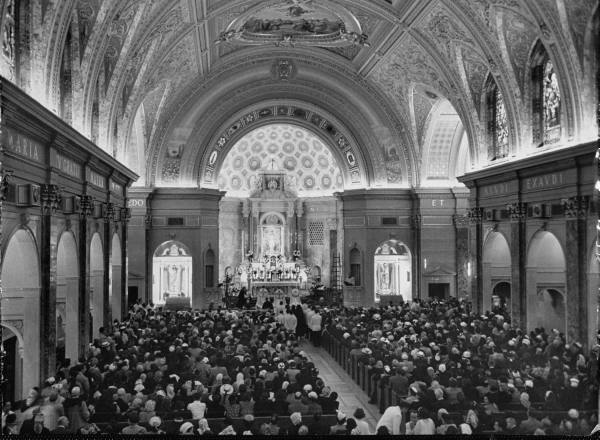
The great influx of Catholic immigrants from Europe brought exponential growth to the Catholic population of this country, making Catholicism the single largest religious group by far. Those Catholic immigrants gathered together in ethnic parishes, creating ethnic neighborhoods in which faith and culture were knitted together. They sought survival in a land that seemed at times to be hostile to them and their faith. This caused Catholics to be fiercely loyal to the faith and made the parish the hub of the community, the center around which all else revolved.
Alas, this vivid reality receded between the 1950s and the 1980s, leaving large structures behind that have proved difficult to maintain and are now being closed in large numbers. Sweeping social changes, a cultural revolution, and the slow assimilation of Catholics into the wider American culture led to the demise of a system that is hard not to admire for its organization and effectiveness.
How things collapsed so quickly is a matter for some speculation, but even within the genius of the ethnic Catholic system, there were the seeds of its own destruction, for the fierce clinging of Catholics to their faith was as much due to ethnic bonds as it was to the religion itself.
As we shall see in the description below, and as most bishops can attest, shepherding Catholics is much like herding cats. This struggle is not a new one. It was well on display even in the glory years. Despite the outward appearances of deep unity, there were many fissures just beneath the surface.
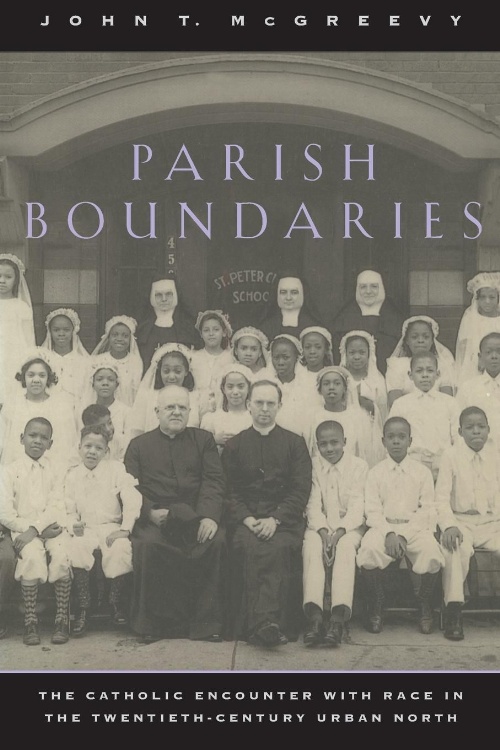 As a brief study of this, I would like to quote somewhat extensively from the first chapter of a book by John McGreevy: Parish Boundaries: The Catholic Encounter with Race in the 20th Century Urban North. McGreevy rather vividly describes the strength of the immigrant Church but also the more negative trends within that powerful system of ethnic Catholicism.
The author’s work is presented in bold, black italics, while my remarks are in plain red text. I have reworked the order of some of his reflections and am presenting excerpts from a much longer chapter. I hope you’ll find his description of the urban ethnic Church as thrilling and vivid as I do.
[From the late 1800s through the middle part of the 20th century] successive waves of European immigrants peopled a massive and impressive church largely in the northern cities of America. In 1920, Catholics in Chicago could worship at 228 Catholic parishes … The [area of the city called] “back of the yards” area physically exemplified this. There, residents could choose between 11 Catholic churches in the space of little more than a square mile: two Polish, one Lithuanian, one Italian, two German, one Slovak, one Croatian, two Irish, and one Bohemian. … Their church buildings soared over the frame houses and muddy streets of the impoverished neighborhood in a triumphant display of architectural and theological certitude. I have always appreciated that older Church buildings reflect a time of greater theological certitude. While one may criticize the presence of opulent church structures in poor neighborhoods, the immigrants built them eagerly, demonstrating a priority of the faith that is much less evident today.
[Even as late as the] 1950s, a Detroit study found 70% of the city’s Catholics claiming to attend services once a week as opposed to only 33% of the city’s white Protestants and 12% of the city’s Jews. Catholics really used to pack the churches. I remember as a youth if you were late for Mass you had to stand in the back.
The Catholic parishes, whether they were Polish, Italian, Portuguese, or Irish, simply dominated the life and activities of the community with quite popular and well attended programs. Yale sociologists investigating in the 1930s, professed amazement at the ability of priest to define norms of everyday social behavior for the church’s members.
The Catholic world supervised by these priests was disciplined and local. Many parishes sponsored enormous neighborhood carnivals each year. Most parishes also contained a large number of formal organizations including youth groups, mothers’ clubs, parish choirs, and fraternal organizations—each with a priest moderator, the requisite fundraisers, and group masses. Parish sports teams, even for the youngest boys, shaped parish identity, with fierce (and to outsiders incongruent) rivalries developing in sports leagues between parishes. CYO rivalries were legendary even into the 1980s in many areas.
These dense social networks centered themselves around an institutional structure of enormous magnitude. Virtually every parish in the northern cities included a church (often of remarkable scale), a convent, a parochial school, a rectory, and occasionally, ancillary gymnasiums or auditoriums. Even hostile observers professed admiration for the marvelous organization and discipline of the Roman Catholic Church, which carefully provided every precinct, ward, and district with churches, cathedrals, and priests. The parish I attended as a boy in Glenview, IL (North Chicago) had a rectory that was externally a replica of Mt. Vernon. The parish plant took up an entire city block. Every grade of the parochial school had its own separate building. There was an indoor pool, a credit union, a large indoor “playdium” that allowed for everything from roller-skating to basketball. The Church and convent were also magnificent.
Brooklyn alone contained 129 parishes and over 100 Elementary schools. In New York City more generally, 45 orders of religious men, ranging from the Jesuits to the Passionist Fathers, lived in community homes. Nuns managed 25 hospitals. The clergy and members of religious orders supervised over 100 high schools, as well as elementary schools that enrolled 214,000 students. The list of summer camps, colleges and universities, retreat centers, retirement homes, seminaries, and orphanages was daunting.
St. Sabina in Chicago was a typical example of an immigrant parish. The parish was founded in 1916 upon request by Irish-Americans. The male members of the 7000-member parish were mostly policemen, streetcar operators, lower management persons, and teachers. Within the tenure of the very first pastor, the parish erected a church costing $600,000 and contracted the work to members of the parish to provide jobs during the depression. They built the school, convent, and rectory as well as founding a staggering array of athletic, religious, and social organizations. By 1937 the Parish plant also included a community center with a full basketball court that seated 1800 people. Attendance at roller-skating shows often climbed to over 10,000. Parishioners packed the church and hall for 11 separate Sunday masses, and ushers organized large crowds at multiple Friday evening novena services. $600,000 in the 1930s was an enormous sum of money, equivalent to nearly 9 million in 2013 dollars. I am presuming that the $600,000 was for the whole plant, not just the Church.
[The Catholic system of neighborhood-based parishes had little equivalence among the Protestants.] When examining the splendidly organized system constructed by Roman Catholics, Protestant analysts bemoaned the parochial chaos in the fragmentation of membership which the Protestant groups had experienced. The general Protestant lack of geographical parishes made it impossible to know who should be responsible, or to hold anyone responsible for the church and of any given area. Synagogues faced similar dilemmas. Most synagogues drew members from a broad area, and competed with neighboring synagogues in terms of ritual and programs.
[In the immigrant years, the Catholic parish made, cemented, and ruled over a local neighborhood]. An observer noted how the church building occupied an entire block, adding that the building’s resounding bells, with its immense throngs of worshipers, with its great tower so built that illumined, it reveals by night the outlines of the cross help define the area. Put another way, the neighborhoods were created not found. For the parishioners, the neighborhood was all Catholic, given the cultural ghetto constructed by the parish. Yes, the Church was the true hub of the community.
Catholics enacted this religiously informed neighborhood identity through both ritual and physical presence. A powerful indicator of the importance of the Catholic parish was found in the answer of Catholics (and some non-Catholics) to the question “where you from?” Throughout the urban North, American Catholics answered the question with parish names—Visitation, Resurrection, St. Lucy’s, etc. All of this meant that Catholics were significantly more likely to remain in a particular neighborhood than the non-Catholics. [And Catholic neighborhoods resisted strong demographic shifts and swings much longer than other urban neighborhoods.] Naming the neighborhood for the parish was common in Chicago.
For American Catholics, neighborhood, parish, and religion were constantly intertwined. Catholic parishes routinely sponsored parades and processions through the streets of the parish, claiming both the parish and its inhabitants as sacred ground. Catholic leaders also deliberately created a Catholic counterpart for virtually every secular organization. The assumption was that the Catholic faith could not flourish independent of the Catholic milieu; schools, societies, and religious organizations were seen as pieces of a larger cultural project. The instinct that faith and culture must be intertwined is a sound one. It is clear that as Catholic culture waned, so did the faith. More broadly, as a Judeo-Christian culture in the U.S. has waned, so has belief and practice of the faith.
[Catholic life was also far deeper in daily life than most Protestant expressions.] Where both Jews and Protestants emphasized the reading of text, Catholics developed multiple routes to the sacred. Theologians describe this as a “sacramental” imagination, willing to endow seemingly mundane daily events with the possibility of grace. When asked, “Where is God?” Catholic children responded “Everywhere!” God was most visible during the Mass, when the parish community shared Christ’s body and blood. But God was also visible in the saints lining the walls of the church, the shrines dotting the yards of Catholic homes, the statue of Mary carted from house to house, the local businesses shuttering their doors on the afternoon of Good Friday, the cross on the church steeple looming above the neighborhood row houses, the priest blessing individual homes, the nuns watching pupils on the playground while silently reciting the rosary, the religious processions through the streets, and the bells of the church ringing each day over the length of the parish. A magnificent description of sacramental imagination here. It is the genius of Catholicism. Unfortunately, to our peril, we have lost of lot of it. Thankfully, though, we have recovered some of it in recent years.
McGreevy then goes on to describe some of the fissures that would later come home to roost. One of these was a fierce independence and near refusal to live within the wider Church:
Each parish was a small planet whirling through its orbit, oblivious to the rest of the ecclesiastical solar system. … All parishes, formerly territorial or not, tend to attract parishioners of the same national background. The very presence of the church and school buildings encouraged parishioners to purchase homes nearby helping to create Polish, Bohemian, Irish, and Lithuanian enclaves within the larger neighborhood.
[But] The situation hardly fostered neighborhood unity. Observers noted that various clergy had nothing but scorn for their fellow priests. Pastors were notorious for refusing to cooperate with (or even visit) neighboring parishes. A Washington Post reporter agreed, “the Lithuanians favored the Poles as enemies, the Slovaks are anti-Bohemian. The Germans were suspected by all four nationalities. The Jews were generally abominated, and the Irish called everyone else a foreigner.” It was a kind of extreme parochialism.
Most of the parishes also included parochial schools staffed by an order of nuns of the same ethnicity as the parish in which they served. Eastern European newcomers resolutely maintained their own schools instead of filling vacant slots in nearby Irish or German schools. Even I, born in 1961, remember how Irish and Italian Catholics were barely on speaking terms with one another. In one parish I knew, an Irish girl married an Italian man, causing quite a stir. After their marriage, the couple could not worship in either of their home parishes, but had to find a third.
A 1916 Census survey revealed 2230 Catholic parishes using only a foreign language in their services, while another 2535 alternated between English and the parishioners’ native tongue. Even small towns divided the Catholic population into Irish, Italian, and Portuguese parishes. Detroit’s Bishop Michael Gallagher, himself the son of Irish immigrants, authorized the founding of 32 national parishes out of a total of 98. In 1933, Detroit Catholics could hear the Gospel preached in 22 different languages. It was a kind of Balkanized scene.
Episcopal attempts to quash national parishes, schools, and societies only strengthened national identities. After one conflict with the local bishop and the Polish community, one participant in the revolt noted that such revolts “gave proof that we will not permit anyone to destroy national dignity, pride, and traditions. Another statement from a Polish group warned of ominous consequences if Poles were to be “deprived of the care of a Bishop from among our own race.” Cardinal Medeiros of Boston was never really accepted by that Archdiocese because he was not Irish. His painful tenure there (1970-1983) is detailed by Philp Lawler in his book The Faithful Departed. And this was long after ethnic rivalries had largely abated in the U.S. The fact is, most American bishops knew that they had a huge mess on their hands; beginning in the 1950s, they began to limit the formation of national parishes and even outright closed some that were smaller and more contentious. To this day a few breakaway Polish National Churches still refuse the authority of the local bishop.
Rather than face outright revolt, bishops working with national groups generally assigned an auxiliary bishop or senior cleric to handle pastoral appointments and mediate intramural disputes. Outright revolt was a real possibility. Rebellion against Church authority did not begin in 1968. It had roots going way back. True dissent from Church teaching was rare, but the rebellion against lawful Church authority likely set the stage for later revolt against what that authority taught.
Despite Episcopal concerns … 55 percent of Catholics in Chicago worshiped at national parishes as late as 1936. In addition, over 80 percent of the clergy received assignments in parishes matching their own national background.
Overall the period of ethnic Catholicism is glorious to behold. Such a vibrant and tight knit expression and experience of the faith! But, it would seem, there was also a dark side.
The fierce and proud independence of the ethnic parishes reacted poorly with the rebellion against authority that was coming in American culture. Today, many of the problems that existed then have only grown: the resistance to the authority of the bishop, the insistence on a perfect “designer parish,” and the tendency to tuck the faith behind other loyalties that have taken the place of ethnicity (e.g., politics). These things were certainly simmering in the vibrant ethnic years, and sometimes they weren’t just simmering—they were right out in the open. Yes, shepherding Catholics is like herding cats.
Still, I’m sorry I missed that period of time. At the end of the day, though, we ought to resist overly idealizing any era. Scripture says, Say not, “How is it that former times were better than these?” For it is not in wisdom that you ask this (Eccles 7:10).
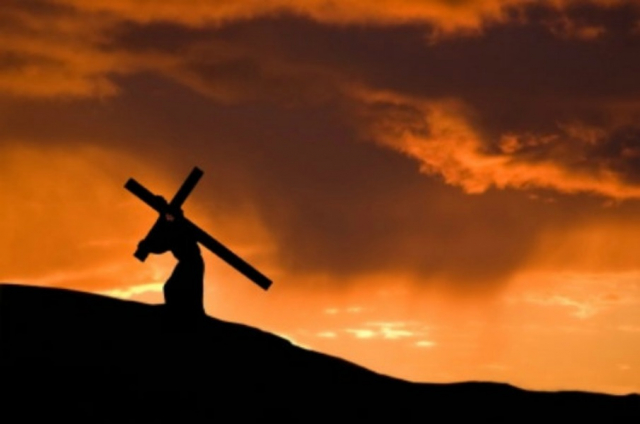 In the Gospel this Sunday, the Lord gives three important principles for a disciple. He also teaches on the concept of being worthy of Him. We tend think of being worthy as acting in a way that meets a certain standard, but the Greek word for “worthy” involves more than merely external behavior, important though that is. To be worthy of the Lord is to ascribe worth and give proper weight to who He is and what He teaches. Let’s take a look.
I. The priority of a disciple – The text says that Jesus said to His apostles, “Whoever loves father or mother more than me is not worthy of me, and whoever loves son or daughter more than me is not worthy of me; and whoever does not take up his cross and follow after me is not worthy of me.”
The Lord could not be clearer: we are to love Him more than we love anyone or anything else. There is to be no person or thing in our life that has greater importance than the Lord. So fundamental is the priority of our love and obedience to Him that it eclipses even the most fundamental relationships in our family. Our love and honor for our parents is very important; it is mandated by the Fourth Commandment: Honor your Father and your Mother. And yet, even it cannot overrule the most fundamental of all the commandments, the First Commandment: I am the Lord your God, You shall have no other gods before me.
Therefore, even the love and respect owed to parents and the love that parents should have for their children cannot be preferred to the love and obedience we owe to God. If a son or daughter, even while still a minor, were to hear a parent instructing him or her to disregard a clear teaching or commandment of God, the child would have to respond, “Sorry, Mom, Dad, but I love God more. I cannot obey you in this matter.”
The same is true for any other relationship. If a spouse, a sibling, a boss, or a government official were to try to compel us to act contrary to God’s truth and commands, the answer must always be the same: “I’m sorry but I cannot comply; I love God more. Even if I suffer at your hands as a result, I cannot and will not comply.”
The love of Jesus, who is Lord, supersedes every other love, respect, or honor due to others, be they persons, philosophies, nations, or political parties.
Truth be told, many Christians manifest greater allegiance to political parties, careers, and the opinions of men in general than to the Lord and His Church. Many prefer worldly thinking to what the Lord teaches. Many cave in and compromise to what others demand of them in order to ingratiate themselves to others, to gain access, or simply to preserve a false peace. Silencing the Gospel is never a recipe for true or lasting peace.
II. The Profundity of a Disciple – Jesus speaks strongly and says that such people as this are not “worthy” of me. As noted above, we tend to measure worthiness externally, by whether we live up to expectations of us. While this is proper, it overshadows the more internal dimensions that are the deeper part of being worthy.
The Greek word translated here as “worthy” is axios, and which is related to weights and scales. Most literally the word means “drawing down the scale,” and thus implies weighing as much or more than something else.
Internally, the concept of being worthy of the Lord here is that we assign a greater weightiness in our life to Him than to the passing treasures and trinkets of the world. We are to ascribe greater “worth” or “worthiness” to Him than to anything or anyone else. We take the Lord seriously. His teaching is to weigh on us and to carry a weight in our life. This internal disposition of being worthy of God produces the external behaviors that are worthy of Him.
The Lord paints a kind of picture for us to show that if we love anyone or anything more than we love him, the scales are tipped wrongly; we are not ascribing enough weight or worth to Jesus and are thus living in an unworthy way.
As we “size things up” in life and weigh the true importance of things, remember this: No person, no political party, no boss, no person at all who seeks our money, time, loyalty, or acquiescence ever died for us. None of them can ever save us, for none of them is God. If we esteem anyone or anything more than we do Him, then we are weighting His Blood and His saving love too lightly.
III. The passion of a disciple – The text says, … and whoever does not take up his cross and follow after me is not worthy of me. Whoever finds his life will lose it, and whoever loses his life for my sake will find it.
Every disciple must be willing to take up his cross; if he does so, there is ample reward. The Lord originally offered us paradise, but Adam and Eve wanted a better deal. Welcome to that better deal: Paradise Lost. In Paradise Lost, suffering is a reality. But suffering, by God’s gracious mercy, is also redemptive. The Lord teaches us that we must join our cross to His. Taking up the cross is a way of “losing” our life in the sense that it often diminishes our enjoyment of this earthly existence. But in dying to self and to this world, we find our true life: God and the things He offers!
It is interesting to note that we are often willing to take up crosses for worldly gain. We work hard for a paycheck or to earn a college degree. Why not then for the Lord? An old song says, “No cross, no crown.” The Lord asks of us no less than what the world demands for its trinkets. The Lord teaches that rewards far greater than worldly trinkets come with the cross He instructs us to take up. The Lord’s insistence on the need for the cross is not unreasonable, yet many of us bristle. Although we will gladly spend several years and a lot of money in order to obtain a college diploma, going to Church on Sundays or giving up some of our favorite sins is viewed as unreasonable, or just too much trouble.
In effect, the Lord demands that we take him seriously, that we give weight to His words and to His promise. If we dismiss His words lightly then we are not worthy of Him, if we do not give proper weight to His words then we do not take Him seriously. This is a bad idea because He who mercifully summons us now to His truth will one day be our judge.
Be worthy of the Lord. Give sufficient weight to what He says. Respect and obedience are the proper virtues for a disciple who accords worth (weight) to the Lord’s teaching and acts in such a manner.
IV. The prize of a disciple – The text says, Whoever receives a prophet because he is a prophet will receive a prophet’s reward, and whoever receives a righteous man because he is a righteous man will receive a righteous man’s reward. And whoever gives only a cup of cold water to one of these little ones to drink because the little one is a disciple—amen, I say to you, he will surely not lose his reward.
The Lord promises reward if we get our priorities and passions right, if we welcome His word and give weight to what He says and who He is!
Even now, we can enjoy the fruits of God’s Word as we listen to His prophets and see our life change. In welcoming the Word in my life, I have seen many positive changes. I am less anxious, more patient, and more loving than before. I have greater wisdom. I have seen sins and sinful attitudes reduced and graces come alive. Word and sacrament have had their effect; accepting the prophecy of the Church has given me a prophet’s reward. How about you?
Further, the Lord says that He will reward every work of mercy by us, which is in effect a small share in the cross. We pray that God will forget our sins, but it is said that God will never forget the good things we have done and will never be outdone in generosity.
The Lord does not demand the cross without pointing to its reward. The cross ushers in the crown. Do you believe this? Do you take the Lord seriously? Do you give weight to and count as worthy the Word that He speaks to you?
There’s something about the commercial below that reminds me of this Scripture passage:
As for man, his days are like grass;
he flourishes like a flower of the field;
for the wind passes over it, and he is gone,
and his place knows him no more.
but the steadfast love of the Lord is from everlasting to everlasting on those who fear him,
and his righteousness to children’s children,
to those who keep his covenant
and remember to do his commandments.
The Lord has established his throne in the heavens,
and his kingdom rules over all (Psalm 103:15-19).
In this video we watch a young boy age before our very eyes and then vanish.
I’m not crazy about the Santa figure; in my opinion, something more edifying would have been better, but at his best, Santa means Holy One and as such can represent God. Although the “places” of the man forget him, the Santa figure does not. As the commercial ends you might see the man’s grandchildren (his “children’s children”) in the background.
The world has a cruel indifference to us, but God remembers us as the apple of His eye.
God never forgets.
One of the most consistent concerns expressed both by my readers and by attendees at the various talks I give, is the large number of tepid and problematic clergy. We clergy give our people much to endure, yet for the most part they are so very patient and loving with us despite our foibles and idiosyncrasies.
Most of the people are highly concerned about the widespread silence and/or vagueness of the clergy in the face of the grave moral meltdown in our culture. At best, many pulpits are silent or replete with abstractions and generalities. At worst, some pulpits and clerical teaching contain outright errors or ambiguities that (intentionally or not) mislead and confuse the faithful.
There are, to be sure, numerous exceptions to these concerns. There are many fine, hard-working priests who teach courageously and clearly, with love and zeal. However, the problem is widespread enough that it is a common concern of the faithful.
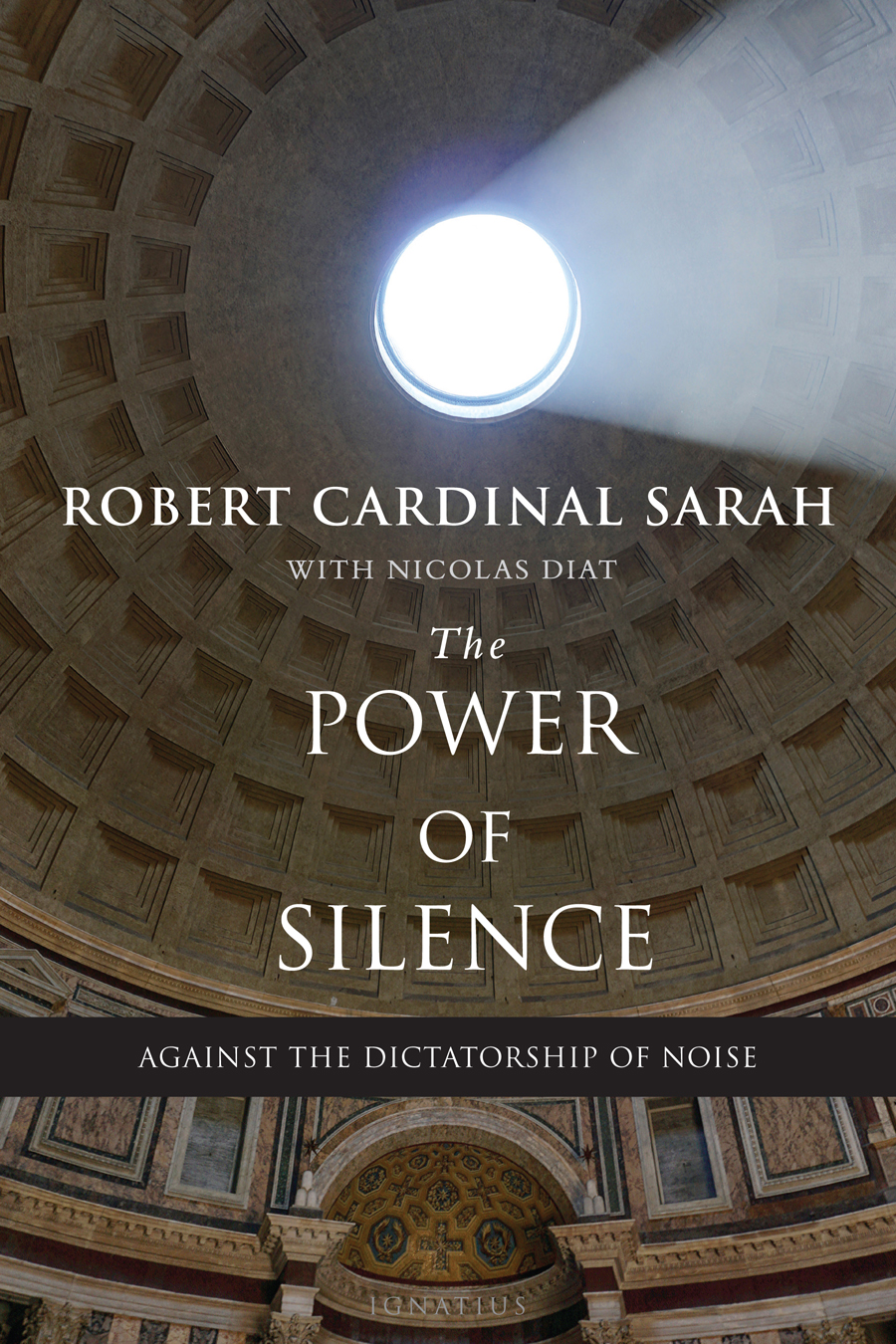
Cardinal Robert Sarah, in his recent book The Power of Silence Against the Dictatorship of Noise, presents an insightful analysis of the problem and its causes. He relates the problem to a lack of prayerful silence on the part of many priests, who find little time for prayer let alone deeper silent contemplation. He begins by referencing Fr. Henri Nouwen, who once said,
Silence is the discipline by which the inner fire of God is tended and kept alive … Especially we [priests], who want to witness to the presence of God’s Spirit in the world, need to tend the fire within with utmost care … [Yet] many minsters have become burnt-out cases … in whom the fire of God’s Spirit has died, and from whom not much more comes forth than their own boring and petty ideas and feelings; … It is as if [they] are not sure that God’s Spirit can touch the hearts of people [cited in The Power of Silence, p. 77].
Here are two key insights. First, a priest who is not accustomed to silently praying and listening to the voice of the Lord begins to hear only the voice of the world and to parrot its slogans and often insipid, ephemeral notions. The voice of Christ and the light of the Gospel grow dim, and his mind centers more on vain things and worldly notions. Gradually, he “goes native,” taking up the mind of the world, fleshly notions, and even the doctrines of demons.
Second, a priest can slip away from the “still, whispering voice of the Lord.” He can begin to lose trust in the power of God’s grace to touch and change people’s hearts. Vigorous preaching is rooted in confidence about both the truth proclaimed and the power of grace to bring about what the revealed Word announces. It is true that the Lord’s teachings are often challenging to the faithful, but this did not trouble Christ who, knowing the power of grace, did not hesitate to point to the highest truths and confidently summon the faithful to trust in His grace and mercy to get there! Without deep prayer, we lose our trust in God and in His people.
Gradually, as Nouwen notes, a priest’s untended inner fire grows cool and the numbness of the world extinguishes his joy, zeal, confidence, and love. The demands of the Gospel come to seem unreasonable or even impossible to him. And because he sees the Gospel as too challenging he is hesitant to preach its demands. As the inner fire grows dim, he slips into watering down the Gospel message, into the obfuscation of abstractions and generalities, or into outright denial of the harder truths.
Cardinal Sarah warns priests of this tendency and its outcome:
Christ is certainly distressed to see and to hear priests and bishops, who ought to be protecting the integrity of the teaching of the Gospel and of doctrine, multiply words and writing that weaken the rigor of the Gospel by their deliberately confused, ambiguous statements. It is not inopportune to remind these priests and prelates … of Christ’s severe words: “Therefore I tell you every sin and blasphemy will be forgiven men, but the blasphemy against the Spirit will not be forgiven … either in this age or the age to come. [He] is guilty of an eternal sin” [Ibid., pp. 77-78].
Thus, as both Fr. Nouwen and Cardinal Sarah point out, priests who let the fire of God grow dim and who no longer trust God or His people, sin against the Holy Spirit. They do so because they come to doubt or even deny the power of grace to make possible the satisfaction of the Gospel’s demands. Human flattery and worldly perspectives are preferred to the Holy Spirit’s urging to announce the Gospel plainly, lovingly, and without compromise. Human weakness becomes the baseline for what is expected. God the Holy Spirit is dismissed as irrelevant or incapable of perfecting God’s people. This is a sin against the Holy Spirit and a disastrous end for a priest, especially one who has reached the point of outright misleading God’s people and confirming them in sinful and erroneous notions.
Therefore, I ask all of the faithful to pray often for priests and bishops. In our human weakness, we clergy can stray from prayer. From there, the fiery zeal of God and the joy of the truth give way to the thinking of the world and to a lack of confidence in preaching without compromise. From the point of compromise, things just keep getting worse.
In his book, Cardinal Sarah references St. Augustine’s own plea for prayer, and I will conclude with that:
It is not my intention to waste my life on the vanity of ecclesiastical honors. I think of the day when I will have to render an accounting for the flock that has been entrusted to me by the Prince of pastors. Understand my fears, because my fears are great [p. 79].
Tu es Sacerdos in Aeternum by Vivaldi:

 Almost two decades ago, as a younger priest, I remember trying to save a marriage. Sadly, by the second counseling session I concluded that the couple really had no intention of trying to save the marriage. Rather, they were looking to me to assuage their guilt and to console them by telling them they were really “doing the right thing,” that God wanted them to be happy and would not mind if they divorced. I could do no such thing.
At a critical moment the couple said, in effect, “We are really doing this for the sake of the children. We don’t want them to suffer with all of our bickering.” To which I replied, “Then stop the bickering!” As they looked at me incredulously, I went on to urge them to get whatever help they needed to work through their differences. I insisted that God hates divorce and that divorce is not good for children; reconciliation is what they want and need.
Realizing that they were not going to get the approval and consolation they sought, the couple ended the session and did not return. They finalized their divorce. Their three children went on to be subject to things far worse than bickering: being carted around to different households on weekends, meeting Dad’s new girlfriend, accepting a stepdad, always secretly wishing that Mom and Dad would love each other again.
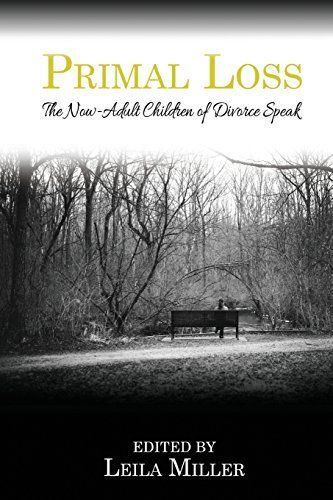
I thought of that story (and others like it) as I was reading this book, published in May: Primal Loss: The Now Adult Children of Divorce Speak, by Leila Miller. It should be required reading for anyone who thinks that divorce is “good thing” for their children—or even for them.
Consider the following passage from the book, in which a woman writes of suffering through her parent’s divorce during her youth:
My grandparents’ generation had to deal with a lot — war, undiagnosed PTSD, and alcoholism—but they had a noble idea: That you sacrificed your own happiness for your children’s well-being. You took on all the heartache so they didn’t have to. …
My parent’s generation inverted that. They decided it was better a child should have her world torn apart than that an adult should bear any suffering. Of course, they didn’t frame it that way. They wanted to believe that the child would suffer less, because children were just extensions of the mother, and the mother would theoretically be happier [p. 131].
It is shocking logic, but widespread in our culture. Indeed, the whole conversation about marriage today is about adults and what makes them happy; children are something of an afterthought. Marriage is said to be about romance, being happy, and “finding a soulmate.” But if one asks a couple about having children, a common response is, “Oh sure, that too. We’ll probably have a kid or two … when we’re ready.” Children are seen more as a way of accessorizing the marriage, as an “add-on” rather than the essential work of a marriage.
Yet the biblical and traditional understanding of marriage has its entire structure made sensible by its central work: procreation and the subsequent raising of the children. That a man and a woman should enter a stable, lifelong union makes sense because that is what is necessary and best for children. Marriage is about children and has its very structure directed toward what is best for them. Physically, emotionally, psychologically, and spiritually, a child is best raised by a father and a mother who are stably present and who manifest the masculine and feminine genius of being human. To intentionally subject children to anything less or anything different does them an injustice.
The divorce culture casts this aside and insists that marriage is about adults and what makes them happy. If there are children in the picture, don’t worry, they’ll adjust; kids are resilient. Or so the thinking goes.
Leila Miller has done a wonderful service in showing that children are not so resilient after all. In fact, even long after attaining adulthood, these victims of their parents’ divorces still suffer painful and lasting effects. Ms. Miller interviewed 70 adult children of divorce and let them speak for themselves.
Many were surprised that anyone was interested or even cared about what they thought or had experienced. One of the more common experiences shared was a “we’re not going to talk about the divorce” mentality. Never mind the awkwardness of Mom and Dad marrying others. We’re supposed to go along with the drastic changes and be delighted, happily accept new siblings, and call some man “Dad” (or some woman “Mom”) who really isn’t. We want to make sure that no one’s feelings get hurt, so we’re all going to be nice and pleasant. The unspoken message in this is that the feelings of the children matter less and must be sacrificed so that others—mainly adults—can be happy and “get on with their lives.”
Some who have read this book say, “Finally, someone understands.” Or “Wow, that’s just how I feel!” The powerful, articulate testimonies in it will help those who had to live through divorce to name and understand their own hurts and feelings, not merely so as to brood or to reopen old wounds, but to the bring them to the light and seek deeper healing.
I cannot recommend this book enough. It is a healing for those who have suffered and, I pray, a strong medicine to prevent divorce. As Christians, let’s remember that God designed marriage to be what is best for children. The truest happiness any father or mother can find will be the knowledge that they made the sacrifices necessary to be sure that their children were raised well and prepared for life here, and even more, for eternal life.
Disclaimer: Not everyone who is divorced came to be so in the same way. Some tried hard to save their marriage but their spouse was unwilling. Others came to conversion later in life. Still others were physically endangered during the marriage. This essay is not to be construed as a general condemnation of all who are divorced. Rather, it is a heartfelt plea that amidst today’s divorce culture we count the full cost of divorce and that we remember that marriage is first and foremost about what is best for children.
 The Gospel for today’s Mass (Tuesday of the 12th Week of the Year) features three hard sayings of the Lord’s. They are difficult for us moderns to hear because they offend against modern sensibilities; we are easily taken aback by their abruptness. Here are the first two “offensive” sayings:
Do not give what is holy to dogs, (Mt 7:6)
or throw your pearls before swine, lest they trample them underfoot, and turn and tear you to pieces (Mt 7:6).
This offends against modern notion that you’re not supposed to call people ugly names. This idea, though not wrong in itself, has been applied excessively in our times. We live in thin-skinned times, times of fragile egos. People today easily offended; the merest slight is often met with the threat of a lawsuit. Even observations intended to be humorous are labeled hurtful and out-of-line. But horror of horrors, here we have Jesus calling certain (unnamed) people “dogs” and “swine”; we demand an explanation for such horrible words coming forth from the mouth of the sinless Lord Jesus!
Sophistication is needed. One of the reasons we are so easily offended today is, frankly, that we lack sophistication. We seem to have lost understanding of simile and metaphor.
Metaphors and similes are figures of speech; they achieve their effect through association, comparison, and resemblance. They can highlight hidden similarities between two different things.
A simile directly compares two different things and normally includes words such as “like,” “as,” or their equivalent. Similes are comparisons like this one: “He is as swift as a cheetah.”
Some references say that similes are just a specific subset of metaphors, while others say that metaphors cannot use the words “like” or “as.” But in either case, here is an example of a metaphor that is not a simile: “He’s a real workhorse.” Metaphors (that are not similes) are usually more effective (and subtle) than similes because the basis for comparison is often ambiguous. For example, if I were to observe someone doing something cruel I might say, “He’s a dog.” Now obviously I don’t think that he is actually a dog. Rather, I mean that he is manifesting some of the qualities of a dog. However, which quality or qualities he shares with an actual dog is left open to interpretation.
The point is that as we negotiate life, some sophistication is needed as is some appreciation for the nuances of language. We seem to have lost some of this today and therefore are easily offended.
This does not mean that no one ever intends offense; it only means that more care is necessary in interpretation. In my example, the man acting cruelly would likely take offense at my words and respond, “Hey, he called me a dog!” But again what I meant was that he is exhibiting some of the qualities of a dog. Now to what extent I meant that he is like a dog is intentionally ambiguous; it’s an invitation for him to think about how he may have surrendered some of his humanity and become more like a baser creature.
Examining what the Lord says – This sort of sophistication is necessary when examining the Lord’s “offensive” sayings. Let’s look at both of them in terms of their historical roots and in terms of the lesson being taught.
Obviously the Jewish people were not pointing out positive traits when they referred to people as dogs or swine. In the ancient world, dogs were not pets; they were wild animals that ran in packs. Pigs were unclean and something that no Jew would ever touch, let alone eat. These are strong metaphors indicating significant aversion to some aspect of the person.
Do not give what is holy to dogs. This was a Jewish saying rooted in tradition. Some of the meat that was sacrificed to God in the Temple could be eaten by humans (especially the Levites), but in no way was it ever to be thrown to dogs or other animals to eat. If it was not consumed by humans, then it was to be burned. Sanctified meat was not to be thrown to dogs because it was holy.
[Do not] throw your pearls before swine, lest they trample them underfoot. In the Old Testament, pearls were an image for wisdom. Pigs only value what they can eat. If pigs were to come across pearls, they would sniff them, determine that they were not edible, and then simply trample them underfoot.
So what is being said? Sacred things, sacred matters, and participation in sacred matters should not be readily offered to those who are incapable of appreciating them. There are those who despise what we call holy. There is little that can be done in such cases except to deny them the pleasure of tearing apart or trampling underfoot what is holy. Jesus is saying that some people are like dogs, who would irreverently tear apart blessed food dedicated to God, having no concept of its holiness. Some people are like swine, who would trample underfoot anything that they could not eat or use for their pleasure.
There are also some who, though not hostile, are ignorant of sacred realities for some reason. Even if they do not intend offense, they must be instructed before being admitted to sacred rites. In the Western Rite, for example, children are not given the Holy Eucharist until they can distinguish it from ordinary food. In addition, more advanced spiritual notions such as contemplative prayer are often not appreciated unless one has been led in stages.
The Lord is thus indicating that holy things are to be shared in appropriate ways with those who are capable of appreciating them. It is usually necessary to be led into the holy; one doesn’t just walk in unprepared or unappreciative.
A third hard saying of the Lord’s destroys a notion that is, to most moderns, practically a dogma: that just about everyone is going to Heaven. It is one of the most damaging ideas in modern times because it removes the necessary sense of urgency in earnestly seeking our salvation, in staying on the narrow road that leads to salvation. In direct opposition to this destructive and presumptuous notion of practically universal salvation Jesus says,
Enter through the narrow gate; for the gate is wide and the road broad that leads to destruction, and those who enter through it are many. How small the gate and narrow the road that leads to life. And those who find it are few (Matt 7:12-13).
Pay close attention to the word “few.” We need to be sober and come to the biblical understanding that our salvation must be earnestly desired and sought. God’s love for us is not lacking, but our love for Him often is. In contrast, Jesus says that “many” are on a path of indifference or outright rejection of the Kingdom, which leads to destruction.
The Kingdom of God is not some abstraction. It’s not a golf course or a playground up in the sky. The Kingdom of God is the full realization of God’s will and His plan. It includes values like justice, mercy, kindness, chastity, and love of God and neighbor. It is clear that many (to quote Jesus) live in opposition or indifference to these values, while only a few (to quote Jesus) come to appreciate and are willing to receive them into their life wholeheartedly.
Yes, this is a hard saying. Many are on the path to destruction while only a few are on the road to salvation. The Lord is telling us the truth—not in order to panic us, but to jolt us into earnestly desiring our own salvation and seeking it from Him with devotion. It is also to make us sober about the condition of others. We must stop making light of sin and indifference; we must work urgently to evangelize and to call sinners to repentance.
We need to realize that our tendency is to turn away from God. There is a great drama to our lives: we are either on one road or the other; no third way is given. It is not a popular teaching to be sure. It offends against modern sensibilities. But it is true; Jesus says it to us in love.
Ad old song says, “Sinner please don’t let this harvest pass, and die and lose your soul at last.”