On the Fear of Death

This is the second in a series of articles on the Four Last Things: Death, Judgment, Heaven, and Hell.

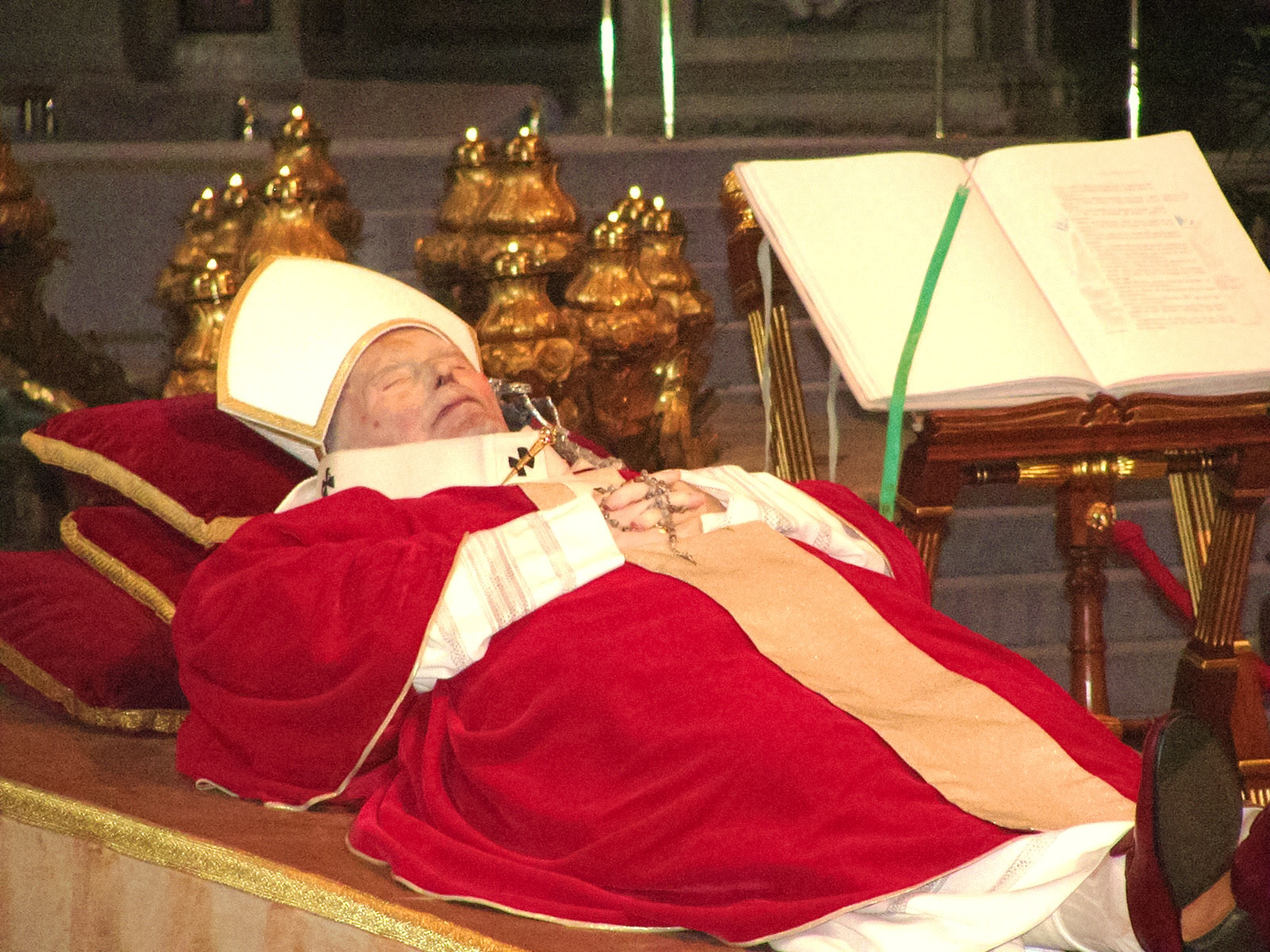
For the faithful, the day we die is the greatest day of our life on this earth. Even if some final purifications await us, the beatific vision for which we long lies just ahead; our exile in this valley of tears is ended.

Is calling the day we die the greatest day of our life too strong a statement? I have seen some fellow Christians wince at this statement. In this age of emphasis on worldly comforts, medicine, and the secular, we rarely speak of Heaven—or Hell for that matter. I wonder if we have lost some of our longing for Heaven and cling too strongly to the trinkets of this life.

At the funeral of a relative several years ago, I was approached by a friend of the family. She was an unbeliever, a self-described secular humanist, and she made the following comment to me: “Perhaps there is Heaven for the faithful who believe that there is life after death, and perhaps, then, for them the day they die is the greatest day of their life, but I do not observe that Christians live as if they believe this. It seems to me that they are as anxious as anyone else about dying and earnestly seek to avoid death just as much as anyone else.”

It was a very interesting observation, one that I found mildly embarrassing even though I quickly thought of some legitimate explanations. Even after giving her some of those explanations, some of the embarrassment lingered as to the kind of witness we Christians sometimes fail to give to our most fundamental values. Based on her remark—and I’ve heard it before—most of us Christians don’t manifest a very ardent longing for Heaven.

There are, of course, some legitimate reasons that we do not rush towards death; there are also some less legitimate ones. Here are some legitimate and understandable reasons that we may draw back from dying and may not at first think of the day we die as the greatest day of our life:

  1. There is a natural fear of dying that is part of our physical makeup and, it would seem, hard-wired into our psyche as well. Every sentient being on this planet, man or animal, has a strong instinct for survival. Without this instinct, strongly tied to both hunger and sexual desire, we might not only die as individuals but as a species. It also drives us to look to the future, as we work to ensure the survival, even thriving, of our children and those who will come after us. It is a basic human instinct that we ought not to expect to disappear, because it has necessary and useful aspects.
  2. We would like to finish certain important things before we die. It makes sense, for example, that parents would like to see their children well into adulthood. Parents rightly see their existence in this world as critical to their children. Hence, we cling to our life here not just for our own sake, but because others depend upon us.
  3. The Christian is called to love life at every stage. Most of us realize that we are called to love and appreciate what we have here, for it is the gift of God. To so utterly despise this world that we wish only to leave it manifests a strange sort of ingratitude. It also shows a lack of understanding that life here prepares us for the fuller life that is to come. I remember that at a low point in my own life, afflicted with anxiety and depression, I asked the Lord to please end my life quickly and take me home out of this misery. Without hearing words, I felt the Lord’s silent rebuke: “Until you learn to love the life you have now, you will not love eternal life. If you can’t learn to appreciate the glory of the gifts of this life, then you will not and cannot embrace the fullness of eternal life.” Indeed, I was seeing eternal life merely in terms of relief or escape from this life, rather than as the full blossoming of a life that has been healed and made whole. We don’t embrace life by trying to escape from it. A healthy Christian attitude is to love life as we have it now, even as we yearn and strive for a life that we do not yet fully comprehend: a life that eye has not seen nor ear heard, what God has prepared for those who love Him.
  4. We seek to set our life in order to some degree before we face judgment. While it is true that we can procrastinate, there is a proper sense of wanting time to make amends and to prepare to meet God.
  5. We fear the experience of dying. Dying is something none of us has ever done before and we naturally tend to fear the unknown. Further, most of us realize that the dying process likely involves some degree of agony. Instinctively and understandably, we draw back from such things.

Even Jesus, in His human nature, recoiled at the thought of the agony before Him—so much so that He sweat blood and asked that the cup of suffering be taken from Him if possible. Manfully, though, He embraced His Father’s will, and our benefit rather than His own. Still, in His humanity, He did recoil at the suffering soon to befall Him.

Despite this hesitancy to meet death, for a faithful Christian the day we die is the greatest day of our life. While we ought to regard the day of our judgment with sober reverence, we should go with joyful hope to the Lord, who loves us and for whom we have longed. That day of judgment, awesome though it is, will for the future saint disclose only that which needs final healing in purgation, not that which merits damnation.

We don’t hear much longing for our last day on this earth or for God and Heaven. Instead, we hear fretting about how we’re getting older. We’re anxious about our health, even the natural effects of aging. And there are such grim looks as death approaches! Where is the joy one might expect? Does our faith really make a difference for us or are we like those who have no hope? Older prayers referred to life in this world as an exile and expressed a longing for God and Heaven, but few of today’s prayers or sermons speak this way.

Here are some of the not-so-legitimate reasons that we may draw back from dying:

  1. We live comfortably. While comfort is not the same as happiness, it is very appealing. It is also very deceiving, seductive, and addictive. It is deceiving because it tends to make us think that this world can be our paradise. It is seductive because it draws and shifts us our focus away from the God of comforts to the comforts of God. We would rather have the gift than the Giver. It is addictive because we can’t ever seem to get enough of it; we seem to spend our whole life working toward gaining more and more comforts. We become preoccupied by achieving rather than working toward our truest happiness, which is to be with God in Heaven.
  2. Comfort leads to worldliness. Here, worldliness means focusing on making the world more comfortable, while allowing notions of God and Heaven to recede into the background. Even the so-called spiritual life of many Christians is almost wholly devoted to prayers asking to make this world a better place: Improve my health; fix my finances; grant me that promotion. While it is not wrong to pray about such things, the cumulative effect, combined with our silence on more spiritual and eternal things, gives the impression that we are saying to God, “Make this world a better place and I’ll just be happy to stay here forever.” What a total loss! This world is not the point. It is not the goal, Heaven is. Being with God forever is the goal.
  3. Worldliness makes Heaven and being with God seem more abstract and less desirable. With this magnificent comfort that leads to worldly preoccupation, longing for Heaven and going to be with God recedes into the background. Today, few speak of Heaven or even long for it. They’d rather have that new cell phone or the cable upgrade with the sports package. Some say that they never hear about Hell in sermons, and in many parishes (though not in mine, thank you), regrettably, that is the case. They almost never hear about Heaven, either (except in some cheesy funeral moments that miss the target altogether and make Heaven seem trivial rather than a glorious gift to be sought). Heaven just isn’t on most people’s radar, except as a vague abstraction for some far off time—certainly not now.

This perfect storm of comfort and worldliness leads to slothful aversion to heavenly gifts. That may be why, when I say that the day we die is the greatest day of our life, or that I’m glad to be getting older because I’m getting closer to the time when I can go home to God, or that I can’t wait to meet Him, people look at me strangely and seem to wonder whether I need therapy.

No, I don’t need therapy—at least not for this. I’m simply verbalizing the ultimate longing of every human heart. Addiction to comfort has deceived and seduced us such that we are no longer in touch with our heart’s greatest longing; we cling to passing things. I would argue (as did my family friend) that we seem little different from those who have no hope. We no longer witness to a joyful journey to God that says, “I’m closer to home. Soon and very soon I am going to see the King. Soon I will be done with the troubles of this world. I’m going home to be with God!”

There are legitimate, understandable reasons for being averse to dying, but how about even a glimmer of excitement from the faithful as we see that our journey is coming to an end? St. Paul wrote the following to the Thessalonians regarding death: We do not want you to be like those who have no hope (1 Thess 4:13). Do we witness to the glory of going to be with God or not? On the whole, it would seem that we do not.

The video below features a rendition of the hymn “For All the Saints Who from Their Labors Rest.” Here is a brief passage from the lyrics:

The golden evening brightens in the West,
Soon, soon, to faithful warriors cometh rest.
Sweet is the calm of Paradise most blest. Alleluia!

The Mystery of Life and Death

This is the first in a series of articles on the Four Last Things: Death, Judgment, Heaven, and Hell.

Note: I wrote this post prior to the terrible shooting that occurred Sunday in Texas. Once again we are confronted with terrible violence and the specter of sudden death. Please offer your prayers for those who have died and their families.

As we begin here a series on the Four Last Things, a shooting like this confronts us not only with the death and life, but also the mystery of iniquity. In reading this, I hope you will keep in mind that my remarks here speak of death that awaits us all at a time and in a manner not of our own control. Please also remember this post was not written as a response to the Texas shooting and I do not propose it as an explanation, or commentary on that terrible shooting. Rather it is a commentary on the deep mystery of life and of death.

*     *     *

You are going to die and you don’t get to say when or how. I say this at every funeral, both to those present and to myself. This solemn reminder is hard to process. It is one thing to assent to this obvious truth intellectually, but it is another thing to internalize it in our depths and really know what it means.

What is death? Some speak of heartbeats that stop or brain waves that cease, but that is not what death is. The cessation of vital indicators is the effect of death, not death itself.

Part of the mystery of death is that it is presupposed by another equally deep and mysterious question: What is life? Some say that life is organized energy, but this answer also misses the mark. It describes what life does, not what it is.

The force we call life is mysterious. We see its effects. We know when it is present and when it is gone, but we do not know exactly what it is. Just because we have a word for something doesn’t mean we understand it. Similarly, death is mysterious. I have been at the bedside of parishioners and my own loved ones at the moment of death and I cannot adequately articulate how strangely baffling it is. There is labored breathing; sometimes there are nervous twitches. Occasionally some words are spoken. Then, suddenly, there is a great stillness. The mysterious force that we call life has departed; the soul, the animating principle of living things, is gone.

I remember looking at my sister, my father, and my mother as each lay in the casket. They were there and yet they were not. When I looked at my mother, she seemed alive; I fully expected her to look at me and tell me to comb my hair or that she loved me—but she was not there. Her body had lost that mysterious spark and force we call life. Her soul had departed.

Looking at my father’s still body in the hospital room where he died was overwhelming. He had been a giant in my life. He still looms large in my memory; his voice rings in my soul. But there he was lying still in that hospital bed—and yet he was not there. Something deeply mysterious had happened. The hidden, mysterious life force of his soul was gone even though there seemed to have been no change in the appearance of his body.

Sadly, I have had to have several of my pets put down over the years. In those cases, too, the mystery of life and death is evident. An animal is alive one moment and then suddenly grows still. Even with plants and trees, I have seen them healthy and green only to be astonished when they die. What happened? The life is gone; a mysterious, organizing principle and force has departed—but what it is we do not know. We do not see death, only its effects.

I am overwhelmed in the face of death, at the mystery of it and the mystery of what has departed: life, a force that cannot be seen or measured, that does not tip the scales of scientists or involve our senses but that is nonetheless very real.

Especially in its inception, life is mysterious. Consider an acorn. In appearance, it is not so different from a small stone. Yet if you were to put both in the soil, the stone would sit there forever and do nothing; the acorn, though has a mysterious spark, a life force in or around it that springs forth to become a mighty oak. What is that spark? Where is it? An acorn has it but a stone does not. Why? Only God really knows.

It was my father who first taught me of the mystery of life. When I was a child, he told me that one of the deepest experiences of his life had occurred when he was about my age:

It had suddenly occurred to him, coming into his mind like a bolt out of the blue, that he existed. He cried out, “I exist!” and then grew silent in astonishment.

He said that ever since that moment he had never ceased to be amazed and awed at the mysterious fact of his existence. Indeed, it is an awesome mystery. Why do I exist? Why do you exist? Why is there anything at all?

As my Father grew silent in amazement, so must I. I have already said too much. The word mystery comes from the Greek muein, meaning to shut the mouth or close the eyes. As we begin a meditation on the four Last Things, (death, judgment, Heaven, and Hell), ponder with awe and reverential silence the great mystery of life and death.

Tomorrow I will discuss some of the more practical aspects of death.

Teachings On Authority – A Homily for the 31st Sunday of the Year

The Gospel this Sunday is familiar to many Catholics (in a negative way) because many Protestants use the verse Call no one on earth your father, to assail the Catholic practice of calling priests “Father.” Never mind that the text also says that we should call no one on earth “teacher.” Never mind that the New Testament contains almost 200 uses of the word “father” to refer to earthly males. Apparently Matthew, Mark, Luke, and John along with Paul, Peter, and Stephen never got the memo banishing all use of the word in reference to anyone on earth.

However, to turn this into a Gospel about appropriate terminology is to miss its main point, which is to teach us about authority. This teaching is both beautiful and essential, especially in modern times when the notion of authority is so often misunderstood and maligned.

Before looking at Jesus’ teaching on authority it is good to be clear one point: While each of us is under authority, we also have authority. Whether it is as a parent, a supervisor at work, a community leader, a leader in the Church, or just because you’re older—you have authority.

Because we live in a culture that largely despises authority, we tend to think it is always the “other guy” who has authority and needs to be “put in his place.” Maybe it’s that pompous guy in the corner office, those nasty politicians, or the boorish and backward pastor. Look in the mirror! This Gospel isn’t just for “them,” it’s for you, too. As we explore this teaching on authority, remember that it applies to you and me just as much as to “them.”

Let’s look at the teaching in four stages.

The Tenure of Lawful Authority – Jesus says, The scribes and Pharisees have taken their seat on the chair of Moses. Therefore, do and observe all things whatsoever they tell you but do not follow their example.

Jesus teaches the disciples that for now they are to remain under the lawful authority of the Scribes and Pharisees. In the future, Jesus will fully send forth His Church and establish the authority of the Apostles themselves, but for now they are to follow lawful authority, just as Jesus will expect the Church to follow the lawful authority of the Apostles and their successors later on.

Nowhere in Scripture are Christians encouraged ridicule, resist, or overthrow lawful authority. The human tendency (especially evident in modern times) to be insubordinate to and disrespectful of lawful authority is neither encouraged nor supported in biblical teaching. Consider some of the following examples:

  • Let every person be subject to the governing authorities. For there is no authority except from God, and those that exist have been instituted by God. Therefore, he who resists the authorities resists what God has appointed, and those who resist will incur judgment (Rom 13:1).
  • Submit yourselves for the Lord’s sake to every authority instituted among men. (1 Peter 2:13).
  • Remind the people to be subject to rulers and authorities, to be obedient, to be ready to do whatever is good (Titus 3:1).
  • I urge, then, first of all, that requests, prayers, intercession and thanksgiving be made for everyone—for kings and all those in authority, that we may live peaceful and quiet lives in all godliness and holiness. This is good, and pleases God our Savior, who wants all men to be saved and to come to a knowledge of the truth (1 Tim 2:1).
  • Honor all men. Love the brotherhood. Fear God. Honor the king (1 Peter 2:17).
  • Give to Caesar what is Caesar’s, and to God what is God’s (Matt 22:21).

The Lord Jesus, indeed Scripture in general, upholds the proper need and place for authority. The modern tendency to celebrate rebellion and disrespect toward authority is clearly not supported by Scripture.

This tendency is exhibited throughout Western culture. Children are disrespectful to their parents, younger people to their elders, subordinates in the workplace to their supervisors, Catholics toward the Church hierarchy, and so forth.

One may argue that some who are in charge are poor leaders. Perhaps, but consider the authorities of ancient times: the Scribes, the Pharisees, and Herod, just to name a few. Yet still this teaching went forth. Others may say that authorities need to be corrected. Yes, at times they do; in those cases, a Christian should use means that are both respectful and nonviolent.

Vigorous political discourse is surely a feature and a genius of our modern democratic republic. However, too much of the discourse today strays into the hateful, toward personal attack and ridicule. Such extremes are unfit for Christians, who are called to speak the truth with both clarity and charity.

So in setting forth a teaching on authority, the Lord Jesus first establishes that there is authority and that (other things being equal) lawful authority is to be respected and obeyed. Although there are times when the example of those in authority should not be imitated (more on that in the next section), their lawful and moral directives are to be followed.

In cases in which you are under authority, pray, strive to cooperate, and when necessary correct with reverence.

In cases in which you have authority, do not be ashamed of it. Use it well, for the common good and to provide necessary direction and unity for those under your authority.

The Tyranny of Arrogant Authority – Jesus does acknowledge the burdensome and insensitive qualities of the leadership of that time. He says, Do not follow their example. For they preach but do not practice. They tie up heavy burdens, hard to carry and lay them on people’s shoulders. But they will not lift a finger to move them.

This is a sober assessment by Jesus of the problems of leadership in His day. They will have to answer to God for their tenure. Jesus holds them up as a kind of warning to the future leaders of His Church, who will one day have to render an account for their leadership. Do not follow their example, Jesus warns.

True authority exists to serve, not to crush or merely to exhibit its power. It exists to unite people around a common purpose and to direct people and resources to a good and focused end. It exists to help others to accomplish their tasks in a unified and directed way. Hence, we may ask the following questions of the exercise of authority:

  1. Does the exercise of authority make wings to lift a person up or is it a deadweight to drag him down?
  2. Does it help a person or haunt him?
  3. Does it carry him does he have to carry it?
  4. Does it bring joy to life or depression?
  5. Does it unite people around common goals or merely unite them in unproductive anger against authority?

How would those under your authority answer these questions?

The Trappings of Self-Centered Authority – Jesus describes how the Scribes and Pharisees loved titles, honors, and ostentation: All their works are performed to be seen. They widen their phylacteries and lengthen their tassels. They love places of honor at banquets, seats of honor in the synagogues, greetings in the marketplaces, and the salutation, “Rabbi.”

The Lord points out the following problems with self-centered authority:

  1. Their Actions Are Acted – Jesus often called them hypocrites, not as a slur but as a description. The word “hypocrite” comes from a Greek root meaning “actor.” An actor performs and plays his role only when there is an audience. He does so for money and applause. When the crowd is gone he stops acting because there would be no point; neither money nor applause would result. Some in authority forget the reason they have authority; they forget the goal to which it is directed. They care only about the praise that may increase their authority or build up their ego.
  2. They Parade their Piety – They want to be noticed as having authority. Rather than pointing to the end to which their authority is directed (in this case, God), they see the acknowledgement of their own authority as the proper end and desired goal.
  3. They Hunger for Honor – They seek the front seats. They want to be seen as having authority. They take the honor due those in authority personally, as directed to them, rather than directed to the office they hold.
  4. They Take after Titles – They crave the title itself for the honor they feel it brings them. A title is only good if the one bearing it does not disgrace it. Having a title is not so much an honor as a responsibility.

In the end, the poor example of the Scribes and Pharisees comes down to the fact that they used the “trappings” of authority for personal ends and glory, rather than for the ends to which they were intended: the glory of God, the serving of His people, and the common good and unity of all.

Leadership is not about trappings; it is about service and the glory of God.

The Truth of Christian Authority – The text says,  Do not be called teacher (Rabbi) You have but one teacher. Do not be called Father, you have but one Father in heaven..Do not be called master, have but one master the Christ. The greatest among you must be your servant. Whoever exalts himself will be humbled. Who ever humbles himself will be exalted.

Jesus emphasizes three fundamental things here, and I add a fourth.

  1. All authority is under the headship of God. In critiquing the use of terms like “teacher,” “master,” and “Rabbi,” Jesus is insisting that all teachers and “experts” must first be under the teaching and authority of God. All their teaching and “mastery” of any subject must be in conformity to, and submitted to the revealed truth of God. For someone to be worthy of the title “teacher,” “master,” or “Rabbi,” means that he is first submitted to what God teaches and reveals.
  2. All Fatherhood, all headship, is submitted to the Father and Lord of us all and reflects His Fatherhood. No one deserves the title “father” who does not first have God for his Father. In this sense, Jesus is not so much banning a word as He is insisting on a conformity to the one and perfect Father of us all. In this sense, St. Paul can say, You do not have many fathers, For I became your father in Christ Jesus our Lord (1 Cor 4:15). For you know how, like a father with his children, we exhorted you and charged each of you lead a life worthy of God (1 Thess 2:10). St. Paul takes up this title “Father” with them only in relation to how he guides them to what the Heavenly Father would want.
  3. Authority exists for service. Jesus says this of those in authority: The greatest among you must be your servant. In other words, those who have authority are to serve those under them, not “lord it over them.” Jesus says elsewhere,

You know that those who are regarded as rulers of the Gentiles lord it over them, and their high officials exercise authority over them. Not so with you. Instead, whoever wants to become great among you must be your servant, and whoever wants to be first must be slave of all. For even the Son of Man did not come to be served, but to serve, and to give his life as a ransom for many. (Mk 10:42ff)

Hence, those who have authority have it not for their glory but as a sign of their servitude. The priest who has authority has it to serve his people in teaching, sanctifying, and governing (uniting) them. Parents have authority in order to serve their children by raising them to become the men and women God intends them to be. The police officer has authority to protect and give order to the populace. The teacher has authority in order that she may teach the students. Authority is not for its own sake; it is for the sake of others.

  1. Authority is exercised among equals. In this world authority is equated with power; it is often given to those who are richer, more connected, and so forth. Some in authority may assume that they have authority because they are somehow better than others. Among Christians, however, authority is always exercised among equals. The greatest title one can have is “Child of God.” Titles such as CEO, President, Grand Knight, and Monsignor are mere footnotes. The Pope has authority in the Church, but he is no more baptized than you or I. Please understand, he does have authority and we have an obligation to submit to it, but his greatest title is not that of “Pope” or “Supreme Pontiff”; His greatest title is “Child of God.” Authority does not make me greater than you, it makes me your servant. Before God, though, we are all equally His children. This final point is my own addition; feel free to critique it.

So there it is, a Gospel not about terminology (as in “father”), but about authority; how to understand it and live it as a Christian. Remember, it is not just about that other guy; it’s about you, too, because you have authority as well. One day we will answer to God about how we have used our authority, whether to build or destroy, enable or disable, inspire or unnecessarily infuriate. We will also render an account for how we have acted toward those in authority. Although this world may praise disrespect and disobedience, God is neither impressed nor pleased. Authority—how we use it and respect it—is critical to God.

Note that the word “author” appears in the word “authority.” No authority exists unless it is granted by God (cf Jn 19:11). To the Author, all in authority must one day answer.

One of my favorite hymns is “Crown Him with Many Crowns”. In the video below, we see it performed on the occasion of the 50th anniversary of Queen Elizabeth II’s coronation. It is fitting to see those in authority (even if only ceremonially so) praising the true King, from whom all kings, queens, and leaders get their authority.

Of Jesus, we can say that He is the only King who died for us. The second verse of the hymn says, “Crown him the Lord of Love; Behold his hands and side. Rich wounds yet visible above, in beauty glorified. No angel in the height can truly bear that sight; so downward bend his wondering eye at mysteries so bright.”

Indeed, For the Son of man did not come to be served, but to serve, and give his life as ransom for many (Mk 10:45).

Our Interconnectedness as Seen in a Commercial

The commercial below reminds us that the products we use don’t just come out of nowhere. Good goes around and around. The Cheerios in the cereal box started out as seeds in the ground, but the commercial stops well short of showing everyone we should thank for the final product.

• Before sowing the seed, the ground has to be tilled and prepared.

o Thank you to the farmers as well as those who invented, designed, and build the plows.
o Thanks to the steel workers and miners, who contribute the raw materials to build the machines that till.
o Thanks to the petroleum and refinery workers who supply the fuel for the machines to till the earth.

• Once the seed is planted, water, fertilizer, and pesticides need to be supplied in order to ensure a rich harvest.

o Thanks again to the farmers, who rise early in the morning in all kinds of weather to do this work.
o Thanks to those who invented and supply the fertilizer and pesticides.

• Once the crops are ready, they must be harvested and sent to the mill.

o Thanks to those who do the hard work of harvesting.
o Thanks to the truckers and rail workers, who are responsible for conveying the material to the mills.
o Thanks to those who designed, built, and maintain the roads, rails, trucks, and rail cars.

• Once at the mill, the raw material must be processed.

o Thanks to all who work in the mills.
o Thanks to those who invented the machines and processes.
o Thanks to those who supply the steel and the parts for the machines.
o Thanks to those who repair and maintain the machinery.

• Once out of the mill, it’s over more roads and rails to the warehouses and then finally the stores.

o Thanks to all who built the warehouses and stores.
o Thanks to those who carefully monitor inventory so that we consumers are seldom faced with empty shelves.
o Thanks to those who risked their money to build the warehouses and stores.
o Thanks to the bankers, investors, and the people whose deposited money serves to make cash available for the costs for such operations.
o Thanks to the store employees, who stock the shelves and ensure that the products we need are at hand.

This is only a brief list, but never forget that a huge number of people stand behind every box of cereal, behind every other product you buy. Do you see how interconnected we are?

Are you grateful to God, who sustains all of this and from whom every good and perfect gift comes? Each of us should be!

Praying for Those Who Have Died Is a Work of Mercy

What is the value of one prayer? I suspect it is far greater than any of us imagine. Prayer changes things, sometimes in obvious ways, but more often in subtle and even paradoxical ways. But prayer is surely important, even when we don’t experience its immediate effects. Perhaps this is why Jesus taught us to pray always and never to lose heart (cf. Luke 18:1). St. Paul echoed this with the simple exhortation, “Pray without ceasing” (1 Thess 5:17). St. James also warned, “You have not because you ask not” (James 4:2).

Praying for the living is a great and wondrous spiritual work of mercy; its value is beyond that of gold or pearls. What is the value of one prayer? The effectual fervent prayer of a righteous man is powerful in in its effects (James 5:16). Prayer can avert war, bring healing, cause conversion, bestow peace and serenity, and call down mercy—sweet, necessary, and beautiful mercy. Prayer is a treasure of inestimable value.

Perhaps one of the greatest joys of Heaven will be seeing how much of a difference our prayers made, even the distracted and perfunctory ones. Maybe our simple utterance at the end of a decade of the rosary to “Save us from the fires of Hell” and to “Lead all souls to Heaven” will reach the heart of one lost soul, prompting him to answer the gentle call of God to return. Imagine that in Heaven that very sinner comes up to you and says, “Though we never met, your prayer reached me and God applied His power to me.” Imagine the joy of many such meetings in Heaven. Imagine, too, whom you will joyfully thank for their prayers, people you know and some you never met. But they prayed and the power of their prayers reached you.

While the value of praying for the living is not widely disputed, praying for the dead is a spiritual work of mercy that has suffered in recent decades. Too many Catholics today “miss a step” when a loved one dies. There are often immediate declarations that the deceased is “in Heaven” or “in a better place.” But Scripture doesn’t say that we go right to Heaven when we die. No, indeed. First, there is a brief stopover at the judgment seat of Christ.

The Letter to the Hebrews says, It is appointed for men to die once and after this comes judgment (Heb 9:27). St. Paul writes, For we must all appear before the judgment seat of Christ, so that each of us may receive what is due us for the things done while in the body, whether good or bad (2 Cor 5:10).

Our deceased loved ones go to the judgment seat of Christ, and that is worth praying about!

What is the judgment for those who lived faithful lives? In such cases, the judgment is not merely about the ultimate destination of Heaven or Hell. The judgment would seem to be “Is My work in you complete?”

Indeed, the Lord has made all of us a promise: You therefore must be perfect, as your heavenly Father is perfect (Mat 5:48). Such a beautiful promise! Yet most of us know that we are not in such a state now. If we were to die today it is clear that much work would still be required. Thus when we send our faithful loved ones to judgment, although we send them with hope, we are aware that finishing work may be necessary. Purgation and purification are necessary before entering Heaven, of which scripture says, Nothing impure will ever enter it (Rev 21:27).

Again, this is worth praying about. It is a great work of mercy we can extend to our deceased loved ones, to remember them with love and to pray, in the words of St. Paul, May God who has begun a good work in you bring it to completion (Phil 1:6). Pray often for the souls in Purgatory. Surely there are joys there for them, knowing that they are on their way to Heaven, but there are also sufferings that purgation must cause. St. Paul says of Purgatory, Each one’s work will become manifest, for the Day will disclose it, because it will be revealed by fire, and the fire will test what sort of work each one has done. If the work that anyone has built on the foundation survives, he will receive a reward. If anyone’s work is burned up, he will suffer loss, though he himself will be saved, but only as through fire (1 Cor 3:13-15). Yes, there is fire, but thank God it is a healing fire. There are tears, too, for Scripture says (regarding the dead) that Jesus will wipe every tear from their eyes (Rev 21:4).

How consoling and merciful our prayers must seem to our beloved who have died! Our prayers must seem like a gentle wind that speeds them along, onward and upward toward Heaven!

Praying for the dead, then, is the last and greatest spiritual work of mercy. By the grace of it, and through its help, souls attain the glory God has prepared for them from the foundation of the world.

On the Feast of All Saints, a Pastoral Letter on Racism Reminds Us of the Communion of the Saints

On the Feast of All Saints we celebrate men and women of every place and time who lived with great sanctity. Many of them are known to us and are among our great heroes of the Faith; even more are unknown to us.

The most common hymn for this feast day is “For All the Saints.” It is interesting that the name of the tune to which the lyrics are set is “Sine Nomine” (without name). In other words, this feast celebrates those who, although they attained great sanctity, are largely unknown to us. They lived in ordinary circumstances and were fairly hidden from the world at large, but God knows them and has awarded them the crown of righteousness. They, too, are part of the rich tapestry of this feast and the glory of the Communion of Saints.

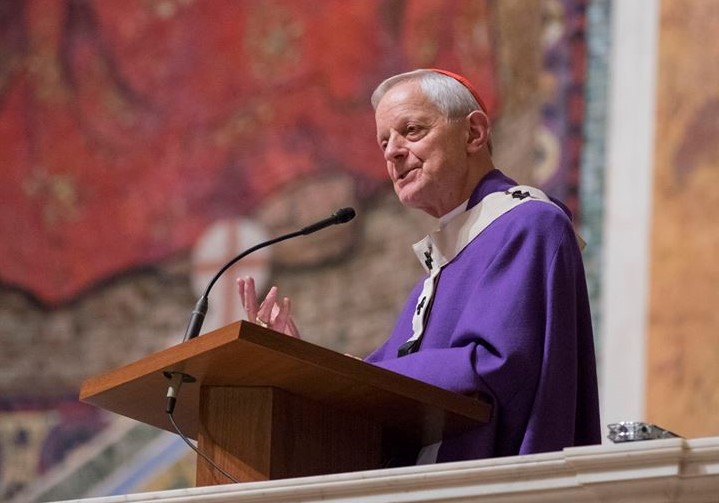
It is fitting, then, that on the Feast of All Saints, Donald Cardinal Wuerl of the Archdiocese of Washington released a pastoral letter on racism entitled, “The Challenge of Racism Today.” We are all well aware of recent racial tensions in our country and the Cardinal would have us reflect on this problem as Catholics. This reflection should come from the perspective of our faith more so than from politics and worldly culture.

I’d like to review a number of the Cardinal’s teachings under three headings.

I. God’s Vision Cardinal Wuerl begins by noting our daily experience here in the Archdiocese of Washington:

The sight from the sanctuary of many a church in our archdiocese offers a glimpse of the face of the world.

Indeed, our parishes are ethnically and racially diverse. The rich beauty of diversity in the unity of our faith is manifest everywhere.

“Catholic” means universal and it could not be more obvious in Washington, D.C. as it is in many other regions. Catholics come from everywhere!

This diversity is from God Himself, who has not only created the rich tapestry of humankind but also delights in uniting us all in His Church.

Babylon and Egypt I will count among those who know me; Philistia, Tyre, Ethiopia, these will be her children and Zion shall be called “Mother” for all shall be her children.” It is he, the Lord Most High, who gives each his place. In his register of peoples he writes: “These are her children,” and while they dance they will sing: “In you all find their home.” (Psalm 87:1-7)

It was always God’s plan that people from every nation would find their home in His family. St. Paul spoke eloquently of this plan:

The mystery was made known to me by revelation;…. the mystery of Christ, which was not made known to the people of other generations as it has now been revealed to his holy apostles and prophets by the Spirit. And the mystery is this: that the Gentiles are fellow heirs, members of the same body, and partakers of the promise in Christ Jesus through the gospel. (Ephesians 3:3-6)

By God’s grace, by His plan and vision, we are called to be members of the One Body, the Church, through the grace of shared faith.

Jesus sets forth the realization of God’s desire in his great commission: Therefore, go and make disciples of all nations, baptizing them in the name of the Father and of the Son and of the Holy Spirit, and teaching them to obey everything I have commanded you (Matthew 28:19-20).

This is order number one from Jesus: Go everywhere; call everyone; make them disciples by teaching them what I have taught and baptizing them into the one Body of Christ, the Church.

This is God’s vision, His plan, and His command.

II. Sinful Revisions We human beings are often slow to hear and even slower to do what God commands. When it comes to reaching across racial and ethnic boundaries to make disciples, we often give in to fear and the hostilities that result. We also give in to pride and notions of racial superiority. This has been an ugly tendency throughout human history.

As people of faith, we cannot ignore God’s command to include all in His Kingdom. The Cardinal tells us that we must confront and overcome racism. This challenge is not optional.

Jesus warns us against wrathful disparagement of others: Anyone who says to his brother, “Raca,” will be subject to the Sanhedrin. And anyone who says, “You fool!” will be subject to the fire of hell (Matt 5:22). He counsels us, So if you are offering your gift at the altar and there remember that your brother has something against you, leave your gift there before the altar and go. First be reconciled to your brother, and then come and offer your gift (Matt 5:23-24).

The Cardinal cites the Catechism and bids us to remember this:

This teaching is applied to our day with clarity in the Catechism of the Catholic Church. “Being in the image of God the human individual possesses the dignity of a person, who is not just something, but someone …” (CCC # 357). … There is no basis to sustain that some are made more in the image of God than others.

Cardinal Wuerl cites the pastoral letter, “Brothers and Sisters to Us,” published by the United States bishops in 1979: 

Racism is a sin. … [I]t divides the human family, blots out the image of God among specific members of that family and violates the fundamental human dignity of those called to be children of the same Father.

We have no right or capacity to overrule God or reject the dignity He Himself has established. The Cardinal describes racism as a denial of the goodness of creation.

While some dispute the particulars of racism in this or that specific situation, we cannot simply brush aside the consistent experience of so many of our brothers and sisters. The Cardinal reminds us:

To address racism, we need to recognize two things: that it exists in a variety of forms, some more subtle and others more obvious; and that there is something we can do about it… even if we realize that what we say and the steps we take will not result in an immediate solution to a problem that spans generations.

As we are reminded by St. Paul, There should be no division in the body, but that its members should have mutual concern for one another. If one member suffers, every member suffers with him (1 Cor 12:25-26).

As a Church we have not always lived up to the call that God has given us. The Cardinal writes:

Saint John Paul II in the Great Jubilee Year asked for the recognition of sins committed by members of the Church during its history. He called for a reconciliation through recalling the faults of the past in a spirit of prayerful repentance that leads to healing of the wounds of sin. So acknowledging our sins and seeking to remedy what we can, we turn with sorrow to those we have offended, individually and collectively and also express gratitude for the tenacity of their faith…. We also recognize the enduring faith of immigrants who have not always felt welcome in the communities they now call home.

It is a remarkable testimony that so many who have felt spurned by fellow Christians and Catholics did not reject the faith, but tenaciously held on to it. Even in the midst of great pain, so many stayed in the faith; through forgiveness and great patience they have helped to purify fellow Christians and work for ongoing reform within the Church.

III. Overcoming Divisions – The Cardinal also writes:

Because God has reconciled us to himself through Christ, we have received the ministry of reconciliation. Saint Paul tells us, “God has reconciled the world to himself in Christ … entrusting to us the message of reconciliation” (2 Corinthians 5:18-19).

Thus the Cardinal invokes a key dimension of the apostolic office: reconciling us to one another and to God. As a bishop, Cardinal Wuerl urges us to seek reconciliation where it is needed.

Reconciliation requires first that we acknowledge our sins. As Jesus says, we must go and be reconciled to our brother or sister. If we have in any way fostered division, if we have scorned, mocked, excluded, or derided others, we should admit the sin and seek to be reconciled.

While there are often grievances on all sides when it comes to race, this need not stop us from hearing and pondering the consistent and widespread experience of those who feel excluded or scorned. Sometimes it just starts with listening, before rushing to judge whether the experience of others is valid.

There are wounds that go back decades and even centuries. Reconciliation takes time. Recognizing another’s pain and experience is an act of respect. Listening is a very great gift.

Please consider making a careful, spiritual reading of the Cardinal’s pastoral letter. See it as an honest assessment of our need to recognize racism and repent for any cooperation we have had in it, past or present. Consider, too, his call for us to entrust our hearts to the Lord, so that we can, as the Cardinal says, envision the new city of God, not built by human hands, but by the love of God poured out in Jesus Christ.

In the weeks ahead, other initiatives and gatherings will be announced in the diocese. Among them is a recognition of the many African-Americans who were enslaved and who were buried in our Catholic cemeteries without any headstones or markers. You might say that they were buried sine nomine, without any recognition of their names.

It is fitting, then, that on this Feast of All Saints, when we acknowledge the many saints whose names we do not know, that we also remember those buried in our cemeteries whose names are known only to God. They were called slaves but were in fact God’s children, possessed of the freedom of Children of God. May they rest now with God in the peace and unity of the Communion of Saints.

Four Common Tactics of the Devil

One of the key elements in any contest is understanding the strategy of your opponent. In the spiritual battle of life, we must be able to recognize, name, and understand the subtleties of the Devil’s tactics. While we often emphasize his more obvious and frightening maneuvers (especially on Halloween), his usual tactics are subtler and more pervasive.

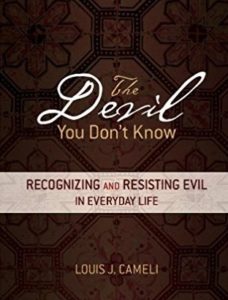
A 2011 book by Fr. Louis Cameli, The Devil You Don’t Know, is of great assistance in this matter. Having read it a few years ago, I think it would be of value to reflect on four broad categories of the Devil’s tactics, which Fr. Cameli analyzes in this book.

While the four categories are Fr. Cameli’s, the reflections here are largely my own, though surely rooted in his excellent work. I highly recommend reading the book, in which Fr. Cameli describes the categories more fully.

I. Deception – Jesus says, The devil was a murderer from the beginning and does not stand in the truth, because there is no truth in him. When he lies he speaks according to his own nature, he is a liar and the father of lies (John 8:44).

The Devil deceives us with false and empty promises. Most of these relate to the lie that we will be happier and more fulfilled if we sin or deny aspects of the truth. Whatever passing pleasures come with sin, they are just that—passing. Great suffering eventually comes from almost all sinful activity. Yet despite this experience, we humans remain very gullible; we seem to love empty promises and put all sorts of false hopes in them.

The Devil deceives us by suggesting all sorts of complexities, especially in our thinking. He seeks to confuse us and to conceal the fundamental truth about our actions. Our minds are very wily; we try to avoid the truth by making excuses. Conniving with the Devil, we entertain endless potential complications by asking, “But what if this? And what about that?” Along with the Devil, we propose all sorts of difficulties, exceptions, and sob stories in order to avoid insisting that we behave well and live according to the truth.

The Devil deceives us with euphemisms, exaggerations, and false labeling. The dismemberment and murder of a child through abortion becomes “reproductive freedom” or “choice.” Our luminous Faith and ancient wisdom are called “darkness” and “ignorance.” Fornication is called “cohabitation.” The redefinition of marriage (as it has been known for millennia) is labeled “marriage freedom” or “marriage equality.” We too easily cooperate with the Devil by calling “good,” or “no big deal,” what God calls sinful.

The Devil deceives us through the misuse of information. Information is not the same as truth. Data can be assembled very craftily to make deceptive points. Further, certain facts and figures can be emphasized to the exclusion of other balancing truths. In this way, information that is true in itself can be used to deceive. The news media sometimes exercise their greatest power in what they do not report. This, too, is a way that the Devil deceives us.

We do well to carefully assess the many ways in which Satan tries to deceive us. Do not believe everything you think or hear. While we ought not to be cynical, we should be sober. We should attempt to verify what we see and hear and then square it with God’s revealed truth.

II. Division – One of Jesus’ final prayers for us was that we would be one (cf John 17:22). He prayed this at the Last Supper just before He went out to suffer and die for us. In so doing, He highlights that a chief aspect of His work on the cross is to overcome the divisions intensified by Satan. Some point out that the Greek root of the word “diabolical,” diabolein, means to cut, tear, or divide. Jesus prays and works to reunify what the Devil divides.

The Devil’s work of division starts within each one of us as we experience many contrary drives: some noble, creative, and edifying; others base, sinful, and destructive. So often we struggle internally and feel torn apart, much as Paul describes in Romans chapter 7: The good that I want to do, I do not do … and when I try to do good, evil is at hand. This is the work of the Devil: to divide us within. St. Paul lays out in Romans chapter 8 that the chief work of the Lord is to establish within us the unity of soul and body, in accordance with the unity of His truth.

The Devil’s attack against our inner unity spills out into many divisions among us externally. So many things help to drive this division and the Devil surely taps into them all: anger, past hurts, resentments, fears, misunderstandings, greed, pride, and arrogance. There is also the impatience that we so easily develop with those we love and the flawed notion that we should seek other more perfect and desirable people. Many abandon their marriages, families, churches, and communities in search of the elusive goal of finding better and more perfect people and situations.

Yes, the Devil has a real field day tapping into a plethora of sinful drives within us. His goal is always to divide us, internally as well as from one another. We do well to recognize that regardless of our struggles with others, we all share a common enemy. As St Paul writes, For our struggle is not against flesh and blood, but against the rulers, against the authorities, against the powers of this dark world and against the spiritual forces of evil in the heavenly realms (Eph 6:12). Feuding brothers will reconcile when there is a maniac at the door, but the first step is noticing the maniac and then setting aside lesser divisions.

III. Diversion – To be diverted is to be turned away from our primary goal or task. For all of us, the most critical focus is God and the good things awaiting us in Heaven. Our path is toward Heaven, along the path of faith, obedience to the truth, love of God, and love of neighbor. The Devil does all that he can to turn us away from our one true goal.

The Devil tries to make us too absorbed in the passing things of the world. Many claim that they are too busy to pray, go to Mass, or seek other forms of spiritual nourishment. They become absorbed in passing, worldly things and ignore the lasting reality that looms.

The Devil seeks to distracts us with anxieties and fears. He causes us to fixate on fears about passing things rather than having the proper fear of the judgment awaiting us. Jesus says, Do not be afraid of those who kill the body but cannot kill the soul. Rather, be afraid of the One who can destroy both soul and body in hell (Matt 10:28). In other words, we should have a holy reverence and fear directed towards the Lord. If we do this, many of our other fears will be seen in better perspective or will even go away altogether. The Devil says just the opposite: we should be afraid of the thousands of things that might afflict us in this passing world, and not think about the one most significant thing that awaits us—our judgment.

The reason for this diversion is that the Devil wants us to focus on lesser things so that we do not focus on greater things such as a moral decisions and the overall direction of our life. We must learn to focus on what matters most and refuse to allow our attention to be diverted to lesser things.

IV. Discouragement – As human beings, and certainly as Christians, we should have high aspirations, but Satan often seeks to poison that. Along with high aspirations can come pride. We sometimes lack the humility to recognize that we must make a journey to what is good and best. Too easily, then, Satan tempts us to be impatient with ourselves and others. We sometimes expect to reach our aspirations in an unreasonably short amount of time and show a lack charity toward ourselves or others. Some grow discouraged and give up on the pursuit of holiness. Others give up on the Church because of the human imperfections found there.

The Devil discourages us with open-ended aspirations. There is always room for improvement; we can always do more. But here the Devil enters, for if we can always do more, then it is also possible to think that we’ve never done enough. The devil discourages us, encouraging these unreasonable demands within us as to what we can or should do each day.

The Devil discourages us through simple things like fatigue, personal failings, setbacks, and other obstacles that are common to our human condition and to living in a fallen world with limited resources.

In all these ways the Devil seeks to discourage us, to make us want to give up. Only a properly developed sense of humility can help to save us from these discouraging works of Satan. Humility, which is reverence for the truth about ourselves, teaches us that we grow and develop slowly, that we do have setbacks, and that we live in a world that is hard and far from perfect. Being humble and recognizing these things helps us to lean more on the Lord and to trust in His providential help, which grows in us incrementally.

Here, then, are four of the Devil’s common tactics. Learn to recognize and name them. In this way we can start to gain authority over them. Consider reading Fr. Louis Cameli’s book to learn more.

I have compiled a list of demonic titles and descriptions from the Rite of Major Exorcism that refer to some of these tactics of the Father of Lies (Titles of Satan from the Rite).

On the Loss of Humor in a Very Serious Age

One of the more irritating and sadder characteristics of our times is that we seem to have lost our collective sense of humor. Our ability to laugh at ourselves appears to be gone, replaced by “frowny-faced” political correctness; there are seemingly endless rules about what can be said about whom, when, where, and using what terminology. On college campuses, young people demand “safe zones,” where nothing can be said that might cause them to feel “unsafe.” In media circles, outrage is a commonly expressed reaction to what used to be called ordinary disagreements.

We are too easily hurt and take offense in these thin-skinned times. We like to think we are more enlightened and sensitive than our boorish forebears (we’re allowed to scorn them because they’re dead), but I suspect the problem is more rooted in pride. The capacity to laugh at ourselves is referred to as “humor” and humor has the same root as “humility.”

In his Summa Theologica, St. Thomas Aquinas posed the following question: Whether there is a sin in lack of mirth? He answered as follows:

In human affairs whatever is against reason is a sin. Now it is against reason for a man to be burdensome to others, by offering no pleasure to others, and by hindering their enjoyment. … Now a man who is without mirth, not only is lacking in playful speech, but is also burdensome to others, since he is deaf to the moderate mirth of others. Consequently, they are vicious, and are said to be boorish or rude, as the Philosopher [Aristotle] states (Ethic. iv, 8) (ST, II, IIae, q. 168).

St. Thomas is careful not to make mirth an absolute virtue. He does not envision a foolish running off at the mouth and indiscriminate mirth at the foibles and qualities of others or groups. Thus he adds,

[However], it follows that “lack of mirth is less sinful than excess thereof.” Hence the Philosopher says (Ethic. ix, 10): “We should make few friends for the sake of pleasure, since but little sweetness suffices to season life, just as little salt suffices for our meat.” (Ibid).

In other words, mirth is a virtue to be had in moderation. A little salt goes a long way; a lot of salt will likely raise blood pressure. St. Thomas is not affirming hurtful or harsh humor here.

I would argue that today we do not have moderation. Rather we exhibit a prudish, hypersensitive fretting about every offense, perceived or actual. In a word, we are “uptight.” We have become all too precious and fragile, like snowflakes. There are a lot of party-poopers around today; they frown at any levity and take offense at every insight that suggests we human beings are funny, inconsistent, predictable, and just downright silly at times. Stereotypes can be funny because they contain an element of truth. It is not that there are no exceptions, but they are generally observable. They make the simple observation that group dynamics exist in the human community.

Why can’t we just have a good laugh at some of our foibles and admit that there is at least some truth in how others see us? The most straightforward answer is that it is because we lack humility. A second reason is that we engage in “identity politics,” in which our political positions are based on the interests of a group with which we identify. Hence, even if we could laugh at a joke made at our own expense, we do not feel free to laugh at any “insult” to the larger group. All of this is a subset of the “tyranny of relativism” and subjectivism, in which the truth is a matter of opinion rather than an external or objective fact; the locus shifts from the object to the subject. In this environment, if you find humor in or disagree with an observable object, you are laughing at or disagreeing with me. Thus enters the phenomenon of taking everything personally. Too many people have become narcissistic, boring, fragile snowflakes. Some become so angry at mere mirth that they threaten lawsuits; they seek to silence anything that they perceive to be “hurtful” (and they are easily hurt). St. Thomas well describes this sort above: [They are] burdensome to others, by offering no pleasure to others, and by hindering their enjoyment. … Consequently, they are vicious, and are said to be boorish or rude.

This does not mean we should give blanket approval to every form of humor. Poking fun at our quirkiness is one thing, but ridicule, demeaning talk, derision, and racial/ethnic scorn are quite another. As is the case with most things, moderation is key.

The ability to laugh at ourselves is a sign of security and trust. Security and trust anchor us in God’s love. We are funny and we are quirky, but we are loved.

Here is a video that pokes a little fun at our Catholic identity. When I posted it some years ago, about 25 percent of people took offense, saying that he was belittling sacred things. I think he was merely celebrating the fact that we are distinguishable by our traditions. He’s poking a little good-natured fun at our Catholic culture. Lighten up and watch Deacon Dan, whose car dealership is at the end of Water St., right before it turns in to Wine!

!


Here’s another celebration of being Catholic, by Justin Stroh: