The Seven Deadly Sins: Envy

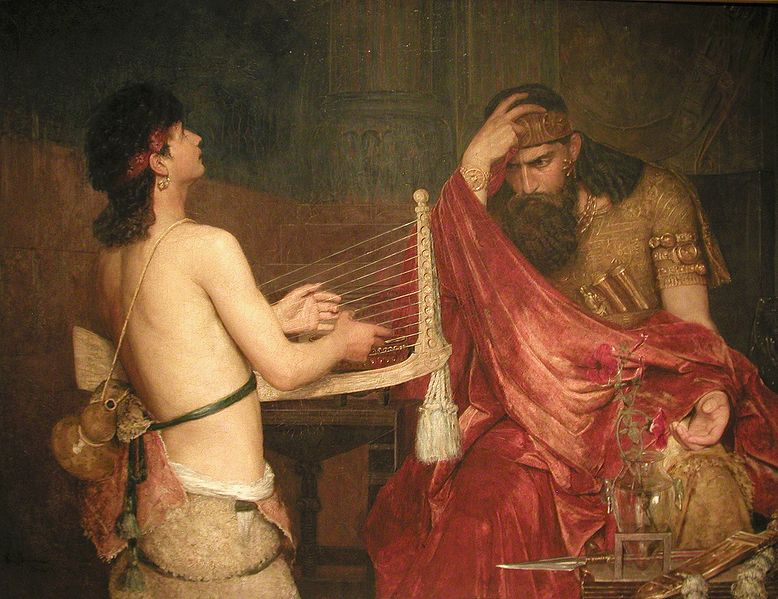
There is a picture of envy in First Book if Samuel: Upon David’s return from slaying Goliath, the women sing a song praising him. Saul should rejoice with all Israel but instead he is resentful and envies David: Saul was very angry and resentful of the song, for he thought, “They give David ten thousands, but only thousands to me. All that remains for him is the kingship.” And from that day on, Saul looked upon David with a glaring eye. Saul discussed his intention of killing David with his son Jonathan and with all his servants (1 Sam 18:6-9). Saul’s reaction is way over the top; this is what envy does.

What is envy? Most people use the word as a synonym for jealousy, but traditionally speaking they are not the same.

When I am jealous of you, I want to possess something that you have—inordinately so. The key point is that there is something good about you, or there is something good that you have, that I want to have for myself. Jealousy is sinful when one desires something inordinately or unreasonably.

Envy’s Theological Definition – In traditional theology, envy is quite different from jealousy (cf Summa Theologiae II, IIae 36.1). Envy is sorrow, sadness, or anger at the goodness or excellence of someone else because I take it as lessening my own. The key difference is that with envy (unlike with jealousy) I do not merely want to possess for myself the good or excellence you have, I want to destroy it in you.

Notice in the reading above that Saul wants to kill David. This is because he thinks that David’s excellence makes him look less excellent, less great. Saul should rejoice in David’s gifts, for they are gifts to all Israel. David is a fine soldier and this is a blessing for everyone. The proper response to David’s excellence should be to rejoice, to be thankful to God, and where possible to imitate David’s courage and excellence. Instead, Saul sulks. He sees David as stealing the limelight and possibly even the kingdom from him. Envy rears its ugly head when Saul concludes that David must die. The good that is in David must be destroyed.

Envy is diabolical. St. Augustine called envy the diabolical sin (De catechizandis rudibus 4,8:PL 40,315-316) because it seeks to minimize, end, or destroy what is good. Scripture says, By the envy of the Devil, death entered the world (Wis 2:24). Seeing the excellence that Adam and Eve (made in the image of God) had, and possibly knowing of plans for the incarnation, the Devil envied Adam and Eve. Their glory lessened his—or so he thought—and so he set out to destroy the goodness in them. Envy is ugly and it is diabolical.

Examples of Envy – I remember experiencing envy in my early years. In every classroom there were always a few students who got A’s on every test. They always behaved and the teacher would sometimes praise them, saying, “Why can’t the rest of you be like Johnny and Susie?” Some hated students like this because they made them look bad. So what did some of them do? They sought to pressure the “teacher’s pets” to conform to their mediocrity. In effect, they sought to destroy the goodness or excellence in the ‘A’ students. They would taunt them with names and pelt them with spitballs. If ridicule and isolation didn’t work, sometimes they’d just plain beat them up. This is envy.

Virtues that overcome envy – The proper response to observing goodness or excellence in another is joy and zeal. We should rejoice that they are blessed, because when they are blessed, we are blessed. Further, we should respond with a zeal that seeks to imitate (where possible) their goodness or excellence. Perhaps we can learn from them or from their good example. Instead, envy rejects joy and zeal, and with sorrow and anger sets out to destroy what is good.

Envy can be subtle. Envy isn’t always obvious; sometimes it’s something we do almost without thinking. When there’s someone at work who is a rising star, we may engage in gossip and defamation that undermines their reputation or tarnishes their image. We may do this at times in an unreflective manner; we diminish or belittle others and their accomplishments through careless and insensitive remarks. We often do this because we need to knock others down in order to feel better about ourselves. This is envy. Sometimes we show envy passively by failing to praise or encourage others or by not calling attention to their accomplishments.

Envy concealed with a smile – Finally, there is an odd form of envy that is particularly annoying because it masquerades as sensitivity and kindness. Consider a typical youth soccer or baseball game. The children are on the field playing their hearts out. On the sidelines, a decision has been made by the coaches not to keep score. Why? Because the children’s egos might be damaged by losing. Frankly, it probably isn’t the egos of the children being protected but rather those of the parents. The fact is that the kids know the score in most cases. God forbid that on the sports field there should be winners or losers! The losers might “feel bad.” The solution is to destroy or to refuse to acknowledge the goodness and excellence in some children because it is taken to lessen that of the “losers.”

This is envy and it teaches terrible things (by omission). First, it fails to teach that there are winners and losers in life; this is a fact of life. Sometimes you win; sometimes you lose. Either way you should be gracious. Second, it fails to reward excellence, which is unjust. Excellence should be rewarded, and that reward should motivate others to strive for excellence. Much is lost when we fail to praise what is good.

Another example of this practice is at school award ceremonies at which scads of awards are given out. There are the traditional Honor Roll awards but then a plethora of made-up awards, created so that everyone “gets something.” I even witnessed an award given for the nicest smile! The problem is that when everyone is rewarded, no one is rewarded. Once again envy subtly rears its ugly head, but this time it’s wearing a smiley face. Heaven forbid that some child’s ego be bruised because he doesn’t get something; someone else’s excellence might make him look less excellent by comparison.

The bottom line is that it is envy: sorrow at someone else’s excellence because I take it to lessen my own. Frankly this usually less of an issue for the kids that it is for the parents and teachers, who are projecting their own struggle with envy on them. The fact is, there are simply some people who are better than others at certain things—and that’s OK. None of us individually has all the gifts, but together we do.

Envy is ugly, even when it masquerades as kindness and fairness. It diminishes and often seeks to destroy goodness and excellence. The proper response to excellence and goodness is and should always be joy and zeal.

In the story of Snow White, the wicked queen envied Snow White, who was the fairest of them all. Considering Snow White’s beauty as a threat, the evil queen cast a spell on Snow White to remove her beauty from the scene. Envy consumed the evil queen.

The Seven Deadly Sins: Sloth

One of the more misunderstood of the cardinal sins is sloth. Most see it merely as laziness, but there is more to it than that. Let’s take a moment and consider some aspects of this cardinal sin.

The Greek word we translate as sloth is ἀκηδία akedia (a = absence + kedos = care), meaning indifference or negligence. St. Thomas Aquinas speaks of sloth as sorrow for spiritual good. By it, we shun spiritual good as too toilsome (cf Summa Theologica II-II 35,2).

Some modern commentators describe sloth as a “don’t care” feeling. Some even say it is a kind of falling out of love with God and the things of God (cf Rev 2:4). On account of sloth, the idea of right living and the gift of a transformed humanity inspires not joy, but aversion or even disgust because it is seen as too difficult or as requiring the setting aside of currently enjoyed or sinful pleasures. Through sloth, many experience sorrow rather than joy or zeal in following God and receiving a transformed human life. They are distressed at the prospect of what might have to occur should they embrace the faith more deeply.

Sloth also tends to dismiss the power of grace, focusing instead on the “trouble” or effort involved in walking in the Christian way.

Again, sloth is not merely laziness; it is more properly understood as sorrow or indifference. And while sloth may sometimes look like boredom and a casual laziness about attaining spiritual good, it can also be manifested by a frantic “busyness” with worldly things so as to avoid spiritual questions or living a reflective life.

Consider, for example, a man who is a workaholic. Now suppose that this man has a wife and children. A man in this position has some very significant gifts and duties beyond his career. He is a husband, a father, and the spiritual leader of his home. He is also a disciple, one whom the Lord has summoned to a new life, to the great discovery of God, and to the deepest meaning and realities of his life. He also has the awesome responsibility to announce these truths to his wife and children. All of the duties of his vocation overwhelm and even scare him; the task seems too open-ended. He doesn’t want to reflect too much because it might summon him to ponder things he would like to avoid considering: moral questions, priorities, whether he is spending enough time with his family, whether his life is focused on the things that matter most. It’s all just too hard, too filled with uncertainty. Entering more deeply into the spiritual life is difficult. Work is easier and they call him “Sir” and do what he says.

So he buries himself in his work; this helps him to avoid prayer and reflection. Of course there’s no time for Mass or for praying with his wife and children. There’s no time for Scripture, retreats, and the like.

This man is not lazy but he is slothful. In the end, his workaholism is sloth, for it is sorrow at and aversion to the gift that the Lord offers him: to come out into the deeper waters and lower his net for a catch. In this example, the man’s sorrow for spiritual good is manifested in avoidance and is rooted in fear. Through sloth, he is not joyful at the invitation of the Lord or the Church. Instead he is sorrowful and averse to what he sees as toilsome and possibly raising uncomfortable things he would rather not think about. He does not hate God or the faith, but it is all just too much.

That said, sloth does often manifest itself as a kind of lethargy, a boredom that can’t seem to muster any interest, energy, joy, or enthusiasm for spiritual gifts. Such people may be enthusiastic about many things, but God and the faith are not among them.

Boredom seems to have increased in modern times and this fuels sloth. We are overstimulated in the modern world. The frantic pace, the endless interruptions, the abundance of entertainment, the fast-paced movies and video games all contribute. From the time we awaken until we fall into bed at the end of the day, there is almost never a moment of silence or a time when we are not being bombarded by images, often flickering and quickly changing.

This overstimulation means that when we come upon things like quiet prayer or adoration, when we are asked to listen for an extended period time, when the imagery is not changing quickly enough, we are easily bored.

Boredom feeds right into sloth. The “still, small voice of God,” the quiet of prayer, the simple reading of Scripture and the pondering of its message, the unfolding of spiritual meaning through reflection, the slower joys of normal human conversation in communal prayer and fellowship—none of these appeal to those used to a breakneck pace. Sunday, once the highlight of the week for many (due to the beauty of the liturgy and the music, the hearing of the sermon, the joy of fellowship, and the quiet of Holy Communion), is now considered boring and about as appealing as going to the dentist. Thus, sloth is fueled by the boredom our culture feels at anything going at less than full speed.

In his book Back to Virtue, Peter Kreeft says,

Sloth is a cold sin, not a hot one. But that makes it even deadlier. [For] rebellion against God is closer to him than indifference … God can more easily cool our wrath than fire our frozenness, though he can do both. Sloth is a sin of omission not commission. That too makes it deadlier, for a similar reason. To commit evil is at least to be playing the game … Sloth simply does not play God’s game, either with him or against him … It sits on the sidelines bored … Better to be hot or cold than lukewarm [p. 154].

Sloth, of course, gives rise to many other sins and bad habits: not praying, skipping Mass, not going to Confession, not reading Scripture. We do not grow in our spiritual life and thus we fail to become the man or woman God made us to be. In some sense every sin contains an element of sloth, for when we sin we show a kind of aversion to the perfecting graces that God offers us. Rather than seeing the moral law of God as a great summons to freedom, we reject that call as “too much trouble.”

There are many social manifestations of sloth as well. Two that are common in the modern world are secularism and relativism.

1.  Secularism – By secularism, I am referring to a preoccupation with worldly things (rather than the more current meaning of hostility to religious faith). It is amazing how passionate we can get about worldly things. Perhaps it is football, or politics, or the newest electronic device. Perhaps it is our career, or the stock market, or something in the news. Yes, we are passionate people, and even the most reserved of us have strong interests occupying our mind.

Yet many of these same people who rejoice at a basketball game that ends thrillingly, or are passionately engaged at the political rally, or are excited about the latest twist on their favorite television show, can muster no interest whatsoever in prayer, Mass, or Bible study. If they do get to Mass, they look as if they’re in agony until it’s over.

This is secularism and it is a form of sloth. We have time and passion for everything but God. It is a very deep drive. We are mesmerized by many things of the world but bored and sorrowful (and thus slothful) over the things of the spiritual life. Where is the joy? Where is the zeal? Where is the hunger for completion in God?

This is not merely depression or boredom; it is sloth. It is a sorrow toward the spiritual gifts of God. It is a deep drive of the flesh and it must be resisted; only God and openness to His grace can ultimately save us and bring us more alive.

2.  Relativism – Many today indulge a notion that there is no such thing as absolute or unchanging truth to which we are summoned and must ultimately conform. This is relativism. Many who practice it actually pat themselves on the back for their “tolerance” and “open-mindedness.” They think of their relativism as a virtue. More often than not, though, relativism is simply sloth masquerading as tolerance. If there is such a thing as truth (and there is), then we should joyfully seek it and base our life on its demands and promises.

Many indulge in relativism because it is an easy way out. If there is no truth, then we are not obliged to seek it nor base our life upon it. Many are averse to and sorrowful toward the truth because they find its demands irksome. This is sloth. Their sorrow is directed toward a precious spiritual gift of God: truth. Instead of joyfully seeking the truth, the relativist is sorrowful and avoids the gift, couching his sloth in words such as “open-mindedness” and “tolerance.”

To be sure, there is a place for tolerance, but the true virtue of tolerance is often misunderstood: it is not the same as approval. The proper understanding of tolerance is “the conditional acceptance of or non-interference with beliefs, actions, or practices that one considers to be wrong but still ‘tolerable,’ such that they should not be prohibited or unreasonably constrained.” The key point that is often lost today is that the tolerated beliefs or practices are still considered to be objectionable or wrong. If this objection component is missing, we are not speaking any longer of “tolerance” but of “indifference” or “affirmation.”

Hence, relativists who dismiss that there is truth to be found cannot rightly call their position “tolerance.” It is in fact indifference and is a form of sloth.

For all of our modern claims of being tolerant and open-minded, a better description is that we are just plain lazy and slothful when it comes to seeking the truth. Collectively speaking, we do not love the truth but rather shun it, sorrowfully regarding its possible claims on us. Jesus said rightly, This is the judgement: Light has come into the world, but men loved darkness instead of light because their deeds were evil. Everyone who does evil hates the light, and will not come into the light for fear that his deeds will be exposed. But whoever lives by the truth comes into the light, so that it may be seen plainly that what he has done has been done through God (Jn 3:19-21).

Coming to recognize sloth for what it is, calling it by name, and learning how it entraps us is one of the first steps on the road to healing. Sloth is one of those drives that are so deep that we must fall to our knees and beg deliverance from the Lord, who alone can heal us.

The gift that the Lord offers us is promised in this beatitude: Blessed are they that hunger and thirst for righteousness (Matt 5:6).

We must also ask for and seek the fruits of the Holy Spirit, especially love, joy, and peace. These gifts kindle a fire of love in our hearts for God and for the gifts He offers.

Because sloth is such a deep drive, we must throw ourselves to the care of God with great humility, recognizing our poverty and seeking His miraculous grace to give us grateful, loving, and passionate hearts.

Finally, because sloth can also be caused by the feeling of being overwhelmed at the perfection of our call, we do well to consider two points:

  1. We ought to meditate carefully on what our specific call is. Because we cannot do and be everything, we need to understand our own particular gifts and how God expects us to use them. Having done this, we do well to “stay in our lane.”
  2. We must understand that spiritual progress grows in stages, not in one giant leap. We need not be so sorrowful or averse to the good things God offers us. As a loving Father, He leads us and forms us most often in gentle ways as one spiritual victory leads to another.

Pray for zeal, joy, hope, confidence, and a hunger for holy things. The Christian journey is meant to be a thrilling one, as we experience how God is utterly transforming us.

Something tells me that after a heavy post like this one it’s time to listen to the Bach Gigue Fugue. Because sloth is sorrow, joy is an essential solution. Here is Joy in G Major!

From Trials to Transfiguration – A Homily for the Second Sunday of Lent

What is it that gives hope, peace, and serene joy to the Christian life? Briefly, it is the vision of glory, a glimpse into the Promised Land of Heaven, which the Lord can and does give to His people. Today’s Gospel shows forth a kind of process through which the Lord lays the foundations of hope, peace, and joy.

The Paradoxical Prelude – The text says, Jesus took Peter, James, and John and led them up a high mountain apart by themselves. Note that in order to get them to a place where they can see glory, the Lord must first lead them “up a high mountain.”

It’s easy to pass over this fact: they had to climb that mountain. Anyone who has been to the site of Tabor can appreciate just how difficult a climb it is, almost 2000 feet and steep as well. It takes the better part of a day and the climb might well have been more dangerous back then. Once at the top, one feels as if one is looking from an airplane window out on the Jezreel Valley (a.k.a. Megiddo or Armageddon). So Tabor is a symbol of the cross and of struggle. It was a difficult, exhausting climb for Peter, James, and John and it tested their strength.

I have it on the best of authority that as they climbed they were singing gospel songs like these: “I’m comin’ up on the rough side of the mountain, and I’m doin’ my best to carry on!”; “My soul looks back and wonders how I got over!”; “We are climbing Jacob’s ladder, every round goes higher, higher.”

This climb should remind us of our life here on this earth. We’ve often had to climb, to endure; we’ve had our strength tested. Perhaps it was the climb of earning a college degree, or raising children, or building a career. What do you have that you really value that did not come at the price of a climb, of effort, of struggle? Most of us know that although the climb is difficult, there is glory at the top. We have to endure, to push through. Life’s difficulties are often the prelude to success and greater strength.

Herein lies the paradox: peace, joy, and hope are often the products of struggles, climbs, and difficulties. These things are often the prelude to seeing and experiencing glory. Scripture says,

We can rejoice, too, when we run into problems and trials, for we know that they are good for us—they help us learn to be patient. And patience develops strength of character in us and helps us trust God more each time we use it until finally our hope and faith are strong and steady (Romans 5:3-4).

In this you greatly rejoice, though now for a little while you may have had to suffer grief in all kinds of trials. These trials are only to test your faith, to see whether or not it is strong and pure. It is being tested as fire tests gold and purifies it—and your faith is far more precious to God than mere gold; so if your faith remains strong after being tried in the test tube of fiery trials, it will bring you much praise and glory and honor on the day of his return (1 Peter 1:6).

Yes, there is a paradoxical prelude to glory and it can only come through God’s wisdom—human beings just don’t think this way. An old hymn says,

“Trials dark on every hand. And we cannot understand, all the ways that God will lead us to that blessed promised land. But he guides us with his eye and we follow till we die and we’ll understand it better by and by.”

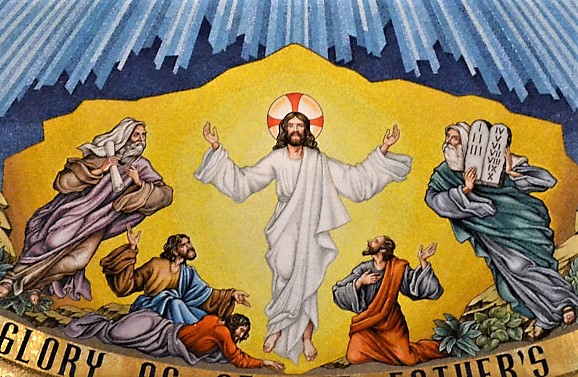
The Practices Portrayed – The text lays out various aspects of how Peter, James, and John come to experience a joyful peace in the presence of the Lord’s glory. The text says, And he was transfigured before them, and his clothes became dazzling white, such as no fuller on earth could bleach them. Then Elijah appeared to them along with Moses, and they were conversing with Jesus. Then Peter said to Jesus in reply, “Rabbi, it is good that we are here! Let us make three tents: one for you, one for Moses, and one for Elijah.” There are three things Peter, James, and John do that enable them to come to this joyful peace:

1.  They see. The text speaks first of the event itself that they see. It uses a word that says the Lord was transfigured (μετεμορφώθη (metemorphothe)), that His appearance was gloriously altered. While common in the Christian vocabulary, this word is in many ways mysterious and difficult to understand. The text supplies some information, telling us of a brightness that shone through the Lord, a kind of dazzling light.

But we ought not get lost in speculation and miss the point: that Peter, James, and John are given a glorious vision, beams of Heaven! Yes, this is Jesus. This is who He really is. The magnificence of His glory so astounds them that they fall down in reverence.

Have you ever seen or experienced glory? Maybe it was at the birth of a child, or upon hearing some other wonderful news. Perhaps it was a profound experience of relief, or a deep vision in prayer, or at the Liturgy. Yes, look for glory and rejoice when it comes!

We must learn to see things as they really are. Regardless of the trials and struggles, we must endure on the way. If we are faithful our end is glory.

So look for glory and expect to find it. The Lord can and does give us glimpses of glory in our life, beams of Heaven as we go! Do not minimize glories when they are revealed. Cultivate a spirit of wonder and awe at what God has done and continues to do in creation and in your life. Glory is all around us. Learning to see this glory is one of the ways God produces peace in us.

2.  They are scriptural. Notice that the text says that Moses and Elijah appeared with Him. Why Moses and Elijah? Because Moses and Elijah represent the Law and the Prophets, which is a Jewish way of speaking of the Bible. Thus another way of having peace produced in us is to search the Scriptures. The other day, I “cheated” and looked at the last page of the Bible. I know, we are not there yet, but I looked anyway. Guess what it says? It says that Jesus wins and so does everyone who is with Him. We have to stay rooted in our story. If we stay with Jesus, glory is at the end of our story. Know your Scriptures and thereby know your story, a story that ends with glory.

3.  They savor. Peter wants to stay on the mountaintop, to pitch tents and stay put. Some preachers give him a hard time for this, but I see it as a good thing, even if a bit excessive. The point is to savor glory, to store good memories and experiences deep in our soul, to cultivate a deep gratitude for the wonderful things the Lord has done for us, to savor deeply our experiences of glory.

The Prescription Proclaimed – The text then says, Then a cloud came, casting a shadow over them; from the cloud came a voice, “This is my beloved Son. Listen to him.” Suddenly, looking around, they no longer saw anyone but Jesus alone with them.

The prescription couldn’t be simpler and yet how poorly we often follow it. Listen to Jesus! In other words, carefully ponder every word of His teaching and begin to base your life on what He says.

How much pain, anxiety, and strife come into this world and our lives simply because we do not listen to the Lord and obey His teachings! Our stubbornness, our lack of forgiveness, our unchastity, our greed, our lack of concern for the poor, our idolatry, our lack of spirituality, and the fact that we are often just plain mean, bring enormous suffering to us and to others.

If we would but give our life to the Lord and ask Him to conform us to His word, so much suffering would vanish. We would have so much more peace and would experience greater joy and hope.

Listen to Jesus and by His grace conform your life to what you hear Him say. There is no greater source for joy, peace, and hope.

The Persevering Purpose – The text says, As they were coming down from the mountain, he charged them not to relate what they had seen to anyone, except when the Son of Man had risen from the dead.

There is fairly universal agreement that the purpose of this mountaintop experience of glory was to prepare the apostles for the difficult days ahead. Thus, while Jesus tells them to keep it to themselves, He wanted them to keep it, to remember it. Having seen and savored glory, having “seen what the end shall be,” having been bathed in beams of Heaven, they need to keep the memory alive and remember who Jesus is as the Passion begins. If they do this, they will be able to endure the folly and suffering of the cross.

Did they successfully persevere in keeping the memory alive? Only John made it to the foot of the cross, but one out of three isn’t so bad. Having experienced peace and joy, and having seen the Lord’s glory, John made it to the cross, enduring its shame and remembering the glory he had seen.

What about you? Have you seen the glory of the Lord? Have you experienced His love and glory deeply enough that, when difficulties come, you don’t allow them to overwhelm you? Have you come to experience and possess a peace and joy that the world did not give and hence cannot take away? Have you allowed the Lord to lay a foundation of hope in your life? Have you let Him take you up the mountain and show you glory? Have you seen the promised land and have you seen what the end shall be? This is what this Gospel describes and promises.

There is an old hymn by Charles Tindley that says,

“Beams of Heaven, as I go, / Through this wilderness below / Guide my feet in peaceful ways / Turn my midnights into days / When in the darkness I would grope / Faith always sees a star of hope / And soon from all life’s grief and danger / I shall be free someday.”

Notice what it is that gets us through: beams of Heaven!

Yes, it was those same beams of Heaven that Peter, James, and John saw on the mountaintop. Those beams, having been experienced and remembered, shine on every darkness and show the way. Those beams of Heaven give us hope and turn our midnight into day. Let the Lord show you His glory. Savor every moment and never forget what the Lord has done for you. The light of His Glory will light every way.

The hymn goes on to say,

“Burdens now may crush me down / Disappointments all around / Troubles speak in mournful sigh / Sorrow through a tear stained eye / There is a world where pleasure reigns / No mourning soul shall roam its plains / And to that land of peace and glory / I want to go some day.”

Are You Battle-Ready for the Army of the Lord?

A disturbing report came from the Pentagon in 2014 that speaks to the overall condition of our country. Here is a summary:

Nearly 71 percent of the 34 million 17-to-24-year-olds in the U.S. do not qualify for military service for reasons related to health, physical appearance, and educational background, according to the Pentagon.

Obesity is the most common reason for being turned away, but others are disqualified because they lack a high school diploma/GED, are convicted felons, or are taking prescription drugs for ADHD. From a cosmetic standpoint, ear gauges and certain tattoos. While some requirements can be waived, others cannot.

The upshot is that only 1 percent of young people are both “eligible and inclined to have conversation with” the military about possible service, according to the Defense Department. The quality of people willing to serve has been declining rapidly (Sources: Time and the Wall Street Journal).

There are of course many standards by which to judge the health of a nation, but military readiness is surely one of them. As Rome declined something similar happened. The Roman Army was increasingly staffed by mercenaries, many of whom were barbarians or slaves. Roman citizens lost interest in defending their land, but they also lost their fitness for such duty through luxurious living, weight gain, alcoholism, and sexually transmitted diseases.

What of us as a nation? Obesity among the young has increased dramatically since I was a boy. Young people today engage in less physical activity than the youth of my time, who watched much less television and did have not computers or video games to fill their time. We rode bikes, played pick-up football, and built tree forts. In those days, fewer than 1 in 20 kids was obese. Today, it is about 1 in 6. It also seems to me that there is something different about the food we eat today. I ate a lot throughout my 30s without gaining a pound; so did most people my age (I am in my late 50s). Something seems to have changed in the way food is prepared; I suspect a lot more sugar is being used.

As for the other problems of no high school diploma, prescription drugs for ADHD, felonies, and tattoos, this speaks to the decline of family life and the overwhelming influence of social media and those little blue screens that engross so many of us.

Of course I am a priest, not a sociologist, nutritionist, or doctor; but nothing in this report bodes well for us. On a spiritual level, it also speaks to our difficulty in accepting and being ready for sacrifice. Indeed, there is more than a physical war to be fought; there is also a spiritual one. Scripture speaks of this:

  • Join me in suffering, like a good soldier of Christ Jesus (2 Tim 2:3).
  • But you, O man of God, flee from these things and pursue righteousness, godliness, faith, love, perseverance, and gentleness. Fight the good fight of the faith. Take hold of the eternal life to which you were called (1 Tim 6:12).
  • Everyone who competes in the games trains with strict discipline. They do it for a crown that is perishable, but we do it for a crown that is imperishable (1 Cor 9:25).
  • If the trumpet does not sound a clear call, who will get ready for battle? (1 Cor 14:8)
  • Therefore, put on the full armor of God, so that when the day of evil comes, you may be able to stand your ground, and after you have done everything, to stand. Stand firm then, with the belt of truth buckled around your waist, with the breastplate of righteousness in place, and with your feet fitted with the readiness that comes from the gospel of peace. In addition to all this, take up the shield of faith, with which you can extinguish all the flaming arrows of the evil one (Eph 6:13-16).

Thus, even as we mourn the loss of battle-readiness in our nation, we also need to lament the lack of readiness for spiritual combat. Too few of us can bother ourselves to fast, even for an hour before Holy Communion. We find it difficult to get to Mass on Holy Days, to spend time each day in prayer, or to give up something on Fridays. Even the smallest sufferings can cause us to become discouraged and depressed.

Simply criticizing ourselves may not be the answer. Rather, calling on God to assist us in getting ourselves “back into shape” may be better. Pick just one or two things to work on, for example spending more time in prayer or offering a sacrifice (e.g., abstinence) on all Fridays of the year. Once these have been accomplished, try to add others. “Fast” from foolish shopping; restrict your portion sizes. Small, consistent steps may get us further than self-reproach and pursuing unrealistically ambitious resolutions.

Too many of us are out of shape for battle! Lent is a time to do some spiritual pushups and to take up the fuller armor of God.


The Seven Deadly Sins: Greed

One of the more underreported sins is greed. It is easy to conclude that greed is something manifested by “that other person,” who has more than I do. Yes, that rich guy over there, the one who earns a dollar more per hour than I do; he’s greedy, but I’m not.

Honestly, does any one of us ever come to a point in our life when we say, “I earn more than enough money. I’ll just give the rest away”? Not on your life!

Almost never would such a thought even occur to the average person. Instead, most of us respond to a pay increase, for example, by expanding our lifestyle and continuing to complain that we don’t have enough. At some point, we ought to admit that we do cross over into greed.

What is greed? It is the insatiable desire for more. It is a deep drive in us that, no matter how much we have, makes us think that it’s not enough. We still want more, and then if we get more we want more still.

Familiar though this sounds, too few of us are willing to consider that greed is really a problem for us. It’s the other guy who’s greedy.

Of course it doesn’t help that we live in a culture of consumption, which constantly tells us that we don’t have enough. Commercials tell us that the car we’re driving isn’t as good as this other one we could be driving. So even though we have a perfectly good car, one with four wheels, a working engine, and probably even air conditioning, it still it isn’t good enough. So it is with almost every other product or amenity that is sold to us on a daily basis. The clever marketing experts of Madison Avenue are great at making us feel deprived. As a result, it almost never occurs to most of us that we may have crossed the line into greed. Despite having even six- and seven-figure incomes, many still feel that they don’t have enough.

This is all the more reason that we should spend some time reflecting on the nature of greed. Greed is one of the deadly sins, and it brings with it a kind of blindness that causes us to mistake mere wants for needs. As we entertain this illusion, there’s very little to prompt us to consider that we actually have more than enough. There’s very little to cause me to say, “Gee, I’ve gotten greedy” or to work toward curbing this insatiable desire for more.

No, it’s the other guy who’s greedy; I’m not. It’s a problem that those nasty rich and powerful people have. Never mind that I’m pretty darned rich myself, living in a home with running water, air conditioning, and maybe even luxuries like granite countertops and widescreen TVs.

When was the last time you heard a sermon on greed? If you did, it was probably the priest talking about some abstract group of people (not those present, of course) who probably also hold the “wrong” political opinions. Yes, greed is always someone else’s problem.

When do I honestly look at myself and wonder if I am greedy? When do I ever conclude that I have more than enough and need to be more generous with what has become excessive in my life? When do I ever apply the old precept that if I have two coats, one of them belongs to the poor? It’s a good idea to have something saved up for a rainy day, but do I ever ask myself if I’m really trusting in God or just in my rainy-day fund? When do I ever wonder if I’ve crossed the line into greed?

I realize that some of you will find this post disturbing. I do too. These are uncomfortable questions.

Let me assure you that I do not write this post from a political perspective. I do not want the government mandating how much I may or should earn nor how much I may or should give away. I am referring to a personal, moral assessment that we all should make.

I also do not write as an economist. I realize that market-based economies are complex and that there is nothing intrinsically wrong with meeting people’s needs with products and services. I am also aware that markets supply jobs, but still I must insist that we all ask ourselves some personal questions about limits. We cannot simply conclude that greed is the other guy’s problem.

Greed is one of the seven deadly sins; we ought to take it more seriously than many of us do. There’s room for most of us to reflect on one of the most underreported sins: greed.

The Seven Deadly Sins: Pride

Pride is a sin that is so pervasive, runs so deep within us, that we often don’t even sense it is there. Not only is it a sinful drive in itself, it also plays a role in every other sin we commit. Pride is the sin we most share with Satan and the fallen angels. Satan refused to serve God or to submit to His plan; these are strong tendencies in every human person as well. Satan planned his strategy well as he tempted Eve. You will be like God, he told her. Both Eve and Adam falsely reasoned that in order to be free they should not be told what to do; they should do as they pleased. They claimed the right to determine good and evil for themselves rather than trusting God. This prideful pronouncement has gone forth from human hearts ever since: “I will not be told what to do.”

Let’s take a brief look at the primordial sin of pride.

I.  The Definition of Pride – Pride is inordinate esteem for one’s own excellence. It is a habit or vice that disposes us to think more of ourselves than we ought. There is a proper esteem we should have for ourselves, but it is rooted in an appreciation for the gifts we have received from God.

Humility, the virtue that is opposed to pride, is not a hangdog disdain for ourselves; it is a reverence for the truth about who and whose we are. We do have gifts, but they are gifts, gifts that God has given us. These gifts are usually given to us through others. We should be humbly grateful for the gifts and talents that God has given us. In contrast, pride sets aside proper and grateful esteem in favor of excessive esteem that is often self-referential and unappreciative of what God and others have enabled us to become.

On the one hand, pride is one particular vice, sinful in itself. On the other hand, it is a more general vice that is involved directly or indirectly in most other sins. Pride plays an especially large role in sins of malice. Sins of malice are those in which one directly and defiantly refuses to obey God, or refuses to be told what to do, or willfully insists that one knows better than God, the Church, or those entrusted with one’s instruction and guidance. Pride plays a more indirect role in sins of weakness. Sins of weakness are those in which one acts sinfully not so much out of defiance as out of a weak inability to do what one admits is right. Pride may be more indirectly present through careless neglect of growing in virtue or failure to seek God’s help.

Pride is directed not only at God but also at our neighbor. There are times when we refuse to submit to the instruction or authority of others who rightfully have that position. There are other times when we refuse to admit that others have gifts and abilities that we do not possess and that we may in fact need in order to be completed. Further, we sometimes refuse to admit that others are just better at certain things than we are. In this way, pride is both impoverishing and isolating.

II.  The Distinctions Regarding Pride – In modern English usage as well as in pagan philosophy, the word “pride” can have a positive meaning. The pagan philosophers often thought of pride as a good thing. Before it becomes sinful, pride inspires us to strive not merely for the ordinary but for loftier things. In this sense, pride pushes us to be more than we currently are; it inspires effort.

The use of the word “pride” in a positive sense is much less common in Christian moral theology, which typically speaks of pride only as a vice; it categorizes striving for the difficult but possible under the virtues of fortitude and hope.

Note that pride is not the same as vanity. Vanity actually shows some humility because in manifesting it, one shows the need for the admiration of another. For the same reason, pride is also not the same as pleasure at being praised.

St. Gregory lists four types of pride: 

  1. Thinking that one’s good is from oneself
  2. Thinking that one’s good is from God but that it is as a consequence of one’s own merits
  3. Boasting of excellence that one does not possess
  4. Despising others and wishing to appear the sole possessor of what one has (this is related to the sin of envy)

III.  The Dangers of Pride – The central effect of pride is to push God to the periphery of our moral, spiritual, and temporal existence. God is either shunned directly or becomes increasingly irrelevant to us. Man necessarily moves to the center and, even more egotistically, I move to the center. If God exists at all to the prideful person, it is only to gratify his pleasures and confirm his preconceived notions.

Having moved God to the periphery, the prideful person focuses more on his own power and exaggerated notions of control. Money, prestige, power, access, and possessions become his focus. It is himself on whom he relies, not God.

This of course is the height of foolishness because no human being can save himself. The relegation of God to the margins of our life is the chief danger of pride because He alone can save us. It is said that pride looks down, but no one can see God except by looking up. Pride turns us inward and downward!

Because pride involves entertaining the illusion of self-sufficiency and omits or minimizes God, it can be a serious or mortal sin. However, it is frequently not mortal, as that would require a conscious and fully willed discounting of God. Most individual acts of pride are venial by reason of this deficiency of awareness or full consent of the will.

Even though culpability may be less than mortal, the harm caused by marginalizing God cannot be overstated. The damage grows both individually and collectively until the most foolish things become daily fare. Further, a culture dominated by people who “forget” that God sees all and that they will have to render an account to Him will suffer increasingly from tyrannical, vicious, and destructive behaviors. Such a culture is dominated in growing measure by those who exercise little or no restraint on their behavior and who act imperiously — even despotically.

Pride can get very dark very quickly because it involves a direct turning away from God. In this sense pride is the first and worst of all sins.

So serious is pride that, as a remedy, God allows us to fall into other sins, especially those of the flesh. Thus, though God does not cause acts of fornication, drunkenness, or gluttony in us, He often permits their stubborn presence in order to save us from pride, which is a more serious sin. Sins of the flesh, especially those related to sexuality, often bring great shame, which is related to humility. And though it is strong medicine, God permits it in order to save us from the sin of pride, which is even more deadly.

IV.  The Disease of Pride Pride is the source of many other sins. Not only is it their source, it is in those sins. Pride conquers at the root because it conquers the heart of man and disposes him to the other capital sins. St. Gregory does not even account pride as a capital sin, for it is the mother of them all!

A widespread modern form of pride, even among believers, is the reduction of God from the Holy One to a “harmless hippie” or a doting Father. Further, the awareness of final judgment and that we will one day have to render an account to God is not a significant factor in the thinking of most moderns. God is trivialized and man is exalted. To many, God exists to please and validate them on their own terms; His role is to affirm and console (but never challenge) them. In a certain sense, the ugliest and most self-serving form of pride is refashioning God in our own image. Making your own god and worshipping it used to be called “idolatry.”

Today, many assert the right to fashion their own god: the god within, the god of their own understanding. This is pride writ large and ugly. It is idolatry, somewhat veiled, but idolatry just the same; it is a violation of the First Commandment. Such pride cries out for correction and punishment. Yes, pride is ugly — a deadly disease.

An Overview of the Seven Deadly Sins

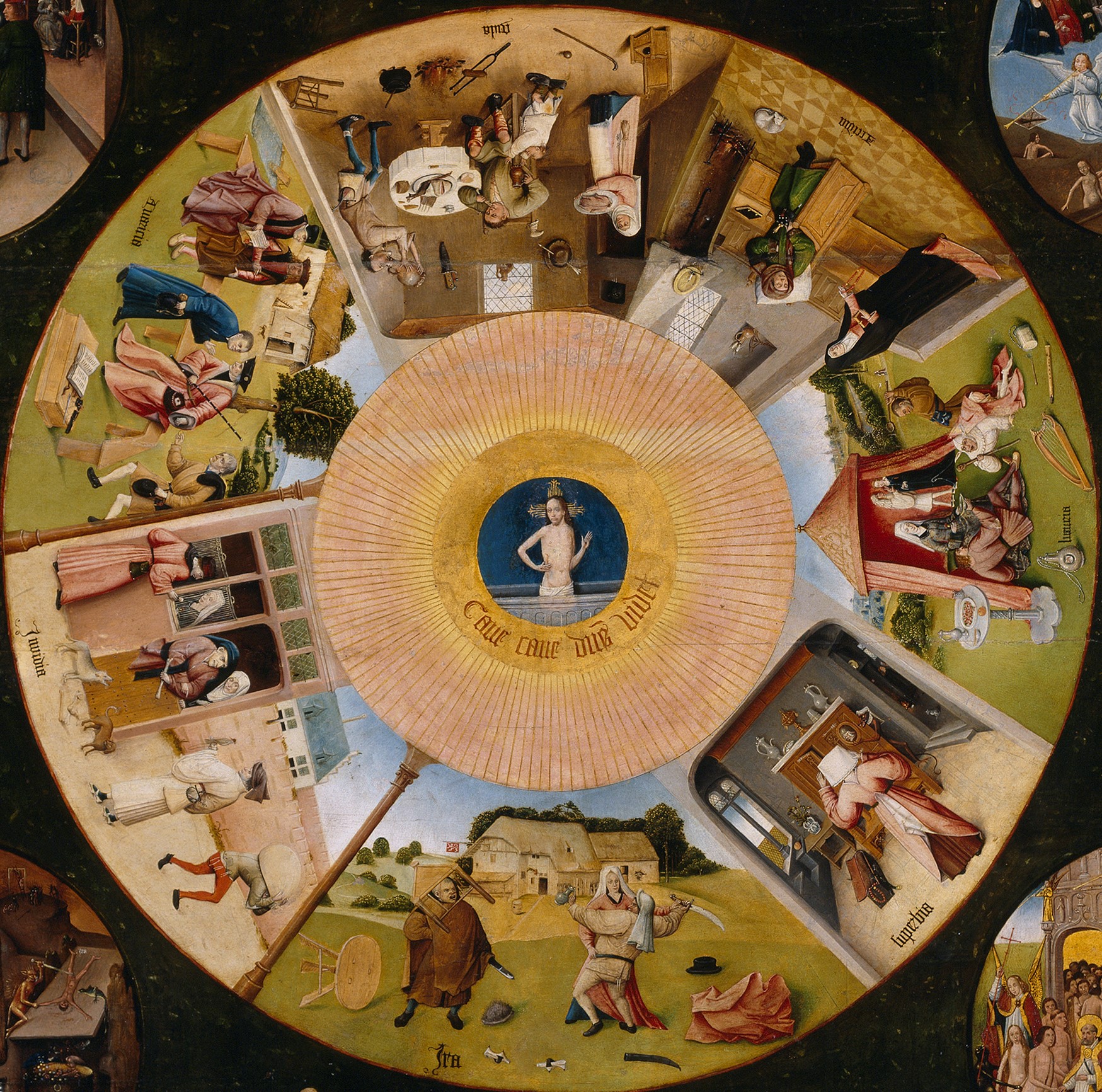
The Seven Deadly Sins, Hieronymus Bosch

Do you know what the Seven Deadly Sins are? It is valuable to name and begin to understand these deep drives of sin within us because the more we do so the more we can grow in self-knowledge. Further, it helps us to “know their moves” and gain mastery over them. As they stir deep within us we can recognize evidence of this and begin to take greater authority over them.

Too many Christians know little about twisted nature of sin. They just know they’re a little (or very!) messed up and can’t seem to figure out why. Have you ever gone to the doctor, not knowing what was wrong with you, and left feeling better just because you finally knew that what ailed you had a name and a cure? Being able to name our demons is an essential part of growth and healing.

Here are the Seven Deadly Sins, with a brief description of each:

  • Pride – the quality of loving and esteeming oneself more than is proper and at the same time denigrating the goodness of others
    • Pride also stirs us to reject the lawful authority of others, including God, over us and to refuse appropriate submission.
  • Greed – excessive desire for wealth and possessions
    • It is not wrong to desire what we need, but through greed we acquire far beyond what is reasonable and fail to be generous. Through greed we can also come to see the things of this world as more precious than the things of Heaven. Greed has been well described as the insatiable desire for more.
  • Lust – excessive or inappropriate desires or thoughts of a sexual nature
    • It is not wrong to experience sexual desire per se but Lust moves this to become excessive (all that matters), or for the object of it to be inappropriate (g. sexually fantasizing about someone other than a spouse). More broadly, lust is thought of as an excessive love of others that makes the love of God secondary.
  • Anger – inordinate and uncontrolled feelings of hatred and wrath
    • It is not always wrong to experience anger, especially in the presence of injustice. But anger here is understood as a deep drive which we indulge and wherein we excessively cling to angry and hateful feelings for others. This kind of anger most often seeks revenge.
  • Gluttony – overindulgence in or overconsumption of anything to the point of waste.
    • We usually think of gluttony in terms of food and drink, but it can extend to other areas as well. This sin usually leads to a kind of laziness and self-satisfaction that allows little room for God and the spiritual life. It may also cause us to be less able to help the poor.
  • Envy – sorrow or sadness at the goodness or excellence of another person because one believes it makes him appear to be less so.
    • If I envy someone I want to diminish or undermine his excellence. Note that envy is not the same as jealousy. If I am jealous of you I want what you have. In contrast, if I am envious of you, I want to diminish or destroy what is good or excellent in you. St. Augustine called envy the diabolical sin because of the way it seeks to eliminate excellence and goodness in others.
  • Sloth – sorrow or sadness at the good things God wants to do in one’s life
      • Most people think of sloth as laziness, but it is really an avoidance of God. In sloth, I avoid God because I fear or dislike what He can do for me. Some people avoid God through laziness, but others avoid Him by becoming workaholics, claiming that they are too busy to pray, to attend Mass, or to think about spiritual things.

In the days and weeks ahead, I will be devoting a separate article to each of them, but for today I wanted to offer just a quick definition.

Before There Was an Everywhere, I AM

The Baltimore Catechism asked the question Where is God? The answer given was God is everywhere. While this is certainly true, it is even more true that God is beyond the concept of “where.” Everywhere is too limiting to contain God, for He transcends His creation and cannot be contained even by the “everywhere” of it.

C.S. Lewis had an interesting analogy:

Looking for God by exploring space is a bit like reading or seeing all Shakespeare’s plays in the hope that you will find Shakespeare …. Shakespeare is, in one sense, present at every moment of the play, but he is never present in the same way … but to look for him as one item within the framework he himself invented is nonsensical [The Business of Heaven, p. 47].

So, just as Shakespeare is far more than and far beyond even the sum total of all his writings, even more is God far beyond the “everywhere” of this world. God is not this or that thing. He is not here or over there. He is existence itself, the very definition of “to be” (ipsum esse).

Yet unlike Shakespeare, God is not merely bigger than and outside what He has made. God is no mere writer or creator who left an impression of himself in what he made. No, God is at the same time both transcendent and immanent. He is inside what He created, sustaining everything He made from moment to moment.

C.S. Lewis continues,

[And so with God] mere movement in space will not bring you any nearer to him or farther from him that you are at this very moment. You can neither reach him, nor avoid him by travelling to … other galaxies [ibid].

This of course raises the question: Why do we attribute a special presence to Christ in the Eucharist or the tabernacles of our churches? Like the ancient Jews, who found a special presence of God in the Ark of the Covenant in the Temple, we do not lack sophistication. We understand that God is not merely in this place or that one, but we do accept by His own revelation that He is uniquely and powerfully present in certain places and in certain ways designated by Him to confer that special presence. Thus, while God speaks in and through His creation, He speaks even more clearly and powerfully in his revealed Word. And while He is everywhere immanently present, He is profoundly present in a special way in the Eucharist and in certain holy places.

In the end, God is everywhere, but he is also “beyond where,” “beneath where,” and “above where.” He is God, who said, “Before there ever was an everywhere, I AM.”