The Probability of You Existing at All Is Unbelievably Low

I was alerted to a fascinating article by Ali Binazir, who sets forth mathematically the probably that each of us exists. It turns out that when taking into account the astonishing number of possibilities of parents meeting, grandparents meeting before them, and so on going back generations, and then adding the vast number of sperm and ova in possible combinations over decades of the marital act in all those generations, the odds of me existing just as I do are about 1 in 102,685,000. That’s a number so huge it hurts to think about it.

To say that we are contingent beings is a vast understatement. To say that someone or something is contingent is to say that the existence of same is not inevitable but rather can only come about based on a number of previous things being true in a chain of being or causality. I would not exist if my parents had not existed and then met. Further, they would not have existed if their parents had not existed and met, and so on. Thus, my existence depends on a vast number of “meetings” going just right; if they hadn’t I would never have been born.

Consider some of the contingencies and requirements for your existence as set forth by Mr. Binazir. Some of the numbers are approximations, but generally they are on the conservative side. I am only publishing a small number of his musings, but you can read his full article here: What Are the Chances of You Being Born?.

The following analysis, paraphrased at some points, is taken directly from Mr. Binazir’s article:

The probability of father meeting mother is 1 in 20,000. The chances of them talking to one another is 1 in 10. The chances of that turning into another meeting is about 1 in 10. The chances of that turning into a long-term relationship is about 1 in 10. The chances of that lasting long enough to result in offspring is 1 in 2.

  • So, the combined probability is already only about 1 in 40 million.

Now let’s get down to some of the biological details: each sperm and each egg is genetically unique because of the process of meiosis; you are the result of the fusion of one particular egg with one particular sperm. A fertile woman has about 100,000 viable eggs while a man will produce about 12 trillion sperm over the course of his reproductive lifetime.

  • Let’s say a third of those (4 trillion or 4 x 10¹²) are relevant to our calculation, since the sperm created after your mother hits menopause don’t count. So, the probability of that one sperm with half your name on it fertilizing that one egg with the other half of your name on it is 1 in (100,000) (4 x 10¹²) = 1 in 4 x 10¹⁷, or 1 in 400 quadrillion.

However, your existence presupposes another supremely unlikely chain of events. Namely, that every one of your ancestors lived to reproductive age, going back about 150,000 generations to the origin of man.

  • So, the chance of your particular chain of ancestors having remained unbroken for all that time would be 1 in 2150,000, which is about 1 in 1045,000.

Remember the sperm-meeting-egg argument for the creation of you, since each gamete is unique? The right sperm also had to meet the right egg to create your grandparents; otherwise they’d be different people and so would their children, who would then have had children who were similar to you but not quite you. This is also true of your grandparents’ parents, and their parents, and so on back to the beginning of human time. That means that in every step of your lineage, the exact the right sperm had to fertilize the exact right egg such that you would ultimately be created.

  • To account for all 150,000 generations, we raise 400 quadrillion to the 150,000th power yielding 102,640,000. The probability is thus about 1 in 102,640,000.

To complete the analysis: (102,640,000) (1045,000) (40,000,000) = 4 x 102,685,007 ≈ 102,685,000.

Thus, the probability of your existing at all is about 1 in 102,685,000.

You may quibble with some of the Binazir’s assumptions above. I would certainly add in (sadly) that there is the possibility of abortion or miscarriage, but even a simple analysis yields an astonishingly small probability.

One of my brothers made his own calculation regarding one of Binazir’s assumptions and came up with a figure that would make the probability of existence even smaller:

My numbers are more simplistic, but assuming 100,000 eggs/woman & 12 trillion sperm/man creates 1.2 x 10^18 combinations for every man/woman pairing (i.e., significantly more combinations than the 400 trillion or 4 x 10^14 mentioned in the article). If you assume there are 3 billion women and 3 billion men alive today, that means 3 x 10^14 eggs and 3.6 x 10^22 sperm are currently on the planet, for a total of 1.1 x 10^37 possible pairings. If you assume the current population is 1% of the history of humanity, the total number of combinations increases to 1.1 x 10^39.

Not only are you and I contingent, we are highly improbable! Yet here we are. Mirabile visu (Wondrous to behold)!

Theologically, of course, we are no accident; we do not exist by happenstance. God has always known us, intended us, loved us, and planned for us. Scripture says,

  • Before I formed you in the womb I knew you (Jer 1:5).
  • Come, you who are blessed by my Father; take your inheritance, in the kingdom prepared for you since the creation of the world (Matt 25:34).
  • For you created my inmost being; you knit me together in my mother’s womb. I praise you because I am fearfully and wonderfully made; your works are wonderful, I know that full well. My frame was not hidden from you when I was made in the secret place. Your eyes saw my unformed body. All the days ordained for me were written in your book before one of them came to be (Psalm 139:13-16).

Yes, you’re here all right, and math can barely account for your existence, so tiny are the odds; but God has overseen every detail and knew you long before you were born. In fact, He has been preparing a place for each of us in the kingdom, from before the creation of the world. Not only has He always known us; he has known everything each of us would do, for every one of our days has been written in His book before one of them ever came to be.

The great mystery of our existence stretches back in time into the very heart and mind of God who has always known and loved us, has prepared for us and made a way for us. You are wonderfully and fearfully made, and God has done a marvelous thing. You’re not just one in a million, you’re one in a 102,685,000.

This video makes a moving point, but it attributes our existence to luck. You are not here by luck; you are here by the grace and will of God.

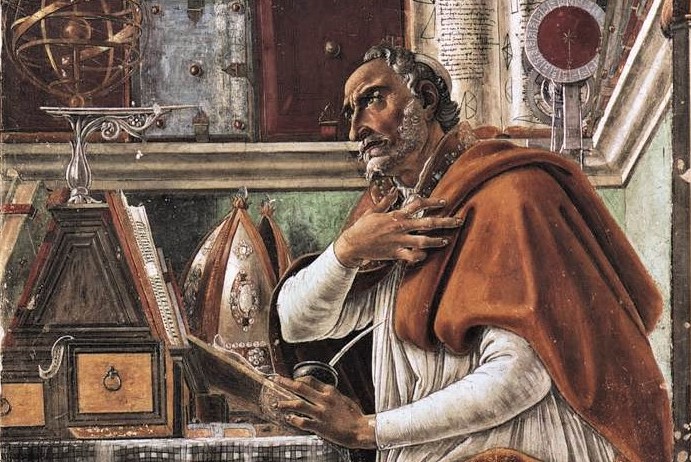
St. Augustine on Suffering as a Medicine

The feast of St. Augustine this Tuesday provides us yet another opportunity to learn from him. We can ponder his teaching on suffering and its role in preserving us from something far worse.

When asked, most people identify their most serious problems as those related to their physical health or their finances; family and career are also often mentioned.

Frankly, our biggest problem is pride and all the sins that flow from it. Nothing is more serious than our sins, which can destroy us forever. Worldly problems are temporary. They can make life unpleasant or at worst kill us, but then we get to go home and meet God if we are faithful.

Therefore, to God, our most serious problem is our sin. This is well-illustrated in the Gospels, when a paralyzed man was presented to Jesus: Jesus looked at him and said, “Your sins are forgiven.” Yes, Jesus looked at a paralyzed man and saw his sin as his most serious problem and the one to be dealt with first.

We don’t think like this even when taught that we should.

Because pride and the sins that flow from it are so serious, we do well to ponder how God permits suffering in our life so as to keep us from becoming too prideful. To God, it is better that we suffer some here, learn humility, and be saved, than to remain prideful and go to Hell.

I have received gifts and blessings, but if it weren’t for some suffering and humiliation in my life, I’d be so proud I’d go right to Hell. There’s just something about suffering that can keep us humble and continually calling on God.

St. Augustine reflects on this in what is considered his greatest work, The City of God. It was occasioned by the decline of the Roman Empire and the sacking of the city of Rome by the Barbarians under Alaric in 410 A.D. Augustine wrote the work to ponder how a once-mighty empire had fallen into such decay.

There were of course many sufferings inflicted on the citizens of Rome by the Barbarians. “Sackings” are not pleasant. Some people were killed, many women were raped, grave damage was inflicted on the city, and much personal property was damaged and/or taken.

In chapter 28 of Book 1 of the City of God, Augustine ponders why God would have allowed such suffering, especially to the Christians of that city, and in particular to the Christian women of virtue who were raped.

At times, his reflections seem almost unsympathetic, but in effect St. Augustine points to humiliation and suffering as a strong but necessary medicine for pride, which is far worse than any of the ills suffered to remedy it.

St. Augustine begins by disclaiming any ability to offer a complete explanation for suffering:

If you ask me why they [the Barbarians] were allowed the liberty of committing these sins, the answer is that the providence of the Creator and Ruler of the world transcends human reckoning, and that “incomprehensible are his judgments … unsearchable his ways.

Augustine then adds (somewhat boldly) to those in Rome who suffered,

Nevertheless, carefully scrutinize your own souls and see whether you were not unduly puffed up about your virtue.

He then ponders,

They [those who suffered] may possibly have in them some latent weakness which could have swollen to overwhelming pride had they escaped this humiliation…. So violence snatched something away from them lest prosperity should endanger them.

He goes on to conclude,

But they learned humility …. And were delivered from a pride that had already overtaken them … a pride that threatened them.

What of us who have suffered? We ought not to exclude the possibility, even the likelihood, that such suffering is permitted by God in order to humble us and keep us from the far worse of pride.

We must also conclude that when God allows suffering for this purpose He also gives grace to help us avoid extreme anger or despair. St. Augustine concludes his reflection in this way:

God would never have permitted these evils if they could destroy in his saints that purity of soul which he had bestowed on them and delights to see in them.

Reflections such as these do not generally please modern ears. We do not usually like the notion that God permits suffering for some greater good. Too easily we call Him unfair and harsh for doing such a thing. We prefer to think of Him as a doting grandfather rather than the disciplining Father described in Hebrews 12:4ff.

Our dismissal of suffering as a medicine is largely because we fail to see just how serious a sin pride is. We are dismissive of the tremendous toll that sin takes on us and the extreme danger that it causes in our hearts. Hence, we reject any medicine at all, let alone any strong one. However, God will not spare us merely to please us if in so doing He would lose us.

Suffering is complex and mysterious. That God permits it cannot be explained easily, but as St. Augustine makes clear, we ought not to overlook its salutary effect through the humility it engenders.

That, in and of itself, is a very good thing; for pride is our worst enemy.

This song, translated from the Latin, says,

Sadness and anxiety
have overtaken my inmost being.
My heart is made sorrowful in mourning,
my eyes are become dim.
Woe is me, for I have sinned.

But you, Lord,
who does not forsake
those who hope in you,
comfort and help me
for your holy name’s sake,
and have mercy on me.

St. Monica and Prayers for Priests

On the Feast of St. Monica, who prayed at length for her son, I’d like to say that my mother prayed for me too! I really needed (and still need) her prayers.

In this time of pain in the Church, when God’s people are rightly disturbed by the sins of the clergy, many of you have assured me and I’m sure other clergy of your prayers for us. St. Monica, especially in this difficult time, is an image of prayers not only for her son but also for priests; for clearly, her son went on to become a priest and bishop.

Satan hates priests and seeks above all to get to us. Jesus remarked laconically and pointedly, quoting from Zechariah (13:7), Strike the shepherd, and the sheep of the flock will be scattered. This is why Satan hates priests and seeks to topple them.

Like St. Augustine, I have always felt my mother’s prayers very powerfully. I pray that my mother, Nancy Geiman Pope, who died in 2005, is now at home with the Lord and has met St. Monica. She always told me that she was praying for me! I often attributed her prayers to her tendency to worry, but I have learned of the power of her prayers and of their necessity. My mother said the Lord had told her that Satan wanted me and all priests and that she had better pray for me. I never doubted that she did and I’m sure she still does.

I remember once, a week before my ordination in 1989, I was up on the roof of our family home cleaning out the gutters. My mother came out and told me to “Come down from the roof at once!” and that she would hire someone to clean them. She later explained that her concern was that I, so near to my ordination, was now a special target of the Evil One and that I might have fallen from that roof by his evil machinations.

I have come to see both her wisdom and my need for her prayers. I have also come to value the prayers of so many of my parishioners, who have told me that they pray for me. Yes, I need a mantle of protection—and so do all other priests. Pray for priests! Pray, pray, pray!

So today on this Feast of St. Monica, my thoughts stretch to my mother. Thanks, Mom, for your prayers and for your wisdom. One day you called me down from the “roof” of my pride and told me to keep my feet on solid ground. Yes, you knew, and you prayed. You warned me and then prayed some more. You knew that precious gifts, like the priesthood, also come with burdens and temptations that require sober and vigilant prayer.

Thank you, dear readers and beloved parishioners, for your prayers as well. They have sustained me. Better men than I are suffering and better men than I have fallen under the burden of office. It is only your prayers that have kept me. Yes, pray, pray, pray for priests! Join your prayers to those of St. Monica, my mother, Nancy Geiman Pope, others in the great beyond, and many others still here on this earth. Pray for priests! Pray, pray, pray!

The photo at the top? Yes, that’s yours truly in a needy moment; my mother is holding me up in prayer and care. She still does this from her current location—closer to the Lord, I pray. Her prayers still hold me, as mine hold her. Requiescat in Pace.

Two Hard Sayings in One Day – A Homily for the 21st Sunday of the Year

Hard Sayings

Hard SayingsThe readings this Sunday feature two “hard sayings,” one on the Eucharist, the other on marriage. One is hard because it defies our sensibilities, the other because it is out-of-season and politically incorrect. This is a long reflection. What I present here is really two separate sermons, but both merit some attention.

The first “hard saying” is Jesus’ insistence that the Eucharist is actually His Body and Blood. He says that we must eat His true Flesh and drink His true Blood as our true food, as our necessary manna to sustain us on our journey through the desert of this life to the Promised Land of Heaven.

We have examined this teaching extensively in previous weeks and it is clear that the Lord is not speaking figuratively or symbolically. His listeners understand Him to be speaking literally; He is insisting that they eat His flesh, really, truly, and substantially. The severe reaction of His listeners can only be explained if they believe that Jesus is speaking literally. The listeners scoff and murmur, but Jesus only doubles down, insisting that unless they gnaw (trogon) on His flesh and devour His blood they have no life in them (cf Jn 6:53-54).

This leads to the crowd’s response: This saying is hard; who can accept it? The Greek word translated here as “hard” is Σκληρός (skleros) and does not mean hard in the sense of being difficult to understand. Rather, it means hard in the sense of being violent, harsh, or stern. It describes a position (or person) that is stubborn and unyielding; it describes something (or someone) that won’t bend or submit.

Despite every protest, Jesus will not back down. He will not qualify what He said or in any way try to minimize its impact. So essential is the food of His Flesh and Blood that He will not even hint that there is some way out of this “hard saying.”

The upshot is that many of his disciples returned to their former way of life and no longer accompanied him. Knowing this and seeing it, Jesus still sticks to His teaching. He poses this question: Do you also want to leave?

The Eucharist remains a “hard saying” because it goes against our senses. Of the five senses, four are utterly deceived, for the Eucharistic elements still look, taste, smell, and feel like bread and wine. Only the sense of hearing is safely believed: “This is my Body … This is my Blood … The Bread that I will give is my flesh.”

Yes, it is hard; will you leave? Maybe you won’t leave, but will your faith in the Eucharist be tepid, the kind of faith that is not devoted? Will you drift away from regular reception of the Eucharist? Where do you stand on this “hard saying”?

How consoled the Lord must have been by Peter’s words: Master, to whom shall we go? You have the words of eternal life. We have come to believe and are convinced that you are the Holy One of God. How joyful He must be hearing your “Amen” each Sunday as you are summoned to faith: “The Body of Christ.” Yes, you stand with Christ.

Sadly, others leave. Only about a quarter of Catholics today go to Mass. Further, many others reject the dogma of the True Presence in the Holy Eucharist even though Jesus paid so dearly to proclaim it to us. In light of the recent scandals and the loss of trust, I am immensely grateful that many of the faithful can look beyond the mess and still find Jesus. He is still here and some live beautifully this old saying: “Don’t leave Jesus because of Judas.”

Is it a hard saying? Yes, but say Amen anyway! Stand with Jesus!

The second “hard saying” is hard for a different reason: it is (way) out-of-season and politically incorrect. It insists not only on headship within marriage but male headship. The Holy Spirit and the apostles apparently never got the memo that this teaching is a “no go” in our modern, “enlightened” age. Indeed, the text Wives should be subordinate to their husbands as to the Lord is like a stick in the eye to most moderns. Talk about a hard saying!

There are cultural and worldly notions that underlie the rejection by many Catholics and Christians of the biblical teaching on the headship of the husband. This concept is unpopular in our culture, which usually gets pretty worked up over questions of authority in general, but that is because the worldly notion of authority usually equates it with power, dignity, rights, and being somehow better than someone else.

That is not the biblical view of authority. Consider what Jesus says about authority:

Jesus called them together and said, “You know that those who are regarded as rulers of the Gentiles lord it over them, and their high officials exercise authority and make their importance felt. Not so with you. Instead, whoever wants to become great among you must be your servant, and whoever wants to be first must be slave of all. For even the Son of Man did not come to be served, but to serve, and to give his life as a ransom for many” (Mk 10:41-45).

Jesus sets aside the worldly notion of authority, wherein those in authority wield their power by “lording it over” others using fear and the trappings of power. In the Christian setting there is authority (there must be), but it exists for service.

Consider a classroom teacher. She has authority; she must, so that she can unify and keep order. However, she has that authority in order to serve the children, not to berate them and revel in her power over them. The same is true for a police officer, who has authority not for his own sake but for ours, so that he can protect us and preserve order.

Having authority in a Christian setting does not make one person better than another, for authority is always exercised among equals. Our greatest dignity is to be a child of God, and none of us is more so just because we hold a position of authority.

Worldly notions of authority do affect Christians. Many harbor resentments against authority because they think of it in worldly ways. Further, many who have authority (and most of us have some authority in some capacity) can fall prey to these worldly notions and abuse their leadership role.

The key to understanding the authority of a husband and father within the home is to set aside worldly notions of authority and see the teaching in the light of the Christian understanding of authority: that it exists for love and service, to unite and preserve.

With that in mind, let’s turn to the highly unpopular and politically incorrect notion of wives being submissive to their husbands. The teaching is found in several places in the New Testament: Ephesians 5:22ff (today’s text); Col 3:18; Titus 2:5; and 1 Peter 3:1. In all these texts, the wording is quite similar: wives are to be submissive to, that is under the authority of, their husbands. In each case, however, the teaching is balanced by an exhortation that the husband is to love and be considerate of his wife.

The most well-known of these passages is today’s text from Ephesians 5: Wives should be subordinate to their husbands as to the Lord. For the husband is head of his wife just as Christ is Head of the Church … so wives should be subordinate to their husbands in everything (Eph 5:20-21, 23).

This may grate on your nerves, but don’t just dismiss what God teaches here. One of the great dangers of this passage is that it is so startling to modern ears that many people just tune out after the first line and miss the rest of what God has to say. There is text that follows. And before men gloat over the first part of the passage, or women react to it with anger or sadness, they should pay attention to the rest of the text, which spells out the duties of a husband.

You see, if you’re going to be the head of the household there are certain requirements that must be met. God is not playing around here or choosing sides. He has a comprehensive plan for husbands that is demanding; it requires them to curb any notions that authority is about power and to remember that, for a Christian, authority is always given so that the one who has it may serve. Before we look at submission we might do well to look at the requirements for the husband:

Love your wife – Pay attention, men! Don’t just tolerate your wife. Don’t just bring home a paycheck. Don’t just love her in some intellectual sort of way. Love your wife with all your heart. Beg God for the grace to love your wife tenderly, powerfully, and unconditionally. Do you hear what God says? Love your wife! He goes on to tell husbands to love their wives in three ways: passionately, with a purifying love, and with a providing love.

Passionate love – The text says that a man is to love his wife even as Christ loved the Church and handed himself over for her. The Greek word παραδίδωμι (paradidomi), translated here as “handed over,” always refers in the New Testament to Jesus’ crucifixion. Husbands, are you willing to give your life for your wife and children? Are you willing to die to yourself and give your life as a daily sacrifice for them? God instructs you to love your wife (and children) with the same kind of love He has for His Bride, the Church. That kind of love is summed up in the cross. Love your wife passionately. Be willing to suffer for her. Be willing to make sacrifices for her and for your children.

Purifying love – The text says of Christ (and of the husband who is to imitate Him) that He wills to sanctify her, cleansing her by the bath of water with the word, that he might present to himself the church in splendor, without spot or wrinkle or any such thing, that she might be holy and without blemish. Now a husband cannot sanctify his wife in the same way that God can, but what he is called to do is to help his wife and children grow in their relationship with Jesus Christ. First, he is to be himself under God’s authority, thus making it easier for his wife and children to live out their baptismal commitments. He ought to be a spiritual leader in his home, praying with his wife and children, reading scripture, and seeing to it that his home is a place where God is loved and obeyed, first of all by him. His wife should not have to drag him to Mass. He should willingly help her to grow in holiness and pray with her every day. He should become more holy himself as well, thus making it easier for his wife to live the Christian life. He should be the first teacher of his children, along with his wife, in the ways of faith. In too many American homes, the man does not act as the spiritual leader of his household. If anyone at all is raising up the children in the Lord, it is usually the wife. Scripture has in mind that the husband and father should be the spiritual leader to his wife and children. Scripture says, Fathers, do not exasperate your children; instead, bring them up in the training and instruction of the Lord (Eph 6:4). Fathers and husbands need to step up and not leave all the burden on their wives.

Providing love So also husbands should love their wives as their own bodies. He who loves his wife loves himself. For no one hates his own flesh but rather nourishes and cherishes it. Husbands, take care of your wife in her needs. She needs more than food, clothing, and shelter. These days, she can get a lot of that for herself. What she needs more is your love, understanding, and appreciation. She needs for you to be a good listener. She needs an attentive husband who is present to her. Like any human being, she needs reassurance and affirmation. Tell her of your love and appreciation; don’t just assume that she knows. Show care for your wife; attend to her needs just as you do instinctively for your own. Encourage her with the children. Confirm her authority over them and teach them to respect their mother. Show her providing love by taking up your proper role and duty as a father who is involved with his children. That is what God is teaching here.

So, scripture does teach that a wife should submit to her husband, but what kind of husband does Scripture have in mind? A husband who really loves his wife, who is a servant-leader, who makes sacrifices for his wife, who is prayerful and spiritual, who submits to God’s authority, and who cares deeply for his wife and her needs. The same God who teaches submission (and He does) also clearly teaches these things for the husband. The teaching must be taken in its entirety, but all that said, there is a teaching on wives submitting (properly understood) to their husbands.

There is just no way around it. No matter how much the modern age wants to insist that there doesn’t need to be headship, there does. Every organization needs a head. Consider your own body. With two heads you’d be a freak; with no head you’d be dead. The members of your body need a head to unify the parts, otherwise there would be disunity, decay, and decay. Every organization needs headship. It needs an ultimate decision maker, a person to whom all look when consensus on a significant issue cannot be reached. The Protestants have tried to have a “Church” without a head, without a Pope, and behold the division. Even this country, which we like to call a “democracy,” is not actually a pure democracy. There are legislators, judges, law enforcers, and many other people and mechanisms that exercise local, state, federal, and final headship and authority.

Thus, in a family, where consensus and compromise may often win the day, there nevertheless must be a head, a final decider to whom all look and submit, in order to resolve conflicts that cannot otherwise be worked out. Scripture assigns this task to the husband and father. Headship just has to be, but remember to shed your worldly notions of it when considering the teaching of Scripture. Headship (authority) is for love and service; it is for unity and preservation not for power, prestige, or superiority.


There Is More to a Home Than Just the House

There is more to a house that its size or beauty. It is an odd truth today that though our families have decreased in size, the square footage of our homes has increased dramatically. The “great room” in some modern homes is larger than the entire house I grew up in, and some of today’s walk-in closets are larger than the bedrooms of old.

Despite all this luxury, we don’t seem to be any happier. Wealth can bring comfort but not happiness. There is more to a home than the building itself. The Book of Proverbs speaks to this:

  • Better a dry crust with peace and quiet than a house full of feasting, with strife (Proverbs 17:1).
  • The house of the righteous contains great treasure, but the income of the wicked brings ruin (Proverbs 15:6).
  • Better to live on a corner of the roof than share a house with a quarrelsome wife. (Proverbs 25:24).

That last one may get me in trouble, but I’m sure women can adapt it for their use as well.

The commercial below develops the theme that a house is more than just the building. There are many things that make a home appealing beyond its size or the brick and mortar that compose it.

On the Relationship of Suffering and Wisdom

Over 29 years ago, as I was finishing seminary and about to be ordained, my spiritual director at the time gave me some advice on seeking a new one in my diocese. “Look for someone who has suffered,” he said. At the time I wondered about this but have come to find that it was good advice.

If it is endured with faith, suffering brings profound wisdom. As much as I have hated any suffering I have endured in my life, I must admit it has brought gifts, though in strange packages. I discovered gifts and strengths I did not know I had. I experienced things I would have avoided. I learned to seek help rather than always trying to depend on myself. I became better equipped to help others in their struggles. Through suffering my faith grew as did my compassion and generosity for others who have struggled.

Scripture says, A broken humbled heart the Lord will not scorn (Ps 51). A few years ago, my spiritual director shared a strange saying with me: Everything needs a crack in it; that’s how the light gets in. Yes indeed, the light gets in through a broken heart, one with fissures or openings. Rarely does the light get in through a perfect wall, a strong barrier.

This is a painful truth to be sure, and it makes me want to run, but I have learned that it is so. God has done more with my brokenness than with my strength. In a paradoxical way, my brokenness has become my strength. Have you experienced this? Where would we be without our crosses and sufferings? What do we have of true value that has not come at the price of suffering?

Now let me get out of the way and let a Saint explain it. The following is from St. Rose of Lima, whose feast we celebrated yesterday. Here is an excerpt of what was in the breviary:

Our Lord and Savior lifted up his voice and said with incomparable majesty: “Let all men know that grace comes after tribulation. Let them know that without the burden of afflictions it is impossible to reach the height of grace. Let them know that the gifts of grace increase as the struggles increase. Let men take care not to stray and be deceived. This is the only true stairway to paradise, and without the cross they can find no road to climb to heaven.”

When I heard these words, a strong force came upon me and seemed to place me in the middle of a street, so that I might say in a loud voice to people of every age, sex and status: “Hear, O people; hear, O nations. I am warning you about the commandment of Christ by using words that came from his own lips: We cannot obtain grace unless we suffer afflictions. We must heap trouble upon trouble to attain a deep participation in the divine nature, the glory of the sons of God and perfect happiness of soul.”

Suffer well, fellow Christians. Beg deliverance, but realize that even delaying our relief, God is up to something good.

This motet by William Byrd says, “O Lord, according the multitude of the miseries of my heart, your consolations have gladdened by soul.”

C=JL² This is the Metaphysical Math and Source of All Creation; It is the Grand Unified Theory

082814In my years as a priest, I have often had people ask me why God, who we say needs nothing and is fully content and joyful in Himself, created anything outside Himself. Does His act of creation indicate that He lacked something or that He needed others?

This is difficult for us humans to understand. To some degree that difficulty arises from us, who are often motivated most by need. We tend to project our own realities onto God. But need and incompleteness are not the only things that motivate.

In the Summa Theologica, St. Thomas Aquinas has a beautiful reflection on how and why God willed to create things outside Himself:

For natural things have a natural inclination not only towards their own proper good, to acquire it if not possessed, and, if possessed, to rest therein; but also to spread abroad their own good amongst others, so far as possible … to communicate as far as possible to others the good possessed; and especially does this pertain to the divine will, from which all perfection is derived in some kind of likeness. Hence, if natural things, in so far as they are perfect, communicate their good to others, much more does it appertain to the divine will to communicate by likeness its own good to others as much as possible … (Summa Ia, q.19, art 2).

As I read St Thomas I think of examples. For example a tree spreads it pollen for the sake of other trees and future trees. Flowers do the same and interact with bees and other insects. Elements interact with other elements to become compounds. Compounds become chemicals and so forth. An atom alone is very limited. Joined to other atoms, it can become a mighty structure. All this echoes something of the God who made it.

To be sure, it is true that God is able to savor the good that He is and to rest in it, to enjoy it fully. God can find complete satisfaction in the perfection of His own being, of His own glory.

But, as St. Thomas points out, even in us who are imperfect creatures, there is an aspect of our love and joy that wants to be effusive and diffusive, to radiate outward. It is not so much that love and joy are lacking something, but rather just the opposite—they overflow to others from us quite naturally. We do not share joy and love because we have to, but because we want to, and because they naturally shine forth.

When one is joyful, it is hard to hide it. Joy shows; it is effusive; it shines forth and naturally reaches others who will notice it and then immediately ask, “What are you smiling about? Why are you so happy?” Yes, those who are filled with joy and the experience of love seek naturally to share that with others. Someone who has heard good news or has experienced something wonderful can barely contain himself and immediately seeks to share it.

It is the same with love, though in more diverse and sometimes subtle ways. Love radiates; it motivates; it moves out and shines forth. Again, not because love is lacking, but more simply because that is what love does. It moves outward and bears fruit.

And so it is with God, who is Love. His love is not lacking something, but, as love, He radiates. He shines forth; He bears fruit. He delights in sharing. And He, whose nature is ‘to be’ who is existence itself, allows his love to radiate outward in a creation distinct from Him but proclaiming of his love and joy.

Behold! All creation is a shining forth God’s love and joy. See its immense size, its awesome diversity and fruitfulness—and then understand why the universe is expanding outward at such a rapid rate!

Scientists are looking for some grand unified theory, one simple principle or formula that explains everything. In a word, it is love. It is God, who is Love, and His joy rushing and radiating outward, bearing fruit and saying, “Come, share my joy!” People, and especially scientists, like formulas, so how about this one?

C=JL²

That is, Creation equals Joy times Love squared. Love, of course, is the constant; it is ever-abiding and never withheld. And yet it is mysteriously expanding outward. Why is love squared? I don’t know, but it makes the formula memorable! At the end of the day, God’s love is infinite. So then what is the square of infinity? Anyway it’s very big and it’s a constant.

Is God lacking something? No. Then why does He create? Because that’s what love does. But why then will it all end as Scripture says it will? It will not end in annihilation; it will “end” in a perfection that, though different, will be the fulfillment of all that is. Jesus, who holds all creation together in Himself (cf Col 1:17), says at the end, “Behold I make all things new!” (Rev 21:5) And then will be fulfilled what St. Augustine said of what shall finally be for us and the Lord: Unus Chritus, amans seipsum (One Christ, loving Himself).

We are living in the love of God; yes, even those who reject it are living in His love.

In Troubled Times, a Priest Must Pray and Conform His Heart to God

In times like these, when Church reform is so urgent, priests must refocus and re-center their lives more clearly than ever. Through prayer and study every priest must guard his heart and, in so doing be more empowered to help God’s people do the same.

Two images come to mind, one of prayer and the other of study, but both summon the priest to guard his heart and center his mind on God and what God teaches.

The first image is from the Book of Leviticus:

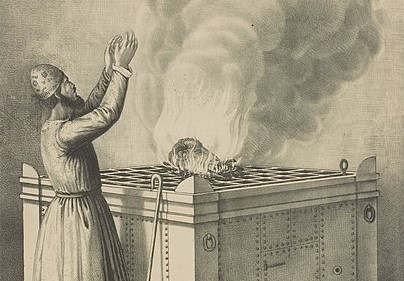
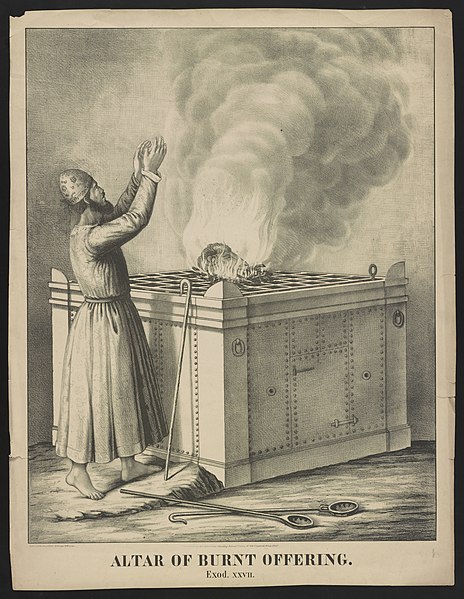
The fire on the altar shall be kept burning; it must not go out. Every morning the priest is to add wood to the fire, arrange the burnt offering on it, and burn the fat portions of the peace offerings on it. The fire must be kept burning on the altar continually; it must not go out, it must not go out! (Leviticus 6:12-13)

The fire referred to here is the one on the altar before the ancient Temple or Tent of Meeting, but for our purposes it is an image of prayer. The prayer of the priest for himself and his people is a fire that must never go out. Prayer, as a conversation with God, must not end. Every morning the priest is to add wood to this fire of prayer; he is to offer a sacrifice of praise and beg God on behalf of His people.

As priests, we are directed to pray the Liturgy of the Hours, sometimes called the “breviary,” or the “office.” We are also called to spend time before God in quiet prayer and attentiveness, so that hearing what He says we can then offer His teaching to the faithful.

The text here is emphatic: this fire (of prayer) must not go out; it must never be extinguished. A priest who stops praying is dangerous to himself and others.

Encourage your priests to pray. Say to him, “Father, I am counting on your prayers for me.” Be specific in your gentle reminder to him: “Father, when you pray the office, please remember me.” “Father, in your Holy Hour and visits to the Blessed Sacrament, please remember my family.” In so doing you remind him of his obligation to pray and that you are presuming he is doing so.

Priests must pray. This is a fire that must never be extinguished!

The second image is one of prayerful study and careful teaching.

In his treatise, The Book of the Pastoral Rule, Pope Saint Gregory the Great applies details from the Old Testament priesthood to the priests of the New Covenant. In one reflection, he remarks on the details of the breastplate of the high priest and what they signify.

In effect, Pope Gregory instructs the priest to guard his heart, keeping it safe from the poison of false doctrine and from misplaced affections, wherein he fears man more than God and desires the approval of man more than speaking the truth. In one section he writes,

Thus, it was assigned by the divine Voice that on the breast of Aaron, the vestment of judgment should be closely bound by bands (Exodus 28:15, 28). This was so that the heart of the priest would not possess fluctuating thoughts, but be bound by reason alone. Nor should he consider indiscreet or unnecessary thoughts (Pastoral Rule Part II.2).

Note the use of the word “bands.” At the root of the meaning of the word “religion” is the same concept. The Latin root of the word religion speaks of being bound closely to or embraced by God (re (again) + ligare (to bind)). Thus, the virtue of religion binds one’s heart, mind, and soul to God. We are held tightly by Him in an embrace of love and truth.

The bands of the high priest’s breastplate warn him not to waiver, wander, or be carried off from the love and truth of God. We are not to be enamored of the world or its lies; neither should we embrace or cling to them. The priest is to cling to God and be held close by Him, not wandering off in all different directions. Being held close by God, the priest’s own beating heart begins to synchronize with the heart of God. Cor ad cor loquitur (Heart speaks to heart). Gradually the priest’s heart will become much like God’s, loving the things and people of God with proper and ordered affection and wanting only what God wants.

Further, being held fast by God will also preserve the priest from what Gregory calls indiscreet or unnecessary thoughts. Indiscreet matters are those into which we ought not to delve or pry. The priest should properly seek to know only those things he needs to know. He should also remember that there are many things he cannot fully know, many of the deep mysteries of God about which he must humbly admit he knows little.

As for “unnecessary thoughts,” this surely refers to the thousands of trifling things that often occupy the minds of many people throughout the day: sports, celebrities, or the minutia of popular culture. We can think too much of frivolous things and not enough about glorious, edifying, and lasting ones.

Pope St. Gregory continues,

… It was strictly added that the names of the twelve patriarchs should also be depicted (Exodus 28:29). For to carry always the inscribed fathers on the breast is to meditate on the life of the ancients without interruption … to consider unceasingly the footsteps of the Saints.

Yes, every priest should be deeply rooted in the wisdom of the saints and in the ancient and lasting truth revealed by God in Holy Scripture and Sacred Tradition. To be a true Christian is to be deeply rooted in these things, always going back to that which is ancient and proposing it ever anew. The truths of God are non nova sed nove (not new things but understood newly).

St. Gregory continues,

 [The breastplate] is fittingly called a “vestment of judgment” because the spiritual director should always discern between good and evil. … Concerning this it is written: “But you shall put on the breastplate of judgment, the doctrine and truth, which will be on Aaron’s breast … and [the priest shall] not add an element of human reasoning as he dispenses his judgments on behalf of God. … Otherwise, personal affections might get in the way of zealous correction …

Here Pope Gregory warns against the human tendency to compromise the truth or to engage in rationalization. We can add to the Word of God or subtract from it, but either way we render harm to the purity it should always have in our heart, in our mind, and on our lips.

Too many priests, preachers, and teachers get carried away with trendy notions or theological speculations that can begin to substitute for the true word of God. All the priest’s judgments about what is right and what is wrong, what is good and what is evil, should be deeply rooted in the wisdom and the truth of God. They should not be tainted by dubious opinions, trends, fashions, unbalanced notions, or even his own sinful inclinations and his desire to rationalize them.

The priest must also be aware of personal affections and preferences. Too often in human affairs, who said something becomes more important than what he said. St. Paul says, Test everything; hold fast what is good, abstain from every form of evil (1 Thess 5:21-22).

Pope St. Gregory concludes,

If one fearfully considers the One who presides over all things, then he will not direct his subjects without fear.

Fear is a very deep human problem. Too many priests, parents, teachers, and others in the Church fear human beings rather than God. God would have us simplify things in our life by fearing Him alone and then not having to fear thousands of others.

Yes, too many priests and other leaders cower before congregations and preach so vaguely and blandly that almost no one can remember what was said; their obfuscations disguise the Word of God more than they reveal it.

The first question every preacher and teacher should ask himself is this: What would God think of what I have said today? Unfortunately, too many of us who preach are more concerned with the opinions of men. The fear that a preacher should have is not whether his congregation is pleased, but rather whether God, who will judge him one day, is pleased. If he fears God, then he will direct his people with holy fear not out of a fear of man. He will have a proper and holy reverence for God, to whom we must one day be accountable for our office. May neither our silence nor our rash speech condemn us!

Pray for priests and encourage them to stay faithful to prayer and to the divine fonts of truth. May every priest pray and guard his heart and mind!