Do Not Be Deceived: Hell Is Real

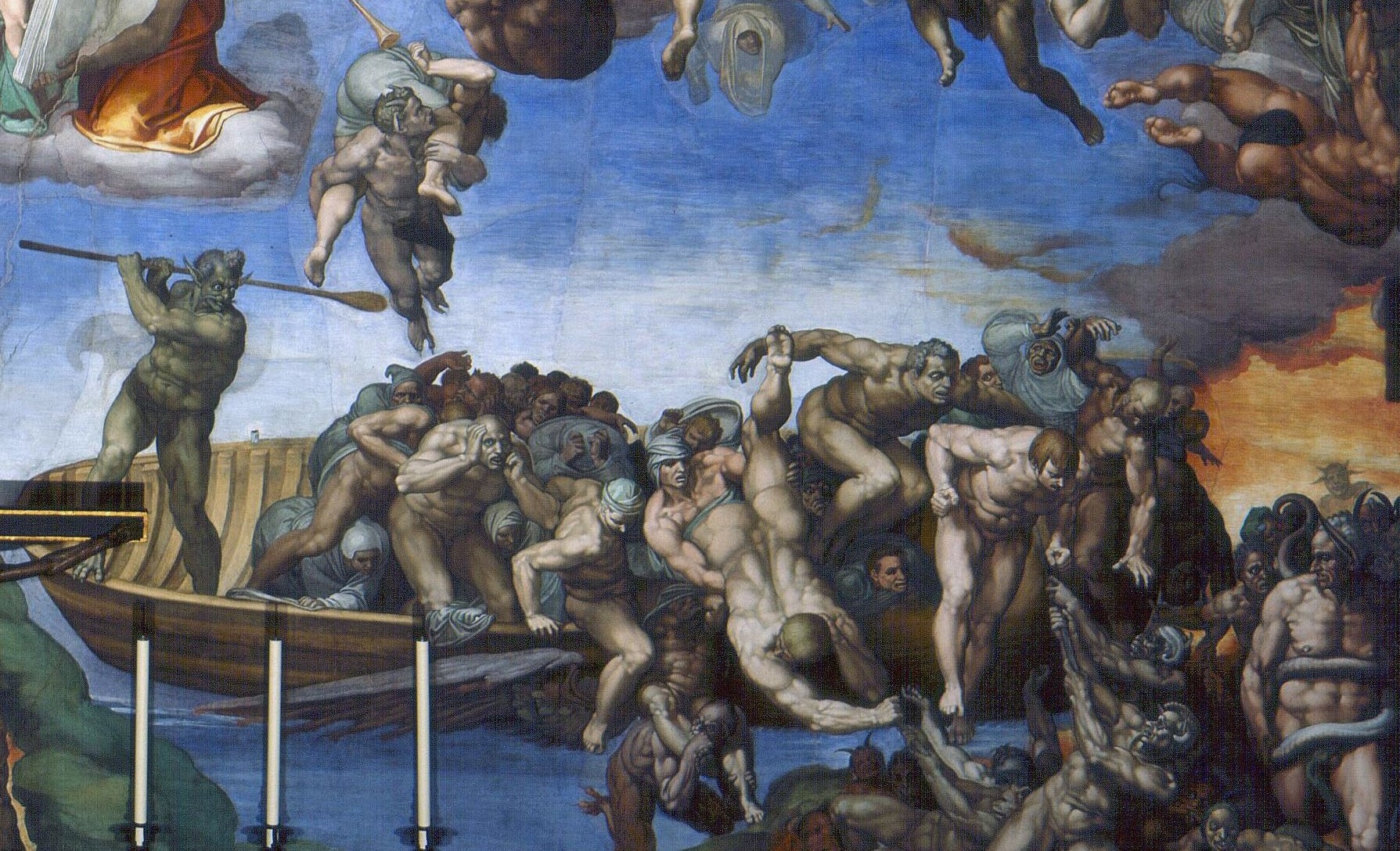
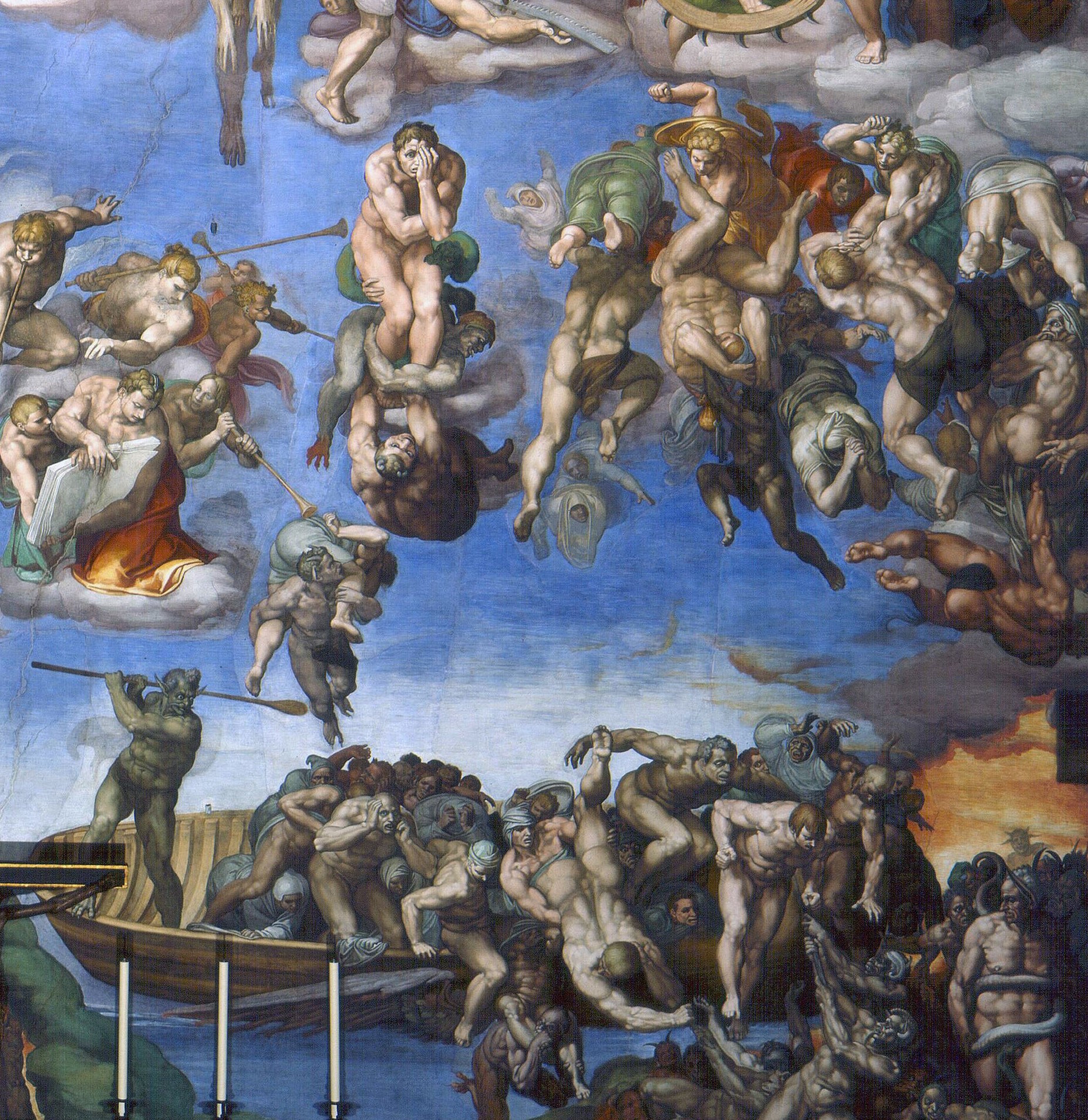
Last Judgment – Michelangelo Buonarroti (1541)

There is a verse from the Letter to the Hebrews that deserves attention because it is a more common problem than many imagine:

See to it, brothers, that none of you has an unbelieving heart that turns away from the living God.  But exhort one another daily, as long as it is called today, so that none of you may be hardened by sin’s deceitfulness (Heb 3:12-13).

When most of us read a text like this, we think only of obvious and dark cases. For example, someone’s tendency to lash out at others leads him to increasing violence and cruelty, or someone’s desire for possessions leads him to increasing stinginess and unkindness, or someone’s lust leads him to sexually promiscuity that is more and more debased and perverse. However, there are less egregious versions of what this text describes that can lead even religiously observant Catholics to become hardened by sin’s deceitfulness.

An example of this is the outright, almost categorical denial of the doctrine of Hell by a large number of Catholics, even ones who attend Mass faithfully each week. Although Jesus taught it consistently, many today firmly resist the biblical teaching that many people are in significant danger of going to Hell.

It can be argued that 21 of the 38 parables have as their theme the warning of impending judgment in which some are judged unable or unwilling to enter the Kingdom of Heaven. For example, there are sheep and goats; wheat and tares; those on the right and those on the left; wise virgins and foolish ones; those who accept the invitation to the wedding and those who refuse; those properly dressed and those who are not; those who are told, “Come, blessed of my Father” and those who are told, “Depart from me.” This is not the place for me to give a full teaching on these doctrines. (I have posted in more depth on these topics previously: here and here and here.)

Many today, even among the religiously observant, do not take these consistent teachings seriously. “God wouldn’t do that because He is love and compassion,” they say. “There aren’t many people in Hell, except maybe Hitler.” Most people are quite “hardened” in this “deceitful” view, to use the language from Hebrews. Even when presented with verse after verse from Scripture—most directly from Jesus’ mouth—many still stubbornly persist in rejecting what is clearly taught, saying: “Yeah, I know, but He didn’t really mean it. He won’t really do that.”

To illustrate, some years ago a woman confronted me after Mass objecting to my sermon, which included a warning about Hell for those who refuse to repent. (The Gospel for that Sunday included Jesus’ sad warning that the road to Hell was wide with many on it, while the road to salvation was narrow and only a few were walking its way and would find salvation). She said to me, “I didn’t hear the Jesus I know in your sermon about Hell today.” I replied, “But ma’am, I was quoting Jesus!” She did not miss a beat, saying, “Oh, please! We know He never really said that.” This reply indicates a hardening by the deceit of sin on several levels: she rejects the revealed Word of God in favor of her own views, she rejects the doctrine and warnings of Hell itself, and she remakes the Lord so that He conforms to her notions and can be worthy of her credence and worship. (We used to call this last thing “idolatry.”)

Listen again to the words from Hebrews: See to it, brothers, that none of you has an unbelieving heart … so that none of you may be hardened by sin’s deceitfulness. This refers to more than just wicked behaviors. Sometimes the hardness is a refusal to believe revealed doctrines or to accept the Lord’s serious warnings. A world hardened by the deceit of sin will not accept that there are lasting consequences for the refusal to repent. Many have allowed themselves to be influenced by it, setting aside God’s Word in favor of human ideas and preferences.

Beware of this tendency, which is so common today. Study the doctrines. Read the warnings of the Lord in Scripture. Ask questions about things that puzzle or trouble you; pray for insight—but do not be misled into sinfully and stubbornly rejecting what is revealed.

The reading for Wednesday’s Mass contains a salutary warning:

Rely not on your strength in following the desires of your heart. Say not, “Who can prevail against me?” for the LORD will exact the punishment. Say not, “I have sinned, yet what has befallen me?” for the LORD bides his time. Of forgiveness be not overconfident, adding sin upon sin. Say not, “Great is his mercy; my many sins he will forgive.” For mercy and anger alike are with him; upon the wicked alights his wrath. Delay not your conversion to the LORD, put it not off from day to day; For suddenly his wrath flames forth; at the time of vengeance, you will be destroyed. Rely not upon deceitful wealth, for it will be no help on the day of wrath (Sirach 5:1-10).

The Lord says these things because He loves us. He does not want us to be lost. In the end, though, God respects our freedom to say no to what He is offering. He knows how we are made and how stubborn we can be. He knows that the values of Heaven (particularly love of our enemies, forgiveness of those who have wronged us, and chastity) are not pleasing to many people. The Lord will not force us to live values like these, but they are what Heaven is about. Thus, He warns us to let Him instill a desire in us for what He offers so that we will desire the Heaven He describes. Listen to Him; He warns us in love so that He can take our heart of stone and give us a true heart to desire the Heaven He is offering.

Do not be hardened by deceitful teachings rooted in this world of sin!

Cross-posted at the Catholic Standard: Do Not Be Deceived or Hardened in the Error of Those Who Say Hell is Unlikely or Unreal

Advice in Times of Trial and Discouragement

At daily Mass this week (7th week of the year) we are reading from the Book of Sirach. God inspired Jesus ben Sirach to pen advice so beautiful and wise that the early Church used it to instruct catechumens in their first year. Consider the following passage:

My son, when you come to serve the LORD, stand in justice and fear, prepare yourself for trials. Be sincere of heart and steadfast, incline your ear and receive the word of understanding, undisturbed in time of adversity. Wait on God, with patience, cling to him, forsake him not; thus will you be wise in all your ways.

Accept whatever befalls you, when sorrowful, be steadfast, and in crushing misfortune be patient; For in fire gold and silver are tested, and worthy people in the crucible of humiliation. Trust God and God will help you; trust in him, and he will direct your way; keep his fear and grow old therein.

You who fear the LORD, wait for his mercy, turn not away lest you fall. You who fear the LORD, trust him, and your reward will not be lost. You who fear the LORD, hope for good things, for lasting joy and mercy. You who fear the LORD, love him, and your hearts will be enlightened. Study the generations long past and understand; has anyone hoped in the LORD and been disappointed? Has anyone persevered in his commandments and been forsaken? Has anyone called upon him and been rebuffed? Compassionate and merciful is the LORD; he forgives sins, he saves in time of trouble and he is a protector to all who seek him in truth (Sirach 2:1-11).

We can see in this text a prudent description of reality along with some remedies and rewards. Let’s ponder them.

The Reality

The text speaks plainly of the things that befall God’s people: trials, adversity, sorry, crushing misfortune, and humiliation. Therefore, we are not exempt from the cross but deeply associated with it. We have been crucified with Christ and to the world. There will be times of joy and victory to be sure, but this world is not our ultimate home. Satan is the prince of this world and God mysteriously allows him significant influence and power—for a time.

This world, then, is a place of trial and testing for us. It is a crucible, an exile, a valley of tears. Worldly victories are not promised, but heavenly ones are, provided we persevere to the end. Jesus said, In the world you will have tribulation. But take courage! I have overcome the world (Jn 16:33). To the Church at Smyrna He said, Do not fear what you are about to suffer. Look, the devil is about to throw some of you into prison to test you, and you will suffer tribulation for ten days. Be faithful even unto death, and I will give you the crown of life (Rev 2:10).

This is our reality. The world has joys and God grants many blessings and consolation, but on the whole, this life is a time of testing and significant pain.

The Remedies

The text goes on to set forth certain requirements, admonitions, and remedies. Let’s look at some of them.

  • Stand in justice and fear. We must do what is right out of a holy reverence for and obedience to God; this will secure our inheritance in the heavenly kingdom. Without the holy fear of God, we will fear the world and its punishments. If you’re going to fear something, it might as well be the God who loves you! The world’s blows are only temporary; God’s promises are eternal. We must be actively engaged in doing and trumpeting what is right rather than passively sitting in resignation. Stand! Do your work, revere God, and prefer His favor to the trinkets this world offers.
  • Be steadfast. The world constantly bombards us with what is new, trendy, and flashy. Do not be mesmerized. Stand firm, stably rooted in the time-tested wisdom of God; it has lasted millennia for a reason. When difficulties come, remember that “troubles don’t last always.” You may weep for a night, but joy will come with the morning light. Stand firm; do not be easily moved.
  • Incline your ear to the Word. Be deeply rooted in the Word of God. Let it dwell within you richly. The Word of God is a prophetic declaration of reality. It tells us what is really going on and what shall ultimately be. Savor God’s word; let it become the very substance of your thoughts. Our minds are going to be polluted if we immerse ourselves in so much filth and error. The mind is like a sponge. If you put a sponge in dirty water, it is going to come out dirty. How do you clean a dirty sponge? By plunging it into clean water, wringing it out, putting it back into the clean water, and then wringing it out again. The Word of God is that clean water for us, for our mind. If we are going to make it through this world of error, confusion, and misplaced priorities, we need the steady, cleansing influence of God’s Word. Put on your gospel glasses and see the world through them!
  • Be undisturbed. Do not be drawn in to the turmoil of the world. If we are rooted in God’s Word and have our heart fixed on Him, then even if there are storms on the surface of our life, deep within is a serenity that the world did not give and thus cannot take away.
  • Be Patient. The word patience is rooted in the Latin word patior (I suffer). Thus, patience is the capacity or willingness to suffer in the moment for the sake of some greater good. Patience is rooted in the perspective that comes from faith. We may have to suffer for a time, but those sufferings will produce a harvest of virtue and many other good fruits.
  • Cling to the Lord. Run to the Lord. Hold to His unchanging hand. Pray every day and always keep Him on your mind. This is essential lest we lose our perspective.
  • Accept what befalls you. The word accept is rooted in the Latin word coeptare (to carry). To accept something is thus to pick it up and carry it for a time. Acceptance does not mean approval; neither does it mean resignation. It simply means being willing to carry what the Lord asks. We might rather that things be different. We might pray that the burden lessens or goes away, but for now, we must be willing to take up this or that cross and carry it for a while. Acceptance is a virtuous middle ground between delight and despair. To accept is to trust God and the truth that He asks this of me for now.
  • Turn not away. When the road gets difficult it is easy to become angry at God or to look for an easy way out. Doing what is easy today, however, often serves merely to postpone troubles to tomorrow. Do not turn aside from the Lord. He knows what is best; we do not. Trust Him. Keep following Him, and do not turn away.
  • Hope.  Hope is more than a vague wish that things get better; it is the confident expectation that God will provide me with the blessings necessary to get me home, that He will help me to attain eternal life. Therefore, hope points to and empowers fortitude and courage.
  • Love the Lord. Pray earnestly for the gift of a tender and deep love for God. Love lightens every load and disposes us to want what our beloved wants. A deep, tender, and grateful love for God helps us to endure and to run joyfully toward our goal of being happy with Him forever.

The Rewards

If we do these things, the Lord promises rewards, both here in this world and most perfectly in Heaven, where joys unspeakable and glories untold await us. The text from Sirach speaks of present and future rewards: thus will you be wise in all your ways. A worthy people are helped and directed by God through their trust in Him. Lasting joy and the fruits of mercy will be ours. Our hearts and minds will be enlightened. We will not be disappointed, but will be saved, protected, and always with the Lord.

Cross-posted at the Catholic Standard: Advice in Times of Trial and Discouragement

Did Noah Really Live to Be 950?

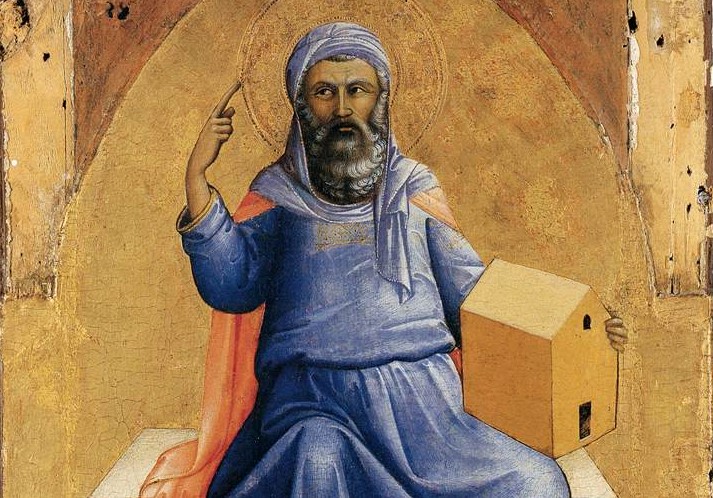
Noah – Lorenzo Monaco (1410)

I occasionally get questions about the remarkably long lives of the patriarchs who lived before the great flood. Consider the ages at which these figures purportedly died:

  • Adam – 930
  • Seth – 912
  • Enosh – 905
  • Jared – 962
  • Methuselah – 969
  • Noah – 950
  • Shem – 600
  • Eber – 464
  • Abraham – 175
  • Moses – 120
  • David – 70

How should we understand these references? Many theories have been proposed to explain the claimed longevity. Some use a mathematical corrective, but this leads to other pitfalls such as certain patriarchs apparently begetting children while still children themselves. Another theory proposes that the purported life spans of the patriarchs are just indications of their influence or family line, but then things don’t add up chronologically with eras and family trees.

Personally, I think we need to take the stated life spans of the patriarchs at face value and just accept it as a mystery: for some reason, the ancient patriarchs lived far longer than we do in the modern era. I cannot prove that they actually lived that long, but neither is there strong evidence that they did not. Frankly, I have little stake in insisting that they did in fact live to be that old. But if you ask me, I think it is best just to accept that they did.

This solution, when I articulate it, causes many to scoff. They almost seem to be offended. The reply usually sounds something like this: “That’s crazy. There’s no way they lived that long. The texts must be wrong.” To which I generally reply, “Why do you think it’s crazy or impossible?” The answers usually range from the glib to the more serious, but here are some common replies:

  1. People didn’t know how to tell time accurately back then. Well, actually, they were pretty good at keeping time, in some ways better than we are today. The ancients were keen observers of the sun, the moon, and the stars. They had to be, otherwise they would have starved. It was crucial to know when to plant, when to harvest, and when to hunt (e.g., the migratory and/or hibernation patterns of animals through the seasons). They may not have had timepieces that were accurate to the minute, but they were much more in sync with the rhythms of the cosmos than most of us are today. They certainly knew what a day, a month, and a year were by the cycles of the sun, moon, and stars.
  2. They couldn’t have lived that long because they didn’t have the medicines we do today. Perhaps, but it is also possible that they didn’t have the diseases we do. Perhaps they ate and lived in more healthy ways than we do today. Perhaps the gene pool later became corrupted in a way that it was not back then. There are many things we cannot possibly know. The claim about our advanced technology (medicine) also shows a tendency of us moderns to think that no one in the world has ever been smarter than we are. While we surely do have advanced technologies, we also have things that make us more susceptible to disease: stress, anxiety, overly rich diets, pollutants, promiscuity, drug use, and hormonal contraceptives. There are many ways in which we live out of sync with the natural world. It is also quite possible that the strains of disease and viral attacks have become more virulent over time.
  3. Those long life spans just symbolize wisdom or influence. OK fine, but what is the scale? Does Adam living to 930 mean that he attained great wisdom? But wait, David wasn’t any slouch and he only made it to 70. And if Seth was so influential (living to 912), where are the books recording his influence such as we have for Moses, who lived to be a mere 120? In other words, we can’t just propose a scale indicating influence or wisdom without some further definition of what the numbers actually mean.
  4. Sorry, people just don’t live that long. Well, today they don’t, but why is something automatically false simply because it doesn’t comport with today’s experience? To live to be 900 is preternatural, not supernatural. (Something preternatural is extremely extraordinary, well outside the normal, but not impossible.) In other words, it is not physically impossible in an absolute sense for a human being to live for hundreds of years. Most people today die short of 100 years of age, but some live longer. Certain closely related mammals like dogs and cats live only 15 to 20 years. Why is there such a large difference in life expectancy between humans and other similar animals? There is obviously some mysterious clock that winds down more quickly for some animals than for others. So there is a mystery to the longevity of various living things, even those that are closely related. Perhaps the ancients had what amounted to preternatural gifts.

So I think we’re back to where we started: just taking the long life spans of the early patriarchs at face value.

There is perhaps a theological truth hidden in the shrinking lifespans of the Old Testament. The Scriptures link sin and death. Adam and Eve were warned that the day they ate of the forbidden fruit of the Tree of the Knowledge of Good and Evil, they would die (Gen 2:17), but they did not drop dead immediately. Although they died spiritually in an instant, the clock of death for their bodies wound down much later. As the age listing above shows, as sin increased, lifespans dropped precipitously, especially after the flood.

Prior to the flood, lifespans remained in the vicinity of 900 years, but right afterward they dropped by about a third (Shem only lived to 600), and then the numbers plummeted even further. Neither Abraham nor Moses even reached 200, and by the time of King David, he would write, Our years are seventy, or eighty for those who are strong (Ps 90:10).

Scripture says, For the wages of sin is death (Rom 6:23). Indeed they are, especially in terms of lifespan. Perhaps that is why I am not too anxious to try to disprove the long life spans of the patriarchs, for what we know theologically is borne out in our human experience: sin is life-destroying. This truth is surely made clear by the declining lifespan of the human family.

Does this prove that Adam actually lived to be more than 900 years old? No, it only shows that declining life spans are something we fittingly discover in a world of sin. God teaches that sin brings death, so why should we be shocked that our life span has decreased from 900 years to about 85? It is what it is. It’s a sad truth about which God warned us. Thanks be to God our Father, who in Jesus now offers us eternal life, if we will have faith and obey His Son!

How or even whether the patriarchs lived to such advanced ages is not clear, but what is theologically clear is that we don’t live that long today because of the collective effect of sin upon us.

Cross-posted at the Catholic Standard: Did Noah Really Live to Be 950?

Prayer and Fasting or Just Prayer? A Consideration of a Biblical “Disagreement”

Bread and wheat on wooden table, shallow DOFGiven the Gospel reading for Monday of the Seventh Week, and with the ongoing interest in demonology, Jesus’ instruction that demons must be driven out with prayer and fasting (cf Mk 9:29, Matt 17:21) is frequently quoted. And many people are acquainted with this text in this form.

But a problem emerges for some people when they go to their Bible to look up those texts. Some Bibles include the reference to fasting while others do not. For example, the two most common Catholic Bibles, the Revised Standard Version Catholic Edition (RSVCE) and the Revised New American Bible (RNAB), render Mark 9:29 differently.

  • This kind cannot be driven out by anything but prayer and fasting (RSVCE).
  • This kind can only come out through prayer (RNAB).

And in Matthew 17:21, which recounts the same incident that Mark 9:29 does, prayer and fasting aren’t mentioned at all in either the RSVCE or the RNAB version. Older Bibles such as the Douay Rheims (DR) and the King James (KJV), however, do:

  • But this kind is not cast out but by prayer and fasting (DR).
  • Howbeit this kind goeth not out but by prayer and fasting (KJV).

So what is going on here?

The ancient Greek manuscripts of the New Testament are remarkably consistent, especially considering that they were handwritten by scribes, who might accidentally skip or misspell a word. But there are some discrepancies. Most textual variations are easily resolved by comparing several ancient manuscripts to identify misspellings and/or dropped words. There are some variations, however, that are not as easily resolved, especially when it is a case of one erroneous manuscript being copied numerous times and distributed. But even in that situation, a little detective work can usually find the root problem and distinguish between an erroneous text and a correct one.

But there are times when certain textual variations cannot be resolved and biblical scholars either do not agree or cannot be certain as to which is the most authentic version. Mark 9:29 is one of those texts. Some ancient manuscripts include the words “and fasting” (και νηστεια) while others do not.

For the benefit of the technocrats who are reading this, the following manuscripts support the translation that includes both fasting and prayer: P45vid2 A C D K L N W Γ Δ Θ Ψ ƒ1,13 28. 33. 565. 579. 700. 892. 1241. 1424. 2542. ℓ 2211 ???? lat syh co (sys.p boms). These ancient manuscripts, however, support the translation that does not include fasting: ℵ B 0274 k.

While the manuscripts that favor including fasting are far more numerous, it is not necessarily a question of mere numbers. This is because not all ancient manuscripts are considered to be of equal value. Most modern scholars favor the translation that excludes the reference to fasting because the manuscripts that do not mention it are ones that they weight more heavily. So even though many manuscripts do include the words “and fasting,” the earliest and “best” manuscripts do not include it. Critics of this current consensus view object to the presumption that fasting reflects a later concern of the Church. They also think that the most common “go-to” source (Metzger’s A Textual Commentary on the Greek New Testament) has been too influential. Welcome to the wonderful world of biblical textual criticism (analysis)!

The issue with Matthew 7:21 being wholly lacking in most modern Bibles has a similar explanation, though in this case the consensus is even stronger because the oldest and best Greek manuscripts lack the verse. And even those manuscripts that do, seem to show it in the margins as more of a side comment or a reference back to Mark 9:29.

So, all of this goes toward explaining why some of our modern Bibles report Jesus as saying that certain types of demons must be driven out by “prayer and fasting,” while others simply say “prayer.”

But is this just an academic exercise? What are there pastoral considerations?

The main pastoral (and liturgical) question would seem to be this: “Is fasting required to drive out demons or not?” The ambiguity of the textual evidence (as described above) allows that reasonable people may differ as to whether strict fasting is required and to what extent it is helpful. There are certain considerations to be made.

Even if certain demons are best driven out by prayer and fasting, we must never forget that it is God who drives out demons, and He doesn’t need our fasting to do so. Any prideful notions about the effects of our fasting should be strictly avoided.

Indeed, we ought to have a kind of humility regarding fasting. Fasting is certainly recommended, and the Lord Himself says that there is a time for fasting (cf Mk 2:20, Luke 5:35). But fasting can also be a source of pride (Lk 18:12, Lk 5:33). Fasting done out of pride or superiority isn’t going to drive out any demons; in fact it will likely attract them.

In longer exorcisms (which can go on for months), fasting may need to be mitigated or else assigned to members who are not part of the team directly involved in the exorcism. Physical strength is often needed to withstand the grueling work of major exorcism.

With such precautions in mind, and in spite of the textual variations in the “prayer and fasting” text of Scripture, the instinct of the Church is that casting out demons is best assisted by both prayer and fasting. The current Rite of Exorcism (2004) says,

The Exorcist, mindful that the tribe of demons cannot be cast out except through prayer and fasting, should take care that these two most effective remedies for obtaining divine help be used, after the example of the Holy Fathers, both by himself and by others, insofar as is possible (De Exorcismis # 31).

The Older Rite (1614) also advises,

Therefore, he will be mindful of the words of our Lord (Mt. 17:20), to the effect that there is a certain type of evil spirit who cannot be driven out except by prayer and fasting. Therefore, let him avail himself of these two means above all for imploring the divine assistance in expelling demons, after the example of the holy fathers; and not only himself, but let him induce others, as far as possible, to do the same (De Exorcizandis # 10).

Why or how does fasting add power to prayer? One reasonable (and biblical) answer is that prayer and worship should generally involve sacrifice. Scripture says,

  • Understand these things, you that forget God; lest he snatch you away, and there be none to deliver you. The sacrifice of praise shall glorify me: and there is the way by which I will show him my salvation, says the Lord (Psalm 50:22-23).
  • Through him then let us continually offer up a sacrifice of praise to God, that is, the fruit of lips that acknowledge his name. Do not neglect to do good and to share what you have, for such sacrifices are pleasing to God (Heb 13:15-16).
  • You shall observe the Feast of Unleavened Bread … And none shall appear before Me empty-handed. Also you shall observe the Feast of the Harvest of the first fruits of your labors (ex 23:15-16).

There has developed in Western world the strange notion of worship and praise without sacrifice. In many sectors, worship has devolved to little more than a form of entertainment, wherein the whims and preferences of the faithful are expected to be catered to. Worship, by this notion, should be brief and should take place in comfortable, air-conditioned churches with padded pews and convenient parking. The “message” and liturgy should not be intellectually or morally challenging; rather they should be encouraging and pleasing. The music and “style” of liturgy should meet the preferences of those assembled.

Missing in all of this is the concept that liturgy and prayer should involve sacrifice, that they should “cost” us something. Yet Scripture clearly links prayer and sacrifice and indicates that they should, to some degree, be found together. Sacrifice is a way of establishing greater sincerity in, and integrity to, our worship. Indeed, worship without sacrifice too easily becomes lip service or turns God into a kind of divine butler, whom we expect to wait on us. God surely does supply our needs but He is no butler; He is God, who is worthy of our worship and the sacrifice of praise.

It is in this sense that prayer and fasting belong together, especially in the difficult work of driving out demons. Prayer and fasting become the sacrifice of praise that confounds and disturbs the evil one to no end. Scripture says, And now my head shall be lifted up above my enemies all around me, for I will offer in his tent sacrifices of praise with shouts of joy; I will sing and make melody to the LORD (Psalm 27:6).

It is the instinct of the Church that prayer is good, but that prayer with sacrifice (fasting is sacrificial) wins through, especially in that most difficult work of expelling demons and repelling the enemy.

The question of how best to translate Mark 9 and Matthew 17 is a legitimate one. But the long experience of the Church ought not to be neglected. And experience teaches plainly enough that as a general norm,

This kind cannot be driven out except by prayer and fasting (Mk 9:29).


Cross-posted at the Catholic Standard: Prayer and Fasting or Just Prayer? A Consideration of a Biblical “Disagreement”

Be Different, Be a Christian – A Homily for the 7th Sunday of the Year

Are you a Christian? Before you answer, consider these other questions: Do you love your enemy? Do you do good to them who hate you? The honest answers to these questions are at the very heart of Christianity and represent what distinguishes a Christian from others. Let’s follow Jesus’ teachings in several stages. In so doing, we can learn our truest identity and how He seeks to transform us.

The ATTITUDE of a Christian

Jesus said to his disciples, “To you who hear I say, love your enemies, do good to those who hate you, bless those who curse you, pray for those who mistreat you. To the person who strikes you on one cheek, offer the other one as well, and from the person who takes your cloak, do not withhold even your tunic. Give to everyone who asks of you, and from the one who takes what is yours do not demand it back. Do to others as you would have them do to you.”

In effect, Jesus is telling us to put an end to the cycle of injustice and violence, by His grace. The Christian is to stand in the gap and say, “It ends with me.” This is Jesus’ game plan, his battle strategy. Defeat Satan’s cycle and thwart his plan to get two birds with one stone. Satan’s usual tactic is to inspire hatred or vengeance in someone, who then attacks us; in response, we lash back and become just like our enemy. In this way, Satan has captured two disciples for the price of one. The Lord tells us not to fall for that. We are to kill our enemies with kindness, get them with goodness, and lure them with love.

Note, then, four attitudes that the Lord distinguishes:

Merciful Love your enemies, do good to those who hate you, bless those who curse you, pray for those who mistreat you. We ought to remember how merciful God has been to us. Even when we mistreated Him and were His enemies through sin, God show[ed] his love for us in that while we were yet sinners Christ died for us (Rom 5:8). Allow God to make you aware of His abundant mercy so that you are deeply grateful and thus equipped to love your enemy and mercifully withhold your wrath and vengeance toward him.

Meek To the person who strikes you on one cheek, offer the other one as well, and from the person who takes your cloak, do not withhold even your tunic. Meekness is the virtue that governs anger. It is the proper middle ground between too much anger and not enough. Even when anger is an appropriate response, meekness moderates it, steering it away from destructive ends to helpful ones. It takes a strong person to control his anger, to refrain from retaliating or seeking revenge. Through meekness, we can also direct our anger toward the proper target: Satan. Use the energy of anger to defeat Satan’s plan!

Magnanimous Give to everyone who asks of you, and from the one who takes what is yours do not demand it back. We are too easily angered when people seek our time, talent, or treasure; this anger can give way to wrath. Those who are magnanimous are open to being asked, at peace with saying no when necessary, and generous in sharing their gifts. Christians graced by Christ are less apt to say, “This is mine; leave me alone” and more likely to realize that God has been good to them. This joy in what God has given them disposes them to generosity with others. Joy is like an energy that fuels magnanimity.

Meet Do to others as you would have them do to you. An old meaning of “meet” is suitable, proper, fitting, correct, or just. Christians are aware that if we want the world to be more just, it has to begin with us. We understand that we are going to need the help of others in countless ways and therefore treat others as we hoped to be treated. We sow justice, mercy, and patience in order to reap them in others.

The ALTITUDE of a Christian

For if you love those who love you, what credit is that to you? Even sinners love those who love them. And if you do good to those who do good to you, what credit is that to you? Even sinners do the same. If you lend money to those from whom you expect repayment, what credit is that to you? Even sinners lend to sinners and get back the same amount. But rather, love your enemies and do good to them, and lend expecting nothing back; then your reward will be great, and you will be children of the Most High, for he himself is kind to the ungrateful and the wicked. Be merciful, just as your Father is merciful.

Christians are supposed to stand out. By God’s grace, we are to rise above mere human norms. Note what Jesus expects of us:

We are to Excel – In effect, Jesus asks us these questions: How are you excelling? What makes you different from a virtuous atheist or pagan? What credit is it to you if you only do what they do? What makes you different from a sinner? The mark of a Christian is

  • that we love our enemies,
  • that we do good to them who do ill to us,
  • that we lend even when we expect to get nothing back, and
  • that we stop the cycle of injustice and violence.

We are to Exemplify – The text goes on to say, and you will be children of the Most High, for he himself is kind to the ungrateful and the wicked. Be merciful, just as your Father is merciful. In Matthew’s Gospel, Jesus says, But I say to you, Love your enemies and pray for those who persecute you, so that you may be sons of your Father who is in heaven; for he makes his sun rise on the evil and on the good, and sends rain on the just and on the unjust (Mat 5:44-45). Thus, we are to exemplify, to show forth who God is. We are to demonstrate that we are true children of the Father by doing what He does.

The ASSETS of a Christian

Stop judging and you will not be judged. Stop condemning and you will not be condemned. Forgive and you will be forgiven. Give, and gifts will be given to you; a good measure, packed together, shaken down, and overflowing, will be poured into your lap. For the measure with which you measure will in return be measured out to you.

Jesus teaches that, by His grace, we should do the following to store up treasures in Heaven:

Forego CondemnationJesus says, Stop condemning and you will not be condemned. Condemning means quickly and routinely seeking the worst of punishments for others. There are no second chances, no tempering of punishment or consideration of the context or background of people’s struggles; “Hang ’em high” is the cry of condemnation. Punishment is meant to be remedial. There are times when the strictest of punishments must be meted out, but typically only after lesser measures have been unsuccessful. However, correcting an erring brother is a spiritual work of mercy.

  • My brothers, if one of you should wander from the truth and someone should bring him back, remember this: Whoever turns a sinner from the error of his way will save him from death and cover over a multitude of sins (James 5:19-20).
  • Let the word of Christ dwell in you richly, teach and admonish one another in all wisdom (Col 3:16).
  • Thou shalt not hate thy brother in thine heart: thou shalt in fact rebuke thy neighbor, and not suffer sin upon him (Lev 19:17).
  • Brethren, if someone is detected in sin, you who live by the Spirit should gently set him right, each of you trying to avoid falling into temptation himself (Gal 5:25).

Nevertheless, be careful. The Lord says, The measure that you measure to others will be measured back to you (Mat 7:2). James also warns, Merciless is the judgment on the one who has shown no mercy (James 2:13). Thus, among our assets in Heaven will be mercy stored up for us at our judgment if we show mercy to others.

Forgive Transgressions – Jesus says, Forgive and you will be forgiven. If we do this, there is the promise of forgiveness being shown to us at our judgment. For if you forgive men their trespasses, your heavenly Father also will forgive you; but if you do not forgive men their trespasses, neither will your Father forgive your trespasses (Mat 6:13-15).

Freely Give – Jesus says, Give, and gifts will be given to you. Paradoxically, one of the ways we keep something in the Kingdom of God is by giving it away. When we give it away, we thereby store it up in Heaven.

  • I tell you, use worldly wealth to gain friends for yourselves, so that when it is gone, you will be welcomed into eternal dwellings. Whoever can be trusted with very little can also be trusted with much, and whoever is dishonest with very little will also be dishonest with much (Luke 16:9).
  • Whoever sows sparingly will also reap sparingly, and whoever sows generously will also reap generously. Each man should give what he has decided in his heart to give, not reluctantly or under compulsion, for God loves a cheerful giver. … As it is written, “He has scattered abroad his gifts to the poor; his righteousness endures forever.” Now he who supplies seed to the sower and bread for food will also supply and increase your store of seed and will enlarge the harvest of your righteousness. You will be made rich in every way so that you can be generous on every occasion, and through us your generosity will result in thanksgiving to God (2 Cor 9:6-11).
  • Jesus said to him, “If you would be perfect, go, sell what you possess and give to the poor, and you will have treasure in heaven; and come, follow me” (Matt 19:21).
  • Do not lay up for yourselves treasures on earth, where moth and rust consume and where thieves break in and steal, but lay up for yourselves treasures in heaven, where neither moth nor rust consumes and where thieves do not break in and steal (Matt 6:19).

Fully Receive a good measure, packed together, shaken down, and overflowing, will be poured into your lap. For the measure with which you measure will in return be measured out to you. Here, then, is the promise of our assets if we become, by God’s grace, true Christians. In effect, your yardstick will become a boomerang. Let it come back to bless you. If you have been merciful you will find mercy. If you have forgiven you will find forgiveness. If you have given it shall be returned to you many times over. These are the assets of the Christian. Invest wisely!

Cross-posted at the Catholic Standard: Be Different, Be a Christian

Samson And Delilah As Seen in Cartoon – Or a Parable on the Wages of Lust and Power

Samson and Delilah – Pompeo Batoni (1766)

The video below is a dramatization (sort of) of the story of Samson and Delilah as well as a commentary on lust and power. In case you would like to review the story of Samson and Delilah, CLICK HERE.

As the video opens, two superheroes are summoned to an emergency. They rush to the scene, but in a reckless fashion, and a great crash occurs. And here is a symbol for pride, for too often we rush headlong into solving problems, but often with little concern for other problems we may create in the process. For example, our quest to “end poverty in our time” has resulted more in the demise of the family; our quest to liberate the world from tyranny (through violence, drone strikes, and war) has led more often to inciting even more violence, and to the rise of new villainies.

After the crash, the superheroes seek to blame each other for the accident. And here is an image for our tendency to shift blame and avoid personal responsibility. We speak endlessly of our rights and the freedom to do as we please, but we want none of the responsibility. And of course any consequences are someone else’s fault.

There then ensues a great conflict between them to wrest control of the situation. And here is an image for power and the desire to overpower others. It merely serves to usher in a brutal and deadly struggle—one in which ultimately no one can win. Rather, all suffer devastating loss. Even victory is brief before the cycle of violence repeats.

Our male superhero, let’s call him Samson, seems to have the upper hand in the conflict. But the female superhero, let’s call her Delilah, is not to be undone and seeks to overcome Samson through her charms. And here is lust. For Samson, whatever his strengths, has a fatal flaw that destroys many men—lust. And as a result of it, many men (and women) and have ruined their lives. They’ve brought on poverty, STDs, abortion, teenage pregnancy, shattered dreams, broken families, and broken hearts.

The end of both of these superheroes is death and destruction. For pride, irresponsibility, unrestrained power, and lust unleash only devastation, destruction, and death—both individually and collectively.

In the biblical story, though Delilah “won,” it was only for a moment. And so it is with every worldly victory; it is temporary at best. Only heavenly victory and treasure stored up there will prevail. The wages of sin is death (Rom 6:23).

Cross-posted at the Catholic Standard: Samson And Delilah As Seen in Cartoon – Or a Parable on the Wages of Lust and Power

Some Proverbs for the Bishops Gathered in Rome

As the summit on sexual abuse begins in Rome, the prelates of the Latin Rite of the Church are reading from the Book of Proverbs in the Office of Readings of the Liturgy of the Hours. Some of the proverbs listed in today’s reading are particularly appropriate to the task at hand.

He who winks at a fault causes trouble, but he who frankly reproves promotes peace (Prov 10:10).

There is tremendous pressure today to remain silent about sin and evil. Those who do speak of sin are often labeled judgmental and intolerant. Sadly, many Christians have succumbed to this pressure; nothing but trouble can result from such capitulation. The moral cesspool that is our modern age is stark evidence of this.

The correction of faults, frankly and with love, is an act of charity (St. Thomas Aquinas). Error and sin bring war and division, both individually and collectively, but God’s truth, lovingly proclaimed, brings peace by insisting on what is good, right, true, and beautiful.

We live in an age that turns a blind eye to evil. The world often celebrates it in visual entertainment, books, the news media, and music. One can see the destructiveness of the glamorization of evil simply by reading the news.

God’s law is His peace plan for this broken world of ours; it is His wisdom that will bring us peace.

It seems obvious that the failure to correct sin in others and the downplaying of sin are at the heart of this crisis. We pray for our Church leaders to clearly and confidently proclaim God’s law and to courageously correct and reprove error.

A fountain of life is the mouth of the just, but the mouth of the wicked conceals violence (Proverbs 10:11).

Jesus warned that Satan and those who are evil often masquerade in sheep’s clothing, while underneath they are ravenous wolves (see Mat 7:15). Many in our world today who despise God’s wisdom attempt to conceal it with euphemistic or deceptive phrases such as pro-choice, pro-woman, no-fault divorce, reproductive freedom, euthanasia, and death with dignity.

Despite the cloak of pseudo-compassion, they ultimately peddle death and division. God’s wisdom, on the other hand, speaks to the dignity of every human life, to hope, and to the promise of eternal life despite difficulties in this world.

We pray that the clergy and leaders of the Church will be like a fountain of truth and justice. Sadly, too many pulpits have been silent; teaching on many critical moral issues has been lacking or even erroneous. Many prefer to speak of tolerance and love in vague and unmoored ways. Tolerance and love have their place, but only in the context of truth and concern for the ultimate good of souls (not necessarily their present comfort).

Where words are many, sin is not wanting; but he who restrains his lips does well (Proverbs 10:19).

In an age of non-stop communication and 24/7 news reporting, the sin of gossip is an almost ever-present temptation. Discretion appears to have been lost.

Our age is one of easy access to various media (e.g., movies, television, books, news, music), and on account of this sin is not wanting. We talk endlessly about other people’s business and often ignore our own issues.

Rare indeed are those who “restrain their lips” and limit their criticism to what is truly helpful unto conversion.

The Pope has warned in this crisis of the need for care in how we speak to it. On the one hand, there has been too much silence and the faithful are rightly finding their voices. However, all of us must restrain the impulse to speak with invective, undue anger, and cynicism; these can generate more heat than light. Many criticisms of the hierarchy are rightly deserved, but we should not fail to praise what is good, to pray for a miraculous conversion, and to assist in crafting solutions that will restore holiness to the Church.

Crime is the entertainment of the fool; so is wisdom for the man of sense (Proverbs 10:23).

Our culture often celebrates the sins of others as entertainment. Fornication, adultery, and all kinds of sexual misconduct are normalized—even celebrated—in books, movies, and on television.

It is the same with violence. Most adventure movies today glamorize its use to solve problems.

Where are the movies that depict wisdom, beauty, love, truth, chastity, and strong families? There are some out there, but they are far outnumbered by those that celebrate crime, violence, dysfunction, and sinfulness.

As the prelates gather in Rome, we must recall that we are dealing with a cultural issue, not just a Church issue. Our whole culture has turned foolishness into entertainment and proposes we not take grave error seriously. We pray that Church leaders will realize anew our obligation to return to the font of God’s wisdom as the source of truth. Pleasing the world by conformity to its language and narrative is neither our role nor our goal. Proclaiming God’s truth is our purpose and our mandate.

When the tempest passes, the wicked man is no more; but the just man is established forever (Proverbs 10:25).

The truth will out. Evil will not remain; it cannot last. Christ has already won the victory.

The foolish keep resisting; they laugh at God’s wisdom, dismiss the Scriptures, and reject Church teaching. When they are gone, though, we will still be here proclaiming Christ crucified, gloriously resurrected, and ascended to glory.

Though the Lord permits His enemies time to repent, their days are ultimately numbered—evil cannot last.

As the bishops gather, we pray that they will see the need to purge evil from the Church, to resist the pressure to succumb to the spirit of the age. Pray that they recall we will ultimately win only with loyalty to Christ Jesus. Persecution is not the worst thing in life; compromise with the world and dying in our sins is. The victory is in the Lord Jesus, who was crucified to this world, rose gloriously, and is reigning over a Kingdom that is established forever.

These are just a few proverbs that are particularly appropriate for our bishops as they gather. Please pray for them all.


Cross-posted at the Catholic Standard: Some Proverbs for the Bishops Gathered in Rome

Rare Jewel: Earth-Like Planets May Be Very Rare

As we conclude our mini-series on the Genesis accounts of creation and the fall, I would like to ponder God’s magnificent work. We are not here by accident; God has carefully arranged things so that we can exist and flourish. In this regard, I have written a good bit over the years about what is known as the “Rare Earth Hypothesis.” Let’s review some of the basics of this hypothesis.

While most people, including most scientists, believe that there may be billions of inhabitable planets capable of sustaining complex life, the Rare Earth Hypothesis suggests that such a large number is overstated.

This is because there are not just a few things that come together to support life here on Earth—there are many. Here are some:

  1. Earth is at just the right distance from the Sun so that water is warm enough to melt, but not so hot as to boil and steam away into space. Water is also able, in this habitable zone (the so-called “Goldilocks” region), to both evaporate and condense at lower levels in the atmosphere, thus permitting a more even distribution of water, and the cycle of water over dry land known as precipitation.
  2. For suns to spawn Earth-like planets they must have sufficient “metallicity,” which is necessary for the formation of terrestrials rather than gaseous planets.
  3. Earth is in a “habitable zone” within the galaxy as well. Closer to the center of galaxies, radiation and the presence of wandering planetoids make life there unlikely.
  4. Earth exists in a disk-shaped spiral galaxy (the Milky Way) rather than in an elliptical (spheroid) galaxy. Spiral galaxies are thought to be the only type capable of supporting life.
  5. Earth’s orbit around the sun is an almost perfect circle rather than the more common “eccentric” (elongated) ellipse. Steep elliptical orbits take a planet relatively close to and then relatively far from the sun, with great consequences for warmth and light. Earth’s stable, nearly circular orbit around the sun keeps our distance from it relatively constant, and hence the amount heat and light does not vary tremendously.
  6. Two nearby “gas giants” (Jupiter and Saturn) attract and catch many wandering asteroids and comets and generally keep them from hitting Earth. The asteroid belts also keep a lot of flying rock in a stable orbit and away from us.
  7. Our molten core creates a magnetic field that holds the Van Allen radiation belts in place. These belts protect Earth from the most harmful rays of the sun.
  8. Earth’s volcanism plays a role in generating our atmosphere and in cycling rich minerals widely.
  9. Our sun is just the right kind of star, putting out a fairly steady amount of energy. Other types of stars are more variable in their output and this variance can utterly destroy life or cause it to be unsustainable due to the extremes caused.
  10. Earth’s fairly rapid rotation reduces the daily variation in temperature. It also makes photosynthesis viable because there is enough sunlight all over the planet.
  11. Earth’s axis is tilted just enough relative to its orbital plane to allow seasonal variations that help complex life but not so tilted as to make those variations too extreme.
  12. Our moon also has a good effect by causing tides that are just strong enough to permit tidal zones (a great breeding ground for diverse life) but not so severe as to destroy life by extreme tides.

There are many more items on the list (see the first video below), but allow these to suffice. The conditions that come together on this planet such that it is capable of sustaining complex life are complicated, remarkable, and some argue rare in the universe. The ability to support life here is the balance of many fascinating things. We cannot but be amazed at the complexity of life and the intricacies required for it to flourish here. It would appear that for complex life to be sustained, many factors must come together in just the right way. The sheer number of these factors sharply decreases the number of possible Earth-like planets, despite the billions of galaxies and stars.

All this background information leads us to a blog at discovermagazine.com: Earth-is-a-1-in-700 quintillion kind of place. (700 quintillion is 7 followed by 20 zeros!) The blog references a study by Astrophysicist Erik Zackrisson from Uppsala University in Sweden.

Here are some excerpts:

Zackrisson’s work suggests an alternative to the commonly held assumption that planets similar to Earth must exist, based on the sheer number of planets out there …. Current estimates hold that there are some 100 billion galaxies in the universe containing about 10^18th stars, or a billion trillion …. Probability seems to dictate that Earth-twins are out there somewhere.

But according to Zackrisson … Earth’s existence presents a mild statistical anomaly in the multiplicity of planets …. Most of the worlds predicted … orbit stars with different compositions—an important factor in determining a planet’s characteristics. His research indicates that, from a purely statistical standpoint, Earth perhaps shouldn’t exist …. Researchers are confident in the broader implications of their model: Earth is more than your garden-variety planet.

I write on this topic more in wonder and awe than anything else. Our faith does not require that we believe ourselves alone in the universe. God can, and even might have, created intelligent beings on other planets, beings with whom He interacts and whom He loves.

Neither should we too quickly assume that Earth is not a rare jewel. Statistically, it would seem that we and Earth are rare jewels. Humble amazement at all that it takes to sustain life on our planet is a proper stance at this stage of the evidence. The more we learn, the more it seems that the convergence of all the factors we enjoy on Earth is rare rather than commonplace. Consider well all that God and nature—sustained by God—have done so that you and I can exist. Be amazed; be very amazed!

Cross-posted at the Catholic Standard: Rare Jewel: Earth-like Planets May Be Very Rare